• Trade
  • Markets
  • Copy
  • Contests
  • News
  • 24/7
  • Calendar
  • Q&A
  • Chats
Trending
Screeners
SYMBOL
LAST
BID
ASK
HIGH
LOW
NET CHG.
%CHG.
SPREAD
SPX
S&P 500 Index
6870.39
6870.39
6870.39
6895.79
6858.28
+13.27
+ 0.19%
--
DJI
Dow Jones Industrial Average
47954.98
47954.98
47954.98
48133.54
47871.51
+104.05
+ 0.22%
--
IXIC
NASDAQ Composite Index
23578.12
23578.12
23578.12
23680.03
23506.00
+72.99
+ 0.31%
--
USDX
US Dollar Index
98.870
98.950
98.870
98.960
98.730
-0.080
-0.08%
--
EURUSD
Euro / US Dollar
1.16548
1.16557
1.16548
1.16717
1.16341
+0.00122
+ 0.10%
--
GBPUSD
Pound Sterling / US Dollar
1.33225
1.33234
1.33225
1.33462
1.33136
-0.00087
-0.07%
--
XAUUSD
Gold / US Dollar
4209.27
4209.68
4209.27
4218.85
4190.61
+11.36
+ 0.27%
--
WTI
Light Sweet Crude Oil
59.364
59.394
59.364
60.084
59.291
-0.445
-0.74%
--

Community Accounts

Signal Accounts
--
Profit Accounts
--
Loss Accounts
--
View More

Become a signal provider

Sell trading signals to earn additional income

View More

Guide to Copy Trading

Get started with ease and confidence

View More

Signal Accounts for Members

All Signal Accounts

Best Return
  • Best Return
  • Best P/L
  • Best MDD
Past 1W
  • Past 1W
  • Past 1M
  • Past 1Y

All Contests

  • All
  • Trump Updates
  • Recommend
  • Stocks
  • Cryptocurrencies
  • Central Banks
  • Featured News
Top News Only
Share

Hungary's Preliminary November Budget Balance Huf -403 Billion

Share

Indian Rupee Down 0.1% At 90.07 Per USA Dollar As Of 3:30 P.M. Ist, Previous Close 89.98

Share

India's Nifty 50 Index Provisionally Ends 0.96% Lower

Share

[JPMorgan: US Stock Rally May Stagnate Following Fed Rate Cut] JPMorgan Strategists Say The Recent Rally In US Stocks May Stall As Investors Take Profits Following The Anticipated Fed Rate Cut. The Market Currently Predicts A 92% Probability Of The Fed Lowering Borrowing Costs On Wednesday. Expectations Of A Rate Cut Have Continued To Rise, Fueled By Positive Signals From Policymakers In Recent Weeks. "Investors May Be More Inclined To Lock In Gains At The End Of The Year Rather Than Increase Directional Exposure," Mislav Matejka's Team Wrote In A Report

Share

Russian Defence Ministry: Russian Forces Take Control Of Novodanylivka In Ukraine's Zaporizhzhia Region

Share

Russian Defence Ministry: Russian Forces Take Control Of Chervone In Ukraine's Donetsk Region

Share

French Finance Ministry: Government Started Process To Block Temporarily Shein Platform

Share

Finance Minister: Indonesia To Impose Coal Export Tax Of Up To 5% Next Year

Share

[Trump Considering Fired Homeland Security Secretary Noem? White House Denies] According To Reports From US Media Outlets Such As The Daily Beast And The UK's Independent, The White House Has Denied Reports That US President Trump Is Considering Firing Homeland Security Secretary Noem. White House Spokesperson Abigail Jackson Posted On Social Media On The 7th Local Time, Calling The Claims "fake News" And Stating That "Secretary Noem Has Done An Excellent Job Implementing The President's Agenda And 'making America Safe Again'."

Share

HKEX: Standard Chartered Bought Back 571604 Total Shares On Other Exchanges For Gbp9.5 Million On Dec 5

Share

Morgan Stanley Reiterates Bullish Outlook On US Stocks Due To Fed Rate Cut Expectations. Morgan Stanley Strategists Believe That The US Stock Market Faces A "bullish Outlook" Given Improved Earnings Expectations And Anticipated Fed Rate Cuts. They Expect Strong Corporate Earnings By 2026, And Anticipate The Fed Will Cut Rates Based On Lagging Or Mildly Weak Labor Markets. They Expect The US Consumer Discretionary Sector And Small-cap Stocks To Continue To Outperform

Share

China's National Development And Reform Commission Announced That Starting From 24:00 On December 8, The Retail Price Limit For Gasoline And Diesel In China Will Be Reduced By 55 Yuan Per Ton, Which Translates To A Reduction Of 0.04 Yuan Per Liter For 92-octane Gasoline, 0.05 Yuan Per Liter For 95-octane Gasoline, And 0.05 Yuan Per Liter For 0# Diesel

Share

Tkms CEO: US Security Strategy Highlights Need For Europe To Take Care Of Its Own Defences

Share

USA S&P 500 E-Mini Futures Up 0.1%, NASDAQ 100 Futures Up 0.18%, Dow Futures Down 0.02%

Share

London Metal Exchange (LME): Copper Inventories Increased By 2,000 Tons, Aluminum Inventories Decreased By 2,500 Tons, Nickel Inventories Increased By 228 Tons, Zinc Inventories Increased By 2,375 Tons, Lead Inventories Decreased By 3,725 Tons, And Tin Inventories Decreased By 10 Tons

Share

Swiss Sight Deposits Of Domestic Banks At 440.519 Billion Sfr In Week Ending December 5 Versus 437.298 Billion Sfr A Week Earlier

Share

Czech November Jobless Rate 4.6% Versus Mkt Fcast 4.7%

Share

Czech Jobless Rate Unchanged At 4.6% In November

Share

Singapore Central Bank Data: November Foreign Exchange Reserves At $400.0 Billion

Share

Fitch On EMEA Homebuilders Says Weak Demand Is Likely To Constrain Completions And New Starts, Despite Easing Inflation And Gradual Rate Cuts

TIME
ACT
FCST
PREV
France Industrial Output MoM (SA) (Oct)

A:--

F: --

P: --
France Trade Balance (SA) (Oct)

A:--

F: --

P: --
Euro Zone Employment YoY (SA) (Q3)

A:--

F: --

P: --
Canada Part-Time Employment (SA) (Nov)

A:--

F: --

P: --

Canada Unemployment Rate (SA) (Nov)

A:--

F: --

P: --

Canada Full-time Employment (SA) (Nov)

A:--

F: --

P: --

Canada Labor Force Participation Rate (SA) (Nov)

A:--

F: --

P: --

Canada Employment (SA) (Nov)

A:--

F: --

P: --

U.S. PCE Price Index MoM (Sept)

A:--

F: --

P: --

U.S. Personal Income MoM (Sept)

A:--

F: --

P: --

U.S. Core PCE Price Index MoM (Sept)

A:--

F: --

P: --

U.S. PCE Price Index YoY (SA) (Sept)

A:--

F: --

P: --

U.S. Core PCE Price Index YoY (Sept)

A:--

F: --

P: --

U.S. Personal Outlays MoM (SA) (Sept)

A:--

F: --

P: --
U.S. 5-10 Year-Ahead Inflation Expectations (Dec)

A:--

F: --

P: --

U.S. Real Personal Consumption Expenditures MoM (Sept)

A:--

F: --

P: --
U.S. Weekly Total Rig Count

A:--

F: --

P: --

U.S. Weekly Total Oil Rig Count

A:--

F: --

P: --

U.S. Consumer Credit (SA) (Oct)

A:--

F: --

P: --
China, Mainland Foreign Exchange Reserves (Nov)

A:--

F: --

P: --

Japan Trade Balance (Oct)

A:--

F: --

P: --

Japan Nominal GDP Revised QoQ (Q3)

A:--

F: --

P: --

China, Mainland Imports YoY (CNH) (Nov)

A:--

F: --

P: --

China, Mainland Exports (Nov)

A:--

F: --

P: --

China, Mainland Imports (CNH) (Nov)

A:--

F: --

P: --

China, Mainland Trade Balance (CNH) (Nov)

A:--

F: --

P: --

China, Mainland Exports YoY (USD) (Nov)

A:--

F: --

P: --

China, Mainland Imports YoY (USD) (Nov)

A:--

F: --

P: --

Germany Industrial Output MoM (SA) (Oct)

A:--

F: --

P: --
Euro Zone Sentix Investor Confidence Index (Dec)

A:--

F: --

P: --

Canada National Economic Confidence Index

--

F: --

P: --

U.K. BRC Like-For-Like Retail Sales YoY (Nov)

--

F: --

P: --

U.K. BRC Overall Retail Sales YoY (Nov)

--

F: --

P: --

Australia Overnight (Borrowing) Key Rate

--

F: --

P: --

RBA Rate Statement
RBA Press Conference
Germany Exports MoM (SA) (Oct)

--

F: --

P: --

U.S. NFIB Small Business Optimism Index (SA) (Nov)

--

F: --

P: --

Mexico 12-Month Inflation (CPI) (Nov)

--

F: --

P: --

Mexico Core CPI YoY (Nov)

--

F: --

P: --

Mexico PPI YoY (Nov)

--

F: --

P: --

U.S. Weekly Redbook Index YoY

--

F: --

P: --

U.S. JOLTS Job Openings (SA) (Oct)

--

F: --

P: --

China, Mainland M1 Money Supply YoY (Nov)

--

F: --

P: --

China, Mainland M0 Money Supply YoY (Nov)

--

F: --

P: --

China, Mainland M2 Money Supply YoY (Nov)

--

F: --

P: --

U.S. EIA Short-Term Crude Production Forecast For The Year (Dec)

--

F: --

P: --

U.S. EIA Natural Gas Production Forecast For The Next Year (Dec)

--

F: --

P: --

U.S. EIA Short-Term Crude Production Forecast For The Next Year (Dec)

--

F: --

P: --

EIA Monthly Short-Term Energy Outlook
U.S. API Weekly Gasoline Stocks

--

F: --

P: --

U.S. API Weekly Cushing Crude Oil Stocks

--

F: --

P: --

U.S. API Weekly Crude Oil Stocks

--

F: --

P: --

U.S. API Weekly Refined Oil Stocks

--

F: --

P: --

South Korea Unemployment Rate (SA) (Nov)

--

F: --

P: --

Japan Reuters Tankan Non-Manufacturers Index (Dec)

--

F: --

P: --

Japan Reuters Tankan Manufacturers Index (Dec)

--

F: --

P: --

Japan Domestic Enterprise Commodity Price Index MoM (Nov)

--

F: --

P: --

Japan Domestic Enterprise Commodity Price Index YoY (Nov)

--

F: --

P: --

China, Mainland PPI YoY (Nov)

--

F: --

P: --

Q&A with Experts
    • All
    • Chatrooms
    • Groups
    • Friends
    Connecting
    .
    .
    .
    Type here...
    Add Symbol or Code

      No matching data

      All
      Trump Updates
      Recommend
      Stocks
      Cryptocurrencies
      Central Banks
      Featured News
      • All
      • Russia-Ukraine Conflict
      • Middle East Flashpoint
      • All
      • Russia-Ukraine Conflict
      • Middle East Flashpoint

      Search
      Products

      Charts Free Forever

      Chats Q&A with Experts
      Screeners Economic Calendar Data Tools
      Membership Features
      Data Warehouse Market Trends Institutional Data Policy Rates Macro

      Market Trends

      Market Sentiment Order Book Forex Correlations

      Top Indicators

      Charts Free Forever
      Markets

      News

      News Analysis 24/7 Columns Education
      From Institutions From Analysts
      Topics Columnists

      Latest Views

      Latest Views

      Trending Topics

      Top Columnists

      Latest Update

      Signals

      Copy Rankings Latest Signals Become a signal provider AI Rating
      Contests
      Brokers

      Overview Brokers Assessment Rankings Regulators News Claims
      Broker listing Forex Brokers Comparison Tool Live Spread Comparison Scam
      Q&A Complaint Scam Alert Videos Tips to Detect Scam
      More

      Business
      Events
      Careers About Us Advertising Help Center

      White Label

      Data API

      Web Plug-ins

      Affiliate Program

      Awards Institution Evaluation IB Seminar Salon Event Exhibition
      Vietnam Thailand Singapore Dubai
      Fans Party Investment Sharing Session
      FastBull Summit BrokersView Expo
      Recent Searches
        Top Searches
          Markets
          News
          Analysis
          User
          24/7
          Economic Calendar
          Education
          Data
          • Names
          • Latest
          • Prev

          View All

          No data

          Scan to Download

          Faster Charts, Chat Faster!

          Download App
          English
          • English
          • Español
          • العربية
          • Bahasa Indonesia
          • Bahasa Melayu
          • Tiếng Việt
          • ภาษาไทย
          • Français
          • Italiano
          • Türkçe
          • Русский язык
          • 简中
          • 繁中
          Open Account
          Search
          Products
          Charts Free Forever
          Markets
          News
          Signals

          Copy Rankings Latest Signals Become a signal provider AI Rating
          Contests
          Brokers

          Overview Brokers Assessment Rankings Regulators News Claims
          Broker listing Forex Brokers Comparison Tool Live Spread Comparison Scam
          Q&A Complaint Scam Alert Videos Tips to Detect Scam
          More

          Business
          Events
          Careers About Us Advertising Help Center

          White Label

          Data API

          Web Plug-ins

          Affiliate Program

          Awards Institution Evaluation IB Seminar Salon Event Exhibition
          Vietnam Thailand Singapore Dubai
          Fans Party Investment Sharing Session
          FastBull Summit BrokersView Expo

          Fresh Bearish Momentum May Build from Resistance Zone

          Manuel

          Central Bank

          Economic

          Summary:

          This pattern could indicate that bullish momentum is waning, potentially opening the door for bears to regain control.

          SELL USDCHF
          Close Time
          CLOSED

          0.81636

          Entry Price

          0.80600

          TP

          0.82150

          SL

          0.80398 -0.00057 -0.07%

          27.8

          Pips

          Profit

          0.80600

          TP

          0.81358

          Exit Price

          0.81636

          Entry Price

          0.82150

          SL
          Rising concerns about possible U.S. involvement in the Middle East conflict have intensified demand for the Swiss franc (CHF), a well-known safe haven currency during times of geopolitical tension.
          The ongoing conflict between Israel and Iran has now entered its seventh day. The White House recently stated that U.S. President Donald Trump will decide within the next two weeks whether to formally support Israel in the conflict. The uncertainty surrounding the potential escalation of war in the Middle East, combined with the risk of direct U.S. involvement, is amplifying risk-off sentiment and driving capital into safe-haven assets like the Swiss franc.
          On Thursday, the Swiss National Bank (SNB) surprised the markets by cutting its policy rate by 25 basis points—from 0.25% to 0.00%—during its June meeting. Moreover, the central bank did not rule out a return to negative interest rates in the near future. The rate cut immediately strengthened the Swiss franc against the U.S. dollar.
          Charlotte de Montpellier, economist at ING Bank, commented: “Unless there is a significant shift in conditions between now and September, today’s decision paves the way for another rate cut in September and a potential return to negative interest rates.”
          However, the SNB also offered a relatively hawkish outlook, suggesting it does not currently plan further cuts in the short term. This stance disappointed some market participants who had anticipated a quicker move into negative territory.
          Meanwhile, the U.S. Federal Reserve struck a notably more hawkish tone, offering support to the U.S. dollar. The Fed left interest rates unchanged on Wednesday and reaffirmed its forecast of two rate cuts in 2025. However, Fed Chair Jerome Powell downplayed those projections, citing rising inflationary pressures linked to newly imposed tariffs by the Trump administration. His comments cast doubt on a potential rate hike in September that many investors had priced in.
          The Fed’s latest monetary policy report acknowledged that there are early signs tariffs may be contributing to upward pressure on inflation. Still, the full impact has yet to be fully reflected in economic data. The report also emphasized that current policy remains appropriate and that financial stability is holding up well despite heightened uncertainty.
          This contrasts with the remarks made by Fed Governor Christopher Waller, who recently said the Fed could begin cutting rates as early as July, highlighting internal divisions within the central bank’s policy outlook.
          In terms of U.S. data, the latest reports painted a mixed picture for the dollar. The Philadelphia Fed Manufacturing Index came in flat at -4.0 in June, matching May’s reading and falling short of expectations for modest improvement. The stagnation signals that regional manufacturing activity remains weak, weighed down by soft demand and the first signs of cooling in the labor market. Of particular concern, the employment subindex fell back into negative territory for the first time since May 2020, indicating renewed contraction in manufacturing jobs.Fresh Bearish Momentum May Build from Resistance Zone_1

          Technical Analysis

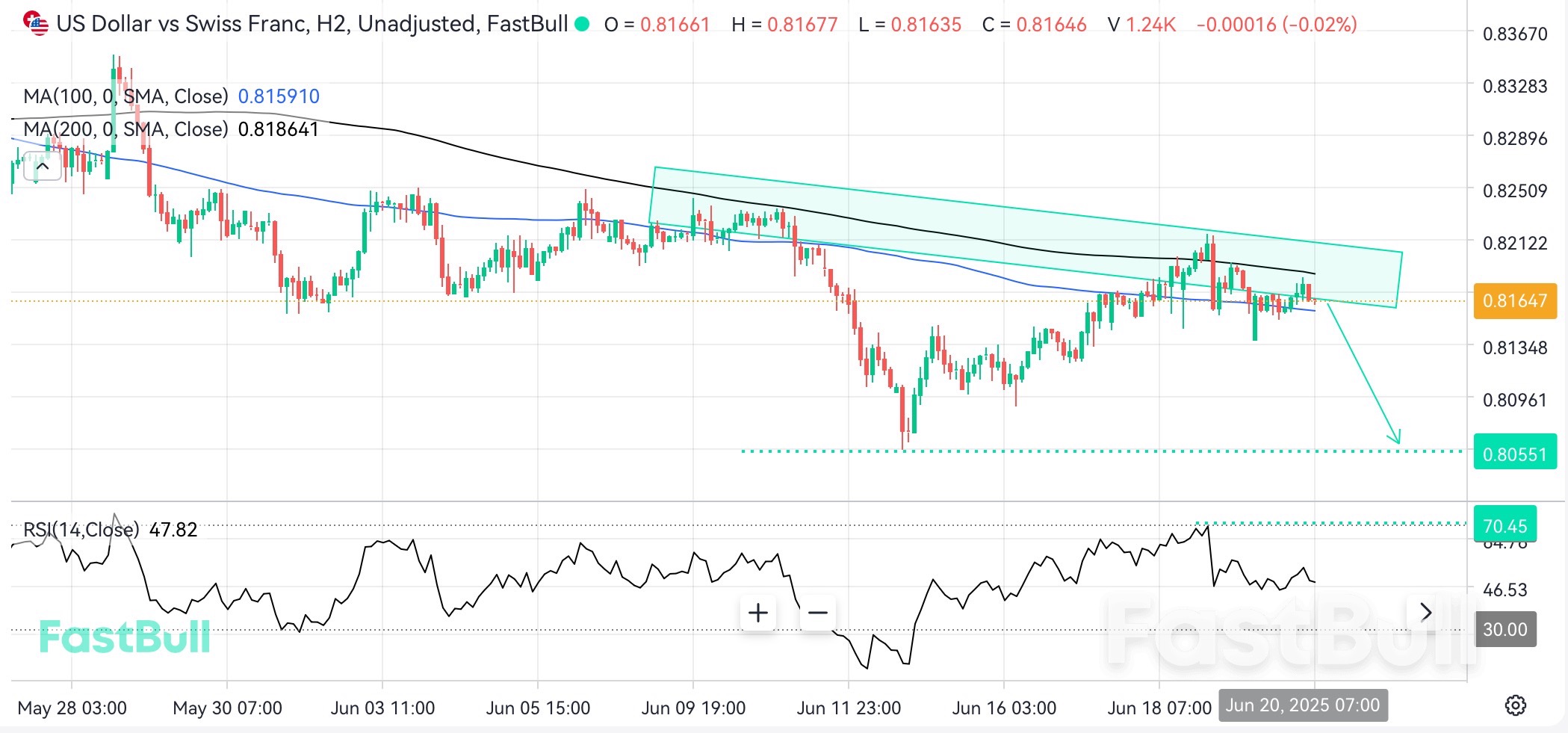
          USD/CHF is currently encountering strong resistance near its 100- and 200-period moving averages, located at 0.8159 and 0.8186, respectively, on the 4-hour chart. These zones have repeatedly acted as a ceiling, from which price has previously reversed to the downside. Should this pattern continue, a renewed decline toward the local low around 0.8051—last visited on June 12—remains a likely scenario.
          Additionally, the Relative Strength Index (RSI) peaked at 70.45 on June 18, entering overbought territory. Since then, it has failed to form a new high, and bearish candles have emerged from the vicinity of the 200-period moving average. This pattern could indicate that bullish momentum is waning, potentially opening the door for bears to regain control.
          A decisive close below the 100-period moving average may accelerate downside momentum, especially if geopolitical tensions continue to dominate market sentiment and boost demand for the Swiss franc. Conversely, a strong breakout above the local high at 0.8212 could signal a resumption of the bullish trend, challenging the current bearish narrative.
          Trading Recommendations
          Trading direction: Sell
          Entry price: 0.8165
          Target price: 0.8060
          Stop loss: 0.8215
          Validity: Jun 30, 2025 15:00:00
          Risk Warnings and Disclaimers
          You understand and acknowledge that there is a high degree of risk involved in trading. Following any strategies or investment methods may lead to potential losses. The content on the site is provided by our contributors and analysts for information purposes only. You are solely responsible for determining whether any trading assets, securities, strategy, or any other product is suitable for investing based on your own investment objectives and financial situation.
          Add to Favorites
          Share

          UK Retail Weakness Meets BoJ Policy Uncertainty, Yen Under Pressure

          Eva Chen

          Forex

          Central Bank

          Summary:

          GBPJPY extended gains on Friday, propelled by sustained yen weakness stemming from uncertainty around the timing of the Bank of Japan's (BoJ) next rate hike. This occurred despite UK May retail sales unexpectedly plunging 2.7% month-on-month (MoM), far worse than the anticipated 0.5% decline.

          BUY GBPJPY
          Close Time
          CLOSED

          195.989

          Entry Price

          198.500

          TP

          193.490

          SL

          207.065 -0.035 -0.02%

          161.5

          Pips

          Profit

          193.490

          SL

          197.604

          Exit Price

          195.989

          Entry Price

          198.500

          TP

          Fundamentals

          GBPJPY strengthened for a second consecutive session on Friday, holding steadily above the 195.00 level during Asian and European trading hours. The pair's advance was primarily driven by yen softness amid persistent uncertainty regarding the BoJ's future rate hike trajectory.
          Data from the UK's Office for National Statistics (ONS) revealed May retail sales plummeted 2.7% MoM, significantly underperforming consensus forecasts of a 0.5% drop and marking the largest monthly decline since December 2023.
          The contraction was led by a sharp 5.0% MoM fall in food store sales. This completely reversed April's 4.7% gain and represented the largest decline in this category since May 2021. Non-food store sales also declined, falling 1.4% MoM, reflecting weakened purchasing in department stores and household goods amid cautious consumer sentiment.
          Despite the May setback, retail sales for the three months to May showed a 0.8% increase compared to the previous quarter ending February.
          Ongoing challenges for the yen continued to underpin GBPJPY.
          Minutes from the BoJ's May policy meeting showed the Policy Board remained vigilant towards "extremely high uncertainties" arising from global trade tensions. While the BoJ maintained its short-term policy rate at 0.5%, it substantially downgraded its economic growth and inflation outlooks, primarily citing expected negative impacts from anticipated US tariff hikes.
          Members reiterated that further rate hikes would remain "appropriate" if economic activity and price developments align with projections, consistent with the path of gradual policy normalization. However, a core theme of the meeting emphasized the critical need for policy flexibility and data dependence. Several members stressed the importance of "carefully examining" the evolving outlook before taking action.
          Many members cautioned that it was crucial to judge "whether the outlook... is materializing without any preconceptions." One policymaker acknowledged that the likelihood of projections being achieved was "not as high as before," while another emphasized the necessity of balancing upside and downside risks.
          The minutes also revealed internal divergences. One member argued that policy must remain "flexible and more nimble," even as the BoJ enters a pause phase. Another member warned that simultaneous supply chain disruptions and surging inflation could entrap Japan's economy, especially given that "inflation expectations are not as well-anchored as in the US."
          UK Retail Weakness Meets BoJ Policy Uncertainty, Yen Under Pressure_1

          Technical Analysis

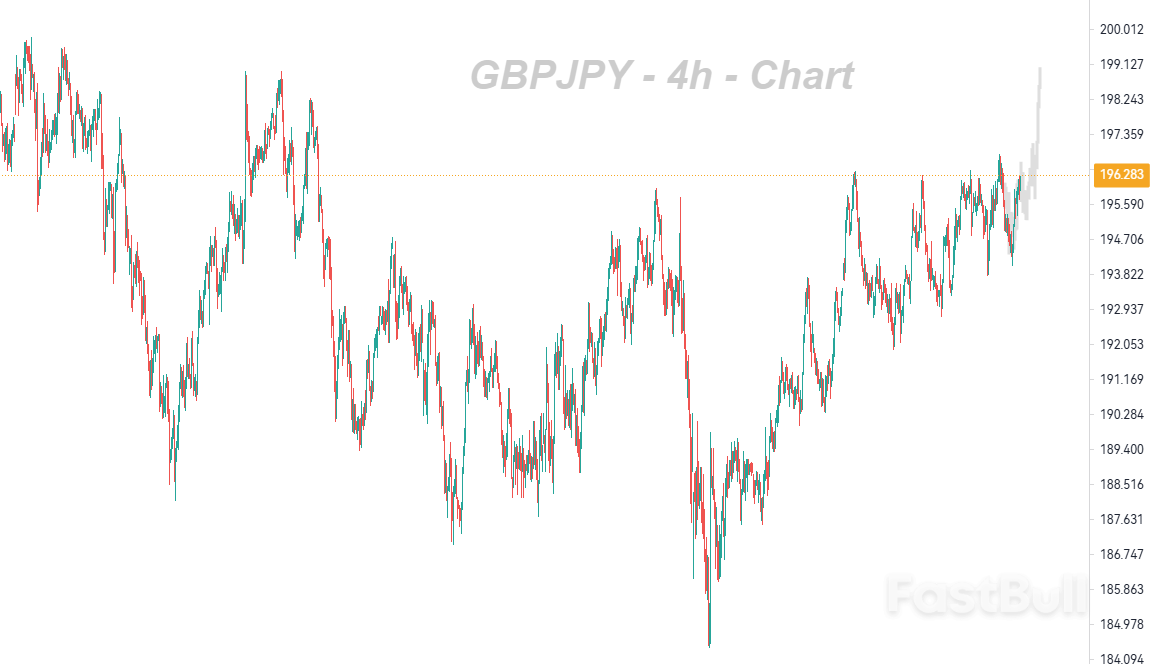
          The intraday technical outlook for GBPJPY remains neutral-to-bullish. The pair breached the upper boundary of its triangle consolidation pattern twice (on June 10th and 17th), signaling a market inclination to extend the uptrend.
          Provided the key support level at 193.75 holds, further upside is anticipated. A sustained break and hold above the 196.82 resistance would open the path for bulls to target the next resistance at 199.78.
          Conversely, a decisive break below the 193.75 support would signal a potential near-term trend reversal, shifting the focus downwards towards testing the 191.85 support level.

          Trading Recommendations

          Trading Direction: Long
          Entry Price: 196.00
          Target Price: 198.50
          Stop Loss: 193.49
          Deadline: July 05, 2025, 23:55:00
          Support: 195.53/194.58/194.00
          Resistance: 196.68/196.84/197.06
          Risk Warnings and Disclaimers
          You understand and acknowledge that there is a high degree of risk involved in trading. Following any strategies or investment methods may lead to potential losses. The content on the site is provided by our contributors and analysts for information purposes only. You are solely responsible for determining whether any trading assets, securities, strategy, or any other product is suitable for investing based on your own investment objectives and financial situation.
          Add to Favorites
          Share

          EUR/USD Edges Higher on Policy Divergence and Dollar Weakness

          Warren Takunda

          Traders' Opinions

          Economic

          Summary:

          The Euro edged higher against the U.S. Dollar on Friday, supported by a cooling in geopolitical fears and softer U.S. economic data.

          BUY EURUSD
          Close Time
          CLOSED

          1.15251

          Entry Price

          1.16867

          TP

          1.14200

          SL

          1.16550 +0.00124 +0.11%

          74.6

          Pips

          Profit

          1.14200

          SL

          1.15997

          Exit Price

          1.15251

          Entry Price

          1.16867

          TP

          The Euro continued to edge higher against the U.S. Dollar on Friday, navigating a cautious but supportive global landscape as traders digested a mix of geopolitical signals, diverging central bank outlooks, and a softening U.S. economic backdrop. Despite a muted trading session, EUR/USD maintained a firm tone near 1.1510, just off its intraday high of 1.1535, reflecting modest Euro strength amid Dollar softness.
          The modest bid in the Euro was fueled in part by a dialed-down geopolitical tone from Washington. U.S. President Donald Trump, addressing concerns over escalating tensions in the Middle East, stated he would decide “within two weeks” on potential U.S. involvement in the ongoing Israel–Iran conflict. While uncertainty remains, the absence of immediate military action helped soothe global risk sentiment, reducing safe-haven demand for the Greenback.
          The U.S. Dollar Index (DXY), a gauge of the greenback against a basket of major currencies, traded lower around 98.75 on Friday — slipping below the psychological 99.00 threshold. Investors took note of subdued U.S. economic data, particularly the Philadelphia Fed Manufacturing Index, which held steady at -4.0 in June, disappointing expectations for a slight rebound to -1. The flat reading signals continued weakness in the U.S. manufacturing sector, a drag reinforced by early signs of labor market softening and cooling domestic demand.
          Combined with concerns over tariffs and geopolitical volatility, the Fed’s cautiously neutral tone earlier this week contributed to the Dollar's mild retreat. The central bank left its benchmark interest rate unchanged for the fourth consecutive meeting, keeping the federal funds target range at 4.25%–4.50%, as policymakers attempt to balance persistent inflation pressures with signs of a slowing economy.
          Headline inflation in the U.S. edged up slightly to 2.4% in May, while core inflation held steady at 2.8%, still well above the Fed's 2% target. Fed Chair Jerome Powell, in his post-meeting remarks, emphasized the need for further data clarity, warning that renewed price pressures — including those stemming from higher tariffs or escalating geopolitical tensions — could delay the Fed's ability to cut rates.
          Across the Atlantic, the Euro remains resilient, bolstered by easing inflation and an increasingly transparent European Central Bank (ECB) trajectory. Eurozone headline inflation dipped to 1.9% in May — below the ECB’s 2% mandate for the first time in several months — while core inflation also edged lower. The data, while encouraging, comes against the backdrop of spiking energy prices due to conflict-driven oil market volatility, raising concerns about a resurgence in input costs.
          The ECB, which cut rates for the eighth time earlier this week, signaled it may be approaching the end of its easing cycle. Speaking from Italy, ECB Governing Council member François Villeroy de Galhau reiterated that while the door to further accommodation remains open, it would likely take a fresh external shock — such as a full-blown Middle East escalation — to materially alter the bank’s current course. Importantly, Villeroy also noted that the Euro’s relative strength against the U.S. Dollar could help mitigate the inflationary impact of rising oil prices, further reducing the urgency for deeper cuts.
          Technical AnalysisEUR/USD Edges Higher on Policy Divergence and Dollar Weakness_1
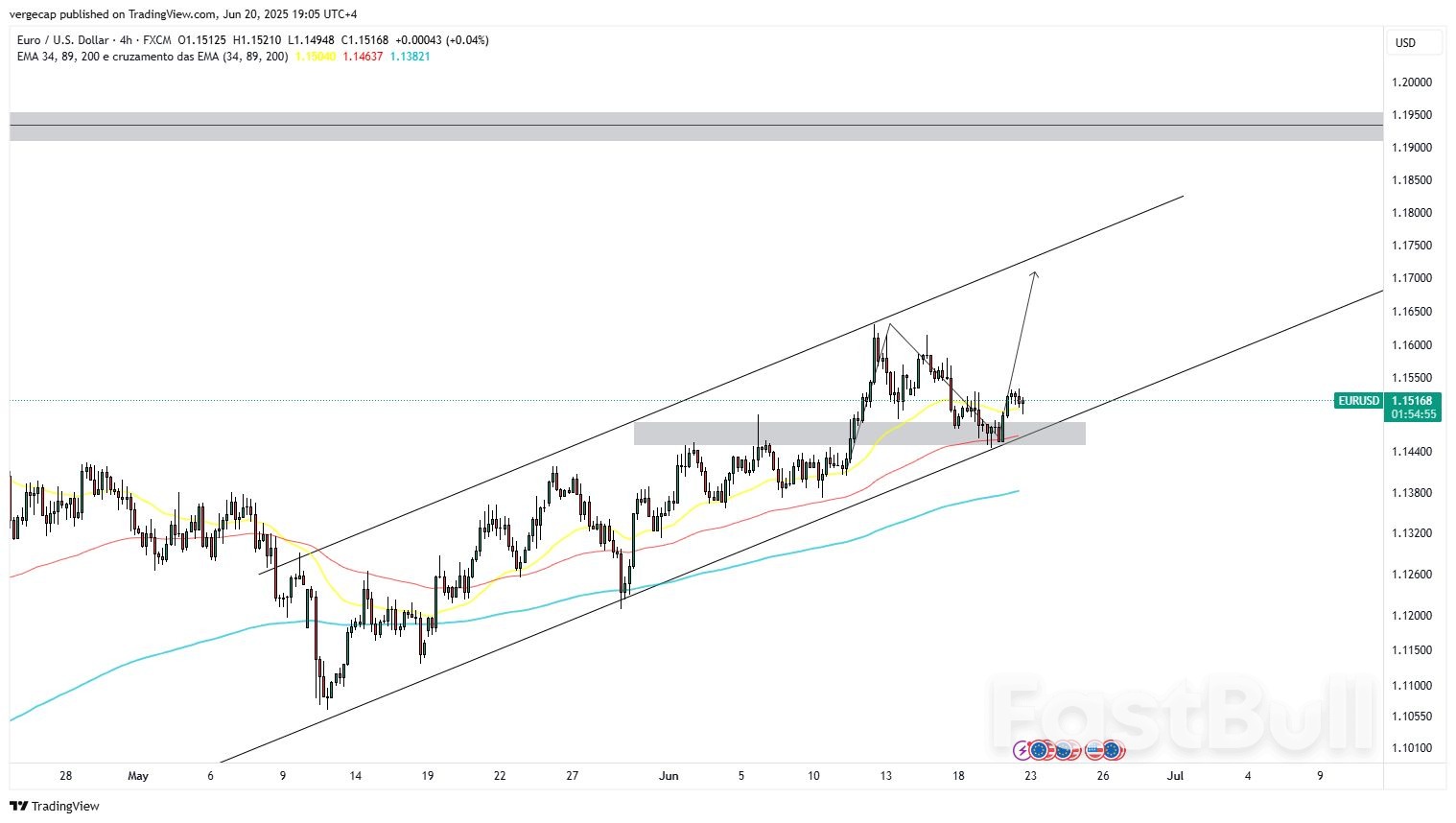
          From a technical perspective, EUR/USD continues to show strength on shorter timeframes, with price trading above the 50-period exponential moving average (EMA) and maintaining a bullish trajectory aligned with a key bias trendline. The 30-minute chart reveals a classic ABC corrective pattern, now completed with a low at point D — suggesting that the recent correction phase may be over.
          Price action is currently flirting with the 1.1510 region, with upside potential targeting resistance at 1.16016 and 1.16311. A sustained move above these levels could open the path toward the 0.618 Fibonacci extension at 1.16867, which also aligns with a broader breakout zone.
          That said, the Relative Strength Index (RSI) has entered overbought territory, hinting at a possible short-term pause or consolidation. Traders may want to wait for a retest of broken resistance or a minor pullback before considering long positions, especially as macro risk remains fluid.
          TRADE RECOMMENDATION
          BUY EURUSD
          ENTRY PRICE: 1.1525
          STOP LOSS: 1.1420
          TAKE PROFIT: 1.16867
          Risk Warnings and Disclaimers
          You understand and acknowledge that there is a high degree of risk involved in trading. Following any strategies or investment methods may lead to potential losses. The content on the site is provided by our contributors and analysts for information purposes only. You are solely responsible for determining whether any trading assets, securities, strategy, or any other product is suitable for investing based on your own investment objectives and financial situation.
          Add to Favorites
          Share

          EUR/GBP Retreats from Highs Despite Weak UK Data

          Warren Takunda

          Economic

          Summary:

          Despite a dramatic UK retail sales miss, the Euro failed to sustain gains against the Pound as the BoE’s hawkish pause provided Sterling with support.

          SELL EURGBP
          Close Time
          CLOSED

          0.85300

          Entry Price

          0.84000

          TP

          0.85700

          SL

          0.87481 +0.00165 +0.19%

          40.0

          Pips

          Loss

          0.84000

          TP

          0.85701

          Exit Price

          0.85300

          Entry Price

          0.85700

          SL

          The Euro (EUR) edged lower against the British Pound (GBP) on Friday, retreating modestly despite a sharply disappointing set of UK retail sales figures. While on the surface this data might have favored further Euro upside, the Pound proved resilient — buoyed by the Bank of England’s recent policy stance and underlying strength in investor sentiment.
          At the time of writing, the EUR/GBP pair is trading near 0.8530, down slightly from recent two-month highs, as investors digest the implications of the latest macroeconomic releases and central bank signals. This comes after a two-week rally that saw the pair grind higher amid broader Euro strength and a mixed outlook for UK economic data.
          Data from the UK Office for National Statistics (ONS) showed that retail sales volumes plunged 2.7% in May — a stark miss compared to market expectations for a 0.5% decline. This marked the steepest monthly contraction since December 2023, with all major categories — food, clothing, and household goods — registering notable pullbacks. On a year-on-year basis, sales fell 1.3%, erasing the strong 5% growth recorded in April and casting a shadow over the health of consumer demand entering the summer.
          Despite this gloomy print, the British Pound remained firm. Much of this resilience can be attributed to Thursday’s Bank of England decision, where policymakers opted to keep the benchmark interest rate steady at 5.25%. The decision, while expected, signaled a continued commitment to a cautious, data-dependent approach. Crucially, the tone struck by Governor Andrew Bailey and other officials was less dovish than markets had anticipated, dampening expectations for an imminent rate cut and helping to anchor Sterling.
          On the other side of the channel, the Euro’s retreat appears linked to shifting expectations around European Central Bank (ECB) policy. Several ECB officials — including France’s François Villeroy de Galhau and Spain’s Luis de Guindos — have signaled a growing willingness to cut interest rates further this year, as inflation continues to trend lower across the Eurozone.
          Headline inflation dropped below the ECB’s 2% target for the first time in months, while core inflation — a closely watched gauge — also eased. This has increased the likelihood of at least one additional rate cut before year-end, following the ECB’s initial trim earlier in June. However, the Euro’s strength relative to peers — particularly the US Dollar and British Pound — remains a complicating factor. A firmer Euro can dampen imported inflation, thereby slowing the pace of policy transmission and further economic cooling.
          Technical Analysis EUR/GBP Retreats from Highs Despite Weak UK Data_1
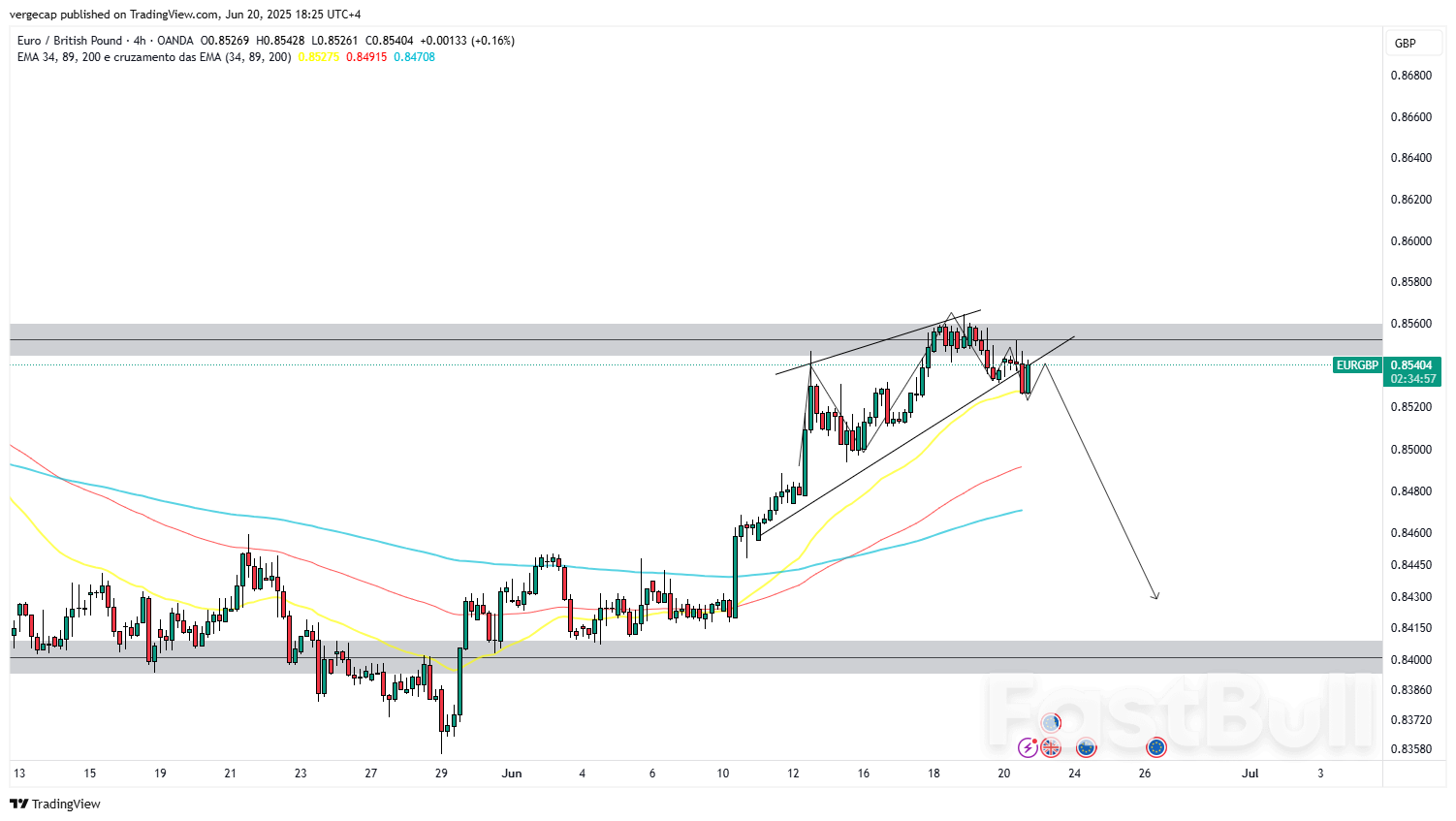
          From a technical perspective, EUR/GBP may be showing signs of exhaustion after a recent bullish trend. The pair had been trading within a rising channel — a classic bearish reversal pattern — and has now broken below the channel's lower boundary, suggesting downside risk may be building.
          Currently, the pair is encountering resistance near its recent highs, which also coincides with key Fibonacci levels. A bearish RSI divergence has formed, indicating that momentum is waning despite recent price highs. Moreover, the break below the previous higher low structure on the chart suggests that the bullish bias could be fading.
          Traders may look to initiate short positions via a sell-limit order around the 0.382 Fibonacci retracement level, aligning with the confluence of technical resistance and the broader macro narrative that hints at Euro vulnerability in the near term.
          TRADE RECOMMENDATION
          SELL EURGBP
          ENTRY PRICE: 0.8530
          STOP LOSS: 0.8570
          TAKE PROFIT: 0.8400
          Risk Warnings and Disclaimers
          You understand and acknowledge that there is a high degree of risk involved in trading. Following any strategies or investment methods may lead to potential losses. The content on the site is provided by our contributors and analysts for information purposes only. You are solely responsible for determining whether any trading assets, securities, strategy, or any other product is suitable for investing based on your own investment objectives and financial situation.
          Add to Favorites
          Share

          Fed "Hawkishness" and Fading Safe-Haven Sentiment Trigger Selling Spree

          Alan

          Commodity

          Summary:

          Recently, the Federal Reserve maintained interest rates but delivered hawkish signals. Simultaneously, the fade of safe-haven sentiment triggered a pullback in gold prices. However, geopolitical risks have not entirely dissipated; if conflicts escalate, gold prices are likely to rebound.

          SELL XAUUSD
          Close Time
          CLOSED

          3358.97

          Entry Price

          3295.00

          TP

          3390.00

          SL

          4209.27 +11.36 +0.27%

          310.3

          Pips

          Loss

          3295.00

          TP

          3390.00

          Exit Price

          3358.97

          Entry Price

          3390.00

          SL

          Fundamentals

          As of the European session today, gold traded around ​​3350.00 per ounce, marking a decrease of ​0.71% on the day. This week is poised to be the first week of declines for gold since early June.
          Recent volatility in the gold market stems from a complex interplay of factors. The marginal easing of geopolitical risks has been a core factor suppressing gold prices. US President Trump made a statement about deciding within two weeks whether to join Israel in potential strikes against Iran. This reduced market fears regarding a blockade of the Strait of Hormuz or attacks on nuclear facilities, leading to the partial unwinding of gold's safe-haven premium. Concurrently, some safe-haven capital has rotated towards silver, further diverting buying interest away from gold. Nevertheless, geopolitical risks persist; should conflicts escalate within the next two weeks, gold could regain upward momentum.
          Furthermore, conflicting signals from the Federal Reserve have heightened market uncertainty. While the Fed held rates steady, Chairman Powell warned that President Trump's tariff policies could exacerbate inflationary pressures, suggesting potential variability in the rate-cut path. Current market pricing implies a roughly 70% probability of a rate cut in September. However, if next week's US Core PCE inflation data exceeds expectations, the Fed might delay its easing cycle, which would diminish the appeal of gold as a non-yielding asset.

          Technical Analysis

          Fed "Hawkishness" and Fading Safe-Haven Sentiment Trigger Selling Spree _1
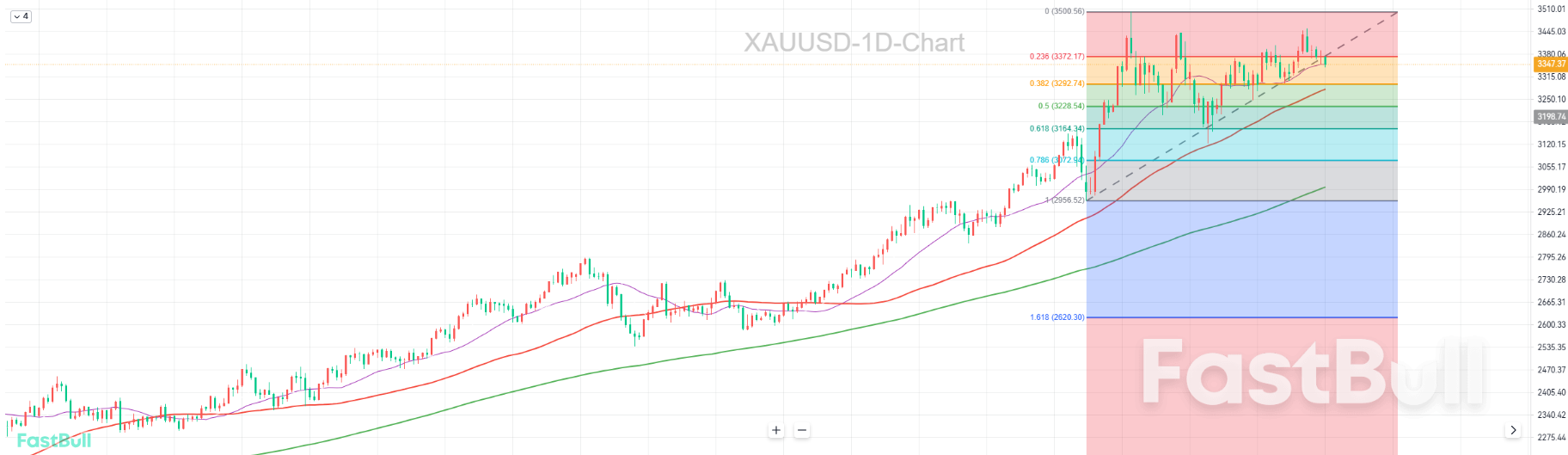
          Regarding the daily chart, gold has breached the crucial support level at ​​3372.17. Should it fail to close the daily chart above this level, gold has a higher chance to plunge shortly, heading towards the support at 3292.74. Plunging further lower could bring gold to the low of May 29 (3245.33).
          A death cross is formed to suggest a stronger bearish momentum. While the RSI remains above the midline, its steeper downward slope indicates weakening bullish momentum and a gradual shift towards bearish dominance.
          Selling at highs is preferred.

          Trading Recommendations

          Trading direction: Sell
          Entry price: 3360.00
          Target price: 3295.00
          Stop loss: 3390.00
          Valid Until: July 04, 2025, 23:00:00
          Support: 3392.74/3245.33
          Resistance: 3372.17/3387.78
          Risk Warnings and Disclaimers
          You understand and acknowledge that there is a high degree of risk involved in trading. Following any strategies or investment methods may lead to potential losses. The content on the site is provided by our contributors and analysts for information purposes only. You are solely responsible for determining whether any trading assets, securities, strategy, or any other product is suitable for investing based on your own investment objectives and financial situation.
          Add to Favorites
          Share

          Oil Rises as Middle East Conflict Intensifies, Trump Decision Looms Large

          Warren Takunda

          Commodity

          Summary:

          Crude prices climbed on Thursday as the Iran-Israel conflict escalated, raising fears of a wider regional war and potential supply disruptions.

          BUY WTI
          Close Time
          CLOSED

          75.000

          Entry Price

          80.000

          TP

          70.000

          SL

          59.364 -0.445 -0.74%

          500.0

          Pips

          Loss

          70.000

          SL

          69.994

          Exit Price

          75.000

          Entry Price

          80.000

          TP

          Oil markets surged higher on Thursday, driven by deepening geopolitical instability in the Middle East, as hostilities between Israel and Iran entered a perilous new phase. Brent crude rose 0.5% to $77.06 a barrel by 09:13 GMT, while U.S. West Texas Intermediate (WTI) July contracts gained 0.7% to $75.68. Prices remain firmly underpinned by fears that the situation could spiral into a regional conflict with global ramifications, especially as U.S. President Donald Trump weighs a decision that could shift the geopolitical landscape.
          The rally builds on a dramatic surge earlier in the week, when Brent touched a five-month high of $78.50 after Israel launched a wave of airstrikes targeting military and strategic assets deep inside Iranian territory. The latest round of attacks marks the seventh consecutive day of direct confrontation between the two nations. On Wednesday night, Israeli forces reportedly targeted Iran’s sole nuclear energy facility, an act with far-reaching strategic and symbolic implications. Iran retaliated with a ballistic missile strike on a hospital in Tel Aviv, stoking further outrage and international alarm.
          Amid the rising uncertainty, major Wall Street institutions have begun pricing in significant geopolitical risk. Goldman Sachs analysts noted that oil prices are currently carrying a $10-per-barrel geopolitical premium, reflecting both current supply disruptions and the looming threat of a broader shipping crisis in the Persian Gulf. Should regional shipping routes, particularly the Strait of Hormuz, become compromised, Goldman warns Brent could spike well past $90—and potentially hit $120 under more extreme scenarios.
          The Strait of Hormuz, through which roughly one-fifth of the world’s oil passes daily, has emerged as a critical flashpoint. Any closure or significant disruption in this key maritime chokepoint would trigger a profound energy shock, reminiscent of previous Middle East crises. “If Hormuz is closed even temporarily, we could see prices gap up violently,” one senior energy analyst noted. “The supply implications would be immediate and severe.”
          Iran’s position as OPEC’s third-largest producer, pumping around 3.3 million barrels per day, underscores the scale of the risk. A significant hit to Iranian output—whether through conflict, sanctions, or logistical disruption—would reverberate through global energy markets, compounding existing concerns about tight supplies and underinvestment in upstream capacity.
          U.S. President Donald Trump, speaking at a press briefing late Wednesday, said he had not yet decided whether Washington would join Israel in its confrontation with Iran. His indecision has only amplified market anxiety, as traders brace for either an American entry into the conflict—which would escalate the stakes dramatically—or a diplomatic maneuver that might defuse tensions.
          "Markets are trapped in a binary outlook,” said Helima Croft, global head of commodity strategy at RBC Capital Markets. “If Trump opts for military involvement, we’re in a completely different price regime. If he backs off, we might see a short-term correction—but the damage to risk sentiment has already been done.”
          The broader fear is that a U.S.-Iran confrontation could deliver a terminal blow to already fragile regional stability. Analysts warn that direct strikes on Iranian energy infrastructure would not only provoke a sharp military response, but also risk destabilizing key oil-producing neighbors like Iraq, the UAE, and even Saudi Arabia.
          Adding further fuel to the rally was a surprisingly large drawdown in U.S. crude inventories. The Energy Information Administration (EIA) reported that U.S. commercial crude stocks fell by 11.5 million barrels in the week ending last Friday, far surpassing analyst expectations of a modest 1.6 million-barrel decline. The draw brought total inventories to 420.9 million barrels, underscoring continued strong demand and possibly early signs of tightening supply dynamics.
          Gasoline inventories also dipped slightly by 0.2 million barrels to 230 million barrels, while distillate stocks rose 0.5 million barrels to 109.4 million. The data reinforced the notion that despite macroeconomic uncertainty, U.S. refiners are drawing down crude aggressively—perhaps in anticipation of further price gains or supply constraints stemming from global tensions.

          Technical AnalysisOil Rises as Middle East Conflict Intensifies, Trump Decision Looms Large_1

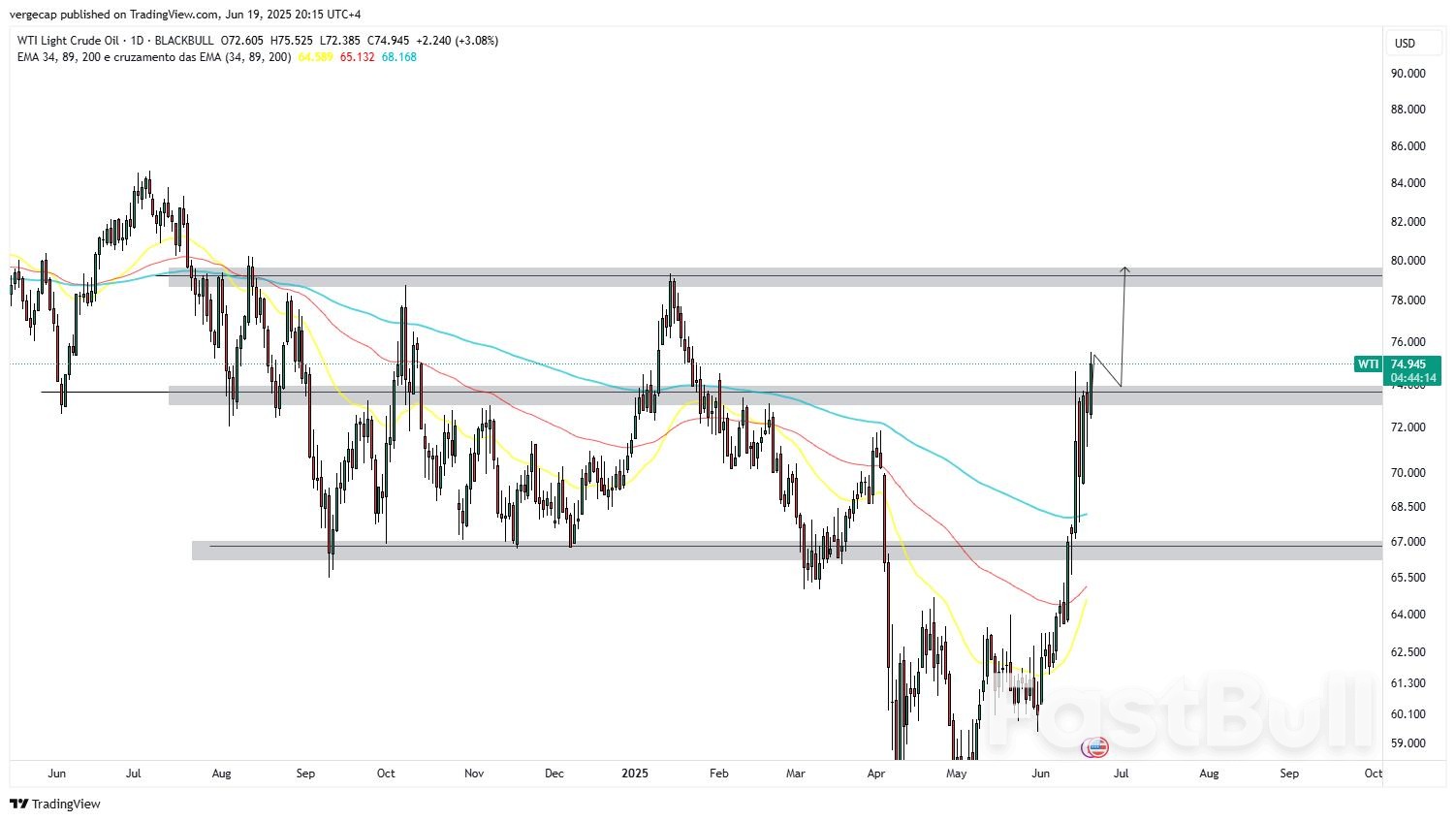
          From a technical perspective, crude oil prices are maintaining bullish momentum. WTI is consolidating just above the key psychological level of $75, with the Relative Strength Index (RSI) having recently exited overbought territory—an encouraging sign for bulls. The price action suggests a potential assault on the next resistance zone, and analysts are closely watching for a breakout that could confirm a broader trend reversal to the upside.
          The recent rally looks technically sound,the overbought conditions have been unwound, and momentum indicators are starting to turn up again. If WTI can decisively close above $75, the path toward $78 and even $80 opens up.
          TRADE RECOMMENDATION
          BUY WTI
          ENTRY PRICE: 75.00
          STOP LOSS: 70.00
          TAKE PROFIT: 80.00
          Risk Warnings and Disclaimers
          You understand and acknowledge that there is a high degree of risk involved in trading. Following any strategies or investment methods may lead to potential losses. The content on the site is provided by our contributors and analysts for information purposes only. You are solely responsible for determining whether any trading assets, securities, strategy, or any other product is suitable for investing based on your own investment objectives and financial situation.
          Add to Favorites
          Share

          GBP/USD Bears Gain Ground as BoE Maintains Status Quo with Split MPC Vote

          Warren Takunda

          Economic

          Summary:

          The Pound Sterling struggled on Thursday as the Bank of England held interest rates steady at 4.25%, splitting the Monetary Policy Committee on the decision.

          SELL GBPUSD
          Close Time
          CLOSED

          1.34300

          Entry Price

          1.31000

          TP

          1.36000

          SL

          1.33225 -0.00087 -0.07%

          170.0

          Pips

          Loss

          1.31000

          TP

          1.36000

          Exit Price

          1.34300

          Entry Price

          1.36000

          SL

          The Pound Sterling (GBP) came under significant selling pressure on Thursday following the Bank of England’s (BoE) decision to keep interest rates unchanged at 4.25%, a move largely anticipated by financial markets but marked by a notable dissent within the Monetary Policy Committee (MPC). This pause in monetary tightening, signaling a "gradual and careful" approach to policy evolution, came just weeks after the central bank’s modest 25 basis point rate cut in May, as it balances the competing pressures of persistent inflation and fragile economic growth.
          Investors had broadly expected the BoE to maintain rates at this level, with seven out of nine MPC members voting to hold. However, the dissent from three members—Swati Dhingra, Dave Ramsden, and Alan Taylor—highlights ongoing uncertainty within the committee. These dissenters cited signs of a loosening labour market, subdued consumer demand, and wage settlements aligning more closely with sustainable levels as justification for further monetary easing. This division signals a nuanced debate at the heart of UK monetary policy, with some members advocating a quicker return to looser financial conditions to support growth.
          The BoE projects inflation to peak at 3.7% in September before gradually easing to just below 3.5% for the remainder of the year. This forecast marks a significant slowdown from the double-digit inflation peaks seen in 2022 but remains above the 2% target, complicating policy decisions. The central bank’s cautious stance reflects ongoing concerns over inflationary pressures stemming from volatile energy prices—exacerbated by geopolitical tensions in the Middle East—and the potential for renewed inflation shocks.
          Market participants are closely watching upcoming UK economic data for guidance on the BoE’s future moves. Recent labour market figures revealed some cracks beneath the surface strength. While the UK job market remains historically tight, growth in employment and wages has moderated, partly due to increased employer contributions to social security schemes. Wage growth, a key driver of domestic inflation, has slowed, helping to ease cost pressures in the services sector. Service sector inflation, which is closely monitored by the BoE given its significant weight in the consumer basket, cooled to 4.7% in the latest reading from 5.4%, signaling a moderation in consumer price pressures.
          Investors will be looking ahead to the release of May’s Consumer Price Index (CPI) and further labour market data to assess whether the inflation slowdown is sustainable and how much longer the BoE will maintain its cautious, data-dependent approach.
          Adding complexity to the BoE’s inflation outlook are the ongoing geopolitical tensions in the Middle East, which risk driving up energy prices once again. Renewed energy shocks could derail the tentative inflation progress, forcing the BoE to reconsider its moderate easing bias. This external risk has created an environment of uncertainty for investors and traders, weighing on GBP sentiment in the near term.
          Technical AnalysisGBP/USD Bears Gain Ground as BoE Maintains Status Quo with Split MPC Vote_1
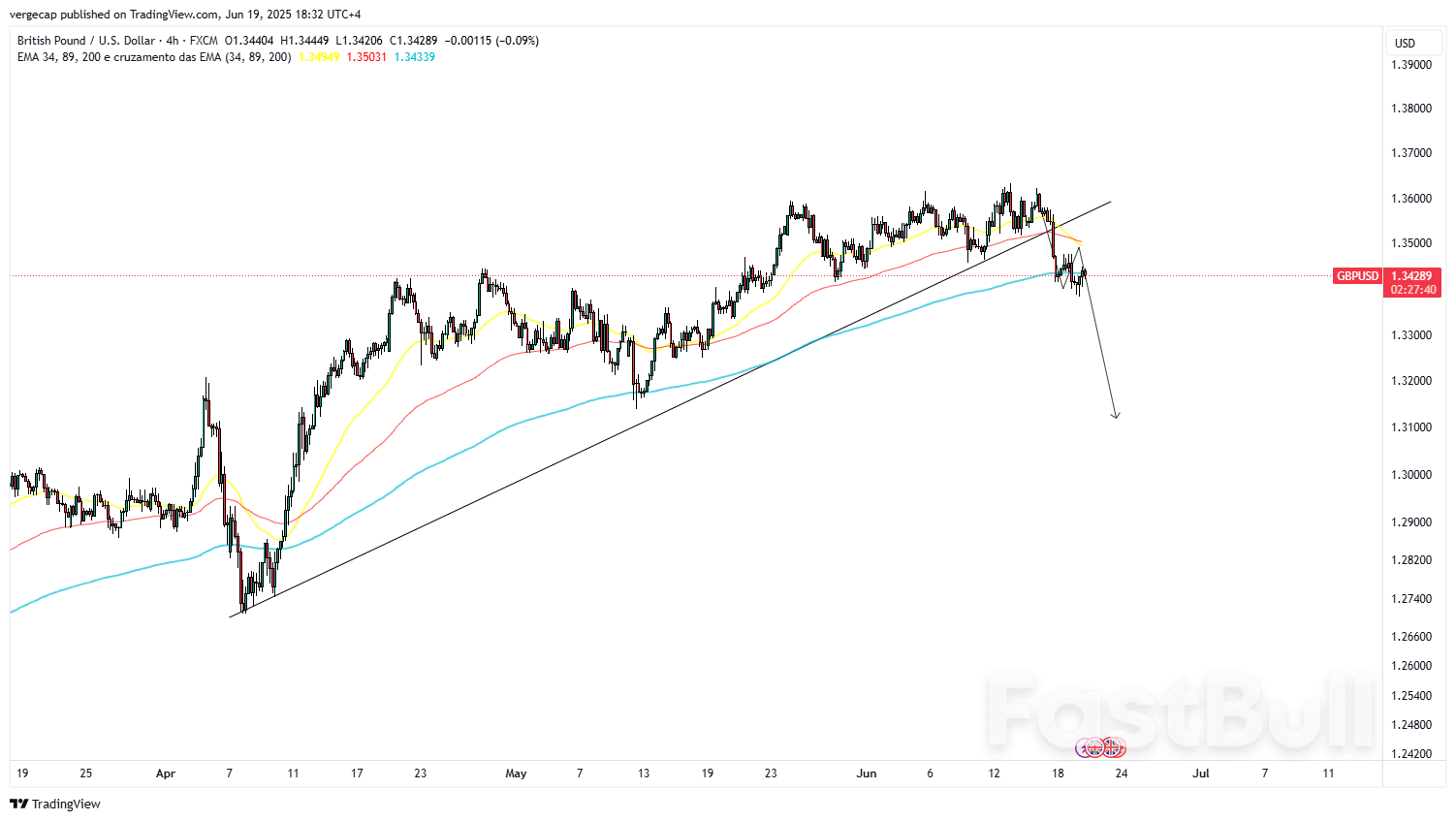
          From a technical perspective, the GBP/USD currency pair extended its decline in intraday trading on Thursday, reflecting the broader bearish sentiment. The pair’s recent fall off oversold conditions, as indicated by the Relative Strength Index (RSI), has triggered the appearance of fresh negative signals, suggesting further downside potential.
          Crucially, GBP/USD has broken below a key support level at 1.3410 and breached a major short-term bullish trend line, undermining earlier hopes of a technical rebound. The pair’s sustained trading below its 50-day Exponential Moving Average (EMA50) reinforces the bearish scenario, suggesting that sellers remain firmly in control for now.
          If the pound fails to regain ground quickly, traders will likely target lower support zones, while the BoE’s forthcoming monetary guidance and UK economic data will play a pivotal role in shaping medium-term GBP/USD direction.
          TRADE RECOMMENDATION
          SELL GBPUSD
          ENTRY PRICE: 1.3430
          STOP LOSS: 1.3600
          TAKE PROFIT: 1.3100
          Risk Warnings and Disclaimers
          You understand and acknowledge that there is a high degree of risk involved in trading. Following any strategies or investment methods may lead to potential losses. The content on the site is provided by our contributors and analysts for information purposes only. You are solely responsible for determining whether any trading assets, securities, strategy, or any other product is suitable for investing based on your own investment objectives and financial situation.
          Add to Favorites
          Share
          FastBull
          Copyright © 2025 FastBull Ltd

          728 RM B 7/F GEE LOK IND BLDG NO 34 HUNG TO RD KWUN TONG KLN HONG KONG

          TelegramInstagramTwitterfacebooklinkedin
          App Store Google Play Google Play
          Products
          Charts

          Chats

          Q&A with Experts
          Screeners
          Economic Calendar
          Data
          Tools
          Membership
          Features
          Function
          Markets
          Copy Trading
          Latest Signals
          Contests
          News
          Analysis
          24/7
          Columns
          Education
          Company
          Careers
          About Us
          Contact Us
          Advertising
          Help Center
          Feedback
          User Agreement
          Privacy Policy
          Business

          White Label

          Data API

          Web Plug-ins

          Poster Maker

          Affiliate Program

          Risk Disclosure

          The risk of loss in trading financial instruments such as stocks, FX, commodities, futures, bonds, ETFs and crypto can be substantial. You may sustain a total loss of the funds that you deposit with your broker. Therefore, you should carefully consider whether such trading is suitable for you in light of your circumstances and financial resources.

          No decision to invest should be made without thoroughly conducting due diligence by yourself or consulting with your financial advisors. Our web content might not suit you since we don't know your financial conditions and investment needs. Our financial information might have latency or contain inaccuracy, so you should be fully responsible for any of your trading and investment decisions. The company will not be responsible for your capital loss.

          Without getting permission from the website, you are not allowed to copy the website's graphics, texts, or trademarks. Intellectual property rights in the content or data incorporated into this website belong to its providers and exchange merchants.

          Not Logged In

          Log in to access more features

          FastBull Membership

          Not yet

          Purchase

          Become a signal provider
          Help Center
          Customer Service
          Dark Mode
          Price Up/Down Colors

          Log In

          Sign Up
          Position
          Layout
          Fullscreen
          Default to Chart
          The chart page opens by default when you visit fastbull.com