• Trade
  • Markets
  • Copy
  • Contests
  • News
  • 24/7
  • Calendar
  • Q&A
  • Chats
Trending
Screeners
SYMBOL
LAST
BID
ASK
HIGH
LOW
NET CHG.
%CHG.
SPREAD
SPX
S&P 500 Index
6838.41
6838.41
6838.41
6878.28
6827.18
-31.99
-0.47%
--
DJI
Dow Jones Industrial Average
47686.58
47686.58
47686.58
47971.51
47611.93
-268.40
-0.56%
--
IXIC
NASDAQ Composite Index
23506.23
23506.23
23506.23
23698.93
23455.05
-71.89
-0.30%
--
USDX
US Dollar Index
99.010
99.090
99.010
99.160
98.730
+0.060
+ 0.06%
--
EURUSD
Euro / US Dollar
1.16403
1.16410
1.16403
1.16717
1.16162
-0.00023
-0.02%
--
GBPUSD
Pound Sterling / US Dollar
1.33279
1.33286
1.33279
1.33462
1.33053
-0.00033
-0.02%
--
XAUUSD
Gold / US Dollar
4186.23
4186.64
4186.23
4218.85
4175.92
-11.68
-0.28%
--
WTI
Light Sweet Crude Oil
58.604
58.634
58.604
60.084
58.495
-1.205
-2.01%
--

Community Accounts

Signal Accounts
--
Profit Accounts
--
Loss Accounts
--
View More

Become a signal provider

Sell trading signals to earn additional income

View More

Guide to Copy Trading

Get started with ease and confidence

View More

Signal Accounts for Members

All Signal Accounts

Best Return
  • Best Return
  • Best P/L
  • Best MDD
Past 1W
  • Past 1W
  • Past 1M
  • Past 1Y

All Contests

  • All
  • Trump Updates
  • Recommend
  • Stocks
  • Cryptocurrencies
  • Central Banks
  • Featured News
Top News Only
Share

Trump: Farming Equipment Has Gotten Too Expensive

Share

Trump: We Will Take Off A Lot Of Environment Rules That Affect Tractor Companies

Share

Kremlin Says Still No Word On US-Ukraine Talks In Florida

Share

Trump: USA Will Take Small Portion Of Tariff Revenues To Give It To Farmers

Share

Trump: Taking Action To Protect Farmers

Share

Nymex January Gasoline Futures Closed At $1.7981 Per Gallon, And Nymex January Heating Oil Futures Closed At $2.2982 Per Gallon

Share

USA Crude Oil Futures Settle At $58.88/Bbl, Down $1.20, 2.00 Percent

Share

Netflix Co-CEO On Warner Bros Deal: We Are Very Confident That Regulators Should And Will Approve It

Share

Alina Habba, The Interim Federal Prosecutor For New Jersey, Has Resigned. This Follows An Appeals Court Ruling That President Trump's Nomination Of Her Was Illegitimate

Share

Netflix Co-CEO On Paramount Skydance Bid For Warner Bros Says The Move Was Entirely Expected- UBS Conf

Share

U.S. Senate Democratic Member And Antitrust Activist Warren Stated That Paramount Skydance's Hostile Takeover Offer Triggered A "Level 5 Antitrust Alert."

Share

Benin Government: Coup Plotters Kidnapped Two Senior Military Officials Who Were Later Freed

Share

Canada: G7 Finance Ministers Discussed Export Controls And Critical Minerals In Call

Share

Benin Government: Nigeria Carried Out Air Strikes To Help Thwart Coup Bid

Share

Fitch: Expects General Government (Gg) Deficit To Fall Modestly In Canada And But Rise Modestly In USA In 2026

Share

An Important Point Of Consensus Was Concern Regarding Application Of Non-Market Policies, Including Export Controls, To Critical Minerals Supply Chains

Share

Fitch: Despite Full-Year Impact Of Tariffs, We Expect USA Fiscal Deficit To Widen In 2026 Due To Additional Tax Cuts Under One Big Beautiful Bill Act

Share

Private Equity Firm Cinven Has Signed A £190 Million Deal To Acquire A Majority Stake In UK Advisory Firm Flint Global

Share

Bank Of England's Taylor Expects Inflation To Fall To Target 'In The Near Term'

Share

Ukraine President Zelenskiy: He Will Travel To Italy On Tuesday

TIME
ACT
FCST
PREV
France Trade Balance (SA) (Oct)

A:--

F: --

P: --
Euro Zone Employment YoY (SA) (Q3)

A:--

F: --

P: --
Canada Part-Time Employment (SA) (Nov)

A:--

F: --

P: --

Canada Unemployment Rate (SA) (Nov)

A:--

F: --

P: --

Canada Full-time Employment (SA) (Nov)

A:--

F: --

P: --

Canada Labor Force Participation Rate (SA) (Nov)

A:--

F: --

P: --

Canada Employment (SA) (Nov)

A:--

F: --

P: --

U.S. PCE Price Index MoM (Sept)

A:--

F: --

P: --

U.S. Personal Income MoM (Sept)

A:--

F: --

P: --

U.S. Core PCE Price Index MoM (Sept)

A:--

F: --

P: --

U.S. PCE Price Index YoY (SA) (Sept)

A:--

F: --

P: --

U.S. Core PCE Price Index YoY (Sept)

A:--

F: --

P: --

U.S. Personal Outlays MoM (SA) (Sept)

A:--

F: --

P: --
U.S. 5-10 Year-Ahead Inflation Expectations (Dec)

A:--

F: --

P: --

U.S. Real Personal Consumption Expenditures MoM (Sept)

A:--

F: --

P: --
U.S. Weekly Total Rig Count

A:--

F: --

P: --

U.S. Weekly Total Oil Rig Count

A:--

F: --

P: --

U.S. Consumer Credit (SA) (Oct)

A:--

F: --

P: --
China, Mainland Foreign Exchange Reserves (Nov)

A:--

F: --

P: --

Japan Trade Balance (Oct)

A:--

F: --

P: --

Japan Nominal GDP Revised QoQ (Q3)

A:--

F: --

P: --

China, Mainland Imports YoY (CNH) (Nov)

A:--

F: --

P: --

China, Mainland Exports (Nov)

A:--

F: --

P: --

China, Mainland Imports (CNH) (Nov)

A:--

F: --

P: --

China, Mainland Trade Balance (CNH) (Nov)

A:--

F: --

P: --

China, Mainland Exports YoY (USD) (Nov)

A:--

F: --

P: --

China, Mainland Imports YoY (USD) (Nov)

A:--

F: --

P: --

Germany Industrial Output MoM (SA) (Oct)

A:--

F: --

P: --
Euro Zone Sentix Investor Confidence Index (Dec)

A:--

F: --

P: --

Canada National Economic Confidence Index

A:--

F: --

P: --

U.K. BRC Like-For-Like Retail Sales YoY (Nov)

--

F: --

P: --

U.K. BRC Overall Retail Sales YoY (Nov)

--

F: --

P: --

Australia Overnight (Borrowing) Key Rate

--

F: --

P: --

RBA Rate Statement
RBA Press Conference
Germany Exports MoM (SA) (Oct)

--

F: --

P: --

U.S. NFIB Small Business Optimism Index (SA) (Nov)

--

F: --

P: --

Mexico 12-Month Inflation (CPI) (Nov)

--

F: --

P: --

Mexico Core CPI YoY (Nov)

--

F: --

P: --

Mexico PPI YoY (Nov)

--

F: --

P: --

U.S. Weekly Redbook Index YoY

--

F: --

P: --

U.S. JOLTS Job Openings (SA) (Oct)

--

F: --

P: --

China, Mainland M1 Money Supply YoY (Nov)

--

F: --

P: --

China, Mainland M0 Money Supply YoY (Nov)

--

F: --

P: --

China, Mainland M2 Money Supply YoY (Nov)

--

F: --

P: --

U.S. EIA Short-Term Crude Production Forecast For The Year (Dec)

--

F: --

P: --

U.S. EIA Natural Gas Production Forecast For The Next Year (Dec)

--

F: --

P: --

U.S. EIA Short-Term Crude Production Forecast For The Next Year (Dec)

--

F: --

P: --

EIA Monthly Short-Term Energy Outlook
U.S. API Weekly Gasoline Stocks

--

F: --

P: --

U.S. API Weekly Cushing Crude Oil Stocks

--

F: --

P: --

U.S. API Weekly Crude Oil Stocks

--

F: --

P: --

U.S. API Weekly Refined Oil Stocks

--

F: --

P: --

South Korea Unemployment Rate (SA) (Nov)

--

F: --

P: --

Japan Reuters Tankan Non-Manufacturers Index (Dec)

--

F: --

P: --

Japan Reuters Tankan Manufacturers Index (Dec)

--

F: --

P: --

Japan Domestic Enterprise Commodity Price Index MoM (Nov)

--

F: --

P: --

Japan Domestic Enterprise Commodity Price Index YoY (Nov)

--

F: --

P: --

China, Mainland PPI YoY (Nov)

--

F: --

P: --

China, Mainland CPI MoM (Nov)

--

F: --

P: --

Italy Industrial Output YoY (SA) (Oct)

--

F: --

P: --

Q&A with Experts
    • All
    • Chatrooms
    • Groups
    • Friends
    Connecting
    .
    .
    .
    Type here...
    Add Symbol or Code

      No matching data

      All
      Trump Updates
      Recommend
      Stocks
      Cryptocurrencies
      Central Banks
      Featured News
      • All
      • Russia-Ukraine Conflict
      • Middle East Flashpoint
      • All
      • Russia-Ukraine Conflict
      • Middle East Flashpoint

      Search
      Products

      Charts Free Forever

      Chats Q&A with Experts
      Screeners Economic Calendar Data Tools
      Membership Features
      Data Warehouse Market Trends Institutional Data Policy Rates Macro

      Market Trends

      Market Sentiment Order Book Forex Correlations

      Top Indicators

      Charts Free Forever
      Markets

      News

      News Analysis 24/7 Columns Education
      From Institutions From Analysts
      Topics Columnists

      Latest Views

      Latest Views

      Trending Topics

      Top Columnists

      Latest Update

      Signals

      Copy Rankings Latest Signals Become a signal provider AI Rating
      Contests
      Brokers

      Overview Brokers Assessment Rankings Regulators News Claims
      Broker listing Forex Brokers Comparison Tool Live Spread Comparison Scam
      Q&A Complaint Scam Alert Videos Tips to Detect Scam
      More

      Business
      Events
      Careers About Us Advertising Help Center

      White Label

      Data API

      Web Plug-ins

      Affiliate Program

      Awards Institution Evaluation IB Seminar Salon Event Exhibition
      Vietnam Thailand Singapore Dubai
      Fans Party Investment Sharing Session
      FastBull Summit BrokersView Expo
      Recent Searches
        Top Searches
          Markets
          News
          Analysis
          User
          24/7
          Economic Calendar
          Education
          Data
          • Names
          • Latest
          • Prev

          View All

          No data

          Scan to Download

          Faster Charts, Chat Faster!

          Download App
          English
          • English
          • Español
          • العربية
          • Bahasa Indonesia
          • Bahasa Melayu
          • Tiếng Việt
          • ภาษาไทย
          • Français
          • Italiano
          • Türkçe
          • Русский язык
          • 简中
          • 繁中
          Open Account
          Search
          Products
          Charts Free Forever
          Markets
          News
          Signals

          Copy Rankings Latest Signals Become a signal provider AI Rating
          Contests
          Brokers

          Overview Brokers Assessment Rankings Regulators News Claims
          Broker listing Forex Brokers Comparison Tool Live Spread Comparison Scam
          Q&A Complaint Scam Alert Videos Tips to Detect Scam
          More

          Business
          Events
          Careers About Us Advertising Help Center

          White Label

          Data API

          Web Plug-ins

          Affiliate Program

          Awards Institution Evaluation IB Seminar Salon Event Exhibition
          Vietnam Thailand Singapore Dubai
          Fans Party Investment Sharing Session
          FastBull Summit BrokersView Expo

          Easing Bias Continues? RBNZ Remarks Become Market Weathervane

          Eva Chen

          Forex

          Central Bank

          Summary:

          The Reserve Bank of New Zealand (RBNZ) is expected to hold steady in July, leaving the market to interpret the implications of potential rate cuts.

          SELL EURNZD
          Close Time
          CLOSED

          1.96500

          Entry Price

          1.90520

          TP

          1.97600

          SL

          2.01547 -0.00004 0.00%

          73.9

          Pips

          Profit

          1.90520

          TP

          1.95761

          Exit Price

          1.96500

          Entry Price

          1.97600

          SL
          Fundamentals

          This week's market focus shifts to the Southern Hemisphere, with monetary policy meetings from the Reserve Bank of Australia (RBA) and the Reserve Bank of New Zealand (RBNZ). The RBA held rates in July, opting for policy clarity.
          In contrast, the RBNZ has aggressively cut rates six times since August, totaling 225 basis points.
          New Zealand's recent data is mixed: unemployment remains at a cyclical peak of 5.1%, but Q1 GDP rebounded strongly, and inflation rose slightly to 2.5%.
          Investors anticipate an 80% probability of the RBNZ holding the cash rate at 3.25% on Wednesday, with a final 25 basis point cut expected by year-end.
          MARKET WATCH: While the RBNZ is expected to maintain its dovish stance from the May Monetary Policy Statement, it is unlikely to provide strong forward guidance on the timing of further rate cuts. Instead, the RBNZ is expected to allow market discretion based on data released before the August Monetary Policy Statement, determining whether a rate cut to 3% will occur in August, be delayed until later this year, or be abandoned entirely.
          The RBNZ may highlight stronger-than-expected economic activity in Q1 2025, followed by indicators suggesting a slowdown, consistent with its May forecasts, and may also emphasize that short-term inflation remains uncomfortably high.
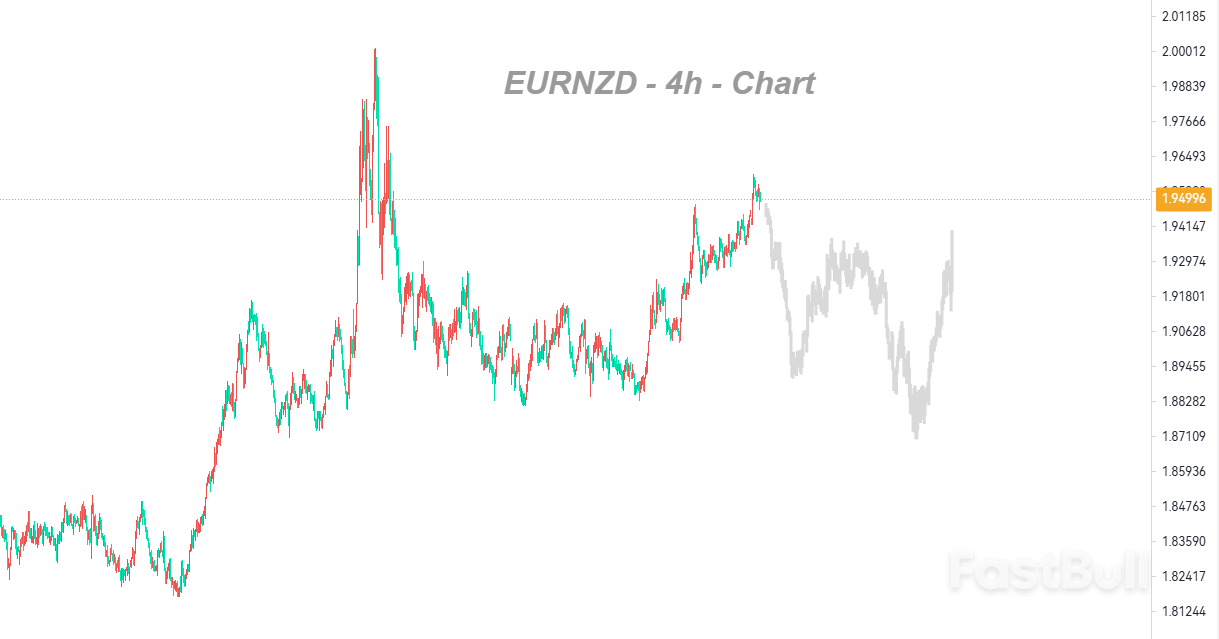
          If the RBNZ signals an end to its rate cut plans, the EURNZD may appreciate. Conversely, if the RBNZ maintains its easing bias, the EURNZD may continue to decline.
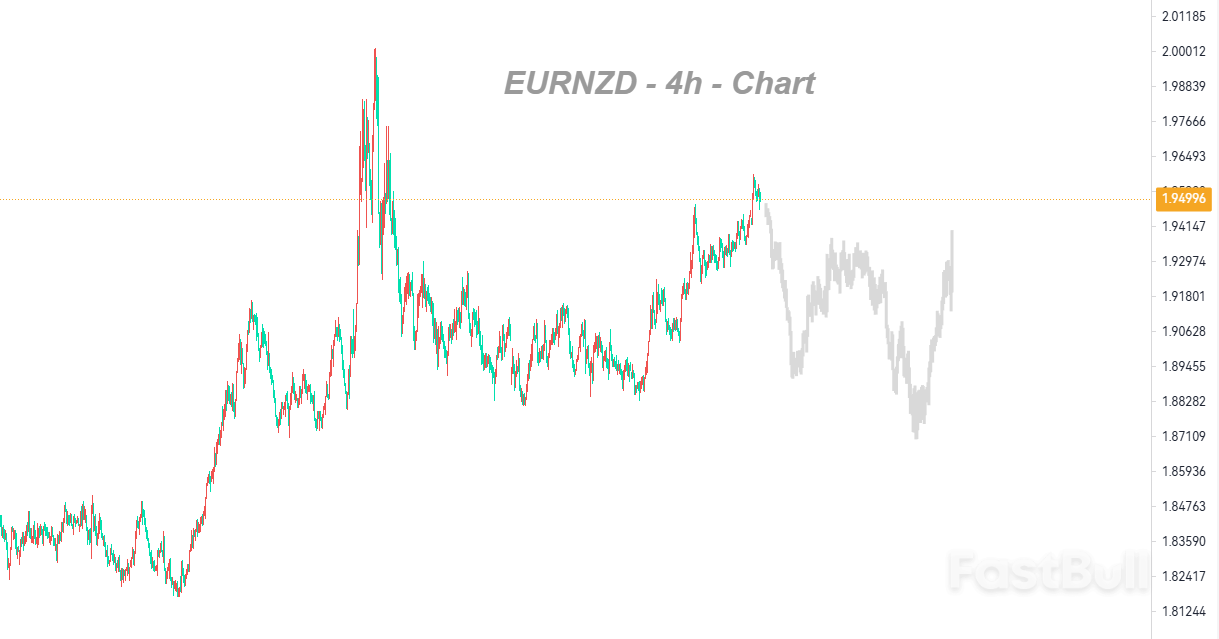
          Easing Bias Continues? RBNZ Remarks Become Market Weathervane_1

          Technical Analysis

          The EURNZD is currently trading around 1.9500, fluctuating within a 1.9400-1.9600 range. Short-term SMAs are trending downward, and momentum indicators favor bears, yet the price nears a mid-term support level, warranting caution for potential rebounds.
          In the 1D timeframe, the 10-day and 20-day SMAs are flattening and slightly declining, with short-term SMAs below mid-term ones, indicating bearish dominance. The 50-day SMA, near 1.9650, serves as a key mid-term resistance; a rise to this level may face selling pressure.
          Regarding price-volume dynamics, intraday volume increased during the decline, while rebounds lacked volume, suggesting bears control the current trend. A subsequent rebound with increased volume could signal a short-term technical correction.

          Trading Recommendations

          Trading Direction: Sell
          Entry Price: 1.9650
          Target Price: 1.9052
          Stop Loss: 1.9760
          Valid Until: July 23, 2025 23:55:00
          Support: 1.9483, 1.9412, 1.9347
          Resistance: 1.9588, 1.9650, 1.9667
          Risk Warnings and Disclaimers
          You understand and acknowledge that there is a high degree of risk involved in trading. Following any strategies or investment methods may lead to potential losses. The content on the site is provided by our contributors and analysts for information purposes only. You are solely responsible for determining whether any trading assets, securities, strategy, or any other product is suitable for investing based on your own investment objectives and financial situation.
          Add to Favorites
          Share

          Brent crude attempts rebound above $69 amid supply constraints and seasonal summer demand surge

          Gerik

          Commodity

          Summary:

          On July 8, 2025, Brent crude traded near $69.50–$69.80, supported by tighter Iranian sanctions, OPEC+ production discipline, and seasonal demand. Key technical pivot zones are resistance at $70.85–$71.00 and support at $68.70...

          BUY BRENT
          Close Time
          CLOSED

          69.710

          Entry Price

          70.800

          TP

          68.500

          SL

          62.262 -1.194 -1.88%

          22.8

          Pips

          Profit

          68.500

          SL

          69.938

          Exit Price

          69.710

          Entry Price

          70.800

          TP

          Market Overview

          Tightening U.S. sanctions on Iranian oil shipments could remove ~1.5% of global supply, potentially lifting prices by ~8%. Although OPEC+ stepped up production by ~548k bpd in August, inventories remain relatively balanced. Seasonal summer demand, especially from travel and cooling, supports price resiliency. Goldman Morgan Stanley forecasts anticipate Brent around $60/bbl by early 2026, suggesting current levels offer near‑term upside before eventual downside.

          Market Sentiment

          Sentiment is cautiously bullish. Sanctions and Middle East escalation fears favor long positions, but OPEC+ supply expansions cap momentum. Volatility indicators (e.g., GARCH for the Brent index) show ~39.9%, slightly down—signaling steadier risk environment. Barchart technical sentiment is mixed-to-slightly bearish (~64% sell signals), though moving averages are conflicted between short-term strength and intraday hesitation.

          Technical Analysis

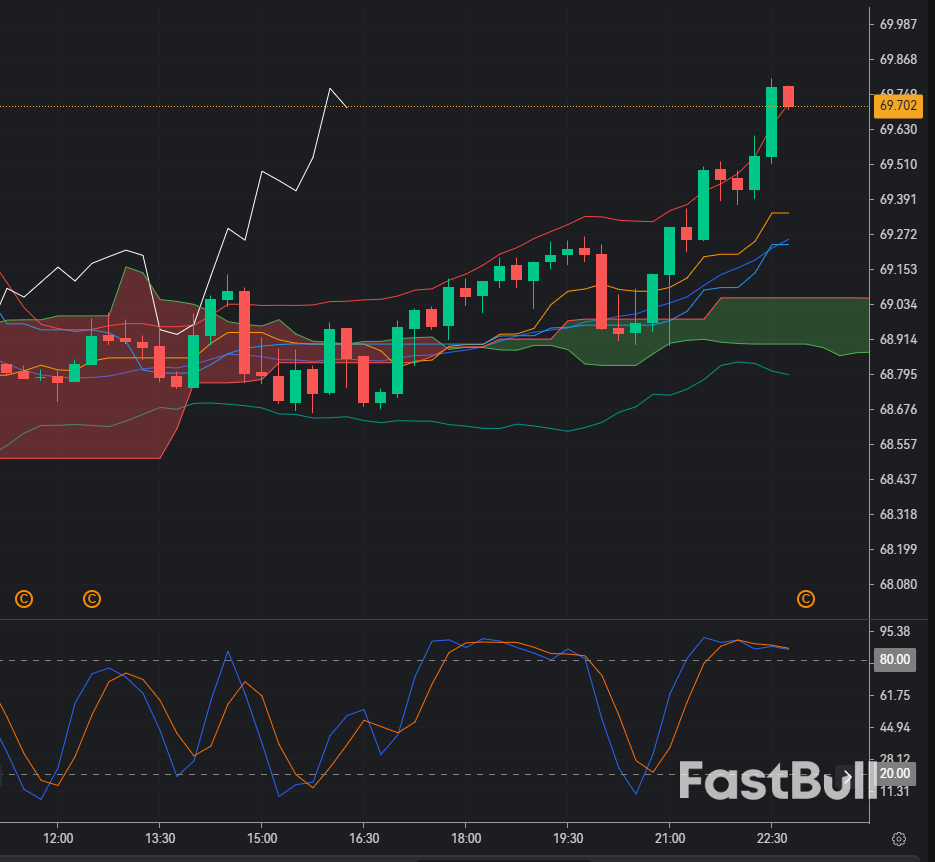
          Brent crude attempts rebound above $69 amid supply constraints and seasonal summer demand surge_1
          Using Bollinger (20,0,2), Ichimoku (9,26,52), Stoch (5,3,3) on the M15 timeframe:
          Bollinger Bands: Price holding above mid‑band (~69.00), riding upper band near $69.80, signaling bullish continuation.
          Ichimoku: Intraday candles sit above Tenkan/Kijun crossover; cloud resistance sits near $70.85–$71.00.
          Stochastic: Currently at ~60—still bullish with room before reaching overbought.

          Trade Recommendation

          Entry (Long): $69.50–$69.70 — near current midpoint with confirmation
          Take Profit: $70.80–$71.00 — aligns with Ichimoku & seasonal resistance
          Stop Loss: $68.50 — just below lower Bollinger band and former resistance
          Risk Warnings and Disclaimers
          You understand and acknowledge that there is a high degree of risk involved in trading. Following any strategies or investment methods may lead to potential losses. The content on the site is provided by our contributors and analysts for information purposes only. You are solely responsible for determining whether any trading assets, securities, strategy, or any other product is suitable for investing based on your own investment objectives and financial situation.
          Add to Favorites
          Share

          GBP/JPY Climbs Toward 200 as Trade Tensions Hit Yen and UK Fiscal Woes Loom

          Warren Takunda

          Traders' Opinions

          Economic

          Summary:

          The Pound gains against the Yen, pushing GBP/JPY near 199.50 as Trump’s renewed tariff threat on Japan weighs heavily on JPY sentiment.

          BUY GBPJPY
          Close Time
          CLOSED

          199.209

          Entry Price

          201.550

          TP

          197.200

          SL

          207.704 +0.604 +0.29%

          57.9

          Pips

          Profit

          197.200

          SL

          199.788

          Exit Price

          199.209

          Entry Price

          201.550

          TP

          The British Pound extended its rally against the Japanese Yen on Tuesday, with the GBP/JPY pair climbing to fresh multi-month highs near 199.45 during the early European session. The move reflects mounting pressure on the Yen, driven by heightened trade tensions between Japan and the United States, while the Pound remains supported by technical strength—despite facing growing scrutiny over the UK’s fiscal outlook.
          The latest blow to the Japanese Yen came after U.S. President Donald Trump reiterated plans to slap 25% tariffs on Japanese imports, targeting one of America’s most crucial trading partners. In comments made late Monday on Truth Social, Trump doubled down on his protectionist trade strategy, announcing that tariffs would apply to a wide range of Japanese goods, potentially going into effect by early August.
          Japan’s government wasted no time responding. On Tuesday morning, Chief Trade Negotiator Ryosei Akazawa revealed that he had held a 40-minute call with U.S. Commerce Secretary Howard Lutnick to discuss the issue. While both sides agreed to continue negotiations, Akazawa emphasized that Japan would not back down on its core industrial interests, specifically its critical automobile sector.
          “The auto sector is the backbone of our economy,” Akazawa said in Tokyo. “A 25% tariff on Japanese cars and auto parts is not only unjustified—it is destructive. It’s already inflicting heavy losses on our companies.”
          Markets interpreted the exchange as a sign that any resolution to U.S.-Japan trade friction will be slow and uncertain. As a result, traders largely shed the Yen in early trading, concerned that the trade conflict could weigh on Japanese exports and business sentiment over the coming quarters. With the Bank of Japan already navigating a cautious and gradual path toward policy normalization, any external drag on growth makes it even harder for the central bank to tighten monetary conditions.
          While Sterling has benefited from the Yen’s weakness and supportive technical factors, it is not without headwinds of its own. The UK faces growing questions about fiscal discipline after Chancellor of the Exchequer Rachel Reeves broke her own spending limits last week by raising the standard allowance for Universal Credit. The policy shift, estimated to cost the Treasury an additional £4.8 billion by FY2029–30, is seen as a politically driven measure aimed at softening the cost-of-living burden for low-income families.
          According to analysis from Barclays, Reeves’ decision likely sets the stage for tax increases in the Autumn Budget to maintain some semblance of fiscal credibility.
          “The Chancellor is in a tight spot,” Barclays noted in a Tuesday research note. “If revenues don’t exceed expectations, new tax hikes will be needed to plug the fiscal gap.”
          Although the short-term impact on the Pound has been muted, analysts warn that the UK’s rising deficit could weigh on Sterling in the months ahead—particularly if bond markets begin to price in higher risk premiums for UK debt.

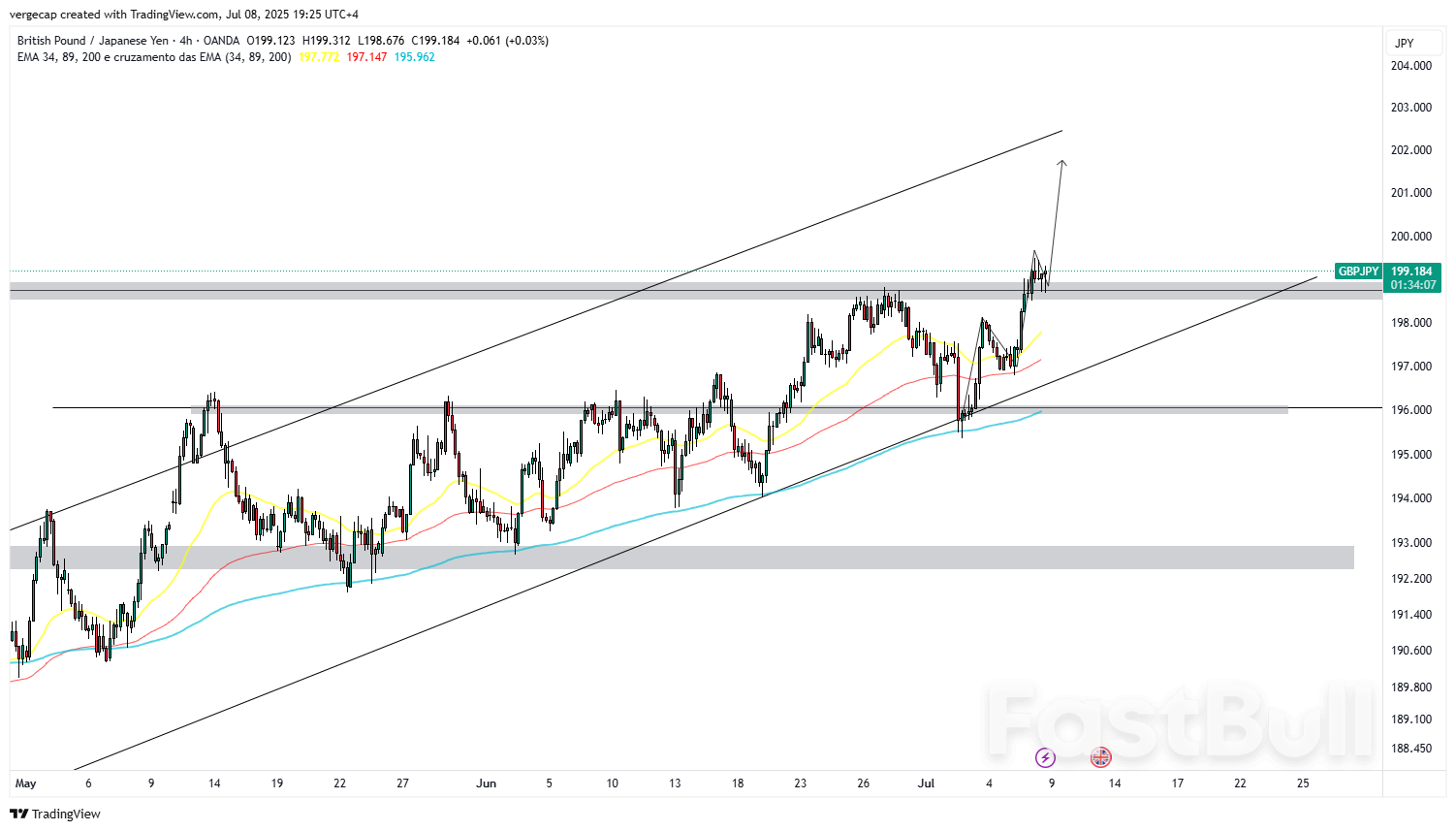
          Technical Analysis GBP/JPY Climbs Toward 200 as Trade Tensions Hit Yen and UK Fiscal Woes Loom_1

          From a technical standpoint, the GBP/JPY cross remains firmly embedded in a bullish trend, having surged from key support near 196.70. That level, which aligns with the lower bound of the ascending channel, served as a launchpad for Monday’s impressive rally that saw the pair break above the 199.00 handle—surpassing the 66.8% Fibonacci retracement of the last major downswing.
          Tuesday’s action has been similarly constructive, with price extending to 199.45 in early European hours. As long as GBP/JPY holds above immediate support at 198.80, the path of least resistance remains to the upside. Technical projections now point toward a potential test of 200.30—an important psychological threshold—and possibly 201.55 if bullish momentum continues to build.
          The primary risk to this outlook would be a decisive break below 197.50, which would suggest fading momentum and open the door for a deeper corrective pullback toward 196.00.
          TRADE RECOMMENDATION
          BUY GBPJPY
          ENTRY PRICE: 199.20
          STOP LOSS: 197.20
          TAKE PROFIT: 201.55
          Risk Warnings and Disclaimers
          You understand and acknowledge that there is a high degree of risk involved in trading. Following any strategies or investment methods may lead to potential losses. The content on the site is provided by our contributors and analysts for information purposes only. You are solely responsible for determining whether any trading assets, securities, strategy, or any other product is suitable for investing based on your own investment objectives and financial situation.
          Add to Favorites
          Share

          Momentum Remains in a Refueling Mode, but Structurally It Still Favors Buying Low and Selling High

          Eva Chen

          Economic

          Forex

          Summary:

          The persistent weakness of the Japanese yen is attributed to economic and trade uncertainties, which have dampened expectations for the Bank of Japan (BOJ) to raise interest rates. However, a cautious approach is warranted when considering new bullish positions on the USDJPY, given the technical context.

          SELL USDJPY
          Close Time
          CLOSED

          146.807

          Entry Price

          144.030

          TP

          149.500

          SL

          155.843 +0.498 +0.32%

          28.8

          Pips

          Profit

          144.030

          TP

          146.519

          Exit Price

          146.807

          Entry Price

          149.500

          SL

          Fundamentals

          The USDJPY continued its upward trajectory on Tuesday, surpassing the 146.20 resistance level and currently trading near 146.35. The USDJPY has maintained a strong uptrend since late June. The yen remains under pressure due to domestic economic fragility and external headwinds.
          Data released on Monday revealed a significant 2.9% drop in Japan's real wages for May, the fastest in nearly two years, highlighting the disconnect between inflation and nominal income growth. Inflation rose 4.0% year-over-year, while nominal wages increased only 1.0%. Despite a brief rebound in household spending, the decline in purchasing power raises concerns for Japan's fragile consumption recovery.
          Monetary policy continues to impede economic progress. The BOJ's dovish stance, complicated by wage stagnation and inflation-adjusted growth, complicates any rate normalization efforts. These internal factors are exacerbated by external shocks, notably the 25% tariffs on Japanese imports announced by the US. The breakdown of US-Japan trade talks and the threat of retaliatory tariffs further undermine the economic outlook.
          The yen reacted swiftly, breaching the 146.00 level against the dollar, driven by rising US Treasury yields and widening yield differentials. Technically, the asset has room to appreciate if safe-haven flows are limited and the BOJ maintains its current position.
          However, geopolitical risks, weak consumer fundamentals, and trade-related uncertainties make the yen increasingly vulnerable. Short-term movements will depend on Tokyo's policy adjustments and the outcome of bilateral trade negotiations with Washington. Furthermore, the yen may strengthen in the coming months if the market increases bets on further rate hikes this year, as the market currently prices in only a 3-basis-point hike in September, which appears insufficient.
          Momentum Remains in a Refueling Mode, but Structurally It Still Favors Buying Low and Selling High_1

          Technical Analysis

          The USDJPY's Relative Strength Index (RSI) has reached 75, entering overbought territory for the first time in weeks, indicating strong bullish momentum. However, a short-term pullback is possible unless the price consolidates below key resistance levels.
          The MACD continues to show strong bullish momentum, with the MACD line above the signal line and expanding momentum histograms. No divergence or reversal signals are present.
          The asset's recent trend remains in a refueling mode, supported by the 146.20 breakout level. Further gains could target 147.70 and potentially the June high of 148.60. Yet, overbought conditions and geopolitical uncertainties may trigger a short-term correction before further advances.

          Trading Recommendations

          Trading Direction: Sell
          Entry Price: 147.29
          Target Price: 144.03
          Stop Loss: 149.50
          Valid Until: July 23, 2025-07-23 23:55:00
          Support: 146.20, 145.26, 144.18
          Resistance: 147.08, 148.05, 148.68
          Risk Warnings and Disclaimers
          You understand and acknowledge that there is a high degree of risk involved in trading. Following any strategies or investment methods may lead to potential losses. The content on the site is provided by our contributors and analysts for information purposes only. You are solely responsible for determining whether any trading assets, securities, strategy, or any other product is suitable for investing based on your own investment objectives and financial situation.
          Add to Favorites
          Share

          GBP/USD Drops Below 1.3550 as UK Fiscal Risk Grows – More Losses Ahead?

          Warren Takunda

          Traders' Opinions

          Economic

          Summary:

          The British Pound fell on Tuesday as investors reacted to heightened fiscal concerns following Labour's proposed welfare spending increase.

          SELL GBPUSD
          Close Time
          CLOSED

          1.35000

          Entry Price

          1.34000

          TP

          1.36500

          SL

          1.33279 -0.00033 -0.02%

          9.8

          Pips

          Profit

          1.34000

          TP

          1.34902

          Exit Price

          1.35000

          Entry Price

          1.36500

          SL

          The Pound Sterling (GBP) came under renewed selling pressure on Tuesday, extending losses against major counterparts, as growing fiscal uncertainty in the United Kingdom weighed on sentiment. Markets responded negatively to the Labour government’s recent unveiling of a large-scale welfare expansion package, stoking concerns over future borrowing levels, debt sustainability, and the broader macroeconomic outlook for the UK.
          At the center of the latest wave of Sterling weakness is last week’s welfare spending bill, introduced by the Labour-led government in the House of Commons. The proposed legislation includes a significant increase in the standard allowance for Universal Credit (UC), which would raise government expenditure by an estimated £4.8 billion by the 2029–2030 fiscal year. While the measure was broadly welcomed by social advocates, investors were far less enthusiastic.
          The market's reaction was swift and clear. UK government bonds, or gilts, came under intense pressure as traders reassessed the UK’s debt trajectory in light of the new welfare spending. Yields on 10-year gilts climbed sharply, reflecting a combination of increased risk premium and expectations of greater issuance over the medium term. The yield spread between UK gilts and their U.S. Treasury counterparts also widened, underlining a loss of relative attractiveness for British assets.
          Sterling followed suit, weakening notably across the board. The Pound’s decline was particularly pronounced against the U.S. Dollar (USD), as the GBP/USD pair dipped below the 1.3550 handle, marking a 0.43% intraday drop at the time of writing.
          Market participants voiced concern over the absence of a concrete funding strategy for the new spending obligations. Chancellor of the Exchequer Rachel Reeves acknowledged that the plan would have budgetary implications but offered little clarity on how the additional burden would be absorbed.
          “Of course, there is a cost to the welfare changes that Parliament voted through this week, and that will be reflected in the Budget,” Reeves told reporters. However, she stopped short of confirming whether the government would resort to tax increases, spending cuts, or additional borrowing—leaving investors in a state of unease.
          The ambiguity surrounding Labour’s fiscal intent is creating headaches for policymakers and investors alike. After years of managing a delicate balancing act between public spending and fiscal prudence, the UK now finds itself at a crossroads. The push for welfare reform—while perhaps politically popular—risks clashing with the market’s demand for fiscal credibility, particularly at a time when borrowing costs remain elevated and economic growth remains patchy.
          Adding to the uncertainty is the possibility that the UK’s fiscal path could strain relations with the Bank of England (BoE), which remains laser-focused on inflation containment. While UK inflation has been trending lower in recent months, it remains above the central bank’s 2% target, and any perceived fiscal loosening could complicate the BoE’s efforts to maintain a credible monetary stance.
          In this environment, analysts are growing more cautious on the Pound. Many believe that unless the government provides a clearer blueprint for funding the welfare package—without compromising its fiscal rules—the Pound could remain under pressure for the foreseeable future.
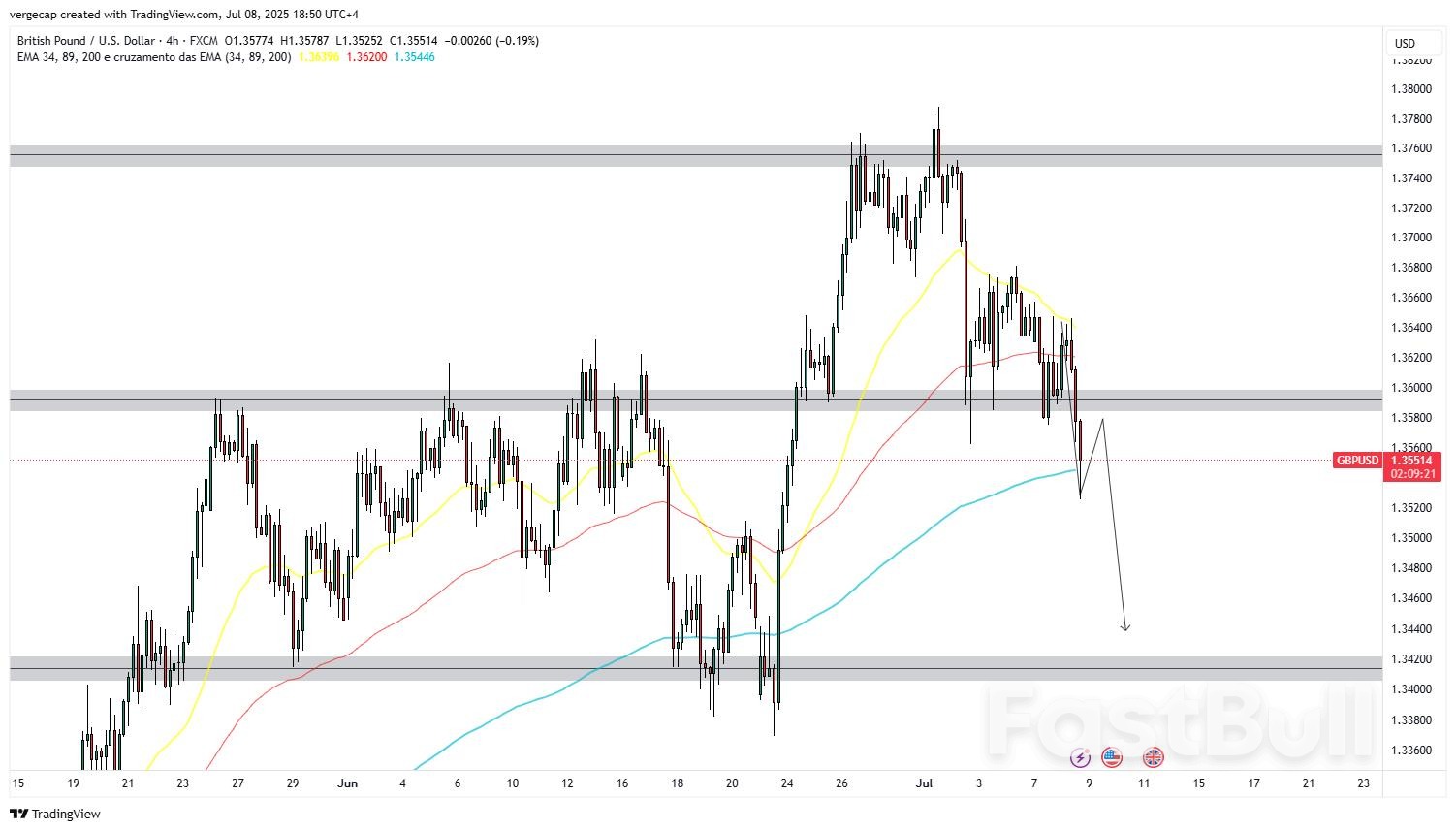
          Technical Analysis GBP/USD Drops Below 1.3550 as UK Fiscal Risk Grows – More Losses Ahead?_1
          Technically, the GBP/USD pair is showing signs of fatigue, with the recent drop below the 1.3550 level reinforcing a bearish near-term bias. The pair is currently trading at 1.3545, down 0.43% on the day. Resistance is forming around 1.3591—just shy of recent swing highs—while support is beginning to cluster near the 1.3470–1.3400 zone, which also aligns with the pair’s 50-day moving average.
          Momentum indicators are starting to turn negative, with the Relative Strength Index (RSI) drifting toward the 40-level, signaling a loss of bullish control. A deeper move below 1.3470 could pave the way for an extended correction toward the 1.3400 target, especially if fiscal concerns remain unresolved and U.S. Dollar strength persists.
          TRADE RECOMMENDATION
          SELL GBPUSD
          ENTRY PRICE: 1.3500
          STOP LOSS: 1.3650
          TAKE PROFIT: 1.3400
          Risk Warnings and Disclaimers
          You understand and acknowledge that there is a high degree of risk involved in trading. Following any strategies or investment methods may lead to potential losses. The content on the site is provided by our contributors and analysts for information purposes only. You are solely responsible for determining whether any trading assets, securities, strategy, or any other product is suitable for investing based on your own investment objectives and financial situation.
          Add to Favorites
          Share

          Euro Faces Downside Pressure as Trade Risks and Weak Data Collide

          Warren Takunda

          Economic

          Summary:

          The Euro rebounded modestly on Tuesday but failed to hold gains above 1.1770, as fears of escalating global trade tensions—sparked by President Trump’s tariff warnings—kept investors risk-averse.

          SELL EURUSD
          Close Time
          CLOSED

          1.17100

          Entry Price

          1.16100

          TP

          1.18000

          SL

          1.16400 -0.00026 -0.02%

          12.1

          Pips

          Profit

          1.16100

          TP

          1.16979

          Exit Price

          1.17100

          Entry Price

          1.18000

          SL

          The Euro (EUR) attempted a cautious rebound against the U.S. Dollar (USD) in early Tuesday trading, bouncing off nearly two-week lows near 1.1690 during the Asian session. However, the move was short-lived. Gains stalled around the 1.1770 mark as market sentiment remained fragile, pressured by renewed fears of a global trade war following a series of new tariff threats from the United States.
          As of midday in Europe, EUR/USD was retreating toward 1.1730, keeping the broader bearish trajectory intact after last week’s failed rally. The pair remains well below its recent highs and continues to trade with a negative bias, weighed down by both macroeconomic headwinds and technical resistance.
          Investor anxiety was reignited after U.S. President Donald Trump sent out formal letters to multiple countries announcing fresh import tariffs, a move interpreted by markets as a renewed hardline stance on trade. Although the Eurozone was not among the recipients—at least not yet—investors remain on edge, anticipating possible ripple effects if negotiations sour or new tariffs are extended to European goods in the near future.
          Market chatter suggests that trade negotiations between the U.S. and the EU are progressing, with some sources hinting at a possible breakthrough announcement as early as Wednesday. This has provided a short-term reprieve for the Euro, helping it avoid a steeper decline. However, any potential gains are likely to be capped unless there's concrete resolution or clear de-escalation in broader trade disputes.
          More broadly, the resurgence of global trade friction has revived demand for the safe-haven U.S. Dollar, to the detriment of risk-sensitive currencies like the Euro. With investors remaining defensively positioned and liquidity thinned by a relatively light economic calendar, short-term flows continue to favor USD strength.
          On the macroeconomic front, trade data from France and Germany—the Eurozone’s two largest economies—did little to inspire confidence. Both countries posted mixed figures, with declining imports and exports suggesting a potential cooling of domestic demand and international competitiveness.
          The weakness in trade volumes also raises fresh concerns about the health of the Eurozone’s economy heading into the third quarter. With inflation still well below the European Central Bank’s (ECB) target and growth projections softening, the region’s economic recovery appears vulnerable to external shocks—particularly from a deteriorating global trade environment.
          This fragility may limit the ECB’s flexibility in the coming months, especially if monetary conditions tighten further as a result of a stronger Dollar and weaker Euro, which could export inflationary pressures back into the region.
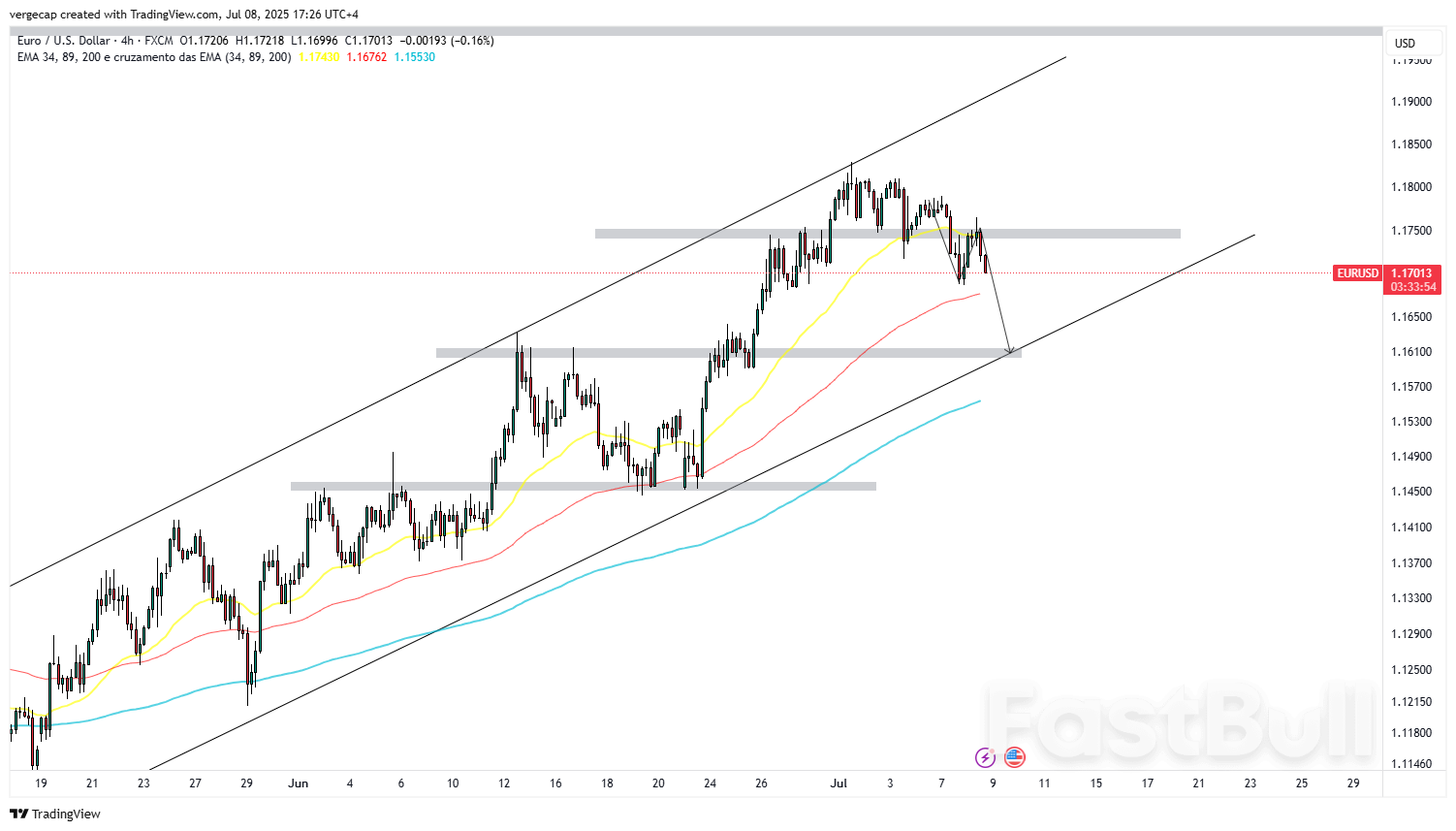
          Technical Analysis Euro Faces Downside Pressure as Trade Risks and Weak Data Collide_1
          From a technical standpoint, the EUR/USD pair remains locked in a bearish formation after failing to breach resistance at 1.1745. The pair retested this level earlier in the session, aligning with the 50-period Exponential Moving Average (EMA50), which acted as a dynamic resistance zone.
          The subsequent pullback underscores the intensity of selling pressure at these levels. Compounding this is the Relative Strength Index (RSI), which flashed a bearish divergence after reaching overbought territory even as price momentum stalled—a classical setup for downside continuation.
          If the pair remains below the 1.1745 barrier, downside risks will remain elevated. The next key support lies at 1.1610, a level that aligns with a previous consolidation zone and may serve as the next logical target for bearish momentum.
          TRADE RECOMMENDATION
          SELL EURUSD
          ENTRY PRICE: 1.1710
          STOP LOSS: 1.1800
          TAKE PROFIT: 1.1610
          Risk Warnings and Disclaimers
          You understand and acknowledge that there is a high degree of risk involved in trading. Following any strategies or investment methods may lead to potential losses. The content on the site is provided by our contributors and analysts for information purposes only. You are solely responsible for determining whether any trading assets, securities, strategy, or any other product is suitable for investing based on your own investment objectives and financial situation.
          Add to Favorites
          Share

          GBP/JPY nearing 199.00 – Watch for a sell‑on‑rally near the upper band?

          Gerik

          Economic

          Forex

          Summary:

          GBP/JPY trades around 198.85, approaching the 198.90–199.00 zone a key resistance marked by recent highs. ...

          SELL GBPJPY
          Close Time
          CLOSED

          198.700

          Entry Price

          197.000

          TP

          199.000

          SL

          207.704 +0.604 +0.29%

          30.0

          Pips

          Loss

          197.000

          TP

          199.001

          Exit Price

          198.700

          Entry Price

          199.000

          SL

          Market Overview

          GBP/JPY currently hovers around 198.85, up ~0.8% from the 196.79 pivot reached yesterday. Despite this rise, Bank of Japan's ongoing yield-curve control and UK’s fiscal jitters have capped broader upside.

          Market Sentiment

          On the daily chart, mood remains cautiously bullish as long as 193.99 holds. However, intraday charts reflect signs of exhaustion: price nearing upper band (198.87–199.00), which coincides with a triangle breakout earlier, and Stoch/RSI likely overbought on M15–H1.

          Technical Analysis

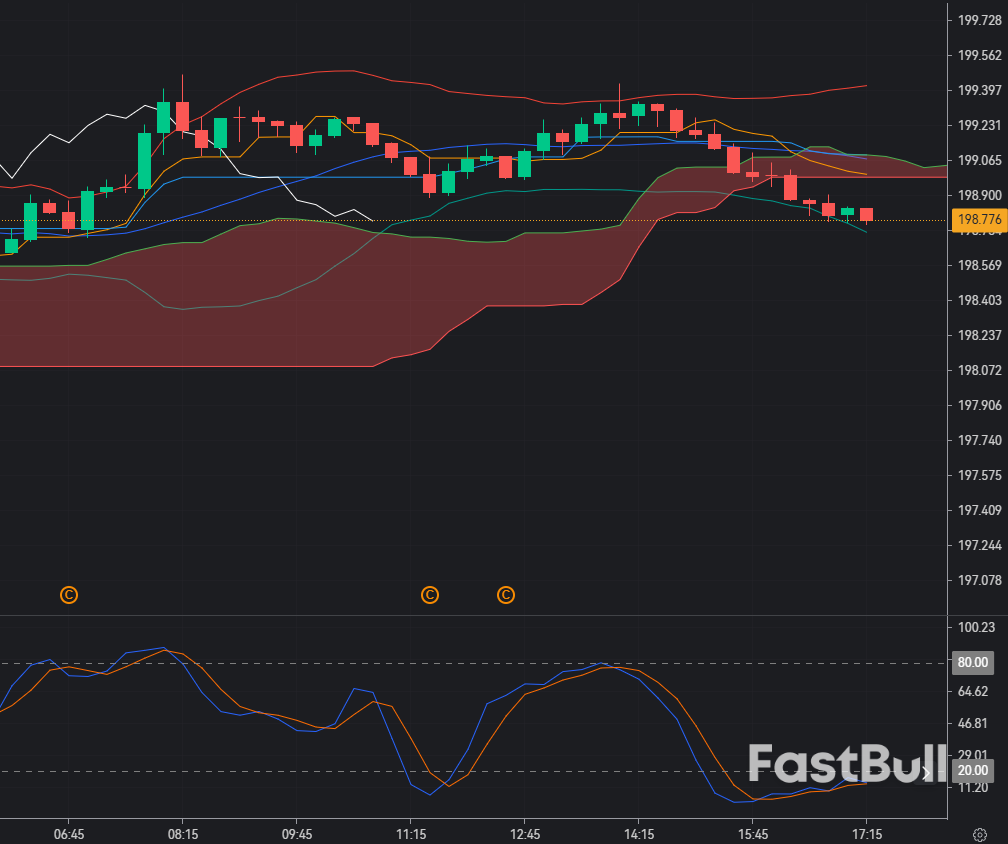
          GBP/JPY nearing 199.00 – Watch for a sell‑on‑rally near the upper band?_1
          Bollinger Bands: Price touching the upper band, indicating potential pullback risk.
          Ichimoku: On M15–H1, price is above Tenkan/Kijun but approaching cloud resistance, which may trigger a rejection.
          Stochastic: Overbought region confirmed by divergence on M15–H1, suggesting potential short-term reversal if resistance doesn’t break.
          Trade Plan
          Entry (Sell): Short around 198.7 if a rejection candle forms on M15.
          Take Profit: Target 197.50–197.00, aligning with recent intraday lows and supportive pivots.
          Stop Loss: Above 199, just beyond upper band/resistance to limit risk on breakout continuation.
          Risk Warnings and Disclaimers
          You understand and acknowledge that there is a high degree of risk involved in trading. Following any strategies or investment methods may lead to potential losses. The content on the site is provided by our contributors and analysts for information purposes only. You are solely responsible for determining whether any trading assets, securities, strategy, or any other product is suitable for investing based on your own investment objectives and financial situation.
          Add to Favorites
          Share
          FastBull
          Copyright © 2025 FastBull Ltd

          728 RM B 7/F GEE LOK IND BLDG NO 34 HUNG TO RD KWUN TONG KLN HONG KONG

          TelegramInstagramTwitterfacebooklinkedin
          App Store Google Play Google Play
          Products
          Charts

          Chats

          Q&A with Experts
          Screeners
          Economic Calendar
          Data
          Tools
          Membership
          Features
          Function
          Markets
          Copy Trading
          Latest Signals
          Contests
          News
          Analysis
          24/7
          Columns
          Education
          Company
          Careers
          About Us
          Contact Us
          Advertising
          Help Center
          Feedback
          User Agreement
          Privacy Policy
          Business

          White Label

          Data API

          Web Plug-ins

          Poster Maker

          Affiliate Program

          Risk Disclosure

          The risk of loss in trading financial instruments such as stocks, FX, commodities, futures, bonds, ETFs and crypto can be substantial. You may sustain a total loss of the funds that you deposit with your broker. Therefore, you should carefully consider whether such trading is suitable for you in light of your circumstances and financial resources.

          No decision to invest should be made without thoroughly conducting due diligence by yourself or consulting with your financial advisors. Our web content might not suit you since we don't know your financial conditions and investment needs. Our financial information might have latency or contain inaccuracy, so you should be fully responsible for any of your trading and investment decisions. The company will not be responsible for your capital loss.

          Without getting permission from the website, you are not allowed to copy the website's graphics, texts, or trademarks. Intellectual property rights in the content or data incorporated into this website belong to its providers and exchange merchants.

          Not Logged In

          Log in to access more features

          FastBull Membership

          Not yet

          Purchase

          Become a signal provider
          Help Center
          Customer Service
          Dark Mode
          Price Up/Down Colors

          Log In

          Sign Up
          Position
          Layout
          Fullscreen
          Default to Chart
          The chart page opens by default when you visit fastbull.com