• Trade
  • Markets
  • Copy
  • Contests
  • 24/7
  • Calendar
  • Q&A
  • Chats
Screeners
SYMBOL
LAST
BID
ASK
HIGH
LOW
NET CHG.
%CHG.
SPREAD
SOURCE
SPX
S&P 500 Index
7493.36
7493.36
7493.36
7499.46
7463.29
+47.63
+ 0.64%
--
--
DJI
Dow Jones Industrial Average
50720.34
50720.34
50720.34
50755.60
50434.65
+434.69
+ 0.86%
--
--
IXIC
NASDAQ Composite Index
26440.91
26440.91
26440.91
26504.55
26309.80
+147.82
+ 0.56%
--
--
USDX
US Dollar Index
99.140
99.140
99.220
99.340
99.080
0.000
0.00%
--
--
EURUSD
Euro / US Dollar
1.16135
1.16135
1.16142
1.16210
1.15880
-0.00032
-0.03%
--
--
GBPUSD
Pound Sterling / US Dollar
1.34463
1.34463
1.34473
1.34625
1.34129
+0.00178
+ 0.13%
--
--
XAUUSD
Gold / US Dollar
4517.74
4517.74
4518.15
4545.94
4491.55
-25.14
-0.55%
--
--
WTI
Light Sweet Crude Oil
95.597
95.597
95.627
98.439
94.591
-1.586
-1.63%
--
--

Community Accounts

Signal Accounts
--
Profit Accounts
--
Loss Accounts
--
View More

Become a signal provider

Sell trading signals to earn additional income

View More

Guide to Copy Trading

Get started with ease and confidence

View More

Signal Accounts for Members

All Signal Accounts

Best Return
  • Best Return
  • Best P/L
  • Best MDD
Past 1W
  • Past 1W
  • Past 1M
  • Past 1Y

All Contests

  • All
  • Recommend
  • Stocks
  • Cryptocurrencies
  • Central Banks
  • Trump Updates
  • Featured News
Top News Only
Share

Minister Wang Wentao Met With U.S. Deputy Trade Representative Switzer

Share

China And Australia Convened The 18th Ministerial Economic Joint Committee

Share

European Commission President Ursula Von Der Leyen: A Historic EU-Mexico Summit Is Underway. Europe And Mexico Can Offer Each Other Many Resources. But More Importantly, We Can Achieve Even More Together. A Stronger Partnership Begins Today

Share

U.S. Secretary Of State Rubio: I Participated In A Productive NATO Meeting And Am Leaving Sweden. Our Goal Is To Make NATO Stronger. The Stronger Our NATO Allies Are, The Stronger NATO Will Be

Share

U.S. Treasury Secretary Bessenter: Federal Reserve Chairman Warsh Should Act Responsibly On Inflation And Economic Growth

Share

U.S. Treasury Secretary Bessant: Federal Reserve Chairman Warsh Will Make The Right Decision On Interest Rate Cuts

Share

The Newly Appointed Federal Reserve Chair, Ben Bernanke, Has Completed His Swearing-in Ceremony And Concluded His Remarks

Share

Newly Appointed Federal Reserve Chairman Warsh Has Completed His Swearing-in Ceremony And Concluded His Remarks

Share

Federal Reserve Chair Kashkari: We Will Learn From Past Mistakes And Successes

Share

Fed Chair Waller: Will Lead A Reform-oriented Federal Reserve

Share

Federal Reserve Chairman Warsh: We Will Learn From Past Mistakes And Successes

Share

Federal Reserve Chairman Warsh: Inflation Can Decrease And The Economy Will Grow Strongly

Share

Federal Reserve Chair Kashkari: 'I Am Not Naive And Fully Understand The Challenges We Face.'

Share

Federal Reserve Chairman Warsh: The Next Few Years Will Bring Unparalleled Prosperity

Share

Federal Reserve Chairman Warsh: I Am Not Naive; I Am Well Aware Of The Challenges We Face

Share

Federal Reserve Chairman Walsh: He Will Fulfill This Responsibility With Abundant Energy And A Strong Sense Of Mission

Share

Waller Was Sworn In As The 17th Chair Of The Federal Reserve

Share

Federal Reserve Chair Powell: Thank You, President Trump. We Are At An Important Moment

Share

Federal Reserve Chairman Warsh: Thank You, President Trump. We Are At A Crucial Moment

Share

Trump Presided Over The Ceremony Marking Wash's Inauguration As Federal Reserve Chair

TIME
ACT
FCST
PREV
IMPACT
BOE Gov Bailey Speaks
Richmond Federal Reserve President Barkin delivered a speech.
U.S. 10-Year TIPS Auction Avg. Yield

A:--

F: --

P: --

XAUUSD
  • XAUUSD
  • XAGUSD
  • WTI
  • USDX
U.S. Weekly Treasuries Held by Foreign Central Banks

A:--

F: --

P: --

USDX
  • USDX
  • XAUUSD
  • XAGUSD
  • WTI
U.K. GfK Consumer Confidence Index (May)

A:--

F: --

P: --

GBPUSD
  • GBPUSD
  • XAUUSD
  • XAGUSD
  • WTI
Japan CPI MoM (Apr)

A:--

F: --

P: --

USDJPY
  • USDJPY
  • XAUUSD
  • XAGUSD
  • WTI
  • USDX
Japan National CPI MoM (Apr)

A:--

F: --

P: --

USDJPY
  • USDJPY
  • XAUUSD
  • XAGUSD
  • WTI
Japan National CPI YoY (Apr)

A:--

F: --

P: --

USDJPY
  • USDJPY
  • XAUUSD
  • XAGUSD
  • WTI
Japan National Core CPI YoY (Apr)

A:--

F: --

P: --

USDJPY
  • USDJPY
  • XAUUSD
  • XAGUSD
  • WTI
Japan National CPI MoM (Not SA) (Apr)

A:--

F: --

P: --

USDJPY
  • USDJPY
  • XAUUSD
  • XAGUSD
  • WTI
ECB Chief Economist Lane Speaks
U.K. Retail Sales MoM (SA) (Apr)

A:--

F: --

P: --

GBPUSD
  • GBPUSD
  • XAUUSD
  • XAGUSD
  • WTI
  • USDX
U.K. Retail Sales YoY (SA) (Apr)

A:--

F: --

P: --
GBPUSD
  • GBPUSD
  • XAUUSD
  • XAGUSD
  • WTI
  • USDX
Germany GfK Consumer Confidence Index (SA) (Jun)

A:--

F: --

P: --
EURUSD
  • EURUSD
  • XAUUSD
  • XAGUSD
  • WTI
  • USDX
U.K. Core Retail Sales YoY (SA) (Apr)

A:--

F: --

P: --
GBPUSD
  • GBPUSD
  • XAUUSD
  • XAGUSD
  • WTI
  • USDX
ECB Chief Economist Lane Speaks
Turkey Capacity Utilization (May)

A:--

F: --

P: --

XAUUSD
  • XAUUSD
  • XAGUSD
  • WTI
  • USDX
Turkey Trade Balance (Apr)

A:--

F: --

P: --

XAUUSD
  • XAUUSD
  • XAGUSD
  • WTI
  • USDX
Germany Ifo Current Business Situation Index (SA) (May)

A:--

F: --

P: --

EURUSD
  • EURUSD
  • XAUUSD
  • XAGUSD
  • WTI
  • USDX
Germany Ifo Business Expectations Index (SA) (May)

A:--

F: --

P: --
EURUSD
  • EURUSD
  • XAUUSD
  • XAGUSD
  • WTI
  • USDX
Germany IFO Business Climate Index (SA) (May)

A:--

F: --

P: --
EURUSD
  • EURUSD
  • XAUUSD
  • XAGUSD
  • WTI
  • USDX
Mexico Economic Activity Index YoY (Mar)

A:--

F: --

P: --

XAUUSD
  • XAUUSD
  • XAGUSD
  • WTI
  • USDX
Canada Industrial Product Price Index YoY (Apr)

A:--

F: --

P: --
USDCAD
  • USDCAD
  • XAUUSD
  • XAGUSD
  • WTI
  • USDX
Canada Retail Sales MoM (SA) (Mar)

A:--

F: --

P: --

USDCAD
  • USDCAD
  • XAUUSD
  • XAGUSD
  • WTI
  • USDX
Canada Industrial Product Price Index MoM (Apr)

A:--

F: --

P: --
USDCAD
  • USDCAD
  • XAUUSD
  • XAGUSD
  • WTI
  • USDX
Canada Core Retail Sales MoM (SA) (Mar)

A:--

F: --

P: --
USDCAD
  • USDCAD
  • XAUUSD
  • XAGUSD
  • WTI
  • USDX
U.S. Conference Board Leading Economic Index MoM (Apr)

A:--

F: --

P: --

USDX
  • USDX
  • XAUUSD
  • XAGUSD
  • WTI
U.S. Conference Board Leading Economic Index (Apr)

A:--

F: --

P: --

USDX
  • USDX
  • XAUUSD
  • XAGUSD
  • WTI
U.S. Conference Board Coincident Economic Index MoM (Apr)

A:--

F: --

P: --

USDX
  • USDX
  • XAUUSD
  • XAGUSD
  • WTI
U.S. Conference Board Lagging Economic Index MoM (Apr)

A:--

F: --

P: --

USDX
  • USDX
  • XAUUSD
  • XAGUSD
  • WTI
U.S. Weekly Total Rig Count

--

F: --

P: --

U.S. Weekly Total Oil Rig Count

--

F: --

P: --

Argentina Retail Sales YoY (Mar)

--

F: --

P: --

Turkey Economic Sentiment Indicator (May)

--

F: --

P: --

Brazil Current Account (Apr)

--

F: --

P: --

Canada National Economic Confidence Index

--

F: --

P: --

Mexico Trade Balance (Apr)

--

F: --

P: --

U.K. BRC Shop Price Index YoY (May)

--

F: --

P: --

U.K. CBI Retail Sales Expectations Index (May)

--

F: --

P: --

U.K. CBI Distributive Trades (May)

--

F: --

P: --

U.S. Chicago Fed National Activity Index (Apr)

--

F: --

P: --

U.S. S&P/CS 20-City Home Price Index YoY (Not SA) (Mar)

--

F: --

P: --

U.S. S&P/CS 20-City Home Price Index MoM (SA) (Mar)

--

F: --

P: --

U.S. FHFA House Price Index MoM (Mar)

--

F: --

P: --

U.S. FHFA House Price Index (Mar)

--

F: --

P: --

U.S. FHFA House Price Index YoY (Mar)

--

F: --

P: --

U.S. S&P/CS 10-City Home Price Index MoM (Not SA) (Mar)

--

F: --

P: --

U.S. S&P/CS 10-City Home Price Index YoY (Mar)

--

F: --

P: --

U.S. S&P/CS 20-City Home Price Index (Not SA) (Mar)

--

F: --

P: --

U.S. S&P/CS 20-City Home Price Index MoM (Not SA) (Mar)

--

F: --

P: --

U.S. Conference Board Consumer Expectations Index (May)

--

F: --

P: --

U.S. Conference Board Consumer Confidence Index (May)

--

F: --

P: --

U.S. Conference Board Present Situation Index (May)

--

F: --

P: --

U.S. Dallas Fed General Business Activity Index (May)

--

F: --

P: --

U.S. Dallas Fed New Orders Index (May)

--

F: --

P: --

U.S. 2-Year Note Auction Avg. Yield

--

F: --

P: --

Australia Westpac Leading Index MoM (Apr)

--

F: --

P: --
China, Mainland Industrial Profit YoY (YTD) (Apr)

--

F: --

P: --

Australia Construction Work Done YoY (Q1)

--

F: --

P: --

Australia RBA Trimmed Mean CPI YoY (Q2)

--

F: --

P: --

Australia Construction Work Done QoQ (SA) (Q1)

--

F: --

P: --

Q&A with Experts
    • All
    • Chatrooms
    • Groups
    • Friends
    3DX cheetah flag
    this time around show entry and exit . no need for acc statement
    john flag
    Nawhdir Øt
    @johnbut finally, in this NY session 👇
    @Nawhdir Øt Yeah this cool,,,my lesso this week from the market is "don't follow the noise"
    3DX cheetah flag
    Nawhdir Øt
    @3DX cheetahsi Mandarin itu, ya?
    @Nawhdir Øti don't kn his .name but both of them always fight
    EuroTrader flag
    3DX cheetah
    over trading this week will make brokers money including liquidation
    @3DX cheetahThe brokers only want the traders to keep trading so they can make the money
    3DX cheetah flag
    EuroTrader
    @3DX cheetahThe brokers only want the traders to keep trading so they can make the money
    @EuroTraderur right
    EuroTrader flag
    Nawhdir Øt
    @EuroTraderLOST!
    @Nawhdir ØtThat's not true 🤣🤣💬. You are the seasoned pro that has been making money consistently
    EuroTrader flag
    3DX cheetah
    @EuroTraderur right
    @3DX cheetahi have had brokers reach out to me to refer clients and I get profit split. 🤣🤣🤣
    EuroTrader flag
    3DX cheetah
    @EuroTraderur right
    @3DX cheetahYou see why brokers are not there to allow traders make money. They love losing traders so they get the bucks
    3DX cheetah flag
    EuroTrader
    @3DX cheetahYou see why brokers are not there to allow traders make money. They love losing traders so they get the bucks
    @EuroTraderwhy don't you take the offer
    3DX cheetah flag
    who no know go know
    Nawhdir Øt flag
    3DX cheetah
    this time around show entry and exit . no need for acc statement
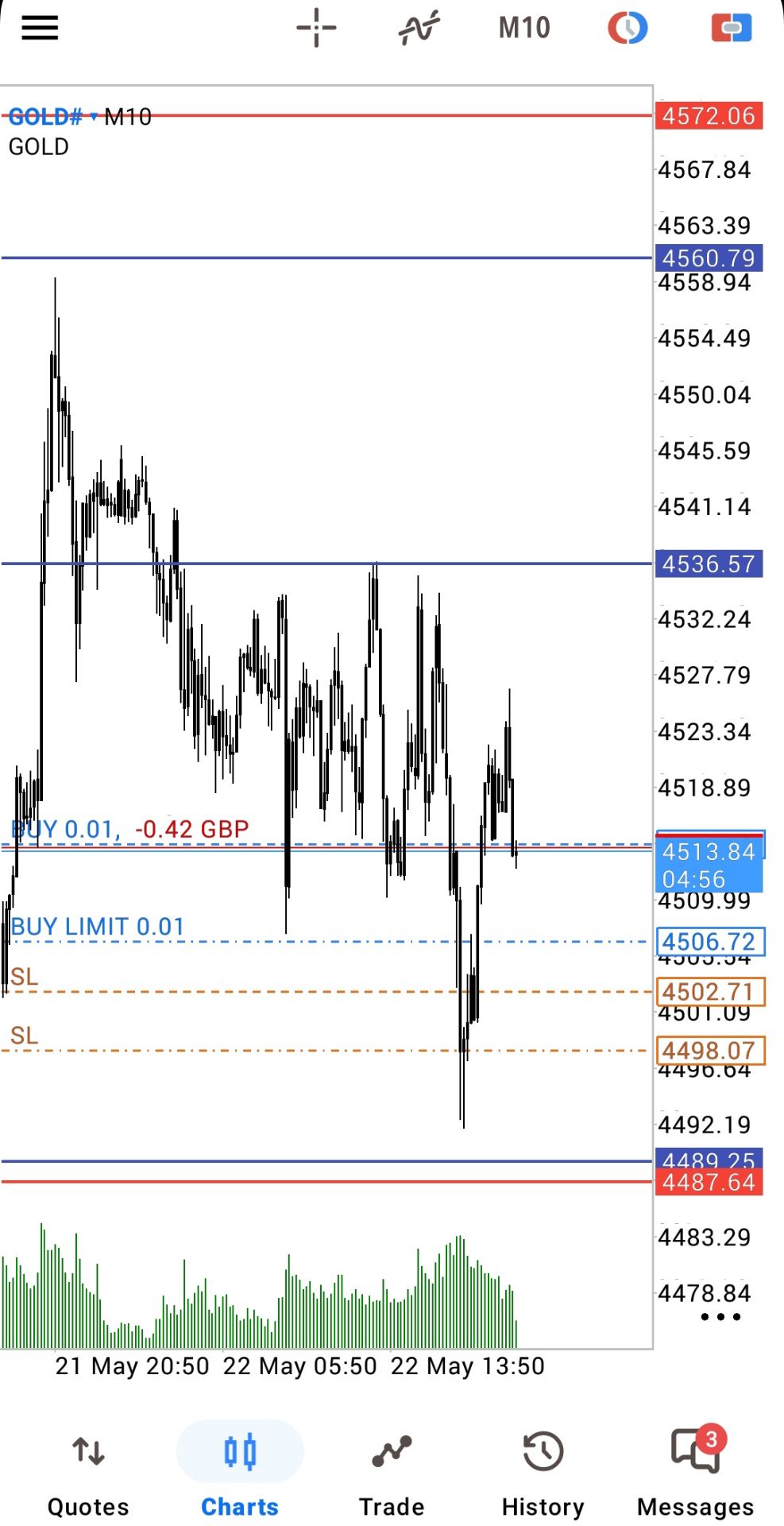
    @3DX cheetahyou meant like this ? 👇
    Nawhdir Øt flag
    Nawhdir Øt flag
    just xample
    EuroTrader flag
    3DX cheetah
    @EuroTraderwhy don't you take the offer
    @3DX cheetahThat's because i care about My followers and would not take them to a shady broker because i want to make money
    EuroTrader flag
    3DX cheetah
    @EuroTraderwhy don't you take the offer
    @3DX cheetahThey promised to pay 30% of any deposit i make and that's not great
    Osaghae Cephas flag
    nice.........
    Osaghae Cephas flag
    EuroTrader
    @Osaghae Cephasthis week that's rounding off just now that's what am referring to
    @EuroTraderok cool
    john flag
    Nawhdir Øt
    @Nawhdir ØtGold holding above $4,500 tells me buyers are still defending this zone carefully
    Nawhdir Øt flag
    john
    @Nawhdir ØtGold holding above $4,500 tells me buyers are still defending this zone carefully
    @johnyea, as you said "with carefully".
    Nawhdir Øt flag
    john
    @Nawhdir ØtGold holding above $4,500 tells me buyers are still defending this zone carefully
    @johndan aku sudah tidak memikirkan ke belakang, jika 2 beli ini SL. Aku masih untung pada akhirnya
    Type here...
    Add Symbol or Code

      No matching data

      All
      Recommend
      Stocks
      Cryptocurrencies
      Central Banks
      Trump Updates
      Featured News
      • All
      • Russia-Ukraine Conflict
      • Middle East Flashpoint
      • All
      • Russia-Ukraine Conflict
      • Middle East Flashpoint
      Search
      Products

      Charts Free Forever

      Chats Q&A with Experts
      Screeners Economic Calendar Data Tools
      Membership Features
      Data Warehouse Market Trends Institutional Data Policy Rates Macro

      Market Trends

      Market Sentiment Order Book Forex Correlations

      Top Indicators

      Charts Free Forever
      Markets

      News

      24/7 Analysis Education

      Latest Views

      Latest Update

      Signals

      Copy Rankings Latest Signals Become a signal provider AI Rating
      Contests
      Brokers

      Overview Brokers Assessment Rankings Regulators News Claims
      Broker listing Forex Brokers Comparison Tool Live Spread Comparison Scam
      Q&A Complaint Scam Alert Videos Tips to Detect Scam
      More

      Business
      Events
      Careers About Us Advertising Help Center

      White Label

      Broker API

      Data API

      Web Plug-ins

      Affiliate Program

      Awards Institution Evaluation IB Seminar Salon Event Exhibition
      Vietnam Thailand Singapore Dubai
      Fans Party Investment Sharing Session
      FastBull Summit BrokersView Expo
      Recent Searches
        Top Searches
          Markets
          Analysis
          User
          24/7
          Economic Calendar
          Education
          Data
          • Names
          • Latest
          • Prev

          View All

          No data

          Scan to Download

          Faster Charts, Chat Faster!

          Download App
          English
          • English
          • Español
          • العربية
          • Bahasa Indonesia
          • Bahasa Melayu
          • Tiếng Việt
          • ภาษาไทย
          • Français
          • Italiano
          • Türkçe
          • Русский язык
          • 简中
          • 繁中
          Open Account
          Search
          Products
          Charts Free Forever
          Markets
          News
          Signals

          Copy Rankings Latest Signals Become a signal provider AI Rating
          Contests
          Brokers

          Overview Brokers Assessment Rankings Regulators News Claims
          Broker listing Forex Brokers Comparison Tool Live Spread Comparison Scam
          Q&A Complaint Scam Alert Videos Tips to Detect Scam
          More

          Business
          Events
          Careers About Us Advertising Help Center

          White Label

          Broker API

          Data API

          Web Plug-ins

          Affiliate Program

          Awards Institution Evaluation IB Seminar Salon Event Exhibition
          Vietnam Thailand Singapore Dubai
          Fans Party Investment Sharing Session
          FastBull Summit BrokersView Expo

          What Are Non-Tariff Measures? Meaning, Types & Examples

          zhan chen
          Summary:

          Tariffs are low, yet trade is harder than ever. We decode how non tariff measures act as the invisible, high-stakes architecture of today’s global supply chains.

          While global tariffs have plummeted over the last few decades, moving goods across international borders has arguably never been more complex. Today, governments increasingly rely on a web of regulations, standards, and quotas to manage trade flows and protect domestic interests. These non-tariff measures form the invisible architecture of global commerce, shaping everything from agricultural supply chains to the trade of critical technology. Navigating this landscape requires understanding exactly what these measures entail, how they function in practice, and why they often impose steeper compliance hurdles than traditional border taxes.
          What Are Non-Tariff Measures? Meaning, Types & Examples

          What Exactly Are Non-Tariff Measures — and Why Do They Matter for Trade?

          Non-tariff measures (NTMs) are official policy regulations, other than ordinary customs tariffs, that alter the quantity, price, or overall economic dynamics of internationally traded goods. Based on the classification framework developed by the United Nations Conference on Trade and Development (UNCTAD), NTMs encompass a vast array of regulatory actions, ranging from safety standards and labeling requirements to import quotas and price controls.

          As global applied tariffs have dropped to historic lows over the past three decades through World Trade Organization (WTO) negotiations, NTMs have proliferated. They now represent the primary friction point in global supply chains. Economic modeling frequently converts the compliance cost of these regulations into an "ad-valorem equivalent" (AVE) to compare them directly against tariffs. In heavily regulated sectors like agriculture and pharmaceuticals, the AVE of non-tariff measures often exceeds 15% to 20%, dwarfing the actual import tax.

          Non-Tariff Measures vs. Non-Tariff Barriers

          A common analytical error is treating NTMs and Non-Tariff Barriers (NTBs) as exact synonyms. While the terms overlap in practice, they maintain a strict legal and conceptual boundary in international trade economics. All NTBs are non-tariff measures, but not all NTMs are barriers.

          FeatureNon-Tariff Measures (NTMs)Non-Tariff Barriers (NTBs)
          Primary IntentNeutral public policy (health, safety, environmental protection).Protectionist; designed to shield domestic industries from foreign competition.
          WTO StatusPermissible, provided they do not discriminate between trading partners.Often contestable, subject to dispute settlement if they violate trade agreements.
          Typical FormatTechnical Barriers to Trade (TBT), Sanitary and Phytosanitary (SPS) rules.Arbitrary import quotas, localized subsidies, discriminatory licensing.
          ExampleRequiring all imported and domestic electronics to pass fire safety testing.Banning a specific foreign competitor's software under vague national security claims.

          The Economic Impact of NTMs

          Understanding how these measures function mechanically reveals why tracking non-tariff measures data is mandatory for cross-border operations. NTMs do not simply add a line-item tax; they restructure market access through four primary channels:

          • Fixed Compliance Costs: Testing, certification, and supply chain audits require upfront capital. A new technical standard can immediately price small and medium enterprises (SMEs) out of an export market, favoring large incumbents who can absorb the fixed costs.
          • Time and Lead-Time Variance: Customs inspections, pre-shipment certifications, and complex licensing approvals introduce friction. For perishable goods or just-in-time manufacturing, an unpredictable three-day hold at a port destroys more margin than a 5% tariff.
          • Information Asymmetry: Tariffs are highly transparent and easily queried in customs databases. NTMs are embedded in dense legal texts across competing jurisdictions, requiring specialized legal infrastructure to monitor, interpret, and implement.
          • Quality Signaling: Not all NTM impact is negative. Strict Sanitary and Phytosanitary (SPS) measures often increase consumer confidence in imported goods, organically increasing demand and expanding the market despite the initial regulatory burden.

          What Are the Main Types of Non-Tariff Measures?

          The United Nations Conference on Trade and Development (UNCTAD) categorizes non-tariff measures into 16 distinct chapters (A through P), broadly split into technical measures, non-technical measures, and export-related restrictions. Global non tariff measures data collected by UNCTAD indicates that over 80% of international trade is currently subject to at least one of these regulatory frameworks, with technical requirements forming the vast majority of compliance obligations.

          Sanitary and Phytosanitary (SPS) Measures

          Sanitary and Phytosanitary (SPS) measures restrict or regulate imports specifically to protect human, animal, or plant life from pests, diseases, toxins, or disease-carrying organisms. Classified under Chapter A of the UNCTAD framework, these technical measures dictate the physical and biological parameters an agricultural or food product must meet before crossing a border.

          Regulatory bodies enforce SPS measures through three primary mechanisms:

          • Maximum Residue Limits (MRLs): Strict quantitative thresholds for pesticide or veterinary drug residues. For example, the European Union enforces an MRL for ethylene oxide in imported sesame seeds at a strict 0.05 mg/kg.
          • Quarantine and Fumigation: Mandatory treatment protocols, such as requiring methyl bromide fumigation for timber imports to eradicate invasive insect species prior to shipment.
          • Geographic Prohibitions: Total import bans on specific biological products from regions experiencing active outbreaks, such as halting raw poultry imports from a country reporting highly pathogenic avian influenza (HPAI).

          Technical Barriers to Trade (TBT)

          Technical Barriers to Trade (TBT) encompass product-specific regulations, standards, and conformity assessment procedures designed to protect consumer safety, national security, or the environment. Representing Chapter B of the UNCTAD classification, TBTs are the most frequently applied non tariff measures globally, affecting manufactured goods ranging from lithium-ion batteries to children's apparel.

          A common analytical failure in trade compliance is conflating SPS and TBT regulations. The World Trade Organization (WTO) non tariff measures framework distinguishes the two based strictly on the measure's policy objective, rather than the product category.

          FeatureSPS MeasuresTBT Measures
          Primary ObjectiveProtect biological health from pests, diseases, toxins, and contaminants.Protect consumer safety, the environment, or ensure accurate product information.
          Target ScopePrimarily biological, agricultural, and food products.Primarily industrial and manufactured goods, though it includes food packaging/labeling.
          Common Non Tariff Measures ExamplesPesticide limits, meat inspection rules, plant quarantines.Energy efficiency labels, automotive crash standards, organic certifications.
          Conformity VerificationVeterinary certificates, phytosanitary certificates.Third-party laboratory testing, factory audits, technical dossiers.

          Quotas, Licensing, and Import Controls

          Quotas, licensing, and import controls act as quantitative non-technical restrictions that manage the absolute volume or administrative flow of goods entering a domestic market. Unlike technical measures that require a manufacturer to physically modify a product, Chapter E and F measures operate as numerical or procedural chokepoints at customs checkpoints.

          • Tariff-Rate Quotas (TRQs): A two-tiered volume system where a specific quantity of goods can enter at a preferential, lower tariff rate. Any imports exceeding that designated threshold trigger a significantly higher, often prohibitive, penalty tariff.
          • Non-Automatic Licensing: A system requiring importers to obtain discretionary approval from a government ministry before moving goods. This functions as a de facto volume control, allowing regulators to abruptly slow or halt license issuance without formally rewriting national trade policy.
          • Minimum Import Prices: Baselines set by customs authorities to counter alleged dumping. If an imported product is invoiced below this benchmark, customs automatically assesses duties based on the higher statutory minimum rather than the actual transaction value.

          Subsidies and Other Behind-the-Border Measures

          Behind-the-border measures are internal domestic economic policies that distort international trade dynamics, even though they are not applied directly at customs ports. This specific category is where the analytical boundary of non tariff measures vs non tariff barriers becomes critical: while an NTM is structurally a neutral policy instrument, it crosses into becoming a non-tariff barrier (NTB) when its design or enforcement disproportionately penalizes foreign competitors to protect domestic industry.

          Chapter L (Subsidies) and Chapter I (Trade-Related Investment Measures) represent the core of these domestic interventions. They materialize in three distinct ways:

          • Production Subsidies: Direct cash grants, below-market state loans, or operational tax credits provided to domestic manufacturers, mathematically allowing them to underprice unsubsidized foreign competitors.
          • Local Content Requirements (LCRs): Legislative mandates requiring a specific percentage of a product's value to be manufactured locally to qualify for state benefits. A contemporary example is the US Inflation Reduction Act (IRA), which ties consumer tax credits for electric vehicles to strict North American battery assembly and critical mineral sourcing minimums.
          • Discriminatory Government Procurement: State-level policies legally directing public agencies to purchase goods exclusively from domestic suppliers, effectively cordoning off large segments of public infrastructure spending from international competition regardless of a foreign supplier's cost efficiency.

          How Do Non-Tariff Measures Actually Restrict Trade?

          Beyond their formal classifications, non-tariff measures restrict trade through administrative friction, fixed compliance costs, and localized certification requirements that foreign producers must absorb before moving goods across borders. While tariffs function as straightforward border taxes calculated at the point of entry, NTMs operate structurally. They force foreign exporters to alter the production, packaging, and testing phases of their supply chains long before a product reaches customs.

          UNCTAD non-tariff measures data shows these regulations now affect roughly 70% of global trade. They restrict market access through three primary channels:

          • Production modifications: Mandating specific design, ingredient, or manufacturing standards that differ from the exporter's home market, stripping away economies of scale.
          • Conformity assessments: Requiring expensive, redundant third-party testing in the destination country because foreign lab results are not recognized.
          • Procedural friction: Creating unpredictable delays at borders for physical inspections, document verification, and quarantine holds.

          When NTMs Act as Hidden Protectionism

          NTMs cross into hidden protectionism when governments weaponize legitimate regulatory frameworks—like health, safety, or environmental standards—to deliberately shield domestic industries from foreign competition. This distinction highlights the precise boundary in the debate of non tariff measures vs non tariff barriers: an NTM is a neutral policy instrument, whereas an NTB is an NTM applied with discriminatory intent.

          Because WTO rules strictly limit baseline tariffs, nations frequently use complex NTMs to achieve the exact same exclusionary effect without technically violating tariff bindings. Common non tariff measures examples operating as protectionism include:

          • SPS (Sanitary and Phytosanitary) Overreach: A nation banning beef imports under the pretext of a minor, localized disease outbreak that poses zero transmission risk in processed meat, effectively handing a monopoly to local ranchers.
          • Redundant Technical Barriers to Trade (TBT): Mandating that imported machinery undergo rigorous safety testing exclusively in state-run domestic labs, while local competitors face expedited approvals.
          • Opaque Licensing and Quotas: Using deliberately vague administrative processes to slow imports. For instance, in trade disputes concerning China non tariff measures US technology firms frequently cite unpredictable customs valuations and unwritten local-content requirements as primary barriers to market entry.

          In these cases, the regulatory objective is secondary; the primary function is to price foreign competitors out of the market through attrition.

          How Compliance Costs Hit Exporters Harder Than Tariffs

          Unlike tariffs, which operate as variable costs that scale predictably with export volume, NTMs impose steep fixed costs that create absolute barriers to market entry. If a manufacturer wants to export to a new region, they must pay for facility upgrades, specialized packaging, and legal certifications regardless of whether they sell ten units or ten thousand. This cost structure disproportionately prices small and medium-sized enterprises (SMEs) out of international trade entirely.

          While global average applied tariffs have fallen below 5%, the economic impact of NTMs is vastly higher. Economists measure this using the Ad-Valorem Equivalent (AVE)—a metric calculating the theoretical tariff percentage that would restrict trade to the same degree as the NTM. In heavily regulated sectors like agriculture, automotive, and chemicals, NTM AVEs frequently exceed 20%.

          Tariff vs. NTM Cost Structures

          Cost AttributeTraditional TariffsNon-Tariff Measures (NTMs)
          Cost DynamicsVariable; strictly proportional to shipment value or volume.Primarily fixed; high upfront capital required for compliance and certification.
          PredictabilityHigh; rates are published in national tariff schedules.Low; subject to arbitrary inspections, changing standards, and bureaucratic delays.
          Capital FlowActs as tax revenue transferred directly to the importing government.Acts as deadweight loss absorbed by administrative friction, redundant testing, and supply chain delays.
          SME ImpactMarginally reduces profit per unit; manageable if margins allow.Frequently acts as an absolute market entry barrier due to prohibitive upfront fixed costs.

          Because compliance requires restructuring physical operations rather than simply paying a fee at the border, NTMs demand sustained operational bandwidth. Exporters do not just lose margin; they lose agility, making NTMs a far more rigid impediment to global supply chains than flat border taxes.

          Real-World Examples of Non-Tariff Measures in Action

          Sovereign states deploy non-tariff measures (NTMs) either as legitimate regulatory safeguards or as protectionist tools to shield domestic industries. The following cases illustrate how technical standards, procurement mandates, and export controls alter global trade flows without relying on traditional import taxes.

          EU Environmental and Food Safety Standards Blocking Agricultural Imports

          The European Union utilizes Sanitary and Phytosanitary (SPS) measures and Technical Barriers to Trade (TBT) more frequently than any other major economy, primarily to enforce domestic health and environmental mandates. While designed for consumer protection, these standards frequently act as exclusionary barriers for developing-nation exporters who lack the capital to upgrade their agricultural infrastructure.

          • Maximum Residue Limits (MRLs): The EU strictly regulates pesticide residues. The reduction of the MRL for tricyclazole (a fungicide used in rice) to 0.01 mg/kg severely curtailed basmati rice imports from India, forcing exporters to shift to alternative, more expensive crop protection methods to maintain market access.
          • Deforestation Regulation (EUDR): Taking effect in late 2024, this regulation requires mandatory due diligence from operators placing commodities like coffee, cocoa, and palm oil on the EU market. Exporters must provide precise geolocation data proving the product was not sourced from recently deforested land—a significant technical hurdle for smallholder farmers in South America and Southeast Asia.
          • Carbon Border Adjustment Mechanism (CBAM): Entering its definitive phase in 2026, CBAM imposes a carbon price equivalent on imports of cement, iron, steel, and fertilizers. It functions as a technical standard by requiring importers to account for embedded emissions, effectively penalizing foreign producers reliant on carbon-intensive energy grids.

          U.S. "Buy American" Rules as a Non-Tariff Barrier

          United States trade policy increasingly relies on local content requirements and government procurement restrictions to secure domestic supply chains. These measures bypass WTO tariff schedules by attaching strict domestic sourcing conditions to federal funding and consumer tax credits.

          • The Build America, Buy America Act (BABA): Embedded within the 2021 Infrastructure Investment and Jobs Act, BABA mandates that all iron, steel, manufactured products, and construction materials used in federally funded infrastructure projects be produced in the United States. For manufactured goods, the cost of domestic components must exceed 55% of the total component cost.
          • Inflation Reduction Act (IRA) EV Credits: To qualify for the full $7,500 Section 30D clean vehicle tax credit, automakers must meet escalating local content thresholds for battery components and critical minerals. The explicit exclusion of vehicles containing components from a "Foreign Entity of Concern" (FEOC) blocks Chinese battery manufacturers from the subsidized U.S. market.

          While these measures successfully stimulate domestic manufacturing capital expenditure, the trade-off is measurable: they systematically inflate infrastructure costs and delay project timelines by restricting access to cheaper foreign inputs.

          China's Export Controls and Licensing Requirements

          Non-tariff measures are not restricted to imports; export-related NTMs (classified under UNCTAD Chapter P) are heavily deployed for geopolitical leverage. China utilizes export licensing systems to control the global supply of critical minerals necessary for semiconductor manufacturing and energy transition technologies.

          Under regulations enforced by the Ministry of Commerce (MOFCOM), exporters of designated materials must navigate a complex dual-use item licensing process. The state retains total discretion over approvals, citing national security interests.

          • Gallium and Germanium (August 2023): China, which processes roughly 80% of the world's gallium and 60% of its germanium, imposed strict licensing requirements on these metals, immediately disrupting raw material acquisition for specialized microprocessors and fiber optics.
          • Graphite (December 2023): MOFCOM required special export permits for high-purity, high-strength artificial graphite materials, directly impacting foreign production of electric vehicle battery anodes.
          • Technology Export Bans (December 2023): China prohibited the export of technology used to make rare earth magnets, preventing competing nations from developing independent processing capabilities even if they secure raw mineral deposits.

          When analyzing the fallout of China non tariff measures, U.S. and European policymakers highlight how these export chokepoints force Western governments to subsidize localized mineral processing facilities at a significant premium to baseline market prices.

          How Are Non-Tariff Measures Different From Tariffs — and Which Imposes Higher Trade Costs?

          As noted throughout this analysis, while tariffs are direct financial taxes levied at a customs border, NTMs are regulatory, administrative, or quantitative requirements governing the trade of goods. Today, these non-tariff measures impose significantly higher global trade costs than ordinary customs duties.

          With global applied tariffs steadily declining following decades of World Trade Organization (WTO) negotiations, NTMs have proliferated in their place. While tariffs simply alter the final financial price of an import, NTMs dictate whether a product can legally cross the border at all. They function through technical barriers to trade (TBT) and sanitary and phytosanitary (SPS) measures, requiring specific manufacturing standards, packaging, or laboratory testing.

          FeatureTariffsNon-Tariff Measures (NTMs)
          MechanismFinancial penalty (tax) applied upon entry.Regulatory compliance, quantitative limits, or administrative rules.
          Cost StructureVariable cost directly proportional to value or volume.High fixed costs (e.g., product testing, facility upgrades, certification).
          TransparencyHighly transparent; clearly published in national customs schedules.Often opaque; embedded in complex domestic laws across multiple agencies.
          Primary IntentRevenue generation or direct price-based protection for domestic industries.Public health, consumer safety, environmental protection, or disguised protectionism.
          MeasurementReadily quantifiable as a straightforward percentage or specific duty.Modeled indirectly via an "Ad Valorem Equivalent" (AVE).

          As established earlier, when evaluating trade policy, analysts draw a strict boundary regarding non-tariff measures vs non-tariff barriers (NTBs). To reiterate, NTM is the broader, neutral umbrella term encompassing any regulation that affects trade volume or prices, such as a legitimate restriction on lead paint in children's toys. NTBs are a specific subset of NTMs implemented with discriminatory, protectionist intent, such as arbitrary import licensing procedures designed explicitly to shield local manufacturers from foreign competition.

          The Hidden Cost of NTMs According to joint research by the UN Conference on Trade and Development (UNCTAD) and the Economic and Social Commission for Asia and the Pacific (ESCAP), the trade costs associated with NTMs are now more than double those of ordinary tariffs. These regulatory frictions cost the global economy roughly $1.4 trillion annually, equating to 1.6% of global GDP.

          To compare these fundamentally different instruments, trade economists convert the administrative friction of an NTM into an Ad Valorem Equivalent (AVE)—the theoretical percentage tax that would restrict trade by the exact same amount. The discrepancy is particularly severe in the agricultural sector, where UNCTAD data places the average AVE for technical measures at 12.8%. In contrast, the AVE for applied technical measures in manufacturing sits at roughly 5.4%.

          The core trade-off between the two lies in fixed versus variable costs. A 5% tariff simply requires a buyer to pay 5% more at the border. An NTM, however, requires supply chain tracing, recurring laboratory testing, and complex international certification. These steep fixed compliance costs disproportionately lock small and medium-sized enterprises (SMEs) and exporters in developing nations out of global markets, making NTMs a far more restrictive hurdle than traditional tariff schedules.

          FAQs about non tariff measures

          What are common examples of non-tariff measures?

          Common examples of non-tariff measures include import quotas, licensing requirements, and price controls. They also encompass technical measures such as sanitary and phytosanitary rules designed to protect public health, food safety, and the environment. Other frequent examples are labeling rules, packaging standards, and complex rules of origin.

          How do non-tariff measures affect international trade?

          Non-tariff measures can restrict international trade by imposing additional information, compliance, and procedural costs on imported and exported goods. This regulatory burden often leads to increased prices for imported goods and can reduce the overall volume of goods traded between countries. While many of these measures are implemented to ensure safety and quality, overly complex regulations can act as significant hurdles for businesses trying to compete in global markets.

          What is the definition of non-tariff measures?

          Non-tariff measures (NTMs) are policy regulations other than ordinary customs tariffs that can potentially have an economic impact on international trade. They encompass a wide array of regulations and procedures that alter the quantities of goods traded, their prices, or both. According to organizations like the United Nations Conference on Trade and Development (UNCTAD), this broad definition includes both technical safety standards and traditional trade policy instruments.

          What is the difference between tariff and non-tariff barriers?

          A tariff is a direct tax or duty imposed by a government on imported or exported goods. In contrast, a non-tariff barrier is an administrative or regulatory obstacle—such as a quota, licensing requirement, or technical standard—that restricts trade without using a direct tax. While tariffs generate revenue for the government and primarily affect trade through taxation, non-tariff barriers influence trade through compliance rules and quantity limitations.

          Conclusion

          As international trade evolves beyond simple customs duties, non-tariff measures have become the defining friction point for global supply chains. For businesses navigating cross-border commerce, understanding the distinction between legitimate regulatory standards and protectionist barriers is no longer optional. Successfully entering foreign markets now demands early anticipation of strict technical requirements, steep compliance costs, and potential administrative delays. Ultimately, companies that proactively build regulatory agility into their operations will be best positioned to absorb these hidden costs and maintain a competitive edge on the global stage.

          Risk Warnings and Disclaimers
          You understand and acknowledge that there is a high degree of risk involved in trading. Following any strategies or investment methods may lead to potential losses. The content on the site is provided by our contributors and analysts for information purposes only. You are solely responsible for determining whether any trading assets, securities, strategy, or any other product is suitable for investing based on your own investment objectives and financial situation.
          Add to Favorites
          Share
          FastBull
          Copyright © 2026 FastBull Ltd

          728 RM B 7/F GEE LOK IND BLDG NO 34 HUNG TO RD KWUN TONG KLN HONG KONG

          TelegramInstagramTwitterfacebooklinkedin
          App Store Google Play Google Play
          Products
          Charts

          Chats

          Q&A with Experts
          Screeners
          Economic Calendar
          Data
          Tools
          Membership
          Features
          Function
          Markets
          Copy Trading
          Latest Signals
          Contests
          24/7
          Analysis
          Education
          Company
          Careers
          About Us
          Contact Us
          Advertising
          Help Center
          Feedback
          User Agreement
          Privacy Policy
          Personal Information Protection Statement
          Business

          White Label

          Broker API

          Data API

          Web Plug-ins

          Poster Maker

          Affiliate Program

          Risk Disclosure

          The risk of loss in trading financial instruments such as stocks, FX, commodities, futures, bonds, ETFs and crypto can be substantial. You may sustain a total loss of the funds that you deposit with your broker. Therefore, you should carefully consider whether such trading is suitable for you in light of your circumstances and financial resources.

          No decision to invest should be made without thoroughly conducting due diligence by yourself or consulting with your financial advisors. Our web content might not suit you since we don't know your financial conditions and investment needs. Our financial information might have latency or contain inaccuracy, so you should be fully responsible for any of your trading and investment decisions. The company will not be responsible for your capital loss.

          Without getting permission from the website, you are not allowed to copy the website's graphics, texts, or trademarks. Intellectual property rights in the content or data incorporated into this website belong to its providers and exchange merchants.

          Not Logged In

          Log in to access more features

          Connect Broker
          Become a signal provider
          Help Center
          Customer Service
          Dark Mode
          Price Up/Down Colors

          Log In

          Sign Up

          Position
          Layout
          Fullscreen
          Default to Chart
          The chart page opens by default when you visit fastbull.com