• Trade
  • Markets
  • Copy
  • Contests
  • 24/7
  • Calendar
  • Q&A
  • Chats
Screeners
SYMBOL
LAST
BID
ASK
HIGH
LOW
NET CHG.
%CHG.
SPREAD
SOURCE
SPX
S&P 500 Index
7473.48
7473.48
7473.48
7506.32
7463.29
+27.75
+ 0.37%
--
--
DJI
Dow Jones Industrial Average
50579.69
50579.69
50579.69
50830.24
50434.65
+294.04
+ 0.58%
--
--
IXIC
NASDAQ Composite Index
26343.96
26343.96
26343.96
26504.55
26309.80
+50.87
+ 0.19%
--
--
USDX
US Dollar Index
99.190
99.190
99.270
99.340
99.080
+0.050
+ 0.05%
--
--
EURUSD
Euro / US Dollar
1.16014
1.16014
1.16051
1.16210
1.15880
-0.00153
-0.13%
--
--
GBPUSD
Pound Sterling / US Dollar
1.34278
1.34278
1.34323
1.34625
1.34129
-0.00007
-0.01%
--
--
XAUUSD
Gold / US Dollar
4509.66
4509.66
4509.66
4545.94
4491.55
-33.22
-0.73%
--
--
WTI
Light Sweet Crude Oil
96.068
96.068
96.163
98.439
93.817
-1.115
-1.15%
--
--

Community Accounts

Signal Accounts
--
Profit Accounts
--
Loss Accounts
--
View More

Become a signal provider

Sell trading signals to earn additional income

View More

Guide to Copy Trading

Get started with ease and confidence

View More

Signal Accounts for Members

All Signal Accounts

Best Return
  • Best Return
  • Best P/L
  • Best MDD
Past 1W
  • Past 1W
  • Past 1M
  • Past 1Y

All Contests

  • All
  • Recommend
  • Stocks
  • Cryptocurrencies
  • Central Banks
  • Trump Updates
  • Featured News
Top News Only
Share

According To A Report By AXIOS, Citing Two Sources Familiar With The Matter, US President Trump Is Expected To Hold A Phone Conference With Gulf Leaders At 1 P.m. Eastern Time (1 A.m. Beijing Time The Following Day) To Discuss The Situation In Iran

Share

Ukrainian President Volodymyr Zelensky Rejected A Proposal From A German Advisor That Ukraine Should Enjoy A Special Status In The European Union, Demanding Full Accession To The EU

Share

According To CBS News: US President Trump Said, "I Will Only Sign An Agreement That Will Allow US To Get Everything We Want From Iran."

Share

According To CBS News: US President Trump Said The Agreement Would Achieve A "satisfactory Treatment" Of Iran's Enriched Uranium

Share

According To CBS News: US President Trump Said The Final Agreement Would Prevent Iran From Acquiring Nuclear Weapons

Share

According To CBS News: US President Trump Said The Situation With Iran Is "improving"

Share

According To CBS News: US President Trump Said The Two Sides Are Much Closer Now

Share

According To CBS News: US President Trump Has Reviewed A Draft Agreement With Iran

Share

Ukrainian President Volodymyr Zelenskyy Stated That, Based On Intelligence From Ukraine, The United States, And Europe, Russia Is Preparing To Launch An Attack On Ukraine Using The ORESHNIK Missile

Share

U.S. Media: The United States Has Reached The Limit In Sanctioning Iran's Economy

Share

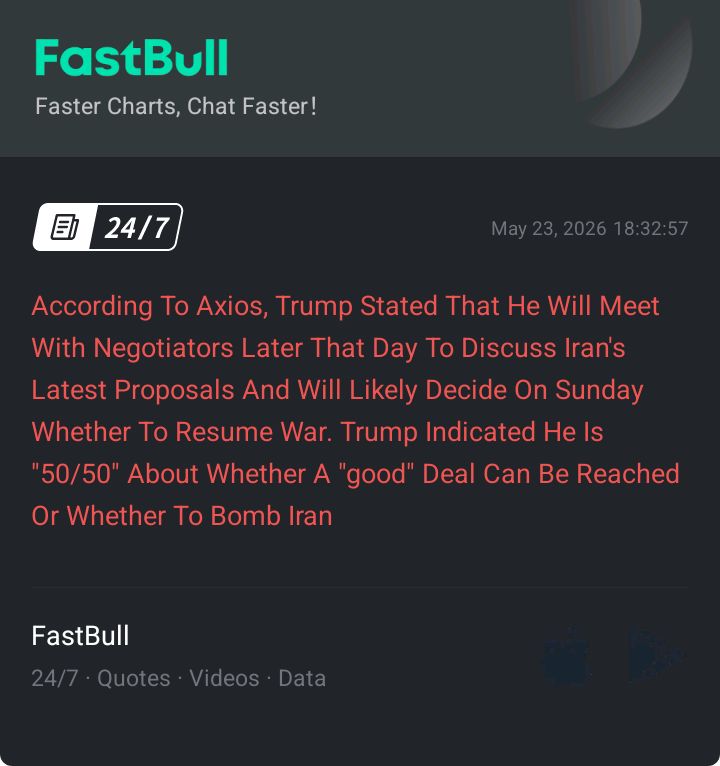
According To Axios, Trump Stated That He Will Meet With Negotiators Later That Day To Discuss Iran's Latest Proposals And Will Likely Decide On Sunday Whether To Resume War. Trump Indicated He Is "50/50" About Whether A "good" Deal Can Be Reached Or Whether To Bomb Iran

Share

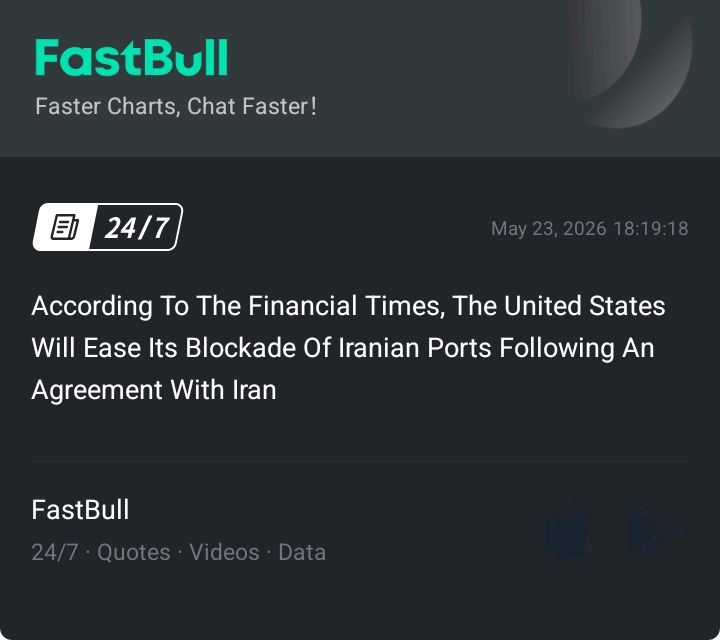
According To The Financial Times, The United States Will Ease Its Blockade Of Iranian Ports Following An Agreement With Iran

Share

Toxic Gases At The Liushenyu Coal Mine Accident Site Have Remained Above Permissible Limits For An Extended Period, Posing A Risk Of Secondary Disasters

Share

Press Conference On The Gas Explosion At The Liuzhenyu Coal Mine In Shanxi: We Must Provide A Responsible Account To The Victims, Their Families, And The General Public

Share

Press Conference On The Gas Explosion Accident At Liushenyu Coal Mine In Shanxi: The Coal Mining Enterprise Involved Committed Serious Illegal Acts

Share

The Pakistan Army Stated That Discussions Remain Focused On Expediting The Current Mediation Process To Support Peace And Stability In The Region

Share

Press Conference On The Gas Explosion At Liushenyu Coal Mine In Shanxi: The Accident Has Claimed 82 Lives

Share

Pakistan Army Statement: Field Marshal Saeed Asim Munir Has Concluded A Brief But Productive Official Visit To Iran. During The Visit, Munir Held High-level Contacts With The Iranian Leadership. Munir Met With The Iranian President, The Speaker Of The Iranian Parliament, The Iranian Foreign Minister, And The Iranian Interior Minister

Share

Naftogaz, Ukraine's State-owned Gas Company, Reported That Russia Attacked The Naftogaz Oil And Gas Facilities In The Kharkiv And Poltava Regions

Share

U.S. Media: Trump Is Willing To Give U.S.-Iran Negotiations "more Time"

TIME
ACT
FCST
PREV
IMPACT
U.S. 10-Year TIPS Auction Avg. Yield

A:--

F: --

P: --

XAUUSD
  • XAUUSD
  • XAGUSD
  • WTI
  • USDX
U.S. Weekly Treasuries Held by Foreign Central Banks

A:--

F: --

P: --

USDX
  • USDX
  • XAUUSD
  • XAGUSD
  • WTI
U.K. GfK Consumer Confidence Index (May)

A:--

F: --

P: --

GBPUSD
  • GBPUSD
  • XAUUSD
  • XAGUSD
  • WTI
Japan CPI MoM (Apr)

A:--

F: --

P: --

USDJPY
  • USDJPY
  • XAUUSD
  • XAGUSD
  • WTI
  • USDX
Japan National CPI MoM (Apr)

A:--

F: --

P: --

USDJPY
  • USDJPY
  • XAUUSD
  • XAGUSD
  • WTI
Japan National CPI YoY (Apr)

A:--

F: --

P: --

USDJPY
  • USDJPY
  • XAUUSD
  • XAGUSD
  • WTI
Japan National Core CPI YoY (Apr)

A:--

F: --

P: --

USDJPY
  • USDJPY
  • XAUUSD
  • XAGUSD
  • WTI
Japan National CPI MoM (Not SA) (Apr)

A:--

F: --

P: --

USDJPY
  • USDJPY
  • XAUUSD
  • XAGUSD
  • WTI
ECB Chief Economist Lane Speaks
U.K. Retail Sales MoM (SA) (Apr)

A:--

F: --

P: --

GBPUSD
  • GBPUSD
  • XAUUSD
  • XAGUSD
  • WTI
  • USDX
U.K. Retail Sales YoY (SA) (Apr)

A:--

F: --

P: --
GBPUSD
  • GBPUSD
  • XAUUSD
  • XAGUSD
  • WTI
  • USDX
Germany GfK Consumer Confidence Index (SA) (Jun)

A:--

F: --

P: --
EURUSD
  • EURUSD
  • XAUUSD
  • XAGUSD
  • WTI
  • USDX
U.K. Core Retail Sales YoY (SA) (Apr)

A:--

F: --

P: --
GBPUSD
  • GBPUSD
  • XAUUSD
  • XAGUSD
  • WTI
  • USDX
ECB Chief Economist Lane Speaks
Turkey Capacity Utilization (May)

A:--

F: --

P: --

XAUUSD
  • XAUUSD
  • XAGUSD
  • WTI
  • USDX
Turkey Trade Balance (Apr)

A:--

F: --

P: --

XAUUSD
  • XAUUSD
  • XAGUSD
  • WTI
  • USDX
Germany Ifo Current Business Situation Index (SA) (May)

A:--

F: --

P: --

EURUSD
  • EURUSD
  • XAUUSD
  • XAGUSD
  • WTI
  • USDX
Germany Ifo Business Expectations Index (SA) (May)

A:--

F: --

P: --
EURUSD
  • EURUSD
  • XAUUSD
  • XAGUSD
  • WTI
  • USDX
Germany IFO Business Climate Index (SA) (May)

A:--

F: --

P: --
EURUSD
  • EURUSD
  • XAUUSD
  • XAGUSD
  • WTI
  • USDX
Mexico Economic Activity Index YoY (Mar)

A:--

F: --

P: --

XAUUSD
  • XAUUSD
  • XAGUSD
  • WTI
  • USDX
Canada Industrial Product Price Index YoY (Apr)

A:--

F: --

P: --
USDCAD
  • USDCAD
  • XAUUSD
  • XAGUSD
  • WTI
  • USDX
Canada Retail Sales MoM (SA) (Mar)

A:--

F: --

P: --

USDCAD
  • USDCAD
  • XAUUSD
  • XAGUSD
  • WTI
  • USDX
Canada Industrial Product Price Index MoM (Apr)

A:--

F: --

P: --
USDCAD
  • USDCAD
  • XAUUSD
  • XAGUSD
  • WTI
  • USDX
Canada Core Retail Sales MoM (SA) (Mar)

A:--

F: --

P: --
USDCAD
  • USDCAD
  • XAUUSD
  • XAGUSD
  • WTI
  • USDX
U.S. Conference Board Leading Economic Index MoM (Apr)

A:--

F: --

P: --

USDX
  • USDX
  • XAUUSD
  • XAGUSD
  • WTI
U.S. Conference Board Leading Economic Index (Apr)

A:--

F: --

P: --

USDX
  • USDX
  • XAUUSD
  • XAGUSD
  • WTI
U.S. Conference Board Coincident Economic Index MoM (Apr)

A:--

F: --

P: --

USDX
  • USDX
  • XAUUSD
  • XAGUSD
  • WTI
U.S. Conference Board Lagging Economic Index MoM (Apr)

A:--

F: --

P: --

USDX
  • USDX
  • XAUUSD
  • XAGUSD
  • WTI
U.S. Weekly Total Rig Count

A:--

F: --

P: --

WTI
  • WTI
  • XAUUSD
  • XAGUSD
  • USDX
U.S. Weekly Total Oil Rig Count

A:--

F: --

P: --

WTI
  • WTI
  • XAUUSD
  • XAGUSD
  • USDX
Argentina Retail Sales YoY (Mar)

A:--

F: --

P: --

XAUUSD
  • XAUUSD
  • XAGUSD
  • WTI
  • USDX
Turkey Economic Sentiment Indicator (May)

--

F: --

P: --

Canada National Economic Confidence Index

--

F: --

P: --

Mexico Trade Balance (Apr)

--

F: --

P: --

U.K. BRC Shop Price Index YoY (May)

--

F: --

P: --

U.K. CBI Retail Sales Expectations Index (May)

--

F: --

P: --

U.K. CBI Distributive Trades (May)

--

F: --

P: --

Brazil Current Account (Apr)

--

F: --

P: --

U.S. Chicago Fed National Activity Index (Apr)

--

F: --

P: --

U.S. S&P/CS 20-City Home Price Index YoY (Not SA) (Mar)

--

F: --

P: --

U.S. S&P/CS 20-City Home Price Index MoM (SA) (Mar)

--

F: --

P: --

U.S. FHFA House Price Index MoM (Mar)

--

F: --

P: --

U.S. FHFA House Price Index (Mar)

--

F: --

P: --

U.S. FHFA House Price Index YoY (Mar)

--

F: --

P: --

U.S. S&P/CS 10-City Home Price Index MoM (Not SA) (Mar)

--

F: --

P: --

U.S. S&P/CS 10-City Home Price Index YoY (Mar)

--

F: --

P: --

U.S. S&P/CS 20-City Home Price Index (Not SA) (Mar)

--

F: --

P: --

U.S. S&P/CS 20-City Home Price Index MoM (Not SA) (Mar)

--

F: --

P: --

U.S. Conference Board Consumer Expectations Index (May)

--

F: --

P: --

U.S. Conference Board Consumer Confidence Index (May)

--

F: --

P: --

U.S. Conference Board Present Situation Index (May)

--

F: --

P: --

U.S. Dallas Fed General Business Activity Index (May)

--

F: --

P: --

U.S. Dallas Fed New Orders Index (May)

--

F: --

P: --

U.S. 2-Year Note Auction Avg. Yield

--

F: --

P: --

Australia Westpac Leading Index MoM (Apr)

--

F: --

P: --
China, Mainland Industrial Profit YoY (YTD) (Apr)

--

F: --

P: --

Australia Construction Work Done YoY (Q1)

--

F: --

P: --

Australia RBA Trimmed Mean CPI YoY (Q2)

--

F: --

P: --

Australia Construction Work Done QoQ (SA) (Q1)

--

F: --

P: --

France Unemployment Class-A (Apr)

--

F: --

P: --

U.S. MBA Mortgage Application Activity Index WoW

--

F: --

P: --

Q&A with Experts
    • All
    • Chatrooms
    • Groups
    • Friends
    Nawhdir Øt flag
    @EuroTraderCOUSIN..
    john flag
    Nawhdir Øt
    @johnhanya mengamankan posisi segera setel TS seperti gaya biasanya.
    @Nawhdir Øtalright let's see how it plays out,,,, anything can happen
    Nawhdir Øt flag
    Nawhdir Øt flag
    @EuroTraderaku "AGAK" dibantai market 🤏. Skor sementara BTCUSD 4 - 1 Nawhdir. Øt menit 68'.
    john flag
    this is a bigger market event to watch tomorrow
    john flag
    Nawhdir Øt flag
    john
    this is a bigger market event to watch tomorrow
    @john🤦🏻‍♂️ ah, back to uncertainty. As Always
    Nawhdir Øt flag
    Nawhdir Øt
    @EuroTraderaku "AGAK" dibantai market 🤏. Skor sementara BTCUSD 4 - 1 Nawhdir. Øt menit 68'.
    @EuroTraderatmosfer stadion tuan rumah begitu menyeramkan dan dukungan penuh terhadap aset BTC ! ia berada di atas angin.
    john flag
    if this happens,,,we might some optimism next week
    john flag
    Nawhdir Øt flag
    john
    if this happens,,,we might some optimism next week
    @johnhow bout cut rates.
    john flag
    Nawhdir Øt
    @johnhow bout cut rates.
    @Nawhdir Øtit's another thing that we will be watching
    john flag
    Nawhdir Øt
    @johnhow bout cut rates.
    @Nawhdir Øtwe have to watch how Kelvin Warsh will do as the fed chair
    Nawhdir Øt flag
    john
    this is a bigger market event to watch tomorrow
    @johnsaid Axios.
    Osaghae Cephas flag
    Nawhdir Øt flag
    john
    @Nawhdir Øtwe have to watch how Kelvin Warsh will do as the fed chair
    @johnmy schedule Monday full match Vs XAU/USD High Tempo.
    fred flag
    guys look at this
    fred flag
    fred flag
    what did you see
    fred flag
    abput the prise
    Type here...
    Add Symbol or Code

      No matching data

      All
      Recommend
      Stocks
      Cryptocurrencies
      Central Banks
      Trump Updates
      Featured News
      • All
      • Russia-Ukraine Conflict
      • Middle East Flashpoint
      • All
      • Russia-Ukraine Conflict
      • Middle East Flashpoint
      Search
      Products

      Charts Free Forever

      Chats Q&A with Experts
      Screeners Economic Calendar Data Tools
      Membership Features
      Data Warehouse Market Trends Institutional Data Policy Rates Macro

      Market Trends

      Market Sentiment Order Book Forex Correlations

      Top Indicators

      Charts Free Forever
      Markets

      News

      24/7 Analysis Education

      Latest Views

      Latest Update

      Signals

      Copy Rankings Latest Signals Become a signal provider AI Rating
      Contests
      Brokers

      Overview Brokers Assessment Rankings Regulators News Claims
      Broker listing Forex Brokers Comparison Tool Live Spread Comparison Scam
      Q&A Complaint Scam Alert Videos Tips to Detect Scam
      More

      Business
      Events
      Careers About Us Advertising Help Center

      White Label

      Broker API

      Data API

      Web Plug-ins

      Affiliate Program

      Awards Institution Evaluation IB Seminar Salon Event Exhibition
      Vietnam Thailand Singapore Dubai
      Fans Party Investment Sharing Session
      FastBull Summit BrokersView Expo
      Recent Searches
        Top Searches
          Markets
          Analysis
          User
          24/7
          Economic Calendar
          Education
          Data
          • Names
          • Latest
          • Prev

          View All

          No data

          Scan to Download

          Faster Charts, Chat Faster!

          Download App
          English
          • English
          • Español
          • العربية
          • Bahasa Indonesia
          • Bahasa Melayu
          • Tiếng Việt
          • ภาษาไทย
          • Français
          • Italiano
          • Türkçe
          • Русский язык
          • 简中
          • 繁中
          Open Account
          Search
          Products
          Charts Free Forever
          Markets
          News
          Signals

          Copy Rankings Latest Signals Become a signal provider AI Rating
          Contests
          Brokers

          Overview Brokers Assessment Rankings Regulators News Claims
          Broker listing Forex Brokers Comparison Tool Live Spread Comparison Scam
          Q&A Complaint Scam Alert Videos Tips to Detect Scam
          More

          Business
          Events
          Careers About Us Advertising Help Center

          White Label

          Broker API

          Data API

          Web Plug-ins

          Affiliate Program

          Awards Institution Evaluation IB Seminar Salon Event Exhibition
          Vietnam Thailand Singapore Dubai
          Fans Party Investment Sharing Session
          FastBull Summit BrokersView Expo

          Qualitative Fundamental Analysis: Key Factors Beyond the Numbers

          zhan chen
          Summary:

          Financial statements show only the past. Bridge the gap with qualitative fundamental analysis to identify structural winners and avoid common value traps.

          While balance sheets and income statements provide a clear snapshot of a company's historical performance, they rarely capture the structural forces that drive future growth. Evaluating the intangible engines of a business—from brand strength and leadership competence to regulatory moats and industry dynamics—requires a different analytical toolkit. This guide breaks down the core components of qualitative fundamental analysis and demonstrates how to translate subjective observations into precise valuation inputs. By mastering these non-financial indicators, investors can identify resilient compounders and avoid value traps that look cheap on paper but face terminal decline.

          Qualitative Fundamental Analysis: Key Factors Beyond the Numbers

          What Does Qualitative Fundamental Analysis Actually Look At?

          Qualitative fundamental analysis evaluates the non-numeric drivers of a business—specifically its business model, management execution, corporate governance, and competitive dynamics. These non-financial characteristics represent the structural advantages or embedded risks that dictate whether a company's historical financial performance is repeatable, deteriorating, or poised for expansion.

          Why Financial Statements Alone Don't Tell the Full Story in an Intangible-Driven Economy

          Standard accounting frameworks like GAAP and IFRS were designed for the industrial era, making them inherently flawed at pricing modern enterprises where the primary drivers of value are invisible. In 1975, intangible assets comprised roughly 17% of the S&P 500's market value. By the 2020s, that figure surpassed 90%, driven by intellectual property, software code, network effects, and brand equity.

          Financial statements systematically misrepresent these modern assets due to strict capitalization rules. Consider the mechanical difference in how assets are treated:

          • Tangible Assets: If a manufacturer buys a $50 million factory, the expense is capitalized and depreciated over 30 years. The asset sits on the balance sheet, increasing the company's book value, while current-year earnings take only a minor depreciation hit.
          • Intangible Assets: If a software firm spends $50 million engineering a proprietary algorithm, or a consumer company spends it on brand marketing, accounting rules force them to expense the entire amount immediately.

          This immediate expensing artificially depresses current-year net income and leaves the underlying asset entirely off the balance sheet. Consequently, analysts relying strictly on quantitative fundamental analysis will frequently screen out highly profitable businesses because their price-to-book ratios appear mathematically expensive. Qualitative factors in fundamental analysis bridge this accounting gap, requiring the analyst to assess the real economic value of R&D pipelines, corporate culture, and customer lock-in that the balance sheet ignores.

          How Qualitative Factors Connect to a Company's Long-Term Value

          Qualitative characteristics are not abstract concepts; they are the direct precursors to quantitative valuation inputs. A company's moat, management team, or patent portfolio only matters to an investor if it systematically alters free cash flow, extending growth rates, or reducing the cost of capital.

          Mastering the integration of qualitative fundamental analysis with quantitative modeling requires treating the qualitative assessment as the strict justification for your financial model's assumptions.

          Qualitative FactorDirect Business MechanismQuantitative Valuation Impact
          Brand Equity & IdentityLowers customer acquisition cost (CAC) and enables price hikes without volume loss.Drives structural Gross Margin expansion and stabilizes the Terminal Growth Rate.
          Management Capital AllocationDictates whether retained earnings are reinvested efficiently, returned via dividends, or wasted on bad M&A.Determines if ROIC (Return on Invested Capital) can consistently exceed the cost of capital.
          Network Effects / PatentsErects barriers to entry, preventing competitors from stealing market share and driving down prices.Lengthens the Competitive Advantage Period (CAP) in a discounted cash flow (DCF) model.
          Corporate GovernanceEnsures transparent reporting, aligns executive compensation with shareholders, and mitigates regulatory friction.Lowers the firm's risk profile, directly reducing the Discount Rate (WACC).

          Assigning a 15-year competitive advantage period in a DCF model is mathematically simple, but unjustifiable unless the analyst has identified a specific qualitative moat protecting those cash flows. Conversely, identifying poor qualitative traits—such as a board of directors filled with company insiders rather than independent operators—serves as an early warning system. These governance failures rarely show up in the trailing twelve-month revenue figures, but they drastically increase the probability of future value destruction, requiring the analyst to apply a higher discount rate to the company's projected earnings.

          How Strong Is the Business Model and Competitive Advantage?

          Beyond accounting metrics, a company's underlying business model dictates its long-term viability. A business model's strength is defined by its capacity to generate returns on invested capital (ROIC) that consistently exceed its weighted average cost of capital (WACC). The longevity of this spread relies entirely on a structural competitive advantage that prevents rivals from bidding away those excess profits.

          What Makes a Moat Real vs. Just a Marketing Claim

          A genuine economic moat structurally alters an industry's cost dynamics or forces customer retention, whereas a marketing claim usually describes a temporary product feature or unquantifiable brand loyalty. When applying qualitative fundamental analysis, the primary objective is to separate mathematically provable barriers to entry from management narratives.

          To distinguish a structural advantage from a superficial one, evaluate the business model against these four mechanisms:

          • Network Effects vs. First-Mover Advantage: A real network effect increases a product's value with each new user, creating a winner-take-all dynamic (e.g., Visa's payment network or CME Group's liquidity pools). First-mover advantage is a marketing claim that evaporates once a competitor replicates the technology with deeper funding.
          • Systemic Switching Costs vs. Brand Preference: Genuine switching costs require a customer to incur severe financial downtime or operational risk to leave. Enterprise integrations like SAP's ERP systems or Oracle's databases possess high switching costs. Consumer brand preference (e.g., choosing Nike over Adidas) carries zero switching cost and requires continuous marketing spend to maintain.
          • Process Cost Advantages vs. Temporary Price Cuts: A structural cost advantage stems from exclusive access to low-cost assets (a geographically advantaged mining operation) or efficient scale (Union Pacific's rail network). Price cuts achieved by burning venture capital or squeezing supplier margins are easily matched and rarely survive a full economic cycle.
          • Regulated Intangibles vs. Unprotected Innovation: Patents, FDA approvals, and municipal waste licenses constitute enforceable monopolies with defined legal durations. Unprotected software features or novel consumer app interfaces are rapidly cloned, offering no durable moat.

          Which Industries Make Competitive Advantages Harder to Sustain

          Competitive advantages decay rapidly in sectors defined by technological obsolescence, severe capital intensity without pricing power, and highly commoditized end-products. The structural forces of a sector dictate the baseline life expectancy of any moat, often overriding the quality of individual company management.

          Investors applying qualitative fundamental analysis must distinguish between inherently hostile environments and those that naturally insulate incumbents.

          Industry DynamicPrimary Threat to MoatCapital Requirement ProfileTypical Moat DurationExample Sectors
          Hyper-Cyclical / CommoditizedPrice-taking behavior; lack of product differentiation forces competition entirely on cost.High fixed costs; constant maintenance capital expenditure required just to operate.None to Short (< 5 years)Airlines, Basic Materials, Paper Manufacturing
          Rapid Technological DisruptionProduct obsolescence; the leading technology standard resets every 2-3 years.Massive R&D requirements necessary simply to maintain market share.Short to Medium (3-7 years)Consumer Electronics, Legacy IT Hardware, Telecom Equipment
          Fad-Driven Consumer DiscretionaryShifting consumer preferences; low barrier to entry for new competitors.High marketing and customer acquisition costs required to sustain brand relevance.Short (< 3 years)Fast Fashion, Casual Dining, Direct-to-Consumer Retail
          Natural Monopolies / OligopoliesRegulatory intervention; anti-trust actions rather than direct market competition.High initial build costs, but negligible marginal costs for new customers.Long (10-20+ years)Financial Exchanges, Class I Railroads, Payment Networks

          Industries requiring constant reinvestment to produce an undifferentiated product consistently destroy economic moats. Conversely, sectors with high initial barriers to entry and low ongoing capital requirements naturally preserve competitive advantages, allowing excess returns to compound over decades.

          Does the Management Team Actually Matter to Investors?

          Even the deepest economic moat requires capable operators to maintain and expand it. Management acts as the bridge between a company's current assets and its future cash flows. While quantitative metrics reveal historical performance, qualitative fundamental analysis assesses the architects responsible for sustaining those numbers. A competitive advantage or "economic moat" rapidly deteriorates if leadership misallocates the cash the business generates.

          Integrating qualitative fundamental analysis with quantitative methods prevents a common value trap: buying a statistically cheap stock run by executives actively destroying shareholder equity. Institutional investors treat management evaluation not as an exercise in judging personality, but as an assessment of capital discipline, operational execution, and shareholder alignment.

          What to Look for in Leadership Beyond the Resume

          An impressive pedigree or decades of industry tenure do not guarantee operational competence or shareholder alignment. Serious investors bypass public relations narratives to measure leadership against distinct operational behaviors.

          Evaluating the qualitative aspects of a management team requires observing their historical track record across four dimensions:

          • The Say-Do Ratio: This measures the consistency between management's strategic guidance and their eventual execution. Investors track past earnings transcripts to see if leadership historically meets their stated timelines for product launches, cost-cutting initiatives, or margin targets.
          • Insider Ownership ("Skin in the Game"): Executives who own a meaningful percentage of outstanding shares (typically 5% or more for mid-cap companies) are financially incentivized to maximize long-term equity value. Conversely, executives whose wealth relies purely on stock options may take asymmetric risks, knowing they share in the upside but not the downside.
          • Candor in Communication: High-quality management teams proactively explain the root causes of underperformance rather than blaming macroeconomic conditions. A CEO who clearly outlines structural failures and pivot strategies in an annual report demonstrates intellectual honesty.
          • Crisis Adaptability: Evaluating how a CEO and CFO navigated previous industry downcycles or credit crunches indicates their defensive capabilities. Teams that successfully defended gross margins during industry recessions signal strong pricing power and cost control.

          How Capital Allocation Decisions Reveal Management Quality

          Capital allocation is the executive act of deciding where to deploy internally generated cash. Over a ten-year horizon, a CEO's capital allocation decisions will dictate total shareholder return far more than their day-to-day operational management.

          Investors analyze cash flow statements to determine if management generates a return on invested capital (ROIC) that exceeds the company's weighted average cost of capital (WACC). Within qualitative fundamental analysis, how a company spends its cash telegraphs leadership's internal view of the business.

          Capital Allocation LeverPositive Qualitative SignalNegative Qualitative Signal
          Share RepurchasesBuying back stock only when shares trade significantly below intrinsic value, effectively retiring shares at a discount.Repurchasing shares at market peaks simply to offset the dilution caused by excessive executive stock-based compensation.
          Mergers & Acquisitions (M&A)Executing small, bolt-on acquisitions that integrate easily and immediately expand geographic reach or technological capability.Pursuing expensive "empire-building" megadeals that require heavy debt issuance and result in massive goodwill write-downs.
          DividendsEstablishing a consistent, sustainable dividend policy that scales linearly with free cash flow growth.Funding a dividend yield through debt issuance to artificially support the share price and appease income investors.
          Internal Reinvestment (R&D/Capex)Directing capital toward high-margin projects or efficiency upgrades that widen the competitive moat.Hoarding cash in low-yield accounts or overfunding legacy product lines experiencing structural decline.

          Red Flags That Suggest Poor Governance and Unmanaged ESG Risks

          Governance failures rarely appear on a balance sheet before the damage is already done. Identifying systemic internal risks requires investors to scrutinize proxy statements (Form DEF 14A), board structures, and compliance frameworks before committing capital.

          The presence of the following mechanisms often precedes prolonged stock underperformance or outright fraud:

          Misaligned Executive Compensation Compensation structures dictate executive behavior. If a board ties CEO bonuses strictly to revenue growth or adjusted EBITDA—rather than per-share metrics like ROIC or Free Cash Flow per Share—management is incentivized to pursue unprofitable growth. This often manifests as aggressive acquisitions that boost top-line revenue but destroy per-share value.

          Board Cronyism and Lack of Independence A board of directors exists to represent shareholders, not to rubber-stamp the CEO's agenda. Red flags include a high proportion of insiders on the board, directors with overlapping tenures across multiple failed companies, or related-party transactions where the company leases assets from entities personally owned by the executives.

          Extreme Dual-Class Share Structures While common in the technology sector to protect founder vision, dual-class structures with extreme voting imbalances (e.g., founders holding shares with 10x or 20x the voting power of public shares) effectively eliminate shareholder recourse. If management executes poorly, public shareholders have no mechanism to force a leadership change.

          Opaque Environmental and Regulatory Disclosures In qualitative fundamental analysis, unmanaged ESG (Environmental, Social, and Governance) factors are viewed as unpriced liabilities. Companies that rely on generic "greenwashing" statements rather than reporting against standardized frameworks (like SASB or TCFD) often mask severe regulatory risks. For example, a heavy manufacturer with weak environmental safety protocols carries a higher probability of facing catastrophic fines, asset stranding, or loss of operating licenses.

          How Do Industry Position and External Forces Shape Company Value?

          Internal operations and management execution cannot be evaluated in a vacuum, as external sector-wide forces ultimately define the playing field. A company’s standalone financial metrics only reflect past performance within an existing market structure. Evaluating qualitative factors in fundamental analysis reveals whether that market structure is expanding, consolidating, or facing imminent collapse under external pressure. Analysts weigh industry positioning and macroeconomic forces to determine the durability of a company's competitive advantage and the true risk profile of its future cash flows.

          Reading Industry Dynamics Before Picking Individual Stocks

          Sector trajectory dictates the ceiling for individual stock performance. A brilliant management team in a structurally declining industry will consistently underperform an average team in a sector with structural tailwinds. Before calculating intrinsic value, analysts map the industry's profit pool using four specific qualitative frameworks:

          • Supplier and Buyer Concentration: If an industry relies on a consolidated oligopoly of suppliers (e.g., aerospace manufacturing) but sells to thousands of fragmented buyers (commercial airlines), the profit pool accrues to the manufacturers. Analysts look for industries where the target company holds the leverage.
          • Basis of Competition: Does the industry compete on price, or on switching costs? High switching costs (e.g., enterprise ERP systems like SAP) mean revenue retention remains high even during broader industry downturns. Price-based competition signals low margins and low moat durability.
          • Regulatory Moats: Industries with heavy compliance burdens (e.g., medical device manufacturing, financial clearinghouses) naturally block new entrants. This qualitative factor directly justifies assigning a longer competitive advantage period in a discounted cash flow (DCF) model.
          • Lifecycle Phase: Evaluating whether the industry is in the land-grab phase (where market share growth supersedes immediate profitability), maturity (focusing on margin expansion and operating leverage), or decline (prioritizing capital return and cost-cutting).

          How Geopolitical, Technological Disruption (AI), and Macro Risks Show Up in Qualitative Analysis

          Macroeconomic shifts and technological breakthroughs rarely appear in trailing twelve-month financial statements until their impact is irreversible. In practice, qualitative fundamental analysis and quantitative disciplines merge here: the qualitative assessment of macro risks directly dictates the quantitative inputs—such as discount rates and terminal growth rates—used in valuation models.

          Analysts must translate ambiguous external threats into precise valuation adjustments. The table below outlines how modern external forces are evaluated qualitatively and quantified financially:

          External Risk CategoryQualitative Signal to MonitorDirect Valuation Impact
          Artificial Intelligence DisruptionShift from seat-based SaaS pricing to consumption-based models as AI agents replace human software users.Lowers terminal growth rates for legacy software; increases operating margin assumptions for high-automation adopters.
          Geopolitical Supply Chain RiskExecution of "China-Plus-One" or "Alt-Asia" manufacturing relocation (e.g., moving critical assembly to Vietnam, India, or Mexico).Increases short-term capital expenditures (CapEx) modeling; lowers long-tail geopolitical risk premiums in the weighted average cost of capital (WACC).
          Macroeconomic Regime ShiftsSustained higher structural inflation and structurally elevated sovereign bond yields.Elevates the hurdle rate for capital-intensive projects; shifts valuation premiums toward companies with organic pricing power rather than debt-fueled growth.

          To systematically assess these risks, analysts review earnings call transcripts for specific operational phrases—such as "supply chain redundancy" or "AI integration timelines"—and track capital allocation shifts. If a management team claims geopolitical resilience but qualitative fundamental analysis reveals they maintain 80% of their critical component sourcing in a single contested region, the narrative fails the factual audit. The resulting action is a higher discount rate applied to the company's valuation to account for unpriced tail risk.

          How Do You Put Qualitative Factors Together Into an Investment Judgment?

          Synthesizing qualitative factors requires translating subjective observations into explicit adjustments within a financial model. An analyst does not buy a stock simply because a company possesses a strong brand or visionary leadership; they use those qualitative factors to adjust valuation inputs, probability weights, or the required margin of safety.

          To bridge the gap between qualitative fundamental analysis and quantitative data, institutional investors typically channel soft data into three specific modeling mechanisms:

          1. Discount Rate (WACC) Adjustments: A company with a highly durable moat (e.g., monopolistic regulatory capture or deep network effects) carries lower structural risk. Analysts reflect this by lowering the cost of equity, which increases the present value of future cash flows.
          2. Terminal Growth Assumptions: Quantitative models often assume returns on invested capital (ROIC) will revert to the cost of capital over a 5-to-10-year horizon. Superior qualitative fundamental analysis justifies extending this competitive advantage period, modeling excess returns for 15 or 20 years based on high customer switching costs or patent protection.
          3. Scenario Probability Weighting: Rather than altering base-case numbers, analysts use management track records to assign probabilities to different outcomes. A leadership team with a history of accretive M&A increases the probability weighting of a bullish growth scenario, whereas a board with poor capital allocation shifts weight toward the bear case.

          Weighing Qualitative Strengths Against Quantitative Weaknesses

          Investors resolve conflicts between hard metrics and soft data by using qualitative factors to determine the sustainability of the numbers. Current financials represent past execution; qualitative moats dictate future resilience. When qualitative fundamental analysis clashes with quantitative outputs, analysts must determine which signal leads and which lags.

          The table below outlines how to evaluate standard conflicts between quantitative reality and qualitative analysis.

          Market ScenarioQuantitative SignalQualitative RealityAnalytical Decision
          The Value TrapSingle-digit P/E ratio, high free cash flow yield, low price-to-book.Eroding brand equity, technological obsolescence, high management turnover.Avoid. The low valuation correctly prices in terminal decline. Mean reversion will not occur because the underlying economic engine is broken.
          The Premium CompounderHigh valuation multiples (e.g., 40x P/E), low dividend yield.Extreme switching costs, expanding network effects, founder-led management with high insider ownership.Pay the premium or wait for a pullback. Adjust the DCF model to reflect a longer duration of high ROIC. Valuation multiples are justified by the qualitative moat duration.
          The Turnaround PlayNegative net income, compressing gross margins, high debt-to-equity.Proven new CEO with a track record of successful restructuring, liquidating non-core assets, shifting regulatory tailwinds.Build a probabilistic model. Treat the investment as a distressed asset play. The quantitative weakness is the entry opportunity, provided the qualitative catalyst executes.
          The Yield TrapDouble-digit dividend yield, low payout ratio on trailing earnings.Secular industry decline, poor capital allocation track record (e.g., repurchasing shares at peak prices).Sell/Avoid. The trailing quantitative metrics mask impending dividend cuts driven by qualitative structural headwinds.

          Common Mistakes Investors Make When Applying Qualitative Analysis

          Errors in qualitative assessment usually stem from cognitive biases and the tendency to treat compelling narratives as empirical evidence. Because soft data lacks the rigid boundaries of a balance sheet, investors frequently fall into the following analytical traps:

          • The Halo Effect: Investors often assume that because a company’s stock price has gone up, its management team is brilliant and its corporate culture is flawless. This cognitive bias causes analysts to assign premium qualitative scores to average companies simply because they are riding a macroeconomic tailwind.
          • The Narrative Fallacy: This occurs when an investor buys a good story rather than a good business. A charismatic CEO articulating a vision to "change the world" often distracts analysts from deteriorating unit economics or an inability to scale production efficiently.
          • Confusing TAM with a Moat: A massive Total Addressable Market (TAM) is frequently cited as a qualitative strength. However, a large TAM without barriers to entry merely attracts well-capitalized competitors. A strong moat in a niche market is vastly superior to an undefended position in a massive market.
          • Misinterpreting Scuttlebutt: Following Phil Fisher’s "scuttlebutt" method—gathering channel checks from suppliers, customers, and ex-employees—is highly effective, but prone to confirmation bias. Investors often heavily weight negative Glassdoor reviews or isolated customer complaints without sizing them against the broader operational reality.
          • Ignoring the "Key Man" Risk: Assigning a deep qualitative moat to a company entirely reliant on a single visionary founder creates a hidden fragility. If the qualitative thesis collapses the moment one executive leaves, the business lacks structural institutional advantages.

          FAQs about qualitative fundamental analysis

          What is qualitative analysis in fundamental analysis?

          Qualitative analysis is a method of evaluating a company based on non-numeric, subjective factors that financial statements cannot capture. It focuses on intangible elements such as brand value, competitive advantages, corporate governance, and industry growth trends. By examining these factors, investors can gain a more comprehensive understanding of a company's long-term sustainability and overall intrinsic value.

          What are the 5 key principles of fundamental analysis?

          The five key principles of fundamental analysis provide a structured framework for evaluating an asset's intrinsic value. These core principles include understanding a company's financial statements and evaluating broader economic and industry factors. They also involve assessing company management, evaluating overall market sentiment, and applying specific valuation techniques.

          What are common examples of qualitative factors in stock analysis?

          One of the most critical qualitative factors in stock analysis is the quality, integrity, and experience of a company's management team. Other significant examples include brand strength, customer loyalty, corporate governance, and the sustainability of the business model. Investors also evaluate external qualitative variables, such as industry cycles, competitive environments, and regulatory trends.

          What is the difference between qualitative and quantitative fundamental analysis?

          Quantitative analysis focuses strictly on measurable, numerical data derived from financial statements, such as revenue, profit margins, and valuation ratios. In contrast, qualitative analysis examines intangible, non-numeric factors like leadership quality, brand reputation, and corporate strategy. While quantitative analysis highlights a company's current financial health, qualitative analysis provides context about the company's long-term advantages and future potential.

          Conclusion

          Mastering the non-numeric drivers of a business allows investors to see past the limitations of traditional accounting. By rigorously evaluating management discipline, economic moats, and broader industry crosscurrents, analysts can confidently translate subjective observations into precise financial models. This comprehensive approach prevents capital deployment into structurally flawed value traps while illuminating the true engines of long-term compounding. The financial metrics only reveal what a company has achieved, while the qualitative foundation dictates what it is capable of becoming.

          Risk Warnings and Disclaimers
          You understand and acknowledge that there is a high degree of risk involved in trading. Following any strategies or investment methods may lead to potential losses. The content on the site is provided by our contributors and analysts for information purposes only. You are solely responsible for determining whether any trading assets, securities, strategy, or any other product is suitable for investing based on your own investment objectives and financial situation.
          Add to Favorites
          Share
          FastBull
          Copyright © 2026 FastBull Ltd

          728 RM B 7/F GEE LOK IND BLDG NO 34 HUNG TO RD KWUN TONG KLN HONG KONG

          TelegramInstagramTwitterfacebooklinkedin
          App Store Google Play Google Play
          Products
          Charts

          Chats

          Q&A with Experts
          Screeners
          Economic Calendar
          Data
          Tools
          Membership
          Features
          Function
          Markets
          Copy Trading
          Latest Signals
          Contests
          24/7
          Analysis
          Education
          Company
          Careers
          About Us
          Contact Us
          Advertising
          Help Center
          Feedback
          User Agreement
          Privacy Policy
          Personal Information Protection Statement
          Business

          White Label

          Broker API

          Data API

          Web Plug-ins

          Poster Maker

          Affiliate Program

          Risk Disclosure

          The risk of loss in trading financial instruments such as stocks, FX, commodities, futures, bonds, ETFs and crypto can be substantial. You may sustain a total loss of the funds that you deposit with your broker. Therefore, you should carefully consider whether such trading is suitable for you in light of your circumstances and financial resources.

          No decision to invest should be made without thoroughly conducting due diligence by yourself or consulting with your financial advisors. Our web content might not suit you since we don't know your financial conditions and investment needs. Our financial information might have latency or contain inaccuracy, so you should be fully responsible for any of your trading and investment decisions. The company will not be responsible for your capital loss.

          Without getting permission from the website, you are not allowed to copy the website's graphics, texts, or trademarks. Intellectual property rights in the content or data incorporated into this website belong to its providers and exchange merchants.

          Not Logged In

          Log in to access more features

          Connect Broker
          Become a signal provider
          Help Center
          Customer Service
          Dark Mode
          Price Up/Down Colors

          Log In

          Sign Up

          Position
          Layout
          Fullscreen
          Default to Chart
          The chart page opens by default when you visit fastbull.com