- GBPUSD
- XAUUSD
- XAGUSD
- WTI
- USDX


Markets
Analysis
User
24/7
Economic Calendar
Education
Data
- Names
- Latest
- Prev












For investors seeking capital appreciation, deep discount bonds offer significant potential—if you can manage the phantom tax risks. Our guide to the strategy.
For long-term investors prioritizing capital appreciation over regular income, understanding deep discount bonds is essential. This guide explains how these unique fixed-income instruments work, their tax implications, and how they compare to zero-coupon securities. Read on to discover if adding them to your portfolio aligns with your risk tolerance and financial goals.
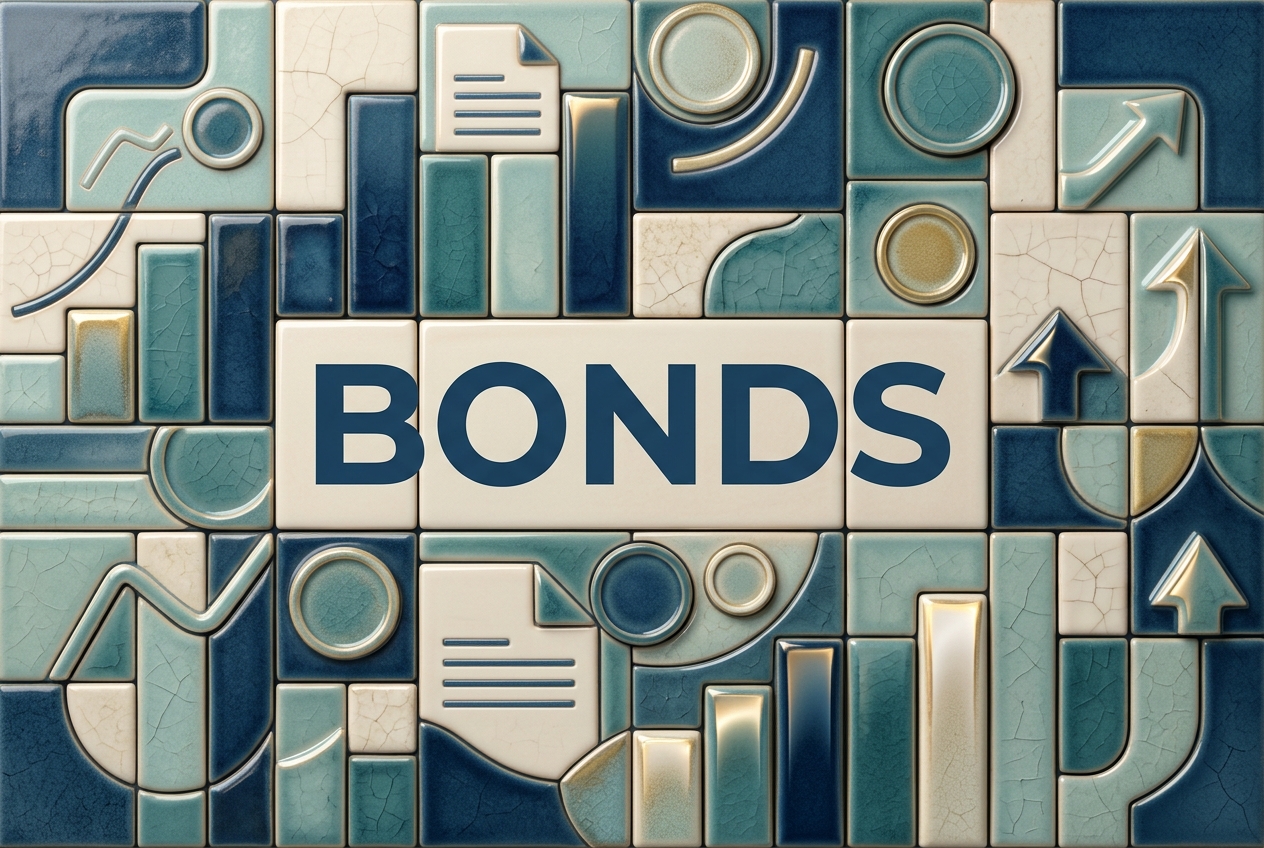
When corporations or governments issue debt, they typically price it near par value. However, some debt instruments are issued at a price significantly below this face value. The defining characteristic of these instruments is the massive gap between the initial purchase price and the redemption value at maturity. This markdown compensates investors for receiving little to no periodic interest.
Not every bond trading below par qualifies as "deep." While a regular discount bond might trade a few percentage points below face value due to minor interest rate fluctuations, market convention generally defines a deep discount as trading at 20% or more below face value. For example, a bond with a $1,000 face value selling for $800 or less fits this category. The depth of this discount typically reflects a prolonged maturity period, a deliberately low coupon rate, or a lowered credit rating.
Traditional fixed-income investors rely on semi-annual coupon payments for cash flow. In contrast, buyers of deeply discounted debt generate profit primarily through capital appreciation. Because the initial capital outlay is much lower than the final maturity payout, the total return is built directly into the bond's structure. You buy the asset for a fraction of its face value and receive the full principal back when the bond matures.
Because the stated interest rate on these securities is often nominal or zero, the coupon rate is essentially irrelevant. Instead, investors must evaluate the Yield to Maturity (YTM). The YTM calculates the total annualized return if the asset is held until the maturity date, accounting for the purchase price, face value, and time horizon. This metric allows you to accurately compare the return profile against other assets, ensuring the steep discount adequately compensates for the lack of liquidity.
As the maturity date nears, the market price of the bond naturally rises toward its par value. This gradual upward trajectory is known as accretion. Unless the issuer defaults, the bond's market price will eventually equal exactly 100% of its face value on the redemption date. However, during the holding period, the bond remains highly sensitive to prevailing interest rates, meaning its secondary market price can experience significant volatility.
Many investors use these terms interchangeably, but they have distinct technical differences.
| Feature | Deep Discount Bonds | Zero-Coupon Bonds |
|---|---|---|
| Periodic Interest Payments | May pay a very low coupon | None (strictly 0%) |
| Discount Size | Typically 20% or more below par | Varies based on maturity and rates |
| Reinvestment Risk | Low, but present if there is a small coupon | Eliminated entirely |
| Common Issuers | Corporations, sometimes distressed entities | Governments (e.g., U.S. Treasuries), high-grade corporates |
While all zero-coupon bonds are issued at a discount, not all deeply discounted bonds are zero-coupon. A deep discount bond may actually pay a small periodic coupon. In these cases, the coupon rate is deliberately set so far below prevailing market interest rates that the issuer must steeply discount the bond’s price to attract buyers. Conversely, true zero-coupon bonds never make any periodic interest payments at all.
Because zero-coupon bonds pay no interim cash flows, they eliminate reinvestment risk entirely. You know exactly what your annualized yield will be if held to maturity. Deeply discounted bonds that pay small coupons still carry minor reinvestment risk. In contrast, many zero-coupon bonds are high-quality government securities, such as U.S. Treasury STRIPS, which carry minimal credit risk.
These assets appeal to investors seeking predictable lump-sum payouts for future liabilities, such as retirement or college tuition. To maximize predictability, investors typically look for non callable bonds, guaranteeing that the issuer cannot redeem the debt early. If you accidentally purchase a callable bond, the issuer might force early redemption if interest rates drop, capping your potential upside. Furthermore, unlike perpetual bonds that never mature, deeply discounted debt offers a definitive end date for capital realization.
The taxation on these instruments can catch novice investors off guard. In the United States, the Internal Revenue Service (IRS) classifies the annual price appreciation as Original Issue Discount (OID). This means investors must report and pay taxes on "phantom income"—interest that accrues annually on paper, even though no actual cash is received until maturity. To avoid paying taxes out-of-pocket on phantom income, it is highly recommended to hold these assets in tax-advantaged retirement accounts.
Investing in heavily discounted debt carries distinct hazards that require careful evaluation before executing a trade:
It is a debt instrument sold at a price significantly below its face value, typically at a markdown of 20% or more. The investor profits from the capital appreciation when the bond is redeemed for its full par value at maturity.
A zero-coupon bond never pays periodic interest, whereas a deep discount bond might pay a very low, nominal coupon rate. While both are sold below face value, a zero-coupon bond eliminates reinvestment risk entirely.
In many jurisdictions, the annual price appreciation is taxed yearly as phantom income, even though you do not receive cash until maturity. In the U.S., the IRS treats this accrued value as taxable Original Issue Discount (OID).
The primary risks are extreme price volatility from interest rate changes and the potential for issuer default. If the issuer goes bankrupt before the maturity date, you may lose your entire principal investment.
While deep discount bonds offer excellent potential for capital appreciation and long-term financial planning, they require a clear understanding of phantom income taxes and interest rate volatility. By carefully assessing creditworthiness and holding the assets in tax-advantaged accounts, investors can effectively capture the substantial yields these unique fixed-income instruments provide.

728 RM B 7/F GEE LOK IND BLDG NO 34 HUNG TO RD KWUN TONG KLN HONG KONG





The risk of loss in trading financial instruments such as stocks, FX, commodities, futures, bonds, ETFs and crypto can be substantial. You may sustain a total loss of the funds that you deposit with your broker. Therefore, you should carefully consider whether such trading is suitable for you in light of your circumstances and financial resources.
No decision to invest should be made without thoroughly conducting due diligence by yourself or consulting with your financial advisors. Our web content might not suit you since we don't know your financial conditions and investment needs. Our financial information might have latency or contain inaccuracy, so you should be fully responsible for any of your trading and investment decisions. The company will not be responsible for your capital loss.
Without getting permission from the website, you are not allowed to copy the website's graphics, texts, or trademarks. Intellectual property rights in the content or data incorporated into this website belong to its providers and exchange merchants.
Not Logged In
Log in to access more features


Log In
Sign Up