• Trade
  • Markets
  • Copy
  • Contests
  • 24/7
  • Calendar
  • Q&A
  • Chats
Screeners
SYMBOL
LAST
BID
ASK
HIGH
LOW
NET CHG.
%CHG.
SPREAD
SOURCE
SPX
S&P 500 Index
7473.48
7473.48
7473.48
7506.32
7463.29
+27.75
+ 0.37%
--
--
DJI
Dow Jones Industrial Average
50579.69
50579.69
50579.69
50830.24
50434.65
+294.04
+ 0.58%
--
--
IXIC
NASDAQ Composite Index
26343.96
26343.96
26343.96
26504.55
26309.80
+50.87
+ 0.19%
--
--
USDX
US Dollar Index
99.190
99.190
99.270
99.340
99.080
+0.050
+ 0.05%
--
--
EURUSD
Euro / US Dollar
1.16014
1.16014
1.16051
1.16210
1.15880
-0.00153
-0.13%
--
--
GBPUSD
Pound Sterling / US Dollar
1.34278
1.34278
1.34323
1.34625
1.34129
-0.00007
-0.01%
--
--
XAUUSD
Gold / US Dollar
4509.66
4509.66
4509.66
4545.94
4491.55
-33.22
-0.73%
--
--
WTI
Light Sweet Crude Oil
96.068
96.068
96.163
98.439
93.817
-1.115
-1.15%
--
--

Community Accounts

Signal Accounts
--
Profit Accounts
--
Loss Accounts
--
View More

Become a signal provider

Sell trading signals to earn additional income

View More

Guide to Copy Trading

Get started with ease and confidence

View More

Signal Accounts for Members

All Signal Accounts

Best Return
  • Best Return
  • Best P/L
  • Best MDD
Past 1W
  • Past 1W
  • Past 1M
  • Past 1Y

All Contests

  • All
  • Recommend
  • Stocks
  • Cryptocurrencies
  • Central Banks
  • Trump Updates
  • Featured News
Top News Only
Share

U.S. President Trump Stated On Social Media That The Republican-controlled House Of Representatives Should Attach The SAVE America Act To All Bills Sent To The Senate

Share

According To An Axios Reporter, US President Trump Told Me That He Believes Israeli Prime Minister Netanyahu Is Not Worried About A Potential Agreement Between The US And Iran

Share

According To A Report By AXIOS, Citing Two Sources Familiar With The Matter, US President Trump Is Expected To Hold A Phone Conference With Gulf Leaders At 1 P.m. Eastern Time (1 A.m. Beijing Time The Following Day) To Discuss The Situation In Iran

Share

Ukrainian President Volodymyr Zelensky Rejected A Proposal From A German Advisor That Ukraine Should Enjoy A Special Status In The European Union, Demanding Full Accession To The EU

Share

According To CBS News: US President Trump Said, "I Will Only Sign An Agreement That Will Allow US To Get Everything We Want From Iran."

Share

According To CBS News: US President Trump Said The Agreement Would Achieve A "satisfactory Treatment" Of Iran's Enriched Uranium

Share

According To CBS News: US President Trump Said The Final Agreement Would Prevent Iran From Acquiring Nuclear Weapons

Share

According To CBS News: US President Trump Said The Situation With Iran Is "improving"

Share

According To CBS News: US President Trump Said The Two Sides Are Much Closer Now

Share

According To CBS News: US President Trump Has Reviewed A Draft Agreement With Iran

Share

Ukrainian President Volodymyr Zelenskyy Stated That, Based On Intelligence From Ukraine, The United States, And Europe, Russia Is Preparing To Launch An Attack On Ukraine Using The ORESHNIK Missile

Share

U.S. Media: The United States Has Reached The Limit In Sanctioning Iran's Economy

Share

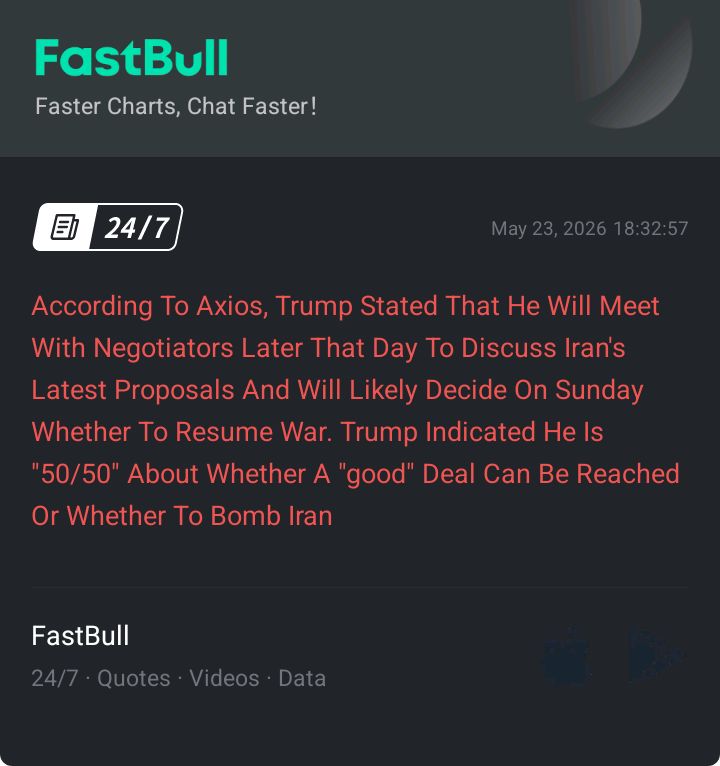
According To Axios, Trump Stated That He Will Meet With Negotiators Later That Day To Discuss Iran's Latest Proposals And Will Likely Decide On Sunday Whether To Resume War. Trump Indicated He Is "50/50" About Whether A "good" Deal Can Be Reached Or Whether To Bomb Iran

Share

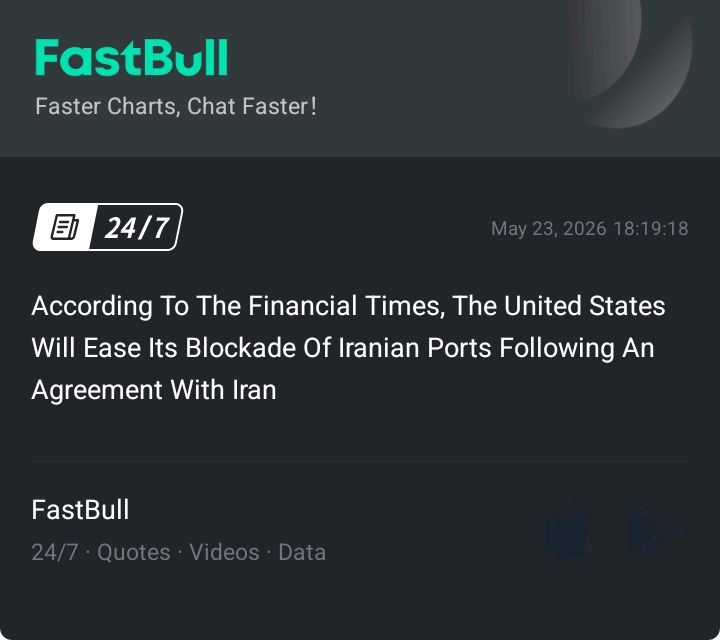
According To The Financial Times, The United States Will Ease Its Blockade Of Iranian Ports Following An Agreement With Iran

Share

Toxic Gases At The Liushenyu Coal Mine Accident Site Have Remained Above Permissible Limits For An Extended Period, Posing A Risk Of Secondary Disasters

Share

Press Conference On The Gas Explosion At The Liuzhenyu Coal Mine In Shanxi: We Must Provide A Responsible Account To The Victims, Their Families, And The General Public

Share

Press Conference On The Gas Explosion Accident At Liushenyu Coal Mine In Shanxi: The Coal Mining Enterprise Involved Committed Serious Illegal Acts

Share

The Pakistan Army Stated That Discussions Remain Focused On Expediting The Current Mediation Process To Support Peace And Stability In The Region

Share

Press Conference On The Gas Explosion At Liushenyu Coal Mine In Shanxi: The Accident Has Claimed 82 Lives

Share

Pakistan Army Statement: Field Marshal Saeed Asim Munir Has Concluded A Brief But Productive Official Visit To Iran. During The Visit, Munir Held High-level Contacts With The Iranian Leadership. Munir Met With The Iranian President, The Speaker Of The Iranian Parliament, The Iranian Foreign Minister, And The Iranian Interior Minister

TIME
ACT
FCST
PREV
IMPACT
U.S. 10-Year TIPS Auction Avg. Yield

A:--

F: --

P: --

XAUUSD
  • XAUUSD
  • XAGUSD
  • WTI
  • USDX
U.S. Weekly Treasuries Held by Foreign Central Banks

A:--

F: --

P: --

USDX
  • USDX
  • XAUUSD
  • XAGUSD
  • WTI
U.K. GfK Consumer Confidence Index (May)

A:--

F: --

P: --

GBPUSD
  • GBPUSD
  • XAUUSD
  • XAGUSD
  • WTI
Japan CPI MoM (Apr)

A:--

F: --

P: --

USDJPY
  • USDJPY
  • XAUUSD
  • XAGUSD
  • WTI
  • USDX
Japan National CPI MoM (Apr)

A:--

F: --

P: --

USDJPY
  • USDJPY
  • XAUUSD
  • XAGUSD
  • WTI
Japan National CPI YoY (Apr)

A:--

F: --

P: --

USDJPY
  • USDJPY
  • XAUUSD
  • XAGUSD
  • WTI
Japan National Core CPI YoY (Apr)

A:--

F: --

P: --

USDJPY
  • USDJPY
  • XAUUSD
  • XAGUSD
  • WTI
Japan National CPI MoM (Not SA) (Apr)

A:--

F: --

P: --

USDJPY
  • USDJPY
  • XAUUSD
  • XAGUSD
  • WTI
ECB Chief Economist Lane Speaks
U.K. Retail Sales MoM (SA) (Apr)

A:--

F: --

P: --

GBPUSD
  • GBPUSD
  • XAUUSD
  • XAGUSD
  • WTI
  • USDX
U.K. Retail Sales YoY (SA) (Apr)

A:--

F: --

P: --
GBPUSD
  • GBPUSD
  • XAUUSD
  • XAGUSD
  • WTI
  • USDX
Germany GfK Consumer Confidence Index (SA) (Jun)

A:--

F: --

P: --
EURUSD
  • EURUSD
  • XAUUSD
  • XAGUSD
  • WTI
  • USDX
U.K. Core Retail Sales YoY (SA) (Apr)

A:--

F: --

P: --
GBPUSD
  • GBPUSD
  • XAUUSD
  • XAGUSD
  • WTI
  • USDX
ECB Chief Economist Lane Speaks
Turkey Capacity Utilization (May)

A:--

F: --

P: --

XAUUSD
  • XAUUSD
  • XAGUSD
  • WTI
  • USDX
Turkey Trade Balance (Apr)

A:--

F: --

P: --

XAUUSD
  • XAUUSD
  • XAGUSD
  • WTI
  • USDX
Germany Ifo Current Business Situation Index (SA) (May)

A:--

F: --

P: --

EURUSD
  • EURUSD
  • XAUUSD
  • XAGUSD
  • WTI
  • USDX
Germany Ifo Business Expectations Index (SA) (May)

A:--

F: --

P: --
EURUSD
  • EURUSD
  • XAUUSD
  • XAGUSD
  • WTI
  • USDX
Germany IFO Business Climate Index (SA) (May)

A:--

F: --

P: --
EURUSD
  • EURUSD
  • XAUUSD
  • XAGUSD
  • WTI
  • USDX
Mexico Economic Activity Index YoY (Mar)

A:--

F: --

P: --

XAUUSD
  • XAUUSD
  • XAGUSD
  • WTI
  • USDX
Canada Industrial Product Price Index YoY (Apr)

A:--

F: --

P: --
USDCAD
  • USDCAD
  • XAUUSD
  • XAGUSD
  • WTI
  • USDX
Canada Retail Sales MoM (SA) (Mar)

A:--

F: --

P: --

USDCAD
  • USDCAD
  • XAUUSD
  • XAGUSD
  • WTI
  • USDX
Canada Industrial Product Price Index MoM (Apr)

A:--

F: --

P: --
USDCAD
  • USDCAD
  • XAUUSD
  • XAGUSD
  • WTI
  • USDX
Canada Core Retail Sales MoM (SA) (Mar)

A:--

F: --

P: --
USDCAD
  • USDCAD
  • XAUUSD
  • XAGUSD
  • WTI
  • USDX
U.S. Conference Board Leading Economic Index MoM (Apr)

A:--

F: --

P: --

USDX
  • USDX
  • XAUUSD
  • XAGUSD
  • WTI
U.S. Conference Board Leading Economic Index (Apr)

A:--

F: --

P: --

USDX
  • USDX
  • XAUUSD
  • XAGUSD
  • WTI
U.S. Conference Board Coincident Economic Index MoM (Apr)

A:--

F: --

P: --

USDX
  • USDX
  • XAUUSD
  • XAGUSD
  • WTI
U.S. Conference Board Lagging Economic Index MoM (Apr)

A:--

F: --

P: --

USDX
  • USDX
  • XAUUSD
  • XAGUSD
  • WTI
U.S. Weekly Total Rig Count

A:--

F: --

P: --

WTI
  • WTI
  • XAUUSD
  • XAGUSD
  • USDX
U.S. Weekly Total Oil Rig Count

A:--

F: --

P: --

WTI
  • WTI
  • XAUUSD
  • XAGUSD
  • USDX
Argentina Retail Sales YoY (Mar)

A:--

F: --

P: --

XAUUSD
  • XAUUSD
  • XAGUSD
  • WTI
  • USDX
Turkey Economic Sentiment Indicator (May)

--

F: --

P: --

Canada National Economic Confidence Index

--

F: --

P: --

Mexico Trade Balance (Apr)

--

F: --

P: --

U.K. BRC Shop Price Index YoY (May)

--

F: --

P: --

U.K. CBI Retail Sales Expectations Index (May)

--

F: --

P: --

U.K. CBI Distributive Trades (May)

--

F: --

P: --

Brazil Current Account (Apr)

--

F: --

P: --

U.S. Chicago Fed National Activity Index (Apr)

--

F: --

P: --

U.S. S&P/CS 20-City Home Price Index YoY (Not SA) (Mar)

--

F: --

P: --

U.S. S&P/CS 20-City Home Price Index MoM (SA) (Mar)

--

F: --

P: --

U.S. FHFA House Price Index MoM (Mar)

--

F: --

P: --

U.S. FHFA House Price Index (Mar)

--

F: --

P: --

U.S. FHFA House Price Index YoY (Mar)

--

F: --

P: --

U.S. S&P/CS 10-City Home Price Index MoM (Not SA) (Mar)

--

F: --

P: --

U.S. S&P/CS 10-City Home Price Index YoY (Mar)

--

F: --

P: --

U.S. S&P/CS 20-City Home Price Index (Not SA) (Mar)

--

F: --

P: --

U.S. S&P/CS 20-City Home Price Index MoM (Not SA) (Mar)

--

F: --

P: --

U.S. Conference Board Consumer Expectations Index (May)

--

F: --

P: --

U.S. Conference Board Consumer Confidence Index (May)

--

F: --

P: --

U.S. Conference Board Present Situation Index (May)

--

F: --

P: --

U.S. Dallas Fed General Business Activity Index (May)

--

F: --

P: --

U.S. Dallas Fed New Orders Index (May)

--

F: --

P: --

U.S. 2-Year Note Auction Avg. Yield

--

F: --

P: --

Australia Westpac Leading Index MoM (Apr)

--

F: --

P: --
China, Mainland Industrial Profit YoY (YTD) (Apr)

--

F: --

P: --

Australia Construction Work Done YoY (Q1)

--

F: --

P: --

Australia RBA Trimmed Mean CPI YoY (Q2)

--

F: --

P: --

Australia Construction Work Done QoQ (SA) (Q1)

--

F: --

P: --

France Unemployment Class-A (Apr)

--

F: --

P: --

U.S. MBA Mortgage Application Activity Index WoW

--

F: --

P: --

Q&A with Experts
    • All
    • Chatrooms
    • Groups
    • Friends
    Nawhdir Øt flag
    @EuroTraderCOUSIN..
    john flag
    Nawhdir Øt
    @johnhanya mengamankan posisi segera setel TS seperti gaya biasanya.
    @Nawhdir Øtalright let's see how it plays out,,,, anything can happen
    Nawhdir Øt flag
    Nawhdir Øt flag
    @EuroTraderaku "AGAK" dibantai market 🤏. Skor sementara BTCUSD 4 - 1 Nawhdir. Øt menit 68'.
    john flag
    this is a bigger market event to watch tomorrow
    john flag
    Nawhdir Øt flag
    john
    this is a bigger market event to watch tomorrow
    @john🤦🏻‍♂️ ah, back to uncertainty. As Always
    Nawhdir Øt flag
    Nawhdir Øt
    @EuroTraderaku "AGAK" dibantai market 🤏. Skor sementara BTCUSD 4 - 1 Nawhdir. Øt menit 68'.
    @EuroTraderatmosfer stadion tuan rumah begitu menyeramkan dan dukungan penuh terhadap aset BTC ! ia berada di atas angin.
    john flag
    if this happens,,,we might some optimism next week
    john flag
    Nawhdir Øt flag
    john
    if this happens,,,we might some optimism next week
    @johnhow bout cut rates.
    john flag
    Nawhdir Øt
    @johnhow bout cut rates.
    @Nawhdir Øtit's another thing that we will be watching
    john flag
    Nawhdir Øt
    @johnhow bout cut rates.
    @Nawhdir Øtwe have to watch how Kelvin Warsh will do as the fed chair
    Nawhdir Øt flag
    john
    this is a bigger market event to watch tomorrow
    @johnsaid Axios.
    Osaghae Cephas flag
    Nawhdir Øt flag
    john
    @Nawhdir Øtwe have to watch how Kelvin Warsh will do as the fed chair
    @johnmy schedule Monday full match Vs XAU/USD High Tempo.
    fred flag
    guys look at this
    fred flag
    fred flag
    what did you see
    fred flag
    abput the prise
    Type here...
    Add Symbol or Code

      No matching data

      All
      Recommend
      Stocks
      Cryptocurrencies
      Central Banks
      Trump Updates
      Featured News
      • All
      • Russia-Ukraine Conflict
      • Middle East Flashpoint
      • All
      • Russia-Ukraine Conflict
      • Middle East Flashpoint
      Search
      Products

      Charts Free Forever

      Chats Q&A with Experts
      Screeners Economic Calendar Data Tools
      Membership Features
      Data Warehouse Market Trends Institutional Data Policy Rates Macro

      Market Trends

      Market Sentiment Order Book Forex Correlations

      Top Indicators

      Charts Free Forever
      Markets

      News

      24/7 Analysis Education

      Latest Views

      Latest Update

      Signals

      Copy Rankings Latest Signals Become a signal provider AI Rating
      Contests
      Brokers

      Overview Brokers Assessment Rankings Regulators News Claims
      Broker listing Forex Brokers Comparison Tool Live Spread Comparison Scam
      Q&A Complaint Scam Alert Videos Tips to Detect Scam
      More

      Business
      Events
      Careers About Us Advertising Help Center

      White Label

      Broker API

      Data API

      Web Plug-ins

      Affiliate Program

      Awards Institution Evaluation IB Seminar Salon Event Exhibition
      Vietnam Thailand Singapore Dubai
      Fans Party Investment Sharing Session
      FastBull Summit BrokersView Expo
      Recent Searches
        Top Searches
          Markets
          Analysis
          User
          24/7
          Economic Calendar
          Education
          Data
          • Names
          • Latest
          • Prev

          View All

          No data

          Scan to Download

          Faster Charts, Chat Faster!

          Download App
          English
          • English
          • Español
          • العربية
          • Bahasa Indonesia
          • Bahasa Melayu
          • Tiếng Việt
          • ภาษาไทย
          • Français
          • Italiano
          • Türkçe
          • Русский язык
          • 简中
          • 繁中
          Open Account
          Search
          Products
          Charts Free Forever
          Markets
          News
          Signals

          Copy Rankings Latest Signals Become a signal provider AI Rating
          Contests
          Brokers

          Overview Brokers Assessment Rankings Regulators News Claims
          Broker listing Forex Brokers Comparison Tool Live Spread Comparison Scam
          Q&A Complaint Scam Alert Videos Tips to Detect Scam
          More

          Business
          Events
          Careers About Us Advertising Help Center

          White Label

          Broker API

          Data API

          Web Plug-ins

          Affiliate Program

          Awards Institution Evaluation IB Seminar Salon Event Exhibition
          Vietnam Thailand Singapore Dubai
          Fans Party Investment Sharing Session
          FastBull Summit BrokersView Expo

          Cost Analysis in Economics: Definition, Methods & Examples

          zhan chen
          Summary:

          Accounting records what you spent; economics reveals what it cost. Master the rigor of cost analysis in economics to refine strategy and optimize resource flow.

          Every strategic decision—from a factory expanding its assembly line to a government agency regulating emissions—requires a rigorous accounting of trade-offs. Cost analysis in economics provides the mathematical framework to measure these impacts, capturing both direct financial expenditures and the hidden value of forgone opportunities. By translating complex operational and societal variables into unified monetary metrics, this analytical approach prevents the misallocation of scarce capital. The following sections outline the foundational cost categories, the specific methodologies used to model resource distribution, and the inherent limitations of applying these models to real-world complexities.

          Cost Analysis in Economics: Definition, Methods & Examples

          What Is Cost Analysis in Economics, and Why Does It Matter?

          Cost analysis in economics is the systematic evaluation of the financial expenses and opportunity costs associated with a business decision, project, or public policy. Unlike standard financial accounting, which restricts its focus to historical cash outflows, an economic cost analysis measures total resource consumption. It operates on the premise that the true cost of any action includes the value of the next best alternative forgone to execute it.

          To achieve this, economists calculate total economic cost using a specific formula: Economic Cost = Explicit Costs (out-of-pocket expenses) + Implicit Costs (opportunity costs).

          If a manufacturing firm allocates factory floor space to a new product line, the explicit cost includes the raw materials and labor required for production. The implicit cost is the rent the firm could have collected by leasing that floor space to a third party. Failing to measure both dimensions results in an artificially inflated view of profitability.

          Economic vs. Accounting Cost Analysis

          The distinction between economic and accounting frameworks dictates how organizations measure viability. Users searching for a cost analysis template often mistakenly pull accounting formats, which leads to incomplete economic decision-making.

          ParameterAccounting Cost AnalysisEconomic Cost Analysis
          Primary ComponentExplicit costs (wages, rent, materials).Explicit costs + Implicit costs (opportunity costs).
          Core ObjectiveCalculate taxable income, audit historical financial performance, and report to shareholders.Optimize resource allocation, price products, and model future strategic decisions.
          Treatment of CapitalDeducts depreciation based on tax schedules or GAAP rules.Measures the actual opportunity cost of capital tied up in the business (e.g., forgone interest).
          Time HorizonBackward-looking (historical transactions).Forward-looking (projected marginal costs and future trade-offs).

          Why It Matters Across Economic Disciplines

          Cost analysis bridges theoretical microeconomics and applied decision-making. Its specific mechanics shift depending on the sector, but the primary function remains the same: preventing the misallocation of scarce resources.

          • Cost Analysis in Managerial Economics: Corporate leaders use marginal cost analysis to determine optimal production levels. By isolating the cost of producing one additional unit, firms decide whether scaling operations will yield economies of scale or trigger diminishing returns. It also dictates pricing floors in competitive markets.
          • Public Policy and Regulation: Government bodies rely on rigorous cost analysis to justify interventions. For example, the US Environmental Protection Agency (EPA) conducts external cost analyses to measure the economic damage of air pollution, weighing compliance costs for manufacturers against the monetary value of improved public health and reduced environmental degradation.
          • Cost Analysis in Health Economics: Healthcare economists use Cost-Effectiveness Analysis (CEA) and Cost-of-Illness frameworks to evaluate treatments. Rather than simply measuring hospital bills, these models compare the financial cost of an intervention (like a surgical repair) against tangible outcomes, frequently using metrics like the Quality-Adjusted Life Year (QALY) to determine if a new drug warrants insurance coverage.
          • Project Feasibility and Capital Budgeting: Organizations rely on these models to authorize or kill capital projects. A standard cost-benefit analysis definition outlines a process where all anticipated project costs and downstream benefits are converted into present-day monetary values. Analysts calculate a Net Present Value (NPV) or benefit-cost ratio; if the discounted benefits do not exceed the combined explicit and implicit costs, the project is rejected.

          What Are the Main Types of Costs Economists Actually Analyze?

          Economists categorize costs based on their relationship to output volume, time horizons, and alternative capital uses. While accountants track explicit cash outflows to satisfy tax and regulatory reporting, cost analysis in economics evaluates both visible expenditures and structural trade-offs to determine optimal resource allocation and pricing strategies.

          Fixed vs. Variable Costs: What Changes When Output Changes?

          Fixed costs remain static regardless of production volume in the short run, whereas variable costs scale directly with the number of units produced. The boundary between the two relies entirely on the time horizon. In the short run, capital constraints make certain expenses unavoidable. In the long run, leases expire, machinery wears out, and all inputs fundamentally become variable.

          AttributeFixed Costs (FC)Variable Costs (VC)
          Output SensitivityZero correlation with short-term production volume.Rises and falls parallel to production volume.
          Cost Curve ShapeHorizontal line across a chart of output.Upward sloping (often non-linear due to scaling efficiencies).
          Common ExamplesFacility leases, property taxes, salaried core management, depreciation.Raw materials, hourly piece-rate labor, transaction fees, shipping.
          Strategic FunctionDetermines the break-even volume threshold.Determines the gross margin per unit sold.

          Marginal Cost: Why the Next Unit Produced Is What Really Drives Decisions

          Marginal cost (MC) measures the exact financial impact of producing one additional unit of output. Mathematically calculated as the change in total cost divided by the change in quantity ($MC = \Delta TC / \Delta Q$), marginal cost provides the baseline for setting production limits.

          As production scales, marginal cost typically falls due to economies of scale, bottoms out, and eventually rises sharply due to the law of diminishing marginal returns. For example, adding a fifth worker to a four-station assembly line yields less incremental output than the first worker, driving the marginal cost of those specific units higher. Rational firms maximize profit at the exact point where marginal cost equals marginal revenue ($MC = MR$). If a company produces past this intersection, every new unit destroys value—even if the overall operation remains profitable.

          Opportunity Cost: The Hidden Cost Most People Overlook

          Opportunity cost represents the value of the next best alternative forgone when a choice is made. This metric distinguishes accounting profit (revenue minus explicit cash costs) from economic profit (revenue minus both explicit and implicit costs).

          If a manufacturing firm uses $10 million of retained earnings to upgrade a facility, the accounting cost is the capital expenditure. The economic cost, however, includes the baseline yield those funds could have generated elsewhere—such as $500,000 in annual risk-free interest from 5% Treasury bills. A functional cost analysis template must account for this implicit cost by setting a hurdle rate that exceeds the forgone alternative. If a project cannot clear its opportunity cost, it effectively destroys economic value, regardless of its positive cash flow.

          Sunk Costs: Why Past Spending Shouldn't Affect Future Choices

          Sunk costs are historical, irrecoverable expenditures that have zero mathematical relevance to forward-looking resource allocation. Because these outlays remain identical across all available future scenarios, they cancel out in any comparative calculation.

          Rational decision-making requires isolating future costs from past spending:

          • If a pharmaceutical firm spends $50 million developing a drug that fails Phase II trials, that capital is sunk.
          • Then, if pivoting the formula for a different indication requires $20 million in new funding but projects only $15 million in total revenue, proceeding results in a $5 million marginal loss.

          The initial $50 million loss cannot influence the decision to halt development. A standard cost-benefit analysis definition mandates weighing only prospective marginal benefits against prospective marginal costs. Factoring unrecoverable capital into current models triggers the sunk cost fallacy, leading organizations to throw good money after bad to justify historical errors.

          How Do Economists Actually Conduct a Cost Analysis?

          Once these cost categories are understood, economists conduct a cost analysis by mathematically linking those inputs to production volume and establishing exact pricing thresholds for survival. This translates raw accounting data into a predictive mathematical model for optimal resource allocation.

          Identifying All Relevant Costs for the Decision at Hand

          The first step requires stripping away accounting conventions to isolate the economic costs that directly impact the margin. Unlike standard financial reporting, cost analysis in economics incorporates both explicit outlays and the implicit value of forgone alternatives.

          Analysts categorize these inputs across four primary divides:

          • Explicit vs. Implicit Costs: Applying the economic formula requires separating direct cash outflows, such as wages, rent, and raw materials, from opportunity costs, such as the 5% yield a firm could have earned if its capital were invested in Treasury bonds rather than tied up in heavy machinery.
          • Variable vs. Fixed Distinctions: Analysts isolate fixed costs ($FC$) that remain static regardless of output (e.g., a 10-year facility lease or salaried management) from variable costs ($VC$) that scale directly with production volume (e.g., hourly labor and shipping fees).
          • Sunk Cost Exclusions: As established, analysts must strictly exclude past, unrecoverable expenses from forward-looking models. For example, if a pharmaceutical firm spends $10 million failing to develop a drug, that historical outlay has zero bearing on the mathematical decision to fund a new trial.
          • Private vs. Social Costs: When analysts define cost-benefit analysis in economics for public policy, they expand the scope beyond the firm. They add external costs (like carbon emissions or traffic congestion) to private costs to measure the true societal burden.

          Mapping Costs to Output: How to Build a Basic Cost Function

          Analysts quantify the relationship between production levels and expenses by constructing a cost function, typically expressed as $TC = f(Q)$. This mathematical model allows firms to project exactly how total costs ($TC$) will behave at any hypothetical production quantity ($Q$).

          1. Isolate the Fixed Base: Identify the y-intercept of the cost curve. Even at $Q = 0$, the firm incurs total fixed costs ($TFC$).
          2. Define the Variable Rate: Determine how costs compound per unit. If producing one hardware unit requires $12 in materials and $8 in direct labor, the variable cost function is $20Q$.
          3. Combine into Total Cost (TC): Merge the components into the standard equation: $TC = TFC + VC(Q)$. A factory with $50,000 in monthly overhead and $20 per unit variable costs operates under the function $TC = 50,000 + 20Q$.
          4. Derive the Marginal Cost (MC): Calculate the first derivative of the total cost function with respect to quantity ($\frac{dTC}{dQ}$). Marginal cost dictates the exact cost of producing one additional unit, serving as the primary metric for profit-maximizing pricing.

          Using Break-Even Analysis to Determine the Break-Even and Shutdown Points

          Economists apply derived cost functions to establish exact price floors using break-even analysis, identifying precisely when a firm achieves zero economic profit or when it must cease operations. The distinction relies entirely on separating average total cost ($ATC$) from average variable cost ($AVC$).

          ThresholdFormulaEconomic MeaningOperational Action
          Break-Even Point$P = ATC$Total revenues exactly cover all explicit and implicit costs. Economic profit is zero.Maintain operations. The firm is earning a normal return on its capital.
          Shutdown Point$P = AVC$Revenues fail to cover daily operating expenses, leaving zero capital to service overhead.Halt production immediately. Operating destroys more capital than closing.

          A firm facing market prices between these two points operates at a loss but should remain open in the short run. Because the price exceeds the marginal variable cost of production, the firm generates a positive contribution margin. This margin pays down unavoidable fixed costs more effectively than shutting down and absorbing the fixed costs entirely.

          The resulting decision logic framework is absolute:

          • If Price > ATC: The firm generates positive economic profit. Expand or maintain output where Marginal Revenue equals Marginal Cost ($MR = MC$).
          • If AVC < Price < ATC: The firm is losing money but covering variable expenses. Continue operating in the short run while restructuring or waiting for market conditions to improve.
          • If Price < AVC: Every unit produced accelerates the firm's insolvency. Shut down operations immediately.

          How Are These Methods Applied in Real Economic Decisions?

          Cost analysis methodologies bridge theoretical economics and applied resource allocation by quantifying trade-offs in exact monetary terms. Public agencies rely on these frameworks to justify regulatory impacts and infrastructure investments, while private and regulated entities use them to optimize production scale and legally defend rate structures.

          Cost-Benefit Analysis in Public Policy and Government Spending

          Public policy relies on cost-benefit analysis (CBA) to determine whether a proposed regulation or infrastructure project generates a net economic surplus for society after accounting for all market and non-market impacts. At the institutional level, agencies do not merely list pros and cons; they execute rigorous valuation protocols. For example, the U.S. Office of Management and Budget (OMB) mandates standardized cost analysis templates and guidelines (Circular A-4) for federal agencies to evaluate any regulation with an economic impact exceeding $200 million.

          A formal cost-benefit analysis definition in applied public economics involves translating all expected outcomes into present-value dollars. The core cost-benefit analysis formula calculates Net Present Value (NPV):

          NPV = Σ [ (Bₜ - Cₜ) / (1+r)ᵗ ](Where B represents monetized benefits, C represents monetized costs, r is the social discount rate, and t is the time period).

          To apply this formula, government economists execute three specific mechanisms:

          1. Monetizing Non-Market Goods (Shadow Pricing): Agencies assign dollar values to outcomes that lack market prices. A classic cost-benefit analysis example is the Environmental Protection Agency (EPA) evaluating air pollution regulations. The EPA estimates compliance costs for industrial plants and weighs them against health benefits, monetizing the latter using the Value of a Statistical Life (VSL)—a metric currently pegged around $11 million to $12 million across federal agencies.
          2. Applying a Social Discount Rate: Because costs are often incurred immediately while benefits accrue over decades, agencies must discount future values. A lower discount rate (e.g., the recent OMB shift toward 2%) heavily favors long-term environmental and infrastructure projects, while a higher rate (historical 7%) filters out projects without immediate returns.
          3. Evaluating the Kaldor-Hicks Criterion: Public CBA operates on the assumption that a project is viable if total benefits exceed total costs, regardless of who bears them. The trade-off is distributional equity; an infrastructure project might displace a specific neighborhood while generating broad regional transit benefits.

          Marginal Cost Pricing in Business and Regulated Industries

          Firms and regulatory bodies use marginal cost (MC) analysis to determine the exact price points that achieve either profit maximization or allocative efficiency. In competitive private markets, business economics dictates that a firm maximizes profit by producing up to the exact point where Marginal Revenue equals Marginal Cost (MR = MC).

          However, the application becomes highly complex in regulated industries—such as electricity generation, regional water distribution, and transportation infrastructure (like toll roads managed by agencies such as Caltrans). These sectors frequently operate as natural monopolies. They require massive initial capital outlays (fixed costs) but have negligible costs to serve one additional customer (marginal costs). Because their Average Total Cost (ATC) continually declines, forcing a utility to price exactly at marginal cost would mean operating at a permanent loss, leading to bankruptcy.

          To resolve this conflict, economic regulators apply specific marginal cost pricing modifications:

          • Average Cost Pricing: Regulators set the price where the demand curve intersects the Average Total Cost curve (P = ATC). This guarantees the utility earns a normal, zero-economic-profit return, but sacrifices strict allocative efficiency by pricing slightly above true marginal cost.
          • Two-Part Tariffs: The regulator splits the cost burden. Consumers pay a fixed monthly connection fee that covers the grid's fixed capital costs, plus a variable per-unit rate strictly equal to the marginal cost of the water or electricity consumed.
          • Peak-Load Pricing: Marginal costs are not static; they spike when capacity is strained. Power grids and toll authorities adjust prices based on real-time utilization. When an electrical grid nears capacity, the marginal cost of bringing an inefficient "peaker" plant online is exceptionally high. Regulators authorize dynamic pricing surges during these windows to reflect the true localized marginal cost, suppressing demand to prevent system failure.

          What Are the Limits of Cost Analysis in Practice?

          Cost analysis frameworks systematically undervalue non-market goods and fail to capture distributional inequities. While these models determine baseline financial viability, their reliance on subjective discount rates and proxy valuations limits their objective accuracy in complex public policy, environmental regulation, and healthcare decisions.

          Applying standard economic models to real-world scenarios reveals four primary structural limitations:

          • The Valuation of Intangibles: Economic models lack natural price mechanisms for non-market goods like clean air, biodiversity, or human longevity. Analysts must use proxies like the Value of a Statistical Life (VSL)—which the US EPA currently estimates at roughly $10 million—or Quality-Adjusted Life Years (QALYs) commonly used in cost analysis in health economics. Because these proxy metrics rely on stated preference surveys or wage-risk premiums, they introduce subjective bias and vary significantly across different regulatory bodies.
          • Extreme Discount Rate Sensitivity: The mathematical outcome of long-term cost-benefit analysis hinges almost entirely on the chosen social discount rate. Adjusting a discount rate from 7% to 3% can flip a decades-long infrastructure or climate mitigation project from a severe net economic loss to a massive net benefit. Because future social benefits and external costs are heavily discounted, standard cost analysis inherently biases capital allocation toward projects with immediate short-term returns.
          • The Kaldor-Hicks Equity Problem: Standard economic evaluation relies on the Kaldor-Hicks efficiency criterion, which dictates that a project is justified if aggregate benefits exceed aggregate costs. This creates a severe distributional blind spot. A new transit corridor might generate $50 million in regional commuter benefits while imposing $40 million in localized health and property devaluation costs on a single neighborhood. The model registers a $10 million net economic gain, completely ignoring the disproportionate burden placed on a specific demographic.
          • Boundary and Scope Arbitrariness: Analysts must draw arbitrary lines dictating where secondary and tertiary economic impacts end. In environmental cost analysis, omitting indirect supply chain effects or Scope 3 emissions artificially depresses the project's cost profile. Conversely, attempting to calculate every downstream external cost makes the model impossibly complex. The analyst's subjective decision on where to cap the scope ultimately dictates the final cost-effectiveness ratio.

          FAQs about cost analysis in economics

          What is cost analysis in economics?

          Cost analysis in economics is the systematic evaluation of the expenses a firm incurs to produce goods or services. It involves categorizing expenses—such as fixed, variable, explicit, and implicit costs—to understand how they behave at varying levels of output. This analysis is essential for evaluating the relationship between production inputs and overall financial efficiency.

          What is the difference between accounting costs and economic costs?

          Accounting costs represent the actual out-of-pocket, quantifiable expenses a business formally records in its financial books. Economic costs include both these explicit accounting costs and implicit costs, which represent the opportunity costs of alternative options forgone by the firm. Because economic costs factor in these missed opportunities, they provide a broader strategic evaluation of a decision's true value than accounting costs alone.

          How do economists calculate marginal cost and average cost?

          Economists calculate marginal cost by measuring the change in total costs that results from producing one additional unit of output. Mathematically, this is done by dividing the change in total cost by the change in total quantity. Average cost is calculated by dividing the total cost of production by the total number of units produced, which determines the standard per-unit cost at a given output level.

          Why is cost analysis important for business decision-making?

          Cost analysis is crucial for business decision-making because it provides direct insights into resource usage, pricing strategies, and overall profitability. By breaking down cost structures, companies can accurately determine their break-even points and evaluate how scaling production impacts profit margins. This data-driven approach allows management to optimize resource allocation and strategically plan for long-term growth.

          Conclusion

          A rigorous cost analysis in economics moves organizations beyond the limitations of historical accounting to reveal the true financial impact of their choices. By factoring in opportunity costs, marginal changes, and broader societal impacts, decision-makers can establish accurate pricing thresholds and validate critical investments. Recognizing the boundaries of these models—particularly regarding subjective valuations and discount rates—ensures that qualitative human impacts are not lost in the pursuit of mathematical efficiency. Properly applied, these frameworks remain the most effective tools for maximizing value and optimizing the allocation of scarce resources.

          Risk Warnings and Disclaimers
          You understand and acknowledge that there is a high degree of risk involved in trading. Following any strategies or investment methods may lead to potential losses. The content on the site is provided by our contributors and analysts for information purposes only. You are solely responsible for determining whether any trading assets, securities, strategy, or any other product is suitable for investing based on your own investment objectives and financial situation.
          Add to Favorites
          Share
          FastBull
          Copyright © 2026 FastBull Ltd

          728 RM B 7/F GEE LOK IND BLDG NO 34 HUNG TO RD KWUN TONG KLN HONG KONG

          TelegramInstagramTwitterfacebooklinkedin
          App Store Google Play Google Play
          Products
          Charts

          Chats

          Q&A with Experts
          Screeners
          Economic Calendar
          Data
          Tools
          Membership
          Features
          Function
          Markets
          Copy Trading
          Latest Signals
          Contests
          24/7
          Analysis
          Education
          Company
          Careers
          About Us
          Contact Us
          Advertising
          Help Center
          Feedback
          User Agreement
          Privacy Policy
          Personal Information Protection Statement
          Business

          White Label

          Broker API

          Data API

          Web Plug-ins

          Poster Maker

          Affiliate Program

          Risk Disclosure

          The risk of loss in trading financial instruments such as stocks, FX, commodities, futures, bonds, ETFs and crypto can be substantial. You may sustain a total loss of the funds that you deposit with your broker. Therefore, you should carefully consider whether such trading is suitable for you in light of your circumstances and financial resources.

          No decision to invest should be made without thoroughly conducting due diligence by yourself or consulting with your financial advisors. Our web content might not suit you since we don't know your financial conditions and investment needs. Our financial information might have latency or contain inaccuracy, so you should be fully responsible for any of your trading and investment decisions. The company will not be responsible for your capital loss.

          Without getting permission from the website, you are not allowed to copy the website's graphics, texts, or trademarks. Intellectual property rights in the content or data incorporated into this website belong to its providers and exchange merchants.

          Not Logged In

          Log in to access more features

          Connect Broker
          Become a signal provider
          Help Center
          Customer Service
          Dark Mode
          Price Up/Down Colors

          Log In

          Sign Up

          Position
          Layout
          Fullscreen
          Default to Chart
          The chart page opens by default when you visit fastbull.com