• Trade
  • Markets
  • Copy
  • Contests
  • News
  • 24/7
  • Calendar
  • Q&A
  • Chats
Screeners
SYMBOL
LAST
ASK
BID
HIGH
LOW
NET CHG.
%CHG.
SPREAD
SPX
S&P 500 Index
6939.02
6939.02
6939.02
6964.08
6893.47
-29.99
-0.43%
--
DJI
Dow Jones Industrial Average
48892.46
48892.46
48892.46
49047.68
48459.88
-179.09
-0.36%
--
IXIC
NASDAQ Composite Index
23461.81
23461.81
23461.81
23662.25
23351.55
-223.30
-0.94%
--
USDX
US Dollar Index
96.990
97.070
96.990
96.990
96.150
+1.020
+ 1.06%
--
EURUSD
Euro / US Dollar
1.18491
1.18514
1.18491
1.19743
1.18491
-0.01211
-1.01%
--
GBPUSD
Pound Sterling / US Dollar
1.36835
1.36880
1.36835
1.38142
1.36788
-0.01258
-0.91%
--
XAUUSD
Gold / US Dollar
4894.49
4894.49
4894.49
5450.83
4682.14
-481.82
-8.96%
--
WTI
Light Sweet Crude Oil
65.427
65.456
65.427
65.832
63.409
+0.175
+ 0.27%
--

Community Accounts

Signal Accounts
--
Profit Accounts
--
Loss Accounts
--
View More

Become a signal provider

Sell trading signals to earn additional income

View More

Guide to Copy Trading

Get started with ease and confidence

View More

Signal Accounts for Members

All Signal Accounts

Best Return
  • Best Return
  • Best P/L
  • Best MDD
Past 1W
  • Past 1W
  • Past 1M
  • Past 1Y

All Contests

  • All
  • Trump Updates
  • Recommend
  • Stocks
  • Cryptocurrencies
  • Central Banks
  • Featured News
Top News Only
Share

Trump On Iran: Hopefully We'll Make A Deal

Share

Top USA And Israeli Generals Met On Friday At The Pentagon Amid Iran Tensions, Two USA Officials Tell Reuters

Share

[Bitcoin Briefly Dips Below $77,000, Ethereum Briefly Dips Below $2,300] February 1st, According To Htx Market Data, Bitcoin Briefly Dropped Below $77,000, Now Trading At $77,011, With A 24-Hour Decrease Of 5.32%.Ethereum Briefly Dropped Below $2,300, Now Trading At $2,301.07, With A 24-Hour Decrease Of 9.28%

Share

Qatar Prime Minister: Qatar To Introduce 10 Year Residency For Entrepreneurs And Senior Executives

Share

Governor: Russian Drone Strike On Bus In Ukraine's Dnipropetrovsk Region Kills 12, Wounds 7

Share

Iran Warns Of Regional Conflict If US Attacks, Designates EU Armies 'Terrorists'

Share

U.S. House Speaker Boris Johnson: Trump May “readjust” His Immigration Policy

Share

[Speaker Of The U.S. House Of Representatives: Confident Of Sufficient Votes To End Partial Government Shutdown By Tuesday] February 1st, According To Nbc News, U.S. House Speaker Johnson Said He Is Confident That There Will Be Enough Votes By At Least Tuesday To End The Partial Government Shutdown

Share

Iranian Official Tells Reuters: Media Reports Of Plans For Revolutionary Guards To Hold Military Exercise In Strait Of Hormuz Are Wrong

Share

Ukraine's Defence Minister Says Kyiv And Spacex Working On System To Ensure Only Authorized Starlink Terminals Work In Ukraine

Share

Russian Security Committee's Vice Chairman Medvedev: Europe Has Failed To Defeat Russia In Ukraine

Share

Nigerian Army Says It Killed A Boko Haram Commander And 10 Fighters

Share

Russian Security Committee's Vice Chairman Medvedev: We Never Found The Two Nuclear Submarines Trump Spoke Of Deploying Closer To Russia

Share

Russian Security Committee's Vice Chairman Medvedev: Victory Will Come 'Soon' In Ukraine But Equally Important To Think Of How To Prevent New Conflicts

Share

Russian Security Committee's Vice Chairman Medvedev: Trump Is An Effective Leader Who Seeks Peace

Share

Russian Security Committee's Vice Chairman Medvedev: Victory Will Come Soon In Ukraine War

Share

Ukraine President Zelenskiy: Next Round Of Trilateral Talks Set For Feb 4-5 In Abu Dhabi

Share

Russian Defence Ministry: Russia Gains Control Over Two Villages In Ukraine's Kharkiv And Donetsk Regions

Share

Trump Says India Will Buy Oil From Venezuela

Share

Istanbul Jan Consumer Price Index 4.56% Month-On-Month - Chamber Of Commerce

TIME
ACT
FCST
PREV
U.K. M4 Money Supply (SA) (Dec)

A:--

F: --

P: --
Italy Unemployment Rate (SA) (Dec)

A:--

F: --

P: --

Euro Zone Unemployment Rate (Dec)

A:--

F: --

P: --

Euro Zone GDP Prelim QoQ (SA) (Q4)

A:--

F: --

P: --

Euro Zone GDP Prelim YoY (SA) (Q4)

A:--

F: --

P: --

Italy PPI YoY (Dec)

A:--

F: --

P: --

Mexico GDP Prelim YoY (Q4)

A:--

F: --

P: --

Brazil Unemployment Rate (Dec)

A:--

F: --

P: --

South Africa Trade Balance (Dec)

A:--

F: --

P: --

India Deposit Gowth YoY

A:--

F: --

P: --

Germany CPI Prelim YoY (Jan)

A:--

F: --

P: --

Germany CPI Prelim MoM (Jan)

A:--

F: --

P: --

Germany HICP Prelim YoY (Jan)

A:--

F: --

P: --

Germany HICP Prelim MoM (Jan)

A:--

F: --

P: --

U.S. Core PPI YoY (Dec)

A:--

F: --

P: --
U.S. Core PPI MoM (SA) (Dec)

A:--

F: --

P: --

U.S. PPI YoY (Dec)

A:--

F: --

P: --

U.S. PPI MoM (SA) (Dec)

A:--

F: --

P: --

Canada GDP MoM (SA) (Nov)

A:--

F: --

P: --

Canada GDP YoY (Nov)

A:--

F: --

P: --

U.S. PPI MoM Final (Excl. Food, Energy and Trade) (SA) (Dec)

A:--

F: --

P: --

U.S. PPI YoY (Excl. Food, Energy & Trade) (Dec)

A:--

F: --

P: --

U.S. Chicago PMI (Jan)

A:--

F: --

P: --
Canada Federal Government Budget Balance (Nov)

A:--

F: --

P: --

U.S. Weekly Total Oil Rig Count

A:--

F: --

P: --

U.S. Weekly Total Rig Count

A:--

F: --

P: --

China, Mainland NBS Manufacturing PMI (Jan)

A:--

F: --

P: --

China, Mainland NBS Non-manufacturing PMI (Jan)

A:--

F: --

P: --

China, Mainland Composite PMI (Jan)

A:--

F: --

P: --

South Korea Trade Balance Prelim (Jan)

A:--

F: --

P: --
Japan Manufacturing PMI Final (Jan)

--

F: --

P: --

South Korea IHS Markit Manufacturing PMI (SA) (Jan)

--

F: --

P: --

Indonesia IHS Markit Manufacturing PMI (Jan)

--

F: --

P: --

China, Mainland Caixin Manufacturing PMI (SA) (Jan)

--

F: --

P: --

Indonesia Trade Balance (Dec)

--

F: --

P: --

Indonesia Inflation Rate YoY (Jan)

--

F: --

P: --

Indonesia Core Inflation YoY (Jan)

--

F: --

P: --

India HSBC Manufacturing PMI Final (Jan)

--

F: --

P: --

Australia Commodity Price YoY (Jan)

--

F: --

P: --

Russia IHS Markit Manufacturing PMI (Jan)

--

F: --

P: --

Turkey Manufacturing PMI (Jan)

--

F: --

P: --

U.K. Nationwide House Price Index MoM (Jan)

--

F: --

P: --

U.K. Nationwide House Price Index YoY (Jan)

--

F: --

P: --

Germany Actual Retail Sales MoM (Dec)

--

F: --

P: --
Italy Manufacturing PMI (SA) (Jan)

--

F: --

P: --

South Africa Manufacturing PMI (Jan)

--

F: --

P: --

Euro Zone Manufacturing PMI Final (Jan)

--

F: --

P: --

U.K. Manufacturing PMI Final (Jan)

--

F: --

P: --

Brazil IHS Markit Manufacturing PMI (Jan)

--

F: --

P: --

Canada National Economic Confidence Index

--

F: --

P: --

Canada Manufacturing PMI (SA) (Jan)

--

F: --

P: --

U.S. IHS Markit Manufacturing PMI Final (Jan)

--

F: --

P: --

U.S. ISM Output Index (Jan)

--

F: --

P: --

U.S. ISM Inventories Index (Jan)

--

F: --

P: --

U.S. ISM Manufacturing Employment Index (Jan)

--

F: --

P: --

U.S. ISM Manufacturing New Orders Index (Jan)

--

F: --

P: --

U.S. ISM Manufacturing PMI (Jan)

--

F: --

P: --

South Korea CPI YoY (Jan)

--

F: --

P: --

Japan Monetary Base YoY (SA) (Jan)

--

F: --

P: --

Australia Building Permits MoM (SA) (Dec)

--

F: --

P: --

Q&A with Experts
    • All
    • Chatrooms
    • Groups
    • Friends
    wkln flag
    houusd
    luigi flag
    hi all
    luigi flag
    any prediction for xau usd for today?
    Zonemaster flag
    luigi
    any prediction for xau usd for today?
    @luigiSell
    Zonemaster flag
    luigi
    any prediction for xau usd for today?
    @luigiSell
    Zonemaster flag
    luigi
    any prediction for xau usd for today?
    @luigiSell
    Zonemaster flag
    Hello everyone
    hi
    Zonemaster flag
    houusd
    strong sell
    Zonemaster flag
    3508537
    Hello
    @Visitor3508537hi
    Zonemaster flag
    ADKK987
    Can anyone tell me
    @ADKK987what
    3508537 flag
    American civil war: Trump demands Obama's arrest.
    Kamohelo flag
    @Khawatir_ hey
    just Brendon flag
    luigi
    any prediction for xau usd for today?
    @luigibuy 5200 target
    just Brendon flag
    3508537
    Here I am all alone, so lonely in this dark space.
    @Visitor3508537why
    just Brendon flag
    alert for tonight move I have+1000 Pip's confirmed move analysis
    "Benosayi " recalled a message
    Benosayi flag
    Benosayi flag
    who saw the downwards move on gold
    Benosayi flag
    3508537
    Why does Trump want Russia and Ukraine to stop fighting? Because the USD lost confidence in 2022 when Russia attacked Ukraine. The US froze $300 billion in Russian assets. Since then, China has been buying gold and selling off US bonds, but it can't sell all of them because global trade uses the USD. China is buying gold and oil as a precaution against attacking Taiwan in the next few years, possibly 2030. Furthermore, Trump's erratic policies have weakened the USD, not because he's abandoning it. Russia, unable to use the USD due to the war, is using gold for transactions, but gold trading is very difficult due to transportation issues. The BRICS group was conceived by Russia, not China, because Russia couldn't use the USD, so they used gold for transactions. Trump wants to address the root cause: the weakening USD.
    how smart of you
    @Sarkar flag
    Hello How are you everyone
    Type here...
    Add Symbol or Code

      No matching data

      All
      Trump Updates
      Recommend
      Stocks
      Cryptocurrencies
      Central Banks
      Featured News
      • All
      • Russia-Ukraine Conflict
      • Middle East Flashpoint
      • All
      • Russia-Ukraine Conflict
      • Middle East Flashpoint
      Search
      Products

      Charts Free Forever

      Chats Q&A with Experts
      Screeners Economic Calendar Data Tools
      Membership Features
      Data Warehouse Market Trends Institutional Data Policy Rates Macro

      Market Trends

      Market Sentiment Order Book Forex Correlations

      Top Indicators

      Charts Free Forever
      Markets

      News

      News Analysis 24/7 Columns Education
      From Institutions From Analysts
      Topics Columnists

      Latest Views

      Latest Views

      Trending Topics

      Top Columnists

      Latest Update

      Signals

      Copy Rankings Latest Signals Become a signal provider AI Rating
      Contests
      Brokers

      Overview Brokers Assessment Rankings Regulators News Claims
      Broker listing Forex Brokers Comparison Tool Live Spread Comparison Scam
      Q&A Complaint Scam Alert Videos Tips to Detect Scam
      More

      Business
      Events
      Careers About Us Advertising Help Center

      White Label

      Data API

      Web Plug-ins

      Affiliate Program

      Awards Institution Evaluation IB Seminar Salon Event Exhibition
      Vietnam Thailand Singapore Dubai
      Fans Party Investment Sharing Session
      FastBull Summit BrokersView Expo
      Recent Searches
        Top Searches
          Markets
          News
          Analysis
          User
          24/7
          Economic Calendar
          Education
          Data
          • Names
          • Latest
          • Prev

          View All

          No data

          Scan to Download

          Faster Charts, Chat Faster!

          Download App
          English
          • English
          • Español
          • العربية
          • Bahasa Indonesia
          • Bahasa Melayu
          • Tiếng Việt
          • ภาษาไทย
          • Français
          • Italiano
          • Türkçe
          • Русский язык
          • 简中
          • 繁中
          Open Account
          Search
          Products
          Charts Free Forever
          Markets
          News
          Signals

          Copy Rankings Latest Signals Become a signal provider AI Rating
          Contests
          Brokers

          Overview Brokers Assessment Rankings Regulators News Claims
          Broker listing Forex Brokers Comparison Tool Live Spread Comparison Scam
          Q&A Complaint Scam Alert Videos Tips to Detect Scam
          More

          Business
          Events
          Careers About Us Advertising Help Center

          White Label

          Data API

          Web Plug-ins

          Affiliate Program

          Awards Institution Evaluation IB Seminar Salon Event Exhibition
          Vietnam Thailand Singapore Dubai
          Fans Party Investment Sharing Session
          FastBull Summit BrokersView Expo

          Zelenskyy Sets New Date for Russia Peace Talks in Abu Dhabi

          James Riley

          Russia-Ukraine Conflict

          Daily News

          Remarks of Officials

          Political

          Summary:

          Ukraine-Russia peace talks in Abu Dhabi Feb 4-5 confront continued violence and unresolved territorial disputes.

          Ukrainian President Volodymyr Zelenskyy announced Sunday that the second round of U.S.-backed peace talks between Ukraine and Russia will be held in Abu Dhabi on February 4 and 5.

          Zelenskyy stated that his country is prepared for a "substantive discussion," adding on the social media platform X, "We are interested in ensuring that the outcome brings us closer to a real and dignified end to the war."

          The talks were originally scheduled to begin on Sunday but were postponed. Neither the Kremlin nor the United States has officially confirmed the new dates.
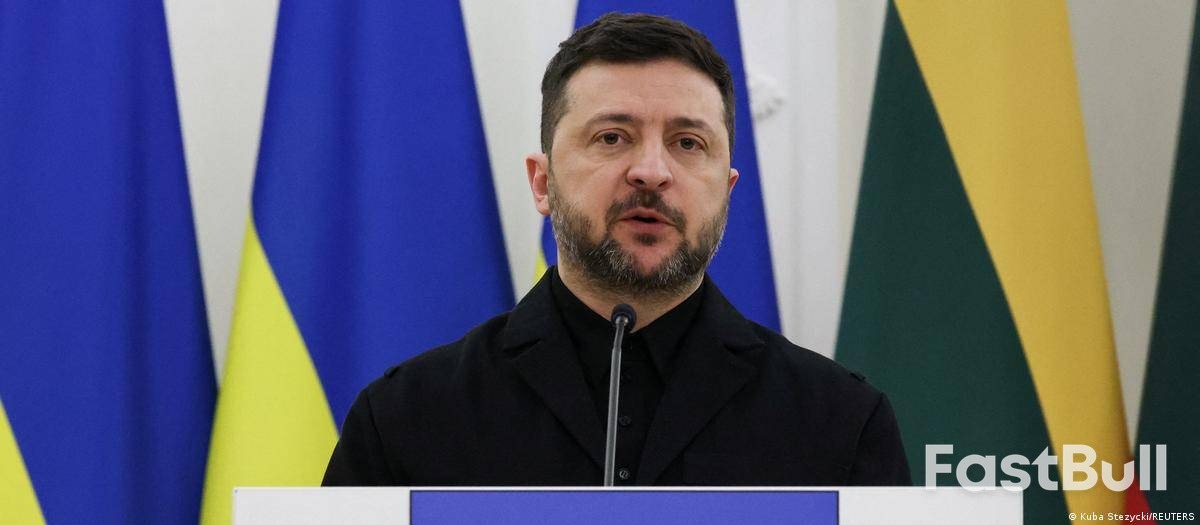
          Ukrainian President Volodymyr Zelenskyy announced the rescheduled peace talks, emphasizing his country's readiness for substantive discussions.

          Diplomatic Prelude in Florida

          The delay followed a meeting in Florida between Russia's top envoy, Kirill Dmitriev, and a U.S. delegation. Zelenskyy did not specify a reason for the postponement.

          Dmitriev described his discussion with the "U.S. peacemaking delegation" as constructive. The American officials included President Donald Trump's peace envoy Steve Witkoff, Treasury Secretary Scott Bessent, Trump's son-in-law Jared Kushner, and White House Senior Advisor Josh Gruenbaum.

          "We are encouraged by this meeting that Russia is working toward securing peace in Ukraine," Witkoff said. No further details about the discussion were released by either side.

          The Unresolved Donbas Question

          The Abu Dhabi negotiations are a key part of the Trump administration's efforts to resolve the conflict, which has now lasted nearly four years.

          The first round of talks took place in late January but failed to produce a breakthrough on the central issue of territory, specifically the eastern Ukrainian region known as the Donbas.

          Russia continues to demand that Ukrainian forces withdraw from the region. In response, Kyiv has warned that ceding any territory would only embolden Moscow.

          Violence Erupts Despite Ceasefire

          The talks were set against a backdrop of fragile diplomacy. Russia had reportedly agreed to a request from President Trump to pause strikes on Ukraine's energy infrastructure to facilitate the negotiations, especially as Ukraine endures a harsh winter.

          Kremlin spokesman Dmitry Peskov confirmed on Friday that the limited ceasefire would last only until Sunday to create a "good basis" for the talks.

          However, violence continued on the ground. On Sunday, a Russian drone strike hit a company shuttle bus transporting mine workers in the Dnipropetrovsk region in central-eastern Ukraine. Energy firm DTEK and government officials confirmed that the attack killed 15 people and wounded seven.

          The aftermath of a Russian drone attack on a bus carrying mine workers in the Dnipropetrovsk region on Sunday.

          Earlier the same day, regional officials reported separate Russian attacks on a maternity hospital and a residential building in the southeastern city of Zaporizhzhia, which left at least nine people injured.

          Risk Warnings and Disclaimers
          You understand and acknowledge that there is a high degree of risk involved in trading. Following any strategies or investment methods may lead to potential losses. The content on the site is provided by our contributors and analysts for information purposes only. You are solely responsible for determining whether any trading assets, securities, strategy, or any other product is suitable for investing based on your own investment objectives and financial situation.
          Add to Favorites
          Share

          Europe and China: Strategic Pivot or Tactical Hedging?

          Gerik

          Economic

          A Surge in High-Level Engagement Under Pressure From Washington

          Air routes between Europe and China have become unusually busy since late 2025, as a succession of European leaders travelled to Beijing. This wave of visits began with trips by the King of Spain and the French president, followed by leaders from the United Kingdom, Ireland, and Finland, with the German chancellor expected to visit by late February 2026. These moves coincided with renewed friction between Europe and the United States under Donald Trump, ranging from trade disputes to controversial remarks on Greenland that revived doubts about Washington’s long-term commitment to NATO.
          Against this backdrop, closer engagement with China has been interpreted by some observers as Europe seeking alternative strategic options. However, most analysts argue that these contacts do not amount to a coherent pivot, but rather a series of precautionary moves driven by uncertainty over US behavior.

          China as Leverage, Not a Value-Based Partner

          According to Luis Garicano of the London School of Economics, China does not share Europe’s core political and institutional values in the way the United States does. Nevertheless, in a more confrontational global environment, Europe requires bargaining leverage. Expanding diplomatic and economic channels with Beijing offers optionality rather than alignment.
          This logic is defensive rather than transformative. Engagement with China is being used to diversify Europe’s external relationships, not to replace the transatlantic partnership. The relationship therefore remains transactional, shaped by immediate economic and geopolitical calculations rather than long-term convergence.

          Fragmented European Approaches Reflect Structural Ambivalence

          Europe’s stance toward China remains highly fragmented. Some EU member states view stronger economic ties with Beijing as a contingency plan against US trade pressure. Others remain deeply wary, particularly due to China’s close relationship with Russia as the war in Ukraine approaches its fourth year.
          The European Union has shown openness to Chinese investment in sectors such as electric vehicles and batteries, recognizing the capital and industrial capacity China can provide. At the same time, this openness is tempered by concern over low-cost Chinese exports undermining European industry. Ron Stoop of The Hague Centre for Strategic Studies notes that EU–China relations have shifted from complementarity to direct competition, making a true strategic pivot unlikely.

          Pragmatic Transactionalism Takes Shape in Brussels

          In Brussels, a pragmatic and transactional approach is emerging. The EU is willing to cooperate with China where interests align, while simultaneously tightening restrictions on Chinese firms in sensitive technology sectors and promoting “buy European” procurement rules to protect strategic markets.
          Skepticism remains high regarding China’s willingness to make concessions on core EU concerns. Disputes over rare earth export controls and the high-profile case involving the Dutch semiconductor firm Nexperia have added strain. Joanna Szychowska of the European Commission has noted that Beijing currently prioritizes narrow transactional gains and shows limited interest in addressing Europe’s structural grievances.

          Economic Gravity Versus Strategic Limits

          Despite political tensions, China’s economic weight remains highly attractive during a period of global uncertainty. While the EU is accelerating trade talks with India, Mercosur, Australia, and Indonesia, China remains too large to ignore. Ireland recently secured access for its beef exports to the Chinese market, while Chinese EV maker Chery announced its European headquarters in Liverpool during UK Prime Minister Keir Starmer’s visit to Beijing.
          Spain has moved most decisively, with Prime Minister Pedro Sánchez attracting billions of dollars in Chinese investment as part of a strategy to position Spain as a European automotive hub. This approach also allows Sánchez to distinguish himself from Trump-style politics on issues ranging from immigration to NATO defense spending.
          In Eastern Europe, even traditionally hawkish countries such as Latvia are reassessing their China policies ahead of elections, though analysts caution that reduced US engagement does not imply China will fill the strategic vacuum.

          A Relationship Defined by Asymmetry

          The prospects for a genuine European pivot toward China ultimately depend on Beijing’s readiness to compromise. The EU–China summit in July 2025 produced limited results, reinforcing the perception that China currently prefers confrontation over accommodation. Speaking in Davos, Belgian Prime Minister Bart de Wever acknowledged the necessity of dialogue with China but stressed that only a united Europe can clearly define and defend its interests.
          For now, the balance of leverage appears tilted toward Beijing. Europe’s outreach to China is best understood as tactical hedging in an increasingly unstable global order, not as a fundamental realignment of its strategic orientation.
          To stay updated on all economic events of today, please check out our Economic calendar
          Risk Warnings and Disclaimers
          You understand and acknowledge that there is a high degree of risk involved in trading. Following any strategies or investment methods may lead to potential losses. The content on the site is provided by our contributors and analysts for information purposes only. You are solely responsible for determining whether any trading assets, securities, strategy, or any other product is suitable for investing based on your own investment objectives and financial situation.
          Add to Favorites
          Share

          US Ramps Up Mideast Defenses Before Any Iran Strike

          Isaac Bennett

          Middle East Situation

          Remarks of Officials

          Political

          A Secret Plan Sparks Regional Uncertainty

          President Trump has confirmed the existence of a plan for Iran but is keeping the details under wraps, leaving regional allies wondering about America's next move. "Well, we can't tell them the plan," Trump stated, emphasizing the need for secrecy. This ambiguity has reportedly left several Gulf partners feeling "in the dark" about potential U.S. actions.

          While major military action does not appear to be on the immediate horizon, U.S. officials suggest that a "limited" strike remains an option. The core concern for the Pentagon is the vulnerability of its troops and bases across the Middle East, especially as Tehran has threatened to unleash an all-out war in response to any attack.

          Pentagon's Calculus: Defense Before Offense

          According to U.S. officials, American forces are not yet fully prepared for a large-scale conflict with Iran. Before any decisive attack could be ordered, the U.S. must first reinforce its defensive shield in the region.

          "American airstrikes on Iran aren't imminent," officials clarified, citing the need to deploy additional air defenses. These systems are crucial to protect Israel, Arab allies, and U.S. personnel from the expected Iranian retaliation, which could trigger a prolonged conflict.

          While the U.S. military could execute limited airstrikes today, the kind of "decisive attack" Trump has requested would likely provoke a proportional response from Iran. This requires having robust defenses in place first.

          Deploying Advanced Air Defense Systems

          To mitigate this risk, the Pentagon is accelerating the deployment of advanced anti-air systems to key locations. The goal is to create a more resilient defense network against missile and drone attacks.

          The military already operates destroyers capable of intercepting aerial threats, but a significant reinforcement is underway. According to defense officials, flight data, and satellite imagery, the U.S. is moving additional assets to the region, including:

          • THAAD (Terminal High Altitude Area Defense) batteries

          • Patriot air defense systems

          These systems are being deployed to bases across the Middle East, strengthening defenses in Jordan, Kuwait, Bahrain, Saudi Arabia, and Qatar—home to a major U.S. base.

          Iran's Threat of Massive Retaliation

          Iranian officials have been unequivocal, stating their response to an attack would not be limited. They have vowed to use their formidable ballistic missile arsenal, much of which is launched from protected underground bunkers and tunnels, against U.S. assets and Israel.

          The memory of Iran's capabilities during the 12-day June war looms large for U.S. and Israeli military planners. The barrage of ballistic missiles, drones, and hypersonic projectiles that struck Tel Aviv and other areas was substantial, likely causing more damage than was officially acknowledged. This precedent underscores the seriousness of Iran's retaliatory threat and explains the Pentagon's current focus on defensive preparations.

          Figure 1: Iran's missile capabilities, demonstrated during past conflicts, are a primary factor driving the Pentagon's current defensive buildup in the Middle East.

          Risk Warnings and Disclaimers
          You understand and acknowledge that there is a high degree of risk involved in trading. Following any strategies or investment methods may lead to potential losses. The content on the site is provided by our contributors and analysts for information purposes only. You are solely responsible for determining whether any trading assets, securities, strategy, or any other product is suitable for investing based on your own investment objectives and financial situation.
          Add to Favorites
          Share

          Deep Winter Freeze Poses Major Economic Risks Across the United States

          Gerik

          Economic

          Severe Winter Storm Disrupts Transport and Daily Activity

          A major winter storm is sweeping across the southern and eastern regions of the United States, bringing heavy snowfall, strong winds, and extreme cold. Southern states, which are typically less prepared for such conditions, are experiencing widespread disruption. Snow accumulations of 15 to 20 centimeters are forecast across parts of Virginia, eastern Tennessee, the Carolinas, and northeastern Georgia, accompanied by wind gusts reaching up to 72 kilometers per hour in some locations.
          These conditions have severely affected air travel. According to FlightAware, more than 2,100 flights had been canceled nationwide by the afternoon of January 31 New York time. Major hubs such as Atlanta, Charlotte, Chicago, and Raleigh Durham were among the hardest hit. This marks the second consecutive weekend of major airline disruption, compounding operational losses for carriers and increasing costs linked to delays, rerouting, and stranded passengers. The relationship here is causal, as weather-related airport shutdowns directly reduce flight capacity and airline revenue rather than merely coinciding with weaker demand.

          Power Outages Add Pressure to Regional Economies

          Beyond transport, the storm has also strained energy infrastructure. Data from PowerOutage.com show that more than 194,000 households and businesses were without electricity as of the morning of January 31, mainly in Louisiana, Tennessee, and Mississippi. Heavy snow, ice accumulation, and strong winds have damaged power lines and slowed repair efforts.
          Extended outages can disrupt commercial activity, manufacturing, and essential services, particularly in regions not accustomed to prolonged cold. While some economic losses may be temporary, prolonged disruptions risk amplifying the overall cost of the storm, especially if freezing conditions persist and delay restoration work.

          Extreme Cold Threatens Florida’s Citrus Industry

          One of the most economically sensitive impacts is unfolding in agriculture, especially in Florida. Much of Polk County in central Florida, the state’s largest citrus producing area, is forecast to experience sub-freezing temperatures. This region alone accounted for nearly 30 percent of Florida’s total orange production in the previous growing season, according to the US Department of Agriculture.
          Citrus crops are highly vulnerable to frost. Temperatures below freezing can damage fruit, reduce yields, and in severe cases harm trees themselves, leading to losses that extend beyond a single season. The link between extreme cold and agricultural damage is clearly causal, as freezing conditions directly affect crop viability rather than reflecting broader market trends.

          Broader Economic Implications of Prolonged Cold

          The combined effects of transport disruption, power outages, and agricultural risk point to a potentially significant economic toll. Airlines face mounting operational costs, utilities must allocate resources to emergency repairs, and farmers risk losing a critical share of annual output. These impacts are occurring simultaneously, increasing the likelihood of spillover effects into local economies and supply chains.
          If the cold spell continues or additional storms follow, losses could escalate further, particularly in regions already coping with infrastructure strain. While winter weather disruptions are not unusual in the US, the geographic spread of this event, especially into southern states, makes it more economically damaging than a typical seasonal cold snap.
          Overall, the current winter storm underscores how extreme weather can translate rapidly into economic risk, affecting multiple sectors at once and challenging resilience in regions less accustomed to severe winter conditions.
          To stay updated on all economic events of today, please check out our Economic calendar
          Risk Warnings and Disclaimers
          You understand and acknowledge that there is a high degree of risk involved in trading. Following any strategies or investment methods may lead to potential losses. The content on the site is provided by our contributors and analysts for information purposes only. You are solely responsible for determining whether any trading assets, securities, strategy, or any other product is suitable for investing based on your own investment objectives and financial situation.
          Add to Favorites
          Share

          US Pushes Venezuelan Oil Toward India, Redrawing Energy Lines for Russia

          Gerik

          Economic

          Commodity

          Washington Signals a Strategic Shift in India’s Oil Sourcing

          The United States has informed India that it may soon be able to restart crude oil imports from Venezuela, according to sources cited by Reuters. This proposal comes at a sensitive moment, as New Delhi prepares to scale back purchases of Russian oil by several hundred thousand barrels per day in the coming months. The underlying objective from Washington’s perspective is to reduce India’s reliance on Russian supply while redirecting energy trade toward alternative producers aligned with broader US strategic interests.
          This initiative reflects a deliberate policy linkage rather than a coincidental market development. By reopening the channel for Venezuelan crude, the US is effectively offering India a substitute source that weakens Russia’s export leverage without forcing India to rely more heavily on Middle Eastern producers.

          Venezuela’s Re-Entry Into the Indian Market

          At the same time, relations between India and Venezuela appear to be warming. Venezuela’s interim president Delcy Rodríguez stated that both sides agreed to deepen energy cooperation during a recent phone call with Indian Prime Minister Narendra Modi. This diplomatic signal followed Caracas’ announcement that it would reopen its oil sector to private investment, a significant policy shift aimed at attracting foreign capital and reviving a struggling energy industry.
          Venezuela holds the world’s largest proven oil reserves, but years of sanctions, underinvestment, and operational constraints have limited its export capacity. Renewed access to the Indian market could provide a meaningful outlet for Venezuelan crude, particularly if offered at deep discounts to compensate for logistical complexity and quality issues.

          India Gradually Steps Back From Russian Oil

          India’s oil trade strategy has been evolving since 2022, when it sharply increased imports of Russian crude following the outbreak of the Russia Ukraine conflict, attracted by steep price discounts. However, this pattern is now changing. According to market estimates, India imported around 1.2 million barrels per day of Russian oil in January, a figure expected to decline to about 1 million barrels per day in February, with further reductions likely thereafter.
          This adjustment is driven by a combination of factors. Rising transaction costs, growing compliance risks linked to sanctions, and sustained diplomatic pressure from the US have pushed Indian refiners to diversify supply. Several major refineries have already reduced or halted purchases of Russian barrels, shifting toward sources in the Middle East, Africa, and Latin America.
          The relationship here is causal rather than merely correlational. As the cost and risk profile of Russian oil rises, alternative discounted supplies such as Venezuelan crude become more attractive, even if they present operational challenges.

          Implications for Russia’s Export Position

          For Russia, the potential loss of Indian demand carries significant implications. India has been one of the key destinations absorbing Russian crude exports, effectively helping Moscow maintain production levels despite Western sanctions. A sustained reduction in Indian purchases would weaken Russia’s ability to place millions of barrels per day into global markets, increasing its dependence on fewer buyers and potentially forcing deeper price discounts.
          From a geopolitical standpoint, the US proposal can be seen as an attempt to erode Russia’s energy revenue indirectly by reshaping trade incentives rather than imposing new restrictions on India.

          A Broader Realignment in Global Energy Trade

          If Venezuelan oil flows resume at scale, India’s energy balance could continue to shift away from Russia, marking another phase in the reconfiguration of global oil trade under geopolitical pressure. For India, the strategy reflects pragmatism rather than alignment with any single bloc. By diversifying suppliers, New Delhi aims to preserve energy security, price flexibility, and diplomatic autonomy.
          For Russia, however, the development represents an unwelcome signal. As alternative suppliers regain access to major consuming markets, the space for Russian crude narrows, underscoring how geopolitical dynamics are increasingly shaping energy flows as much as traditional market fundamentals.
          To stay updated on all economic events of today, please check out our Economic calendar
          Risk Warnings and Disclaimers
          You understand and acknowledge that there is a high degree of risk involved in trading. Following any strategies or investment methods may lead to potential losses. The content on the site is provided by our contributors and analysts for information purposes only. You are solely responsible for determining whether any trading assets, securities, strategy, or any other product is suitable for investing based on your own investment objectives and financial situation.
          Add to Favorites
          Share

          From One Dependence to Another: Europe’s Growing Reliance on US LNG Raises New Energy Risks

          Gerik

          Economic

          Commodity

          US LNG Tightens Its Grip on Europe’s Energy Mix

          Recent data highlight how decisively the United States has become Europe’s primary LNG supplier. According to figures from Kpler cited by Reuters, LNG from the United States made up around 60% of total LNG imports into the European Union in January. This represents a clear increase from both the previous month and the same period last year, when the US share stood closer to 53%.
          In absolute terms, the EU imported 5.36 million tonnes of LNG from the US during the month, the second-highest level ever recorded, trailing only the peak reached in October 2025. This surge coincided with colder winter conditions, which pushed up heating demand and forced European buyers to secure additional cargoes to stabilize energy supply for households and industry.

          Structural Shift After Russian Gas, Not a Seasonal Anomaly

          The growing weight of US LNG is not simply a seasonal effect. Kpler expects this trend to persist throughout the year, forecasting that American LNG could account for roughly 65% of Europe’s total LNG imports in 2026, compared with an average of about 56% in 2025. This reflects a structural reconfiguration of Europe’s energy system following the sharp reduction in pipeline gas flows from Russia since 2022.
          After the outbreak of the Russia–Ukraine conflict, the EU rapidly expanded LNG import capacity, building new terminals and upgrading existing infrastructure across multiple member states. US LNG emerged as the most readily available substitute, supported by flexible supply contracts and expanding export capacity on the US Gulf Coast. The relationship here is causal rather than coincidental. As Russian pipeline gas declined, US LNG filled the gap at scale, becoming the marginal supplier that balances Europe’s gas market.

          Replacing One Dependency With Another

          While the shift has strengthened short-term energy security, it has also triggered fresh concerns among European policymakers. Some officials warn that the EU risks moving from reliance on Russian gas to overreliance on a single alternative supplier. EU Energy Commissioner Dan Jorgensen recently described current geopolitical frictions involving the US as a “wake-up call,” underlining the need for deeper diversification rather than concentration around one dominant source.
          This concern is not theoretical. Heavy dependence on US LNG exposes Europe to political risk, export policy changes, and price volatility linked to US domestic dynamics. The correlation between supplier concentration and vulnerability is well established, even if no immediate disruption is visible.

          Russia Still Present, But on a Countdown

          Despite the strategic pivot, Russia has not disappeared entirely from Europe’s LNG market. Kpler data show that around 19% of LNG imported by the EU in January still originated from Russia. However, this share is expected to decline steadily. The EU has agreed on a roadmap to fully end imports of Russian LNG and pipeline gas by the end of 2027.
          Initial steps are set to take effect in the coming months, including restrictions on new short-term LNG contracts with Russian suppliers. These measures signal a clear political commitment, but they also reinforce the short-term role of US LNG as Europe’s primary fallback option.

          Short-Term Security Versus Long-Term Strategy

          In the near term, winter heating needs and the phased reduction of Russian supply are likely to keep US LNG flows elevated. This supports market stability but complicates Europe’s longer-term objectives. True energy resilience depends not only on replacing volumes, but on diversifying sources, routes, and fuels to reduce systemic risk.
          Europe’s current LNG profile shows progress in reducing Russian exposure, yet it also reveals a new imbalance. The challenge ahead lies in managing this transition carefully, ensuring that the move away from one dominant supplier does not simply recreate the same vulnerability under a different name.
          To stay updated on all economic events of today, please check out our Economic calendar
          Risk Warnings and Disclaimers
          You understand and acknowledge that there is a high degree of risk involved in trading. Following any strategies or investment methods may lead to potential losses. The content on the site is provided by our contributors and analysts for information purposes only. You are solely responsible for determining whether any trading assets, securities, strategy, or any other product is suitable for investing based on your own investment objectives and financial situation.
          Add to Favorites
          Share

          Russia Lifts Gasoline Export Ban for Producers to Stabilize Domestic Market

          Gerik

          Economic

          Commodity

          Policy Adjustment Signals Market Balancing Effort

          The Russian government has officially announced the removal of the gasoline export ban for companies that directly produce petroleum products, effective from January 31 and lasting until July 31, 2026. The decision was reported by RIA Novosti and confirmed by a government statement, which emphasized that the adjustment is intended to support operational stability within the domestic fuel market.
          Under the revised framework, gasoline exports by producers are now permitted, while export restrictions on gasoline and diesel remain in force for entities that are not involved in direct production. This selective easing reflects a calibrated policy shift rather than a full liberalization of fuel exports.

          Preventing Inventory Pressure on Oil Companies

          According to the government, the primary rationale behind lifting the ban for producers is to prevent excessive fuel stockpiles at oil companies. When exports are completely restricted, refiners face the risk of accumulating unsold inventories, which can strain storage capacity and disrupt refinery operations.
          By allowing producers to export gasoline, authorities aim to maintain smoother production flows and reduce logistical bottlenecks, especially during periods when domestic demand may not fully absorb output. This relationship is structural, as export flexibility helps balance refinery throughput with storage and sales capacity rather than being driven by short term price movements.

          Domestic Market Stability Remains the Priority

          Despite the easing for producers, Russia will continue to restrict gasoline and diesel exports by non producing traders. The government reiterated that the overarching objective of the policy remains the stabilization of the domestic fuel market, particularly in terms of supply availability and price control.
          The partial nature of the lift suggests that authorities are seeking to manage internal fuel dynamics carefully, ensuring sufficient domestic supply while avoiding distortions that could arise from unrestricted exports. The decision therefore reflects a correlation between export policy and inventory management, not a shift toward export led pricing.

          Broader Energy Context in Russia

          Russia, one of the world’s largest oil producers, has repeatedly adjusted fuel export rules over recent years in response to domestic supply conditions, refinery maintenance cycles, and geopolitical constraints. Temporary bans and exemptions have become a common policy tool to fine tune the balance between internal consumption and external sales.
          In this context, the latest move signals a pragmatic approach by the Russian government, prioritizing operational efficiency for oil producers while retaining regulatory controls to shield the domestic market from volatility.

          Measured Liberalization Rather Than Full Opening

          Overall, the lifting of the gasoline export ban for direct producers does not represent a broad opening of Russia’s fuel export regime. Instead, it highlights a targeted intervention designed to address inventory risks without undermining domestic fuel security.
          By maintaining restrictions on non producers and diesel exports, the government is reinforcing its message that export policy will remain flexible and conditional, adapting to market conditions while keeping domestic stability as the central benchmark.
          To stay updated on all economic events of today, please check out our Economic calendar
          Risk Warnings and Disclaimers
          You understand and acknowledge that there is a high degree of risk involved in trading. Following any strategies or investment methods may lead to potential losses. The content on the site is provided by our contributors and analysts for information purposes only. You are solely responsible for determining whether any trading assets, securities, strategy, or any other product is suitable for investing based on your own investment objectives and financial situation.
          Add to Favorites
          Share
          FastBull
          Copyright © 2026 FastBull Ltd

          728 RM B 7/F GEE LOK IND BLDG NO 34 HUNG TO RD KWUN TONG KLN HONG KONG

          TelegramInstagramTwitterfacebooklinkedin
          App Store Google Play Google Play
          Products
          Charts

          Chats

          Q&A with Experts
          Screeners
          Economic Calendar
          Data
          Tools
          Membership
          Features
          Function
          Markets
          Copy Trading
          Latest Signals
          Contests
          News
          Analysis
          24/7
          Columns
          Education
          Company
          Careers
          About Us
          Contact Us
          Advertising
          Help Center
          Feedback
          User Agreement
          Privacy Policy
          Personal Information Protection Statement
          Business

          White Label

          Data API

          Web Plug-ins

          Poster Maker

          Affiliate Program

          Risk Disclosure

          The risk of loss in trading financial instruments such as stocks, FX, commodities, futures, bonds, ETFs and crypto can be substantial. You may sustain a total loss of the funds that you deposit with your broker. Therefore, you should carefully consider whether such trading is suitable for you in light of your circumstances and financial resources.

          No decision to invest should be made without thoroughly conducting due diligence by yourself or consulting with your financial advisors. Our web content might not suit you since we don't know your financial conditions and investment needs. Our financial information might have latency or contain inaccuracy, so you should be fully responsible for any of your trading and investment decisions. The company will not be responsible for your capital loss.

          Without getting permission from the website, you are not allowed to copy the website's graphics, texts, or trademarks. Intellectual property rights in the content or data incorporated into this website belong to its providers and exchange merchants.

          Not Logged In

          Log in to access more features

          Connect Broker
          Become a signal provider
          Help Center
          Customer Service
          Dark Mode
          Price Up/Down Colors

          Log In

          Sign Up

          Position
          Layout
          Fullscreen
          Default to Chart
          The chart page opens by default when you visit fastbull.com