Markets
News
Analysis
User
24/7
Economic Calendar
Education
Data
- Names
- Latest
- Prev



Signal Accounts for Members
All Signal Accounts
All Contests


Turkey Retail Sales YoY (Nov)A:--
F: --
P: --
U.S. NFIB Small Business Optimism Index (SA) (Dec)A:--
F: --
P: --
Brazil Services Growth YoY (Nov)A:--
F: --
P: --
Canada Building Permits MoM (SA) (Nov)A:--
F: --
U.S. CPI MoM (SA) (Dec)A:--
F: --
P: --
U.S. CPI YoY (Not SA) (Dec)A:--
F: --
P: --
U.S. Real Income MoM (SA) (Dec)A:--
F: --
P: --
U.S. CPI MoM (Not SA) (Dec)A:--
F: --
P: --
U.S. Core CPI (SA) (Dec)A:--
F: --
P: --
U.S. Core CPI YoY (Not SA) (Dec)A:--
F: --
P: --
U.S. Core CPI MoM (SA) (Dec)A:--
F: --
P: --
U.S. Weekly Redbook Index YoYA:--
F: --
P: --
U.S. Building Permits Revised YoY (SA) (Oct)A:--
F: --
P: --
U.S. Building Permits Revised MoM (SA) (Oct)A:--
F: --
P: --
U.S. New Home Sales Annualized MoM (Oct)A:--
F: --
U.S. Annual Total New Home Sales (Oct)A:--
F: --
U.S. Cleveland Fed CPI MoM (SA) (Dec)A:--
F: --
P: --
U.S. Cleveland Fed CPI MoM (Dec)A:--
F: --
P: --
China, Mainland Exports (Dec)--
F: --
P: --
China, Mainland Imports YoY (CNH) (Dec)--
F: --
P: --
China, Mainland Imports (CNH) (Dec)--
F: --
P: --
China, Mainland Trade Balance (CNH) (Dec)--
F: --
P: --
China, Mainland Imports YoY (USD) (Dec)--
F: --
P: --
China, Mainland Exports YoY (USD) (Dec)--
F: --
P: --
China, Mainland M0 Money Supply YoY (Dec)--
F: --
P: --
China, Mainland M1 Money Supply YoY (Dec)--
F: --
P: --
China, Mainland M2 Money Supply YoY (Dec)--
F: --
P: --
U.S. EIA Natural Gas Production Forecast For The Next Year (Jan)A:--
F: --
P: --
U.S. EIA Short-Term Crude Production Forecast For The Next Year (Jan)A:--
F: --
P: --
U.S. EIA Short-Term Crude Production Forecast For The Year (Jan)A:--
F: --
P: --
EIA Monthly Short-Term Energy Outlook
U.S. 30-Year Bond Auction Avg. Yield--
F: --
P: --
Argentina 12-Month CPI (Dec)--
F: --
P: --
U.S. Budget Balance (Dec)--
F: --
P: --
Argentina CPI MoM (Dec)--
F: --
P: --
Argentina National CPI YoY (Dec)--
F: --
P: --
Richmond Federal Reserve President Barkin delivered a speech.
U.S. API Weekly Cushing Crude Oil Stocks--
F: --
P: --
U.S. API Weekly Crude Oil Stocks--
F: --
P: --
U.S. API Weekly Refined Oil Stocks--
F: --
P: --
U.S. API Weekly Gasoline Stocks--
F: --
P: --
South Korea Unemployment Rate (SA) (Dec)--
F: --
P: --
Japan Reuters Tankan Non-Manufacturers Index (Jan)--
F: --
P: --
Japan Reuters Tankan Manufacturers Index (Jan)--
F: --
P: --
China, Mainland Exports YoY (CNH) (Dec)--
F: --
P: --
China, Mainland Trade Balance (USD) (Dec)--
F: --
P: --
China, Mainland Outstanding Loans Growth YoY (Dec)--
F: --
P: --
U.K. 10-Year Note Auction Yield--
F: --
P: --
Canada Leading Index MoM (Dec)--
F: --
P: --
U.S. MBA Mortgage Application Activity Index WoW--
F: --
P: --
U.S. Core PPI YoY (Nov)--
F: --
P: --
U.S. PPI MoM (SA) (Nov)--
F: --
P: --
U.S. PPI YoY (Nov)--
F: --
P: --
U.S. Current Account (Q3)--
F: --
P: --
U.S. Retail Sales YoY (Nov)--
F: --
P: --
U.S. Retail Sales (Nov)--
F: --
P: --
U.S. Core Retail Sales MoM (Nov)--
F: --
P: --
U.S. Core Retail Sales (Nov)--
F: --
P: --


No matching data
Latest Views
Latest Views
Trending Topics
Top Columnists
Latest Update
White Label
Data API
Web Plug-ins
Affiliate Program
View All

No data
World Bank upgrades global growth, yet warns of long-term stagnation and deepening poverty in developing nations.

The global economy is showing more resilience than previously thought, prompting the World Bank to slightly upgrade its growth forecast for 2026. However, the institution warned on Tuesday that this growth is overly dependent on advanced economies and remains too weak to make a significant dent in extreme poverty.
In its latest Global Economic Prospects report, the World Bank projects global output will slow to 2.6% this year, following 2.7% growth in 2025. The forecast for 2027 sees growth returning to 2.7%.
The 2026 growth estimate of 2.6% marks a 0.2 percentage point increase from the bank’s June predictions. The forecast for 2025 has been revised upward more substantially, by 0.4 percentage points.
The World Bank attributed roughly two-thirds of this positive revision to the better-than-expected performance of the U.S. economy, which has held up despite trade disruptions from tariffs.
The forecast for U.S. GDP growth is now 2.2% in 2026, an upward revision of 0.2 percentage points. The projection for 2025 has been raised by half a percentage point to 2.1%.
According to the report, U.S. growth in 2025 was held back by an import surge as businesses rushed to get ahead of tariffs. Looking ahead to 2026, growth will be supported by larger tax incentives, though this will be partially offset by the negative impact of tariffs on investment and consumption.
Despite the short-term upgrades, the World Bank issued a stark warning. If current trends hold, the 2020s are poised to become the weakest decade for global growth since the 1960s. This sluggish pace is considered insufficient to prevent stagnation and rising joblessness in many emerging and developing nations.
"With each passing year, the global economy has become less capable of generating growth and seemingly more resilient to policy uncertainty," said Indermit Gill, the World Bank's Chief Economist. "But economic dynamism and resilience cannot diverge for long without fracturing public finance and credit markets."
Growth across emerging market and developing economies is expected to slow from 4.2% in 2025 to 4.0% in 2026. While these figures represent upgrades of 0.3 and 0.2 percentage points respectively from the June forecast, the headline number masks a significant divergence.
The China Factor
China's economy is projected to slow, with growth falling from 4.9% in 2025 to 4.4% in 2026. However, both of these forecasts have been revised up by 0.4 percentage points due to the effects of fiscal stimulus and successful efforts to increase exports to markets outside the U.S.
Stagnation Risk Elsewhere
When China is excluded from the calculation, the growth rate for the rest of the emerging and developing world is forecast to be flat at 3.7% in both 2025 and 2026. This highlights the underlying weakness and reinforces concerns about the global economy's ability to lift populations out of poverty.
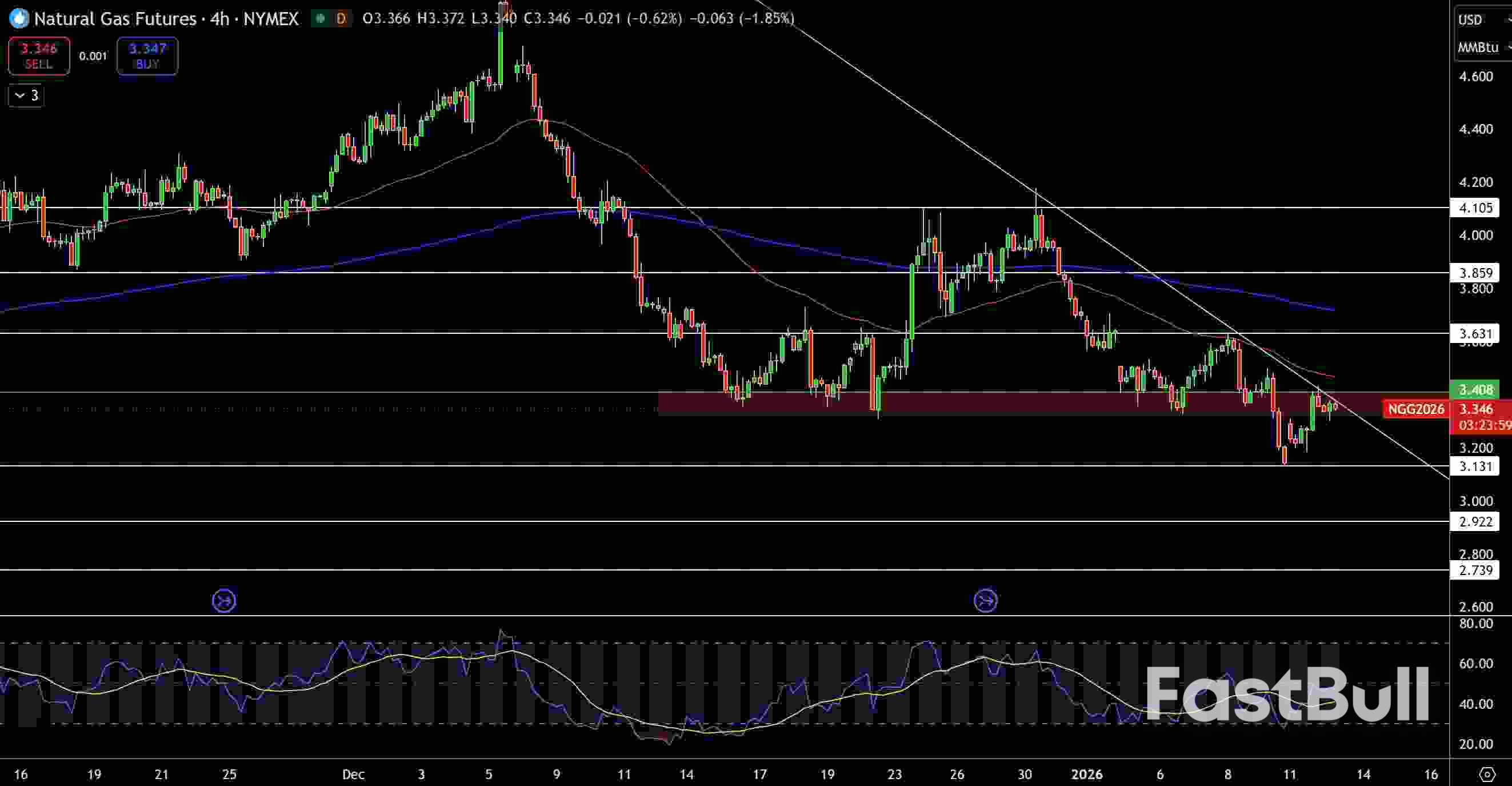
Natural Gas (NG) Price Chart
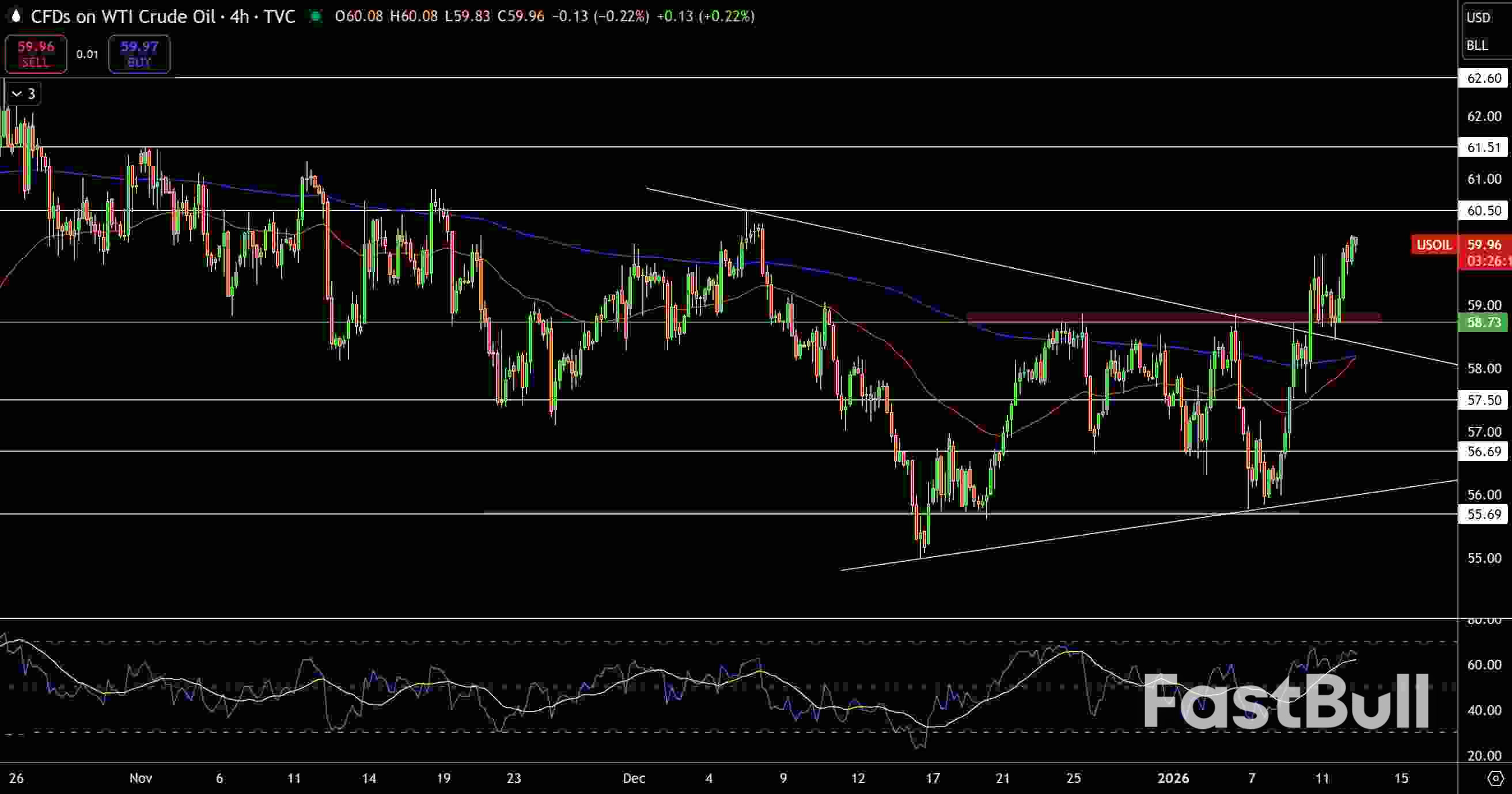
WTI Price Chart
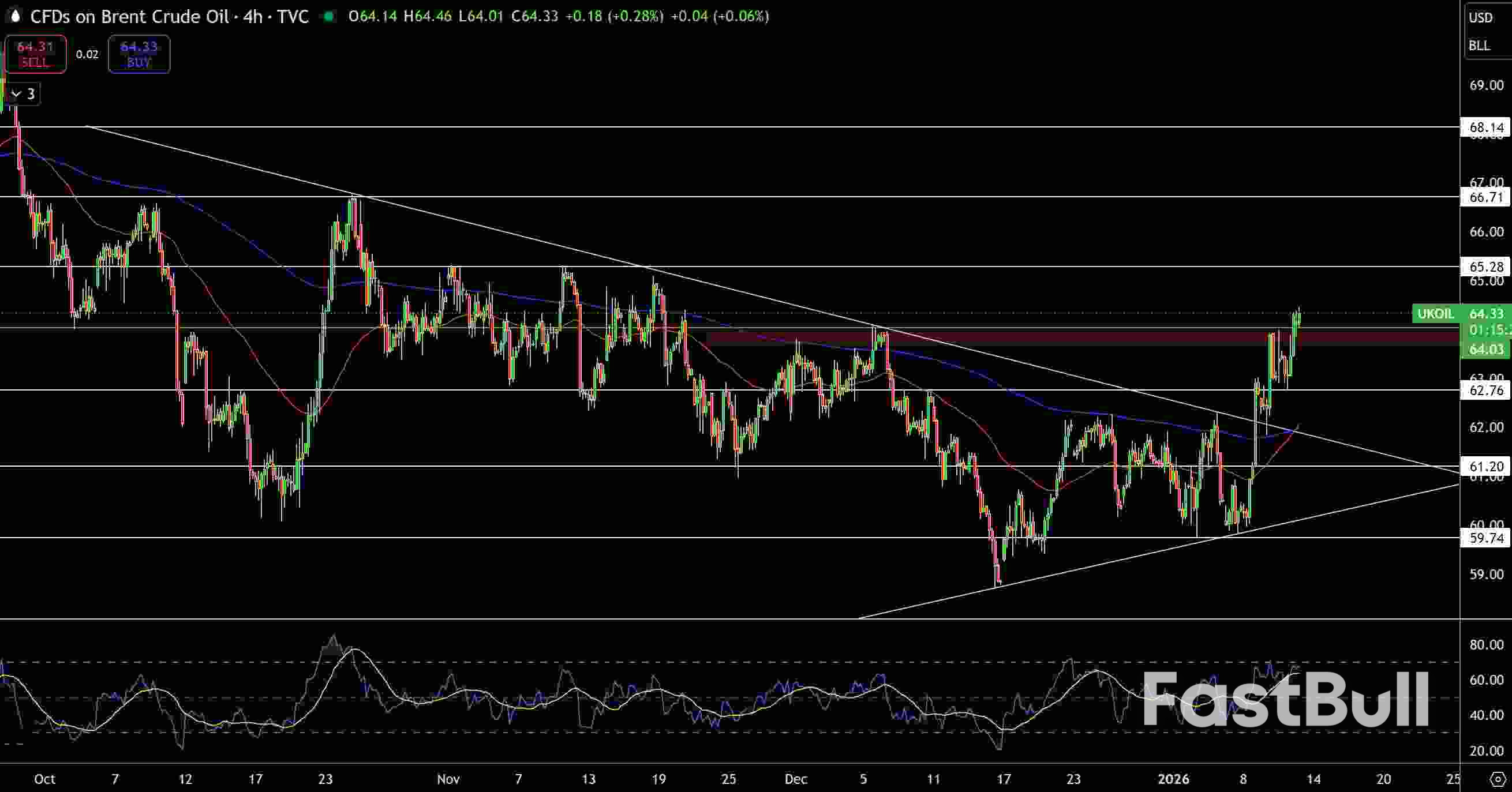
Brent Price Chart
Malaysia's property market is entering 2026 with a clearer hierarchy of performance, where alignment with structural demand, capital discipline and execution certainty are expected to matter more than broad market momentum, according to Knight Frank Malaysia.
Insights from the firm's Real Estate Highlights (REH) 2H2025 point to a market that is no longer moving in a single direction. Instead, assets that are well positioned in terms of purpose, infrastructure readiness and occupier relevance are expected to outperform, while misaligned developments face growing penalties.
"The market is no longer moving in a single direction. Over the past six months, we have seen a clear separation between assets that are aligned with structural demand and those that are not. In this environment, performance is determined by alignment, discipline and execution, rather than momentum alone," said group managing director Keith Ooi.
As Malaysia moves into 2026, policy support is expected to remain an enabling backdrop rather than a primary performance driver. Market outcomes will increasingly hinge on how well assets are aligned with long-term demand fundamentals, supported by delivery certainty and operational readiness.
Looking ahead, the industrial and logistics sector is expected to remain resilient, though increasingly selective. Demand is likely to concentrate in locations that offer infrastructure readiness, power availability and operational efficiency, particularly within advanced manufacturing and logistics ecosystems.
"Heightened trade costs and policy uncertainty have temporarily disturbed industrial demand at the margins, reinforcing occupier and investor selectivity rather than reversing underlying market resilience," said senior executive director of land and industrial solutions Allan Sim.
The data centre sector is also transitioning into a more execution-driven phase heading into 2026. Growth is shifting away from headline investment announcements towards delivery certainty, governance readiness and access to critical resources such as power and water.

The data centre sector is seen transitioning into a more execution-driven phase in 2026.
"As the sector moves from commitments to delivery, project progress is increasingly shaped by execution factors such as contract timelines, customised customer requirements, the track record of operators and owners, as well as regulatory processes and available infrastructure capacity. Despite this, data centres remain a compelling alternative asset class for investors and developers," said executive director of valuation and advisory Justin Chee.
In hospitality, the sector is entering an early positioning phase ahead of Visit Malaysia 2026, with improving travel flows and sustained cross-border demand influencing room inventory planning and pricing strategies.
"The Visit Malaysia 2026 campaign targets millions of visitors and high tourism receipts, providing a powerful demand driver for hotel assets. This is expected to lift occupancy rates and average room rates, benefiting investment performance," said executive director of capital markets James Buckley.
He added that demand for hotel real estate, including serviced apartments and hybrid hotel-apartment concepts, is expanding, particularly in Kuala Lumpur, Johor and Penang.
The office market is expected to remain structurally polarised in 2026, with occupiers continuing to prioritise quality, flexibility and ESG compliance over scale.

"Leasing decisions are increasingly centred on quality, flexibility and efficiency, which is accelerating the performance gap between newer, well positioned buildings and older stock," said senior executive director of office strategy and solutions Teh Young Khean.
The two-tier dynamics are most evident in the Klang Valley, where newer, green buildings are being absorbed earlier, while older stock faces mounting pressure unless actively repositioned.
In retail, performance is expected to remain highly dependent on format and location, with landlords prioritising tenant retention and mix optimisation amid intensifying competition.
"As competition intensifies, especially in overlapping catchments, landlords are prioritising tenant retention and mix optimisation over headline rental growth," said director of retail management and consultancy Yuen May Chee.
The residential market is likely to see continued demand in 2026, though buyers are becoming more discerning amid affordability pressures and a high supply pipeline.
"Demand remains active, but buyers are more selective due to the high housing pipeline, both existing and new inventory. We are seeing self-correction in selected markets through pricing and product discipline rather than broad-based recovery," said senior executive director of research and consultancy Judy Ong.
Infrastructure-led corridors, including the Rapid Transit System (RTS) Link in Johor and major rail and road projects across the Klang Valley and Penang, are expected to remain key demand drivers.
Data from the second half of 2025 underscores why momentum alone is no longer sufficient.
Industrial markets continued to show resilience, with prime manufacturing facilities in the Klang Valley maintaining steady take-up, while Johor benefited from deeper cross-border integration under the Johor–Singapore Special Economic Zone. Penang recorded a 40.6% year-on-year increase in foreign direct investment, despite a decline in transaction volumes due to land scarcity.
Across the office, retail and residential segments, performance increasingly diverged based on asset quality, location and alignment with end-user demand. Overhang levels improved selectively where pricing and product offerings were well-calibrated, pointing to gradual market self-correction rather than a broad-based recovery.
Overall, the signals from 2H2025 suggest that the central challenge heading into 2026 is not whether demand exists, but whether strategies are aligned with the fundamentals that now matter most — infrastructure readiness, asset purpose and disciplined execution.
White Label
Data API
Web Plug-ins
Poster Maker
Affiliate Program
The risk of loss in trading financial instruments such as stocks, FX, commodities, futures, bonds, ETFs and crypto can be substantial. You may sustain a total loss of the funds that you deposit with your broker. Therefore, you should carefully consider whether such trading is suitable for you in light of your circumstances and financial resources.
No decision to invest should be made without thoroughly conducting due diligence by yourself or consulting with your financial advisors. Our web content might not suit you since we don't know your financial conditions and investment needs. Our financial information might have latency or contain inaccuracy, so you should be fully responsible for any of your trading and investment decisions. The company will not be responsible for your capital loss.
Without getting permission from the website, you are not allowed to copy the website's graphics, texts, or trademarks. Intellectual property rights in the content or data incorporated into this website belong to its providers and exchange merchants.
Not Logged In
Log in to access more features

FastBull Membership
Not yet
Purchase
Log In
Sign Up