• Trade
  • Markets
  • Copy
  • Contests
  • News
  • 24/7
  • Calendar
  • Q&A
  • Chats
Trending
Screeners
SYMBOL
LAST
BID
ASK
HIGH
LOW
NET CHG.
%CHG.
SPREAD
SPX
S&P 500 Index
6827.42
6827.42
6827.42
6899.86
6801.80
-73.58
-1.07%
--
DJI
Dow Jones Industrial Average
48458.04
48458.04
48458.04
48886.86
48334.10
-245.98
-0.51%
--
IXIC
NASDAQ Composite Index
23195.16
23195.16
23195.16
23554.89
23094.51
-398.69
-1.69%
--
USDX
US Dollar Index
97.950
98.030
97.950
98.070
97.920
0.000
0.00%
--
EURUSD
Euro / US Dollar
1.17359
1.17366
1.17359
1.17447
1.17262
-0.00035
-0.03%
--
GBPUSD
Pound Sterling / US Dollar
1.33722
1.33731
1.33722
1.33740
1.33546
+0.00015
+ 0.01%
--
XAUUSD
Gold / US Dollar
4345.83
4346.26
4345.83
4348.78
4294.68
+46.44
+ 1.08%
--
WTI
Light Sweet Crude Oil
57.478
57.508
57.478
57.601
57.194
+0.245
+ 0.43%
--

Community Accounts

Signal Accounts
--
Profit Accounts
--
Loss Accounts
--
View More

Become a signal provider

Sell trading signals to earn additional income

View More

Guide to Copy Trading

Get started with ease and confidence

View More

Signal Accounts for Members

All Signal Accounts

Best Return
  • Best Return
  • Best P/L
  • Best MDD
Past 1W
  • Past 1W
  • Past 1M
  • Past 1Y

All Contests

  • All
  • Trump Updates
  • Recommend
  • Stocks
  • Cryptocurrencies
  • Central Banks
  • Featured News
Top News Only
Share

China's Central Bank: Authorises DBS Bank As Yuan Clearing Bank In Singapore

Share

Bank Of Korea - South Korea Central Bank, Nps Agree To Extend Currency Swap Agreement For Another Year

Share

Poland's CPI At 0.1% Month-On-Month In November Versus 0.1% Released Earlier

Share

London Metal Exchange: Stocks Of Copper Down 25

Share

Polish Inflation At 2.5% Year-On-Year In November

Share

Poland's January-October Import Up 5.4% To 309.3 Billion Euros

Share

Poland's January-October Trade Balance At -5.1 Billion Euros

Share

Poland's January-October Export Up 2.8% To 304.3 Billion Euros

Share

Ceasefire Negotiations Between Ukraine And US Representatives In Berlin To Continue Monday Morning - German Source Familiar With The Schedule

Share

Spain's IBEX Hits Fresh Record High, Up Over 1%

Share

Spot Silver Rises Nearly 3% To $63.82/Oz

Share

France's Foreign Minister Says He Suggesd To EU's Kallas That US Representatives Brief EU Foreign Ministers On Gaza Peace Plan During Their Meeting

Share

India Trade Secretary: Prime Facie Don't See A Case Of Rice Dumping To USA And There Is No Active Investigation On That

Share

India Trade Secretary: India's Rice Exported To USA Largely Limited To Basmati And At Price Higher Than General Price Of Rice

Share

India Trade Secretary: India Can Raise Shipments To Russia In Sectors Like Automobiles And Pharmaceuticals

Share

India Trade Secretary:India-Oman Trade Deal Completed And Will Be Signed Soon

Share

Burberry Shares Top FTSE Gainer, Up 3.5% In Positive European Luxury Sector

Share

India Trade Secretary: India-US Close To A “Framework” Deal But Won't Give A Timeline

Share

Yemen's Southern Transitional Council (Stc) Launches Military Operation In Abyan

Share

India Trade Official: As Mexico Has Raised Tariffs On Mfn Basis, We Don't See A Recourse In WTO

TIME
ACT
FCST
PREV
France HICP Final MoM (Nov)

A:--

F: --

P: --

China, Mainland Outstanding Loans Growth YoY (Nov)

A:--

F: --

P: --

China, Mainland M2 Money Supply YoY (Nov)

A:--

F: --

P: --

China, Mainland M0 Money Supply YoY (Nov)

A:--

F: --

P: --

China, Mainland M1 Money Supply YoY (Nov)

A:--

F: --

P: --

India CPI YoY (Nov)

A:--

F: --

P: --

India Deposit Gowth YoY

A:--

F: --

P: --

Brazil Services Growth YoY (Oct)

A:--

F: --

P: --

Mexico Industrial Output YoY (Oct)

A:--

F: --

P: --

Russia Trade Balance (Oct)

A:--

F: --

P: --

Philadelphia Fed President Henry Paulson delivers a speech
Canada Building Permits MoM (SA) (Oct)

A:--

F: --

P: --

Canada Wholesale Sales YoY (Oct)

A:--

F: --

P: --

Canada Wholesale Inventory MoM (Oct)

A:--

F: --

P: --

Canada Wholesale Inventory YoY (Oct)

A:--

F: --

P: --

Canada Wholesale Sales MoM (SA) (Oct)

A:--

F: --

P: --

Germany Current Account (Not SA) (Oct)

A:--

F: --

P: --

U.S. Weekly Total Rig Count

A:--

F: --

P: --

U.S. Weekly Total Oil Rig Count

A:--

F: --

P: --

Japan Tankan Small Manufacturing Outlook Index (Q4)

A:--

F: --

P: --

Japan Tankan Large Non-Manufacturing Diffusion Index (Q4)

A:--

F: --

P: --

Japan Tankan Large Non-Manufacturing Outlook Index (Q4)

A:--

F: --

P: --

Japan Tankan Large Manufacturing Outlook Index (Q4)

A:--

F: --

P: --

Japan Tankan Small Manufacturing Diffusion Index (Q4)

A:--

F: --

P: --

Japan Tankan Large Manufacturing Diffusion Index (Q4)

A:--

F: --

P: --

Japan Tankan Large-Enterprise Capital Expenditure YoY (Q4)

A:--

F: --

P: --

U.K. Rightmove House Price Index YoY (Dec)

A:--

F: --

P: --

China, Mainland Industrial Output YoY (YTD) (Nov)

A:--

F: --

P: --

China, Mainland Urban Area Unemployment Rate (Nov)

A:--

F: --

P: --

Saudi Arabia CPI YoY (Nov)

A:--

F: --

P: --

Euro Zone Industrial Output YoY (Oct)

--

F: --

P: --

Euro Zone Industrial Output MoM (Oct)

--

F: --

P: --

Canada Existing Home Sales MoM (Nov)

--

F: --

P: --

Euro Zone Total Reserve Assets (Nov)

--

F: --

P: --

U.K. Inflation Rate Expectations

--

F: --

P: --

Canada National Economic Confidence Index

--

F: --

P: --

Canada New Housing Starts (Nov)

--

F: --

P: --

U.S. NY Fed Manufacturing Employment Index (Dec)

--

F: --

P: --

U.S. NY Fed Manufacturing Index (Dec)

--

F: --

P: --

Canada Core CPI YoY (Nov)

--

F: --

P: --

Canada Manufacturing Unfilled Orders MoM (Oct)

--

F: --

P: --

U.S. NY Fed Manufacturing Prices Received Index (Dec)

--

F: --

P: --

U.S. NY Fed Manufacturing New Orders Index (Dec)

--

F: --

P: --

Canada Manufacturing New Orders MoM (Oct)

--

F: --

P: --

Canada Core CPI MoM (Nov)

--

F: --

P: --

Canada Trimmed CPI YoY (SA) (Nov)

--

F: --

P: --

Canada Manufacturing Inventory MoM (Oct)

--

F: --

P: --

Canada CPI YoY (Nov)

--

F: --

P: --

Canada CPI MoM (Nov)

--

F: --

P: --

Canada CPI YoY (SA) (Nov)

--

F: --

P: --

Canada Core CPI MoM (SA) (Nov)

--

F: --

P: --

Canada CPI MoM (SA) (Nov)

--

F: --

P: --

Federal Reserve Board Governor Milan delivered a speech
U.S. NAHB Housing Market Index (Dec)

--

F: --

P: --

Australia Composite PMI Prelim (Dec)

--

F: --

P: --

Australia Services PMI Prelim (Dec)

--

F: --

P: --

Australia Manufacturing PMI Prelim (Dec)

--

F: --

P: --

Japan Manufacturing PMI Prelim (SA) (Dec)

--

F: --

P: --

U.K. Unemployment Claimant Count (Nov)

--

F: --

P: --

U.K. Unemployment Rate (Nov)

--

F: --

P: --

U.K. 3-Month ILO Unemployment Rate (Oct)

--

F: --

P: --

Q&A with Experts
    • All
    • Chatrooms
    • Groups
    • Friends
    Connecting
    .
    .
    .
    Type here...
    Add Symbol or Code

      No matching data

      All
      Trump Updates
      Recommend
      Stocks
      Cryptocurrencies
      Central Banks
      Featured News
      • All
      • Russia-Ukraine Conflict
      • Middle East Flashpoint
      • All
      • Russia-Ukraine Conflict
      • Middle East Flashpoint
      Search
      Products

      Charts Free Forever

      Chats Q&A with Experts
      Screeners Economic Calendar Data Tools
      Membership Features
      Data Warehouse Market Trends Institutional Data Policy Rates Macro

      Market Trends

      Market Sentiment Order Book Forex Correlations

      Top Indicators

      Charts Free Forever
      Markets

      News

      News Analysis 24/7 Columns Education
      From Institutions From Analysts
      Topics Columnists

      Latest Views

      Latest Views

      Trending Topics

      Top Columnists

      Latest Update

      Signals

      Copy Rankings Latest Signals Become a signal provider AI Rating
      Contests
      Brokers

      Overview Brokers Assessment Rankings Regulators News Claims
      Broker listing Forex Brokers Comparison Tool Live Spread Comparison Scam
      Q&A Complaint Scam Alert Videos Tips to Detect Scam
      More

      Business
      Events
      Careers About Us Advertising Help Center

      White Label

      Data API

      Web Plug-ins

      Affiliate Program

      Awards Institution Evaluation IB Seminar Salon Event Exhibition
      Vietnam Thailand Singapore Dubai
      Fans Party Investment Sharing Session
      FastBull Summit BrokersView Expo
      Recent Searches
        Top Searches
          Markets
          News
          Analysis
          User
          24/7
          Economic Calendar
          Education
          Data
          • Names
          • Latest
          • Prev

          View All

          No data

          Scan to Download

          Faster Charts, Chat Faster!

          Download App
          English
          • English
          • Español
          • العربية
          • Bahasa Indonesia
          • Bahasa Melayu
          • Tiếng Việt
          • ภาษาไทย
          • Français
          • Italiano
          • Türkçe
          • Русский язык
          • 简中
          • 繁中
          Open Account
          Search
          Products
          Charts Free Forever
          Markets
          News
          Signals

          Copy Rankings Latest Signals Become a signal provider AI Rating
          Contests
          Brokers

          Overview Brokers Assessment Rankings Regulators News Claims
          Broker listing Forex Brokers Comparison Tool Live Spread Comparison Scam
          Q&A Complaint Scam Alert Videos Tips to Detect Scam
          More

          Business
          Events
          Careers About Us Advertising Help Center

          White Label

          Data API

          Web Plug-ins

          Affiliate Program

          Awards Institution Evaluation IB Seminar Salon Event Exhibition
          Vietnam Thailand Singapore Dubai
          Fans Party Investment Sharing Session
          FastBull Summit BrokersView Expo

          US-EU Deal Details Emerge as China Talks Begin, Trump Seeks 15%-20% World Tariff

          Manuel

          China–U.S. Trade War

          Economic

          Summary:

          Trump, called the deal “the biggest of them all,” while von der Leyen said that "15% is not to be underestimated, but it is the best we could get."

          President Trump and European Commission President Ursula von der Leyen announced Sunday that the US and EU had agreed to the framework of a trade deal that included a baseline tariff rate of 15% on EU goods imported into the US.
          Trump, called the deal “the biggest of them all,” while von der Leyen said that "15% is not to be underestimated, but it is the best we could get." EU reaction to the agreement was decidedly mixed, with Germany and France offering perhaps the strongest criticism.
          "I am not satisfied with this result in the sense of: 'This is good.' But I do say that, given the starting point we had with the United States, more simply wasn’t achievable," German Chancellor Friedrich Merz said. French Prime Minister Francois Bayrou called the EU's "submission" a "dark day" for the bloc.
          Trump also confirmed on Monday that 15% represents the new standard for tariff negotiations.
          “For the world, I would say it’ll be somewhere in the 15% to 20% range,” Trump said in Scotland as he met with UK Prime Minister Keir Starmer.
          Meanwhile, another round of US-China talks kicked off on Monday, with markets hoping for another extension of the countries' trade truce. The South China Morning Post, a Hong Kong-based English-language newspaper, reported that is seen as the likely outcome.
          Last week, Trump said that letters dictating tariff rates for over 200 countries would go out soon while his administration works to clinch deals with larger trade partners. Trump said the US hasn't had a "lot of luck" with Canada and suggested he may impose threatened 35% levies on goods not covered by the US-Canada-Mexico trade agreement.
          Trump also touted a deal with Japan that included a $550 billion investment in the US and a 15% tariff on goods imported into the US from Japan. On Saturday, Japanese trade negotiator Ryosei Akazawa suggested the money could be used to help finance an unnamed Taiwanese chipmaker building plants in the US.
          "For example, if a Taiwanese chipmaker builds a plant in the US and uses Japanese components or tailors its products to meet Japanese needs, that's fine too," he said.
          In March, Taiwan's TSMC announced a $100 billion investment in the US, on top of plans to build three plants in Arizona, one of which is already operating.

          Source: Yahoo Finance

          To stay updated on all economic events of today, please check out our Economic calendar
          Risk Warnings and Disclaimers
          You understand and acknowledge that there is a high degree of risk involved in trading. Following any strategies or investment methods may lead to potential losses. The content on the site is provided by our contributors and analysts for information purposes only. You are solely responsible for determining whether any trading assets, securities, strategy, or any other product is suitable for investing based on your own investment objectives and financial situation.
          Add to Favorites
          Share

          This could be the most consequential week for the economy in years

          Adam

          Economic

          The state of President Donald Trump’s economy is about to come into full view.
          A slew of crucial economic data is set for release this week, including the jobs report, inflation, consumer confidence and corporate earnings. We’ll get the first glimpse at America’s second-quarter gross domestic product, the broadest measure of the economy. And, most crucially, the Federal Reserve will decide whether to cut rates or hold steady one more time.
          As if that weren’t enough, Trump’s trade polices also come due: Friday is the administration’s self-imposed deadline for settling tariff rates for all 200+ US trading partners. Trump’s top economic advisers will be negotiating a trade framework with China in Sweden. And an appeals court will hear arguments this week about whether the bulk of Trump’s tariffs are even legal, to begin with.
          Altogether, the data could paint a picture of an economy that is resilient — but slowing under the weight of Trump’s dizzying tariff changes, reductions in government workers and spending, and an aggressive deportation of foreign-born workers.
          Here’s a look at what to expect this week and why the data matters:

          Corporate earnings

          Some of the biggest names in tech are set to release earnings this week, including Microsoft, Meta, Amazon and Apple. That will set the tone for market sentiment.
          Tech stocks have fueled record market growth in recent months as investors focus on gearing up for AI expansion. So far, around 80% of S&P 500 companies reporting earnings this season have beaten estimates, according to FactSet.
          Overall, stocks have marched higher into record territory recently, supported by cautious optimism in trade deals and better-than-expected economic data. That has emboldened Trump to push harder on his trade deals, telling NBC News earlier this month that markets hit new highs because “tariffs have been very well received.”
          Why it matters: Strong earnings could continue to boost the stock market, which is starting to look a bit expensive for some investors. That could also convince Trump that the market — which turned on him in April — has acquiesced to his plan for higher tariffs.

          Consumer confidence and sentiment

          Two separate reads on the way Americans are feeling about the economy are set to be released this week.
          Consumer confidence, as measured by Conference Board, sank to the lowest level since the pandemic when Trump slapped massive tariffs on major trading partners. Shoppers expressed concern about the negative impact on the economy and prices. But consumers are generally more optimistic now that trade deals are beginning to emerge.
          The consumer sentiment survey from the University of Michigan continues to show that shoppers are wary of inflation levels rising again, after the economy batted down historic price increases following the pandemic. Although sentiment has rallied back from near-record lows earlier this year, it remains depressed because of Trump’s trade policy.
          Why it matters: Economists pay close attention to consumers’ optimism, since their spending powers two-thirds of the economy — and when shoppers think prices are about to rise, they tend to pull back. The latest retail sales data shows that consumers are spending cautiously.

          Second-quarter GDP

          GDP is a key indicator of economic success and, arguably, a validation of Trump’s policies. But this quarterly assessment has slumped in recent months, even shrinking in the first quarter of the year for the first time since 2022.
          Economists expect an improvement for the April-June quarter as imports rebalance after companies raced to front-load their purchases ahead of Trump’s tariffs. They warn that, just as an inventory spike may have artificially hurt GDP in the first quarter, companies working through their warehoused goods in the second quarter may make the economy look better than it actually is.
          Why it matters: The US economy is large and resilient, and it has continued to support hundreds of thousands new jobs each month for years. But if Americans are getting cold feet, things could take a turn for the worse.

          Fed decision

          Trump has repeatedly — and publicly — berated Fed Chair Jerome Powell for not lowering the bank’s interest rate (their recent détente notwithstanding), but the central bank is overwhelmingly expected to hold rates steady Wednesday at the conclusion of its two-day monetary policy meeting.
          In an unusual kink, two governors are expected to vote against the consensus of the board, which hasn’t happened in three decades. With the job market still relatively strong, most Fed officials have said the economy can withstand higher rates for the time being. Meanwhile, they want to wait to see how Trump’s policies of high tariffs and deportation of foreign workers impact inflation and the labor market.
          Why it matters: The bank is widely expected to start cutting its key overnight lending rate in September — a good sign for Americans hoping to borrow money, and especially for first-time homebuyers, who have been effectively locked out of the market with mortgage rates close to 7%.

          Inflation

          The Fed’s favorite inflation gauge, the Personal Consumption Expenditures index, has been creeping higher — moving further away from its 2% goal in recent months. That’s just one factor behind the central bank’s position on rate cuts.
          Why it matters: Shoppers have been pulling forward purchases, including back-to-school items, to mitigate expected higher prices, but the July data will likely still bear the fingerprints of Trump’s tumultuous trade policy: Items like furniture and toys are starting to reflect elevated costs as pre-tariff inventory is depleted.

          Trade deadline

          Trump’s pause on the hefty and unpopular tariffs he rolled out in April expires on August 1. In the intervening period, the White House has scrambled to make deals with a slew of partners, announcing preliminary arrangements with the UK, China, Vietnam, Indonesia, the Philippines and Japan. And on Sunday, Trump announced a framework for an EU deal.
          As the final deadline approaches, Trump said Friday he would be sending out letters to roughly 200 countries this week unilaterally setting a range of tariff rates. “It’s basically going to say, you’re going to pay 10%, you’re going to pay 15%, you’re going to pay maybe less, I don’t know,” Trump told reporters before he left for a trip to Scotland.
          US markets are “very, very fixated” on the levels that are set, and an effective tariff rate beyond 20% on major trading partners could trigger a downturn on Wall Street, one analyst told CNN.
          Why it matters: Trump’s tariffs that are currently in effect have raised the effective US tariff rate — the average tax that US importers pay on foreign goods — from around 2% to 18%, the highest since 1934, economists at Yale’s Budget Lab said in a recent report. That works out to $2,400 a year in added costs for the average American household. The US economy and markets have been able to withstand that so far. A considerably higher tariff rate could put that to the test.

          Trade negotiations

          Talks with China are ongoing, however. Treasury Secretary Scott Bessent is set to meet Monday and Tuesday with Chinese officials to iron out the details of the framework the two countries agreed upon at their London and Geneva meetings.
          Trump in April slapped a 145% tariff on imports from China, prompting Beijing to respond with a 125% tariff on imports from the United States. That effectively created a total embargo between the world’s two largest economies before they agreed on a pause until August 12.
          Meanwhile, on Thursday, the US Court of Appeals will hear oral arguments about whether Trump can use his emergency powers to levy tariffs after a lower court ruled he had exceeded his authority in doing so.
          Why it matters: One of the Trump administration’s goals is to shift China towards a more consumer-driven domestic economy, thereby reducing global oversupply of its manufactured goods. While it’s unlikely that the United States will dramatically reshape Chinese President Xi Jinping’s economic policy, small changes could open some of China’s market to US manufacturers, while helping to increase American factory jobs.

          Jobs report

          Trump has promised a “Made in America” revival, but the July jobs report is expected to show that average monthly employment gains have dropped to a level not seen since 2010 (excluding the pandemic-era losses).
          The labor force has shrunk in recent months, a potential indication of how anti-immigrant rhetoric and mass deportations are weighing on employment.
          In addition, the most recent report showed that the manufacturing sector lost jobs for the second-straight month — a murky development for one of Trump’s benchmark economic priorities.
          Why it matters: America’s labor market has been its strong suit for years, routinely defying expectations since the pandemic. But it’s showing cracks. Americans who lose their job are now staying unemployed for longer as businesses stall on making decisions, including hiring, as the trade war continues to raise costs.

          Source: cnn

          To stay updated on all economic events of today, please check out our Economic calendar
          Risk Warnings and Disclaimers
          You understand and acknowledge that there is a high degree of risk involved in trading. Following any strategies or investment methods may lead to potential losses. The content on the site is provided by our contributors and analysts for information purposes only. You are solely responsible for determining whether any trading assets, securities, strategy, or any other product is suitable for investing based on your own investment objectives and financial situation.
          Add to Favorites
          Share

          Thailand And Cambodia Approve Ceasefire After Five-day Border Battle

          Owen Li

          Political

          Cambodia and Thailand agreed to an "immediate and unconditional ceasefire" from midnight (1700 GMT) on Monday, to try to halt their deadliest conflict in more than a decade after five days of fighting that displaced more than 300,000 people.

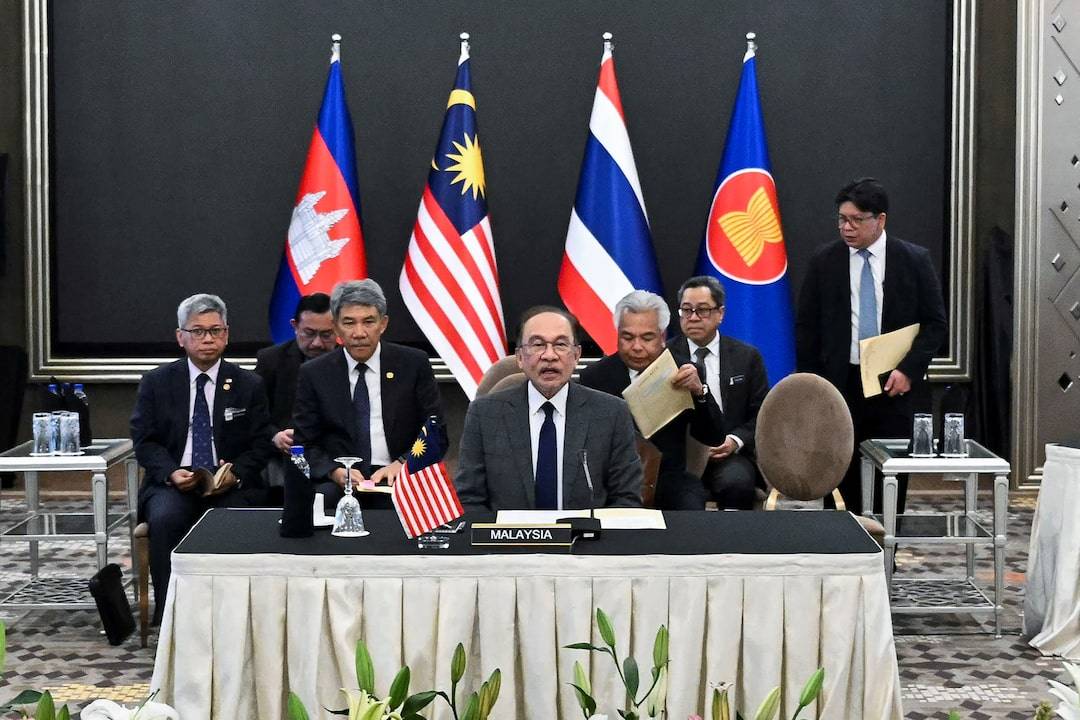
          Following efforts by Malaysia, chair of the ASEAN regional bloc, the United States and China to bring both sides to the table, the two countries' leaders agreed to end hostilities, resume direct communications and create a mechanism to implement the ceasefire.

          "This is a vital first step towards de-escalation and the restoration of peace and security," Malaysian Prime Minister Anwar Ibrahim told a news conference, flanked by the Thai and Cambodian leaders, following more than two hours of negotiations at his residence in Putrajaya.

          The truce talks followed a sustained effort by Anwar and U.S. President Donald Trump's phone calls to both leaders at the weekend, where he said he would not conclude trade deals with them if fighting continued. Both sides face a tariff of 36% on their goods in the U.S., their biggest export market.

          Trump in a post on Truth Social on Monday congratulated all parties and said he spoken to the leaders of Thailand and Cambodia and instructed his trade team to restart negotiations.

          "By ending this War, we have saved thousands of lives ... I have now ended many Wars in just six months — I am proud to be the President of PEACE!," Trump said.

          DECADES OF DISPUTES

          The Southeast Asian neighbours have wrangled for decades over border territory and have been on a conflict footing since the killing of a Cambodian soldier in a skirmish late in May, which led to a troop buildup on both sides. A full-blown diplomatic crisis ensued that brought Thailand's fragile coalition government to the brink of collapse.

          They accuse each other of starting the fighting last week that escalated quickly from small arms fire to the use of heavy artillery and rockets at multiple points along their 800-km (500-mile) land border. Thailand unexpectedly sent an F-16 fighter jet to carry out airstrikes hours after the conflict erupted.

          At least 38 people have been killed in the fighting, mostly civilians.

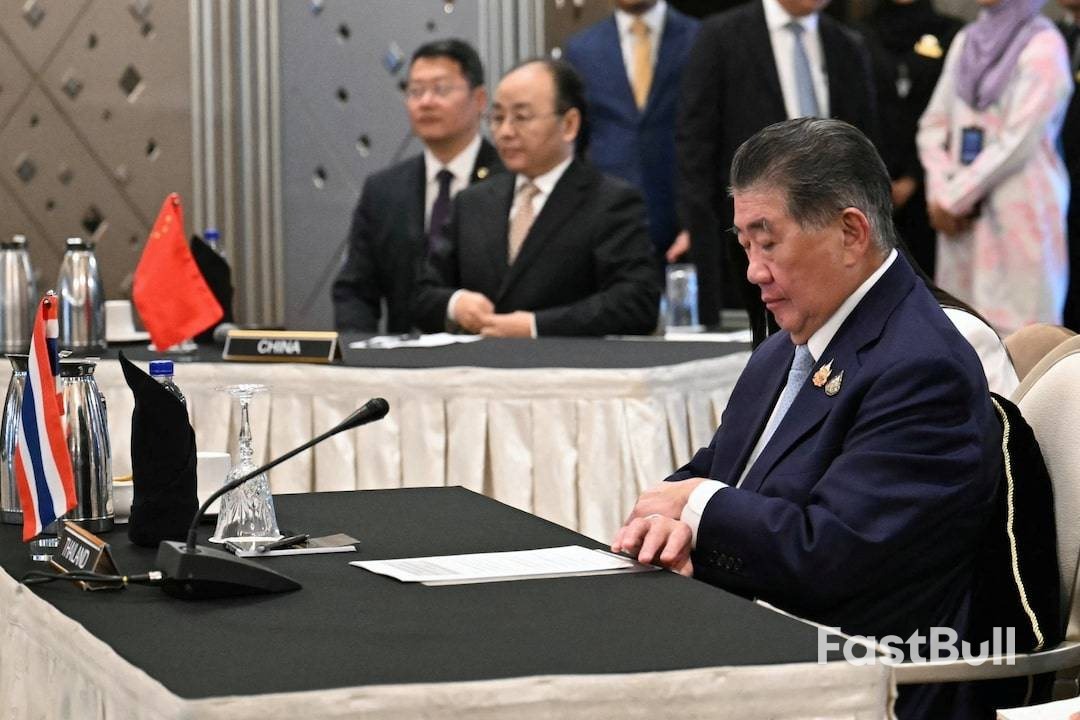
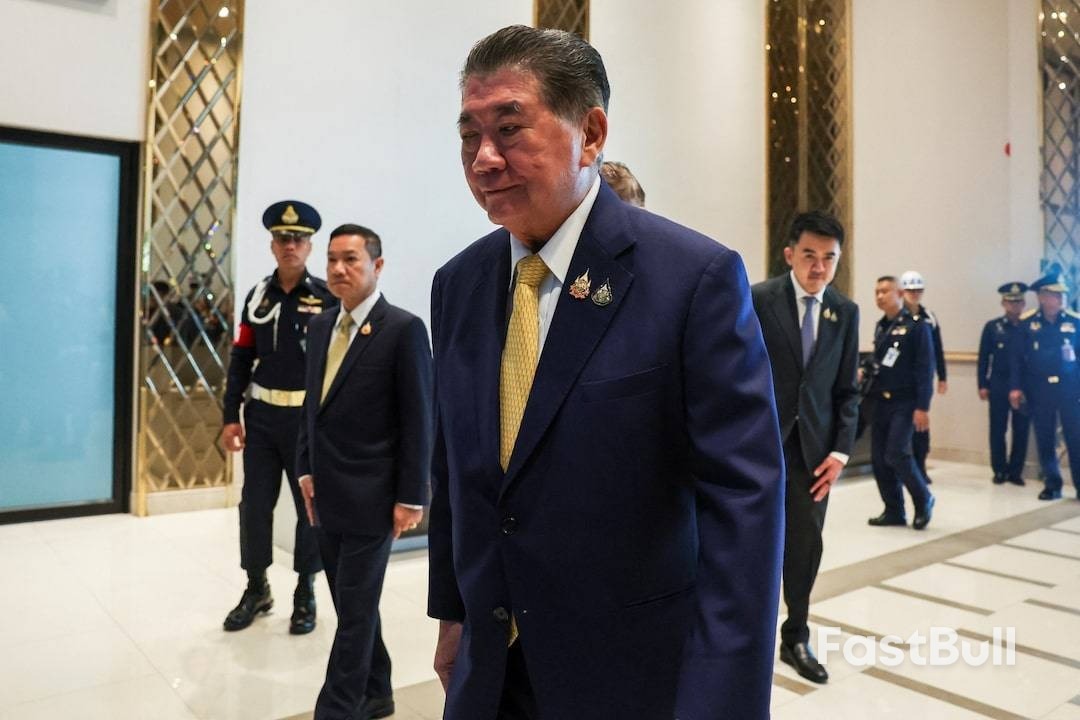
          Thai acting Prime Minister Phumtham Wechayacha praised Trump for pushing the peace effort and said trade negotiations would start from a good place.

          "I thanked him from my heart for what we received from him and helped our country move beyond this crisis," he told reporters on his return from Malaysia after speaking to Trump.

          "After today the situation should de-escalate."
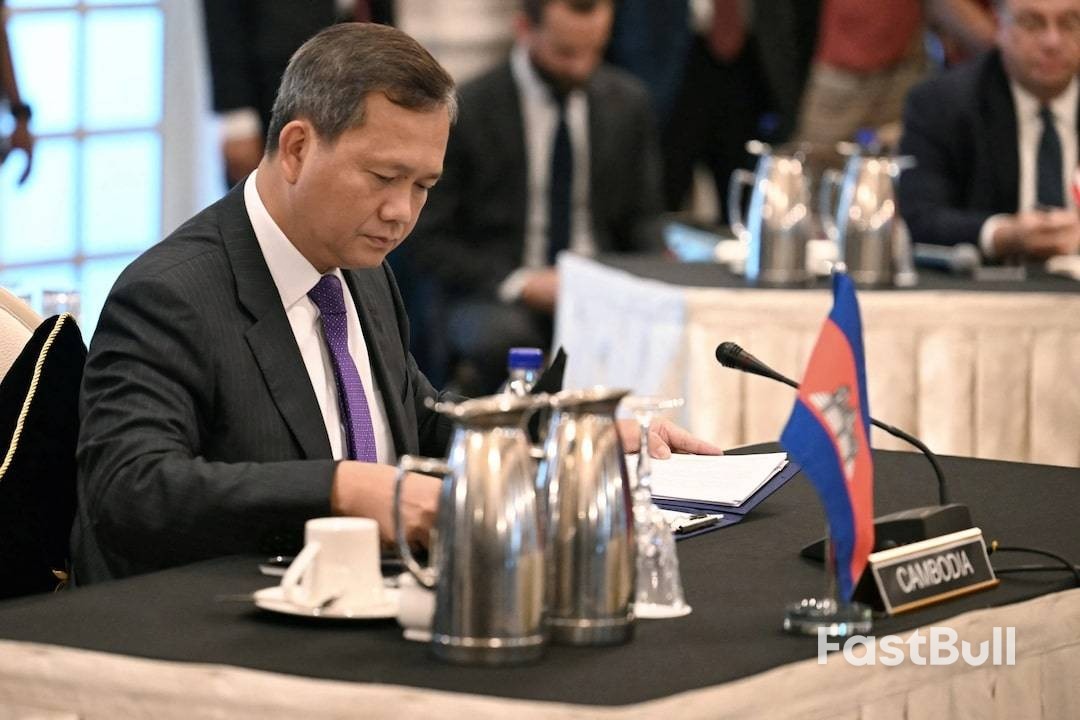
          Item 1 of 6 Malaysia's Prime Minister Anwar Ibrahim looks on as Cambodia's Prime Minister Hun Manet and Thailand's acting Prime Minister Phumtham Wechayachai take part in mediation talks on the Thailand–Cambodia border conflict, in Putrajaya, Malaysia July 28, 2025. Mohd Rasfan/Pool via REUTERS

          [1/6]Malaysia's Prime Minister Anwar Ibrahim looks on as Cambodia's Prime Minister Hun Manet and Thailand's acting Prime Minister Phumtham Wechayachai take part in mediation talks on the Thailand–Cambodia border conflict, in Putrajaya, Malaysia July 28, 2025. Mohd Rasfan/Pool via REUTERS Purchase Licensing Rights, opens new tab

          The simmering tensions boiled over last week after Thailand recalled its ambassador to Phnom Penh and expelled Cambodia's envoy, in response to a second Thai soldier losing a limb to a landmine that Bangkok alleged Cambodian troops had laid.

          Cambodia has strongly denied the charge, as well as Thai accusations that it has fired at civilian targets including schools and hospitals. It had accused Thailand of "unprovoked and premeditated military aggression".

          'DECISIVE MEDIATION'

          Cambodian Prime Minister Hun Manet said his Thai counterpart had played a positive role and he deeply appreciated Trump's "decisive mediation" and China's constructive participation.

          "We agreed that the fighting will stop immediately," he said, adding both sides could rebuild trust and confidence.

          U.S. Secretary of State Marco Rubio in a statement said he and Trump expected all sides to "fully honour their commitments to end this conflict".
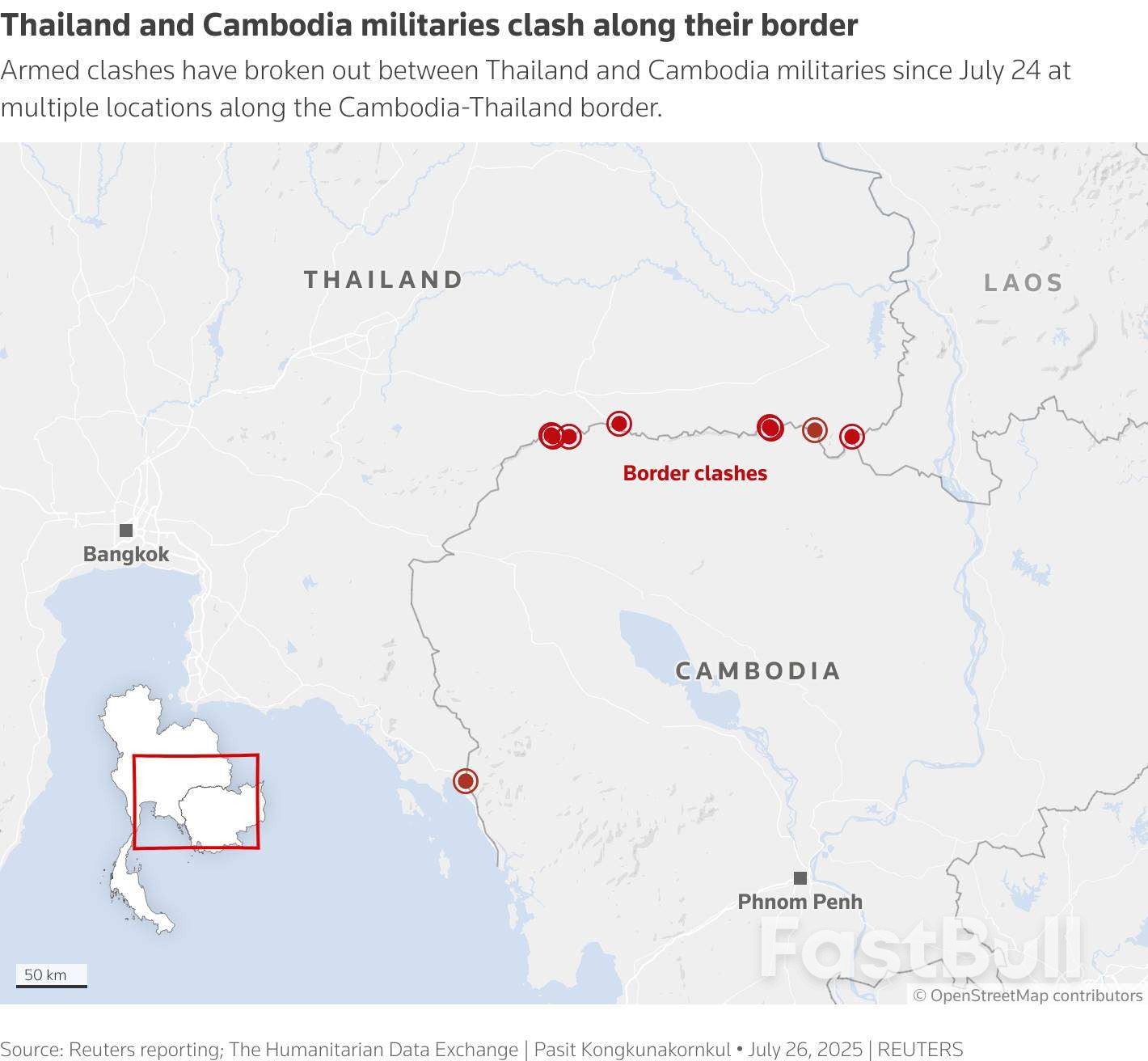
          This map shows the locations where military clashes have occurred along the disputed border between Thailand and Cambodia.

          The fighting has scarred border communities on both sides.

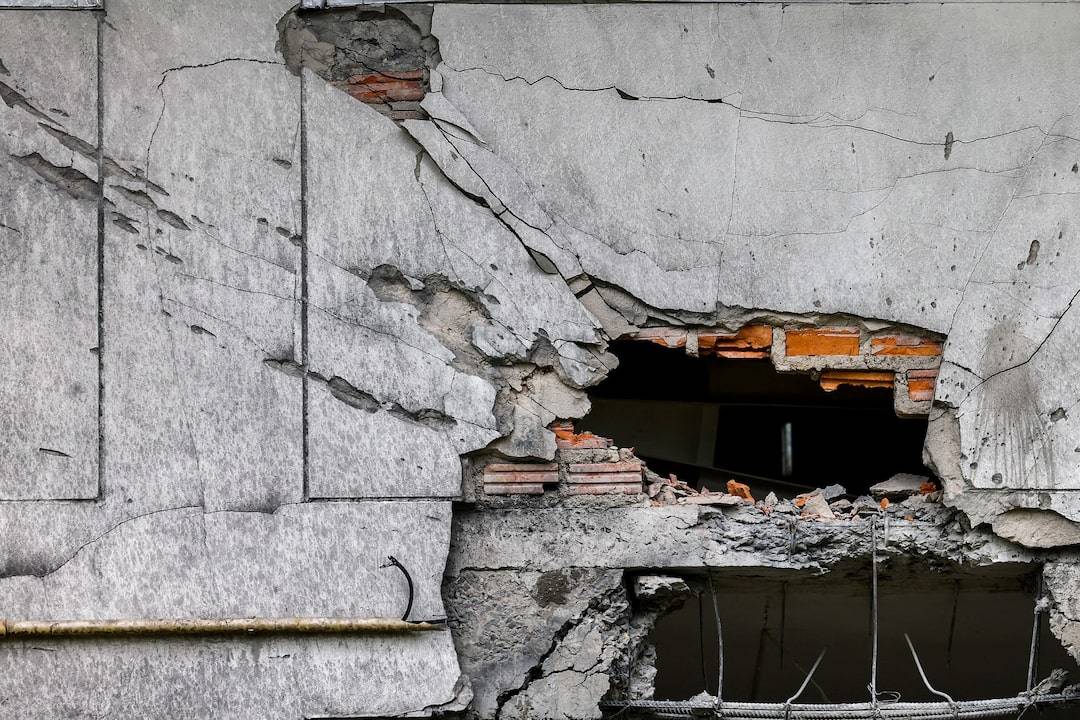
          In Thailand's Sisaket province, a house was reduced to splintered wood and twisted beams after it was struck by artillery fire from Cambodia. The roof had caved in, windows hung by the frame and power lines drooped over the structure.

          Amid the din of occasional artillery fire, homes and shops remained shut and a four-lane road was deserted except for a few cars and military vehicles.

          Dozens of displaced residents lined up quietly for their evening meal at an evacuation centre about 40 km away from the frontlines. A few children played with dogs, others swept the dusty floor.

          Fifty-four-year-old Nong Ngarmsri just wanted to go back to her village.

          "I want to go to my children who stayed back," she said. "I want them to cease firing so that I can go home."
          Source: Reuters

          Risk Warnings and Disclaimers
          You understand and acknowledge that there is a high degree of risk involved in trading. Following any strategies or investment methods may lead to potential losses. The content on the site is provided by our contributors and analysts for information purposes only. You are solely responsible for determining whether any trading assets, securities, strategy, or any other product is suitable for investing based on your own investment objectives and financial situation.
          Add to Favorites
          Share

          Trade Truce or Troubled Compromise?

          Adam

          Economic

          The agreement between the United States and the European Union, forged under pressure from President Trump and European Commission President Ursula von der Leyen, establishes a uniform 15% tariff on most European goods exported to the US. This compromise averts a potentially catastrophic tariff war, yet it falls short of an ideal outcome for European exporters. Prior to the weekend, the chances of reaching a deal were considered 50:50; without it, all EU goods would have faced 30% tariffs from August 1, 2025. Consequently, this agreement can be seen as having avoided the worst-case scenario, even at the cost of worsening the current trade landscape. A failure to agree with the US would have triggered retaliatory measures from the EU, potentially leading to a spiral of trade restrictions akin to those seen between the US and China just a few months ago.

          Proportionality Principle: Who Gains More?

          The newly minted agreement is asymmetrical. The EU has conceded to a 15% tariff on the vast majority of its exports to the US. In return, it secured "zero-for-zero" exemptions, granting tariff-free treatment for several strategic sectors, including aircraft and parts, selected chemical products, certain generic drugs, semiconductor manufacturing equipment, and some agricultural products and raw materials. European steel and aluminum continue to face steep 50% tariffs, though negotiations are anticipated, primarily to establish a threshold below which lower rates would apply. Nonetheless, with a general 15% tariff and a 50% rate on steel and aluminum, trade between the US and the EU is still expected to decline.
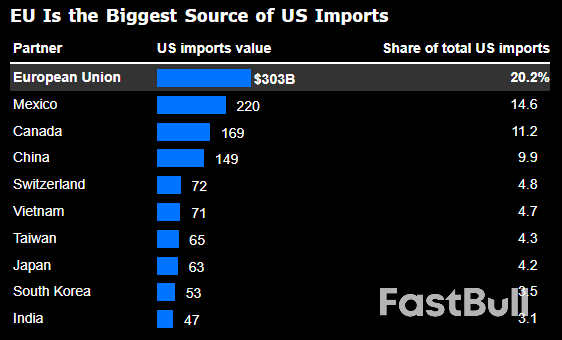
          In practical terms, the EU's primary benefit is the avoidance of even more punitive tariffs and the preservation of market access to the US, especially for automotive manufacturers. In recent weeks, cars and parts were subject to a 27.5% tariff (a 2.5% base tariff plus an additional worldwide 25%). In exchange, the EU has committed to substantial purchases of US LNG, crude oil, nuclear fuels, and weaponry, alongside increasing investments in the US by several hundred billion dollars. Thus, the majority of concessions lie with the EU, while the United States stands to gain new jobs, investments, and exports. It is important to remember that the US imports the most goods from the EU, which could lead to increased inflation, albeit to a lesser extent than initially anticipated.
          Trade Truce or Troubled Compromise?_1
          Crucially, the EU has not announced a complete elimination of its tariffs on American goods. Europe's offer involves market openness—primarily in sectors where the EU imports from the US—but it is not an unconditional, unilateral lifting of all tariffs. Detailed lists of products from both sides are yet to be finalized during the agreement's implementation.

          Europe's Future in a New Trade Reality

          The current arrangement imposes a new reality on Europe's global trade position: tariff pressure from the US on one side, and dumping and oversupply from China on the other. Europe thus finds itself "between a rock and a hard place," having not eliminated either risk. As a result of US tariffs on China, some Chinese exports have been redirected to Europe, exerting even greater downward price pressure, particularly on the processing industry and the automotive sector.
          The EU will need to actively respond to threats from Chinese exports (e.g., cheap electric cars or steel)—a European early warning system is already in place, and the EU is initiating anti-dumping investigations. Conversely, further market opening on US terms compels European companies to adapt to new, less favorable export conditions.
          Navigating "Between a Rock and a Hard Place"
          To navigate this challenging landscape, the EU should:
          Focus on protecting strategic sectors: automotive, aviation, advanced technologies, and specialty chemicals—and strive for the maximum possible tariff exemptions here.
          Control the influx of cheap products from China: through anti-dumping duties, quality standards, and investment oversight.
          Diversify export markets: seeking partners beyond the US and China, such as Southeast Asian countries, Africa, and India. The EU has missed opportunities for broader agreements among countries impacted by US tariffs.
          Maintain bilateral dialogue with the US: regarding further tariff exemptions for European goods, emphasizing the principle of reciprocity.
          Strengthen industrial policy and investment in innovation: to offset the rising costs of accessing major markets.
          Market Reaction
          The market's clear perception is that this agreement primarily benefits the US, albeit with the risk of heightened inflationary pressure. Europe avoids the worst-case scenario, but economic growth will nonetheless be constrained. A key victory for Europe is undoubtedly the limitation of current tariffs on cars and the assurance that pharmaceutical tariffs will not be raised to 200%, as Donald Trump had recently indicated. Nevertheless, it is worth remembering that Donald Trump's propensity to change his mind and unilaterally withdraw from agreements, without consequence, cannot be ruled out, as he has accustomed investors to such actions in recent months.
          Trade Truce or Troubled Compromise?_2

          Source: xtb

          To stay updated on all economic events of today, please check out our Economic calendar
          Risk Warnings and Disclaimers
          You understand and acknowledge that there is a high degree of risk involved in trading. Following any strategies or investment methods may lead to potential losses. The content on the site is provided by our contributors and analysts for information purposes only. You are solely responsible for determining whether any trading assets, securities, strategy, or any other product is suitable for investing based on your own investment objectives and financial situation.
          Add to Favorites
          Share

          Trump looms large over a Fed likely to again defy his call for cuts

          Adam

          Economic

          President Trump will loom large over the Federal Reserve's policy meeting this week, even if the central bank does what the market expects and keeps interest rates on hold.
          Trump and other top White House officials have been hammering Fed Chair Jerome Powell for months over his wait-and-see rate stance and his insistence that more time is needed to assess how the president's tariffs will affect the path of inflation.
          The president took that message directly to the Fed last Thursday as he toured a $2.5 billion renovation of the central bank's headquarters and confronted Powell in person while the two argued in front of reporters over the true costs of the project.
          "I just want to see one thing happen, very simple: Interest rates have to come down," the president told reporters.
          Traders widely expect the Fed’s Federal Open Market Committee to defy Trump and once again keep rates unchanged this Wednesday, as they have for every other meeting so far in 2025. The market expects the first cut of 2025 to happen on Sept. 17, the third-to-last meeting of the year.
          But at least two of Powell's colleagues are warming to Trump's near-term rate cut call, which could produce some disagreement this week behind closed doors in Washington.
          One Fed governor, Christoper Waller, has already hinted that he may publicly dissent Wednesday if his colleagues vote to keep rates unchanged. His opinion is that any inflation from Trump's tariffs will prove to be temporary, and he's concerned that the labor market may soon worsen.
          But many other Fed officials have backed Powell in his view that more time is needed to assess the impact of Trump's tariffs on inflation. They also note that the labor market is holding up, removing any urgency to act in the way that Trump wants.
          "This is a campaign of undermining the chairman's credibility and really trying to undermine his public support in the face of what I think is the real objective, and that is to get a lower rate environment in place," former Kansas City Fed president Esther George said.
          A Powell press conference following the meeting on Wednesday gives the Fed chair a new chance to respond to the White House's escalating pressure campaign and mounting questions about the $2.5 billion renovation of two Fed buildings along the National Mall.
          Trump considered firing Powell in recent weeks but has now appeared to back away from doing so, telling reporters this past week that "he is going to be out pretty soon anyway" — a reference to the fact that Powell's term as chair is up in May.
          While touring the Fed's construction site on Thursday, Trump said of firing Powell: "To do that is a big move, and I just don't think it's necessary."
          New headaches
          But that doesn't mean the White House is going to let up on Powell.
          Treasury Secretary Scott Bessent this past week called for a review of the central bank's $2.5 billion project and an "exhaustive internal review” of its non-monetary policy operations. He argued that "significant mission creep and institutional growth have taken the Fed into areas that potentially jeopardize the independence of its core monetary policy mission."
          The Fed also got another new headache last week when a money manager — and Trump ally who recently served as an adviser to the Department of Government Efficiency — filed a lawsuit arguing that the central bank is violating a 1976 federal law by keeping its policy meetings behind closed doors.
          That money manager, Azoria Capital, is asking for a Washington, D.C., federal court to issue a temporary restraining order compelling the FOMC to open its deliberations to the public this week.
          Some on Capitol Hill are also getting louder about more scrutiny of the Fed.
          Rep. Dan Meuser of Pennsylvania, a subcommittee chair on the House Financial Services Committee, is reportedly moving forward with a congressional investigation of the Fed, according to PunchBowl News, even as many of his Senate colleagues have shied away from that idea.
          Rep. Anna Paulina Luna of Florida, another Trump ally, formally requested that the DOJ investigate Powell for perjury over June comments about the renovations, although that is seen as a long shot at best.
          House Speaker Mike Johnson said in an interview with Bloomberg reporters and editors last week that he is "disenchanted" with Powell and is even open to modifying the 1913 act that created the Fed.
          That would be a major change, but it is not expected to come before Congress in the near term, as the House of Representatives went home Wednesday evening for a recess that is scheduled to last for the rest of the summer.
          Powell has repeatedly stated that he does not intend to leave as chair until his term is up, that his removal is "not permitted by law," and that he was honest and transparent about the Fed's construction project while testifying before Senate lawmakers on June 25.
          In a July 17 letter to White House budget director Russ Vought, Powell wrote that "we take seriously the responsibility to be good stewards of public resources" and offered a point-by-point response to Vought's concerns about cost overruns and certain design elements.
          'I do think it's damaging'
          Trump and his allies have taken to several new lines of attack against Powell, even beyond the building renovation, as they argue for rates to be as many as three percentage points lower.
          They cite what they predict will be savings on US debt if the rate is lower, as well as how a lower rate would make borrowing for a home less expensive in the US.
          Trump has even hinted that he has more than just Powell to blame for the fact that rates have remained unchanged since he took office.
          "The Board should act, but they don't have the Courage to do so!" Trump wrote on his social media platform this past week, referring to the larger Fed Board of Governors on which Powell serves.
          StoneX senior adviser Jon Hilsenrath told Yahoo Finance that he expects Trump's attacks to eventually extend to the regional Fed presidents based around the country. They have rotating positions on the Fed body that makes the final call on rates.
          The president does not appoint the regional Fed bosses, who are instead chosen by banks in those Fed districts.
          One of them, Chicago Fed president Austan Goolsbee, defended Powell in a July 18 interview with Yahoo Finance, calling the Fed chair a "totally honorable guy." He also expressed concerns about Fed independence.
          "It pains me to hear people actively discussing whether the central bank should be independent. There's nothing good [that] can come of discussion like that."
          George, the former Kansas City Fed president, said of the president's pressure campaign targeting building renovations: "I do think it's damaging."
          "It's when we undermine institutions and create suspicion in the public that something is wrong here, I think credibility suffers," she said.
          "This is a time when the Fed needs its independence," George added. "It is a time when, yes, lower rates would help the federal government, but we know countries that have gone down that path, and we know in this country going down that path does not produce good outcomes in the long term."
          Last Thursday, though, Trump sounded confident during his tour of the Fed's headquarters that Powell would see things his way.
          "I think he's going to do the right thing,” the president said. "Everybody knows what the right thing is.”

          Source:finance.yahoo

          To stay updated on all economic events of today, please check out our Economic calendar
          Risk Warnings and Disclaimers
          You understand and acknowledge that there is a high degree of risk involved in trading. Following any strategies or investment methods may lead to potential losses. The content on the site is provided by our contributors and analysts for information purposes only. You are solely responsible for determining whether any trading assets, securities, strategy, or any other product is suitable for investing based on your own investment objectives and financial situation.
          Add to Favorites
          Share

          Trump gives Russia less than two weeks to reach peace deal with Ukraine

          Adam

          Economic

          President Donald Trump on Monday reduced to less than two weeks his deadline for Russian President Vladimir Putin to either reach a peace deal with Ukraine or face massive “secondary tariffs” on Moscow’s trade partners.
          Trump previously gave Putin a 50-day deadline, which was set to expire in early September.
          But he said Monday that the United States does not see “any progress being made.”
          “I’m going to make a new deadline of about ...10 or 12 days from today,” Trump said in Scotland alongside British Prime Minister Keir Starmer.
          “I’m disappointed in President Putin,” Trump said. “Russia and Ukraine — I would have said five times we had a deal.”
          “I spoke to President Putin a lot. Got along with him very well,” he said. “Then President Putin launches rockets into a city like Kyiv and kills a lot of people — in a nursing home, or wherever — and there are bodies lying all over the streets.”
          Trump said that he likely will formally announce the revision in the deadline “tonight or tomorrow,” adding that the U.S. would impose sanctions along with the secondary tariffs.
          “But there’s no reason to wait. If you know what the answer is going to be, why wait?” Trump said.
          Trump imposed a 50-day deadline on Putin on July 14. At that time, he said that buyers of Russian exports would face tariffs “at about 100%” if there were no ceasefire deal with Ukraine by September.
          Trump once avoided criticizing Putin.
          But in recent months, he has made his frustrations known as Russia’s war on Ukraine has intensified.

          Source: cnbc

          To stay updated on all economic events of today, please check out our Economic calendar
          Risk Warnings and Disclaimers
          You understand and acknowledge that there is a high degree of risk involved in trading. Following any strategies or investment methods may lead to potential losses. The content on the site is provided by our contributors and analysts for information purposes only. You are solely responsible for determining whether any trading assets, securities, strategy, or any other product is suitable for investing based on your own investment objectives and financial situation.
          Add to Favorites
          Share

          Trump Eyes 'world Tariff' Of 15-20% For Most Countries

          Devin

          Economic

          PresidentDonald Trumpsaid on Monday most trading partners that do not negotiate separate trade deals would soon face tariffs of 15% to 20% on their exports to the United States, well above the broad 10%tariffhe imposed in April.

          Trump told reporters his administration will notify some 200 countries soon of their new "world tariff" rate.

          "I would say it'll be somewhere in the 15 to 20% range," Trump told reporters, sitting alongside British Prime Minister Keir Starmer at his luxury golf resort in Turnberry, Scotland. "Probably one of those two numbers."

          Trump, who has vowed to end decades of U.S. trade deficits by imposing tariffs on nearly all trading partners, has already announced higher rates of up to 50% on some countries, including Brazil, starting on Friday.

          The announcements have spurred feverish negotiations by a host of countries seeking lower tariff rates, including India, Pakistan, Canada, and Thailand, among others.

          The U.S. president on Sunday clinched a huge trade deal with the European Union that includes a 15% tariff on most EU goods, $600 billion of investments in the U.S. by European firms, and $750 billion in energy purchases over the next three years.

          That followed a $550-billion deal with Japan last week and smaller agreements with Britain, Indonesia, and Vietnam. Other talks are ongoing, including with India, but prospects have dimmed for many more agreements before Friday, Trump's deadline for deals before higher rates take effect.

          Trump has repeatedly said he favors straightforward tariff rates over complex negotiations.

          "We're going to be setting a tariff for essentially, the rest of the world," he said again on Monday. "And that's what they're going to pay if they want to do business in the United States. Because you can't sit down and make 200 deals."

          Canadian Prime Minister Mark Carney said on Monday trade talks with the U.S. were at an intense phase, conceding that his country was still hoping to walk away with a tariff rate below the 35% announced by Trump on some Canadian imports.

          Carney conceded this month that Canada - which sends 75% of its exports to the United States - would likely have to accept some tariffs.

          Source: TradingView

          To stay updated on all economic events of today, please check out our Economic calendar
          Risk Warnings and Disclaimers
          You understand and acknowledge that there is a high degree of risk involved in trading. Following any strategies or investment methods may lead to potential losses. The content on the site is provided by our contributors and analysts for information purposes only. You are solely responsible for determining whether any trading assets, securities, strategy, or any other product is suitable for investing based on your own investment objectives and financial situation.
          Add to Favorites
          Share
          FastBull
          Copyright © 2025 FastBull Ltd

          728 RM B 7/F GEE LOK IND BLDG NO 34 HUNG TO RD KWUN TONG KLN HONG KONG

          TelegramInstagramTwitterfacebooklinkedin
          App Store Google Play Google Play
          Products
          Charts

          Chats

          Q&A with Experts
          Screeners
          Economic Calendar
          Data
          Tools
          Membership
          Features
          Function
          Markets
          Copy Trading
          Latest Signals
          Contests
          News
          Analysis
          24/7
          Columns
          Education
          Company
          Careers
          About Us
          Contact Us
          Advertising
          Help Center
          Feedback
          User Agreement
          Privacy Policy
          Business

          White Label

          Data API

          Web Plug-ins

          Poster Maker

          Affiliate Program

          Risk Disclosure

          The risk of loss in trading financial instruments such as stocks, FX, commodities, futures, bonds, ETFs and crypto can be substantial. You may sustain a total loss of the funds that you deposit with your broker. Therefore, you should carefully consider whether such trading is suitable for you in light of your circumstances and financial resources.

          No decision to invest should be made without thoroughly conducting due diligence by yourself or consulting with your financial advisors. Our web content might not suit you since we don't know your financial conditions and investment needs. Our financial information might have latency or contain inaccuracy, so you should be fully responsible for any of your trading and investment decisions. The company will not be responsible for your capital loss.

          Without getting permission from the website, you are not allowed to copy the website's graphics, texts, or trademarks. Intellectual property rights in the content or data incorporated into this website belong to its providers and exchange merchants.

          Not Logged In

          Log in to access more features

          FastBull Membership

          Not yet

          Purchase

          Become a signal provider
          Help Center
          Customer Service
          Dark Mode
          Price Up/Down Colors

          Log In

          Sign Up

          Position
          Layout
          Fullscreen
          Default to Chart
          The chart page opens by default when you visit fastbull.com