• Trade
  • Markets
  • Copy
  • Contests
  • News
  • 24/7
  • Calendar
  • Q&A
  • Chats
Trending
Screeners
SYMBOL
LAST
BID
ASK
HIGH
LOW
NET CHG.
%CHG.
SPREAD
SPX
S&P 500 Index
6857.13
6857.13
6857.13
6865.94
6827.13
+7.41
+ 0.11%
--
DJI
Dow Jones Industrial Average
47850.93
47850.93
47850.93
48049.72
47692.96
-31.96
-0.07%
--
IXIC
NASDAQ Composite Index
23505.13
23505.13
23505.13
23528.53
23372.33
+51.04
+ 0.22%
--
USDX
US Dollar Index
98.860
98.940
98.860
98.980
98.840
-0.120
-0.12%
--
EURUSD
Euro / US Dollar
1.16565
1.16573
1.16565
1.16590
1.16408
+0.00120
+ 0.10%
--
GBPUSD
Pound Sterling / US Dollar
1.33437
1.33444
1.33437
1.33452
1.33165
+0.00166
+ 0.12%
--
XAUUSD
Gold / US Dollar
4221.08
4221.49
4221.08
4221.25
4194.54
+13.91
+ 0.33%
--
WTI
Light Sweet Crude Oil
59.367
59.404
59.367
59.469
59.187
-0.016
-0.03%
--

Community Accounts

Signal Accounts
--
Profit Accounts
--
Loss Accounts
--
View More

Become a signal provider

Sell trading signals to earn additional income

View More

Guide to Copy Trading

Get started with ease and confidence

View More

Signal Accounts for Members

All Signal Accounts

Best Return
  • Best Return
  • Best P/L
  • Best MDD
Past 1W
  • Past 1W
  • Past 1M
  • Past 1Y

All Contests

  • All
  • Trump Updates
  • Recommend
  • Stocks
  • Cryptocurrencies
  • Central Banks
  • Featured News
Top News Only
Share

S.Africa's Gross Reserves At $72.068 Billion At End November - Central Bank

Share

[Market Update] Spot Silver Broke Through $58/ounce, Up 1.56% On The Day

Share

Dollar/Yen Down 0.33% To 154.61

Share

Kremlin Says No Plans For Putin-Trump Call For Now

Share

Kremlin Says Moscow Is Waiting For USA Reaction After Putin-Witkoff Meeting

Share

Cctv - China, France: Say Both Sides Support All Efforts For A Ceasefire, Restore Peace According To Intl Law

Share

[Chinese Ambassador To The US Xie Feng Hopes Chinese And American Business Communities Will Focus On Three Lists] On December 4, Chinese Ambassador To The US Xie Feng Delivered A Speech At The China-US Economic And Trade Cooperation Forum Jointly Hosted By The China Council For The Promotion Of International Trade And The Meridian International Center. Xie Feng Said That In November 2026, China Will Host The APEC Leaders' Informal Meeting For The Third Time In Shenzhen, Guangdong Province. In December 2026, The United States Will Also Host The G20 Meeting. Regarding How Chinese And American Business Communities Can Seize These Opportunities, He Suggested Focusing On Three Lists: First, Continue To Expand The Dialogue List; Second, Continuously Lengthen The Cooperation List; And Third, Constantly Reduce The Problem List

Share

India's Nifty Financial Services Index Extends Gains, Last Up 0.75%

Share

Eni : Jp Morgan Cuts To Underweight From Overweight

Share

Cctv - China, France: Signed Protocol On Sanitary, Phytosanitary Requirements For Export Of French Alfalfa Grass

Share

India's NIFTY IT Index Last Up 1.3%

Share

India's Nifty 50 Index Rises 0.35%

Share

Israel Sets 2026 Defence Budget At $34 Billion

Share

Russia Says Azov Sea's Port Of Temryuk Damaged In Ukrainian Attack

Share

Israel's Defense Budget For 2026 Will Be 112 Billion Israeli Shekels - Defense Minister Office

Share

One India Rate Panel Member Ram Singh Was Of View That Stance Should Be Changed To 'Accommodative' From 'Neutral' - Monetary Policy Committee Statement

Share

Reserve Bank Of India Chief: Will Continue To Meet Productive Needs Of Economy In Proactive Manner

Share

Reserve Bank Of India Chief: System Level Financial Parameters Of Nbfcs Sound

Share

Reserve Bank Of India Chief: Dollar Rupee Swap To Be For 3 Years, To Be Conducted This Month

Share

India's Nifty Realty Index Extend Gains, Last Up 1.4%

TIME
ACT
FCST
PREV
Turkey Trade Balance

A:--

F: --

P: --

Germany Construction PMI (SA) (Nov)

A:--

F: --

P: --

Euro Zone IHS Markit Construction PMI (Nov)

A:--

F: --

P: --

Italy IHS Markit Construction PMI (Nov)

A:--

F: --

P: --

U.K. Markit/CIPS Construction PMI (Nov)

A:--

F: --

P: --

France 10-Year OAT Auction Avg. Yield

A:--

F: --

P: --

Euro Zone Retail Sales MoM (Oct)

A:--

F: --

P: --

Euro Zone Retail Sales YoY (Oct)

A:--

F: --

P: --

Brazil GDP YoY (Q3)

A:--

F: --

P: --

U.S. Challenger Job Cuts (Nov)

A:--

F: --

P: --

U.S. Challenger Job Cuts MoM (Nov)

A:--

F: --

P: --

U.S. Challenger Job Cuts YoY (Nov)

A:--

F: --

P: --

U.S. Initial Jobless Claims 4-Week Avg. (SA)

A:--

F: --

P: --

U.S. Weekly Initial Jobless Claims (SA)

A:--

F: --

P: --

U.S. Weekly Continued Jobless Claims (SA)

A:--

F: --

P: --

Canada Ivey PMI (SA) (Nov)

A:--

F: --

P: --

Canada Ivey PMI (Not SA) (Nov)

A:--

F: --

P: --

U.S. Non-Defense Capital Durable Goods Orders Revised MoM (Excl. Aircraft) (SA) (Sept)

A:--

F: --

P: --
U.S. Factory Orders MoM (Excl. Transport) (Sept)

A:--

F: --

P: --

U.S. Factory Orders MoM (Sept)

A:--

F: --

P: --

U.S. Factory Orders MoM (Excl. Defense) (Sept)

A:--

F: --

P: --

U.S. EIA Weekly Natural Gas Stocks Change

A:--

F: --

P: --

Saudi Arabia Crude Oil Production

A:--

F: --

P: --

U.S. Weekly Treasuries Held by Foreign Central Banks

A:--

F: --

P: --

Japan Foreign Exchange Reserves (Nov)

A:--

F: --

P: --

India Repo Rate

A:--

F: --

P: --

India Benchmark Interest Rate

A:--

F: --

P: --

India Reverse Repo Rate

A:--

F: --

P: --

India Cash Reserve Ratio

A:--

F: --

P: --

Japan Leading Indicators Prelim (Oct)

A:--

F: --

P: --

U.K. Halifax House Price Index YoY (SA) (Nov)

--

F: --

P: --

U.K. Halifax House Price Index MoM (SA) (Nov)

--

F: --

P: --

France Current Account (Not SA) (Oct)

--

F: --

P: --

France Trade Balance (SA) (Oct)

--

F: --

P: --

France Industrial Output MoM (SA) (Oct)

--

F: --

P: --

Italy Retail Sales MoM (SA) (Oct)

--

F: --

P: --

Euro Zone Employment YoY (SA) (Q3)

--

F: --

P: --

Euro Zone GDP Final YoY (Q3)

--

F: --

P: --

Euro Zone GDP Final QoQ (Q3)

--

F: --

P: --

Euro Zone Employment Final QoQ (SA) (Q3)

--

F: --

P: --

Euro Zone Employment Final (SA) (Q3)

--

F: --

P: --
Brazil PPI MoM (Oct)

--

F: --

P: --

Mexico Consumer Confidence Index (Nov)

--

F: --

P: --

Canada Unemployment Rate (SA) (Nov)

--

F: --

P: --

Canada Labor Force Participation Rate (SA) (Nov)

--

F: --

P: --

Canada Employment (SA) (Nov)

--

F: --

P: --

Canada Part-Time Employment (SA) (Nov)

--

F: --

P: --

Canada Full-time Employment (SA) (Nov)

--

F: --

P: --

U.S. Dallas Fed PCE Price Index YoY (Sept)

--

F: --

P: --

U.S. PCE Price Index YoY (SA) (Sept)

--

F: --

P: --

U.S. PCE Price Index MoM (Sept)

--

F: --

P: --

U.S. Personal Outlays MoM (SA) (Sept)

--

F: --

P: --

U.S. Core PCE Price Index MoM (Sept)

--

F: --

P: --

U.S. UMich 5-Year-Ahead Inflation Expectations Prelim YoY (Dec)

--

F: --

P: --

U.S. Core PCE Price Index YoY (Sept)

--

F: --

P: --

U.S. 5-10 Year-Ahead Inflation Expectations (Dec)

--

F: --

P: --

U.S. UMich Current Economic Conditions Index Prelim (Dec)

--

F: --

P: --

U.S. UMich Consumer Sentiment Index Prelim (Dec)

--

F: --

P: --

U.S. UMich 1-Year-Ahead Inflation Expectations Prelim (Dec)

--

F: --

P: --

U.S. UMich Consumer Expectations Index Prelim (Dec)

--

F: --

P: --

Q&A with Experts
    • All
    • Chatrooms
    • Groups
    • Friends
    Connecting
    .
    .
    .
    Type here...
    Add Symbol or Code

      No matching data

      All
      Trump Updates
      Recommend
      Stocks
      Cryptocurrencies
      Central Banks
      Featured News
      • All
      • Russia-Ukraine Conflict
      • Middle East Flashpoint
      • All
      • Russia-Ukraine Conflict
      • Middle East Flashpoint
      Search
      Products

      Charts Free Forever

      Chats Q&A with Experts
      Screeners Economic Calendar Data Tools
      Membership Features
      Data Warehouse Market Trends Institutional Data Policy Rates Macro

      Market Trends

      Market Sentiment Order Book Forex Correlations

      Top Indicators

      Charts Free Forever
      Markets

      News

      News Analysis 24/7 Columns Education
      From Institutions From Analysts
      Topics Columnists

      Latest Views

      Latest Views

      Trending Topics

      Top Columnists

      Latest Update

      Signals

      Copy Rankings Latest Signals Become a signal provider AI Rating
      Contests
      Brokers

      Overview Brokers Assessment Rankings Regulators News Claims
      Broker listing Forex Brokers Comparison Tool Live Spread Comparison Scam
      Q&A Complaint Scam Alert Videos Tips to Detect Scam
      More

      Business
      Events
      Careers About Us Advertising Help Center

      White Label

      Data API

      Web Plug-ins

      Affiliate Program

      Awards Institution Evaluation IB Seminar Salon Event Exhibition
      Vietnam Thailand Singapore Dubai
      Fans Party Investment Sharing Session
      FastBull Summit BrokersView Expo
      Recent Searches
        Top Searches
          Markets
          News
          Analysis
          User
          24/7
          Economic Calendar
          Education
          Data
          • Names
          • Latest
          • Prev

          View All

          No data

          Scan to Download

          Faster Charts, Chat Faster!

          Download App
          English
          • English
          • Español
          • العربية
          • Bahasa Indonesia
          • Bahasa Melayu
          • Tiếng Việt
          • ภาษาไทย
          • Français
          • Italiano
          • Türkçe
          • Русский язык
          • 简中
          • 繁中
          Open Account
          Search
          Products
          Charts Free Forever
          Markets
          News
          Signals

          Copy Rankings Latest Signals Become a signal provider AI Rating
          Contests
          Brokers

          Overview Brokers Assessment Rankings Regulators News Claims
          Broker listing Forex Brokers Comparison Tool Live Spread Comparison Scam
          Q&A Complaint Scam Alert Videos Tips to Detect Scam
          More

          Business
          Events
          Careers About Us Advertising Help Center

          White Label

          Data API

          Web Plug-ins

          Affiliate Program

          Awards Institution Evaluation IB Seminar Salon Event Exhibition
          Vietnam Thailand Singapore Dubai
          Fans Party Investment Sharing Session
          FastBull Summit BrokersView Expo

          US Opens Trade Probe Into China's Phase One Commitments Before Trump-Xi Talks

          Kevin Du

          Economic

          Summary:

          "The initiation of this investigation underscores the Trump Administration's resolve to hold China to its Phase One Agreement commitments, protect American farmers..."

          U.S. Trade Representative Jamieson Greer announced moments ago that the U.S. has initiated a Section 301 investigation into China's implementation of the Phase One trade deal, a deal that has been out of public focus since President Trump's first term. This development comes less than one week before Trump and Chinese President Xi Jinping are scheduled to meet on the sidelines of the Asia-Pacific Economic Cooperation summit to ease trade tensions. The flurry of recent trade-related headlines, from rare earths to soybeans to jet engines, suggests that both economic superpowers are attempting to build leverage ahead of trade talks.

          "President Trump made history in his first term when he stood up for the American worker and brokered the Phase One Agreement, establishing a more fair and reciprocal trade relationship with China," Ambassador Greer stated.
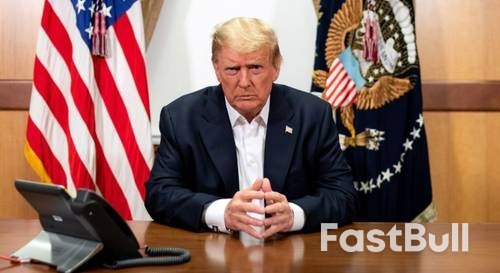
          Greer wrote in a statement, adding, "The initiation of this investigation underscores the Trump Administration's resolve to hold China to its Phase One Agreement commitments, protect American farmers, ranchers, workers, and innovators, and establish a more reciprocal trade relationship with China for the benefit of the American people."

          USTR provided additional context on the Phase One trade deal reached in December 2019, which required China to implement structural reforms in areas such as intellectual property, technology transfer, agriculture, and financial services, and to significantly increase purchases of U.S. goods and services. Beijing's shift toward sourcing agricultural products from the U.S. to Brazil has inflicted pain across America's Midwest farm belt, and is likely one key reason this probe was opened.

          Five years after the agreement was signed, China has not fulfilled its commitments, particularly regarding non-tariff barriers, market access, and purchase targets. Ahead of next week's Trump-Xi meeting at APEC, Greer will investigate whether China's failure to comply with the Phase One deal violates U.S. trade rights under Section 301.

          Despite the probe, President Trump said on Thursday, "I think we're going to come out very well and everyone's going to be very happy."

          The Trump-Xi meeting also comes just before a trade truce between Washington and Beijing is set to expire on November 10. Trump has threatened to impose an additional 100% tariff on Chinese products on November 1 if Beijing does not ease shipments of rare earth minerals to the U.S. Trump said this week that upcoming talks with Xi will produce a "good deal" on "everything" related to trade.

          Market attention now turns to any weekend statements from both sides. So far, the market reaction has been muted across equities, bonds, and FX, as a cooler CPI print in the U.S. has pushed main equity indexes to around noontime.

          Source: Zero Hedge

          To stay updated on all economic events of today, please check out our Economic calendar
          Risk Warnings and Disclaimers
          You understand and acknowledge that there is a high degree of risk involved in trading. Following any strategies or investment methods may lead to potential losses. The content on the site is provided by our contributors and analysts for information purposes only. You are solely responsible for determining whether any trading assets, securities, strategy, or any other product is suitable for investing based on your own investment objectives and financial situation.
          Add to Favorites
          Share

          Cooler-than-expected inflation reading keeps Fed on course for a rate cut next week

          Adam

          Economic

          A fresh reading Friday showing that inflation cooled slightly in September is likely to keep the Federal Reserve on course for another quarter-percentage-point interest rate cut next week amid continued concerns about the job market.
          The Consumer Price Index (CPI) clocked in at 3% for the month of September, a tenth of a percent lower than expected but inching up from the 2.9% rate in August. On a "core" basis, which excludes volatile food and energy prices and is the preferred Fed measure, inflation also rose by 3% in September, cooling from 3.1% in the prior month. Month over month, core inflation rose 0.2% after rising 0.3% in the two preceding months.
          "Goods prices are firming again amid tariff pressures, but softer shelter and services readings show progress where it matters most," BlackRock chief investment and portfolio strategist Gargi Pal Chaudhuri said. "The disinflation trend is intact, keeping the Fed on course for a rate cut next week."
          The long-awaited softening in shelter prices is finally becoming more apparent in the CPI, with rents experiencing the smallest monthly increase since March 2021.
          CPI, initially slated for release on Oct. 15, was released with a delay despite the government shutdown because the data is required by law for calculating cost-of-living increases for Social Security payments before Nov. 1.
          While Fed officials will use this information in their decision on monetary policy next week, they have not received the September jobs report, retail sales, or the Producer Price Index, complicating their decision.
          At 3%, inflation is holding at a full percentage point above the central bank's 2% target. Fed officials have forecast that inflation would end the year at 3.1% before returning to 2.6% next year. Those figures would leave inflation above the Fed's goal of 2%, but many policymakers are now more worried about weakness in the job market than prices. The Fed has a dual mandate to maintain stable prices and maximize employment.
          Private-sector jobs data has shown that the job market deteriorated this fall. Payroll company ADP reported that private payroll employment fell by 32,000 jobs in September. The Fed's Beige Book, a compilation of anecdotal evidence across the country, also painted a weaker picture of the job market.
          "The cooler-than-expected CPI confirms what we've seen overall from private data during the government shutdown — little indication that inflation is surging or that the labor market is falling off a cliff. For a Fed focused on prudent 'risk management,' that should translate into another rate cut next week, and likely more to follow," Ellen Zentner, chief economic strategist for Morgan Stanley Wealth Management, said in a statement.
          Patrick Harker, former president of the Philadelphia Fed and Rowan Distinguished Professor at the Wharton School of the University of Pennsylvania, sees more friction, however.
          “It’s interesting that the markets are taking this news as a positive because the reading was benign,” Harker told Yahoo Finance. “While everybody took this as a good report, I don't. I think that it's a tough spot.”
          Harker stressed inflation is still at 3% and that “it's not going to be coming down anytime soon because the tariffs are dripping into the economy that they don't come in all at once.”
          He noted that retailers and business-to-business firms have been holding back in some cases on price increases, but that they can't do that forever and will raise prices.
          Eyes on employment
          Last week, Fed Chair Jerome Powell emphasized that "the downside risks to employment appear to have risen" and shifted policymakers' assessment of the balance of risks, even as the government shutdown has delayed the release of the all-important jobs report.
          That appeared to imply that another rate cut is possible at the Fed's next meeting next week, even though Powell did say that monetary policy will be set meeting by meeting.
          Wilmington Trust chief economist Luke Tilley is more concerned that tariffs are weighing on growth and the job market than pushing up inflation. Looking at job data from the BLS from May through August, since September has been delayed due to the government shutdown, Tilley said total private-sector job growth totaled 157,000 for that four-month period. Healthcare added 249,000 during that time, but all the other private sectors added together, including manufacturing, construction, retail, information, professional business services, and leisure hospitality, were negative 92,000 jobs.
          Tilley believes the slowdown in the job market is due more to softening demand for workers than simply lower immigration. He pointed to company and CEO surveys on hiring that say they're hiring enough to maintain headcount levels or reducing headcount through attrition, which is attributed to uncertainty about demand, weak demand, or softer sales. And he doesn’t expect job growth to reaccelerate.
          "The job market is a lagging indicator, and there's a risk that's going to keep going down and that we've already turned in the economy," Tilley said. "It's not going to show up in GDP data yet, but if labor is a lagging indicator, then there's that weakness there."
          The central bank cut rates in September for the first time in 2025 and predicted two more cuts for the year, which would mean reductions at FOMC meetings next week and in early December.
          The path of inflation remains uncertain as President Trump's tariffs work their way through the US economy.
          Powell said last week that tariffs will likely result in a one-time price increase, but that may not be all at once and may be spread across several quarters, thus showing up as somewhat higher inflation during that period.
          He stressed that the Fed will look for assurance that this one-time increase in prices does not become an ongoing inflation problem, which is important for inflation expectations.
          Fed governor Chris Waller said last Thursday he is in favor of trimming interest rates by another quarter percentage point at the end of this month, but after that, he wants to move cautiously.
          Other members of the Fed, from Chicago Fed president Austan Goolsbee to Kansas City Fed president Jeff Schmid and Cleveland Fed president Beth Hammack, have expressed concern about the risk of inflation becoming more long-lasting.
          Markets are pricing in a rate cut at the next meeting and the December meeting as a done deal.

          Source: finance.yahoo

          To stay updated on all economic events of today, please check out our Economic calendar
          Risk Warnings and Disclaimers
          You understand and acknowledge that there is a high degree of risk involved in trading. Following any strategies or investment methods may lead to potential losses. The content on the site is provided by our contributors and analysts for information purposes only. You are solely responsible for determining whether any trading assets, securities, strategy, or any other product is suitable for investing based on your own investment objectives and financial situation.
          Add to Favorites
          Share

          Special Report: Gold, silver pare earlier daily losses; expect high volatility again next week

          Adam

          Commodity

          Gold and silver prices near midday Friday have clawed back most of their overnight losses following a tame U.S. CPI report that puts the Federal Reserve firmly on track to lower U.S. interest rates by a quarter-point next week.
          This week, the daily price volatility in gold and silver futures markets became so extreme that both bulls and bears could have been forced out of the markets in the same trading session, due to major whipsaw price action. Look for continued higher volatility next week in both precious metals markets, which if is indeed the case would favor the bears. What the high volatility has likely done is drive many speculators out of the gold and silver futures markets because they are scared to trade such volatility. Less participation from the speculative segment of futures markets is generally bearish, as it can be argued that the majority of speculative traders would rather play the long side than the short side.
          For those gunslingers still willing to trade the gold and silver markets straight away, the micro and mini gold futures are the way most should do it. Even trading the smaller-size contracts during such volatile market activity can be very risky. The smaller-sized futures contracts allow traders to access the markets with a lower capital commitment. Micro gold futures from the CME Group (MGC) represent 1/10th the size of a standard 100-ounce Comex gold futures contract, meaning each contract is for 10 troy ounces of gold. The smaller size translates to significantly lower margin requirements, making them ideal for new traders or those with smaller trading accounts. With a smaller tick value (10 cents, which equals $1.00, meaning a $1.00 move is $10.00 in value), micro gold futures offer less financial impact from price movements, which makes them a useful tool for testing trading strategies or managing smaller-scale portfolios.
          Fundamentally, the gold and silver bulls can argue there are still bullish elements at play. The U.S. government shutdown has entered its fourth week, with no signs of ending, which means there continues to be a dearth of important U.S. economic data. That means keener uncertainty in the marketplace and that’s bullish for the safe-haven metals.
          Lower global interest rates are likely in the coming months. After next week’s Fed rate cut, the marketplace still thinks the Fed will make up to two more cuts of one quarter-point. Recent weaker economic data out of China has the Chinese government saying it will ease its monetary policy in the coming weeks/months. Other countries, including Canada, the U.K. and Australia have also lowered interest rates.
          However, psychologically, a lot has changed in the past week. Let’s face it, gold and silver bulls and bears were both spooked at one time or another the past week. This favors the bears.
          The U.S. stock indexes have also made solid rebounds and today (Friday) hit record highs. The stock market is a competing asset class with safe-haven metals. The stock indexes at record highs suggest better risk appetite in the marketplace, which is bearish for gold and silver.
          The U.S. dollar index has been trending higher since mid-September. Generally, a rallying U.S. dollar index is a bearish element for the gold and silver markets.
          Let me leave you with this important point, which I warned you about last week: Probably the most important factor that I think will determine where gold and silver prices are headed: Silver above $50.00. Reason: Price history over the past 50 years shows that when silver prices reach $50, or get close to it, which has occurred three times now, the first two times saw silver trade above $50 for only a short period of time. Two weeks from now, if silver prices are above $50 an ounce, then the marketplace can start to believe both gold and silver are entering new, longer-term price ranges that will continue well above what price history of the past 50 years has shown. And if silver stays below $50 in the next week, history will again repeat itself--and that would suggest gold and silver are due for extended downside price corrections and even bear markets farther down the road, to continue the historical cycle of boom and bust seen in all raw commodity markets. Right now, it appears silver prices are going to have a difficult trek to get back above that key $50.00 level.

          Source: kitco

          Risk Warnings and Disclaimers
          You understand and acknowledge that there is a high degree of risk involved in trading. Following any strategies or investment methods may lead to potential losses. The content on the site is provided by our contributors and analysts for information purposes only. You are solely responsible for determining whether any trading assets, securities, strategy, or any other product is suitable for investing based on your own investment objectives and financial situation.
          Add to Favorites
          Share

          Week Ahead for FX, Bonds: Fed Expected to Cut Rates; U.S.-China Talks Eyed

          Adam

          Economic

          Below are the most important global events likely to affect FX and bond markets in the week starting October 27.
          All eyes in the coming week will be on the U.S. Federal Reserve, which is widely expected to cut interest rates by another 25 basis points, even as the U.S. government shutdown continues.
          In Europe, focus will center on a European Central Bank decision, while in Asia, a highly anticipated meeting between Trump and China's Xi Jinping will be closely watched for signs of de-escalation in trade tensions.
          The U.S. president will also meet with Japan's newly elected prime minister, which comes as the Bank of Japan makes its first rate decision since the country's leadership change. A rate decision is also due in Canada.
          U.S.
          The Federal Reserve announces a rate decision on Wednesday and is widely expected to cut interest rates by 25 basis points, lowering the fed funds rate to 3.75-4.00%, particularly after recent weaker-than-expected inflation data.
          Markets fully price a Fed rate cut amid recent signs of weakness in the U.S. labor market, even as concerns remain that tariffs could increase pressure on inflation.
          "We expect another 25 basis-point rate cut…as persistent labor-market weakness remains the Fed's top concern," analysts at Allianz Research said in a note.
          Investors will focus on the Fed's accompanying comments for signals on how far and how fast rates will fall from here, particularly as the continued U.S. government shutdown is delaying key economic data.
          U.S. money markets are fully pricing in a follow-up rate reduction in December, LSEG data show.
          The government shutdown is now entering its fourth week. Allianz estimates that this has likely already reduced fourth-quarter annualized GDP growth by 0.45 percentage points.
          This will mean official data will continue to be delayed, leaving investors focusing on the Conference Board's consumer confidence data for October on Tuesday.
          Scheduled official data include September durable goods orders on Monday; third-quarter GDP data and weekly jobless claims Thursday; and September PCE inflation figures Friday.
          The Treasury will auction $69 billion in two-year and $70 billion in five-year notes on Monday, and $44 billion in seven-year notes on Tuesday.
          Canada
          The Bank of Canada announces its next policy decision on Wednesday, when it's expected to cut interest rates further.
          The decision comes amid tensions between the U.S. and Canada after President Trump said he was terminating all trade negotiations with Canada.
          "We think that this development slightly increases the chance of another Bank of Canada rate cut," ING analyst Francesco Pesole said in a note.
          Money markets price an 82% chance of a 25 basis points rate cut to 2.25%, according to LSEG. ING expects a 25 basis-point rate cut as trade uncertainty and existing U.S. tariffs weigh on Canadian businesses' investment and hiring plans.
          The worrisome picture for economic activity and jobs should prevail over September's higher-than-expected inflation data, Pesole said.
          Canadian GDP data for August are due on Friday.
          Eurozone
          The European Central Bank's policy decision on Thursday will be in focus, although no change in interest rates is expected, with the deposit rate set to stay at 2%.
          "Central bank officials unanimously signal that they consider the current key interest rate level to be well positioned," DZ Bank analyst Christian Reicherter said in a note. Wait-and-see remains the order of the day, he said.
          While inflation rose above 2% in September, "this should not cause European monetary policymakers any lasting concern," the analyst said.
          Germany will kick off the usual intense end-of-month data flow with the Ifo business climate index for October on Monday.
          The data might add a new layer of investor optimism following significantly better-than-expected flash estimate purchasing managers indices for October.
          This data will be followed on Tuesday by Germany's GfK consumer climate survey and Italy's consumer and business confidence surveys. French consumer spending for September and eurozone business and consumer surveys for October are scheduled for Thursday, alongside unemployment figures from Germany for October, Italy and the eurozone for September.
          First-estimate GDP data for the third quarter for Spain are due Wednesday, followed by similar releases for France, Germany, Italy and the eurozone on Thursday.
          Spain and Germany will release flash estimate consumer-price inflation data for October on Thursday, followed by French, Italian and eurozone CPI releases on Friday.
          "We expect [eurozone] inflation to temporarily fall below 2% in early 2026 due to base effects and one-off factors, but since this undershoot is expected to be short-lived and inflation should return to target by mid-2026, the ECB is unlikely to deliver another rate cut even if we see inflation risks tilted to the downside," said Santander CIB's Antonio Villarroya, head of G10 macro and fixed income strategy research.
          Belgium will sell 2030- and 2035-dated conventional and 2033-dated green bonds on Monday. Germany sells October 2030-dated Bobl on Tuesday and August 2035-dated Bunds on Wednesday. Italy will also hold two auctions, one on Tuesday and another on Thursday.
          U.K.
          In a quiet week for U.K. data, focus will center on Wednesday's release of U.K. mortgage lending, mortgage approvals and consumer credit data for September as investors continue to look ahead to the government's budget on November 26.
          "We expect a continuation in the softness in the data seen last month as uncertainty ahead of the Autumn Budget continues to weigh on activity," Investec economist Lottie Gosling said in a note.
          The BRC's shop price index for October is due Tuesday. Nationwide house price data for October are due during the week.
          The U.K. plans to sell October 2030 gilts by programmatic tender Thursday.
          Scandinavia
          Norway will hold a bond auction on Wednesday.
          Japan
          Trump will visit Japan from Monday to Wednesday for his first summit with Japan's new prime minister, Sanae Takaichi. The meeting will be a test for the new administration, coming as trade data shows that Japan's shipments to the U.S. remain a weak spot, underlining worries about the impact of tariffs.
          Eyes will also be on any comment from Takaichi's cabinet picks, including Japan's new finance minister, Satsuki Katayama, who has said that BOJ policy should align with government policy.
          Speculation about the timing of the next rate hike by the central bank has been swirling ahead of its decision on Thursday. Markets widely expect the BOJ to keep its policy rate on hold at 0.5% as it assesses the full impact of U.S. tariffs on Japan's economy and its corporate sector. Economists also note that the BOJ is likely to want more time to communicate with the new Takaichi administration before making any moves. It will also release growth and price projections.
          On Friday, Tokyo consumer price data for October offers an early indicator of country-wide trends. That will come alongside national industrial production and retail sales figures for September.
          Japan's finance ministry is scheduled to auction about 2.7 trillion yen of two-year sovereign notes Friday--the tenor seen as the most sensitive to interest-rate expectations. Market participants will watch the bond sale as it comes on the heels of the BOJ decision.
          China
          A big week for China kicks off with the release of September industrial profit data, with markets watching to see whether the rebound seen in August will hold as Beijing continues its campaign against excessive competition and price wars, known as "involution."
          But it is the Xi-Trump meeting in South Korea on Thursday that will steal the show. Despite a recent flareup in trade frictions, most analysts expect to see a de-escalation in tensions and some form of truce, which would give markets a big boost.
          China is also scheduled to release October's purchasing managers index figures on Friday. "China's economic activity is expected to remain weak but stable in October," ANZ Research strategist Zhaopeng Xing said.
          He expects the manufacturing PMI to have remained below the 50-mark separating expansion from contraction, tipping a reading of 49.6 versus 49.8 in September. Fewer working days in October typically weigh on production, though longer delivery times linked to new U.S. port fees may provide some support, Xing said. He expects the non-manufacturing PMI--capturing services and construction activity--to have edged up to 50.3.
          Australia
          Australian bond markets will focus on third-quarter inflation data due Wednesday, which could show price pressures persisting near the upper end of the central bank's 1%-3% inflation target.
          If the CPI prints as expected, bets on a cut in interest rates by the Reserve Bank of Australia in November will fade.
          Still, if the RBA passes up the opportunity to deliver its fourth cut this year in November, it will likely keep the door open to further easing next year, given the backdrop of a recent unexpected rise in unemployment.
          More broadly, business surveys have been relatively upbeat, pointing to a gradual recovery in the economy, but one that is not likely to overheat in the near-term.
          Global factors will also encourage the RBA to retain an easing bias.
          South Korea
          South Korea's economic growth likely accelerated in the third quarter, driven by fiscal stimulus and resilient exports. Economists surveyed by The Wall Street Journal expect GDP in the July-September period to have risen 1.0% on quarter and 1.5% on year-up from 0.7% and 0.6%, respectively, in the second quarter.
          "The anticipated uptick is primarily owing to government cash handouts," said ING economist Min Joo Kang. Strong exports of semiconductors and vessels could continue, but their impact will likely be offset by weak shipments of other goods, Kang said.

          Source: morningstar

          To stay updated on all economic events of today, please check out our Economic calendar
          Risk Warnings and Disclaimers
          You understand and acknowledge that there is a high degree of risk involved in trading. Following any strategies or investment methods may lead to potential losses. The content on the site is provided by our contributors and analysts for information purposes only. You are solely responsible for determining whether any trading assets, securities, strategy, or any other product is suitable for investing based on your own investment objectives and financial situation.
          Add to Favorites
          Share

          US Launches Fresh China Tariff Probe Ahead Of Trump-Xi Meeting

          Devin

          Economic

          The Trump administration is launching a trade investigation that opens the door to new tariffs on Chinese goods, ratcheting up tensions ahead of a highly anticipated summit next week between the countries' leaders.

          US Trade Representative Jamieson Greer on Friday announced the opening of a probe into whether China complied with a limited trade agreement reached in 2020 during President Donald Trump's first term.

          The investigation "will examine whether China has fully implemented its commitments under the Phase One Agreement, the burden or restriction on U.S. commerce resulting from any non-implementation by China of its commitments, and what action, if any, should be taken in response," the agency said Friday in a statement.

          The move threatens to exacerbate strained relations between Washington and Beijing, and could serve as another point of leverage for Trump in his meeting next Thursday with Chinese President Xi Jinping in South Korea.

          The probe is being conducted under Section 301 of the Trade Act of 1974, which allows the administration to adjust imports from countries deemed to have adverse trade practices. Those investigations typically last several months, or more, but serve as the legal basis for the president to unilaterally impose tariffs.

          Trump's first-term trade deal with China was based in part on Beijing's pledges to boost purchases of US agricultural products, a source of renewed tension this year.

          The US and China have engaged in a tit-for-tat trade fight since Trump returned to office, which has reignited in recent weeks despite a truce that lowered levies between the two countries to allow for more negotiations. That pause on higher tariffs is set to expire mid-November.

          The Trump administration has hit China with new curbs on exports of technology, while China has moved to restrict the flow of critical rare-earth minerals crucial to many sectors including energy, semiconductors and transportation. Trump has also threatened to add a new 100% tariff effective Nov. 1, if China does not relent on those rare-earth restrictions.

          The trade fight has also seen China cut off purchases of US soybeans, hammering American farmers who have seen markets shrink amid the US president's trade war. Still, Trump has predicted he would reach a deal with Xi on trade and other matters, raising expectations for their long-awaited summit.

          Source: Bloomberg Europe

          To stay updated on all economic events of today, please check out our Economic calendar
          Risk Warnings and Disclaimers
          You understand and acknowledge that there is a high degree of risk involved in trading. Following any strategies or investment methods may lead to potential losses. The content on the site is provided by our contributors and analysts for information purposes only. You are solely responsible for determining whether any trading assets, securities, strategy, or any other product is suitable for investing based on your own investment objectives and financial situation.
          Add to Favorites
          Share

          Here are the five key takeaways from Friday’s consumer price index report

          Adam

          Economic

          The Bureau of Labor Statistics on Friday released its much-anticipated consumer price index report, delayed a week and a half because of the government shutdown.
          Here are the five most important takeaways:
          While inflation is still running well ahead of the Federal Reserve’s 2% goal, it is showing no signs of runaway and in fact is easing at least a bit in some key areas. The headline gain of 0.3% monthly and 3% annually both were slightly below consensus forecasts. Same for ex-food and energy core, which ran at 0.2% and 3% respectively.
          Markets continued to price in a near-certainty for a Fed rate cut next week, and upped the odds for another in December, with just a 4% probability the central bank won’t ultimately ease two more times before the end of the year, according to the CME Group’s FedWatch.
          Aside from the headline numbers, the biggest watch point for markets was tariff and immigration impacts, which showed up ... a little. Apparel prices rose 0.7% and sporting goods costs jumped 1%. But smartphone prices actually declined 2.2% and are down 14.9% year over year. Gardening and lawn care services, an immigration-related category, posted a 13.9% annual increase.
          Shelter costs are another key category, as they make up one-third of the weighting in the index. There was some relief on that front, with the index up just 0.2% monthly and holding at 3.6% annually. Owners equivalent rent, a critical component of shelter costs that asks homeowners what they could fetch in rent, rose just 0.1%, the smallest such move for the measure since November 2020.
          With government data collection and reports under suspension because of the shutdown, this BLS only compiled this report because of its role as a benchmark for Social Security cost of living adjustments. This, then, likely will be the last official data report released until the impasse is resolved.

          Source: cnbc

          To stay updated on all economic events of today, please check out our Economic calendar
          Risk Warnings and Disclaimers
          You understand and acknowledge that there is a high degree of risk involved in trading. Following any strategies or investment methods may lead to potential losses. The content on the site is provided by our contributors and analysts for information purposes only. You are solely responsible for determining whether any trading assets, securities, strategy, or any other product is suitable for investing based on your own investment objectives and financial situation.
          Add to Favorites
          Share

          Five Key Takeaways From Friday's Consumer Price Index Report

          Olivia Brooks

          Economic

          The Bureau of Labor Statistics on Friday released its much-anticipated consumer price index report, delayed a week and a half because of the government shutdown.

          Here are the five most important takeaways:

          1. While inflation is still running well ahead of the Federal Reserve's 2% goal, it is showing no signs of runaway and in fact is easing at least a bit in some key areas. The headline gain of 0.3% monthly and 3% annually both were slightly below consensus forecasts. Same for ex-food and energy core, which ran at 0.2% and 3% respectively.
          2. Markets continued to price in a near-certainty for a Fed rate cut next week, and upped the odds for another in December, with just a 4% probability the central bank won't ultimately ease two more times before the end of the year, according to the CME Group's FedWatch.
          3. Aside from the headline numbers, the biggest watch point for markets was tariff and immigration impacts, which showed up ... a little. Apparel prices rose 0.7% and sporting goods costs jumped 1%. But smartphone prices actually declined 2.2% and are down 14.9% year over year. Gardening and lawn care services, an immigration-related category, posted a 13.9% annual increase.
          4. Shelter costs are another key category, as they make up one-third of the weighting in the index. There was some relief on that front, with the index up just 0.2% monthly and holding at 3.6% annually. Owners equivalent rent, a critical component of shelter costs that asks homeowners what they could fetch in rent, rose just 0.1%, the smallest such move for the measure since November 2020.
          5. With government data collection and reports under suspension because of the shutdown, this BLS only compiled this report because of its role as a benchmark for Social Security cost of living adjustments. This, then, likely will be the last official data report released until the impasse is resolved.

          What they're saying:

          "In aggregate today's inflation readings are encouraging, albeit still above the Federal Reserve's stated 2% inflation target. Yet, we think the overall inflation trend can continue to moderate over the next year ... as inflation breakevens have recently suggested, allowing the Fed to maintain its bias toward rate cuts." — Rick Rieder, head of fixed income at BlackRock and a finalist for Fed chair to succeed Jerome Powell next year.

          "Look beneath the headline and what one sees on a year ago basis are large increases in the cost of food, meat, housing, and utilities. Middle class & down-market households experiencing a slowing pace of wage growth are clearly having difficulty adjusting to persisting increases in the cost of living ... It's only natural that those that inhibit the lower spur of the K ask: what is it that those celebrating a more modest increase in the pace of price increases see that indicates inflation is not eroding my bottom line & standard of living?" — Joseph Brusuelas, chief economist at RSK, on the K-shaped economy.

          "Signs of spillovers from tariffs remain weak and support the view that tariff hikes will translate into a one-off bump in prices instead of persistent inflationary pressures," Krishna Guha, head of global policy and central bank strategy at Evercore ISM.

          Source: CNBC

          To stay updated on all economic events of today, please check out our Economic calendar
          Risk Warnings and Disclaimers
          You understand and acknowledge that there is a high degree of risk involved in trading. Following any strategies or investment methods may lead to potential losses. The content on the site is provided by our contributors and analysts for information purposes only. You are solely responsible for determining whether any trading assets, securities, strategy, or any other product is suitable for investing based on your own investment objectives and financial situation.
          Add to Favorites
          Share
          FastBull
          Copyright © 2025 FastBull Ltd

          728 RM B 7/F GEE LOK IND BLDG NO 34 HUNG TO RD KWUN TONG KLN HONG KONG

          TelegramInstagramTwitterfacebooklinkedin
          App Store Google Play Google Play
          Products
          Charts

          Chats

          Q&A with Experts
          Screeners
          Economic Calendar
          Data
          Tools
          Membership
          Features
          Function
          Markets
          Copy Trading
          Latest Signals
          Contests
          News
          Analysis
          24/7
          Columns
          Education
          Company
          Careers
          About Us
          Contact Us
          Advertising
          Help Center
          Feedback
          User Agreement
          Privacy Policy
          Business

          White Label

          Data API

          Web Plug-ins

          Poster Maker

          Affiliate Program

          Risk Disclosure

          The risk of loss in trading financial instruments such as stocks, FX, commodities, futures, bonds, ETFs and crypto can be substantial. You may sustain a total loss of the funds that you deposit with your broker. Therefore, you should carefully consider whether such trading is suitable for you in light of your circumstances and financial resources.

          No decision to invest should be made without thoroughly conducting due diligence by yourself or consulting with your financial advisors. Our web content might not suit you since we don't know your financial conditions and investment needs. Our financial information might have latency or contain inaccuracy, so you should be fully responsible for any of your trading and investment decisions. The company will not be responsible for your capital loss.

          Without getting permission from the website, you are not allowed to copy the website's graphics, texts, or trademarks. Intellectual property rights in the content or data incorporated into this website belong to its providers and exchange merchants.

          Not Logged In

          Log in to access more features

          FastBull Membership

          Not yet

          Purchase

          Become a signal provider
          Help Center
          Customer Service
          Dark Mode
          Price Up/Down Colors

          Log In

          Sign Up

          Position
          Layout
          Fullscreen
          Default to Chart
          The chart page opens by default when you visit fastbull.com
