
Markets
News
Analysis
User
24/7
Economic Calendar
Education
Data
- Names
- Latest
- Prev


Signal Accounts for Members
All Signal Accounts
All Contests


U.K. Trade Balance Non-EU (SA) (Oct)A:--
F: --
P: --
U.K. Trade Balance (Oct)A:--
F: --
P: --
U.K. Services Index MoMA:--
F: --
P: --
U.K. Construction Output MoM (SA) (Oct)A:--
F: --
P: --
U.K. Industrial Output YoY (Oct)A:--
F: --
P: --
U.K. Trade Balance (SA) (Oct)A:--
F: --
P: --
U.K. Trade Balance EU (SA) (Oct)A:--
F: --
P: --
U.K. Manufacturing Output YoY (Oct)A:--
F: --
P: --
U.K. GDP MoM (Oct)A:--
F: --
P: --
U.K. GDP YoY (SA) (Oct)A:--
F: --
P: --
U.K. Industrial Output MoM (Oct)A:--
F: --
P: --
U.K. Construction Output YoY (Oct)A:--
F: --
P: --
France HICP Final MoM (Nov)A:--
F: --
P: --
China, Mainland Outstanding Loans Growth YoY (Nov)A:--
F: --
P: --
China, Mainland M2 Money Supply YoY (Nov)A:--
F: --
P: --
China, Mainland M0 Money Supply YoY (Nov)A:--
F: --
P: --
China, Mainland M1 Money Supply YoY (Nov)A:--
F: --
P: --
India CPI YoY (Nov)A:--
F: --
P: --
India Deposit Gowth YoYA:--
F: --
P: --
Brazil Services Growth YoY (Oct)A:--
F: --
P: --
Mexico Industrial Output YoY (Oct)A:--
F: --
P: --
Russia Trade Balance (Oct)A:--
F: --
P: --
Philadelphia Fed President Henry Paulson delivers a speech
Canada Building Permits MoM (SA) (Oct)A:--
F: --
P: --
Canada Wholesale Sales YoY (Oct)A:--
F: --
P: --
Canada Wholesale Inventory MoM (Oct)A:--
F: --
P: --
Canada Wholesale Inventory YoY (Oct)A:--
F: --
P: --
Canada Wholesale Sales MoM (SA) (Oct)A:--
F: --
P: --
Germany Current Account (Not SA) (Oct)A:--
F: --
P: --
U.S. Weekly Total Rig CountA:--
F: --
P: --
U.S. Weekly Total Oil Rig CountA:--
F: --
P: --
Japan Tankan Large Non-Manufacturing Diffusion Index (Q4)--
F: --
P: --
Japan Tankan Small Manufacturing Outlook Index (Q4)--
F: --
P: --
Japan Tankan Large Non-Manufacturing Outlook Index (Q4)--
F: --
P: --
Japan Tankan Large Manufacturing Outlook Index (Q4)--
F: --
P: --
Japan Tankan Small Manufacturing Diffusion Index (Q4)--
F: --
P: --
Japan Tankan Large Manufacturing Diffusion Index (Q4)--
F: --
P: --
Japan Tankan Large-Enterprise Capital Expenditure YoY (Q4)--
F: --
P: --
U.K. Rightmove House Price Index YoY (Dec)--
F: --
P: --
China, Mainland Industrial Output YoY (YTD) (Nov)--
F: --
P: --
China, Mainland Urban Area Unemployment Rate (Nov)--
F: --
P: --
Saudi Arabia CPI YoY (Nov)--
F: --
P: --
Euro Zone Industrial Output YoY (Oct)--
F: --
P: --
Euro Zone Industrial Output MoM (Oct)--
F: --
P: --
Canada Existing Home Sales MoM (Nov)--
F: --
P: --
Euro Zone Total Reserve Assets (Nov)--
F: --
P: --
U.K. Inflation Rate Expectations--
F: --
P: --
Canada National Economic Confidence Index--
F: --
P: --
Canada New Housing Starts (Nov)--
F: --
P: --
U.S. NY Fed Manufacturing Employment Index (Dec)--
F: --
P: --
U.S. NY Fed Manufacturing Index (Dec)--
F: --
P: --
Canada Core CPI YoY (Nov)--
F: --
P: --
Canada Manufacturing Unfilled Orders MoM (Oct)--
F: --
P: --
Canada Manufacturing New Orders MoM (Oct)--
F: --
P: --
Canada Core CPI MoM (Nov)--
F: --
P: --
Canada Manufacturing Inventory MoM (Oct)--
F: --
P: --
Canada CPI YoY (Nov)--
F: --
P: --
Canada CPI MoM (Nov)--
F: --
P: --
Canada CPI YoY (SA) (Nov)--
F: --
P: --
Canada Core CPI MoM (SA) (Nov)--
F: --
P: --


No matching data
Latest Views
Latest Views
Trending Topics
Top Columnists
Latest Update
White Label
Data API
Web Plug-ins
Affiliate Program
View All

No data
U.S. business activity slowed marginally in June, though prices increased further amid President Donald Trump's aggressive tariffs on imported goods, suggesting that an acceleration in inflation was likely in the second half of the year.
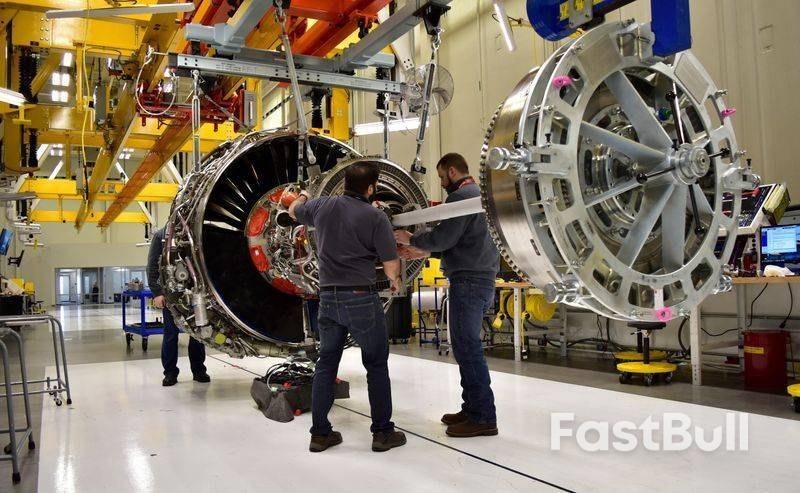
U.S. business activity slowed marginally in June, though prices increased further amid President Donald Trump's aggressive tariffs on imported goods, suggesting that an acceleration in inflation was likely in the second half of the year.
The survey from S&P Global on Monday showed measures of prices paid by factories for inputs and charged for finished products jumped to levels last seen in 2022. Nearly two-thirds of manufacturers reporting higher input costs attributed these to tariffs while just over half of respondents linked increased selling prices to tariffs, S&P Global said.
That supports economists' expectations that inflation would surge from June following mostly benign consumer and producer price readings in recent months. Economists have argued that inflation has been slow to respond to Trump's sweeping import duties because businesses were still selling stock accumulated before the tariffs came into effect.
S&P Global's flash U.S. Composite PMI Output Index, which tracks the manufacturing and services sectors, slipped to 52.8 this month from 53.0 in May. A reading above 50 indicates expansion in the private sector.
The survey's flash manufacturing PMI was unchanged at 52.0. Economists polled by Reuters had forecast the manufacturing PMI easing to 51.0. Its flash services PMI dipped to 53.1 from 53.7 in May. Economists had forecast the services PMI falling to 53.0. The survey was conducted in the June 12-20 period, before the U.S. joined in the conflict between Israel and Iran.
"The June flash PMI data indicated that the U.S. economy continued to grow at the end of the second quarter, but that the outlook remains uncertain while inflationary pressures have risen sharply in the past two months," said Chris Williamson, chief business economist at S&P Global Market Intelligence.
So-called hard data on retail sales, housing and the labor market have painted a picture of an economy that was softening because of the uncertainty caused by the constantly shifting tariffs policy. The escalation in tensions in the Middle East added another layer of uncertainty.
The S&P Global survey's measure of new orders received by businesses declined to 52.3 from 53.0 in May. A measure of prices paid by businesses for inputs fell to 61.6 from 63.2 last month. But manufacturers faced higher input costs, with this price gauge jumping to 70.0 this month. That was the highest reading since July 2022 and followed 64.6 in May.
Prices paid for inputs by services businesses remained elevated, with tariffs, higher financing, wage and fuel costs cited. The pace of increase, however, slowed amid competition.
Fund Flows Keep Climbing
For the tenth straight week, digital asset funds inflows topped $1 billion, reaching $1.24 billion in fresh investments. This steady momentum has propelled the year-to-date total to a record-breaking $15.1 billion. Such consistent capital influx highlights growing confidence in institutional and retail adoption of crypto.
Bitcoin Takes the Lead
Bitcoin stands out as the main beneficiary, drawing approximately $1.1 billion of the weekly inflows. This dominance reinforces BTC’s status as the preferred reserve asset in the crypto world. Investors are flocking to Bitcoin funds, driven by optimism around regulatory progress, growing interest from major institutions, and its historical performance.
Rising Support for Ethereum
Ethereum-focused investment vehicles also saw robust inflows, totaling $124 million. This surge reflects renewed investor interest in ETH’s utility and upcoming network upgrades. With strong demand for decentralized applications (dApps) and decentralized finance (DeFi), Ethereum continues to draw significant attention alongside Bitcoin.
Large-scale investors are increasingly treating crypto as part of their portfolios. With clearer regulatory frameworks and mainstream financial products, digital asset funds present a viable, secure entry point.
Despite occasional volatility, Bitcoin and Ethereum have maintained upward trajectories in key metrics like network usage and institutional holdings. These signals encourage fresh capital deployment, especially from cautious investors seeking regulated exposure.
New fund offerings, such as spot Bitcoin ETFs and enhanced diversification options, have expanded access. This innovation lowers entry barriers and attracts wider investor demographics, further fueling inflows.
While these inflows reflect strong investor appetite, a few factors may influence the trend:
In summary, the ongoing digital asset funds inflows streak underscores resilient investor interest in crypto. With $15.1 billion committed YTD, fueled by BTC and ETH strength, this trend suggests growing acceptance and maturity within global financial markets.
LATEST: Digital asset funds see 10th straight week of inflows, hitting $1.24B, pushing YTD total to a record $15.1B, led by $1.1B into $BTC and $124M into $ETH. pic.twitter.com/LDwptHCUBh
While these inflows reflect strong investor appetite, a few factors may influence the trend:
In summary, the ongoing digital asset funds inflows streak underscores resilient investor interest in crypto. With $15.1 billion committed YTD, fueled by BTC and ETH strength, this trend suggests growing acceptance and maturity within global financial markets.
Iran's top security body must make the final decision on whether to close the Strait of Hormuz, Iranian TV said on Sunday, after parliament reportedly backed the measure in response to U.S. strikes on several of Tehran's nuclear sites.
Iran has in the past threatened to close the strait but has never followed through on the move, which would restrict trade and impact global oil prices.
Below are details about the strait:
The strait lies between Oman and Iran and links the Gulf north of it with the Gulf of Oman to the south and the Arabian Sea beyond.
It is 21 miles (33 km) wide at its narrowest point, with the shipping lane just 2 miles (3 km) wide in either direction.
WHY DOES IT MATTER?
About a fifth of the world's total oil consumption passes through the strait. Between the start of 2022 and last month, somewhere between 17.8 million and 20.8 million barrels of crude, condensate and fuels flowed through the strait daily, data from analytics firm Vortexa showed.
OPEC members Saudi Arabia, Iran, the United Arab Emirates, Kuwait and Iraq export most of their crude via the strait, mainly to Asia. The UAE and Saudi Arabia have sought to find other routes to bypass the strait.
About 2.6 million barrels per day (bpd) of unused capacity from existing UAE and Saudi pipelines could be available to bypass Hormuz, the U.S. Energy Information Administration said in June last year.
Qatar, among the world's biggest liquefied natural gas exporters, sends almost all of its LNG through the strait.
The U.S. Fifth Fleet, based in Bahrain, is tasked with protecting commercial shipping in the area.
In 1973, Arab producers led by Saudi Arabia slapped an oil embargo on Western supporters of Israel in its war with Egypt.
While Western countries were the main buyers of crude produced by the Arab countries at the time, nowadays Asia is the main buyer of OPEC's crude.
The U.S. more than doubled its oil liquids production in the last two decades and has turned from the world's biggest oil importer into one of the top exporters.
During the 1980-1988 Iran-Iraq War, the two sides sought to disrupt each other's exports in what was called the Tanker War.
In July 1988, a U.S. warship shot down an Iranian airliner, killing all 290 aboard, in what Washington said was an accident and Tehran said was a deliberate attack.
In January 2012, Iran threatened to block the strait in retaliation for U.S. and European sanctions. In May 2019, four vessels - including two Saudi oil tankers - were attacked off the UAE coast, outside the Strait of Hormuz.
Three vessels, two in 2023 and one in 2024, were seized by Iran near or in the Strait of Hormuz. Some of the seizures followed U.S. seizures of tankers related to Iran.
Five months into the biggest trade war the global economy has seen in the postwar era, the bottom has hardly fallen out of major economies.
The latest US retail sales figures were down, though not across the board. China’s surprised on the upside. In Germany, optimism abounds over the turn to fiscal stimulus. Even US inflation figures for months now have beaten back expectations for higher import duties to feed through to generalized increases in prices — likely thanks in part to fat margins.
CIBC senior economist Ali Jaffery mused on the resilience of the US in particular in the middle of last week, saying “maybe the big lesson of all this is that the US economy has become so well internally diversified that its very robust to multiple shocks.”
“The period of painful post-financial crisis household deleveraging, low inflation and low interest rates allowed the right rebalancing of capital and labor, and the post-pandemic fiscal policy, while excessive in adding some extra inflation, kept that process intact,” Jaffery wrote. “Perhaps I will have to eat those words in the coming months as we might be in the eye of the storm.”
If the US was indeed in the eye of the storm as of last week, President Donald Trump’s decision to attack Iran over its nuclear program at the weekend threatens to push it toward the fury of the gale.
Any significant increases in oil or natural gas prices, or disturbances in trade caused by a further escalation of the conflict, would act as yet another brake on the US, and global, economy.
“We’ll see how Tehran responds, but the attack likely puts the conflict on a escalatory path,” Bloomberg Economics analysts including Ziad Daoud wrote in a report. “For the global economy, an expanding conflict adds to the risk of higher oil prices and an upward impulse to inflation.”
In an interview with Bloomberg Television on Monday, IMF Managing Director Kristalina Georgieva warned that the US strikes on Iran could potentially have broader impacts beyond energy channels, as global uncertainty escalates.
“When there is uncertainty, what happens? Investors don’t invest, consumers don’t consume, and that holds growth prospects down,” she said.
US inflation probably inched higher in May, offering scant evidence of extensive tariff-related repercussions that the Fed expects to become more apparent later in the year.
Ahead of the key figures on Friday and fresh off the Fed’s decision last week to keep interest rates unchanged, Jerome Powell heads to Capitol Hill for two days of testimony in which he’ll lay out the case, again, for the central bank’s go-slow policy approach. The Fed chair is likely to emphasize that while rate cuts are possible this year, officials want more clarity on the economic impact of White House trade policy.
Economists see the personal consumption expenditures price index excluding food and energy — the Fed’s preferred gauge of underlying inflation — rising 0.1% in May for a third month. That would mark the tamest three-month stretch since the pandemic five years ago.
Elsewhere, multiple inflation releases in Asia, appearances by the euro-zone and UK central bank chiefs, and a prospective rate cut in Mexico may be among the highlights.
The end of the era of ultra-low rates in the US and other developed nations has magnified the danger of running large fiscal deficits — because of the resulting surge in debt-servicing costs. But the real threat to the bond market isn’t so much from a fiscal doom loop, according to Dario Perkins at TS Lombard.
“As always, much of the commentary in financial markets is about ‘fiscal risk’ and low term premia,” Perkins wrote in a note last week. (The so-called term premium is the extra yield investors are imputed to demand for buying longer-term debt versus rolling over short-term securities.) “But the real threat to bond markets is deeper than that,” he wrote.
“It is about the basic hedging properties of government securities in a world that seems more susceptible to supply shocks and in which US policymakers are behaving more recklessly,” Perkins wrote. “If bonds are becoming less valuable as a portfolio hedge, they will be less attractive to investors – regardless of the size of the budget deficit or the balance sheet policies of central banks.”
White Label
Data API
Web Plug-ins
Poster Maker
Affiliate Program
The risk of loss in trading financial instruments such as stocks, FX, commodities, futures, bonds, ETFs and crypto can be substantial. You may sustain a total loss of the funds that you deposit with your broker. Therefore, you should carefully consider whether such trading is suitable for you in light of your circumstances and financial resources.
No decision to invest should be made without thoroughly conducting due diligence by yourself or consulting with your financial advisors. Our web content might not suit you since we don't know your financial conditions and investment needs. Our financial information might have latency or contain inaccuracy, so you should be fully responsible for any of your trading and investment decisions. The company will not be responsible for your capital loss.
Without getting permission from the website, you are not allowed to copy the website's graphics, texts, or trademarks. Intellectual property rights in the content or data incorporated into this website belong to its providers and exchange merchants.
Not Logged In
Log in to access more features

FastBull Membership
Not yet
Purchase
Log In
Sign Up