• Trade
  • Markets
  • Copy
  • Contests
  • News
  • 24/7
  • Calendar
  • Q&A
  • Chats
Trending
Screeners
SYMBOL
LAST
BID
ASK
HIGH
LOW
NET CHG.
%CHG.
SPREAD
SPX
S&P 500 Index
6857.13
6857.13
6857.13
6865.94
6827.13
+7.41
+ 0.11%
--
DJI
Dow Jones Industrial Average
47850.93
47850.93
47850.93
48049.72
47692.96
-31.96
-0.07%
--
IXIC
NASDAQ Composite Index
23505.13
23505.13
23505.13
23528.53
23372.33
+51.04
+ 0.22%
--
USDX
US Dollar Index
98.840
98.920
98.840
98.980
98.740
-0.140
-0.14%
--
EURUSD
Euro / US Dollar
1.16596
1.16604
1.16596
1.16715
1.16408
+0.00151
+ 0.13%
--
GBPUSD
Pound Sterling / US Dollar
1.33569
1.33578
1.33569
1.33622
1.33165
+0.00298
+ 0.22%
--
XAUUSD
Gold / US Dollar
4224.90
4225.24
4224.90
4230.62
4194.54
+17.73
+ 0.42%
--
WTI
Light Sweet Crude Oil
59.309
59.339
59.309
59.469
59.187
-0.074
-0.12%
--

Community Accounts

Signal Accounts
--
Profit Accounts
--
Loss Accounts
--
View More

Become a signal provider

Sell trading signals to earn additional income

View More

Guide to Copy Trading

Get started with ease and confidence

View More

Signal Accounts for Members

All Signal Accounts

Best Return
  • Best Return
  • Best P/L
  • Best MDD
Past 1W
  • Past 1W
  • Past 1M
  • Past 1Y

All Contests

  • All
  • Trump Updates
  • Recommend
  • Stocks
  • Cryptocurrencies
  • Central Banks
  • Featured News
Top News Only
Share

Norway To Acquire 2 More Submarines, Long-Range Missiles, Daily Vg Reports

Share

Ucb Sa Shares Open Up 7.3% After 2025 Guidance Upgrade, Top Of Bel 20 Index

Share

Shares In Italy's Mediobanca Down 1.3% After Barclays Cuts To Underweight From Equal-Weight

Share

Stats Office - Austrian November Wholesale Prices +0.9% Year-On-Year

Share

Britain's FTSE 100 Up 0.15%

Share

Europe's STOXX 600 Up 0.1%

Share

Taiwan November PPI -2.8% Year-On-Year

Share

Stats Office - Austrian September Trade -230.8 Million EUR

Share

Swiss National Bank Forex Reserves Revised To Chf 724906 Million At End Of October - SNB

Share

Swiss National Bank Forex Reserves At Chf 727386 Million At End Of November - SNB

Share

Shanghai Warehouse Rubber Stocks Up 8.54% From Week Earlier

Share

Turkey's Main Banking Index Up 2%

Share

French October Trade Balance -3.92 Billion Euros Versus Revised -6.35 Billion Euros In September

Share

Kremlin Aide Says Russia Is Ready To Work Further With Current USA Team

Share

Kremlin Aide Says Russia And USA Are Moving Forward In Ukraine Talks

Share

Shanghai Rubber Warehouse Stocks Up 7336 Tons

Share

Shanghai Tin Warehouse Stocks Up 506 Tons

Share

Reserve Bank Of India Chief Malhotra: Goal Is To Have Inflation Be Around 4%

Share

Ukmto Says Master Has Confirmed That The Small Crafts Have Left The Scene, Vessel Is Proceeding To Its Next Port Of Call

Share

Shanghai Nickel Warehouse Stocks Up 1726 Tons

TIME
ACT
FCST
PREV
France 10-Year OAT Auction Avg. Yield

A:--

F: --

P: --

Euro Zone Retail Sales MoM (Oct)

A:--

F: --

P: --

Euro Zone Retail Sales YoY (Oct)

A:--

F: --

P: --

Brazil GDP YoY (Q3)

A:--

F: --

P: --

U.S. Challenger Job Cuts (Nov)

A:--

F: --

P: --

U.S. Challenger Job Cuts MoM (Nov)

A:--

F: --

P: --

U.S. Challenger Job Cuts YoY (Nov)

A:--

F: --

P: --

U.S. Initial Jobless Claims 4-Week Avg. (SA)

A:--

F: --

P: --

U.S. Weekly Initial Jobless Claims (SA)

A:--

F: --

P: --

U.S. Weekly Continued Jobless Claims (SA)

A:--

F: --

P: --

Canada Ivey PMI (SA) (Nov)

A:--

F: --

P: --

Canada Ivey PMI (Not SA) (Nov)

A:--

F: --

P: --

U.S. Non-Defense Capital Durable Goods Orders Revised MoM (Excl. Aircraft) (SA) (Sept)

A:--

F: --

P: --
U.S. Factory Orders MoM (Excl. Transport) (Sept)

A:--

F: --

P: --

U.S. Factory Orders MoM (Sept)

A:--

F: --

P: --

U.S. Factory Orders MoM (Excl. Defense) (Sept)

A:--

F: --

P: --

U.S. EIA Weekly Natural Gas Stocks Change

A:--

F: --

P: --

Saudi Arabia Crude Oil Production

A:--

F: --

P: --

U.S. Weekly Treasuries Held by Foreign Central Banks

A:--

F: --

P: --

Japan Foreign Exchange Reserves (Nov)

A:--

F: --

P: --

India Repo Rate

A:--

F: --

P: --

India Benchmark Interest Rate

A:--

F: --

P: --

India Reverse Repo Rate

A:--

F: --

P: --

India Cash Reserve Ratio

A:--

F: --

P: --

Japan Leading Indicators Prelim (Oct)

A:--

F: --

P: --

U.K. Halifax House Price Index YoY (SA) (Nov)

A:--

F: --

P: --

U.K. Halifax House Price Index MoM (SA) (Nov)

A:--

F: --

P: --

France Current Account (Not SA) (Oct)

A:--

F: --

P: --

France Trade Balance (SA) (Oct)

A:--

F: --

P: --

France Industrial Output MoM (SA) (Oct)

A:--

F: --

P: --

Italy Retail Sales MoM (SA) (Oct)

--

F: --

P: --

Euro Zone Employment YoY (SA) (Q3)

--

F: --

P: --

Euro Zone GDP Final YoY (Q3)

--

F: --

P: --

Euro Zone GDP Final QoQ (Q3)

--

F: --

P: --

Euro Zone Employment Final QoQ (SA) (Q3)

--

F: --

P: --

Euro Zone Employment Final (SA) (Q3)

--

F: --

P: --
Brazil PPI MoM (Oct)

--

F: --

P: --

Mexico Consumer Confidence Index (Nov)

--

F: --

P: --

Canada Unemployment Rate (SA) (Nov)

--

F: --

P: --

Canada Labor Force Participation Rate (SA) (Nov)

--

F: --

P: --

Canada Employment (SA) (Nov)

--

F: --

P: --

Canada Part-Time Employment (SA) (Nov)

--

F: --

P: --

Canada Full-time Employment (SA) (Nov)

--

F: --

P: --

U.S. Personal Income MoM (Sept)

--

F: --

P: --

U.S. Dallas Fed PCE Price Index YoY (Sept)

--

F: --

P: --

U.S. PCE Price Index YoY (SA) (Sept)

--

F: --

P: --

U.S. PCE Price Index MoM (Sept)

--

F: --

P: --

U.S. Personal Outlays MoM (SA) (Sept)

--

F: --

P: --

U.S. Core PCE Price Index MoM (Sept)

--

F: --

P: --

U.S. UMich 5-Year-Ahead Inflation Expectations Prelim YoY (Dec)

--

F: --

P: --

U.S. Core PCE Price Index YoY (Sept)

--

F: --

P: --

U.S. Real Personal Consumption Expenditures MoM (Sept)

--

F: --

P: --

U.S. 5-10 Year-Ahead Inflation Expectations (Dec)

--

F: --

P: --

U.S. UMich Current Economic Conditions Index Prelim (Dec)

--

F: --

P: --

U.S. UMich Consumer Sentiment Index Prelim (Dec)

--

F: --

P: --

U.S. UMich 1-Year-Ahead Inflation Expectations Prelim (Dec)

--

F: --

P: --

U.S. UMich Consumer Expectations Index Prelim (Dec)

--

F: --

P: --

U.S. Weekly Total Rig Count

--

F: --

P: --

U.S. Weekly Total Oil Rig Count

--

F: --

P: --

U.S. Consumer Credit (SA) (Oct)

--

F: --

P: --

Q&A with Experts
    • All
    • Chatrooms
    • Groups
    • Friends
    Connecting
    .
    .
    .
    Type here...
    Add Symbol or Code

      No matching data

      All
      Trump Updates
      Recommend
      Stocks
      Cryptocurrencies
      Central Banks
      Featured News
      • All
      • Russia-Ukraine Conflict
      • Middle East Flashpoint
      • All
      • Russia-Ukraine Conflict
      • Middle East Flashpoint
      Search
      Products

      Charts Free Forever

      Chats Q&A with Experts
      Screeners Economic Calendar Data Tools
      Membership Features
      Data Warehouse Market Trends Institutional Data Policy Rates Macro

      Market Trends

      Market Sentiment Order Book Forex Correlations

      Top Indicators

      Charts Free Forever
      Markets

      News

      News Analysis 24/7 Columns Education
      From Institutions From Analysts
      Topics Columnists

      Latest Views

      Latest Views

      Trending Topics

      Top Columnists

      Latest Update

      Signals

      Copy Rankings Latest Signals Become a signal provider AI Rating
      Contests
      Brokers

      Overview Brokers Assessment Rankings Regulators News Claims
      Broker listing Forex Brokers Comparison Tool Live Spread Comparison Scam
      Q&A Complaint Scam Alert Videos Tips to Detect Scam
      More

      Business
      Events
      Careers About Us Advertising Help Center

      White Label

      Data API

      Web Plug-ins

      Affiliate Program

      Awards Institution Evaluation IB Seminar Salon Event Exhibition
      Vietnam Thailand Singapore Dubai
      Fans Party Investment Sharing Session
      FastBull Summit BrokersView Expo
      Recent Searches
        Top Searches
          Markets
          News
          Analysis
          User
          24/7
          Economic Calendar
          Education
          Data
          • Names
          • Latest
          • Prev

          View All

          No data

          Scan to Download

          Faster Charts, Chat Faster!

          Download App
          English
          • English
          • Español
          • العربية
          • Bahasa Indonesia
          • Bahasa Melayu
          • Tiếng Việt
          • ภาษาไทย
          • Français
          • Italiano
          • Türkçe
          • Русский язык
          • 简中
          • 繁中
          Open Account
          Search
          Products
          Charts Free Forever
          Markets
          News
          Signals

          Copy Rankings Latest Signals Become a signal provider AI Rating
          Contests
          Brokers

          Overview Brokers Assessment Rankings Regulators News Claims
          Broker listing Forex Brokers Comparison Tool Live Spread Comparison Scam
          Q&A Complaint Scam Alert Videos Tips to Detect Scam
          More

          Business
          Events
          Careers About Us Advertising Help Center

          White Label

          Data API

          Web Plug-ins

          Affiliate Program

          Awards Institution Evaluation IB Seminar Salon Event Exhibition
          Vietnam Thailand Singapore Dubai
          Fans Party Investment Sharing Session
          FastBull Summit BrokersView Expo

          UK Shop Prices Fall For First Time Since March, Retailers Say

          Julia Daniels
          Summary:

          British retailers cut their prices in October, led by the biggest drop for food in almost five years, industry figures showed, offering a bit of relief to households before Halloween as well as the Bank of England and the government.

          British retailers cut their prices in October, led by the biggest drop for food in almost five years, industry figures showed, offering a bit of relief to households before Halloween as well as the Bank of England and the government.

          Overall shop prices fell by 0.3% from September, the first month-on-month drop since March, the British Retail Consortium said on Tuesday.

          A monthly 0.4% drop in food prices was the biggest such fall since December 2020, the BRC said.

          Compared with October last year, overall shop prices were 1.0% higher after a 1.4% rise in September, the first time that the annual pace of increases has slowed since June.

          Annual food price inflation was also cooler at 3.7% compared with October last year, down from 4.2% in September, although fresh food prices continued to accelerate.

          The BoE is watching food prices closely as it believes they have a big role in shaping public inflation expectations. Last week, official data showed Britain's headline inflation rate held at 3.8%, the highest since early 2024 but below forecasts of an increase to 4.0%.

          BRC Chief Executive Helen Dickinson highlighted fierce competition amongst retailers, widespread discounting and an easing of global sugar prices which helped to bring down prices of chocolate and confectionary ahead of Halloween.

          Some retailers started promotions for electrical goods and beauty products before the Black Friday sales that typically fall in November, Dickinson said.

          She called on finance minister Rachel Reeves not to increase the cost burden on the sector in her budget on November 26.

          "Adding further taxes on retail businesses would inevitably keep inflation higher for longer," Dickinson said.

          Reeves has said she will use her budget to bring down the cost of living.

          Source: Investing

          Risk Warnings and Disclaimers
          You understand and acknowledge that there is a high degree of risk involved in trading. Following any strategies or investment methods may lead to potential losses. The content on the site is provided by our contributors and analysts for information purposes only. You are solely responsible for determining whether any trading assets, securities, strategy, or any other product is suitable for investing based on your own investment objectives and financial situation.
          Add to Favorites
          Share

          Be Wary Of US-China Trade 'deal' Déjà Vu

          Laura Fletcher

          China–U.S. Trade War

          The United States and China appear to have hammered out the framework of a trade deal in advance of Presidents Donald Trump and Xi Jinping's meeting this week, removing the threat of an imminent collapse in trade between the world's two largest economies. World markets have welcomed the news, but, far from a game changer, this just looks like déjà vu.

          Remember this?

          "OUR DEAL WITH CHINA IS DONE, SUBJECT TO FINAL APPROVAL WITH PRESIDENT XI AND ME," Trump wrote on Truth Social on June 11, adding: "RELATIONSHIP IS EXCELLENT!"

          As it turned out, the deal was not done, and the relationship was not excellent.

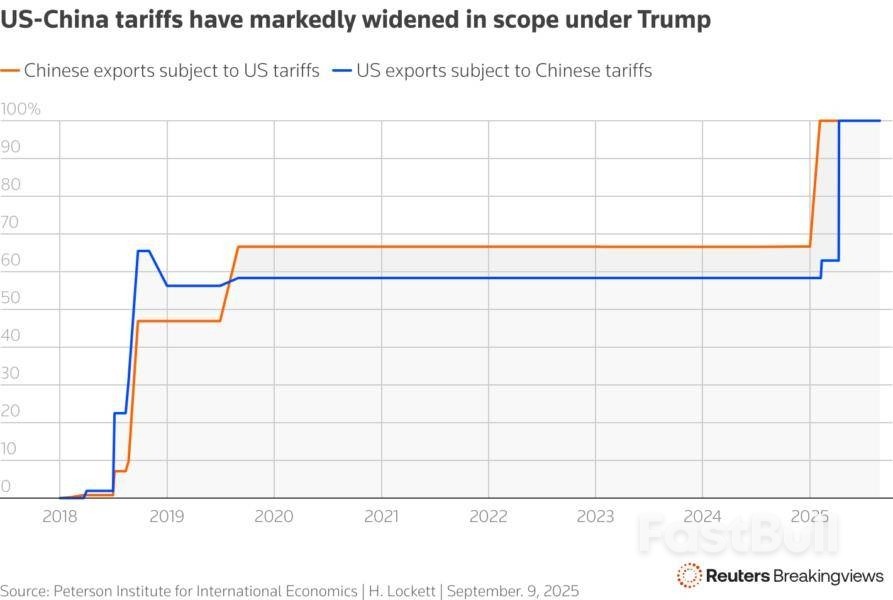
          So much so, an emboldened Beijing earlier this month put extra controls on rare earth exports, and Washington responded with threats of 100% tariffs on U.S.-bound shipments of goods from China. U.S. Treasury Secretary Scott Bessent also publicly criticized top Chinese trade negotiator Li Chenggang as "unhinged".

          However, the two men appear to have put these differences aside following talks in Malaysia over the weekend, agreeing to the roots of a preliminary deal in which China will delay its expanded licensing regime for rare earths and the U.S. will drastically lower its threatened tariffs on Chinese goods.

          Soundings from the White House are upbeat, while the Chinese side is taking a more cautious line.
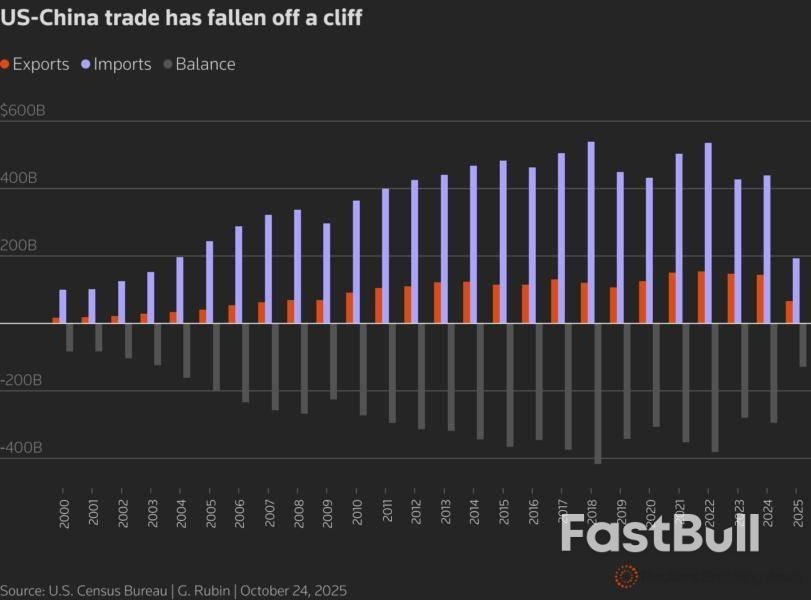
          But how should investors view the news?

          Be Wary Of US-China Trade 'deal' Déjà Vu_1

          Thomson ReutersUS-China trade has fallen off a cliff

          'PERILOUS NEW CHAPTER'

          On the one hand, any deal that removes the worst-case scenario of a collapse in U.S.-China trade is good news. And all the evidence since the depths of 'Liberation Day' turmoil in April suggests that, if this doomsday threat is sidelined, the world economy will continue to muddle through, and markets will 'melt up' on policy stimulus, AI optimism and solid corporate earnings.

          Cassandras say that's a dangerously complacent view. Whatever face-saving deal Trump and Xi eventually agree to will merely kick the can down the road.

          Grace Fan at TS Lombard on Friday warned that a "perilous new chapter in geopolitics and global trade" has been opened, regardless of how the Trump-Xi meeting goes. The stakes are high, neither side wants to be seen backing down, and both will feel they hold the ace cards.

          Trump leads the world's biggest economic, financial and military superpower, and every single trade deal he has signed so far this year has been in the United States' favor.

          Meanwhile, Xi has huge leverage with something the U.S. needs - rare earths, the elements used in everything from lithium-ion batteries and semiconductors to cell phones, aircraft engines, LED TVs, electric vehicles and military radars.

          SMALL BUT MIGHTY The rare earths issue is a tricky one

          China mines about 60% of the world's rare earths and makes 90% of rare earth magnets. On its face, the dollar value of the global rare earths market looks tiny at just $12 billion, according to management consultant firm IMARC. That figure, which is at the higher end of estimates, is a fraction of last year's $670 billion U.S.-China bilateral trade.

          But these elements are tied to trillions of dollars of global economic output, making the relatively tiny market a critical part of U.S.-China relations.

          It would thus be naive to think that a temporary lifting of China's export controls, if that is part of any deal, will be the end of the matter.

          Instead, both sides are apt to use the "deal" as an opportunity to shore up their own weaknesses to ensure they are in a better position once tensions flare up again, whether that's Beijing further diversifying its export markets or Washington diversifying its sources of critical minerals.
          Be Wary Of US-China Trade 'deal' Déjà Vu_2

          Thomson ReutersUS-China tariffs have markedly widened in scope under Trump

          SOMETHING MORE 'MONUMENTAL'

          One of the big takeaways from the International Monetary Fund and World Bank annual meetings in Washington this month was that China's decision to use its rare earth leverage over the U.S. signals a new and more dangerous stage in this geopolitical struggle.

          Daniel Yergin, vice chairman of S&P Global, said in a discussion that trust between the U.S. and China has "gone". Goldman Sachs President John Waldron told another panel that "something more monumental" between the two countries is playing out.

          In private, many delegates were even more pessimistic.

          But pessimism is not something that has characterized financial markets much in the last six months, with stocks in Japan, Australia, South Korea, Britain and France, and the U.S. reaching all-time highs last week.

          Many markets jumped even higher on Monday ahead of the Trump-Xi meeting, expected on Thursday, with investors calculating that a 'placeholder' trade deal is better than no deal at all.
          Source: Reuters

          Risk Warnings and Disclaimers
          You understand and acknowledge that there is a high degree of risk involved in trading. Following any strategies or investment methods may lead to potential losses. The content on the site is provided by our contributors and analysts for information purposes only. You are solely responsible for determining whether any trading assets, securities, strategy, or any other product is suitable for investing based on your own investment objectives and financial situation.
          Add to Favorites
          Share

          South Korea's Third-quarter GDP Grows At Fastest Pace In Over A Year, Beating Expectations

          Daniel Carter

          Economic

          Central Bank

          South Korea's economy expanded at its fastest pace in more than a year, with its third-quarter gross domestic product growth topping analysts' estimates on Tuesday.
          According to advance estimates from Bank of Korea, GDP rose 1.7%, year on year, compared to the 1.5% expected by economists polled by Reuters. The economy had grown by 0.6% in the second quarter.
          South Korea's GDP data comes as the country's negotiators continue to wrangle over details of a trade deal with the Trump administration. In an interview with Bloomberg last Friday, South Korea's President Lee Jae Myung said that the two country's were deadlocked on key details over Seoul's $350 billion investment pledge.
          "The U.S. will of course try to maximize its interests, but it mustn't be to the extent that causes catastrophic consequences for South Korea," Lee said in the interview.
          In July, South Korea reached a trade deal with Trump that featured blanket tariffs on the country's exports to U.S. at 15% — down from the 25% Trump announced earlier. In return, Seoul had pledged to invest $350 billion in the U.S.
          Lee is set to meet Trump on the sidelines of the Asia-Pacific Economic Cooperation summit being held in Gyeongju, South Korea, later this week.
          The Bank of Korea in its statement last Thursday said that the economy has continued to improve, supported by a sustained recovery in consumption and favorable exports growth.
          "Going forward, domestic demand is expected to continue its recovery, led by consumption, and exports are likely to remain favourable for some time owing to the strong semiconductor sector, but the impacts of U.S. tariffs on exports are likely to expand gradually," the BOK added.
          The central bank has forecast full-year growth for 2025 at 0.9%, and 1.6% for 2026.

          Source: CNBC

          To stay updated on all economic events of today, please check out our Economic calendar
          Risk Warnings and Disclaimers
          You understand and acknowledge that there is a high degree of risk involved in trading. Following any strategies or investment methods may lead to potential losses. The content on the site is provided by our contributors and analysts for information purposes only. You are solely responsible for determining whether any trading assets, securities, strategy, or any other product is suitable for investing based on your own investment objectives and financial situation.
          Add to Favorites
          Share

          North Korean Troops Are Now Fighting Inside Ukraine

          Daniel Carter

          Political

          Direct involvement in the fighting inside Ukraine marks an important escalation in the conflict.
          North Korean troops are supporting Russian military operations inside Ukraine, according to the Ukrainian General Staff.
          Thus far, North Korean troops fighting for the Russian military have limited their operations inside Russia. Direct involvement in the fighting inside Ukraine would mark an important escalation in the conflict.

          North Korean Drone Operations

          According to the British Ministry of Defence's latest intelligence estimate, North Korean troops are providing unmanned aerial system support to Russian forces inside Ukraine. Thus far, North Korean troops assisting the Russian military have limited their operations in Kursk Oblast, Russia, helping fend off the Ukrainian foray there.
          "This is the first time DPRK troops have been reported as directly supporting or facilitating Russian offensive operations into sovereign Ukrainian territory. Specifically, DPRK uncrewed aerial system (UAS) operators are reportedly assisting Russian forces using multiple launch rocket systems to target Ukrainian positions in Ukraine's Sumy oblast," the British Ministry of Defence stated.
          North Korean unmanned aerial system operators are essentially acting as spotters for Russian artillery, reconnoitering Ukrainian positions for targets of opportunity before calling in Russian artillery and rocket artillery. These duties are in stark contrast to their previous experiences in Ukraine.
          While DPRK forces highly likely conduct tactical UAS strikes and reconnaissance UAS operations against Ukrainian forces in Russia's Kursk region previously, their primary role was as infantry conducting offensive combat operations against Ukrainian forces within Kursk.
          Pyongyang has deployed several thousand troops to Russia to support the Kremlin's "special military operation" in Ukraine. The initial force numbered around 11,000 troops. Heavy losses following a few weeks of combat forced Russian commanders to pull the North Korean contingent off the frontlines for rest and recuperation. Ironically, Ukrainian suicide drones caused many of the North Korean casualties. Pyongyang then deployed additional troops as reinforcements, allowing the contingent to go back to the fighting.
          "Any decision to deploy DPRK troops into internationally recognised, sovereign Ukrainian territory in support of Russian forces, would almost certainly require sign-off from both Russia's President Putin, and DPRK leader Kim Jong Un," the British Ministry of Defence stated.

          North Korean Losses

          The North Korean troops are not there just to help Russia. Russia's invasion of Ukraine offers the North Korean military a rare opportunity to gain modern combat experience without being engaged in a full-blown conflict. The heavy losses that the North Korean contingent suffered were mainly the result of being inadequately prepared for the rigors of modern combat. Ukrainian suicide drones and artillery seem to have taken a heavy toll on the North Korean troops. But now the North Korean soldiers are learning and evolving. And the North Korean military is likely seeking opportunities to improve its combat capabilities, including drone operations. Pyongyang is also gaining weapon systems out of this arrangement.
          "It is highly likely that DPRK forces sustained more than 6,000 casualties in offensive combat operations against Ukrainian forces in the Russian oblast of Kursk, amounting to more than half of the approximately 11,000 DPRK troops initially deployed to the Kursk region," the British Ministry of Defence concluded in its intelligence assessment.
          The initial North Korean involvement in the war prompted Ukraine's partners to transfer advanced cruise missiles to the Ukrainian military—namely, the Storm Shadow and SCALP-EG air-launched munitions. North Korean involvement inside Ukraine could be the reason for additional transfers of advanced weapons to Ukraine.

          Source: The National Interest

          Risk Warnings and Disclaimers
          You understand and acknowledge that there is a high degree of risk involved in trading. Following any strategies or investment methods may lead to potential losses. The content on the site is provided by our contributors and analysts for information purposes only. You are solely responsible for determining whether any trading assets, securities, strategy, or any other product is suitable for investing based on your own investment objectives and financial situation.
          Add to Favorites
          Share

          Latest US-China Trade Truce Leaves Fundamental Issues Unresolved

          Manuel

          Political

          China–U.S. Trade War

          Chinese and US trade negotiators have lined up an array of diplomatic wins for Donald Trump and Xi Jinping to unveil at a summit this week. Those easy hits are pleasing investors, but leave deeper core conflicts unresolved.
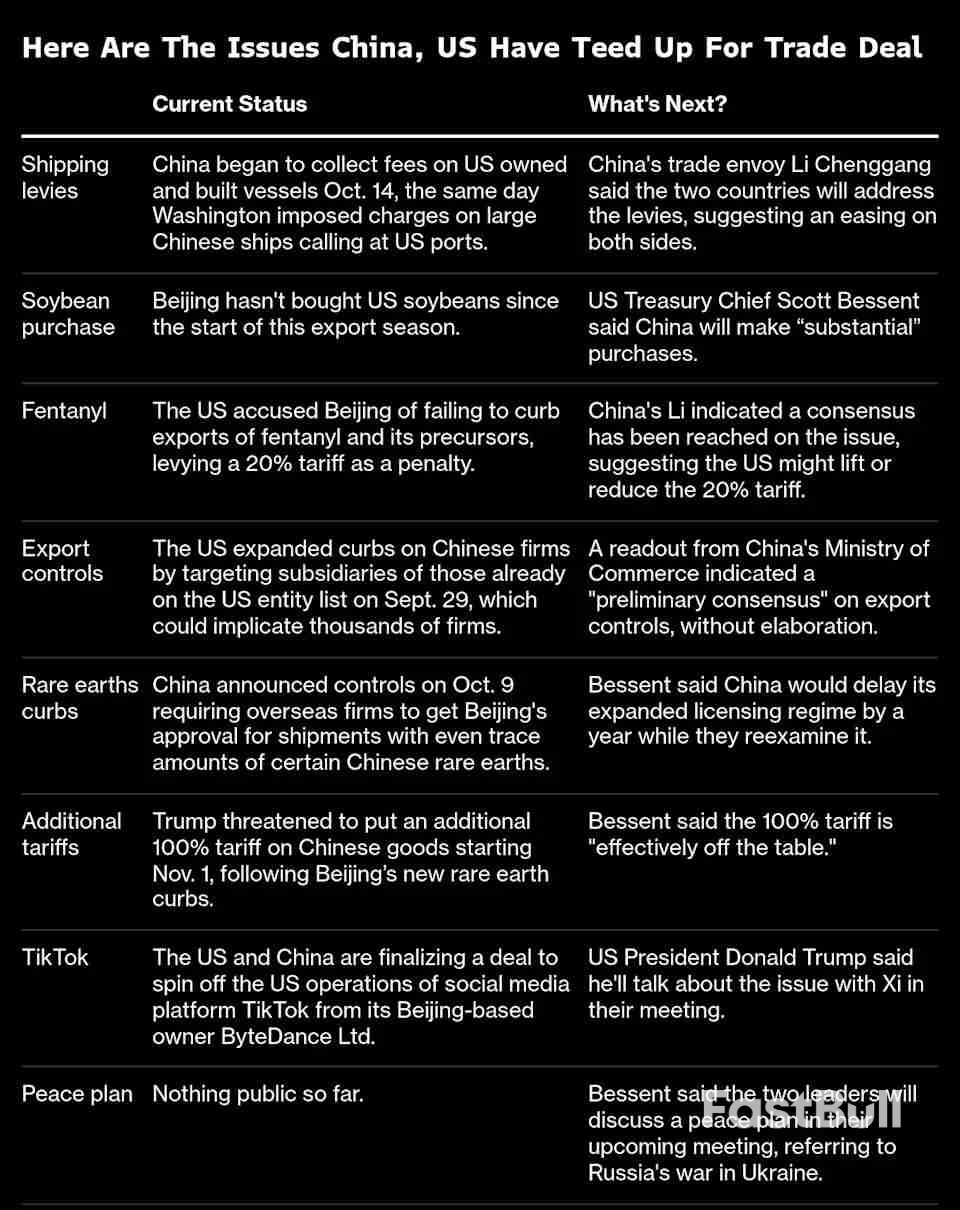
          President Donald Trump told reporters on Monday that “I really feel good” about a deal with China, after officials this weekend in Malaysia unveiled a slew of agreements to ease trade tensions. That’ll likely see China resume soy purchases in key Republican voting states, while America walks back its latest 100% tariff threat in exchange for securing Beijing’s critical rare-earth magnets.
          Markets soared on the news with the MSCI’s index for global stocks testing all-time highs, but analysts cautioned the deal teed up for Trump and Xi to sign in South Korea ignored thorny issues. Fundamental fights over national security appeared untouched, they said, along with Trump’s stated core mission of rebalancing trade. Making that harder, Chinese investment into America remains heavily restricted.
          “Picking the low-hanging fruit makes the path ahead inherently tougher because it leaves the hard, high-stakes conflicts for last,” said Sun Chenghao, a fellow at Tsinghua University in Beijing. “The ‘grand deal’ requires tackling profound disagreements on state subsidies, tech competition and national security — areas where both sides’ fundamental models clash.”
          That means a series of smaller, sectoral agreements achieved through sustained dialogue are more likely over the coming years, he added.
          US Treasury Secretary Scott Bessent has been pushing China to rebalance its economy and get the domestic consumer spending more during recent trade talks. Beijing appeared to ignore those calls last week, unveiling a policy document that emphasized manufacturing and tech self-sufficiency as the driving forces of the Chinese economy until at least 2030.
          The contours of the China deal emerged as Trump began his weeklong trip to Asia by clinching trade pacts with Thailand and Malaysia touching on rare earths, and pledges to combat anti-dumping with Cambodia — all areas of contention with China. The Republican’s rallying of American allies in Beijing’s backyard appeared designed to build leverage ahead of his first sit down with Xi since returning to power.Latest US-China Trade Truce Leaves Fundamental Issues Unresolved_1
          Underscoring the importance of leader-to-leader dialogue, Trump reiterated his pledge to visit China and suggested Xi could come to Washington or Mar-a-Lago, his private club in Florida. China is hosting the Asia-Pacific Economic Cooperation forum in 2026, while the US will hold the Group of Twenty leaders’ summit, giving both a reason to visit each other’s nations.
          Explainer: How the US-China Trade War Has Flared Up Again
          Ever since Trump made China the top target of America’s steepest tariff regime since the 1930s, bilateral ties have lurched between tit-for-tat escalation and economic talks to bring down the temperature.
          The Chinese Communist Party’s official mouthpiece on Monday urged the world’s biggest economies to avoid lapsing back into that cycle, appealing for efforts to “jointly safeguard the hard-won achievements” from their latest talks.
          That commentary called on the US to stick to the consultation mechanism led by Bessent and Chinese Vice Premier He Lifeng. Export curbs announced by US officials outside that framework have destabilized ties several times, prompting Beijing to jam its supply of rare earths critical to American manufacturing.
          “Both sides now seem to be focused primarily on stability,” Daniel Kritenbrink, partner at The Asia Group and former US assistant secretary of state for East Asian and Pacific affairs, told Bloomberg Television. “But none of the fundamentals in this relationship have changed.”
          While Bessent said he believed China would delay its latest rare-earth restrictions “for a year while they reexamine it” after the latest talks, friction over export controls remains. Chinese officials have used their chokehold over magnets needed to make everything from mobile phones to missiles to push back against US curbs on cutting-edge chips. Washington says those measures are necessary to restrain China’s military ambitions.
          It had been unclear, however, how Beijing would logistically enforce curbs asserting control over any global shipment containing even a trace of certain rare metals from China, a move that sparked outcry in Europe, too.
          China unveiled its latest measures in retaliation to the US expanding its own sanctions list to include thousands more Chinese companies. With Bessent saying that rolling back US export controls was off the table, a key question is what Xi gets in return for the pause other than reducing the threat of higher tariffs — and how long the delay will remain in place.
          “China’s never going to give up its leverage on rare earths,” said Dexter Roberts, a nonresident senior fellow at the Atlantic Council’s Global China Hub. “That would be sheer stupidity on their part.”
          One area where US officials signaled progress was fentanyl, raising the prospect a 20% tariff Trump imposed to pressure Beijing into halting the flow of chemicals used to make the deadly drug could be lowered. Relief on that levy — which stacks on top of Liberation Day tariffs — could be a boon for the Asian nation at a time when domestic demand is weak.
          The removal of fentanyl tariffs on China could limit its US export losses to less than 10%, according to Bloomberg Economics’ Maeva Cousin.
          Other major issues such as an investigation into China’s implementation of the “Phase One” agreement from the first trade war appear unresolved, although Trump on Monday suggested he could drop that probe, if things work out well.
          Ultimately, the deal signaled amounted to a mix of small issues, said Scott Kennedy, senior adviser at the Center for Strategic and International Studies in Washington, noting Beijing’s industrial policy seemingly wasn’t up for discussion.
          “They’ve kicked the can to the side and are focusing on very concrete, narrow issues, putting aside broader questions about China’s economic system and economic security,” he added. “It’s highly unlikely they’ll ever address those broader issues head on.”

          Source: Bloomberg

          Risk Warnings and Disclaimers
          You understand and acknowledge that there is a high degree of risk involved in trading. Following any strategies or investment methods may lead to potential losses. The content on the site is provided by our contributors and analysts for information purposes only. You are solely responsible for determining whether any trading assets, securities, strategy, or any other product is suitable for investing based on your own investment objectives and financial situation.
          Add to Favorites
          Share

          Trump to Talk Trade, Security With Japan's new Leader Takaichi

          Manuel

          Political

          Economic

          U.S. President Donald Trump will meet Japan's new Prime Minister Sanae Takaichi in Tokyo on Tuesday for talks on trade and security, a week after the hardline conservative became Japan’s first female leader and vowed to accelerate a military buildup.
          Takaichi is expected to offer a package of U.S. investments in a $550-billion deal agreed this year, including cooperation in shipbuilding, sources familiar with the preparations previously told Reuters.
          She will also seek to please the leader of Japan's trade partner and security ally with purchases of pickup trucks, soybeans and natural gas, the sources said.
          While Trump has previously said Tokyo is not spending enough to defend its islands from an increasingly assertive China, Takaichi is not expected to commit to new defence spending targets beyond the 2% of GDP pledged by her predecessors.
          Trump, who met Japan's emperor on Monday, will hold summit talks and have lunch with Takaichi at the Akasaka Palace, before heading to a major U.S. naval base south of the capital.
          Trump was last at the palace, an ornate residence built in a European style, in 2019 for talks with late prime minister Shinzo Abe, who was assassinated in 2022.
          "I look forward to meeting the new prime minister," Trump told reporters on his flight from Malaysia, after attending a meeting of ASEAN, the Southeast Asian economic bloc.
          "I hear phenomenal things. She was a great ally and friend of Shinzo Abe, who was my friend."
          During their meeting Takaichi will present Trump with one of Abe's golf clubs in a gesture meant to rekindle the close bond the two leaders had formed on golf courses in Japan and the United States, a source familiar with the plan told Reuters.
          The source sought anonymity as they were not allowed to speak to the media.
          A similar close relationship with Trump could help Takaichi bolster her weak political position at home.
          Though she has seen a surge in public support since becoming prime minister, her coalition government is two votes shy of a majority in parliament's lower house.
          On Tuesday afternoon Trump will visit the U.S. naval base in Yokosuka near Tokyo, which is home to the aircraft carrier USS George Washington, a symbol of U.S. military power in the region. Takaichi will join Trump, domestic media said.
          Trump will meet business leaders in Tokyo, before travelling on Wednesday to South Korea. In talks there with Chinese President Xi Jinping, Trump said he hopes to seal a trade deal between the world's two biggest economies.

          Source: Reuters

          To stay updated on all economic events of today, please check out our Economic calendar
          Risk Warnings and Disclaimers
          You understand and acknowledge that there is a high degree of risk involved in trading. Following any strategies or investment methods may lead to potential losses. The content on the site is provided by our contributors and analysts for information purposes only. You are solely responsible for determining whether any trading assets, securities, strategy, or any other product is suitable for investing based on your own investment objectives and financial situation.
          Add to Favorites
          Share

          Trump Administation Narrows List of Potential Federal Reserve Chairs to 5

          Manuel

          Central Bank

          Forex

          Treasury Secretary Scott Bessent on Monday confirmed the names of five candidates to replace Jerome Powell as chair of the powerful Federal Reserve next year.
          On an Air Force One flight to Asia with President Donald Trump, Bessent said he would engage in a second round of interviews in the coming weeks and present a “good slate” of candidates to Trump “right after Thanksgiving.” Trump said he expected to decide on Powell's replacement by the end of this year.
          The five people under consideration are: Federal Reserve governors Christopher Waller and Michelle Bowman; former Fed governor Kevin Warsh; White House economic adviser Kevin Hassett; and Rick Rieder, senior managing director at asset manager BlackRock.
          The names suggest that no matter who is picked, there will likely be big changes coming to the Federal Reserve next year. Bessent, who is leading the search for Powell's replacement, last month published extensive criticisms of the Fed and some of the policies it has pursued from the Great Financial Crisis of 2008-2009 to the pandemic.
          Trump on Monday, meanwhile, repeated his long-standing attacks on Powell, charging that he has been too slow to cut interest rates.
          “We have a person that’s not at all smart right now," Trump said, referring to Powell. “He should have been much lower, much sooner.” The Fed is expected to lower its key rate Wednesday for the second time this year.
          Trump's goal of selecting a new chair by the end of this year could reflect some of the tricky elements surrounding Powell's status. His term as chair ends next May, but he could remain on the Fed's board as one of seven governors until January 2028, an unusual but not entirely unprecedented step. Such a move would deprive Trump of an opportunity to nominate another governor for several years.
          Still, current governor Stephen Miran was appointed by Trump Sept. 16 to finish an unexpired term that ends next Jan. 31. Trump could nominate his candidate to replace Powell for that seat, and then elevate that person to chair in May after Powell steps down.
          Hassett is currently the chair of the National Economic Council at the White House and was also a top Trump adviser in the president's first term, and a frequent defender of the administration's policies on television. His longtime loyalty to the president could give him an edge, some Fed watchers say.
          Warsh is a former economic advisor in the George W. Bush administration and was appointed to the Fed's governing board in 2006 at age 35, making him the youngest Fed governor in history. He left the board in 2011. Warsh is now a fellow at the Hoover Institution and a lecturer at the Stanford Graduate School of Business.
          Waller was appointed to the Fed by Trump in 2020, and quickly established himself as an independent voice. He began pushing for rate cuts in July and dissented at that meeting in favor of a quarter-point cut, when the Fed decided to leave its key rate unchanged. But he voted to reduce rates just a quarter-point in September, along with 10 other Fed officials, while Miran dissented in favor of a half-point.
          Michelle Bowman is the Fed's vice chair of supervision, making her the nation's top banking regulator. She was appointed by Trump in 2018, and before that was Kansas' state bank commissioner. Bowman also dissented in favor a rate cut in July, then voted with her colleagues last month for a quarter-point reduction.
          Rieder has the most financial markets experience of any of the candidates and has worked for Wall Street firms since 1987. Rieder joined BlackRock in 2009. His focus is in fixed income and he oversees the management of roughly $2.4 trillion in assets.
          Bessent has set out a wide-ranging critique of the Fed while interviewing for Powell's replacement. In particular, he has criticized the central bank for continuing unconventional policies, such as purchasing Treasury bonds in order to lower longer-term interest rates, long after after such steps were justified, in his view, by emergency conditions.
          “It is essential the Fed commit to scaling back its distortionary impact on markets," Bessent wrote. “It also likely requires an honest, independent, and nonpartisan review of the entire institution and all of its activities.”
          Bessent's criticisms aren't entirely new, but they have gained greater traction in the wake of the 2021-22 inflation surge. The Fed is mandated by Congress to seek stable prices as well as maximum employment.
          Bessent's critiques have also inevitably been tangled up with Trump's insistent calls for lower interest rates, which have threatened the Fed's independence from day-to-day politics. Trump has also taken the unprecedented step of trying to fire Fed governor Lisa Cook, a Biden appointee, to open another seat on the board for him to fill.
          Cook has sued to keep her seat and the Supreme Court has allowed Cook to remain on the board while it considers the case.
          Trump's attacks on the central bank have left some longtime Fed critics skeptical of the Trump administration's approach.
          Peter Conti-Brown, a Fed historian and professor of financial regulation at the University of Pennsylvania's Wharton School, cautioned against placing “loyalists” on the Fed “who are there to push the president’s narrative.”
          “Those are the ones that we want as his advisers and spokespeople and his lawyers, not his central bankers,” he said.

          Source: AP

          Risk Warnings and Disclaimers
          You understand and acknowledge that there is a high degree of risk involved in trading. Following any strategies or investment methods may lead to potential losses. The content on the site is provided by our contributors and analysts for information purposes only. You are solely responsible for determining whether any trading assets, securities, strategy, or any other product is suitable for investing based on your own investment objectives and financial situation.
          Add to Favorites
          Share
          FastBull
          Copyright © 2025 FastBull Ltd

          728 RM B 7/F GEE LOK IND BLDG NO 34 HUNG TO RD KWUN TONG KLN HONG KONG

          TelegramInstagramTwitterfacebooklinkedin
          App Store Google Play Google Play
          Products
          Charts

          Chats

          Q&A with Experts
          Screeners
          Economic Calendar
          Data
          Tools
          Membership
          Features
          Function
          Markets
          Copy Trading
          Latest Signals
          Contests
          News
          Analysis
          24/7
          Columns
          Education
          Company
          Careers
          About Us
          Contact Us
          Advertising
          Help Center
          Feedback
          User Agreement
          Privacy Policy
          Business

          White Label

          Data API

          Web Plug-ins

          Poster Maker

          Affiliate Program

          Risk Disclosure

          The risk of loss in trading financial instruments such as stocks, FX, commodities, futures, bonds, ETFs and crypto can be substantial. You may sustain a total loss of the funds that you deposit with your broker. Therefore, you should carefully consider whether such trading is suitable for you in light of your circumstances and financial resources.

          No decision to invest should be made without thoroughly conducting due diligence by yourself or consulting with your financial advisors. Our web content might not suit you since we don't know your financial conditions and investment needs. Our financial information might have latency or contain inaccuracy, so you should be fully responsible for any of your trading and investment decisions. The company will not be responsible for your capital loss.

          Without getting permission from the website, you are not allowed to copy the website's graphics, texts, or trademarks. Intellectual property rights in the content or data incorporated into this website belong to its providers and exchange merchants.

          Not Logged In

          Log in to access more features

          FastBull Membership

          Not yet

          Purchase

          Become a signal provider
          Help Center
          Customer Service
          Dark Mode
          Price Up/Down Colors

          Log In

          Sign Up

          Position
          Layout
          Fullscreen
          Default to Chart
          The chart page opens by default when you visit fastbull.com