• Trade
  • Markets
  • Copy
  • Contests
  • News
  • 24/7
  • Calendar
  • Q&A
  • Chats
Trending
Screeners
SYMBOL
LAST
BID
ASK
HIGH
LOW
NET CHG.
%CHG.
SPREAD
SPX
S&P 500 Index
6814.82
6814.82
6814.82
6861.30
6801.50
-12.59
-0.18%
--
DJI
Dow Jones Industrial Average
48369.10
48369.10
48369.10
48679.14
48285.67
-88.94
-0.18%
--
IXIC
NASDAQ Composite Index
23089.06
23089.06
23089.06
23345.56
23012.00
-106.10
-0.46%
--
USDX
US Dollar Index
97.970
98.050
97.970
98.070
97.740
+0.020
+ 0.02%
--
EURUSD
Euro / US Dollar
1.17431
1.17440
1.17431
1.17686
1.17262
+0.00037
+ 0.03%
--
GBPUSD
Pound Sterling / US Dollar
1.33667
1.33676
1.33667
1.34014
1.33546
-0.00040
-0.03%
--
XAUUSD
Gold / US Dollar
4303.41
4303.84
4303.41
4350.16
4285.08
+4.02
+ 0.09%
--
WTI
Light Sweet Crude Oil
56.367
56.397
56.367
57.601
56.233
-0.866
-1.51%
--

Community Accounts

Signal Accounts
--
Profit Accounts
--
Loss Accounts
--
View More

Become a signal provider

Sell trading signals to earn additional income

View More

Guide to Copy Trading

Get started with ease and confidence

View More

Signal Accounts for Members

All Signal Accounts

Best Return
  • Best Return
  • Best P/L
  • Best MDD
Past 1W
  • Past 1W
  • Past 1M
  • Past 1Y

All Contests

  • All
  • Trump Updates
  • Recommend
  • Stocks
  • Cryptocurrencies
  • Central Banks
  • Featured News
Top News Only
Share

New York Fed Accepts $2.601 Billion Of $2.601 Billion Submitted To Reverse Repo Facility On Dec 15

Share

Turkey: Shoots Down A Drone In The Black Sea Using F-16 Fighter Jets

Share

Goldman Sachs Says They Believe That The Copper Price Is Vulnerable To An Ai-Linked Price Correction

Share

Goldman Sachs Upgrades 2026 Copper Price Forecast To $11400 From $10,650

Share

Attempts By Ukrainian Troops To Advance From The South-West To Outskirts Of Kupiansk Are Being Thwarted

Share

Russian Troops Control All Of Kupiansk - IFX Cites Russian Military

Share

On Monday (December 15), The South Korean Won Ultimately Rose 0.60% Against The US Dollar, Closing At 1468.91 Won. The Won Was On An Upward Trend Throughout The Day, Rising Significantly At 17:00 Beijing Time And Reaching A Daily High Of 1463.04 Won At 17:36

Share

Health Ministry: Israeli Forces Kill Palestinian Teen In West Bank

Share

New York Federal Reserve President Williams: Over Time, The Size Of Reserves Could Grow From $2.9 Trillion

Share

New York Fed President Williams: AI Valuations Are High, But There Is A Real Driving Factor

Share

New York Federal Reserve President Williams: The Job Market Is In Very Good Shape

Share

New York Fed President Williams: 'Very Supportive' Of USA Central Bank's Decision To Cut Interest Rates Last Week

Share

New York Fed President Williams: 'Too Early To Say' What Central Bank Should Do At January Meeting

Share

New York Fed President Williams: Strong Markets Part Of Reason Why Economy Will Grow Robustly In 2026

Share

New York Fed President Williams: What Constitutes Ample Reserves Will Change Over Time

Share

New York Fed President Williams: Market Valuations 'Elevated,' But There Are Reasons For Pricing

Share

New York Fed President Williams: Ample Reserves System Working Very Well

Share

New York Fed President Williams: Some Signs That Parts Of Underlying Economy Not As Strong As GDP Data Suggests

Share

New York Fed President Williams: Expects Coming Job Data Will Show Gradual Cooling

Share

Ukraine President Zelenskiy: Monitoring Of Ceasefire Should Be Part Of Security Guarantees

TIME
ACT
FCST
PREV
Japan Tankan Small Manufacturing Outlook Index (Q4)

A:--

F: --

P: --

Japan Tankan Large Non-Manufacturing Outlook Index (Q4)

A:--

F: --

P: --

Japan Tankan Large Manufacturing Outlook Index (Q4)

A:--

F: --

P: --

Japan Tankan Small Manufacturing Diffusion Index (Q4)

A:--

F: --

P: --

Japan Tankan Large-Enterprise Capital Expenditure YoY (Q4)

A:--

F: --

P: --

U.K. Rightmove House Price Index YoY (Dec)

A:--

F: --

P: --

China, Mainland Industrial Output YoY (YTD) (Nov)

A:--

F: --

P: --

China, Mainland Urban Area Unemployment Rate (Nov)

A:--

F: --

P: --

Saudi Arabia CPI YoY (Nov)

A:--

F: --

P: --

Euro Zone Industrial Output YoY (Oct)

A:--

F: --

P: --

Euro Zone Industrial Output MoM (Oct)

A:--

F: --

P: --

Canada Existing Home Sales MoM (Nov)

A:--

F: --

P: --

Canada National Economic Confidence Index

A:--

F: --

P: --

Canada New Housing Starts (Nov)

A:--

F: --

P: --
U.S. NY Fed Manufacturing Employment Index (Dec)

A:--

F: --

P: --

U.S. NY Fed Manufacturing Index (Dec)

A:--

F: --

P: --

Canada Core CPI YoY (Nov)

A:--

F: --

P: --

Canada Manufacturing Unfilled Orders MoM (Oct)

A:--

F: --

P: --

U.S. NY Fed Manufacturing Prices Received Index (Dec)

A:--

F: --

P: --

U.S. NY Fed Manufacturing New Orders Index (Dec)

A:--

F: --

P: --

Canada Manufacturing New Orders MoM (Oct)

A:--

F: --

P: --

Canada Core CPI MoM (Nov)

A:--

F: --

P: --

Canada Trimmed CPI YoY (SA) (Nov)

A:--

F: --

P: --

Canada Manufacturing Inventory MoM (Oct)

A:--

F: --

P: --

Canada CPI YoY (Nov)

A:--

F: --

P: --

Canada CPI MoM (Nov)

A:--

F: --

P: --

Canada CPI YoY (SA) (Nov)

A:--

F: --

P: --

Canada Core CPI MoM (SA) (Nov)

A:--

F: --

P: --

Canada CPI MoM (SA) (Nov)

A:--

F: --

P: --

Federal Reserve Board Governor Milan delivered a speech
U.S. NAHB Housing Market Index (Dec)

A:--

F: --

P: --

Australia Composite PMI Prelim (Dec)

--

F: --

P: --

Australia Services PMI Prelim (Dec)

--

F: --

P: --

Australia Manufacturing PMI Prelim (Dec)

--

F: --

P: --

Japan Manufacturing PMI Prelim (SA) (Dec)

--

F: --

P: --

U.K. 3-Month ILO Employment Change (Oct)

--

F: --

P: --

U.K. Unemployment Claimant Count (Nov)

--

F: --

P: --

U.K. Unemployment Rate (Nov)

--

F: --

P: --

U.K. 3-Month ILO Unemployment Rate (Oct)

--

F: --

P: --

U.K. Average Weekly Earnings (3-Month Average, Including Bonuses) YoY (Oct)

--

F: --

P: --

U.K. Average Weekly Earnings (3-Month Average, Excluding Bonuses) YoY (Oct)

--

F: --

P: --

France Services PMI Prelim (Dec)

--

F: --

P: --

France Composite PMI Prelim (SA) (Dec)

--

F: --

P: --

France Manufacturing PMI Prelim (Dec)

--

F: --

P: --

Germany Services PMI Prelim (SA) (Dec)

--

F: --

P: --

Germany Manufacturing PMI Prelim (SA) (Dec)

--

F: --

P: --

Germany Composite PMI Prelim (SA) (Dec)

--

F: --

P: --

Euro Zone Composite PMI Prelim (SA) (Dec)

--

F: --

P: --

Euro Zone Services PMI Prelim (SA) (Dec)

--

F: --

P: --

Euro Zone Manufacturing PMI Prelim (SA) (Dec)

--

F: --

P: --

U.K. Services PMI Prelim (Dec)

--

F: --

P: --

U.K. Manufacturing PMI Prelim (Dec)

--

F: --

P: --

U.K. Composite PMI Prelim (Dec)

--

F: --

P: --

Euro Zone ZEW Economic Sentiment Index (Dec)

--

F: --

P: --

Germany ZEW Current Conditions Index (Dec)

--

F: --

P: --

Germany ZEW Economic Sentiment Index (Dec)

--

F: --

P: --

Euro Zone Trade Balance (Not SA) (Oct)

--

F: --

P: --

Euro Zone ZEW Current Conditions Index (Dec)

--

F: --

P: --

Euro Zone Trade Balance (SA) (Oct)

--

F: --

P: --

Euro Zone Total Reserve Assets (Nov)

--

F: --

P: --

U.K. Inflation Rate Expectations

--

F: --

P: --

Q&A with Experts
    • All
    • Chatrooms
    • Groups
    • Friends
    Connecting
    .
    .
    .
    Type here...
    Add Symbol or Code

      No matching data

      All
      Trump Updates
      Recommend
      Stocks
      Cryptocurrencies
      Central Banks
      Featured News
      • All
      • Russia-Ukraine Conflict
      • Middle East Flashpoint
      • All
      • Russia-Ukraine Conflict
      • Middle East Flashpoint
      Search
      Products

      Charts Free Forever

      Chats Q&A with Experts
      Screeners Economic Calendar Data Tools
      Membership Features
      Data Warehouse Market Trends Institutional Data Policy Rates Macro

      Market Trends

      Market Sentiment Order Book Forex Correlations

      Top Indicators

      Charts Free Forever
      Markets

      News

      News Analysis 24/7 Columns Education
      From Institutions From Analysts
      Topics Columnists

      Latest Views

      Latest Views

      Trending Topics

      Top Columnists

      Latest Update

      Signals

      Copy Rankings Latest Signals Become a signal provider AI Rating
      Contests
      Brokers

      Overview Brokers Assessment Rankings Regulators News Claims
      Broker listing Forex Brokers Comparison Tool Live Spread Comparison Scam
      Q&A Complaint Scam Alert Videos Tips to Detect Scam
      More

      Business
      Events
      Careers About Us Advertising Help Center

      White Label

      Data API

      Web Plug-ins

      Affiliate Program

      Awards Institution Evaluation IB Seminar Salon Event Exhibition
      Vietnam Thailand Singapore Dubai
      Fans Party Investment Sharing Session
      FastBull Summit BrokersView Expo
      Recent Searches
        Top Searches
          Markets
          News
          Analysis
          User
          24/7
          Economic Calendar
          Education
          Data
          • Names
          • Latest
          • Prev

          View All

          No data

          Scan to Download

          Faster Charts, Chat Faster!

          Download App
          English
          • English
          • Español
          • العربية
          • Bahasa Indonesia
          • Bahasa Melayu
          • Tiếng Việt
          • ภาษาไทย
          • Français
          • Italiano
          • Türkçe
          • Русский язык
          • 简中
          • 繁中
          Open Account
          Search
          Products
          Charts Free Forever
          Markets
          News
          Signals

          Copy Rankings Latest Signals Become a signal provider AI Rating
          Contests
          Brokers

          Overview Brokers Assessment Rankings Regulators News Claims
          Broker listing Forex Brokers Comparison Tool Live Spread Comparison Scam
          Q&A Complaint Scam Alert Videos Tips to Detect Scam
          More

          Business
          Events
          Careers About Us Advertising Help Center

          White Label

          Data API

          Web Plug-ins

          Affiliate Program

          Awards Institution Evaluation IB Seminar Salon Event Exhibition
          Vietnam Thailand Singapore Dubai
          Fans Party Investment Sharing Session
          FastBull Summit BrokersView Expo

          UK Poised to Sign First Post-Tariff Trade Deal with U.S., Signaling a Potential Breakthrough Amid Global Tensions

          Gerik

          Economic

          Summary:

          The UK is reportedly on the verge of becoming the first country to secure a trade agreement with the U.S. following President Donald Trump's sweeping “Liberation Day” tariffs...

          UK-U.S. Trade Talks Gain Momentum Despite Global Trade Uncertainty

          Britain may soon become the first nation to formalize a trade pact with the U.S. in the wake of President Trump’s global tariff overhaul, according to The New York Times. Although the White House and UK officials have not yet confirmed specifics, the anticipated briefing by Trump suggests a deal—or at least a significant step toward one—may be imminent.
          This development follows the introduction of wide-ranging “reciprocal” tariffs in April, under which the U.S. imposed a minimum 10% levy on nearly all imports, with steeper rates on countries it accused of trade imbalances. The UK, while affected by the baseline 10%, was spared the more punitive duties—a sign that Washington may have viewed London as a preferred partner for expedited negotiations.

          Uncertainty Over Scope: Framework or Final Deal?

          While enthusiasm surrounds the prospective agreement, officials have yet to clarify whether the announcement will detail a completed trade deal or simply outline a framework for future negotiations. A spokesperson from the UK’s Department for Business and Trade emphasized the “ongoing” nature of discussions and reaffirmed the government’s intent to pursue a resolution that eases pressure on UK businesses and consumers.
          The cautious tone echoes broader concerns in Westminster about aligning too closely with Trump’s unpredictable trade doctrine while ensuring UK firms are not disadvantaged amid volatile global tariffs.

          Trump’s Mixed Messaging and Strategic Calculus

          President Trump’s messaging around trade deals has been characteristically inconsistent. While administration officials—including Vice President JD Vance—have recently praised the UK as a “good chance” for securing a deal, Trump stated on Tuesday that the U.S. has no need to sign trade agreements, asserting that partners must instead seek access to the U.S. market on American terms.
          This rhetoric underscores a shift in bargaining posture: the U.S. is presenting itself not as an equal participant but as a gatekeeper to a coveted market, leveraging access as a primary tool of economic diplomacy.

          Strategic and Political Implications for the UK

          For Britain, securing a bilateral trade deal with the U.S.—especially as the first to do so under the new tariff regime—would carry symbolic and economic weight. It would mark a strategic pivot post-Brexit and reinforce the UK’s aspirations of being a standalone global trading power.
          However, the potential agreement arrives at a delicate time. The UK runs a trade deficit with the U.S. and must navigate domestic concerns about regulatory standards, labor rights, and agricultural imports. Moreover, Trump’s past unpredictability on international agreements casts a long shadow over any deal's long-term stability.

          Deal or Diplomacy Signal?

          Whether Thursday’s expected announcement reveals a comprehensive trade pact or simply signals goodwill remains to be seen. Regardless, the UK’s positioning as the first mover post-tariff escalation could provide a competitive advantage—if the terms prove sustainable.
          This event may also test how other close allies—like Canada, Japan, and the EU—respond to Washington’s recalibrated trade priorities. As such, the UK-U.S. dynamic could shape a broader trend in how nations recalibrate their strategies under the evolving landscape of American protectionism.

          Source: CNBC

          To stay updated on all economic events of today, please check out our Economic calendar
          Risk Warnings and Disclaimers
          You understand and acknowledge that there is a high degree of risk involved in trading. Following any strategies or investment methods may lead to potential losses. The content on the site is provided by our contributors and analysts for information purposes only. You are solely responsible for determining whether any trading assets, securities, strategy, or any other product is suitable for investing based on your own investment objectives and financial situation.
          Add to Favorites
          Share

          US-UK Trade Pact Is Expected After Trump Flags A ‘Major Deal’

          Catherine Richards

          Economic

          Political

          The US is expected to announce a trade agreement with the UK shortly, according to people familiar with the matter, a move which could make Britain one of the first to make a deal with President Donald Trump. After Trump teased the announcement in an all-cap post on social media, stock-index futures and Asian shares rose while the pound extended gains.
          Yet, any deal is likely to come with major caveats, and investors will be watching closely to see the extent to which Trump will backtrack from the sweeping tariffs imposed on April 2. Full-scale trade pacts typically take years to negotiate, and analysts expect any upcoming announcements to focus on top-line commitments and intentions and leave details to be negotiated later.
          Global investors are also likely to remain wary in the absence of visible progress in talks with China, the world's second-largest economy. Treasury Secretary Scott Bessent and US Trade Representative Jamieson Greer meet this week in Switzerland with Chinese Vice Premier He Lifeng, though Bessent has framed the purpose of the talks as deescalation rather than a deal.
          Pakistan said it shot down 12 drones from India as hostilities between the two rivals continue to escalate. The drones, dispatched in the early hours of Thursday, killed one civilian and injured four soldiers, Pakistan's military spokesman Lieutenant General Ahmed Sharif Chaudhry said at a news conference. This came after Pakistan said Chinese fighter jets were used to respond to military strikes by India. Animosity between the nuclear-armed rivals has been rising since an April 22 attack in Kashmir that killed 26 civilians in the Indian-controlled part of the territory. Even as investors in India's booming stock market largely shrug off the latest clashes, the clash is a reminder that the potential for a devastating conflict with Pakistan remains a latent risk to the nation's rise on the global stage.
          China is considering a dramatic overhaul in the way homes are sold, requiring developers to offer completed properties instead of relying on a pre-sales model that has been blamed for worsening the country's housing crisis. The initiative, according to people familiar with the matter, is due to be part of a new model of real estate development being formulated by the central government. When the property sector began its downward spiral in 2021, about 90% of new homes were sold before they were finished. Yet the move threatens to exacerbate the cash flow pressure on Chinese developers, many of which have already been cut off from other financing options amid the industry's slowdown.
          A recent surge in the Taiwan dollar is adding to concerns about the competitiveness of local firms that form the backbone of global tech supply chains. The island, which Morgan Stanley estimates to have the widest revenue exposure to the US among emerging markets and Asian peers, is particularly vulnerable to higher tariffs and excessive currency appreciation. The Taiwan dollar's unexpected strength bodes ill not just for exporters but also for local insurers with massive, largely unhedged holdings of US assets.
          Thailand will seek applications for its new central bank governor from next week, with the successful candidate set to face the twin challenges of guarding the monetary authority's autonomy while working with the government to minimize the impact of a global trade war. The BOT governor selection is closely watched by investors to gauge whether Prime Minister Paetongtarn Shinawatra's administration will push a preferred nominee to tighten its grip over the central bank. The country is also grappling with risks of a slowdown in new foreign direct investments due to trade uncertainties, according to Narit Therdsteerasukdi, secretary-general of the government’s Board of Investment.
          Chinese electric vehicles may be losing momentum in Europe but the country's automakers are selling more cars than ever in the region by delivering more hybrids and combustion engine-powered models. The number of Chinese-brand cars registered across Europe hit record levels in the first three months of the year, exceeding 150,000 vehicles, according to figures provided by Dataforce, which tracks auto sales.
          Japanese telecom provider NTT plans to take over NTT Data Group in a deal worth around $16.5 billion. The move is part of a rising trend among Japanese parent companies absorbing their listed units, but it's also one that will put artificial intelligence at the core of the legacy telecom operator. About one-third owned by the government, NTT competes with KDDI and SoftBank in the growing AI arena, at a time Tokyo is pushing companies to develop a homegrown AI platform to vie with the likes of OpenAI and China's DeepSeek.
          Toyota Motor warned that Trump's tariffs will result in a $1.3 billion hit to operating income in just two months, with the Japanese carmaker joining a growing list of companies grappling with the fallout of trade turmoil. The company's outlook for operating income of ¥3.8 trillion ($26 billion) for the year through next March fell far short of market expectations for ¥4.7 trillion.

          Source: Bloomberg Europe

          To stay updated on all economic events of today, please check out our Economic calendar
          Risk Warnings and Disclaimers
          You understand and acknowledge that there is a high degree of risk involved in trading. Following any strategies or investment methods may lead to potential losses. The content on the site is provided by our contributors and analysts for information purposes only. You are solely responsible for determining whether any trading assets, securities, strategy, or any other product is suitable for investing based on your own investment objectives and financial situation.
          Add to Favorites
          Share

          Putin Says Russia Stands With China Against 'Neo-Nazism'

          Glendon

          Economic

          Political

          Russian President Vladimir Putin thanked Chinese President Xi Jinping for joining celebrations to mark 80 years since the "sacred" victory over Adolf Hitler in World War Two, and said the two countries stood together now against "neo-Nazism".

          Xi's presence at this week's anniversary celebrations provides an important boost for the Kremlin leader, who has portrayed his war in Ukraine as a struggle against modern-day Nazis from the start.

          Ukraine and its allies reject that characterisation as a grotesque falsehood, accusing Moscow of conducting an imperial-style invasion.

          "The victory over fascism, achieved at the cost of enormous sacrifices, is of lasting significance," Putin told Xi on Thursday.

          "Together with our Chinese friends, we firmly stand guard over historical truth, protect the memory of the events of the war years, and counteract modern manifestations of neo-Nazism and militarism."

          Xi said the two countries, as world powers and permanent members of the U.N. Security Council, would work together to counter "unilateralism and bullying" - an implied reference to the United States.

          He said they would "jointly promote the correct view of the history of World War Two, safeguard the authority and status of the United Nations, resolutely defend the rights and interests of China, Russia and the vast majority of developing countries, and work together to promote an equal, orderly, multipolar, and inclusive economic globalisation".

          The two leaders spoke after approaching each other along a red carpet from opposite ends of one of the Kremlin's most opulent halls and shaking hands in front of the cameras. Each greeted the other as "dear friend".

          Xi is the most powerful of more than two dozen foreign leaders who are visiting Moscow this week to mark Thursday's 80th anniversary of the end of World War Two. The celebrations are taking place at a key moment in the war with Ukraine, as Moscow and Kyiv come under U.S. pressure to reach a peace deal.

          Ukraine's Foreign Ministry on Tuesday urged countries not to send their militaries to participate in the May 9 parade, saying such participation would go against some countries' declared neutrality in the war.

          Xi, whose country is locked in a tariff war with the United States, is expected to sign numerous agreements to deepen the "no limits" strategic partnership that the two countries signed in 2022, less than three weeks before Putin sent his army into Ukraine.

          China is Russia's biggest trading partner and has thrown Moscow an economic lifeline that has helped it navigate Western sanctions. China buys more Russian oil and gas than any other country.

          Source: Reuters

          To stay updated on all economic events of today, please check out our Economic calendar
          Risk Warnings and Disclaimers
          You understand and acknowledge that there is a high degree of risk involved in trading. Following any strategies or investment methods may lead to potential losses. The content on the site is provided by our contributors and analysts for information purposes only. You are solely responsible for determining whether any trading assets, securities, strategy, or any other product is suitable for investing based on your own investment objectives and financial situation.
          Add to Favorites
          Share

          EU's Push to End Russian Energy Imports by 2027 Sparks Fierce Resistance from Eastern Bloc Allies

          Gerik

          Commodity

          Economic

          Commission Moves Toward Full Energy Decoupling from Russia

          The European Commission has unveiled a new energy strategy aimed at ending all Russian energy imports by the end of 2027, accelerating a process that began after Moscow’s invasion of Ukraine in 2022. The proposal, set to be legislated in June, targets pipeline and liquefied natural gas (LNG), as well as nuclear fuel, with a ban on new and spot contracts for Russian gas to take effect by the end of 2025. This represents a significant escalation of the EU’s effort to achieve what it terms “energy sovereignty” by cutting financial ties that have long fueled the Kremlin’s military capabilities.
          While the share of Russian gas in EU imports has dropped from 45% in 2021 to 19% in 2024, dependence remains high in several member states—most notably in Eastern Europe, where energy affordability and infrastructure reliance on Russia remain deeply embedded.

          Eastern European Backlash Centers on Economic and Political Sovereignty

          Slovakia and Hungary, two member states with ongoing ties to the Russian government, have emerged as vocal critics of the EU plan. Slovakian Prime Minister Robert Fico labeled the proposal "economic suicide," questioning the logic of an all-encompassing cutoff that includes nuclear and oil alongside gas. Fico likened the move to erecting a new “Iron Curtain,” warning that such sweeping disengagement ignores economic reality and local needs.
          Hungarian Foreign Minister Péter Szijjártó also rejected the Commission’s plan, calling it “politically motivated” and an infringement on national sovereignty. He argued that Brussels is attempting to impose the financial burden of its Ukraine policy on countries that had little say in shaping it. Both Hungary and Slovakia fear the ripple effects of higher consumer energy prices and weakened industrial competitiveness, particularly given their domestic reliance on long-term Russian contracts.

          Brussels Responds: No Unanimity Needed

          In response to mounting resistance, Energy Commissioner Dan Jorgensen clarified that the legislative process would not require unanimity. The Commission plans to proceed through qualified majority voting, allowing the roadmap to be approved without the consent of all member states. This underscores the EU’s commitment to phasing out Russian energy, even at the risk of deepening internal divisions.
          Jorgensen reiterated that the EU is in an “unacceptable situation” of dependency on a state that has weaponized energy and that continuing Russian imports only strengthens Moscow’s capacity to wage war in Ukraine. The Commission has framed the proposal not only as a geopolitical necessity but as a moral obligation in line with broader support for Kyiv.

          Structural Tensions: Integration vs. Energy Realpolitik

          The plan reflects a deeper tension within the EU—between collective strategic goals and the divergent energy profiles of its members. Countries like Germany and the Netherlands, which have diversified quickly, support the move as a long-overdue correction. Others, including Hungary and Slovakia, see it as a punitive and unworkable mandate.
          The Commission has proposed a “gradual and well-coordinated” transition, asking member states to submit individual plans by the end of 2025 detailing how they will achieve the cut-off. Whether Eastern governments comply or attempt to resist through procedural delays remains to be seen.

          A Test of Unity in Europe’s Energy Transition

          The EU’s proposal to phase out all Russian energy imports by 2027 is both a political signal and a structural pivot, aiming to sever a dependency that has long constrained foreign policy independence. However, fierce opposition from within the bloc highlights the fragmented nature of Europe’s energy landscape.
          This decision tests not only the technical capacity of member states to adapt but also the cohesion of the EU in a period of rising geopolitical polarization. Whether the bloc can balance solidarity with pragmatism will define the success—or fragility—of its energy transition in the years ahead.

          Source: Reuters

          To stay updated on all economic events of today, please check out our Economic calendar
          Risk Warnings and Disclaimers
          You understand and acknowledge that there is a high degree of risk involved in trading. Following any strategies or investment methods may lead to potential losses. The content on the site is provided by our contributors and analysts for information purposes only. You are solely responsible for determining whether any trading assets, securities, strategy, or any other product is suitable for investing based on your own investment objectives and financial situation.
          Add to Favorites
          Share

          ASX Proposes IPO Reforms to Boost Global Competitiveness and Revive Australian Listings

          Gerik

          Economic

          Stocks

          ASX Targets Structural Improvements to IPO Landscape
          On May 8, the ASX presented a formal proposal to the Australian Securities and Investments Commission (ASIC), outlining key reforms designed to make Australia’s capital markets more attractive for initial public offerings. The initiative seeks to reverse a sharp decline in IPO activity and address long-standing concerns from investors and issuers over the regulatory rigidity and inefficiencies in the current listing process.
          Among the most significant proposals is a commitment to accelerate IPO timelines by preventing the extension of exposure periods beyond seven days, and allowing retail investor participation during the exposure period—a move that could reduce market friction and uncertainty in the offering window.
          These measures aim to bring ASX practices more in line with those of regional peers such as the Hong Kong and Singapore exchanges, which have also embarked on IPO reforms in response to increased competition from private markets and ongoing global market volatility.

          Broader Reform Agenda Includes Free Float and Bond Market Overhaul

          In addition to IPO streamlining, ASX has recommended lowering the minimum required free float for new listings, which would allow companies to list with a smaller percentage of shares publicly available at the outset. This proposal is expected to appeal to high-growth and pre-IPO companies that want to maintain tighter control over equity while gradually scaling market participation.
          The exchange also emphasized the need for a more dynamic and accessible corporate bond market. Greater flexibility in bond issuance, coupled with enhanced access for retail investors, is seen as a necessary evolution to complement equity markets and improve capital-raising pathways for Australian companies.
          James Posnett, ASX’s general manager of listings, highlighted that these changes are intended not just to stimulate listing activity but also to provide more wealth creation opportunities for retail investors and ensure the Australian market remains globally competitive.

          Market Volatility and Rise of Private Capital Pressure Public Listings

          The IPO market in Australia remains subdued. In 2024, initial public offerings raised only $2 billion—down significantly from historical averages. Notably, over 60% of this total came from a single deal: the $1.3 billion IPO of Digico, a data centre trust. Dealmakers attribute the weak pipeline to volatile macroeconomic conditions, higher financing costs, and the increasing dominance of private capital, which often offers faster, less public fundraising alternatives to companies.
          Industry stakeholders have also criticized Australia’s IPO regime for being overly bureaucratic. The extended review periods for prospectuses and regulatory complexity are viewed as deterrents, particularly in fast-moving industries such as technology and biotechnology.

          Regulatory Reception and Next Steps

          ASIC confirmed it has received nearly 70 submissions as part of its review, encompassing input from fund managers, superannuation trustees, legal firms, market operators, and individuals. The commission stated that it will publish non-confidential submissions in the coming weeks and is in the process of evaluating the broader implications of reform.
          The outcome of this regulatory consultation will shape how quickly Australia can reposition itself as a compelling destination for new listings in the Asia-Pacific region. Success will depend on balancing investor protection with commercial agility in a global market environment increasingly dominated by private equity and alternative capital sources.
          The ASX reform package represents a critical inflection point for Australia’s capital markets. As IPO volumes shrink and private funding grows, exchanges must adapt or risk further marginalization. If implemented, the proposed changes could remove key structural roadblocks and restore confidence among domestic and international issuers. Yet their success will ultimately depend on stakeholder alignment, effective regulatory coordination, and the broader macroeconomic backdrop.

          Source: Reuters

          To stay updated on all economic events of today, please check out our Economic calendar
          Risk Warnings and Disclaimers
          You understand and acknowledge that there is a high degree of risk involved in trading. Following any strategies or investment methods may lead to potential losses. The content on the site is provided by our contributors and analysts for information purposes only. You are solely responsible for determining whether any trading assets, securities, strategy, or any other product is suitable for investing based on your own investment objectives and financial situation.
          Add to Favorites
          Share

          European Shares Rise As Trumps Signals 'major' Trade Deal

          Grace Montgomery

          Stocks

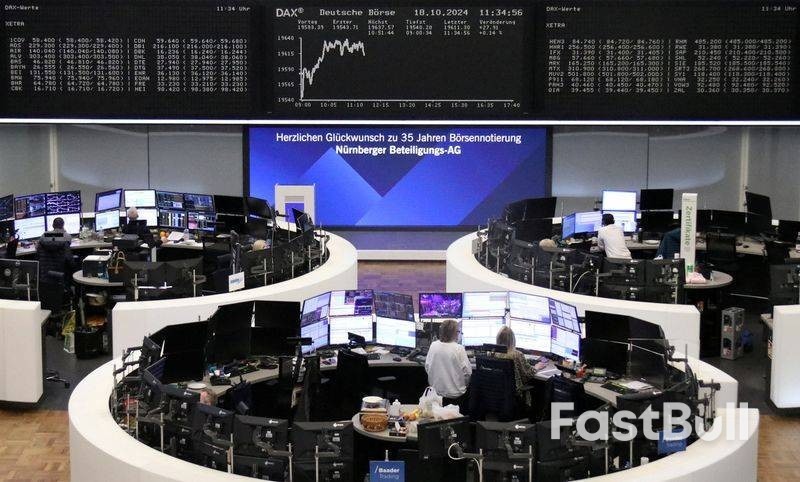
          German share price index DAX at the stock exchange in Frankfurt

          European shares climbed on Thursday after U.S. President Donald Trump signalled progress toward a first trade deal in his global tariff dispute, boosting market sentiment.
          The pan-European STOXX 600 index was up 0.3%, as of 0707 GMT. Other regional indexes were also trading in positive territory, except for Spain, which fell 0.4%.
          Trump posted on Truth Social that he will hold a news conference later in the day about a "major trade deal with representatives of a big, and highly respected, country".
          Citing three people familiar with the plans, the New York Times reported on Wednesday that the deal could be with Britain.
          This comes ahead of potential ice-breaker talks between Washington and Beijing trade tsars this weekend, that have firmed hopes for de-escalation in trade tensions between the world's two leading economies.
          Overnight, in a widely expected decision, the Federal Reserve held its interest rates steady, with the U.S. central bank flagging that the risks of higher inflation and unemployment had risen.
          Markets are also closely watching the Bank of England's policy meeting, due later in the day, with expectations for a quarter-point rate cut.
          Separately, Trump's administration plans to rescind and modify a Biden-era rule that curbed the export of sophisticated artificial-intelligence chips, said a spokeswoman for the U.S. Department of Commerce.
          Shares of A.P. Moller-Maersk fell 2.1% after the shipping group lowered its global container market forecast for this year due to increased economic and geopolitical uncertainty, although it left its profit outlook unchanged.
          Anheuser-Busch InBev rose 4.2% after the beer brewer reported a nearly 8% rise in first-quarter operating profit, beating analysts' estimate by more than double.

          Source: Yahoo Finance

          Risk Warnings and Disclaimers
          You understand and acknowledge that there is a high degree of risk involved in trading. Following any strategies or investment methods may lead to potential losses. The content on the site is provided by our contributors and analysts for information purposes only. You are solely responsible for determining whether any trading assets, securities, strategy, or any other product is suitable for investing based on your own investment objectives and financial situation.
          Add to Favorites
          Share

          German Exports and Industrial Output Rebound Sharply in March Ahead of U.S. Tariff Hike

          Gerik

          Economic

          Exports Rebound on Pre-Tariff U.S. Demand Surge

          German exports rose by 1.1% month-on-month in March, exceeding the 1.0% forecast in a Reuters poll. This improvement was largely driven by a front-loading of shipments to the United States, which is preparing to implement sweeping tariffs under President Donald Trump’s administration. As the U.S. remained Germany’s top trading partner in 2024, with €253 billion in bilateral goods trade, the anticipatory surge in demand from American buyers provided short-term support to German exporters.
          While the uptick is encouraging, analysts caution that it reflects exceptional one-off dynamics rather than a sustained recovery. As new tariffs take effect, German exporters may face significant headwinds in the months ahead, particularly in automotive and machinery sectors that are heavily exposed to U.S. markets.

          Industrial Production Surprises to the Upside

          Industrial output also saw an unexpected surge, growing 3.0% in March compared to February—far outpacing the 0.8% forecast by economists. The figures suggest a potential stabilization in Germany’s industrial sector, which has been plagued by weak global demand, energy price pressures, and supply chain disruptions over the past two years.
          The combination of rising exports and stronger output points to a temporary lift in momentum, especially as firms accelerate production to fulfill orders ahead of trade barriers. However, this front-loaded activity may mask underlying weakness, with production likely to soften once U.S.-bound shipments taper off under the new tariff regime.

          Trade Balance Strengthens Despite Import Weakness

          Germany’s trade surplus widened to €21.1 billion in March, up from €18.0 billion in February. This expansion was not only supported by stronger exports but also by a notable 1.4% drop in imports, reflecting softer domestic demand and possibly early signs of tightening financial conditions.
          Although a stronger trade surplus is typically viewed as a positive macro signal, the contraction in imports could be a warning sign of weaker internal consumption and investment, particularly if companies and consumers are growing more cautious in response to global uncertainty and rising costs.

          Outlook Clouded by Tariffs and External Pressures

          Looking ahead, the export-oriented German economy faces renewed challenges. The U.S. tariffs—set to be among the most severe in recent history—could significantly erode competitiveness for German goods. Furthermore, geopolitical volatility, tight monetary conditions in Europe, and weak Chinese demand add to the uncertainty.
          Still, March’s data suggests that German industry remains resilient and capable of responding to short-term external shocks. Whether this resilience can be maintained will depend heavily on how firms navigate the rapidly changing global trade environment in the second half of 2025.

          Source: Reuters

          To stay updated on all economic events of today, please check out our Economic calendar
          Risk Warnings and Disclaimers
          You understand and acknowledge that there is a high degree of risk involved in trading. Following any strategies or investment methods may lead to potential losses. The content on the site is provided by our contributors and analysts for information purposes only. You are solely responsible for determining whether any trading assets, securities, strategy, or any other product is suitable for investing based on your own investment objectives and financial situation.
          Add to Favorites
          Share
          FastBull
          Copyright © 2025 FastBull Ltd

          728 RM B 7/F GEE LOK IND BLDG NO 34 HUNG TO RD KWUN TONG KLN HONG KONG

          TelegramInstagramTwitterfacebooklinkedin
          App Store Google Play Google Play
          Products
          Charts

          Chats

          Q&A with Experts
          Screeners
          Economic Calendar
          Data
          Tools
          Membership
          Features
          Function
          Markets
          Copy Trading
          Latest Signals
          Contests
          News
          Analysis
          24/7
          Columns
          Education
          Company
          Careers
          About Us
          Contact Us
          Advertising
          Help Center
          Feedback
          User Agreement
          Privacy Policy
          Business

          White Label

          Data API

          Web Plug-ins

          Poster Maker

          Affiliate Program

          Risk Disclosure

          The risk of loss in trading financial instruments such as stocks, FX, commodities, futures, bonds, ETFs and crypto can be substantial. You may sustain a total loss of the funds that you deposit with your broker. Therefore, you should carefully consider whether such trading is suitable for you in light of your circumstances and financial resources.

          No decision to invest should be made without thoroughly conducting due diligence by yourself or consulting with your financial advisors. Our web content might not suit you since we don't know your financial conditions and investment needs. Our financial information might have latency or contain inaccuracy, so you should be fully responsible for any of your trading and investment decisions. The company will not be responsible for your capital loss.

          Without getting permission from the website, you are not allowed to copy the website's graphics, texts, or trademarks. Intellectual property rights in the content or data incorporated into this website belong to its providers and exchange merchants.

          Not Logged In

          Log in to access more features

          FastBull Membership

          Not yet

          Purchase

          Become a signal provider
          Help Center
          Customer Service
          Dark Mode
          Price Up/Down Colors

          Log In

          Sign Up

          Position
          Layout
          Fullscreen
          Default to Chart
          The chart page opens by default when you visit fastbull.com