Markets
News
Analysis
User
24/7
Economic Calendar
Education
Data
- Names
- Latest
- Prev


Signal Accounts for Members
All Signal Accounts
All Contests


Japan Tankan Small Manufacturing Outlook Index (Q4)A:--
F: --
P: --
Japan Tankan Large Non-Manufacturing Outlook Index (Q4)A:--
F: --
P: --
Japan Tankan Large Manufacturing Outlook Index (Q4)A:--
F: --
P: --
Japan Tankan Small Manufacturing Diffusion Index (Q4)A:--
F: --
P: --
Japan Tankan Large Manufacturing Diffusion Index (Q4)A:--
F: --
P: --
Japan Tankan Large-Enterprise Capital Expenditure YoY (Q4)A:--
F: --
P: --
U.K. Rightmove House Price Index YoY (Dec)A:--
F: --
P: --
China, Mainland Industrial Output YoY (YTD) (Nov)A:--
F: --
P: --
China, Mainland Urban Area Unemployment Rate (Nov)A:--
F: --
P: --
Saudi Arabia CPI YoY (Nov)A:--
F: --
P: --
Euro Zone Industrial Output YoY (Oct)A:--
F: --
P: --
Euro Zone Industrial Output MoM (Oct)A:--
F: --
P: --
Canada Existing Home Sales MoM (Nov)A:--
F: --
P: --
Canada National Economic Confidence IndexA:--
F: --
P: --
Canada New Housing Starts (Nov)A:--
F: --
U.S. NY Fed Manufacturing Employment Index (Dec)A:--
F: --
P: --
U.S. NY Fed Manufacturing Index (Dec)A:--
F: --
P: --
Canada Core CPI YoY (Nov)A:--
F: --
P: --
Canada Manufacturing Unfilled Orders MoM (Oct)A:--
F: --
P: --
U.S. NY Fed Manufacturing Prices Received Index (Dec)A:--
F: --
P: --
U.S. NY Fed Manufacturing New Orders Index (Dec)A:--
F: --
P: --
Canada Manufacturing New Orders MoM (Oct)A:--
F: --
P: --
Canada Core CPI MoM (Nov)A:--
F: --
P: --
Canada Trimmed CPI YoY (SA) (Nov)A:--
F: --
P: --
Canada Manufacturing Inventory MoM (Oct)A:--
F: --
P: --
Canada CPI YoY (Nov)A:--
F: --
P: --
Canada CPI MoM (Nov)A:--
F: --
P: --
Canada CPI YoY (SA) (Nov)A:--
F: --
P: --
Canada Core CPI MoM (SA) (Nov)A:--
F: --
P: --
Canada CPI MoM (SA) (Nov)A:--
F: --
P: --
Federal Reserve Board Governor Milan delivered a speech
U.S. NAHB Housing Market Index (Dec)--
F: --
P: --
Australia Composite PMI Prelim (Dec)--
F: --
P: --
Australia Services PMI Prelim (Dec)--
F: --
P: --
Australia Manufacturing PMI Prelim (Dec)--
F: --
P: --
Japan Manufacturing PMI Prelim (SA) (Dec)--
F: --
P: --
U.K. 3-Month ILO Employment Change (Oct)--
F: --
P: --
U.K. Unemployment Claimant Count (Nov)--
F: --
P: --
U.K. Unemployment Rate (Nov)--
F: --
P: --
U.K. 3-Month ILO Unemployment Rate (Oct)--
F: --
P: --
U.K. Average Weekly Earnings (3-Month Average, Including Bonuses) YoY (Oct)--
F: --
P: --
U.K. Average Weekly Earnings (3-Month Average, Excluding Bonuses) YoY (Oct)--
F: --
P: --
France Services PMI Prelim (Dec)--
F: --
P: --
France Composite PMI Prelim (SA) (Dec)--
F: --
P: --
France Manufacturing PMI Prelim (Dec)--
F: --
P: --
Germany Services PMI Prelim (SA) (Dec)--
F: --
P: --
Germany Manufacturing PMI Prelim (SA) (Dec)--
F: --
P: --
Germany Composite PMI Prelim (SA) (Dec)--
F: --
P: --
Euro Zone Composite PMI Prelim (SA) (Dec)--
F: --
P: --
Euro Zone Services PMI Prelim (SA) (Dec)--
F: --
P: --
Euro Zone Manufacturing PMI Prelim (SA) (Dec)--
F: --
P: --
U.K. Services PMI Prelim (Dec)--
F: --
P: --
U.K. Manufacturing PMI Prelim (Dec)--
F: --
P: --
U.K. Composite PMI Prelim (Dec)--
F: --
P: --
Euro Zone ZEW Economic Sentiment Index (Dec)--
F: --
P: --
Germany ZEW Current Conditions Index (Dec)--
F: --
P: --
Germany ZEW Economic Sentiment Index (Dec)--
F: --
P: --
Euro Zone Trade Balance (Not SA) (Oct)--
F: --
P: --
Euro Zone ZEW Current Conditions Index (Dec)--
F: --
P: --
Euro Zone Trade Balance (SA) (Oct)--
F: --
P: --
U.S. Retail Sales MoM (Excl. Automobile) (SA) (Oct)--
F: --
P: --


No matching data
Latest Views
Latest Views
Trending Topics
Top Columnists
Latest Update
White Label
Data API
Web Plug-ins
Affiliate Program
View All

No data
President Donald Trump’s additional 25 percent tariff on India became effective at midnight on Aug. 27, bringing the total rate to 50 percent on many imports entering the United States.
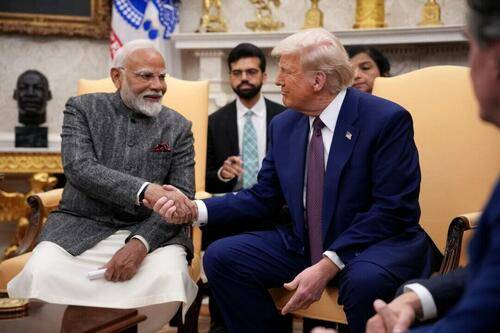

The president, in his global tariffs announcement in April, introduced a 26 percent levy on Indian goods, aimed at pressuring the Indian government to lower its trade barriers. Months later, the rate was revised slightly lower to 25 percent.
In an Aug. 6 executive order, Trump implemented an additional 25 percent tariff on India, saying its government is “currently directly or indirectly importing Russian Federation oil.”
Since Russia invaded Ukraine in 2022, India has been one of Russia’s most significant trading partners, with annual bilateral trade reaching almost $69 billion.
Energy has been the primary product uniting the two countries for the past few years.
With crude oil imports exceeding $52 billion last year, India accounts for an estimated one-third of Russia’s petroleum exports, fueled by a sanction-driven discount.
In December 2024, the Group of Seven (G7) introduced a price cap of $60 per barrel on Russian Urals crude to reduce the country’s oil revenues. Because global oil prices have declined—a barrel of U.S. West Texas Intermediate crude oil is trading at roughly $64 per barrel—the discount has become minimal.
“India swapped high-shipping-cost crude from the US, South America, and Africa with cheaper Russian crude,” energy economist Anas Alhajji said in a note for Energy Outlook Advisors. “About 932 kb/d [1,000 barrels per day] of costlier oil or oil redirected to Kuwait and Oman’s refineries was replaced by Russian imports. Sanctions on Russian crude shaped trade directions and India’s purchasing patterns.”
U.S. officials say that India’s continued transactions are funding Russia’s war effort in Ukraine.
In an Aug. 4 Truth Social post, Trump said India has been exploiting discounted Russian crude to sell it “on the open market for big profits.”
“They don’t care how many people in Ukraine are being killed by the Russian War Machine,” he said.
India’s government has dismissed these criticisms, stating in a response to The Epoch Times that these purchases are aimed at providing its nearly 1.5 billion population with affordable energy.
“In this background, the targeting of India is unjustified and unreasonable,” a spokesperson for the Indian Foreign Ministry said.
White House top trade adviser Peter Navarro echoed the president’s sentiment, telling reporters this past week that India has been “profiteering” on the war in Ukraine.
“India doesn’t appear to want to recognize its role in the bloodshed,” Navarro said on Aug. 21.
He also said India’s current trade policies are detrimental to the United States.
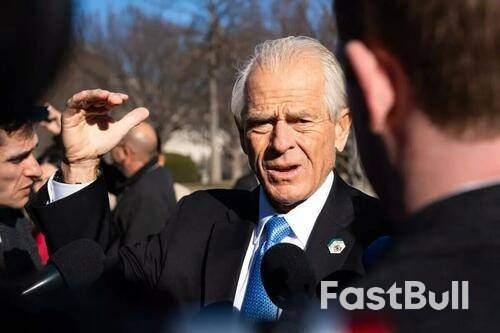
“We run a massive trade deficit with them. So that hurts American workers, hurts American businesses,” Navarro said.
“Then they use the money that they get from us when they sell us stuff to buy Russian oil, which is then processed by refiners, and they make a bunch of money there. But then the Russians use the money to build more arms and kill Ukrainians, and so American taxpayers have to provide more aid, military-style, to the Ukrainians.”
According to the U.S. Trade Representative’s Office, the U.S. goods trade deficit with India was nearly $46 billion in 2024, representing a 5.9 percent increase from the previous year.
New tariffs are expected to disrupt the more than $200 billion in annual U.S.–India trade. A modest drop in imports of Indian goods was observed in the latest data.
In June, according to the Bureau of Economic Analysis, imports tumbled 3 percent from the previous month but were up 29 percent year-over-year.
New data from Descartes Systems Group indicate a significant rise in U.S. container imports, with volumes increasing by more than 18 percent in July compared to June. Notably, the group’s August Global Shipping Report highlights a nearly 14 percent surge in shipments from India—underscoring companies’ preparations for the White House’s tariffs.
“Trade uncertainty remains high, however, as U.S. importers evaluate their supply chains in the face of the August 1 implementation of reciprocal duties on over 60 countries, the August 7 start of India-specific tariffs and the universal copper tariff, and the October 15 expiration of the U.S.–China tariff truce,” Jackson Wood, director of industry strategy at Descartes, said in a statement.
The state of trade negotiations remains unclear after a planned visit by a U.S. trade delegation to New Delhi this week was canceled.
At a recent Economic Times forum in New Delhi, Indian Foreign Minister Subrahmanyam Jaishankar said that discussions are continuing, but there are policies that his government wishes to defend, particularly for farmers and small businesses.
“We have some redlines in the negotiations, to be maintained and defended,” he said. “It is our right to make decisions in our ‘national interest.’”
ING economists warn that India’s growth prospects are uncertain amid potential trade strife.
The consensus forecast suggests that India’s economy expanded by 6.6 percent in the second quarter, down from the 7.4 percent growth rate in the first three months of 2025.
“High-frequency indicators point to a moderation in both private consumption and investment. Additionally, higher-than-expected tariffs and rising uncertainty around India’s trade policy with the US are emerging as downside risks to the 2025 growth outlook,” the ING economists said in a note.
Policymakers are using the current trade situation with the United States as a measure to employ domestic reforms, such as changes to the goods and services tax. The government might also be hedging its geopolitical bets as leaders attempt to enhance relations with China.
Indian Prime Minister Narendra Modi is scheduled to meet with Chinese leader Xi Jinping later this week on the sidelines of the Shanghai Cooperation Organisation. This will be Modi’s first visit to China in seven years.
According to Joe Maher, assistant economist at Capital Economics, a 50 percent tariff “would be large enough to have a material impact on [gross domestic product] growth” for India.
“If it sticks, the resulting drop in exports to the US could reduce GDP growth by 0.8%-pts both this year and next,” Maher said in a note.
Microsoft asked police to remove people who improperly entered a building at its headquarters in protest of the Israeli military's alleged use of the company's software as part of the invasion of Gaza.On Tuesday, current and former Microsoft employees affiliated with the group No Azure for Apartheid started protesting inside a building on Microsoft's campus in Redmond, Washington, and gained entry into the office of Brad Smith, the company's president. The protesters delivered a court summons notice at his office, according to a statement from the group.
"Obviously, when seven folks do as they did today — storm a building, occupy an office, block other people out of the office, plant listening devices, even in crude form, in the form of telephones, cell phones hidden under couches and behind books — that's not OK," Smith told reporters during a briefing.
"When they're asked to leave and they refuse, that's not OK. That's why for those seven folks, the Redmond police literally had to take them out of the building."Smith said that out of the seven people who entered his office, two were employees.While the company doesn't retaliate against employees who express their views, Smith said, it's different if they make threats. Microsoft will look at whether to discipline the employees who participated in the protest, Smith said.
Once inside Microsoft's building 34, the No Azure For Apartheid protesters demanded that the company cut its ties with Israel and ask for an end to the country's alleged genocide.Tech's megacap companies are doing more work with defense agencies, particularly as demand increases for advanced artificial intelligence technologies. Many of those activities were already controversial, but the issue has gotten more intense as Israel has escalated its military offensive in Gaza.
Last year Google fired 28 employees after some trespassed at the company's facilities. Some employees gained access to the office of Thomas Kurian, CEO of Google's cloud unit, which had a contract with Israel's government.No Azure for Apartheid has held a series of actions this year, including at Microsoft's Build developer conference and at a celebration of the company's 50th anniversary. A Microsoft director reached out to the Federal Bureau of Investigation as the protests continued, Bloomberg reported earlier on Tuesday.
Last week, No Azure For Apartheid mounted protests around the company's campus, leading to 20 arrests in one day. Of the 20, 16 have never worked at Microsoft, Smith said.The Guardian reported earlier this month that Israel's military used Microsoft's Azure cloud infrastructure to store Palestinians' phone calls, leading the company to authorize a third-party investigation into whether Israel has drawn on the company's technology for surveillance.
"I think the responsible step from us is clear in this kind of situation: to go investigate and get to the truth of how our services are being used," Smith said on Tuesday.Most of Microsoft's work with the Israeli Defense Force involves cybersecurity for Israel, he said. He added that the company cares "deeply" about the people in Israel who died from the terrorist attack by Hamas on Oct. 7, 2023, and the hostages who were taken, as well as the tens of thousands of civilians in Gaza who have died since from the war.
Microsoft intends to provide technology in an ethical way, Smith said.
The US 30 index updated its all-time high, but the trend remains unstable. The US 30 forecast for today is positive.
The published services PMI for July 2025 came in at 55.4 points, above the forecast of 54.2 but slightly lower than the previous reading of 55.7. This figure shows that the services sector continues to demonstrate solid growth, remaining well above the key 50-point threshold that separates expansion from contraction. As the services sector accounts for more than two-thirds of US GDP, its steady performance indicates the economy’s overall positive momentum.
This supports the US 30 index, as investors see confirmation that corporate earnings in the services sector have a strong basis for further growth. However, PMI staying at elevated levels may also raise concerns about persistent inflationary pressure in services, which could prevent the Fed from cutting interest rates in the near future.


The US 30 index is again in an uptrend. The resistance level has formed at 45,790.0, with the support level at 44,590.0. Volatility remains elevated for the US 30. The uptrend is rather weak, meaning it could shift into a downtrend. The upside potential is limited in the short term.
The US 30 price forecast considers the following scenarios:


PMI data is perceived by the market as generally positive for equities and the US 30 in the short term, but investors remain attentive to the Fed’s policy stance and its response to inflation dynamics. The financial sector benefits from stable economic activity that supports lending and investment processes. Tech and communications firms also gain indirectly, as services growth increases demand for digital solutions and online platforms. The next upside target for the index could be 46,595.0.
In the wake of Ukraine attacking yet again the Druzbha or “Friendship” pipeline on Aug. 22, Ukrainian President Volodymyr Zelensky has come out with a not-so-subtle warning of his own.

According to the Ukrainian Interfax, the Ukrainian president told press on Sunday that Ukraine has always supported friendly relations with Hungary, but that “friendship” really depends on the position of the Hungarian government.
Zelensky did not specify if he was referring to relations between the two countries or “friendship” as in the Friendship pipeline, but Ukrainian media state he was talking about the latter.
Hungary’s foreign minister, Péter Szijjártó, posted a clip of Zelensky’s threats on X, writing:
“Zelensky used Ukraine’s national holiday to threaten Hungary. We firmly reject the Ukrainian president’s intimidation.”
Kyiv would then be clearly threatening Budapest that they will continue sabotaging the oil pipeline if the Hungarian government does not support Ukraine in its efforts against Putin, and potentially change its stance on Ukraine’s EU membership, which the Hungarian government opposes.
The Druzbha carries vital energy supplies to both Hungary and Slovakia, and Hungary’s foreign minister, Szijjártó, has repeatedly warned Kyiv not to strike again.
After the latest damage, Hungary expects repairs to take a few days.
Heading into the cold winter months, this issue is sure to escalate, and U.S. President Trump has already expressed his displeasure, saying he was “very angry” about it.
Hungary is also a major supplier of electricity to Ukraine.
White Label
Data API
Web Plug-ins
Poster Maker
Affiliate Program
The risk of loss in trading financial instruments such as stocks, FX, commodities, futures, bonds, ETFs and crypto can be substantial. You may sustain a total loss of the funds that you deposit with your broker. Therefore, you should carefully consider whether such trading is suitable for you in light of your circumstances and financial resources.
No decision to invest should be made without thoroughly conducting due diligence by yourself or consulting with your financial advisors. Our web content might not suit you since we don't know your financial conditions and investment needs. Our financial information might have latency or contain inaccuracy, so you should be fully responsible for any of your trading and investment decisions. The company will not be responsible for your capital loss.
Without getting permission from the website, you are not allowed to copy the website's graphics, texts, or trademarks. Intellectual property rights in the content or data incorporated into this website belong to its providers and exchange merchants.
Not Logged In
Log in to access more features

FastBull Membership
Not yet
Purchase
Log In
Sign Up