
Markets
News
Analysis
User
24/7
Economic Calendar
Education
Data
- Names
- Latest
- Prev


Signal Accounts for Members
All Signal Accounts
All Contests


U.K. Trade Balance Non-EU (SA) (Oct)A:--
F: --
P: --
U.K. Trade Balance (Oct)A:--
F: --
P: --
U.K. Services Index MoMA:--
F: --
P: --
U.K. Construction Output MoM (SA) (Oct)A:--
F: --
P: --
U.K. Industrial Output YoY (Oct)A:--
F: --
P: --
U.K. Trade Balance (SA) (Oct)A:--
F: --
P: --
U.K. Trade Balance EU (SA) (Oct)A:--
F: --
P: --
U.K. Manufacturing Output YoY (Oct)A:--
F: --
P: --
U.K. GDP MoM (Oct)A:--
F: --
P: --
U.K. GDP YoY (SA) (Oct)A:--
F: --
P: --
U.K. Industrial Output MoM (Oct)A:--
F: --
P: --
U.K. Construction Output YoY (Oct)A:--
F: --
P: --
France HICP Final MoM (Nov)A:--
F: --
P: --
China, Mainland Outstanding Loans Growth YoY (Nov)A:--
F: --
P: --
China, Mainland M2 Money Supply YoY (Nov)A:--
F: --
P: --
China, Mainland M0 Money Supply YoY (Nov)A:--
F: --
P: --
China, Mainland M1 Money Supply YoY (Nov)A:--
F: --
P: --
India CPI YoY (Nov)A:--
F: --
P: --
India Deposit Gowth YoYA:--
F: --
P: --
Brazil Services Growth YoY (Oct)A:--
F: --
P: --
Mexico Industrial Output YoY (Oct)A:--
F: --
P: --
Russia Trade Balance (Oct)A:--
F: --
P: --
Philadelphia Fed President Henry Paulson delivers a speech
Canada Building Permits MoM (SA) (Oct)A:--
F: --
P: --
Canada Wholesale Sales YoY (Oct)A:--
F: --
P: --
Canada Wholesale Inventory MoM (Oct)A:--
F: --
P: --
Canada Wholesale Inventory YoY (Oct)A:--
F: --
P: --
Canada Wholesale Sales MoM (SA) (Oct)A:--
F: --
P: --
Germany Current Account (Not SA) (Oct)A:--
F: --
P: --
U.S. Weekly Total Rig CountA:--
F: --
P: --
U.S. Weekly Total Oil Rig CountA:--
F: --
P: --
Japan Tankan Large Non-Manufacturing Diffusion Index (Q4)--
F: --
P: --
Japan Tankan Small Manufacturing Outlook Index (Q4)--
F: --
P: --
Japan Tankan Large Non-Manufacturing Outlook Index (Q4)--
F: --
P: --
Japan Tankan Large Manufacturing Outlook Index (Q4)--
F: --
P: --
Japan Tankan Small Manufacturing Diffusion Index (Q4)--
F: --
P: --
Japan Tankan Large Manufacturing Diffusion Index (Q4)--
F: --
P: --
Japan Tankan Large-Enterprise Capital Expenditure YoY (Q4)--
F: --
P: --
U.K. Rightmove House Price Index YoY (Dec)--
F: --
P: --
China, Mainland Industrial Output YoY (YTD) (Nov)--
F: --
P: --
China, Mainland Urban Area Unemployment Rate (Nov)--
F: --
P: --
Saudi Arabia CPI YoY (Nov)--
F: --
P: --
Euro Zone Industrial Output YoY (Oct)--
F: --
P: --
Euro Zone Industrial Output MoM (Oct)--
F: --
P: --
Canada Existing Home Sales MoM (Nov)--
F: --
P: --
Euro Zone Total Reserve Assets (Nov)--
F: --
P: --
U.K. Inflation Rate Expectations--
F: --
P: --
Canada National Economic Confidence Index--
F: --
P: --
Canada New Housing Starts (Nov)--
F: --
P: --
U.S. NY Fed Manufacturing Employment Index (Dec)--
F: --
P: --
U.S. NY Fed Manufacturing Index (Dec)--
F: --
P: --
Canada Core CPI YoY (Nov)--
F: --
P: --
Canada Manufacturing Unfilled Orders MoM (Oct)--
F: --
P: --
Canada Manufacturing New Orders MoM (Oct)--
F: --
P: --
Canada Core CPI MoM (Nov)--
F: --
P: --
Canada Manufacturing Inventory MoM (Oct)--
F: --
P: --
Canada CPI YoY (Nov)--
F: --
P: --
Canada CPI MoM (Nov)--
F: --
P: --
Canada CPI YoY (SA) (Nov)--
F: --
P: --
Canada Core CPI MoM (SA) (Nov)--
F: --
P: --


No matching data
Latest Views
Latest Views
Trending Topics
Top Columnists
Latest Update
White Label
Data API
Web Plug-ins
Affiliate Program
View All

No data
The president also said that he would “stay committed” to ending the war in Ukraine...
President Donald Trump on May 8 urged Russia and Ukraine to enter into a 30-day unconditional cease-fire while U.S.-led peace negotiations are ongoing.
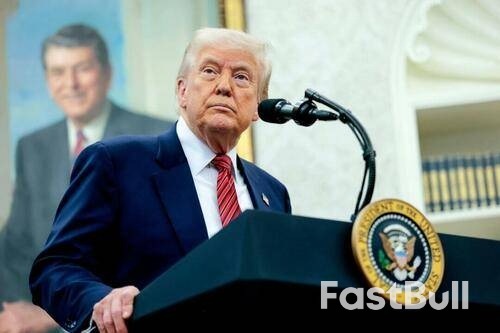
Trump stated that the temporary cease-fire must “ultimately build toward a peace agreement” between the two nations and warned that the United States would impose sanctions if the cease-fire wasn’t respected.
“Talks with Russia/Ukraine continue,” he stated in a Truth Social post.
“Hopefully, an acceptable ceasefire will be observed, and both countries will be held accountable for respecting the sanctity of these direct negotiations.”
Trump also said that he would “stay committed” to ending the war in Ukraine, despite his administration officials having previously indicated that the United States may abandon mediation efforts if there are no clear signs of progress toward a peace agreement.
“It can all be done very quickly, and I will be available on a moment’s notice if my services are needed,” the president stated.
“Thousands of young soldiers are dying on a weekly basis, and everybody should want it to STOP. I do, and the United States of America does, also.”
Ukrainian President Volodymyr Zelenskyy told Trump during a May 8 phone call that Ukraine is ready to enter into a temporary cease-fire with Russia and is willing to “engage in talks in any format.”
However, Zelenskyy said that Russia must first demonstrate its readiness to end the war, “starting with a full, unconditional ceasefire.” This would involve ending missile and drone strikes and halting offensive assaults along the front lines.
“Ukraine is ready for a full ceasefire starting right now, from this very moment—a 30-day silence. But it must be real,” he said in a video address.
“Thirty days that could become the beginning of years of peace.”
On April 30, the Kremlin said that Russian President Vladimir Putin remains open to a cease-fire and eventual peaceful settlement to the conflict, but there are still issues need to be resolved.
Secretary of State Marco Rubio has previously warned that the U.S. government may abandon efforts to mediate an end to the three-year-long war if Russia and Ukraine fail to make a peace agreement.
“I think they’re closer in general than they’ve been any time in the last three years but it’s still not there,” Rubio said in an interview with NBC News on April 27.
Rubio said that the United States may opt to take measures against those resisting efforts to end the war, but emphasized that it would “prefer not to get to that stage yet because we think it closes the door to diplomacy.”
The war in Ukraine has been ongoing since Putin sent thousands of troops for a full invasion in February 2022. Putin declared an “Easter truce” with Ukraine on April 19, directing his forces to halt all military operations until midnight of April 20.
Both sides later accused each other of violating the truce. The Russian military eventually resumed the “special military operation” after the truce ended.
On April 28, Putin unilaterally declared a three-day ceasefire from May 8–May 10 to mark the 80th anniversary of victory over Nazi Germany in World War II. Zelenskyy later dismissed the move as yet “another attempt at manipulation” by Russia.
“The cease-fire should not be just for a few days, only to return to killing afterward,” Zelenskyy said in an April 28 address.
“It must be immediate, full, and unconditional, for at least 30 days, to ensure it is secure and guaranteed. This is the foundation that could lead to real diplomacy.”
Ukrainian Foreign Minister Andriy Sybiha alleged that Russia violated the three-day cease-fire 734 times between midnight and midday on May 8, including 464 attacks involving heavy weapons and 176 drone strikes.
The Russian Defense Ministry said that Ukraine, in turn, had carried out 488 attacks on Russian targets and twice tried to break through the border in the Kursk region.
Thursday’s announcement of their trade framework in the Oval Office shows Trump is willing to keen progress even without a final accord and that can buy political credit with the White House. There’s also evidence that American levies can be talked down, but that may not be much more of a template, according to analysts.
“If you thought you were going to have to have a real deal done in 90 days, you’ve now at least seen from the UK that that need not be true,” said Deborah Elms, head of trade policy at the Hinrich Foundation in Singapore. “You can have a sketch of an idea of a plan.”
The framework Trump greeted as a “breakthrough” will, he says, fast-track US items through UK customs and reduce barriers on “billions of dollars” of other exports. The British government meanwhile says tariffs on UK cars will drop to 10% and those on metals to zero. Final details need to be negotiated over coming weeks.
That extended cliffhanger requires caution on making conclusions. Trump’s insistence on preserving some proposed levies, his assent to specific carveouts, and the lack of any requirements regarding China are among highlights analysts point to.
But the US surplus with the UK, as well as their longstanding ties may mean this skirmish in the president’s trade war isn’t much of a guide for exporters such as Japan or the European Union engaging in negotiations of their own.
“You can’t be optimistic just because of the US-UK announcement,” said Hiroshi Namioka, chief strategist at T&D Asset Management in Tokyo. “The US doesn’t have a trade deficit with UK, so reaching a deal was easier.”
Asian countries such as Japan, Vietnam and South Korea that have large trade surpluses with the US have moved quickly to initiate talks, with few signs of progress.
Speaking shortly after the deal announcement, Commerce Secretary Howard Lutnick said negotiations with South Korea and Japan are taking “an enormous amount of time.” He added that India could be among the next countries to reach an agreement, while cautioning that work still needs to be done.
The EU is also making limited headway in its own engagement with the administration. That’s partly because of its sheer size, according to Sam Lowe, partner and head of international trade practice at Flint Global in London.
“Whereas the option of retaliation was not really available to the UK due to its much smaller economy, the EU can inflict some damage on the US via tariffs and other measures,” he said. “This potentially gives it more leverage, but also means any deal will probably take longer.”
One component of the UK accord that will be analyzed closely in auto-making hubs was the cut in tariffs on British cars to 10% from 27.5% for 100,000 vehicles per year.
Auto exports from Japan and South Korea to the US are each more than 10 times larger than those from the UK, and account for around one-third of their sales to America.
While the deal offers some encouragement that 25% levies on Japanese and Korean cars could be lowered, Tokyo insists on a complete removal.
“We’ll continue to seek a rethink of the string of tariff measures from the US,” Japan’s chief trade negotiator, Ryosei Akazawa, said on Friday.
Similarly, the UK agreement is unlikely to serve as a viable template in South Korea’s talks because of the importance of cars there too, said Hyosung Kwon of Bloomberg Economics.
“To secure lower US tariffs on autos, South Korea may need to make concessions such as increasing imports of US liquefied natural gas and easing non-tariff barriers on US agricultural products,” he said.
One way of looking at the US-UK agreement is that the 10% baseline levy applied to all countries by the US is largely fixed, some trade analysts said. The UK said it will keep trying to negotiate over that so-called “reciprocal tariff.”
For other countries including Australia and Singapore, it may be the case that there’s no real point in discussing going below the 10% level right now, said Elms at the Hinrich Foundation.
In one exception, the UK was able to get US tariffs on steel and aluminum lowered to zero from 25% as part of what the US called “a new trading union.” It was not immediately clear how this agreement might affect US tariffs on the metals imposed on other countries.
The framework didn’t offer much insight into non-tariff barriers to trade including regulations and subsidies that US officials have highlighted. The UK said it wouldn’t loosen safety checks on food imports despite removing levies on beef and other agricultural products.
Some analysts also noted the lack of any reference to China in the US-UK framework despite indications given by US officials that they want help in efforts to pressure Beijing.
US and Chinese officials are set to meet in Switzerland this weekend for their first round of negotiations.
White Label
Data API
Web Plug-ins
Poster Maker
Affiliate Program
The risk of loss in trading financial instruments such as stocks, FX, commodities, futures, bonds, ETFs and crypto can be substantial. You may sustain a total loss of the funds that you deposit with your broker. Therefore, you should carefully consider whether such trading is suitable for you in light of your circumstances and financial resources.
No decision to invest should be made without thoroughly conducting due diligence by yourself or consulting with your financial advisors. Our web content might not suit you since we don't know your financial conditions and investment needs. Our financial information might have latency or contain inaccuracy, so you should be fully responsible for any of your trading and investment decisions. The company will not be responsible for your capital loss.
Without getting permission from the website, you are not allowed to copy the website's graphics, texts, or trademarks. Intellectual property rights in the content or data incorporated into this website belong to its providers and exchange merchants.
Not Logged In
Log in to access more features

FastBull Membership
Not yet
Purchase
Log In
Sign Up