• Trade
  • Markets
  • Copy
  • Contests
  • News
  • 24/7
  • Calendar
  • Q&A
  • Chats
Trending
Screeners
SYMBOL
LAST
BID
ASK
HIGH
LOW
NET CHG.
%CHG.
SPREAD
SPX
S&P 500 Index
6827.42
6827.42
6827.42
6899.86
6801.80
-73.58
-1.07%
--
DJI
Dow Jones Industrial Average
48458.04
48458.04
48458.04
48886.86
48334.10
-245.98
-0.51%
--
IXIC
NASDAQ Composite Index
23195.16
23195.16
23195.16
23554.89
23094.51
-398.69
-1.69%
--
USDX
US Dollar Index
97.950
98.030
97.950
98.500
97.950
-0.370
-0.38%
--
EURUSD
Euro / US Dollar
1.17394
1.17409
1.17394
1.17496
1.17192
+0.00011
+ 0.01%
--
GBPUSD
Pound Sterling / US Dollar
1.33707
1.33732
1.33707
1.33997
1.33419
-0.00148
-0.11%
--
XAUUSD
Gold / US Dollar
4299.39
4299.39
4299.39
4353.41
4257.10
+20.10
+ 0.47%
--
WTI
Light Sweet Crude Oil
57.233
57.485
57.233
58.011
56.969
-0.408
-0.71%
--

Community Accounts

Signal Accounts
--
Profit Accounts
--
Loss Accounts
--
View More

Become a signal provider

Sell trading signals to earn additional income

View More

Guide to Copy Trading

Get started with ease and confidence

View More

Signal Accounts for Members

All Signal Accounts

Best Return
  • Best Return
  • Best P/L
  • Best MDD
Past 1W
  • Past 1W
  • Past 1M
  • Past 1Y

All Contests

  • All
  • Trump Updates
  • Recommend
  • Stocks
  • Cryptocurrencies
  • Central Banks
  • Featured News
Top News Only
Share

Ukraine Says It Received 114 Prisoners From Belarus

Share

USA Embassy In Lithuania: Maria Kalesnikava Is Not Going To Vilnius

Share

USA Embassy In Lithuania: Other Prisoners Are Being Sent From Belarus To Ukraine

Share

Ukraine President Zelenskiy: Five Ukrainians Released By Belarus In US-Brokered Deal

Share

USA Vilnius Embassy: USA Stands Ready For "Additional Engagement With Belarus That Advances USA Interests"

Share

USA Vilnius Embassy: Belarus, USA, Other Citizens Among The Prisoners Released Into Lithuania

Share

USA Vilnius Embassy: USA Will Continue Diplomatic Efforts To Free The Remaining Political Prisoners In Belarus

Share

USA Vilnius Embassy: Belarus Releases 123 Prisoners Following Meeting Of President Trump's Envoy Coale And Belarus President Lukashenko

Share

USA Vilnius Embassy: Masatoshi Nakanishi, Aliaksandr Syrytsa Are Among The Prisoners Released By Belarus

Share

USA Vilnius Embassy: Maria Kalesnikava And Viktor Babaryka Are Among The Prisoners Released By Belarus

Share

USA Vilnius Embassy: Nobel Peace Prize Laureate Ales Bialiatski Is Among The Prisoners Released By Belarus

Share

Belarusian Presidential Administration Telegram Channel: Lukashenko Has Pardoned 123 Prisoners As Part Of Deal With US

Share

Two Local Syrian Officials: Joint US-Syrian Military Patrol In Central Syria Came Under Fire From Unknown Assailants

Share

Israeli Military Says It Targeted 'Key Hamas Terrorist' In Gaza City

Share

Rwanda's Actions In Eastern Drc Are A Clear Violation Of Washington Accords Signed By President Trump - Secretary Of State Rubio

Share

Israeli Military Issues Evacuation Warning In Southern Lebanon Village Ahead Of Strike - Spokesperson On X

Share

Belarusian State Media Cites US Envoy Coale As Saying He Discussed Ukraine And Venezuela With Lukashenko

Share

Belarusian State Media Cites US Envoy Coale As Saying That US Removes Sanctions On Belarusian Potassium

Share

Thai Prime Minister: No Ceasefire Agreement With Cambodia

Share

US, Ukraine To Discuss Ceasefire In Berlin Ahead Of European Summit

TIME
ACT
FCST
PREV
U.K. Trade Balance Non-EU (SA) (Oct)

A:--

F: --

P: --

U.K. Trade Balance (Oct)

A:--

F: --

P: --

U.K. Services Index MoM

A:--

F: --

P: --

U.K. Construction Output MoM (SA) (Oct)

A:--

F: --

P: --

U.K. Industrial Output YoY (Oct)

A:--

F: --

P: --

U.K. Trade Balance (SA) (Oct)

A:--

F: --

P: --

U.K. Trade Balance EU (SA) (Oct)

A:--

F: --

P: --

U.K. Manufacturing Output YoY (Oct)

A:--

F: --

P: --

U.K. GDP MoM (Oct)

A:--

F: --

P: --

U.K. GDP YoY (SA) (Oct)

A:--

F: --

P: --

U.K. Industrial Output MoM (Oct)

A:--

F: --

P: --

U.K. Construction Output YoY (Oct)

A:--

F: --

P: --

France HICP Final MoM (Nov)

A:--

F: --

P: --

China, Mainland Outstanding Loans Growth YoY (Nov)

A:--

F: --

P: --

China, Mainland M2 Money Supply YoY (Nov)

A:--

F: --

P: --

China, Mainland M0 Money Supply YoY (Nov)

A:--

F: --

P: --

China, Mainland M1 Money Supply YoY (Nov)

A:--

F: --

P: --

India CPI YoY (Nov)

A:--

F: --

P: --

India Deposit Gowth YoY

A:--

F: --

P: --

Brazil Services Growth YoY (Oct)

A:--

F: --

P: --

Mexico Industrial Output YoY (Oct)

A:--

F: --

P: --

Russia Trade Balance (Oct)

A:--

F: --

P: --

Philadelphia Fed President Henry Paulson delivers a speech
Canada Building Permits MoM (SA) (Oct)

A:--

F: --

P: --

Canada Wholesale Sales YoY (Oct)

A:--

F: --

P: --

Canada Wholesale Inventory MoM (Oct)

A:--

F: --

P: --

Canada Wholesale Inventory YoY (Oct)

A:--

F: --

P: --

Canada Wholesale Sales MoM (SA) (Oct)

A:--

F: --

P: --

Germany Current Account (Not SA) (Oct)

A:--

F: --

P: --

U.S. Weekly Total Rig Count

A:--

F: --

P: --

U.S. Weekly Total Oil Rig Count

A:--

F: --

P: --

Japan Tankan Large Non-Manufacturing Diffusion Index (Q4)

--

F: --

P: --

Japan Tankan Small Manufacturing Outlook Index (Q4)

--

F: --

P: --

Japan Tankan Large Non-Manufacturing Outlook Index (Q4)

--

F: --

P: --

Japan Tankan Large Manufacturing Outlook Index (Q4)

--

F: --

P: --

Japan Tankan Small Manufacturing Diffusion Index (Q4)

--

F: --

P: --

Japan Tankan Large Manufacturing Diffusion Index (Q4)

--

F: --

P: --

Japan Tankan Large-Enterprise Capital Expenditure YoY (Q4)

--

F: --

P: --

U.K. Rightmove House Price Index YoY (Dec)

--

F: --

P: --

China, Mainland Industrial Output YoY (YTD) (Nov)

--

F: --

P: --

China, Mainland Urban Area Unemployment Rate (Nov)

--

F: --

P: --

Saudi Arabia CPI YoY (Nov)

--

F: --

P: --

Euro Zone Industrial Output YoY (Oct)

--

F: --

P: --

Euro Zone Industrial Output MoM (Oct)

--

F: --

P: --

Canada Existing Home Sales MoM (Nov)

--

F: --

P: --

Euro Zone Total Reserve Assets (Nov)

--

F: --

P: --

U.K. Inflation Rate Expectations

--

F: --

P: --

Canada National Economic Confidence Index

--

F: --

P: --

Canada New Housing Starts (Nov)

--

F: --

P: --

U.S. NY Fed Manufacturing Employment Index (Dec)

--

F: --

P: --

U.S. NY Fed Manufacturing Index (Dec)

--

F: --

P: --

Canada Core CPI YoY (Nov)

--

F: --

P: --

Canada Manufacturing Unfilled Orders MoM (Oct)

--

F: --

P: --

Canada Manufacturing New Orders MoM (Oct)

--

F: --

P: --

Canada Core CPI MoM (Nov)

--

F: --

P: --

Canada Manufacturing Inventory MoM (Oct)

--

F: --

P: --

Canada CPI YoY (Nov)

--

F: --

P: --

Canada CPI MoM (Nov)

--

F: --

P: --

Canada CPI YoY (SA) (Nov)

--

F: --

P: --

Canada Core CPI MoM (SA) (Nov)

--

F: --

P: --

Q&A with Experts
    • All
    • Chatrooms
    • Groups
    • Friends
    Connecting
    .
    .
    .
    Type here...
    Add Symbol or Code

      No matching data

      All
      Trump Updates
      Recommend
      Stocks
      Cryptocurrencies
      Central Banks
      Featured News
      • All
      • Russia-Ukraine Conflict
      • Middle East Flashpoint
      • All
      • Russia-Ukraine Conflict
      • Middle East Flashpoint
      Search
      Products

      Charts Free Forever

      Chats Q&A with Experts
      Screeners Economic Calendar Data Tools
      Membership Features
      Data Warehouse Market Trends Institutional Data Policy Rates Macro

      Market Trends

      Market Sentiment Order Book Forex Correlations

      Top Indicators

      Charts Free Forever
      Markets

      News

      News Analysis 24/7 Columns Education
      From Institutions From Analysts
      Topics Columnists

      Latest Views

      Latest Views

      Trending Topics

      Top Columnists

      Latest Update

      Signals

      Copy Rankings Latest Signals Become a signal provider AI Rating
      Contests
      Brokers

      Overview Brokers Assessment Rankings Regulators News Claims
      Broker listing Forex Brokers Comparison Tool Live Spread Comparison Scam
      Q&A Complaint Scam Alert Videos Tips to Detect Scam
      More

      Business
      Events
      Careers About Us Advertising Help Center

      White Label

      Data API

      Web Plug-ins

      Affiliate Program

      Awards Institution Evaluation IB Seminar Salon Event Exhibition
      Vietnam Thailand Singapore Dubai
      Fans Party Investment Sharing Session
      FastBull Summit BrokersView Expo
      Recent Searches
        Top Searches
          Markets
          News
          Analysis
          User
          24/7
          Economic Calendar
          Education
          Data
          • Names
          • Latest
          • Prev

          View All

          No data

          Scan to Download

          Faster Charts, Chat Faster!

          Download App
          English
          • English
          • Español
          • العربية
          • Bahasa Indonesia
          • Bahasa Melayu
          • Tiếng Việt
          • ภาษาไทย
          • Français
          • Italiano
          • Türkçe
          • Русский язык
          • 简中
          • 繁中
          Open Account
          Search
          Products
          Charts Free Forever
          Markets
          News
          Signals

          Copy Rankings Latest Signals Become a signal provider AI Rating
          Contests
          Brokers

          Overview Brokers Assessment Rankings Regulators News Claims
          Broker listing Forex Brokers Comparison Tool Live Spread Comparison Scam
          Q&A Complaint Scam Alert Videos Tips to Detect Scam
          More

          Business
          Events
          Careers About Us Advertising Help Center

          White Label

          Data API

          Web Plug-ins

          Affiliate Program

          Awards Institution Evaluation IB Seminar Salon Event Exhibition
          Vietnam Thailand Singapore Dubai
          Fans Party Investment Sharing Session
          FastBull Summit BrokersView Expo

          Trade War vs. Record M2 Money Supply: 5 Things to Know in Bitcoin This Week

          Warren Takunda

          Cryptocurrency

          Summary:

          Bitcoin traders are extremely cautious about new trade war surprises, while BTC price action faces a key downtrend breakout challenge as the new week begins.
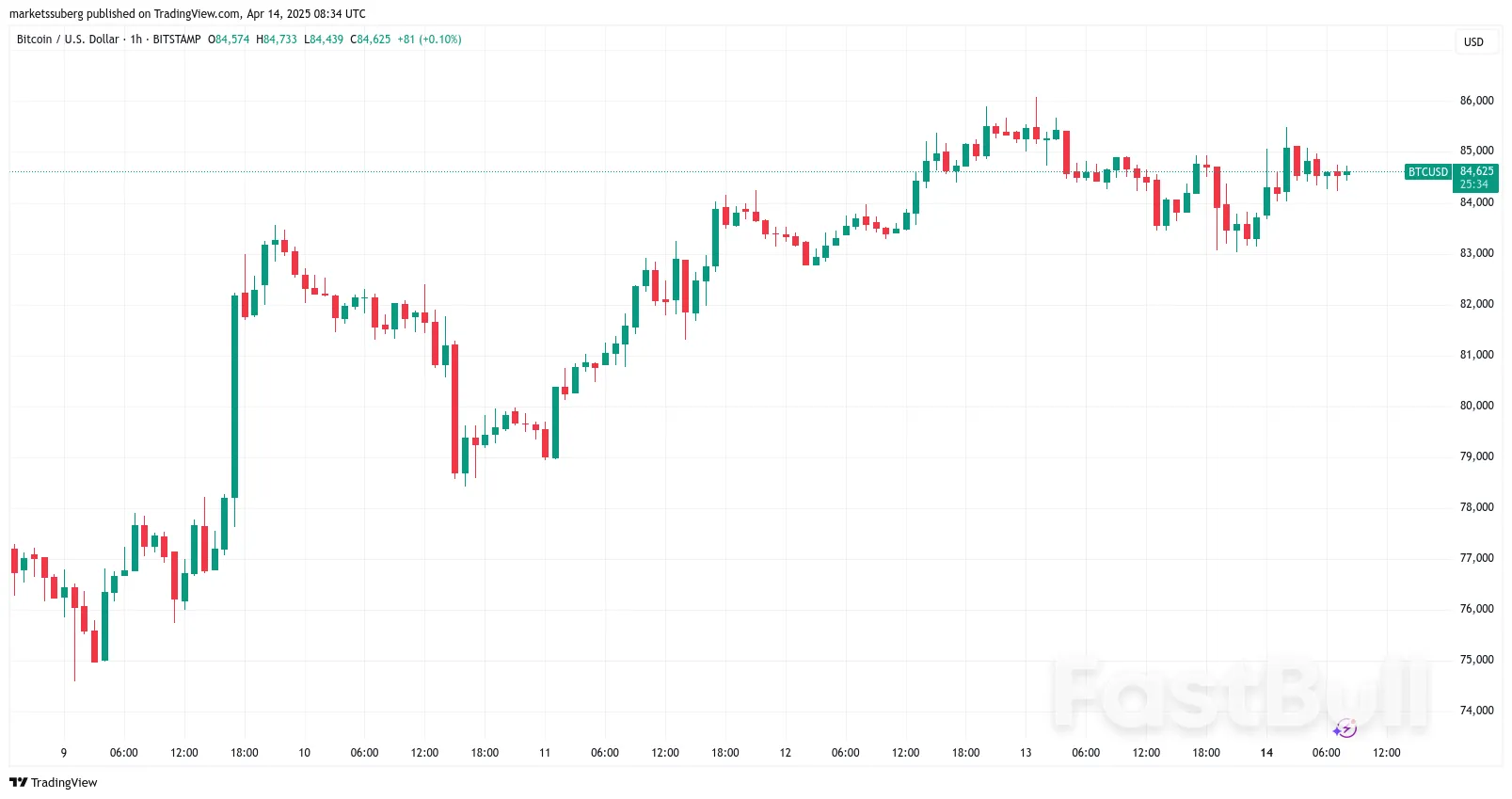
          Bitcoin is holding down the fort as the US trade war rages on into the third week of April.
          BTC price action attempts to overcome a long-term resistance trend line without success as trade war concerns dictate traders’ expectations.
          Tariffs are the key macroeconomic topic of the week as risk assets brace for potential surprise headlines.
          Bitcoin ETFs lost almost $800 million in a week, while Strategy indicates it has purchased the dip.
          Despite tariff pressures, the weakness of the US dollar could be a blessing in disguise for Bitcoin and risky assets.
          Global M2 money supply is at an all-time high and rising — will Bitcoin follow history and replicate its past?

          Bulls battle a key BTC price resistance line

          With traders on the lookout for tariff-related volatility this week, BTC price analysis is zooming out.
          BTC/USD closed last week up 6.7%, data from Cointelegraph Markets Pro and TradingView confirms.Trade War vs. Record M2 Money Supply: 5 Things to Know in Bitcoin This Week_1

          BTC/USD 1-hour chart. Source: Cointelegraph/TradingView

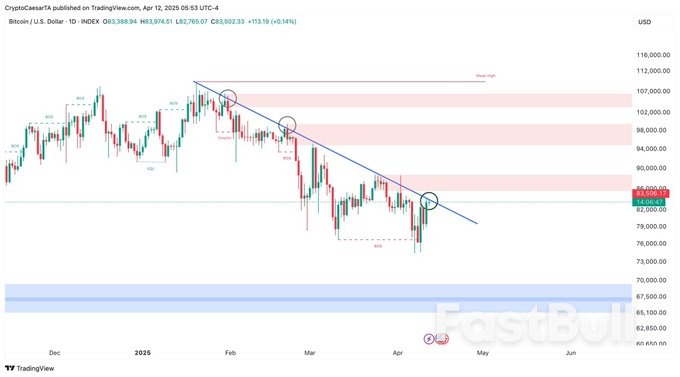
          Next, however, comes the real test — breaking beyond a downward-sloping trend line that has capped the upside for months.Trade War vs. Record M2 Money Supply: 5 Things to Know in Bitcoin This Week_2
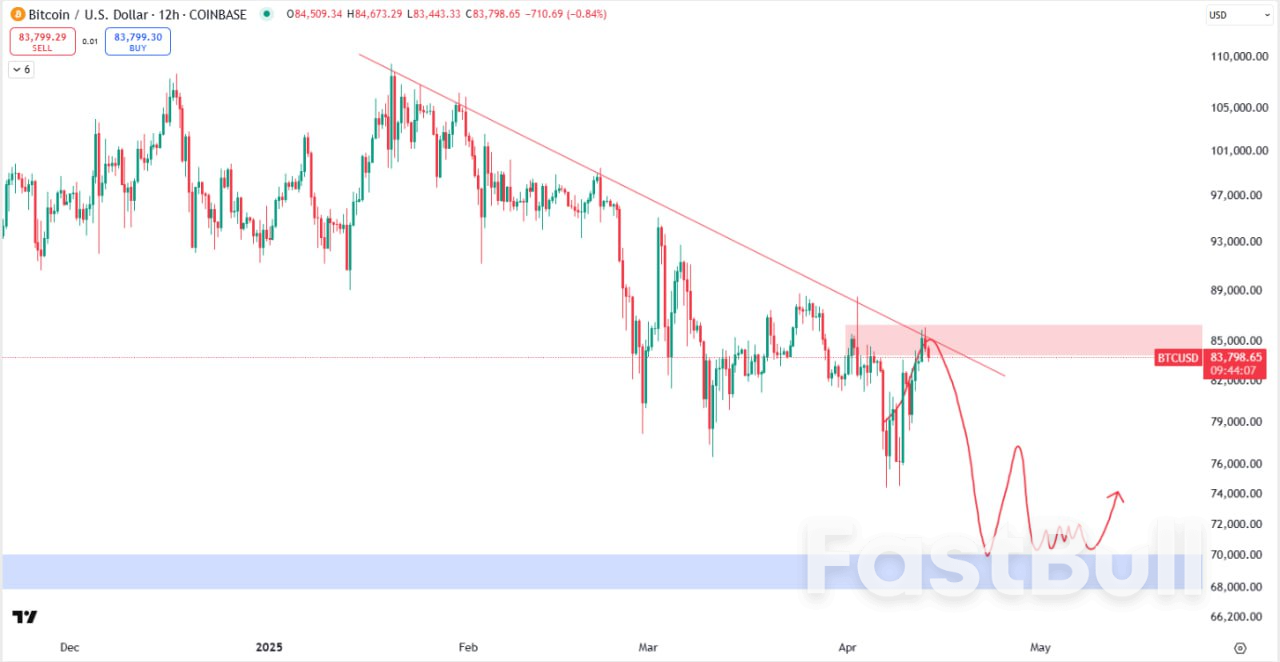
          “Rejected at key resistance, following the trendline perfectly,” popular trader Bitbull wrote in his latest post on the topic on X.
          “If the breakdown continues, eyes on the $70K-$72K support zone for a possible bounce.”Trade War vs. Record M2 Money Supply: 5 Things to Know in Bitcoin This Week_3

          BTC/USD 12-hour chart. Source: Bitbull/X

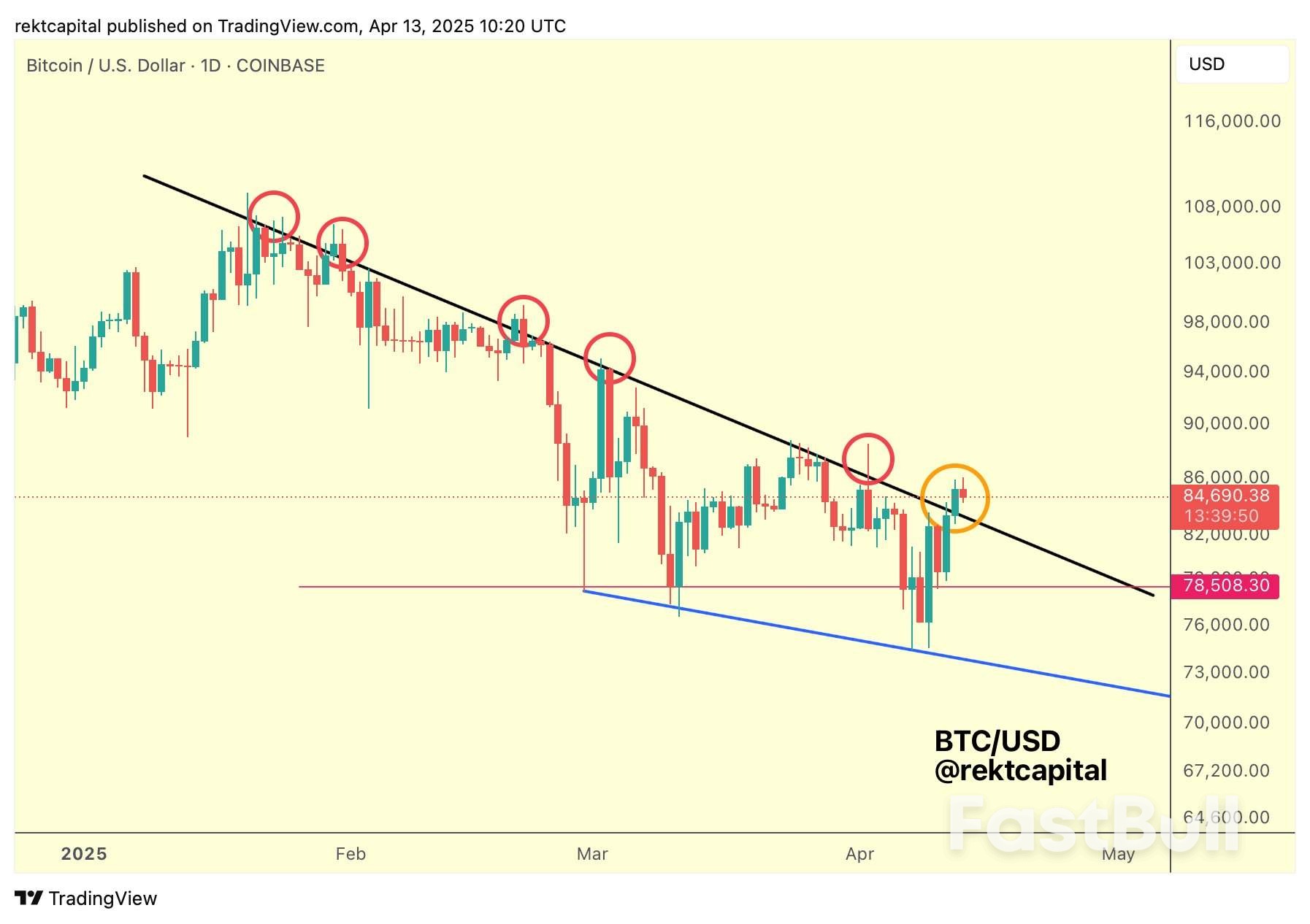
          Fellow trader and analyst Rekt Capital is also eyeing the trend line as a breakout proves hard to confirm.
          “Bitcoin has Daily Closed above the Downtrend. Thus, breakout confirmation is underway,” he told X followers at the weekend.
          “However BTC has previously Daily Closed above the Downtrend but failed its retest (a few of the red circles). Retest needs to be successful and it is in progress.”Trade War vs. Record M2 Money Supply: 5 Things to Know in Bitcoin This Week_4

          BTC/USD 1-day chart. Source: Rekt Capital/X

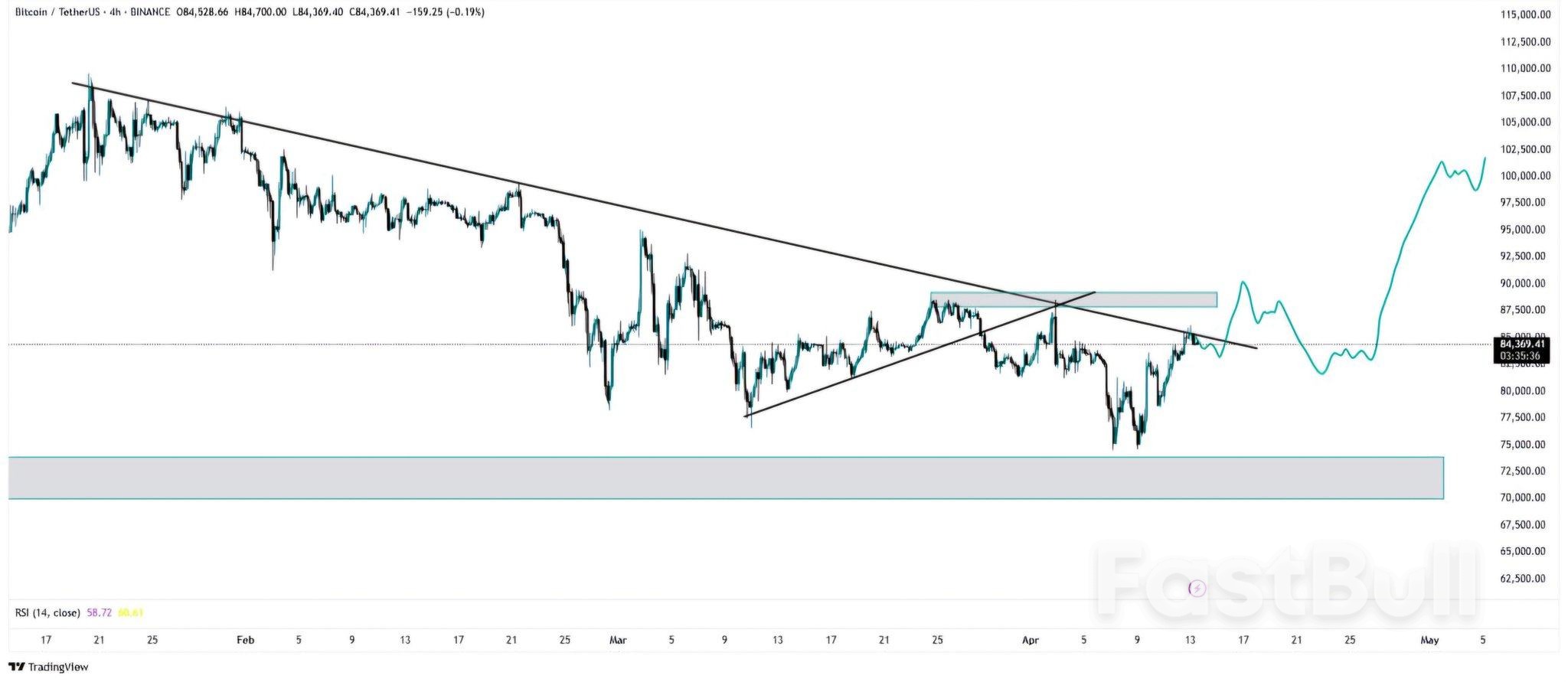
          Popular trader AK47 on X posted separate upside and downside BTC price targets depending on the outcome of the trend line retest.
          “$BTC might push to $88K—but don’t get too comfy,” he cautioned.
          “Could be a fakeout, grabbing liquidity before dipping to $81K for that inverse head & shoulders setup. If that plays out, $95K–$100K isn’t far.”Trade War vs. Record M2 Money Supply: 5 Things to Know in Bitcoin This Week_5

          BTC/USDT 4-hour chart. Source: AK47/X

          Tariff talk keeps markets on edge

          A quieter week for US macroeconomic data leaves initial jobless claims as the highlight while the ongoing trade war continues to dominate.
          With China particularly in focus, risk assets and crypto face flash volatility should more surprises involving trade tariffs surface.
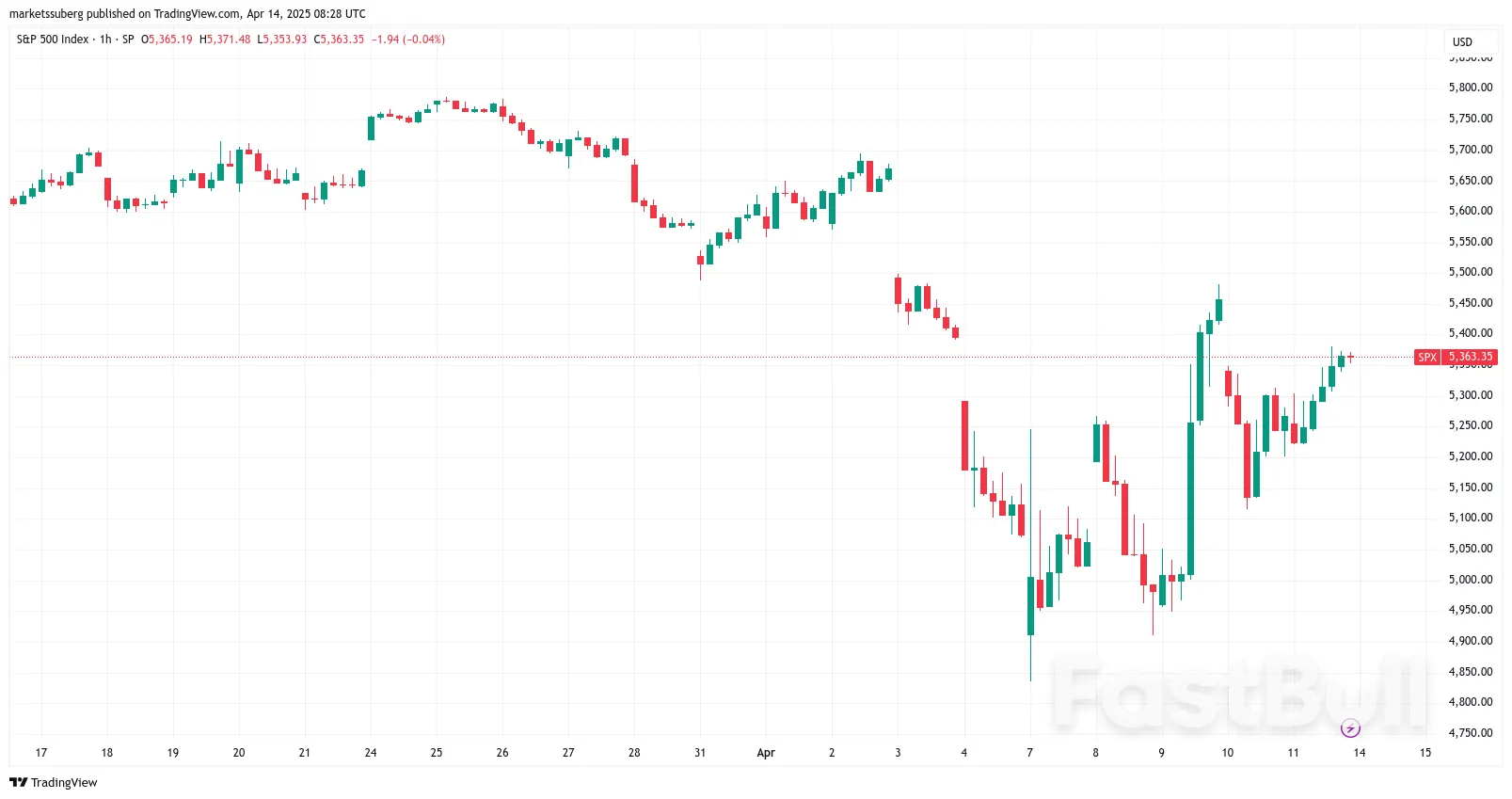
          The weekend saw snap relief in that respect as US President Donald Trump announced a pause on tariffs for key tech products. As a result, Bitcoin climbed to eleven-day highs above $86,000.
          Subsequent indications that the measures would be temporary then put renewed pressure on stocks’ futures, while BTC/USD retreated to circle $84,000 at the time of writing.
          “We think the ‘tariff exemptions’ announced this weekend were originally intended to be temporary,” trading resource The Kobeissi Letter wrote in part of an X reaction.
          “The goal was to bring treasury yields back down before resuming the trade war.”Trade War vs. Record M2 Money Supply: 5 Things to Know in Bitcoin This Week_6

          S&P 500 1-hour chart. Source: Cointelegraph/TradingView

          Kobeissi suggested that markets had originally considered the move as a signal that the trade war might end completely, only to be disappointed a day later.
          “Bonds will likely still rally along with stocks, but uncertainty has only grown. The bond market is king,” it added.
          Continuing, trading firm Mosaic Asset agreed that bonds may have been crucial in altering policy trajectory last week.
          “It’s the volatility in other areas of the markets like currencies and Treasury bonds that might have forced a quick pivot on trade and tariff policy,” it summarized in the latest edition of its regular newsletter, “The Market Mosaic,” on April 13.
          “The uncertainty around tariffs has become a binary and unpredictable event for the stock market. Signs of tensions fuel further downside, while an easing of tensions sends stocks sharply in the other direction.”

          Bitcoin ETF outflow “barely registers”

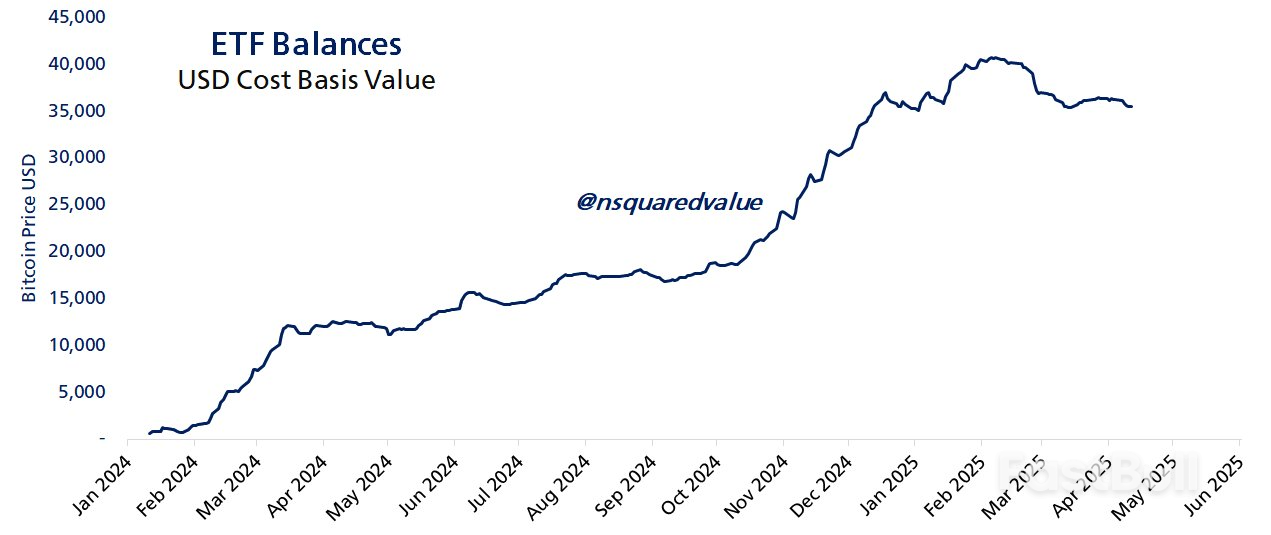
          A sign of just how turbulent last week came in the form of net flows from the US spot Bitcoin exchange-traded funds (ETFs).
          In one of the worst weeks ever for the ETF products since their debut in early 2024, total outflows passed $750 million.
          For network economist Timothy Peterson, however, there is little to worry about.
          Zooming out, he noted that even a nine-figure drawdown such as this makes hardly any difference to the overall investment pool that the ETFs have created in little more than a year.
          “Last week, US Bitcoin ETFs had their 5th worst week ever (in terms of outflows). Over $700 million. Yet it barely registers as a blip on the chart,” he told X followers.
          “That's how big Bitcoin has become. That's how sticky these investments are.”Trade War vs. Record M2 Money Supply: 5 Things to Know in Bitcoin This Week_7

          US spot Bitcoin ETF balances. Source: Timothy Peterson/X

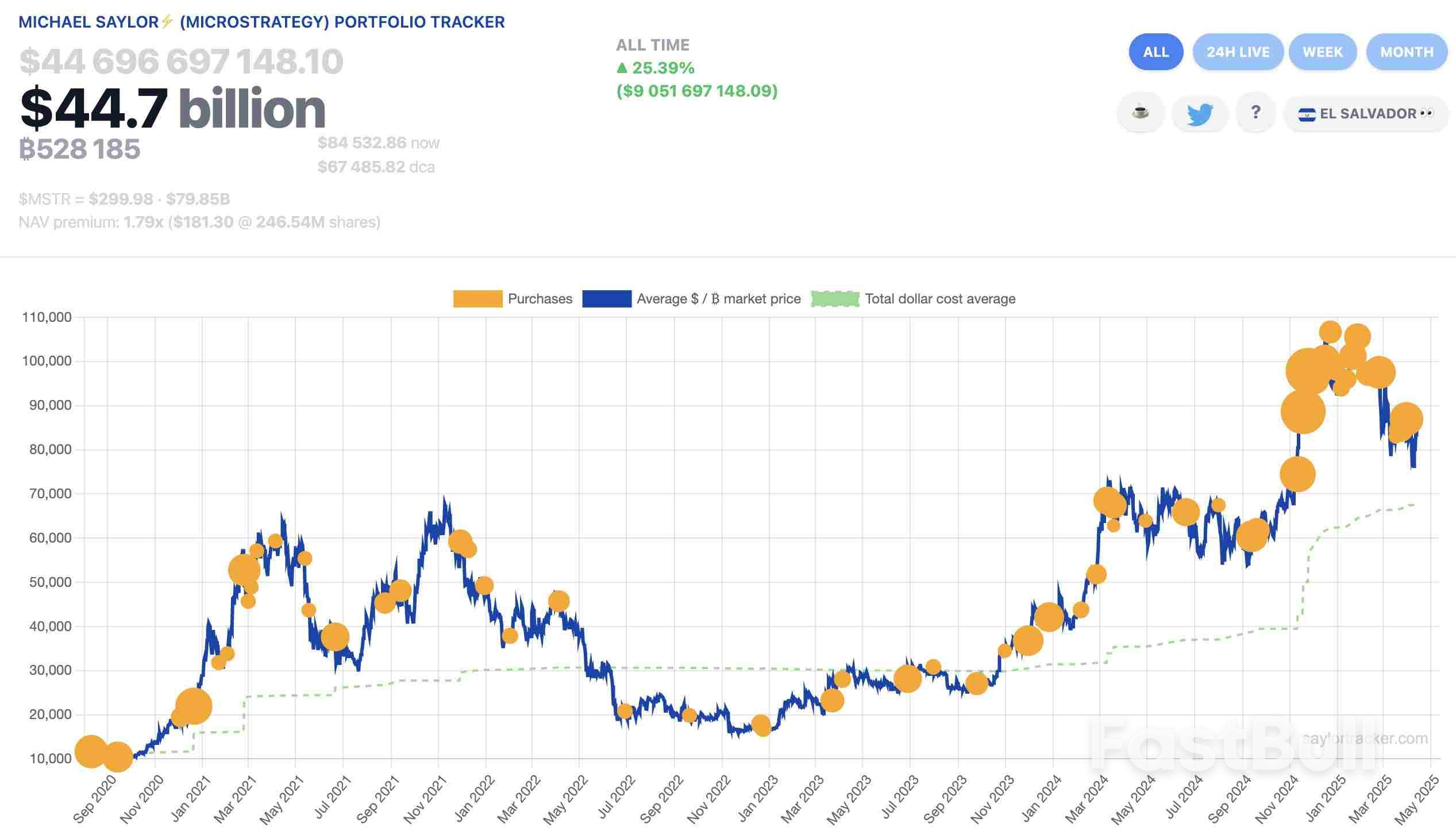
          Among major investors seeking to “buy the dip,” meanwhile, is business intelligence firm Strategy (formerly MicroStrategy), whose co-founder Michael Saylor hinted that it was upping its BTC exposure this weekend.
          “No Tariffs on Orange Dots,” he wrote in an X post alongside a chart of Strategy’s acquisitions. Trade War vs. Record M2 Money Supply: 5 Things to Know in Bitcoin This Week_8

          Strategy Bitcoin holdings data. Source: Michael Saylor

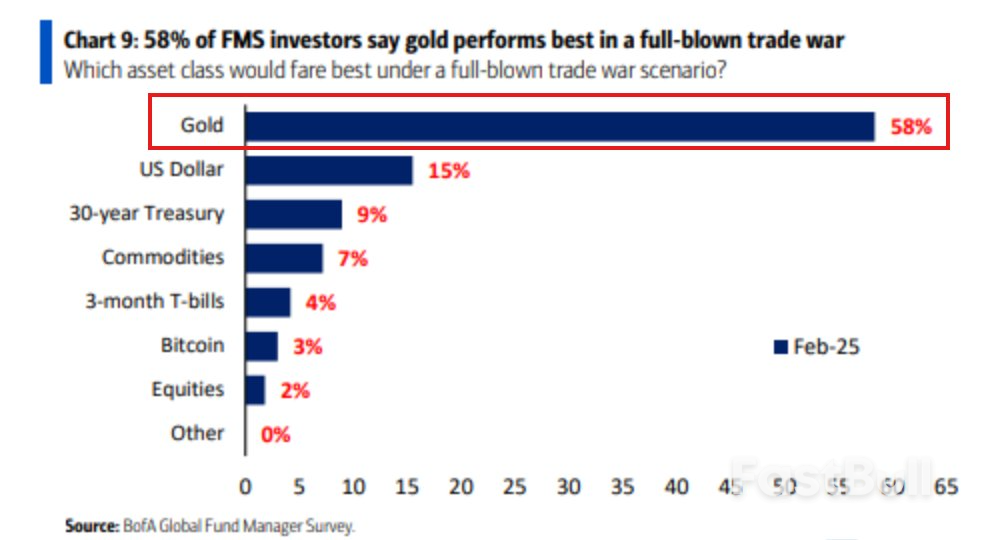
          However, whether Bitcoin will emerge as an attractive proposition for the institutional investor cohort while trade war uncertainty continues is dubious.
          A survey by Bank of America in late March showed that respondents overwhelmingly favored gold as a volatility hedge, with 58% choosing it.
          “This compares to just 9% for 30-year Treasury Bonds and 3% for Bitcoin,” Kobeissi wrote while reporting on the findings.
          “Throw in the US deficit spending crisis and gold quickly becomes the only global safe haven asset.”Trade War vs. Record M2 Money Supply: 5 Things to Know in Bitcoin This Week_9

          BoA survey results. Source: The Kobeissi Letter/X

          Dollar dive gives risk assets hope of relief

          The US dollar may yet provide some light at the end of the tunnel for wary risk-asset traders this week.
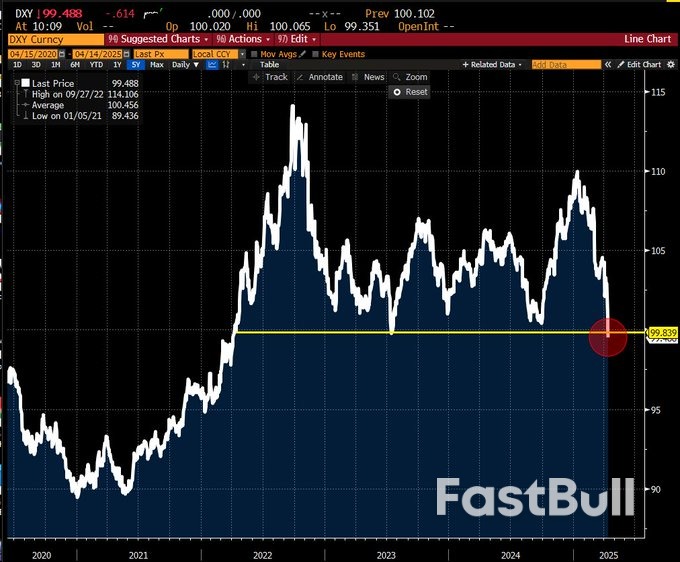
          The trade war has taken its toll on the greenback, and when measured against major trading partner currencies, its weakness is plain to see.
          The US dollar index (DXY) fell to three-year lows last week and, at the time of writing, is challenging those lows once more.Trade War vs. Record M2 Money Supply: 5 Things to Know in Bitcoin This Week_10While far from constant, Bitcoin’s relationship with dollar strength tends to show that gains occur after major DXY losses — albeit with a delay of several months.
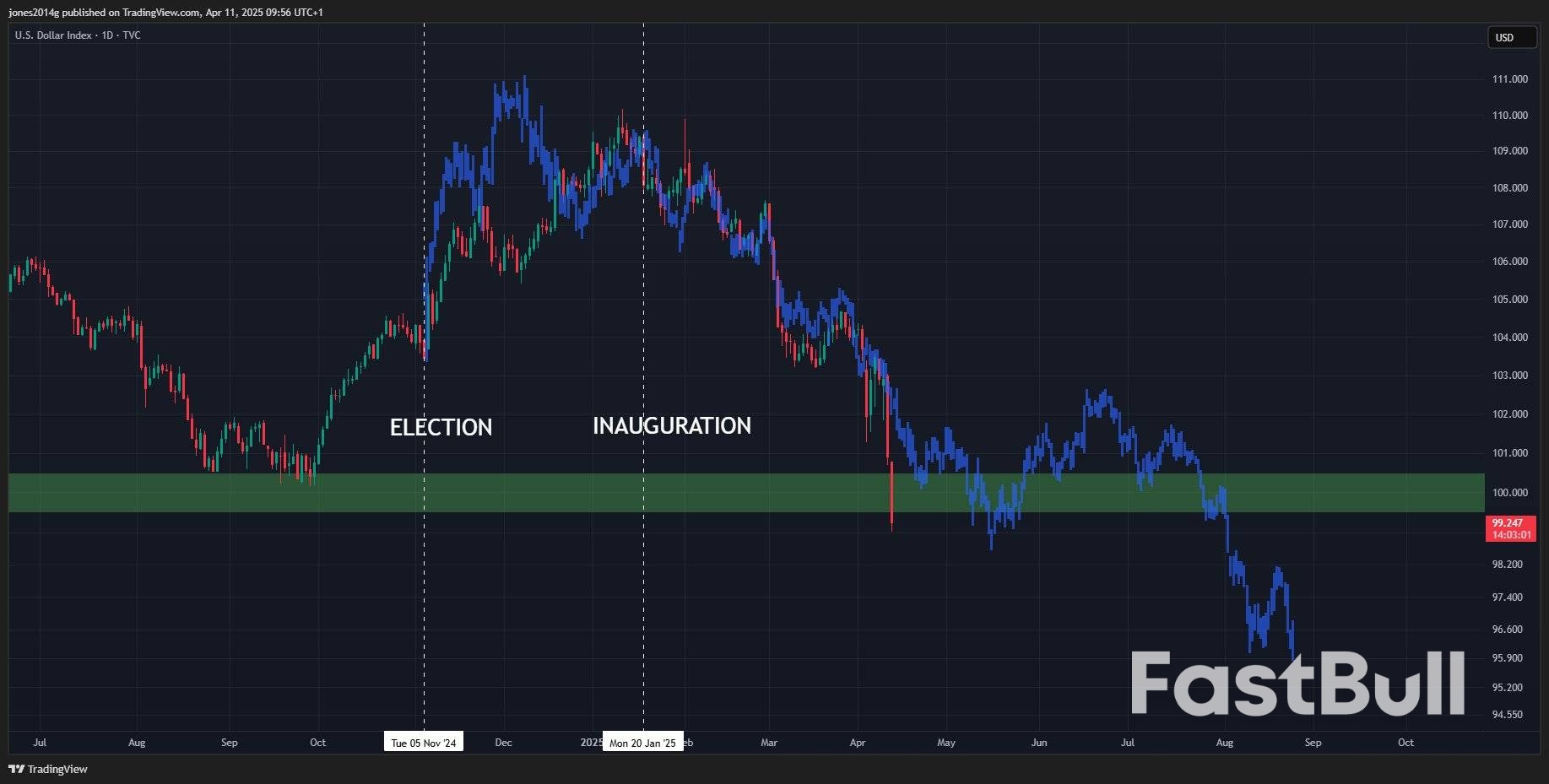
          To that end, popular analytics account Bitcoindata21 is eyeing a repeat of events from 2017, resulting in BTC/USD all-time highs at the end of the year.Trade War vs. Record M2 Money Supply: 5 Things to Know in Bitcoin This Week_11

          US dollar index (DXY) fractal. Source: Bitcoindata21/X

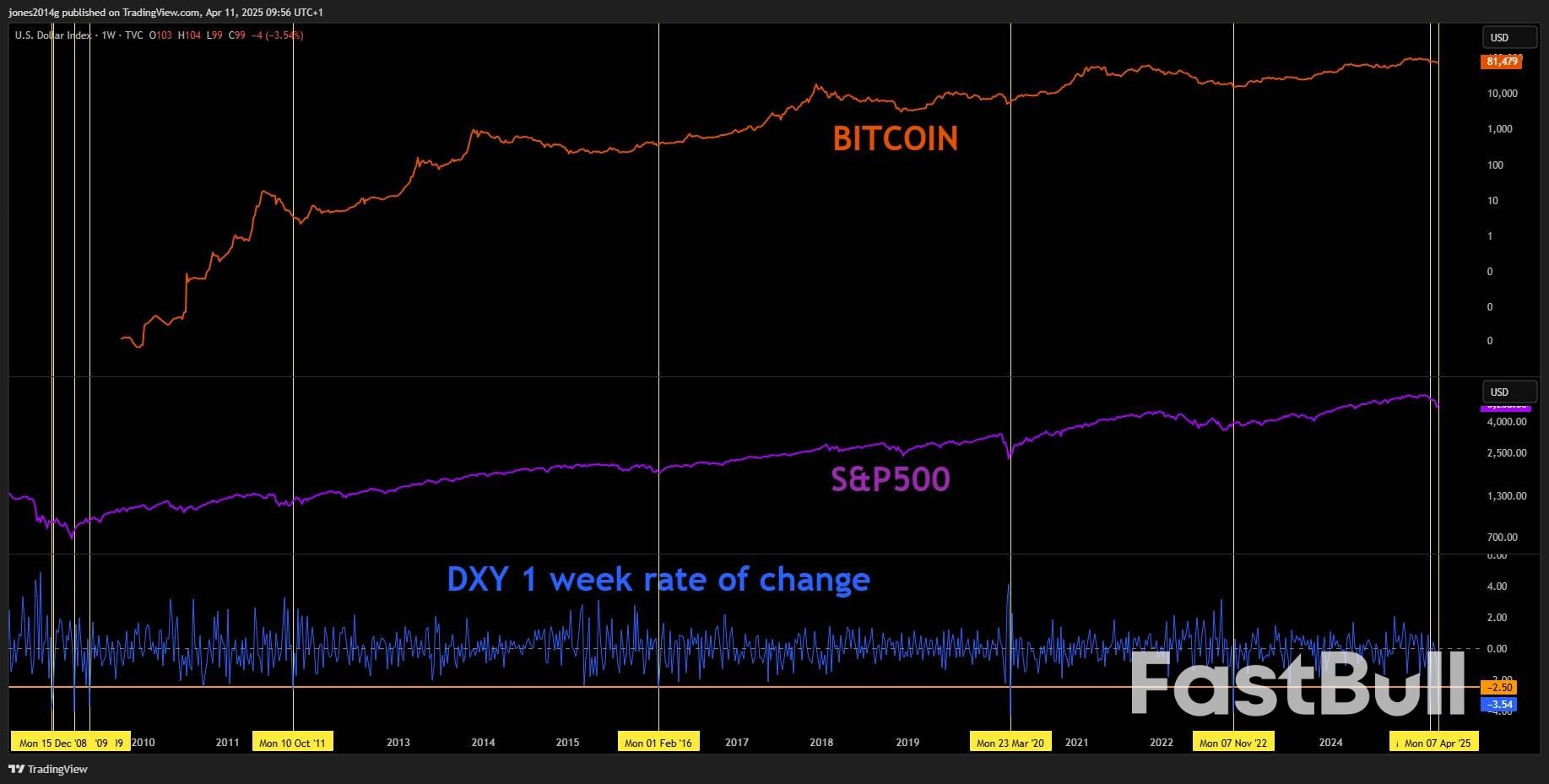
          Another chart uploaded to X at the weekend showed the relationship between DXY, Bitcoin and the S&P 500, providing ideal conditions for a long-term bottom in the latter.
          The last time such a signal came was around one month before the pit of the Bitcoin bear market in late 2022.
          “I got 99 problems but the DXY aint 1,” Bitcoindata21 summarized.Trade War vs. Record M2 Money Supply: 5 Things to Know in Bitcoin This Week_12

          BTC/USD vs. S&P 500 vs. DXY chart. Source: Bitcoindata21/X

          A bull market rebound in the making?

          On longer timeframes, an equally promising trend is playing out for Bitcoin bulls.
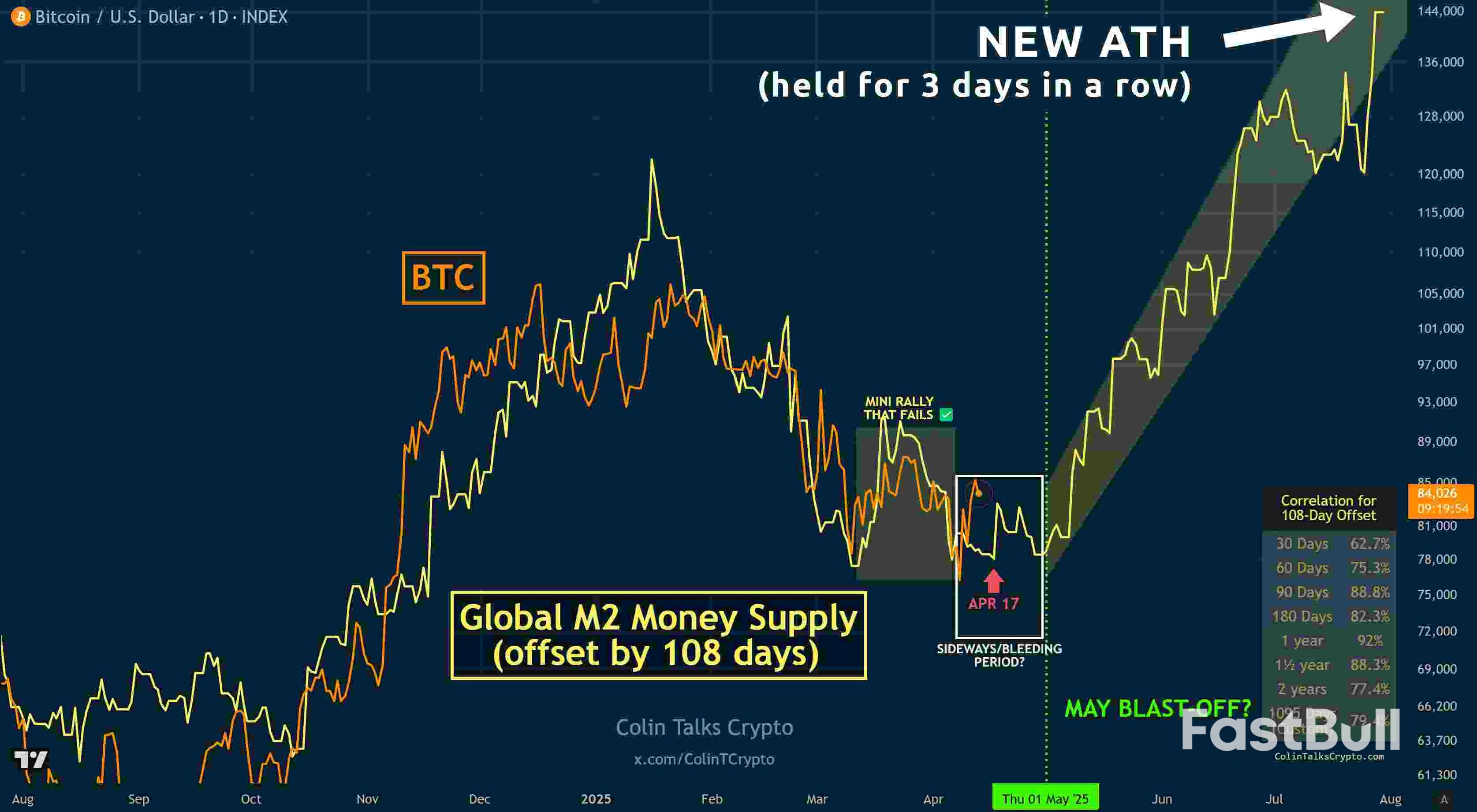
          The global M2 money supply, with which Bitcoin price action is positively correlated, is seeking to break out beyond all-time highs.
          “Global M2 has remained at an ATH for 3 days in a row,” popular analyst Colin Talks Crypto noted in a dedicated X post on the phenomenon this weekend.
          “This is a fantastic sign for what it signals will be coming into risk assets in ~108 days.”Trade War vs. Record M2 Money Supply: 5 Things to Know in Bitcoin This Week_13

          BTC/USD vs. global M2 supply. Source: Colin Talks Crypto/X

          The post refers to a chain reaction in which sharp moves in global M2 spark copycat behavior for Bitcoin once the latency period expires.
          Before that, however, there may be a final opportunity to “buy the dip.”
          “Global M2 (with a 108-day offset) doesn't show a blast-off for another ~2 1/2 weeks, and actually shows a slow bleed into next week until around April 16th or 17th,” Colin Talks Crypto acknowledged.
          Earlier this month, the analyst predicted a “big M2 influx” incoming, with a corresponding BTC price rebound beginning in May.

          Source: Cointelegraph

          Risk Warnings and Disclaimers
          You understand and acknowledge that there is a high degree of risk involved in trading. Following any strategies or investment methods may lead to potential losses. The content on the site is provided by our contributors and analysts for information purposes only. You are solely responsible for determining whether any trading assets, securities, strategy, or any other product is suitable for investing based on your own investment objectives and financial situation.
          Add to Favorites
          Share

          Treasuries, Gilts Fragile After FX Interventions Amid Poor Liquidity Conditions

          Warren Takunda

          Stocks

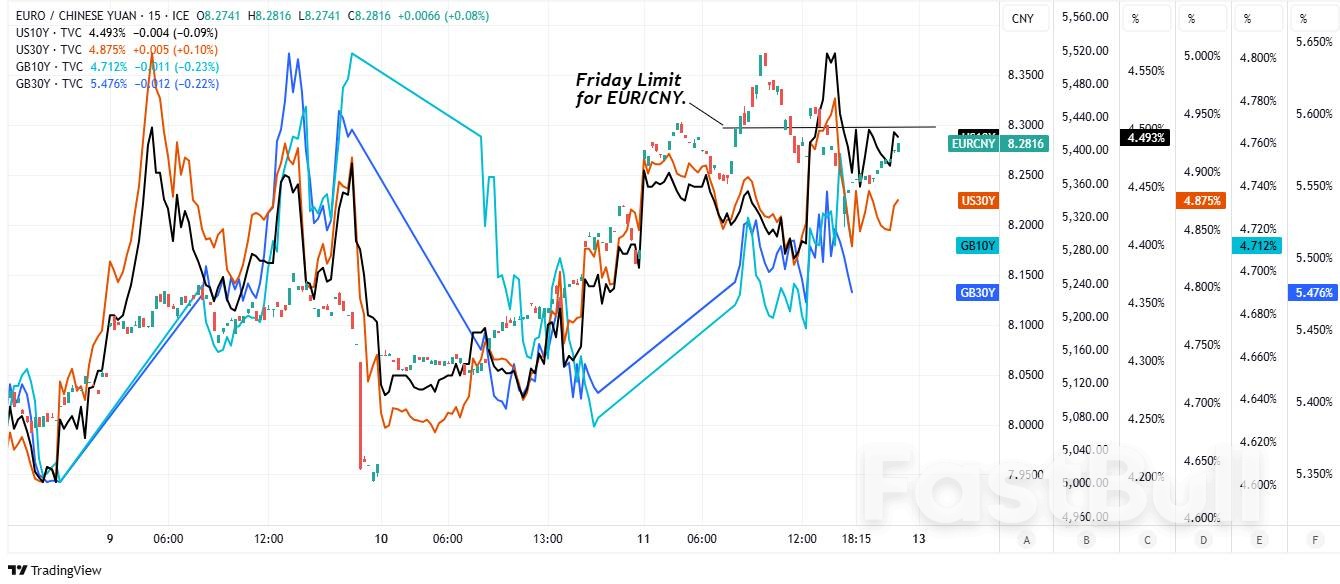
          US Treasuries and Sterling Gilts fell across the curve ahead of the weekend in likely poor liquidity conditions and price action that coincided with an intraday recovery of the Chinese Renminbi from beneath the bottom of its minimum permissible trading bands and some likely intervention from Beijing.US 2, 10 and 30-year Treasury yields spiked in early North American trade and around the European noon, leading Sterling Gilt yields to also rise sharply, with both bond markets remaining under pressure even in the wake of some softer than expected producer price index inflation figures released in the US.
          The continued weakness of the Treasury market even in the wake of soft inflation, and coming alongside further weakness in local and global equity markets, prompted much comment and speculation on the sell side, while the earlier difficulties and concurrent recovery of the Renminbi went largely unnoticed.
          China’s Renminbi came under intense pressure last week as Beijing and Washington traded tariff blows, likely exacerbating pressure on the broad US Dollar, which is positively correlated with the trade-weighted Chinese currency- if not pegged to it - leading numerous Renminbi pairs repeatedly pushing their daily limits.

          Treasuries, Gilts Fragile After FX Interventions Amid Poor Liquidity Conditions_1Above: EUR/CNY at 10-minute intervals with US 10 and 30-year yields, and GB 10 and 30-year yields. Click the image for more detailed inspection.

          Pairs comprising a large collective part of the China Foreign Exchange Trade System Index including EUR/CNY, JPY/CNY, CHF/CNY and GBP/CNY - together worth 30.7% of the trade-weighted currency - approached the North American open and release of US producer prices data pressing their daily limits.
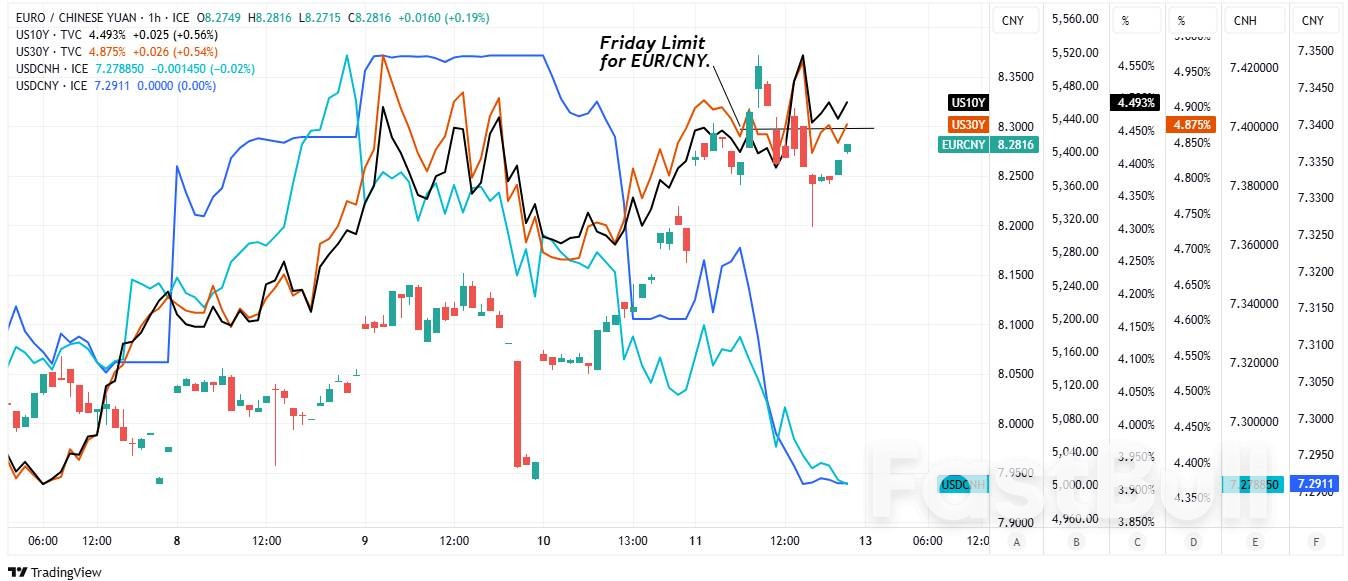
          Some of these pairs then breached their limits after the data landed and the US Dollar came under pressure, further weighing on the Renminbi in turn, while likely necessitating sales of other currencies to rein them in.
          It was at this point that pairs like USD/CNH, EUR/CNY, JPY/CNY, CHF/CNY and GBP/CNY turned lower, while Treasury and Gilt yields spiked in a manner that was incongruous with price action in other asset classes.
          The Treasury, Gilt and FX price action was similar to that seen previously, on the Wednesday of last week, ahead of and after President Donald Trump’s decision to reduce and delay the implementation of his global reciprocal tariff, which also saw a sharp increase in the levy on imports from China.

          Treasuries, Gilts Fragile After FX Interventions Amid Poor Liquidity Conditions_2Above: EUR/CNY, USD/CNY, USD/CNY at hourly intervals with US 10 and 30-year yields. Click the image for more detailed inspection.

          All of this is relevant to the Gilt market because Sterling bonds often display a high sensitivity to, and high correlation with US Treasuries, while the FX interventions are of importance because of deteriorating US-China trade relations, which may be setting the stage for a lengthy period of persistent interventions.
          Persistent interventions would be troublesome if they bring about further episodes of weakness in the Treasury market, which risk leading to lasting side-effects on US markets similar to those now impacting Sterling assets, through the formation of unhelpful trading rules and assumptions among some market professionals.
          Such rules and assumptions have, when combined with the Chancellor’s dogmatic adherence to a now-toxic set of self-imposed ‘fiscal rules’ - themselves being archaic relics of the European Union membership era - led HM Treasury into repeated spending cuts and economy-stifling tax increases over recent months.
          What’s more, with 10 and 30-year financing and refinancing for the taxpayer rising over and above the levels seen in the September 2022 market meltdown, and to their highest levels since 1998, during recent days, the risk is now of the Chancellor and HM Treasury pursuing further self-sabotaging policies later this year.

          Source: Poundsterlinglive

          Risk Warnings and Disclaimers
          You understand and acknowledge that there is a high degree of risk involved in trading. Following any strategies or investment methods may lead to potential losses. The content on the site is provided by our contributors and analysts for information purposes only. You are solely responsible for determining whether any trading assets, securities, strategy, or any other product is suitable for investing based on your own investment objectives and financial situation.
          Add to Favorites
          Share

          Gold Falls from Record High but Holds Above $3,200 on Tariff Jitters

          Warren Takunda

          Commodity

          Gold prices fell from a record high on Monday after U.S. President Donald Trump excluded smartphones and computers from his reciprocal tariffs, although uncertainty around tariff plans kept prices above the significant $3,200 per ounce level.
          Spot gold lost 0.4% to $3,222.49 an ounce, as of 0852 GMT. Bullion hit a record high of $3,245.42 earlier in the day.
          U.S. gold futures fell 0.2% to $3,238.50.
          "Market sentiment has improved a bit this morning after President Trump excluded electronics and smartphones from US tariffs. This has partly caused a dip in gold prices, likely due to profit-taking," said Zain Vawda, an analyst at MarketPulse by OANDA.
          Gold is traditionally viewed as a hedge against geopolitical and economic uncertainty.
          The White House on Friday announced exclusions of smart phones, computers and other electronics from steep reciprocal tariffs on China. On Sunday, however, Trump said he would be announcing the tariff rate on imported semiconductors over the week.
          Any drop in gold prices is likely to be temporary, said Vawda.
          "A US-China deal seems unlikely anytime soon, and global trade tariffs continue to pose challenges, keeping demand for safe-haven assets like gold strong. Additionally, the weakening US dollar adds further support to gold's appeal," Vawda added.
          The U.S. dollar hit its lowest level in three-years against its peers, making greenback-priced bullion cheaper for overseas buyers.
          Gold has continued its blazing rally from the last year, rising over 23% so far this year and vaulting over the $3,200 mark for the first time on Friday. Bullion has been supported by a variety of factors, including economic uncertainty from Trump's tariff plans, central bank demand and increased flows into gold-backed exchange-traded funds.
          Goldman Sachs has increased its year-end gold forecast to $3,700, citing stronger-than-expected central bank demand and heightened recession risks impacting ETF inflows.
          Spot silver was steady at $32.27 an ounce, while platinum added 1% to $952.10. Palladium gained 2.2% to $935.38.

          Source: Reuters

          Risk Warnings and Disclaimers
          You understand and acknowledge that there is a high degree of risk involved in trading. Following any strategies or investment methods may lead to potential losses. The content on the site is provided by our contributors and analysts for information purposes only. You are solely responsible for determining whether any trading assets, securities, strategy, or any other product is suitable for investing based on your own investment objectives and financial situation.
          Add to Favorites
          Share

          Week Ahead: ECB Rate Decision, China’s GDP, and Major Company Earnings

          Warren Takunda

          Economic

          Financial markets are expected to be less volatile this week after China suggested that it won't be raising its 125% tariff on US goods any higher — dismissing potential further hikes from the US as a "joke". The Trump administration also announced tariff exemptions for electronic products coming from China over the weekend, although more levies could arrive as part of a state probe into semiconductors.
          This shift is likely to refocus investors’ attention on economic fundamentals and key events, including the European Central Bank’s (ECB) interest rate decision and China’s quarterly GDP. Additionally, global companies will begin the earnings season, with key results from ASML and Netflix in the spotlight. These earnings reports will offer insights into the broader economic impact of escalating trade tensions and help shape future market sentiment.

          Europe

          The ECB is expected to continue cutting key policy rates by 25 basis points amid a worsening growth outlook and mounting risks of inflation stemming from tariffs. The bank lowered interest rates for the second consecutive time in March, bringing the deposit rate down to 2.5%. A further reduction would see the rate fall to 2.25%.
          The Governing Council appears divided over the rate path. Some members argue that a strong euro and persistent economic uncertainty may prolong deflationary pressures in the eurozone, while others strike a more cautious tone due to fears of tariff-fuelled inflation.
          Economists forecast that the ECB will implement at least three further cuts after April, bringing the deposit rate to 1.5% by year-end. Nevertheless, the central bank is expected to reaffirm its “data-dependent” and “meeting-by-meeting” approach through its next decision.
          Germany’s ZEW economic sentiment for April is set to be released this Tuesday, delivering an outlook for Europe’s biggest economy. In March, the index rose to 51.6, the highest since February 2022, due to optimism towards the country's historical debt reform and the EU’s plan to increase spending. However, consensus suggests that economic sentiment will sharply decline to 10.6, or a three-month low, as the US continues its chaotic tariff threats.
          Additionally, Europe’s biggest chip equipment manufacturer, ASML, is set to report its first-quarter earnings on Wednesday. The Dutch firm is expected to report earnings per share of $6.12 (€5.4), an 81% year-on-year surge. Its guidance is critical for stock performance as uncertainty over Trump’s tariffs continue to concern investors.

          United States

          The retail sales change for March in America is set to be a key indicator for the country’s consumer sentiment. In February, the data increased 0.2% month on month, rebounding from a downwardly revised 1.2% drop in the previous month. Despite tariff woes, retail sales are expected to grow 1.4% in March. And the core data, excluding automobiles, is forecast to increase 0.4%, up from 0.3% in February.
          Netflix will be the first major tech company to report its quarterly earnings this week. The streamer remains the most resilient performer among big tech firms, as the industry is not directly impacted by Trump’s tariffs or retaliatory measures from other nations. In recent quarters, Netflix has delivered robust earnings that consistently exceeded analysts’ expectations, supported by its ad-tier programme and crackdown on password sharing. The company is expected to report earnings per share of $5.70 (€6.50) on revenue of $10.5 billion (€12 billion), reflecting year-on-year increases of 8% and 12%, respectively, according to FactSet.

          Asia-Pacific (APAC)

          China is set to release its first-quarter Gross Domestic Product figures on Wednesday, a key indicator for assessing the country’s economic trajectory. Analysts expect the economy to expand by 5.1% year-on-year in the first three months, marking a slowdown from 5.4% in the previous quarter. Beijing has set a growth target of 5% for 2025. However, economists forecast that the world’s second-largest economy will grow by just 4.5% this year, weighed down by persistently weak consumer demand and ongoing trade tensions with the United States.
          The country will also publish other key economic indicators for March, including industrial production, retail sales, and fixed asset investment. Retail sales are projected to improve, rising 4.2% year on year, up from February’s 4.0% growth. However, industrial output is expected to ease slightly, slowing to 5.7% from 5.9% in the previous month.

          Source: Euronews

          To stay updated on all economic events of today, please check out our Economic calendar
          Risk Warnings and Disclaimers
          You understand and acknowledge that there is a high degree of risk involved in trading. Following any strategies or investment methods may lead to potential losses. The content on the site is provided by our contributors and analysts for information purposes only. You are solely responsible for determining whether any trading assets, securities, strategy, or any other product is suitable for investing based on your own investment objectives and financial situation.
          Add to Favorites
          Share

          Tariffs on Imported Semiconductor Chips Coming Soon, Trump Says

          Michelle

          Economic

          Forex

          WASHINGTON (April 14): U.S. President Donald Trump on Sunday said he would be announcing the tariff rate on imported semiconductors over the next week, adding that there would be flexibility with some companies in the sector.

          The president's pledge means that the exclusion of smartphones and computers from his reciprocal tariffs on China likely will be short-lived as Trump looks to reset trade in the semiconductor sector.

          "We wanted to uncomplicate it from a lot of other companies, because we want to make our chips and semiconductors and other things in our country," Trump told reporters aboard Air Force One as he traveled back to Washington from his estate in West Palm Beach.

          Trump declined to say whether some products such as smartphones might still end up being exempted, but added: "You have to show a certain flexibility. Nobody should be so rigid."

          Earlier in the day, Trump announced a national security trade probe into the semiconductor sector.

          "We are taking a look at Semiconductors and the WHOLE ELECTRONICS SUPPLY CHAIN in the upcoming National Security Tariff Investigations," he posted on social media.

          The White House had announced the exclusions from steep reciprocal tariffs on Friday, creating some hope that the tech industry might escape being ensnared in the escalating conflict between the two nations and that everyday consumer products such as phones and laptops would remain affordable.

          However, Trump's commerce secretary, Howard Lutnick, earlier on Sunday made clear that critical technology products from China would face separate new duties along with semiconductors within the next two months.

          Trump's back-and-forth on tariffs last week triggered the wildest swings on Wall Street since the COVID pandemic of 2020. The benchmark Standard & Poor's 500 index is down more than 10% since Trump took office on January 20.

          Lutnick said Trump would enact "a special focus-type of tariff" on smartphones, computers and other electronics products in a month or two, alongside sectoral tariffs targeting semiconductors and pharmaceuticals. The new duties would fall outside Trump's so-called reciprocal tariffs, under which levies on Chinese imports climbed to 125% last week, he said.

          "He's saying they're exempt from the reciprocal tariffs, but they're included in the semiconductor tariffs, which are coming in probably a month or two," Lutnick said in an interview on ABC's "This Week," predicting the levies would bring production of those products to the United States.

          Beijing increased its own tariffs on U.S. imports to 125% on Friday in response. On Sunday, before Lutnick's comments, China said it was evaluating the impact of the exclusions for the technology products implemented late on Friday.

          "The bell on a tiger's neck can only be untied by the person who tied it," China's Ministry of Commerce said.

          Billionaire investor Bill Ackman, who endorsed Trump's run for president but who has criticized the tariffs, on Sunday called on him to pause the broad and steep reciprocal tariffs on China for three months, as Trump did for most countries last week.

          If Trump paused Chinese tariffs for 90 days and cut them to 10% temporarily, "he would achieve the same objective in causing U.S. businesses to relocate their supply chains from China without the disruption and risk," Ackman wrote on X.

          'CHANGES EVERY DAY'

          Sven Henrich, founder and lead market strategist for NorthmanTrader, was harshly critical of how the tariff issue was being handled on Sunday.

          "Sentiment check: The biggest rally of the year would come on the day Lutnick gets fired," Henrich wrote on X. "I suggest the administration figures out who controls the message, whatever it is, as it changes every day. U.S. business can't plan or invest with the constant back and forth."

          U.S. Senator Elizabeth Warren, a Democrat, criticized the latest revision to Trump's tariff plan, which economists have warned could dent economic growth and fuel inflation.

          "There is no tariff policy - only chaos and corruption," Warren said on ABC's "This Week," speaking before Trump's latest post on social media.

          In a notice to shippers late on Friday, the U.S. Customs and Border Protection agency published a list of tariff codes excluded from the import taxes. It featured 20 product categories, including computers, laptops, disc drives, semiconductor devices, memory chips and flat panel displays.

          In an interview on NBC's "Meet the Press," White House trade adviser Peter Navarro said the U.S. has opened an invitation to China to negotiate, but he criticized China's connection to the lethal fentanyl supply chain and did not include it on a list of seven entities - the United Kingdom, the European Union, India, Japan, South Korea, Indonesia and Israel - with which he said the administration was in talks.

          Trade Representative Jamieson Greer said on CBS's "Face the Nation" that there were no plans yet for Trump to speak to Chinese President Xi Jinping on tariffs, accusing China of creating trade friction by responding with levies of its own. But he expressed hopes for some non-Chinese deals.

          "My goal is to get meaningful deals before 90 days, and I think we're going to be there with several countries in the next few weeks," Greer said.

          Ray Dalio, the billionaire founder of the world's biggest hedge fund, told NBC's "Meet the Press" that he was worried about the United States sliding into recession, or worse, as a result of the tariffs.

          "Right now we are at a decision-making point and very close to a recession," Dalio said on Sunday. "And I'm worried about something worse than a recession if this isn't handled well."

          Source: Theedgemarkets

          To stay updated on all economic events of today, please check out our Economic calendar
          Risk Warnings and Disclaimers
          You understand and acknowledge that there is a high degree of risk involved in trading. Following any strategies or investment methods may lead to potential losses. The content on the site is provided by our contributors and analysts for information purposes only. You are solely responsible for determining whether any trading assets, securities, strategy, or any other product is suitable for investing based on your own investment objectives and financial situation.
          Add to Favorites
          Share

          ‘The Sky Won’t Fall’: China Plays Down Trump Tariff Risks as Stock Markets Rally

          Warren Takunda

          Economic

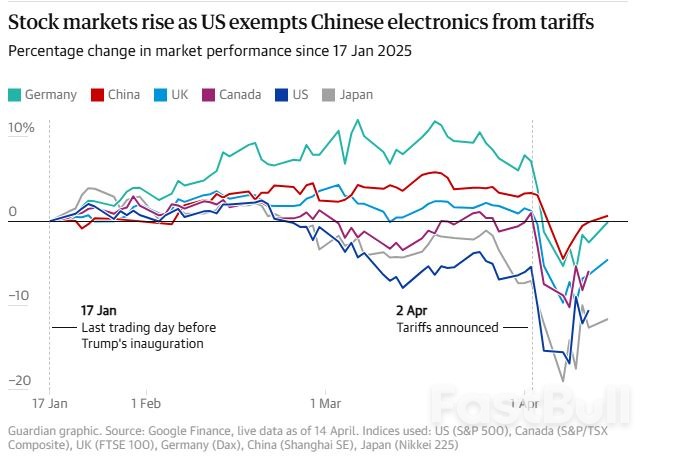
          China has played down the risk of damage to its exports from Donald Trump’s tariffs, with an official saying the “the sky won’t fall”, as stock markets rose on Monday amid signs of a retreat on electronics restrictions.
          The world’s second-largest economy has diversified its trade away from the US in recent years, according to Lyu Daliang, a customs administration spokesperson, in comments reported by state-owned agency Xinhua.
          China has retaliated forcefully to Washington’s tariffs, with 125% levies on US imports against the US’s total of 145% border taxes on goods moving the other way. The trade war has prompted turmoil on financial markets since Trump first revealed tariffs on every country in the world on 2 April. Since then he has partly retreated on the highest levies on most trading partners for at least 90 days, but has doubled down in his spat with China.‘The Sky Won’t Fall’: China Plays Down Trump Tariff Risks as Stock Markets Rally_1
          The White House offered further relief over the weekend with an exemption from the steepest tariffs for electronics including smartphones, laptops and semiconductors. Trump officials later appeared to walk that back with the commerce secretary, Howard Lutnick, saying such devices would be “included in the semiconductor tariffs which are coming in probably a month or two”.
          Trump said on Sunday night on his social network, Truth Social, that “NOBODY is getting ‘off the hook’”, highlighting that smartphones are still subject to 20% levies and suggesting they could still rise higher.
          However, investors on Monday appeared unconvinced by Trump’s attempts to play down the retreat. Japan’s Nikkei gained 1.2% while Hong Kong’s Hang Seng rose by 2.2% and the Shanghai and Shenzhen exchanges climbed by 0.8% and 1.2%, respectively. European stock market indices also jumped in opening trades, with London’s FTSE 100 up by 1.6%, Germany’s Dax up 2.2%, and France’s Cac 40 up 2%.
          “The sky won’t fall” for Chinese exports,” China’s Lyu said. “These efforts have not only supported our partners’ development but also enhanced our own resilience”.
          The customs report also played up China’s “vast domestic market”, and said “the country will turn domestic certainty into a buffer against global volatility”. China has increasingly tried to stimulate private consumption.
          China’s president, Xi Jinping, on Monday criticised the US tariffs, during a visit to Vietnam. Vietnam has in recent decades grown to become the eighth largest source of goods for US consumers, but it is facing the threat of 46% tariffs when Trump’s 90-day pause expires.
          In an article in a Vietnamese newspaper, Xi said that a “trade war and tariff war will produce no winner, and protectionism will lead nowhere”.

          Source: Theguardian

          To stay updated on all economic events of today, please check out our Economic calendar
          Risk Warnings and Disclaimers
          You understand and acknowledge that there is a high degree of risk involved in trading. Following any strategies or investment methods may lead to potential losses. The content on the site is provided by our contributors and analysts for information purposes only. You are solely responsible for determining whether any trading assets, securities, strategy, or any other product is suitable for investing based on your own investment objectives and financial situation.
          Add to Favorites
          Share

          Bruised Dollar Drifts Lower on Tariff Jitters

          Glendon

          Forex

          Economic

          China–U.S. Trade War

          The dollar drifted lower on Monday, while the Japanese yen and the euro progressed higher as investor confidence in the world's reserve currency remained in question following a stream of tariff-related pronouncements from U.S. PresidentDonald Trump.

          Investors braced for another volatile week as Trump's imposition and then abrupt postponement of tariffs on goods imported to the U.S. continued to sow confusion.

          "Markets right now are trading the uncertainty, and that has not been helped over the weekend by the contradictory stories coming out of the U.S. administration," said Nick Rees, head of macro research at Monex Europe.

          "That really skews risks for the time being towards further dollar weakness as markets try to avoid some of this uncertainty by hiding basically anywhere that isn't in the U.S."

          The euroclimbed 0.2% against the dollar to $1.139, hovering close to its three-year high hit on Friday as investors flocked to the common currency following a crisis of confidence in the dollar.

          Growing nervousness among investors over owning U.S. assets has caused some to dump those positions and move money into other markets including Europe, boosting the euro.

          Against the Swiss franc, the dollar see-sawed between gains and losses and was steady at 0.8169 francs at 0822 GMT.

          Sterlingrose 0.3% to $1.317, while the New Zealand dollarrose to a four-month high of $0.5888.

          Trump on Sunday said he would announce the tariff rate on imported semiconductors over the next week, adding that there would be flexibility towards some companies in the sector.

          The White House on Friday granted an exclusion from steep tariffs for smartphones, computers and certain other electronics imported largely from China. Trump later said the move would be short-lived.

          Against the yen, the dollarfell 0.4% to 142.91.

          Japan is gearing up for trade negotiations with the United States that will likely touch on the thorny topic of currency policy, with some officials privately bracing for Washington to call on Tokyo to prop up the yen.

          Japanese Economy Minister Ryosei Akazawa said on Monday that foreign exchange issues would be dealt with between Finance Minister Katsunobu Kato and U.S. Treasury Secretary Scott Bessent.

          "Markets jumped the gun on pricing in further yen strength on confirmation that Bessent and Kato will discuss FX," said Christopher Wong, a currency strategist at OCBC.

          The Australian dollarwas up 0.7% at $0.63395, extending its more than 4% gain from last week.

          Against a basket of currencies, the U.S. dollarlanguished near Friday's three-year low at 99.36.

          A steep sell-off in the U.S. Treasury market last week, owing in part to a rapid unwinding of so-called basis trades by hedge funds, was a huge drag on the dollar.

          There was scant sign of any recovery in bonds on Monday with 10-year yields at 4.46%, starting the week roughly steady after the largest weekly rise in borrowing costs in decades.

          The onshore yuansteadied at 7.3006 per dollar, while its offshore counterpartfell to 7.3061 per dollar.

          The offshore yuan struck a record low last week while the onshore unit sank to its lowest since 2007 as the trade war between the United States and China intensified.

          Data on Monday showed China's exports rose sharply in March after factories rushed out shipments before the latest U.S. tariffs took effect.

          Source: TradingView

          To stay updated on all economic events of today, please check out our Economic calendar
          Risk Warnings and Disclaimers
          You understand and acknowledge that there is a high degree of risk involved in trading. Following any strategies or investment methods may lead to potential losses. The content on the site is provided by our contributors and analysts for information purposes only. You are solely responsible for determining whether any trading assets, securities, strategy, or any other product is suitable for investing based on your own investment objectives and financial situation.
          Add to Favorites
          Share
          FastBull
          Copyright © 2025 FastBull Ltd

          728 RM B 7/F GEE LOK IND BLDG NO 34 HUNG TO RD KWUN TONG KLN HONG KONG

          TelegramInstagramTwitterfacebooklinkedin
          App Store Google Play Google Play
          Products
          Charts

          Chats

          Q&A with Experts
          Screeners
          Economic Calendar
          Data
          Tools
          Membership
          Features
          Function
          Markets
          Copy Trading
          Latest Signals
          Contests
          News
          Analysis
          24/7
          Columns
          Education
          Company
          Careers
          About Us
          Contact Us
          Advertising
          Help Center
          Feedback
          User Agreement
          Privacy Policy
          Business

          White Label

          Data API

          Web Plug-ins

          Poster Maker

          Affiliate Program

          Risk Disclosure

          The risk of loss in trading financial instruments such as stocks, FX, commodities, futures, bonds, ETFs and crypto can be substantial. You may sustain a total loss of the funds that you deposit with your broker. Therefore, you should carefully consider whether such trading is suitable for you in light of your circumstances and financial resources.

          No decision to invest should be made without thoroughly conducting due diligence by yourself or consulting with your financial advisors. Our web content might not suit you since we don't know your financial conditions and investment needs. Our financial information might have latency or contain inaccuracy, so you should be fully responsible for any of your trading and investment decisions. The company will not be responsible for your capital loss.

          Without getting permission from the website, you are not allowed to copy the website's graphics, texts, or trademarks. Intellectual property rights in the content or data incorporated into this website belong to its providers and exchange merchants.

          Not Logged In

          Log in to access more features

          FastBull Membership

          Not yet

          Purchase

          Become a signal provider
          Help Center
          Customer Service
          Dark Mode
          Price Up/Down Colors

          Log In

          Sign Up

          Position
          Layout
          Fullscreen
          Default to Chart
          The chart page opens by default when you visit fastbull.com