• Trade
  • Markets
  • Copy
  • Contests
  • News
  • 24/7
  • Calendar
  • Q&A
  • Chats
Trending
Screeners
SYMBOL
LAST
BID
ASK
HIGH
LOW
NET CHG.
%CHG.
SPREAD
SPX
S&P 500 Index
6827.42
6827.42
6827.42
6899.86
6801.80
-73.58
-1.07%
--
DJI
Dow Jones Industrial Average
48458.04
48458.04
48458.04
48886.86
48334.10
-245.98
-0.51%
--
IXIC
NASDAQ Composite Index
23195.16
23195.16
23195.16
23554.89
23094.51
-398.69
-1.69%
--
USDX
US Dollar Index
97.950
98.030
97.950
98.500
97.950
-0.370
-0.38%
--
EURUSD
Euro / US Dollar
1.17394
1.17409
1.17394
1.17496
1.17192
+0.00011
+ 0.01%
--
GBPUSD
Pound Sterling / US Dollar
1.33707
1.33732
1.33707
1.33997
1.33419
-0.00148
-0.11%
--
XAUUSD
Gold / US Dollar
4299.39
4299.39
4299.39
4353.41
4257.10
+20.10
+ 0.47%
--
WTI
Light Sweet Crude Oil
57.233
57.485
57.233
58.011
56.969
-0.408
-0.71%
--

Community Accounts

Signal Accounts
--
Profit Accounts
--
Loss Accounts
--
View More

Become a signal provider

Sell trading signals to earn additional income

View More

Guide to Copy Trading

Get started with ease and confidence

View More

Signal Accounts for Members

All Signal Accounts

Best Return
  • Best Return
  • Best P/L
  • Best MDD
Past 1W
  • Past 1W
  • Past 1M
  • Past 1Y

All Contests

  • All
  • Trump Updates
  • Recommend
  • Stocks
  • Cryptocurrencies
  • Central Banks
  • Featured News
Top News Only
Share

USA Embassy In Lithuania: Maria Kalesnikava Is Not Going To Vilnius

Share

USA Embassy In Lithuania: Other Prisoners Are Being Sent From Belarus To Ukraine

Share

Ukraine President Zelenskiy: Five Ukrainians Released By Belarus In US-Brokered Deal

Share

USA Vilnius Embassy: USA Stands Ready For "Additional Engagement With Belarus That Advances USA Interests"

Share

USA Vilnius Embassy: Belarus, USA, Other Citizens Among The Prisoners Released Into Lithuania

Share

USA Vilnius Embassy: USA Will Continue Diplomatic Efforts To Free The Remaining Political Prisoners In Belarus

Share

USA Vilnius Embassy: Belarus Releases 123 Prisoners Following Meeting Of President Trump's Envoy Coale And Belarus President Lukashenko

Share

USA Vilnius Embassy: Masatoshi Nakanishi, Aliaksandr Syrytsa Are Among The Prisoners Released By Belarus

Share

USA Vilnius Embassy: Maria Kalesnikava And Viktor Babaryka Are Among The Prisoners Released By Belarus

Share

USA Vilnius Embassy: Nobel Peace Prize Laureate Ales Bialiatski Is Among The Prisoners Released By Belarus

Share

Belarusian Presidential Administration Telegram Channel: Lukashenko Has Pardoned 123 Prisoners As Part Of Deal With US

Share

Two Local Syrian Officials: Joint US-Syrian Military Patrol In Central Syria Came Under Fire From Unknown Assailants

Share

Israeli Military Says It Targeted 'Key Hamas Terrorist' In Gaza City

Share

Rwanda's Actions In Eastern Drc Are A Clear Violation Of Washington Accords Signed By President Trump - Secretary Of State Rubio

Share

Israeli Military Issues Evacuation Warning In Southern Lebanon Village Ahead Of Strike - Spokesperson On X

Share

Belarusian State Media Cites US Envoy Coale As Saying He Discussed Ukraine And Venezuela With Lukashenko

Share

Belarusian State Media Cites US Envoy Coale As Saying That US Removes Sanctions On Belarusian Potassium

Share

Thai Prime Minister: No Ceasefire Agreement With Cambodia

Share

US, Ukraine To Discuss Ceasefire In Berlin Ahead Of European Summit

Share

Incoming Czech Prime Minister Babis: Czech Republic Will Not Take On Guarantees For Ukraine Financing, European Commission Must Find Alternatives

TIME
ACT
FCST
PREV
U.K. Trade Balance Non-EU (SA) (Oct)

A:--

F: --

P: --

U.K. Trade Balance (Oct)

A:--

F: --

P: --

U.K. Services Index MoM

A:--

F: --

P: --

U.K. Construction Output MoM (SA) (Oct)

A:--

F: --

P: --

U.K. Industrial Output YoY (Oct)

A:--

F: --

P: --

U.K. Trade Balance (SA) (Oct)

A:--

F: --

P: --

U.K. Trade Balance EU (SA) (Oct)

A:--

F: --

P: --

U.K. Manufacturing Output YoY (Oct)

A:--

F: --

P: --

U.K. GDP MoM (Oct)

A:--

F: --

P: --

U.K. GDP YoY (SA) (Oct)

A:--

F: --

P: --

U.K. Industrial Output MoM (Oct)

A:--

F: --

P: --

U.K. Construction Output YoY (Oct)

A:--

F: --

P: --

France HICP Final MoM (Nov)

A:--

F: --

P: --

China, Mainland Outstanding Loans Growth YoY (Nov)

A:--

F: --

P: --

China, Mainland M2 Money Supply YoY (Nov)

A:--

F: --

P: --

China, Mainland M0 Money Supply YoY (Nov)

A:--

F: --

P: --

China, Mainland M1 Money Supply YoY (Nov)

A:--

F: --

P: --

India CPI YoY (Nov)

A:--

F: --

P: --

India Deposit Gowth YoY

A:--

F: --

P: --

Brazil Services Growth YoY (Oct)

A:--

F: --

P: --

Mexico Industrial Output YoY (Oct)

A:--

F: --

P: --

Russia Trade Balance (Oct)

A:--

F: --

P: --

Philadelphia Fed President Henry Paulson delivers a speech
Canada Building Permits MoM (SA) (Oct)

A:--

F: --

P: --

Canada Wholesale Sales YoY (Oct)

A:--

F: --

P: --

Canada Wholesale Inventory MoM (Oct)

A:--

F: --

P: --

Canada Wholesale Inventory YoY (Oct)

A:--

F: --

P: --

Canada Wholesale Sales MoM (SA) (Oct)

A:--

F: --

P: --

Germany Current Account (Not SA) (Oct)

A:--

F: --

P: --

U.S. Weekly Total Rig Count

A:--

F: --

P: --

U.S. Weekly Total Oil Rig Count

A:--

F: --

P: --

Japan Tankan Large Non-Manufacturing Diffusion Index (Q4)

--

F: --

P: --

Japan Tankan Small Manufacturing Outlook Index (Q4)

--

F: --

P: --

Japan Tankan Large Non-Manufacturing Outlook Index (Q4)

--

F: --

P: --

Japan Tankan Large Manufacturing Outlook Index (Q4)

--

F: --

P: --

Japan Tankan Small Manufacturing Diffusion Index (Q4)

--

F: --

P: --

Japan Tankan Large Manufacturing Diffusion Index (Q4)

--

F: --

P: --

Japan Tankan Large-Enterprise Capital Expenditure YoY (Q4)

--

F: --

P: --

U.K. Rightmove House Price Index YoY (Dec)

--

F: --

P: --

China, Mainland Industrial Output YoY (YTD) (Nov)

--

F: --

P: --

China, Mainland Urban Area Unemployment Rate (Nov)

--

F: --

P: --

Saudi Arabia CPI YoY (Nov)

--

F: --

P: --

Euro Zone Industrial Output YoY (Oct)

--

F: --

P: --

Euro Zone Industrial Output MoM (Oct)

--

F: --

P: --

Canada Existing Home Sales MoM (Nov)

--

F: --

P: --

Euro Zone Total Reserve Assets (Nov)

--

F: --

P: --

U.K. Inflation Rate Expectations

--

F: --

P: --

Canada National Economic Confidence Index

--

F: --

P: --

Canada New Housing Starts (Nov)

--

F: --

P: --

U.S. NY Fed Manufacturing Employment Index (Dec)

--

F: --

P: --

U.S. NY Fed Manufacturing Index (Dec)

--

F: --

P: --

Canada Core CPI YoY (Nov)

--

F: --

P: --

Canada Manufacturing Unfilled Orders MoM (Oct)

--

F: --

P: --

Canada Manufacturing New Orders MoM (Oct)

--

F: --

P: --

Canada Core CPI MoM (Nov)

--

F: --

P: --

Canada Manufacturing Inventory MoM (Oct)

--

F: --

P: --

Canada CPI YoY (Nov)

--

F: --

P: --

Canada CPI MoM (Nov)

--

F: --

P: --

Canada CPI YoY (SA) (Nov)

--

F: --

P: --

Canada Core CPI MoM (SA) (Nov)

--

F: --

P: --

Q&A with Experts
    • All
    • Chatrooms
    • Groups
    • Friends
    Connecting
    .
    .
    .
    Type here...
    Add Symbol or Code

      No matching data

      All
      Trump Updates
      Recommend
      Stocks
      Cryptocurrencies
      Central Banks
      Featured News
      • All
      • Russia-Ukraine Conflict
      • Middle East Flashpoint
      • All
      • Russia-Ukraine Conflict
      • Middle East Flashpoint
      Search
      Products

      Charts Free Forever

      Chats Q&A with Experts
      Screeners Economic Calendar Data Tools
      Membership Features
      Data Warehouse Market Trends Institutional Data Policy Rates Macro

      Market Trends

      Market Sentiment Order Book Forex Correlations

      Top Indicators

      Charts Free Forever
      Markets

      News

      News Analysis 24/7 Columns Education
      From Institutions From Analysts
      Topics Columnists

      Latest Views

      Latest Views

      Trending Topics

      Top Columnists

      Latest Update

      Signals

      Copy Rankings Latest Signals Become a signal provider AI Rating
      Contests
      Brokers

      Overview Brokers Assessment Rankings Regulators News Claims
      Broker listing Forex Brokers Comparison Tool Live Spread Comparison Scam
      Q&A Complaint Scam Alert Videos Tips to Detect Scam
      More

      Business
      Events
      Careers About Us Advertising Help Center

      White Label

      Data API

      Web Plug-ins

      Affiliate Program

      Awards Institution Evaluation IB Seminar Salon Event Exhibition
      Vietnam Thailand Singapore Dubai
      Fans Party Investment Sharing Session
      FastBull Summit BrokersView Expo
      Recent Searches
        Top Searches
          Markets
          News
          Analysis
          User
          24/7
          Economic Calendar
          Education
          Data
          • Names
          • Latest
          • Prev

          View All

          No data

          Scan to Download

          Faster Charts, Chat Faster!

          Download App
          English
          • English
          • Español
          • العربية
          • Bahasa Indonesia
          • Bahasa Melayu
          • Tiếng Việt
          • ภาษาไทย
          • Français
          • Italiano
          • Türkçe
          • Русский язык
          • 简中
          • 繁中
          Open Account
          Search
          Products
          Charts Free Forever
          Markets
          News
          Signals

          Copy Rankings Latest Signals Become a signal provider AI Rating
          Contests
          Brokers

          Overview Brokers Assessment Rankings Regulators News Claims
          Broker listing Forex Brokers Comparison Tool Live Spread Comparison Scam
          Q&A Complaint Scam Alert Videos Tips to Detect Scam
          More

          Business
          Events
          Careers About Us Advertising Help Center

          White Label

          Data API

          Web Plug-ins

          Affiliate Program

          Awards Institution Evaluation IB Seminar Salon Event Exhibition
          Vietnam Thailand Singapore Dubai
          Fans Party Investment Sharing Session
          FastBull Summit BrokersView Expo

          S&P500 Forecast: Can the Stock Market Sustain Momentum with Fed and Trade Risks Ahead?

          Adam

          Stocks

          Summary:

          The S&P 500 rebounded above 6,000, but trade tensions, Fed uncertainty, and geopolitical risks limit further upside. Analysts expect range-bound markets and heightened volatility heading into Q3 2025.
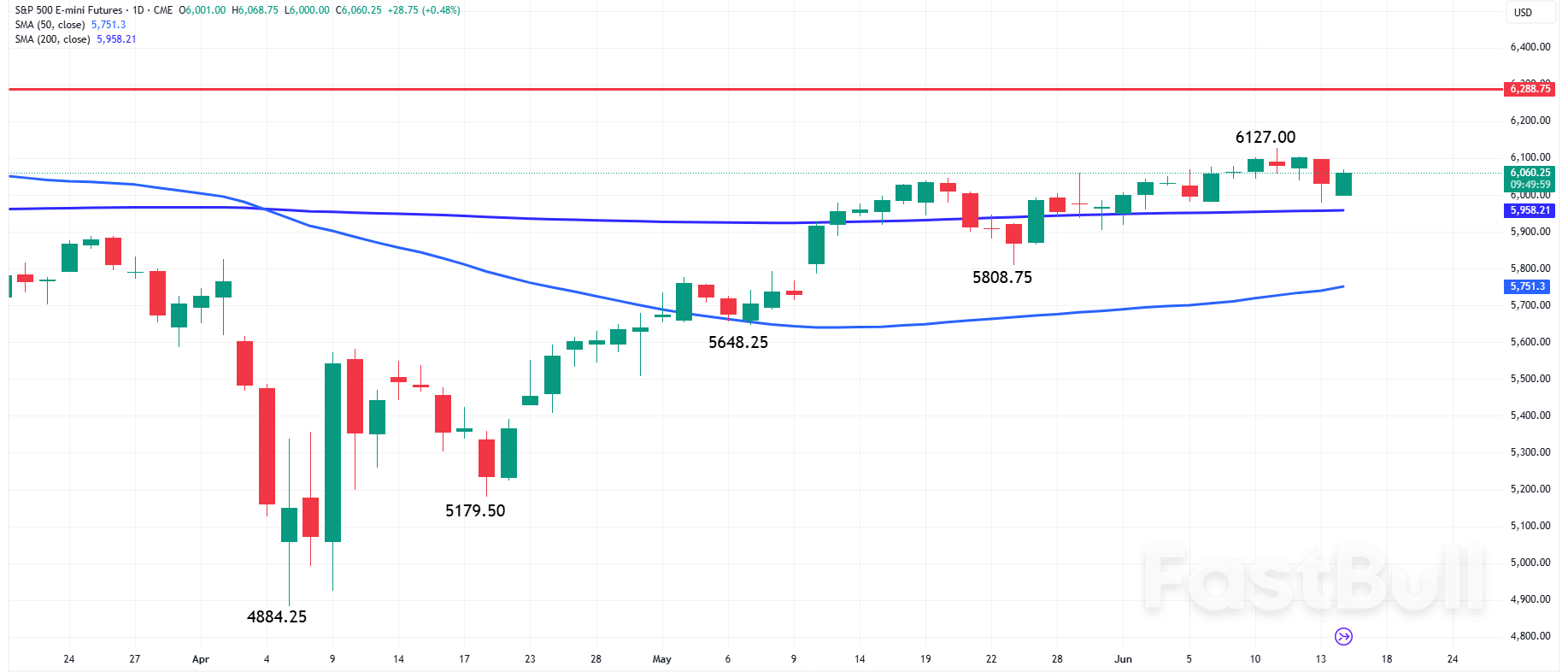
          S&P 500 Rebounds, but Traders Brace for Volatility Heading into Late June

          S&P500 Forecast: Can the Stock Market Sustain Momentum with Fed and Trade Risks Ahead?_1Daily E-mini S&P 500 Index

          After a 20% rally from April lows, U.S. stocks have regained ground, but traders are approaching the second half of June with caution as persistent headwinds weigh on sentiment. The S&P 500 closed back above the 6,000 mark for the first time since February, yet analysts warn this recovery may mark a pause—not a pivot—in market pressure.
          The recent bounce has been largely attributed to tariff delays, dubbed a “fiscal put” by Fidelity, which helped avert a steeper correction. Still, stretched valuations are raising red flags. With the forward P/E ratio nearing 21, many strategists see limited room for upside and expect a trading range to define the second half of 2025.

          Are Ongoing Tariff Risks Capping Upside for Equities?

          Trade uncertainty remains a major overhang. Markets reacted sharply to President Trump’s April tariff announcement—dubbed “Liberation Day”—which triggered the year’s steepest selloff. While a 90-day tariff pause has helped stabilize equities, the July 9 expiration could reignite volatility, especially if a deal with China or other key partners fails to materialize.
          The tariff standoff is already weighing on business investment and consumer sentiment. Economists warn that unresolved negotiations could shave off GDP growth through the rest of the year. With few signs of resolution, markets remain vulnerable to sudden moves tied to trade headlines.

          How Is the Federal Reserve Responding to Mixed Economic Signals?

          The Fed is expected to hold rates steady at 4.25%–4.50% in its upcoming June meeting, as inflation shows signs of easing but labor data deteriorates. CPI and PPI have cooled to 2.4% and 2.6%, respectively, but BNP Paribas warns that sustained tariffs could keep inflation elevated into 2026.
          Meanwhile, job growth slowed dramatically. ADP reported just 37,000 new payrolls in May—well below expectations—suggesting a softening economy. Rate cut expectations have risen slightly, with markets pricing in nearly two 25-basis-point cuts this year, though skepticism remains over whether the Fed will act.

          Are Geopolitical Events Driving Market Correlations?

          The Israel-Iran conflict added a fresh layer of risk. Gold and oil surged while equities pulled back as risk-off sentiment returned. Crude prices jumped 5%–7% on Middle East tensions, and while short-term, such spikes complicate inflation outlooks and central bank policy planning.

          What’s the Market Outlook Heading into Q3 2025?

          Market resilience since April is notable, but analysts see limited momentum ahead. Unless trade deals progress, Fed policy shifts, or geopolitical tensions ease, equities are likely to remain range-bound. Traders are opting for selectivity and patience over broad risk-taking, positioning for volatility rather than a sustained rally.

          Source: fxempire

          Risk Warnings and Disclaimers
          You understand and acknowledge that there is a high degree of risk involved in trading. Following any strategies or investment methods may lead to potential losses. The content on the site is provided by our contributors and analysts for information purposes only. You are solely responsible for determining whether any trading assets, securities, strategy, or any other product is suitable for investing based on your own investment objectives and financial situation.
          Add to Favorites
          Share

          Shares nudge up, oil dips, with Middle East and central banks in focus

          Adam

          Stocks

          Commodity

          Economic

          World shares nudged up on Monday, helped by oil walking back some of last week's increase, though the conflict between Israel and Iran remained a concern, adding further uncertainty to a week packed with central bank meetings.
          The escalation in the Middle East came just as Group of Seven leaders were gathering in Canada, with U.S. President Donald Trump's tariffs already straining ties.
          Iranian missiles struck Israel's Tel Aviv and the port city of Haifa on Monday, killing at least eight people and destroying homes, prompting Israel's defence minister to warn that Tehran residents would "pay the price and soon".
          Yet there was no sign of panic among investors as currency markets stayed calm and Wall Street stock futures firmed after an early dip.
          S&P 500 futures rose 0.6%, and Brent was last off just over 1% at $73.38 a barrel, , which analysts attributed to the fact the weekend strikes did not affect production and export facilities.
          But last week's 13% surge means its inflationary impact, if sustained, could make the Federal Reserve more nervous about giving too many hints at its Wednesday meeting about interest rate cuts later in the year.
          Markets are still wagering on two cuts by December, with a first move in September seen as most likely.
          "The key is how much flexibility the Fed thinks it has. We've been pleasantly surprised we've not yet seen inflationary pass-through from the tariffs," said Ben Laidler, head of equity strategy at Bradesco BBI.
          "The situation in the Middle East is the major issue of the day. The message from the market is that it isn't too afraid, but it does turn what was already going to be a busy week into a frenetic one, and that has a lot of people on the sidelines."
          Data on U.S. retail sales on Tuesday may show a pullback in autos dragging the headline number down even as core sales edge higher. A market holiday on Thursday means weekly jobless claims figures are out on Wednesday.
          For now, investors were waiting for this week's developments and MSCI's all-country world share index gained 0.2%, to sit a touch below last week's record high.
          Europe's STOXX 600 (.STOXX), rose 0.4%, led by a rebound in travel stocks after they suffered a large fall on Friday, (.SXTP), and Gulf stocks also recovered.
          Earlier in the day, Chinese blue chips (.CSI300), added 0.5%, and Hong Kong (.HSI), gained 0.7% as data showed Chinese retail sales rose 6.4% in May to handily top forecasts, while industrial output was in line with expectations.
          EXPOSED TO OIL
          In currency markets, the dollar gave back some of last Friday's gains against European currencies - the euro was up 0.2% at $1.1571 - and held steady against the Japanese yen at 144.16 .
          The spike in oil prices is marginally negative for the yen and euro as both Japan and the EU are major importers of energy, while the United States is an exporter.
          Currencies from oil exporters Norway and Canada both benefited, with the Norwegian crown hitting its highest since early 2023, before steadying.
          "We should expect that economies with a positive energy trade balance should see their currencies benefiting from the shock to oil prices," noted analysts at Deutsche Bank.
          "It's notable the dollar is in this category, highlighting how the U.S. has moved from a net energy-importer to a net exporter in recent years."
          Central banks in Norway and Sweden meet this week, with the latter expected to trim rates.
          The Swiss National Bank meets on Thursday and is considered certain to cut by at least a quarter point to take rates to zero, with some chance it may go negative given the strength of the Swiss franc.
          The Bank of Japan holds a policy meeting on Tuesday and is widely expected to hold rates at 0.5%, while leaving open the possibility of tightening later in the year.
          There is also speculation it could consider slowing the rundown of its government bond holdings from next fiscal year.
          Government bond yields nudged higher around the world. The U.S. 10-year Treasury yield was last up 3 basis points at 4.45% Germany's 10-year Bund yield was up 2 bps at 2.56%.
          The calmer mood across markets saw some of gold's safe-haven bid reverse and it was down 0.55% at $3,413 an ounce.

          Source:Reuters

          To stay updated on all economic events of today, please check out our Economic calendar
          Risk Warnings and Disclaimers
          You understand and acknowledge that there is a high degree of risk involved in trading. Following any strategies or investment methods may lead to potential losses. The content on the site is provided by our contributors and analysts for information purposes only. You are solely responsible for determining whether any trading assets, securities, strategy, or any other product is suitable for investing based on your own investment objectives and financial situation.
          Add to Favorites
          Share

          Israel-Iran Crisis: How Vital Is the Strait of Hormuz for the Oil Market?

          Warren Takunda

          Middle East Situation

          Economic

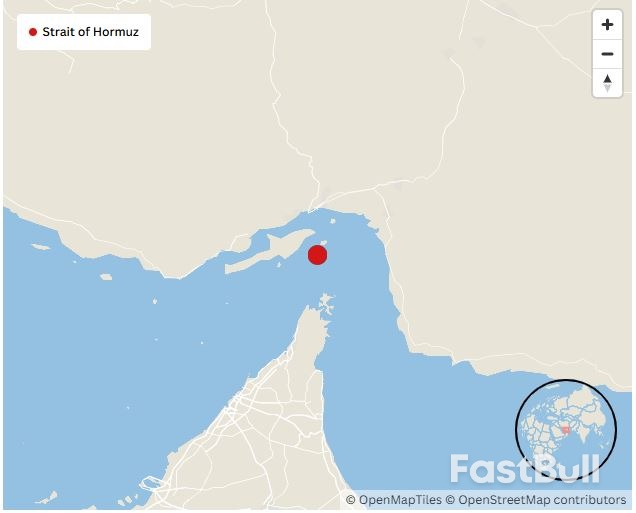
          The flare-up of tensions between Israel and Iran has reignited concerns over the security of the Strait of Hormuz, a vital artery for the global energy market.
          This narrow stretch of water, just 29 nautical miles wide at its tightest point, funnels nearly a third of the world’s seaborne oil and a fifth of global LNG.
          The U.S. Energy Information Administration (EIA) calls it the "world’s most important oil chokepoint," underlining the strategic importance of the passage that links the Persian Gulf with the Gulf of Oman and the Arabian Sea.
          Investors and analysts are weighing the implications of a potential disruption in this narrow but critical waterway. What happens if the Strait of Hormuz is suddenly sealed off?
          Israel-Iran Crisis: How Vital Is the Strait of Hormuz for the Oil Market?_1

          Strait of Hormuz Map

          Why is the Strait of Hormuz crucial for global energy market?

          Following Israeli attacks on Iran, Iranian officials have raised the spectre of closing the Strait—triggering a sharp surge in crude prices.
          According to the International Energy Agency (IEA), around 20 million barrels per day (mb/d) of crude oil and refined products passed through the Strait of Hormuz in 2023, representing nearly 30% of total global oil trade.
          Most of this volume—around 70%—was bound for Asia, with China, India and Japan among the largest recipients.
          While alternative pipeline infrastructure exists, it is limited. The IEA estimates that only 4.2 mb/d of crude oil can be rerouted via overland routes, such as Saudi Arabia’s East-West pipeline to the Red Sea and the UAE’s Abu Dhabi Crude Oil Pipeline to Fujairah. This capacity represents barely one quarter of the typical daily volume transiting the Strait.
          “Any prolonged crisis in the Strait of Hormuz would not only disrupt shipments from key Gulf producers—Saudi Arabia, the UAE, Kuwait, Iraq and Qatar—but also make inaccessible the majority of the world’s spare production capacity, which is concentrated in the Persian Gulf,” the IEA warned in a report.
          LNG markets are even more exposed to potential disruptions. All LNG exports from Qatar—the world’s second-largest LNG exporter—and the UAE must pass through the Strait. The IEA reports that 90 billion cubic metres (bcm) of LNG transited the Strait in the first ten months of 2023, equal to 20% of global LNG trade.
          With no viable alternative routes for LNG exports from Qatar or the UAE, any maritime closure would severely tighten global supply. Around 80% of these LNG volumes are destined for Asia, while Europe receives roughly 20%, meaning disruptions would exacerbate competition between regions, especially in a tight market.
          “The sheer volume of oil passing through the Strait and the scarcity of alternative routes means even brief disruptions would have significant consequences for the global market,” the IEA stated.

          How far could oil rise if Strait of Hormuz is blocked?

          While a full closure remains a low-probability scenario, analysts agree that the threat alone is enough to inject volatility into energy markets.
          Crude oil prices surged by 13% last week amid escalating tensions between Israel and Iran. Although prices have since eased slightly after reports confirmed that Iranian energy infrastructure remained untouched by Israeli strikes, the risk of further escalation—and potential disruption to global energy flows—remains elevated.
          In response, Wall Street analysts have been quick to assess the possible fallout from any interruption of oil and gas shipments through the Persian Gulf, particularly the Strait of Hormuz.
          Goldman Sachs warned that an extreme risk scenario involving a prolonged closure of the Strait could push prices well above $100 per barrel.
          The investment bank estimates that Iran currently produces around 3.6 million barrels per day (mb/d) of crude oil and 0.8 mb/d of condensates, with total seaborne exports averaging 2.1 mb/d so far this year—most of it heading to China. T
          ING’s head of commodities strategy, Warren Patterson, indicates that the market has begun pricing in a substantially higher geopolitical risk premium in light of recent developments.
          Patterson stated that any disruption to Iranian oil flows would be enough to eliminate the expected oil surplus for the fourth quarter of 2025, likely pushing Brent crude prices toward $80 per barrel.
          Yet, the analyst warns that a more severe scenario—such as a disruption of shipping through the Strait of Hormuz—could be far more consequential.
          “Almost a third of global seaborne oil passes through this chokepoint,” he noted. “A significant disruption to these flows could drive prices up to $120 per barrel, particularly because most of OPEC’s spare capacity is located in the Persian Gulf and would be inaccessible under such conditions.”
          "This escalation also has ramifications for the European gas market," he added.

          What to expect next?

          The Strait of Hormuz is more than just a shipping lane—it’s a lifeline for global energy.
          With no easy detours for oil or LNG flows, its vulnerability puts markets on edge every time tensions flare in this region. A full closure of the Strait may still seem a remote event, but the mere threat is enough to rattle markets and keep oil prices elevated.
          As Iranian and Israeli forces continue to exchange strikes, the risk of miscalculation looms large. In a region where diplomacy is fragile and stakes are high, one wrong move could turn a regional conflict into a global energy crisis.

          Source: Euronews

          To stay updated on all economic events of today, please check out our Economic calendar
          Risk Warnings and Disclaimers
          You understand and acknowledge that there is a high degree of risk involved in trading. Following any strategies or investment methods may lead to potential losses. The content on the site is provided by our contributors and analysts for information purposes only. You are solely responsible for determining whether any trading assets, securities, strategy, or any other product is suitable for investing based on your own investment objectives and financial situation.
          Add to Favorites
          Share

          Iran Conflict Poses Rewards And Risks gor OPEC+

          Glendon

          Commodity

          Political

          The conflict roiling Iran poses rewards and peril for fellow members of the OPEC+ oil cartel.

          The price rally triggered by Israel’s offensive reversed the slump that the Organization of the Petroleum Exporting Countries and its allies caused in recent months by ramping up production. That should shore up revenues for the coalition.

          Now there’s the question of what OPEC+ should do next.

          So far, the Israeli onslaught has left Iran’s crude production and export facilities unchanged. OPEC Secretary General Haitham Al-Ghais has said there’s no immediate need for the group to respond.

          Nonetheless, group leader Saudi Arabia is intent on swiftly reviving halted production and regaining the market share the alliance ceded to rivals during the past few years.

          Riyadh pushed through three monthly group increases of 411,000 barrels a day — triple the initially scheduled amount — in quick succession. During the next few weeks, OPEC+ members will decide whether to approve another hike for August.

          Frothy prices have the potential to assuage some of the resistance the Saudis have encountered from partners such as Russia, thus easing approval of another boost. The market upturn may even embolden the kingdom to press for a bigger increase.

          But there are, of course, also hazards for OPEC+.

          Given the lack of any supply disruption, a decision to expedite production increases the risk of swelling the global oil surplus that Wall Street analysts see on the horizon.

          Current hostilities could expand and hit energy infrastructure across the Middle East.

          Also, Iran could retaliate against Israel by encouraging proxies such as the Houthis in Yemen to harass tankers in the region or impede the critical Strait of Hormuz waterway.

          If Iranian oil flows are disrupted, the Saudis and other Gulf states will likely come under pressure from US President Donald Trump to compensate for those losses by tapping their spare capacities.

          That possibly may put the Gulf nations’ energy assets in the crosshairs. When the Saudis backed the crackdown on Tehran during Trump’s first term, their critical Abqaiq processing plant suffered a paralyzing bombardment claimed by the Houthis.

          China churned out less steel in May compared with the previous year as mills responded to the government’s pledge to cut production. Output declined 6.9% to 86.55 million tons, pushing the total 1.7% lower for the first five months. It’s the first year-on-year contraction in the monthly figure since Beijing vowed to address the industry’s glut during its annual policy meeting in March, according to the statistics bureau.

          Oil erased another large increase, with traders monitoring attacks between Iran and Israel that have spared critical infrastructure for now. Brent traded down as much as 1.3% after leaping higher at the open.

          The United Nations atomic watchdog convened an emergency meeting to assess Israel’s attacks on Iranian nuclear facilities and to discuss the disruptions to its oversight of the Islamic Republic’s stockpile of near-bomb grade uranium.

          Some oil tanker owners and managers have paused offering their vessels for Middle Eastern routes since Friday as they assess the risks from the Israel-Iran conflict, fueling concerns over export flows from the region.

          Abu Dhabi National Oil Co. made an $18.7 billion offer for Australian fossil fuel producer Santos Ltd., an audacious overseas move by the Middle Eastern company as it seeks to expand production of liquefied natural gas.

          Nippon Steel Corp. shareholders are weighing the benefits of the $14.1 billion acquisition of United States Steel Corp., with a key short-term concern being how to finance the all-cash deal and promised investments.

          Five Key Charts to Watch in Global Commodity Markets

          Monday: OPEC monthly oil market report; Energy Asia conference, Kuala Lumpur (through Wednesday); China industrial output for May; Asia Pacific Precious Metals Conference, Singapore (through Tuesday); USDA export inspections for corn, soybeans, wheat

          Tuesday: International Energy Agency’s monthly oil market report and Oil 2025 medium-term outlook; American Petroleum Institute’s weekly report on US oil inventories

          Wednesday: US Energy Information Administration’s weekly reports on oil, natural gas and ethanol inventories; Japan Energy Summit and Exhibition, Tokyo (through Friday); Australian Energy Week, Melbourne (through Friday)

          Thursday: AGM for Helleniq Energy Holdings SA

          Friday: Baker Hughes Co. weekly rig count report; USDA total milk production

          Source: Bloomberg Europe

          Risk Warnings and Disclaimers
          You understand and acknowledge that there is a high degree of risk involved in trading. Following any strategies or investment methods may lead to potential losses. The content on the site is provided by our contributors and analysts for information purposes only. You are solely responsible for determining whether any trading assets, securities, strategy, or any other product is suitable for investing based on your own investment objectives and financial situation.
          Add to Favorites
          Share

          Opec Keeps Oil Demand Growth Projections Unchanged

          Michelle

          Commodity

          Opec has kept its global oil demand growth forecasts for this year and next unchanged.

          The group sees oil consumption growing by 1.29mn b/d to 105.13mn b/d in 2025 and by 1.28mn b/d to 106.42mn b/d in 2026, according to its latest Oil Market Report (OMR) released today.

          These projections remain markedly higher than the IEA's forecasts.

          Opec upgraded its first quarter demand estimate, based on actual data, but said this increase was offset by lower expectations of oil demand in key consuming countries China and India in the second quarter and later in the year, mostly driven by US trade policies.

          In terms of supply, Opec downgraded its 2026 non-Opec+ liquids supply growth forecasts for a third month in a row, mainly driven by the effects of lower oil prices on US shale producers. Opec now sees non-Opec+ liquids supply growth growing by 730,000 b/d in 2026, compared with 800,000 b/d in last month's OMR. Opec expects US liquids output growth of 210,000 b/d, down from 460,000 b/d in March.

          But the group kept its 2025 non-Opec+ liquids supply growth forecast unchanged at 810,000 b/d.

          Opec made no reference to the ongoing conflict between Israel and Iran in its report, suggesting the hostilities have not affected its supply and demand balances. The Opec secretariat last week criticised the IEA for saying it was ready to release emergency oil stocks if necessary. Opec said there were currently "no developments in supply or market dynamics that warrant unnecessary actions" and that such statements raise "false alarms" and project "market fear."

          Opec+ crude production — including Mexico — rose by 180,000 b/d to 41.23mn b/d in May, according to an average of secondary sources that includes Argus. Opec puts the call on Opec+ crude at 42.7mn b/d in 2025 and 43.2mn b/d in 2026.

          Source: Argus Media

          Risk Warnings and Disclaimers
          You understand and acknowledge that there is a high degree of risk involved in trading. Following any strategies or investment methods may lead to potential losses. The content on the site is provided by our contributors and analysts for information purposes only. You are solely responsible for determining whether any trading assets, securities, strategy, or any other product is suitable for investing based on your own investment objectives and financial situation.
          Add to Favorites
          Share

          London Midday: FTSE Extends Gains as Markets Resilient Amid Mideast Tensions

          Warren Takunda

          Economic

          London stocks had extended gains by midday on Monday despite the conflict between Iran and Israel entering its fourth day.
          The FTSE 100 was 0.4% firmer at 8,889.19.
          Russ Mould, investment director at AJ Bell, said: "European shares were surprisingly resilient against a backdrop of uncertainty.
          "Helping to prop up FTSE 100 was continued strength in oil prices as tensions remained high in the Middle East. Crude oil rose 1.1% to $72 per barrel, driving shares in FTSE heavyweights BP and Shell and taking the broader market upwards in the process.
          "Global oil prices jumped last week after Israel attacked Iran, raising concerns about major disruptions to supply. Despite a weekend of violence between the two countries, investors showed no signs of panicking, judging by movements in financial markets on Monday. Future prices imply a positive day for Wall Street when US markets open later on.
          "The gold price is often a measure of investor sentiment, going up when people are worried and going down when they’re optimistic. The precious metal slipped 0.6% to $3,432 per ounce which indicates that investors remain alert to ongoing geopolitical tensions but they’re not reaching for their tin hats.
          "The Middle East conflict remains a fluid situation and there is the potential for markets to still experience sudden jolts if the tension escalates further."
          Away from geopolitics, all eyes will be on central bank policy announcements this week, with decisions due from the Bank of Japan on Tuesday, the Federal Reserve and Riksbank on Wednesday and Norges Bank, the Bank of England and the Swiss National Bank on Thursday.
          "We expect all but the SNB to stay on hold and expect the SNB to cut the rate 25bp to 0%," Danske Bank said.
          On the macro front, there was some encouraging news from China, where figures from the National Bureau of Statistics showed that retail sales growth jumped to a 15-month high in May as national holidays and government efforts to encourage spending despite additional trade tariffs from the US.
          Retail sales surged 6.4% year-on-year in May to 4.13trn yuan ($575bn), following 5.1% growth in April. That was well ahead of the 5.0% consensus estimate and the strongest rate of growth since December 2023, as urban retail sales grew 6.5% and rural sales gained 5.4%.
          The acceleration was thought to be a result of increased spending during Labor Day (1 May) and the Dragon Boat Festival (31 May), while stimulus packages by Beijing to promote domestic consumption also helped as the economy began to feel the impacts of its trade war with Washington.
          Retail sales over the first five months of the year totalled CNY20.32trn, up 5% over last year.
          On home shores, the latest house price index from Rightmove showed that house prices eased in June following stronger-than-expected growth in April and May.
          Prices eased by 0.4% in June, compared to a 0.6% uplift in May and April’s 1.4% jump. The average asking price is now £378,240.
          Rightmove said the fall was unusual for June. The average June increase has been 0.4% over the last ten years.
          However, it noted that the dip followed "stronger-than-expected price growth in April and May, and appears to be part of a delayed response to increased stamp duty tax".
          Changes to stamp duty thresholds came into effect in April, causing a rush of sales as people hurried to complete ahead of the deadline.
          Agreed sales were 6% higher year-on-year in June, the highest number of sales agreed in any month since March 2022.
          Rightmove’s Colleen Babcock said: "It appears that we're now seeing the decade-high level of homes for sale, and the recent stamp duty increases in England, have a delayed impact on new sellers' pricing.
          "Agents have been telling us that sellers need to set a competitive price to have a better chance of finding a buyer in the current market, and it looks like many are listening and responding to that message.
          "Such realistic pricing will remain key in the coming months."
          Year-on-year, house prices rose 0.8% in May.
          In equity markets, gambling and sports betting group Entain surged to the top of the FTSE 100 after it upgraded its guidance for BetMGM following a strong first half from the US division.
          Asia-focused Standard Chartered and Prudential were in the black after the upbeat Chinese retail sales data.
          Oil majors BP and Shell gushed higher as oil prices rose again amid tensions in the Middle East.
          Shares in Spectris rallied after it rebuffed a takeover approach from US private equity giant KKR, fuelling hopes of a potential bidding war. The British manufacturer of high-tech scientific instruments is already in discussions with American buyout firm Advent International regarding a possible cash offer of £37.63 per share, or £4.4bn including debt.
          Metro Bank shares sparked following reports over the weekend that it has been approached by private equity firm Pollen Street Capital about a possible takeover.

          Source: Sharecast

          To stay updated on all economic events of today, please check out our Economic calendar
          Risk Warnings and Disclaimers
          You understand and acknowledge that there is a high degree of risk involved in trading. Following any strategies or investment methods may lead to potential losses. The content on the site is provided by our contributors and analysts for information purposes only. You are solely responsible for determining whether any trading assets, securities, strategy, or any other product is suitable for investing based on your own investment objectives and financial situation.
          Add to Favorites
          Share

          An Iranian Bomb Won’t Be Stopped By Bombing Alone

          Glendon

          Political

          Whatever their differences, the US and Israel share one overriding priority when it comes to Iran: to prevent the regime from acquiring a nuclear weapon. Devastating Israeli airstrikes have both delayed that possibility and, over the longer term, made an Iranian attempt to “break out” more likely. The US must focus on what it can do to lower those odds.

          Israel’s initial surprise attack killed several high-ranking generals and nuclear scientists and knocked out many of Iran’s air defenses. Israeli forces have targeted the country’s three main nuclear sites at Natanz, Isfahan and Fordow, apparently crippling its only uranium-conversion facility. The strikes widened over the weekend to include gas fields and other energy-related targets, even as Iranian missiles hit Tel Aviv and Haifa.

          How much further Israel can degrade Iran’s nuclear infrastructure without US bunker-busters — needed to penetrate the most deeply buried sites — remains unclear. The program has likely been set back months, perhaps more.

          But, assuming the fighting doesn’t lead to the regime’s collapse, the assassinated generals and physicists will be replaced, probably by even more hawkish successors. Those officials will have every incentive to accelerate efforts to develop a bomb secretly, just as Saddam Hussein initially did after Israeli F-16s destroyed Iraq’s Osirak nuclear reactor in 1981.

          Even if Iran returns to the negotiating table, it will thus be even harder to trust any pledges the regime makes. To be credible, any new nuclear agreement would require inspections that are more intrusive and persistent than ever before. Any enrichment capability, even the low levels required for civilian use, will almost certainly have to be eliminated.

          Why would Iran agree to such conditions now, after refusing for years? Much depends on how long the fighting continues and how much more damage it suffers. But the extent to which Israeli intelligence has penetrated the country’s security establishment is obvious. If the regime attempts to race for the bomb in the future, it can’t be sure it won’t be exposed — in which case the US can lend its B-2 bombers to the effort to destroy underground enrichment sites.

          Nor can Iranian leaders be sure they will themselves survive a new round of strikes. Their air defenses will be difficult to restore. Meanwhile, Israel has defanged most of their proxies across the region. Erstwhile allies such as Russia and China have offered only symbolic support. The regime remains deeply unpopular with its own citizens, and the country’s economy is a shambles.

          The billions in oil revenue the regime sacrificed to sanctions to pursue its nuclear ambitions clearly failed to buy it security. US officials should underscore that further attempts will be equally unsuccessful.

          As the US waits for Iranian leaders to accept this reality, it should be working with its Group of Seven and Gulf allies, possibly even Russia and China, to unify around a set of demands to verifiably eliminate the possibility of an Iranian bomb. It should continue helping defend Israel against retaliation while striving to prevent the conflict from widening.

          The uncomfortable fact remains that diplomacy — however unlikely it may seem at the moment — is the only path to security and a sustainable peace in the region. If a strong nuclear deal was desirable before this conflict, it’s vital now.

          Source: Bloomberg Europe

          Risk Warnings and Disclaimers
          You understand and acknowledge that there is a high degree of risk involved in trading. Following any strategies or investment methods may lead to potential losses. The content on the site is provided by our contributors and analysts for information purposes only. You are solely responsible for determining whether any trading assets, securities, strategy, or any other product is suitable for investing based on your own investment objectives and financial situation.
          Add to Favorites
          Share
          FastBull
          Copyright © 2025 FastBull Ltd

          728 RM B 7/F GEE LOK IND BLDG NO 34 HUNG TO RD KWUN TONG KLN HONG KONG

          TelegramInstagramTwitterfacebooklinkedin
          App Store Google Play Google Play
          Products
          Charts

          Chats

          Q&A with Experts
          Screeners
          Economic Calendar
          Data
          Tools
          Membership
          Features
          Function
          Markets
          Copy Trading
          Latest Signals
          Contests
          News
          Analysis
          24/7
          Columns
          Education
          Company
          Careers
          About Us
          Contact Us
          Advertising
          Help Center
          Feedback
          User Agreement
          Privacy Policy
          Business

          White Label

          Data API

          Web Plug-ins

          Poster Maker

          Affiliate Program

          Risk Disclosure

          The risk of loss in trading financial instruments such as stocks, FX, commodities, futures, bonds, ETFs and crypto can be substantial. You may sustain a total loss of the funds that you deposit with your broker. Therefore, you should carefully consider whether such trading is suitable for you in light of your circumstances and financial resources.

          No decision to invest should be made without thoroughly conducting due diligence by yourself or consulting with your financial advisors. Our web content might not suit you since we don't know your financial conditions and investment needs. Our financial information might have latency or contain inaccuracy, so you should be fully responsible for any of your trading and investment decisions. The company will not be responsible for your capital loss.

          Without getting permission from the website, you are not allowed to copy the website's graphics, texts, or trademarks. Intellectual property rights in the content or data incorporated into this website belong to its providers and exchange merchants.

          Not Logged In

          Log in to access more features

          FastBull Membership

          Not yet

          Purchase

          Become a signal provider
          Help Center
          Customer Service
          Dark Mode
          Price Up/Down Colors

          Log In

          Sign Up

          Position
          Layout
          Fullscreen
          Default to Chart
          The chart page opens by default when you visit fastbull.com