• Trade
  • Markets
  • Copy
  • Contests
  • News
  • 24/7
  • Calendar
  • Q&A
  • Chats
Trending
Screeners
SYMBOL
LAST
BID
ASK
HIGH
LOW
NET CHG.
%CHG.
SPREAD
SPX
S&P 500 Index
6836.68
6836.68
6836.68
6878.28
6827.18
-33.72
-0.49%
--
DJI
Dow Jones Industrial Average
47686.29
47686.29
47686.29
47971.51
47611.93
-268.69
-0.56%
--
IXIC
NASDAQ Composite Index
23506.35
23506.35
23506.35
23698.93
23455.05
-71.77
-0.30%
--
USDX
US Dollar Index
99.020
99.100
99.020
99.160
98.730
+0.070
+ 0.07%
--
EURUSD
Euro / US Dollar
1.16394
1.16401
1.16394
1.16717
1.16162
-0.00032
-0.03%
--
GBPUSD
Pound Sterling / US Dollar
1.33264
1.33273
1.33264
1.33462
1.33053
-0.00048
-0.04%
--
XAUUSD
Gold / US Dollar
4192.18
4192.62
4192.18
4218.85
4175.92
-5.73
-0.14%
--
WTI
Light Sweet Crude Oil
58.637
58.667
58.637
60.084
58.495
-1.172
-1.96%
--

Community Accounts

Signal Accounts
--
Profit Accounts
--
Loss Accounts
--
View More

Become a signal provider

Sell trading signals to earn additional income

View More

Guide to Copy Trading

Get started with ease and confidence

View More

Signal Accounts for Members

All Signal Accounts

Best Return
  • Best Return
  • Best P/L
  • Best MDD
Past 1W
  • Past 1W
  • Past 1M
  • Past 1Y

All Contests

  • All
  • Trump Updates
  • Recommend
  • Stocks
  • Cryptocurrencies
  • Central Banks
  • Featured News
Top News Only
Share

President Trump Is Committed To The Continued Cessation Of Violence And Expects The Governments Of Cambodia And Thailand To Fully Honor Their Commitments To End This Conflict - Senior White House Official

Share

[Water Overflows From Spent Fuel Pool At Japanese Nuclear Facility] According To Japan's Nuclear Waste Management Company, Following A Strong Earthquake Off The Coast Of Aomori Prefecture Late On December 8th, Workers At The Nuclear Waste Treatment Plant In Rokkasho Village, Aomori Prefecture, Discovered "at Least 100 Liters Of Water" On The Ground Around The Spent Fuel Pool During An Inspection. Analysis Suggests This Water "may Have Overflowed Due To The Earthquake's Shaking." However, It Is Reported That The Overflowed Water "remains Inside The Building And Has Not Affected The External Environment."

Share

Trump Says Netflix, Paramount Are Not His Friends As Warner Bros Fight Heats Up

Share

On Monday (December 8), The ICE Dollar Index Rose 0.11% To 99.102 In Late New York Trading, Trading Between 98.794 And 99.227, Following A Significant Rally After The US Stock Market Opened. The Bloomberg Dollar Index Rose 0.12% To 1213.90, Trading Between 1210.34 And 1214.88

Share

Trump: Has Not Spoken To Kushner About Paramount Bid

Share

US President Trump: I Don’t Know Much About Paramount’s Hostile Takeover Bid For Warner Bros. Discovery

Share

Trump: I Want To Do What's Right

Share

Trump On Bids For Warner Bros: I'd Have To See Netflix, Paramount Percentages Of Market

Share

Trump On Vaccines: We Are Looking At A Lot Of Things

Share

Trump: EU Fine On X A “Nasty One”

Share

Trump: I Don't Want To Pay Insurance Companies, They Are Owned By Democrats

Share

Trump: On Healthcare, I Want The Money To Be Paid To The People

Share

US Treasury Secretary Bessenter: We Are Still Working Towards A Trade Agreement With India

Share

US Natural Gas Futures Drop 7% On Less Cold Forecasts, Near-Record Output

Share

[Trump: The US Will Not Experience Deflation] US President Trump Believes That US Inflation Will Decline Slightly Further, But There Will Be No Deflation

Share

Trump: We Will End Up Putting Severe Tariffs On Fertilizer From Canada If We Have To

Share

Bessent: We Are Still Working On India Trade Deal

Share

Brent Crude Futures Settle At $62.49/Bbl, Down $1.26, 1.98 Percent

Share

Trump: Farming Equipment Has Gotten Too Expensive

Share

Trump: We Will Take Off A Lot Of Environment Rules That Affect Tractor Companies

TIME
ACT
FCST
PREV
France Trade Balance (SA) (Oct)

A:--

F: --

P: --
Euro Zone Employment YoY (SA) (Q3)

A:--

F: --

P: --
Canada Part-Time Employment (SA) (Nov)

A:--

F: --

P: --

Canada Unemployment Rate (SA) (Nov)

A:--

F: --

P: --

Canada Full-time Employment (SA) (Nov)

A:--

F: --

P: --

Canada Labor Force Participation Rate (SA) (Nov)

A:--

F: --

P: --

Canada Employment (SA) (Nov)

A:--

F: --

P: --

U.S. PCE Price Index MoM (Sept)

A:--

F: --

P: --

U.S. Personal Income MoM (Sept)

A:--

F: --

P: --

U.S. Core PCE Price Index MoM (Sept)

A:--

F: --

P: --

U.S. PCE Price Index YoY (SA) (Sept)

A:--

F: --

P: --

U.S. Core PCE Price Index YoY (Sept)

A:--

F: --

P: --

U.S. Personal Outlays MoM (SA) (Sept)

A:--

F: --

P: --
U.S. 5-10 Year-Ahead Inflation Expectations (Dec)

A:--

F: --

P: --

U.S. Real Personal Consumption Expenditures MoM (Sept)

A:--

F: --

P: --
U.S. Weekly Total Rig Count

A:--

F: --

P: --

U.S. Weekly Total Oil Rig Count

A:--

F: --

P: --

U.S. Consumer Credit (SA) (Oct)

A:--

F: --

P: --
China, Mainland Foreign Exchange Reserves (Nov)

A:--

F: --

P: --

Japan Trade Balance (Oct)

A:--

F: --

P: --

Japan Nominal GDP Revised QoQ (Q3)

A:--

F: --

P: --

China, Mainland Imports YoY (CNH) (Nov)

A:--

F: --

P: --

China, Mainland Exports (Nov)

A:--

F: --

P: --

China, Mainland Imports (CNH) (Nov)

A:--

F: --

P: --

China, Mainland Trade Balance (CNH) (Nov)

A:--

F: --

P: --

China, Mainland Exports YoY (USD) (Nov)

A:--

F: --

P: --

China, Mainland Imports YoY (USD) (Nov)

A:--

F: --

P: --

Germany Industrial Output MoM (SA) (Oct)

A:--

F: --

P: --
Euro Zone Sentix Investor Confidence Index (Dec)

A:--

F: --

P: --

Canada National Economic Confidence Index

A:--

F: --

P: --

U.K. BRC Like-For-Like Retail Sales YoY (Nov)

--

F: --

P: --

U.K. BRC Overall Retail Sales YoY (Nov)

--

F: --

P: --

Australia Overnight (Borrowing) Key Rate

--

F: --

P: --

RBA Rate Statement
RBA Press Conference
Germany Exports MoM (SA) (Oct)

--

F: --

P: --

U.S. NFIB Small Business Optimism Index (SA) (Nov)

--

F: --

P: --

Mexico 12-Month Inflation (CPI) (Nov)

--

F: --

P: --

Mexico Core CPI YoY (Nov)

--

F: --

P: --

Mexico PPI YoY (Nov)

--

F: --

P: --

U.S. Weekly Redbook Index YoY

--

F: --

P: --

U.S. JOLTS Job Openings (SA) (Oct)

--

F: --

P: --

China, Mainland M1 Money Supply YoY (Nov)

--

F: --

P: --

China, Mainland M0 Money Supply YoY (Nov)

--

F: --

P: --

China, Mainland M2 Money Supply YoY (Nov)

--

F: --

P: --

U.S. EIA Short-Term Crude Production Forecast For The Year (Dec)

--

F: --

P: --

U.S. EIA Natural Gas Production Forecast For The Next Year (Dec)

--

F: --

P: --

U.S. EIA Short-Term Crude Production Forecast For The Next Year (Dec)

--

F: --

P: --

EIA Monthly Short-Term Energy Outlook
U.S. API Weekly Gasoline Stocks

--

F: --

P: --

U.S. API Weekly Cushing Crude Oil Stocks

--

F: --

P: --

U.S. API Weekly Crude Oil Stocks

--

F: --

P: --

U.S. API Weekly Refined Oil Stocks

--

F: --

P: --

South Korea Unemployment Rate (SA) (Nov)

--

F: --

P: --

Japan Reuters Tankan Non-Manufacturers Index (Dec)

--

F: --

P: --

Japan Reuters Tankan Manufacturers Index (Dec)

--

F: --

P: --

Japan Domestic Enterprise Commodity Price Index MoM (Nov)

--

F: --

P: --

Japan Domestic Enterprise Commodity Price Index YoY (Nov)

--

F: --

P: --

China, Mainland PPI YoY (Nov)

--

F: --

P: --

China, Mainland CPI MoM (Nov)

--

F: --

P: --

Italy Industrial Output YoY (SA) (Oct)

--

F: --

P: --

Q&A with Experts
    • All
    • Chatrooms
    • Groups
    • Friends
    Connecting
    .
    .
    .
    Type here...
    Add Symbol or Code

      No matching data

      All
      Trump Updates
      Recommend
      Stocks
      Cryptocurrencies
      Central Banks
      Featured News
      • All
      • Russia-Ukraine Conflict
      • Middle East Flashpoint
      • All
      • Russia-Ukraine Conflict
      • Middle East Flashpoint
      Search
      Products

      Charts Free Forever

      Chats Q&A with Experts
      Screeners Economic Calendar Data Tools
      Membership Features
      Data Warehouse Market Trends Institutional Data Policy Rates Macro

      Market Trends

      Market Sentiment Order Book Forex Correlations

      Top Indicators

      Charts Free Forever
      Markets

      News

      News Analysis 24/7 Columns Education
      From Institutions From Analysts
      Topics Columnists

      Latest Views

      Latest Views

      Trending Topics

      Top Columnists

      Latest Update

      Signals

      Copy Rankings Latest Signals Become a signal provider AI Rating
      Contests
      Brokers

      Overview Brokers Assessment Rankings Regulators News Claims
      Broker listing Forex Brokers Comparison Tool Live Spread Comparison Scam
      Q&A Complaint Scam Alert Videos Tips to Detect Scam
      More

      Business
      Events
      Careers About Us Advertising Help Center

      White Label

      Data API

      Web Plug-ins

      Affiliate Program

      Awards Institution Evaluation IB Seminar Salon Event Exhibition
      Vietnam Thailand Singapore Dubai
      Fans Party Investment Sharing Session
      FastBull Summit BrokersView Expo
      Recent Searches
        Top Searches
          Markets
          News
          Analysis
          User
          24/7
          Economic Calendar
          Education
          Data
          • Names
          • Latest
          • Prev

          View All

          No data

          Scan to Download

          Faster Charts, Chat Faster!

          Download App
          English
          • English
          • Español
          • العربية
          • Bahasa Indonesia
          • Bahasa Melayu
          • Tiếng Việt
          • ภาษาไทย
          • Français
          • Italiano
          • Türkçe
          • Русский язык
          • 简中
          • 繁中
          Open Account
          Search
          Products
          Charts Free Forever
          Markets
          News
          Signals

          Copy Rankings Latest Signals Become a signal provider AI Rating
          Contests
          Brokers

          Overview Brokers Assessment Rankings Regulators News Claims
          Broker listing Forex Brokers Comparison Tool Live Spread Comparison Scam
          Q&A Complaint Scam Alert Videos Tips to Detect Scam
          More

          Business
          Events
          Careers About Us Advertising Help Center

          White Label

          Data API

          Web Plug-ins

          Affiliate Program

          Awards Institution Evaluation IB Seminar Salon Event Exhibition
          Vietnam Thailand Singapore Dubai
          Fans Party Investment Sharing Session
          FastBull Summit BrokersView Expo

          South Korea Posts Sharpest Economic Decline Among Major Economies in Q1 2025

          Gerik

          Economic

          Summary:

          South Korea’s GDP contracted by 0.246% in Q1 2025—the steepest decline among 19 major economies—primarily due to weakened domestic consumption driven by high prices and household debt....

          South Korea Faces Steep Slowdown in Economic Growth

          On May 11, 2025, the Bank of Korea (BOK) released data showing that South Korea’s real gross domestic product (GDP) shrank by 0.246% in the first quarter of the year compared to the previous quarter. This figure marks the worst performance among 19 of the world’s largest economies that have published Q1 GDP data, including China and all 18 member states of the Organisation for Economic Co-operation and Development (OECD).
          This decline reflects a broader deceleration in South Korea’s economic momentum and places the country last in terms of quarterly growth performance, even behind the United States, which posted a more modest contraction of 0.069%.

          Domestic Demand Weakens Under Weight of Inflation and Household Debt

          Analysts widely attribute the contraction to weakening domestic demand. Rising consumer prices and persistently high levels of household debt have curbed spending power across Korean households. This combination has placed sustained pressure on the retail and services sectors, contributing significantly to the overall decline in output.
          Despite the contraction, BOK Governor Rhee Chang Yong cautioned against interpreting the downturn as a reason for immediate monetary easing. He emphasized that while the economy is indeed under pressure, the country is still within a policy cycle of loosening, and any rate cut decisions would need to be carefully timed.

          Comparative Performance of Global Economies

          In contrast to South Korea's contraction, several other major economies saw positive growth in Q1. Ireland led the pack with a 3.219% expansion, followed by China at 1.2%, Indonesia at 1.124%, and Spain at 0.568%. North American economies also performed moderately well, with Canada growing 0.4%. Among key European economies, Italy expanded by 0.26%, Germany by 0.211%, and France by 0.127%. The GDP figures for Japan and the United Kingdom have not yet been released.
          The broad disparity between South Korea’s performance and that of its peers highlights both external competitiveness challenges and internal consumption fragility. The situation raises concerns about South Korea’s resilience in a global context marked by trade volatility, tight monetary conditions, and structural consumer burdens.

          Policy Response: Supplementary Budget and Stimulus Measures

          In response to the slowdown, both the ruling conservative People Power Party (PPP) and the main opposition Democratic Party (DP) agreed on a supplementary budget worth 13.8 trillion won (approximately USD 10.6 billion), passed on May 1. The Ministry of Finance announced plans to disburse 70% of this budget before July to quickly inject liquidity into the economy.
          This fiscal measure underscores a shift toward counter-cyclical stimulus aimed at cushioning domestic demand. It reflects an attempt to balance between monetary restraint—cautiously maintained by the central bank—and proactive government spending to stabilize growth.
          South Korea’s Q1 contraction is not merely a statistical outlier but a reflection of deeper structural vulnerabilities, particularly in household consumption. While external demand remains essential, sustained domestic weakness may continue to weigh on future growth prospects. As global economies show varied trajectories, South Korea's policymakers face a complex balancing act between inflation control, debt management, and the need to reinvigorate internal demand without overreliance on external trade cycles.

          Source: The Korea Herald

          To stay updated on all economic events of today, please check out our Economic calendar
          Risk Warnings and Disclaimers
          You understand and acknowledge that there is a high degree of risk involved in trading. Following any strategies or investment methods may lead to potential losses. The content on the site is provided by our contributors and analysts for information purposes only. You are solely responsible for determining whether any trading assets, securities, strategy, or any other product is suitable for investing based on your own investment objectives and financial situation.
          Add to Favorites
          Share

          Donald Trump deals another blow to Big Pharma

          Adam

          Economic

          A report published in January 2024 by the US Department of Health and Human Services paints a damning picture: in the United States, drug prices are on average 2.78 times higher than in comparable countries. And up to 3.22 times higher for brand-name drugs.

          Why are drugs so expensive?

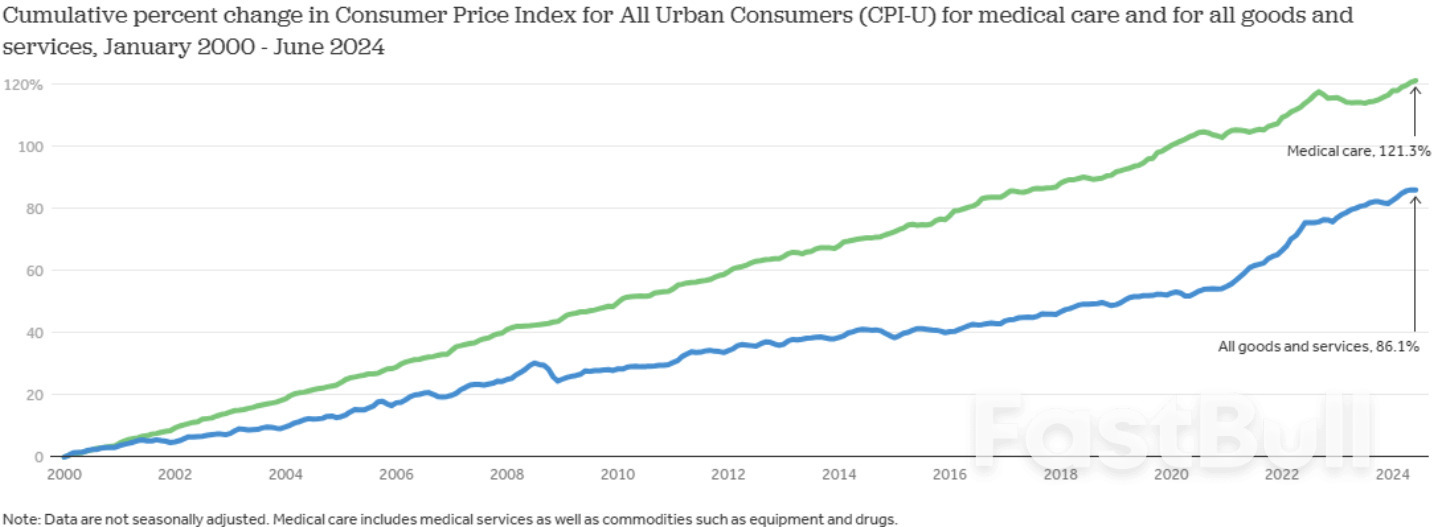
          The US market is largely deregulated. Each manufacturer sets its own prices with retailers, without direct intervention from the government. Since the vast majority of Americans are insured, they are unaware of the real cost of treatment. As a result, healthcare inflation far exceeds general inflation.
          Donald Trump deals another blow to Big Pharma_1

          Comparison of overall inflation and healthcare inflation

          In February, Trump had already signed an executive order imposing greater transparency on healthcare prices. This new text revives an old and controversial project.

          The return of an explosive project

          In 2020, Trump attempted to impose the "most favored nation" principle, which would refer to the lowest prices charged abroad. At the time, pharmaceutical companies reacted strongly, denouncing foreign interference in US prices. According to them, this policy could cost more than $1 trillion over ten years and harm access to healthcare for the most disadvantaged.
          Another argument put forward was the impact on innovation. Lower margins would weaken research, and generic manufacturers could flee the US market if prices became too restrictive.

          Foreign laboratories in the firing line

          According to a study by Ernst & Young, the US imported $203 billion worth of pharmaceutical products in 2023, 73% of which came from Europe (Ireland, Germany, Switzerland). The sector's trade deficit stood at $103 billion in 2023, rising to $139 billion in 2024. It is one of the country's largest, alongside the automotive and textile industries, which are also being targeted by Donald Trump.
          The US market remains the beating heart of the global pharmaceutical industry, accounting for 30-40% of the total market, 45% of sales and 22% of global production. Although the US pharmaceutical industry was quick to respond after the announcement, it is mainly foreign companies that are likely to suffer, given their heavy dependence on the US for their revenues.
          Here are a few examples if you would like to know more about the market reaction (the US share of revenue is shown in brackets):
          Japan: Takeda (49%), Astellas (42%), Daiichi Sankyo (32%)
          Australia: Clinuvel (> 50%), CSL Ltd (50%)
          India: Sun Pharma (31%), Cipla (19%), Lupin (35%) — the US accounts for a third of Indian pharmaceutical exports
          Belgium: ArgenX (84%), UCB (50%)
          France: EssilorLuxottica (42%), Sanofi (50%)
          Added to this are a series of worrying signs for the sector: the appointment of a new head of the FDA (considered unfavorable to the industry), threats of specific taxes, and incentives to relocate production.
          In a note published on Monday, Luisa Hector and Kerry Holford, analysts at Berenberg, stated: "For the 11 major pharmaceutical companies we cover, more than 40% of US sales go through government-funded channels. Bristol-Myers is the most exposed to price declines, Sanofi the least."

          Persistent legal uncertainty

          Trump has not detailed how his measure will be implemented. According to Politico, only certain drugs reimbursed by Medicare would be affected initially. And for Chris Meekins, an analyst at Raymond James, "the more dramatic the announcement, the less likely it is to happen," due to the risk of litigation.
          Since the Inflation Reduction Act of 2022, Medicare has already been able to negotiate the price of certain very expensive treatments. But according to industry analyst Evan Seigermann, the federal government still does not have the power to set prices in the private sector. Any attempt to expand this power could face opposition from the Republican-controlled Congress.

          An industry under pressure

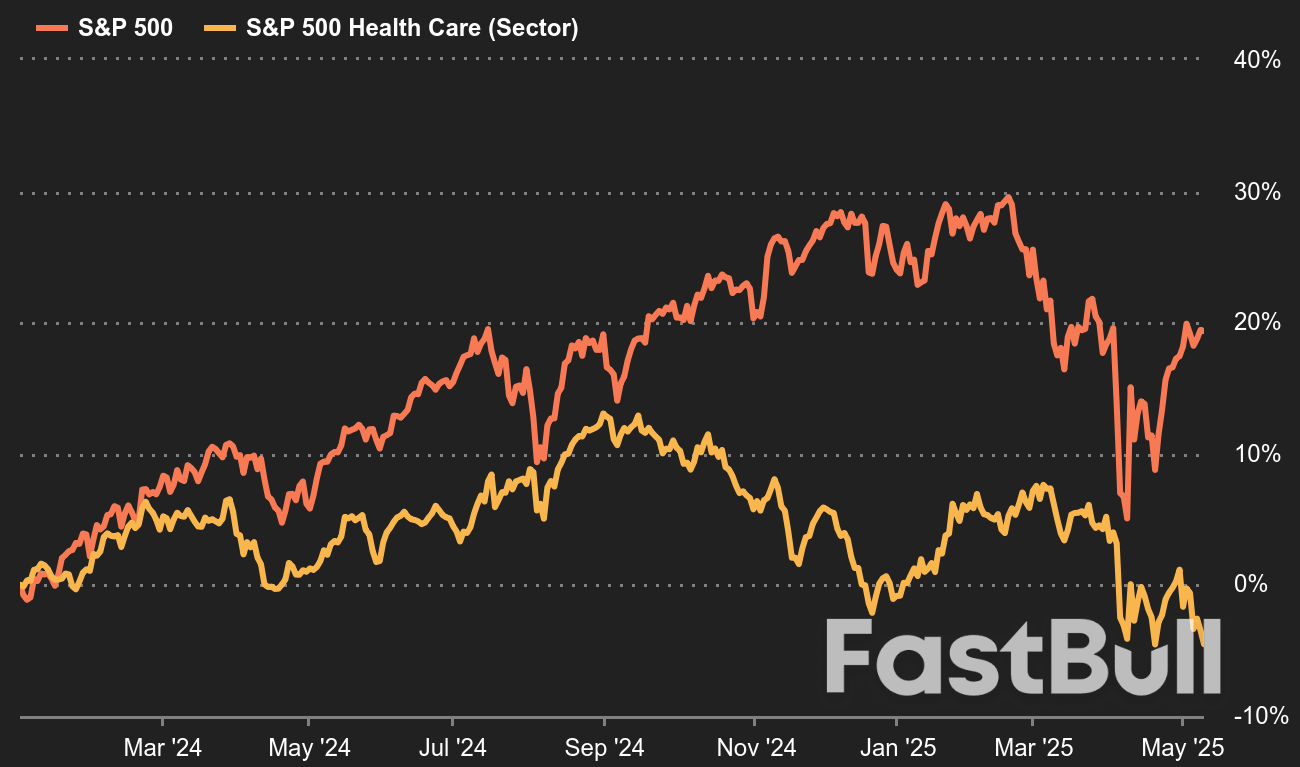
          Against this backdrop, investors remain cautious. Trump's desired reform looks difficult to implement, but it is fueling uncertainty about the future of the pharmaceutical industry, both in the US and internationally.
          Donald Trump deals another blow to Big Pharma_2

          Source: marketscreener

          To stay updated on all economic events of today, please check out our Economic calendar
          Risk Warnings and Disclaimers
          You understand and acknowledge that there is a high degree of risk involved in trading. Following any strategies or investment methods may lead to potential losses. The content on the site is provided by our contributors and analysts for information purposes only. You are solely responsible for determining whether any trading assets, securities, strategy, or any other product is suitable for investing based on your own investment objectives and financial situation.
          Add to Favorites
          Share

          Trump Signs Executive Order To Demand Pharma Industry Cuts Prices

          Michelle Reid

          Economic

          U.S. President Donald Trump signed a wide-reaching executive order on Monday directing drugmakers to lower the prices of their medicines to align with what other countries pay that analysts and legal experts said would be difficult to implement.

          The order gives drugmakers price targets in the next 30 days, and will take further action to lower prices if those companies do not make "significant progress" towards those goals within six months of the order being signed.

          Trump told a press conference that the government would impose tariffs on companies if the prices in the U.S. did not match those in other countries and said he was seeking cuts of between 59% and 90%.

          "Everybody should equalize. Everybody should pay the same price," Trump said.

          Investors were skeptical about the order's implementation, and shares, which had been down overnight on the threat of "most favored nation" pricing, recovered and rose in early morning trade on Monday.

          The United States pays the highest prices for prescription drugs, often nearly three times more than other developed nations. Trump tried in his first term to bring the United States in line with other countries but was blocked by the courts.

          Trump's drug pricing proposal comes as the president has sought to fulfill a campaign promise of tackling inflation and lowering prices for a host of everyday items for Americans, from eggs to the gas pump.

          Trump said his order on drug prices was partly a result of a conversation with an unnamed friend who told the president he got a weight loss injection for $88 in London and that the same injection in the U.S. cost $1,300.

          If drugmakers do not meet the government’s expectations, it will use rulemaking to bring drug prices to international levels and consider a range of other measures, including importing medicines from other developed nations and implementing export restrictions, a copy of the order showed.

          Trade groups representing biotech and pharmaceutical decried the move.

          "Importing foreign prices from socialist countries would be a bad deal for American patients and workers. It would mean less treatments and cures and would jeopardize the hundreds of billions our member companies are planning to invest in America," PhRMA CEO Stephen Ubl said in a statement.

          Ubl said the real reasons for high drug prices are "foreign countries not paying their fair share and middlemen driving up prices for U.S. patients."

          The order also directs the U.S. Federal Trade Commission to consider aggressive enforcement against what the government calls anti-competitive practices by drugmakers.

          "We're all familiar with some of the places where pharmaceutical companies push the limits to prevent competition that would lower their prices," one White House official said, pointing to patent protections and deals drugmakers make with generic companies to hold off on cheaper copies.

          The executive order is likely to face legal challenges, particularly for exceeding limits set by U.S. law, including on imports of drugs from abroad, said health policy lawyer Paul Kim. "The order's suggestion of broader or direct-to-consumer importation stretches well beyond what the statute allows," Kim said.

          The FTC has a long history of antitrust enforcement actions against pharmaceutical and other healthcare companies. Trump last month ordered the FTC to coordinate with other federal agencies to hold listening sessions on anticompetitive practices in the drug industry. On Monday, he was expected to ask the FTC to consider taking enforcement action, sources said.

          "President Donald Trump campaigned on lowering drug costs and today he’s doing just that. Americans are tired of getting ripped off. The Federal Trade Commission will be a proud partner in this new effort," said FTC spokesperson Joe Simonson.

          Shares of major drugmakers, after initially falling during premarket trading, rallied on Monday, despite the wide-ranging order. Shares of Merck (MRK.N), opens new tab rose 5.2%, while Pfizer (PFE.N), opens new tab gained 3.2% and Gilead Sciences (GILD.O), opens new tab was up 6.7%. Eli Lilly (LLY.N), opens new tab, the world's largest drugmaker by market value, rose 2.4%.

          The executive order differed from what drugmakers had been expecting. Four lobbyist sources told Reuters they were expecting an executive order that called for "most favored nation" pricing on a subset of Medicare drugs.

          "Implementing something like this is pretty challenging. He tried to do this before and it was stopped by the courts," said Evan Seigerman, analyst at BMO Capital Markets.

          The White House officials did not specify any targets.

          Trump's order also directs the government to consider facilitating direct-to-consumer purchasing programs that would sell drugs at the prices other countries pay.

          It also orders the Secretary of Commerce and other agency heads to review and consider actions regarding the export of pharmaceutical drugs or ingredients that may contribute to price differences. The Commerce Department did not immediately respond to a request for comment.

          Source: Reuters

          To stay updated on all economic events of today, please check out our Economic calendar
          Risk Warnings and Disclaimers
          You understand and acknowledge that there is a high degree of risk involved in trading. Following any strategies or investment methods may lead to potential losses. The content on the site is provided by our contributors and analysts for information purposes only. You are solely responsible for determining whether any trading assets, securities, strategy, or any other product is suitable for investing based on your own investment objectives and financial situation.
          Add to Favorites
          Share

          Post-Negotiation Reset: US Affirms It Seeks Trade Balance, Not Economic Decoupling from China

          Gerik

          Economic

          China–U.S. Trade War

          Washington Reaffirms Commitment to Economic Engagement with China

          At a press conference in Geneva on May 12, US Treasury Secretary Scott Bessent reaffirmed that the United States has no intention of severing economic ties with China. Instead, he emphasized the importance of establishing a more balanced and sustainable trade relationship. His remarks followed an intense week of negotiations that resulted in a landmark joint statement to ease tariff tensions over the next 90 days.
          Bessent clarified that both delegations agreed decoupling is undesirable. He stated, “What we’ve seen with these extremely high tariffs is tantamount to an embargo. No one wants that. What we want is trade—fair and reciprocal trade.”

          New Tariff Agreement Marks Strategic Pause in Trade Tensions

          As outlined in the joint statement released on May 12, both countries have committed to significant reciprocal reductions in tariffs. Starting May 14, the US will lower its tariffs on Chinese goods from 145% to 30%, while China will reduce its import duties on American goods from 125% to 10%. This 115-percentage-point rollback will remain in effect for the initial 90-day period.
          Additionally, China has pledged to suspend non-tariff retaliatory measures it imposed since April 2. These included placing rare earths under export controls, launching anti-dumping investigations against DuPont, and blacklisting a range of US defense and tech companies.
          Under the new terms, companies previously targeted in the April countermeasures will be removed from China’s restricted lists, and the investigation into DuPont will be suspended. However, punitive actions announced before April 2—including those involving Google and earlier sanctions—will remain in place, creating a partial détente rather than a full rollback.

          Chinese Officials Welcome Dialogue-Based Resolution Mechanism

          At a parallel press event, Chinese officials described the agreement as a “significant step” toward enhancing mutual cooperation. The Ministry of Commerce acknowledged that elevated US tariffs had seriously disrupted both bilateral trade flows and global economic order. The joint statement, they noted, reflects a shared desire to resolve disputes through dialogue and consultation, and lays the groundwork for deeper cooperation.
          A dedicated mechanism for ongoing consultation on trade and economic matters will be established during the 90-day pause. This suggests that both countries aim to use this window not just for temporary relief, but to redesign a more predictable and mutually acceptable framework for long-term engagement.

          Lingering Tariffs and Sectoral Disruptions Signal Continued Risk

          Despite progress, key issues remain unresolved. The US will retain a 20% tariff on products linked to fentanyl-related chemicals—an area of national concern—while several other punitive measures remain active. The partial nature of the agreement highlights that this is a fragile truce rather than a comprehensive resolution.
          Trade disruptions have already inflicted measurable damage. US GDP recorded its first quarterly contraction since 2022, driven in part by a surge in pre-tariff inventory accumulation. On the Chinese side, exports to the US plummeted last month, placing renewed pressure on its manufacturing sector. April manufacturing activity contracted at its fastest pace in 16 months, prompting Beijing to accelerate fiscal stimulus and liquidity support.
          The scale of the disruption was further underscored by logistics data: on May 9, no ships from China docked at two major West Coast US ports for 12 consecutive hours—a highly unusual event not seen since the height of the COVID-19 pandemic.
          The Geneva negotiations represent a turning point in US-China economic relations—not as a return to past normalcy, but as a recalibration of expectations. While geopolitical competition continues to shape the broader relationship, this round of diplomacy signals recognition on both sides of the high economic cost of prolonged confrontation. The language used by US officials marks a strategic retreat from decoupling rhetoric, in favor of restoring a baseline for predictable economic exchange. Whether this 90-day reprieve can evolve into structural realignment will depend on follow-through, not only in tariff policy but in restoring trust across key sectors.

          Source: CNN

          To stay updated on all economic events of today, please check out our Economic calendar
          Risk Warnings and Disclaimers
          You understand and acknowledge that there is a high degree of risk involved in trading. Following any strategies or investment methods may lead to potential losses. The content on the site is provided by our contributors and analysts for information purposes only. You are solely responsible for determining whether any trading assets, securities, strategy, or any other product is suitable for investing based on your own investment objectives and financial situation.
          Add to Favorites
          Share

          Fed's Kugler warns Trump tariffs will push up prices and and push down incomes

          Adam

          Economic

          Federal Reserve Governor Adriana Kugler said Monday that steeper tariffs will drive prices higher, acting to push down incomes and lower economic growth.
          “Although higher tariffs on U.S. imported goods may affect our macroeconomy through many channels…I think they will primarily act as a negative supply shock, raising prices and decreasing economic activity,” Kugler said in a speech in Dublin, Ireland.
          Kugler’s comments come even as the US and China have agreed to de-escalate and slash tariff rates by 115 percentage points for 90 days as both sides discuss fairer trade between the two countries.
          The move will drop American tariffs on Chinese goods, which currently run as high as 145%, to 30% and slash China's retaliatory duties from 125% to 10%.
          “Trade policies are evolving and are likely to continue shifting, even as recently as this morning,” she noted.
          Given what Kulger sees as upside risks to inflation and a "somewhat restrictive" level on interest rates now, she said she supported holding rates steady at the policy meeting last week.
          "Ultimately, I see the U.S. as likely to experience lower growth and higher inflation," she said.
          Kugler is the latest central bank policymaker to warn about higher inflation, elevated unemployment, and slower economic growth this year, following similar comments Friday from Federal Reserve governor Michael Barr and New York Fed president John Williams.
          The comments from the policymakers highlight the dilemma for the central bank as it tries to weigh both sides of its mandate — stable prices and maximum employment — at a time when the true effects of White House trade policies on the economy are still unknown.
          Their warnings also echo observations recently expressed by Fed Chair Jerome Powell, who on Wednesday reiterated that he would wait for greater clarity on the impact of Trump's tariffs before deciding on a path for monetary policy going forward.
          All Fed officials on Wednesday voted unanimously to maintain the Fed's benchmark interest rate in the range of 4.25% to 4.5%, a mark reached at the end of 2024 after cutting rates by a full percentage point last fall.
          The White House is intensifying its pressure on the Fed to consider lowering rates to cushion any future economic slowdown.
          Trump himself has repeatedly called for the Fed to ease its policy stance and did so again in the Oval Office on Thursday, saying Powell didn't want to lower rates because "he's not in love with me." He also resurfaced his contention that Powell has a history of moving too late on monetary policy.
          "'Too Late' Jerome Powell is a FOOL, who doesn’t have a clue," Trump said in a separate social media post on Thursday.
          The 90-day pause announced by the US and China on Monday does alleviate some pressure, and investors responded by sending stocks higher.
          But Kugler said changes in trade policy appear likely to generate significant economic effects even if tariffs stay close to the currently announced levels, and that uncertainty associated with tariffs has already impacted the economy through front-loading, sentiment, and expectations.
          The Fed governor said that while uncertainty remains about the ultimate level of the average tariff rate, currently announced average tariffs are still “much higher” than in the past many decades.
          Kugler warned if tariffs remain significantly larger relative to earlier in the year, the same is likely to be true for the economic effects, which she says would include higher inflation and slower growth.
          Given what she expects to be price increases from tariffs, she said she expects incomes adjusted for inflation will fall, and businesses operating costs will rise, which will lead consumers to demand fewer final goods and services and firms to demand fewer inputs.
          Over time, Kugler said there could also be significant effects on productivity. As firms adjust to the higher parts costs and lower demand, she said they could cut back on capital investment and shift to a less-efficient combination of parts.
          In the near term, Kugler expects higher import costs will raise prices for both consumer goods and inputs to production. While she says imported goods only represent 11% of GDP, she warned tariffs on so-called intermediate goods – parts used to make products—like aluminum and steel could impact the prices of many goods and services.
          Kugler referenced comments from the Dallas Fed’s survey of Texas business executives, which found that 55 percent of businesses expect to pass through most or all of the costs from higher tariffs to customers.
          Of those expecting to pass on costs, 26 percent expect to pass through the higher tariff cost upon the announcement of tariffs, and 64 percent expect this pass-through to occur within the first three months after the tariffs take effect.
          Kugler noted that suggests to her that price increases may be occur soon.
          On inflation, Kugler said she has taken note of the increase in longer-term inflation expectations from the Michigan survey, which reached the highest level since June 1991.
          “With inflation and employment potentially moving in opposite directions down the road, I will closely monitor developments as I consider the future path of policy,” she said.

          Source: finance.yahoo

          To stay updated on all economic events of today, please check out our Economic calendar
          Risk Warnings and Disclaimers
          You understand and acknowledge that there is a high degree of risk involved in trading. Following any strategies or investment methods may lead to potential losses. The content on the site is provided by our contributors and analysts for information purposes only. You are solely responsible for determining whether any trading assets, securities, strategy, or any other product is suitable for investing based on your own investment objectives and financial situation.
          Add to Favorites
          Share

          Deutsche Bank Outlines Two Paths For ECB Interest Rates

          Devin

          Central Bank

          The European Central Bank is tipped to slash borrowing costs three more times this year, bringing its key deposit rate down to 1.5% by the end of 2025, according to analysts at Deutsche Bank.

          But in a note to clients, the brokerage warned that there are "two-sided risks" to this estimate.

          In one scenario, the implementation of partially-delayed U.S. tariffs leads to a "growth shock" in the eurozone, persuading the ECB to bring policy rates below the 1.5% level.

          Another outcome revolves around broader economic "resilience" stopping an ongoing ECB rate easing cycle before borrowing costs dip to 1.5%.

          "Our baseline continues to have the ECB cutting rates by 25 basis points in June, September and December," the analysts wrote.

          They added that, due to ructions in stock and bond markets after Trump first announced his punishing tariffs in early April and the possibility that the tariffs could be "disinflationary" in the eurozone, the ECB recent easing cycle may continue and the 1.50% terminal rate might be reached in September.

          Last month, the ECB cut interest rates as widely expected in an attempt to boost a eurozone economy that had been struggling even before the unveiling of U.S. President Donald Trump’s sweeping "reciprocal" tariffs.

          Policymakers have also noted that both headline and core inflation declined in March, while services sector price gains have also cooled markedly over recent months -- potentially suggested that inflation could settle at around the ECB’s 2% medium-term target on a sustained basis.

          The central bank slashed its benchmark deposit rate by 25 basis points to 2.25%, the seventh reduction in a year, while the interest rate on its main refinancing operations fell to 2.40% and its marginal lending facility dropped to 2.65%.

          The eurozone economy has been building up some resilience against global shocks, the central bank said, but the outlook for growth has deteriorated owing to rising trade tensions.

          Although Trump has postponed his elevated tariffs on the European Union, which includes many eurozone countries, other levies remain in place, such as universal 10% duties and tariffs on items like steel, aluminum and autos.

          "Increased uncertainty is likely to reduce confidence among households and firms, and the adverse and volatile market response to the trade tensions is likely to have a tightening impact on financing conditions," the ECB said. "These factors may further weigh on the economic outlook for the euro area."

          ECB officials have estimated that growth across the 20 countries that share the euro currency could fall by half a percentage point this year if the tariffs are eventually imposed.

          Source: Investing

          Risk Warnings and Disclaimers
          You understand and acknowledge that there is a high degree of risk involved in trading. Following any strategies or investment methods may lead to potential losses. The content on the site is provided by our contributors and analysts for information purposes only. You are solely responsible for determining whether any trading assets, securities, strategy, or any other product is suitable for investing based on your own investment objectives and financial situation.
          Add to Favorites
          Share

          A ‘huge win’ for bulls: Markets soar on U.S.-China deal as Wall Street sees more upside

          Adam

          Stocks

          China–U.S. Trade War

          Market watchers have labeled the new U.S.-China deal to temporarily cut tariffs “better than expected,” “more workable” and even a “dream scenario” — and are expecting more near-term relief for investors.
          Under the deal, so-called reciprocal tariffs will drop from over 100% to 10% on both sides. The Trump administration will keep 20% fentanyl-related tariffs on China in place, meaning America’s total duties on Chinese imports will stand at 30% while the 90-day pause is effective.
          Stocks in Europe and Asia rallied after the terms of the U.S.-China agreement were announced, with Europe’s Stoxx 600 index gaining 1%, Germany’s DAX hitting a 1-year high, and Hong Kong-listed shares jumping by around 3%.
          On Wall Street, U.S. stock futures also pointed to a rally, with Nasdaq futures up 3.8%, S&P 500 futures rising by 2.8% and Dow Jones Industrial Average futures gaining 3.1%.
          Analysts and strategists said on Monday that the new U.S.-China arrangement could reignite risk-on sentiment, benefiting stocks and U.S. assets.
          In a note to clients on Monday, Tai Hui, chief market strategist for Asia Pacific at JPMorgan Asset Management, said the deal unveiled in Geneva was better than anticipated, but uncertainty remained.
          “The magnitude of this tariff reduction is larger than expected,” he said, although he noted that it would be difficult for Beijing and Washington to reach a more concrete trade arrangement in just three months.
          “The 90-day period may not be sufficient for the two sides to reach a detailed agreement, but it keeps the pressure on the negotiation process,” Hui said. “We are still waiting for further details on other terms of this agreement, for example, whether China would relax on rare earth export restrictions.”
          However, Hui acknowledged the positive market reaction to the news.
          “Overall, we expect the market to get back on to a risk-on sentiment in the near term,” he said. “Pressure on the [Federal Reserve] to cut rates may also ease for the time being.”

          End of the ‘Sell America’ narrative?

          Jordan Rochester, head of currency strategy EMEA and executive director at Mizuho Bank in London, touted the deal as “much better news than expected” in a Monday morning note. He argued that the developments would mean “the ‘Sell America’ narrative [gets] squeezed.”
          U.S. assets, including the dollar , Treasurys and stocks, have seen major volatility in the weeks since Trump unveiled the full extent of his tariffs plans.
          On Monday morning, the U.S. dollar index , which measures the value of the greenback against a basket of major currencies, was up 1%. The yield on the benchmark U.S. 10-year Treasury note was up by 6 basis points as the price edged lower.
          According to Rochester, the 90-day deal takes the effective U.S. tariff rate — what Chinese companies will actually end up paying — from 108.8% to 27%, which he noted was well above the market consensus of a reduction to the range of 50% to 60%.
          “It is also notable how [officials] played down the requirement for talks to continue past 90 days in the press conference with ‘as long as talks are constructive,‘” he said. “What this means for international trade is the de facto ‘tariff wall’ has been lowered to something more workable and also raises the market pricing of other countries to get similar treatment when in talks with the US down the line.”
          The better-than-expected results from the trade negotiations mean stocks could rally further, according to Wall Street strategists.
          “Although stocks have rebounded, there is still much dispersion [between] domestics and exporters under the hood, dollar risk premium remains high, and overall positioning is light/defensive,” Emmanuel Cau, head of European equity strategy at Barclays, said in an emailed statement. “Pain trade to the upside means stocks have room to overshoot.”

          ‘Stay bullish’

          Meanwhile, strategists at Deutsche Bank said their sentiment had been significantly boosted by the morning’s news. They are now expecting U.S. stocks to outperform their European rivals in the short term.
          “Today’s announcement even exceeds our constructive expectations,” they said. “In our view, this announcement is not only better than we expected but also better than the market would have expected back in March.
          “Although it is hard to tell how this will develop after the 90-day period, the implications for markets are clearly supportive ... Stay bullish and consider stepping back into China tariff-exposed sectors (ex Autos, Health Care and Chips).”
          Mikkel Emil Jensen, senior analyst at Sydbank, said the 90-day tariff pause marked a major de-escalation in the U.S.-China trade war.
          ″[It] removes a large chunk of uncertainty related to world trade — at least for now,” Mikkel Emil Jensen, senior analyst at Sydbank, told CNBC after the news was announced.
          “The deal might be temporary, but the deal is better than expected and could ignite positive ripple effects on global trade and increase the demand for container freight,” the Sydbank analyst said. Shares of shipping giant Maersk were over 12% higher on Monday morning.
          “More so, the temporary deal might boost the front-loading effect, triggering companies to increase inventories before a potential worsening of the trade war,” Jensen added.

          ‘Dream scenario’

          Also reacting to the news, Wedbush’s Dan Ives said he believed the U.S.-China deal was “clearly just the start of broader and more comprehensive negotiations,” describing the news as “a huge win for the market and bulls.”
          “We would expect both these tariff numbers to move down markedly over the coming months as deal talks progress,” he said in a note. “The baseline view heading into the weekend was some de-escalation of US/China tariffs and the agreement for more talks ... instead in a dream scenario this morning [officials] came out of these talks with massive cuts to reciprocal tariffs.”
          Ives, who’s known for his bullish outlook on tech, argued that the agreement meant new highs for markets and tech stocks were “now on the table in 2025.”
          Trade between the world’s two largest economies is expected to swiftly resume following the cut in tariffs, reversing the decline in freight vessels and shipping containers since the tariffs announcement in early April.
          Lindsay James, investment strategist at Quilter, said the new deal was “not quite as good as the 20% level that existed before so-called Liberation Day,” but added that the temporary agreement would enable “a considerable proportion of trade resume, albeit at slightly higher prices.”

          Cnbc: source

          Risk Warnings and Disclaimers
          You understand and acknowledge that there is a high degree of risk involved in trading. Following any strategies or investment methods may lead to potential losses. The content on the site is provided by our contributors and analysts for information purposes only. You are solely responsible for determining whether any trading assets, securities, strategy, or any other product is suitable for investing based on your own investment objectives and financial situation.
          Add to Favorites
          Share
          FastBull
          Copyright © 2025 FastBull Ltd

          728 RM B 7/F GEE LOK IND BLDG NO 34 HUNG TO RD KWUN TONG KLN HONG KONG

          TelegramInstagramTwitterfacebooklinkedin
          App Store Google Play Google Play
          Products
          Charts

          Chats

          Q&A with Experts
          Screeners
          Economic Calendar
          Data
          Tools
          Membership
          Features
          Function
          Markets
          Copy Trading
          Latest Signals
          Contests
          News
          Analysis
          24/7
          Columns
          Education
          Company
          Careers
          About Us
          Contact Us
          Advertising
          Help Center
          Feedback
          User Agreement
          Privacy Policy
          Business

          White Label

          Data API

          Web Plug-ins

          Poster Maker

          Affiliate Program

          Risk Disclosure

          The risk of loss in trading financial instruments such as stocks, FX, commodities, futures, bonds, ETFs and crypto can be substantial. You may sustain a total loss of the funds that you deposit with your broker. Therefore, you should carefully consider whether such trading is suitable for you in light of your circumstances and financial resources.

          No decision to invest should be made without thoroughly conducting due diligence by yourself or consulting with your financial advisors. Our web content might not suit you since we don't know your financial conditions and investment needs. Our financial information might have latency or contain inaccuracy, so you should be fully responsible for any of your trading and investment decisions. The company will not be responsible for your capital loss.

          Without getting permission from the website, you are not allowed to copy the website's graphics, texts, or trademarks. Intellectual property rights in the content or data incorporated into this website belong to its providers and exchange merchants.

          Not Logged In

          Log in to access more features

          FastBull Membership

          Not yet

          Purchase

          Become a signal provider
          Help Center
          Customer Service
          Dark Mode
          Price Up/Down Colors

          Log In

          Sign Up

          Position
          Layout
          Fullscreen
          Default to Chart
          The chart page opens by default when you visit fastbull.com