• Trade
  • Markets
  • Copy
  • Contests
  • News
  • 24/7
  • Calendar
  • Q&A
  • Chats
Trending
Screeners
SYMBOL
LAST
BID
ASK
HIGH
LOW
NET CHG.
%CHG.
SPREAD
SPX
S&P 500 Index
6835.27
6835.27
6835.27
6878.28
6827.18
-35.13
-0.51%
--
DJI
Dow Jones Industrial Average
47679.68
47679.68
47679.68
47971.51
47611.93
-275.30
-0.57%
--
IXIC
NASDAQ Composite Index
23486.89
23486.89
23486.89
23698.93
23455.05
-91.23
-0.39%
--
USDX
US Dollar Index
99.000
99.080
99.000
99.160
98.730
+0.050
+ 0.05%
--
EURUSD
Euro / US Dollar
1.16415
1.16422
1.16415
1.16717
1.16162
-0.00011
-0.01%
--
GBPUSD
Pound Sterling / US Dollar
1.33287
1.33296
1.33287
1.33462
1.33053
-0.00025
-0.02%
--
XAUUSD
Gold / US Dollar
4186.56
4186.90
4186.56
4218.85
4175.92
-11.35
-0.27%
--
WTI
Light Sweet Crude Oil
58.614
58.644
58.614
60.084
58.495
-1.195
-2.00%
--

Community Accounts

Signal Accounts
--
Profit Accounts
--
Loss Accounts
--
View More

Become a signal provider

Sell trading signals to earn additional income

View More

Guide to Copy Trading

Get started with ease and confidence

View More

Signal Accounts for Members

All Signal Accounts

Best Return
  • Best Return
  • Best P/L
  • Best MDD
Past 1W
  • Past 1W
  • Past 1M
  • Past 1Y

All Contests

  • All
  • Trump Updates
  • Recommend
  • Stocks
  • Cryptocurrencies
  • Central Banks
  • Featured News
Top News Only
Share

Brent Crude Futures Settle At $62.49/Bbl, Down $1.26, 1.98 Percent

Share

Trump: Farming Equipment Has Gotten Too Expensive

Share

Trump: We Will Take Off A Lot Of Environment Rules That Affect Tractor Companies

Share

Kremlin Says Still No Word On US-Ukraine Talks In Florida

Share

Trump: USA Will Take Small Portion Of Tariff Revenues To Give It To Farmers

Share

Trump: Taking Action To Protect Farmers

Share

Nymex January Gasoline Futures Closed At $1.7981 Per Gallon, And Nymex January Heating Oil Futures Closed At $2.2982 Per Gallon

Share

USA Crude Oil Futures Settle At $58.88/Bbl, Down $1.20, 2.00 Percent

Share

Netflix Co-CEO On Warner Bros Deal: We Are Very Confident That Regulators Should And Will Approve It

Share

Alina Habba, The Interim Federal Prosecutor For New Jersey, Has Resigned. This Follows An Appeals Court Ruling That President Trump's Nomination Of Her Was Illegitimate

Share

Netflix Co-CEO On Paramount Skydance Bid For Warner Bros Says The Move Was Entirely Expected- UBS Conf

Share

U.S. Senate Democratic Member And Antitrust Activist Warren Stated That Paramount Skydance's Hostile Takeover Offer Triggered A "Level 5 Antitrust Alert."

Share

Benin Government: Coup Plotters Kidnapped Two Senior Military Officials Who Were Later Freed

Share

Canada: G7 Finance Ministers Discussed Export Controls And Critical Minerals In Call

Share

Benin Government: Nigeria Carried Out Air Strikes To Help Thwart Coup Bid

Share

Fitch: Expects General Government (Gg) Deficit To Fall Modestly In Canada And But Rise Modestly In USA In 2026

Share

An Important Point Of Consensus Was Concern Regarding Application Of Non-Market Policies, Including Export Controls, To Critical Minerals Supply Chains

Share

Fitch: Despite Full-Year Impact Of Tariffs, We Expect USA Fiscal Deficit To Widen In 2026 Due To Additional Tax Cuts Under One Big Beautiful Bill Act

Share

Private Equity Firm Cinven Has Signed A £190 Million Deal To Acquire A Majority Stake In UK Advisory Firm Flint Global

Share

Bank Of England's Taylor Expects Inflation To Fall To Target 'In The Near Term'

TIME
ACT
FCST
PREV
France Trade Balance (SA) (Oct)

A:--

F: --

P: --
Euro Zone Employment YoY (SA) (Q3)

A:--

F: --

P: --
Canada Part-Time Employment (SA) (Nov)

A:--

F: --

P: --

Canada Unemployment Rate (SA) (Nov)

A:--

F: --

P: --

Canada Full-time Employment (SA) (Nov)

A:--

F: --

P: --

Canada Labor Force Participation Rate (SA) (Nov)

A:--

F: --

P: --

Canada Employment (SA) (Nov)

A:--

F: --

P: --

U.S. PCE Price Index MoM (Sept)

A:--

F: --

P: --

U.S. Personal Income MoM (Sept)

A:--

F: --

P: --

U.S. Core PCE Price Index MoM (Sept)

A:--

F: --

P: --

U.S. PCE Price Index YoY (SA) (Sept)

A:--

F: --

P: --

U.S. Core PCE Price Index YoY (Sept)

A:--

F: --

P: --

U.S. Personal Outlays MoM (SA) (Sept)

A:--

F: --

P: --
U.S. 5-10 Year-Ahead Inflation Expectations (Dec)

A:--

F: --

P: --

U.S. Real Personal Consumption Expenditures MoM (Sept)

A:--

F: --

P: --
U.S. Weekly Total Rig Count

A:--

F: --

P: --

U.S. Weekly Total Oil Rig Count

A:--

F: --

P: --

U.S. Consumer Credit (SA) (Oct)

A:--

F: --

P: --
China, Mainland Foreign Exchange Reserves (Nov)

A:--

F: --

P: --

Japan Trade Balance (Oct)

A:--

F: --

P: --

Japan Nominal GDP Revised QoQ (Q3)

A:--

F: --

P: --

China, Mainland Imports YoY (CNH) (Nov)

A:--

F: --

P: --

China, Mainland Exports (Nov)

A:--

F: --

P: --

China, Mainland Imports (CNH) (Nov)

A:--

F: --

P: --

China, Mainland Trade Balance (CNH) (Nov)

A:--

F: --

P: --

China, Mainland Exports YoY (USD) (Nov)

A:--

F: --

P: --

China, Mainland Imports YoY (USD) (Nov)

A:--

F: --

P: --

Germany Industrial Output MoM (SA) (Oct)

A:--

F: --

P: --
Euro Zone Sentix Investor Confidence Index (Dec)

A:--

F: --

P: --

Canada National Economic Confidence Index

A:--

F: --

P: --

U.K. BRC Like-For-Like Retail Sales YoY (Nov)

--

F: --

P: --

U.K. BRC Overall Retail Sales YoY (Nov)

--

F: --

P: --

Australia Overnight (Borrowing) Key Rate

--

F: --

P: --

RBA Rate Statement
RBA Press Conference
Germany Exports MoM (SA) (Oct)

--

F: --

P: --

U.S. NFIB Small Business Optimism Index (SA) (Nov)

--

F: --

P: --

Mexico 12-Month Inflation (CPI) (Nov)

--

F: --

P: --

Mexico Core CPI YoY (Nov)

--

F: --

P: --

Mexico PPI YoY (Nov)

--

F: --

P: --

U.S. Weekly Redbook Index YoY

--

F: --

P: --

U.S. JOLTS Job Openings (SA) (Oct)

--

F: --

P: --

China, Mainland M1 Money Supply YoY (Nov)

--

F: --

P: --

China, Mainland M0 Money Supply YoY (Nov)

--

F: --

P: --

China, Mainland M2 Money Supply YoY (Nov)

--

F: --

P: --

U.S. EIA Short-Term Crude Production Forecast For The Year (Dec)

--

F: --

P: --

U.S. EIA Natural Gas Production Forecast For The Next Year (Dec)

--

F: --

P: --

U.S. EIA Short-Term Crude Production Forecast For The Next Year (Dec)

--

F: --

P: --

EIA Monthly Short-Term Energy Outlook
U.S. API Weekly Gasoline Stocks

--

F: --

P: --

U.S. API Weekly Cushing Crude Oil Stocks

--

F: --

P: --

U.S. API Weekly Crude Oil Stocks

--

F: --

P: --

U.S. API Weekly Refined Oil Stocks

--

F: --

P: --

South Korea Unemployment Rate (SA) (Nov)

--

F: --

P: --

Japan Reuters Tankan Non-Manufacturers Index (Dec)

--

F: --

P: --

Japan Reuters Tankan Manufacturers Index (Dec)

--

F: --

P: --

Japan Domestic Enterprise Commodity Price Index MoM (Nov)

--

F: --

P: --

Japan Domestic Enterprise Commodity Price Index YoY (Nov)

--

F: --

P: --

China, Mainland PPI YoY (Nov)

--

F: --

P: --

China, Mainland CPI MoM (Nov)

--

F: --

P: --

Italy Industrial Output YoY (SA) (Oct)

--

F: --

P: --

Q&A with Experts
    • All
    • Chatrooms
    • Groups
    • Friends
    Connecting
    .
    .
    .
    Type here...
    Add Symbol or Code

      No matching data

      All
      Trump Updates
      Recommend
      Stocks
      Cryptocurrencies
      Central Banks
      Featured News
      • All
      • Russia-Ukraine Conflict
      • Middle East Flashpoint
      • All
      • Russia-Ukraine Conflict
      • Middle East Flashpoint
      Search
      Products

      Charts Free Forever

      Chats Q&A with Experts
      Screeners Economic Calendar Data Tools
      Membership Features
      Data Warehouse Market Trends Institutional Data Policy Rates Macro

      Market Trends

      Market Sentiment Order Book Forex Correlations

      Top Indicators

      Charts Free Forever
      Markets

      News

      News Analysis 24/7 Columns Education
      From Institutions From Analysts
      Topics Columnists

      Latest Views

      Latest Views

      Trending Topics

      Top Columnists

      Latest Update

      Signals

      Copy Rankings Latest Signals Become a signal provider AI Rating
      Contests
      Brokers

      Overview Brokers Assessment Rankings Regulators News Claims
      Broker listing Forex Brokers Comparison Tool Live Spread Comparison Scam
      Q&A Complaint Scam Alert Videos Tips to Detect Scam
      More

      Business
      Events
      Careers About Us Advertising Help Center

      White Label

      Data API

      Web Plug-ins

      Affiliate Program

      Awards Institution Evaluation IB Seminar Salon Event Exhibition
      Vietnam Thailand Singapore Dubai
      Fans Party Investment Sharing Session
      FastBull Summit BrokersView Expo
      Recent Searches
        Top Searches
          Markets
          News
          Analysis
          User
          24/7
          Economic Calendar
          Education
          Data
          • Names
          • Latest
          • Prev

          View All

          No data

          Scan to Download

          Faster Charts, Chat Faster!

          Download App
          English
          • English
          • Español
          • العربية
          • Bahasa Indonesia
          • Bahasa Melayu
          • Tiếng Việt
          • ภาษาไทย
          • Français
          • Italiano
          • Türkçe
          • Русский язык
          • 简中
          • 繁中
          Open Account
          Search
          Products
          Charts Free Forever
          Markets
          News
          Signals

          Copy Rankings Latest Signals Become a signal provider AI Rating
          Contests
          Brokers

          Overview Brokers Assessment Rankings Regulators News Claims
          Broker listing Forex Brokers Comparison Tool Live Spread Comparison Scam
          Q&A Complaint Scam Alert Videos Tips to Detect Scam
          More

          Business
          Events
          Careers About Us Advertising Help Center

          White Label

          Data API

          Web Plug-ins

          Affiliate Program

          Awards Institution Evaluation IB Seminar Salon Event Exhibition
          Vietnam Thailand Singapore Dubai
          Fans Party Investment Sharing Session
          FastBull Summit BrokersView Expo

          Russia Faces Struggle to Replace Bombers Lost in Ukrainian Drone Strikes

          Glendon

          Russia-Ukraine Conflict

          Summary:

          Russia has used long-range fleet to fire missiles at Ukraine; Nuclear-capable planes form part of strategic arsenal; Like-for-like replacement unlikely due to their age; Test of next-generation bomber expected next year.

          Russia will take years to replace nuclear-capable bomber planes that were hit in Ukrainian drone strikes last weekend, according to Western military aviation experts, straining a modernisation programme that is already delayed.

          Satellite photos of airfields in Siberia and Russia's far north show extensive damage from the attacks, with several aircraft completely burnt out, although there are conflicting versions of the total number destroyed or damaged.

          The United States assesses that up to 20 warplanes were hit - around half the number estimated by Ukrainian President Volodymyr Zelenskiy - and around 10 were destroyed, two U.S. officials told Reuters.

          The Russian government on Thursday denied that any planes were destroyed and said the damage would be repaired, but Russian military bloggers have spoken of loss or serious damage to about a dozen planes, accusing commanders of negligence.

          Thestrikes- prepared over 18 months in a Ukrainian intelligence operation dubbed "Spider's Web", and conducted by drones that were smuggled close to the bases in trucks - dealt a powerful symbolic blow to a country that, throughout the Ukraine war, has frequently reminded the world of its nuclear might.

          In practice, experts said, they will not seriously affect Russia's nuclear strike capability which is largely comprised of ground- and submarine-based missiles.

          However, the Tu-95MS Bear-H and Tu-22M3 Backfire bombers that were hit were part of a long-range aviation fleet that Russia has used throughout the war to fire conventional missiles at Ukrainian cities, defence plants, military bases, power infrastructure and other targets, said Justin Bronk, an aviation expert at the RUSI think tank in London.

          The same fleet had also been carrying out periodic patrol flights into the Arctic, North Atlantic and northern Pacific as a show of strength to deter Russia's Western adversaries.

          Bronk said that at the outset of its 2022 invasion of Ukraine, Russia was operating a fleet of 50-60 Bear-Hs and around 60 Backfires, alongside around 20 Tu-160M nuclear-capable Blackjack heavy bombers.

          He estimated that Russia has now lost more than 10% of the combined Bear-H and Backfire fleet, taking into account last weekend's attacks and the loss of several planes earlier in the war - one shot down and the others struck while on the ground.

          These losses "will put major pressure on a key Russian force that was already operating at maximum capacity," Bronk told Reuters.

          Russia's defence ministry did not immediately reply to a request for comment.

          PROJECT DELAYS

          Replacing the planes will be challenging. Both the Bear H and the Backfire are aircraft that were designed in the Soviet era and have been out of production for decades, said Douglas Barrie, aerospace expert at the International Institute for Strategic Studies in London, although existing planes have been upgraded over the years.

          Barrie said that building new ones like-for-like was therefore very unlikely, and it was unclear whether Russia had any useable spare airframes of either type.

          Western sanctions against Russia have aimed to restrict the import of components such as microprocessors that are vital to avionics systems, although Moscow has so far been comparatively successful at finding alternative sources, Barrie added.

          Russia has been modernising its Blackjack bomber fleet, and Putin sent a pointed signal to the West last year by taking a 30-minute flight in one such aircraft and pronouncing it ready for service.

          But production of new Blackjacks is slow - one Russian military blogger this week put it at four per year - and Western experts say progress in developing Russia's next-generation PAK DA bomber has also been moving at a crawl.

          The Federation of American Scientists (FAS) said in a report last month that Russia had signed a contract with manufacturer Tupolev in 2013 to build the PAK DA, but cited Russian media reports as saying state test flights are not scheduled until next year, with initial production to begin in 2027.

          While it would be logical for Russia to try to speed up its PAK DA plans, it may not have the capacity, said Hans Kristensen, director of the Nuclear Information Project at the FAS. He said in a telephone interview that Russia is facing delays with a range of other big defence projects including its new Sarmat intercontinental ballistic missile.

          RUSI's Bronk was also sceptical of Moscow's chances of accelerating the timeline for the next-generation bomber.

          "Russia will struggle to deliver the PAK DA programme at all in the coming five years, let alone accelerate it, due to budgetary shortfalls and materials and technology constraints on industry due to sanctions," he said.

          Source: TradingView

          Risk Warnings and Disclaimers
          You understand and acknowledge that there is a high degree of risk involved in trading. Following any strategies or investment methods may lead to potential losses. The content on the site is provided by our contributors and analysts for information purposes only. You are solely responsible for determining whether any trading assets, securities, strategy, or any other product is suitable for investing based on your own investment objectives and financial situation.
          Add to Favorites
          Share

          Oil Holds Near $65 As Market Volatility Grinds To A Halt

          Dark Current

          Commodity

          Economic

          Oil prices remained steadfastly glued to $65 a barrel, as they have been for more than three weeks, with easing trade tensions helping offset concerns about a brewing supply glut later this year.

          Brent inched lower, but held on to most of its gains from Thursday and was on track for its first weekly increase since mid-May. President Donald Trump and his Chinese counterpart, Xi Jinping, agreed to further trade talks over tariffs and supplies of rare earth minerals.

          The positive signals come against the backdrop of an oil market that has been increasingly rangebound over recent weeks. Prices have traded in a $4 band since the middle of May and a gauge of volatility for US crude futures is at the lowest level since early April.

          Oil has been buffeted in Trump’s second term, as trade tensions between the world’s two largest economies menace demand. At the same time, the OPEC+ alliance has been adding barrels back to the market at a faster-than-expected rate, further clouding an already weak outlook for the second half of the year.

          “The market looks balanced in 2Q/3Q on our estimates as oil demand rises in summer and peaks in July-August, matching supply increases from OPEC+,” HSBC analysts including Kim Fustier wrote. “Deteriorating fundamentals after summer raise downside risks to oil prices.”

          Source: Yahoo Finance

          To stay updated on all economic events of today, please check out our Economic calendar
          Risk Warnings and Disclaimers
          You understand and acknowledge that there is a high degree of risk involved in trading. Following any strategies or investment methods may lead to potential losses. The content on the site is provided by our contributors and analysts for information purposes only. You are solely responsible for determining whether any trading assets, securities, strategy, or any other product is suitable for investing based on your own investment objectives and financial situation.
          Add to Favorites
          Share

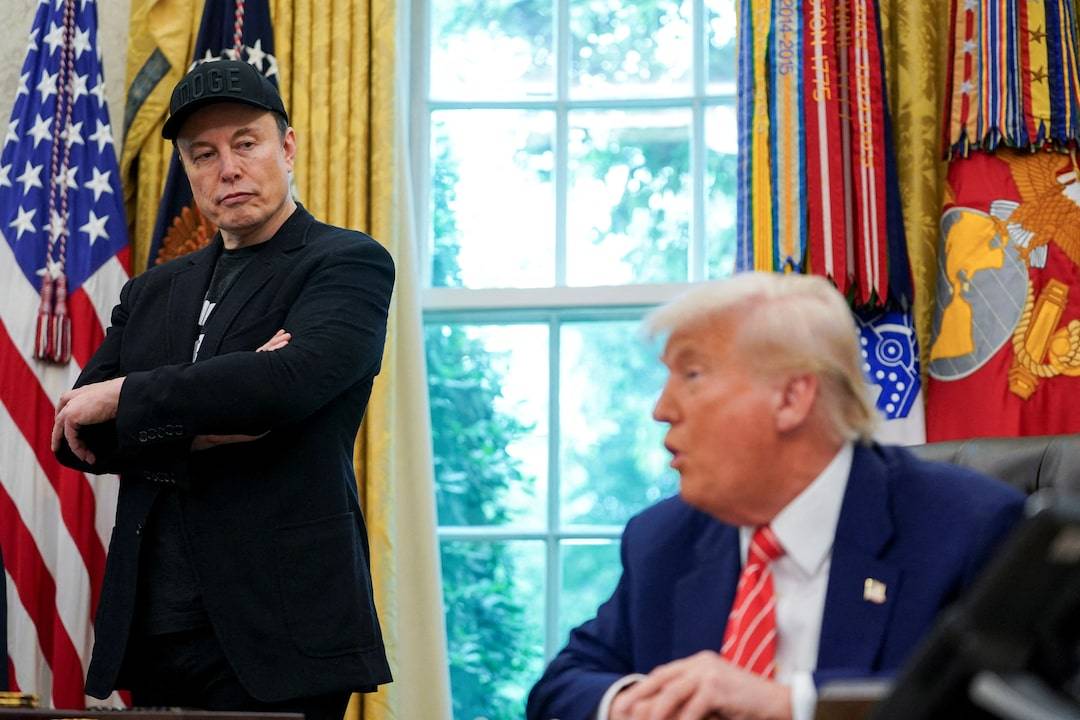
          Trump And Musk to Speak After Alliance Descends Into Public Feud

          Glendon

          Economic

          Forex

          Political

          White House aides scheduled a call between Donald Trump and Elon Musk for Friday, Politico reported, after a huge public spat that saw threats fly over government contracts and ended with the world's richest man suggesting the U.S. president should be impeached.

          The reported call could ease the feuding after an extraordinary day of hostilities - largely conducted over social media - that marked a stark end to a close alliance.

          Shares in Musk's Tesla (TSLA.O), opens new tab closed down over 14% on Thursday, losing about $150 billion in market value in the largest single-day decline in value in its history. In pre-market European trading on Friday they pared some of those losses, rising 5% after the Politico report that the two men were scheduled to speak.

          Musk had bankrolled a large part of Trump's presidential campaign and was then brought as one of the president's most visible advisers, heading up a sweeping and controversial effort to downsize the federal workforce and slash spending.

          The verbal punches erupted on Thursday after Trump criticized Musk in the Oval Office and the pair then traded barbs on their social media platforms: Trump's Truth Social and Musk's X.

          The falling-out had begun brewing days ago when Musk, who left his role as head of the Department of Government Efficiency a week ago, denounced Trump's sweeping tax-cut and spending bill.

          The president initially stayed quiet while Musk campaigned to torpedo the bill, saying it would add too much to the nation's $36.2 trillion in debt.

          Trump broke his silence on Thursday, telling reporters he was "very disappointed" in Musk.

          "Look, Elon and I had a great relationship. I don't know if we will anymore," Trump said.

          As Trump spoke, Musk responded on X.

          "Without me, Trump would have lost the election," wrote Musk, who spent nearly $300 million backing Trump and other Republicans in last year's election.

          In another post, Musk asserted that Trump's signature import tariffs would push the U.S. into a recession later this year.

          "The easiest way to save money in our Budget, Billions and Billions of Dollars, is to terminate Elon's Governmental Subsidies and Contracts," Trump posted.

          Minutes after the closing bell, Musk replied, "Yes," to a post on X saying Trump should be impeached, something that would be highly unlikely given Trump's Republicans hold majorities in both chambers of Congress.

          Musk's businesses also include rocket company and government contractor SpaceX and its satellite unit Starlink.

          Musk, whose space business plays a critical role in the U.S. government's space program, said that as a result of Trump's threats he would begin decommissioning SpaceX's Dragon spacecraft. Dragon is the only U.S. spacecraft capable of sending astronauts to the International Space Station.

          Late on Thursday, Musk backed off the threat.

          In another sign of a possible detente to come, Musk subsequently wrote: "You're not wrong," in response to billionaire investor Bill Ackman saying Trump and Musk should make peace.

          PUNCHING BACK

          Trump and Musk are both political fighters with a penchant for using social media to attack their perceived enemies, and many observers had predicted a falling-out.

          Musk hit at the heart of Trump's agenda earlier this week when he targeted what Trump has named his "big, beautiful bill", calling it a "disgusting abomination" that would deepen the federal deficit.

          His attacks amplified a rift within the Republican Party that could threaten the bill's prospects in the Senate.

          Nonpartisan analysts say Trump's bill could add $2.4 trillion to $5 trillion to the nation's $36.2 trillion in debt.

          A prolonged feud between the pair could make it harder for Republicans to keep control of Congress in next year's midterm elections if it leads to a loss of Musk's campaign spending or erodes support for Trump in Silicon Valley.

          "Elon really was a significant portion of the ground game this last cycle," said a Republican strategist with ties to Musk and the Trump administration who spoke to Reuters on condition of anonymity.

          "If he sits out the midterms, that worries me."

          On Tuesday, Musk posted that "in November next year, we fire all politicians who betrayed the American people."

          Musk had already said he planned to curtail his political spending in the future. Musk's increasing focus on politics provoked widespread protests at Tesla sites, driving down sales while investors fretted that Musk's attention was too divided.

          Source: Reuters

          To stay updated on all economic events of today, please check out our Economic calendar
          Risk Warnings and Disclaimers
          You understand and acknowledge that there is a high degree of risk involved in trading. Following any strategies or investment methods may lead to potential losses. The content on the site is provided by our contributors and analysts for information purposes only. You are solely responsible for determining whether any trading assets, securities, strategy, or any other product is suitable for investing based on your own investment objectives and financial situation.
          Add to Favorites
          Share

          Trade Truce Fails to Sustain China’s Export Momentum Amid Lingering US Tensions

          Gerik

          Economic

          China–U.S. Trade War

          Export Growth Likely Softened as Trade Hopes Fade

          According to a Reuters survey of 20 economists, China’s export growth in May likely decelerated to 5.0%, a notable drop from the 8.1% recorded in April. This slowdown occurred despite the temporary rollback of punitive US tariffs, suggesting that broader geopolitical uncertainty and structural trade frictions continue to weigh on export momentum. Import activity is also forecast to contract by 0.9%, deeper than April’s marginal 0.2% decline, indicating weak domestic demand alongside external pressures.
          In mid-May, Beijing and Washington agreed to a 90-day truce on their tariff war, scaling back triple-digit duties that had come into effect just a month earlier. This détente temporarily eased pressure on exporters, with many manufacturers accelerating shipments in March and April to beat potential tariff escalations. However, May's weaker trade performance signals that the relief was short-lived. A recent phone call between President Trump and President Xi—though described as constructive—left key issues unresolved, including rare earth exports and U.S. chip-related sanctions, limiting business confidence and shipping volumes.

          Frontloading Fades, Long-Term Trade Strain Persists

          China’s recent surge in outbound shipments was largely driven by frontloading—companies rushing to export before tariffs were reimposed. With the temporary truce in place, that urgency diminished, removing a key driver of April’s strength. Moreover, Nomura analysts caution that despite the rollback, average US tariffs on Chinese goods still hover around 42%, maintaining significant pressure on exporters. This high tariff floor, combined with weak global demand and political volatility, could stifle export gains in the second half of the year.
          The Chinese economy remains heavily reliant on exports at a time when domestic growth drivers are faltering. Factory data for May revealed contraction in both official and private-sector PMIs, signaling a loss of momentum in industrial activity. In response, the People’s Bank of China has lowered benchmark lending rates and capped deposit interest to reduce margin stress on banks and encourage consumer spending. Yet structural reforms remain on hold, and with inflation low and real income growth sluggish, domestic demand remains muted.

          Trade Surplus Widens, but Signals Are Mixed

          China’s trade surplus is expected to widen to $101.3 billion in May from $96.18 billion in April. However, this figure masks the underlying weakness in both exports and imports. While a larger surplus may temporarily support the yuan, it underscores the fragile equilibrium in China's trade ecosystem—one increasingly shaped by political negotiations rather than organic economic growth.
          As trade talks continue ahead of the G7 summit, investors and exporters remain in limbo. The temporary tariff rollback helped ease fears but failed to spark a sustained recovery in exports. Unless there is a more permanent resolution on trade terms—and a rebound in global demand—China’s export engine may sputter further in the second half of 2025. The need for domestic stimulus and policy reform is becoming increasingly urgent as global trade winds grow more unpredictable.

          Source: Bloomberg

          To stay updated on all economic events of today, please check out our Economic calendar
          Risk Warnings and Disclaimers
          You understand and acknowledge that there is a high degree of risk involved in trading. Following any strategies or investment methods may lead to potential losses. The content on the site is provided by our contributors and analysts for information purposes only. You are solely responsible for determining whether any trading assets, securities, strategy, or any other product is suitable for investing based on your own investment objectives and financial situation.
          Add to Favorites
          Share

          Germany’s Industrial Setback in April Raises Fears of Prolonged Stagnation

          Gerik

          Economic

          Weakened Industrial Activity Offsets Early-Year Momentum

          After a stronger-than-expected first quarter, Germany’s economy stumbled in April with both industrial output and exports declining more sharply than forecast. A 1.4% monthly drop in production and a 1.7% fall in exports suggest the momentum from frontloading ahead of U.S. tariff hikes may have run its course. The decline in exports, a critical driver of the German economy, highlights its vulnerability amid rising trade frictions and slowing global activity.
          This setback contradicts the positive signal from factory orders earlier in the week, which had shown unexpected growth, largely driven by increased demand for technology-related products such as electronics and optical devices. Nonetheless, the latest production data reflect a broader downturn in industrial sectors, with weakness cutting across various manufacturing categories.

          Tariff Risks and Structural Headwinds Weigh Heavily

          The underlying fragility of Germany’s industrial sector is exacerbated by concerns over potential U.S. tariffs under President Trump’s trade agenda. The risk of further levies, particularly on autos and machinery, compounds the pressure on a sector already grappling with high energy costs, bureaucratic inefficiencies, and labor force aging. Chancellor Friedrich Merz, who assumed office in early May, faces immediate macroeconomic challenges that may constrain his reform agenda.
          The downturn also places a spotlight on Germany’s structural issues, including regulatory rigidity and underinvestment in digital infrastructure. Despite a recently approved €46 billion tax relief package intended to boost business investment, economic sentiment remains tepid, with analysts warning of stagnation or even contraction for the third consecutive year.

          Mixed Outlook Amid Policy Support and ECB Tailwinds

          Commerzbank Chief Economist Joerg Krämer remains cautiously optimistic, citing strong incoming orders as a leading indicator of future recovery. He believes the industrial decline is likely temporary and that support from the European Central Bank’s interest rate cuts and Germany’s fiscal stimulus will gradually lift the economy. However, Bloomberg Economics counters that recent gains in business sentiment have been modest and that output weakness will likely persist, resulting in economic stagnation through the summer months.
          Bundesbank President Joachim Nagel has also acknowledged the artificial lift in Q1 data due to inventory and trade timing effects, stating that the remainder of the year will likely reflect a more subdued trajectory aligned with international trade headwinds.

          France Also Shows Signs of Softness

          Germany’s decline is mirrored in neighboring France, where industrial production also fell 1.4% in April. While a dip in energy output from mild weather partially explains the decline, the 0.6% contraction in manufacturing activity reveals broader weaknesses. France’s trade balance also deteriorated slightly, with exports slipping from €50.5 billion in March to €50.4 billion in April.
          Germany’s April industrial data mark a sobering inflection point, showing that early-year optimism may have been overstated. With U.S. tariffs looming, Chinese demand uncertain, and domestic reforms still in early stages, the path to recovery remains fraught. While fiscal stimulus and interest rate cuts offer some cushion, sustained improvement will depend on global trade dynamics, geopolitical clarity, and domestic structural reforms. The risk of a third year of zero or negative growth is increasingly real.

          Source: Bloomberg

          To stay updated on all economic events of today, please check out our Economic calendar
          Risk Warnings and Disclaimers
          You understand and acknowledge that there is a high degree of risk involved in trading. Following any strategies or investment methods may lead to potential losses. The content on the site is provided by our contributors and analysts for information purposes only. You are solely responsible for determining whether any trading assets, securities, strategy, or any other product is suitable for investing based on your own investment objectives and financial situation.
          Add to Favorites
          Share

          Asian Equities Rebound with Strongest Foreign Inflows Since Early 2024

          Gerik

          Economic

          Stocks

          Investor Confidence Returns After Trade War Fears Subside

          Following months of geopolitical uncertainty, foreign investors returned en masse to Asian equities in May 2025, pouring in approximately $10.65 billion—the highest monthly inflow since February 2024. This surge was triggered by a temporary 90-day pause on U.S. reciprocal tariffs announced in late April, which significantly eased fears over an immediate shock to Asian exports and supply chains. The capital reversal comes after four consecutive months of outflows that reflected intense risk aversion linked to the U.S.-China trade conflict.
          The pause in tariff escalation created a short-term window of clarity, allowing institutional investors to reassess valuations and macroeconomic fundamentals across the Asia-Pacific region. Renewed optimism was further supported by robust Q1 corporate earnings in several economies and by strategic long-term themes such as AI supply chain exposure, particularly in Taiwan and South Korea.

          Taiwan and India Lead the Inflow Charge

          Among regional markets, Taiwan emerged as the primary beneficiary, with foreign investors purchasing $7.28 billion in equities—its largest monthly inflow since November 2023. This was largely driven by expectations of sustained demand in AI semiconductors, where Taiwan’s chipmakers are globally dominant. Meanwhile, Indian equities attracted $2.34 billion, their highest since September 2024, buoyed by resilient GDP growth and a continued disinflationary trend that gives the Reserve Bank of India space for monetary easing, as seen in its recent 50-basis-point rate cut.
          South Korea also benefited from foreign optimism, with net inflows of $885 million. Indonesia and the Philippines drew $338 million and $290 million, respectively, reflecting increased appetite for Southeast Asian growth stories. Thailand was the only outlier, suffering $491 million in net foreign outflows amid persistent political uncertainty and slower-than-expected recovery in domestic consumption.

          Earnings Forecast Upgrade and Macro Tailwinds

          Goldman Sachs raised its earnings growth forecast for the MSCI Asia Pacific ex-Japan index (MXAPJ) to 9% for both 2025 and 2026, attributing the upgrade to stronger-than-expected macroeconomic performance in China and other U.S.-linked Asian economies. A major boost has also come from the $600 billion wave of AI-related capital investment—ranging from Saudi sovereign wealth funds to Silicon Valley tech giants—which is expected to benefit hardware manufacturers and data infrastructure hubs in Asia.
          Nevertheless, the tailwinds are not without caveats. A weakening U.S. dollar may dampen some of the region's export competitiveness, and further escalation in U.S.-China tensions—especially around semiconductors and rare earth exports—could quickly reverse these gains.

          Outperformance Highlights Resilience Despite Tariff Risks

          Despite a turbulent start to the year marked by elevated volatility, the MSCI Asia Pacific Index has gained 8.8% year-to-date, outperforming the MSCI World Index (5.4%) and the S&P 500 (0.98%). This relative strength underscores the market's belief in the region’s structural growth potential, driven by both technology leadership and demographic dividends.
          With the next round of U.S.-China trade negotiations underway, and key macro data from China and India due in the coming weeks, investor positioning remains sensitive to geopolitical signals. However, for now, Asia appears to be regaining its footing as a preferred investment destination for global equity flows.

          Source: Reuters

          To stay updated on all economic events of today, please check out our Economic calendar
          Risk Warnings and Disclaimers
          You understand and acknowledge that there is a high degree of risk involved in trading. Following any strategies or investment methods may lead to potential losses. The content on the site is provided by our contributors and analysts for information purposes only. You are solely responsible for determining whether any trading assets, securities, strategy, or any other product is suitable for investing based on your own investment objectives and financial situation.
          Add to Favorites
          Share

          Yen Set for Stronger Finish as Ex-FX Chief Predicts 135–140 Level by Year-End

          Gerik

          Economic

          Forex

          Interest Rate Dynamics Favor a Stronger Yen

          According to Mitsuhiro Furusawa, a respected former top FX diplomat and former IMF deputy managing director, the yen is poised to appreciate against the U.S. dollar toward the 135–140 range by the end of 2025. The driving factor is not political pressure from Washington to weaken the dollar, but a gradual narrowing of the interest rate differential between the Federal Reserve and the Bank of Japan. While markets have speculated about Trump’s potential desire to pursue a weaker dollar for export advantage, Furusawa believes the U.S. president is more committed to using tariffs than manipulating currencies to achieve trade goals.

          BOJ Policy Shift Could Support Yen

          The Bank of Japan, having exited its ultra-loose policy stance earlier this year, is considering further rate hikes contingent on inflation reaching its 2% target. BOJ Governor Kazuo Ueda has hinted at additional tightening in the latter half of 2025 if positive developments occur—such as a reduction in tariff-induced uncertainty or a successful trade agreement at the upcoming G7 summit. Meanwhile, the Federal Reserve is widely expected to cut rates by the end of the year due to economic headwinds. This divergence in policy trajectories is likely to support a gradual yen appreciation.
          Furusawa believes the BOJ may ultimately aim for a policy rate above 1%, though acknowledges significant uncertainty regarding the pace and feasibility of such normalization.

          Trade Negotiations and Diplomatic Signals

          Ongoing trade talks between Japan and the United States—focused on automobile tariffs—could also shape currency dynamics. The G7 summit on June 15–16 is viewed as a critical milestone. A successful agreement could enhance market confidence, boost real wages, and reinforce domestic consumption, supporting the case for a BOJ rate hike.
          Finance Minister Katsunobu Kato's recent comments about Japan's U.S. Treasury holdings being a potential negotiating tool briefly rattled markets. Furusawa, however, warns that any real threat to offload Treasuries could backfire by provoking Washington and derailing bilateral talks.

          Yen Strength in Sight, But Political Risks Linger

          With the yen trading near 144 to the dollar in early June, Furusawa’s forecast of a move to 135–140 implies a potential 3–6% appreciation over the next six months. While markets will watch for signs of intervention or political posturing from the Trump administration, the core driver remains the rate policy outlook.
          If the BOJ resumes tightening while the Fed pivots to easing, and if Japan secures trade certainty, the yen's strengthening appears not only plausible but likely. However, geopolitical volatility—especially surrounding rare earths, semiconductors, and U.S. election politics—could still disrupt that path.

          Source: Reuters

          To stay updated on all economic events of today, please check out our Economic calendar
          Risk Warnings and Disclaimers
          You understand and acknowledge that there is a high degree of risk involved in trading. Following any strategies or investment methods may lead to potential losses. The content on the site is provided by our contributors and analysts for information purposes only. You are solely responsible for determining whether any trading assets, securities, strategy, or any other product is suitable for investing based on your own investment objectives and financial situation.
          Add to Favorites
          Share
          FastBull
          Copyright © 2025 FastBull Ltd

          728 RM B 7/F GEE LOK IND BLDG NO 34 HUNG TO RD KWUN TONG KLN HONG KONG

          TelegramInstagramTwitterfacebooklinkedin
          App Store Google Play Google Play
          Products
          Charts

          Chats

          Q&A with Experts
          Screeners
          Economic Calendar
          Data
          Tools
          Membership
          Features
          Function
          Markets
          Copy Trading
          Latest Signals
          Contests
          News
          Analysis
          24/7
          Columns
          Education
          Company
          Careers
          About Us
          Contact Us
          Advertising
          Help Center
          Feedback
          User Agreement
          Privacy Policy
          Business

          White Label

          Data API

          Web Plug-ins

          Poster Maker

          Affiliate Program

          Risk Disclosure

          The risk of loss in trading financial instruments such as stocks, FX, commodities, futures, bonds, ETFs and crypto can be substantial. You may sustain a total loss of the funds that you deposit with your broker. Therefore, you should carefully consider whether such trading is suitable for you in light of your circumstances and financial resources.

          No decision to invest should be made without thoroughly conducting due diligence by yourself or consulting with your financial advisors. Our web content might not suit you since we don't know your financial conditions and investment needs. Our financial information might have latency or contain inaccuracy, so you should be fully responsible for any of your trading and investment decisions. The company will not be responsible for your capital loss.

          Without getting permission from the website, you are not allowed to copy the website's graphics, texts, or trademarks. Intellectual property rights in the content or data incorporated into this website belong to its providers and exchange merchants.

          Not Logged In

          Log in to access more features

          FastBull Membership

          Not yet

          Purchase

          Become a signal provider
          Help Center
          Customer Service
          Dark Mode
          Price Up/Down Colors

          Log In

          Sign Up

          Position
          Layout
          Fullscreen
          Default to Chart
          The chart page opens by default when you visit fastbull.com