• Trade
  • Markets
  • Copy
  • Contests
  • News
  • 24/7
  • Calendar
  • Q&A
  • Chats
Trending
Screeners
SYMBOL
LAST
BID
ASK
HIGH
LOW
NET CHG.
%CHG.
SPREAD
SPX
S&P 500 Index
6827.42
6827.42
6827.42
6899.86
6801.80
-73.58
-1.07%
--
DJI
Dow Jones Industrial Average
48458.04
48458.04
48458.04
48886.86
48334.10
-245.98
-0.51%
--
IXIC
NASDAQ Composite Index
23195.16
23195.16
23195.16
23554.89
23094.51
-398.69
-1.69%
--
USDX
US Dollar Index
97.950
98.030
97.950
98.500
97.950
-0.370
-0.38%
--
EURUSD
Euro / US Dollar
1.17394
1.17409
1.17394
1.17496
1.17192
+0.00011
+ 0.01%
--
GBPUSD
Pound Sterling / US Dollar
1.33707
1.33732
1.33707
1.33997
1.33419
-0.00148
-0.11%
--
XAUUSD
Gold / US Dollar
4299.39
4299.39
4299.39
4353.41
4257.10
+20.10
+ 0.47%
--
WTI
Light Sweet Crude Oil
57.233
57.485
57.233
58.011
56.969
-0.408
-0.71%
--

Community Accounts

Signal Accounts
--
Profit Accounts
--
Loss Accounts
--
View More

Become a signal provider

Sell trading signals to earn additional income

View More

Guide to Copy Trading

Get started with ease and confidence

View More

Signal Accounts for Members

All Signal Accounts

Best Return
  • Best Return
  • Best P/L
  • Best MDD
Past 1W
  • Past 1W
  • Past 1M
  • Past 1Y

All Contests

  • All
  • Trump Updates
  • Recommend
  • Stocks
  • Cryptocurrencies
  • Central Banks
  • Featured News
Top News Only
Share

USA Embassy In Lithuania: Maria Kalesnikava Is Not Going To Vilnius

Share

USA Embassy In Lithuania: Other Prisoners Are Being Sent From Belarus To Ukraine

Share

Ukraine President Zelenskiy: Five Ukrainians Released By Belarus In US-Brokered Deal

Share

USA Vilnius Embassy: USA Stands Ready For "Additional Engagement With Belarus That Advances USA Interests"

Share

USA Vilnius Embassy: Belarus, USA, Other Citizens Among The Prisoners Released Into Lithuania

Share

USA Vilnius Embassy: USA Will Continue Diplomatic Efforts To Free The Remaining Political Prisoners In Belarus

Share

USA Vilnius Embassy: Belarus Releases 123 Prisoners Following Meeting Of President Trump's Envoy Coale And Belarus President Lukashenko

Share

USA Vilnius Embassy: Masatoshi Nakanishi, Aliaksandr Syrytsa Are Among The Prisoners Released By Belarus

Share

USA Vilnius Embassy: Maria Kalesnikava And Viktor Babaryka Are Among The Prisoners Released By Belarus

Share

USA Vilnius Embassy: Nobel Peace Prize Laureate Ales Bialiatski Is Among The Prisoners Released By Belarus

Share

Belarusian Presidential Administration Telegram Channel: Lukashenko Has Pardoned 123 Prisoners As Part Of Deal With US

Share

Two Local Syrian Officials: Joint US-Syrian Military Patrol In Central Syria Came Under Fire From Unknown Assailants

Share

Israeli Military Says It Targeted 'Key Hamas Terrorist' In Gaza City

Share

Rwanda's Actions In Eastern Drc Are A Clear Violation Of Washington Accords Signed By President Trump - Secretary Of State Rubio

Share

Israeli Military Issues Evacuation Warning In Southern Lebanon Village Ahead Of Strike - Spokesperson On X

Share

Belarusian State Media Cites US Envoy Coale As Saying He Discussed Ukraine And Venezuela With Lukashenko

Share

Belarusian State Media Cites US Envoy Coale As Saying That US Removes Sanctions On Belarusian Potassium

Share

Thai Prime Minister: No Ceasefire Agreement With Cambodia

Share

US, Ukraine To Discuss Ceasefire In Berlin Ahead Of European Summit

Share

Incoming Czech Prime Minister Babis: Czech Republic Will Not Take On Guarantees For Ukraine Financing, European Commission Must Find Alternatives

TIME
ACT
FCST
PREV
U.K. Trade Balance Non-EU (SA) (Oct)

A:--

F: --

P: --

U.K. Trade Balance (Oct)

A:--

F: --

P: --

U.K. Services Index MoM

A:--

F: --

P: --

U.K. Construction Output MoM (SA) (Oct)

A:--

F: --

P: --

U.K. Industrial Output YoY (Oct)

A:--

F: --

P: --

U.K. Trade Balance (SA) (Oct)

A:--

F: --

P: --

U.K. Trade Balance EU (SA) (Oct)

A:--

F: --

P: --

U.K. Manufacturing Output YoY (Oct)

A:--

F: --

P: --

U.K. GDP MoM (Oct)

A:--

F: --

P: --

U.K. GDP YoY (SA) (Oct)

A:--

F: --

P: --

U.K. Industrial Output MoM (Oct)

A:--

F: --

P: --

U.K. Construction Output YoY (Oct)

A:--

F: --

P: --

France HICP Final MoM (Nov)

A:--

F: --

P: --

China, Mainland Outstanding Loans Growth YoY (Nov)

A:--

F: --

P: --

China, Mainland M2 Money Supply YoY (Nov)

A:--

F: --

P: --

China, Mainland M0 Money Supply YoY (Nov)

A:--

F: --

P: --

China, Mainland M1 Money Supply YoY (Nov)

A:--

F: --

P: --

India CPI YoY (Nov)

A:--

F: --

P: --

India Deposit Gowth YoY

A:--

F: --

P: --

Brazil Services Growth YoY (Oct)

A:--

F: --

P: --

Mexico Industrial Output YoY (Oct)

A:--

F: --

P: --

Russia Trade Balance (Oct)

A:--

F: --

P: --

Philadelphia Fed President Henry Paulson delivers a speech
Canada Building Permits MoM (SA) (Oct)

A:--

F: --

P: --

Canada Wholesale Sales YoY (Oct)

A:--

F: --

P: --

Canada Wholesale Inventory MoM (Oct)

A:--

F: --

P: --

Canada Wholesale Inventory YoY (Oct)

A:--

F: --

P: --

Canada Wholesale Sales MoM (SA) (Oct)

A:--

F: --

P: --

Germany Current Account (Not SA) (Oct)

A:--

F: --

P: --

U.S. Weekly Total Rig Count

A:--

F: --

P: --

U.S. Weekly Total Oil Rig Count

A:--

F: --

P: --

Japan Tankan Large Non-Manufacturing Diffusion Index (Q4)

--

F: --

P: --

Japan Tankan Small Manufacturing Outlook Index (Q4)

--

F: --

P: --

Japan Tankan Large Non-Manufacturing Outlook Index (Q4)

--

F: --

P: --

Japan Tankan Large Manufacturing Outlook Index (Q4)

--

F: --

P: --

Japan Tankan Small Manufacturing Diffusion Index (Q4)

--

F: --

P: --

Japan Tankan Large Manufacturing Diffusion Index (Q4)

--

F: --

P: --

Japan Tankan Large-Enterprise Capital Expenditure YoY (Q4)

--

F: --

P: --

U.K. Rightmove House Price Index YoY (Dec)

--

F: --

P: --

China, Mainland Industrial Output YoY (YTD) (Nov)

--

F: --

P: --

China, Mainland Urban Area Unemployment Rate (Nov)

--

F: --

P: --

Saudi Arabia CPI YoY (Nov)

--

F: --

P: --

Euro Zone Industrial Output YoY (Oct)

--

F: --

P: --

Euro Zone Industrial Output MoM (Oct)

--

F: --

P: --

Canada Existing Home Sales MoM (Nov)

--

F: --

P: --

Euro Zone Total Reserve Assets (Nov)

--

F: --

P: --

U.K. Inflation Rate Expectations

--

F: --

P: --

Canada National Economic Confidence Index

--

F: --

P: --

Canada New Housing Starts (Nov)

--

F: --

P: --

U.S. NY Fed Manufacturing Employment Index (Dec)

--

F: --

P: --

U.S. NY Fed Manufacturing Index (Dec)

--

F: --

P: --

Canada Core CPI YoY (Nov)

--

F: --

P: --

Canada Manufacturing Unfilled Orders MoM (Oct)

--

F: --

P: --

Canada Manufacturing New Orders MoM (Oct)

--

F: --

P: --

Canada Core CPI MoM (Nov)

--

F: --

P: --

Canada Manufacturing Inventory MoM (Oct)

--

F: --

P: --

Canada CPI YoY (Nov)

--

F: --

P: --

Canada CPI MoM (Nov)

--

F: --

P: --

Canada CPI YoY (SA) (Nov)

--

F: --

P: --

Canada Core CPI MoM (SA) (Nov)

--

F: --

P: --

Q&A with Experts
    • All
    • Chatrooms
    • Groups
    • Friends
    Connecting
    .
    .
    .
    Type here...
    Add Symbol or Code

      No matching data

      All
      Trump Updates
      Recommend
      Stocks
      Cryptocurrencies
      Central Banks
      Featured News
      • All
      • Russia-Ukraine Conflict
      • Middle East Flashpoint
      • All
      • Russia-Ukraine Conflict
      • Middle East Flashpoint
      Search
      Products

      Charts Free Forever

      Chats Q&A with Experts
      Screeners Economic Calendar Data Tools
      Membership Features
      Data Warehouse Market Trends Institutional Data Policy Rates Macro

      Market Trends

      Market Sentiment Order Book Forex Correlations

      Top Indicators

      Charts Free Forever
      Markets

      News

      News Analysis 24/7 Columns Education
      From Institutions From Analysts
      Topics Columnists

      Latest Views

      Latest Views

      Trending Topics

      Top Columnists

      Latest Update

      Signals

      Copy Rankings Latest Signals Become a signal provider AI Rating
      Contests
      Brokers

      Overview Brokers Assessment Rankings Regulators News Claims
      Broker listing Forex Brokers Comparison Tool Live Spread Comparison Scam
      Q&A Complaint Scam Alert Videos Tips to Detect Scam
      More

      Business
      Events
      Careers About Us Advertising Help Center

      White Label

      Data API

      Web Plug-ins

      Affiliate Program

      Awards Institution Evaluation IB Seminar Salon Event Exhibition
      Vietnam Thailand Singapore Dubai
      Fans Party Investment Sharing Session
      FastBull Summit BrokersView Expo
      Recent Searches
        Top Searches
          Markets
          News
          Analysis
          User
          24/7
          Economic Calendar
          Education
          Data
          • Names
          • Latest
          • Prev

          View All

          No data

          Scan to Download

          Faster Charts, Chat Faster!

          Download App
          English
          • English
          • Español
          • العربية
          • Bahasa Indonesia
          • Bahasa Melayu
          • Tiếng Việt
          • ภาษาไทย
          • Français
          • Italiano
          • Türkçe
          • Русский язык
          • 简中
          • 繁中
          Open Account
          Search
          Products
          Charts Free Forever
          Markets
          News
          Signals

          Copy Rankings Latest Signals Become a signal provider AI Rating
          Contests
          Brokers

          Overview Brokers Assessment Rankings Regulators News Claims
          Broker listing Forex Brokers Comparison Tool Live Spread Comparison Scam
          Q&A Complaint Scam Alert Videos Tips to Detect Scam
          More

          Business
          Events
          Careers About Us Advertising Help Center

          White Label

          Data API

          Web Plug-ins

          Affiliate Program

          Awards Institution Evaluation IB Seminar Salon Event Exhibition
          Vietnam Thailand Singapore Dubai
          Fans Party Investment Sharing Session
          FastBull Summit BrokersView Expo

          Obscure Tax Item in Trump’s Big Bill Stokes Wall Street Angst

          Manuel

          Economic

          Political

          Summary:

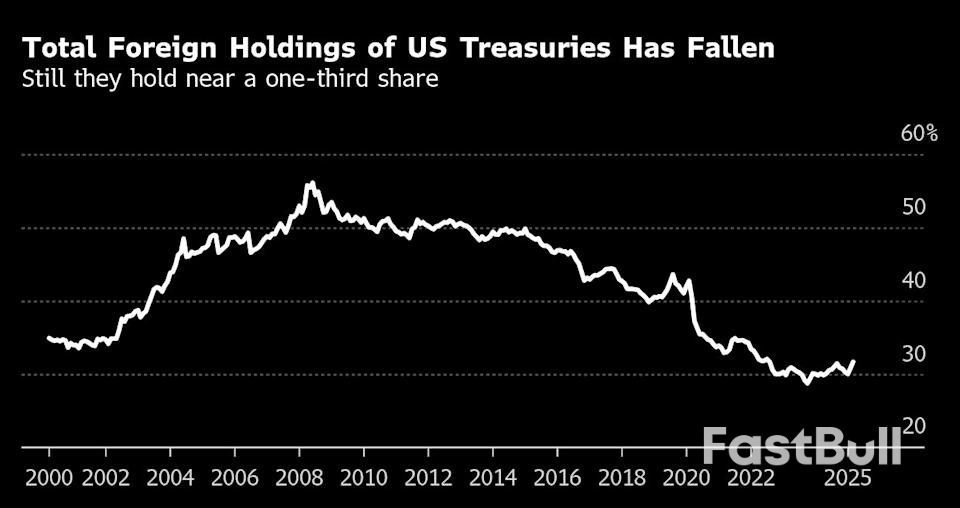
          For now, the market reaction to Section 899 appears muted, at best. Still, US assets as a whole have been underperformers this year as Trump’s policies put a dent in the narrative of the “America exceptionalism.”
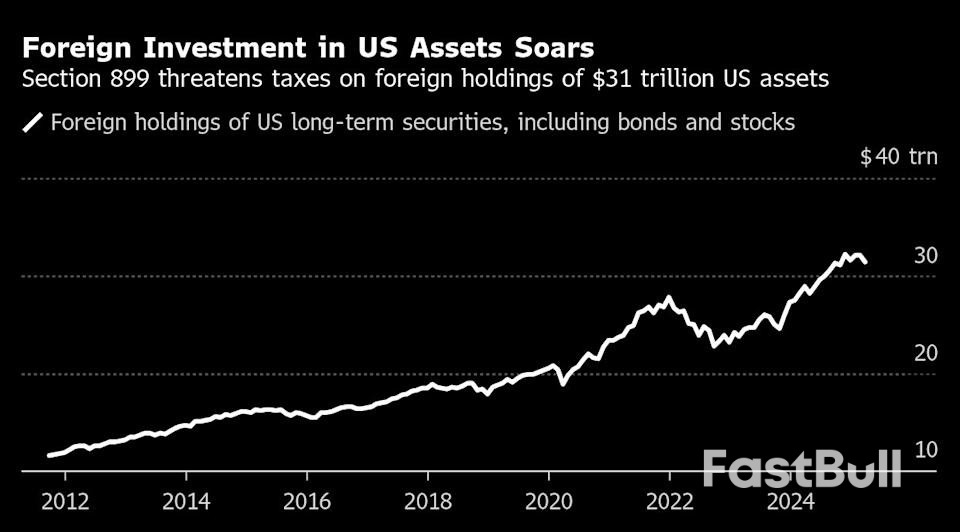
          Buried deep in the more than 1,000-page tax-and-spending bill that President Donald Trump is muscling through Congress is an obscure tax measure that’s setting off alarms on Wall Street and beyond.
          The item — introduced in legislation that passed the House last week as Section 899 and titled “Enforcement of Remedies Against Unfair Foreign Taxes” — calls for, among other things, increasing tax rates for individuals and companies from countries whose tax policies the US deems “discriminatory.” This includes raising tax rates on passive income, such as interest and dividends, earned by investors who are potentially sitting on trillions in American assets.Obscure Tax Item in Trump’s Big Bill Stokes Wall Street Angst_1
          Cloaked in technicalities, the implication of the “revenge” measure, as it’s quickly becoming known, is clear to analysts: If signed into law, it would further drive away foreign investors at a time when their once ironclad confidence in Treasury bonds and other US assets has already been shaken by Trump’s erratic trade policies and the nation’s deteriorating fiscal accounts.
          “We’re already dealing with a market where Treasuries, to foreign investors, probably aren’t the most attractive investment,” said Michael Brown, a strategist at Pepperstone Group, a brokerage firm founded in Melbourne whose clients are all outside the US. Brown said he got so many inquiries from concerned clients that he quickly cobbled together a report breaking down the measure. “If you’re now talking about massively unfavorable tax treatment, then it’s just another reason to stay away.”
          Among those potentially affected: institutional investors including sovereign wealth funds, pension funds and even government entities, as well as retail investors and businesses with US assets.
          The proposed tax is separate from Trump’s tariff-heavy trade agenda, which is now snarled in court, but the thrust is the same, and its aims align with some of the goals set forth by the economist Stephen Miran in a paper last November and those seeking a so-called Mar-a-Lago global restructuring accord. All seek to address perceived unfair treatment of the US by the rest of the world using targeted tools designed to put the country on a more even footing. But after years of foreign investors piling into US assets, experts fear the consequences of Section 899 may be far-reaching.
          The provision amounts to “weaponization of US capital markets into law” that “challenges the open nature of US capital markets by explicitly using taxation on foreign holdings of US assets as leverage to further US economic goals,” George Saravelos, head of FX research at Deutsche Bank AG, wrote in a report on Thursday. “We see this legislation as creating the scope for the US administration to transform a trade war into a capital war if it so wishes, a development that is highly relevant in the context of today’s court decision constraining President Trump on trade policy.”
          Section 899 takes aim at countries including Canada, the UK, France and Australia that impose “digital services taxes” on large technology companies such as Meta Platforms Inc. The clause also targets countries using provisions in a multi-country deal for minimum corporate taxes.
          The measure would boost the federal income tax rate on passive US income earned by investors and institutions based in the targeted countries, first by five percentage points, then rising by another five points each year to a maximum of 20 points above the statutory rate.

          ‘Troubling’ for Bonds, Dollar

          Morgan Stanley’s strategists included the provision in frequently asked questions related to the tax-and-spending bill and concluded that Section 899 would weaken the dollar and European stocks with US exposure. Gilles Moec, the chief economist at AXA Group, said it could add to the pressure on long-term interest rates, which this month touched multi-year highs. Others see it dragging on the US currency.
          “It’s indeed sounds troubling,” said Rogier Quaedvlieg, senior US economist at ABN Amro Bank NV. “By limiting new foreign demand, that would of course put pressure on the dollar.’”
          The risks related to the section 899 provision are seen by some as even more pressing after the US court order on Wednesday that blocked many of Trump’s tariffs on imports. Tariffs are considered a key source of revenue to fund Trump’s tax cuts, a signature part of his “big, beautiful bill.” Without them, the question is where the administration will find the money to fund them.Obscure Tax Item in Trump’s Big Bill Stokes Wall Street Angst_2
          The intent of the measure appears similar in spirit to some proposals advocated in November by Miran while he was still working at hedge fund Hudson Bay Capital. Miran, now chairman of the White House Council of Economic Advisers, called for imposing “user fees” on foreign investors in US Treasuries as part of an aim to weaken the dollar and improve US manufacturers’ competitiveness to address global trade imbalances.
          “The clause is clearly endorsed by the administration and designed to give Trump a negotiation tool for pressuring countries to drop digital services taxes and global minimum corporate income taxes, which he sees as unfairly targeting US multinational companies,” wrote Economist Will Denyer and Tan Kai Xian at Gavekal Research. “The problem is that before Trump has a chance to use the new tool, its very existence may unsettle bond markets.”

          What Strategists Say

          “With tariff revenue more uncertain and less likely to offset tax cuts in the GOP budget bill, traders need to be prepared for tax changes on foreign holders, ultimately reducing demand for American financial assets.” — Michael Ball, Markets Live macro strategist
          For now, the market reaction to Section 899 appears muted, at best. Still, US assets as a whole have been underperformers this year as Trump’s policies put a dent in the narrative of the “America exceptionalism.”
          The S&P 500 is up about 0.4% this year, compared with a 20% gain in the German benchmark and a 18% rally in Hong Kong. The Bloomberg Dollar Index slumped about 7%. The US Treasuries returned 2%, trailing the 5% gain in the global government bonds in dollar terms, according to data compiled by Bloomberg.

          Under the Surface

          Section 899 is likely to remain in the final version of the reconciliation package, which is now being reviewed in Senate, because it has broad Republican support, according to Signum Global Advisors.
          While some are skeptical if the Section 899 would survive on concern it would dampen foreign investment into the US, Signum Global Advisors predicts it will likely remain in the final version of the reconciliation package, in part because it has broad Republican support.
          “We believe the president’s viewpoint is that there is such immense foreign appetite to invest in the US that it is not at risk of being thrown off course,” according to Charles Myers, a former Wall Street executive who runs advisory firm Signum, and Lew Lukens, a partner at the firm.
          To Pepperstone’s Brown, the reason markets haven’t reacted yet is because investors hadn’t fully grasped the significance of the clause. But they’re starting to now.
          “It’s only as the dust has settled that people are thinking that maybe there are some things lurking under the surface of the bill we should pay a little bit more attention to,” said Brown. “And I think this section 899, this is probably one of them.”

          Source: Bloomberg

          To stay updated on all economic events of today, please check out our Economic calendar
          Risk Warnings and Disclaimers
          You understand and acknowledge that there is a high degree of risk involved in trading. Following any strategies or investment methods may lead to potential losses. The content on the site is provided by our contributors and analysts for information purposes only. You are solely responsible for determining whether any trading assets, securities, strategy, or any other product is suitable for investing based on your own investment objectives and financial situation.
          Add to Favorites
          Share

          Dollar Drops as Investors Prepare for Court Battle on Tariffs

          Manuel

          Forex

          Central Bank

          The dollar fell on Thursday as investors prepared for U.S. President Donald Trump to battle a U.S. trade court ruling on Wednesday that blocked most of his proposed tariffs.
          Senior Trump administration officials on Thursday downplayed the ruling's impact, expressing confidence it would be overturned on appeal and insisting other legal avenues are available in the interim.
          "Markets were quick to realize that the ruling was sort of narrow, meaning it was only focused on one aspect of the tariff plan here - emergency authorization," said Brad Bechtel, global head of FX at Jefferies in New York. "There were still plenty of other avenues for Trump."
          The greenback had rallied on the ruling.
          The U.S. currency has weakened on concerns that tariffs will slow the economy and reignite inflation, while the erratic implementation of Trump's policies is seen as denting the appeal of U.S. assets to foreign investors.
          "The deeper issue remains a persistent lack of clarity surrounding trade policy," said Uto Shinohara, senior investment strategist at Mesirow Currency Management in Chicago.
          The Federal Reserve has kept interest rates on hold on concerns about higher inflation as Fed officials wait to see how the trade policies will affect the U.S. economy.
          Trump, in a private meeting at the White House on Thursday, told Fed Chair Jerome Powell he was making a "mistake" by not lowering interest rates.
          "This is not likely to be the end of tariff policy, and in some respects, if the administration wins its appeal or opts for alternative legal paths to tariff implementation, they could aim for the tariff agenda as a whole to be more entrenched than it was previously," Goldman Sachs' forex analysts said in a report on Thursday.
          U.S. economic pessimism declined earlier this week after Trump on the weekend delayed a plan to impose 50% tariffs on European Union imports.
          The euro was last up 0.73% at $1.1374 after falling to $1.1209, the lowest since May 19.
          Against the Japanese yen , the dollar weakened 0.57% to 143.99. It earlier reached 146.28, the highest since May 15.
          The dollar fell 0.59% to 0.822 Swiss franc .
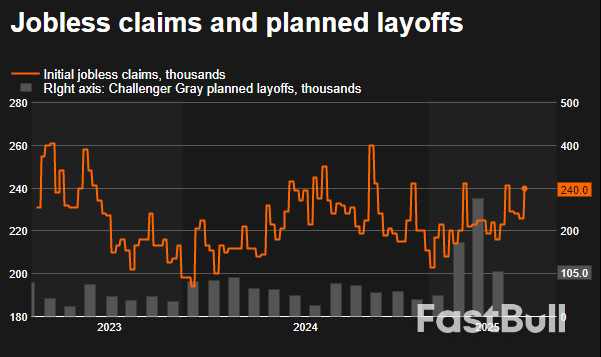
          The greenback also weakened on news that the number of Americans filing new applications for jobless benefits rose more than expected last week, and the unemployment rate appeared to have picked up in May, suggesting increasing layoffs as tariffs cloud the economic outlook.Dollar Drops as Investors Prepare for Court Battle on Tariffs_1
          Investors are also watching the progress of a tax cut and spending bill that is working its way through Congress and which is expected to add trillions in U.S. debt over the coming decade. Some Republicans have criticized it for not having enough spending cuts.
          Trump's budget chief said on Wednesday the White House intends to send Congress a package next week to formalize cuts made by billionaire Elon Musk's team targeting federal government spending.
          Longer-dated U.S. Treasury yields rose last week and demand for the Treasury's 20-year bond auction was soft due to rising concerns about the deteriorating U.S. fiscal outlook.
          The yen also weakened against the greenback earlier this week on reports that Japan will consider trimming issuance of super-long bonds in the wake of recent sharp yield increases in the country.

          Source: Reuters

          Risk Warnings and Disclaimers
          You understand and acknowledge that there is a high degree of risk involved in trading. Following any strategies or investment methods may lead to potential losses. The content on the site is provided by our contributors and analysts for information purposes only. You are solely responsible for determining whether any trading assets, securities, strategy, or any other product is suitable for investing based on your own investment objectives and financial situation.
          Add to Favorites
          Share

          Despite Q1 GDP contraction and jobless claims rise, court ruling on Trump tariffs means the Fed is unlikely to cut in 2025 – Comerica Bank

          Adam

          Economic

          Despite Thursday morning’s Q1 GDP revisions showing contraction and jobless claims data worsening, the court ruling invalidating Trump’s tariff authority means the Fed is now even less likely to cut rates this year, according to Bill Adams, Chief Economist for Comerica Bank.
          “The administration is appealing the decision to invalidate the tariffs and is likely working on alternative proposals to replace the invalidated one in case they lose,” Adams said in a comment to Kitco News. “In the meantime, imports are likely to jump again as businesses hope that the decision lowers their import tax bill.”
          He added that the surprise court decision “reinforces the depth of uncertainty” that hangs over the economy in 2025, which is causing many businesses to drag out investment and hiring decisions while they await clarity.
          “The second estimate of GDP for the first quarter demonstrates just how uncertainty is weighing on economic activity,” Adams said. “While the numbers shifted slightly, the broad narrative for GDP is the same: Consumers and businesses redirected spending towards imported goods that were expected to rise in price because of tariffs and away from domestically produced goods and services, weighing on production. The contraction in real GDP was mirrored by declines in the other major economy-wide aggregates.”
          Turning to this morning’s jobless claims numbers, he said that while layoffs remain fairly low, laid-off workers are staying unemployed longer than they were a year or two ago. “That is showing up in rising continued jobless claims, which reached the highest since late 2021 in mid-May,” he noted.
          Looking ahead, Comerica believes that the ongoing policy uncertainty will keep the economy stuck in slow gear for the balance of 2025.
          “The second quarter will likely see imports holding near the first quarter’s record highs, along with cautious business spending on other categories of goods and services,” Adams said. “There are signs that consumers have been a little more cautious toward discretionary spending recently, too. Real GDP will likely either contract again in the second quarter or hold in low gear, but the economy is unlikely to slip into recession. Growth should pick up in the second half of the year as the economic narrative refocuses away from tariff hikes and toward tax cuts.”
          As for the FOMC minutes from the May meeting released yesterday, Adams said they underlined that the Fed is in no hurry to cut interest rates in response to the tariffs. “That attitude looks well justified by today’s uncertainty about where the tariffs will settle out.”
          The Fed looks very likely to hold interest rates steady for at least the next couple of decisions,” he concluded. “Comerica forecasts for the Fed to hold interest rates unchanged through year-end 2025.”

          source : kitco

          To stay updated on all economic events of today, please check out our Economic calendar
          Risk Warnings and Disclaimers
          You understand and acknowledge that there is a high degree of risk involved in trading. Following any strategies or investment methods may lead to potential losses. The content on the site is provided by our contributors and analysts for information purposes only. You are solely responsible for determining whether any trading assets, securities, strategy, or any other product is suitable for investing based on your own investment objectives and financial situation.
          Add to Favorites
          Share

          What is the Court of International Trade? And why can it Strike Down Trump's tariffs?

          Manuel

          Political

          China–U.S. Trade War

          A little-known federal court threw a giant monkey wrench into a foundational part of President Donald Trump's economic agenda by striking down most of the sweeping tariffs he has imposed since taking office.
          The Court of International Trade, based in New York, on late Wednesday said that Trump had overstepped his authority by using a 1977 law, the International Economic Emergency Powers Act, to justify tariffs on Canada, Mexico, China, and more than 50 other nations.
          The CIT typically deals with more obscure and highly-technical issues surrounding tariffs and trade policies, and rarely deals with cases of such magnitude. It handles trade-related disputes from all over the country, and as a result sits outside the standard federal court structure of district courts and appellate circuit courts.
          Nine judges sit on the court, and most of its cases are handled by just one of those judges. But three judges considered the challenge to Trump's tariffs, which typically happens when a case involves “the constitutionality of an act of Congress, a Presidential proclamation, or an Executive order, or otherwise has broad and significant implications,” the court says on its website.
          Its decisions can be appealed to the Court of Appeals for the Federal Circuit and then to the Supreme Court. The Trump administration has already said it will appeal.
          Karoline Leavitt, White House press secretary, sharply criticized the decision, saying that the members of the three-judge panel “brazenly abused their judicial power to usurp the authority of President Trump” and added that the courts “should have no role here.”
          Leavitt said the president’s tariff policies are “legally sound and grounded in common sense.”
          Yet many trade and legal experts said that at least parts of the CIT's ruling would likely stand up under scrutiny.
          Edward Alden, a senior fellow at the Council on Foreign Relations, said that the decision striking down Trump's 10% universal tariffs, as well as his so-called reciprocal tariffs on more than 50 countries, would likely withstand appeal. That's because, as the CIT pointed out, those duties are intended to counter trade deficits the United States has with those countries.
          Yet Congress specifically said that duties to address trade imbalances must be applied under a different law, not IEEPA. That law allows a maximum of 15% tariff for up to 150 days.
          “I think it’s airtight because there’s no way around the reasoning,” Alden said, “which is Congress controls tariffs and Congress quite explicitly delegated the authority” to a separate law.
          Trump said that his duties on Canada, Mexico, and some of the tariffs on China were in response to those countries' alleged shortcomings in combatting illegal drugs and unauthorized immigration. It's possible that other judges will find that the president has the authority to impose those tariffs under the IEEPA law, Alden said.
          Some of Trump’s duties — those on steel, aluminum, and cars — will remain in place because they rely on separate laws that weren’t challenged. Many economists have said that Trump could seek to re-impose many of his tariffs under a range of other laws that authorize tariffs, though usually after a legal process that can take a few months.

          Source: AP

          Risk Warnings and Disclaimers
          You understand and acknowledge that there is a high degree of risk involved in trading. Following any strategies or investment methods may lead to potential losses. The content on the site is provided by our contributors and analysts for information purposes only. You are solely responsible for determining whether any trading assets, securities, strategy, or any other product is suitable for investing based on your own investment objectives and financial situation.
          Add to Favorites
          Share

          2 laws Trump could use to reimpose his tariffs (and why he might use both)

          Adam

          Economic

          President Trump's trade plans ran into a stumbling block this week when a court blocked a wide swath of his tariffs.
          But he could bounce back quickly even if White House plans to appeal the defeat don't pan out.
          That's because Congress has been handing its tariff powers over to the executive branch for decades, with an array of other authorities at the ready — especially from two laws passed in 1962 and 1974 — if Trump needs to reimplement things like his "Liberation Day" tariffs by different means.
          "It's a setback [but] it doesn't mean that the president can't find other means or authorities to try to implement this policies, and it's also just the first step in litigation," Greta Peisch, a former Biden administration trade general counsel, now at law firm Wiley Rein, noted in a Yahoo Finance appearance Thursday morning.
          Wednesday's decision from the US Court of International Trade pointed out that other laws essentially give the president the authority to act in a similar manner, even while striking down Trump's actions so far that it said "exceed any authority granted to the President."
          This week's decision called into question Trump's authority under a 1977 law called the International Emergency Economic Powers Act (IEEPA). But two alternatives quickly emerged among trade experts if the court ruling stands, with Trump showing no signs of backing away from his tariff ambitions.
          The most prominent quick strike option is the so-called balance-of-payments authority derived from Section 122 of the Trade Act of 1974. That power could allow Trump to move quickly, but with a 150-day limit on how long any tariffs can be in place.
          The second route is a possible renewed focus on sectoral duties such as "Section 301" or "Section 232" tariffs.
          These long-established tariff authorities (one derived from the Trade Act of 1974 and another from a separate Trade Expansion Act of 1962) are ones Trump has used in the past, but with the downside, from his perspective, that they can take time to implement.
          Perhaps the most intriguing scenario involves the president moving on both fronts to try to quickly implement a short-term patch followed by a permanent fix.
          Either way, Trump has offered signs in recent days that he is more focused on sector-specific tariffs at the moment and has no intention of backing down from trade threats.
          In comments on Sunday, Trump said he cared if tariffs helped the US produce things like military equipment and semiconductors, but "we're not looking to make sneakers and t-shirts."
          Then, on Wednesday before the ruling, Trump reacted angrily to the notion that he has "chickened out" on tariff plans, saying even the suggestion that he has backed down is "the nastiest question."

          2 front-and-center options that could go hand in hand

          The balance-of-payments authority is a likely immediate-term option for Trump if he wants to act quickly.
          But the limitations of that choice "are clear," Henrietta Treyz of Veda Partners said in a note.
          That's because this authority allows the president to have new tariffs in place within days, but only up to a 15% rate and for a 150-day span unless Congress extends it.
          These types of duties have been discussed in Trump's circle for years but took a back seat to IEEPA when he came into office this year.
          The second options are more legally established and more permanent but slower.
          These are tariff authorities — most prominently via the national security-focused Section 232 of the Trade Expansion Act of 1962 — where Trump can act unilaterally, but with the administration required to jump through time-consuming hoops like investigations and soliciting of public comment before the tariffs can go into place.
          But the upside for Trump here is that these are well-tested legal authorities that have even been used in recent months on goods like steel, aluminum, and cars.
          The White House is currently conducting additional investigations into goods like pharmaceuticals and semiconductors, with that process likely to give Trump new options by this summer.
          A similar tariff authority, but one premised on economic security, is Section 301 of the Trade Act of 1974, which also includes the requirement for an investigation before implementation.
          Section 301, it's worth noting, is the authority Trump relied on in his first term to implement an array of tariffs on goods from China.
          It's a legal landscape that could add up, Goldman Sachs warned in a note, to a situation that "increases uncertainty but might not change the final outcome for most major US trading partners."
          That's in part because one scenario outlined in the note even sees Trump rely on both authorities in sequence.
          First, the president could invoke that balance-of-payments authority to quickly keep tariffs in place before he then launches sector-specific investigations to eventually make them permanent.
          Peisch also sees a good chance of a multistep process ahead, with the administration pursuing all avenues, including litigation, but with the quick strike balance-of-payments authority front of mind as an option "in the short term."
          Other options
          Other options at the president's disposal are seen as less likely at the moment but remain on the table.
          The Trade Act of 1974 also has a Section 201 that gives the president other tariff authorities.
          Reaching even further back in US history, the Trade Act of 1930 allows the president to impose tariffs, which Goldman notes has never been used and bears similarities to Section 301 authority "but does not require a formal investigation."
          The recently advanced "big, beautiful bill" could give Trump yet another tool, with changes to Section 899 of the IRS code aimed at tightening restrictions on "discriminatory foreign countries" and giving the president the power to levy new taxes to combat these practices.
          For now, Wednesday's ruling gives the administration 10 days to halt tariff collection. The administration quickly filed two legal notices to state that it planned to appeal the decision and ask for a pause in the enforcement of the court's order.
          The administration also indicated in a court filing Thursday that it may ask the Supreme Court to hear the case as soon as this week.
          The White House remains focused on keeping tariffs in place no matter what, with spokesperson Kush Desai telling Yahoo Finance in a statement, "President Trump pledged to put America First, and the Administration is committed to using every lever of executive power to address this crisis and restore American Greatness."

          Source: finance.yahoo

          To stay updated on all economic events of today, please check out our Economic calendar
          Risk Warnings and Disclaimers
          You understand and acknowledge that there is a high degree of risk involved in trading. Following any strategies or investment methods may lead to potential losses. The content on the site is provided by our contributors and analysts for information purposes only. You are solely responsible for determining whether any trading assets, securities, strategy, or any other product is suitable for investing based on your own investment objectives and financial situation.
          Add to Favorites
          Share

          Gold sees solid gains on weaker greenback, dip in Treasury yields

          Adam

          Economic

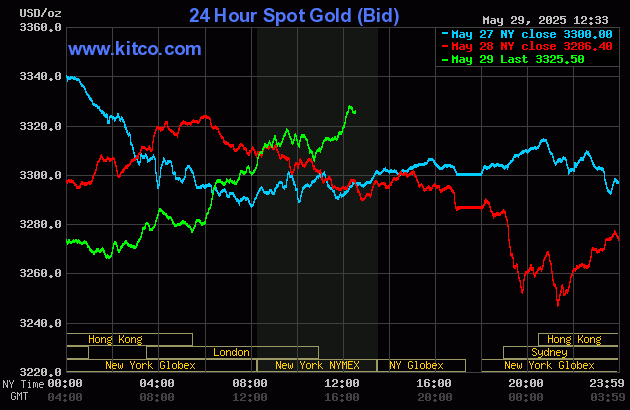
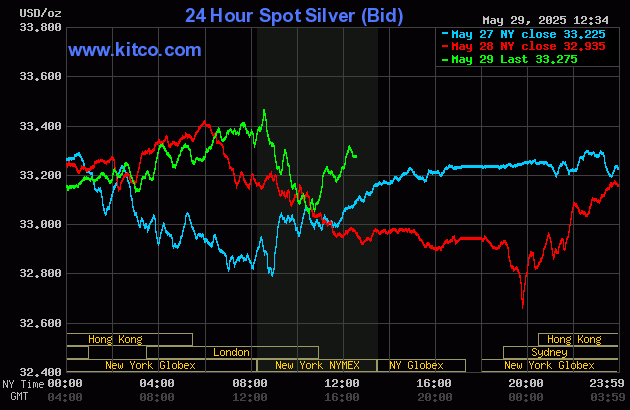
          Gold prices are posting good gains in midday U.S. trading Thursday. Silver prices are moderately up. A drop in the U.S. dollar index and a dip in U.S. Treasury yields on this day are friendly for the precious metals. August gold was last up $31.90 at $3,353.80. July silver prices were last up $0.295 at $33.45.
          The marketplace is still mulling over the news that a three-judge panel from the U.S. Court of International Trade in New York on Wednesday ruled against President Trump’s sweeping “Liberation Day” tariffs. The federal court has nationwide jurisdiction over tariff and trade disputes. The ruling found that Trump exceeded his authority under the International Emergency Economic Powers Act by imposing the tariffs without congressional approval. The Trump administration filed a notice of appeal. Bottom line: A sustained loss for Trump could scramble much of his trade agenda and impact how other countries negotiate with the U.S. Traders and investors will watch this development closely and it will likely remain very fluid.
          U.S. stock indexes are slightly higher at midday but have lost earlier solid gains.
          The FOMC minutes from Wednesday afternoon contained no major surprises but the Wall Street Journal reported the minutes “strongly suggest the Fed isn’t close to lowering rates anytime soon.” The FOMC minutes indicated higher concerns about stagflation—slower economic growth and higher inflation.
          The key outside markets today see the U.S. dollar index solidly lower. Nymex crude oil futures prices are weaker and trading around $61.25 a barrel. The yield on the benchmark 10-year U.S. Treasury note is presently at 4.426%.
          Gold sees solid gains on weaker greenback, dip in Treasury yields_1
          Technically, August gold futures bulls have the overall near-term technical advantage. Bulls’ next upside price objective is to produce a close above solid resistance at $3,400.00. Bears' next near-term downside price objective is pushing futures prices below solid technical support at $3,200.00. First resistance is seen at $3,375.00 and then at last week’s high of $3,395.30. First support is seen at $3,325.00 and then at $3,300.00. Wyckoff's Market Rating: 6.5.
          Gold sees solid gains on weaker greenback, dip in Treasury yields_2
          July silver futures bulls have the slight overall near-term technical advantage. Silver bulls' next upside price objective is closing prices above solid technical resistance at $34.015. The next downside price objective for the bears is closing prices below solid support at the May low of $31.78. First resistance is seen at $33.75 and then at $34.015. Next support is seen at $33.00 and then at $32.74. Wyckoff's Market Rating: 5.5.

          Source: kitco

          To stay updated on all economic events of today, please check out our Economic calendar
          Risk Warnings and Disclaimers
          You understand and acknowledge that there is a high degree of risk involved in trading. Following any strategies or investment methods may lead to potential losses. The content on the site is provided by our contributors and analysts for information purposes only. You are solely responsible for determining whether any trading assets, securities, strategy, or any other product is suitable for investing based on your own investment objectives and financial situation.
          Add to Favorites
          Share

          BREAKING: FED Chair Jerome Powell Holds Surprise Meeting With US President Donald Trump! Here Are The Details

          Owen Li

          Central Bank

          US Federal Reserve (FED) Chairman Jerome Powell met with President Donald Trump at the White House today. The meeting discussed major economic developments such as economic growth, employment and inflation.

          In the official statement made by the FED, it was stated that Powell did not share any expectations regarding monetary policy at the meeting, but only emphasized that the policy to be followed will depend entirely on the incoming economic data and the effects of these data on the economic outlook.

          Powell also stated that he and his colleagues on the Federal Open Market Committee (FOMC) will determine monetary policy in a way that supports maximum employment and price stability, as required by law. The Fed Chairman added that all decisions will be based on careful, objective and politically neutral analysis.

          Donald Trump does not like Powell's policy of high interest rates and has said on several occasions that he plans to fire Powell because of it, but has since denied that he has any such plans. Trump continues to pressure Powell to lower interest rates.

          Source: CryptoSlate

          Risk Warnings and Disclaimers
          You understand and acknowledge that there is a high degree of risk involved in trading. Following any strategies or investment methods may lead to potential losses. The content on the site is provided by our contributors and analysts for information purposes only. You are solely responsible for determining whether any trading assets, securities, strategy, or any other product is suitable for investing based on your own investment objectives and financial situation.
          Add to Favorites
          Share
          FastBull
          Copyright © 2025 FastBull Ltd

          728 RM B 7/F GEE LOK IND BLDG NO 34 HUNG TO RD KWUN TONG KLN HONG KONG

          TelegramInstagramTwitterfacebooklinkedin
          App Store Google Play Google Play
          Products
          Charts

          Chats

          Q&A with Experts
          Screeners
          Economic Calendar
          Data
          Tools
          Membership
          Features
          Function
          Markets
          Copy Trading
          Latest Signals
          Contests
          News
          Analysis
          24/7
          Columns
          Education
          Company
          Careers
          About Us
          Contact Us
          Advertising
          Help Center
          Feedback
          User Agreement
          Privacy Policy
          Business

          White Label

          Data API

          Web Plug-ins

          Poster Maker

          Affiliate Program

          Risk Disclosure

          The risk of loss in trading financial instruments such as stocks, FX, commodities, futures, bonds, ETFs and crypto can be substantial. You may sustain a total loss of the funds that you deposit with your broker. Therefore, you should carefully consider whether such trading is suitable for you in light of your circumstances and financial resources.

          No decision to invest should be made without thoroughly conducting due diligence by yourself or consulting with your financial advisors. Our web content might not suit you since we don't know your financial conditions and investment needs. Our financial information might have latency or contain inaccuracy, so you should be fully responsible for any of your trading and investment decisions. The company will not be responsible for your capital loss.

          Without getting permission from the website, you are not allowed to copy the website's graphics, texts, or trademarks. Intellectual property rights in the content or data incorporated into this website belong to its providers and exchange merchants.

          Not Logged In

          Log in to access more features

          FastBull Membership

          Not yet

          Purchase

          Become a signal provider
          Help Center
          Customer Service
          Dark Mode
          Price Up/Down Colors

          Log In

          Sign Up

          Position
          Layout
          Fullscreen
          Default to Chart
          The chart page opens by default when you visit fastbull.com