

Markets
News
Analysis
User
24/7
Economic Calendar
Education
Data
- Names
- Latest
- Prev



Signal Accounts for Members
All Signal Accounts
All Contests
 France 10-Year OAT Auction Avg. Yield
A:--
F: --
P: --
 Euro Zone Retail Sales MoM (Oct)
A:--
F: --
P: --
Euro Zone Retail Sales YoY (Oct)A:--
F: --
P: --
 Brazil GDP YoY (Q3)
A:--
F: --
P: --
 U.S. Challenger Job Cuts (Nov)
A:--
F: --
P: --
U.S. Challenger Job Cuts MoM (Nov)A:--
F: --
P: --
U.S. Challenger Job Cuts YoY (Nov)A:--
F: --
P: --
U.S. Initial Jobless Claims 4-Week Avg. (SA)A:--
F: --
P: --
U.S. Weekly Initial Jobless Claims (SA)A:--
F: --
P: --
U.S. Weekly Continued Jobless Claims (SA)A:--
F: --
P: --
 Canada Ivey PMI (SA) (Nov)
A:--
F: --
P: --
Canada Ivey PMI (Not SA) (Nov)A:--
F: --
P: --
U.S. Non-Defense Capital Durable Goods Orders Revised MoM (Excl. Aircraft) (SA) (Sept)A:--
F: --
U.S. Factory Orders MoM (Excl. Transport) (Sept)A:--
F: --
P: --
U.S. Factory Orders MoM (Sept)A:--
F: --
P: --
U.S. Factory Orders MoM (Excl. Defense) (Sept)A:--
F: --
P: --
U.S. EIA Weekly Natural Gas Stocks ChangeA:--
F: --
P: --
Saudi Arabia Crude Oil ProductionA:--
F: --
P: --
U.S. Weekly Treasuries Held by Foreign Central BanksA:--
F: --
P: --
 Japan Foreign Exchange Reserves (Nov)
A:--
F: --
P: --
 India Repo Rate
A:--
F: --
P: --
India Benchmark Interest RateA:--
F: --
P: --
India Reverse Repo RateA:--
F: --
P: --
India Cash Reserve RatioA:--
F: --
P: --
Japan Leading Indicators Prelim (Oct)A:--
F: --
P: --
 U.K. Halifax House Price Index YoY (SA) (Nov)
A:--
F: --
P: --
U.K. Halifax House Price Index MoM (SA) (Nov)A:--
F: --
P: --
France Current Account (Not SA) (Oct)A:--
F: --
P: --
France Trade Balance (SA) (Oct)A:--
F: --
P: --
France Industrial Output MoM (SA) (Oct)A:--
F: --
P: --
 Italy Retail Sales MoM (SA) (Oct)
--
F: --
P: --
Euro Zone Employment YoY (SA) (Q3)--
F: --
P: --
Euro Zone GDP Final YoY (Q3)--
F: --
P: --
Euro Zone GDP Final QoQ (Q3)--
F: --
P: --
Euro Zone Employment Final QoQ (SA) (Q3)--
F: --
P: --
Euro Zone Employment Final (SA) (Q3)--
F: --
Brazil PPI MoM (Oct)--
F: --
P: --
 Mexico Consumer Confidence Index (Nov)
--
F: --
P: --
Canada Unemployment Rate (SA) (Nov)--
F: --
P: --
Canada Labor Force Participation Rate (SA) (Nov)--
F: --
P: --
Canada Employment (SA) (Nov)--
F: --
P: --
Canada Part-Time Employment (SA) (Nov)--
F: --
P: --
Canada Full-time Employment (SA) (Nov)--
F: --
P: --
U.S. Personal Income MoM (Sept)--
F: --
P: --
U.S. Dallas Fed PCE Price Index YoY (Sept)--
F: --
P: --
U.S. PCE Price Index YoY (SA) (Sept)--
F: --
P: --
U.S. PCE Price Index MoM (Sept)--
F: --
P: --
U.S. Personal Outlays MoM (SA) (Sept)--
F: --
P: --
U.S. Core PCE Price Index MoM (Sept)--
F: --
P: --
U.S. UMich 5-Year-Ahead Inflation Expectations Prelim YoY (Dec)--
F: --
P: --
U.S. Core PCE Price Index YoY (Sept)--
F: --
P: --
U.S. Real Personal Consumption Expenditures MoM (Sept)--
F: --
P: --
U.S. 5-10 Year-Ahead Inflation Expectations (Dec)--
F: --
P: --
U.S. UMich Current Economic Conditions Index Prelim (Dec)--
F: --
P: --
U.S. UMich Consumer Sentiment Index Prelim (Dec)--
F: --
P: --
U.S. UMich 1-Year-Ahead Inflation Expectations Prelim (Dec)--
F: --
P: --
U.S. UMich Consumer Expectations Index Prelim (Dec)--
F: --
P: --
U.S. Weekly Total Rig Count--
F: --
P: --
U.S. Weekly Total Oil Rig Count--
F: --
P: --
U.S. Consumer Credit (SA) (Oct)--
F: --
P: --


No matching data

Latest Views
Latest Views
Trending Topics
Top Columnists
Latest Update
White Label
Data API
Web Plug-ins
Affiliate Program
View All
No data
Benjamin Netanyahu struck a defiant tone in his speech to the United Nations General Assembly, vowing to continue Israel’s war in Gaza until Hamas is destroyed and slamming Western countries that recognized Palestinian statehood in recent days.
Benjamin Netanyahu struck a defiant tone in his speech to the United Nations General Assembly, vowing to continue Israel’s war in Gaza until Hamas is destroyed and slamming Western countries that recognized Palestinian statehood in recent days.
“We will not commit national suicide because you don’t have the guts to face down a hostile media and anti-Semitic mobs demanding Israel’s blood,” the prime minister said in New York on Friday, referring to the recognition of Palestine by France, the UK, Canada and others. The message to Hamas, Netanyahu said, was that “murdering Jews pays off.”
Many delegates walked out as Netanyahu prepared to speak, leaving he hall largely empty.
Israel’s longest serving leader cited the country’s military successes over Iran-backed militias and Tehran itself over the past year. He said that while Israel wanted to end the war in Gaza “as fast as possible,” it wouldn’t stop until Hamas was defeated or surrendered.
He spoke of the violence perpetrated by Hamas — designated a terrorist organization by the US, European Union and others — on Oct. 7, 2023. That day, it attacked Israel, killing 1,200 people and taking another 250 as hostages.
He largely ignored the suffering of Palestinians in Gaza, beyond saying that Israel was doing all it could to prevent civilian casualties. He strenuously denied his government was carrying out genocide.
In a speech given at the launch of the a new village cooperatives scheme on 21 July 2025, Indonesian President Prabowo Subianto promise to combat what he labels ‘greednomics’. His main concern was reports of rice traders in Indonesia buying low quality paddy, rough rice grain, at below-market prices to then sell milled rice dishonestly as premium quality rice, disenfranchising farmers and consumers. More broadly, Prabowo took issue with economic practices in which greedy traders prioritise profit at the expense of social interests.
Ad-libbing on how to resolve such fraudulent practices in rice distribution, Prabowo pointed to Article 33 of Indonesia’s Constitution, which mandates state control over important sectors of production and natural resources. But, except for a threat to ‘confiscate the rice mills and hand them over to cooperatives’, his speech was devoid of concrete proposals.
Speculation was rife in Indonesia as to whether this was an off-the-cuff comment without practical consequences or the start of a broader campaign to liberate Indonesia from the scourge of ‘greednomics’. So far, Prabowo has broadened his rhetoric against ‘greedy businessmen’, but has not yet specified concrete measures.
Focusing on fraudulent practices in rice distribution, Prabowo’s concerns about disenfranchised farmers and consumers are the latest iteration of an almost 90-year sequence of government attempts to control Indonesia’s rice market. Past governments’ justifications included arguments that middlemen exploit rice farmers and consumers. Jakarta’s solution was to establish rice logistics parastatal organisations to regulate or control the acquisition and milling of paddy and the distribution of milled rice, operating through village authorities or farmer cooperatives. Their stated aim was to guarantee fair prices to farmers and consumers and eradicate excessive greed of middlemen.
Indonesia has very mixed historical experiences with such parastatals. They contributed to the causes of disastrous famines in 1944–45 and 1964–65. In both instances, accelerating inflation eroded official purchase prices, after which administrative and military forces colluded to force farmers to surrender quotas of rice. Rice was siphoned off to black markets, fuelling illicit riches. Eroded purchase prices led farmers to decrease surplus rice production.
Things seemed to change with the establishment of the state food logistics agency Bulog in 1967. Increasing oil revenues allowed government subsidies that guaranteed farmers higher paddy prices, contributing to the success of Indonesia’s Green Revolution. But Bulog soon became a cesspool of greed. In 1968, Prabowo’s father, then minister of trade and industry Sumitro Djojohadikusumo, vowed to abolish it. But he failed — Bulog received a monopoly on rice distribution and became an ingrained feature of Suharto’s presidency.
Corruption scandals surrounded Bulog until it was stripped of its monopoly powers in 2003 following Suharto’s resignation. But a degree of control remained in the form of the government licensing of rice imports. Indonesian rice prices steadily exceeded prices in Thailand and Vietnam, major rice exporting countries. Anyone who could persuade the Indonesian Ministry of Trade of impending rice shortages to secure a licence to import rice gained a licence to print money. Several rice import scandals followed.
Indonesia already has extensive experience with efforts to control the perceived greed of middlemen. The previous, ineffective solutions are what Prabowo has again implicitly proposed — state control over rice distribution. In the past, each solution nurtured new rent-seeking opportunities. Will a Bulog 3.0 be any different?
Prabowo noted that the manipulation of rice distribution had caused ‘losses’ of 100 trillion rupiah (US$6 billion) annually in the form of unrealised revenues from taxing rice millers and traders. The implication was that resolving ‘greednomics’ in rice distribution would boost tax revenues by this amount. Eradicating ‘greednomics’ in rice distribution may lead to fair prices for farmers and consumers and more regular profits for rice millers and traders, but taxing those regular profits will not generate the same amount as the untaxed ‘greednomics’ profits of millers and traders.
Taking control of rice distribution would also come at a time when Indonesia’s rice is considerably more expensive than rice that can be imported from mainland Southeast Asia. At the same time, per capita production and consumption of rice is decreasing, not just because rice farmers are disincentivised by greedy middlemen, but because demand continues to shift to other food products.
The easy solution to ‘greednomics’ in rice distribution would be to lift restrictions on rice imports. Lower domestic rice prices will benefit consumers. Lower rice profitability will drive the greediest middlemen out of rice distribution and encourage rice farmers to diversify to farm products with higher value added and growing demand.
But such deregulation may not sit well with the policy rhetoric that Indonesia should have ‘food security’, even though Indonesia is importing record amounts of non-rice staples such as wheat and soybeans. Nor would it sit well with Prabowo’s strict reading of Article 33 in the Constitution that state control should take charge of securing social welfare for Indonesia’s people.
Pierre van der Eng is Associate Professor at the Research School of Management, The Australian National University.
Canadian GDP rose by 0.2% m/m in July, partly reversing three consecutive monthly contractions. The print was a tick hotter than consensus expectations.
Compositionally, 11 of 20 industries registered an increase on the month. Goods industries rebounded by a hefty 0.6% m/m, while the services sector nudged higher by 0.1% m/m.
On the goods side, a 1.4% m/m gain in the mining, oil & gas sector made the biggest contribution to headline growth. A 0.7% m/m increase in the manufacturing sector also provided an assist after falling last month. Elsewhere, the agriculture and construction sectors were up by a softer 0.1% m/m.
On the services side, gains in wholesale trade (0.6% m/m), transportation and warehousing (0.6% m/m) and real estate (0.3% m/m) did most of the heavy lifting. A weaker month for retail trade (-1.0% m/m) and information and cultural services (-0.6% m/m) counterbalanced some of the services side gains.
The advanced guidance for flat growth in August GDP is the result of gains in wholesale and retail trade that are offset by a reversal in the oil & gas, manufacturing, and transportation sectors.
Growth in Canada’s tariff-impacted industries contributed most to July’s brighter-than expected print. Stabilization across these sectors underpins our view that GDP growth in the third quarter is set to recover modestly after last quarter’s trade-driven contraction. Early-tracking suggests sub-1% annualized growth in Q3, which is in line with our expectations, and a touch below the Bank of Canada’s (BoC) most recent projections.
The BoC will take this reading in stride, as they continue to weigh the risks around inflation and growth. Looking forward, we maintain our view that the BoC has room to cut rates again in the fourth quarter. The growth backdrop is expected to gradually recover over the next couple quarters, but economic slack will persist. What’s more, the outlook continues to face considerable uncertainty, not least as Canada and the U.S. soon enter USMCA renegotiations.
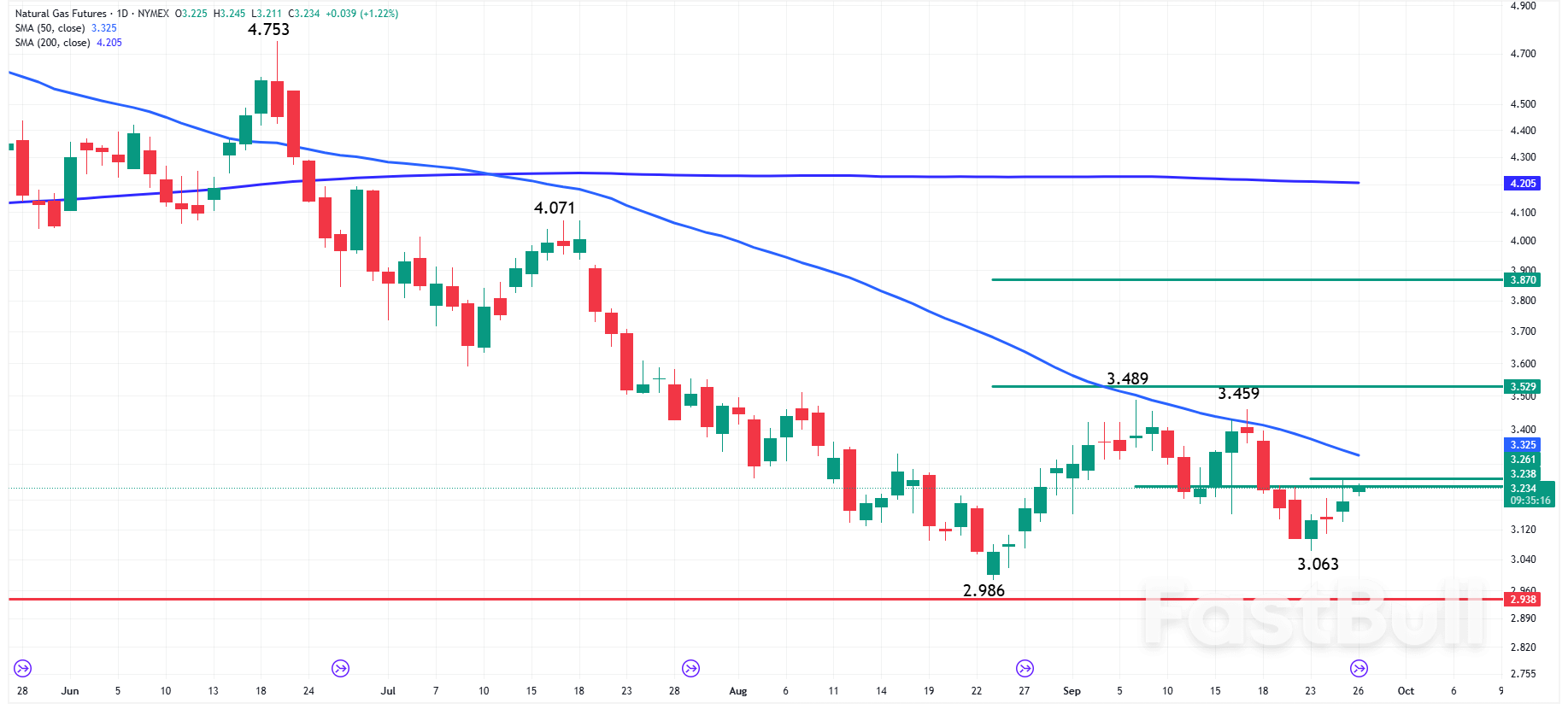 Daily Natural Gas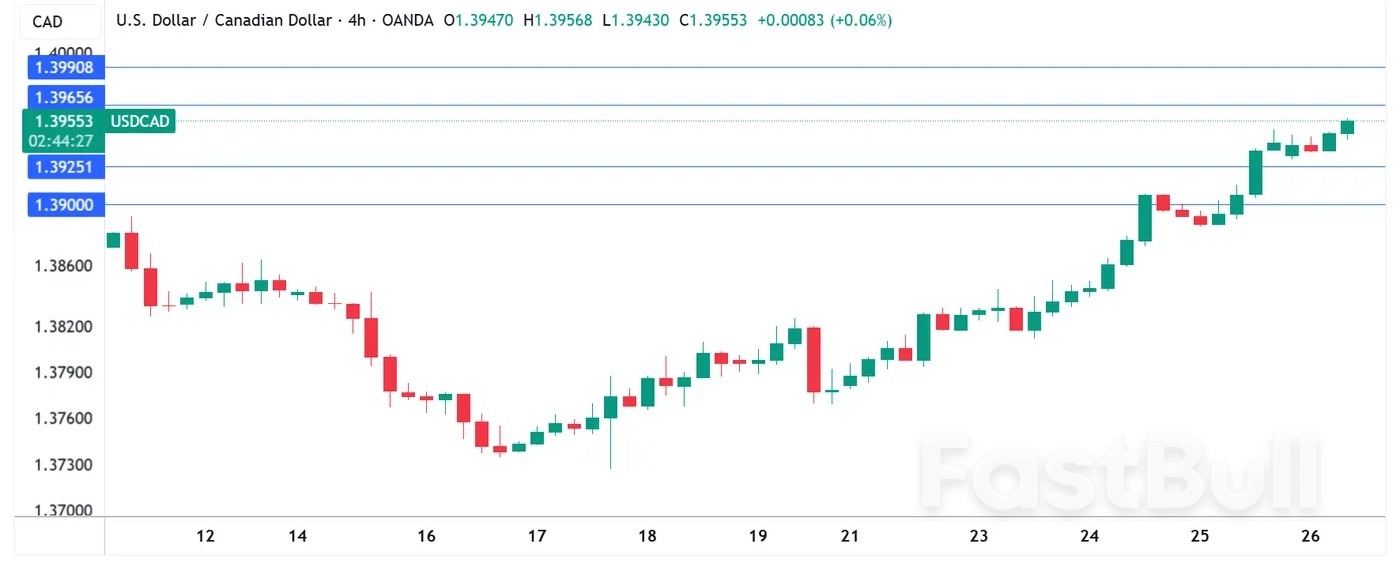
U.S. consumer spending increased slightly more than expected in August, keeping the economy on solid ground as the third quarter progressed, while inflation continued to rise at a measured pace.
Consumer spending, which accounts for more than two-thirds of economic activity, rose 0.6% last month after an unrevised 0.5% advance in July, the Commerce Department's Bureau of Economic Analysis said on Friday.
Economists polled by Reuters had forecast consumer spending increasing 0.5% after a previously reported 0.5% gain in July.
Spending has marched ahead despite a significant labor market slowdown, marked by stall-speed job growth in the last three months. It is being driven by high-income households as a robust stock market and still-elevated home prices boost their wealth. Federal Reserve data this month showed household wealth jumped to a record $176.3 trillion in the second quarter.
But lower-income households are struggling, and bearing a large share of the burden from higher prices on goods from import tariffs. More pain lies ahead when cuts to the federal government's supplemental nutrition assistance program, commonly known as food stamps, take effect.
"With spending concentrated among high-income households the risk to the consumption growth forecast is more concentrated in the drivers of household wealth – the stock market and house prices," said Ryan Sweet, chief U.S. economist at Oxford Economics. "Wealth effects have become more potent for consumer spending, a positive when stock and house prices are rising, but a risk if, and when, they sputter."
Strong consumer spending contributed to gross domestic product growing at a 3.8% annualized rate in the second quarter, the fastest in nearly two years. Growth estimates for the third quarter are converging around a 2.5% pace.
Economists expect spending to slow considerably by the end of the year, undercut by higher prices. Inflation has been slow to rise in response to President Donald Trump's sweeping tariffs as businesses sold inventory accumulated before the duties kicked in and even absorbed some of the duties.
The Personal Consumption Expenditures (PCE) Price Index increased 0.3% in August after gaining 0.2% in July, the BEA said. In the 12 months through August, the PCE Price Index advanced 2.7% after climbing 2.6% in July.
Excluding the volatile food and energy components, the PCE Price Index rose 0.2% last month after increasing 0.2% in July. In the 12 months through August, the so-called core inflation increased 2.9% after rising 2.9% in July.
The Fed tracks the PCE price measures for its 2% inflation target. The U.S. central bank last week resumed policy easing, cutting its benchmark overnight interest rate by 25 basis points to the 4.00%-4.25% range.
Fed Chair Jerome Powell said this week that "near-term risks to inflation are tilted to the upside and risks to employment to the downside - a challenging situation."
728 RM B 7/F GEE LOK IND BLDG NO 34 HUNG TO RD KWUN TONG KLN HONG KONG


White Label
Data API
Web Plug-ins
Poster Maker
Affiliate Program
The risk of loss in trading financial instruments such as stocks, FX, commodities, futures, bonds, ETFs and crypto can be substantial. You may sustain a total loss of the funds that you deposit with your broker. Therefore, you should carefully consider whether such trading is suitable for you in light of your circumstances and financial resources.
No decision to invest should be made without thoroughly conducting due diligence by yourself or consulting with your financial advisors. Our web content might not suit you since we don't know your financial conditions and investment needs. Our financial information might have latency or contain inaccuracy, so you should be fully responsible for any of your trading and investment decisions. The company will not be responsible for your capital loss.
Without getting permission from the website, you are not allowed to copy the website's graphics, texts, or trademarks. Intellectual property rights in the content or data incorporated into this website belong to its providers and exchange merchants.
Not Logged In
Log in to access more features

FastBull Membership
Not yet
Purchase


Log In
Sign Up


