• Trade
  • Markets
  • Copy
  • Contests
  • News
  • 24/7
  • Calendar
  • Q&A
  • Chats
Trending
Screeners
SYMBOL
LAST
BID
ASK
HIGH
LOW
NET CHG.
%CHG.
SPREAD
SPX
S&P 500 Index
6818.98
6818.98
6818.98
6861.30
6801.50
-8.43
-0.12%
--
DJI
Dow Jones Industrial Average
48403.67
48403.67
48403.67
48679.14
48317.93
-54.37
-0.11%
--
IXIC
NASDAQ Composite Index
23098.28
23098.28
23098.28
23345.56
23012.00
-96.88
-0.42%
--
USDX
US Dollar Index
97.790
97.870
97.790
98.070
97.740
-0.160
-0.16%
--
EURUSD
Euro / US Dollar
1.17608
1.17615
1.17608
1.17686
1.17262
+0.00214
+ 0.18%
--
GBPUSD
Pound Sterling / US Dollar
1.33935
1.33944
1.33935
1.34014
1.33546
+0.00228
+ 0.17%
--
XAUUSD
Gold / US Dollar
4321.42
4321.85
4321.42
4350.16
4294.68
+22.03
+ 0.51%
--
WTI
Light Sweet Crude Oil
56.649
56.679
56.649
57.601
56.601
-0.584
-1.02%
--

Community Accounts

Signal Accounts
--
Profit Accounts
--
Loss Accounts
--
View More

Become a signal provider

Sell trading signals to earn additional income

View More

Guide to Copy Trading

Get started with ease and confidence

View More

Signal Accounts for Members

All Signal Accounts

Best Return
  • Best Return
  • Best P/L
  • Best MDD
Past 1W
  • Past 1W
  • Past 1M
  • Past 1Y

All Contests

  • All
  • Trump Updates
  • Recommend
  • Stocks
  • Cryptocurrencies
  • Central Banks
  • Featured News
Top News Only
Share

African Stock Market Closing Report | On Monday (December 15), The South African FTSE/Jse Africa Leading 40 Trading Index Closed Down 0.43%, Nearing 105,200 Points

Share

The Athens Stock Exchange Composite Index Closed Up 0.15% At 2107.43 Points

Share

The Offshore Yuan Broke Through 7.04 Against The US Dollar

Share

Fbi Director: A Fifth Individual Believed To Be Planning A Separate Attack Arrested By Fbi New Orleans

Share

New York Fed President Williams: The 2% Inflation Target Must Be Achieved Without Impacting The Job Market

Share

New York Fed President Williams: Monetary Policy Very Focused On Balancing Job, Inflation Risks

Share

New York Fed President Williams Expects USA Unemployment To Be 4.5% By End Of 2025

Share

New York Fed President Williams: Labor Market Risks Have Risen As Risks To Inflation Have Eased

Share

New York Fed President Williams Expects Inflation To Move To 2.5% In 2026, 2% In 2027

Share

New York Fed President Williams Sees Tariffs As A One-Off Price Adjustment, Not Spilling Over Into Broader Inflation

Share

New York Fed President Williams: Labor Market Cooling Has Been Gradual Process

Share

New York Fed President Williams Expects Active Usage Of Standing Repo Facility To Manage Liquidity

Share

New York Fed President Williams: Critical For USA Central Bank To Get Inflation Back To 2%

Share

New York Fed President Williams Expects 2026 GDP Growth To Hit 2.25%, Well Above 2025 Rate

Share

New York Fed President Williams Projects Jobless Rate Will Come Back Down Over Next Few Years

Share

New York Fed President Williams: Fed Policy Has Moved Toward Neutral From Modestly Restrictive

Share

Federal Reserve Governor Milan: I Would Be Happy To Vote For The Re-election Of Regional Fed Presidents

Share

Miran: What Is Most Surprising Is How Nice And Collegial The Fed Has Been

Share

Miran: The Least Attractive Part Of Being At The Fed Is Having Only 1 Of 12 Votes On A Committee

Share

White House To Host Press Call On Russia-Ukraine Peace Talks

TIME
ACT
FCST
PREV
Japan Tankan Small Manufacturing Outlook Index (Q4)

A:--

F: --

P: --

Japan Tankan Large Non-Manufacturing Outlook Index (Q4)

A:--

F: --

P: --

Japan Tankan Large Manufacturing Outlook Index (Q4)

A:--

F: --

P: --

Japan Tankan Small Manufacturing Diffusion Index (Q4)

A:--

F: --

P: --

Japan Tankan Large-Enterprise Capital Expenditure YoY (Q4)

A:--

F: --

P: --

U.K. Rightmove House Price Index YoY (Dec)

A:--

F: --

P: --

China, Mainland Industrial Output YoY (YTD) (Nov)

A:--

F: --

P: --

China, Mainland Urban Area Unemployment Rate (Nov)

A:--

F: --

P: --

Saudi Arabia CPI YoY (Nov)

A:--

F: --

P: --

Euro Zone Industrial Output YoY (Oct)

A:--

F: --

P: --

Euro Zone Industrial Output MoM (Oct)

A:--

F: --

P: --

Canada Existing Home Sales MoM (Nov)

A:--

F: --

P: --

Canada National Economic Confidence Index

A:--

F: --

P: --

Canada New Housing Starts (Nov)

A:--

F: --

P: --
U.S. NY Fed Manufacturing Employment Index (Dec)

A:--

F: --

P: --

U.S. NY Fed Manufacturing Index (Dec)

A:--

F: --

P: --

Canada Core CPI YoY (Nov)

A:--

F: --

P: --

Canada Manufacturing Unfilled Orders MoM (Oct)

A:--

F: --

P: --

U.S. NY Fed Manufacturing Prices Received Index (Dec)

A:--

F: --

P: --

U.S. NY Fed Manufacturing New Orders Index (Dec)

A:--

F: --

P: --

Canada Manufacturing New Orders MoM (Oct)

A:--

F: --

P: --

Canada Core CPI MoM (Nov)

A:--

F: --

P: --

Canada Trimmed CPI YoY (SA) (Nov)

A:--

F: --

P: --

Canada Manufacturing Inventory MoM (Oct)

A:--

F: --

P: --

Canada CPI YoY (Nov)

A:--

F: --

P: --

Canada CPI MoM (Nov)

A:--

F: --

P: --

Canada CPI YoY (SA) (Nov)

A:--

F: --

P: --

Canada Core CPI MoM (SA) (Nov)

A:--

F: --

P: --

Canada CPI MoM (SA) (Nov)

A:--

F: --

P: --

Federal Reserve Board Governor Milan delivered a speech
U.S. NAHB Housing Market Index (Dec)

A:--

F: --

P: --

Australia Composite PMI Prelim (Dec)

--

F: --

P: --

Australia Services PMI Prelim (Dec)

--

F: --

P: --

Australia Manufacturing PMI Prelim (Dec)

--

F: --

P: --

Japan Manufacturing PMI Prelim (SA) (Dec)

--

F: --

P: --

U.K. 3-Month ILO Employment Change (Oct)

--

F: --

P: --

U.K. Unemployment Claimant Count (Nov)

--

F: --

P: --

U.K. Unemployment Rate (Nov)

--

F: --

P: --

U.K. 3-Month ILO Unemployment Rate (Oct)

--

F: --

P: --

U.K. Average Weekly Earnings (3-Month Average, Including Bonuses) YoY (Oct)

--

F: --

P: --

U.K. Average Weekly Earnings (3-Month Average, Excluding Bonuses) YoY (Oct)

--

F: --

P: --

France Services PMI Prelim (Dec)

--

F: --

P: --

France Composite PMI Prelim (SA) (Dec)

--

F: --

P: --

France Manufacturing PMI Prelim (Dec)

--

F: --

P: --

Germany Services PMI Prelim (SA) (Dec)

--

F: --

P: --

Germany Manufacturing PMI Prelim (SA) (Dec)

--

F: --

P: --

Germany Composite PMI Prelim (SA) (Dec)

--

F: --

P: --

Euro Zone Composite PMI Prelim (SA) (Dec)

--

F: --

P: --

Euro Zone Services PMI Prelim (SA) (Dec)

--

F: --

P: --

Euro Zone Manufacturing PMI Prelim (SA) (Dec)

--

F: --

P: --

U.K. Services PMI Prelim (Dec)

--

F: --

P: --

U.K. Manufacturing PMI Prelim (Dec)

--

F: --

P: --

U.K. Composite PMI Prelim (Dec)

--

F: --

P: --

Euro Zone ZEW Economic Sentiment Index (Dec)

--

F: --

P: --

Germany ZEW Current Conditions Index (Dec)

--

F: --

P: --

Germany ZEW Economic Sentiment Index (Dec)

--

F: --

P: --

Euro Zone Trade Balance (Not SA) (Oct)

--

F: --

P: --

Euro Zone ZEW Current Conditions Index (Dec)

--

F: --

P: --

Euro Zone Trade Balance (SA) (Oct)

--

F: --

P: --

U.S. Retail Sales MoM (Excl. Gas Stations & Vehicle Dealers) (SA) (Oct)

--

F: --

P: --

U.S. Retail Sales MoM (Excl. Automobile) (SA) (Oct)

--

F: --

P: --

Q&A with Experts
    • All
    • Chatrooms
    • Groups
    • Friends
    Connecting
    .
    .
    .
    Type here...
    Add Symbol or Code

      No matching data

      All
      Trump Updates
      Recommend
      Stocks
      Cryptocurrencies
      Central Banks
      Featured News
      • All
      • Russia-Ukraine Conflict
      • Middle East Flashpoint
      • All
      • Russia-Ukraine Conflict
      • Middle East Flashpoint
      Search
      Products

      Charts Free Forever

      Chats Q&A with Experts
      Screeners Economic Calendar Data Tools
      Membership Features
      Data Warehouse Market Trends Institutional Data Policy Rates Macro

      Market Trends

      Market Sentiment Order Book Forex Correlations

      Top Indicators

      Charts Free Forever
      Markets

      News

      News Analysis 24/7 Columns Education
      From Institutions From Analysts
      Topics Columnists

      Latest Views

      Latest Views

      Trending Topics

      Top Columnists

      Latest Update

      Signals

      Copy Rankings Latest Signals Become a signal provider AI Rating
      Contests
      Brokers

      Overview Brokers Assessment Rankings Regulators News Claims
      Broker listing Forex Brokers Comparison Tool Live Spread Comparison Scam
      Q&A Complaint Scam Alert Videos Tips to Detect Scam
      More

      Business
      Events
      Careers About Us Advertising Help Center

      White Label

      Data API

      Web Plug-ins

      Affiliate Program

      Awards Institution Evaluation IB Seminar Salon Event Exhibition
      Vietnam Thailand Singapore Dubai
      Fans Party Investment Sharing Session
      FastBull Summit BrokersView Expo
      Recent Searches
        Top Searches
          Markets
          News
          Analysis
          User
          24/7
          Economic Calendar
          Education
          Data
          • Names
          • Latest
          • Prev

          View All

          No data

          Scan to Download

          Faster Charts, Chat Faster!

          Download App
          English
          • English
          • Español
          • العربية
          • Bahasa Indonesia
          • Bahasa Melayu
          • Tiếng Việt
          • ภาษาไทย
          • Français
          • Italiano
          • Türkçe
          • Русский язык
          • 简中
          • 繁中
          Open Account
          Search
          Products
          Charts Free Forever
          Markets
          News
          Signals

          Copy Rankings Latest Signals Become a signal provider AI Rating
          Contests
          Brokers

          Overview Brokers Assessment Rankings Regulators News Claims
          Broker listing Forex Brokers Comparison Tool Live Spread Comparison Scam
          Q&A Complaint Scam Alert Videos Tips to Detect Scam
          More

          Business
          Events
          Careers About Us Advertising Help Center

          White Label

          Data API

          Web Plug-ins

          Affiliate Program

          Awards Institution Evaluation IB Seminar Salon Event Exhibition
          Vietnam Thailand Singapore Dubai
          Fans Party Investment Sharing Session
          FastBull Summit BrokersView Expo

          London Midday: FTSE Pushes Higher as Investors Eye BoE; Burberry Shines

          Warren Takunda

          Economic

          Summary:

          London stocks advanced at midday, led by a stronger FTSE 100, as investors looked ahead to key UK data and an expected Bank of England rate cut, while Burberry surged on China stimulus hopes and gold miners gained on rising bullion prices.

          London stocks had extended gains by midday on Monday at the start of a week that will see the release of UK jobs data, inflation figures and the latest Bank of England policy announcement.
          The FTSE 100 was 0.9% higher at 9,734.21.
          Matt Britzman, senior equity analyst at Hargreaves Lansdown, said: "UK markets have a clear focal point this week, with the Bank of England in the spotlight and a rate cut on Thursday widely seen as a done deal.
          "Markets are pricing in around a 90% chance of a move, so, absent any shocks, the decision itself matters less than the Bank’s tone. Beyond domestic policy, UK assets will also take cues from the flood of delayed US economic data, making this a week where macro forces are firmly in the driving seat.
          "US markets are trying to find their feet, with futures pointing to a firmer open as dip-buyers step back in, hopeful that a Santa rally can still materialise after Friday marked the S&P 500’s worst session since 20 November. Attention now shifts to a heavy week of economic data, with a backlog of delayed releases finally hitting the tape following the government shutdown.
          "The spotlight is firmly on Tuesday’s jobs report and Thursday’s inflation print, both of which could sway expectations for when, and how fast, interest rates might come down. Markets are tentatively pencilling in two cuts next year, but we know from history that these predictions can easily change."
          Central bank policy announcements are also due on Thursday from the European Central Bank, Riksbank and Norges Bank.
          On home shores, investors were mulling a long-running survey which showed that consumer sentiment has softened in the wake of this year’s Budget.
          The latest S&P Global consumer index came in at 44.7, down from 45.2 in November and the lowest print since April.
          Among the index’s sub-measures, expectations for finances in a year’s time fell to 44.2 from 45.3 before the Budget, a 24-month low. Current finances were also down, moving to 40.7 from 41.6. The overall household finance index shed one point at 42.4.
          Cash available to spend edged up, but views on making major purchases remained depressed, at 38.1.
          The labour market sentiment index ticked lower, off 0.4 points at 52.2, while the savings index rose to a two-month high of 43.1.
          Maryam Baluch, economist at S&P Global Market Intelligence, said: "The first indicator of household confidence since the autumn Budget makes for disappointing reading.
          "Overall, the combination of subdued household confidence and early signs of job insecurity underscores the ongoing challenges facing UK households as they navigate an uncertain economic environment at the turn of the year.
          "Consumers are unlikely to provide much of a boost to the economy as we head into 2026."
          The latest house price reviews and outlooks from Nationwide and Halifax were also out, with the former expecting house prices to grow between 2% and 4% next year and the latter expecting a more modest 1% to 3% increase.
          In equity markets, luxury fashion brand Burberry shot higher on news that China is set to increase financial support for key consumption areas, with a focus on consumer finance services for durable goods and digital products.
          Gold miners Hochschild and Endeavour shone as gold prices rose.
          Britzman said: "Gold continues to sparkle, hovering just shy of record highs as investors wait on a packed slate of US economic data for fresh clues on the Federal Reserve’s next move.
          "The precious metal is up more than 60% this year, on track for its strongest annual performance since 1979, fuelled by strong central‑bank buying, safe‑haven demand and a sweet spot of cooling US rates alongside inflation that’s expected to stay higher for longer."
          Mike Ashley’s Frasers Group surged after announcing a share buyback programme of up to £70m.
          Hikma Pharmaceuticals fell as it said its chief executive has stepped down just over a month after the blue chip warned on profits. Hikma said Riad Mishlawi - who has been with the business for 35 years, the last two of which as chief executive - was leaving by mutual agreement. He will be replaced by former incumbent and current executive chair Said Darwazah.
          Retailers were in focus after Jefferies adjusted its ratings on a host of UK stocks, having updated its consumer disposable spend forecasts for 26/27. The bank said the update shows a potential mismatch developing between consensus like-for-like sales and a more muted spending environment.
          "This more cautious view prevents us arguing for further multiples expansion at Tesco/Next after their justifiable year-to-date rerating," it said.
          Jefferies downgraded both Tesco and Next to ‘hold’ from ‘buy’ but lifted the price targets to 450p from 440p and to 1,400p from 1,300p, respectively. Sainsbury’s was kept at ‘hold’ but its price target increased to 330p from 300p.
          Associated British Foods slumped after Jefferies said it sees "more pressing concerns", with Primark's challenges likely to continue. As a result, it downgraded the shares to ‘underperform’ from ‘hold’ and cut the price target to 1,800p from 2,000p.
          Marks & Spencer remained the bank’s key pick, rated at ‘buy’, although it cut the price target to 400p from 440p.
          Elsewhere, RBC Capital Markets downgraded medical technology firm Smith & Nephew to ‘sector perform’ from ‘outperform’, but Citi reiterated its ‘buy’ rating on the company.

          Source: Sharecast

          To stay updated on all economic events of today, please check out our Economic calendar
          Risk Warnings and Disclaimers
          You understand and acknowledge that there is a high degree of risk involved in trading. Following any strategies or investment methods may lead to potential losses. The content on the site is provided by our contributors and analysts for information purposes only. You are solely responsible for determining whether any trading assets, securities, strategy, or any other product is suitable for investing based on your own investment objectives and financial situation.
          Add to Favorites
          Share

          Germany To Offer Refuge To Two Freed Belarus Opposition Leaders

          Samantha Luan

          Economic

          Political

          Belarusian opposition figures Maria Kolesnikova (Maria Kalesnikava) and Viktor Babaryko attend a press conference after their release yesterday, amid Russia's attack on Ukraine, in Chernihiv, Ukraine, December 14, 2025. Ukraine received 114 prisoners released by Belarus on Saturday, Kyiv's POW coordination center said, including...

          Germany will offer refuge to Maria Kalesnikava and Viktar Babaryka, two prominent Belarusian opposition leaders freed at the weekend after more than five years in prison, Interior Minister Alexander Dobrindt said.

          Dobrindt told broadcaster ARD that Berlin had a "great interest" in strengthening Belarus' democracy movement in exile. "That is why we will take in two outstanding opposition politicians who were imprisoned," he said, adding the government would act quickly to provide sanctuary.

          Kalesnikava and Babaryka were among 123 political detainees released by President Alexander Lukashenko after negotiations with a U.S. envoy led to a partial lifting of U.S. sanctions on Belarusian exports.

          Most of those freed were taken to Ukraine or Lithuania, among them Nobel Peace Prize winner

          Kalesnikava, opens new tab, a professional musician who spent 12 years living in Germany before returning to Belarus, became a leading figure in the 2020 protests against Lukashenko's disputed re-election. She was arrested after refusing forced expulsion, famously tearing up her passport at the border.

          In 2021, she was sentenced to 11 years for conspiracy to seize power and extremist activity.

          Babaryka, a former banker, was barred from running in the election and jailed for 14 years on corruption charges he denied.

          Both endured harsh prison conditions and long periods of isolation.

          Babaryka said his son Eduard remains among Belarus' political prisoners. The Viasna rights group estimates there were 1,227 political prisoners before Saturday's releases.

          Source: Reuters

          To stay updated on all economic events of today, please check out our Economic calendar
          Risk Warnings and Disclaimers
          You understand and acknowledge that there is a high degree of risk involved in trading. Following any strategies or investment methods may lead to potential losses. The content on the site is provided by our contributors and analysts for information purposes only. You are solely responsible for determining whether any trading assets, securities, strategy, or any other product is suitable for investing based on your own investment objectives and financial situation.
          Add to Favorites
          Share

          Kevin Hassett, Expected to Become The New FED Chairman, Made Remarks That Will Anger Donald Trump! "It Has No Effect!"

          Michelle

          Forex

          Economic

          With Federal Reserve Chairman Jerome Powell's term nearing its end, the number of candidates for the next FED chairman has narrowed down to two.

          Kevin Hassett, one of the names mentioned alongside Kevin Warsh for the Fed chairmanship, has made new statements.

          Appearing on CBS's Face the Nation, Kevin Hassett vowed to resist pressure from the White House.

          Kevin Hassett, director of the White House National Economic Council (NEC) and a potential candidate for the Fed chairmanship, stated that he would not be affected by President Donald Trump's attempts to influence central bank policy. He said Trump would have no influence on the Fed's interest rate decisions.

          In an interview with CBS's Face the Nation program, Hassett emphasized the independence of the Fed, stating:

          "President Trump's views will have no effect on Fed policy. Of course, Trump's views are important."

          However, the Chairman's views can only be considered if they are deemed valid based on data. This is because the Fed's role is to maintain its independence, and the final decision-making authority rests with the 12 members of the Federal Open Market Committee (FOMC).

          Trump has repeatedly emphasized in his statements that the new Fed chairman should be someone who favors interest rate cuts, and he is expected to announce the new Fed chairman no later than the beginning of January.

          Finally, while Hassett has emerged as the strongest contender, prediction markets have indicated that his chances of winning have weakened somewhat. Earlier this month, Kalshi and Polymarket had shown that Hassett's probability of being nominated as the next Fed chairman had risen to 85%, but this has dropped following President Trump's recent statements. Currently, according to Polymarket data, Hassett maintains his lead at 52%, while Warsh follows at 40%.

          Source: CryptoSlate

          To stay updated on all economic events of today, please check out our Economic calendar
          Risk Warnings and Disclaimers
          You understand and acknowledge that there is a high degree of risk involved in trading. Following any strategies or investment methods may lead to potential losses. The content on the site is provided by our contributors and analysts for information purposes only. You are solely responsible for determining whether any trading assets, securities, strategy, or any other product is suitable for investing based on your own investment objectives and financial situation.
          Add to Favorites
          Share

          Treasury Yields Ease as Markets Brace for Delayed Data Flood and Key Inflation Report

          Gerik

          Economic

          Bond Market Softens as Investors Turn Defensive

          Kicking off the final full trading week of 2025, U.S. Treasury yields drifted lower in early trading, reflecting a more cautious tone across financial markets. The benchmark 10-year yield dropped 3.3 basis points to 4.163%, while the 2-year slipped to 3.51%. The 30-year bond yield also retreated to 4.824%, suggesting a mild rally in longer-dated bonds as investors reassess growth and inflation expectations.
          This move in yields, though moderate, signals investor wariness as several postponed economic reports originally delayed due to the recent 43-day government shutdown are set to be released in a compressed window this week. In effect, markets are now bracing for a data deluge that could reshape the near-term interest rate narrative.

          Shutdown Backlog Sets Stage for Volatile Week

          Tuesday will bring the October and November nonfarm payrolls reports both delayed by the shutdown which are expected to shed light on labor market resilience heading into the year’s end. These job figures will be closely watched to gauge whether the Fed's tightening has finally cooled the employment market enough to reinforce the recent policy pause.
          Alongside jobs data, the October retail sales report and the November unemployment rate will provide further insight into consumer health and overall economic momentum two areas of particular concern given recent signs of consumer fatigue and mixed earnings results from major retailers.

          Inflation Report in Focus as Fed Pivot Watch Intensifies

          The marquee release this week will come on Thursday, when the Consumer Price Index (CPI) for November is published. According to FactSet consensus, headline inflation is expected to rise 3.1% year-on-year, with core inflation excluding food and energy also forecast at 3.1%.
          Any deviation from these expectations could have a significant impact on bond yields and equity market direction. A softer-than-expected print would likely boost bets on earlier Fed rate cuts in 2026, whereas hotter numbers could reignite fears of sticky inflation, putting upward pressure on yields once more.

          Other Data to Watch: Jobless Claims and Housing

          Also on Thursday, investors will digest the latest weekly jobless claims, which serve as a real-time gauge of labor market softness. Then on Friday, existing home sales data for November will provide clues on how much the housing sector continues to struggle under the weight of elevated mortgage rates and tight inventory.
          While bond yields have retreated modestly, markets remain in a wait-and-see mode. With growth and inflation data compressed into a single, high-stakes week, both Treasury and equity markets may experience sharper moves once the numbers are in.
          Should inflation continue to ease and job market resilience hold, expectations for rate cuts in early 2026 could strengthen, putting further downward pressure on yields. Conversely, persistent inflation or strong jobs data could delay the Fed’s pivot, reinforcing higher-for-longer rate dynamics.
          Until then, the bond market's soft tone reflects investor preference for defensiveness and optionality as clarity remains elusive.

          Source: CNBC

          To stay updated on all economic events of today, please check out our Economic calendar
          Risk Warnings and Disclaimers
          You understand and acknowledge that there is a high degree of risk involved in trading. Following any strategies or investment methods may lead to potential losses. The content on the site is provided by our contributors and analysts for information purposes only. You are solely responsible for determining whether any trading assets, securities, strategy, or any other product is suitable for investing based on your own investment objectives and financial situation.
          Add to Favorites
          Share

          Euro-to-Dollar Week Ahead Forecast: Flirting With Overbought

          Warren Takunda

          Economic

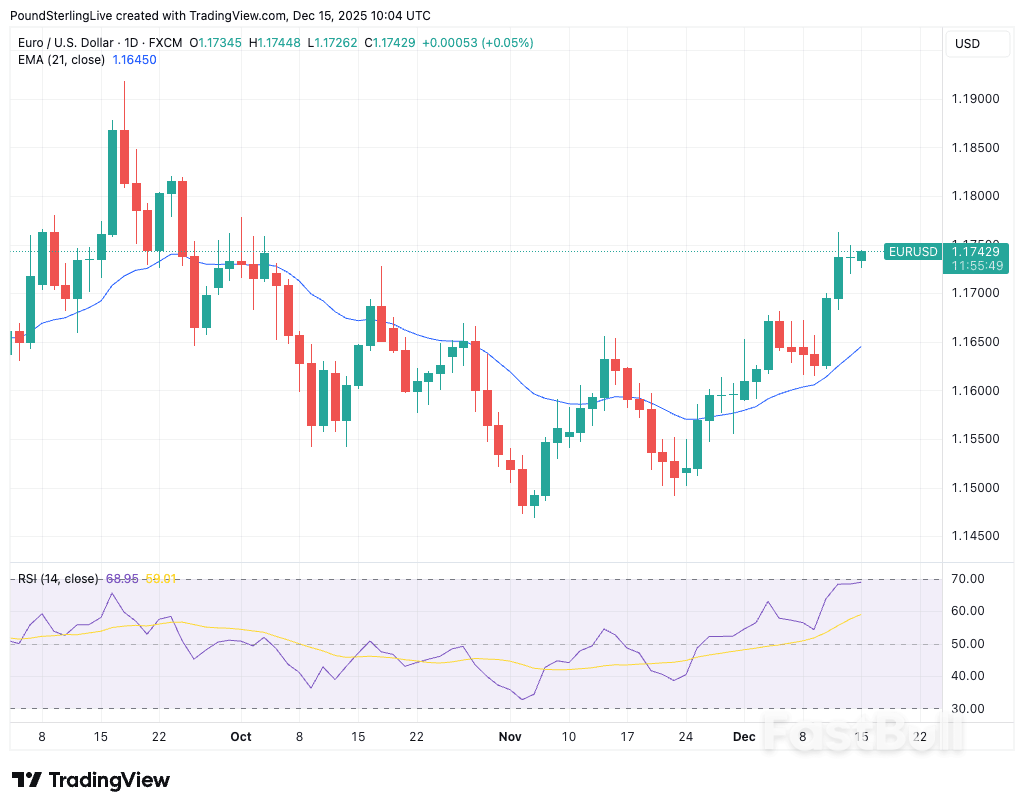
          The pair raced to 1.1762 last week, the highest level since October, just a little higher than where we find it at the time of writing Monday (1.1743).
          The speed of the euro's recent advance takes the Relative Strength Index (RSI) - see lower panel on the daily chart - to the cusp of 70, the level at which EUR/USD would be officially overbought.
          Euro-to-Dollar Week Ahead Forecast: Flirting With Overbought_1
          The RSI has mean-reverting tendencies when it reaches overbought conditions, meaning it will ultimately turn lower again. For this to happen, we would require the euro-dollar exchange rate to enter a sideways pattern or shallow retracement lower.
          In short, we think the euro is due to cool down somewhat after a solid run, and we wouldn't be surprised to see a retreat back below 1.17 this week before the next leg higher.
          However, the charts can tell us only so much in a week that will be dominated by important data releases.
          Euro-dollar will react to the outcome of Tuesday's Eurozone PMI figures for December, which are expected to confirm the bloc's economy maintained positive momentum into year-end.
          The Eurozone services PMI is expected to come in at 53.3, while manufacturing's recovery is anticipated to be confirmed by another tick higher to 49.9, leaving it on the cusp of returning to growth territory.
          Strong data will be consistent with no need for further interest rate cuts at the European Central Bank. In fact, an above-consensus PMI would encourage the steady creep higher in bets that the next move will be a hike.
          Yet, it will be the U.S. Dollar that will drive EUR/USD this week; the release of U.S. labour market numbers is the highlight for global financial markets; recall these releases were delayed by the U.S. government shutdown, which means they will fill a notable gap in the data.
          The November payrolls data are released Tuesday, where expectations are for an increase in jobs of 50K and a fall in the unemployment rate to 4.4%.
          Should the numbers undershoot, the market will ramp up bets for Fed rate cuts in 2026, which will weigh on U.S. yields and on the dollar.
          However, should the data beat expectations, those rate cut bets will recede and the dollar can jump and potentially extend gains over the remainder of the week, setting EUR/USD's rally back.
          Keep an eye out for U.S. retail sales, also due Tuesday, which should give an indication of how demand in the economy is holding up. Here the figure to beat is 0.2% m/m for October.
          Thursday brings U.S. CPI inflation data, where the expectation is for an uptick to 3.1% y/y in November, up from 3.0%.
          This is clearly heading in the wrong direction for the Fed, and an above-consensus figure would question market expectations for rate reductions next year, helping the dollar in the process.

          Source: Poundsterlinglive

          To stay updated on all economic events of today, please check out our Economic calendar
          Risk Warnings and Disclaimers
          You understand and acknowledge that there is a high degree of risk involved in trading. Following any strategies or investment methods may lead to potential losses. The content on the site is provided by our contributors and analysts for information purposes only. You are solely responsible for determining whether any trading assets, securities, strategy, or any other product is suitable for investing based on your own investment objectives and financial situation.
          Add to Favorites
          Share

          Wall Street Braces for AI Reckoning as Bubble Fears Mount

          Gerik

          Economic

          Stocks

          AI Boom Enters Reality Check as Spending Surges and Returns Lag

          Three years after ChatGPT launched the AI frenzy, investor euphoria is giving way to deeper scrutiny. While money continues to flow into artificial intelligence ventures at record pace, Wall Street is becoming increasingly cautious about the sector’s financial sustainability and long-term payoff. At the center of this shift is a growing divergence between high capital expenditures and slowing earnings growth, creating the conditions for what many see as a potential inflection point in the AI trade.
          Key stocks that have been the bedrock of the AI boom including Nvidia, Oracle, and others linked to OpenAI’s ecosystem have begun to lose steam. Nvidia’s recent pullback, Oracle’s sharp correction after disappointing cloud metrics, and ballooning expenditures across Big Tech have all signaled that the sector’s meteoric run may be approaching its limits.

          Capital Access and Circular Financing Raise Structural Concerns

          At the heart of Wall Street’s worry is whether the trillions poured into AI infrastructure can generate sustainable cash flows. OpenAI alone plans to spend $1.4 trillion in the years ahead but may not turn cash-flow positive until 2030. Nvidia, which has committed to funding some of its customers, is facing concerns about circular financing where chipmakers are funneling capital to clients that in turn use it to buy more chips.
          If investor confidence in OpenAI’s financial trajectory falters, the consequences could cascade across the broader ecosystem, affecting firms such as CoreWeave and others reliant on external funding. Oracle, which raised tens of billions through bond issuances to finance AI infrastructure, faces rising credit risk, with its debt spreads recently hitting the highest level since 2009.
          These developments highlight a structural fragility beneath the AI boom: many players depend heavily on external capital and could face pressure if market conditions tighten or sentiment shifts.

          Big Tech Spending Explodes but Cash Flow Growth Slows

          The top four cloud and AI giants Alphabet, Microsoft, Amazon, and Meta are projected to spend over $400 billion on capital expenditures in the next year, primarily on data centers. However, revenue growth is not keeping pace. For example, depreciation expenses from AI infrastructure have soared: Alphabet, Microsoft, and Meta reported $22 billion in depreciation in Q3 2025, up from $10 billion a year earlier, and this figure could hit $30 billion by Q3 2026.
          This expenditure surge risks undermining the free cash flow strength that traditionally underpinned Big Tech valuations. According to Bloomberg data, Meta and Microsoft are projected to run negative free cash flows in 2026 after accounting for shareholder returns, while Alphabet is expected to merely break even.
          As a result, companies that once generated high-margin, low-capex revenue are now operating under a new capital-heavy model. This pivot could compress valuation multiples unless AI-driven revenue ramps up quickly something that is still uncertain.

          Investor Psychology and the Risk of a Sentiment Shift

          Despite these headwinds, current valuations are still far from dot-com era extremes. The Nasdaq 100 trades at 26 times forward earnings, compared to over 80 times during the 2000 tech bubble. The Magnificent Seven’s earnings are forecast to grow 18% in 2026, slower than previous years but still outpacing the broader market.
          Yet pockets of speculative excess exist. Companies like Palantir and Snowflake are trading at over 100x projected profits, raising red flags for value-oriented investors. Meanwhile, AI giants like Nvidia and Microsoft remain more reasonably priced but the risk lies not in current multiples, but in any shift in growth trajectories.
          As Eric Clark of the Rational Dynamic Brands Fund noted, capital is heavily concentrated in a narrow group of names. If sentiment breaks, the exodus could be swift. Analysts warn that it may not take a dramatic crash to trigger a re-rating merely a plateau in earnings growth could be enough to cause a sector rotation.

          A Rotation, Not a Collapse, May Define AI’s Next Phase

          Wall Street is not forecasting a sudden collapse in AI valuations. Instead, what appears to be taking shape is a rational recalibration. Investors are beginning to differentiate between firms with durable business models and those riding hype without delivering monetization. Companies with negative cash flows and high dependency on debt may be most exposed.
          As AI infrastructure spending continues to climb, the debate in 2026 will focus on timing: When does investment translate into profit? If revenues do not begin to justify the costs, valuations could compress and capital could shift toward more balanced growth opportunities.
          The AI trade, it seems, is entering its “prove-it” phase. Whether this results in a rotation or a reckoning will depend on how quickly the sector delivers real, scalable returns. For now, the mood is shifting from blind belief to cautious evaluation and markets are preparing accordingly.

          Source: Bloomberg

          To stay updated on all economic events of today, please check out our Economic calendar
          Risk Warnings and Disclaimers
          You understand and acknowledge that there is a high degree of risk involved in trading. Following any strategies or investment methods may lead to potential losses. The content on the site is provided by our contributors and analysts for information purposes only. You are solely responsible for determining whether any trading assets, securities, strategy, or any other product is suitable for investing based on your own investment objectives and financial situation.
          Add to Favorites
          Share

          Trump Trade War: Tariff Fallout Builds As Legal And Economic Pressures Mount

          Glendon

          Forex

          Economic

          Tariffs have re‑emerged as a central pillar of U.S. trade policy. While the policy aims to reshape global trade and support domestic industries, early signs indicate falling revenue, rising costs, and growing legal risks. Economic and financial indicators now suggest mounting pressure across multiple sectors. This article presents the analysis of recent U.S. tariff actions, refund risks, and trade policy shifts, including the implications of the Trump-era trade measures.

          Tariff Revenue Drops Despite Ongoing Support

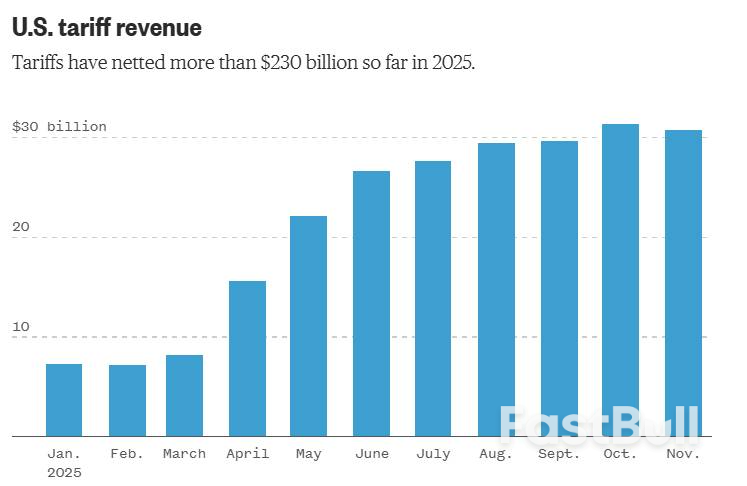
          At a recent rally in Pennsylvania, President Trump expressed strong support for the use of tariffs. However, after lifting tariffs on items such as coffee, oranges, and cocoa, monthly tariff revenue declined from $31.35 billion in October to $30.76 billion in November. This marked the first monthly drop since the reimplementation of broad-based duties.

          Since the start of his tariff policy, multiple proposals have been discussed regarding how the revenue could be used. These range from issuing direct payments to households to offsetting recent tax adjustments. However, these plans remain unconfirmed and have not been implemented.

          Supreme Court May Overturn Tariffs and Trigger Refunds

          Moreover, looming over the tariff debate is a Supreme Court case that could strike down most of the tariffs introduced under the Trump administration. If the court rules against them, the government may owe businesses up to $100 billion in refunds.

          Several companies, including major retailers like Costco, have already filed lawsuits seeking repayment. They argue that the use of emergency powers under the IEEPA law may be found unlawful.

          If the court agrees, it could challenge the legal basis of the tariffs and potentially increase the federal government's debt burden.

          Agriculture Bears the Brunt of Tariff Fallout

          On the other hand, tariffs had a significant impact on U.S. farmers. During the early phase of the trade conflict, China halted purchases of American soybeans, causing prices to collapse and exports to slow.

          In response, the administration announced a $12 billion bailout for the agricultural sector, stating that tariff revenue would fund the program. While farmers accepted the aid, many noted it fell short of addressing long-term challenges related to lost market access and profitability.

          In recent months, policymakers introduced additional carveouts, including tariff reductions on beef, coffee, and bananas. These changes suggest increasing pressure on the tariff policy, highlighting how certain industries and consumers have been negatively affected.

          Tariffs Drive Higher Consumer Costs

          Recent statements acknowledge that tariffs impose costs on domestic consumers. Independent estimates suggest that the average U.S. household has paid around $1,200 more as a result of these duties, adding pressure during a period of elevated inflation.

          In practice, tariffs increase import costs for U.S. companies, which are often passed on to consumers through higher prices. This dynamic can reduce demand, strain household budgets, and weigh on overall economic activity.

          Global Trade Uncertainty Meets Rising Financial Stress

          Trade risks now extend beyond China. The U.S.-Indonesia trade deal faces uncertainty, with reports citing Jakarta's failure to meet certain commitments. If the agreement collapses, it could weaken broader trade objectives.

          At the same time, U.S. officials approved chipmaker Nvidia to sell high-performance H200 chips to China. This move reflects a shift toward a more flexible and adaptive trade policy. In my view, it represents a pragmatic adjustment that strikes a balance between economic priorities and broader strategic interests.

          The policy direction eases earlier restrictions. It also creates uncertainty over how national security concerns are balanced against the benefits of trade. This evolving approach underscores the complexity of modern trade policy, where economic competitiveness and security considerations must often be reconciled.

          Beyond tariffs, broader financial indicators show warning signs. Unemployment claims dropped sharply. However, this decline might be due to seasonal distortions rather than genuine improvement.

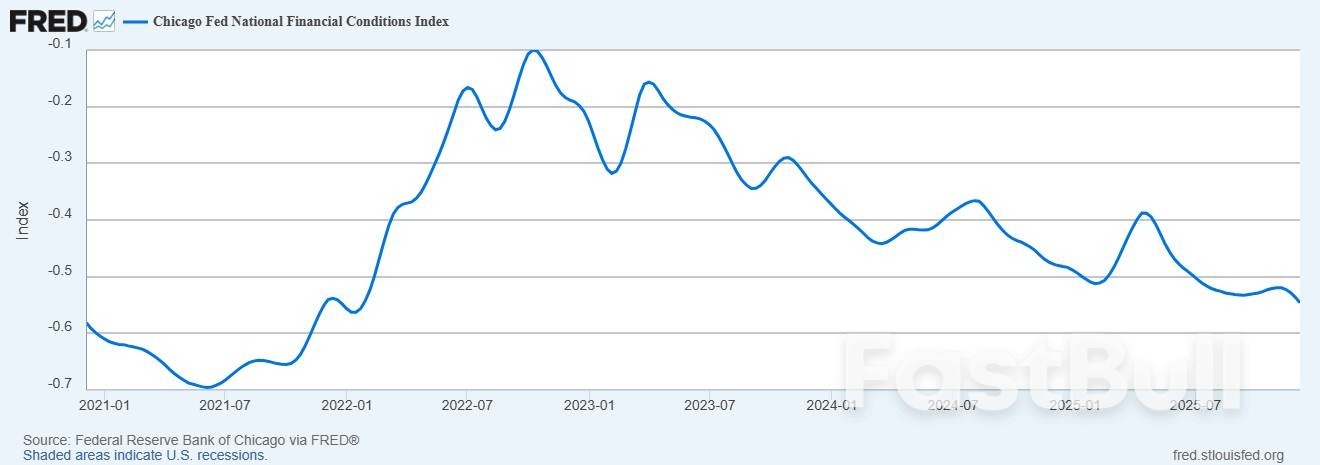
          The Chicago Fed National Financial Conditions Index fell to -0.546, indicating loose monetary conditions. While easy money supports elevated stock prices, it also increases the risk of asset bubbles.

          Conclusion: U.S. Trade Policy Faces Mounting Pressure

          The Trump trade war represents a high-stakes shift in U.S. trade strategy with broad economic consequences. Tariff revenue is declining, legal refund risks are increasing, and key industries, such as agriculture, continue to face pressure. Households are paying more, and financial markets are showing signs of stress. As trade relationships evolve and new policy adjustments emerge, the future direction of U.S. trade strategy remains uncertain and increasingly complex.

          Source: FX Empire

          To stay updated on all economic events of today, please check out our Economic calendar
          Risk Warnings and Disclaimers
          You understand and acknowledge that there is a high degree of risk involved in trading. Following any strategies or investment methods may lead to potential losses. The content on the site is provided by our contributors and analysts for information purposes only. You are solely responsible for determining whether any trading assets, securities, strategy, or any other product is suitable for investing based on your own investment objectives and financial situation.
          Add to Favorites
          Share
          FastBull
          Copyright © 2025 FastBull Ltd

          728 RM B 7/F GEE LOK IND BLDG NO 34 HUNG TO RD KWUN TONG KLN HONG KONG

          TelegramInstagramTwitterfacebooklinkedin
          App Store Google Play Google Play
          Products
          Charts

          Chats

          Q&A with Experts
          Screeners
          Economic Calendar
          Data
          Tools
          Membership
          Features
          Function
          Markets
          Copy Trading
          Latest Signals
          Contests
          News
          Analysis
          24/7
          Columns
          Education
          Company
          Careers
          About Us
          Contact Us
          Advertising
          Help Center
          Feedback
          User Agreement
          Privacy Policy
          Business

          White Label

          Data API

          Web Plug-ins

          Poster Maker

          Affiliate Program

          Risk Disclosure

          The risk of loss in trading financial instruments such as stocks, FX, commodities, futures, bonds, ETFs and crypto can be substantial. You may sustain a total loss of the funds that you deposit with your broker. Therefore, you should carefully consider whether such trading is suitable for you in light of your circumstances and financial resources.

          No decision to invest should be made without thoroughly conducting due diligence by yourself or consulting with your financial advisors. Our web content might not suit you since we don't know your financial conditions and investment needs. Our financial information might have latency or contain inaccuracy, so you should be fully responsible for any of your trading and investment decisions. The company will not be responsible for your capital loss.

          Without getting permission from the website, you are not allowed to copy the website's graphics, texts, or trademarks. Intellectual property rights in the content or data incorporated into this website belong to its providers and exchange merchants.

          Not Logged In

          Log in to access more features

          FastBull Membership

          Not yet

          Purchase

          Become a signal provider
          Help Center
          Customer Service
          Dark Mode
          Price Up/Down Colors

          Log In

          Sign Up

          Position
          Layout
          Fullscreen
          Default to Chart
          The chart page opens by default when you visit fastbull.com