Markets
News
Analysis
User
24/7
Economic Calendar
Education
Data
- Names
- Latest
- Prev


Signal Accounts for Members
All Signal Accounts
All Contests


U.S. Challenger Job Cuts MoM (Nov)A:--
F: --
P: --
U.S. Initial Jobless Claims 4-Week Avg. (SA)A:--
F: --
P: --
U.S. Weekly Initial Jobless Claims (SA)A:--
F: --
P: --
U.S. Weekly Continued Jobless Claims (SA)A:--
F: --
P: --
Canada Ivey PMI (SA) (Nov)A:--
F: --
P: --
Canada Ivey PMI (Not SA) (Nov)A:--
F: --
P: --
U.S. Non-Defense Capital Durable Goods Orders Revised MoM (Excl. Aircraft) (SA) (Sept)A:--
F: --
U.S. Factory Orders MoM (Excl. Transport) (Sept)A:--
F: --
P: --
U.S. Factory Orders MoM (Sept)A:--
F: --
P: --
U.S. Factory Orders MoM (Excl. Defense) (Sept)A:--
F: --
P: --
U.S. EIA Weekly Natural Gas Stocks ChangeA:--
F: --
P: --
Saudi Arabia Crude Oil ProductionA:--
F: --
P: --
U.S. Weekly Treasuries Held by Foreign Central BanksA:--
F: --
P: --
Japan Foreign Exchange Reserves (Nov)A:--
F: --
P: --
India Repo RateA:--
F: --
P: --
India Benchmark Interest RateA:--
F: --
P: --
India Reverse Repo RateA:--
F: --
P: --
India Cash Reserve RatioA:--
F: --
P: --
Japan Leading Indicators Prelim (Oct)A:--
F: --
P: --
U.K. Halifax House Price Index YoY (SA) (Nov)A:--
F: --
P: --
U.K. Halifax House Price Index MoM (SA) (Nov)A:--
F: --
P: --
France Current Account (Not SA) (Oct)A:--
F: --
P: --
France Trade Balance (SA) (Oct)A:--
F: --
P: --
France Industrial Output MoM (SA) (Oct)A:--
F: --
P: --
Italy Retail Sales MoM (SA) (Oct)A:--
F: --
P: --
Euro Zone Employment YoY (SA) (Q3)A:--
F: --
P: --
Euro Zone GDP Final YoY (Q3)A:--
F: --
P: --
Euro Zone GDP Final QoQ (Q3)A:--
F: --
P: --
Euro Zone Employment Final QoQ (SA) (Q3)A:--
F: --
P: --
Euro Zone Employment Final (SA) (Q3)A:--
F: --
Brazil PPI MoM (Oct)--
F: --
P: --
Mexico Consumer Confidence Index (Nov)--
F: --
P: --
Canada Unemployment Rate (SA) (Nov)--
F: --
P: --
Canada Labor Force Participation Rate (SA) (Nov)--
F: --
P: --
Canada Employment (SA) (Nov)--
F: --
P: --
Canada Part-Time Employment (SA) (Nov)--
F: --
P: --
Canada Full-time Employment (SA) (Nov)--
F: --
P: --
U.S. Personal Income MoM (Sept)--
F: --
P: --
U.S. Dallas Fed PCE Price Index YoY (Sept)--
F: --
P: --
U.S. PCE Price Index YoY (SA) (Sept)--
F: --
P: --
U.S. PCE Price Index MoM (Sept)--
F: --
P: --
U.S. Personal Outlays MoM (SA) (Sept)--
F: --
P: --
U.S. Core PCE Price Index MoM (Sept)--
F: --
P: --
U.S. UMich 5-Year-Ahead Inflation Expectations Prelim YoY (Dec)--
F: --
P: --
U.S. Core PCE Price Index YoY (Sept)--
F: --
P: --
U.S. Real Personal Consumption Expenditures MoM (Sept)--
F: --
P: --
U.S. 5-10 Year-Ahead Inflation Expectations (Dec)--
F: --
P: --
U.S. UMich Current Economic Conditions Index Prelim (Dec)--
F: --
P: --
U.S. UMich Consumer Sentiment Index Prelim (Dec)--
F: --
P: --
U.S. UMich 1-Year-Ahead Inflation Expectations Prelim (Dec)--
F: --
P: --
U.S. UMich Consumer Expectations Index Prelim (Dec)--
F: --
P: --
U.S. Weekly Total Rig Count--
F: --
P: --
U.S. Weekly Total Oil Rig Count--
F: --
P: --
U.S. Consumer Credit (SA) (Oct)--
F: --
P: --
China, Mainland Foreign Exchange Reserves (Nov)--
F: --
P: --
China, Mainland Exports YoY (USD) (Nov)--
F: --
P: --
China, Mainland Imports YoY (CNH) (Nov)--
F: --
P: --
China, Mainland Imports YoY (USD) (Nov)--
F: --
P: --
China, Mainland Trade Balance (CNH) (Nov)--
F: --
P: --
China, Mainland Exports (Nov)--
F: --
P: --


No matching data
Latest Views
Latest Views
Trending Topics
Top Columnists
Latest Update
White Label
Data API
Web Plug-ins
Affiliate Program
View All

No data
Japan’s new ruling party leader, Sanae Takaichi, has yet to reach an agreement with the party’s long-time coalition partner Komeito about continuing their alliance, a delay that highlights the challenges she faces in building a stable administration.
Even with Komeito on board, the Liberal Democratic Party lacks a majority in both houses of parliament. That makes it imperative for Takaichi to get the longstanding ally to continue its support before she cuts deals with other parties to obtain the numbers needed to pass budgets and push ahead with policy.
While the most likely outcome is that the two parties will reach agreement in the coming days, the delay shows the level of reservations Komeito has over Takaichi’s right-wing views and her response to funding scandals within the LDP.
In a sign of that unease, Komeito head Tetsuo Saito indicated in comments that aired Wednesday that the party won’t vote for Takaichi in a parliamentary ballot to decide the prime minister if a coalition agreement isn’t in place.
A shock exit by Komeito from the coalition might force Takaichi to make more expensive concessions to opposition parties such as the Democratic Party for the People or the Japan Innovation Party to win their backing on a policy-by-policy basis or in a new coalition.
Discussions between Takaichi and Saito on Tuesday ended without a deal, in contrast to the previous two administrations, both of which signed agreements on the day new LDP party executives were formally appointed.
Without Komeito, Takaichi faces a shortfall of 37 seats to reach an LDP majority in the lower house. In the upper house the LDP is 25 seats short.
Komeito was founded in 1964 with the backing of the Buddhist group Soka Gakkai, an organization whose members can provide a pool of votes. Collaboration with Komeito since the late 1990s has enabled the LDP to project more of a reassuring image of consensus-building.
Komeito has typically reined in the LDP’s more hawkish leaders and efforts to remove restrictions on Japan’s Self-Defense Forces while putting forward policies favoring the vulnerable. Komeito ensured the sales tax was only raised to 8% on food in 2019 instead of 10%.
Takaichi’s past hawkish comments stand at odds with Komeito’s pacifist stance. Over the years, Takaichi has been a regular visitor to Yasukuni, a shrine that honors Japan’s war dead including war criminals. Visits by previous premiers have proven to be a flashpoint for China and South Korea.
Still, Saito said Tuesday that he had reached a shared understanding on many points after Takaichi gave a detailed explanation of her views on history, Yasukuni and foreigners. That likely leaves problems over the LDP’s slush fund scandal as the sticking point, with Komeito pushing for more restrictions on corporate donations.
Takaichi likely inflamed tensions over the funding issue when she appointed Koichi Hagiuda, to a senior LDP post on Tuesday. Hagiuda was one of the lawmakers implicated in the funding scandal.
Whether Komeito stays put or not, Takaichi will need opposition support to pass draft legislation.
She is likely only seeking cooperation from Ishin and the DPP at this stage given the complexity of expanding or changing the ruling coalition. She has little time to play with, given a hectic diplomatic schedule if she becomes premier, including a possible meeting with US President Donald Trump later this month.
Ishin holds 35 and 19 seats in the lower and upper chambers respectively, while the DPP holds 27 and 25. A one-on-one partnership with either Ishin or the DPP, but without Komeito, wouldn’t be enough for the LDP to secure control of both chambers — highlighting the importance of Komeito’s seats.
The LDP signed an agreement last year with the DPP to raise the income threshold in exchange for support on an extra budget, a move that is a basis for further cooperation. That deal is already set to trim tax revenue by ¥1.2 trillion, according to the LDP. The Finance Ministry has estimated the lost revenue of lifting the ceiling by the full amount demanded by the DPP at up to ¥8 trillion.
Takaichi has said she favors raising the tax threshold. Still, DPP leader Yuichiro Tamaki talked down the possibility of a coalition after meeting Takaichi on Wednesday, reiterating his view that he wanted to enact policies rather than get a cabinet position.
The DPP also calls for a blanket sales tax cut to 5%. The DPP says it can finance the resulting ¥10 trillion shortfall through bond issuance, the surplus from special accounts and unused government funds. Giving in to these demands would make the DPP an expensive partner.
Based in the western region of Kansai, the right-leaning Ishin has faced off in recent elections against Komeito, which is also based in the area, making them fierce rivals. That makes Komeito reluctant to see Ishin join the ruling coalition.
Still, on policy, the parties are not so far apart. Ishin backed the annual budget for the current fiscal year after securing commitments from the LDP on free high school education and reduced social insurance premiums.
Ishin supports a targeted sales tax cut that lowers the rate on food to 0% for two years, with the cost theoretically covered by tax revenue surpluses — a less expensive alternative compared with the DPP’s plan.
Takaichi has also endorsed Ishin’s “second capital” initiative, which aims to offer up a city, likely Osaka, as an alternative to Tokyo in case of natural disasters. That may help talks to proceed.
As for Komeito, there are risks if it bolts from the coalition. Komeito would need to fight for relevance against the more aggressive DPP or the far-right Sanseito, political forces that are more attuned to a younger generation. Recent opinion polls show Komeito trailing its new rivals.
US President Donald Trump speaks during a roundtable about "Antifa," an anti-fascist movement he designated a domestic "terrorist organization" in the State Dining Room of the White House in Washington, DC, on Oct. 8, 2025.
U.S. President Donald Trump announced Wednesday night stateside that Israel and Hamas had agreed on the first phase of a peace plan which could put an end to the two-year war and free hostages.
"ALL of the Hostages will be released very soon, and Israel will withdraw their Troops to an agreed upon line as the first steps toward a Strong, Durable, and Everlasting Peace. All Parties will be treated fairly!," Trump said in a post on Truth Social.
The preliminary agreement was confirmed by Israeli officials, Hamas and mediator Qatar.
Qatari Prime Minister's spokesperson Maged al Ansary said in a post on X that an agreement had been reached on "all terms and mechanisms for implementing the first phase of the Gaza ceasefire agreement, which will lead to stopping the war, releasing Israeli detainees and Palestinian prisoners and allowing aid to enter," according to CNBC's translation of his post in Arabic. More details will be announced later, he added.
Israeli Prime Minister Benjamin Netanyahu thanked Trump on X and said that "With the approval of the first phase of the plan, all our hostages will be brought home. This is a diplomatic success and a national and moral victory for the State of Israel." An Israeli government spokesperson said that release of hostages will start Saturday, according to Reuters.
Hamas confirmed the details in a separate statement. "We highly appreciate the efforts of our mediating brothers in Qatar, Egypt, and Turkey. We also value the efforts of U.S. President Donald Trump, who seek to bring about a definitive end to the war and a complete withdrawal of the occupation from the Gaza Strip," the group said.
It remained unclear whether the parties had made progress on more contentious issues, including whether Hamas would agree to demilitarize, as President Trump has demanded and how governance of the war-torn Gaza Strip would be handled.
Trump's 20-point proposal released last month to end the war in Gaza called for "a process of demilitarization of Gaza ... which will include placing weapons permanently beyond use through an agreed process of decommissioning."
The plan called for Gaza to be governed under "the temporary transitional governance of a technocratic, apolitical Palestinian committee, responsible for delivering the day-to-day running of public services and municipalities for the people in Gaza."
The Gaza war started in October 2023 when Hamas terrorists attacked Israel, killing about 1,200 people. Israel's retaliatory campaign has since killed more than 67,000 people, and laid waste to much of Gaza.
UK government plans to introduce a new Unemployment Insurance benefit could save as much as £3 billion ($4 billion) a year and increase weekly payments to jobseekers, according to the Institute for Fiscal Studies.Under the proposal, two out-of-work benefits would be replaced with a single time-limited allowance based on past contributions into the social-security system. Payments will be set at the higher rate of the two, currently reserved for people with health conditions.
The IFS says that limiting this benefit to six or 12 months will more than offset the increased payments to jobseekers by reducing the cost of long-term claimants, who currently make up 88% of spending on contribution-based unemployment support.The analysis provides a boost for the government in its battle to contain the spiraling welfare bill and put the public finances back on track. In July, it was forced to U-turn on plans to cut £5 billion from disability and health-related benefits after a rebellion by Labour lawmakers. The Office for Budget Responsibility projects working-age welfare spending to rise almost 20% in the next five years.
In a report published Thursday, the IFS said the level of savings from the reform will depend on the time limit imposed. A six-month limit to claiming Unemployment Insurance would save a projected £3 billion, with the figure falling to £2 billion if in place for a year. These savings come from long-term claimants with health conditions, most of whom currently receive support indefinitely.The UK is less generous than its OECD peers when it comes to supporting those who lose their jobs. The current Jobseeker’s Allowance is set at only 12% of mean wages – or £92.05 a week – when the OECD average is 55% and higher still elsewhere in Europe. Unemployment Insurance would see the proportion rise to 19%.
“Given the UK’s internationally low levels of support for the newly unemployed, there is a strong case for strengthening the level and duration of support offered to them through contributory benefits,” said Anvar Sarygulov, research grants and programs manager at the Nuffield Foundation, which funded the IFS study. “However, the government needs to avoid pulling the rug out from under existing long-term claimants with health conditions by thinking carefully about the delivery and design of any transitional support.”The unemployment insurance proposal came in a government paper earlier this year, alongside the now-scrapped changes to health benefits. The IFS analysis is contained in a pre-released chapter of its forthcoming Green Budget.
Following SecState Rubio's earlier interruption, it appears his note to President Trump was spot on.President Trump Just posted on social media that Israel and the terror group Hamas have agreed to the first phase of a peace deal that would put an end to the gruelling and bloody Gaza conflict after two years.Trump announced the breakthrough in a post on Truth Social on Wednesday (Thursday AEDT), having earlier in the day suggested a deal was “very close” and that he would visit the Middle East later this week.
“I am very proud to announce that Israel and Hamas have both signed off on the first Phase of our Peace Plan,” Trump wrote on Truth Social.“This means that ALL of the Hostages will be released very soon, and Israel will withdraw their Troops to an agreed upon line as the first steps toward a Strong, Durable, and Everlasting Peace.“All Parties will be treated fairly! This is a GREAT Day for the Arab and Muslim World, Israel, all surrounding Nations, and the United States of America, and we thank the mediators from Qatar, Egypt, and Turkey, who worked with us to make this Historic and Unprecedented Event happen.
Prime Minister Benjamin Netanyahu on Thursday said Israel would bring home all the hostages held by Hamas in Gaza, after reports of a deal to end the Gaza war."With God's help we will bring them all home," Netanyahu's office said in a brief statement.
In an unusual moment, during a White House round-table on Antifa, Secretary of State Marco Rubio interrupted things to inform President Trump of something quite urgent. Whether a deal is really imminent or not, it still made for good theater, at the very least. Trump soon after this moment left the meeting, announcing "I have to go now to try to solve Middle East problems."Not long before that interruption, he had speculated that if the Egypt-hosted negotiations achieved a deal, he would likely travel to the Middle East. He even named Gaza as a potential destination, but then said it would most likely be Egypt.
"Peace for the Middle East, that’s a beautiful phrase, and we hope it’s going to come true, but it’s very close, and they’re doing very well," Trump told reporters.Does this mean he's getting ready for a major announcement? There have been 'false starts' on Gaza peace before (many times, actually)... so will this be the one to stick?
Axios last week reported that President Trump recently told Prime Minister Benjamin Netanyahu to stop being so "f*cking negative" and "take the win" after Hamas voiced its initial agreement to free the 48 remaining hostages (both dead and alive) as part of the US 20-point peace plan for Gaza.However, in more recent remarks Trump has denied ever saying this, or clashing with the Israeli leader on the pending agreement. "No, it’s not true. He's been very positive on the deal," Trump said of Netanyahu.
Asked specifically whether he has any red lines for Hamas in new round of negotiations that kicked off Monday in Egypt, Trump told reporters in the Oval Office that he does: "If certain things aren’t met, we’re not going to do it," he said.
Commenting on the potential for private vs. public friction further, Israeli media concludes the following:
Trump at times has avoided criticizing Netanyahu in public, even as reports have mounted about his private frustration with the Israeli premier, including during a tense phone call last week in which the Axios news site reported the US president responded angrily when Netanyahu said Hamas’s ambivalent response was "nothing to celebrate."US envoy Steve Witkoff is in Egypt joining the talks Wednesday, as is Trump's son-in-law and adviser Jared Kushner, and Erdogan too has sent Turkish officials, which may amount to too many cooks in the kitchen. The Turkish delegation is led by spy chief Ibrahim Kalin.
Top Hamas leader Taher al-Nunu has offered a generally positive assessment of where thing stand so far. "The mediators are making great efforts to remove any obstacles to the implementation of the ceasefire, and a spirit of optimism prevails among all parties," he said.The two warring sides have exchanges lists of Israeli captives and Palestinian prisoners to be released in the major swap. But even if this is agreed to, the question of ending the war, and a future Gaza where Hamas is disarmed, remains a big open one.
In Tuesday comments in the Oval Office, Trump said "So the primary guarantee is, once this deal happens, if it does happen — look, they’re in negotiations right now.""We are going to do everything possible. We have a lot of power, and we’re going to do everything possible to make sure everybody adheres to the deal," he added. However, it's notable that Trump stopped short of explicitly vowing that Israel would be barred from resuming military operations. For now, media reports say "progress" is being made in
Key points:
Two senior Indian ministers have, in an uncommon intervention, urged Tata Group's charity arm to resolve internal boardroom disputes to ensure stability at the sprawling $180-billion business empire it controls, sources told Reuters on Wednesday.The discord within Tata Trusts, a year after the death of family patriarch Ratan Tata, has raised fears of a repeat of a bitter 2016 public spat between the charity and Tata Sons that tarnished the reputation of India's most storied group.
Tata Trusts owns a 66% stake in Tata Sons, giving it power over major strategic decisions. Tata Sons, in turn, oversees 30 firms ranging from consumer goods, autos and airlines, including the likes of Jaguar Land Rover, Tata Consultancy Services, Tata Motorsand Air India.The disagreement within Tata Trusts in recent weeks concerns which of its trustees should sit on the Tata Sons board, the general business direction taken by the group and how to manage the planned exit of minority shareholder Shapoorji Pallonji, two industry sources familiar with the matter said.
The two Indian ministers met with Tata Sons Chair N. Chandrasekaran and Tata Trusts head Noel Tata in New Delhi on Tuesday to discuss the matter and seek a swift resolution of the disputes, one of the industry sources and a government official said.Finance Minister Nirmala Sitharaman was one of the ministers present at the rare direct government intervention, those sources said.
Indian media reported the other senior government official as Minister of Home Affairs Amit Shah."The government wants them to resolve the issues and restore stability," said the government official familiar with Tuesday's discussions.The sources declined to be named as the matter is confidential.Tata Trusts and Tata Sons have not commented publicly on the matter, which has been widely reported in Indian media. Neither responded to Reuters' requests for comment.
India's finance ministry and home affairs ministry did not respond to requests for comment.In the 2016 spat, Tata Sons chair Cyrus Mistry was unceremoniously ousted following disagreements with Tata Trusts, triggering legal battles. Mistry died in 2022 but his family's firm, Shapoorji Pallonji, still owns an 18% stake in Tata Sons.One of the main current disagreements among Tata Trusts' trustees concerns how Shapoorji's long-delayed plan to part ways with the Tatas will be executed and affect the conglomerate, one of the industry sources said.
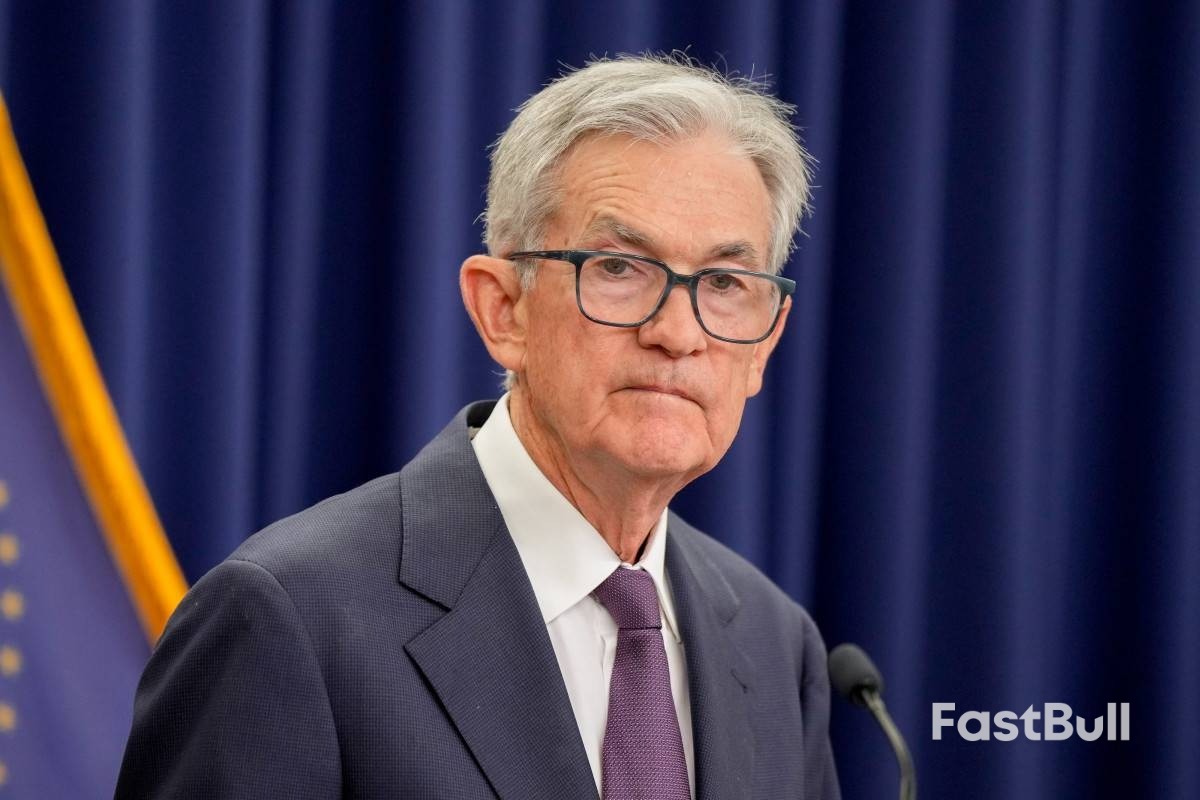
As the U.S. economic data freezes because of the U.S. government shutdown, crypto traders are bracing for Federal Reserve Chair Jerome Powell’s comment scheduled on Sept. 9, 8:30 AM ET, before markets open.For both crypto and traditional markets, his remarks will serve as the only official signal on the outlook for monetary policy.On Sept. 17, a 25-basis-point rate cut was followed by a sharp sell-off after Powell’s post-decision remarks fueled concern about the pace of easing.That history is keeping expectations tense heading into tomorrow’s speech. Volatility gauges in both equities and digital assets have been ticking higher.
Pseudonymous crypto trader “TradeWithElites” on X criticized Fed Chair Jerome Powell, saying, “Tell me one time when Powell said something bullish.” The trader added that “even after the 25bps rate cut in September, his speech alone tanked the market again.”In-house survey of Federal Reserve point toward additional easing this year.
According to the minutes of the Sept. 16 to Sept. 17 FOMC meeting:
“The vast majority of survey respondents expected at least two 25 basis point cuts by year-end, with around half expecting three cuts over that time.”

Notably, the shutdown has halted key data releases including labor reports, jobless claims, and inflation updates. That absence leaves Powell’s speech as the only tradable datapoint this week.
Former hedge fund manager and Bitcoin Opportunity Fund co-founder James Lavish said the Fed minutes show the board is “still concerned about the potential for rising inflation” yet “leaning toward more rate cuts this year anyway.” The Bitcoin advocate hinted the stance reinforces why “sound money like BTC matters more than ever.”According to Kraken's price feeds, Bitcoin is trading down at 0.9% in 24 hours to $123,255 as broader crypto cap hits $4.32T. Ethereum edges up 0.1% to $4,509 with steady spot demand and staking flows. Dogecoin leads majors with a 2.5% pop to $0.2582.
Fed minutes show most officials back more rate cuts this year, signaling a clear pivot toward easier policy. Governor Stephen Miran wanted a deeper 50 bps cut, arguing inflation is near 2%. The Fed warned job gains have slowed while inflation remains “somewhat elevated.” Looser policy could boost liquidity — a bullish setup for Bitcoin and crypto markets.Wall Street took the Sept. 16–17 FOMC minutes as a green light for more easing because “most judged that it likely would be appropriate to ease policy further over the remainder of this year,” even as officials stayed split on inflation risks.The document notes live debate inside the Fed, “a few” wanted no cut, while new Governor Stephen Miran argued for 50 bps, which can sway rate-path odds, yields, and risk appetite in real time.
White Label
Data API
Web Plug-ins
Poster Maker
Affiliate Program
The risk of loss in trading financial instruments such as stocks, FX, commodities, futures, bonds, ETFs and crypto can be substantial. You may sustain a total loss of the funds that you deposit with your broker. Therefore, you should carefully consider whether such trading is suitable for you in light of your circumstances and financial resources.
No decision to invest should be made without thoroughly conducting due diligence by yourself or consulting with your financial advisors. Our web content might not suit you since we don't know your financial conditions and investment needs. Our financial information might have latency or contain inaccuracy, so you should be fully responsible for any of your trading and investment decisions. The company will not be responsible for your capital loss.
Without getting permission from the website, you are not allowed to copy the website's graphics, texts, or trademarks. Intellectual property rights in the content or data incorporated into this website belong to its providers and exchange merchants.
Not Logged In
Log in to access more features

FastBull Membership
Not yet
Purchase
Log In
Sign Up