

Markets
News
Analysis
User
24/7
Economic Calendar
Education
Data
- Names
- Latest
- Prev



Signal Accounts for Members
All Signal Accounts
All Contests
 U.S. Challenger Job Cuts MoM (Nov)
A:--
F: --
P: --
U.S. Initial Jobless Claims 4-Week Avg. (SA)A:--
F: --
P: --
U.S. Weekly Initial Jobless Claims (SA)A:--
F: --
P: --
U.S. Weekly Continued Jobless Claims (SA)A:--
F: --
P: --
 Canada Ivey PMI (SA) (Nov)
A:--
F: --
P: --
Canada Ivey PMI (Not SA) (Nov)A:--
F: --
P: --
U.S. Non-Defense Capital Durable Goods Orders Revised MoM (Excl. Aircraft) (SA) (Sept)A:--
F: --
U.S. Factory Orders MoM (Excl. Transport) (Sept)A:--
F: --
P: --
U.S. Factory Orders MoM (Sept)A:--
F: --
P: --
U.S. Factory Orders MoM (Excl. Defense) (Sept)A:--
F: --
P: --
U.S. EIA Weekly Natural Gas Stocks ChangeA:--
F: --
P: --
Saudi Arabia Crude Oil ProductionA:--
F: --
P: --
U.S. Weekly Treasuries Held by Foreign Central BanksA:--
F: --
P: --
 Japan Foreign Exchange Reserves (Nov)
A:--
F: --
P: --
 India Repo Rate
A:--
F: --
P: --
India Benchmark Interest RateA:--
F: --
P: --
India Reverse Repo RateA:--
F: --
P: --
India Cash Reserve RatioA:--
F: --
P: --
Japan Leading Indicators Prelim (Oct)A:--
F: --
P: --
 U.K. Halifax House Price Index YoY (SA) (Nov)
A:--
F: --
P: --
U.K. Halifax House Price Index MoM (SA) (Nov)A:--
F: --
P: --
 France Current Account (Not SA) (Oct)
A:--
F: --
P: --
France Trade Balance (SA) (Oct)A:--
F: --
P: --
France Industrial Output MoM (SA) (Oct)A:--
F: --
P: --
 Italy Retail Sales MoM (SA) (Oct)
A:--
F: --
P: --
 Euro Zone Employment YoY (SA) (Q3)
A:--
F: --
P: --
Euro Zone GDP Final YoY (Q3)A:--
F: --
P: --
Euro Zone GDP Final QoQ (Q3)A:--
F: --
P: --
Euro Zone Employment Final QoQ (SA) (Q3)A:--
F: --
P: --
Euro Zone Employment Final (SA) (Q3)A:--
F: --
 Brazil PPI MoM (Oct)
--
F: --
P: --
 Mexico Consumer Confidence Index (Nov)
--
F: --
P: --
Canada Unemployment Rate (SA) (Nov)--
F: --
P: --
Canada Labor Force Participation Rate (SA) (Nov)--
F: --
P: --
Canada Employment (SA) (Nov)--
F: --
P: --
Canada Part-Time Employment (SA) (Nov)--
F: --
P: --
Canada Full-time Employment (SA) (Nov)--
F: --
P: --
U.S. Personal Income MoM (Sept)--
F: --
P: --
U.S. Dallas Fed PCE Price Index YoY (Sept)--
F: --
P: --
U.S. PCE Price Index YoY (SA) (Sept)--
F: --
P: --
U.S. PCE Price Index MoM (Sept)--
F: --
P: --
U.S. Personal Outlays MoM (SA) (Sept)--
F: --
P: --
U.S. Core PCE Price Index MoM (Sept)--
F: --
P: --
U.S. UMich 5-Year-Ahead Inflation Expectations Prelim YoY (Dec)--
F: --
P: --
U.S. Core PCE Price Index YoY (Sept)--
F: --
P: --
U.S. Real Personal Consumption Expenditures MoM (Sept)--
F: --
P: --
U.S. 5-10 Year-Ahead Inflation Expectations (Dec)--
F: --
P: --
U.S. UMich Current Economic Conditions Index Prelim (Dec)--
F: --
P: --
U.S. UMich Consumer Sentiment Index Prelim (Dec)--
F: --
P: --
U.S. UMich 1-Year-Ahead Inflation Expectations Prelim (Dec)--
F: --
P: --
U.S. UMich Consumer Expectations Index Prelim (Dec)--
F: --
P: --
U.S. Weekly Total Rig Count--
F: --
P: --
U.S. Weekly Total Oil Rig Count--
F: --
P: --
U.S. Consumer Credit (SA) (Oct)--
F: --
P: --
 China, Mainland Foreign Exchange Reserves (Nov)
--
F: --
P: --
China, Mainland Exports YoY (USD) (Nov)--
F: --
P: --


No matching data

Latest Views
Latest Views
Trending Topics
Top Columnists
Latest Update
White Label
Data API
Web Plug-ins
Affiliate Program
View All
No data
Japan's Nikkei 225 hit a record high Tuesday for the second straight session, lifted by a tech rally on Wall Street after a massive deal between OpenAI and AMD — seen as one of the most direct challenges yet to chipmaker giant Nvidia.
Japan's Nikkei 225 hit a record high Tuesday for the second straight session, lifted by a tech rally on Wall Street after a massive deal between OpenAI and AMD — seen as one of the most direct challenges yet to chipmaker giant Nvidia.
Chip stocks were among the top movers on the index. Shares of Advantest rose over 4%, while Tokyo Electron added 2%. Lasertec was up 1.35%, and Renesas Electronics advanced 4.85%.
The Nikkei 225 hit a fresh high Monday after Japan's ruling Liberal Democratic Party elected staunch conservative Sanae Takaichi as its new leader Saturday, positioning her to become the country's first female prime minister.
Meanwhile, the Topix index rose 0.31%.
Australia's ASX/S&P 200 fell 0.27%, extending losses from the previous session.
Chinese, Hong Kong and South Korean markets are closed for the holidays.
U.S. equity futures were slightly lower in early Asian hours Tuesday after the major key benchmarks hit fresh records Monday stateside.
Overnight, the S&P 500 gained 0.36% to end the day at a fresh record for the 32nd time this year. Meanwhile, the tech-heavy Nasdaq advanced 0.71% to finish at 22,941.67, after notching its 31st all-time high of 2025.
Shares of AMD skyrocketed almost 24% to boost both indexes after the company announced a deal with OpenAI, which could see the latter take a 10% stake in the chipmaker.
The Dow Jones Industrial Average, however, fell 63.31 points, or 0.14%, to close at 46,694.97, weighed down by a decline in shares of Sherwin-Williams and Home Depot.
On 20 August 2025, Kabul hosted the sixth China–Afghanistan–Pakistan foreign ministers’ dialogue, the first since the Taliban’s 2021 takeover. Chinese, Pakistani and Afghan leaders pledged deeper cooperation on counterterrorism, trade and connectivity, while announcing plans to extend the China–Pakistan Economic Corridor (CPEC) into Afghanistan.The symbolism of the meeting proved as consequential as its substance. Wang Yi’s arrival in Kabul immediately following high-level talks in New Delhi was carefully choreographed, underscoring Beijing’s capacity to engage multiple sides while consolidating regional leverage ahead of the Shanghai Cooperation Organisation summit.
All three parties reiterated plans to link Afghanistan with the China–Pakistan Economic Corridor (CPEC), effectively tying Kabul into the Belt and Road Initiative (BRI). While the precise routes for the corridor remain unclear, the political signal is unmistakable. Beijing seeks to bring Afghanistan into its infrastructure orbit, while Islamabad aims to normalise trade and transit with its landlocked neighbour.The meeting also resulted in an agreement on domestic security in the region. A joint statement on terrorism stressed ‘joint efforts’ against cross-border militancy, addressing Pakistan’s anxieties regarding the Tehrik-e-Taliban Pakistan and China’s concerns over Uyghur militants. Wang Yi called for intensified cooperation and a regular trilateral security dialogue, though doubts persist about Kabul’s capacity or willingness to sustain such pressure. Normalisation also gained momentum. Weeks after Russia recognised the Taliban, China and Pakistan edged towards deeper cooperation without granting formal recognition.
For New Delhi, the Kabul trilateral presents both risks and opportunities. India has consistently opposed the BRI, mainly because the CPEC runs through territory it claims in Jammu and Kashmir, as well as Ladakh. While an Afghan extension does not directly deepen this sovereignty dispute, it broadens the BRI’s reach along India’s western periphery and could divert Afghan trade from Indian-backed routes. New Delhi is expected to restate its objections, but the deeper concern is whether a CPEC–Afghanistan spur erodes its influence with Afghan businesses and logistics operators.
Security dynamics add further complexity. Beijing’s engagement in Kabul is aimed at reducing risks to Chinese personnel, projects in Pakistan and prospective ventures in Afghanistan. Any Taliban crackdown may reassure China and Pakistan by targeting the Tehrik-e-Taliban Pakistan or the East Turkestan Islamic Movement, but there is no guarantee of action against anti-India groups. At the same time, tighter Afghan–Pakistan ties and border management could ease Kashmir spillovers, leaving India alert to whether ‘joint efforts’ prove comprehensive or selective.
Recognition politics further constrain India’s choices. Unlike Russia, which recognised the Taliban in July, India faces stronger barriers after the ICC issued arrest warrants against senior Taliban leaders for persecuting women and girls. These legal steps make recognition untenable. Yet India already maintains a technical team in Kabul and has expanded trade and humanitarian facilitation, signalling that transactional engagement will continue, even if formal upgrades remain politically difficult.
Any prospective CPEC–Afghanistan extension must be assessed through debt-sustainability and governance lenses. Afghanistan’s limited revenue base, restricted access to concessional finance and ongoing sanctions risk constraining its ability to service large, debt-financed infrastructure. Three scenarios appear plausible.
The first option is a grant-heavy model focused on upgrading road links and border facilities. The second is a moderate build-operate-transfer framework for select corridors and logistics parks, financed by revenue streams. The third, riskier, is a high-debt model built around greenfield mining and energy projects, exposing Kabul to refinancing and sovereignty vulnerabilities.Given China’s recent moderation in overseas lending and greater focus on project bankability, the first two strategies are more likely. But India should still prepare for the third by strengthening Chabahar Port and the International North–South Transport Corridor (INSTC) as alternative trade routes, while widening Afghan access to Indian markets and coordinating transparent standards with multilateral lenders.
India should prioritise connectivity instruments under its control — treating its Chabahar Port concession as a long-horizon geoeconomic program by instituting regular sailings, predictable customs procedures and targeted trade finance for Afghan shippers. This can be combined with linking Chabahar to the INSTC to preserve a commercial foothold in Central Asian supply chains.At home, New Delhi can institutionalise market access for Afghan exporters by converting recent ad hoc relaxations on Afghan trucks and agricultural imports into a stable, rules-based framework that keeps the Indian market valuable regardless of the Belt and Road’s footprint.
In parallel, India should pursue a quiet, outcome-based counterterrorism diplomacy — if Beijing expects Kabul to contain threats to Chinese personnel and projects, India should press bilaterally and through partners for non-discriminatory enforcement against groups that target India.New Delhi ought to leverage multipolar channels pragmatically. Russia’s recognition of the Taliban introduces constraints but also potential backchannels for humanitarian coordination and de-escalation, while any re-engagement with China must remain contingent on tangible progress along the Line of Actual Control. Recent high-level visits should not be mistaken for a strategic reset.
The Kabul trilateral has not completely redrawn the map — yet. But it accelerated trends India cannot ignore, including a stronger BRI presence to its west, an emerging China-brokered detente between Islamabad and Kabul, and a regional diplomatic tempo that proceeds whether India engages or not.New Delhi’s next move should not be to campaign against the meeting’s optics. India is better off out-competing on infrastructure access, insisting on even-handed counterterrorism and keeping a functional foothold in Afghanistan’s economy. The alternative is to watch as trade routes, political influence and security conversations increasingly flow through corridors that India neither designs nor controls.

The U.S. Supreme Court on Monday refused to protect Google from a year-old order requiring a major makeover of its Android app store that's designed to unleash more competition against a system that a jury declared an illegal monopoly.The rebuff delivered in a one-sentence decision by the Supreme Court means Google will soon have to start an overhaul of its Play Store for the apps running on the Android software that powers most smartphones that compete against Apple's iPhone in the U.S.
Among other changes, U.S. District Judge James Donato last October ordered Google to give its competitors access to its entire inventory of Android apps and also make those alternative options available to download from the Play Store.In a filing last month, Google told the U.S. Supreme Court that Donato's order would expose the Play Store's more than 100 million U.S. users to “enormous security and safety risks by enabling stores that stock malicious, deceptive, or pirated content to proliferate."
Google also said it faced an Oct. 22 deadline to begin complying with the judge's order if the Supreme Court didn't grant its request for a stay. The Mountain View, California, company was seeking the protection while pursuing a last-ditch attempt to overturn the December 2023 jury verdict that condemned the Play Store as an abusive monopoly.In a statement, Google said it will continue its fight in the Supreme Court while submitting to what it believes is a problematic order. “The changes ordered by the U.S. District Court will jeopardize users’ ability to safely download apps,” Google warned.
Google had been insulated from the order while trying to overturn it and the monopoly verdict, but the Ninth Circuit Court of Appeals rejected that attempt in a decision issued two months ago.In its filing with the Supreme Court, Google argued it was being unfairly turned into a supplier and distributor for would-be rivals.Donato concluded the digital walls shielding the Play Store from competition needed to be torn down to counteract a pattern of abusive behavior. The conduct had enabled Google to to reap billions of dollars in annual profits, primarily from its exclusive control of a payment processing system that collected a 15-30% fee on in-app transactions.
Those commissions were the focal point of an antitrust lawsuit that video game maker Epic Games filed against Google in 2020, setting up a month-long trial in San Francisco federal court that culminated in the jury's monopoly verdict.Epic, the maker of the Fortnite game, lost a similar antitrust case targeting Apple's iPhone app store. Even though U.S. District Judge Yvonne Gonzalez-Rodgers concluded the iPhone app store wasn't an illegal monopoly, she ordered Apple to begin allowing links to alternative payment systems as part of a shake-up that resulted in the company being held in civil contempt of court earlier this year.
In a post, Epic CEO Tim Sweeney applauded the Supreme Court for clearing the way for consumers to choose alternative app payment choices “without fees, scare screens, and friction.”Although the Play Store changes will likely dent Google's profit, the company makes most of its money from a digital ad network that's anchored by its dominant search engine — the pillars of an internet empire that has been under attack on other legal fronts.
As part of cases brought by the U.S. Justice Department, both Google's search engine and parts of its advertising technology were declared illegal monopolies, too.A federal judge in the search engine case earlier this year rejected a proposed break-up outlined by the Justice Department i n a decision that was widely seen as a reprieve for Google. The government is now seeking to break up Google in the advertising technology case during proceedings that are scheduled to wrap up with closing arguments on Nov. 17 in Alexandria, Virginia.
Delegations from Israel and Hamas held their first day of indirect negotiations in Egypt on Monday on U.S. President Donald Trump's plan to halt the war in Gaza, wrestling with contentious issues such as demands that Israel withdraw and Hamas disarm.Israel and Hamas have both endorsed the overall principles behind Trump's plan, under which fighting would cease, hostages go free and aid pour into Gaza.
The plan also has the backing of Arab and Western states. Trump has called for negotiations to take place swiftly towards a final deal, in what Washington hails as the closest the sides have yet come to ending the two-year-old conflict.Trump, who has cast himself as the only world leader capable of achieving peace in Gaza, has invested significant political capital in efforts to end the war that has killed tens of thousands and left U.S. ally Israel increasingly isolated on the world stage.
"I really think we're going to have a deal," Trump told reporters on Monday at the White House as the delegations met in Egypt. "We have a really good chance of making a deal, and it'll be a lasting deal."But both sides are seeking clarifications of crucial details, including those that have derailed previous attempts to end the war and could defy any quick resolution.
Trump has pushed Israel to suspend its bombing of Gaza for the talks. Gaza residents said Israel had scaled back its offensive substantially, although not halted it altogether.Gaza health authorities reported 19 people killed by Israeli strikes in the past 24 hours, around a third of the typical daily toll in recent weeks, when Israel has been mounting one of its biggest offensives of the war in Gaza City.
The talks began at the Red Sea resort of Sharm El Sheikh with delegations from Egypt, the United States and Qatar present as intermediaries.A Palestinian official close to the negotiations said the first session ended late Monday evening and more talks were due to take place on Tuesday.Hamas outlined its stance on the release of hostages and the scale and timeline of Israel's withdrawal from Gaza, the official said. The Islamist group also voiced concerns about whether Israel would commit to a permanent ceasefire and a comprehensive pullout, the official said.
Even as the talks concluded for the day, sounds of explosions from airstrikes and demolition of houses could be heard in Gaza City, signifying that Israel had not ceased its bombardment.The talks commenced on the eve of the second anniversary of the Hamas attack on October 7, 2023, on Israel that triggered the war. Fighters killed 1,200 people and took 251 hostages, the deadliest day for Jews since the Holocaust.
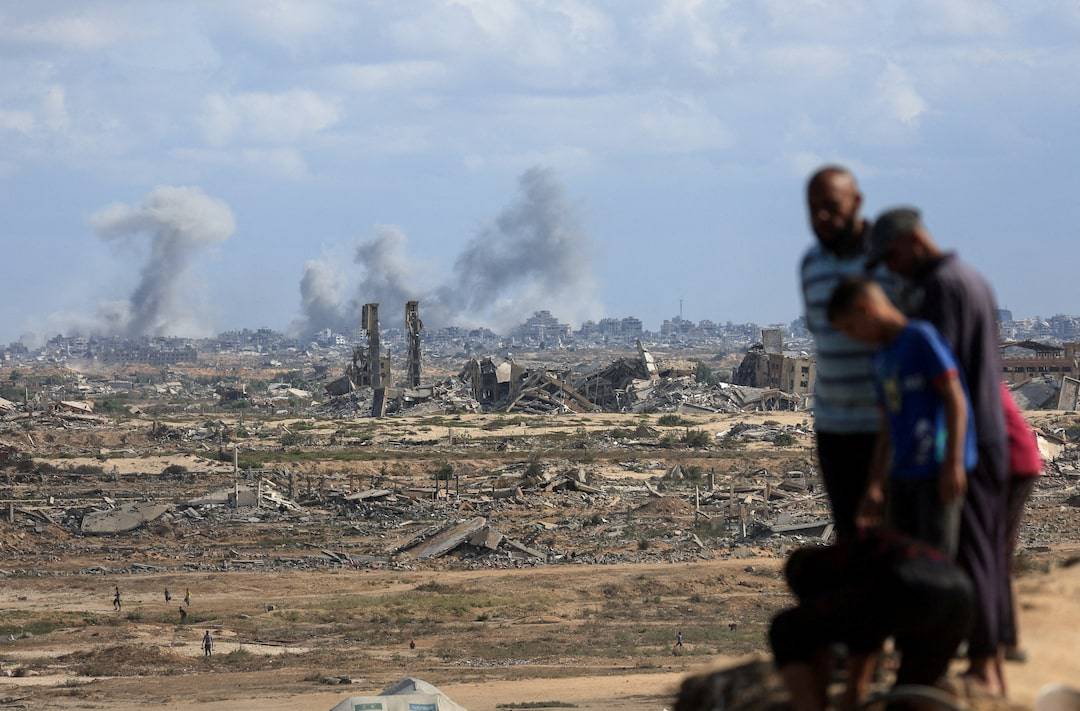


Israel's retaliatory military campaign has killed more than 67,000 Palestinians and left the majority of 2.2 million Gazans homeless and hungry in an enclave destroyed by relentless bombardment.A senior Israeli security source said the talks initially would focus only on the release of hostages and give Hamas a few days to complete that phase.Israel will not compromise on withdrawing troops only to the so-called yellow line in Gaza — a boundary for an initial Israeli pullback under the Trump plan, the source said. It would create a strategic buffer zone, and further withdrawal would depend on Hamas meeting set conditions.
With Israeli forces blasting their way through Gaza City and flattening neighbourhoods as they advance, Gaza residents called a ceasefire their last hope."If there is a deal, then we survive. If there isn't, it is like we have been sentenced to death," said Gharam Mohammad, 20, displaced along with her family in central Gaza.
Inside Israel there is clamour for an end to the war to bring home hostages, although right-wing members of Prime Minister Benjamin Netanyahu's cabinet oppose any halt to fighting.Though Trump says he wants a deal quickly, an official briefed on the negotiations, speaking on condition of anonymity, said he expected the round of talks starting on Monday would require at least a few days.An official involved in ceasefire planning and a Palestinian source said Trump's 72-hour deadline for the hostages' return could be unachievable for dead hostages. Their remains may need to be located and recovered from scattered sites.
The Israeli delegation includes officials from spy agencies Mossad and Shin Bet, Netanyahu's foreign policy adviser Ophir Falk and hostages coordinator Gal Hirsch. Israel's chief negotiator, Strategic Affairs Minister Ron Dermer, was expected to join later this week, pending developments in the negotiations, according to three Israeli officials.The Hamas delegation is led by the group's exiled Gaza leader, Khalil Al-Hayya, who survived an Israeli airstrike that killed his son in Doha, the Qatari capital, a month ago.The U.S. has sent special envoy Steve Witkoff and Jared Kushner, the president's son-in-law who has strong ties to the Middle East, the White House said.
The parties "are going over the lists of both the Israeli hostages and also the political prisoners who will be released," White House press secretary Karoline Leavitt said on Monday.A thorny issue is likely to be the Israeli demand, echoed in Trump's plan, that Hamas disarm, a Hamas source told Reuters. The group has insisted it will not disarm unless Israel ends its occupation and a Palestinian state is created.In a statement commemorating the October 7 anniversary, United Nations Secretary-General Antonio Guterres said Trump's plan "presents an opportunity that must be seized to bring this tragic conflict to an end."
Rumors of a one-dollar coin bearing the image of U.S. President Donald Trump surfaced last week and the U.S Treasury confirmed them.
Should Trump Be on a Dollar Coin? The US Treasury Is Considering It
Donald Trump became the first president to launch a memecoin last year, and now the U.S. Treasury has confirmed that he may get his own one-dollar coin minted to commemorate the country’s 250th birthday in 2026.
What first appeared to be online gossip turned out to be verified fact when the U.S. Treasury confirmed that online posts claiming the department is considering minting a one-dollar coin bearing Trump’s face are in fact true.
“No fake news here. These first drafts honoring America’s 250th Birthday and @POTUS are real,” said U.S. Treasurer Brandon Beach. “Looking forward to sharing more soon, once the obstructionist shutdown of the United States government is over,” he added, referring to the current government shutdown now on its sixth day.
But there’s a problem; current legislation prohibits minting coins bearing images of living people, including presidents. According to Section 6 of the Circulating Collectible Coin Redesign Act of 2020, “No head and shoulders portrait or bust of any person, living or dead, and no portrait of a living person may be included in the design on the reverse of specified coins.”
It’s unclear how the Trump administration will get around the prohibition. The coin design currently being circulated shows a bust of the president on one side and on the flipside, an image of Trump pumping his right fist with the words “fight, fight, fight” inscribed along the top half. The image celebrates how the president survived an attempt on his life last summer.
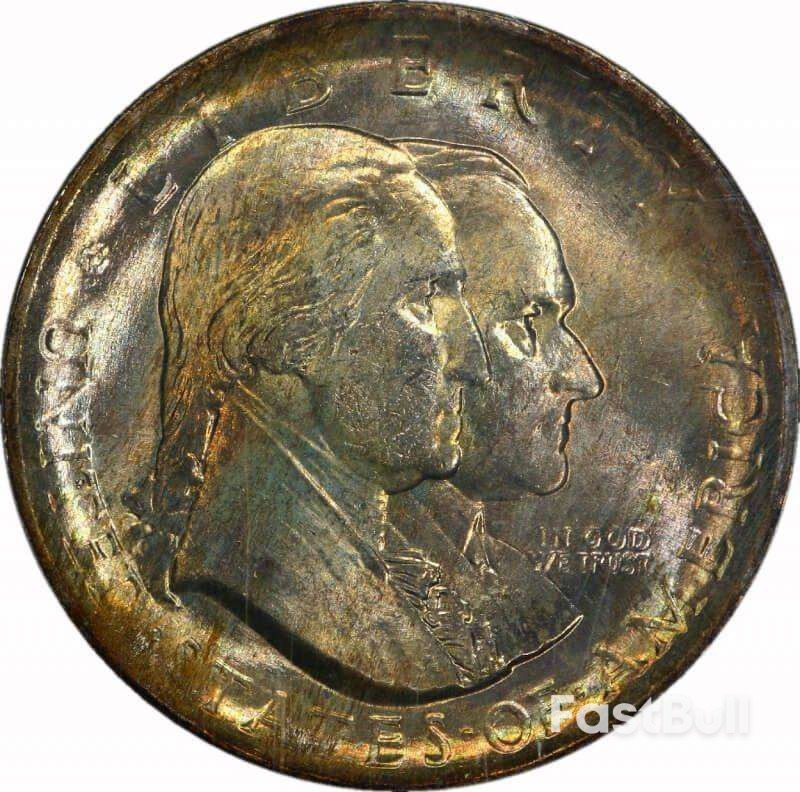 Calvin Coolidge was the only living president to be featured on a U.S. coin. He earned that distinction in 1926 when a million half-dollars were minted bearing busts of both Coolidge and George Washington to celebrate the country’s 150th anniversary or sesquicentennial. The coins weren’t exactly a big hit however, and 859,408 of them were returned to the Philadelphia Mint and melted.
White House Press Secretary Karoline Leavitt was asked on Friday about how the president felt regarding the prospects of having his face on a coin next year. “I’m not sure if he’s seen it, but I’m sure he’ll love it,” Leavitt said.
Key points:
The Reserve Bank of Australia's anticipated November rate cut is facing growing uncertainty, with recent data and hawkish signalling raising doubts about whether the central bank will deliver the relief markets have been pricing in.Still, a 25 bp cut at the November 4 meeting remains the consensus view. The AFR's latest quarterly survey shows 23 out of 39 respondents pointing to a rate cut at the RBA's next policy meeting.Morgan Stanley maintains its forecast for a Melbourne Cup Day cut, but acknowledges the bar has been raised following the RBA's September hold and a string of stronger-than-expected economic data. The investment bank warns that any pause in the easing cycle could be extended rather than temporary, with significant implications for rate-sensitive sectors.
The September meeting proved more hawkish than markets expected, with the RBA acknowledging stronger domestic and easier financial conditions. This followed several data points that suggested the economy retains more momentum than previously thought.Credit growth has re-accelerated across both households and businesses, with private sector credit growth accelerating to 7.1% annually in August, the strongest pace since February 2023.
However, household spending presented a mixed picture, rising only 0.1% month-on-month in August, though annual growth remained elevated at 5.0%, a near two-year high.In addition, building approvals fell 6% in August, missing economist expectations, while the trade balance narrowed sharply to a $1.8 billion surplus, also well below forecasts.
Morgan Stanley says the economy wouldn't immediately derail if the RBA keeps rates on hold. Housing conditions remain strong, and historical patterns indicate these typically strengthen further after the central bank pauses its cutting cycle.Fiscal spending continues to support the labour market, while consumers benefit from solid income growth and rising wealth. This combination has underpinned spending despite cost-of-living pressures that dominated headlines throughout 2024.
The main risk from a pause would be negative sentiment effects on consumers and businesses. However, Morgan Stanley believes the broader economic upswing that has been building throughout 2025 has sufficient momentum to continue.
If the RBA opts to hold in November, the analysts find it difficult to envision a quick return to cutting in February. The central bank still views policy as "a little bit restrictive", suggesting a bias toward further easing eventually. But with the economy performing solidly, any decision to pause would likely be maintained for an extended period.The investment bank expects that higher rates would eventually slow conditions more than otherwise, but this wouldn't become evident to the RBA until later in 2026.
This timeline suggests any November hold could stretch well into next year.The key concern for the RBA centres on 2026 risks rather than near-term inflation pressures, according to Morgan Stanley. This distinction is important for investors positioning for the next phase of the cycle.
Rate-sensitive sectors have been significant beneficiaries since Australia's easing cycle began, with consumer discretionary stocks, REITs and banks all enjoying positioning and valuation support.
In August, retailers delivered strong results and embraced further easing as grounds for optimism heading into the key Christmas trading period. Notable reporters included:
● JB Hi-Fi: The FY25 result was modestly ahead of consensus, with total sales up 10% to $10.5 billion and net profit up 5.4% to $462 million. A higher dividend payout ratio (from 65% to 70-80%) and 100 cents per share special dividend reflected ongoing cash generation, while July trading showed continued momentum in core divisions. However, the stock fell 8.4% on the day amid valuation concerns.
● Harvey Norman: Shares surged 11.5% on better-than-expected numbers, driven by stronger Australian franchising operations. A strong July trading update showed sales momentum outpacing JB Hi-Fi and The Good Guys for the first time in years, prompting several brokers to lift targets.
● Super Retail Group: Shares rallied 12.3% as FY25 results came in ahead of expectations. Group sales rose 4.5% to $4.1 billion, gross margin eased 50 bps to 45.6% and normalised NPAT fell 4% to $232 million. Better-than-expected margins was the key driver of the share price rally, as opposed to top line outperformance.
Australian REITs have benefited from housing exposure, consumer leverage and potential interest cost savings as hedged debt balances roll off. Banks have also found support as margin pressure concerns have eased, with focus shifting to a favourable credit cycle and asset quality.Morgan Stanley views consumer discretionary stocks and REITs as the most vulnerable sectors if the RBA pauses indefinitely, suggesting these could become funding sources for rotation into other areas.
Consumer sentiment for October will provide the next important signal, with Morgan Stanley expecting a modest pullback following the slightly stronger August inflation print and the September hold. Labour market indicators warrant close attention after unemployment expectations jumped in September, though spending intentions have steadily improved in recent months.This data was released today, with consumer sentiment falling 3.5% to 92.1 in October, erasing all gains from May-August when rate cuts provided support. The index is now firmly in pessimistic territory, driven primarily by renewed inflation concerns and doubts about future rate cuts.
Assessments of family finances deteriorated sharply, with the forward-looking sub-index down nearly 10% to 97.1, the weakest in over a year. Consumers were also more downbeat on near-term prospects for the economy, with the 'economic outlook, next 12 months' sub-index down 2.5% to 89.9, the weakest read in a year.
The November decision represents a key moment for the RBA's easing cycle. While Morgan Stanley maintains its call for a cut, the risks are clearly tilted toward a hold that could extend well into 2026, reshaping the landscape for rate-sensitive investments that have led the market higher this year.
728 RM B 7/F GEE LOK IND BLDG NO 34 HUNG TO RD KWUN TONG KLN HONG KONG


White Label
Data API
Web Plug-ins
Poster Maker
Affiliate Program
The risk of loss in trading financial instruments such as stocks, FX, commodities, futures, bonds, ETFs and crypto can be substantial. You may sustain a total loss of the funds that you deposit with your broker. Therefore, you should carefully consider whether such trading is suitable for you in light of your circumstances and financial resources.
No decision to invest should be made without thoroughly conducting due diligence by yourself or consulting with your financial advisors. Our web content might not suit you since we don't know your financial conditions and investment needs. Our financial information might have latency or contain inaccuracy, so you should be fully responsible for any of your trading and investment decisions. The company will not be responsible for your capital loss.
Without getting permission from the website, you are not allowed to copy the website's graphics, texts, or trademarks. Intellectual property rights in the content or data incorporated into this website belong to its providers and exchange merchants.
Not Logged In
Log in to access more features

FastBull Membership
Not yet
Purchase


Log In
Sign Up


