• Trade
  • Markets
  • Copy
  • Contests
  • News
  • 24/7
  • Calendar
  • Q&A
  • Chats
Trending
Screeners
SYMBOL
LAST
BID
ASK
HIGH
LOW
NET CHG.
%CHG.
SPREAD
SPX
S&P 500 Index
6902.04
6902.04
6902.04
6920.39
6891.58
+43.57
+ 0.64%
--
DJI
Dow Jones Industrial Average
48977.17
48977.17
48977.17
49209.95
48449.62
+594.79
+ 1.23%
--
IXIC
NASDAQ Composite Index
23395.81
23395.81
23395.81
23476.51
23332.23
+160.19
+ 0.69%
--
USDX
US Dollar Index
97.930
98.010
97.930
98.090
97.930
-0.070
-0.07%
--
EURUSD
Euro / US Dollar
1.17306
1.17313
1.17306
1.17307
1.17104
+0.00094
+ 0.08%
--
GBPUSD
Pound Sterling / US Dollar
1.35535
1.35545
1.35535
1.35537
1.35276
+0.00124
+ 0.09%
--
XAUUSD
Gold / US Dollar
4455.92
4456.37
4455.92
4461.08
4427.82
+6.92
+ 0.16%
--
WTI
Light Sweet Crude Oil
57.896
57.931
57.896
58.138
57.736
-0.281
-0.48%
--

Community Accounts

Signal Accounts
--
Profit Accounts
--
Loss Accounts
--
View More

Become a signal provider

Sell trading signals to earn additional income

View More

Guide to Copy Trading

Get started with ease and confidence

View More

Signal Accounts for Members

All Signal Accounts

Best Return
  • Best Return
  • Best P/L
  • Best MDD
Past 1W
  • Past 1W
  • Past 1M
  • Past 1Y

All Contests

  • All
  • Trump Updates
  • Recommend
  • Stocks
  • Cryptocurrencies
  • Central Banks
  • Featured News
Top News Only
Share

[Three New Wallets Withdrew 752 Bitcoins From Binance And Okx, Worth $70.3 Million] January 6Th, According To Lookintobitcoin Monitoring, Three New Wallets Withdrew 752 Bitcoins From Binance And Okx 8 Hours Ago, Worth $70.3 Million

Share

Spot Platinum Rises Nearly 3% To $2339.20/Oz

Share

Asked About Her Return To Venezuela, Machado Says 'Want To Go Back As Soon As Possible'

Share

Venezuelan Opposition Leader Machado: I Have Not Spoken With US President Trump Since October

Share

The Thai Army's Second Military Region Stated On The 6th That Cambodia Violated The Ceasefire Agreement By Firing Grenades In The Border Area At 7:25 A.m. That Day, Injuring One Thai Soldier

Share

Venezuela's Machado Tells Fox News: Haven't Spoken To Trump Since October

Share

The Main Palladium Futures Contract Saw Its Intraday Gains Widen To 6.00%, Currently Trading At 475.75 Yuan/gram

Share

China's CSI Cssw Securities Index Up Nearly 3%

Share

Spot Silver Touched $77/oz, Up 0.54% On The Day. New York Silver Futures Also Rose Above $77/oz, Up 0.45% On The Day

Share

Singapore Dollar Rises 0.1% To 1.2810 Per USA Dollar, Highest Since September 19, 2025

Share

Indonesia's Benchmark Stock Index Opens Slightly Higher At A Record 8895.266

Share

[Market Update] The Main Platinum Contract Rose 6.00% Intraday, Currently Trading At 617.00 Yuan/gram

Share

[Market Update] The Main Shanghai Silver Futures Contract Rose More Than 4.00% Intraday, Currently Trading At 18,898.00 Yuan/kg

Share

Regional Governor's Office: One Person Killed As Result Of Ukrainian Drone Attack In Russia's Tver

Share

Market News: US President Trump Will Speak At A Republican Recess Meeting At 10 A.m. On Tuesday (11 P.m. Beijing Time); He Will Also Attend A Policy Meeting At 2:30 P.m. On Tuesday (3:30 A.m. The Following Day Beijing Time)

Share

China's CSI Non-Ferrous Metal Industry Index Up More Than 3%

Share

[Market Update] The Main Shanghai Copper Contract Surged 4.00% Intraday, Currently Trading At 104,440.00 Yuan/ton

Share

Singapore's Benchmark Stock Index Rises As Much As 0.7% To A Record High Of 4711.51

Share

Philippine Central Bank: For 2026 And 2027, Inflation Is Expected To Settle Within 3.0% ± 1.0 Ppt Target

Share

Philippine Central Bank: Domestic Demand Is Expected To Rebound Gradually

TIME
ACT
FCST
PREV
Q&A with Experts
    • All
    • Chatrooms
    • Groups
    • Friends
    3263286 flag
    House
    EuroTrader flag
    3263286
    Yes yes
    @3263286will you want to be doing anything on the gold market brother
    EuroTrader flag
    Leandro Ca
    Good evening.
    @Leandro Caevening mate though it appears to be morning in my timezone at the moment
    EuroTrader flag
    3263286
    House
    @3263286house what is that a forex pair or something
    rawa ronte flag
    The market model is sideways like that... it wants to trap retailers into selling, after entering, then the candles fly away😅
    am Swing trader flag
    my trading style depends nature of myself
    am Swing trader flag
    if you can't handle the stress of Day trading switch to swing trading bro
    EuroTrader flag
    am Swing trader
    if you can't handle the stress of Day trading switch to swing trading bro
    @am Swing trader are you a swing trader or a day trader brother
    EuroTrader flag
    rawa ronte
    The market model is sideways like that... it wants to trap retailers into selling, after entering, then the candles fly away😅
    @rawa ronte which side of the market are you looking foward too for a possible run
    am Swing trader flag
    the Truth is trading is long term
    3264122 flag
    info for XAAUSD today
    am Swing trader flag
    EuroTrader
    @EuroTraderswing
    Kevedge FX flag
    SELL GOLD
    Kevedge FX flag
    EuroTrader flag
    am Swing trader
    @am Swing trader okkay mate i am also a swing trader what time frame do you trade off
    am Swing trader flag
    am holding buys since Gold was 3500k now am still holding
    EuroTrader flag
    @am Swing trader i trade off the 4 hour time frame brother
    EuroTrader flag
    3264122
    info for XAAUSD today
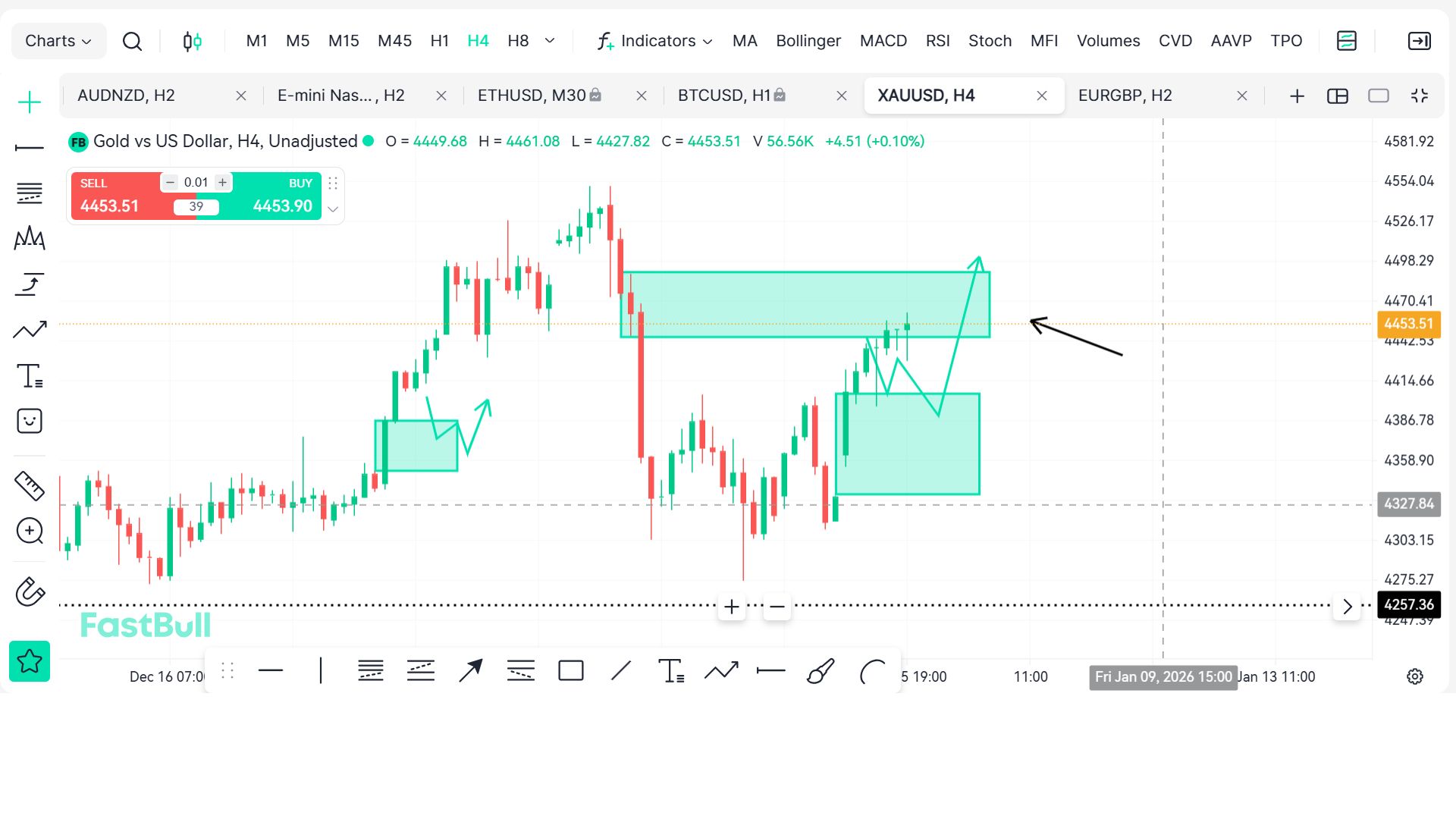
    @3264122at the moment i am betting on more longs on gold ATH is definetly not ruled out of the question
    EuroTrader flag
    3264122
    info for XAAUSD today
    @3264122 i am expecting a little bit of reaction from that zone but over rall i am bullish
    EuroTrader flag
    Type here...
    Add Symbol or Code

      No matching data

      All
      Trump Updates
      Recommend
      Stocks
      Cryptocurrencies
      Central Banks
      Featured News
      • All
      • Russia-Ukraine Conflict
      • Middle East Flashpoint
      • All
      • Russia-Ukraine Conflict
      • Middle East Flashpoint
      Search
      Products

      Charts Free Forever

      Chats Q&A with Experts
      Screeners Economic Calendar Data Tools
      Membership Features
      Data Warehouse Market Trends Institutional Data Policy Rates Macro

      Market Trends

      Market Sentiment Order Book Forex Correlations

      Top Indicators

      Charts Free Forever
      Markets

      News

      News Analysis 24/7 Columns Education
      From Institutions From Analysts
      Topics Columnists

      Latest Views

      Latest Views

      Trending Topics

      Top Columnists

      Latest Update

      Signals

      Copy Rankings Latest Signals Become a signal provider AI Rating
      Contests
      Brokers

      Overview Brokers Assessment Rankings Regulators News Claims
      Broker listing Forex Brokers Comparison Tool Live Spread Comparison Scam
      Q&A Complaint Scam Alert Videos Tips to Detect Scam
      More

      Business
      Events
      Careers About Us Advertising Help Center

      White Label

      Data API

      Web Plug-ins

      Affiliate Program

      Awards Institution Evaluation IB Seminar Salon Event Exhibition
      Vietnam Thailand Singapore Dubai
      Fans Party Investment Sharing Session
      FastBull Summit BrokersView Expo
      Recent Searches
        Top Searches
          Markets
          News
          Analysis
          User
          24/7
          Economic Calendar
          Education
          Data
          • Names
          • Latest
          • Prev

          View All

          No data

          Scan to Download

          Faster Charts, Chat Faster!

          Download App
          English
          • English
          • Español
          • العربية
          • Bahasa Indonesia
          • Bahasa Melayu
          • Tiếng Việt
          • ภาษาไทย
          • Français
          • Italiano
          • Türkçe
          • Русский язык
          • 简中
          • 繁中
          Open Account
          Search
          Products
          Charts Free Forever
          Markets
          News
          Signals

          Copy Rankings Latest Signals Become a signal provider AI Rating
          Contests
          Brokers

          Overview Brokers Assessment Rankings Regulators News Claims
          Broker listing Forex Brokers Comparison Tool Live Spread Comparison Scam
          Q&A Complaint Scam Alert Videos Tips to Detect Scam
          More

          Business
          Events
          Careers About Us Advertising Help Center

          White Label

          Data API

          Web Plug-ins

          Affiliate Program

          Awards Institution Evaluation IB Seminar Salon Event Exhibition
          Vietnam Thailand Singapore Dubai
          Fans Party Investment Sharing Session
          FastBull Summit BrokersView Expo

          Japan’s Factory Activity Steadies As Demand Declines Slow, PMI Shows

          Henry Thompson
          Summary:

          Japan's manufacturing activity stalled in December as demand declined at a slower pace from the previous month, a private-sector survey showed, ending a five-month streak of deterioration.

          Japan's manufacturing activity stalled in December as demand declined at a slower pace from the previous month, a private-sector survey showed, ending a five-month streak of deterioration.

          The S&P Global Japan Manufacturing Purchasing Managers' Index (PMI) was flat at 50.0 in December, improving from 48.7 in November and hitting the break-even point separating expansion from contraction.

          "Japan's manufacturing industry saw conditions stabilise at the end of the year," said Annabel Fiddes, an economics associate director at S&P Global Market Intelligence.

          The decline in new orders in December was the softest since May 2024, the survey showed. Although many firms noted subdued demand, some saw sales had improved, underpinned by new projects and stronger-than-expected customer spending.

          While consumer and investment goods sectors reported improvement in business conditions, intermediate goods makers said they were weak.

          New export orders declined at a slightly softer pace in December from November, partly affected by weaker demand in Asia, particularly for semiconductors, according to the survey.

          Looking ahead to the next 12 months, overall business sentiment eased from November but remained above the survey's long-run average, the survey said.

          "New product releases and greater demand across key industries such as autos and semiconductors were anticipated to boost the sector's performance in 2026," Fiddes said.

          Some downside risks mentioned by firms were sluggish global economy, an ageing population and rising costs, she said.
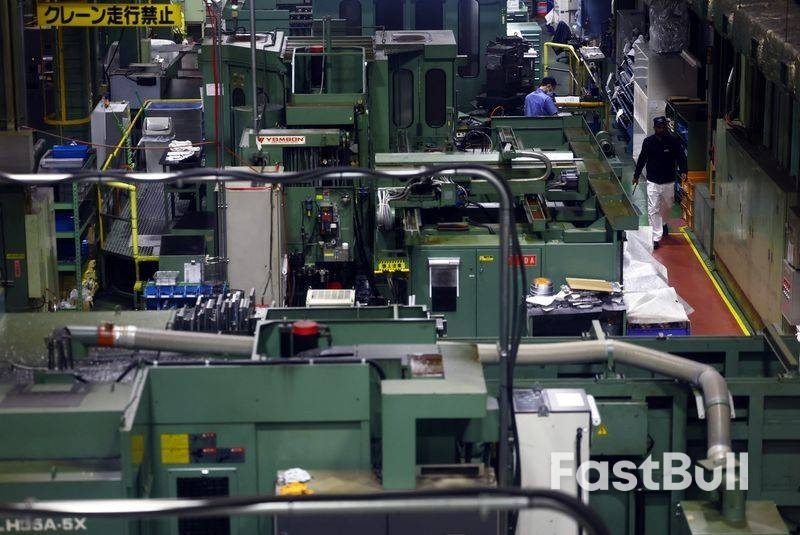
          Staffing levels in the manufacturing sector rose for the 13th consecutive month, while the rate of input prices accelerated to its highest since April, battered by a combination of increases in raw material, labour and transportation costs as well as the weaker yen.

          The Bank of Japan in December raised interest rates to levels unseen in 30 years and signalled its readiness to continue raising rates.

          Source: Investing

          Risk Warnings and Disclaimers
          You understand and acknowledge that there is a high degree of risk involved in trading. Following any strategies or investment methods may lead to potential losses. The content on the site is provided by our contributors and analysts for information purposes only. You are solely responsible for determining whether any trading assets, securities, strategy, or any other product is suitable for investing based on your own investment objectives and financial situation.
          Add to Favorites
          Share

          Oil Trades Sideways Despite Political Turmoil In Venezuela

          Thomas

          The Guinea-flagged oil tanker MT Bandra, which is under sanctions, is partially seen alongside another vessel at El Palito terminal, near Puerto Cabello, Venezuela December 29, 2025. REUTERS/Juan Carlos Hernandez/File Photo/File Photo

          • Venezuela interim government says it is united behind Maduro
          • Trump says US embargo on Venezuelan oil remains in full effect
          • OPEC+ keeps oil output steady amid turmoil among members
          • Rights groups say 16 dead in Iran during week of protests

          SINGAPORE, Jan 5 (Reuters) - Oil prices inched up on Monday as investors weighed whether political upheaval in OPEC member Venezuela would disrupt shipments after U.S. President Donald Trump seized Venezuelan President Nicolas Maduro, in a well supplied market.

          Brent crude futures rose 17 cents to $60.92 a barrel by 0024 GMT, paring earlier losses, while U.S. West Texas Intermediate crude was at $57.43 a barrel, up 11 cents.

          The United States snatched Maduro from Caracas at the weekend. Trump said Washington would take control of the oil-producing nation and that the U.S. embargo on all Venezuelan oil remained in full effect.

          The U.S. strike on Venezuela to extract the country's president inflicted no damage on the country's oil production and refining industry, two sources with knowledge of operations at state oil company PDVSA said at the weekend.

          In a global market with plentiful oil supply, analysts said any further disruption to Venezuela's exports would have little immediate impact on prices.

          "We see ambiguous but modest risks to oil prices in the short-run from Venezuela depending on how U.S. sanctions policy evolves," Goldman Sachs analysts led by Daan Struyven said in a January 4 note, keeping its 2026 oil price forecasts unchanged.

          Helima Croft, RBC Capital's head of commodities research, said: "Certainly, we think full sanctions relief could unlock several hundred kb/d of production over a 12-month period in an orderly transition situation."

          "However, all bets are off in a chaotic change of power scenario like what occurred in Libya or Iraq," she added.

          A top Venezuelan official declared on Sunday that the country's government would stay unified behind Maduro.

          The Organization of the Petroleum Exporting Countries and their allies, together called OPEC+, decided to hold their output on Sunday.

          Analysts are also watching Iran's reaction after Trump threatened on Friday to intervene in a crackdown on protests in the OPEC producer, ratcheting up geopolitical tensions.

          At least 16 people have been killed during a week of unrest in Iran, rights groups said on Sunday, as protests over soaring inflation spread across the country.

          Reporting by Florence Tan; Editing by Jamie Freed and Sonali Paul

          Source: Reuters

          Risk Warnings and Disclaimers
          You understand and acknowledge that there is a high degree of risk involved in trading. Following any strategies or investment methods may lead to potential losses. The content on the site is provided by our contributors and analysts for information purposes only. You are solely responsible for determining whether any trading assets, securities, strategy, or any other product is suitable for investing based on your own investment objectives and financial situation.
          Add to Favorites
          Share

          Denmark Tells Trump To Stop Threatening To Seize Greenland

          Olivia Brooks

          Political

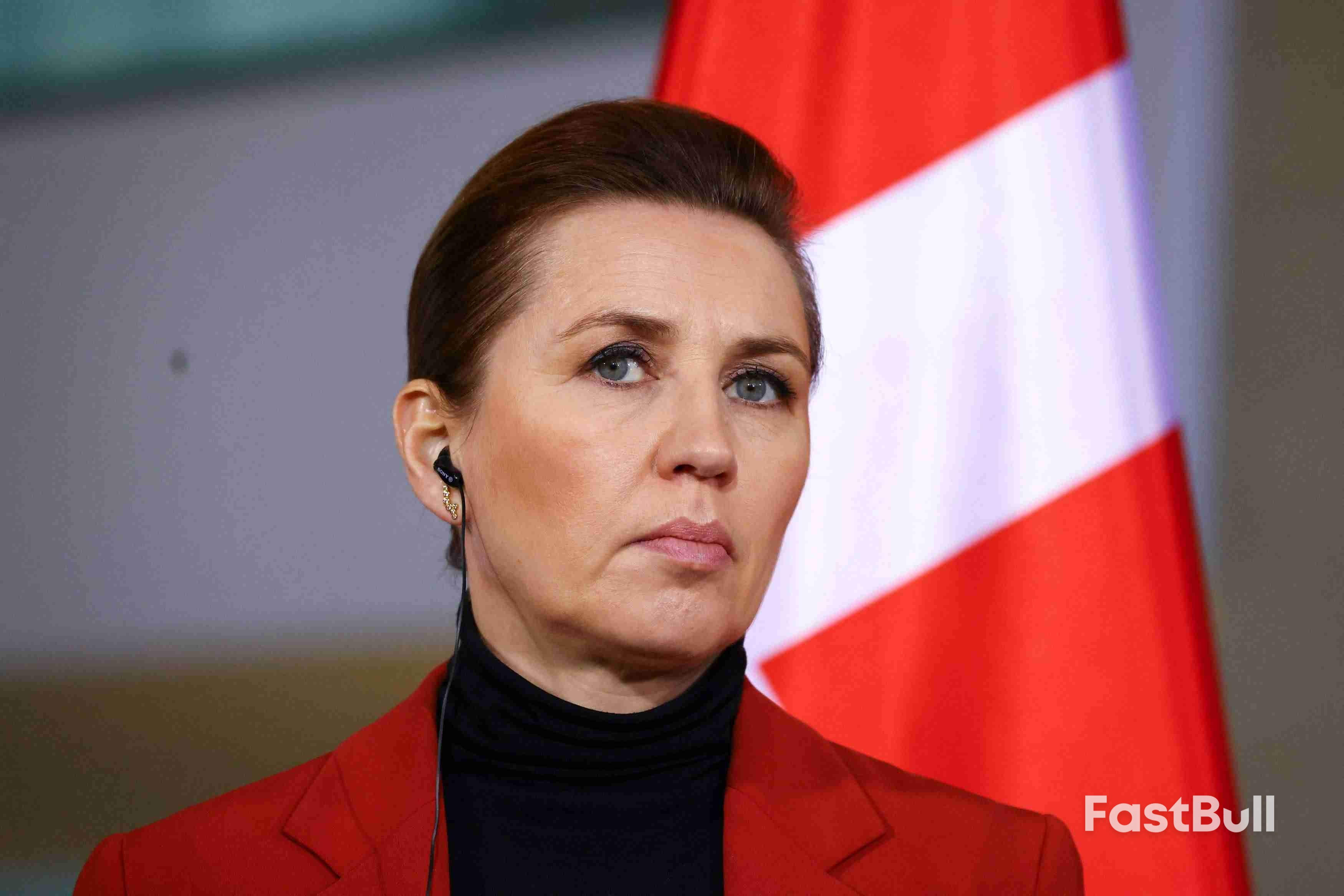
          Danish Prime Minister Mette Frederiksen warned President Donald Trump to stop threatening to acquire Greenland just a day after the U.S. carried out a military operation that captured Venezuelan leader Nicolas Maduro.

          "The Kingdom of Denmark — and thus Greenland — is part of NATO and is therefore covered by the alliance's security guarantee. We already have a defense agreement between the Kingdom and the United States today, which gives the United States wide access to Greenland," Frederiksen said Sunday, in a statement.

          "I would therefore strongly urge the United States to stop the threats against a historically close ally and against another country and another people who have said very clearly that they are not for sale," she said.

          The warning from Frederiksen comes after Trump was quoted by The Atlantic magazine, saying, "We do need Greenland, absolutely."

          Trump ordered a military operation over the weekend that captured Venezuelan President Nicolas Maduro and his wife. The pair has been brought to the U.S. on drug-related charges.

          The operation came after months of U.S. military buildup and threats against Venezuela, which the Trump administration claims is complicit in trafficking drugs to the U.S.

          The move to topple Maduro led to speculation that Trump's other territorial ambitions could be obtained by force.

          Katie Miller, the wife of top White House aide Stephen Miller, posted to X a map of Greenland covered with an American flag with the caption "SOON," shortly after Maduro was captured.

          Trump has long mused about acquiring Greenland, the mineral-rich and self-governing territory of Denmark. Last month, he appointed Louisiana's GOP Gov. Jeff Landry special envoy to Greenland. Trump has also openly spoken about making Canada, an independent nation, the 51st state of the U.S.

          Greenland and Canada have both repeatedly rebuked Trump's advances.

          Source: CNBC

          Risk Warnings and Disclaimers
          You understand and acknowledge that there is a high degree of risk involved in trading. Following any strategies or investment methods may lead to potential losses. The content on the site is provided by our contributors and analysts for information purposes only. You are solely responsible for determining whether any trading assets, securities, strategy, or any other product is suitable for investing based on your own investment objectives and financial situation.
          Add to Favorites
          Share

          US' Rubio Fudges On Trump's Venezuela Control Claim

          Olivia Brooks

          Political

          Commodity

          Economic

          President Donald Trump's administration will seek to influence Caracas' policy decisions rather than take over the administration of Venezuela, US secretary of state Marco Rubio said Sunday, walking back Trump's assertion a day earlier that the US would "run" Venezuela.

          Trump meant to say the US would run Venezuela's policy, Rubio said Sunday on NBC's Meet the Press television show. "We want Venezuela to move in a certain direction because, not only do we think it's good for the people of Venezuela, it's in our national interest." The US will maintain its "oil blockade" against Venezuela to maintain leverage, Rubio said.

          Trump on Saturday said the US would temporarily "run" the Venezuelan government and seek to overhaul its oil sector, hours after he ordered a large-scale military assault that resulted in the capture of Venezuela president Nicolas Maduro. Trump made the claim in a press conference to explain his decision to send in US special forces to arrest Maduro, who has been transported to a US detention facility in Brooklyn, New York.

          Events on the ground do not corroborate Trump's claim that the US has asserted control over Venezuela's government. Venezuela's Supreme Court confirmed vice president and energy minister Delcy Rodriguez as the country's interim president on Saturday. Rodriguez in a televised interview called for Maduro's release.

          Interior minister Diosdado Cabello — who holds considerable control over the military — said in a video online that he does not recognize Rodriguez as the interim president. Internal divisions between Maduro's administration officials could increase the chances of violence and destabilization.

          The national assembly is set to convene on Monday. Lawmakers aligned with Maduro have accused a faction of supporters of his predecessor and mentor, the late former president Hugo Chavez, of handing Maduro over to the US military, according to a document seen by Argus. Doing so could amount to treason under Venezuelan law.

          Trump on Saturday said Rodriguez and Rubio had a telephone conversation, during which the acting Venezuelan leader agreed to cooperate with US demands.

          Rubio, like Trump, confirmed that the US prefers to deal with the existing government of Venezuela — which it decried as an illegitimate "narco-regime" — rather than the Venezuelan opposition and its nominal leaders, whom the US acknowledged as the winners of last year's presidential election.

          Venezuelan opposition leader Maria Corina Machado is "fantastic" but the bulk of her movement "is no longer present inside of Venezuela", Rubio said. "We have short-term things that have to be addressed right away."

          Rubio also appeared to be walking back Trump's claim of taking over the Venezuelan oil industry.

          "We don't need Venezuela's oil," Rubio said. "We have plenty of oil in the United States."

          But the US will not allow "the oil industry in Venezuela to be controlled by adversaries of the United States," he said.

          Venezuela has been sending crude to China under a large oil-for-loans program, as well as selling crude to independent refineries.

          Trump on Saturday reiterated his complaints that Venezuela's government under Chavez nationalized the assets of US oil companies, which he said was one of the "largest thefts of property" in US history. Trump claimed that future oil revenue in Venezuela would defray the costs of temporarily administering the government.

          Chevron operates in Venezuela with state-owned PdV under a waiver from US sanctions and imported about 120,000 b/d of crude from Venezuela to the US in December, based on data from Kpler ship tracking.

          Chevron said it "remains focused on the safety and well-being of our employees, as well as the integrity of our assets. We continue to operate in full compliance with all relevant laws and regulations".

          ExxonMobil and ConocoPhillips, which lost assets in Venezuela in 2007, have won awards in international tribunals and US courts for the expropriation of their assets in Venezuela.

          ConocoPhillips holds the largest claim for expropriated assets, at $12bn. That claim is about to be mostly satisfied as a US court has ordered the auction of PdV-owned US refining company Citgo.

          A federal judge overseeing the auction to buy Citgo in November affirmed the winning $5.9bn bid from Amber Energy, an affiliate of New York hedge fund Elliott Investment Management.

          Source: Argus Media

          To stay updated on all economic events of today, please check out our Economic calendar
          Risk Warnings and Disclaimers
          You understand and acknowledge that there is a high degree of risk involved in trading. Following any strategies or investment methods may lead to potential losses. The content on the site is provided by our contributors and analysts for information purposes only. You are solely responsible for determining whether any trading assets, securities, strategy, or any other product is suitable for investing based on your own investment objectives and financial situation.
          Add to Favorites
          Share

          ASEAN’s Strategic Advantage in the Global AI Investment Cycle

          Gerik

          Economic

          The Global AI Boom and ASEAN’s Structural Opportunity

          As the world moves through a new wave of technology investment, artificial intelligence has emerged as a transformative force shaping capital flows and trade patterns. While the majority of direct investment and innovation in AI remains concentrated among a handful of tech giants in the U.S., ASEAN economies are emerging as strategic nodes in the expanding global value chain. Their advantage does not lie in headline-grabbing innovation, but in the infrastructure, specialization, and geographic neutrality that increasingly appeal to global investors.
          Unlike previous cycles such as the dot-com era or the mobile internet explosion, the current AI cycle is being led by massive capital expenditure especially in data infrastructure. Investment in data centers, semiconductor packaging, and compute power is accelerating faster than in any recent tech upcycle. Crucially, this surge has not yet shown the classic signs of a speculative bubble. Export growth remains strong but measured, corporate spending is still within historical bounds, and leverage ratios are manageable.

          ASEAN’s Five Channels of AI-Driven Gains

          Supply Chain Embeddedness: Many ASEAN economies play a central but often overlooked role in the global supply chain for high-tech manufacturing. They supply components and services ranging from wafer substrates and power units to chip assembly, precision tooling, and optical networking. While not producers of cutting-edge chips themselves, countries like Malaysia, Vietnam, and Thailand provide the connective industrial tissue that supports the AI boom.
          The rising demand for AI servers, particularly those used in data-intensive environments such as LLM training and video generation, is generating second-order effects across this network. These effects are observable in increased orders for testing, packaging, and advanced cooling systems activities where ASEAN firms are globally competitive.
          Upfront Investment Momentum: As with past technology cycles, the launch of new platforms and services often precedes actual consumer adoption. To meet expected demand, firms place early equipment orders and expand production ahead of revenue. This "investment-led anticipation" generates near-term industrial growth, particularly in hardware supply chains.
          ASEAN economies are well positioned to capitalize on this front-loaded investment pattern. Vietnam, for example, continues to expand its electronics capacity, building on prior waves of FDI. Malaysia remains a key player in semiconductor packaging and testing, while Thailand supports adjacent sectors like power equipment and precision engineering.
          Data Center Magnetism: Southeast Asia is also benefiting from a growing influx of investment in data centers, driven by favorable conditions including affordable land, competitive electricity pricing, and relatively efficient regulatory frameworks. Countries like Singapore and Malaysia are leading in high-value operations, while Vietnam and Thailand are expanding their infrastructure footprint.
          These facilities serve not just AI-specific applications, but also general cloud computing, hosting, and digital services, indirectly multiplying demand for AI-related hardware. The construction of data centers also stimulates domestic supply chains in construction, cooling technologies, electrical systems, and connectivity services.
          Geopolitical Diversification and Manufacturing Hedging: Amid rising tensions and industrial policy shifts in major economies, global firms are increasingly reconfiguring their supply bases to mitigate risk. The U.S., EU, and Japan are promoting domestic chip production, but simultaneously encouraging diversification among suppliers to avoid overconcentration in China.
          ASEAN benefits from this hedging behavior. Not only are companies seeking operational redundancy, they are also looking for cost-efficient, geopolitically neutral zones for low to mid-range chip production. ASEAN’s politically balanced posture and economic openness make it an ideal destination for such redistribution of capacity.
          Demand for Mature Node Semiconductor Manufacturing: While the AI arms race focuses attention on advanced chip nodes, the vast majority of semiconductor demand still lies in mature processes used in automotive electronics, industrial machinery, and general consumer goods. Southeast Asia dominates in these areas.
          Singapore and Malaysia are expanding traditional semiconductor capacity, taking advantage of rising demand for legacy nodes. This complements the AI cycle by fulfilling auxiliary functions in devices that require non-advanced but highly reliable chips. ASEAN’s edge here lies in accumulated expertise, workforce specialization, and existing ecosystem maturity.

          Export Shifts and Regional Differentiation

          Across ASEAN, the technology export landscape is becoming more diversified. Vietnam has steadily increased its global share thanks to a surge in operationalized FDI projects. Malaysia’s robust semiconductor ecosystem is attracting additional capital, particularly in testing and assembly. Singapore serves as the regional anchor for specialized machinery, AI-ready infrastructure, and data-centric industries.
          Thailand, though not a semiconductor leader, is capitalizing on related opportunities in data center infrastructure especially in energy, construction, and HVAC systems. The overall trend reveals a geographic spread of complementary advantages, where each economy leverages its unique strengths to plug into the broader AI-driven industrial shift.

          Sustaining the Momentum: Challenges and Imperatives

          Despite favorable positioning, ASEAN faces several constraints that may limit its long-term capture of AI-driven value. Rising energy demand is beginning to strain infrastructure, while regulatory inconsistencies and skilled labor shortages remain persistent bottlenecks.
          To fully realize its potential, the region must invest in:
          • Upgrading power infrastructure to support energy-intensive data centers
          • Reforming land-use and permitting policies to streamline digital infrastructure projects
          • Enhancing workforce training in electronics, automation, and precision manufacturing
          • Promoting regional trade frameworks that facilitate intra-ASEAN component flows

          Quiet Strength in a Global AI Renaissance

          While ASEAN may lack the tech titans of Silicon Valley or the chip fabs of Taiwan and Korea, its role in the global AI economy is growing in quiet, strategic ways. As capital flows expand beyond innovation hubs into infrastructure and manufacturing support, Southeast Asia stands to gain through specialization, positioning, and scale.
          The AI boom, if sustained without major disruptions, could amplify ASEAN’s industrial transformation, making it an indispensable if understated actor in the reshaping of global technology supply chains. The region’s future will depend not on leading the charge, but on becoming the indispensable support that sustains it.
          To stay updated on all economic events of today, please check out our Economic calendar
          Risk Warnings and Disclaimers
          You understand and acknowledge that there is a high degree of risk involved in trading. Following any strategies or investment methods may lead to potential losses. The content on the site is provided by our contributors and analysts for information purposes only. You are solely responsible for determining whether any trading assets, securities, strategy, or any other product is suitable for investing based on your own investment objectives and financial situation.
          Add to Favorites
          Share

          Asia's Manufacturing Rebounds in 2026: Vietnam Emerges as a Strategic Beneficiary

          Gerik

          Economic

          Regional Manufacturing Recovery: Turning the Corner

          After a prolonged industrial downturn, Asia's major manufacturing hubs ended 2025 on a more optimistic note. Export-driven recovery, fueled by surging global demand for new technologies and AI-related hardware, has begun to lift the region’s Purchasing Managers’ Index (PMI) indicators above the contraction threshold.
          According to the latest S&P Global PMI data released on January 1, 2026, Taiwan’s index climbed to 50.9 from 48.8 in November, marking its first return to expansion in 10 months. Similarly, South Korea’s PMI reached 50.1, also signaling growth after over a year of contraction. China’s official PMI, reported by its National Bureau of Statistics, also edged back into expansion territory at 50.1 after eight months of decline.
          These synchronized improvements among Northeast Asia’s tech-exporting economies signal that the region may be entering a recovery phase. The correlation between AI hardware demand and export strength underscores the structural role that high-tech manufacturing plays in supporting broader economic stabilization.

          Vietnam’s Role in the Reconfigured Supply Chain

          Against this backdrop, Vietnam continues to stand out as a relatively stable and expanding manufacturing base. Its production sector maintained positive momentum throughout 2025 and is forecast to continue growing into 2026. Vietnam’s advantage lies in its dual positioning: it is both an active participant in global trade and a strategic alternative to China in supply chain diversification.
          The long-term realignment of global supply chains is now playing out in full force. As international firms seek to de-risk their production networks, Vietnam has become an increasingly attractive destination. This is particularly evident in the continued influx of foreign direct investment (FDI) into electronics, industrial components, and green manufacturing. These capital flows have helped strengthen Vietnam’s technological capabilities and managerial sophistication, enhancing the quality and sustainability of its manufacturing output.

          Shifting Competitive Edge: From Cost to Capability

          However, the landscape is not without complications. Vietnam’s traditional cost advantage is being eroded by rising wages, increased energy costs, and stricter environmental compliance requirements. While these pressures are not unique to Vietnam, they signal a transition in which the country can no longer rely solely on low costs to attract investment.
          This shift implies that Vietnam’s continued manufacturing expansion will increasingly depend on improving productivity, enhancing domestic value-added, and boosting local sourcing. The path forward hinges on industrial upgrading moving up the value chain through innovation, workforce training, and supply chain integration. Simply offering cheaper labor is no longer sufficient to secure long-term investment commitments from global corporations.

          AI, Technology, and Vietnam’s Strategic Outlook

          Vietnam is also poised to benefit indirectly from the global AI boom. As demand for AI-enabling hardware such as chips, data center components, and sensors continues to grow, the country’s expanding role in electronics assembly and component manufacturing becomes more valuable. Moreover, Vietnam’s growing ecosystem of supporting industries and its alignment with multilateral trade frameworks position it well to absorb the spillover effects of tech-driven global growth.
          The broader implication is that Vietnam’s industrial development is now tied not just to trade policy or foreign investment, but to how effectively it can link its economy to emerging technology cycles, particularly in AI, renewable energy, and digital manufacturing.

          From Stability to Strategic Sophistication

          Vietnam enters 2026 not only as a beneficiary of Asia’s manufacturing rebound but also as a country at a strategic crossroads. Its rising role in supply chain diversification is clear, and its ability to attract investment remains strong. Yet, sustaining growth will depend on its capacity to evolve from a low-cost hub into a high-value, technology-integrated manufacturing platform.
          With global production cycles regaining momentum and AI technologies reshaping industrial demand, Vietnam has a rare opportunity to consolidate its position as a key node in the regional supply network. Whether it can seize that opportunity will depend on the quality not just the quantity of its growth strategy in the year ahead.
          To stay updated on all economic events of today, please check out our Economic calendar
          Risk Warnings and Disclaimers
          You understand and acknowledge that there is a high degree of risk involved in trading. Following any strategies or investment methods may lead to potential losses. The content on the site is provided by our contributors and analysts for information purposes only. You are solely responsible for determining whether any trading assets, securities, strategy, or any other product is suitable for investing based on your own investment objectives and financial situation.
          Add to Favorites
          Share

          2026 and the AI Economy: From Exponential Hype to Tangible Value?

          Gerik

          Economic

          Unprecedented Investment, Unresolved Returns

          The past three years have seen artificial intelligence dominate global investment narratives. Flagship models such as ChatGPT in natural language processing and Sora in generative video have showcased AI's creative and computational power. Yet a pivotal question now looms over the financial markets in 2026: Can this massive wave of investment in AI infrastructure justify its economic expectations?
          In 2025 alone, over $400 billion was poured into AI-related infrastructure, primarily data centers and model training systems. Cumulative forecasts project global AI spending may reach $7 trillion by the end of the decade. Yet, current annual revenues from AI remain modest about $50 billion globally only a fraction compared to tech giants like Apple or Alphabet. This discrepancy between investment scale and current profitability underscores an intensifying need for measurable economic outcomes.

          AI Integration Lags Behind Consumer Usage

          While AI usage among individuals has grown rapidly ChatGPT reportedly serves over 800 million users the corporate adoption landscape tells a different story. According to U.S. Census Bureau data, fewer than 10% of firms with more than 250 employees have formally integrated AI into their operations. A July 2025 survey by MIT revealed that 95% of enterprise AI pilot projects failed to yield positive returns.
          This gap between consumer familiarity and enterprise monetization is a key concern in 2026. It reflects a correlation between technical excitement and market inertia, where businesses struggle to translate proof-of-concept into scalable performance gains. Venture capitalists and technology firms are now converging around a common imperative: accelerate enterprise adoption of AI to validate its economic promise.

          Sector-Specific AI and the Shift to Practical Use-Cases

          A growing number of startups are now targeting domain-specific AI applications. For instance, Harvey AI supports law firms in contract review, while Sierra tailors AI tools for customer service. Even leading research labs like OpenAI and Anthropic are pivoting toward industry-aligned products aimed at sectors such as finance and life sciences.
          These initiatives indicate a transition from foundational model innovation to vertical deployment an essential step if AI is to evolve from a speculative asset into a productive tool. The success or failure of these efforts in 2026 may serve as a bellwether for broader economic impact and investor confidence.

          Valuation Pressures and Market Correction Risks

          AI's expanding footprint on global financial markets is evident. By October 2025, companies with significant AI exposure accounted for roughly 44% of the S&P 500’s total market capitalization. These firms trade at a projected price-to-earnings ratio of 31 significantly above the index’s average of 19. Investors have been willing to tolerate these valuations based on long-term growth assumptions.
          However, if tangible returns on AI investment do not materialize soon, markets may recalibrate. Historical analogues such as the railway boom of the 1800s or the dot-com era suggest that financial exuberance often precedes sharp corrections. Any downturn in AI enthusiasm could reverberate through global equities, particularly in the U.S., where AI-driven wealth effects have helped cushion macroeconomic pressures from tariffs, demographic shifts, and policy uncertainty.

          Labor Market Impacts: Real or Overstated?

          As AI systems evolve, so do concerns about job displacement. With companies showcasing autonomous agents capable of performing complex tasks more cheaply than humans, anxiety around employment disruption has intensified. Startups like Artisan have even launched campaigns with provocative slogans such as “Stop hiring humans.”
          Yet the empirical evidence remains inconclusive. While some link rising unemployment among U.S. college graduates to AI, studies including from Yale Budget Lab suggest AI adoption has not led to widespread layoffs in AI-intensive sectors. Instead, these shifts may reflect broader changes in labor demand, post-pandemic hiring adjustments, or evolving skill requirements.
          Historically, technological adoption has rarely resulted in net job destruction. Rather, it has altered the composition of the labor market. Firms that embrace innovation often expand, creating new roles and services even as old functions fade. The emergence of new occupations tied to AI such as prompt engineering, model supervision, and AI ethics consulting further complicates the narrative of automated job loss.

          2026 as the Year of Reckoning

          The coming year is expected to sharpen the contours of AI’s real-world impact. For investors, enterprise leaders, and policymakers alike, 2026 could be the inflection point where AI must prove its commercial and societal utility beyond the confines of lab demos and speculative bets.
          If adoption accelerates and results improve, current valuations may hold and even expand as AI transitions from promise to productivity. Conversely, if disillusionment spreads and ROI remains elusive, a broad market correction could ensue, with implications not just for tech stocks but for household wealth, employment, and global capital flows.
          AI’s economic narrative in 2026 is no longer about marveling at its capabilities it is about validating its value. As businesses push for deeper integration, and societies weigh AI’s consequences, the technology enters a new phase where expectations will be tested against outcomes. Whether AI proves to be the catalyst of the next economic revolution or merely another overhyped innovation will depend on what this year reveals in both boardrooms and labor markets.
          To stay updated on all economic events of today, please check out our Economic calendar
          Risk Warnings and Disclaimers
          You understand and acknowledge that there is a high degree of risk involved in trading. Following any strategies or investment methods may lead to potential losses. The content on the site is provided by our contributors and analysts for information purposes only. You are solely responsible for determining whether any trading assets, securities, strategy, or any other product is suitable for investing based on your own investment objectives and financial situation.
          Add to Favorites
          Share
          FastBull
          Copyright © 2026 FastBull Ltd

          728 RM B 7/F GEE LOK IND BLDG NO 34 HUNG TO RD KWUN TONG KLN HONG KONG

          TelegramInstagramTwitterfacebooklinkedin
          App Store Google Play Google Play
          Products
          Charts

          Chats

          Q&A with Experts
          Screeners
          Economic Calendar
          Data
          Tools
          Membership
          Features
          Function
          Markets
          Copy Trading
          Latest Signals
          Contests
          News
          Analysis
          24/7
          Columns
          Education
          Company
          Careers
          About Us
          Contact Us
          Advertising
          Help Center
          Feedback
          User Agreement
          Privacy Policy
          Personal Information Protection Statement
          Business

          White Label

          Data API

          Web Plug-ins

          Poster Maker

          Affiliate Program

          Risk Disclosure

          The risk of loss in trading financial instruments such as stocks, FX, commodities, futures, bonds, ETFs and crypto can be substantial. You may sustain a total loss of the funds that you deposit with your broker. Therefore, you should carefully consider whether such trading is suitable for you in light of your circumstances and financial resources.

          No decision to invest should be made without thoroughly conducting due diligence by yourself or consulting with your financial advisors. Our web content might not suit you since we don't know your financial conditions and investment needs. Our financial information might have latency or contain inaccuracy, so you should be fully responsible for any of your trading and investment decisions. The company will not be responsible for your capital loss.

          Without getting permission from the website, you are not allowed to copy the website's graphics, texts, or trademarks. Intellectual property rights in the content or data incorporated into this website belong to its providers and exchange merchants.

          Not Logged In

          Log in to access more features

          FastBull Membership

          Not yet

          Purchase

          Become a signal provider
          Help Center
          Customer Service
          Dark Mode
          Price Up/Down Colors

          Log In

          Sign Up

          Position
          Layout
          Fullscreen
          Default to Chart
          The chart page opens by default when you visit fastbull.com