

Markets
News
Analysis
User
24/7
Economic Calendar
Education
Data
- Names
- Latest
- Prev



Signal Accounts for Members
All Signal Accounts
All Contests
 U.K. Trade Balance Non-EU (SA) (Oct)
A:--
F: --
P: --
U.K. Trade Balance (Oct)A:--
F: --
P: --
U.K. Services Index MoMA:--
F: --
P: --
U.K. Construction Output MoM (SA) (Oct)A:--
F: --
P: --
U.K. Industrial Output YoY (Oct)A:--
F: --
P: --
U.K. Trade Balance (SA) (Oct)A:--
F: --
P: --
U.K. Trade Balance EU (SA) (Oct)A:--
F: --
P: --
U.K. Manufacturing Output YoY (Oct)A:--
F: --
P: --
U.K. GDP MoM (Oct)A:--
F: --
P: --
U.K. GDP YoY (SA) (Oct)A:--
F: --
P: --
U.K. Industrial Output MoM (Oct)A:--
F: --
P: --
U.K. Construction Output YoY (Oct)A:--
F: --
P: --
 France HICP Final MoM (Nov)
A:--
F: --
P: --
 China, Mainland Outstanding Loans Growth YoY (Nov)
A:--
F: --
P: --
China, Mainland M2 Money Supply YoY (Nov)A:--
F: --
P: --
China, Mainland M0 Money Supply YoY (Nov)A:--
F: --
P: --
China, Mainland M1 Money Supply YoY (Nov)A:--
F: --
P: --
 India CPI YoY (Nov)
A:--
F: --
P: --
India Deposit Gowth YoYA:--
F: --
P: --
 Brazil Services Growth YoY (Oct)
A:--
F: --
P: --
 Mexico Industrial Output YoY (Oct)
A:--
F: --
P: --
 Russia Trade Balance (Oct)
A:--
F: --
P: --
 Philadelphia Fed President Henry Paulson delivers a speech
 Canada Building Permits MoM (SA) (Oct)
A:--
F: --
P: --
Canada Wholesale Sales YoY (Oct)A:--
F: --
P: --
Canada Wholesale Inventory MoM (Oct)A:--
F: --
P: --
Canada Wholesale Inventory YoY (Oct)A:--
F: --
P: --
Canada Wholesale Sales MoM (SA) (Oct)A:--
F: --
P: --
 Germany Current Account (Not SA) (Oct)
A:--
F: --
P: --
U.S. Weekly Total Rig CountA:--
F: --
P: --
U.S. Weekly Total Oil Rig CountA:--
F: --
P: --
 Japan Tankan Large Non-Manufacturing Diffusion Index (Q4)
--
F: --
P: --
Japan Tankan Small Manufacturing Outlook Index (Q4)--
F: --
P: --
Japan Tankan Large Non-Manufacturing Outlook Index (Q4)--
F: --
P: --
Japan Tankan Large Manufacturing Outlook Index (Q4)--
F: --
P: --
Japan Tankan Small Manufacturing Diffusion Index (Q4)--
F: --
P: --
Japan Tankan Large Manufacturing Diffusion Index (Q4)--
F: --
P: --
Japan Tankan Large-Enterprise Capital Expenditure YoY (Q4)--
F: --
P: --
U.K. Rightmove House Price Index YoY (Dec)--
F: --
P: --
China, Mainland Industrial Output YoY (YTD) (Nov)--
F: --
P: --
China, Mainland Urban Area Unemployment Rate (Nov)--
F: --
P: --
 Saudi Arabia CPI YoY (Nov)
--
F: --
P: --
 Euro Zone Industrial Output YoY (Oct)
--
F: --
P: --
Euro Zone Industrial Output MoM (Oct)--
F: --
P: --
Canada Existing Home Sales MoM (Nov)--
F: --
P: --
Euro Zone Total Reserve Assets (Nov)--
F: --
P: --
U.K. Inflation Rate Expectations--
F: --
P: --
Canada National Economic Confidence Index--
F: --
P: --
Canada New Housing Starts (Nov)--
F: --
P: --
U.S. NY Fed Manufacturing Employment Index (Dec)--
F: --
P: --
U.S. NY Fed Manufacturing Index (Dec)--
F: --
P: --
Canada Core CPI YoY (Nov)--
F: --
P: --
Canada Manufacturing Unfilled Orders MoM (Oct)--
F: --
P: --
Canada Manufacturing New Orders MoM (Oct)--
F: --
P: --
Canada Core CPI MoM (Nov)--
F: --
P: --
Canada Manufacturing Inventory MoM (Oct)--
F: --
P: --
Canada CPI YoY (Nov)--
F: --
P: --
Canada CPI MoM (Nov)--
F: --
P: --
Canada CPI YoY (SA) (Nov)--
F: --
P: --
Canada Core CPI MoM (SA) (Nov)--
F: --
P: --


No matching data

Latest Views
Latest Views
Trending Topics
Top Columnists
Latest Update
White Label
Data API
Web Plug-ins
Affiliate Program
View All
No data
The International Monetary Fund (IMF) has raised its global growth forecast for 2025 to 3.2%, up from its July prediction of 3.0%, while maintaining its 2026 outlook at 3.1%.
The International Monetary Fund (IMF) has raised its global growth forecast for 2025 to 3.2%, up from its July prediction of 3.0%, while maintaining its 2026 outlook at 3.1%.
The upward revision, announced Tuesday in the IMF’s World Economic Outlook, comes as tariff impacts and financial conditions have proven less severe than initially feared. However, the organization warned that a potential escalation in the U.S.-China trade war threatened by President Donald Trump poses a "significant risk" to global economic growth.
IMF Chief Economist Pierre-Olivier Gourinchas noted that recent trade agreements between the U.S. and major economies have avoided the worst of Trump’s threatened tariffs with minimal retaliation. This marks the IMF’s second growth upgrade since April, when it had projected a more pessimistic 2.8% growth rate following Trump’s implementation of broad "reciprocal" tariffs.
However, tensions escalated Friday when Trump threatened 100% duties on Chinese goods, on top of existing tariffs averaging 55%, in response to Beijing’s expanded export controls on rare earths. Treasury Secretary Scott Bessent indicated Monday that negotiations were underway to prevent a major trade war escalation.
The IMF’s downside risk scenario shows that if tariffs increase by 30 percentage points on Chinese goods and 10 percentage points on goods from Japan, the euro area, and Asian emerging markets, global growth could be reduced by 0.3 percentage points in 2026, with negative impacts increasing to more than 0.6 percentage points through 2028.
U.S. growth remains resilient in the IMF’s baseline forecast, with a slight upgrade to 2.0% for 2025 from the previous 1.9%, and 2.1% for 2026. These figures remain below the 2024 growth rate of 2.8%.
The euro zone growth forecast improved to 1.2% from 1.0%, driven by fiscal expansion in Germany and strong momentum in Spain. Japan saw a significant increase to 1.1% from 0.7%, benefiting from front-loaded trade and stronger wage growth.
The IMF maintained its China growth forecasts at 4.8% for 2025 and 4.2% for 2026, while warning that "the outlook remains worrisome" with elevated financial stability risks as the property sector continues to struggle.
Global headline inflation forecasts remained largely unchanged at 4.2% for 2025 and 3.7% for 2026, though the IMF noted divergence among countries, with inflation forecasts rising in the U.S. as firms begin passing tariff costs to consumers.
Most of China’s biggest defaulted developers are reaching a restructuring milestone, as creditors increasingly accept that better terms are unlikely during a real estate crisis that has triggered $130 billion of defaults.Eight of China’s 10 most indebted developers have largely if not entirely put the offshore restructuring process behind them. One of those, Sunac China Holdings Ltd., which has already gained majority support for its restructuring from creditors, is scheduled to hold a vote on Tuesday, among the last procedural hurdles it has to clear.
While policymakers have rolled out a slew of measures aimed at propping up the housing market, sales are still sluggish and Chinese developers continue to face challenges. So far, eight of the country’s 30 major builders that have defaulted on dollar debt have received liquidation orders, including China Evergrande Group and China South City Holdings Ltd., according to Bloomberg-compiled data. Many defaulted companies are still working on onshore debt plans also.
Bondholders who once banged tables and peppered executives with questions during debt negotiations are now more muted, people familiar with several Chinese real estate restructuring deals said.“Creditors have come to realize that things won’t get better anytime soon, so they’re willing to take larger haircuts,” said Ron Thompson, managing director and head of the Asia restructuring practice at Alvarez & Marsal.When Sunac’s restructuring process began in 2022, creditors balked at a proposal to swap some debt for equity at a conversion price of HK$20 ($2.57) a share, Bloomberg reported earlier. In February 2023, they held contentious all-day meetings with the Chief Financial Officer Gao Xi seeking better terms. Months later, more than 75% of offshore creditors had signed on to the deal with a much lower conversion price.
Less than two years after completing its initial restructuring, Sunac ran into repayment problems and pursued another one. This time, the deal took about two months to officially wrap up, compared with a little over a year for its first restructuring.
Such condensed debt talks are becoming more common across the property sector. In general, some bondholders don’t even bother to dial in to calls about small things once the basic restructuring framework is done, according to two restructuring advisers.Yuzhou Group Holdings Co., for example, spent more than two years negotiating its restructuring, which it sought court approval for last year. When it later revised some terms, it faced little opposition from bondholders, according to people familiar with the matter, and the deal was concluded within months.
While some creditors are willing to accept more onerous terms, others are choosing to abandon debt talks and seek immediate liquidation.That was the case with state-backed builder China South City. The company missed a couple of deadlines set by a key bondholder group and eventually proposed restructuring terms that were far from the recovery of around 70-80 cents on the dollar that bondholders had sought, people familiar with the matter said.
At its last winding up hearing in August, Hong Kong High Court Judge Linda Chan asked creditors if one more adjournment would be acceptable to them. But the bondholders’ lawyer insisted on immediate liquidation instead.Sunac declined to comment. Yuzhou and China South City didn’t respond to requests for comment.The China real estate era has changed and the last thing international creditors are looking for is dragged out talks, said Jason He, debt capital markets advisory leader at Deloitte China.“Either take the terms or press the liquidation button — both work,” he added.
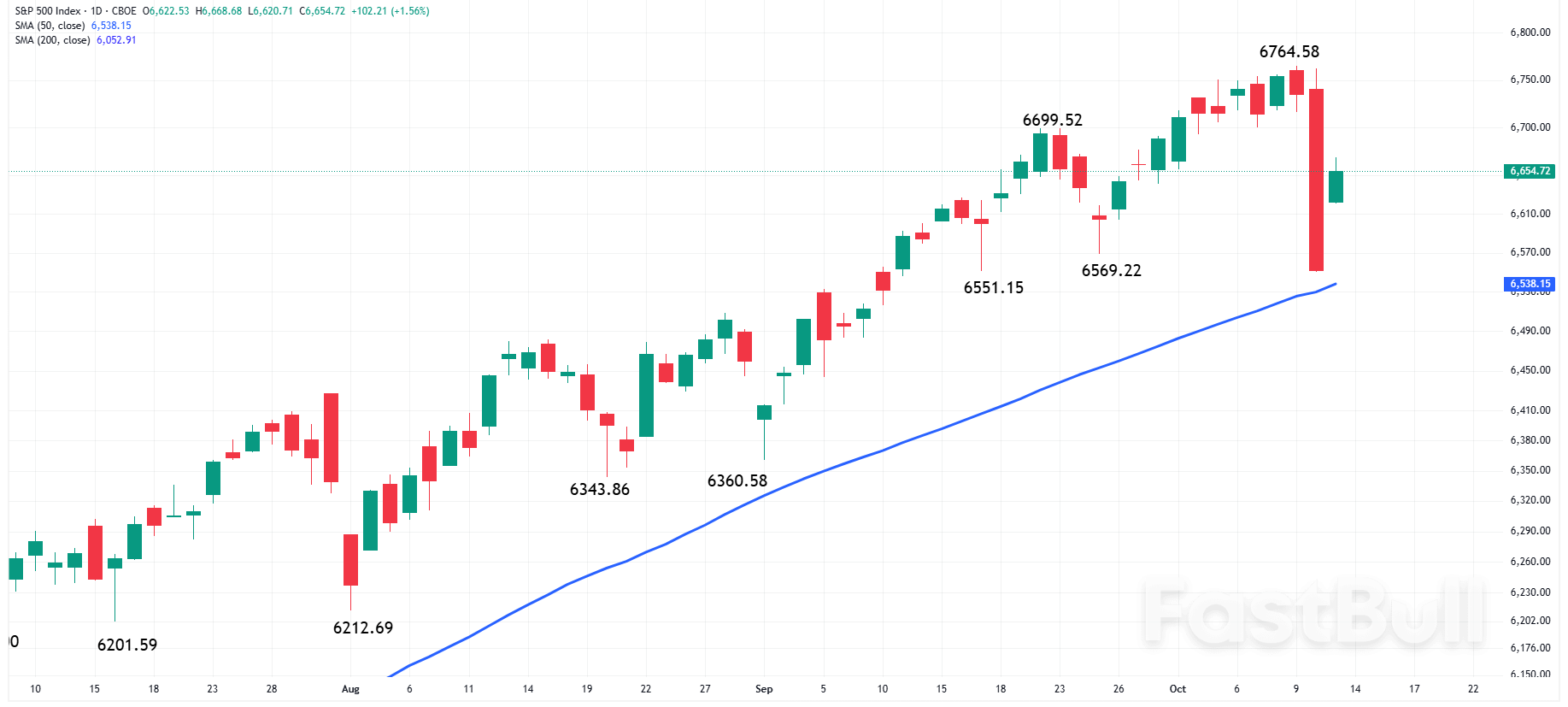 Daily S&P 500 Index (SPX)
Russia’s seaborne crude shipments rose to a 28-month high in the past four weeks, amid rising production and Ukrainian attacks on refineries that are forcing the diversion of supplies to export terminals.
Four-week average shipments from the country’s ports were 3.74 million barrels a day to Oct. 12, according to vessel-tracking data compiled by Bloomberg, the highest since June 2023. The average provides a clearer picture of underlying trends than more volatile weekly figures.
Moscow has been slowly boosting its crude production in line with a rising target under a months-long drive by the OPEC+ producer group to return supplies to the market. Since March, before the move began, Russia’s production target has increased by more than 500,000 barrels a day.
The amount of crude available for export has also been swelled in recent weeks by intensifying Ukrainian drone strikes on Russian oil refineries. At least 28 attacks have been launched since the start of August, compared with a total of 21 in the first seven months of the year.
Crude that can’t be processed as a result of the strikes is likely being diverted for export through Russia’s Baltic and Black Sea ports. Shipments from Primorsk, Ust-Luga and Novorossiysk averaged 2.3 million barrels a day in the latest four-week period. That could leave very little effective spare capacity at the terminals, particularly with the approach of winter when adverse weather conditions can impact loading operations.
A total of 35 tankers loaded 27.2 million barrels of Russian crude in the week to Oct. 12, vessel-tracking data and port-agent reports show. The volume was virtually unchanged from 27.17 million barrels on the same number of ships the previous week.
On a daily average basis, shipments in the week to Oct. 12 hit 3.89 million barrels a day, the highest in five weeks. In addition, two cargoes of Kazakhstan’s Kebco grade were shipped during the week, one each from Ust-Luga and Novorossiysk.
Drops in exports from Russia’s Black Sea and Arctic ports were more than offset by an increase in shipments from the Baltic and the Pacific.
On a four-week average basis, the gross value of Moscow’s exports rose by about $60 million to a one-year high of $1.49 billion a week in the 28 days to Oct. 12.
Using this measure, the export prices of Russia’s Urals from the Baltic and Black Sea were virtually unchanged at $54.78 and $55.08 a barrel respectively. The price of Pacific ESPO slipped by $0.40 a barrel to average $62.02 a barrel. Delivered prices in India were up by $0.10 a barrel to $65.61 a barrel, all according to numbers from Argus Media.
On a weekly basis, the value of exports averaged about $1.53 billion in the 7 days to Oct. 12, little changed from the period to Oct. 5.
The price of Urals cargoes from the Baltic fell by about $0.40 a barrel to average $53.87, while the value of shipments from the Black Sea slipped by $0.20 to $54.35 a barrel during the week.
The price of key Pacific grade ESPO was down by $0.70 a barrel to average $60.92 a barrel.
Observed shipments to Russia’s Asian customers, including those showing no final destination, rose to 3.4 million barrels a day in the 28 days to Oct. 12, up from a revised 3.19 million barrels a day in the period to Oct. 5 to reach their highest since June 2023.
While the amount of Russian crude heading to both China and India appears to be falling steeply, there are growing quantities on vessels yet to show a final destination for that pattern to be reversed. Tankers are increasingly showing no final destination until they are well across the Arabian Sea, while some never show a final destination, even after mooring to discharge.
Flows on tankers signaling Chinese ports fell to 1.1 million barrels a day in the four weeks to Oct. 12, while the amount destined for India fell to 810,000 barrels a day. But there is the equivalent of almost 1.5 million barrels a day on vessels yet to show a final destination.
Of that, about 1.2 million barrels a day is on ships from Russia’s western ports showing their destination as Port Said or the Suez Canal, or those from Pacific ports with no clear delivery point, and a further 270,000 barrels a day is on tankers yet to signal a destination.
Flows to Turkey in the four weeks to Oct. 12 slipped back to about 310,000 barrels a day from a revised 340,000 barrels a day in the period to Oct. 5. Shipments to Syria were unchanged at about 35,000 barrels a day.
This story forms part of a weekly series tracking shipments of crude from Russian export terminals and the gross value of those flows. The next update will be on Tuesday, Oct. 21.
All figures exclude cargoes identified as Kazakhstan’s KEBCO grade. Those are shipments made by KazTransoil JSC that transit Russia for export through Novorossiysk and Ust-Luga and are not subject to European Union sanctions or a price cap. The Kazakh barrels are blended with crude of Russian origin to create a uniform export stream. Since Russia’s invasion of Ukraine, Kazakhstan has rebranded its cargoes to distinguish them from those shipped by Russian companies.
Bloomberg classifies ship-to-ship transfers as clandestine if automated position signals appear to be switched off or falsified — a tactic known as spoofing — to hide the two vessels involved coming together to make the cargo switch.
Vessel-tracking data are cross-checked against port-agent reports as well as flows and ship movements reported by other information providers including Kpler and Vortexa Ltd. and satellite imagery covering Russian ports.
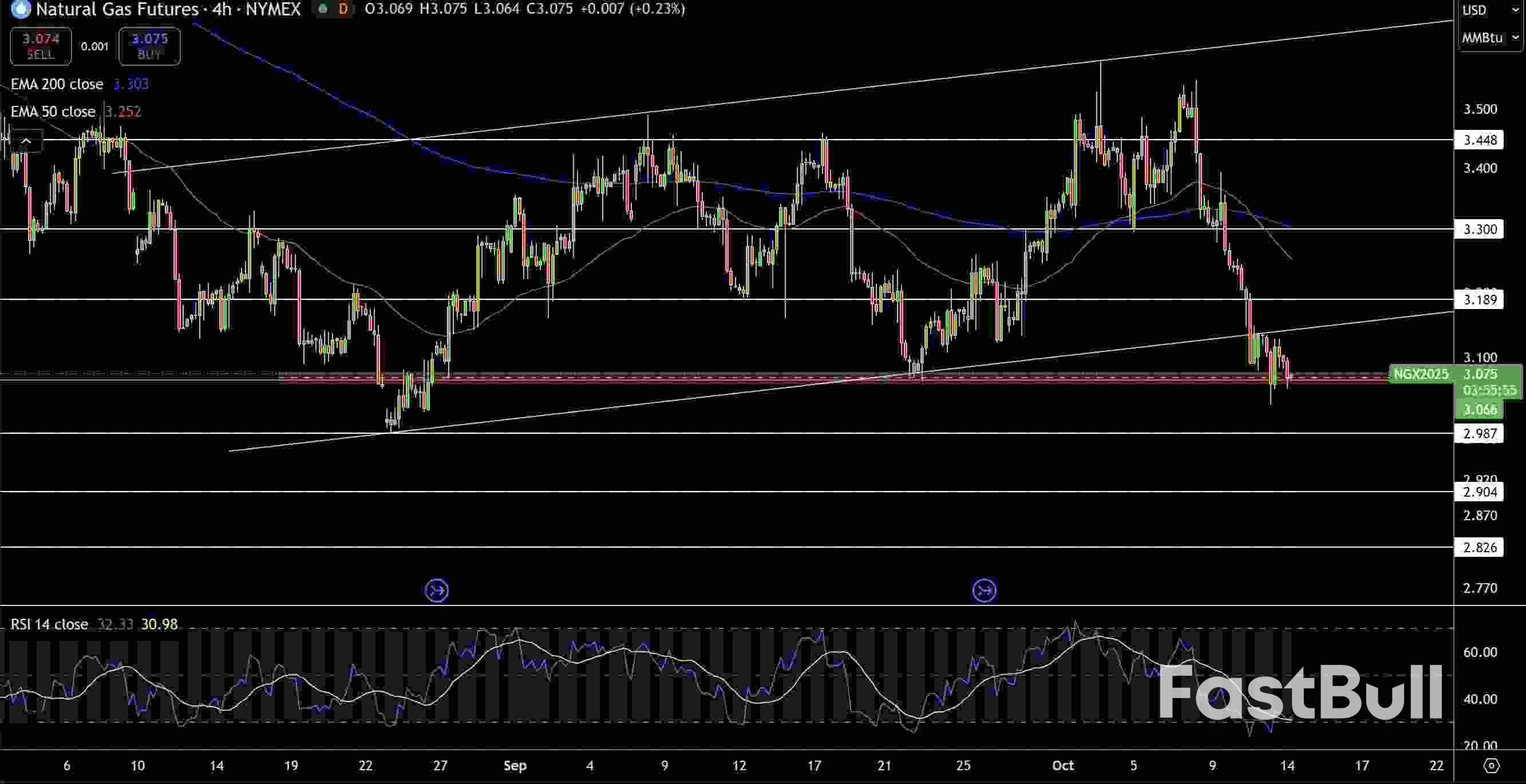 Natural Gas (NG) Price Chart
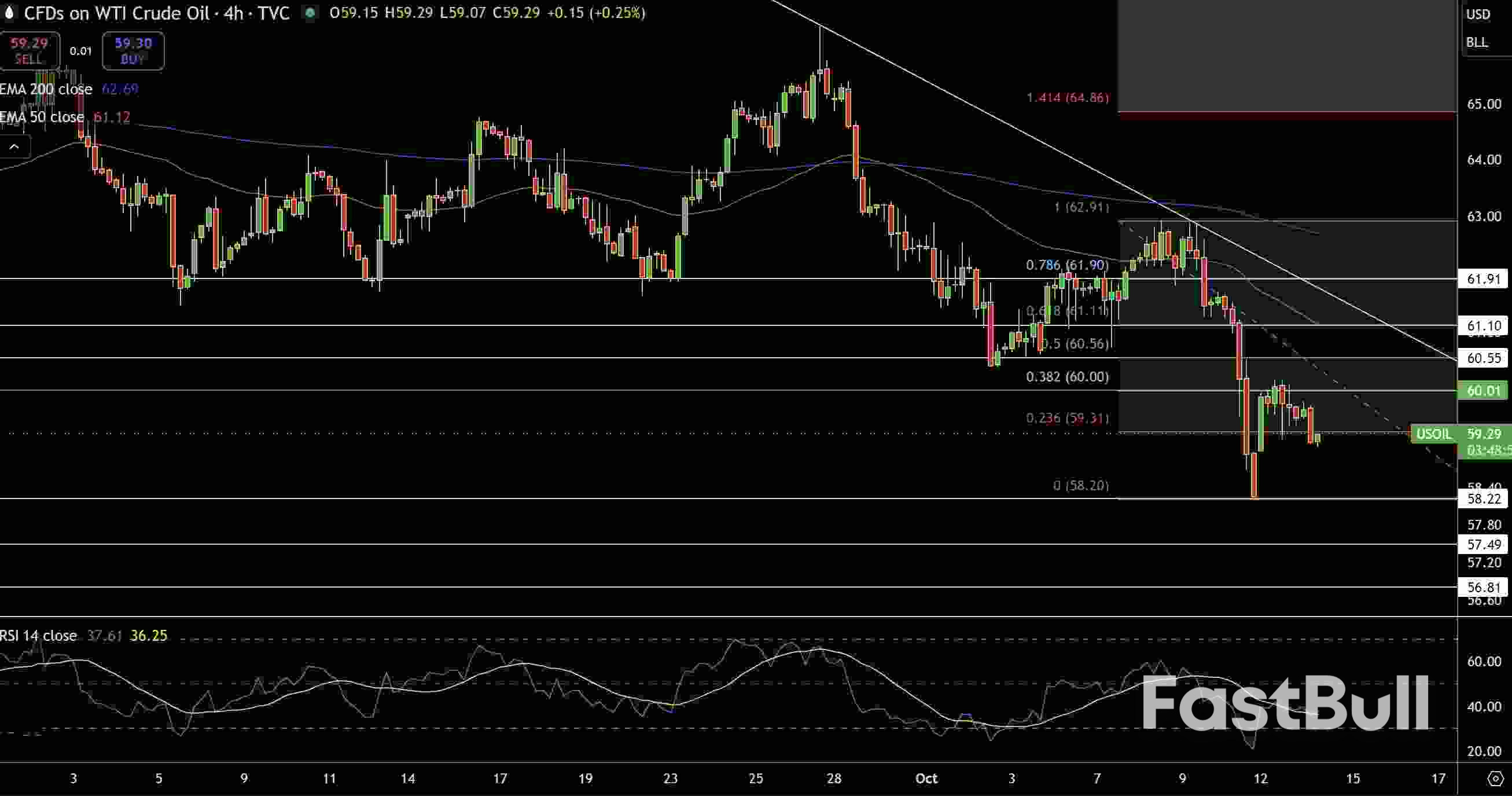 WTI Price Chart
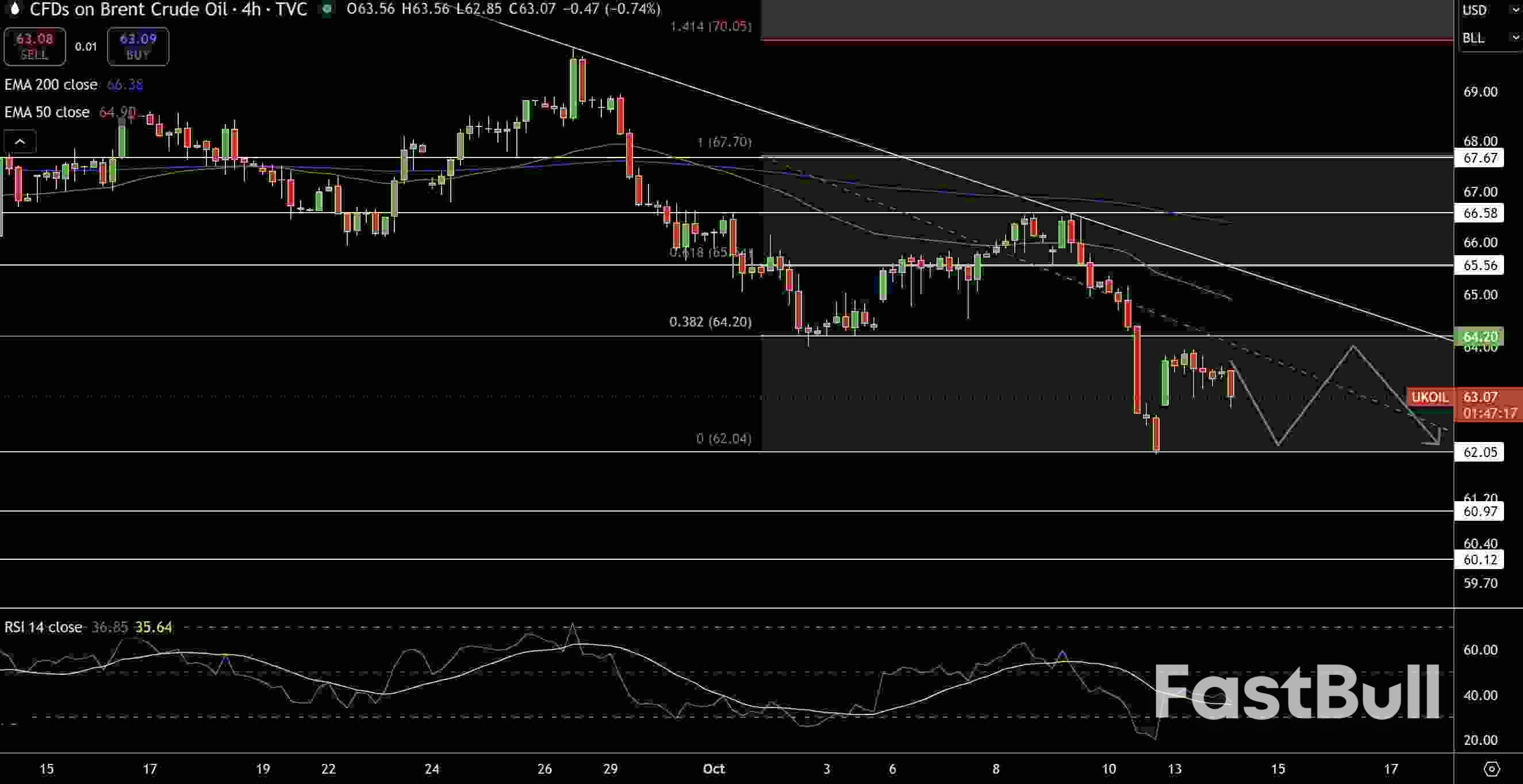 Brent Price Chart
728 RM B 7/F GEE LOK IND BLDG NO 34 HUNG TO RD KWUN TONG KLN HONG KONG


White Label
Data API
Web Plug-ins
Poster Maker
Affiliate Program
The risk of loss in trading financial instruments such as stocks, FX, commodities, futures, bonds, ETFs and crypto can be substantial. You may sustain a total loss of the funds that you deposit with your broker. Therefore, you should carefully consider whether such trading is suitable for you in light of your circumstances and financial resources.
No decision to invest should be made without thoroughly conducting due diligence by yourself or consulting with your financial advisors. Our web content might not suit you since we don't know your financial conditions and investment needs. Our financial information might have latency or contain inaccuracy, so you should be fully responsible for any of your trading and investment decisions. The company will not be responsible for your capital loss.
Without getting permission from the website, you are not allowed to copy the website's graphics, texts, or trademarks. Intellectual property rights in the content or data incorporated into this website belong to its providers and exchange merchants.
Not Logged In
Log in to access more features

FastBull Membership
Not yet
Purchase


Log In
Sign Up


