
Markets
News
Analysis
User
24/7
Economic Calendar
Education
Data
- Names
- Latest
- Prev


Signal Accounts for Members
All Signal Accounts
All Contests


No matching data
Latest Views
Latest Views
Trending Topics
Top Columnists
Latest Update
White Label
Data API
Web Plug-ins
Affiliate Program
View All

No data
Think of Saudi Arabia and the first thing that comes to mind might be its massive, oil-derived wealth.
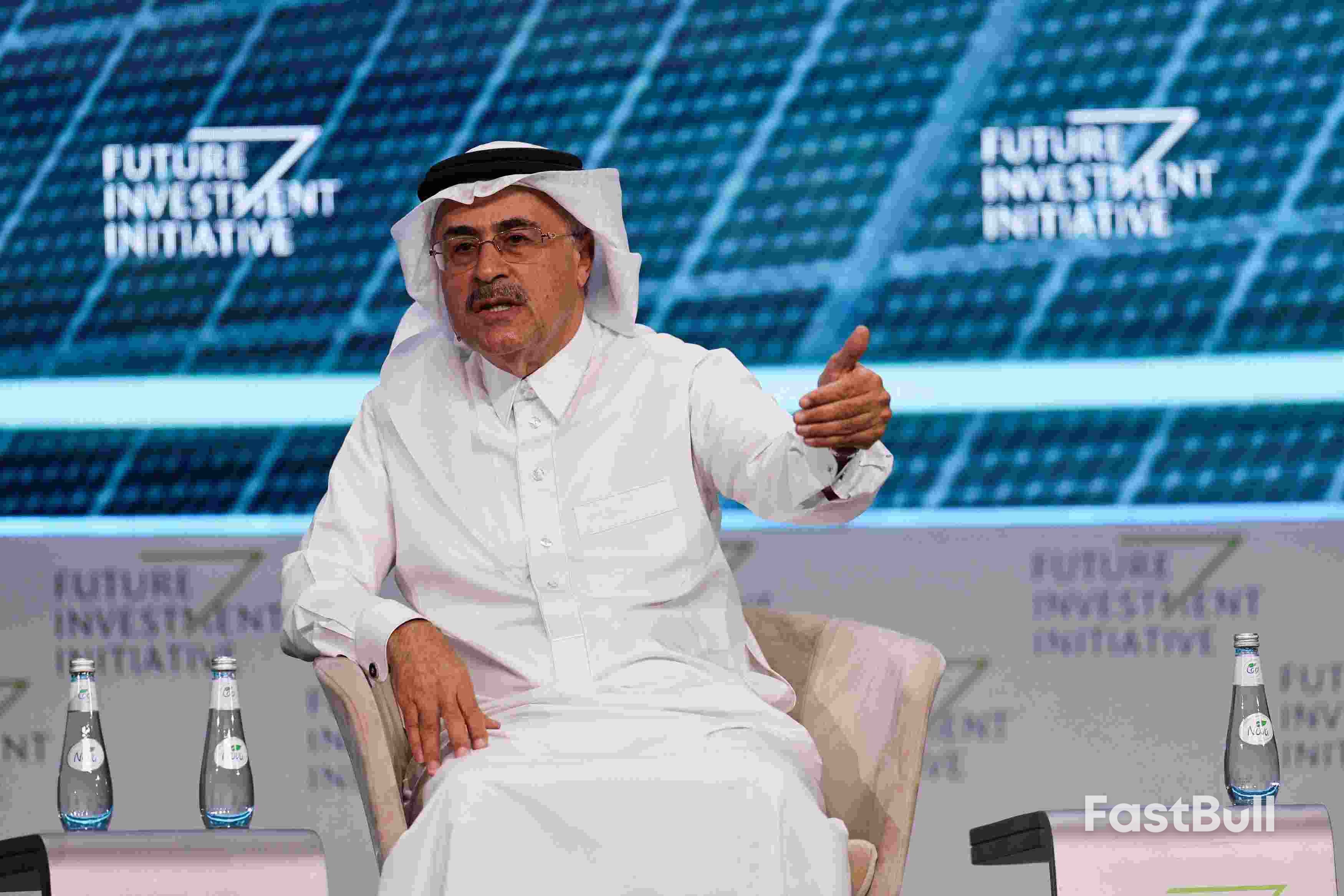
Think of Saudi Arabia and the first thing that comes to mind might be its massive, oil-derived wealth.While oil continues to drive Saudi Arabia's economy, the kingdom is now expanding into areas such as artificial intelligence, tourism and sports to diversify its growth avenues.According to Saudi Arabia's Minister for Investment Khalid Al Falih, more than half — 50.6% — of the Saudi economy is now "completely decoupled" from oil."This percentage is growing," Al Failh told CNBC's Dan Murphy, adding that government revenue used to be almost completely derived from oil money, but now, 40% of its revenue comes from sectors and sources that "have nothing to do with oil."
"We're seeing great results, but we're not satisfied. We want to do more. We want to accelerate the kingdom's diversification and growth story," he said.Saudi Arabia is doubling down on fast-growing sectors such as artificial intelligence, naming it one of its new growth areas, with Al Failh saying the kingdom will be a "key investor" in developing AI applications and large language models. Saudi Arabia would also build data centers "at a scale and at a competitive cost not achieved anywhere else.""AI has emerged [in] the last three, four years, and it's definitely going to define how the future economy of every nation. Those who invest will lead, and those who lag behind, unfortunately, will lose," he pointed out.
On Monday, AI chip company Groq's CEO, Jonathan Ross, told CNBC that for AI infrastructure thanks to its energy surplus. The country could see more than $135 billion in gains by 2030 thanks to AI, according to PwC.Saudi Arabia's quarterly budget performance report revealed that total government revenue for the first half of 2025 came in at 565.21 billion Saudi riyals ($150.73 billion), with oil making up 53.4% of the country's overall revenue, down from 67.97% in the same period in 2019.In 2024, the country reported a 1.3% rise in full-year GDP, mainly driven by a 4.3% increase in non-oil segments. Oil activity, on the other hand, fell 4.5% year on year.
The country's sovereign wealth fund — the Public Investment Fund — has acquired stakes in tech giants, video game publishers and football clubs as it uses oil revenues to diversify into other sectors.PIF has acquired stakes in video-game heavyweight Electronic Arts, establishing the SoftBank Vision Fund with Masayoshi Son's SoftBank Group Corp in 2017, and a takeover of English Premier League club Newcastle United in 2021.
When asked if declining oil prices were piling pressure on Saudi Arabia's economy and government revenue, Al Falih said that the country was not scaling back budgets and there were no cuts to public spending.Oil prices have fallen in 2025, with Brent crude spot prices down 13.4% so far this year, according to FactSet. Saudi Arabia's oil revenue slid 24% in the first half of 2025 from a year earlier.The government will continue to address all activities that require government spending, Al Falih said, noting that the PIF has grown sixfold since its creation and that the country was approaching nearly $1 trillion in capital deployed across sectors of strategic interest.
Tourism has also been a key growth area for Saudi Arabia. Ahmed Al-Khateeb, the country's tourism minister, told CNBC that the sector's share in GDP had grown to 5% in 2024 from 3% in 2019."We are [opening] resorts, new airlines, new airports, and the numbers are growing, and we are focusing on countries and visitors that are coming from outside to experience our great culture," Al-Khateeb highlighted.
The tourism minister also expressed confidence that the sector could contribute 10% of GDP by 2030, aiming to raise it to 20% eventually."This 20% will help Saudi Arabia to diversify the economy and make it more sustainable," he added.
Japan and the US unveiled a list of potential projects for their $550 billion US investment vehicle, providing a first look into what specific proposals could be funded by the mechanism that's a key part of the two countries' trade deal.
At a signing ceremony Tuesday in Tokyo, US Commerce Secretary Howard Lutnick outlined many of the highest-profile commitments. The corporate names included SoftBank Group, Westinghouse and Toshiba Corp., and the size of the potential projects ranged from $350 million to as much as $100 billion.
A fact sheet released by Japan's trade ministry Tuesday detailed other Japanese companies interested in launching projects in areas ranging from energy and AI to critical minerals.
"You're at the beginning. You are it. You are the foundation. And this is really, really exciting," Lutnick said at the event.
The announcements were intended to flesh out a framework trade agreement reached earlier this year, where Trump lowered and capped tariffs on Japanese goods in exchange for a pledge for Japan to fund $550 billion in US projects.
One of the documents said Trump and newly installed Prime Minister Sanae Takaichi "confirmed their strong commitment to implementing this GREAT DEAL" — both an acknowledgment the pact is proceeding under the new prime minister and that it's still being hashed out.
Trump has previously cast the $550 billion as money that his administration could "invest as we like," with 90% of the profits being given to the US. Japan has described the pledge as a combination of investments, loans and loan guarantees, characterizing it as a way to back up Japanese firms' US projects.
"Japan will continue to strive for the sincere and prompt implementation of the agreement with the US," said Japan's new trade minister, Ryosei Akazawa. "Through this, we intend to promote the mutual interests of Japan and the US, expand cooperation aimed at ensuring economic security, and foster Japan's economic growth."
Trump earlier in the day said, "I want to thank Japan because they're making big investments into the United States," speaking aboard the USS George Washington in Yokosuka, south of Tokyo. "They're a big investor into our country and we like that," he said, adding that Takaichi told him Toyota Motor Corp. would put plants all over the US "to the tune of over $10 billion."
Toyota wasn't mentioned in the trade ministry's fact sheet, and it wasn't clear what he was referring to or whether that project could tap into funding from the joint program.
In an interview, Lutnick said the pledges — which total up to nearly $490 billion — are in a "launch phase," with preliminary work on projects that would then be considered for funding from the $550 billion program.
"They'll do the precision work, and it'll go through the process with the Japanese consultation committee, the investment committee, and the president will give it the green light, and then they'll start to put shovels in the ground," he said. "I would expect that to take months, but not more than months."
Energy-related projects appeared to loom large in the list in terms of total scale of business. Westinghouse's construction of AP1000 nuclear reactors and small modular reactors was expected to be worth up to $100 billion, involving Japanese suppliers and operators including Mitsubishi Heavy Industries. Another small modular reactors project that could involve GE Vernova / Hitachi was framed as also being worth up to $100 billion.
"These are great companies, many of them household names — that you would expect — that are going to build infrastructure and improve the national economic security of the United States," Lutnick said, adding that other projects can be considered.
"We look forward to engaging with other companies that wish to provide that same sort of foundational position. We're going to be examining shipbuilding, pipelines, there'll be an enormous number of other critical minerals. There are a whole variety."
The US will be making the final decision on which projects will make the cut into the investment fund, though Japan is also expected to have some say. Trump retains the option to reinstate higher tariffs if Japan fails to fund his picks of investment projects.
"These companies were discussed and fully vetted with the Japanese," Lutnick said. "This is not outside of their purview," he said. "This is just the process of doing the work."
The fund aims to advance economic and national security interests by investing in semiconductors, pharmaceuticals, metals, critical minerals, shipbuilding, energy, artificial intelligence and quantum computing, according to a memorandum of understanding between the two countries.
The fund was a key element behind the July trade deal that lowered US duties from 27.5% to 15% on Japanese cars. The US also set levies on many other goods at the same level.
Strengthening trade and investment cooperation, while addressing key regional issues, was at the forefront of discussions between Prime Minister Datuk Seri Anwar Ibrahim and Chinese Premier Li Qiang during their bilateral meeting here on Tuesday morning.It was understood that the 15-minute closed-door discussion touched on regional issues, with China expressing support for peace efforts regarding the Cambodia-Thailand border situation and the ongoing crisis in Myanmar.
Both leaders also discussed a wide range of initiatives aimed at enhancing trade and investment, particularly in the automotive and high-technology sectors, including the development of the Automotive High-Tech Valley in Tanjung Malim.The meeting covered infrastructure connectivity, including the expansion of the East Coast Rail Link from Kota Bharu to Rantau Panjang, as well as collaboration in critical areas such as rare earth elements, the Perak-Penang water pipeline project and the halal industry.Additionally, tourism cooperation and people-to-people knowledge exchanges were also highlighted, along with efforts to enhance air connectivity by attracting more cargo flights from China to the Kuala Lumpur International Airport.
The two leaders also discussed semiconductor industry collaboration and reaffirmed support for the Asean Power Grid (APG) initiative.As the Asean chair, Malaysia welcomes China's participation in advancing the APG to promote sustainable energy cooperation across the region.Regarding the digital economy, Malaysia is inviting leading Chinese technology companies to expand their local presence and investments while encouraging new Chinese firms to establish regional operations here.
Earlier, Anwar, in his opening remarks, said, "Many times your visit to Malaysia and my visit to China, and I appreciate your participation; it means a lot for Malaysia and Asean. I think we will focus on the bilateral issue today (Tuesday)."And thank you for the invitation, President Xi Jinping, for the 80th anniversary of China, and I hope to meet up with him in South Korea in the next few days," he said.Also present were Foreign Minister Datuk Seri Mohamad Hasan, Minister of Investment, Trade and Industry Tengku Datuk Seri Zafrul Abdul Aziz, Deputy Investment, Trade and Industry Minister Liew Chin Tong, and Transport Minister Anthony Loke Siew Fook.
China's Li also attended the signing ceremony of the Asean-China Free Trade Area (ACFTA 3.0) upgrade, followed by the 28th Asean-China Summit on Tuesday morning.Malaysia, which holds the Asean chairmanship this year under the theme of "Inclusivity and Sustainability", is hosting the 47th Asean Summit from Oct 26 to 28, Sunday to Tuesday.The event brought together more than 3,000 delegates and leaders from over 30 countries and international organisations to enhance regional engagement and cooperation.
White Label
Data API
Web Plug-ins
Poster Maker
Affiliate Program
The risk of loss in trading financial instruments such as stocks, FX, commodities, futures, bonds, ETFs and crypto can be substantial. You may sustain a total loss of the funds that you deposit with your broker. Therefore, you should carefully consider whether such trading is suitable for you in light of your circumstances and financial resources.
No decision to invest should be made without thoroughly conducting due diligence by yourself or consulting with your financial advisors. Our web content might not suit you since we don't know your financial conditions and investment needs. Our financial information might have latency or contain inaccuracy, so you should be fully responsible for any of your trading and investment decisions. The company will not be responsible for your capital loss.
Without getting permission from the website, you are not allowed to copy the website's graphics, texts, or trademarks. Intellectual property rights in the content or data incorporated into this website belong to its providers and exchange merchants.
Not Logged In
Log in to access more features

FastBull Membership
Not yet
Purchase
Log In
Sign Up