• Trade
  • Markets
  • Copy
  • Contests
  • News
  • 24/7
  • Calendar
  • Q&A
  • Chats
Trending
Screeners
SYMBOL
LAST
BID
ASK
HIGH
LOW
NET CHG.
%CHG.
SPREAD
SPX
S&P 500 Index
6827.42
6827.42
6827.42
6899.86
6801.80
-73.58
-1.07%
--
DJI
Dow Jones Industrial Average
48458.04
48458.04
48458.04
48886.86
48334.10
-245.98
-0.51%
--
IXIC
NASDAQ Composite Index
23195.16
23195.16
23195.16
23554.89
23094.51
-398.69
-1.69%
--
USDX
US Dollar Index
97.920
98.000
97.920
98.070
97.810
-0.030
-0.03%
--
EURUSD
Euro / US Dollar
1.17446
1.17454
1.17446
1.17596
1.17262
+0.00052
+ 0.04%
--
GBPUSD
Pound Sterling / US Dollar
1.33847
1.33855
1.33847
1.33961
1.33546
+0.00140
+ 0.10%
--
XAUUSD
Gold / US Dollar
4331.10
4331.51
4331.10
4350.16
4294.68
+31.71
+ 0.74%
--
WTI
Light Sweet Crude Oil
56.864
56.894
56.864
57.601
56.789
-0.369
-0.64%
--

Community Accounts

Signal Accounts
--
Profit Accounts
--
Loss Accounts
--
View More

Become a signal provider

Sell trading signals to earn additional income

View More

Guide to Copy Trading

Get started with ease and confidence

View More

Signal Accounts for Members

All Signal Accounts

Best Return
  • Best Return
  • Best P/L
  • Best MDD
Past 1W
  • Past 1W
  • Past 1M
  • Past 1Y

All Contests

  • All
  • Trump Updates
  • Recommend
  • Stocks
  • Cryptocurrencies
  • Central Banks
  • Featured News
Top News Only
Share

Bank Of America Expects A Deficit In Aluminium Next Year And Sees Prices Pushing Above $3000/T

Share

Fed Data - USA Effective Federal Funds Rate At 3.64 Percent On 12 December On $102 Billion In Trades Versus 3.64 Percent On $99 Billion On 11 December

Share

Brazil's Petrobras Says No Impact Seen On Oil, Petroleum Products Output As Workers Start Planned Strike

Share

Statement: US Travel Group Warns New Proposed Trump Administration Requirements For Foreign Tourists To Provide Social Media Histories Could Mean Millions Of People Opting Not To Visit

Share

Blackrock: Kerry White Will Become Head Of Citi Investment Management At Citi Wealth

Share

Blackrock: Rob Jasminski, Head Of Citi Investment Management, Has Joined With Team

Share

Blackrock: Effective Dec 15, Citi Investment Management Employees Will Join Blackrock

Share

Blackrock: Formally Launch Citi Portfolio Solutions Powered By Blackrock

Share

According To Data From The Federal Reserve Bank Of New York, The Secured Overnight Funding Rate (Sofr) Was 3.67% On The Previous Trading Day (December 15), Compared To 3.66% The Day Before

Share

Peru Energy And Mines Ministry: Copper Production Up 4.8% Year-On-Year In October To 248192 Metric Tons

Share

Security Source: Ukrainian Drones Hits Russian Oil Infrastructure In Caspian Sea For Third Time

Share

Spot Palladium Extends Gains, Last Up 5% To $1562.7/Oz

Share

Mexico's Economy Ministry Announces Start Of Anti-Dumping Investigation And Anti-Subsidy Investigations Into USA Pork Imports

Share

Canada Nov CPI Common +2.8%, CPI Median +2.8%, CPI Trim +2.8% On Year

Share

NY Fed's Empire State Prices Paid Index +37.6 In December Versus+49.0 In November

Share

Canada Nov Consumer Prices +0.1% On Month, +2.2% On Year

Share

Canada Nov CPI Core -0.1% On Month, +2.9% On Year

Share

Canada Nov Core CPI, Seasonally Adjusted +0.2% On Month, Oct +0.3% (Unrevised)

Share

UK Health Minister Streeting On Doctors' Strike: Vote To Go Ahead Reveals The Bma's Shocking Disregard For Patient Safety

Share

Venezuelan State Oil Company Pdvsa Says Was Subject To Cyber Attack But Operations Unaffected

TIME
ACT
FCST
PREV
Japan Tankan Small Manufacturing Outlook Index (Q4)

A:--

F: --

P: --

Japan Tankan Large Non-Manufacturing Outlook Index (Q4)

A:--

F: --

P: --

Japan Tankan Large Manufacturing Outlook Index (Q4)

A:--

F: --

P: --

Japan Tankan Small Manufacturing Diffusion Index (Q4)

A:--

F: --

P: --

Japan Tankan Large Manufacturing Diffusion Index (Q4)

A:--

F: --

P: --

Japan Tankan Large-Enterprise Capital Expenditure YoY (Q4)

A:--

F: --

P: --

U.K. Rightmove House Price Index YoY (Dec)

A:--

F: --

P: --

China, Mainland Industrial Output YoY (YTD) (Nov)

A:--

F: --

P: --

China, Mainland Urban Area Unemployment Rate (Nov)

A:--

F: --

P: --

Saudi Arabia CPI YoY (Nov)

A:--

F: --

P: --

Euro Zone Industrial Output YoY (Oct)

A:--

F: --

P: --

Euro Zone Industrial Output MoM (Oct)

A:--

F: --

P: --

Canada Existing Home Sales MoM (Nov)

A:--

F: --

P: --

Canada National Economic Confidence Index

A:--

F: --

P: --

Canada New Housing Starts (Nov)

A:--

F: --

P: --
U.S. NY Fed Manufacturing Employment Index (Dec)

A:--

F: --

P: --

U.S. NY Fed Manufacturing Index (Dec)

A:--

F: --

P: --

Canada Core CPI YoY (Nov)

A:--

F: --

P: --

Canada Manufacturing Unfilled Orders MoM (Oct)

A:--

F: --

P: --

U.S. NY Fed Manufacturing Prices Received Index (Dec)

A:--

F: --

P: --

U.S. NY Fed Manufacturing New Orders Index (Dec)

A:--

F: --

P: --

Canada Manufacturing New Orders MoM (Oct)

A:--

F: --

P: --

Canada Core CPI MoM (Nov)

A:--

F: --

P: --

Canada Trimmed CPI YoY (SA) (Nov)

A:--

F: --

P: --

Canada Manufacturing Inventory MoM (Oct)

A:--

F: --

P: --

Canada CPI YoY (Nov)

A:--

F: --

P: --

Canada CPI MoM (Nov)

A:--

F: --

P: --

Canada CPI YoY (SA) (Nov)

A:--

F: --

P: --

Canada Core CPI MoM (SA) (Nov)

A:--

F: --

P: --

Canada CPI MoM (SA) (Nov)

A:--

F: --

P: --

Federal Reserve Board Governor Milan delivered a speech
U.S. NAHB Housing Market Index (Dec)

--

F: --

P: --

Australia Composite PMI Prelim (Dec)

--

F: --

P: --

Australia Services PMI Prelim (Dec)

--

F: --

P: --

Australia Manufacturing PMI Prelim (Dec)

--

F: --

P: --

Japan Manufacturing PMI Prelim (SA) (Dec)

--

F: --

P: --

U.K. 3-Month ILO Employment Change (Oct)

--

F: --

P: --

U.K. Unemployment Claimant Count (Nov)

--

F: --

P: --

U.K. Unemployment Rate (Nov)

--

F: --

P: --

U.K. 3-Month ILO Unemployment Rate (Oct)

--

F: --

P: --

U.K. Average Weekly Earnings (3-Month Average, Including Bonuses) YoY (Oct)

--

F: --

P: --

U.K. Average Weekly Earnings (3-Month Average, Excluding Bonuses) YoY (Oct)

--

F: --

P: --

France Services PMI Prelim (Dec)

--

F: --

P: --

France Composite PMI Prelim (SA) (Dec)

--

F: --

P: --

France Manufacturing PMI Prelim (Dec)

--

F: --

P: --

Germany Services PMI Prelim (SA) (Dec)

--

F: --

P: --

Germany Manufacturing PMI Prelim (SA) (Dec)

--

F: --

P: --

Germany Composite PMI Prelim (SA) (Dec)

--

F: --

P: --

Euro Zone Composite PMI Prelim (SA) (Dec)

--

F: --

P: --

Euro Zone Services PMI Prelim (SA) (Dec)

--

F: --

P: --

Euro Zone Manufacturing PMI Prelim (SA) (Dec)

--

F: --

P: --

U.K. Services PMI Prelim (Dec)

--

F: --

P: --

U.K. Manufacturing PMI Prelim (Dec)

--

F: --

P: --

U.K. Composite PMI Prelim (Dec)

--

F: --

P: --

Euro Zone ZEW Economic Sentiment Index (Dec)

--

F: --

P: --

Germany ZEW Current Conditions Index (Dec)

--

F: --

P: --

Germany ZEW Economic Sentiment Index (Dec)

--

F: --

P: --

Euro Zone Trade Balance (Not SA) (Oct)

--

F: --

P: --

Euro Zone ZEW Current Conditions Index (Dec)

--

F: --

P: --

Euro Zone Trade Balance (SA) (Oct)

--

F: --

P: --

U.S. Retail Sales MoM (Excl. Automobile) (SA) (Oct)

--

F: --

P: --

Q&A with Experts
    • All
    • Chatrooms
    • Groups
    • Friends
    Connecting
    .
    .
    .
    Type here...
    Add Symbol or Code

      No matching data

      All
      Trump Updates
      Recommend
      Stocks
      Cryptocurrencies
      Central Banks
      Featured News
      • All
      • Russia-Ukraine Conflict
      • Middle East Flashpoint
      • All
      • Russia-Ukraine Conflict
      • Middle East Flashpoint
      Search
      Products

      Charts Free Forever

      Chats Q&A with Experts
      Screeners Economic Calendar Data Tools
      Membership Features
      Data Warehouse Market Trends Institutional Data Policy Rates Macro

      Market Trends

      Market Sentiment Order Book Forex Correlations

      Top Indicators

      Charts Free Forever
      Markets

      News

      News Analysis 24/7 Columns Education
      From Institutions From Analysts
      Topics Columnists

      Latest Views

      Latest Views

      Trending Topics

      Top Columnists

      Latest Update

      Signals

      Copy Rankings Latest Signals Become a signal provider AI Rating
      Contests
      Brokers

      Overview Brokers Assessment Rankings Regulators News Claims
      Broker listing Forex Brokers Comparison Tool Live Spread Comparison Scam
      Q&A Complaint Scam Alert Videos Tips to Detect Scam
      More

      Business
      Events
      Careers About Us Advertising Help Center

      White Label

      Data API

      Web Plug-ins

      Affiliate Program

      Awards Institution Evaluation IB Seminar Salon Event Exhibition
      Vietnam Thailand Singapore Dubai
      Fans Party Investment Sharing Session
      FastBull Summit BrokersView Expo
      Recent Searches
        Top Searches
          Markets
          News
          Analysis
          User
          24/7
          Economic Calendar
          Education
          Data
          • Names
          • Latest
          • Prev

          View All

          No data

          Scan to Download

          Faster Charts, Chat Faster!

          Download App
          English
          • English
          • Español
          • العربية
          • Bahasa Indonesia
          • Bahasa Melayu
          • Tiếng Việt
          • ภาษาไทย
          • Français
          • Italiano
          • Türkçe
          • Русский язык
          • 简中
          • 繁中
          Open Account
          Search
          Products
          Charts Free Forever
          Markets
          News
          Signals

          Copy Rankings Latest Signals Become a signal provider AI Rating
          Contests
          Brokers

          Overview Brokers Assessment Rankings Regulators News Claims
          Broker listing Forex Brokers Comparison Tool Live Spread Comparison Scam
          Q&A Complaint Scam Alert Videos Tips to Detect Scam
          More

          Business
          Events
          Careers About Us Advertising Help Center

          White Label

          Data API

          Web Plug-ins

          Affiliate Program

          Awards Institution Evaluation IB Seminar Salon Event Exhibition
          Vietnam Thailand Singapore Dubai
          Fans Party Investment Sharing Session
          FastBull Summit BrokersView Expo

          France’s Prime Minister Resigns As Macron Considers Replacement

          Michelle

          Political

          Summary:

          Francois Bayrou resigned as France’s prime minister Tuesday, putting the onus on President Emmanuel Macron to quickly name a new premier who can stabilize the country’s urgent fiscal situation.

          Francois Bayrou resigned as France’s prime minister Tuesday, putting the onus on President Emmanuel Macron to quickly name a new premier who can stabilize the country’s urgent fiscal situation.

          Macron said he would tap a new prime minister in the coming days. AFP reported, without naming the source, that Bayrou submitted his resignation and will remain as a caretaker.

          Whoever takes on the role will need to assemble a government and then find a way to pass a budget in a fragmented National Assembly, an exercise that’s toppled the last two prime ministers. Meanwhile public pressure is growing with nationwide protests planned.

          While Macron doesn’t lack for people who might accept the role, selecting someone who can find common ground among the groups is far from obvious.

          “Which party can one even recruit from?” Kathryn Kleppinger, George Washington University professor of French studies said in an interview on Bloomberg Television. “I fear we’re going to be dealing with more of the same.”

          French bonds were little changed on Tuesday, with the 10-year benchmark yielding 3.48%. The CAC 40 Index fell about 0.1% at 11:15 a.m. in Paris, in line with the move in the Euro Stoxx 50.

          The new premier will be France’s fifth in less than two years, a reflection of the irreconcilable blocs in the country’s fractured political landscape.

          Several of the names floated in French media for the post are in Bayrou’s government, which limits their ability to appeal to parties beyond the centrist groups that had supported the outgoing premier. They include Defense Minister Sebastien Lecornu, who was a front-runner in the last reshuffle for the position, or Labor Minister Catherine Vautrin. Finance Minister Eric Lombard, who was instrumental in building bridges with Socialists to secure the 2025 budget, is another possibility.

          Outside of Macron’s core group, Socialist leader Olivier Faure has said that he’s ready to be prime minister. Former Socialists could include Bernard Cazeneuve, a former prime minister under President Francois Hollande or the current head of the state audit court, 67-year-old Pierre Moscovici. If no political profile can work, Macron could try to find a prime minister seen as purely technocratic, but would be an implicit admission from Macron that politics has failed.

          The Socialists were quick to propose their services following the vote. “I think it’s time for the left to again govern this country and break with the policies that have been implemented for the past eight years,” Faure said on TF1 television, referring to Macron’s time in office.

          At the same time, on France 2 television, outgoing interior minister Bruno Retailleau, who also heads the center-right Republicans, said he wouldn’t take part in a government led by a Socialist prime minister. Speaking on the same channel, far-left firebrand Jean-Luc Melenchon also said he would not support a government led by Faure.

          Bayrou called Monday’s confidence vote in an effort to get backing for his proposed €44 billion of spending cuts and tax hikes that would narrow France’s 2026 deficit to 4.6% of economic output from an expected 5.4% this year. He also floated an unpopular proposal to cut two public holidays as a way to reduce costs in Europe’s second-largest economy.

          France’s deficit is the widest in the neuron area with debt rising by €5,000 ($5,840) a second, according to Bayrou. The cost to service its obligations is set to hit €75 billion next year, he has also said.

          Eleonore Caroit, a lawmaker from Macron’s Renaissance party, said on Tuesday that her group would consider less rigorous budget proposals. “We need to cut more public expenditure, but if it takes moving from the €43.8 billion proposed by Bayrou to another figure, of course we are willing to do so.”

          Marine Le Pen’s far-right National Rally as well as the leftist France Unbowed have both called for new legislative elections, something that Macron appears to have ruled out with his statement on naming a new prime minister. Some have also called for Macron’s resignation, but he has steadfastly said he will remain through the end of his term in 2027.

          “For us, it’s a snap election or nothing,” National Rally President Jordan Bardella said on RTL radio Tuesday. “Any other prime minister appointed by Emmanuel Macron will be brought down.”

          A union strike planned for Sept. 18 is putting pressure on Macron to have a new government in place by then. A separate, less centralized, protest is planned on Sept. 10.

          On Friday, Fitch Ratings is scheduled to update its assessment of France’s creditworthiness.

          The French president is solely responsible for picking a new premier, and there is no constitutional time limit for a decision. It took Macron two months to appoint the previous premier, Michel Barnier, who lasted only 90 days. Macron took more than a week to name Bayrou after Barnier was ousted. Once appointed, the premier must propose a cabinet to be signed off by Macron.

          “The urgent need is for our country to have a budget by Dec. 31,” Gabriel Attal, former prime minister and president of the Renaissance group in the National Assembly, said on TF1. “Another snap election would be the worst solution.”

          Source: Bloomberg Europe

          Risk Warnings and Disclaimers
          You understand and acknowledge that there is a high degree of risk involved in trading. Following any strategies or investment methods may lead to potential losses. The content on the site is provided by our contributors and analysts for information purposes only. You are solely responsible for determining whether any trading assets, securities, strategy, or any other product is suitable for investing based on your own investment objectives and financial situation.
          Add to Favorites
          Share

          Israel Launches Attack on Hamas Leaders in Qatar, Blasts Heard in Doha

          Glendon

          Political

          Israel launched an attack on the leadership of Hamas in Qatar on Tuesday, expanding its military actions that have ranged across the Middle East to include the Gulf Arab state where the Palestinian Islamist group has long had its political base.

          An Israeli official confirmed to Reuters that Israel had carried out an attack on Hamas leaders in Qatar. Qatar's Al Jazeera television, citing a Hamas source, said the attack targeted Hamas Gaza ceasefire negotiators.

          Several blasts were heard in Qatar's Doha on Tuesday, Reuters witnesses said.

          Plumes of black smoke were billowing from the city's Legtifya petrol station. Right next door to the petrol station is a small residential compound that has been guarded by Qatar’s emiri guard 24 hours a day since the beginning of the Gaza conflict.

          Israel media, citing a senior Israeli official, said the attack was aimed at top Hamas leaders including Khalil al-Hayya, its exiled Gaza chief and top negotiator.

          Qatar, which has been mediating between Hamas and Israel, condemned the "cowardly" Israeli attack on Hamas officials and called it a flagrant violation of international law.

          Source: Reuters

          Risk Warnings and Disclaimers
          You understand and acknowledge that there is a high degree of risk involved in trading. Following any strategies or investment methods may lead to potential losses. The content on the site is provided by our contributors and analysts for information purposes only. You are solely responsible for determining whether any trading assets, securities, strategy, or any other product is suitable for investing based on your own investment objectives and financial situation.
          Add to Favorites
          Share

          US Payrolls Estimated to Be 911,000 Lower in Year Through March

          Glendon

          Economic

          Forex

          US job growth was far less robust in the year through March than previously reported, adding to mounting pressure on the Federal Reserve to lower interest rates.

          The number of workers on payrolls will likely be revised down by 911,000 for the 12 months through March — or nearly 76,000 less each month on average — according to the government’s preliminary benchmark revision out Tuesday. The final figures are due early next year.

          Before the report, the government’s payrolls data indicated employers added nearly 1.8 million total jobs in the year through March on a non-seasonally adjusted basis, or an average of 149,000 per month.

          The Bureau of Labor Statistics adjustment indicates the labor market slowdown in recent months followed an extended period of more moderate job growth that may lay the groundwork for a series of interest-rate cuts beginning next week. Fed Chair Jerome Powell recently acknowledged risks to the job market have increased, and two of his colleagues preferred to lower borrowing costs in July.

          Traders widely expect central bankers to cut rates at the conclusion of their two-day meeting Sept. 17.

          While benchmark revisions are carried out every year, they’ve garnered added attention this year with investors and Fed watchers looking for any signs that the labor market may be slowing faster than previously thought. The adjustments have also spilled into politics, where President Donald Trump has previously lambasted revisions to jobs data.

          Source: Bloomberg Europe

          To stay updated on all economic events of today, please check out our Economic calendar
          Risk Warnings and Disclaimers
          You understand and acknowledge that there is a high degree of risk involved in trading. Following any strategies or investment methods may lead to potential losses. The content on the site is provided by our contributors and analysts for information purposes only. You are solely responsible for determining whether any trading assets, securities, strategy, or any other product is suitable for investing based on your own investment objectives and financial situation.
          Add to Favorites
          Share

          Performative Or Pragmatic? Why Boeing Planes Feature So Much In Trump Trade Deals

          Samantha Luan

          Stocks

          Political

          Economic

          U.S. President Donald Trump has upended the traditional global trading environment, in some cases even undermining free trade agreements with partners in favor of bilateral deals that appear to be light on details but heavy on symbolism.Since April, a pattern has emerged. Countries that strike trade deals with the U.S. often announce large orders for Boeing jets.For example, during South Korean President Lee Jae Myung's visit to Washington, Korean Air announced an order for 103 Boeing aircraft valued at $36.2 billion. That order, combined with another $13.7 billion deal with GE Aerospace is reportedly the largest deal in the airline's history.

          As part of its deal, Japan also placed an order for 100 Boeing jets, although the value of the order was not disclosed. Even smaller economies such as Malaysia, Indonesia, and Cambodia have included Boeing purchases in their trade agreements.Even the UK placed a $10 billion order for Boeing aircraft as part of its trade deal with the U.S. in May, according to Treasury Secretary Howard Lutnick. Days later, British Airways' parent IAG announced an order for 32 Boeing jets on May 9, totaling $12.7 billion.

          Why aircraft — and why Boeing?

          Why is Boeing such a fixture in Trump's deals? The first reason: it looks good for the president.John Grant, founder of aviation consultancy Midas Aviation told CNBC that "[the] simple answer is that planes are high profile and Trump always wants profile.""Aircraft are very visible statements of trade and have a high value, making them particularly attractive in such agreements between countries," he added.

          Wendy Cutler, Vice President at the Asia Society Policy Institute, noted that these high-value deals allow countries to demonstrate their commitment to reducing bilateral trade surpluses with the U.S — the reason Trump gave to invoke emergency powers for imposing tariffs.Aircraft orders also come with several other advantages. Unlike commodities such as steel or rice, planes are less likely to ruffle any feathers when it comes to domestic industries."Imports of these airplanes are not politically difficult for most trading partners of the U.S., unlike metals or agricultural imports," said Homin Lee, senior macro strategist at Lombard Odier.

          Japan, for example, has long protected its rice industry, while South Korea is a major steel exporter to the U.S. — making reciprocal purchases of American steel impractical. Seoul was the fourth-largest exporter of steel to the U.S. in 2024, according to the International Trade Administration under the U.S. Commerce Department.Moreover, aircraft orders typically span years. Boeing's production backlog stands at 11.5 years, according to market research firm Forecast International, while Airbus trails slightly at 10.6 years.This long delivery window means that airlines from countries entering into deals with Trump can announce purchases without any immediate financial strain.

          But its not all performative.

          The international tourism industry is on an upswing, and U.S. made passenger aircraft are the ideal item to include in any trade deal with Trump, said Lombard Odier's Lee. "They're actually needed."According to the International Air Transport Association, global airline net profits are projected to reach $36 billion in 2025, up from $32.4 billion in 2024, with profit margins rising to 3.7%. Total revenue is expected to hit a record $979 billion, up 1.3% from last year.

          Beyond economics, Boeing carries symbolic weight. "It's an iconic American company," said Cutler. And with the aircraft manufacturing industry effectively a duopoly between Boeing and Airbus, options are limited.Boeing figures in Trump's deals despite safety scandals including a door panel blowout on an Alaska Airlines flight in 2024.Whistleblower allegations and production quality concerns have dogged the company, but Grant noted that Boeing has introduced improvements that airlines are beginning to see firsthand.

          Source: CNBC

          To stay updated on all economic events of today, please check out our Economic calendar
          Risk Warnings and Disclaimers
          You understand and acknowledge that there is a high degree of risk involved in trading. Following any strategies or investment methods may lead to potential losses. The content on the site is provided by our contributors and analysts for information purposes only. You are solely responsible for determining whether any trading assets, securities, strategy, or any other product is suitable for investing based on your own investment objectives and financial situation.
          Add to Favorites
          Share

          Is Vietnam Becoming The New Thailand?

          Glendon

          Political

          If we go back to the year 2015, Thailand was in the midst of a major export boom, running a current account surplus of $28 billion. The following year the surplus jumped to $43 billion. Thailand maintained these large current account surpluses, anchored by exports of agriculture, manufactured goods, and services, right up until the COVID-19 pandemic.

          As I have previously noted, an economy based around exports like Thailand’s is especially vulnerable to external shocks that disrupt normal patterns of travel and commerce, like pandemics or trade wars. Even now, Thailand is struggling with a slow recovery in exports that has contributed to the country’s weak economic growth. In 2024, the current account surplus was $11 billion, which is fine for many countries but maybe not ideal for Thailand.

          We could explain this by saying that today’s global economy is not very friendly for countries that depend on external demand, so of course Thailand is struggling. Any export-led economy would be. But there is a puzzle here, because there is another country in the same region that is achieving rapid economic growth through export-led industrialization, just as Thailand did. And this country is seeing its exports and current account surplus rise, despite the pandemic and trade tensions. This country, of course, is Vietnam.

          In 2015, Vietnam was running a deficit in its current account of negative $2 billion. According to the Atlas of Economic Complexity, Vietnam’s total exports that year were $181 billion, $94 billion less than Thailand. Within a couple years, the roles had switched. In 2023, Vietnam exported over $400 billion in goods and services, surpassing Thailand’s $345 billion. Vietnam ran a $28 billion surplus in its current account in 2024, and the economy is experiencing steady growth despite global economic headwinds.

          Even in tourism, where Thailand has reigned supreme for many years, Vietnam is catching up. While Thailand still leads in absolute numbers, inbound travel remains below its pre-pandemic peak and it looks like arrivals will be lower this year than they were last year. Vietnam, on the other hand, is poised to set new records for inbound tourists this year.

          I want to be clear that a surplus in the current account does not mean one economy is performing better than another. Whether a country runs a surplus or deficit is less important than why. In this case both Vietnam and Thailand have built their economies around similar models of export-led industrialization with the explicit goal of exporting surplus production, so comparing them can provide useful insights.

          Foreign investors like to offshore their manufacturing to Vietnam and Thailand to take advantage of lower production costs. The goods they produce are then exported to global markets. Exports are a major goal of this type of development so a surplus in the current account is evidence that the model is working. That’s why it is interesting that Vietnam seems to be overtaking Thailand at a time of heightened geopolitical uncertainty and weakening global demand. Why might this be the case?

          Part of the answer could be that it’s cheaper to make things in Vietnam. Due in large part to the success of its export-led industrialization strategy, Thailand has a higher per capita GDP than Vietnam. This means basic manufacturing inputs like wages and electricity are likely to be costlier due to Thailand’s relatively higher level of development.

          Another consideration is the composition of exports. Back in 2015, Vietnam’s primary exports were divided between electronics, textiles, and agriculture. By 2023, exports had overwhelmingly shifted toward higher-value products such as phones, integrated circuits, and computers. This is typical with export-led industrialization as countries move away from lower value-added goods like agriculture and textiles, and toward more valuable goods.

          In Vietnam, textiles and agriculture fell from 38 percent of exports in 2015 to 28 percent by 2023, as the country shifted toward more advanced manufactures. In particular, Vietnam is seeing a big boom in the electronics industry, exporting $165 billion of electronic goods in 2023, equal to 41 percent of total exports. By comparison, Thailand exported $48 billion worth of electronics in the same year.

          Vietnam also benefits from close proximity to large nearby markets like China and South Korea. A lot of demand for Vietnamese electronics comes from those two countries, as firms like LG, Samsung, and Xiaomi have invested billions setting up factories with an eye toward exports. This has trickled down to service exports as well. A little under half of Vietnam’s 17.5 million inbound tourists last year were from South Korea and China.

          Thailand’s exports are more evenly spread across a range of goods and services including electronics, machinery, agriculture, tourism, chemicals and vehicles. While this should provide a more stable industrial base, I think it also makes Thailand more exposed to a general weakening of global demand. Lack of political stability can also reduce investor confidence, so Thailand is doing itself no favors with its revolving door of prime ministers.

          When we look at these two cases we see that Vietnam has been very successful as shifting from agriculture and textiles toward a narrower specialization in electronics which is a good business to be in right now. This, along with lower costs, a strategic location and a stable political environment, can help explain why Vietnam is catching up to Thailand so quickly in the export-led industrialization game. The next question for a future column is whether this is sufficient to sustain such a high rate of growth over the long-term and in an increasingly uncertain global economy.

          Source: The Diplomat

          Risk Warnings and Disclaimers
          You understand and acknowledge that there is a high degree of risk involved in trading. Following any strategies or investment methods may lead to potential losses. The content on the site is provided by our contributors and analysts for information purposes only. You are solely responsible for determining whether any trading assets, securities, strategy, or any other product is suitable for investing based on your own investment objectives and financial situation.
          Add to Favorites
          Share

          Why Investors Are Ditching Bonds for Gold in 2025

          Warren Takunda

          Economic

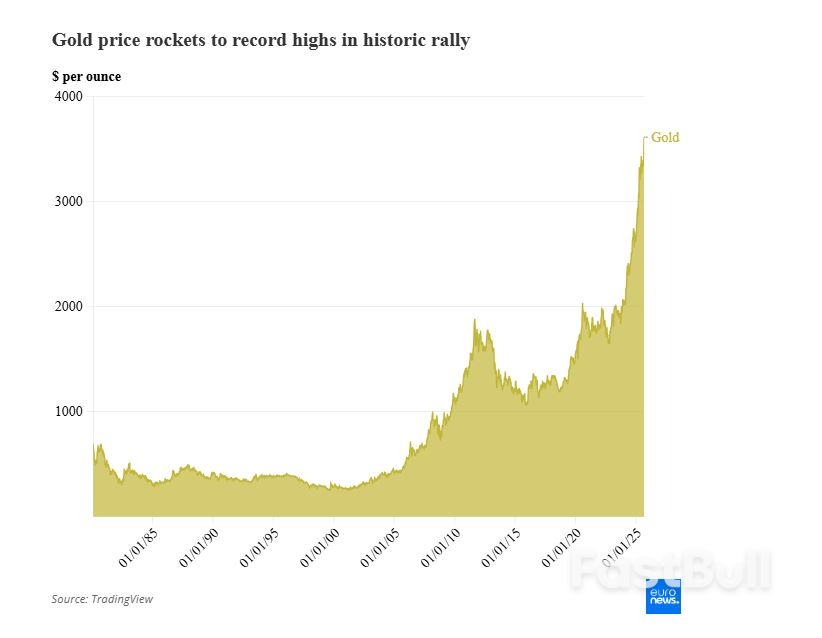
          Gold has surged to the top of investors' wish lists in 2025. The yellow metal, long revered as a hedge against inflation and geopolitical turmoil, has seen its price rocket to record highs above $3,600 (€3,080) per ounce, delivering returns of nearly 40% year-to-date ––gold's best year since 1978.
          While global equity markets have delivered positive returns this year, they remain well behind gold’s performance. In contrast, bonds are enduring yet another year of disappointing performance.
          Why Investors Are Ditching Bonds for Gold in 2025_1

          Why bonds no longer offer protection

          US Treasuries and European sovereign bonds have long served as shock absorbers in balanced portfolios.
          In times of economic weakness, bonds typically rallied as risk assets declined. It held true only as long as inflation remained subdued, but that relationship appears to be breaking down.
          Since peaking in 2020, European government bonds have shed around 20% of their value, and US long-duration Treasuries have fared even worse, halving in price over the same period. Year-to-date in 2025, benchmark European bond indices are down 2%, underperforming both equities and commodities.
          For investors relying on the classic 60/40 portfolio mix—60% equities, 40% bonds—the returns have been underwhelming. Over the past five years, the strategy has returned just 32%, while the S&P 500 alone returned 109%.
          Worse still, the supposed diversification benefits have broken down: balanced portfolios experienced similar volatility and even deeper drawdowns compared to all-equity allocations.
          When growth falters, geopolitical risks escalate, and inflation stays elevated, bonds struggle to deliver protection.
          Inflation is the bond market’s greatest adversary—eroding real returns and undermining their safe haven status. In such an environment, gold steps in to fill the void.

          Enter gold: a hedge against twin risks

          Amid this structural bond underperformance, investors are increasingly turning to gold as a portfolio stabiliser—one capable of protecting against risks emanating from both equity and bond markets.
          Gold’s value is largely uncorrelated with other asset classes. That feature has made it an ideal hedge in today’s multifaceted risk environment.
          In episodes such as the post-Liberation Day selloff in April, both equities and bonds declined in unison, offering investors little refuge.
          This breakdown in correlation mirrors patterns from the 1970s, when inflation ran rampant amid weak central bank credibility.
          Then, as now, gold outperformed all major asset classes, driven by investor demand for protection against monetary debasement and systemic risk.
          According to Goldman Sachs, equity-bond portfolios are particularly vulnerable in two scenarios: when institutional credibility erodes––as during the 1970s––and when supply shocks drive 'stagflationary' pressures––as seen in 2022). In both, gold historically shines.

          Central banks lead, investors follow

          Investor behaviour in 2025 is also being influenced by an aggressive wave of central bank gold buying, particularly from emerging markets.
          Since Western sanctions froze Russia’s foreign currency reserves in 2022, countries such as China, India and Turkey have accelerated efforts to diversify reserves away from the US dollar, funnelling billions into gold.
          According to the IMF, central bank gold purchases have risen fivefold since February 2022.
          Investors are now following the wave. The SPDR Gold Shares (GLD), the world’s largest physically-backed gold ETF, has attracted $11.3 billion (€9.63bn) in inflows this year alone—on track to surpass its record from 2020.
          This is a clear sign that private investors are beginning to follow the lead of central banks, rethinking gold’s role as a strategic reserve asset.
          Unlike bonds, which can be inflated away or subject to sovereign default, gold does not depend on any institution’s credibility. It cannot be printed, sanctioned or debased—attributes that are proving increasingly attractive amid a world of rising debt, polarised politics and fragmented risks.
          High levels of government debt and fiscal looseness further cloud the outlook for bonds. Investors increasingly view them not as safe assets, but as liabilities vulnerable to inflationary erosion.
          If central banks are compelled to suppress yields to manage debt servicing costs—a process sometimes referred to as "financial repression"—then real returns on bonds could remain negative for years.

          How high could gold price rise?

          In 2025, this risk is not merely economic but institutional.
          Investors are increasingly wary of political interference in monetary policy, particularly in the United States. Donald Trump’s aggressive campaign against Fed Chair Jerome Powell has raised alarms over potential pressure on the Federal Reserve to keep interest rates artificially low.
          Should the Fed’s independence be compromised, its ability to fight inflation could be undermined—making gold an attractive hedge against institutional fragility.
          Goldman Sachs analyst Samantha Dart highlighted this concern, warning that if just 1% of US private Treasury holdings rotated into gold, prices could soar to nearly $5,000 (€4,263) per ounce.
          Even in a more moderate scenario, Goldman expects gold to hit $4,000 (€3,410) by mid-2026, citing political uncertainty, global central bank demand, and declining faith in US fiscal management.

          The gold signal

          Gold’s historic rally in 2025 reflects more than just market momentum—it marks a fundamental shift in investor priorities.
          As bonds lose their defensive power and political risk undermines confidence in monetary institutions, gold has reasserted itself as the ultimate safe haven asset.
          Its uncorrelated nature, resistance to inflation, and independence from institutional credibility make it uniquely suited to a world where traditional safeguards are faltering.
          In portfolios once anchored by bonds, gold is now taking centre stage.

          Source: Euronews

          To stay updated on all economic events of today, please check out our Economic calendar
          Risk Warnings and Disclaimers
          You understand and acknowledge that there is a high degree of risk involved in trading. Following any strategies or investment methods may lead to potential losses. The content on the site is provided by our contributors and analysts for information purposes only. You are solely responsible for determining whether any trading assets, securities, strategy, or any other product is suitable for investing based on your own investment objectives and financial situation.
          Add to Favorites
          Share

          Yen Rebounds Despite Confusion Over BoJ’s Next Move

          Michelle

          Economic

          Forex

          Yen rebounded broadly today, climbing to the top of the performance leaderboard as traders latched onto speculation that the BoJ may still raise rates as soon as October. A Bloomberg report citing unnamed officials suggested some policymakers favor an earlier move, with reduced concern about growth risks following the U.S.–Japan trade deal. The report noted that the key variable for policymakers is whether the drag from U.S. tariffs on Japan’s economy remains within expectations. If so, the bank could argue there is room to resume normalizing rates despite political turbulence in Tokyo.

          However, the report relied on anonymous sources and came alongside conflicting headlines. Many analysts argue the resignation of Prime Minister Shigeru Ishiba and the ensuing LDP leadership contest are reasons for caution. The BoJ, they contend, is unlikely to risk tightening policy amid such political uncertainty. The central bank also has time on its side. Policymakers can afford to wait until early next year for the next hike, ensuring stability while avoiding the impression of acting in haste. For markets, this means rate expectations are likely to remain volatile as headlines shift.

          Elsewhere, Euro weakened broadly, with investors still digesting the ouster of French Prime Minister François Bayrou on Monday. His government’s collapse has heightened perceptions of instability in Paris, though the turmoil alone is unlikely to drive sustained Euro weakness without broader contagion. Still, the picture of France cycling through four prime ministers in two years have weighed on confidence. With President Emmanuel Macron scrambling to find another candidate capable of surviving parliament, Euro has remained defensive.

          In the wider FX market, Yen is the day’s strongest performer so far, followed by Aussie and Kiwi. Euro is the weakest, trailed by the Swiss Franc and Loonie. Dollar and Sterling sit mid-pack.

          In Europe, at the time of writing, FTSE is up 0.26%. DAX is down -0.48%. CAC is up 0.31%. UK 10-year yield is up 0.012 at 4.62. Germany 10-year yield is up 0.029 at 2.674. Earlier in Asia, Nikkei fell -0.42%. Hong Kong HSI rose 1.19%. China Shanghai SSE fell -0.51%. Singapore Strait Times fell -0.25%. Japan 10-year JGB yield fell -0.03 to 1.565.

          Westpac: Australia consumer optimism elusive, RBA to pause in September

          Australia’s Westpac Consumer Sentiment Index dropped -3.1% mom to 95.4 in September, reversing part of last month’s boost from the RBA’s third rate cut. While sentiment remains modestly above July levels and well above the April tariff-driven low, the index has slipped back into “cautiously pessimistic” territory. Westpac said outright optimism remains “elusive”, with households still uneasy about the path ahead despite relief from the cost-of-living crisis.

          The RBA is expected to keep its cash rate steady at 3.6% when it meets later this month. Westpac noted recent data on inflation and demand came in “somewhat firmer than expected”, reinforcing the case for caution. Policymakers are seen waiting for further confirmation that underlying trends remain benign before resuming cuts.

          For now, consumer recovery looks sluggish, and Westpac expects “further easing will likely be needed” to sustain momentum. It forecasts another 25bp cut in November and two additional moves in 2026, underscoring the gradual path ahead for both sentiment and policy.

          Australia NAB business survey: Confidence falls, costs ease, capacity still tight

          Australia’s NAB Business Confidence index slipped from 8 to 4 in August, but conditions showed improvement, rising from 5 to 7. Trading remained steady at 12, while profitability rose from 2 to 4 and employment from 2 to 5. NAB Chief Economist Sally Auld said the results support the view that “the outlook for businesses continues to improve,” with both confidence and conditions now near long-run averages.

          Capacity utilisation rose to 83.1% from 82.5%, staying two percentage points above its long-run norm. Capital expenditure intentions also improved, climbing from 8 to 10. Together, these suggest firms are still operating at high levels of resource use despite broader uncertainties.

          At the same time, cost pressures eased further. Purchase cost growth slowed from 1.3% to 1.1%, its lowest since 2021, while labour costs moderated to from 1.9% 1.5% and product price growth dipped to from 0.8% 0.6%. The survey points to an environment of resilient business activity and capacity tightness, but with inflation pressures continuing to recede.

          USD/JPY Mid-Day Outlook

          Daily Pivots: (S1) 147.05; (P) 147.82; (R1) 148.29;

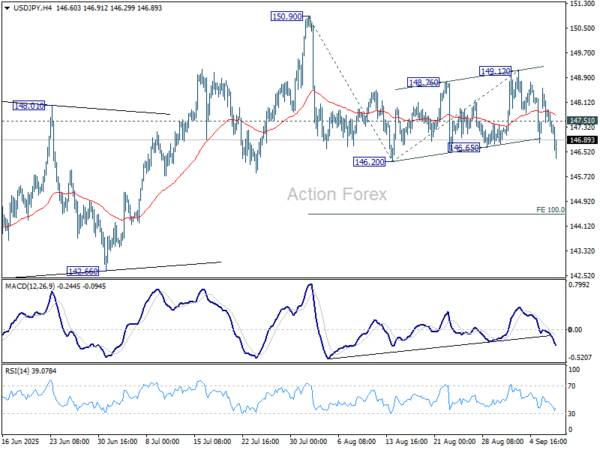
          EUR/JPY’s break of 146.65 support suggest that fall from 150.90 is resuming. Intraday bias is back on the downside, and break of 146.20 will target 100% projection of 150.90 to 146.20 from 149.12 at 144.42. Also, sustained trading below 55 D EMA (now at 147.15) will argue that whole rebound from 139.87 has completed with three waves up to 150.90. On the upside, however, break of 147.51 minor resistance will mix up the outlook again and turn intraday bias neutral.

          In the bigger picture, price actions from 161.94 (2024 high) are seen as a corrective pattern to rise from 102.58 (2021 low). Decisive break of 61.8% retracement of 158.86 to 139.87 at 151.22 will argue that it has already completed with three waves at 139.87. Larger up trend might then be ready to resume through 161.94 high. In case the corrective pattern extends with another fall, strong support is expected from 38.2% retracement of 102.58 to 161.94 at 139.26 to bring rebound.

          Source: ACTIONFOREX

          To stay updated on all economic events of today, please check out our Economic calendar
          Risk Warnings and Disclaimers
          You understand and acknowledge that there is a high degree of risk involved in trading. Following any strategies or investment methods may lead to potential losses. The content on the site is provided by our contributors and analysts for information purposes only. You are solely responsible for determining whether any trading assets, securities, strategy, or any other product is suitable for investing based on your own investment objectives and financial situation.
          Add to Favorites
          Share
          FastBull
          Copyright © 2025 FastBull Ltd

          728 RM B 7/F GEE LOK IND BLDG NO 34 HUNG TO RD KWUN TONG KLN HONG KONG

          TelegramInstagramTwitterfacebooklinkedin
          App Store Google Play Google Play
          Products
          Charts

          Chats

          Q&A with Experts
          Screeners
          Economic Calendar
          Data
          Tools
          Membership
          Features
          Function
          Markets
          Copy Trading
          Latest Signals
          Contests
          News
          Analysis
          24/7
          Columns
          Education
          Company
          Careers
          About Us
          Contact Us
          Advertising
          Help Center
          Feedback
          User Agreement
          Privacy Policy
          Business

          White Label

          Data API

          Web Plug-ins

          Poster Maker

          Affiliate Program

          Risk Disclosure

          The risk of loss in trading financial instruments such as stocks, FX, commodities, futures, bonds, ETFs and crypto can be substantial. You may sustain a total loss of the funds that you deposit with your broker. Therefore, you should carefully consider whether such trading is suitable for you in light of your circumstances and financial resources.

          No decision to invest should be made without thoroughly conducting due diligence by yourself or consulting with your financial advisors. Our web content might not suit you since we don't know your financial conditions and investment needs. Our financial information might have latency or contain inaccuracy, so you should be fully responsible for any of your trading and investment decisions. The company will not be responsible for your capital loss.

          Without getting permission from the website, you are not allowed to copy the website's graphics, texts, or trademarks. Intellectual property rights in the content or data incorporated into this website belong to its providers and exchange merchants.

          Not Logged In

          Log in to access more features

          FastBull Membership

          Not yet

          Purchase

          Become a signal provider
          Help Center
          Customer Service
          Dark Mode
          Price Up/Down Colors

          Log In

          Sign Up

          Position
          Layout
          Fullscreen
          Default to Chart
          The chart page opens by default when you visit fastbull.com