Markets
News
Analysis
User
24/7
Economic Calendar
Education
Data
- Names
- Latest
- Prev


Signal Accounts for Members
All Signal Accounts
All Contests


Canada National Economic Confidence IndexA:--
F: --
P: --
U.S. Non-Defense Capital Durable Goods Orders MoM (Excl. Aircraft) (Nov)A:--
F: --
U.S. Durable Goods Orders MoM (Excl. Defense) (SA) (Nov)A:--
F: --
U.S. Durable Goods Orders MoM (Excl.Transport) (Nov)A:--
F: --
P: --
U.S. Durable Goods Orders MoM (Nov)A:--
F: --
U.S. Chicago Fed National Activity Index (Nov)A:--
F: --
U.S. Dallas Fed New Orders Index (Jan)A:--
F: --
P: --
U.S. Dallas Fed General Business Activity Index (Jan)A:--
F: --
U.S. 2-Year Note Auction Avg. YieldA:--
F: --
P: --
U.K. BRC Shop Price Index YoY (Jan)A:--
F: --
P: --
China, Mainland Industrial Profit YoY (YTD) (Dec)A:--
F: --
P: --
Germany 2-Year Schatz Auction Avg. YieldA:--
F: --
P: --
Mexico Trade Balance (Dec)A:--
F: --
P: --
U.S. Weekly Redbook Index YoYA:--
F: --
P: --
U.S. S&P/CS 20-City Home Price Index YoY (Not SA) (Nov)A:--
F: --
P: --
U.S. S&P/CS 20-City Home Price Index MoM (SA) (Nov)A:--
F: --
U.S. FHFA House Price Index MoM (Nov)A:--
F: --
P: --
U.S. FHFA House Price Index (Nov)A:--
F: --
P: --
U.S. FHFA House Price Index YoY (Nov)A:--
F: --
U.S. S&P/CS 10-City Home Price Index YoY (Nov)A:--
F: --
P: --
U.S. S&P/CS 10-City Home Price Index MoM (Not SA) (Nov)A:--
F: --
P: --
U.S. S&P/CS 20-City Home Price Index (Not SA) (Nov)A:--
F: --
P: --
U.S. S&P/CS 20-City Home Price Index MoM (Not SA) (Nov)A:--
F: --
P: --
U.S. Richmond Fed Manufacturing Composite Index (Jan)A:--
F: --
P: --
U.S. Conference Board Present Situation Index (Jan)A:--
F: --
P: --
U.S. Conference Board Consumer Expectations Index (Jan)A:--
F: --
P: --
U.S. Richmond Fed Manufacturing Shipments Index (Jan)A:--
F: --
P: --
U.S. Richmond Fed Services Revenue Index (Jan)A:--
F: --
P: --
U.S. Conference Board Consumer Confidence Index (Jan)A:--
F: --
U.S. 5-Year Note Auction Avg. YieldA:--
F: --
P: --
U.S. API Weekly Refined Oil Stocks--
F: --
P: --
U.S. API Weekly Crude Oil Stocks--
F: --
P: --
U.S. API Weekly Gasoline Stocks--
F: --
P: --
U.S. API Weekly Cushing Crude Oil Stocks--
F: --
P: --
Australia RBA Trimmed Mean CPI YoY (Q4)--
F: --
P: --
Australia CPI YoY (Q4)--
F: --
P: --
Australia CPI QoQ (Q4)--
F: --
P: --
Germany GfK Consumer Confidence Index (SA) (Feb)--
F: --
P: --
Germany 10-Year Bund Auction Avg. Yield--
F: --
P: --
India Industrial Production Index YoY (Dec)--
F: --
P: --
India Manufacturing Output MoM (Dec)--
F: --
P: --
U.S. MBA Mortgage Application Activity Index WoW--
F: --
P: --
Canada Overnight Target Rate--
F: --
P: --
BOC Monetary Policy Report
U.S. EIA Weekly Crude Stocks Change--
F: --
P: --
U.S. EIA Weekly Cushing, Oklahoma Crude Oil Stocks Change--
F: --
P: --
U.S. EIA Weekly Crude Demand Projected by Production--
F: --
P: --
U.S. EIA Weekly Crude Oil Imports Changes--
F: --
P: --
U.S. EIA Weekly Heating Oil Stock Changes--
F: --
P: --
U.S. EIA Weekly Gasoline Stocks Change--
F: --
P: --
BOC Press Conference
Russia PPI MoM (Dec)--
F: --
P: --
Russia PPI YoY (Dec)--
F: --
P: --
U.S. Target Federal Funds Rate Lower Limit (Overnight Reverse Repo Rate)--
F: --
P: --
U.S. Interest Rate On Reserve Balances--
F: --
P: --
U.S. Federal Funds Rate Target--
F: --
P: --
U.S. Target Federal Funds Rate Upper Limit (Excess Reserves Ratio)--
F: --
P: --
FOMC Statement
FOMC Press Conference
Brazil Selic Interest Rate--
F: --
P: --
Australia Import Price Index YoY (Q4)--
F: --
P: --


No matching data
Latest Views
Latest Views
Trending Topics
Top Columnists
Latest Update
White Label
Data API
Web Plug-ins
Affiliate Program
View All

No data
2025 was an extraordinary year for precious metals. Gold, silver, and platinum each outperformed other asset classes, including equities, bitcoin (2024's best performer), and even indexes tracking artificial intelligence (AI)—one of 2025's most popular investment themes.
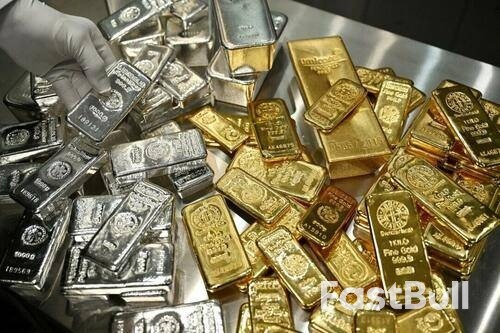

Silver and platinum rose by approximately 170 percent in 2025, while gold returned a highly respectable 73 percent.
Among AI stocks, only Palantir outperformed gold.
Why such stellar performance from assets once derided by governments as "barbarous relics" and shunned by investors as outdated?
The reason I wrote at the start of last year that we should "expect gold to shine in 2025" was because global conditions had fundamentally - and perhaps irreversibly - shifted.
I noted then that the primary factors driving gold prices included shifting geopolitics prompting central bank stockpiling, investor concerns over the creditworthiness of the U.S. government (and, by extension, the dollar), persistent inflation eroding the purchasing power of paper currencies, and widening supply-demand imbalances.
These forces are unlikely to abate in 2026.
As a result, we should expect precious metals—including gold, silver, and platinum—to continue performing well in the coming year. Indeed, deglobalization and the continued push toward resource nationalism and the protection of critical materials lend additional support not only to these metals but also to the broader commodities complex.
In recent years, central banks around the world have reduced their purchases of U.S. Treasury securities—formerly their largest reserve asset—and have instead been stockpiling gold. China, Russia, and India have all been significant buyers, as have many smaller, independent nations eager to remain outside the U.S.–China conflict.
Observing how the United States imposed financial sanctions on Russia following its 2022 invasion of Ukraine, many countries have concluded that dependence on a dollar-dominated financial system is too risky. They fear that the U.S. government may weaponize the dollar system—via financial sanctions or trade policy—and they're seeking alternatives. Shifting from Treasurys to gold and other metals offers a hedge. A prominent example of efforts to reduce reliance on the U.S. dollar is the development of alternative currencies partially backed by gold reserves, such as those being pursued by BRICS nations.
Beyond geopolitics, foreign central banks are concerned about the deteriorating credit condition of the United States, which has been downgraded by all three major ratings agencies. The federal government holds more than $38 trillion in debt—growing by trillions each year—which cannot realistically be repaid except through issuing more debt.
Heavily indebted governments have few options other than allowing inflation to erode the real value of their obligations. The United States cannot default outright, as the dollar is the global reserve currency, and tax increases have political limits. Inflation, then, becomes a hidden tax, steadily undermining the dollar and diminishing household wealth.
A new generation of Americans has now experienced the painful effects of inflation firsthand. Since 2020, the dollar has lost more than 20 percent of its real value—and over 40 percent since 2000. The lesson of inflation, once internalized during the 1970s, had been largely forgotten after decades of relative price stability. But it's once again relevant as people around the world lose confidence in government-issued money—paper IOUs that lose value annually.
Gold and silver, long regarded as hedges against inflation, are resuming their traditional role as stores of value amid geopolitical, monetary, and economic uncertainty.
Retail investors are also part of this trend, purchasing both gold-backed paper assets and physical bullion. In the third quarter of 2025 alone, tons of metal held by U.S.-based, publicly traded gold ETFs increased by 160 percent. In the first half of the year, 95 million ounces of silver flowed into silver-backed funds globally—surpassing the total for all of 2024. Costco and other retailers now offer gold and silver coins to a growing number of households, many of whom previously saw no need for anything beyond dollars in their pockets or savings accounts.
Gold supply remains constrained due to high production costs and limited new mine development. Meanwhile, silver and platinum have each faced multi-year supply shortages, though for different reasons. These imbalances are unlikely to ease anytime soon—except in the case of a global recession. With the United States and other nations designating these metals as strategic resources, pressure is mounting to develop new domestic sources—a multi-year process. In the meantime, stockpiling is accelerating.
I don't expect the metals rally to end soon, as the underlying drivers remain intact. While price gains in 2026 may not match 2025's dramatic surge, these commodities are still poised to advance. Assuming additional interest rate cuts from the Federal Reserve and other Western central banks—and ongoing government failure to rein in deficits and debt—investor concern about the inflationary effects of loose monetary and fiscal policy will likely persist. This will continue to support gold, silver, platinum, and other commodities and real assets that preserve value against fiat currencies.

Mexico will reimpose tariffs on several staple foods including beef, pork and milk in an attempt to favour local supplies, according to a decree from President Claudia Sheinbaum's office.
The move underscores an ongoing shift away from decades of mostly free-trade polices pursued by previous Mexican governments.
The unspecified tariff rates will also be applied to paddy rice, beans, vegetable oils and sausages and go into effect on Jan 1, according to the decree published Wednesday in the official gazette. The decree is part of Sheinbaum's "Plan Mexico" initiative to boost domestic industry and reduce imports.
The products had been exempted from Mexican import duties beginning in 2022, part of an anti-inflation programme to lower prices on a couple dozen popular foods.
The decision to revive the tariffs followed an analysis of recent inflationary pressures and the growth rate of imports from countries with which Mexico does not have a free trade agreement.
Many imported foods, such as poultry, fish, eggs, vegetables and fruit, will remain tariff-free, according to the decree.
Earlier this month, Mexican lawmakers approved a Sheinbaum-backed plan to impose new tariffs on Asian imports, broadly aligning with US efforts to tighten trade barriers against Chinese goods. Starting Jan 1, Mexico will impose levies of between 5% and 50% on more than 1,400 categories of products from Asian nations that don't have a trade deal with Mexico.
The new decree includes transition periods for importers that signed contracts this year, allowing some of them to avoid tariffs up until early 2027.
The European Union's carbon border levy is "unfair" and "discriminatory," China's Ministry of Commerce said in a statement on Thursday, vowing to take countermeasures to defend the country's interests.
The EU has published a series of legislative proposals and implementation rules regarding its Carbon Border Adjustment Mechanism, according to the statement, referring to Brussels' flagship climate policy that puts a levy on emissions-intensive products coming into the bloc. CBAM takes effect from Thursday.
The EU has assigned excessively high baseline default carbon-intensity values on Chinese products and plans to raise them over the next three years, the ministry said. The benchmarks, which effectively determine the carbon cost importers face at the border when verified data are unavailable, are inconsistent with China's current conditions or future development trajectory and "constitute unfair and discriminatory treatment" against the country, it said.
"We will resolutely take all necessary measures to respond to any unfair trade restrictions" to safeguard China's development interests and maintain global supply chain stability, said the ministry.
CBAM seeks to shield the EU's carbon-intensive sectors from unfair competition during the bloc's green transition - particularly from producers operating in nations with weaker climate laws. But it has drawn criticism from trading partners over its protectionist implications, with the US pressing for "flexibilities" for its companies.
The Ministry of Commerce said China opposes the bloc's proposal to expand CBAM's coverage to include about 180 steel- and aluminum-intensive products such as machinery, automobiles and auto parts, and household appliances. The plan "goes beyond the legitimate scope" of addressing climate change, it said.
The ministry went on to blast the EU's recent decision to pull back from an effective ban on new internal-combustion-engine vehicles, saying that moves to ease green regulatory requirements within the bloc while erecting trade barriers externally in the name of environment protection amounted to "double standards."
"The EU is advancing a new form of trade protectionism under the pretext of preventing 'carbon leakage'" that will raise the cost of climate action for developing countries and "severely undermine international trust," the ministry said, urging Brussels to keep its market open.
2025 belonged to a small army of five bureaucrats who helped salvage India's economy.
It was a year in which everything that could go wrong … did. A slowing economy was further hit by a 50% US tariff, an armed conflict with Pakistan, and China's cold shoulder.It was also the year in which many things that could be set right…were. Income and consumption tax cuts, monetary easing, legislative reforms, trade pacts, deregulation, and delicate diplomacy.
With its back against the wall, Prime Minister Narendra Modi's government was forced to awaken from its post-pandemic-boom complacency. After 2024's underwhelming national mandate, a few state election wins also seem to have helped Modi find his reform feet.And so, his A-team went to work.
Reserve Bank of India Governor Sanjay Malhotra hit the ground running at Mumbai's Mint Street by slashing interest rates, restoring liquidity and easing banking norms. His explicit pro-growth agenda combined with a non-dogmatic regulatory approach has breathed some fresh air into a sometimes stodgy central bank. Malhotra ends the year with mega foreign investments in local banks, but has yet to achieve more effective transmission of lower rates.Following him from the federal finance ministry in Delhi was Tuhin Kanta Pandey, whose primary task as chairperson of SEBI has been to return the markets regulator to its old ways — a more amiable, bureaucratic-style work culture after his predecessor ruffled feathers with her private-sector-style assertiveness and micromanagement. He's also reduced the frequency of regulatory changes but not enough, one might say — I've counted at least five amendments to mutual fund regulations in 2025.
Meanwhile in Delhi, Cabinet Secretary TV Somanathan, who is credited with holding the line on fiscal discipline, has spent the year on a deregulation mission. He's driving ease-of-doing-business reforms, especially with state governments, such as decriminalization of offenses, fewer licensing requirements, land use changes and more flexible labor rules. It's gotten off to a promising start — 16 state governments have implemented 38 reforms in the year, according to an Axis Bank report in November.
At NITI Aayog, the government's policy think tank, Rajiv Gauba has an expansive mandate ranging from employment generation to regulatory reform. The former cabinet secretary made a start by advising the withdrawal of dozens of Quality Control Orders that have often worked as non-tariff barriers to trade, and protected select domestic manufacturers from import competition. Reportedly, he's also been instrumental in pushing through the new labor codes. Next on the agenda seems to be cutting red tape for small businesses.
Finally, there's Shaktikanta Das, who moved last year from central bank chief to Principal Secretary–2 to the prime minister. Das works behind the scenes, so there's no stated public agenda. But he's emerged as the chief architect of a broader economic policy framework that covers areas from India–US trade negotiations to rare earth supplies and shipbuilding incentives, Debjit Chakraborty, Bloomberg's Delhi bureau chief, tells me.
Modi's penchant for reliance on a small group of trusted bureaucrats is not new. But two things are somewhat different with this lot, as Chakraborty, economists and policy experts describe it. It's a mix of seasoned, old guard and young(er) blood (Das is 68, Malhotra is 57). Also, the lived experience of top bureaucrats is very different today than it was in previous generations. They are open to challenging the status quo and see themselves less as doers and more as enablers, as one expert says.So, will this reform intensity continue in 2026?There's definitely a need for it. Of the 30 pending reforms tracked by the US-based Center for Strategic and International Studies, only one is complete and one is partially complete, according to Senior Adviser Richard Rossow.
I fear that this year, with three high-stakes state elections, Modi will be focused on consolidating his rule at all costs. That eliminates any scope for big-ticket items like agriculture reform. Any change involving a budget hit has only a slim chance after last year's tax cuts, continuing free grain supplies to 800 million people, and mounting state election freebies. But the prospects seem bright for politically uncontroversial, low-expenditure yet enduring stuff such as deregulation — also painstaking work that takes years to produce results.
Chakraborty is more hopeful that the reform work will sustain. Three terms in, Modi has demonstrated his political strength; now he must prove his mettle as an economic reformer, he said. What's your bet?
The world's 500 richest people added a record $2.2 trillion to their collective fortunes in 2025.
The dollar ended 2025 with the sharpest annual retreat in eight years and investors say more declines are coming.
President Donald Trump delayed tariff increases on upholstered furniture, kitchen cabinets and vanities.
China has become one of the world's fastest-rising economies in terms of innovative capacity, President Xi Jinping said in a New Year's Eve speech.
India's economy remains "robust and resilient" said the RBI Governor even as he vowed buffers against global volatility.
Mexico will impose tariffs up to 35% on Chinese imports starting Thursday, according to President Claudia Sheinbaum and Economy Minister Marcelo Ebrard.
This move aims to protect domestic industries amid trade deficits, with potential financial impacts on Mexico's economy but no direct effect on cryptocurrencies.
Mexico has announced a new strategy by imposing tariffs of up to 35% on imports from China. The move is designed to protect domestic industries and address trade deficits, marking a significant development in international trade relations.
President Claudia Sheinbaum and Economy Minister Marcelo Ebrard have led this initiative, emphasizing the need to strengthen local manufacturing. These tariffs will affect $52 billion in annual imports, including autos and textiles.
"The tariffs are a crucial part of Plan México to boost our domestic industries and mitigate trade deficits." — Claudia Sheinbaum, Yucatan Daily News
The immediate effects of these tariffs are anticipated to increase costs for industries that rely heavily on Chinese imports. However, they might provide a boost to domestic production sectors by leveling the playing field for local businesses.
The financial implications include an expected revenue increase of 70 billion pesos, approximately $3.8 billion. Politically, the move may strain relations between Mexico and China, as China's Commerce Ministry has labeled the tariffs as protectionist.
Marcel Ebrard highlighted re-industrialization efforts as crucial for Mexico's economic strategy. These tariffs resonate with historical U.S. pressures exerted before the USMCA review. This aligns with similar moves by nations focusing on domestic self-sufficiency.
The outcomes of these tariffs could involve financial shifts benefiting local manufacturers. Regulatory impacts should be monitored as they may influence broader trade policies. Mexico's economic trajectory may be shaped by the reaction of international markets to these measures.
White Label
Data API
Web Plug-ins
Poster Maker
Affiliate Program
The risk of loss in trading financial instruments such as stocks, FX, commodities, futures, bonds, ETFs and crypto can be substantial. You may sustain a total loss of the funds that you deposit with your broker. Therefore, you should carefully consider whether such trading is suitable for you in light of your circumstances and financial resources.
No decision to invest should be made without thoroughly conducting due diligence by yourself or consulting with your financial advisors. Our web content might not suit you since we don't know your financial conditions and investment needs. Our financial information might have latency or contain inaccuracy, so you should be fully responsible for any of your trading and investment decisions. The company will not be responsible for your capital loss.
Without getting permission from the website, you are not allowed to copy the website's graphics, texts, or trademarks. Intellectual property rights in the content or data incorporated into this website belong to its providers and exchange merchants.
Not Logged In
Log in to access more features
Log In
Sign Up