• Trade
  • Markets
  • Copy
  • Contests
  • News
  • 24/7
  • Calendar
  • Q&A
  • Chats
Trending
Screeners
SYMBOL
LAST
BID
ASK
HIGH
LOW
NET CHG.
%CHG.
SPREAD
SPX
S&P 500 Index
6827.42
6827.42
6827.42
6899.86
6801.80
-73.58
-1.07%
--
DJI
Dow Jones Industrial Average
48458.04
48458.04
48458.04
48886.86
48334.10
-245.98
-0.51%
--
IXIC
NASDAQ Composite Index
23195.16
23195.16
23195.16
23554.89
23094.51
-398.69
-1.69%
--
USDX
US Dollar Index
97.970
98.050
97.970
98.070
97.920
+0.020
+ 0.02%
--
EURUSD
Euro / US Dollar
1.17321
1.17328
1.17321
1.17447
1.17283
-0.00073
-0.06%
--
GBPUSD
Pound Sterling / US Dollar
1.33590
1.33599
1.33590
1.33740
1.33546
-0.00117
-0.09%
--
XAUUSD
Gold / US Dollar
4340.36
4340.70
4340.36
4345.46
4294.68
+40.97
+ 0.95%
--
WTI
Light Sweet Crude Oil
57.480
57.517
57.480
57.601
57.194
+0.247
+ 0.43%
--

Community Accounts

Signal Accounts
--
Profit Accounts
--
Loss Accounts
--
View More

Become a signal provider

Sell trading signals to earn additional income

View More

Guide to Copy Trading

Get started with ease and confidence

View More

Signal Accounts for Members

All Signal Accounts

Best Return
  • Best Return
  • Best P/L
  • Best MDD
Past 1W
  • Past 1W
  • Past 1M
  • Past 1Y

All Contests

  • All
  • Trump Updates
  • Recommend
  • Stocks
  • Cryptocurrencies
  • Central Banks
  • Featured News
Top News Only
Share

India's November Soyoil Imports At 370661 Tonnes Versus 454619 Tonnes In October

Share

India's November Sunflower Oil Imports At 142953 Tonnes Versus 260548 Tonnes In October

Share

India's November Palm Oil Imports At 632341 Tonnes Versus 602381 Tonnes In October

Share

India's November Vegetable Oil Imports At 1183,832 Tonnes Versus 1332,173 Million Tonnes In October

Share

Reuters Poll - Bank Indonesia To Keep 7-Day Reverse Repo Rate Unchanged At 4.75% On December 17, Say 18 Of 31 Economists

Share

Statistics Finland - Finland Nov CPI -0.1% Year-On-Year

Share

Saudi Nov CPI 0.1% Month-On-Month

Share

Saudi Nov CPI 1.9% Year-On-Year

Share

South Korea Petrochemical Exports To Fall 6.1% In 2026 - Kcci

Share

U.S. Stock Futures Rose Slightly, With S&P 500 Futures And Dow Jones Futures Up 0.3% And NASDAQ 100 Futures Up Nearly 0.3%

Share

Spot Gold Rose $9 To $4,338.5 Per Ounce In The Short Term; New York Gold Futures Rose 1.00% On The Day, Currently Trading At $4,371.60 Per Ounce

Share

Dollar/Yen Extends Fall, Down 0.47% To 155.10

Share

Bank Of Japan: Two Branches Expect Higher Pay Rises In Fiscal Year 2026, While Two Other Branches Expect Wage Growth To Slow

Share

Bloomberg News: Bank Of Japan To Start Selling ETF Holdings As Early As January

Share

Malaysia Says Special ASEAN Foreign Ministers Meeting Scheduled For Dec 16 Delayed To Dec 22 At Thailand's Request

Share

Bank Of Japan: Wages Of Part-Time Employees Are Being Raised Reflecting Relatively High Minimum Wage Growth In Fiscal 2025

Share

Bank Of Japan: Firms' Wage Growth Outlook Due To Need For Retaining Staff Amid Persistent, Severe Labour Shortages

Share

Bank Of Japan - While Large And Medium-Sized Firms Were Likely To Be Able To Raise As Much Wages In FY 2026 As They Did In FY 2025, It Would Be Difficult For Small Firms To Raise As Much Wages In FY 2026 As In FY 2025

Share

Bank Of Japan: Most Companies Seem To Believe That Wage Increases In Fiscal Year 2026 Should Be The Same As Or Similar To Those In Fiscal Year 2025

Share

Bank Of Japan: Number Of Firms Expecting A Clear Improvement In Their Profits Is Not Large

TIME
ACT
FCST
PREV
U.K. Trade Balance Non-EU (SA) (Oct)

A:--

F: --

P: --

France HICP Final MoM (Nov)

A:--

F: --

P: --

China, Mainland Outstanding Loans Growth YoY (Nov)

A:--

F: --

P: --

China, Mainland M2 Money Supply YoY (Nov)

A:--

F: --

P: --

China, Mainland M0 Money Supply YoY (Nov)

A:--

F: --

P: --

China, Mainland M1 Money Supply YoY (Nov)

A:--

F: --

P: --

India CPI YoY (Nov)

A:--

F: --

P: --

India Deposit Gowth YoY

A:--

F: --

P: --

Brazil Services Growth YoY (Oct)

A:--

F: --

P: --

Mexico Industrial Output YoY (Oct)

A:--

F: --

P: --

Russia Trade Balance (Oct)

A:--

F: --

P: --

Philadelphia Fed President Henry Paulson delivers a speech
Canada Building Permits MoM (SA) (Oct)

A:--

F: --

P: --

Canada Wholesale Sales YoY (Oct)

A:--

F: --

P: --

Canada Wholesale Inventory MoM (Oct)

A:--

F: --

P: --

Canada Wholesale Inventory YoY (Oct)

A:--

F: --

P: --

Canada Wholesale Sales MoM (SA) (Oct)

A:--

F: --

P: --

Germany Current Account (Not SA) (Oct)

A:--

F: --

P: --

U.S. Weekly Total Rig Count

A:--

F: --

P: --

U.S. Weekly Total Oil Rig Count

A:--

F: --

P: --

Japan Tankan Small Manufacturing Outlook Index (Q4)

A:--

F: --

P: --

Japan Tankan Large Non-Manufacturing Diffusion Index (Q4)

A:--

F: --

P: --

Japan Tankan Large Non-Manufacturing Outlook Index (Q4)

A:--

F: --

P: --

Japan Tankan Large Manufacturing Outlook Index (Q4)

A:--

F: --

P: --

Japan Tankan Small Manufacturing Diffusion Index (Q4)

A:--

F: --

P: --

Japan Tankan Large Manufacturing Diffusion Index (Q4)

A:--

F: --

P: --

Japan Tankan Large-Enterprise Capital Expenditure YoY (Q4)

A:--

F: --

P: --

U.K. Rightmove House Price Index YoY (Dec)

A:--

F: --

P: --

China, Mainland Industrial Output YoY (YTD) (Nov)

A:--

F: --

P: --

China, Mainland Urban Area Unemployment Rate (Nov)

A:--

F: --

P: --

Saudi Arabia CPI YoY (Nov)

A:--

F: --

P: --

Euro Zone Industrial Output YoY (Oct)

--

F: --

P: --

Euro Zone Industrial Output MoM (Oct)

--

F: --

P: --

Canada Existing Home Sales MoM (Nov)

--

F: --

P: --

Euro Zone Total Reserve Assets (Nov)

--

F: --

P: --

U.K. Inflation Rate Expectations

--

F: --

P: --

Canada National Economic Confidence Index

--

F: --

P: --

Canada New Housing Starts (Nov)

--

F: --

P: --

U.S. NY Fed Manufacturing Employment Index (Dec)

--

F: --

P: --

U.S. NY Fed Manufacturing Index (Dec)

--

F: --

P: --

Canada Core CPI YoY (Nov)

--

F: --

P: --

Canada Manufacturing Unfilled Orders MoM (Oct)

--

F: --

P: --

U.S. NY Fed Manufacturing Prices Received Index (Dec)

--

F: --

P: --

U.S. NY Fed Manufacturing New Orders Index (Dec)

--

F: --

P: --

Canada Manufacturing New Orders MoM (Oct)

--

F: --

P: --

Canada Core CPI MoM (Nov)

--

F: --

P: --

Canada Trimmed CPI YoY (SA) (Nov)

--

F: --

P: --

Canada Manufacturing Inventory MoM (Oct)

--

F: --

P: --

Canada CPI YoY (Nov)

--

F: --

P: --

Canada CPI MoM (Nov)

--

F: --

P: --

Canada CPI YoY (SA) (Nov)

--

F: --

P: --

Canada Core CPI MoM (SA) (Nov)

--

F: --

P: --

Canada CPI MoM (SA) (Nov)

--

F: --

P: --

Federal Reserve Board Governor Milan delivered a speech
U.S. NAHB Housing Market Index (Dec)

--

F: --

P: --

Australia Composite PMI Prelim (Dec)

--

F: --

P: --

Australia Services PMI Prelim (Dec)

--

F: --

P: --

Australia Manufacturing PMI Prelim (Dec)

--

F: --

P: --

Japan Manufacturing PMI Prelim (SA) (Dec)

--

F: --

P: --

U.K. Unemployment Claimant Count (Nov)

--

F: --

P: --

U.K. Unemployment Rate (Nov)

--

F: --

P: --

Q&A with Experts
    • All
    • Chatrooms
    • Groups
    • Friends
    Connecting
    .
    .
    .
    Type here...
    Add Symbol or Code

      No matching data

      All
      Trump Updates
      Recommend
      Stocks
      Cryptocurrencies
      Central Banks
      Featured News
      • All
      • Russia-Ukraine Conflict
      • Middle East Flashpoint
      • All
      • Russia-Ukraine Conflict
      • Middle East Flashpoint
      Search
      Products

      Charts Free Forever

      Chats Q&A with Experts
      Screeners Economic Calendar Data Tools
      Membership Features
      Data Warehouse Market Trends Institutional Data Policy Rates Macro

      Market Trends

      Market Sentiment Order Book Forex Correlations

      Top Indicators

      Charts Free Forever
      Markets

      News

      News Analysis 24/7 Columns Education
      From Institutions From Analysts
      Topics Columnists

      Latest Views

      Latest Views

      Trending Topics

      Top Columnists

      Latest Update

      Signals

      Copy Rankings Latest Signals Become a signal provider AI Rating
      Contests
      Brokers

      Overview Brokers Assessment Rankings Regulators News Claims
      Broker listing Forex Brokers Comparison Tool Live Spread Comparison Scam
      Q&A Complaint Scam Alert Videos Tips to Detect Scam
      More

      Business
      Events
      Careers About Us Advertising Help Center

      White Label

      Data API

      Web Plug-ins

      Affiliate Program

      Awards Institution Evaluation IB Seminar Salon Event Exhibition
      Vietnam Thailand Singapore Dubai
      Fans Party Investment Sharing Session
      FastBull Summit BrokersView Expo
      Recent Searches
        Top Searches
          Markets
          News
          Analysis
          User
          24/7
          Economic Calendar
          Education
          Data
          • Names
          • Latest
          • Prev

          View All

          No data

          Scan to Download

          Faster Charts, Chat Faster!

          Download App
          English
          • English
          • Español
          • العربية
          • Bahasa Indonesia
          • Bahasa Melayu
          • Tiếng Việt
          • ภาษาไทย
          • Français
          • Italiano
          • Türkçe
          • Русский язык
          • 简中
          • 繁中
          Open Account
          Search
          Products
          Charts Free Forever
          Markets
          News
          Signals

          Copy Rankings Latest Signals Become a signal provider AI Rating
          Contests
          Brokers

          Overview Brokers Assessment Rankings Regulators News Claims
          Broker listing Forex Brokers Comparison Tool Live Spread Comparison Scam
          Q&A Complaint Scam Alert Videos Tips to Detect Scam
          More

          Business
          Events
          Careers About Us Advertising Help Center

          White Label

          Data API

          Web Plug-ins

          Affiliate Program

          Awards Institution Evaluation IB Seminar Salon Event Exhibition
          Vietnam Thailand Singapore Dubai
          Fans Party Investment Sharing Session
          FastBull Summit BrokersView Expo

          Everything You Need to Know As We Near The End of The US 90-day Tariff Pause

          Glendon

          Economic

          Forex

          Summary:

          When will the letters with Trump's promised "take it or leave it" offer be sent out? Will tariff rates revert to the 11% to 50% range announced on 2 April, or will there be multiple extensions beyond the 9 July deadline in cases of "good faith" negotiations?
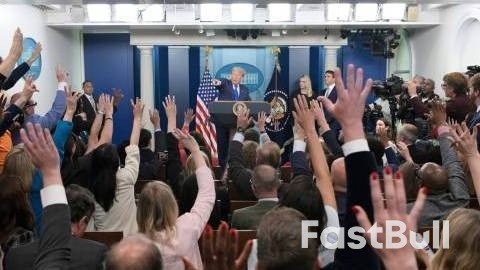
          When will the letters with Trump's promised "take it or leave it" offer be sent out? Will tariff rates revert to the 11% to 50% range announced on 2 April, or will there be multiple extensions beyond the 9 July deadline in cases of "good faith" negotiations?

          With exactly one week remaining until the 90-day tariff pause ends, here's a snapshot of the current situation. Bear in mind that a lot can change between now and then.

          Where we currently stand

          Here is a list of the currently effective tariff rates:​

          World:​

          • IEEPA universal tariff (as of 5 April)​: 10%
          • Section 232 tariffs: ​
            • Auto (as of 3 April) & auto parts (as of 3 May): 25%
              • UK: 10% tariff quota for 100,000 vehicles
            • Steel & aluminium and certain derivative steel and aluminium articles (as of 4 June): 50% (non-metallic content is subject to reciprocal tariffs)
              • UK: 25% (until at least 9 July)

          China: ​

          • Base tariff: 30% (since 14 May)​
          • Effective tariff rate: up to 55% (includes legacy Trump/Biden tariffs under Section 301); 55% tariff total struck under ‘framework deal’ still to be confirmed​
          • Elimination of de minimis rule (goods under $800):​ 54% tariff or a fee of $100 per postal item (since 14 May) ​

          Canada and Mexico:​

          • 25% for non-USMCA-compliant goods ​
          • 10% for non-USMCA-compliant energy and potash​

          Tariff reduction deals and trade talks

          In recent weeks, there has been sporadic news about finalised or almost finalised deals, as well as stalled trade negotiations. According to news reports, agreements with up to 10 major trading partners, following China and the UK, are imminent, as countries race to avoid the steep tariff hikes. But with time running out, tariff exemption extensions may still be needed after 9 July.

          China: The US has already finalised a key deal with China, securing rare earth mineral exports in exchange for lifting certain countermeasures. Details or an official document have not been disclosed – likely due to the sensitivity of the agreement, which touches on strategic resources and ongoing geopolitical tensions.

          While the US-China agreement marks a significant de-escalation with both nations previously imposing sweeping tariffs and non-tariff barriers, we should not forget that the effective tariff rate for goods entering the US from China still stands at 55%. Additionally, several anti-dumping countermeasures are in place. Tensions remain high as China voices strong discontent over other countries entering trade agreements with the US, which it considers to be undermining its interests.

          EU: US President Trump has threatened to increase tariffs to 50% instead of 20% from 9 July, if the US and the EU are unable to strike a deal. EU retaliation, on the other hand, would kick in as of 14 July. A sticking point for the US remains non-tariff barriers, such as the EU’s Digital Markets Act (DMA) or its Carbon Border Adjustment Mechanism. Reports suggest, however, that the EU signalled readiness to grant American companies exceptions from the DMA, if it were to get sector-specific exemptions from US tariffs or quotas, especially in key sectors such as automobiles, steel, aluminium, pharmaceuticals, and semiconductors, while accepting a 10% universal tariff.

          Canada: Trade talks between Canada and the US have resumed after a period of tension, primarily caused by Canada’s proposed Digital Services Tax (DST). Canada had planned to implement a 3% digital services tax on large tech companies operating in the country. This tax, retroactive to 2022, was seen by the US as a direct attack on American businesses, with Trump terminating all trade discussions with Canada. To de-escalate the situation and resume negotiations, Canadian Prime Minister Mark Carney announced the repeal of the DST just before it was set to be enforced. Both sides now aim to finalise a new trade deal by 21 July.

          Our base case: We do not anticipate the current negotiations to be fully concluded by 9 July, so extensions for the ongoing talks are likely. Canada has already secured itself an extension until 21 July by agreeing to US demands to scrap the digital tax. For China, the official deadline remains 12 August, although it is unclear whether the recent framework trade agreement between the US and China has nullified this deadline. No formal announcement has been made yet.

          Temporary tensions are possible, e.g. between the US and Japan, especially over car tariffs, or between the US and the EU, with symbolic retaliation in areas where there are not enough concessions from the US to trade partners (e.g. EU retaliation, but in non-sensitive areas).

          US stance on tariffs unchanged: protectionism is still the name of the game

          Despite trade talks, the US is not pursuing reciprocity – tariff revenue is a strategic goal to finance at least part of the Big Beautiful Bill Act. Commerce Secretary Howard Lutnick has made it clear: zero-for-zero deals are off the table.

          A closer look at Project 2025 also suggests that mirroring foreign tariffs could reduce the trade deficit more than reciprocal reductions.

          Our base case: The average current tariff rate of 13% is unlikely to change by year-end. Protectionism is still the name of the game for the US, although tariff rates will not increase back to reciprocal levels as of April. The 10% baseline tariff is here to stay. And we still expect sector-specific tariffs to rise in the third and fourth quarters as Section 232 and 301 investigations conclude, though these tariff rates will vary by trading partner, with either a reduced MFN rate or quotas in place.

          Targeted sectors: copper, lumber, cranes, critical minerals, pharma, semiconductors, shipbuilding, trucks and aircraft, while tariffs on cars and car parts, aluminium and steel are already in place. That means that the average US tariff rate will remain around its current level, e.g. between 12-15%, with the EU still facing some 10-15% and China around 50% tariff rates.

          Strategic trade shifts: allies caught between the US and China

          Despite potential trade deal announcements, the trade war and the reshuffling of trade flows are far from over. With Canada introducing a new tariff quota (TRQ) on steel mill product imports from non-free trade agreement (FTA) partners as of 27 June, redirecting goods via third countries is becoming increasingly difficult. China has once again expressed strong discontent with other countries entering trade agreements with the US that it perceives as undermining its interests. The Chinese Ministry of Commerce warned that it would take “firm, resolute countermeasures” if such deals come at China’s expense, calling the US strategy of reciprocal tariffs “unilateral bullying” that disrupts the international trade order.

          We have warned before that the US tariff strategy could prompt global concessions and isolate China, with countries targeted by potential US tariff action making significant concessions, ultimately improving trade relations between the US and the rest of the world, but at the expense of China.

          As China is perceived as the largest geopolitical threat to the US administration, there is a huge possibility that American policies will focus more on indirect trade impediments, including investment, social media, and technology cooperation, pressuring companies to reduce their business with China if they wish to invest in the US. This places both Asian/Chinese trade partners and US allies in a difficult position.

          While many trading partners have launched anti-dumping investigations into some of China’s trade practices, the Chinese market is even more important to ASEAN nations, African, Latin American countries and even Germany in terms of imports than the US market. Many countries rely on Chinese components and raw materials, and the flexing of China curbing rare earth exports shows that there is no easy way out when choosing between the US and China.

          What else to watch: court rulings

          31 July remains the key date to watch in the legal battle over the IEEPA tariffs. While the US Court of International Trade (CIT) ruled that Trump overstepped his authority under the IEEPA – impacting tariffs on China, Canada, Mexico, and others – the US Court of Appeals for the Federal Circuit (CAFC) issued a stay on the CITs ruling, meaning that the IEEPA tariffs remain in effect for now. A final decision is expected in August, though the exact timing depends on how quickly the court rules after the hearing.

          If the CAFC upholds the CIT’s ruling, the case is likely to go to the US Supreme Court (the Supreme Court denied a request by two small businesses to expedite the case, meaning it will proceed through the normal appellate process). Additionally, the Supreme Court ruling from 27 June, which significantly restricts the use of nationwide (or universal) injunctions, could impact the IEEPA tariff litigation. This means that only the plaintiffs in that specific case may benefit, and those seeking broader relief may now need to pursue class certification.

          Source: ING

          To stay updated on all economic events of today, please check out our Economic calendar
          Risk Warnings and Disclaimers
          You understand and acknowledge that there is a high degree of risk involved in trading. Following any strategies or investment methods may lead to potential losses. The content on the site is provided by our contributors and analysts for information purposes only. You are solely responsible for determining whether any trading assets, securities, strategy, or any other product is suitable for investing based on your own investment objectives and financial situation.
          Add to Favorites
          Share

          UK markets digest another black hole in the UK finances, and Astra Zeneca gets NYSE FOMO

          Adam

          Economic

          Stocks are drifting at the start of Q3 as we lead up to some key event risks. Although President Trump’s Budget bill passed the Senate, he is holding firm with his July 9th deadline to reinstate reciprocal tariffs on some nations including Japan. European stock indices are higher on Wednesday and US futures markets are also pointing to a higher open, the dollar is broadly higher.

          UK Government U-turn on welfare has big fiscal consequences

          The bond market is also in focus. Bond yields are rising across Europe and in the US this morning, partly reversing Tuesday’s decline in yields. The focus is on the UK bond market, after another government U-turn on welfare reform. The cost of recent government U-turns, including on winter fuel, is adding up to over £7bn, which will have to be found by either raising taxes, cutting spending or through higher borrowing.
          These are not palatable options; however, the vigilantes are not attacking the UK’s bond market at this stage. They may wait to see what the Chancellor will do to enable her to stick to her fiscal rules in the Autumn Budget, after a government minister told the media today that the government will stick by its pledges not to increase tax on ‘working people’. Added to this, the prospect of rate cuts from the Bank of England next month focuses minds on a drop in interest payments for the national debt, which is one bit of good news for Kier Starmer’s beleaguered government.

          Bond Vigilantes leave the UK alone for now

          UK bond yields are moving in line with European and US yields on Wednesday, and although the pound is lower, this is more down to dollar strength, and all G10 currencies are weaker vs. the dollar today.
          The bond and stock markets seem to be ambivalent to fiscal deficits and the risk of rising national debt right now, as the focus is on central bank action and US reciprocal tariffs. Added to this , the UK market does not seem to be pricing in the prospect of political change, after a humiliating week for the UK PM. Right now, a cabinet reshuffle is a near certainty, rather than a new PM.

          New York, New York is calling for AstraZeneca CEO

          UK shares are higher today, and AstraZeneca is in focus. A media report last night said that the CEO is looking to move the UK’s largest listed company to the US. This would be a massive blow to the UK’s stock market, which is already struggling with a dearth of listings and large companies chasing the allure of higher valuations and higher CEO pay in the US.

          Can the government persuade AstraZeneca to stay in the UK?

          Astra Zeneca is the latest to fall victim to the bright lights of the New York Stock Exchange. However, after its share price jumped late on Tuesday, it has since given back those gains on Wednesday and is slightly down on the day so far. There has been no official statement from the CEO or AstraZeneca, and the report is based on private conversations only. The threat to move the primary listing to the US could be an attempt to force the government and the NHS to rethink its refusal to offer AstraZeneca’s latest breast cancer drug Enhertu.
          The loss of AstraZeneca to the US stock market would heap huge pressure on the UK government and undermine their pledge to boost growth and the UK’s cutting-edge life sciences sector. Thus, Pascal Soriot may have chosen a suitable time to look for a U-turn from the government on this, and it will be interesting to see if a deal is struck between the NHS and the company any time soon.
          Although the government cannot block any move by AstraZeneca to move to the US, the board could stop a move. However, there is no denying that the US is an attractive place for pharma companies. It has the highest medicine spend per person in the world and by by far the highest levels of CEO compensation.

          Japan shares are victims of US trade negotiations

          Japanese shares were the standout underperformers during the Asian trading session for the second day, and in the last two sessions, shares are down nearly 2%. This suggests that tariff fears remain front and centre for traders. The contrast with European indices, which are only mildly lower, is worth noting. The market remains wary, but so far Donald Trump has not singled out the European Union for criticism, which is protecting European shares from a deeper sell off. Of course, if he does start lambasting the EU, then this could spook investors, especially as there is only 1 week to go before the deadline to make trade agreements or face reciprocal tariffs.

          Powell biding his time on rate cuts, brushes off Trump pressure

          The broad dollar strength on Wednesday is linked to comments from Fed chair Jay Powell, at the ECB’s global central bank conference in Sintra, Portugal. He reiterated the need for patience when it comes to monetary policy, and to wait for the expected increase in inflation to pass over the summer months. He would not commit to a July rate cut, which highlights his ability to withstand pressure from President Trump who is pushing for aggressive rate cuts.
          The interest rate futures market has barely changed on the back of these comments. There is still only a 20% chance of rate cut from the Fed in July, with a 90% chance of a cut in September. Those expecting an early summer cut could be disappointed.

          US jobs report in focus

          Overall, the focus is on tariffs, and risk sentiment could be impacted by headlines on the progress of negotiations between the US and its trading partners. We are leading up to tomorrow’s US labour market report. ADP jobs data is released this afternoon and is expected to show an increase in private sector jobs last month. We will also be watching global bond yields to see if the UK Gilt market reacts to the potential for more borrowing in the UK economy.

          source :xtb

          To stay updated on all economic events of today, please check out our Economic calendar
          Risk Warnings and Disclaimers
          You understand and acknowledge that there is a high degree of risk involved in trading. Following any strategies or investment methods may lead to potential losses. The content on the site is provided by our contributors and analysts for information purposes only. You are solely responsible for determining whether any trading assets, securities, strategy, or any other product is suitable for investing based on your own investment objectives and financial situation.
          Add to Favorites
          Share

          EU and US Aim for Political Understanding to Resolve Tariff Dispute Ask ChatGPT

          Warren Takunda

          Economic

          The EU and the US are moving toward an agreement that would take the form of a headline “political understanding” to resolve their tariff dispute before the 9 July deadline, rather than a comprehensive deal, according to several diplomats and an EU official.
          “If there is to be an agreement, the most realistic outcome would likely be a general framework or a 'principle agreement' — something that, due to time constraints, would resemble the kind of understanding the US has reached with the UK or even with China,” a senior EU diplomat said.
          “This would not be a detailed, comprehensive trade deal, but rather a political understanding laying the groundwork for more concrete arrangements," they added.
          The potential agreement was discussed at a behind-closed-doors meeting in Brussels on Monday, with European Commission officials briefing EU ambassadors about the ongoing negotiations between the EU and the US.
          Ambassadors were also informed of a new US counterproposal, which offered “nothing very concrete”, one of the diplomats said.

          Both sides under pressure

          The EU and the US are under pressure from the looming 9 July deadline, after which US President Donald Trump has threatened to impose 50% tariffs on EU imports if negotiations fail.
          Since mid-March, Washington has implemented a new policy that calls into question its trade relations with partners across the globe. The US currently imposes tariffs of 50% on EU steel and aluminium, 25% on cars, and 10% on all EU imports.
          After weeks of fruitless discussions, negotiations between the European Commission — which holds the mandate to negotiate on behalf of the 27 member states in trade matters — and the Trump administration began in mid-June, but their outcome remains in doubt.
          The Commission initially proposed a zero-tariff agreement on industrial products and an offer to purchase strategic goods such as US liquefied natural gas. But it now appears to be coming to terms with a deal that would maintain a baseline 10% tariff on EU imports. Lower tariffs might then be negotiated for strategic sectors such as aircraft, for which transatlantic production lines are interdependent.
          However, member states are divided over a potential deal with a baseline 10% tariff. Germany and Italy are reportedly in favour, while countries like Ireland and France remain more sceptical.
          “If the US maintain 10% tariffs, there will have to be compensation on goods and products imported from the US,” French president Emmanuel Macron stated on 26 June after an EU summit, adding: “The levy must be the same — 10% for 10%, or the equivalent of 10%.”
          A second EU diplomat told Euronews that the agreement could be deliberately short for the two parties to reach further and more detailed agreements in different sectors.
          "It is not excluded that some sectors could be addressed while others are not," an EU official said.

          'Asymmetrical agreement' possible

          European Commission officials also asked ambassadors to consider several scenarios, including the possibility of an “asymmetrical agreement” in which the EU would make more concessions than the US, the prospect of no deal, and the option of the EU triggering retaliatory measures.
          During the same meeting with the member states, the Commission indicated that a second list of countermeasures proposed on 8 May was still under development, according to a third EU diplomat.
          This list was subject to feedback from industry over several weeks, and member states will still need to adopt it formally.
          The proposed list targets €95 billion in US products. It would come on top of a first list of retaliation, which covers €21 billion worth of US products and was suspended until July 14 after Donald Trump announced a 90-day truce in the trade dispute.
          A team of Commission experts is in Washington this week to advance the negotiation.
          The EU’s trade commissioner, Maroš Šefčovič, is set to travel there on Wednesday for a meeting on Thursday with his American counterparts, US Secretary of Commerce Howard William Lutnick and US Trade Representative Jamieson Lee Greer.
          On Monday, Šefčovič confirmed that the bloc had received “the first draft of the (US) proposals for the eventual agreement in principle.”

          Source: Euronews

          To stay updated on all economic events of today, please check out our Economic calendar
          Risk Warnings and Disclaimers
          You understand and acknowledge that there is a high degree of risk involved in trading. Following any strategies or investment methods may lead to potential losses. The content on the site is provided by our contributors and analysts for information purposes only. You are solely responsible for determining whether any trading assets, securities, strategy, or any other product is suitable for investing based on your own investment objectives and financial situation.
          Add to Favorites
          Share

          Oil News: Crude Holds 200-Day MA Ahead of EIA Report, Traders Eye $67.44 Pivot

          Adam

          Commodity

          Crude Oil Holds Above 200-Day on Wednesday

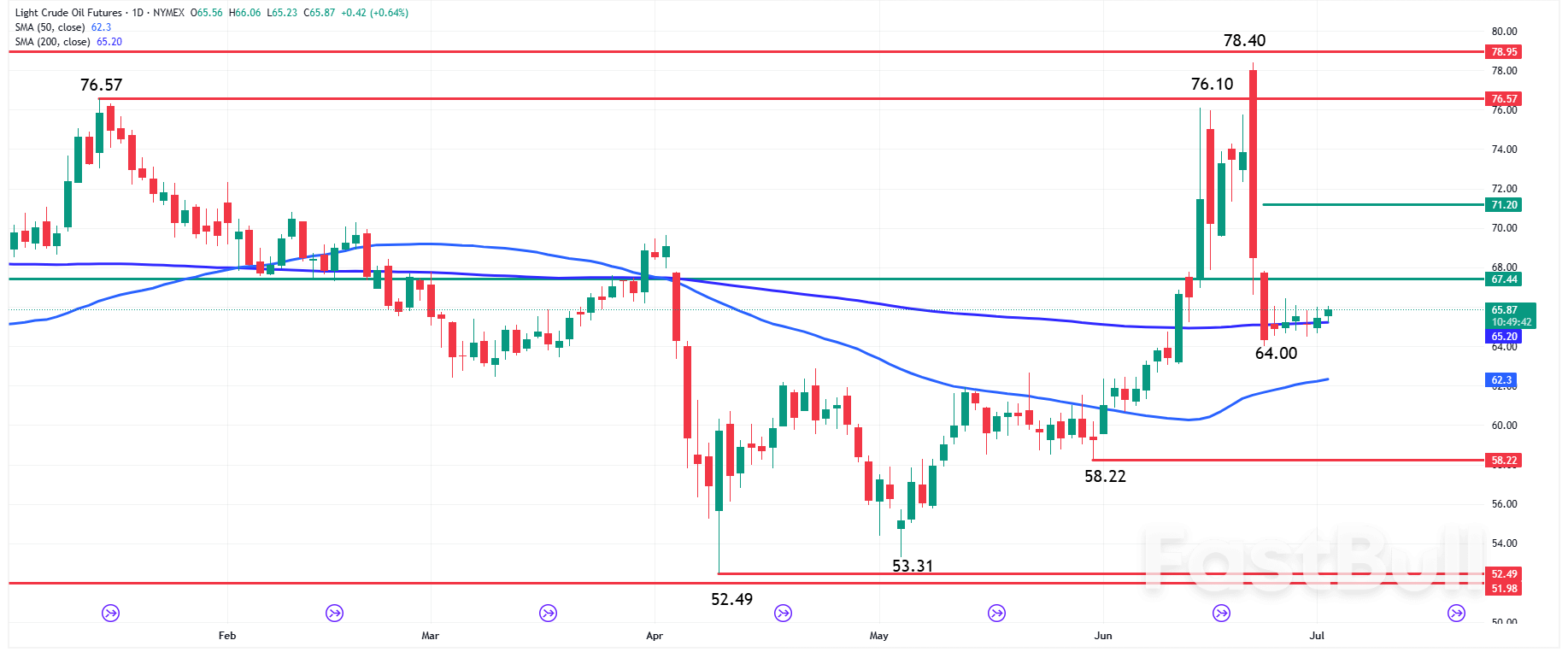
          Oil News: Crude Holds 200-Day MA Ahead of EIA Report, Traders Eye $67.44 Pivot_1Daily Light Crude Oil Futures

          Light crude futures are edging higher on Wednesday, holding above the 200-day moving average at $65.20, turning it into support for traders today.
          A sustained move above this level could build momentum toward the long-term 50% retracement at $67.44. A break above there opens the door toward the short-term pivot at $71.20 if buyers stay in control.
          On the downside, a failure at $65.20 would bring last week’s low at $64.00 into view, followed by the 50-day moving average at $62.30.
          At 10:14 GMT, Light Crude Oil Futures are trading $65.97, up $0.52 or +0.79%.

          OPEC+ Supply Plans Keep Prices in Check

          Oil futures are little changed as markets weigh the prospect of more barrels from OPEC+ next month against a weaker dollar and mixed demand signals.
          Four OPEC+ sources told Reuters the group plans to increase output by 411,000 bpd in August, matching hikes in recent months.
          Saudi Arabia lifted shipments by 450,000 bpd in June, its highest in over a year, but total OPEC+ exports remain steady as hot weather boosts domestic consumption.
          UBS’s Giovanni Staunovo noted these barrels have yet to hit the global market, reducing immediate downside pressure for now.

          Dollar Softness Supports, but Inventory Build Adds Caution

          The dollar fell to a 3-1/2-year low on Wednesday, typically supporting crude by making it cheaper for non-dollar buyers.
          Traders are watching Thursday’s U.S. non-farm payrolls for clues on potential Fed rate cuts that could spur economic activity and demand.
          Late Tuesday, API data showed U.S. crude inventories rose by 680,000 barrels, counter to usual summer drawdowns, adding caution ahead of EIA data due later today.

          China Demand and Russian Premiums Offer Underlying Support

          China’s factory activity returned to expansion in June, pointing to firm demand from the world’s second-largest oil consumer.
          Meanwhile, firm premiums for Russian ESPO Blend crude and expectations of higher Saudi official selling prices for Asia in August add to signs of demand resilience.

          EIA Report in Focus with Forecasted 3.5M Barrel Draw

          The market will focus on the EIA weekly inventory report due at 14:30 GMT, with forecasts calling for a 3.5 million barrel draw in U.S. crude stocks as seasonal demand picks up.
          This follows last week’s larger 5.8 million barrel draw and would confirm continued inventory tightness if realized. A draw near or above expectations could support crude’s hold above the 200-day moving average, while a surprise build could test the market’s resolve ahead of the July 6 OPEC+ meeting.

          Market Forecast: Mild Upside Bias While Watching $67.44

          With crude holding above its 200-day moving average and a softer dollar providing support, the oil prices forecast holds a mild upside bias near term.
          However, the expected OPEC+ supply increase and uneven U.S. inventory trends may limit rallies. Traders will watch $67.44 as the next test while using $65.20 as a pivot for momentum in the sessions ahead.

          source : fxempire

          Risk Warnings and Disclaimers
          You understand and acknowledge that there is a high degree of risk involved in trading. Following any strategies or investment methods may lead to potential losses. The content on the site is provided by our contributors and analysts for information purposes only. You are solely responsible for determining whether any trading assets, securities, strategy, or any other product is suitable for investing based on your own investment objectives and financial situation.
          Add to Favorites
          Share

          US Halts Some Missile Shipments to Ukraine, Sparking Worry in Kyiv

          Michelle

          Political

          A decision by Washington to halt some shipments of critical weapons to Ukraine triggered warnings in Kyiv on Wednesday that the move would weaken its ability to defend against intensifying Russian air strikes and battlefield advances.

          Ukraine said it had called in the acting U.S. envoy in Kyiv to stress the importance of continuing military aid from Washington, saying any cut-off would embolden Russia as diplomatic efforts to end the war falter.

          The Pentagon's pause due to concerns that U.S. stockpiles are too low came in recent days and includes precision munitions and air defence interceptors that knock down Russian drones and missiles, two people familiar with the decision said on Tuesday.

          "The Ukrainian side emphasised that any delay or procrastination in supporting Ukraine's defense capabilities will only encourage the aggressor to continue the war and terror, rather than seek peace," Kyiv's foreign ministry said in a statement.

          Ukraine's defence ministry said it had not been officially notified of any halt in U.S. shipments and was seeking clarity from its American counterparts.

          Dozens of people have been killed in recent weeks during air strikes on Ukrainian cities, including the capital Kyiv, that have involved hundreds of attack drones in addition to ballistic and cruise missiles.

          Russian forces, which control about a fifth of Ukraine, have also made gains in a grinding summer campaign in the east.

          Since U.S. President Donald Trump took office in January, he has softened Washington's position toward Russia, seeking a diplomatic solution to the war and raising doubts about future U.S. military support for Kyiv's war effort.

          Last week, Trump said he was considering selling more Patriot air defense missiles to Ukraine following a meeting with President Volodymyr Zelenskiy.

          Politico, which reported the pause on Tuesday, said it includes the critical Patriot air defence missiles which Ukraine has relied on to destroy fast-moving ballistic missiles.

          Fedir Venislavskyi, a member of the Ukrainian parliament's national security and defense committee, called the decision to halt the shipments "very unpleasant for us".

          "It's painful, and against the background of the terrorist attacks which Russia commits against Ukraine, it's a very unpleasant situation," he told reporters in Kyiv.

          In an email, the Pentagon said it was providing Trump with options to continue military aid to Ukraine in line with the goal of ending Russia's war there.

          "At the same time, the department is rigorously examining and adapting its approach to achieving this objective while also preserving U.S. forces' readiness for administration defense priorities," said Elbridge Colby, the undersecretary for policy.

          All weapons aid was briefly paused in February with a second, longer pause in March. The Trump administration resumed sending the last of the aid approved under Biden but no new policy has been announced.

          The Kremlin on Wednesday welcomed the news of a halt, saying the conflict would end sooner if fewer arms flowed to Ukraine.

          CONCERN IN KYIV

          Residents in the Ukrainian capital, where missile strikes on residential neighbourhoods over the past two weeks had killed more than two dozen people, expressed alarm at the Pentagon's decision.

          "If we end up in a situation where there's no air defence left, I will move (out of Kyiv), because my safety is my first concern," Oksana Kurochkina, a 35-year-old lawyer told Reuters in central Kyiv.

          "I am already having thoughts about moving out now."

          On the battlefield, a halt in precision munitions would limit the capacity of Ukrainian troops to strike Russian positions farther behind the front line, said Jack Watling, a military analyst at the Royal United Services Institute.

          "In short, this decision will cost Ukrainian lives and territory."

          Source: Reuters

          Risk Warnings and Disclaimers
          You understand and acknowledge that there is a high degree of risk involved in trading. Following any strategies or investment methods may lead to potential losses. The content on the site is provided by our contributors and analysts for information purposes only. You are solely responsible for determining whether any trading assets, securities, strategy, or any other product is suitable for investing based on your own investment objectives and financial situation.
          Add to Favorites
          Share

          The Day Ahead: Markets Await Today’s ADP Report for Fed Rate Expectations

          Adam

          Stocks

          Market Overview

          Stock futures inch higher Wednesday after investors initiated the second half of 2025 with a tech sector rotation. S&P 500 Index futures trade marginally higher, while Nasdaq 100 futures advance 0.3% and Dow Jones Industrial Average futures add 69 points.
          Tuesday’s regular session saw the Dow surge 400 points on healthcare and materials strength, while the S&P 500 slipped 0.1% and the Nasdaq Composite dropped 0.8% as traders dumped high-flying technology names.
          The information technology sector lost over 1% Tuesday, with communications services also declining as investors rotated away from second-quarter leaders including Nvidia, Palantir, and Advanced Micro Devices.
          Healthcare and materials sectors drove gains, with Amgen, Johnson & Johnson, and UnitedHealth lifting the blue-chip index.
          Fed Chair Powell’s cautious rate stance continues to influence market sentiment, reiterating plans to “wait and learn more” about tariff impacts on inflation before cutting rates.

          Key Economic Releases

          ADP Private Payrolls – 12:15 GMT Consensus: 120,000 jobs added (vs. 37,000 prior) This sharp anticipated increase from May’s weak 37,000 gain could signal labor market stabilization ahead of Thursday’s critical Non-Farm Payrolls report. A strong reading would support Fed hawkishness and potentially pressure rate cut expectations.

          Central Bank Activity

          Federal Reserve Chair Jerome Powell maintains his cautious approach on rate cuts, emphasizing the need to assess tariff impacts on inflation before policy changes. This stance directly contradicts President Trump’s calls for immediate and deep rate reductions, adding to market uncertainty as Trump’s 90-day tariff pause expires next week.

          Commodities, Crypto, and Bonds

          Gold prices edge lower as investors await U.S. payroll data while weighing Powell’s cautious rate stance. A weaker dollar provides some support for the greenback-priced metal, limiting downside pressure.
          Oil futures remain little changed ahead of this week’s OPEC+ meeting to determine August output levels. Chinese factory activity expansion in June boosted demand expectations for the world’s largest oil importer.
          U.S. Treasury yields climbed Tuesday after Senate Republicans passed Trump’s tax-and-spending legislation, threatening to add at least $3 trillion to the federal deficit over the next decade. The 10-year yield rose as bond markets digest the fiscal implications, with the House now facing uncertainty over GOP support amid deficit concerns.

          Technical Outlook

          S&P 500 Index Futures Hold Above Key Support

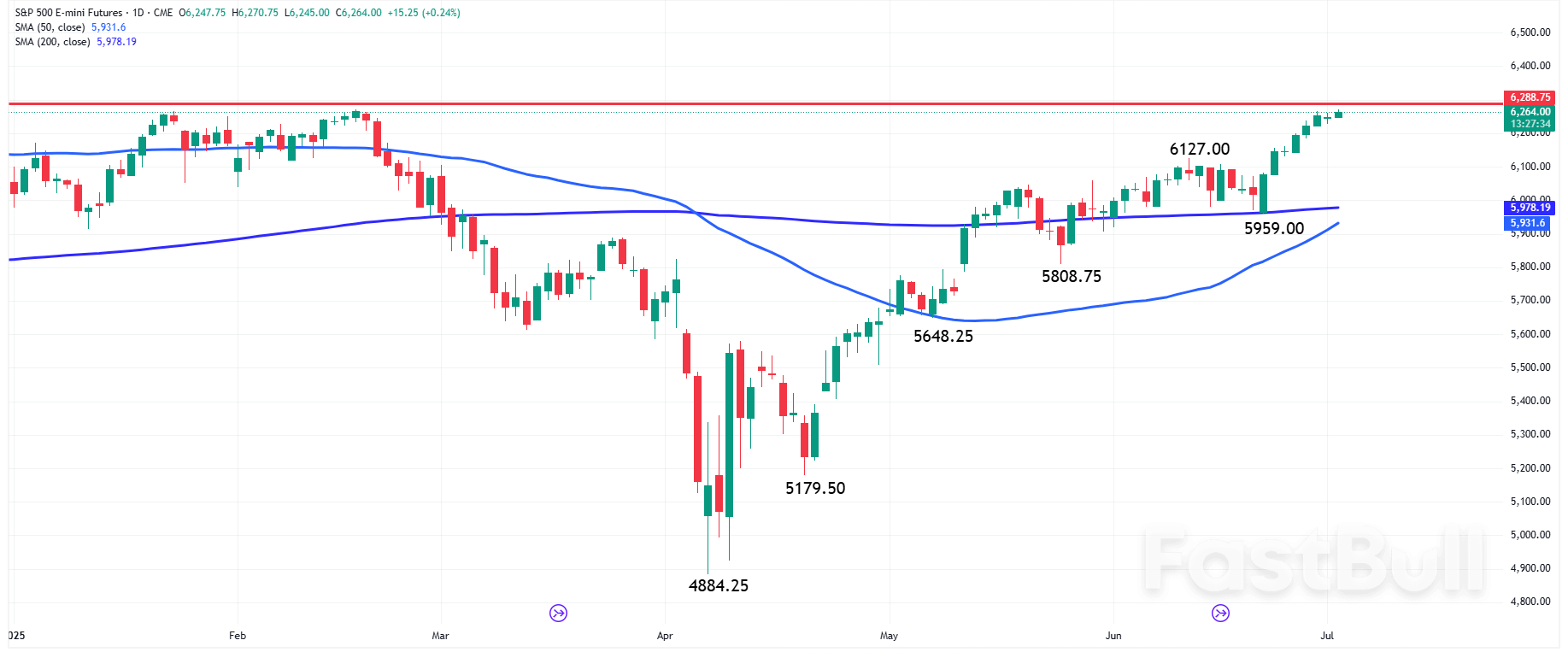
          The Day Ahead: Markets Await Today’s ADP Report for Fed Rate Expectations_1Daily E-mini S&P 500 Index

          S&P 500 Index futures last traded at 6,247.75, well above the 200-day moving average at 5,978.19 and the 50-day moving average at 5,931.60. Resistance sits at 6,288.75.
          Nasdaq 100 Index Futures Test Recent Highs

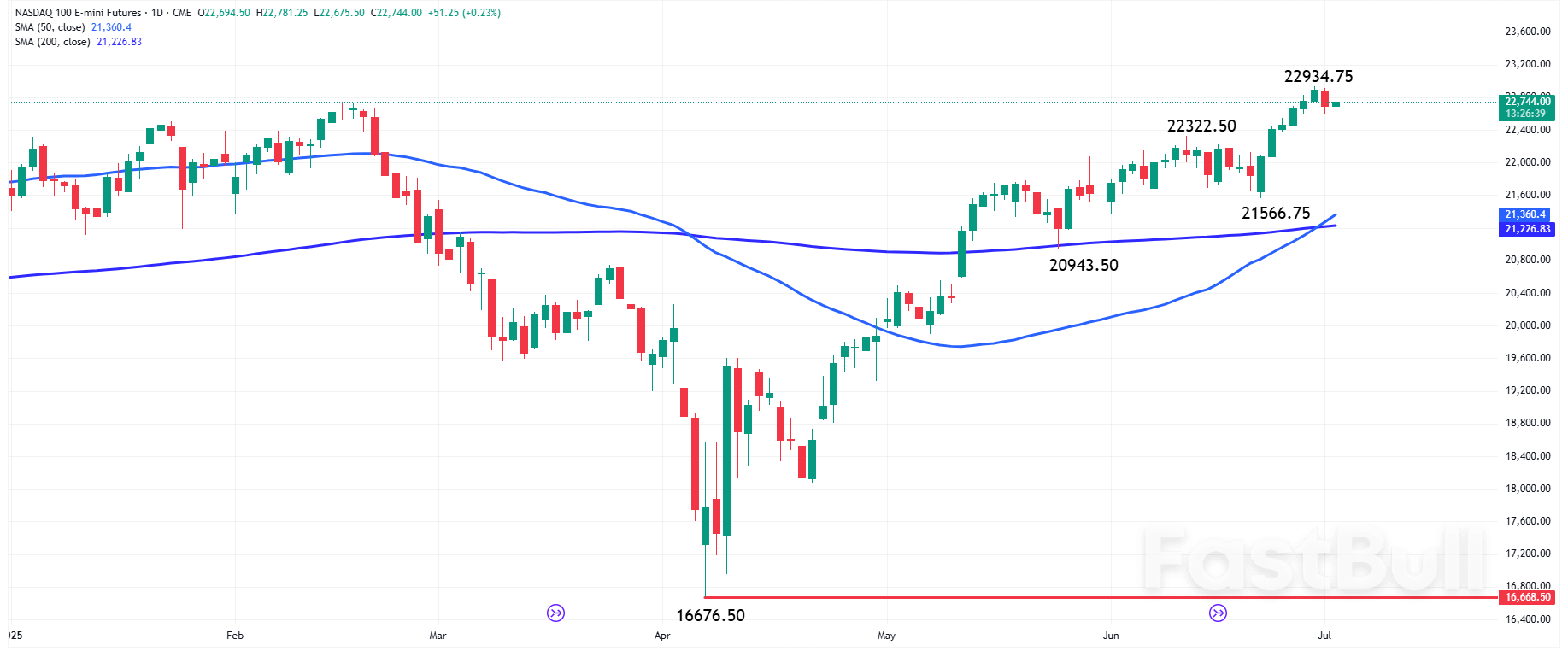
          The Day Ahead: Markets Await Today’s ADP Report for Fed Rate Expectations_2Daily E-mini Nasdaq 100 Index Futures

          Nasdaq 100 Index futures trade at 22,694.50, above the 50-day moving average at 21,350.4 and 200-day moving average at 21,226.83. Resistance at 22,934.75.
          Dow Jones Index Futures Consolidate Near Highs

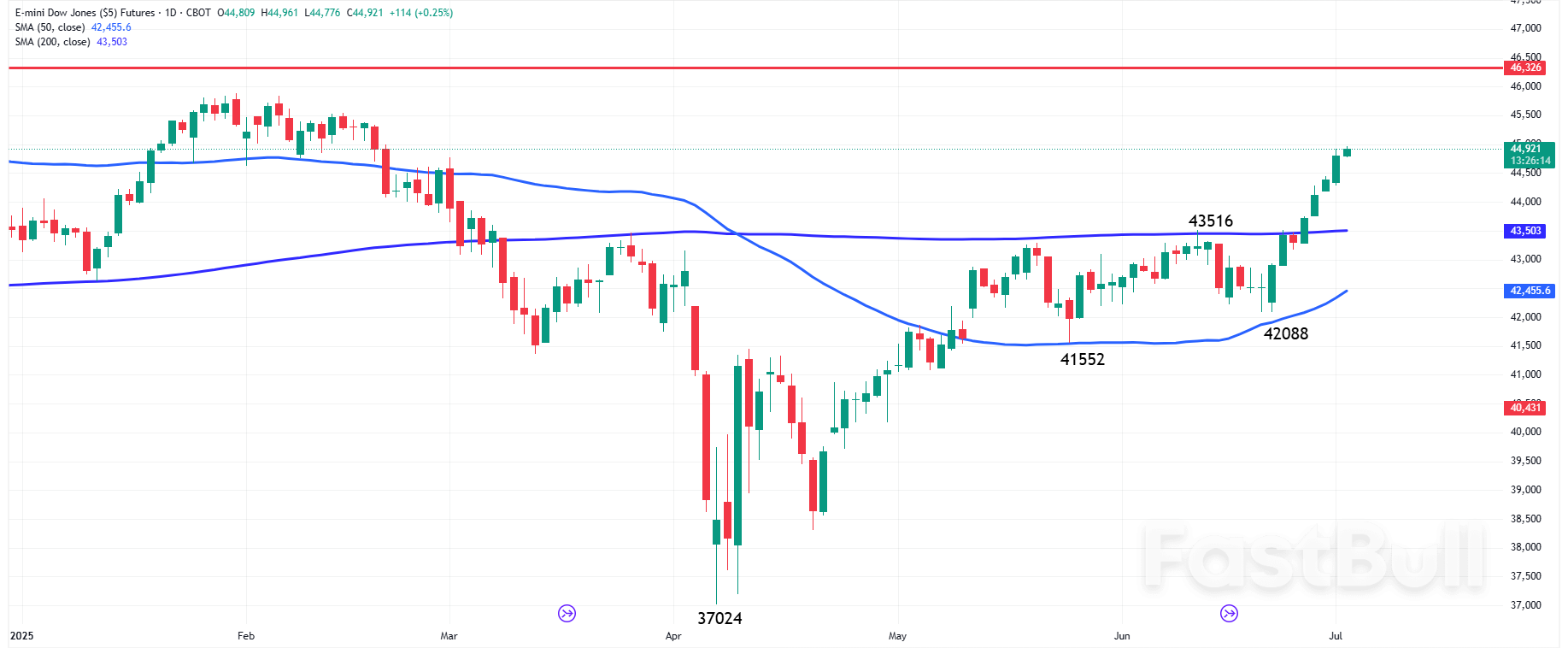
          The Day Ahead: Markets Await Today’s ADP Report for Fed Rate Expectations_3Daily E-mini Dow Jones Industrial Average

          Dow Jones Index futures trade at 44,809, above the 200-day moving average at 43,503 and the 50-day moving average at 42,455.60. Resistance at 46,326.

          Outlook

          Today’s focus centers on ADP payrolls at 12:15 GMT as a preview to Thursday’s main event jobs report in this holiday-shortened week. The tech sector rotation continues reshaping market leadership as investors reassess valuations entering the second half.
          Trump’s fiscal package uncertainty, combined with Powell’s measured Fed approach and expiring tariff pause, creates multiple volatility catalysts.
          Healthcare and materials sectors maintain momentum from Tuesday’s rotation, while technology names face continued selling pressure.
          Technical patterns across all three major index futures suggest consolidation near key levels as markets digest the employment data changes.

          Source: fxempire

          Risk Warnings and Disclaimers
          You understand and acknowledge that there is a high degree of risk involved in trading. Following any strategies or investment methods may lead to potential losses. The content on the site is provided by our contributors and analysts for information purposes only. You are solely responsible for determining whether any trading assets, securities, strategy, or any other product is suitable for investing based on your own investment objectives and financial situation.
          Add to Favorites
          Share

          House Republicans Race Toward a Final Vote on Trump’s Tax Bill, Daring Critics to Oppose

          Warren Takunda

          Economic

          Republican leaders in the House are sprinting toward a Wednesday vote on President Donald Trump’s tax and spending cuts package, determined to seize momentum from a hard-fought vote in the Senate while essentially daring members to defy their party’s leader and vote against it.
          “The American people gave us a clear mandate, and after four years of Democrat failure, we intend to deliver without delay,” the top four House GOP leaders said Tuesday after the bill passed the Senate 51-50, thanks to Vice President JD Vance’s tiebreaking vote.
          It’s a risky gambit, one designed to meet Trump’s demand for a July 4 finish — and there’s a steep climb ahead. Since launching early this year, Republicans have struggled mightily with the bill nearly every step of the way, often succeeding by only one vote. Their House majority stands at just 220-212, leaving little room for defections.
          Some Republicans are likely to balk at being asked to rubber stamp the Senate bill less than 24 hours after passage, having had little time to read or absorb the changes that were made, many at the last minute to win the vote of Alaska Sen. Lisa Murkowski.
          House Republicans from competitive districts have bristled at the Senate bill’s cuts to Medicaid, while conservatives have lambasted the legislation as straying from their fiscal goals.
          It falls to Speaker Mike Johnson and his team to convince them that the time for negotiations is over.

          Trump pushes Republicans to do ‘the right thing’

          The bill would extend and make permanent various individual and business tax breaks that Republicans passed in Trump’s first term, plus temporarily add new ones Trump promised during the campaign, including allowing workers to deduct tips and overtime pay, and provide a new $6,000 deduction for most older adults. In all, the legislation contains about $4.5 trillion in tax cuts over 10 years.
          The bill also provides $350 billion for defense and Trump’s immigration crackdown. Republicans partially pay for it all through less spending on Medicaid and food assistance. The Congressional Budget Office projects it will add about $3.3 trillion in federal deficits over the coming decade.
          The House passed its version of the bill in May, despite worries about spending cuts and the overall price tag. Now, it’s being asked to give final passage to a version that, in many respects, exacerbates those concerns. The Senate bill’s projected impact on federal deficits, for example, is significantly higher.
          Trump praised the bill profusely in a social media post, saying, “We can have all of this right now, but only if the House GOP UNITES, ignores its occasional ‘GRANDSTANDERS’ (You know who you are!), and does the right thing, which is sending this Bill to my desk.”

          The high price of opposing Trump’s bill

          Speaker Johnson, R-La., is intent on meeting the president’s July 4 timeline. He’s also betting that hesitant Republicans won’t cross Trump because of the heavy political price they would have to pay.
          They need only look to Sen. Thom Tillis, R-N.C., who announced his intention to vote against the legislation over the weekend. Soon, the president was calling for a primary challenger to the senator and personally attacking him on social media. Tillis quickly announced he would not seek a third term.
          Others could face a similar fate. One House Republican who has staked out opposition to the bill, Rep. Thomas Massie of Kentucky, is already being targeted by Trump’s well-funded political operation.
          House Majority Leader Steve Scalise, R-La., said leadership was not entertaining the possibility of making changes to the bill before the final vote. He said the two chambers already agree on the vast majority of what’s in it.
          “It’s not as easy as saying, ‘Hey, I just want one more change,’ because one more change could end up being what collapses the entire thing,” Scalise said.
          Democratic lawmakers, united against the bill as harmful to the country, condemned the process as rushed. Rep. Jim McGovern, D-Mass., said there’s no real deadline for getting the bill passed by July 4.
          “We’re rushing not because the country demands it but because he wants to throw himself another party,” McGovern said. “This isn’t policy. It’s ego management.”

          Democrats warn health care, food aid are being ripped away

          House Democratic leader Hakeem Jeffries described the bill in dire terms, saying cuts in Medicaid spending would result in “Americans losing their lives because of their inability to access health care coverage.” He said Republicans are “literally ripping the food out of the mouths of children, veterans and seniors.”
          “House Democrats are going to do everything we can for the next few hours, today, tomorrow, for the balance of this week and beyond to stop this bill from ever becoming law,” Jeffries said.
          Republicans say they are trying to rightsize the safety net programs for the population they were initially designed to serve, mainly pregnant women, the disabled and children, and root out what they describe as waste, fraud and abuse.
          The package includes new 80-hour-a-month work requirements for many adults receiving Medicaid and applies existing work requirements in the Supplemental Nutrition Assistance Program, or SNAP, to more beneficiaries. States will also pick up more of the cost for food benefits, with the amount based on their payment error rates, which include underpayments and overpayments.
          The driving force behind the bill, however, is the tax cuts. Many expire at the end of this year if Congress doesn’t act.
          “Passing this bill means smaller tax bills and bigger paychecks for the American people — permanently,” said Senate Majority Leader John Thune. “It will also help get our economy firing on all cylinders again.”
          The Tax Policy Center, which provides nonpartisan analysis of tax and budget policy, projected the bill would result next year in a $150 tax break for the lowest quintile of Americans, a $1,750 tax cut for the middle quintile and a $10,950 tax cut for the top quintile. That’s compared with what they’d face if the 2017 tax cuts expired.

          Source: AP

          To stay updated on all economic events of today, please check out our Economic calendar
          Risk Warnings and Disclaimers
          You understand and acknowledge that there is a high degree of risk involved in trading. Following any strategies or investment methods may lead to potential losses. The content on the site is provided by our contributors and analysts for information purposes only. You are solely responsible for determining whether any trading assets, securities, strategy, or any other product is suitable for investing based on your own investment objectives and financial situation.
          Add to Favorites
          Share
          FastBull
          Copyright © 2025 FastBull Ltd

          728 RM B 7/F GEE LOK IND BLDG NO 34 HUNG TO RD KWUN TONG KLN HONG KONG

          TelegramInstagramTwitterfacebooklinkedin
          App Store Google Play Google Play
          Products
          Charts

          Chats

          Q&A with Experts
          Screeners
          Economic Calendar
          Data
          Tools
          Membership
          Features
          Function
          Markets
          Copy Trading
          Latest Signals
          Contests
          News
          Analysis
          24/7
          Columns
          Education
          Company
          Careers
          About Us
          Contact Us
          Advertising
          Help Center
          Feedback
          User Agreement
          Privacy Policy
          Business

          White Label

          Data API

          Web Plug-ins

          Poster Maker

          Affiliate Program

          Risk Disclosure

          The risk of loss in trading financial instruments such as stocks, FX, commodities, futures, bonds, ETFs and crypto can be substantial. You may sustain a total loss of the funds that you deposit with your broker. Therefore, you should carefully consider whether such trading is suitable for you in light of your circumstances and financial resources.

          No decision to invest should be made without thoroughly conducting due diligence by yourself or consulting with your financial advisors. Our web content might not suit you since we don't know your financial conditions and investment needs. Our financial information might have latency or contain inaccuracy, so you should be fully responsible for any of your trading and investment decisions. The company will not be responsible for your capital loss.

          Without getting permission from the website, you are not allowed to copy the website's graphics, texts, or trademarks. Intellectual property rights in the content or data incorporated into this website belong to its providers and exchange merchants.

          Not Logged In

          Log in to access more features

          FastBull Membership

          Not yet

          Purchase

          Become a signal provider
          Help Center
          Customer Service
          Dark Mode
          Price Up/Down Colors

          Log In

          Sign Up

          Position
          Layout
          Fullscreen
          Default to Chart
          The chart page opens by default when you visit fastbull.com