

Markets
News
Analysis
User
24/7
Economic Calendar
Education
Data
- Names
- Latest
- Prev



Signal Accounts for Members
All Signal Accounts
All Contests
 South Africa Trade Balance (Nov)
A:--
F: --
P: --
 U.S. Initial Jobless Claims 4-Week Avg. (SA)
A:--
F: --
U.S. Weekly Continued Jobless Claims (SA)A:--
F: --
U.S. Weekly Initial Jobless Claims (SA)A:--
F: --
U.S. EIA Weekly Cushing, Oklahoma Crude Oil Stocks ChangeA:--
F: --
P: --
U.S. EIA Weekly Crude Demand Projected by ProductionA:--
F: --
P: --
U.S. EIA Weekly Gasoline Stocks ChangeA:--
F: --
P: --
U.S. EIA Weekly Crude Stocks ChangeA:--
F: --
P: --
U.S. EIA Weekly Heating Oil Stock ChangesA:--
F: --
P: --
U.S. EIA Weekly Crude Oil Imports ChangesA:--
F: --
P: --
U.S. EIA Weekly Natural Gas Stocks ChangeA:--
F: --
P: --
 South Korea Trade Balance Prelim (Dec)
A:--
F: --
P: --
South Korea IHS Markit Manufacturing PMI (SA) (Dec)A:--
F: --
P: --
 Indonesia IHS Markit Manufacturing PMI (Dec)
A:--
F: --
P: --
 India HSBC Manufacturing PMI Final (Dec)
A:--
F: --
P: --
 U.K. Nationwide House Price Index MoM (Dec)
A:--
F: --
P: --
U.K. Nationwide House Price Index YoY (Dec)A:--
F: --
P: --
 Turkey Manufacturing PMI (Dec)
A:--
F: --
P: --
 Italy Manufacturing PMI (SA) (Dec)
A:--
F: --
P: --
 Euro Zone Manufacturing PMI Final (Dec)
A:--
F: --
P: --
Euro Zone M3 Money Supply (SA) (Nov)A:--
F: --
P: --
Euro Zone 3-Month M3 Money Supply YoY (Nov)A:--
F: --
P: --
Euro Zone Private Sector Credit YoY (Nov)A:--
F: --
P: --
Euro Zone M3 Money Supply YoY (Nov)A:--
F: --
P: --
U.K. Manufacturing PMI Final (Dec)A:--
F: --
P: --
India Deposit Gowth YoYA:--
F: --
P: --
 Brazil IHS Markit Manufacturing PMI (Dec)
A:--
F: --
P: --
 Canada Manufacturing PMI (SA) (Dec)
A:--
F: --
P: --
U.S. IHS Markit Manufacturing PMI Final (Dec)A:--
F: --
P: --
 Mexico Manufacturing PMI (Dec)
A:--
F: --
P: --
U.S. Weekly Treasuries Held by Foreign Central Banks--
F: --
P: --
Philadelphia Fed President Henry Paulson delivers a speech Japan Manufacturing PMI Final (Dec)
--
F: --
P: --
 China, Mainland Caixin Composite PMI (Dec)
--
F: --
P: --
China, Mainland Caixin Services PMI (Dec)--
F: --
P: --
Indonesia Trade Balance (Nov)--
F: --
P: --
Indonesia Core Inflation YoY (Dec)--
F: --
P: --
Indonesia Inflation Rate YoY (Dec)--
F: --
P: --
 Saudi Arabia IHS Markit Composite PMI (Dec)
--
F: --
P: --
Turkey CPI YoY (Excl. Energy, Food, Beverage, Tobacco & Gold) (Dec)--
F: --
P: --
Turkey CPI YoY (Dec)--
F: --
P: --
Turkey PPI YoY (Dec)--
F: --
P: --
U.K. Mortgage Approvals (Nov)--
F: --
P: --
U.K. M4 Money Supply MoM (Nov)--
F: --
P: --
U.K. Mortgage Lending (Nov)--
F: --
P: --
U.K. M4 Money Supply (SA) (Nov)--
F: --
P: --
U.K. M4 Money Supply YoY (Nov)--
F: --
P: --
Canada National Economic Confidence Index--
F: --
P: --
U.S. ISM Inventories Index (Dec)--
F: --
P: --
U.S. ISM Output Index (Dec)--
F: --
P: --
U.S. ISM Manufacturing PMI (Dec)--
F: --
P: --
U.S. ISM Manufacturing Employment Index (Dec)--
F: --
P: --
U.S. ISM Manufacturing New Orders Index (Dec)--
F: --
P: --
Japan Monetary Base YoY (SA) (Dec)--
F: --
P: --
Japan Foreign Exchange Reserves (Dec)--
F: --
P: --
U.K. BRC Shop Price Index YoY (Dec)--
F: --
P: --
Japan 10-Year Note Auction Yield--
F: --
P: --
India HSBC Services PMI Final (Dec)--
F: --
P: --
India IHS Markit Composite PMI (Dec)--
F: --
P: --
South Africa IHS Markit Composite PMI (SA) (Dec)--
F: --
P: --
Turkey Trade Balance (Dec)--
F: --
P: --











No matching data

Latest Views
Latest Views
Trending Topics
Top Columnists
Latest Update
White Label
Data API
Web Plug-ins
Affiliate Program
View All
No data
The US dollar made a positive start to 2026 on Friday after struggling against most currencies last year, while the yen inched back towards a 10-month low as traders awaited US economic data to predict interest rate moves this year.
The US dollar made a positive start to 2026 on Friday after struggling against most currencies last year, while the yen inched back towards a 10-month low as traders awaited US economic data to predict interest rate moves this year.
A narrowing interest rate difference between the US and other economies cast a shadow over markets last year, resulting in sharp gains against the dollar for most major currencies, with the exception of the Japanese yen.
Worries about the US fiscal deficit, a global trade war and concern about Federal Reserve independence took a toll on the greenback, and those issues are likely to linger into 2026.
Markets in Japan and China were closed on Friday, making for light trading volume and little movement.
"Market liquidity should improve next week alongside a fuller data slate," said Jens Naervig Pedersen, FX strategist at Danske Bank.
The euro was down 0.2% at US$1.1725 on the first trading day of the year, as eurozone manufacturing activity fell in December to its weakest in nine months, a survey showed. The currency surged 13.5% last year, its biggest annual rise since 2017.
Sterling last bought US$1.3439 following a 7.7% increase in 2025, also its biggest yearly jump since 2017.
The dollar index, which measures the US currency against six other units, was up 0.2% on Friday at 98.44 after registering a 9.4% decline in 2025, its biggest drop in eight years.
Economic data including US payrolls and jobless figures are due next week, providing clues on the health of the labour market and where the Fed's policy rate may end up this year.
Much of the focus at the start of the year will be on whom US President Donald Trump chooses to be the next Fed chair as the term of current head Jerome Powell ends in May.
Trump flagged that he would make his Fed chair pick this month, with White House economic adviser Kevin Hassett the current favourite on betting site Polymarket.
Investors are bracing for Trump's pick to be more dovish and cut rates, as the president has repeatedly criticised Powell and the Fed for not lowering borrowing costs more swiftly or deeply.
Traders are fully pricing in two cuts this year compared to one projected by a currently divided Fed board.
"We expect that concerns around central bank independence will extend into 2026, and see the upcoming change in Fed leadership as one of several reasons why risks around our Fed funds rate forecast skew dovish," Goldman strategists said.
The yen was at 156.90 per US dollar after rising less than 1% against the greenback in 2025. It remained close to a 10-month low of 157.90 touched in November that drew policymaker attention and raised the prospect of intervention.
The Bank of Japan hiked interest rates twice last year but that did little to improve yen performance as the cautious pace frustrated investors, with speculators reversing significant long yen positions held in April.
There has also been growing investor unease about fiscal expansion under Prime Minister Sanae Takaichi, though she has sought to ease some of that concern.
Traders are pricing the next BOJ rate hike as being toward the end of 2026. Min Joo Kang, senior economist at ING, expects the most likely timing to be October.
"A further fiscal push could backfire on the economy, but the current government is expected to maintain its expansionary policy stance, posing a significant risk to the economy in 2026," Kang said in a client note.
The Australian and New Zealand dollars started the new year on the front foot. The Aussie was 0.3% higher at US$0.6691 after a nearly 8% rise in 2025, its strongest yearly performance since 2020.
The kiwi snapped its three-year losing streak with a nearly 3% gain last year. On Friday, it firmed a touch to US$0.5770.
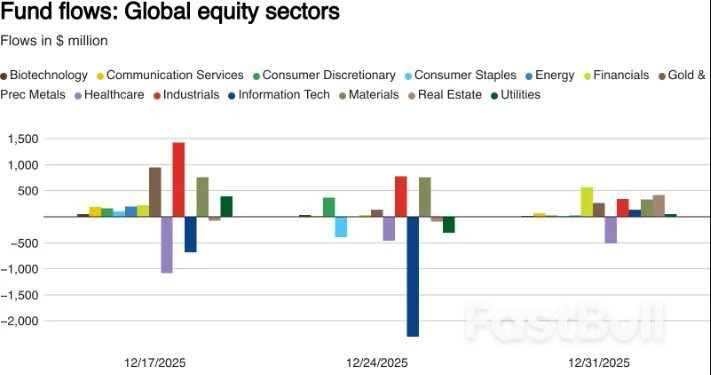
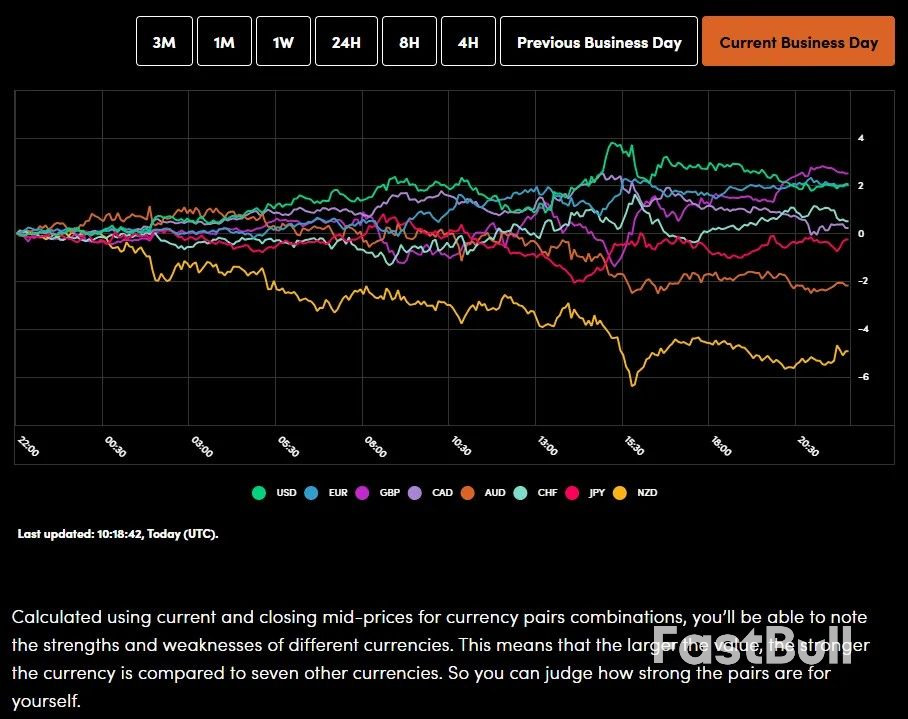
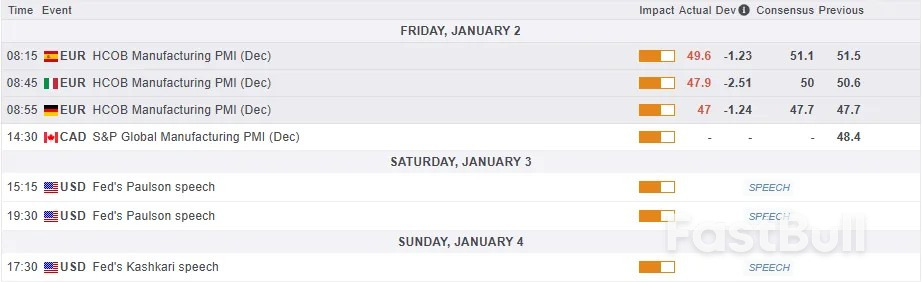
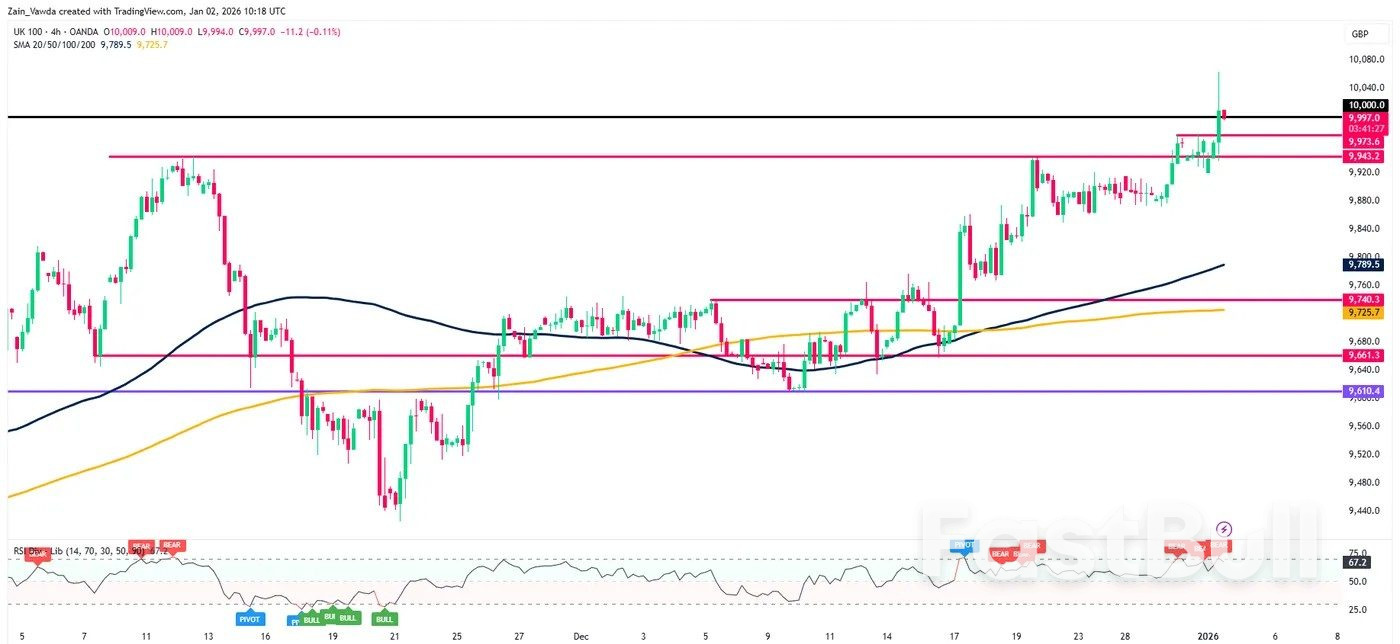
Germany's economy has endured a terrible 2025. Chancellor Friedrich Merz's government has set the course for further decline in the coming year.
If German politicians' salaries were linked to private sector growth, lawmakers would likely have to take out loans in the deeply recessive year of 2025 and compensate citizens for parliamentary inaction and ideological foolishness.
Although the term diät derives from the Latin dieta, loosely meaning "compensation," in the context of Germany's collapsing industry it more accurately reflects the German meaning: deserved frugality and material austerity. Economically, Germany is now facing the end of the illusion of prosperity, which follows the catastrophic policies of the government.
After eight months under Chancellor Merz, the record is not just meager—it is pitiful. Assuming a 50% state quota and calculating real GDP growth of 0.2% with net new debt over 4%, the net result for 2025 is a roughly 3.8% contraction of the private sector compared to the previous year.
What is scarcely known in Berlin—likely a form of economic esoterica not taught in party seminars or union courses—is that only the private sector produces the goods and services people actually consume. It is no surprise that heavy regulation and crushing taxes—Germany is surpassed only by Belgium in the OECD in fiscal extraction—strangle private enterprise.
Investment fell roughly 6.5% below long-term averages—a quantum leap in the wrong direction, deeply impacting labor markets, public budgets, and social security. While Finance Minister Lars Klingbeil attempts to mask deficits and exemptions as mere cosmetic fixes, municipalities face a €35 billion shortfall this year.
At the lowest levels of the state, in cities and towns, the bill for decades of political mismanagement is now arriving first.
The trigger is collapsing business tax revenue, a direct result of a record number of corporate bankruptcies: 24,000 companies will have exited the market in 2025.
The labor market's seeming stability is misleading. Hundreds of thousands of new public sector jobs and age-related retirements obscure the collapse of the real economy in official statistics. Merz executed the debt brake with the outgoing Bundestag in April, catapulting Germany into a debt spiral with a €500 billion special fund—a clear indication that policymakers knowingly ran the economy into a wall.
Neither the green "art economy" nor the heavily subsidized military sector will adequately fill freed industrial capacity. Core sectors such as chemicals operate at just 70% capacity, 10% below break-even—a stark signal that the creeping productivity erosion and economic depression since 2018 will worsen, regardless of state credit funneled into centrally planned subsidies.
Berlin has fully submitted to Brussels' dreadful climate-socialist doctrine and now faces the challenge of hiding its ideological failure. Merz and his team continue the known media-political strategy: as with migration, a continuous camouflage is maintained.
When it comes to deceiving the public, party headquarters show remarkable creativity, leaving no lie too bold. A deportation flight may be staged for optics, while borders remain wide open, family reunification is promoted, and German passports are handed out freely. The aim is to cultivate new voter bases and apply a "divide et impera" strategy to erode cultural and traditional societal cohesion.
Time is bought and the course maintained—just as in climate policy. Pseudo-reforms, such as the ostensible end to the combustion engine phase-out, serve only to give the struggling auto industry an illusion of technological openness while creating a new bureaucratic monster, ultimately fulfilling Brussels' objective: halting German automotive production.
From the Eurocrats' perspective, the results are impressive if the goal was deindustrialization. Around 300,000 industrial jobs were cut in the last five years. And when a nation loses its industrial core, much of its value creation disappears with it.
In 2025, German production hovered about 20% below the 2018 peak. An economic and social catastrophe looms, whose consequences seem intellectually incomprehensible to functionaries and eco-centric elites with regard to social cohesion.
If 2025 was already catastrophic, the coming year will likely be a collision with reality for many Germans. Social contributions and taxes must rise sharply to sustain social security amid migration and demographic pressures.
Merz's government continues the legacy of Angela Merkel and Olaf Scholz: a Brussels-bound green central planner in the guise of the Ludwig-Erhard party, a political scarecrow devoted solely to consolidating power in Brussels.
The German people, particularly the shrinking class of economic achievers in the middle market, will face an accelerated decline after a dreadful 2025—one the government's media games can no longer conceal.
Merz's illustrious "Made for Germany" entrepreneur café was a media fake; "Made in Germany" increasingly belongs to the past. The bitter truth: Germany is done
Iran is looking to accept crypto payments in its sale of ballistic missiles, warships, and other advanced weapons, The Financial Times reported Thursday.
The Ministry of Defence Export Center (Mindex) reportedly stated it is prepared to negotiate military contracts allowing payment in digital currencies, as well as through barter arrangements and Iranian rials.
This offer, first introduced in 2025, marks one of the first known cases where a nation-state publicly indicated willingness to accept cryptocurrency as payment for weapons exports, the FT report said.
Mindex, as a state-run overseas defense seller, reportedly holds client relationships with 35 countries. Its official website showcases a variety of products, including missiles, rockets, ammunition, and hovercrafts.
Western powers, including the U.S., UK, and EU, have placed extensive sanctions on Iran, targeting its nuclear missile programs, oil sector, and access to international banking networks, forcing the regime to rely on barter trade and digital assets like bitcoin increasingly. Last month, the U.S. announced that it sanctioned 29 "shadow fleet" vessels that aided the covert delivery of Iran's oil and petroleum exports.
While sanctions continue to expand, Mindex states on its website that "there is no problem" in carrying out contracts.
"It should be noted that, given the general policies of the Islamic Republic of Iran regarding circumvention of sanctions, there is no problem in implementing the contract," Mindex wrote on the website. "Your purchased product will reach you as soon as possible."
Iran has already been utilizing cryptocurrencies to evade Western sanctions over the past several years.
Last September, the U.S. Treasury Department identified two Iranian nationals who facilitated over $100 million in bitcoin and other digital asset purchases to process the Iranian government's oil sales between 2023 and 2025. U.S. officials view such cases as part of Iran's much larger financial "shadow network."
The first full trading week of the new year could shake the US stock market out of its winter holiday slumber as the monthly jobs data headlines a busy start to 2026 for investors.
Stocks slid in the final session of 2025, with the benchmark S&P 500 falling into a monthly loss for December. But the index still climbed more than 16% in 2025, its third straight year of double-digit percentage gains, while the Cboe Volatility index was last just above its lows for the year.
Trading volumes were thin at the end of 2025, but the new year could get off to an eventful start. Aside from economic data, investors await a US Supreme Court decision on President Donald Trump's tariffs along with his choice of a new Federal Reserve chair, and US corporate earnings season is around the corner.
While the S&P 500 is near record highs, it is also around the same level it was in late October, noted Matthew Maley, chief market strategist at Miller Tabak.
"The market is looking for direction," Maley said. "We break out of these ranges and that's going to give either people a lot of confidence or a lot of concern depending on which way it breaks."
The employment data due on Jan 9 could provide a jolt either way. Concerns over weakness in the labour market prompted the Fed to lower interest rates at each of its last three meetings of 2025, as the US central bank juggles its goals of full employment and contained inflation.
Lower rates have supported equities, but the extent of further cuts in 2026 is unclear. Fed officials were divided over the path for monetary policy at the most recent meeting in December. Inflation remains above the Fed's 2% annual target.
With the benchmark rate at 3.5%-3.75%, Fed funds futures suggest little chance of a cut at the next meeting in late January, but nearly a 50% chance of a quarter-point reduction in March.
"The fact that there has been softening in the labour market has really given the Fed good cover to change their outlook about reducing rates," said Eric Kuby, chief investment officer at North Star Investment Management in Chicago.
At the same time, investors are also wary that an overly weak report could signal more severe economic concern than markets currently anticipate.
Employment for December is expected to have climbed by 55,000 jobs, according to a Reuters poll. Payrolls rose by 64,000 in November, but the unemployment rate was 4.6%, a more than four-year high.
"If (employment) starts turning down in any kind of meaningful way, that's going to signal that the recession is a lot closer than people think," Maley said.
Other data next week includes manufacturing and services sector activity, along with job openings and other labour market data. Economic releases are returning to more normal schedules following the 43-day government shutdown that delayed or cancelled many key reports.
A closely watched report on inflation trends, the monthly US consumer price index, is due out on Jan 13.
"Anything that has to do with underlying economic activity and inflation is really going to catch the market's attention," said Scott Wren, senior global market strategist at Wells Fargo Investment Institute, adding that a backdrop of modest economic growth and moderating inflation is "a good environment for stocks and for risk assets in general".
Investors will be gearing up for fourth-quarter earnings season, with results from JPMorgan on Jan 13, along with other major bank reports that week.
With stocks trading at historically lofty valuations, investors are banking on strong earnings growth. Overall S&P 500 company earnings are expected to have climbed 13% in 2025, with another 15.5% rise in 2026, according to LSEG IBES data.
"To make an investment case for the S&P 500 at current levels, one must believe in some combination of good/very good earnings growth and continued investor confidence in economic conditions and macro policy," said Nicholas Colas, co-founder of DataTrek Research, in a research note.
728 RM B 7/F GEE LOK IND BLDG NO 34 HUNG TO RD KWUN TONG KLN HONG KONG


White Label
Data API
Web Plug-ins
Poster Maker
Affiliate Program
The risk of loss in trading financial instruments such as stocks, FX, commodities, futures, bonds, ETFs and crypto can be substantial. You may sustain a total loss of the funds that you deposit with your broker. Therefore, you should carefully consider whether such trading is suitable for you in light of your circumstances and financial resources.
No decision to invest should be made without thoroughly conducting due diligence by yourself or consulting with your financial advisors. Our web content might not suit you since we don't know your financial conditions and investment needs. Our financial information might have latency or contain inaccuracy, so you should be fully responsible for any of your trading and investment decisions. The company will not be responsible for your capital loss.
Without getting permission from the website, you are not allowed to copy the website's graphics, texts, or trademarks. Intellectual property rights in the content or data incorporated into this website belong to its providers and exchange merchants.
Not Logged In
Log in to access more features

FastBull Membership
Not yet
Purchase


Log In
Sign Up


