• Trade
  • Markets
  • Copy
  • Contests
  • News
  • 24/7
  • Calendar
  • Q&A
  • Chats
Trending
Screeners
SYMBOL
LAST
BID
ASK
HIGH
LOW
NET CHG.
%CHG.
SPREAD
SPX
S&P 500 Index
6827.42
6827.42
6827.42
6899.86
6801.80
-73.58
-1.07%
--
DJI
Dow Jones Industrial Average
48458.04
48458.04
48458.04
48886.86
48334.10
-245.98
-0.51%
--
IXIC
NASDAQ Composite Index
23195.16
23195.16
23195.16
23554.89
23094.51
-398.69
-1.69%
--
USDX
US Dollar Index
97.950
98.030
97.950
98.500
97.950
-0.370
-0.38%
--
EURUSD
Euro / US Dollar
1.17394
1.17409
1.17394
1.17496
1.17192
+0.00011
+ 0.01%
--
GBPUSD
Pound Sterling / US Dollar
1.33707
1.33732
1.33707
1.33997
1.33419
-0.00148
-0.11%
--
XAUUSD
Gold / US Dollar
4299.39
4299.39
4299.39
4353.41
4257.10
+20.10
+ 0.47%
--
WTI
Light Sweet Crude Oil
57.233
57.485
57.233
58.011
56.969
-0.408
-0.71%
--

Community Accounts

Signal Accounts
--
Profit Accounts
--
Loss Accounts
--
View More

Become a signal provider

Sell trading signals to earn additional income

View More

Guide to Copy Trading

Get started with ease and confidence

View More

Signal Accounts for Members

All Signal Accounts

Best Return
  • Best Return
  • Best P/L
  • Best MDD
Past 1W
  • Past 1W
  • Past 1M
  • Past 1Y

All Contests

  • All
  • Trump Updates
  • Recommend
  • Stocks
  • Cryptocurrencies
  • Central Banks
  • Featured News
Top News Only
Share

Iranian Media Says 18 Crew Members Of Foreign Tanker Seized In Gulf Of Oman Over Carrying 'Smuggled Fuel' Detained

Share

Regional Governor: Two Killed In Ukrainian Drone Strike On Russia's Saratov

Share

Chinese Foreign Ministry - China Foreign Minister Met With United Arab Emirates Counterpart On Dec 12

Share

China's Central Financial And Economic Affairs Commission Deputy Director: Will Expand Export And Increase Import In 2026

Share

Thai Leader Anutin: Landmine Blast That Killed Thai Soldiers 'Not A Roadside Accident'

Share

Thai Leader Anutin: Thailand To Continue Military Action Until 'We Feel No More Harm'

Share

Cambodian Prime Minister Hun Manet Says He Had Phone Calls With Trump And Malaysian Leader Anwar About Ceasefire

Share

Cambodia's Hun Manet Says USA, Malaysia Should Verify 'Which Side Fired First' In Latest Conflict

Share

Cambodia's Hun Manet: Cambodia Maintains Its Stance In Seeking Peaceful Resolution Of Disputes

Share

Nasdaq Companies: Allergan, Ferrovia, Insmed, Monolithic Power Systems, Seagate Technology, And Western Digital Will Be Added To The NASDAQ 100 Index. Biogen, CdW, GlobalFoundries, Lululemon, ON Semiconductor, And Tradedesk Will Be Removed From The NASDAQ 100 Index

Share

Witkoff Headed To Berlin This Weekend To Meet With Zelenskiy, European Leaders -Wsj Reporter On X

Share

Russia Attacks Two Ukrainian Ports, Damaging Three Turkish-Owned Vessels

Share

[Historic Flooding Occurs In At Least Four Rivers In Washington State Due To Days Of Torrential Rains] Multiple Areas In Washington State Have Been Hit By Severe Flooding Due To Days Of Torrential Rains, With At Least Four Rivers Experiencing Historic Flooding. Reporters Learned On The 12th That The Floods Caused By The Torrential Rains In Washington State Have Destroyed Homes And Closed Several Highways. Experts Warn That Even More Severe Flooding May Occur In The Future. A State Of Emergency Has Been Declared In Washington State

Share

Trump Says Proposed Free Economic Zone In Donbas Would Work

Share

Trump: I Think My Voice Should Be Heard

Share

Trump Says Will Be Choosing New Fed Chair In Near Future

Share

Trump Says Proposed Free Economic Zone In Donbas Complex But Would Work

Share

Trump Says Land Strikes In Venezuela Will Start Happening

Share

US President Trump: Thailand And Cambodia Are In A Good Situation

Share

State Media: North Korean Leader Kim Hails Troops Returning From Russia Mission

TIME
ACT
FCST
PREV
U.K. Trade Balance Non-EU (SA) (Oct)

A:--

F: --

P: --

U.K. Trade Balance (Oct)

A:--

F: --

P: --

U.K. Services Index MoM

A:--

F: --

P: --

U.K. Construction Output MoM (SA) (Oct)

A:--

F: --

P: --

U.K. Industrial Output YoY (Oct)

A:--

F: --

P: --

U.K. Trade Balance (SA) (Oct)

A:--

F: --

P: --

U.K. Trade Balance EU (SA) (Oct)

A:--

F: --

P: --

U.K. Manufacturing Output YoY (Oct)

A:--

F: --

P: --

U.K. GDP MoM (Oct)

A:--

F: --

P: --

U.K. GDP YoY (SA) (Oct)

A:--

F: --

P: --

U.K. Industrial Output MoM (Oct)

A:--

F: --

P: --

U.K. Construction Output YoY (Oct)

A:--

F: --

P: --

France HICP Final MoM (Nov)

A:--

F: --

P: --

China, Mainland Outstanding Loans Growth YoY (Nov)

A:--

F: --

P: --

China, Mainland M2 Money Supply YoY (Nov)

A:--

F: --

P: --

China, Mainland M0 Money Supply YoY (Nov)

A:--

F: --

P: --

China, Mainland M1 Money Supply YoY (Nov)

A:--

F: --

P: --

India CPI YoY (Nov)

A:--

F: --

P: --

India Deposit Gowth YoY

A:--

F: --

P: --

Brazil Services Growth YoY (Oct)

A:--

F: --

P: --

Mexico Industrial Output YoY (Oct)

A:--

F: --

P: --

Russia Trade Balance (Oct)

A:--

F: --

P: --

Philadelphia Fed President Henry Paulson delivers a speech
Canada Building Permits MoM (SA) (Oct)

A:--

F: --

P: --

Canada Wholesale Sales YoY (Oct)

A:--

F: --

P: --

Canada Wholesale Inventory MoM (Oct)

A:--

F: --

P: --

Canada Wholesale Inventory YoY (Oct)

A:--

F: --

P: --

Canada Wholesale Sales MoM (SA) (Oct)

A:--

F: --

P: --

Germany Current Account (Not SA) (Oct)

A:--

F: --

P: --

U.S. Weekly Total Rig Count

A:--

F: --

P: --

U.S. Weekly Total Oil Rig Count

A:--

F: --

P: --

Japan Tankan Large Non-Manufacturing Diffusion Index (Q4)

--

F: --

P: --

Japan Tankan Small Manufacturing Outlook Index (Q4)

--

F: --

P: --

Japan Tankan Large Non-Manufacturing Outlook Index (Q4)

--

F: --

P: --

Japan Tankan Large Manufacturing Outlook Index (Q4)

--

F: --

P: --

Japan Tankan Small Manufacturing Diffusion Index (Q4)

--

F: --

P: --

Japan Tankan Large Manufacturing Diffusion Index (Q4)

--

F: --

P: --

Japan Tankan Large-Enterprise Capital Expenditure YoY (Q4)

--

F: --

P: --

U.K. Rightmove House Price Index YoY (Dec)

--

F: --

P: --

China, Mainland Industrial Output YoY (YTD) (Nov)

--

F: --

P: --

China, Mainland Urban Area Unemployment Rate (Nov)

--

F: --

P: --

Saudi Arabia CPI YoY (Nov)

--

F: --

P: --

Euro Zone Industrial Output YoY (Oct)

--

F: --

P: --

Euro Zone Industrial Output MoM (Oct)

--

F: --

P: --

Canada Existing Home Sales MoM (Nov)

--

F: --

P: --

Euro Zone Total Reserve Assets (Nov)

--

F: --

P: --

U.K. Inflation Rate Expectations

--

F: --

P: --

Canada National Economic Confidence Index

--

F: --

P: --

Canada New Housing Starts (Nov)

--

F: --

P: --

U.S. NY Fed Manufacturing Employment Index (Dec)

--

F: --

P: --

U.S. NY Fed Manufacturing Index (Dec)

--

F: --

P: --

Canada Core CPI YoY (Nov)

--

F: --

P: --

Canada Manufacturing Unfilled Orders MoM (Oct)

--

F: --

P: --

Canada Manufacturing New Orders MoM (Oct)

--

F: --

P: --

Canada Core CPI MoM (Nov)

--

F: --

P: --

Canada Manufacturing Inventory MoM (Oct)

--

F: --

P: --

Canada CPI YoY (Nov)

--

F: --

P: --

Canada CPI MoM (Nov)

--

F: --

P: --

Canada CPI YoY (SA) (Nov)

--

F: --

P: --

Canada Core CPI MoM (SA) (Nov)

--

F: --

P: --

Q&A with Experts
    • All
    • Chatrooms
    • Groups
    • Friends
    Connecting
    .
    .
    .
    Type here...
    Add Symbol or Code

      No matching data

      All
      Trump Updates
      Recommend
      Stocks
      Cryptocurrencies
      Central Banks
      Featured News
      • All
      • Russia-Ukraine Conflict
      • Middle East Flashpoint
      • All
      • Russia-Ukraine Conflict
      • Middle East Flashpoint
      Search
      Products

      Charts Free Forever

      Chats Q&A with Experts
      Screeners Economic Calendar Data Tools
      Membership Features
      Data Warehouse Market Trends Institutional Data Policy Rates Macro

      Market Trends

      Market Sentiment Order Book Forex Correlations

      Top Indicators

      Charts Free Forever
      Markets

      News

      News Analysis 24/7 Columns Education
      From Institutions From Analysts
      Topics Columnists

      Latest Views

      Latest Views

      Trending Topics

      Top Columnists

      Latest Update

      Signals

      Copy Rankings Latest Signals Become a signal provider AI Rating
      Contests
      Brokers

      Overview Brokers Assessment Rankings Regulators News Claims
      Broker listing Forex Brokers Comparison Tool Live Spread Comparison Scam
      Q&A Complaint Scam Alert Videos Tips to Detect Scam
      More

      Business
      Events
      Careers About Us Advertising Help Center

      White Label

      Data API

      Web Plug-ins

      Affiliate Program

      Awards Institution Evaluation IB Seminar Salon Event Exhibition
      Vietnam Thailand Singapore Dubai
      Fans Party Investment Sharing Session
      FastBull Summit BrokersView Expo
      Recent Searches
        Top Searches
          Markets
          News
          Analysis
          User
          24/7
          Economic Calendar
          Education
          Data
          • Names
          • Latest
          • Prev

          View All

          No data

          Scan to Download

          Faster Charts, Chat Faster!

          Download App
          English
          • English
          • Español
          • العربية
          • Bahasa Indonesia
          • Bahasa Melayu
          • Tiếng Việt
          • ภาษาไทย
          • Français
          • Italiano
          • Türkçe
          • Русский язык
          • 简中
          • 繁中
          Open Account
          Search
          Products
          Charts Free Forever
          Markets
          News
          Signals

          Copy Rankings Latest Signals Become a signal provider AI Rating
          Contests
          Brokers

          Overview Brokers Assessment Rankings Regulators News Claims
          Broker listing Forex Brokers Comparison Tool Live Spread Comparison Scam
          Q&A Complaint Scam Alert Videos Tips to Detect Scam
          More

          Business
          Events
          Careers About Us Advertising Help Center

          White Label

          Data API

          Web Plug-ins

          Affiliate Program

          Awards Institution Evaluation IB Seminar Salon Event Exhibition
          Vietnam Thailand Singapore Dubai
          Fans Party Investment Sharing Session
          FastBull Summit BrokersView Expo

          CNBC’s The China Connection newsletter: From Didi to DeepSeek

          Adam

          Economic

          Summary:

          Foreign investors are returning to China’s VC scene amid AI optimism, IPO momentum, and policy support. U.S. dollar funds are rising, with strong interest in ByteDance, AI, and overseas expansion by Chinese startups.

          The big story

          There’s a murmur of excitement in China’s venture capital circles these days: foreign investors are starting to return with U.S. dollars.
          It’s a result of DeepSeek’s AI disruption, coupled with a buoyant Hong Kong IPO market on track to surpass Wall Street this year as the world’s largest by money raised. Beijing’s signals to support businesses in recent months have also helped.
          The Hang Seng Index’s surge of over 20% so far this year reflects near-term optimism. Another sign comes from word of Chinese venture capital firms raising U.S. dollar-denominated funds again, after a dry spell in which the VCs had to turn to local investors with Chinese yuan funds.
          Beijing-based BAI Capital said it started raising for a new $800 million fund in February and plans to close the initial round in September. The firm is supported by German global media conglomerate Bertelsmann Group.
          BAI said it’s seen “strong interest” for the U.S. dollar-denominated fund, which it will then use to invest in China-based companies. To date, the firm has already invested in 10 companies that plan to go public in the next one to two years.
          Future Capital Discovery Fund, an early backer of high-flying electric car startup Li Auto , told me it raised a record $210 million for a U.S. dollar-denominated flagship fund in the second half of last year.
          “Once there is a fundraising window, we must quickly seize the opportunity to raise funds,” Mingming Huang, founding partner at Beijing-based Future Capital, said in Chinese, translated by CNBC. “This is very different from the long-standing practice of raising U.S. dollars from the market every few years.”
          “Now we need to be very sensitive to macro trends, especially the direction of relations between major economies,” he said. The firm, which counts investors including sovereign wealth funds and endowments from the Middle East, U.S., Europe, Japan and Southeast Asia, has plans to deploy capital for AI agents and hardware.
          But it’s been a tough few years for China VCs and their limited partners.
          In the VC world, a firm raises money from a range of “limited partners,” which include sovereign wealth funds, pension funds, university endowments and family offices. While getting paid to manage the fund, the VC then chooses startups to back, reaping a reward from the companies’ IPOs that is shared with the limited partners.
          The fallout around Chinese ride-hailing company Didi’s New York IPO in June 2021, on the eve of the ruling Chinese Communist Party’s 100th anniversary – despite multiple warnings from Beijing about data privacy breaches – did not sit well with regulators on both sides of the ocean. Didi was backed by a long list of prominent investors across numerous funding rounds, including , and Sequoia Capital.
          China would later raise the bar for its companies wanting to list overseas, while Washington ramped up its scrutiny of U.S. capital heading to China, dampening fundraising activity on the mainland, particularly for cross-border investments.
          Notably, Sequoia Capital China split off from its U.S. parent in 2023 and rebranded under HSG. It did not respond to a request for comment about their latest U.S. dollar fundraising plans. Other VCs that have spun off or restructured their China arms include GGV Capital, which became Granite Asia, and California-based Matrix, which rebranded its Chinese operations as MPCi last year.

          An eye on ByteDance

          Not everything is the same as it was in the pre-Didi IPO years.
          Rather than giving money to a venture capital firm, many limited partners based in Europe, the Middle East and Asia prefer to directly buy ownership stakes in private companies such as Chinese internet giants ByteDance and Xiaohongshu, said Hope Xu, a venture capitalist. She left Source Code Capital last year to start her own firm, called Density 590, focusing on such deals, known as secondaries, which include single-asset sales and stakes in funds.
          Even though the Beijing-based TikTok parent isn’t publicly listed, the demand for its shares is so high that they are essentially as easy to liquidate, or sell, as they would be on a publicly listed exchange, she said. While the sellers tend to mostly come from the U.S. and Asia, Xu said the buyers typically come from the EU, the Middle East or Asia.
          It’s a big opportunity for returns.
          ByteDance’s valuation has surged from $245 billion at the start of this year to $340 billion, she said Tuesday, noting that investors are starting to accept the uncertainty of the U.S.-TikTok divestiture.
          ByteDance declined to comment on its valuation.
          The company has become a quiet force in China’s internet realm. Besides owning a popular Chinese TikTok equivalent called Douyin — which surpassed JD.com last year to become the second-largest ecommerce platform by gross sales — ByteDance has also developed a popular AI chatbot called Doubao, along with an AI agent platform named Coze.
          Xu pointed out that for tech investments such as AI and robotics, the resources and capital needed are vast, making it difficult for smaller startups. Buying a stake in a big company, such as ByteDance, with its diverse product lines, is essentially like buying an AI exchange-traded fund, she said.
          For example, Tencent is not only developing its own AI models and applications, but also investing in AI startups. It reported a nearly five-fold surge in profits from its business associates and joint ventures last year, rising from 5.8 billion yuan to 25.2 billion yuan over 12 months, according to the company’s annual report.

          Global ambitions

          The China VC world is also no longer just focused on the domestic market.
          Citing the macroeconomic environment and tech trends, BAI Capital said its investments will be split between local and overseas startups. Half of its funds will go towards China-based companies looking to expand worldwide in fintech, entertainment, AI and supply chains, while the other half of its funds will focus on consumer, healthcare and technology opportunities in China, BAI said.
          Since 2019, BAI said it has invested in multiple rounds in Stori, a digital bank in Mexico with 3.6 million credit card users and 2.4 million depositors. “We believe Stori’s success is not an isolated case.”
          The question is how long these VCs and their limited partners can remain enthused. The Hong Kong Stock Exchange last week proudly announced its busiest day for IPOs and ETF launches to date: with six gongs on stage.

          Top TV picks on CNBC

          James Peng, CEO of autonomous driving company Pony AI, talks about Uber founder Travis Kalanick’s possible interest in acquiring the company’s US operations.
          Louise Loo, head of Asia economics at Oxford Economics says that while China’s economic growth is likely to slow in the second half of 2025 due to the ‘spectacular growth engine’ of exports ceasing to provide the same impetus, there is a silver lining in the fact that demand for goods from China’s advanced manufacturing sector are not easily substitutable and would remain relatively resilient despite tariffs headwinds.
          Angela Stent, senior fellow at Brookings Institution, says Russian President Vladimir Putin counted on Chinese President Xi Jinping’s support when he invaded Ukraine – and continues to count on Beijing’s economic support and diplomatic support on a global stage.

          Need to know

          China’s economy locks in a solid first half of the year. But steeper declines in real estate investment and the worst performance in restaurant spending since the pandemic add to growing concerns about whether the economy can hold its current growth pace for the rest of the year.
          Nvidia to resume chip exports to China. Citing assurances from the U.S. government, Nvidia
          said Tuesday it hopes to resume sales of its H20 GPUs in China. Separately, Alibaba-backed startup Moonshot released its new Kimi K2 AI model late on Friday, which claims to outperform OpenAI’s ChatGPT and Anthropic’s Claude on certain metrics, and has garnered fairly positive feedback for its coding capabilities.
          U.S.-China relations remain tense. Wang Yi, China’s most senior diplomat, had a “constructive and pragmatic” meeting with U.S. Secretary of State Marco Rubio on the sidelines of a conference in Malaysia, the U.S. said Friday. China’s readout echoed the tone, including an agreement to explore cooperation while managing differences.

          In the markets

          Mainland China and Hong Kong stocks are mixed on Wednesday amid mixed trading in the region, as investors assessed U.S. President Donald Trump’s statement of having reached a preliminary trade deal with Indonesia.
          Mainland China’s CSI 300 was down 0.35%, while Hong Kong’s Hang Seng Index — which includes major Chinese companies — had gained 0.15% as of 1:12 p.m. local time. The mainland benchmark is up around 1.8% year to date, data from LSEG showed.

          Source: cnbc

          To stay updated on all economic events of today, please check out our Economic calendar
          Risk Warnings and Disclaimers
          You understand and acknowledge that there is a high degree of risk involved in trading. Following any strategies or investment methods may lead to potential losses. The content on the site is provided by our contributors and analysts for information purposes only. You are solely responsible for determining whether any trading assets, securities, strategy, or any other product is suitable for investing based on your own investment objectives and financial situation.
          Add to Favorites
          Share

          Bitcoin 'Not at Peak Yet': Watch These BTC Price Levels Next

          Warren Takunda

          Cryptocurrency

          Key takeaways:
          Bitcoin hit $122,000 all-time high on July 14, but onchain data shows no signs of overheating, suggesting more growth potential in 2025.
          BTC price resistance at $124,000-$136,000 remains the main barrier for now.
          Bitcoin analysts say that the BTC market is not overheated despite new all-time highs of around $123,000 earlier this week.
          Data from Cointelegraph Markets Pro and TradingView shows that Bitcoin price action has established a new range in lower timeframes, and market observers have key support levels in their sights.

          Bitcoin market not overheated yet

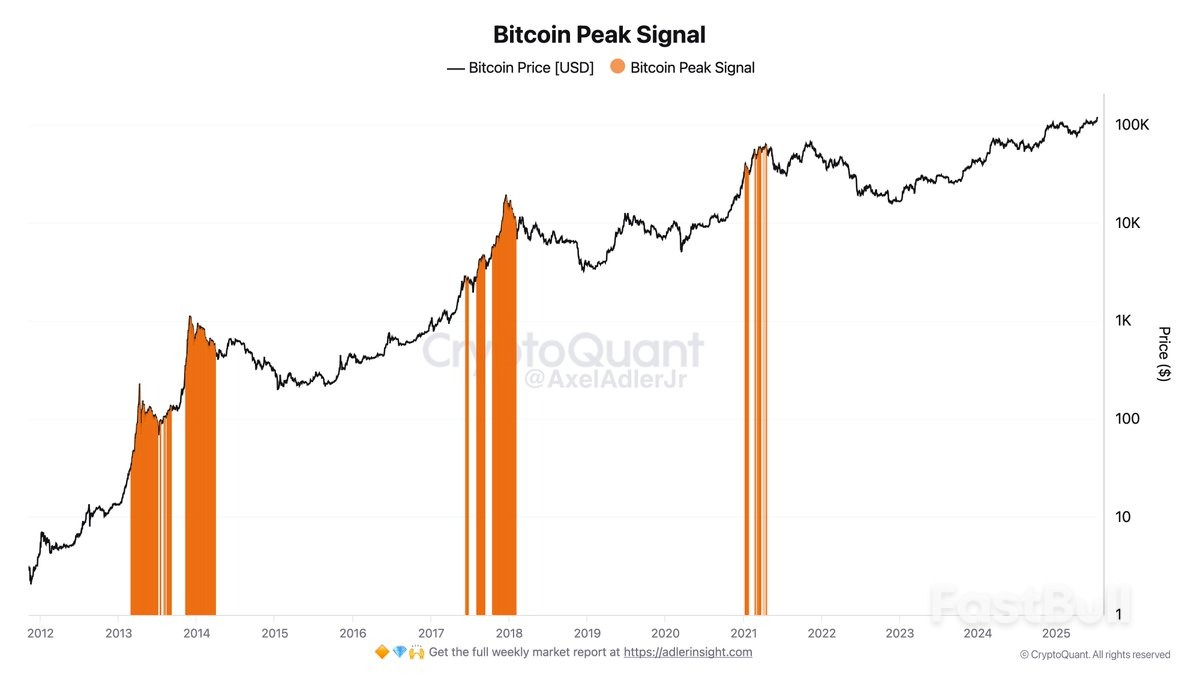
          For CryptoQuant analyst Axel Adler Jr., Bitcoin has not yet reached its peak range.
          The analyst shared a chart showing the absence of a peak signal, which typically appears at major market tops.
          The Bitcoin peak signal is a metric that indicates that the market is overheated and a corrective phase is becoming likely.
          It appears when “the combined normalized market to realized price index and 30 day/ 365 day value days destroyed ratio score reaches or exceeds 1,” Adler Jr. explained, adding:
          “The Peak Signal only appears at major market tops, and it hasn’t shown up this time, suggesting we’re not at a peak yet.”Bitcoin 'Not at Peak Yet': Watch These BTC Price Levels Next_1

          Bitcoin peak signal. Source: CryptoQuant

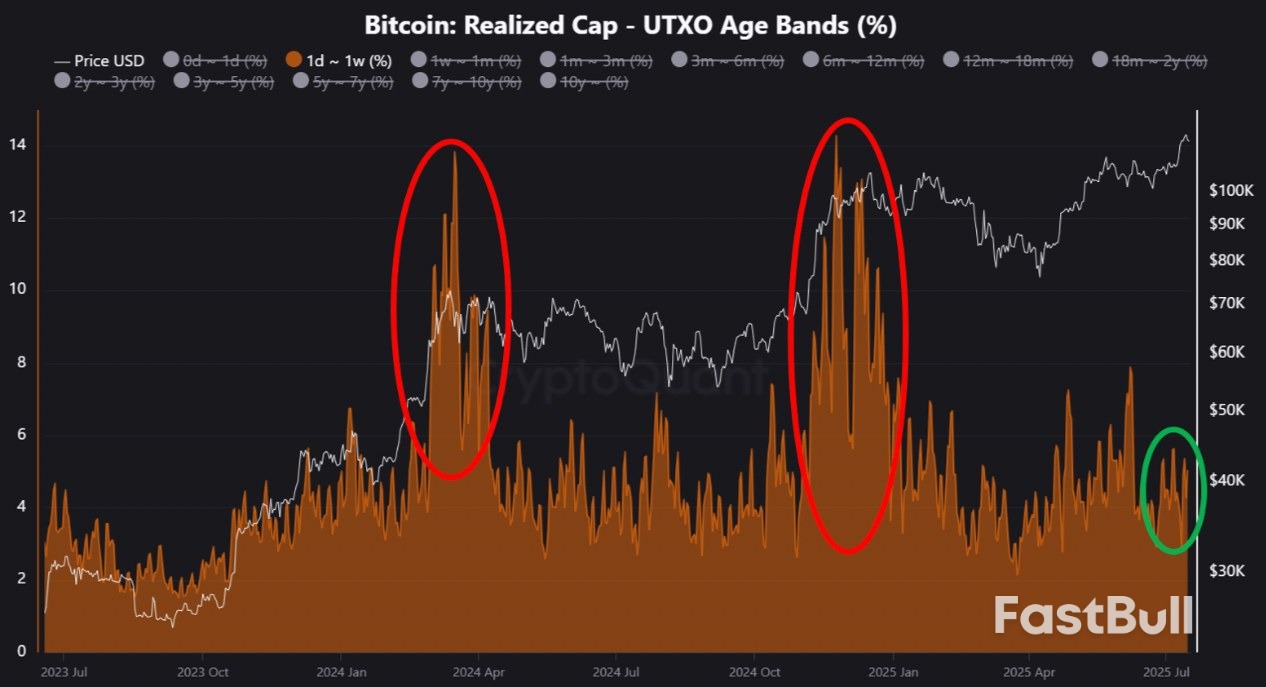
          Similarly, Bitcoin realized Cap-UTXO Age Bands, a metric that shows the distribution of realized cap of a specified age cohort, also suggests that BTC “hasn’t reached an overheated state,” according to CryptoQuant Crypto Dan.
          In March 2024 and December 2024, when Bitcoin was at peak highs, the percentage of the realized cap held by the 1-day to 1-week UTXO age group was as high as 14%. This percentage is currently around 5% despite Bitcoin’s recent all-time highs.
          In a Wednesday analysis, Crypto Dan wrote:
          “Despite the price rising even higher, the fact that overheating has significantly decreased compared to previous short-term peaks suggests that Bitcoin could continue to break all-time highs and rise significantly in the second half of 2025, leaving strong potential for growth.”

          Bitcoin 'Not at Peak Yet': Watch These BTC Price Levels Next_2Bitcoin: Realized Cap - UTXO age bands (%). Source: CryptoQuant

          Cointelegraph also reported that Bitcoin’s MVRV Z-Score remains well below historical peak levels, signaling BTC price can climb further.

          Onchain data reveals key Bitcoin price levels to watch

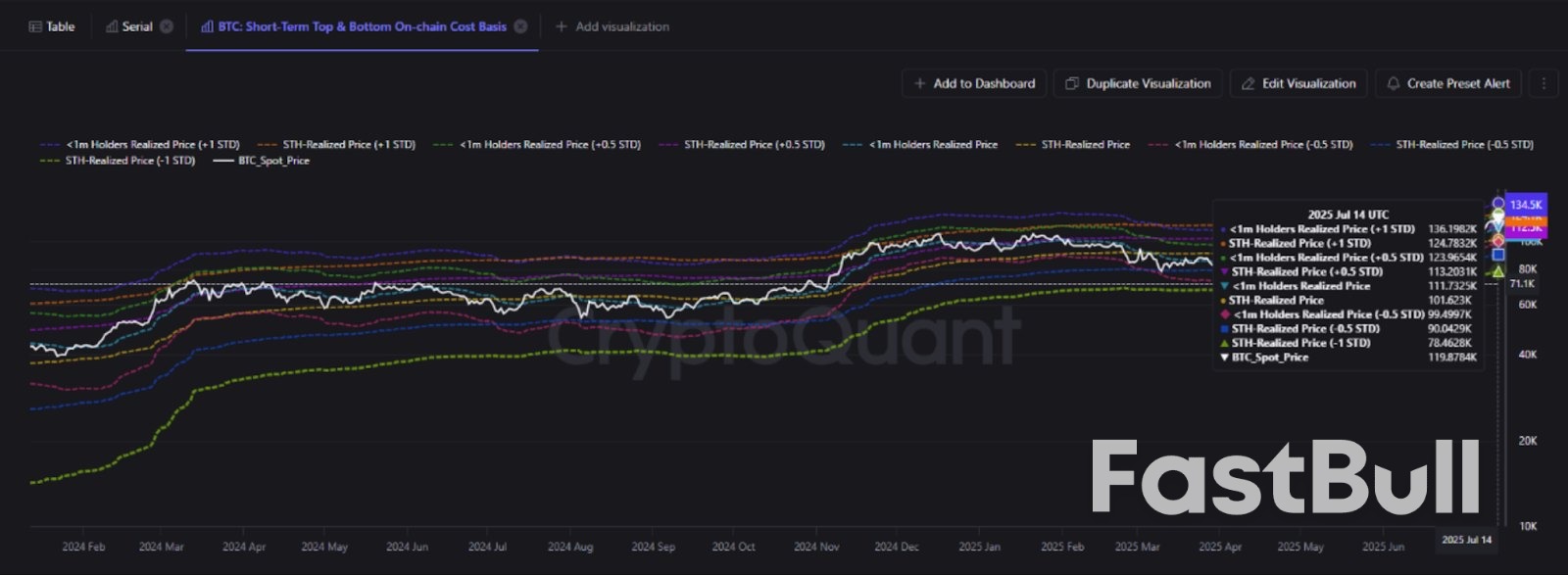
          Looking at Bitcoin’s short-term holder (STH) cost basis, CryptoQuant analyst Crazzyblockk outlines key levels that traders should focus on.
          This observation comes from Bitcoin's realized price model. It uses the average purchase prices of STHs, including their standard deviations, to spot important areas where buyers are active and prices tend to move.
          On the upside, the first major resistance sits at $124,000, representing the average cost basis of STHs pushed one standard deviation higher.
          “Historically, this band often coincides with profit-taking and local tops,” Crazzyblockk explained.
          The upper resistance is at $136,000; the average cost basis of investors who have held BTC for less than 30 days is pushed one standard deviation higher. This is “the most aggressive cohort,” the analyst said, adding:
          “When BTC pushes into this area, the market is typically in overbought conditions with excessive unrealized profit for new buyers.”

          Bitcoin 'Not at Peak Yet': Watch These BTC Price Levels Next_3Bitcoin STH cost basis. Source: CryptoQuant

          On the downside, traders should keep an eye on $113,000 — matching the 0.5 standard deviation above the STH realized price; $111,000 — the average cost basis of investors who acquired BTC in the past month; and $101,000, the baseline STH realized price.
          $101,000 is the “most critical support for Bitcoin’s medium-term bullish structure,” the analyst said.
          “Historically, staying above this zone signals strongholder conviction and trend continuation.”
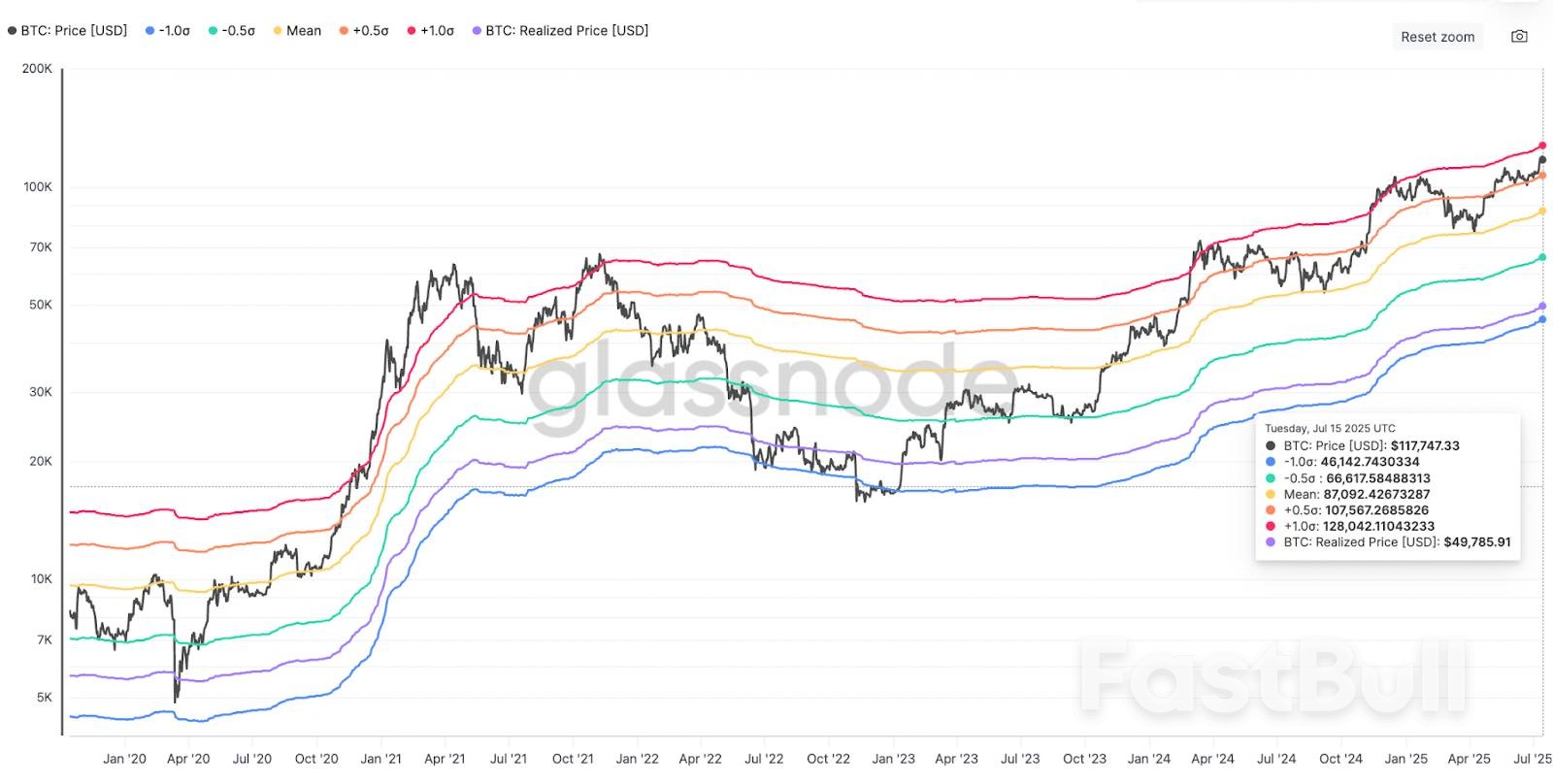
          The market value realized value (MVRV) metric, which shows whether the asset is overvalued or undervalued, suggests that BTC price still has more room for further expansion before the extreme level around $124,000, marking a key point of resistance.Bitcoin 'Not at Peak Yet': Watch These BTC Price Levels Next_4

          Bitcoin: MVRV extreme deviation pricing bands. Source: Glassnode

          On the downside, a key area of interest sits between $113,700 and $115,300, a zone aligned with the 200-day EMA, which offers dynamic support. The next important level below that is $107,500, the +0.5 STD MVRV band.
          As Cointelegraph reported, Bitcoin must reclaim the $119,250–$120,700 zone to resume its bullish momentum and aim for new highs above $123,000.

          Source: Cointelegraph

          Risk Warnings and Disclaimers
          You understand and acknowledge that there is a high degree of risk involved in trading. Following any strategies or investment methods may lead to potential losses. The content on the site is provided by our contributors and analysts for information purposes only. You are solely responsible for determining whether any trading assets, securities, strategy, or any other product is suitable for investing based on your own investment objectives and financial situation.
          Add to Favorites
          Share

          Bond Bears and US Dollar Bulls Lead the Charge as Inflation Expectations Surge

          Adam

          Economic

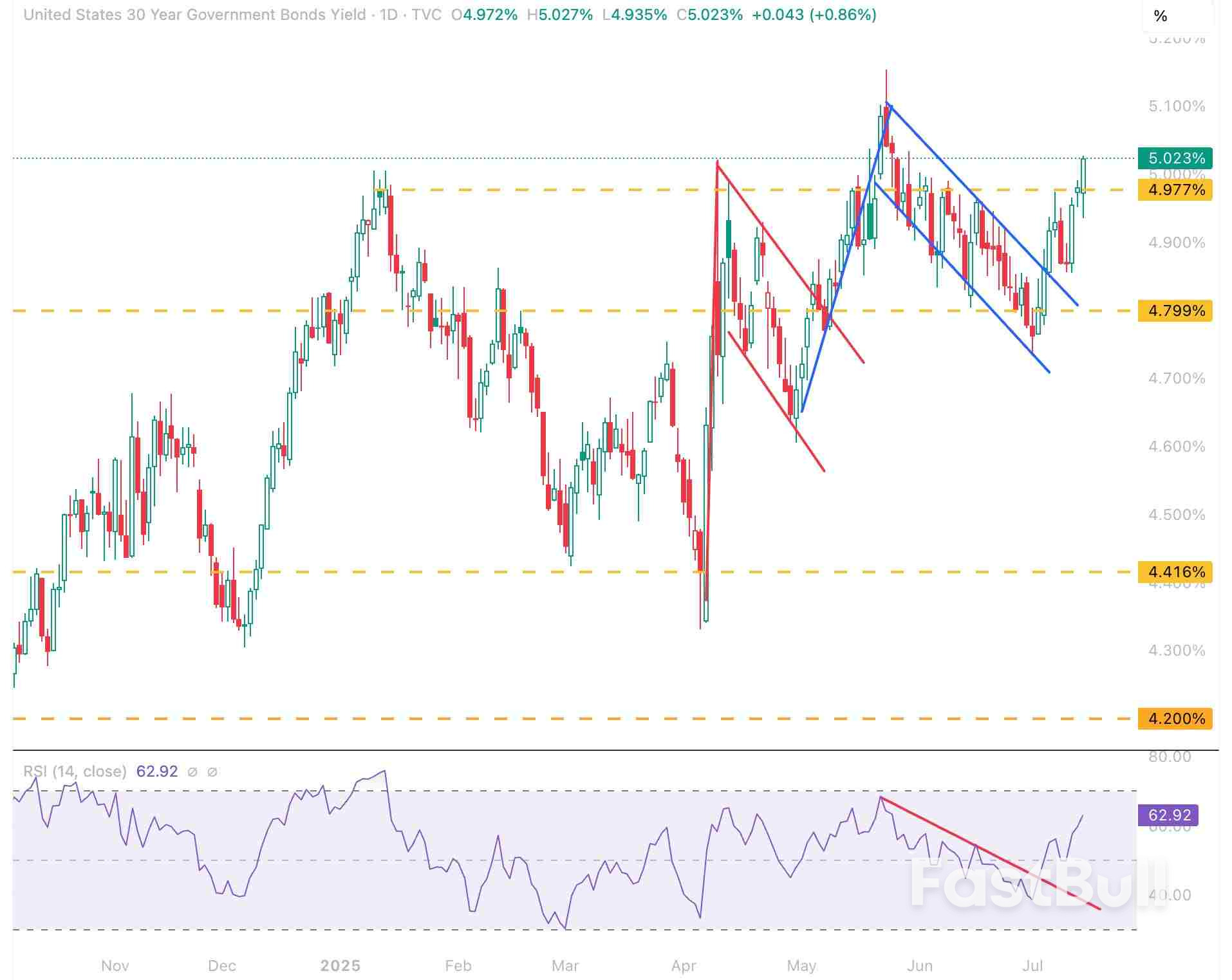
          Following the hotter-than-expected headline CPI report, the 30-year Treasury yield closed at 5.02%. The yield appears to have decisively broken above key resistance at 4.97%, setting the stage for a potential retest of the mid-May highs around 5.15%. And frankly, given current momentum, there’s no obvious reason it couldn’t push even higher.
          Bond Bears and US Dollar Bulls Lead the Charge as Inflation Expectations Surge_1
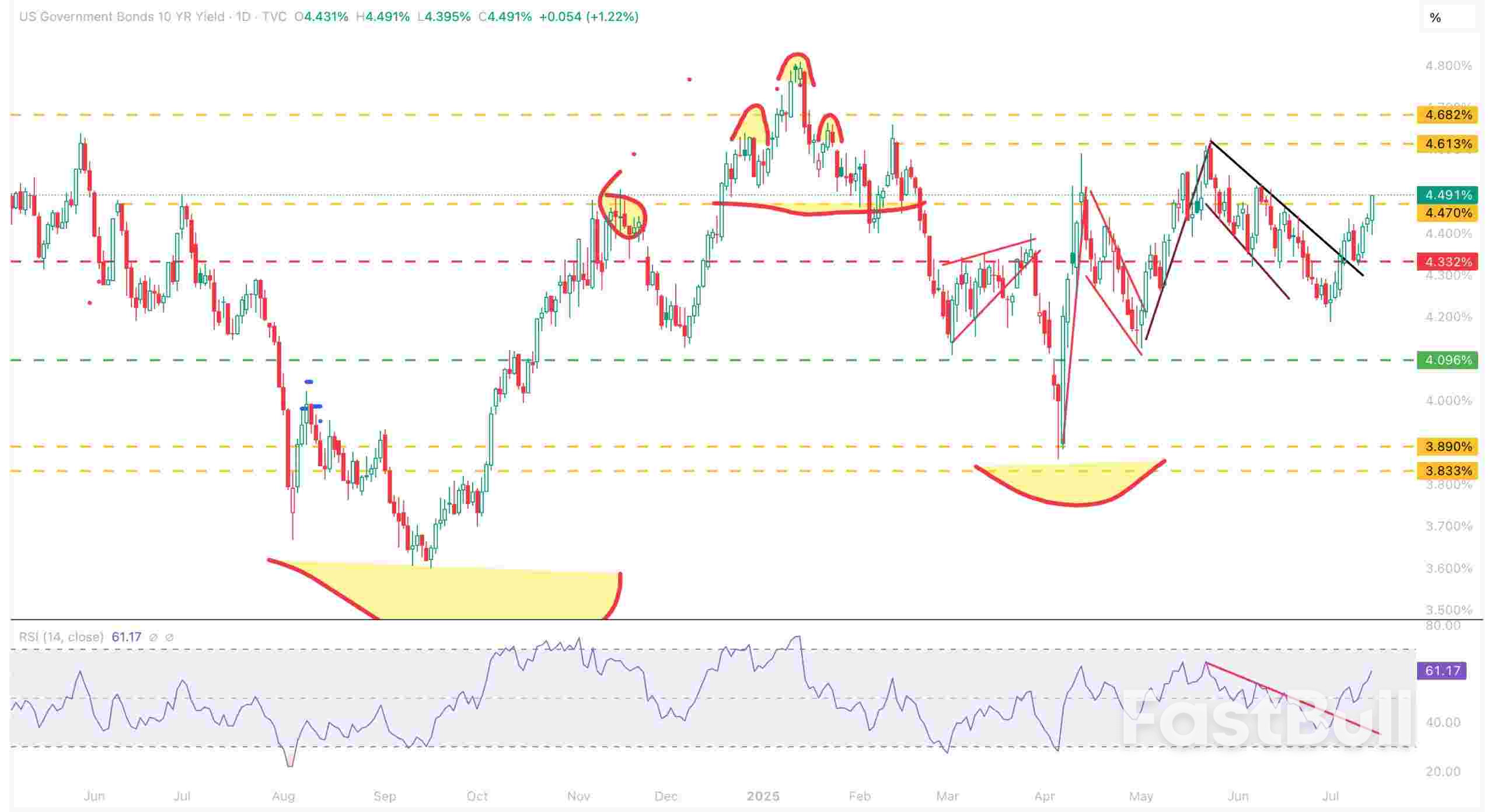
          The 10-year rate is also now around 4.5%, and it is at a point where it could be much higher, with the potential to rise to around 4.8%.
          Bond Bears and US Dollar Bulls Lead the Charge as Inflation Expectations Surge_2
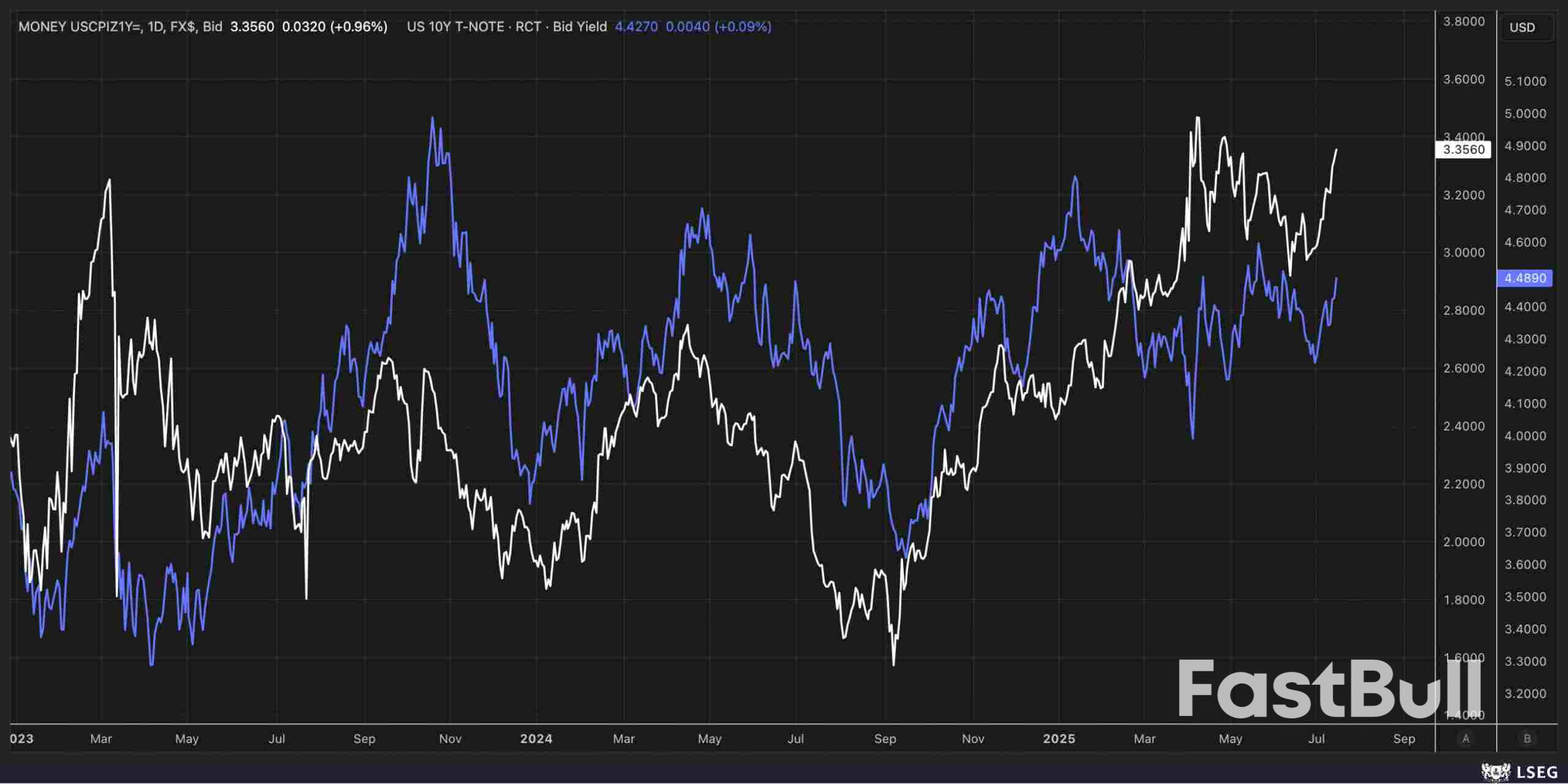
          Rates are going up because inflation expectations are rising, and the cause-and-effect relationship here is as straightforward as one can get.
          Bond Bears and US Dollar Bulls Lead the Charge as Inflation Expectations Surge_3
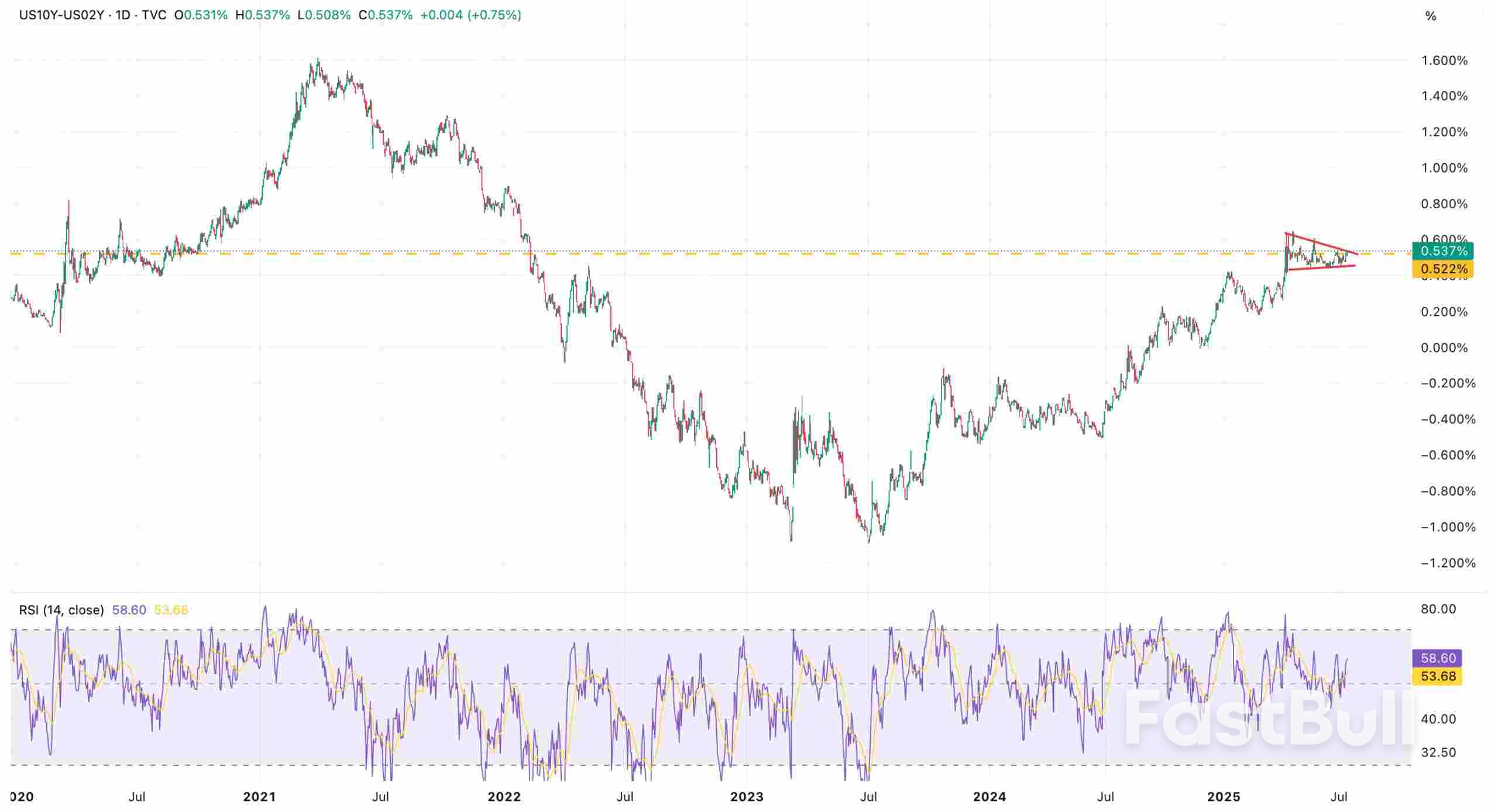
          Meanwhile, the 10/2 is so close to breaking out. The signs are right there.
          Bond Bears and US Dollar Bulls Lead the Charge as Inflation Expectations Surge_4
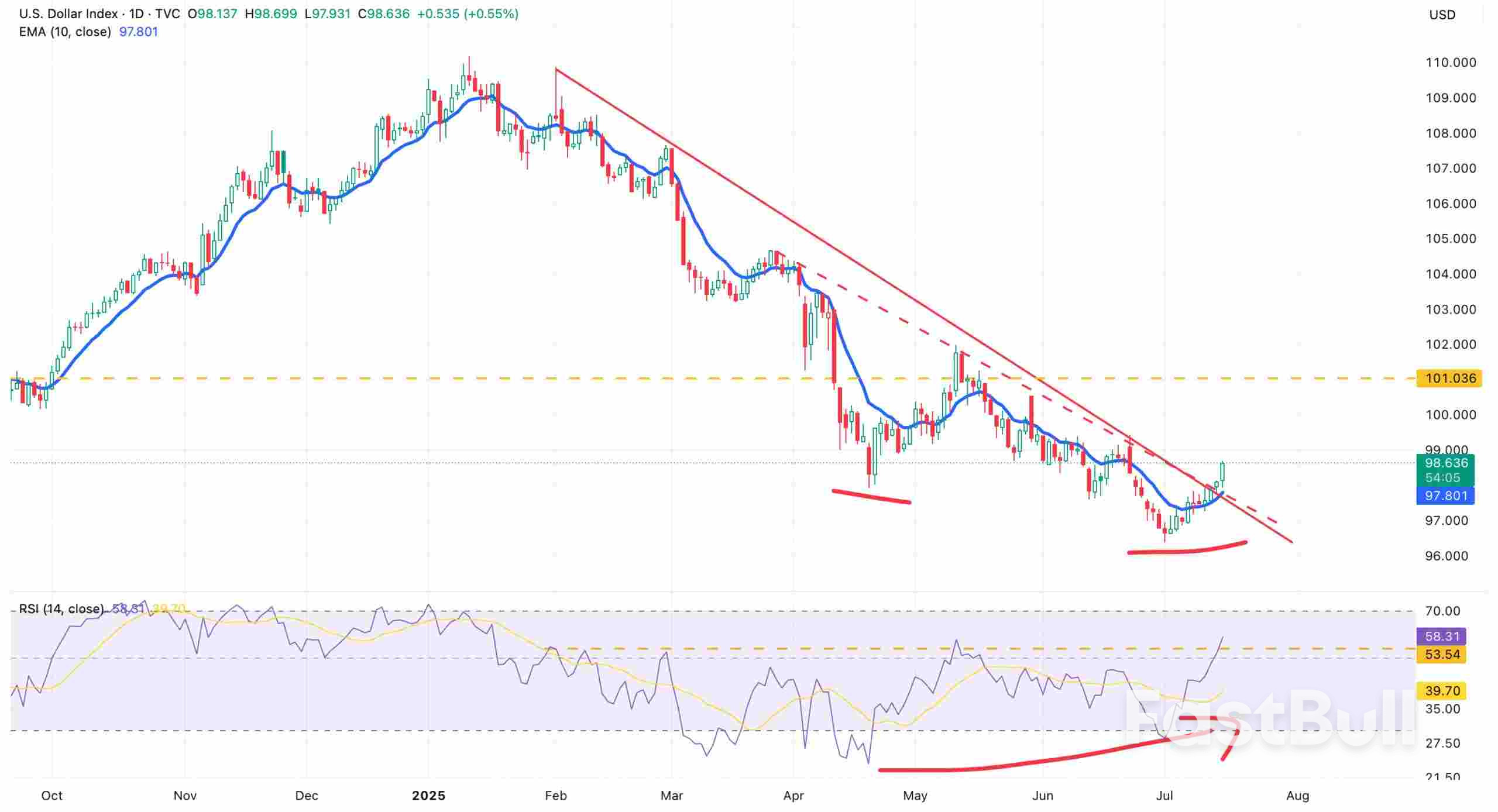
          The dollar made a notable move higher yesterday, and it appears to have broken out of its downtrend, potentially paving the way for further rise.
          Bond Bears and US Dollar Bulls Lead the Charge as Inflation Expectations Surge_5
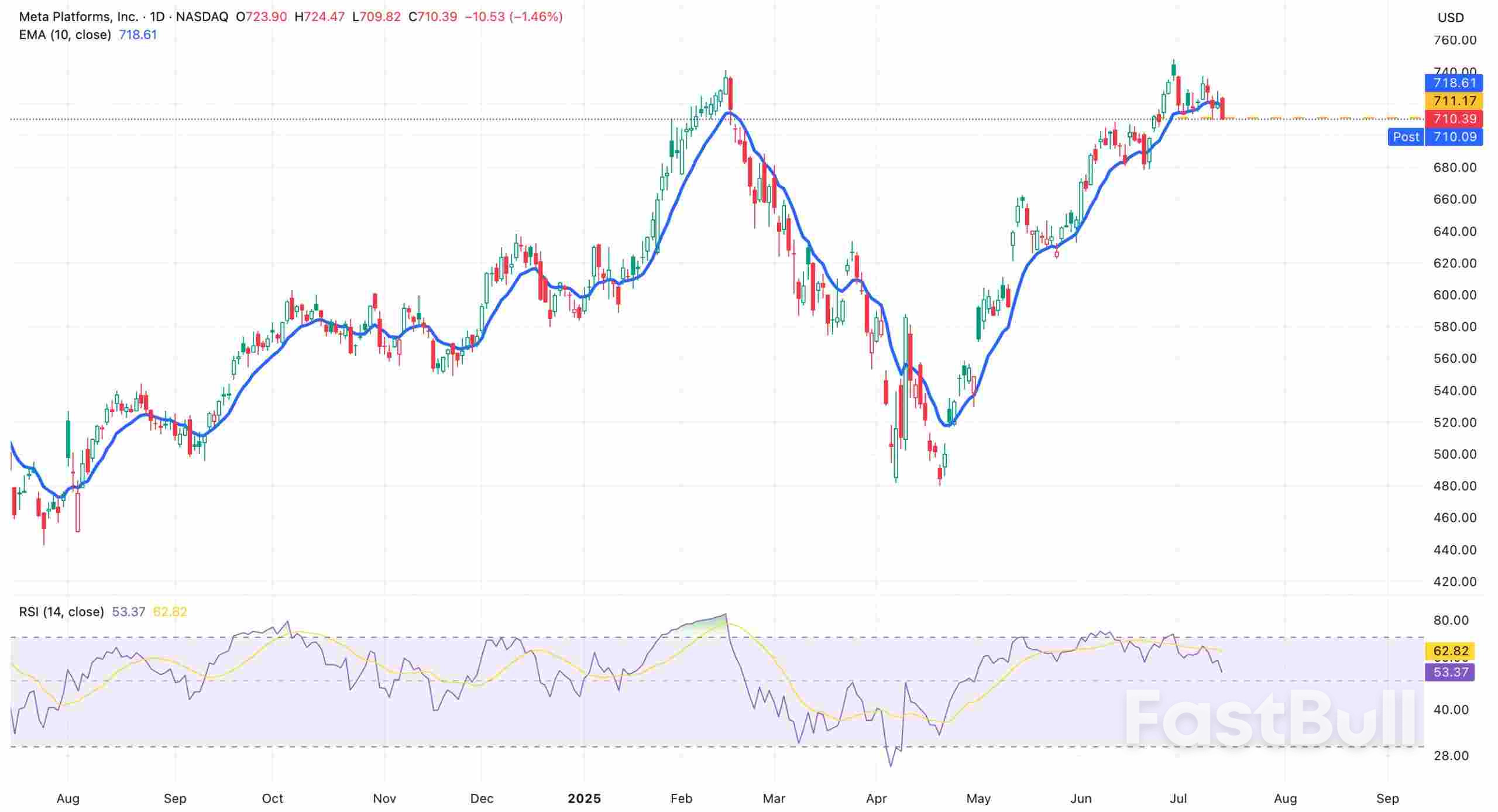
          Meta still has 2b top in place, and yesterday it closed on support at $710. If that support breaks, the neck stop is $680, and then we can start thinking about something much bigger on the downside.
          Bond Bears and US Dollar Bulls Lead the Charge as Inflation Expectations Surge_6
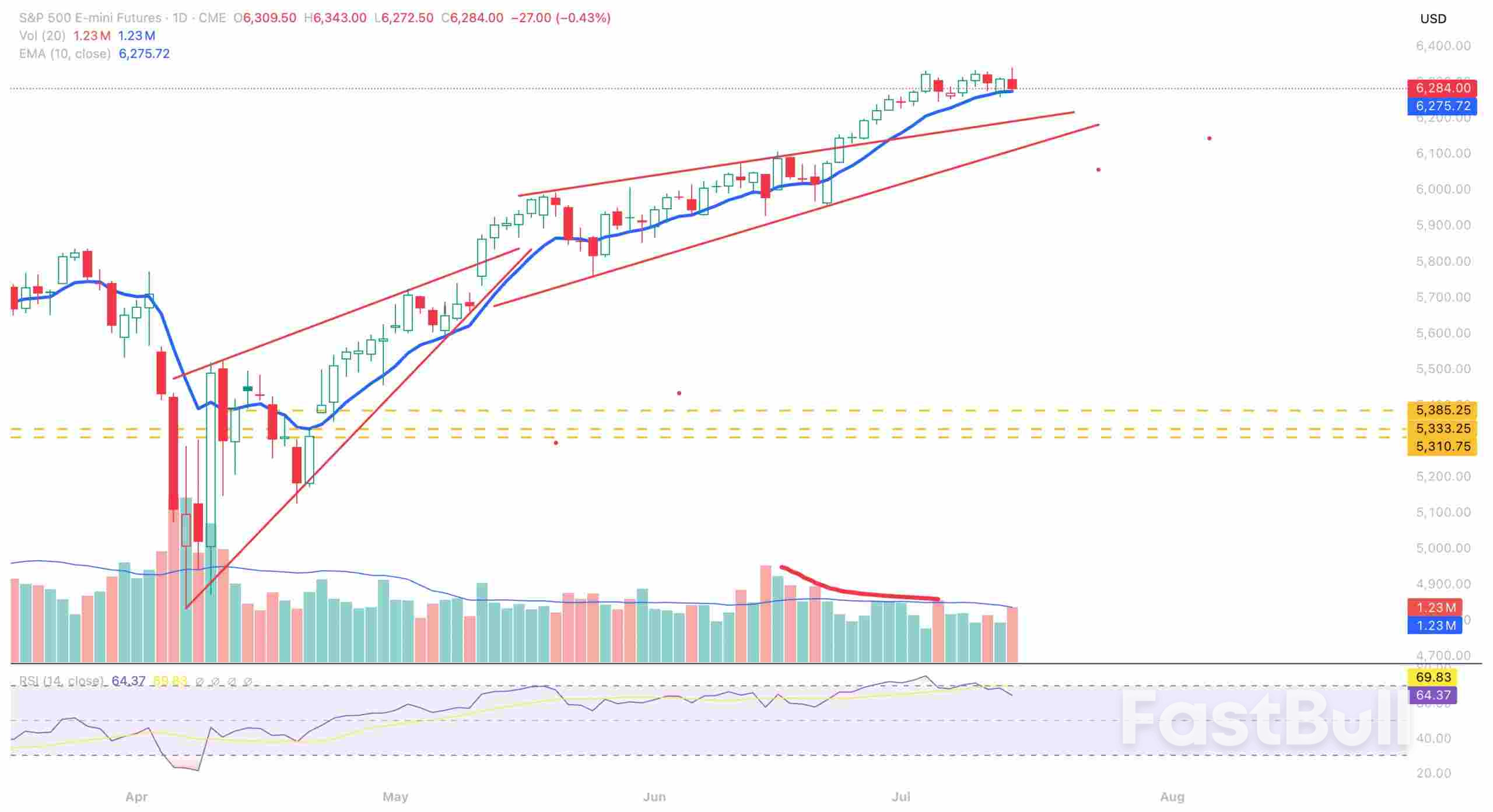
          Stocks finished mostly lower yesterday, and it could have been far worse if not for Nvidia. The S&P 500 declined by 40 bps, while the equal-weight RSP fell sharply by 1.4%.
          The S&P 500 futures closed precisely at their 10-day exponential moving average. Notably, trading volume picked up slightly, reaching the 20-day moving average. The critical question now is whether sellers return today to drive prices lower, and given how thin volumes have been over the past month, it likely won’t take much to tip the scales.
          Bond Bears and US Dollar Bulls Lead the Charge as Inflation Expectations Surge_7

          Source: investing

          To stay updated on all economic events of today, please check out our Economic calendar
          Risk Warnings and Disclaimers
          You understand and acknowledge that there is a high degree of risk involved in trading. Following any strategies or investment methods may lead to potential losses. The content on the site is provided by our contributors and analysts for information purposes only. You are solely responsible for determining whether any trading assets, securities, strategy, or any other product is suitable for investing based on your own investment objectives and financial situation.
          Add to Favorites
          Share

          Fed’s Barr Warns Of Booms And Busts Tied To Weakened Bank Rules

          Damon

          Central Bank

          Federal Reserve Governor Michael Barr emphasized that regulation must evolve with the financial system, issuing a warning as Trump-era officials look to ease rules for big banks and shift to a lighter touch.

          “It is striking to see the pattern of regulatory weakening during a boom, including the failure of the regulatory environment to keep pace with the evolving financial sector, and how this weakening lays the foundation for a subsequent bust,” Barr said in prepared remarks for a Brookings Institution event on Wednesday.

          Barr added that weakened rules often drive risk-taking and increases bank fragility during the boom, making the ensuing bust more painful.

          The Fed official’s comments follow early wins for the banking industry as the new administration pursues the deregulation agenda President Donald Trump campaigned on last year. Trump’s pick for vice chair for supervision, Michelle Bowman, took her seat in June after being lauded by Wall Street for her drive to scale back rules and tailor supervision.

          Bowman was nominated to be the Fed’s top bank cop after Barr resigned from that role in a bid to bypass a potential battle with Trump over his position.

          Barr said booms have historically been characterized by a multitude of good things: fast economic growth, sidelined workers re-entering the workforce and financial innovations, which often make credit or investments more readily available.

          He warned that at the same time, some of these same characteristics of a boom economy can sow the seeds of busts — economic activity and lending contract and asset prices decline, leading to rapid de-leveraging and dislocation throughout the financial system.

          Barr said in the past insufficient thought was given to how the easing of regulation may create new weaknesses.

          “A bit of humility would have helped,” Barr said.

          A former senior Treasury Department official who played a key role in shaping the 2010 Dodd-Frank Act, Barr’s comments come 15 years after the sweeping regulatory reforms were enacted. Some advocates and lawmakers argue that recent attempts to relax key provisions of that law go far beyond Trump’s partial rollback during his first administration.

          “It is well within our ability, and is our duty as regulators, to learn from these episodes to avoid making the same mistakes,” Barr said.

          Source: Bloomberg Europe

          Risk Warnings and Disclaimers
          You understand and acknowledge that there is a high degree of risk involved in trading. Following any strategies or investment methods may lead to potential losses. The content on the site is provided by our contributors and analysts for information purposes only. You are solely responsible for determining whether any trading assets, securities, strategy, or any other product is suitable for investing based on your own investment objectives and financial situation.
          Add to Favorites
          Share

          A Politically Captive Fed Would Be A Weak Fed

          Michelle

          Economic

          Forex

          The Trump administration, Congress and the Federal Reserve are mired in a beltway clash over renovations to the central bank’s Washington headquarters. To an outside observer, this may appear to just be a fight over the cost of marble, but it could be something deeper.

          Reports have surmised that the White House may be building a case to fire Fed Chair Jerome Powell for cause and replace him with someone more willing to follow the administration’s preferences in setting interest rates. That could have a profound impact on the economy and the cost of living for Americans.

          At a minimum, such a move would make the Fed less effective at fulfilling its dual mandate, which is to implement monetary policy in a way that promotes full employment while keeping prices stable throughout the economy. The bigger issue is that it could backfire spectacularly if markets started to believe the Fed is taking its cues from politicians or is being forced to accommodate government borrowing.

          President Donald Trump is demanding the Fed slash its target for the federal funds rate from the range of 4.25% to 4.5%. Cuts could be defensible, especially if one sees the economic weakness induced by tariffs outweighing any potential related increase in prices. Indeed, the median estimate among the Fed’s rate-setting Federal Open Market Committee is for two quarter percentage-point reductions this year and one in 2026.

          But Trump has called for more than minor adjustments, demanding the Fed lower the target rate to around 1% to 2%. A major problem is that such a drastic reduction goes well beyond what would be consistent with the Fed’s dual mandate. The unemployment rate over the last three months has averaged 4.2%, which is in line with conventional estimates of full employment, while inflation as measured by the core Personal Consumption Expenditures index was 2.7% in May, above the Fed’s 2% target.

          A conventional Taylor Rule would look at this unemployment rate, the still-too-high inflation rate and the FOMC’s estimate of a 1% neutral federal funds rate, and recommend nominal rates be set at around 4.1%, which is essentially only one cut below where they currently reside. If neutral was higher than the 1% the Fed predicts — a plausible scenario given what forward rates in the financial markets imply and the anticipated further rise in the government’s debt trajectory following passage of the tax and spending bill — then monetary policy may not even be tight at all. If the Fed cut to 1%, or even 2%, it would likely spur faster inflation at a time when gains in consumer prices are not even back to target in the first place.

          The other problem is that a politically captive Fed would prove counterproductive to the White House’s goal of lowering the long-term interest rates that impact Americans the most when taking out mortgages, auto loans and other borrowings.

          The Fed mainly has control over very short-term rates. Longer-term rates, such as those on benchmark 10-year US Treasury notes, are only indirectly affected by short rates, and respond more to investors’ perceptions of things such as future rates of inflation and economic growth. So although when the Fed cuts rates, the goal is to make borrowing cheaper, boost investment and support jobs, that only works if investors believe the central bank is acting to achieve its dual mandate and not to help politicians win elections or finance government deficits.

          If investors believe otherwise, they will push up the yields they demand to own long-term bonds, lifting borrowing costs in the process. In many ways, this is the opposite of the “conundrum” faced by former Fed Chair Alan Greenspan. When the central bank lifted short-term rates under his stewardship from 1% in 2004 to 5.2% in 2006, long-term rates barely budged, mostly because investors believed the moves would contain inflation – and they did.

          In other words, long-term rates can be thought of as a built-up layer cake of different expectations from market participants. The first layer is expectations for future real, or inflation-adjusted, federal funds rates set by the Fed. If the market thinks a new Chair will keep policy artificially low in the future, this layer would fall. The problem is that other layers may rise if investors see a politically captive Fed and expect more inflation than before, needing to be compensated with higher yields.

          Likewise, the term premium — the additional yield investors demand for the risk of holding a long-dated security to maturity — could rise as the uncertainty of a captive Fed raises risks. As The Budget Lab described in a report last year, such a Fed erodes the safe harbor premium and makes domestic investment more expensive. This trade-off appears to be exactly the dynamic happening now. A model of the 10-year Treasury’s term structure suggests that over the past year, while expectations of future average policy rates have fallen by 80 basis points, this has been almost exactly offset by higher term premia.

          Undermining trust in the Fed for short-term political gain is a recipe for higher costs and lower living standards for all Americans over time. When policymakers are less effective at achieving the central bank’s mandates, everyday Americans pay more for groceries and rent as prices rise, while also getting less than otherwise would be expected on mortgages and other loans.

          The lesson of economic history is unambiguous in that a captive Fed is a less effective Fed. If the goal is lower rates of inflation and stable economic growth, it’s critical to give the Fed the independence it needs while continuing to answer to the people through Congress. Politicians should hold the Fed accountable for its performance, but should resist the urge to expediently undermine its independence in ways that impair the very goals Congress itself gave the central bank.

          Source: Bloomberg Europe

          To stay updated on all economic events of today, please check out our Economic calendar
          Risk Warnings and Disclaimers
          You understand and acknowledge that there is a high degree of risk involved in trading. Following any strategies or investment methods may lead to potential losses. The content on the site is provided by our contributors and analysts for information purposes only. You are solely responsible for determining whether any trading assets, securities, strategy, or any other product is suitable for investing based on your own investment objectives and financial situation.
          Add to Favorites
          Share

          Central banks ramp up buying at euro zone bond sales

          Adam

          Economic

          Central Bank

          Central banks have ramped up buying at euro zone bonds sales this year, data shows, in a positive sign for the euro as the bloc looks to benefit from diversification away from U.S. markets.
          U.S. President Donald Trump's confrontations with longstanding allies over trade and security, along with attacks on the Federal Reserve, have raised concerns around the safe- haven status of the U.S dollar, the world's No.1 reserve currency, which has tumbled 9% this year .
          The euro meanwhile has surged 12% and policymakers are keen to seize the moment to boost its role as a reserve currency. Higher demand from central banks, which manage trillions of dollars in currency reserves, is therefore notable.
          Official institutions, which include central banks and sovereign wealth funds, have bought a fifth of euro zone government debt sold at syndications year-to-date, up from 16% for the whole of last year, a Barclays (BARC.L) analysis showed, using debt management office data.
          Debt sales where official institutions were allocated large shares include 55% of a 30-year German bond sale a day after the country announced a historic shift to looser fiscal policy in March, and 27% of a 10-year Spanish bond sale in May.
          Syndications, through which governments hire banks to sell bonds directly to investors, allow for results to be closely tracked to monitor shifts in demand.
          Syndicated sales raised over 200 billion euros ($232.40 billion) last year for euro zone governments, and are a key source of funding.
          Allocations to official institutions did not increase in 2024, the data showed, after rising from 8% in 2021, following which euro zone interest rates turned positive after almost a decade of below-0% rates.
          ASIA DEMAND
          Bankers who run the debt sales said demand from Asian institutions stood out this year and was spread across the board.
          "Some Asian clients in particular are coming back into the euro zone government bond space," said Benjamin Moulle, global head of primary credit for sovereigns, supranationals and agencies at Credit Agricole CIB.
          "Large Asian central banks are very confident, more comfortable than previously when it comes to investing in EGBs."
          Political stability in Europe, relatively lower budget deficits and lower inflation which gives the European Central Bank more room to cut rates further if needed, made the region's debt attractive to central banks, Moulle said.
          Carla Diaz Alvarez de Toledo, director general for treasury and financial policy at Spain's economy ministry, told Reuters the country was seeing higher demand for its bond sales over the last two years from official institutions in the Nordics, Middle East and Asia.
          While rising demand for the bloc's debt is positive, bankers stressed it was too soon for central bank reserve managers to be shifting currency allocations meaningfully in response to developments this year.
          Central banks may be shifting their euro zone bond holdings into longer maturities as they had not really been buying long paper in recent years, said a second banker who arranges government debt sales.
          They remain U.S. dollar-focused and usually adjust their asset allocation models later in the year, so a major change will not have happened yet, the banker said, asking not to be identified.
          "What's actually happening on the ground, that is incredibly hard to say," said Rohan Khanna, head of euro rates strategy at Barclays.
          "I have had these conversations with sovereign wealth funds out of China, out of Europe. Their viewpoint has been that it's too early."
          While such investors are considering whether to invest incremental flows they received outside the U.S., they acknowledged that the U.S. Treasury market does not have a real alternative, Khanna said.
          ($1 = 0.8606 euros)

          Source: reuters

          To stay updated on all economic events of today, please check out our Economic calendar
          Risk Warnings and Disclaimers
          You understand and acknowledge that there is a high degree of risk involved in trading. Following any strategies or investment methods may lead to potential losses. The content on the site is provided by our contributors and analysts for information purposes only. You are solely responsible for determining whether any trading assets, securities, strategy, or any other product is suitable for investing based on your own investment objectives and financial situation.
          Add to Favorites
          Share

          UK Inflation Rises Unexpectedly to 3.6% Driven by Food and Fuel Prices

          Warren Takunda

          Economic

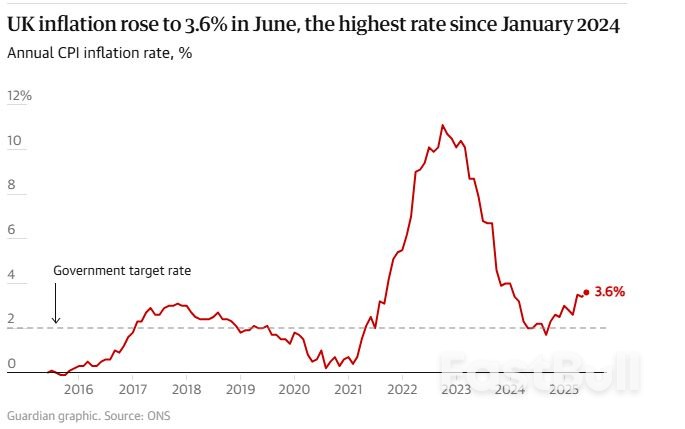
          UK inflation unexpectedly rose in June driven by fuel and food prices, according to official figures, underscoring the challenge facing the chancellor, Rachel Reeves.
          The Office for National Statistics said the consumer prices index rose by 3.6% last month. City economists and the Bank of England had forecast it would remain the same as May’s reading of 3.4%.
          The increase was largely caused by by petrol and diesel prices falling only slightly in June compared with a much larger decrease a year earlier, alongside food price inflation rising for a third consecutive month to the highest rate in more than a year.
          Driving the headline rate further away from the Bank’s 2% target, the rise was announced as Labour faces intense scrutiny over its economic management after two months of negative growth and with speculation mounting over tax rises.
          On Tuesday Reeves sought to shrug off Britain’s anaemic growth performance in her Mansion House speech, telling City bankers she would cut red tape to help reboot the economy.
          However, critics said that the chancellor’s maiden budget had added to Britain’s economic headwinds, including a £25bn increase in employment taxes that business leaders warned would force them to cut jobs and raise prices.
          Some analysts said there were early signs of businesses passing on higher employment costs to consumers after a rise in the cost of restaurant meals, hotel stays and the price of supermarket groceries.
          Kris Hamer, the director of insight at the British Retail Consortium, said: “Despite fierce competition between retailers, the ongoing impact of the last budget and poor harvests caused by the extreme weather have resulted in prices for consumers rising.”
          Mel Stride, the shadow chancellor, said: “Labour’s decision to tax jobs and ramp up borrowing is killing growth and stoking inflation – making everyday essentials more expensive.”
          Reeves acknowledged there was “more to do” to put more money into people’s pockets. “I know working people are still struggling with the cost of living. That is why we have already taken action by increasing the national minimum wage for 3 million workers, rolling out free breakfast clubs in every primary school and extending the £3 bus fare cap,” she said.
          The UK’s annual inflation rate has risen this year after dramatic increases in water bills, energy costs and council tax, complicating the Bank’s approach to cutting interest rates. Threadneedle Street forecasts that inflation will peak at 3.7% in September – almost twice its 2% target rate.UK Inflation Rises Unexpectedly to 3.6% Driven by Food and Fuel Prices_1
          Highlighting the pressure on households, the latest figures show food and drink inflation jumped to 4.5%, the highest recorded since February 2024, driven by the rising price of cakes, meat, milk, eggs and cheddar cheese.
          Motor fuel prices fell by 9% in the year to June 2025 compared with a drop of 10.9% in the year to May. Because prices fell by less than a year earlier, this contributes to pushing up the annual inflation rate.
          While the average petrol price fell to 131.9p a litre last month, compared with 145.8p a year earlier, the drop between June and May was 0.5p, versus a much larger 3p fall between the same two months in 2024.
          Diesel prices also fell less sharply than a year earlier, with a month-on-month decline of 0.6p a litre in June 2025, compared with a drop of 4.8p in 2024. The average diesel price fell annually from 151.5p to 138.5p a litre.
          While the Bank has cut its base interest rate four times in the past year, most recently in May, to 4.25%, economists said evidence of lingering high inflation could delay further reductions.
          Services inflation, a measure the central bank views as a better guide to domestically generated price pressures than the headline rate, unexpectedly held steady at 4.7% in June, led by the largest June increase in air fares since 2018. City economists had predicted a modest fall to 4.6%.
          However, concerns are growing over the strength of the UK economy amid a slowdown in the jobs market and as Donald Trump’s erratic trade war weighs on the global outlook. Official figures due on Thursday are expected to show a further cooling in the labour market in the three months to May.
          Suren Thiru, the economics director at the Institute of Chartered Accountants in England and Wales, said: “While June’s hot inflation won’t deter policymakers from sanctioning an August policy loosening, given mounting worries over economic conditions, these figures may increase caution over the pace of future rate cuts.”

          Source: Theguardian

          To stay updated on all economic events of today, please check out our Economic calendar
          Risk Warnings and Disclaimers
          You understand and acknowledge that there is a high degree of risk involved in trading. Following any strategies or investment methods may lead to potential losses. The content on the site is provided by our contributors and analysts for information purposes only. You are solely responsible for determining whether any trading assets, securities, strategy, or any other product is suitable for investing based on your own investment objectives and financial situation.
          Add to Favorites
          Share
          FastBull
          Copyright © 2025 FastBull Ltd

          728 RM B 7/F GEE LOK IND BLDG NO 34 HUNG TO RD KWUN TONG KLN HONG KONG

          TelegramInstagramTwitterfacebooklinkedin
          App Store Google Play Google Play
          Products
          Charts

          Chats

          Q&A with Experts
          Screeners
          Economic Calendar
          Data
          Tools
          Membership
          Features
          Function
          Markets
          Copy Trading
          Latest Signals
          Contests
          News
          Analysis
          24/7
          Columns
          Education
          Company
          Careers
          About Us
          Contact Us
          Advertising
          Help Center
          Feedback
          User Agreement
          Privacy Policy
          Business

          White Label

          Data API

          Web Plug-ins

          Poster Maker

          Affiliate Program

          Risk Disclosure

          The risk of loss in trading financial instruments such as stocks, FX, commodities, futures, bonds, ETFs and crypto can be substantial. You may sustain a total loss of the funds that you deposit with your broker. Therefore, you should carefully consider whether such trading is suitable for you in light of your circumstances and financial resources.

          No decision to invest should be made without thoroughly conducting due diligence by yourself or consulting with your financial advisors. Our web content might not suit you since we don't know your financial conditions and investment needs. Our financial information might have latency or contain inaccuracy, so you should be fully responsible for any of your trading and investment decisions. The company will not be responsible for your capital loss.

          Without getting permission from the website, you are not allowed to copy the website's graphics, texts, or trademarks. Intellectual property rights in the content or data incorporated into this website belong to its providers and exchange merchants.

          Not Logged In

          Log in to access more features

          FastBull Membership

          Not yet

          Purchase

          Become a signal provider
          Help Center
          Customer Service
          Dark Mode
          Price Up/Down Colors

          Log In

          Sign Up

          Position
          Layout
          Fullscreen
          Default to Chart
          The chart page opens by default when you visit fastbull.com