• Trade
  • Markets
  • Copy
  • Contests
  • News
  • 24/7
  • Calendar
  • Q&A
  • Chats
Trending
Screeners
SYMBOL
LAST
BID
ASK
HIGH
LOW
NET CHG.
%CHG.
SPREAD
SPX
S&P 500 Index
6816.52
6816.52
6816.52
6861.30
6801.50
-10.89
-0.16%
--
DJI
Dow Jones Industrial Average
48416.55
48416.55
48416.55
48679.14
48283.27
-41.49
-0.09%
--
IXIC
NASDAQ Composite Index
23057.40
23057.40
23057.40
23345.56
23012.00
-137.76
-0.59%
--
USDX
US Dollar Index
97.890
97.970
97.890
98.070
97.740
-0.060
-0.06%
--
EURUSD
Euro / US Dollar
1.17555
1.17562
1.17555
1.17579
1.17457
+0.00024
+ 0.02%
--
GBPUSD
Pound Sterling / US Dollar
1.33785
1.33795
1.33785
1.33830
1.33543
+0.00022
+ 0.02%
--
XAUUSD
Gold / US Dollar
4306.79
4307.24
4306.79
4309.51
4302.62
+1.67
+ 0.04%
--
WTI
Light Sweet Crude Oil
56.505
56.542
56.505
56.518
56.393
+0.100
+ 0.18%
--

Community Accounts

Signal Accounts
--
Profit Accounts
--
Loss Accounts
--
View More

Become a signal provider

Sell trading signals to earn additional income

View More

Guide to Copy Trading

Get started with ease and confidence

View More

Signal Accounts for Members

All Signal Accounts

Best Return
  • Best Return
  • Best P/L
  • Best MDD
Past 1W
  • Past 1W
  • Past 1M
  • Past 1Y

All Contests

  • All
  • Trump Updates
  • Recommend
  • Stocks
  • Cryptocurrencies
  • Central Banks
  • Featured News
Top News Only
Share

NZ Government Does Not Forecast Obegal Surplus In Next Five Fiscal Years

Share

Fca Official Says There Is 'Real Opportunity' To Make Rules More Proportionate And Boost UK Competitiveness

Share

NZ Sees 2025/26 Cash Balance NZ$-14.80 Billion (Budget NZ$-14.53 Billion)

Share

NZ Sees 2025/26 Net Debt 43.3% Of GDP (Budget 43.9%)

Share

NZ Unemployment Rate Seen At 5.3% In 2025/26 (Budget 5.0%)

Share

NZ Sees 2025/26 Operating Balance Before Gains, Losses NZ$-16.93 Billion (Budget NZ$-15.60 Billion)

Share

NZ Sees 2026/27 Obegal Balance NZ$-12.99 Billion (Budget NZ$-11.76 Billion)

Share

NZ DMO Planned Gross Bond Issuance For Four Years To June 2029 Is New Zealand Dollar 135 Billion Up From New Zealand Dollar 132 Billion Forecast In May

Share

Indonesia Sets Coal Benchmark Price For 4100 Kcal Grade At $45.44 Per Metric Ton For Second Half Of December -Energy Ministry

Share

Indonesia Sets Coal Benchmark Price For 5300 Kcal Grade At $69.93 Per Metric Ton For Second Half Of December -Energy Ministry

Share

Japan's Nikkei Share Average Futures Down 0.4% In Early Trade

Share

Mexico's Pemex Says By 2026, This Investment Will Be Complemented By Private Sector Participation Through Existing Contractual Arrangements And New Joint Investment Contracts Currently Being Awarded

Share

Mexico's Pemex Says 2026 Budget For Physical Investment Will Be Complemented By Resources From The Investment Financing Program Of Approximately 60 Billion Pesos In The First Quarter

Share

Mexico's Pemex Says For 2026, And In Accordance With The Approved Budget, There Will Be A 17.7% Increase In Pemex's Physical Investment Compared To 2025

Share

Mexico's Pemex Says Maintaining The Execution Of Its Physical Investment As Planned In The Budget Approved For The Current Fiscal Year

Share

Mexico's Pemex Says Oil And Gas Production To Remain At 1.8 Million Barrels/Day In Accordance With 2025-2035 Strategic Plan

Share

Australia's S&P/ASX 200 Index Up 0.4% At 8670.10 Points In Early Trade

Share

Ukraine President Zelenskiy: Security Guarantees Are Not At Framework Stage: It Is Detailed Document And Still Needs Work

Share

Ukraine President Zelenskiy: Energy Ceasefire Is Option

Share

Ukraine President Zelenskiy: Ukraine, USA Support Merz's Idea Of Christmas Ceasefire

TIME
ACT
FCST
PREV
Japan Tankan Large Non-Manufacturing Outlook Index (Q4)

A:--

F: --

P: --

U.K. Rightmove House Price Index YoY (Dec)

A:--

F: --

P: --

China, Mainland Industrial Output YoY (YTD) (Nov)

A:--

F: --

P: --

China, Mainland Urban Area Unemployment Rate (Nov)

A:--

F: --

P: --

Saudi Arabia CPI YoY (Nov)

A:--

F: --

P: --

Euro Zone Industrial Output YoY (Oct)

A:--

F: --

P: --

Euro Zone Industrial Output MoM (Oct)

A:--

F: --

P: --

Canada Existing Home Sales MoM (Nov)

A:--

F: --

P: --

Canada National Economic Confidence Index

A:--

F: --

P: --

Canada New Housing Starts (Nov)

A:--

F: --

P: --
U.S. NY Fed Manufacturing Employment Index (Dec)

A:--

F: --

P: --

U.S. NY Fed Manufacturing Index (Dec)

A:--

F: --

P: --

Canada Core CPI YoY (Nov)

A:--

F: --

P: --

Canada Manufacturing Unfilled Orders MoM (Oct)

A:--

F: --

P: --

U.S. NY Fed Manufacturing Prices Received Index (Dec)

A:--

F: --

P: --

U.S. NY Fed Manufacturing New Orders Index (Dec)

A:--

F: --

P: --

Canada Manufacturing New Orders MoM (Oct)

A:--

F: --

P: --

Canada Core CPI MoM (Nov)

A:--

F: --

P: --

Canada Trimmed CPI YoY (SA) (Nov)

A:--

F: --

P: --

Canada Manufacturing Inventory MoM (Oct)

A:--

F: --

P: --

Canada CPI YoY (Nov)

A:--

F: --

P: --

Canada CPI MoM (Nov)

A:--

F: --

P: --

Canada CPI YoY (SA) (Nov)

A:--

F: --

P: --

Canada Core CPI MoM (SA) (Nov)

A:--

F: --

P: --

Canada CPI MoM (SA) (Nov)

A:--

F: --

P: --

Federal Reserve Board Governor Milan delivered a speech
U.S. NAHB Housing Market Index (Dec)

A:--

F: --

P: --

Australia Composite PMI Prelim (Dec)

A:--

F: --

P: --

Australia Services PMI Prelim (Dec)

A:--

F: --

P: --

Australia Manufacturing PMI Prelim (Dec)

A:--

F: --

P: --

Japan Manufacturing PMI Prelim (SA) (Dec)

--

F: --

P: --

U.K. 3-Month ILO Employment Change (Oct)

--

F: --

P: --

U.K. Unemployment Claimant Count (Nov)

--

F: --

P: --

U.K. Unemployment Rate (Nov)

--

F: --

P: --

U.K. 3-Month ILO Unemployment Rate (Oct)

--

F: --

P: --

U.K. Average Weekly Earnings (3-Month Average, Including Bonuses) YoY (Oct)

--

F: --

P: --

U.K. Average Weekly Earnings (3-Month Average, Excluding Bonuses) YoY (Oct)

--

F: --

P: --

France Services PMI Prelim (Dec)

--

F: --

P: --

France Composite PMI Prelim (SA) (Dec)

--

F: --

P: --

France Manufacturing PMI Prelim (Dec)

--

F: --

P: --

Germany Services PMI Prelim (SA) (Dec)

--

F: --

P: --

Germany Manufacturing PMI Prelim (SA) (Dec)

--

F: --

P: --

Germany Composite PMI Prelim (SA) (Dec)

--

F: --

P: --

Euro Zone Composite PMI Prelim (SA) (Dec)

--

F: --

P: --

Euro Zone Services PMI Prelim (SA) (Dec)

--

F: --

P: --

Euro Zone Manufacturing PMI Prelim (SA) (Dec)

--

F: --

P: --

U.K. Services PMI Prelim (Dec)

--

F: --

P: --

U.K. Manufacturing PMI Prelim (Dec)

--

F: --

P: --

U.K. Composite PMI Prelim (Dec)

--

F: --

P: --

Euro Zone ZEW Economic Sentiment Index (Dec)

--

F: --

P: --

Germany ZEW Current Conditions Index (Dec)

--

F: --

P: --

Germany ZEW Economic Sentiment Index (Dec)

--

F: --

P: --

Euro Zone Trade Balance (Not SA) (Oct)

--

F: --

P: --

Euro Zone ZEW Current Conditions Index (Dec)

--

F: --

P: --

Euro Zone Trade Balance (SA) (Oct)

--

F: --

P: --

Euro Zone Total Reserve Assets (Nov)

--

F: --

P: --

U.K. Inflation Rate Expectations

--

F: --

P: --

U.S. Unemployment Rate (SA) (Nov)

--

F: --

P: --

U.S. Retail Sales MoM (Excl. Gas Stations & Vehicle Dealers) (SA) (Oct)

--

F: --

P: --

U.S. Retail Sales MoM (Excl. Automobile) (SA) (Oct)

--

F: --

P: --

Q&A with Experts
    • All
    • Chatrooms
    • Groups
    • Friends
    Connecting
    .
    .
    .
    Type here...
    Add Symbol or Code

      No matching data

      All
      Trump Updates
      Recommend
      Stocks
      Cryptocurrencies
      Central Banks
      Featured News
      • All
      • Russia-Ukraine Conflict
      • Middle East Flashpoint
      • All
      • Russia-Ukraine Conflict
      • Middle East Flashpoint
      Search
      Products

      Charts Free Forever

      Chats Q&A with Experts
      Screeners Economic Calendar Data Tools
      Membership Features
      Data Warehouse Market Trends Institutional Data Policy Rates Macro

      Market Trends

      Market Sentiment Order Book Forex Correlations

      Top Indicators

      Charts Free Forever
      Markets

      News

      News Analysis 24/7 Columns Education
      From Institutions From Analysts
      Topics Columnists

      Latest Views

      Latest Views

      Trending Topics

      Top Columnists

      Latest Update

      Signals

      Copy Rankings Latest Signals Become a signal provider AI Rating
      Contests
      Brokers

      Overview Brokers Assessment Rankings Regulators News Claims
      Broker listing Forex Brokers Comparison Tool Live Spread Comparison Scam
      Q&A Complaint Scam Alert Videos Tips to Detect Scam
      More

      Business
      Events
      Careers About Us Advertising Help Center

      White Label

      Data API

      Web Plug-ins

      Affiliate Program

      Awards Institution Evaluation IB Seminar Salon Event Exhibition
      Vietnam Thailand Singapore Dubai
      Fans Party Investment Sharing Session
      FastBull Summit BrokersView Expo
      Recent Searches
        Top Searches
          Markets
          News
          Analysis
          User
          24/7
          Economic Calendar
          Education
          Data
          • Names
          • Latest
          • Prev

          View All

          No data

          Scan to Download

          Faster Charts, Chat Faster!

          Download App
          English
          • English
          • Español
          • العربية
          • Bahasa Indonesia
          • Bahasa Melayu
          • Tiếng Việt
          • ภาษาไทย
          • Français
          • Italiano
          • Türkçe
          • Русский язык
          • 简中
          • 繁中
          Open Account
          Search
          Products
          Charts Free Forever
          Markets
          News
          Signals

          Copy Rankings Latest Signals Become a signal provider AI Rating
          Contests
          Brokers

          Overview Brokers Assessment Rankings Regulators News Claims
          Broker listing Forex Brokers Comparison Tool Live Spread Comparison Scam
          Q&A Complaint Scam Alert Videos Tips to Detect Scam
          More

          Business
          Events
          Careers About Us Advertising Help Center

          White Label

          Data API

          Web Plug-ins

          Affiliate Program

          Awards Institution Evaluation IB Seminar Salon Event Exhibition
          Vietnam Thailand Singapore Dubai
          Fans Party Investment Sharing Session
          FastBull Summit BrokersView Expo

          China, Saudi Arabia Agree To Strengthen Coordination On Regional, Global Matters

          Justin

          Political

          Economic

          Summary:

          China and Saudi Arabia agreed to have closer communication and coordination on regional and international issues, with Beijing lauding Riyadh's role in Middle East diplomacy, statements following a meeting between the nations' foreign ministers on Sunday showed.

          China and Saudi Arabia agreed to have closer communication and coordination on regional and international issues, with Beijing lauding Riyadh's role in Middle East diplomacy, statements following a meeting between the nations' foreign ministers on Sunday showed.

          Chinese Foreign Minister Wang Yi is on a three-nation tour in the Middle East that began in the United Arab Emirates and is expected to end in Jordan. He met with Saudi Arabia's Foreign Minister Prince Faisal bin Farhan Al-Saud in Riyadh on Sunday.

          A joint statement published by China's official news agency Xinhua did not elaborate on what issues the countries will strengthen coordination on, but mentioned China's support for Saudi Arabia and Iran developing and enhancing their relations.

          "(China) appreciates Saudi Arabia's leading role and efforts to achieve regional and international security and stability," the statement released on Monday said.

          The statement also reiterated both countries' support for a "comprehensive and just settlement" of the Palestinian issue and the formation of an independent state for Palestinians.

          At a high-level meeting, Wang told his Saudi counterpart that China has always regarded Saudi Arabia as a "priority for Middle East diplomacy" and an important partner in global diplomacy, a Chinese foreign ministry statement on Monday said.

          He also encouraged more cooperation in energy and investments, as well as in the fields of new energy and green transformation.

          The countries have agreed to mutually exempt visas for diplomatic and special passport holders from both sides, according to the joint statement.

          Source: Theedgemarkets

          To stay updated on all economic events of today, please check out our Economic calendar
          Risk Warnings and Disclaimers
          You understand and acknowledge that there is a high degree of risk involved in trading. Following any strategies or investment methods may lead to potential losses. The content on the site is provided by our contributors and analysts for information purposes only. You are solely responsible for determining whether any trading assets, securities, strategy, or any other product is suitable for investing based on your own investment objectives and financial situation.
          Add to Favorites
          Share

          Japan Business Mood Hits 4-year High, Keeps BOJ Rate-hike View Alive

          Michael Ross
          Big Japanese manufacturers' business sentiment hit a four-year high in the three months to December, a closely watched central bank survey showed on Monday, suggesting the economy was weathering the hit from higher U.S. tariffs.

          The outcome reinforces market expectations the Bank of Japan (BOJ) will raise interest rates at its two-day policy meeting ending on Friday.

          The headline index measuring big manufacturers' business confidence stood at +15 in December, the "tankan" survey showed, up from +14 in September and matching a median market forecast.

          The reading, which marked the third straight quarter of improvement, was the highest since December 2021.

          An index gauging big non-manufacturers' sentiment stood at +34 in December, unchanged from the September reading. It compared with a median market forecast for a reading of +35.

          Big companies expect to increase capital expenditure by 12.6% in the current fiscal year ending in March 2026, the tankan showed, compared with a median market forecast for a 12% rise.

          Japan's economy shrank in the three months to September as exports fell in the face of U.S. tariffs. But analysts expect growth to rebound in the current quarter, as exports and factory output show signs of recovery.

          With inflation exceeding its 2% target for well over three years and price rises broadening, the BOJ is widely expected to keep interest rates to 0.75% from 0.5% this week.
          Source: Reuters

          Risk Warnings and Disclaimers
          You understand and acknowledge that there is a high degree of risk involved in trading. Following any strategies or investment methods may lead to potential losses. The content on the site is provided by our contributors and analysts for information purposes only. You are solely responsible for determining whether any trading assets, securities, strategy, or any other product is suitable for investing based on your own investment objectives and financial situation.
          Add to Favorites
          Share

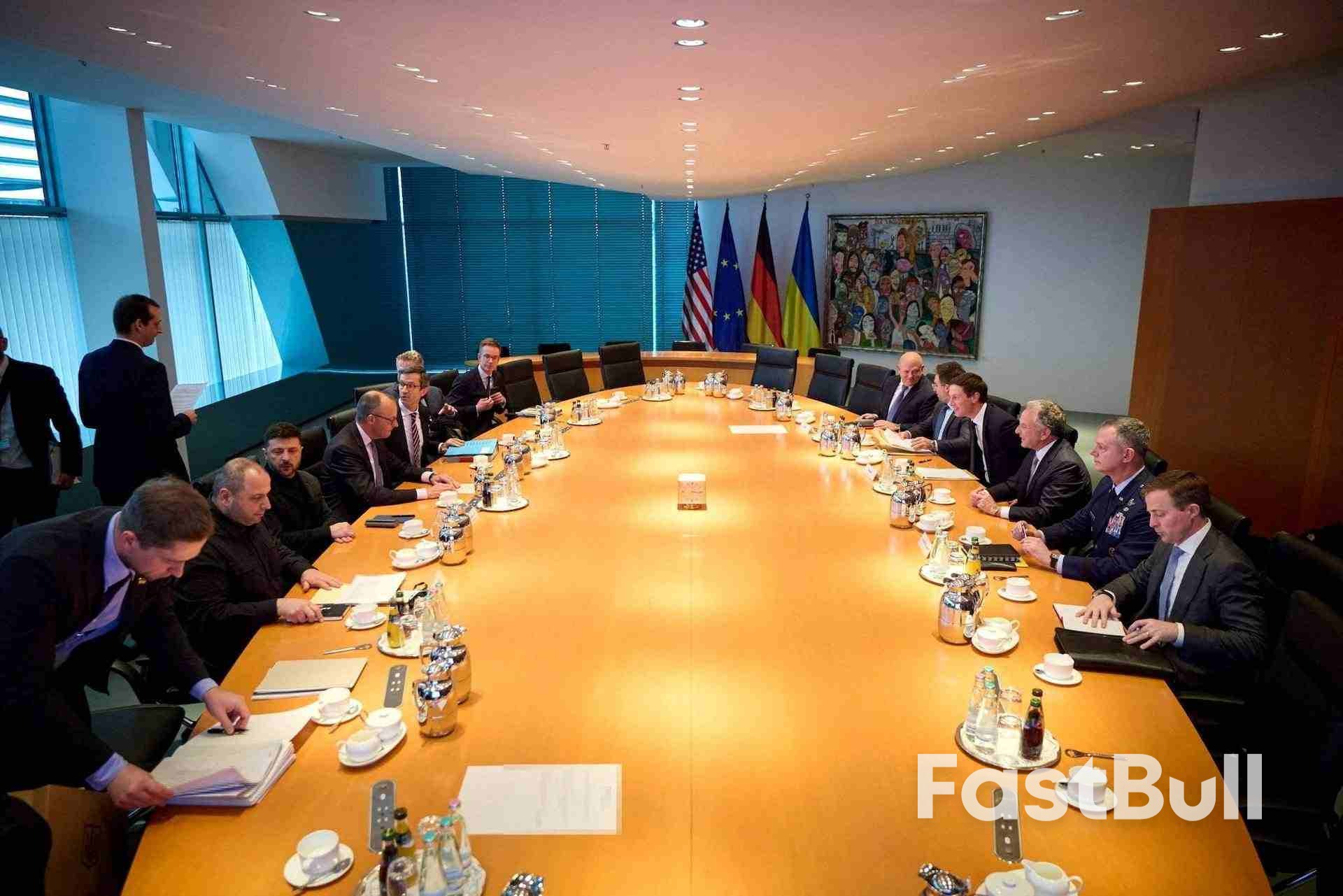
          US Security Experts Say Ukraine's Abandonment Of NATO Goal Will Not Alter Peace Talks

          Olivia Brooks

          Political

          Russia-Ukraine Conflict

          Ukraine's offer to forgo joining the NATO military alliance probably will not significantly change the course of peace talks, two security experts said on Sunday.

          During negotiations with U.S. envoys over a potential Ukraine-Russia peace deal, President Volodymyr Zelenskiy on Sunday offered to drop Ukraine's NATO aspirations. Zelenskiy had said security guarantees from the United States, Europe and others instead of joining NATO was a compromise from Ukraine.

          "This doesn't move the needle at all," said Justin Logan, director of defense and foreign policy studies at the Cato Institute. "It's an effort to appear reasonable."

          NATO membership for Ukraine has not been realistic in a long time anyway, said Logan and Andrew Michta, a professor of strategic studies at the University of Florida. Michta called Ukraine's NATO admittance a "non-issue" at this point.

          There are other ways for nations to try ensuring Ukraine's security, Logan said. U.S. President Donald Trump, in response to Zelenskiy's offer, may commit to the same things the United States has already done to support Ukraine, such as sending weapons and sanctioning Russia, Logan said.

          Not everyone dismissed Zelenskiy's offer.

          Brett Bruen, a former foreign policy adviser in the Obama administration and now head of the Global Situation Room consultancy, called Ukraine's concession "significant and substantive."

          "It's a way for Zelenskiy to contrast Ukraine's willingness for significant concessions for peace at a time when Moscow has been short on any significant concessions," Bruen said. "The question is what did Zelenskiy get in return for backing off a pretty ironclad promise to the Ukrainian people?"

          Bruen speculated Trump may have promised to patrol Ukraine's skies or respond to aircraft incursions. The United States may also increase supplies of military aid if Russia were to re-launch a large-scale military offensive, he said.

          "Ukraine has got to hedge bets on what Trump promises but they need more than a word," he said. "They need action, some element, that is going to ensure Trump can't easily wiggle out of these situations."

          Source: Reuters

          Risk Warnings and Disclaimers
          You understand and acknowledge that there is a high degree of risk involved in trading. Following any strategies or investment methods may lead to potential losses. The content on the site is provided by our contributors and analysts for information purposes only. You are solely responsible for determining whether any trading assets, securities, strategy, or any other product is suitable for investing based on your own investment objectives and financial situation.
          Add to Favorites
          Share

          Hassett Says Trump Can Offer Fed Advice But Won’t Set Its Action

          Olivia Brooks

          Political

          Economic

          Central Bank

          National Economic Council head Kevin Hassett said he'd consider President Donald Trump's policy opinions if picked to lead the Federal Reserve, but that the central bank's interest rate decisions would remain independent.

          The president "has very strong and well-founded views about what we ought to do," Hassett, Trump's top economic adviser at the White House, said Sunday on CBS' Face the Nation.

          "But in the end, the job of the Fed is to be independent and to work with the group of people that are on the Board of Governors, the FOMC, to drive a group consensus on where interest rates should be," he said.

          Hassett was responding to questions about Trump's comment Friday that he should be able to make recommendations on rates set by the Fed.

          Trump and senior advisers have pressed Fed Chair Jay Powell to lower rates for months — while also weighing his choice to replace Powell, whose term at the helm of the Fed ends in May.

          Hassett is seen as the frontrunner for the post, though Trump also met last week with former Federal Reserve Governor Kevin Warsh. The president named the two men as his top choices to the lead the Fed in a Wall Street Journal interview on Friday.

          "We'll soon have a good head of the Fed who's going to want to see interest rates go down," the president said during a holiday reception at the White House on Sunday. "But we're fighting through higher interest rates."

          Hassett sought to suggest on Sunday that Trump is one of many experts that can fairly be consulted, even if he ultimately offers only advice.

          Even as Fed chair, "I would be happy to talk with the president every day until both of us are dead because it's so much fun to talk" with him, Hassett told CBS.

          He rebuffed the notion that the president's voice would have equal weight to voting members of the Federal Open Market Committee, however, saying the policymakers would be free to reject his opinion and "vote in a different way."

          "No, no, he would have no weight," Hassett said. "It's just, his opinion matters if it's good, if it's based on data."

          Source: Bloomberg Europe

          To stay updated on all economic events of today, please check out our Economic calendar
          Risk Warnings and Disclaimers
          You understand and acknowledge that there is a high degree of risk involved in trading. Following any strategies or investment methods may lead to potential losses. The content on the site is provided by our contributors and analysts for information purposes only. You are solely responsible for determining whether any trading assets, securities, strategy, or any other product is suitable for investing based on your own investment objectives and financial situation.
          Add to Favorites
          Share

          China and Europe Align on Trade Strategy Amid U.S. Tariff Escalation

          Gerik

          Economic

          Strategic Alignment Against U.S. Tariff Moves

          Recent developments point to a growing alignment between China and Europe as both economic powers confront rising trade tensions with the United States. The convergence comes at a time when the Biden and Trump administrations alike have embraced more aggressive tariff measures targeting Chinese imports, with ripple effects on global supply chains and industrial competition.
          In response, Beijing is actively engaging with European partners to explore coordinated trade frameworks that can dilute Washington's leverage. This includes reinforcing multilateralism, deepening dialogue on World Trade Organization (WTO) reform, and advancing bilateral cooperation on standards, climate policy, and digital economy rules.
          The growing collaboration is not coincidental but stems from a shared economic exposure to U.S. policy unpredictability. While Europe has often aligned with the U.S. on strategic issues, it increasingly views unilateral tariffs as damaging to its own industrial base particularly sectors like green tech, automotive, and aerospace, where both China and the EU are heavily invested.

          From Competition to Cooperation in Critical Sectors

          Although the EU and China have their own frictions ranging from market access to human rights concerns there is a growing recognition that coordinated opposition to certain U.S. trade tactics may serve mutual interests. This is especially true in the green economy, where American subsidies under the Inflation Reduction Act (IRA) have been criticized for distorting fair competition.
          China’s dominance in EV battery materials and Europe’s push to revive its industrial competitiveness through the Green Deal Industrial Plan are intersecting in strategic ways. Both sides now face pressure to defend their positions not only against American tariffs but also against the risk of losing investments to U.S. reshoring incentives.
          The correlation here is clear: the more aggressive U.S. trade policies become, the more likely China and the EU are to synchronize trade countermeasures and regulatory strategies, even if cautiously.

          Challenges of Coordinated Action

          Despite the shared pressure, a fully unified front remains unlikely. Europe continues to maintain a nuanced stance toward China, wary of overdependence in critical supply chains, particularly after COVID-19 disruptions and rising geopolitical friction over Taiwan and Ukraine.
          However, sector-specific coordination especially in WTO negotiations, anti-dumping frameworks, and joint standard-setting bodies is expanding. These moves represent not an ideological alliance, but a pragmatic shift toward mutual risk management.
          The evolving trade dynamics between China, Europe, and the U.S. are reshaping global economic alliances. As the U.S. continues to weaponize tariffs in pursuit of industrial policy goals, China and Europe appear increasingly motivated to forge points of coordination. While not a formal alliance, this growing collaboration underscores the emergence of a more multipolar trade environment one in which economic self-interest drives unexpected partnerships against protectionist pressures.
          To stay updated on all economic events of today, please check out our Economic calendar
          Risk Warnings and Disclaimers
          You understand and acknowledge that there is a high degree of risk involved in trading. Following any strategies or investment methods may lead to potential losses. The content on the site is provided by our contributors and analysts for information purposes only. You are solely responsible for determining whether any trading assets, securities, strategy, or any other product is suitable for investing based on your own investment objectives and financial situation.
          Add to Favorites
          Share

          AI’s Fast-Moving Chip Cycle Threatens Profitability and Exposes Fragile Financial Foundations

          Gerik

          Economic

          Shorter Lifespan, Bigger Problem: AI’s Hardware Dilemma

          The AI gold rush has triggered a $400 billion wave of investment in chips and data centers this year, but concerns are mounting over whether the financial infrastructure supporting this expansion is built on realistic assumptions. At the heart of the issue lies an uncomfortable truth: the expected lifespan of AI chips estimated at five to six years by most hyperscale cloud operators is proving far too optimistic.
          Michael Burry, famed for predicting the 2008 subprime mortgage crisis, has called out what he describes as “accounting fraud” in how tech companies depreciate AI chips. According to his estimates, actual chip lifespans are closer to just two or three years. By maintaining inflated depreciation timelines, companies like Meta and Oracle are allegedly overstating their profitability, with potential underreporting of $176 billion in depreciation costs from 2026 to 2028. If corrected, Burry projects that Oracle and Meta’s net income could be overstated by 26.9% and 20.8%, respectively, by 2028.

          Obsolescence Accelerates with Nvidia’s Relentless Roadmap

          Mihir Kshirsagar of Princeton's Center for Information Technology Policy echoes these concerns, emphasizing the dual challenges of physical wear and technological redundancy. Nvidia, the dominant player in AI GPUs, illustrates this perfectly: less than a year after launching its Blackwell architecture, it has already unveiled the upcoming Rubin chips offering 7.5 times the performance and expected to ship in 2026.
          Gil Luria, head of technology research at D.A. Davidson, notes that this pace of innovation causes AI chips to lose 85–90% of their market value within three to four years. Nvidia CEO Jensen Huang reinforced this dynamic in March, admitting that the moment Blackwell arrived, demand for its predecessor Hopper effectively vanished. Even Nvidia's own November 2025 defense of a 4–6 year chip lifespan did little to ease skepticism, as field data continues to contradict such projections.

          Hardware Failure and Heat: Physical Decay Compounds Financial Risk

          Beyond obsolescence, hardware reliability is under pressure. According to Luria, AI processors are running hotter and degrading faster than traditional chips. In one Meta study involving its Llama model, annual failure rates for GPU clusters reached 9%. Jon Peddie, founder of Jon Peddie Research, warns that if companies are forced to shorten depreciation schedules, the hit to net profits will be immediate and substantial.
          This presents a clear causal sequence: overstated chip lifespans lower accounting costs and inflate profitability, but as the physical and functional lifespan proves shorter, firms will be forced to recognize previously hidden losses undermining their financial health.

          Financial Engineering and the Risk of Asset-Backed AI Loans

          Compounding the issue, many AI infrastructure firms are leveraging chip inventories as collateral to secure financing. Luria warns that companies like Oracle and CoreWeave both heavily indebted and reliant on rapid AI infrastructure growth are especially vulnerable. If chip value collapses sooner than expected, their debt structures may be exposed, making future borrowing prohibitively expensive.
          The correlation here is direct: when underlying assets like chips depreciate faster than expected, the risk profile of the loans they back increases sharply. This could trigger a broader credit tightening for AI infrastructure players, slowing expansion or forcing distressed sales.

          Patchwork Solutions and Secondary Use Markets

          To mitigate risk, some companies are exploring ways to repurpose older chips. Jon Peddie suggests that GPUs from 2023 could be reassigned to lower-priority tasks or used as backup compute in less latency-sensitive environments. However, these secondary uses will only partially recoup lost value and are unlikely to change the larger economic reality.
          The AI chip boom is thus revealing a structural misalignment between technological evolution and financial planning. As depreciation assumptions unravel and replacement cycles tighten, the sustainability of current AI infrastructure economics is called into question.
          The AI industry’s rapid growth may be built on shaky ground. With hardware becoming obsolete in as little as two years and financial models lagging behind technological realities, companies face the risk of profit distortions, funding shocks, and balance sheet erosion. While giants like Amazon or Google can absorb these stresses, debt-laden infrastructure specialists may face an existential reckoning. As investors, policymakers, and CFOs awaken to the true costs behind AI’s breakthrough era, the next wave of innovation may be defined not by speed but by financial resilience.
          To stay updated on all economic events of today, please check out our Economic calendar
          Risk Warnings and Disclaimers
          You understand and acknowledge that there is a high degree of risk involved in trading. Following any strategies or investment methods may lead to potential losses. The content on the site is provided by our contributors and analysts for information purposes only. You are solely responsible for determining whether any trading assets, securities, strategy, or any other product is suitable for investing based on your own investment objectives and financial situation.
          Add to Favorites
          Share

          Wall Street Banks Warn of USD Weakening in 2026 as Global Rate Divergence Takes Hold

          Gerik

          Economic

          Federal Reserve Policy Shift Fuels Dollar Bearishness

          As the Federal Reserve continues its policy pivot by cutting interest rates three times already in 2025 and potentially two more times in 2026 leading Wall Street institutions are sounding alarms over the future trajectory of the U.S. dollar. Investment giants including Deutsche Bank, Goldman Sachs, Morgan Stanley, and JPMorgan have aligned in their view that the dollar is likely to lose ground against major currencies like the euro, the British pound, and the Japanese yen in the coming year.
          The rationale is causally linked to monetary divergence. While the Fed is easing policy amid cooling job growth and persistent inflation, other central banks such as the European Central Bank (ECB) and the Bank of Japan (BoJ) are holding firm or even contemplating rate hikes. This divergence encourages capital flows away from the U.S. toward higher-yielding assets elsewhere, thereby applying downward pressure on the dollar’s value.

          Morgan Stanley Forecasts 5% USD Drop by Mid-2026

          Morgan Stanley stands out with a particularly stark prediction: the dollar may drop as much as 5% in the first half of 2026. JPMorgan’s global macro research head, Luis Oganes, echoed similar concerns, citing that the structural outlook appears increasingly unfavorable for the dollar. This is a consequence not only of Fed policy but also of shifting global capital dynamics and investor positioning.
          The ripple effects of a weakening dollar are multifaceted. On one hand, U.S. exports are poised to benefit as dollar-denominated goods become cheaper for international buyers. This supports the Trump administration’s ongoing efforts to reduce trade deficits. However, a weaker dollar would also raise import costs, potentially contributing to a rebound in consumer inflation a dynamic the Fed is already trying to manage.
          For multinational U.S. corporations, the depreciation of the dollar offers a potential windfall. Revenues earned overseas, when converted back to dollars, become more profitable, boosting bottom lines. This creates a correlative advantage: the weaker the dollar, the greater the earnings lift for companies with global exposure.

          Emerging Markets and Carry Trade Revival

          Emerging markets are positioned to benefit even more. The decline in the dollar’s value fuels interest in “carry trades,” in which investors borrow in low-yielding currencies like the USD and invest in higher-yielding emerging market currencies. According to analysts at JPMorgan and Bank of America, the Brazilian real, South Korean won, and Chinese yuan are among the currencies expected to strengthen as capital flows return to these markets.
          The revival of the carry trade is causally tied to lower U.S. interest rates and global rate spreads. When borrowing in USD becomes cheaper and alternatives yield more, the strategy becomes increasingly attractive especially after a decade-long pause due to the Fed's aggressive tightening from 2016 to 2022.

          Optimism for G10 Currencies: CAD and AUD in Focus

          Goldman Sachs highlights that G10 currencies such as the Canadian dollar (CAD) and the Australian dollar (AUD) are also gaining investor favor, bolstered by better-than-expected economic data. The firm argues that the global macro backdrop is shifting in favor of non-USD assets, particularly as regions outside the U.S. begin to re-accelerate economically.
          Goldman’s view suggests a correlation between global growth divergence and USD weakness: when the rest of the world accelerates while the U.S. cools, the dollar historically tends to underperform.

          Dissenting Views: Citigroup and Standard Chartered Remain Bullish

          Not all analysts agree with the bearish consensus. Citigroup and Standard Chartered argue that the U.S. economy’s surprising resilience, driven in part by massive investment in artificial intelligence and automation, may defy expectations. They believe that capital inflows driven by AI expansion and the robust performance of U.S. equities could offset the dollar’s structural vulnerabilities.
          This view reflects a different causal mechanism: technological innovation and equity market momentum sustain investor confidence and inflows, supporting the dollar despite rate cuts.
          Furthermore, the Fed has revised its 2026 GDP growth forecast upward, even while leaving room for additional rate reductions. This reinforces Citigroup’s forecast of a possible dollar rebound by mid-2026, especially if inflation remains sticky and the labor market avoids a steep downturn.

          Valuation Warning: Is the Dollar Overpriced?

          Deutsche Bank’s George Saravelos and Tim Baker warn that the dollar may already be overvalued. In a late-November note, they described the greenback as benefitting from an “unexpectedly resilient” U.S. economy and soaring equity markets, but cautioned that valuation pressures and capital reallocation may soon reverse this strength.
          If realized, such a shift would mark the end of the dollar’s unusual decade-long bull cycle. The potential causal endpoint is clear: once rate advantages, growth divergence, and equity strength fade or reverse, so too will investor appetite for holding dollar-denominated assets.
          The outlook for the U.S. dollar in 2026 is increasingly uncertain, caught between the gravity of monetary easing and the buoyancy of AI-led growth. While major banks warn of a decline driven by capital outflows and global rate divergence, others bet on America's innovation engine to keep attracting investment. As the Fed prepares its next move, the dollar’s trajectory will serve as a barometer for broader global economic realignments and perhaps a signpost for the end of an era in currency dominance.
          To stay updated on all economic events of today, please check out our Economic calendar
          Risk Warnings and Disclaimers
          You understand and acknowledge that there is a high degree of risk involved in trading. Following any strategies or investment methods may lead to potential losses. The content on the site is provided by our contributors and analysts for information purposes only. You are solely responsible for determining whether any trading assets, securities, strategy, or any other product is suitable for investing based on your own investment objectives and financial situation.
          Add to Favorites
          Share
          FastBull
          Copyright © 2025 FastBull Ltd

          728 RM B 7/F GEE LOK IND BLDG NO 34 HUNG TO RD KWUN TONG KLN HONG KONG

          TelegramInstagramTwitterfacebooklinkedin
          App Store Google Play Google Play
          Products
          Charts

          Chats

          Q&A with Experts
          Screeners
          Economic Calendar
          Data
          Tools
          Membership
          Features
          Function
          Markets
          Copy Trading
          Latest Signals
          Contests
          News
          Analysis
          24/7
          Columns
          Education
          Company
          Careers
          About Us
          Contact Us
          Advertising
          Help Center
          Feedback
          User Agreement
          Privacy Policy
          Business

          White Label

          Data API

          Web Plug-ins

          Poster Maker

          Affiliate Program

          Risk Disclosure

          The risk of loss in trading financial instruments such as stocks, FX, commodities, futures, bonds, ETFs and crypto can be substantial. You may sustain a total loss of the funds that you deposit with your broker. Therefore, you should carefully consider whether such trading is suitable for you in light of your circumstances and financial resources.

          No decision to invest should be made without thoroughly conducting due diligence by yourself or consulting with your financial advisors. Our web content might not suit you since we don't know your financial conditions and investment needs. Our financial information might have latency or contain inaccuracy, so you should be fully responsible for any of your trading and investment decisions. The company will not be responsible for your capital loss.

          Without getting permission from the website, you are not allowed to copy the website's graphics, texts, or trademarks. Intellectual property rights in the content or data incorporated into this website belong to its providers and exchange merchants.

          Not Logged In

          Log in to access more features

          FastBull Membership

          Not yet

          Purchase

          Become a signal provider
          Help Center
          Customer Service
          Dark Mode
          Price Up/Down Colors

          Log In

          Sign Up

          Position
          Layout
          Fullscreen
          Default to Chart
          The chart page opens by default when you visit fastbull.com
