• Trade
  • Markets
  • Copy
  • Contests
  • News
  • 24/7
  • Calendar
  • Q&A
  • Chats
Trending
Screeners
SYMBOL
LAST
BID
ASK
HIGH
LOW
NET CHG.
%CHG.
SPREAD
SPX
S&P 500 Index
6870.39
6870.39
6870.39
6895.79
6858.28
+13.27
+ 0.19%
--
DJI
Dow Jones Industrial Average
47954.98
47954.98
47954.98
48133.54
47871.51
+104.05
+ 0.22%
--
IXIC
NASDAQ Composite Index
23578.12
23578.12
23578.12
23680.03
23506.00
+72.99
+ 0.31%
--
USDX
US Dollar Index
98.740
98.820
98.740
98.960
98.740
-0.210
-0.21%
--
EURUSD
Euro / US Dollar
1.16704
1.16713
1.16704
1.16708
1.16341
+0.00278
+ 0.24%
--
GBPUSD
Pound Sterling / US Dollar
1.33455
1.33463
1.33455
1.33457
1.33151
+0.00143
+ 0.11%
--
XAUUSD
Gold / US Dollar
4217.65
4218.08
4217.65
4218.45
4190.61
+19.74
+ 0.47%
--
WTI
Light Sweet Crude Oil
60.004
60.041
60.004
60.063
59.752
+0.195
+ 0.33%
--

Community Accounts

Signal Accounts
--
Profit Accounts
--
Loss Accounts
--
View More

Become a signal provider

Sell trading signals to earn additional income

View More

Guide to Copy Trading

Get started with ease and confidence

View More

Signal Accounts for Members

All Signal Accounts

Best Return
  • Best Return
  • Best P/L
  • Best MDD
Past 1W
  • Past 1W
  • Past 1M
  • Past 1Y

All Contests

  • All
  • Trump Updates
  • Recommend
  • Stocks
  • Cryptocurrencies
  • Central Banks
  • Featured News
Top News Only
Share

Agriculture Ministry: Uganda October Coffee Shipments Up 38% From Last Year

Share

Russia's Nornickel: Cobalt Production Capacity To Be At Up To 3000 Tons Per Year

Share

Russia's Nornickel: Fully Restarts Cobalt Production In Murmansk Region

Share

India's Nifty Realty Index Down 2.7%

Share

China Vice President, In Meeting With German Foreign Minister: China Willing To Enhance Communication With Germany - Xinhua

Share

Japan Finance Minister Katayama: Will Take Appropriate Action If Necessary

Share

Japan Finance Minister Katayama: Concerned About Forex Moves

Share

Japan Finance Minister Katayama: Recently Seeing One-Sided, Rapid Moves

Share

LME Three-month Copper Rose To $11,771 Per Tonne, Setting A New Record High

Share

Shanghai's Most Active Copper Contract Sets Peak At 93300 Yuan Per Metric Ton

Share

Thai Prime Minister: Thailand Does Not Want Violence

Share

Thai Prime Minister: Ready To Take Necessary Measures To Maintain Security, Sovereignty Of Country

Share

China Politburo: Will Better Coordinate Between China's Economic Work And International Economic And Trade Battle Next Year

Share

China Politburo: Moderately Loose Monetary Policy

Share

China Politburo:Continue To Implement More Active Fiscal Policies

Share

India's SEBI Chair: If Any Entity Wants To Advertise Any Past Return They Can Do Only Via The Platform

Share

Vietnam's Plans To Have Nuclear Power Plant Ready By 2035 Are Too Tight - Ambassador

Share

Japan Still Exploring Options For Future Vietnam Nuclear Projects Involving Small Reactors - Ambassador

Share

Ambassador In Hanoi: Japan Pulls Out Of Plans For Vietnam Nuclear Power Plant Ninh Thuan 2

Share

India's SEBI Chair: Platform Will Allow Investors To Access Verified Returns Of Registered Entities

TIME
ACT
FCST
PREV
U.S. Personal Income MoM (Sept)

A:--

F: --

P: --

U.S. PCE Price Index YoY (SA) (Sept)

A:--

F: --

P: --

U.S. PCE Price Index MoM (Sept)

A:--

F: --

P: --

U.S. Personal Outlays MoM (SA) (Sept)

A:--

F: --

P: --

U.S. Core PCE Price Index MoM (Sept)

A:--

F: --

P: --

U.S. Core PCE Price Index YoY (Sept)

A:--

F: --

P: --

U.S. UMich 5-Year-Ahead Inflation Expectations Prelim YoY (Dec)

A:--

F: --

P: --

U.S. Real Personal Consumption Expenditures MoM (Sept)

A:--

F: --

P: --

U.S. UMich Current Economic Conditions Index Prelim (Dec)

A:--

F: --

P: --

U.S. UMich Consumer Sentiment Index Prelim (Dec)

A:--

F: --

P: --

U.S. UMich 1-Year-Ahead Inflation Expectations Prelim (Dec)

A:--

F: --

P: --

U.S. UMich Consumer Expectations Index Prelim (Dec)

A:--

F: --

P: --

U.S. Weekly Total Rig Count

A:--

F: --

P: --

U.S. Weekly Total Oil Rig Count

A:--

F: --

P: --

U.S. Unit Labor Cost Prelim (SA) (Q3)

--

F: --

P: --

U.S. Consumer Credit (SA) (Oct)

A:--

F: --

P: --

China, Mainland Foreign Exchange Reserves (Nov)

A:--

F: --

P: --

Japan Wages MoM (Oct)

A:--

F: --

P: --

Japan Trade Balance (Oct)

A:--

F: --

P: --

Japan Nominal GDP Revised QoQ (Q3)

A:--

F: --

P: --

Japan Trade Balance (Customs Data) (SA) (Oct)

A:--

F: --

P: --

Japan GDP Annualized QoQ Revised (Q3)

A:--

F: --

P: --
China, Mainland Exports YoY (CNH) (Nov)

A:--

F: --

P: --

China, Mainland Trade Balance (USD) (Nov)

A:--

F: --

P: --

China, Mainland Imports YoY (CNH) (Nov)

A:--

F: --

P: --

China, Mainland Exports (Nov)

A:--

F: --

P: --

China, Mainland Imports (CNH) (Nov)

A:--

F: --

P: --

China, Mainland Trade Balance (CNH) (Nov)

A:--

F: --

P: --

China, Mainland Imports YoY (USD) (Nov)

A:--

F: --

P: --

China, Mainland Exports YoY (USD) (Nov)

A:--

F: --

P: --

Germany Industrial Output MoM (SA) (Oct)

--

F: --

P: --

Euro Zone Sentix Investor Confidence Index (Dec)

--

F: --

P: --

Canada Leading Index MoM (Nov)

--

F: --

P: --

Canada National Economic Confidence Index

--

F: --

P: --

U.S. Dallas Fed PCE Price Index YoY (Sept)

--

F: --

P: --

China, Mainland Trade Balance (USD) (Nov)

--

F: --

P: --

U.S. 3-Year Note Auction Yield

--

F: --

P: --

U.K. BRC Overall Retail Sales YoY (Nov)

--

F: --

P: --

U.K. BRC Like-For-Like Retail Sales YoY (Nov)

--

F: --

P: --

Australia Overnight (Borrowing) Key Rate

--

F: --

P: --

RBA Rate Statement
RBA Press Conference
Germany Exports MoM (SA) (Oct)

--

F: --

P: --

U.S. NFIB Small Business Optimism Index (SA) (Nov)

--

F: --

P: --

Mexico Core CPI YoY (Nov)

--

F: --

P: --

Mexico 12-Month Inflation (CPI) (Nov)

--

F: --

P: --

Mexico PPI YoY (Nov)

--

F: --

P: --

Mexico CPI YoY (Nov)

--

F: --

P: --

U.S. Weekly Redbook Index YoY

--

F: --

P: --

U.S. JOLTS Job Openings (SA) (Oct)

--

F: --

P: --

China, Mainland M2 Money Supply YoY (Nov)

--

F: --

P: --

China, Mainland M0 Money Supply YoY (Nov)

--

F: --

P: --

China, Mainland M1 Money Supply YoY (Nov)

--

F: --

P: --

U.S. EIA Short-Term Crude Production Forecast For The Next Year (Dec)

--

F: --

P: --

U.S. EIA Short-Term Crude Production Forecast For The Year (Dec)

--

F: --

P: --

U.S. EIA Natural Gas Production Forecast For The Next Year (Dec)

--

F: --

P: --

EIA Monthly Short-Term Energy Outlook
U.S. 10-Year Note Auction Avg. Yield

--

F: --

P: --

U.S. API Weekly Cushing Crude Oil Stocks

--

F: --

P: --

U.S. API Weekly Crude Oil Stocks

--

F: --

P: --

U.S. API Weekly Refined Oil Stocks

--

F: --

P: --

Q&A with Experts
    • All
    • Chatrooms
    • Groups
    • Friends
    Connecting
    .
    .
    .
    Type here...
    Add Symbol or Code

      No matching data

      All
      Trump Updates
      Recommend
      Stocks
      Cryptocurrencies
      Central Banks
      Featured News
      • All
      • Russia-Ukraine Conflict
      • Middle East Flashpoint
      • All
      • Russia-Ukraine Conflict
      • Middle East Flashpoint
      Search
      Products

      Charts Free Forever

      Chats Q&A with Experts
      Screeners Economic Calendar Data Tools
      Membership Features
      Data Warehouse Market Trends Institutional Data Policy Rates Macro

      Market Trends

      Market Sentiment Order Book Forex Correlations

      Top Indicators

      Charts Free Forever
      Markets

      News

      News Analysis 24/7 Columns Education
      From Institutions From Analysts
      Topics Columnists

      Latest Views

      Latest Views

      Trending Topics

      Top Columnists

      Latest Update

      Signals

      Copy Rankings Latest Signals Become a signal provider AI Rating
      Contests
      Brokers

      Overview Brokers Assessment Rankings Regulators News Claims
      Broker listing Forex Brokers Comparison Tool Live Spread Comparison Scam
      Q&A Complaint Scam Alert Videos Tips to Detect Scam
      More

      Business
      Events
      Careers About Us Advertising Help Center

      White Label

      Data API

      Web Plug-ins

      Affiliate Program

      Awards Institution Evaluation IB Seminar Salon Event Exhibition
      Vietnam Thailand Singapore Dubai
      Fans Party Investment Sharing Session
      FastBull Summit BrokersView Expo
      Recent Searches
        Top Searches
          Markets
          News
          Analysis
          User
          24/7
          Economic Calendar
          Education
          Data
          • Names
          • Latest
          • Prev

          View All

          No data

          Scan to Download

          Faster Charts, Chat Faster!

          Download App
          English
          • English
          • Español
          • العربية
          • Bahasa Indonesia
          • Bahasa Melayu
          • Tiếng Việt
          • ภาษาไทย
          • Français
          • Italiano
          • Türkçe
          • Русский язык
          • 简中
          • 繁中
          Open Account
          Search
          Products
          Charts Free Forever
          Markets
          News
          Signals

          Copy Rankings Latest Signals Become a signal provider AI Rating
          Contests
          Brokers

          Overview Brokers Assessment Rankings Regulators News Claims
          Broker listing Forex Brokers Comparison Tool Live Spread Comparison Scam
          Q&A Complaint Scam Alert Videos Tips to Detect Scam
          More

          Business
          Events
          Careers About Us Advertising Help Center

          White Label

          Data API

          Web Plug-ins

          Affiliate Program

          Awards Institution Evaluation IB Seminar Salon Event Exhibition
          Vietnam Thailand Singapore Dubai
          Fans Party Investment Sharing Session
          FastBull Summit BrokersView Expo

          Bitcoin to Test $110K as Macro Analysis Tells Traders to 'Buckle Up'

          Warren Takunda

          Cryptocurrency

          Summary:

          Bitcoin price performance frustrates bulls as $110,000 stays out of reach, but the clock is ticking to even more risk-asset volatility.
          Key points:
          Bitcoin tries and fails to crack $110,000 as overhead liquidity thickens.
          Traders say that more signs of strength are needed to reignite bull market momentum.
          Macro cues include next week’s CPI print as a potential volatility date.
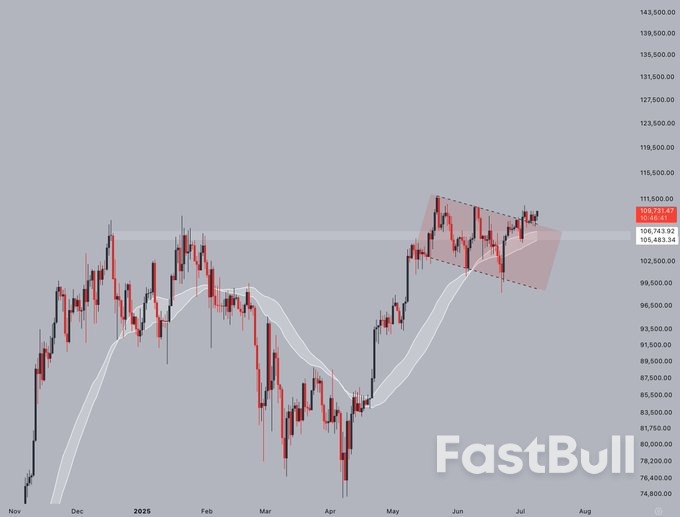
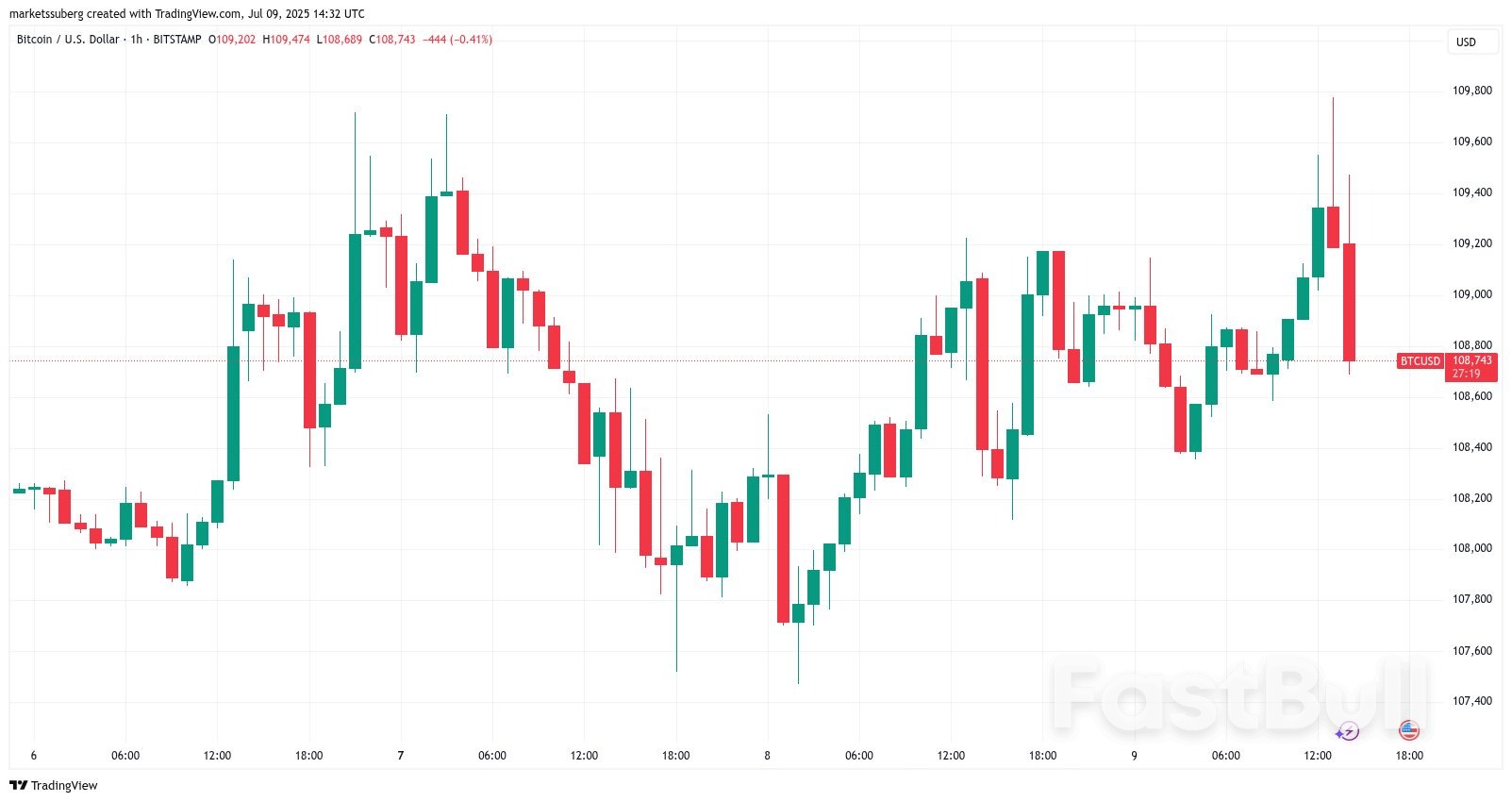
          Bitcoin attempted a run on $110,000 around the July 9 Wall Street open as sellers lined up to keep the price in place.Bitcoin to Test $110K as Macro Analysis Tells Traders to 'Buckle Up'_1

          BTC/USD 1-hour chart. Source: Cointelegraph/TradingView

          Bitcoin bulls stumble before reaching $110,000

          Data from Cointelegraph Markets Pro and TradingView showed BTC/USD reaching $109,777 on Bitstamp before reversing.
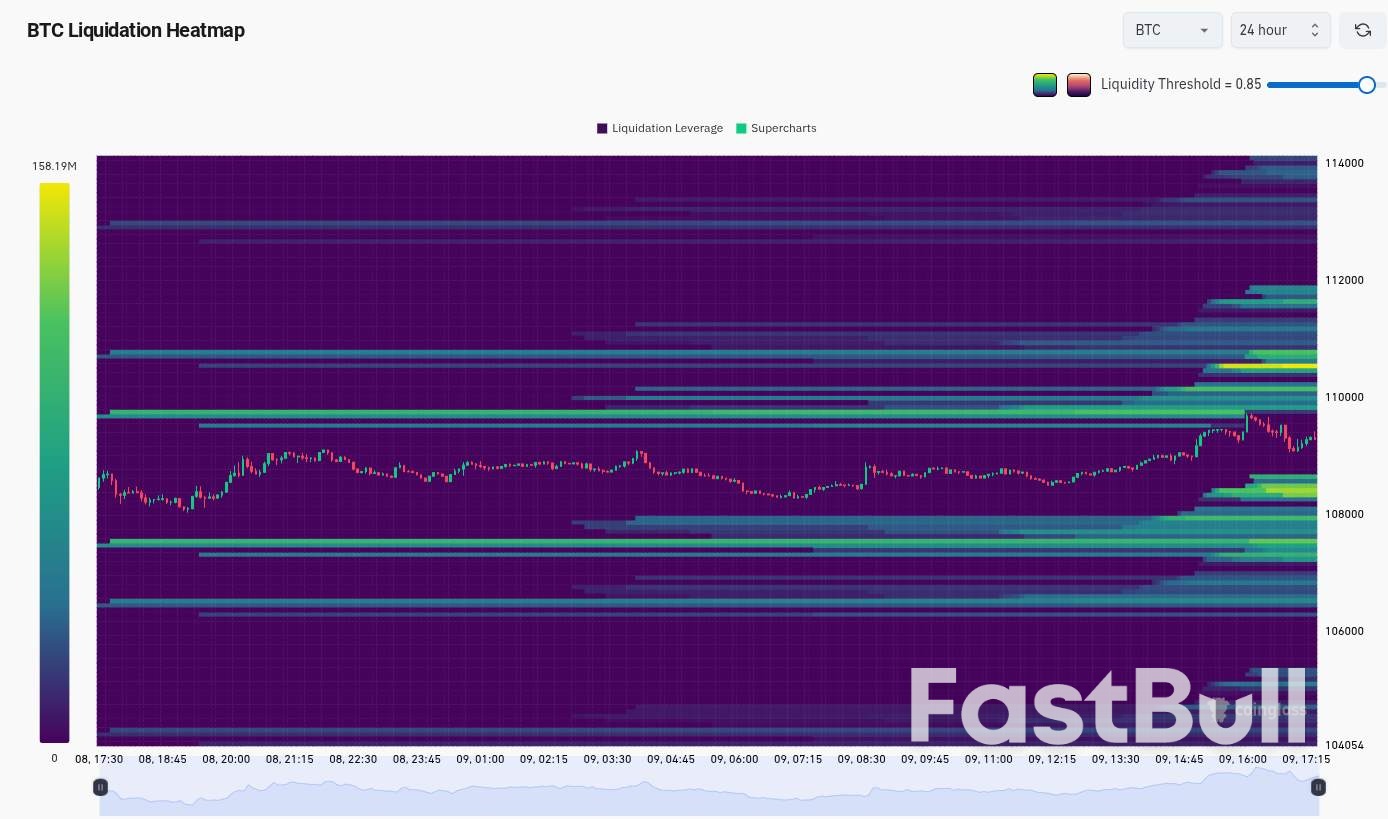
          Still wedged in a narrow range, the pair was contained by exchange order-book liquidity, which strengthened around the move.
          Data from monitoring resource CoinGlass showed bid and ask liquidity strongest at around $108,500 and $110,500, respectively.Bitcoin to Test $110K as Macro Analysis Tells Traders to 'Buckle Up'_2

          BTC liquidation heatmap (screenshot). Source: CoinGlass

          Reacting, crypto market participants hoped that the stage was being set for a long-anticipated assault on all-time highs.
          “Almost all liquidity is to the upside. Stops above $110k are not safe,” popular trader Jelle wrote in part of an X post on the topic.
          Jelle predicted a trip to $130,000 should bulls succeed in cracking the $110,000 mark, which had not seen a daily close since June 11.Bitcoin to Test $110K as Macro Analysis Tells Traders to 'Buckle Up'_3
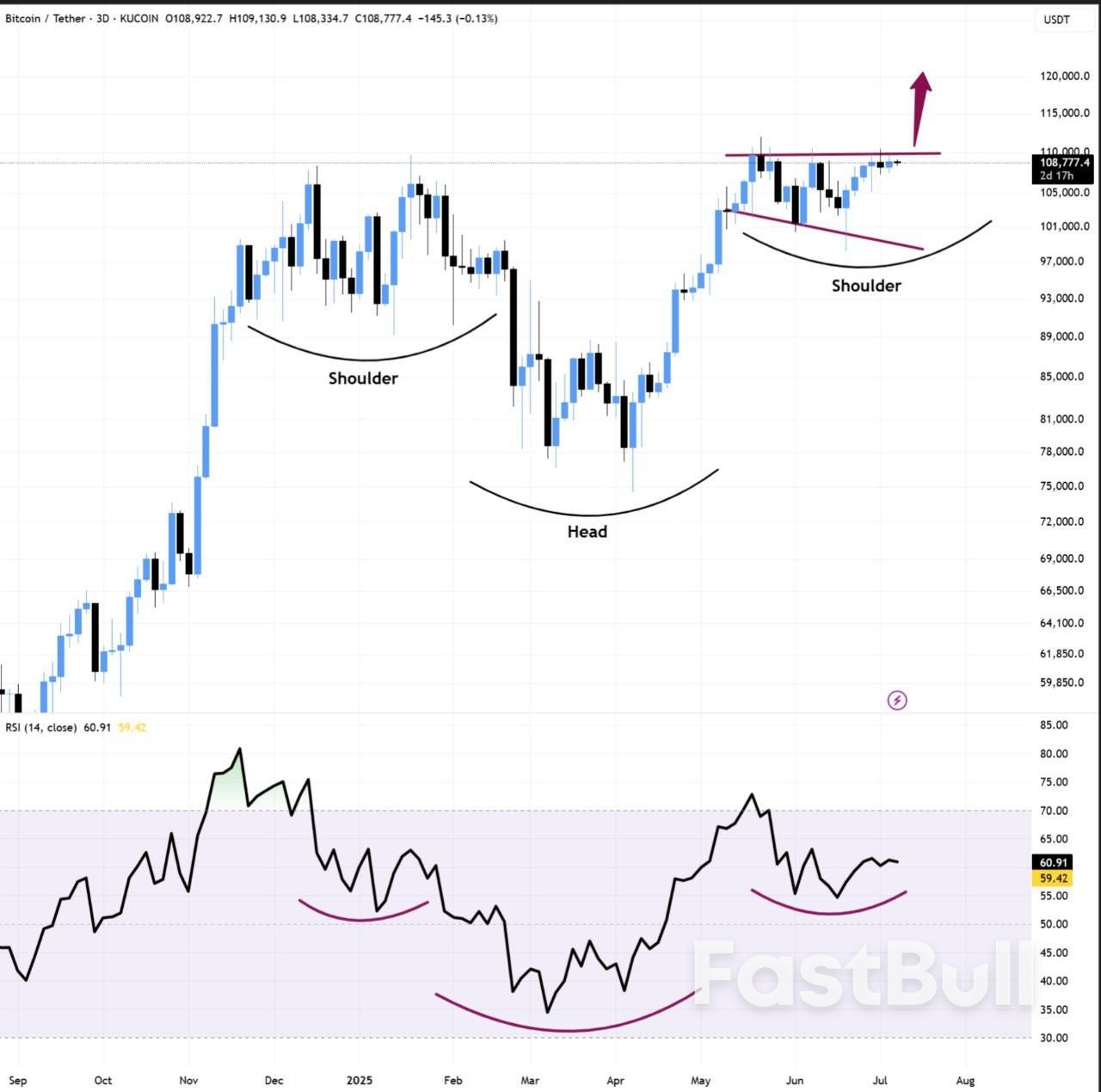
          Continuing, fellow trader BitBull flagged relative strength index (RSI) data as key to determining Bitcoin’s potential next move.
          “3D RSI and price are both forming an inverse head and shoulder pattern,” he told X followers, referring to a classic bullish chart feature.

          “For breakout, we need one of these 2 things. Either a 3D close above $110K or a 3D RSI close above 70. After that, we'll experience an up-only rally for 3-4 weeks.”Bitcoin to Test $110K as Macro Analysis Tells Traders to 'Buckle Up'_4BTC/USDT 3-day chart with RSI data. Source: BitBull/X
          “Stage is set” for crypto, risk-asset volatility

          With the US trade-tariff debacle still unfolding, macro analysis turned to upcoming volatility triggers for crypto and risk assets.
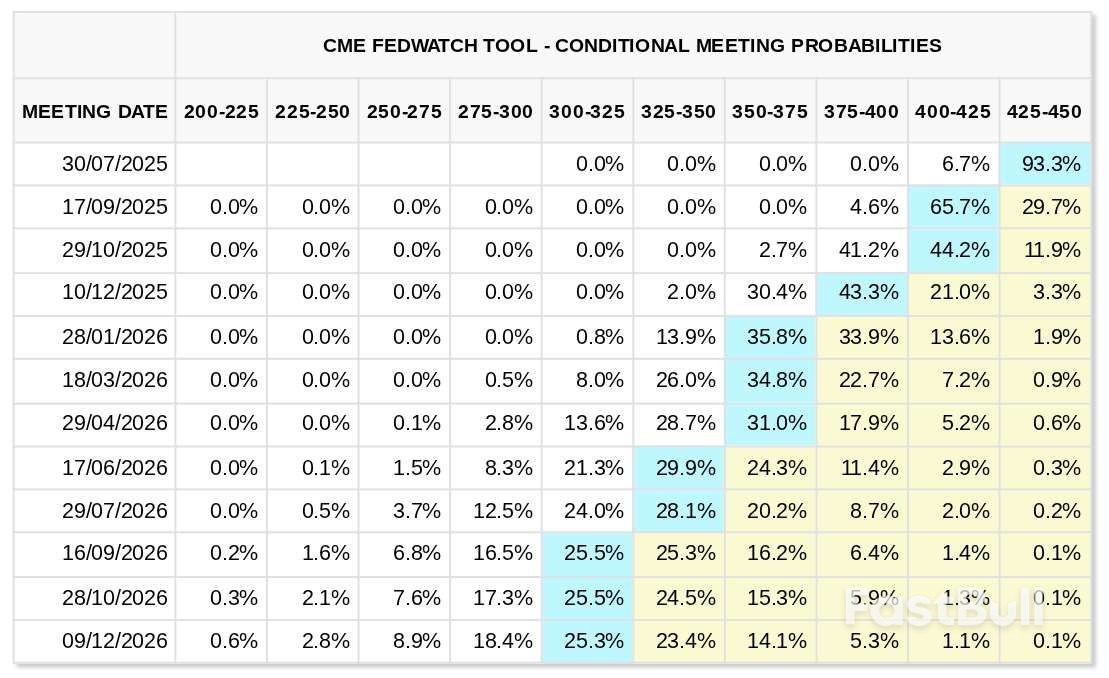
          In its latest bulletin to Telegram channel subscribers on the day, trading firm QCP Capital highlighted next week’s Consumer Price Index (CPI) print as part of the ongoing US inflation story.
          This, it argued, would weigh on market expectations for Federal Reserve interest-rate cuts, potentially altering sentiment in the process.
          “Last week’s hot jobs data dampened rate cut optimism,” the bulletin observed.

          “Markets have scaled back expectations to two cuts in 2025, down from 2.5 previously. A July cut is all but priced out. September odds have slipped from 90% to 70%.”Bitcoin to Test $110K as Macro Analysis Tells Traders to 'Buckle Up'_5Fed target rate probabilities (screenshot). Source: CME Group FedWatch Tool

          QCP described Bitcoin as “well bid,” noting US dollar weakness and consistent institutional inflows despite the precarious macro picture.
          “With a reignited trade war, a more hawkish Fed, and tightening liquidity conditions, the stage is set for elevated volatility,” it concluded.
          “Macro catalysts are lining up. Buckle up.”

          Source: Cointelegraph

          Risk Warnings and Disclaimers
          You understand and acknowledge that there is a high degree of risk involved in trading. Following any strategies or investment methods may lead to potential losses. The content on the site is provided by our contributors and analysts for information purposes only. You are solely responsible for determining whether any trading assets, securities, strategy, or any other product is suitable for investing based on your own investment objectives and financial situation.
          Add to Favorites
          Share

          Crude Oil Reclaims Key Support but Bulls Need Break Above $70 to Take Control

          Adam

          Commodity

          Crude oil prices have now risen in the past three days, although with waning momentum as macro concerns linger. But with oil trading at its highest levels in about two weeks, when there is so much bearish news out there, you might be wondering what has supported prices? After all, bearish speculators argue, there was a larger-than-expected OPEC+ increase for the month of August just at the weekend.
          Despite this urgency to bring back more supplies online, oil prices have stopped falling further since that sharp de-escalation in the conflict between Israel and Iran a couple of weeks ago. What’s driving prices, and what’s in for the months ahead?

          So Why Have Oil Prices Bounced Back?

          One explanation behind the recent recovery in oil prices can be attributed to the fact that there were worries about demand owing to trade concerns hurting the global economy. Instead, trade fears have receded sharply, judging by the reaction in equity markets in the last couple of months (we saw benchmark stock indices surge from their April lows to hit record highs).
          Granted, tariff uncertainty could flare up with Trump now saying he won’t extend deadlines beyond August 1 again. Meanwhile, inflation hasn’t picked up either, as had been feared due to the higher tariffs, and many central banks have been cutting rates in recent months.
          At the same time, the US has passed a big budget and tax bill into law, which should boost economic output in the short term, all else being equal, even if it ultimately adds trillions to the national debt, which is probably not in the interest of the economy in the long term.
          In the US, they are also nearing peak driving season when demand for gasoline surges. According to Reuters, citing travel industry statistics, a record number of Americans were set to travel for the Fourth of July holiday by road and air. Ahead of peak driving season, we have seen several sharp drawdowns in US oil stocks, pointing to strong demand.
          Globally, the macro backdrop hasn’t been too great, but the fact that Saudi Arabia raised the August price for its flagship Arab Light crude to a four-month high for Asian customers at the weekend, this goes to shows that demand for oil remains strong there.
          So, the crude oil has been supported in part because of receding fears about demand. But this alone won’t be enough to sustain higher prices. Supply is the main factor driving oil prices.

          And What About Those OPEC+ Cuts?

          The OPEC+ agreed to raise production by 548,000 barrels per day in August. This was more than the 411,000-bpd hikes they made for the earlier three months. As a result, the group has returned nearly half of the 2.2 million-bpd voluntary cuts from eight OPEC producers back into the market. Further production hikes are expected for September, which, according to Goldman Sachs, will amount to 550,000 bpd.
          The key question is whether this was the right move and in the best interest of OPEC+. Clearly, the group doesn’t want to lose market share to non-OPEC producers. In fact, the US hasn’t been able to ramp up production meaningfully in recent months and therefore looks set to produce less oil in 2025 than previously expected.
          That’s according to the Energy Information Administration, which forecasts the world’s largest oil producer to pump 13.37 million barrels per day of oil this year instead of last month’s forecast of 13.42 million bpd. In part, this due to the lower oil prices discouraging drilling activity.
          Indeed, the number of oil and natural gas rigs have been plunging according to energy services firm Baker Hughes (NASDAQ:BKR). The latest data from the company shows rig counts falling to 425 from around 780 rigs in 2022’s peak, marking a dramatic reversal and the lowest since October 2021.
          It can be argued, therefore, that this might be the perfect opportunity for the OPEC+ to raise output as much as possible while the US drilling is not “drill-baby-drill”-ing.

          Longer Term Outlook Remains Bearish

          However, in the longer run, supply growth will need to be matched by equally strong demand growth to allow for sustainably higher prices. Given that Iran is now allowed to export more freely and the OPEC+ is ramping production, and Trump urging US producers to pump more oil, the long-term outlook remains bearish, which means the upside should be limited from here on, barring another supply-side shock.

          WTI Technical Analysis and Levels to Watch

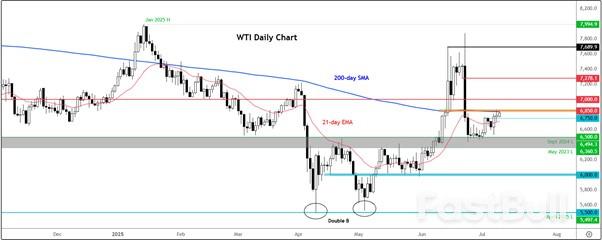
          WTI has bounced back from the neckline of the double bottom pattern between $63.60 to $65.00 area (shaded in grey on the chart). This area remains crucial for long-term support, given that the lows of May 2023 and September 2024 were previously formed here, and now we are above it. Should WTI break back below this zone, the technical outlook would turn negative once again, which could encourage fresh selling below that zone.
          Crude Oil Reclaims Key Support but Bulls Need Break Above $70 to Take Control_1
          One short-term support above this zone worth pointing out is now seen at $67.50, marking resistance from last week.
          At the time of writing, WTI was now testing potential resistance in the $68.50 region. As well as former support, the 200-day moving average also comes into play here, making it a key battleground. Above this zone, the next potential resistance is the psychologically important handle of $70.00.
          All told, WTI is bang in the middle of its range, which should keep both the bulls and bears interested. In this sort of trading environment, trading oil from level to level makes most sense to me, rather than applying a swing strategy.

          Source: investing

          Risk Warnings and Disclaimers
          You understand and acknowledge that there is a high degree of risk involved in trading. Following any strategies or investment methods may lead to potential losses. The content on the site is provided by our contributors and analysts for information purposes only. You are solely responsible for determining whether any trading assets, securities, strategy, or any other product is suitable for investing based on your own investment objectives and financial situation.
          Add to Favorites
          Share

          US Crude Oil Inventories Surge, Surpassing Forecasts And Previous Levels

          Damon

          Economic

          Commodity

          The Energy Information Administration (EIA) released its weekly report on Crude Oil Inventories, a key indicator of the number of barrels of commercial crude oil held by US firms. The report showed a significant increase in crude oil inventories, defying expectations and surpassing previous levels.

          The actual number of barrels reported by the EIA reached 7.070 million, a figure that exceeded both the forecasted and previous numbers. The forecast had predicted a decrease of 1.700 million barrels, making the actual figure a substantial deviation from expectations.

          This upswing in crude oil inventories also represents a significant contrast to the previous data. The prior week’s report showed 3.845 million barrels, meaning the current figure nearly doubled the amount of crude oil held by US firms.

          The level of inventories plays a crucial role in influencing the price of petroleum products, which in turn can have an impact on inflation. This unexpected increase in crude inventories implies weaker demand, which is bearish for crude prices.

          A higher than expected increase in inventories can be interpreted as a sign of weaker demand, which could lead to a fall in crude prices. On the other hand, if the increase in crude is less than expected, it implies greater demand and is bullish for crude prices.

          The EIA’s Crude Oil Inventories report is one of the most closely watched indicators by investors and analysts in the energy market, due to its potential to influence not only energy prices but also broader financial markets and the economy.

          This unexpected surge in US crude oil inventories will be a key factor for investors and analysts to monitor in the coming weeks, as it could potentially signal shifts in the energy market and broader economic trends.

          Source: Investing

          To stay updated on all economic events of today, please check out our Economic calendar
          Risk Warnings and Disclaimers
          You understand and acknowledge that there is a high degree of risk involved in trading. Following any strategies or investment methods may lead to potential losses. The content on the site is provided by our contributors and analysts for information purposes only. You are solely responsible for determining whether any trading assets, securities, strategy, or any other product is suitable for investing based on your own investment objectives and financial situation.
          Add to Favorites
          Share

          Trump Tariffs Explained: What’s Changed and Why Have Asian Countries Been Hit So Hard?

          Warren Takunda

          Economic

          China–U.S. Trade War

          US President Donald Trump has ramped up threats to impose punishing tariffs on more than a dozen nations unless they can broker a deal before 1 August, marking the latest phase in his trade war.
          The tax duties stem from Trump’s so-called “reciprocal” tariff package that was first announced in April, but then delayed for 90 days to allow for negotiations. That deadline, initially scheduled to end this week, has now been pushed back to August.
          The shifting timeline of the most significant US tariff increases in nearly a century has roiled global markets and caused widespread confusion, with the US administration far off from sealing the “90 deals in 90 days” it had initially promised.
          If you are perplexed by Trump’s tariffs here is the latest.

          What has changed with Trump’s tariff rollout?

          Trump informed powerhouse suppliers Japan, South Korea and 12 other nations at the start of this week that they will face tariffs of at least 25% starting from August unless they can quickly negotiate deals.
          He also threatened to increase them if any countries retaliate, or tried to circumvent tariffs by sending goods through other nations.
          Trump has kept much of the world guessing on the outcome of months of talks with countries hoping to avoid the hefty tariff hikes he has threatened.
          The rate for South Korea is the same as Trump initially announced, while the rate for Japan is one percentage point higher than that announced in April.

          Which countries are affected?

          Fourteen countries have been given notice this week of the looming tariffs increase, with more expected to follow in the coming days.
          The steep tariff rates range from 25-40% with some of the harshest levies imposed on developing nations in southeast Asia, including 32% for Indonesia, 36% for Cambodia and Thailand and 40% on Laos, and Myanmar, a country riven by years of civil war.
          Manufacturing hub Bangladesh faces 35%, while Tunisia, Malaysia, Kazakhstan, South Africa and Bosnia and Herzegovina have been slapped with a 30% tariff unless they can reach a deal.

          How many deals have been made?

          Trump granted a 90-day pause this April to allow for time to broker trade deals, but only two deals have been reached.
          The first deal with the UK, signed on 8 May, includes a 10% of most UK goods, including cars, and zero tariffs for steel and aluminium. A second deal was reached with Vietnam last week that sets a 20% tariff for much of its exports, although the full details are unclear, with no text released.
          Relations with China, after escalating into a major trade war, have reached a delicate truce.
          US treasury secretary Scott Bessent said he expected several trade announcements in the next 48 hours, adding that his inbox was full of last-ditch offers from affected nations.
          South Korea’s president convened an emergency meeting and its trade ministry said the country would use the extended deadline to negotiate “mutually beneficial results”. The EU reportedly aims to reach a trade deal by Wednesday.
          Meanwhile other nations such as South Africa have hit back, with the country’s president Cyril Ramaphosa saying the 30% US tariff rate was unjustified given that 77% of US goods enter South Africa with zero tariffs.

          How are markets and business reacting?

          US stocks have fallen in response, the latest market turmoil as Trump’s trade moves have roiled financial markets and sent policymakers scrambling to protect their economies.
          The S&P 500 closed down about 0.8%, its biggest drop in three weeks. US-listed shares of Japanese automotive companies fell, with Toyota Motor closing down 4% and Honda Motor off by 3.9%.
          The US dollar has had its worst first half-year in more than 50 years.
          “Tariff talk has sucked the wind out of the sails of the market,” Brian Jacobsen, chief economist at Annex Wealth Management, told Reuters.

          Why have Asian countries been hit so hard?

          Countries in Asia have been hit with some of the most punitive tariffs due to what Trump claims is their unfair trade deficits – meaning they export more to the US than they import.
          However, analysts have questions the merit of using these calculations and also suggested that Trump may instead be trying to punish China, by targeting countries that receive substantial investment from the world’s second-largest economy.
          Several nations in Southeast Asia, a region that accounted for 7.2% of global GDP in 2024, are also major manufacturing hubs for goods such as textiles and footwear, meaning they will be severely affected by tariffs, while conversely prices for such goods will also rise in the US.

          What happens next?

          White House press secretary Karoline Leavitt told a press briefing this week that more countries would be informed of looming tariffs this week.
          Trump was “close” on other deals, she added, but “wants to ensure these are the best deals possible”.
          However, the minimal progress on deals to date highlights what trade experts say is the reality of trade agreements – that they are time-consuming and complicated.

          Source: Theguardian

          To stay updated on all economic events of today, please check out our Economic calendar
          Risk Warnings and Disclaimers
          You understand and acknowledge that there is a high degree of risk involved in trading. Following any strategies or investment methods may lead to potential losses. The content on the site is provided by our contributors and analysts for information purposes only. You are solely responsible for determining whether any trading assets, securities, strategy, or any other product is suitable for investing based on your own investment objectives and financial situation.
          Add to Favorites
          Share

          Investors set for first US earnings quarter under Trump tariff war

          Adam

          Economic

          U.S. companies are getting ready to open their books on the second quarter, with investors looking for signs of an impact from President Donald Trump's trade war launched on April 2.
          While earnings growth is expected to decelerate from the first three months of the year, a sharp decline in the dollar could help to offset possible tariff effects.
          Analysts are forecasting second-quarter growth of 5.8% year-over-year compared with 13.7% in the first quarter, LSEG data show. JPMorgan Chase and other big banks are due to report results on July 15, unofficially kicking off the reporting period.
          The S&P 500 index has returned to all-time highs, raising questions again on whether profit growth will be enough to support stocks at higher prices.
          The index is trading at a multiple of about 22 times forward earnings, compared with a 10-year average price-to-earnings ratio of roughly 18, based on LSEG data.
          Trump broadened his global trade war on Tuesday, announcing plans to impose a 50% tariff on imported copper, and said long-threatened levies on semiconductors and pharmaceuticals were coming soon.
          On Monday, Trump told 14 nations including Japan and South Korea that they now face sharply higher tariffs from a new deadline of August 1.
          Countries have been under pressure to conclude deals with the U.S. since Trump unleashed the trade war, causing a sharp selloff in stocks. Only two deals have been struck so far, with Britain and Vietnam. In June, Washington and Beijing agreed on a framework covering tariff rates.
          With the first-quarter earnings season, "it was kind of like, we really don't know what to expect. There were a lot less companies pulling guidance than anticipated, and it showed companies were still relatively resilient," said Keith Lerner, chief market strategist at Truist Advisory Services in Atlanta.
          "The question was, maybe they're resilient because we haven't really seen the impact."
          Tariffs are expected to increase prices and slow down growth, though uncertainty over the ultimate policies has also been a drag since it leads businesses to postpone decisions.
          While trade negotiations are still under way, tariffs will likely again be a topic on many company conference calls, said Peter Tuz, president of Chase Investment Counsel in Charlottesville, Virginia.
          Higher tariffs have yet to weigh on sales forecasts or corporate spending plans at the aggregate index level, David Kostin, Goldman Sachs' chief U.S. equity strategist and his team wrote.
          However, they cited risks to some corporate margins, if companies are forced to absorb tariff costs. Goldman Sachs economists expect consumers to absorb 70% of the direct cost.
          Second-quarter earnings growth forecasts have stabilized in recent weeks after falling sharply in early April.
          The initial negative earnings revisions followed Trump's "Liberation Day" tariff announcements in April, while expectations for tariff-exposed sectors such as autos, transportation and consumer durables remain steeply below April levels, Sean Simonds and other equity strategists at UBS wrote in a note.
          Over the last three months, the estimated second-quarter earnings growth rate declined 4.4 percentage points, compared with the prior three-year average drop of 3.5 points, according to Tajinder Dhillon, senior research analyst at LSEG Data & Analytics.
          Strategists say that is not necessarily a negative, since most S&P 500 companies typically beat analysts' earnings estimates and lower expectations can mean a lower bar to beat.
          "Expectations are sufficiently low for many S&P 500 companies to show much better-than-expected Q2 earnings growth," Nicholas Colas, co-founder of DataTrek wrote in a recent note.
          That the S&P 500 has recently hit a record high "says that the market sees things the same way," he wrote.
          He and others see a possible benefit to earnings from the U.S. dollar's weakness, which makes U.S. goods less expensive overseas.
          The dollar index , which measures the greenback against a basket of currencies, fell about 7% in the second quarter. It is down about 10% year to date and had the biggest drop over the first six months of any year since 1973.
          "A lot of the big Fortune 500 companies do half their business overseas, so it might be a source of positive surprises for some companies, and maybe enough to offset what they might say about the tariffs going forward," Tuz said.
          Technology shares rebounded sharply in the second quarter, rising 23.5% after falling in the first quarter. Communication services also rebounded in the second quarter.
          The two sectors are expected to have had the biggest earnings growth from a year ago in the second quarter, with technology earnings seen up 17.7% from a year ago and communication services up 31.8%, based on LSEG data.
          Optimism about artificial intelligence remains high. Last week, the market value of Nvidia, the leading designer of high-end AI chips, neared $4 trillion, briefly putting it on track to become the most valuable company in history.
          "You need the big names, the megacaps to not disappoint in a big way," said Robert Pavlik, senior portfolio manager at Dakota Wealth in Fairfield, Connecticut.

          source : reuters

          To stay updated on all economic events of today, please check out our Economic calendar
          Risk Warnings and Disclaimers
          You understand and acknowledge that there is a high degree of risk involved in trading. Following any strategies or investment methods may lead to potential losses. The content on the site is provided by our contributors and analysts for information purposes only. You are solely responsible for determining whether any trading assets, securities, strategy, or any other product is suitable for investing based on your own investment objectives and financial situation.
          Add to Favorites
          Share

          Trump Signals More Tariff Letters Coming Wednesday

          Michelle

          Economic

          Forex

          President Donald Trump signaled he would send more letters Wednesday dictating new U.S. tariff rates on a slew of countries' imports, leaning into his aggressive approach to resetting America's global trade relationships.

          The Trump administration "will be releasing a minimum of 7 Countries having to do with trade, tomorrow morning," Trump wrote in a Truth Social post on Tuesday evening.

          An "additional number of Countries" will be "released" Wednesday afternoon, he wrote.

          While the wording of Trump's post was unclear, he appeared to be suggesting that he will repeat his actions from Monday, when he shared screenshots of letters telling 14 countries' leaders that their exports to the U.S. would face steep new tariffs starting Aug. 1.

          The nearly identical two-page letters signed by Trump were sent to Japan, South Korea, Malaysia, Kazakhstan, South Africa, Laos, Myanmar, Bosnia and Herzegovina, Tunisia, Indonesia, Bangladesh, Serbia, Cambodia and Thailand.

          The rates for each country range from 25% to 40%. The letters note that the U.S. will "perhaps" consider adjusting the new tariff levels, "depending on our relationship with your Country."

          Many of those rates are close to what Trump had imposed as part of his "liberation day" tariff rollout on April 2, which set a 10% baseline levy for nearly all countries on earth and slapped much higher duties on dozens of individual nations.

          That announcement sparked a week of turmoil in global trading markets, which only ended when Trump abruptly said he would pause those higher rates for 90 days.

          That reprieve was set to expire Wednesday. But on Monday, Trump signed an executive order delaying the tariff deadline until Aug. 1.

          In another post earlier Tuesday, Trump asserted that "there will be no change" to the August start date.

          "No extensions will be granted," he said.

          Source: CNBC

          To stay updated on all economic events of today, please check out our Economic calendar
          Risk Warnings and Disclaimers
          You understand and acknowledge that there is a high degree of risk involved in trading. Following any strategies or investment methods may lead to potential losses. The content on the site is provided by our contributors and analysts for information purposes only. You are solely responsible for determining whether any trading assets, securities, strategy, or any other product is suitable for investing based on your own investment objectives and financial situation.
          Add to Favorites
          Share

          Trump’s tariffs on cars, copper, drugs, aluminum could hit harder than other levies

          Adam

          Economic

          As President Donald Trump’s tariffs against more than a dozen countries spark fresh concerns about looming country-specific trade measures, often overlooked are the levies on specific products and commodities that are already in place or could soon be coming.
          These so-called “Section 232” tariffs — already announced on cars, steel and aluminum, and floated for copper and other items — further constrain businesses and U.S. trading partners trying to navigate a constantly evolving trade environment.
          Trump said Tuesday that he would impose 50% tariffs on copper imports, double what he had previously floated for the valuable commodity. He also said he would soon announce tariffs “at a very high rate” on pharmaceuticals.
          Trump’s announcement sent copper prices soaring, and the metal posted its highest single-day gain since 1989. The copper futures contract for September closed Tuesday up 13%, at $5.6855 per pound.
          The threats were the latest sign of the president’s willingness to use sector-specific tariffs to gain leverage over trading partners and try to reshape the U.S. economy.
          The announcement came a day after Trump rolled out stiff tariff rates on imports from 14 countries, all effective Aug. 1: Japan, South Korea, Malaysia, Kazakhstan, South Africa, Laos, Myanmar, Bosnia and Herzegovina, Tunisia, Indonesia, Bangladesh, Serbia, Cambodia and Thailand.
          The letters are intended to ratchet up the pressure on U.S. trade partners to come to the table before the Aug. 1 deadline.
          But as countries’ negotiations are still in limbo — and some nations are still pushing for carve-outs, with varying degrees of receptiveness from the White House — sector-specific tariff rates are already squeezing trading partners and U.S. consumers.
          South Africa and Kazakhstan, two countries that Trump hit with tariff rates on Monday, are both major producers of aluminum, while Japan and South Korea, also on the list, are both major steel producers.
          “Reciprocal tariffs are making headlines, but the product-specific tariffs will still have a significant impact on the domestic market,” Mike Lowell, a partner at law firm ReedSmith, told CNBC.

          High rates and no delays

          Last month, Trump announced that he was doubling tariffs on steel and aluminum imports to 50% for most countries, effective the following day.
          Steel and aluminum are essential materials for durable goods like refrigerators and cars. But they are also the chief components of smaller items Americans use every day, like zippers and kitchenware.
          The steel and aluminum tariffs are a continuation of Trump’s first-term trade agenda, when he implemented a 25% tariff on steel and 10% tariff on aluminum imports in 2018, causing near-immediate price spikes, Reuters reports.
          But they are also different from his first term tariffs in important ways. Firstly, the rates are much higher — in some cases double their previous levels. Secondly, the tariff rates today are being layered on top of other customs duties.
          “The use of section 232 together with other instruments is adding further complexity to the tariff landscape and elevates the importance of country negotiations to get exemption,” Iacob Koch-Weser, an associate director of global trade and investment at BCG wrote last month.
          Trump has repeatedly cited Section 232 of the massive 1962 Trade Expansion Act to justify his sector-specific tariffs. That measure permits the president to unilaterally adjust tariff rates when America’s national security is under threat.
          A different law, Section 301, is being used to impose tariffs on specific products from China. Some of these were imposed during Trump’s first term, and remained largely in place during the tenure of his successor, President Joe Biden.
          Another sector that has been hit hard with specific tariffs is cars and auto parts. That 25% rate disproportionally impacts Japan and South Korea, two leading automotive exporters to the United States.
          The White House is still considering whether to grant exemptions on the auto tariffs to some companies, partly in response to intense lobbying by industry groups, CNBC reported.
          The White House in April did sign an executive order preventing the auto tariffs from being stacked with other levies, such as on aluminum and steel, bringing some relief to the auto industry.
          But given that supply chains often have delayed reactions to tariffs, Trump’s levy on auto parts may not be fully felt for years.

          Broad presidential authority

          Experts have also noted that Trump’s legal authority to set and adjust tariffs is more firmly established when it comes to sector-specific imports than it is for his country-specific “reciprocal” rates.
          “Section 232 tariffs are central to President Trump’s tariff strategy,” said Lowell, of ReedSmith.
          “They aren’t the target of the pending litigation, and they’re more likely to survive a legal challenge and continue into the next presidential administration, which is what we saw with the aluminum and steel tariffs originally imposed under the first Trump administration,” he added.
          To justify imposing country-by-country tariffs earlier this year, Trump invoked emergency powers that are currently being challenged in federal court. If the president loses that case, he may decide to fall back on sector tariffs as a different way of leveraging U.S. economic power.
          Trump has also already floated the possibility of imposing additional sector-specific tariffs on agricultural products, iPhones, trucks and other items, though no action has been reported yet.
          Trump had previously ordered the Commerce Department to institute a Section 232 national security investigation into both copper and lumber imports, with results due in November.
          But his Tuesday comments suggest that the steep levies could be coming much sooner.
          “Today, we’re doing copper,” Trump said of the commodity that makes up most of the electrical wiring in American homes.

          Source : cnbc

          To stay updated on all economic events of today, please check out our Economic calendar
          Risk Warnings and Disclaimers
          You understand and acknowledge that there is a high degree of risk involved in trading. Following any strategies or investment methods may lead to potential losses. The content on the site is provided by our contributors and analysts for information purposes only. You are solely responsible for determining whether any trading assets, securities, strategy, or any other product is suitable for investing based on your own investment objectives and financial situation.
          Add to Favorites
          Share
          FastBull
          Copyright © 2025 FastBull Ltd

          728 RM B 7/F GEE LOK IND BLDG NO 34 HUNG TO RD KWUN TONG KLN HONG KONG

          TelegramInstagramTwitterfacebooklinkedin
          App Store Google Play Google Play
          Products
          Charts

          Chats

          Q&A with Experts
          Screeners
          Economic Calendar
          Data
          Tools
          Membership
          Features
          Function
          Markets
          Copy Trading
          Latest Signals
          Contests
          News
          Analysis
          24/7
          Columns
          Education
          Company
          Careers
          About Us
          Contact Us
          Advertising
          Help Center
          Feedback
          User Agreement
          Privacy Policy
          Business

          White Label

          Data API

          Web Plug-ins

          Poster Maker

          Affiliate Program

          Risk Disclosure

          The risk of loss in trading financial instruments such as stocks, FX, commodities, futures, bonds, ETFs and crypto can be substantial. You may sustain a total loss of the funds that you deposit with your broker. Therefore, you should carefully consider whether such trading is suitable for you in light of your circumstances and financial resources.

          No decision to invest should be made without thoroughly conducting due diligence by yourself or consulting with your financial advisors. Our web content might not suit you since we don't know your financial conditions and investment needs. Our financial information might have latency or contain inaccuracy, so you should be fully responsible for any of your trading and investment decisions. The company will not be responsible for your capital loss.

          Without getting permission from the website, you are not allowed to copy the website's graphics, texts, or trademarks. Intellectual property rights in the content or data incorporated into this website belong to its providers and exchange merchants.

          Not Logged In

          Log in to access more features

          FastBull Membership

          Not yet

          Purchase

          Become a signal provider
          Help Center
          Customer Service
          Dark Mode
          Price Up/Down Colors

          Log In

          Sign Up

          Position
          Layout
          Fullscreen
          Default to Chart
          The chart page opens by default when you visit fastbull.com