Markets
News
Analysis
User
24/7
Economic Calendar
Education
Data
- Names
- Latest
- Prev


Signal Accounts for Members
All Signal Accounts
All Contests


Japan Tankan Small Manufacturing Outlook Index (Q4)A:--
F: --
P: --
Japan Tankan Large Non-Manufacturing Outlook Index (Q4)A:--
F: --
P: --
Japan Tankan Large Manufacturing Outlook Index (Q4)A:--
F: --
P: --
Japan Tankan Small Manufacturing Diffusion Index (Q4)A:--
F: --
P: --
Japan Tankan Large Manufacturing Diffusion Index (Q4)A:--
F: --
P: --
Japan Tankan Large-Enterprise Capital Expenditure YoY (Q4)A:--
F: --
P: --
U.K. Rightmove House Price Index YoY (Dec)A:--
F: --
P: --
China, Mainland Industrial Output YoY (YTD) (Nov)A:--
F: --
P: --
China, Mainland Urban Area Unemployment Rate (Nov)A:--
F: --
P: --
Saudi Arabia CPI YoY (Nov)A:--
F: --
P: --
Euro Zone Industrial Output YoY (Oct)A:--
F: --
P: --
Euro Zone Industrial Output MoM (Oct)A:--
F: --
P: --
Canada Existing Home Sales MoM (Nov)A:--
F: --
P: --
Canada National Economic Confidence IndexA:--
F: --
P: --
Canada New Housing Starts (Nov)A:--
F: --
U.S. NY Fed Manufacturing Employment Index (Dec)A:--
F: --
P: --
U.S. NY Fed Manufacturing Index (Dec)A:--
F: --
P: --
Canada Core CPI YoY (Nov)A:--
F: --
P: --
Canada Manufacturing Unfilled Orders MoM (Oct)A:--
F: --
P: --
U.S. NY Fed Manufacturing Prices Received Index (Dec)A:--
F: --
P: --
U.S. NY Fed Manufacturing New Orders Index (Dec)A:--
F: --
P: --
Canada Manufacturing New Orders MoM (Oct)A:--
F: --
P: --
Canada Core CPI MoM (Nov)A:--
F: --
P: --
Canada Trimmed CPI YoY (SA) (Nov)A:--
F: --
P: --
Canada Manufacturing Inventory MoM (Oct)A:--
F: --
P: --
Canada CPI YoY (Nov)A:--
F: --
P: --
Canada CPI MoM (Nov)A:--
F: --
P: --
Canada CPI YoY (SA) (Nov)A:--
F: --
P: --
Canada Core CPI MoM (SA) (Nov)A:--
F: --
P: --
Canada CPI MoM (SA) (Nov)A:--
F: --
P: --
Federal Reserve Board Governor Milan delivered a speech
U.S. NAHB Housing Market Index (Dec)--
F: --
P: --
Australia Composite PMI Prelim (Dec)--
F: --
P: --
Australia Services PMI Prelim (Dec)--
F: --
P: --
Australia Manufacturing PMI Prelim (Dec)--
F: --
P: --
Japan Manufacturing PMI Prelim (SA) (Dec)--
F: --
P: --
U.K. 3-Month ILO Employment Change (Oct)--
F: --
P: --
U.K. Unemployment Claimant Count (Nov)--
F: --
P: --
U.K. Unemployment Rate (Nov)--
F: --
P: --
U.K. 3-Month ILO Unemployment Rate (Oct)--
F: --
P: --
U.K. Average Weekly Earnings (3-Month Average, Including Bonuses) YoY (Oct)--
F: --
P: --
U.K. Average Weekly Earnings (3-Month Average, Excluding Bonuses) YoY (Oct)--
F: --
P: --
France Services PMI Prelim (Dec)--
F: --
P: --
France Composite PMI Prelim (SA) (Dec)--
F: --
P: --
France Manufacturing PMI Prelim (Dec)--
F: --
P: --
Germany Services PMI Prelim (SA) (Dec)--
F: --
P: --


No matching data
Latest Views
Latest Views
Trending Topics
Top Columnists
Latest Update
White Label
Data API
Web Plug-ins
Affiliate Program
View All

No data
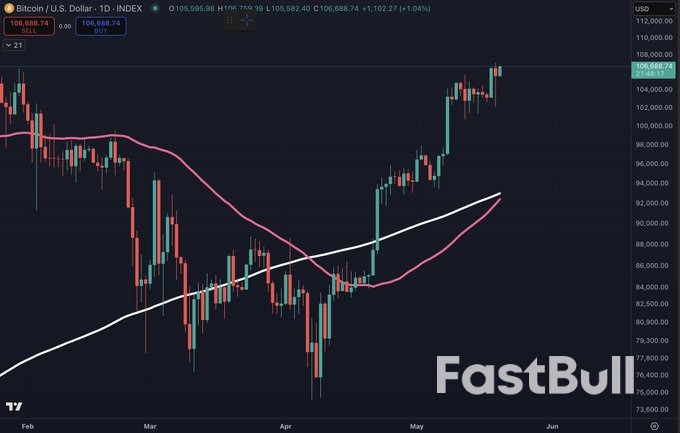
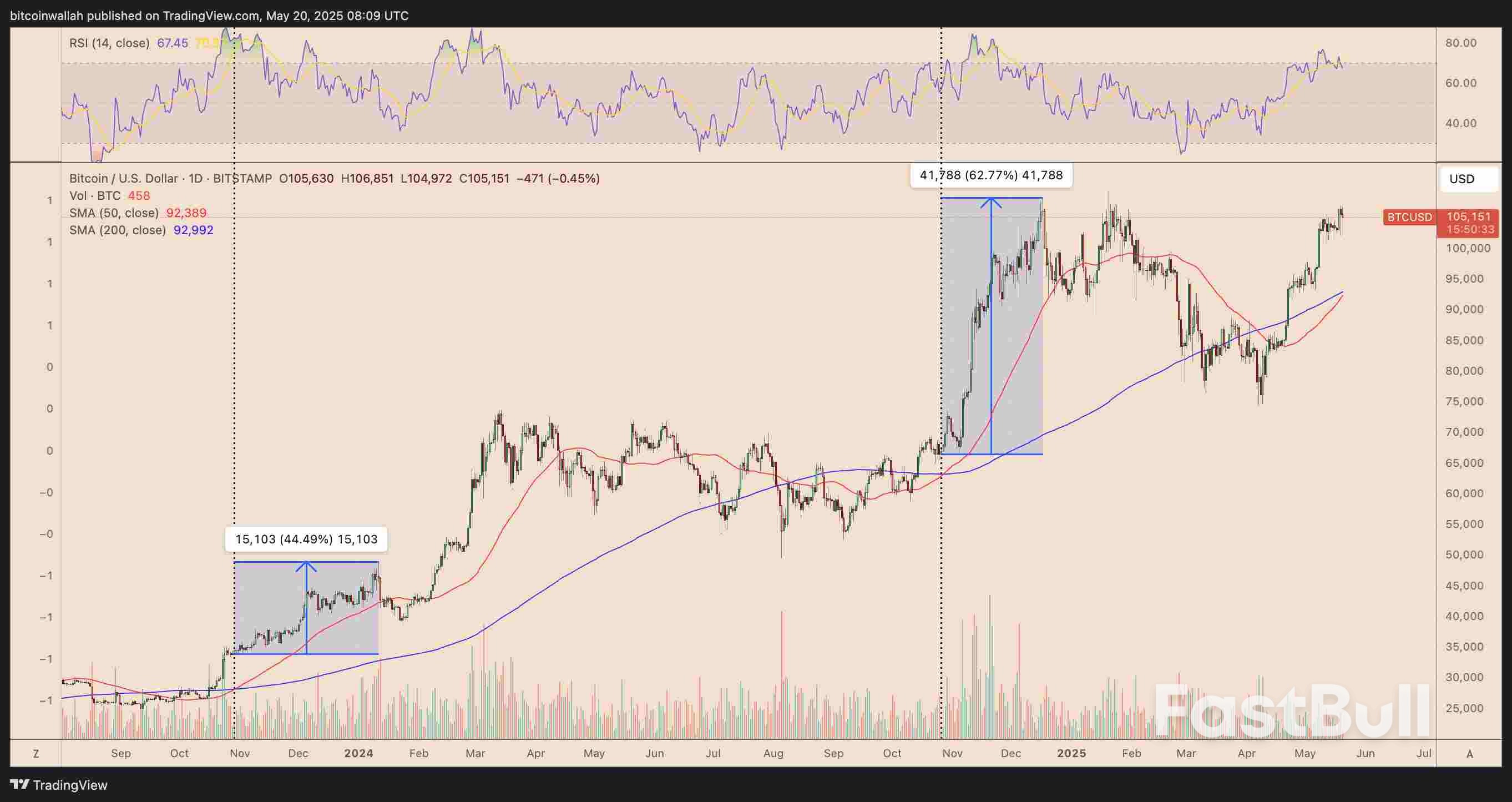
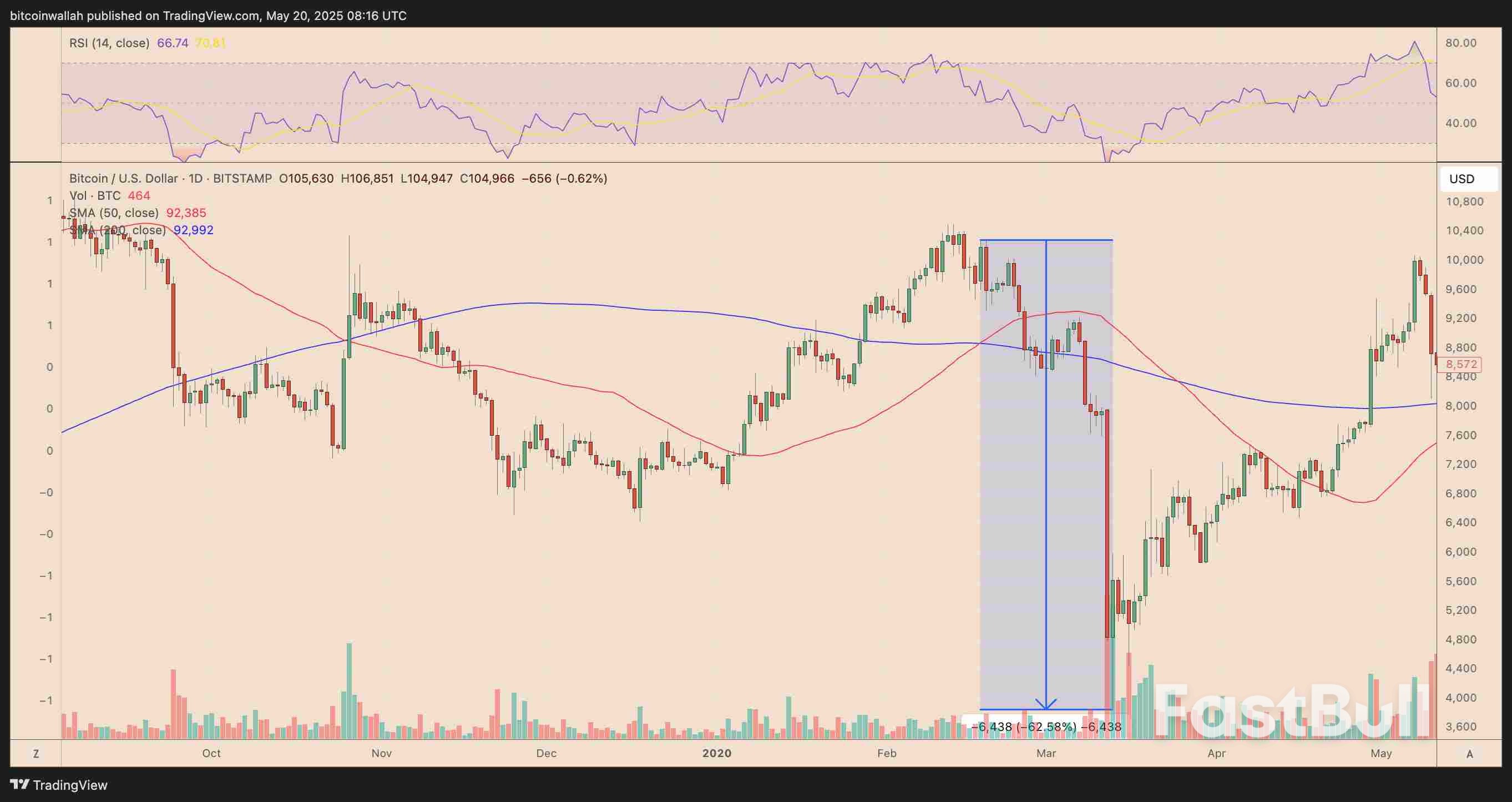
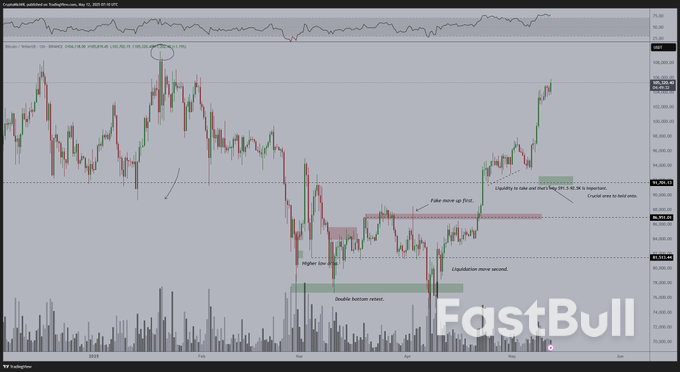
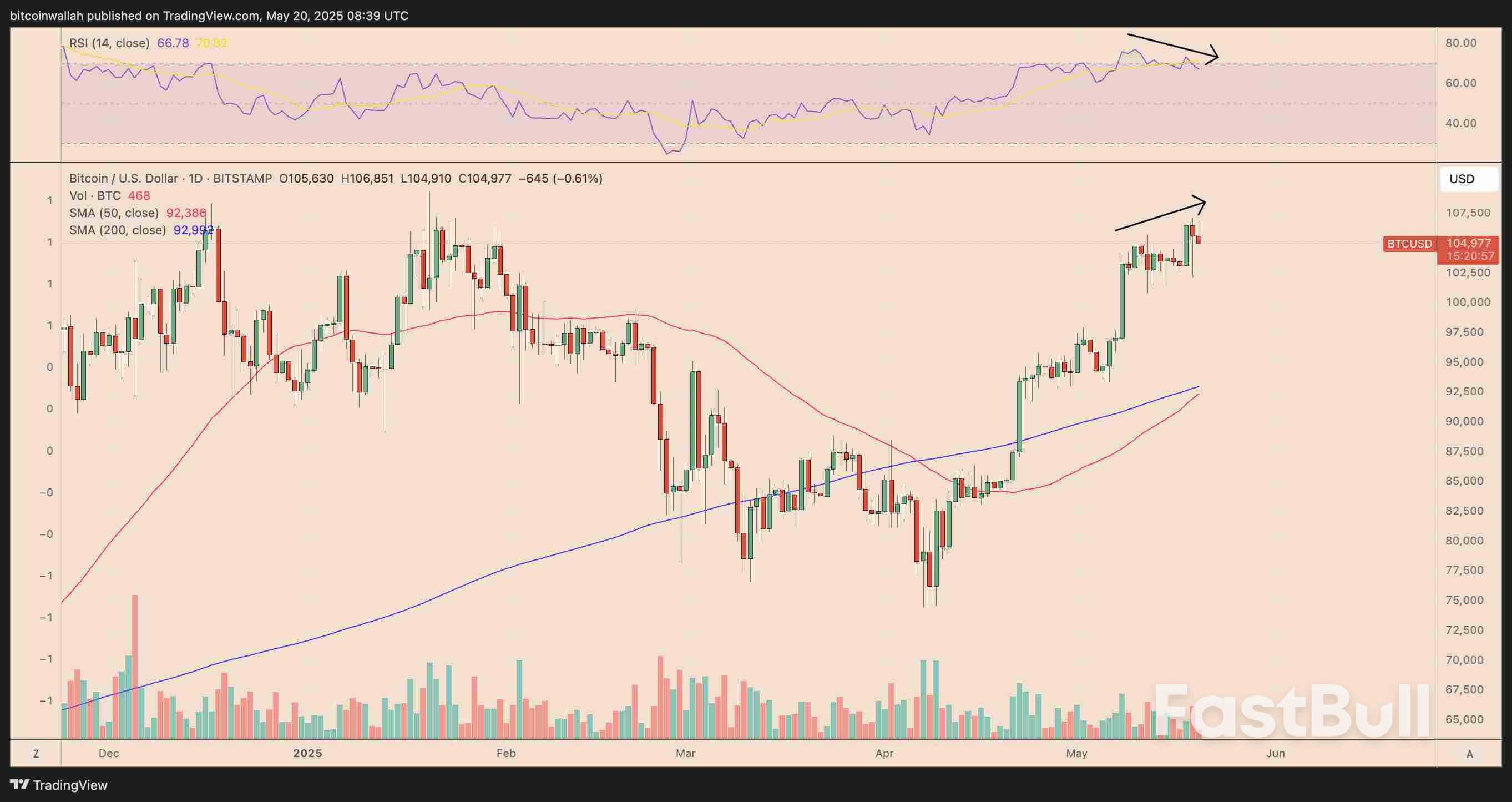
Most recent Bitcoin golden crosses have triggered major rallies, though not without notable failures like the February 2020 bull trap.

The UK announced a series of measures to punish Israel over its actions in Gaza, joining the international campaign to ratchet up pressure on Prime Minister Benjamin Netanyahu.
British Prime Minister Keir Starmer’s government said it planned to pause free-trade talks with Israel and announced sanctions against a handful of individuals and entities it said were engaged in violence against Palestinians in the West Bank. The government also said it has summoned Israeli Ambassador Tzipi Hotovely to express its opposition to the expansion of military activities in Gaza.
While Foreign Secretary David Lammy reaffirmed his support for Israel’s right to defend itself in the wake of the Oct. 7 terrorist attacks by Hamas, the latest escalation was the escalation is “morally unjustifiable.”
“It’s wholly disproportionate, it’s utterly, utterly counterproductive,” Lammy said.
The actions are part of mounting international pressure against Israel as its incursion deeper into Gaza threatens to worsen a humanitarian crisis brought on by a previous blockade of food aid.
The Israeli foreign ministry said in a statement that the UK trade talks were already failing to make headway and called the sanctions “puzzling” and “unjustified.”
“External pressures will not divert Israel from its path in its struggle for its existence and security against enemies working to destroy it,” the ministry said.


Global retailers including sandal maker Birkenstock (BIRK.N), and jeweller Pandora (PNDORA.CO), are looking at spreading the cost of U.S. tariffs by raising prices across markets to avoid big hikes in the United States that could hurt sales.
A global presence gives large retailers an advantage to minimise higher tariff costs in the U.S. But it is putting central banks on watch as the strategy could fuel inflation in other markets like the European Union and Britain, where consumer prices have finally started to stabilise.
Birkenstock's chief financial officer said last week that a "low-single-digit" price increase globally would be enough to offset the U.S. tariff impact.
Pandora CEO Alexander Lacik said the Danish company is debating whether to raise prices globally or more in the U.S., its biggest market.
"Companies are really thinking about distributing the tariff," said Markus Goller, partner at consultancy Simon Kucher in Bonn,
Germany. "A manufacturer from outside of the U.S. might say, OK, I cannot increase my prices to the U.S. market that much, so I will do a little increase in the U.S., and a little increase in Europe, and in other markets."
U.S. President Donald Trump has imposed a blanket tariff of 10% on all global imports and is threatening higher so-called "reciprocal" tariffs on its trading partners.
When U.S. behemoth Walmart (WMT.N), said it would have to raise prices in response to tariffs, Trump ordered the world's biggest retailer via social media to 'eat the tariffs'.
Announcing price increases in non-U.S. markets could be a way for retailers to avoid a similar backlash from Trump.
"Obviously if your products coming into the U.S. are now subject to tariffs, then math says that you have to raise your prices in the U.S.," said Jean-Pierre Dubé, professor of marketing at the University of Chicago Booth School of Business.
"But you don't want to be accused by the White House of raising prices purely because of U.S. tariffs, so if you can demonstrate that your prices are going up everywhere then... it's kind of a shield."
Retailers could raise prices on certain products or in certain markets where consumers are less price-sensitive, and use that to subsidise other products or countries where price hikes would hurt sales more, said Jason Miller, professor of supply chain management at Michigan State University.
"Maybe a U.S.-only firm has to raise (U.S.) prices by 12%. But you, as a global firm, raise prices by 8% because you can play with pricing in other markets," he said.
If many multinational retailers do spread the tariff pain, higher inflation could spread even to countries which, like Britain, have already struck trade agreements with the U.S. in a bid to minimise the economic fallout of tariffs.
Bank of England Governor Andrew Bailey earlier this month raised the issue of "global companies that don't make that distinction [on tariff rates] and just say, we're going to impose a pricing solution which goes right across the world irrespective of those differences.""I think we do have to watch that carefully," he said.
In the euro zone, inflation was finally gliding towards the European Central Bank's 2% target. European companies surveyed by the European Central Bank (ECB) in late March said price growth in the retail sector was subdued.
But that was before Trump unveiled his tariff policy on April 2, and later hiked tariffs on Chinese goods to 145%.
However, the U.S. tariffs on China - lowered last week to 30% - have allowed some European retailers to source goods more cheaply than before.
Martino Pessina, CEO of Takko Fashion, which sells clothes in 17 European countries, said suppliers in China had offered lower prices as U.S. retailers cancelled orders from factories there, and shipping costs also fell.
"What we don't know is if there's going to be inflation in the U.S. and if that inflation comes to Europe or not," Pessina said.
Some big retailers have in any case ruled out raising prices outside the U.S..
"There is no reason to raise prices outside the U.S. because of the tariffs," Adidas (ADSGn.DE), CEO Bjorn Gulden told investors after reporting results late last month. "The discussion we're having on tariffs is only for the U.S.."
ECB executive board member Isabel Schnabel has said the euro zone's inflation rate may initially dip below the central bank's 2% target, but that tariffs might prove inflationary further down the road.
"In order to compensate for the hit to input costs, firms also tend to raise the prices of goods not directly affected by tariffs," Schnabel said in a speech earlier this month.
While every company has its own pricing strategy, economists warn some could take advantage of tariffs to raise prices by more than rising costs, boosting their profits similarly to the inflation surge of 2021-2022 during the pandemic.
"It will be very difficult for a firm's customers to know what portion of the product's total costs are subject to the tariff, or even the tariff rate that applies. This information asymmetry creates a ripe environment for exploitation. Just as it did during COVID," said Hal Singer, professor of economics at the University of Utah.
U.S. consumers' 12-month inflation expectations jumped in April to 6.7%, the highest reading since 1981. And in the euro zone, too, consumers are expecting inflation to rise.
"If people are expecting inflation, well then it gives firms a little bit more room to raise prices," said Miller.Reporting by Helen Reid and Francesco Canepa, Additional reporting by Balazs Koranyi; Editing by Lisa Jucca and Susan Fenton

The UK’s trade deal with the European Union is expected to smooth trade between Great Britain and Northern Ireland, but for some businesses in the latter it no longer matters, as they have ditched British suppliers.
“Overall the deal is welcome but we’re indifferent,” said Peter Bradley, a director of the Mid-Ulster Garden Centre. “We give our business now to Dutch, Italian and Republic of Ireland companies. We’ve got into a nice pattern and rhythm, post-Brexit, and British suppliers have almost become unnecessary.”
The comment underlined that some changes to Northern Ireland’s economy will endure despite Keir Starmer’s announcement on Monday of a “win-win” reset deal with Brussels.
The promise to soften the post-Brexit Irish Sea border by reducing checks on agrifood products going from Great Britain to Northern Ireland met with a broad welcome from business owners, farmers and politiciansin the region and the Republic of Ireland.
However, for companies such as the Mid-Ulster Garden Centre that have successfully adapted their supply chains, the deal may not matter. The Maghera-based family-owned business previously sourced 10% of plants and trees from Great Britain, but that fell to zero after Brexit, which left Northern Ireland in the EU market for goods and complicated trade with Great Britain.
“It’ll make very little difference because we’re already very comfortable with whom we source from – the Dutch, the Italians, the Republic [of Ireland] as well as Northern Ireland suppliers,” Bradley said. Brexit had done “irreparable damage”, he said. “We’ve moved on. We’ve got alternatives, and we’re content and doing well.”
The deal, hailed as a “new chapter” in relations between London and Brussels, encompasses fishing, youth visas and travel rules, and removes agrifood trade restrictions, which Starmer said would give a £9bn boost to the UK economy.
Business and political leaders in Northern Ireland welcomed the lifting of the need for health and veterinary certification, known as sanitary and phtyosanitary checks (SPS), on farm products ranging from fresh meat and dairy produce to vegetables, timber, wool and leather.
William Irvine, the Ulster Farmers’ Union president, called it a significant breakthrough that would give certainty to the agrifood sector. “An end to burdensome SPS paperwork, removal of checks on goods moving to Northern Ireland, inclusion of secondhand machinery, progress on the movement of live cattle, pesticide regulations and rules on organics – these are all key wins,” he said.
While British and EU negotiators spend the coming months working on details, the Windsor framework, which tweaked the Brexit arrangements that created the Irish Sea trade border, will continue to apply in Northern Ireland to areas not covered by the deal.
Suzanne Wylie, the head of the Northern Ireland Chamber of Commerce and Industry, said the deal would not solve every problem but was a step in the right direction. “Local businesses will take time to analyse the detail as and when it emerges.”
The Irish government and most of Northern Ireland’s political parties welcomed the deal but the Democratic Unionist party said it was too early for a definitive judgment and that it would form a view through the “prism” of Northern Ireland’s place in the UK.
White Label
Data API
Web Plug-ins
Poster Maker
Affiliate Program
The risk of loss in trading financial instruments such as stocks, FX, commodities, futures, bonds, ETFs and crypto can be substantial. You may sustain a total loss of the funds that you deposit with your broker. Therefore, you should carefully consider whether such trading is suitable for you in light of your circumstances and financial resources.
No decision to invest should be made without thoroughly conducting due diligence by yourself or consulting with your financial advisors. Our web content might not suit you since we don't know your financial conditions and investment needs. Our financial information might have latency or contain inaccuracy, so you should be fully responsible for any of your trading and investment decisions. The company will not be responsible for your capital loss.
Without getting permission from the website, you are not allowed to copy the website's graphics, texts, or trademarks. Intellectual property rights in the content or data incorporated into this website belong to its providers and exchange merchants.
Not Logged In
Log in to access more features

FastBull Membership
Not yet
Purchase
Log In
Sign Up