• Trade
  • Markets
  • Copy
  • Contests
  • News
  • 24/7
  • Calendar
  • Q&A
  • Chats
Trending
Screeners
SYMBOL
LAST
BID
ASK
HIGH
LOW
NET CHG.
%CHG.
SPREAD
SPX
S&P 500 Index
6827.42
6827.42
6827.42
6899.86
6801.80
-73.58
-1.07%
--
DJI
Dow Jones Industrial Average
48458.04
48458.04
48458.04
48886.86
48334.10
-245.98
-0.51%
--
IXIC
NASDAQ Composite Index
23195.16
23195.16
23195.16
23554.89
23094.51
-398.69
-1.69%
--
USDX
US Dollar Index
97.950
98.030
97.950
98.500
97.950
-0.370
-0.38%
--
EURUSD
Euro / US Dollar
1.17394
1.17409
1.17394
1.17496
1.17192
+0.00011
+ 0.01%
--
GBPUSD
Pound Sterling / US Dollar
1.33707
1.33732
1.33707
1.33997
1.33419
-0.00148
-0.11%
--
XAUUSD
Gold / US Dollar
4299.39
4299.39
4299.39
4353.41
4257.10
+20.10
+ 0.47%
--
WTI
Light Sweet Crude Oil
57.233
57.485
57.233
58.011
56.969
-0.408
-0.71%
--

Community Accounts

Signal Accounts
--
Profit Accounts
--
Loss Accounts
--
View More

Become a signal provider

Sell trading signals to earn additional income

View More

Guide to Copy Trading

Get started with ease and confidence

View More

Signal Accounts for Members

All Signal Accounts

Best Return
  • Best Return
  • Best P/L
  • Best MDD
Past 1W
  • Past 1W
  • Past 1M
  • Past 1Y

All Contests

  • All
  • Trump Updates
  • Recommend
  • Stocks
  • Cryptocurrencies
  • Central Banks
  • Featured News
Top News Only
Share

Ukraine's Navy Says Russian Drone Attack Hit Civilian Turkish Vessel Carrying Sunflower Oil To Egypt On Saturday

Share

Israeli Military Says It Put Planned Strike On South Lebanon Site On Hold After Lebanese Army Requested Access

Share

Norwegian Nobel Committee: Calls On The Belarusian Authorities To Release All Political Prisoners

Share

Norwegian Nobel Committee: His Freedom Is A Deeply Welcome And Long-Awaited Moment

Share

Ukraine Says It Received 114 Prisoners From Belarus

Share

USA Embassy In Lithuania: Maria Kalesnikava Is Not Going To Vilnius

Share

USA Embassy In Lithuania: Other Prisoners Are Being Sent From Belarus To Ukraine

Share

Ukraine President Zelenskiy: Five Ukrainians Released By Belarus In US-Brokered Deal

Share

USA Vilnius Embassy: USA Stands Ready For "Additional Engagement With Belarus That Advances USA Interests"

Share

USA Vilnius Embassy: Belarus, USA, Other Citizens Among The Prisoners Released Into Lithuania

Share

USA Vilnius Embassy: USA Will Continue Diplomatic Efforts To Free The Remaining Political Prisoners In Belarus

Share

USA Vilnius Embassy: Belarus Releases 123 Prisoners Following Meeting Of President Trump's Envoy Coale And Belarus President Lukashenko

Share

USA Vilnius Embassy: Masatoshi Nakanishi, Aliaksandr Syrytsa Are Among The Prisoners Released By Belarus

Share

USA Vilnius Embassy: Maria Kalesnikava And Viktor Babaryka Are Among The Prisoners Released By Belarus

Share

USA Vilnius Embassy: Nobel Peace Prize Laureate Ales Bialiatski Is Among The Prisoners Released By Belarus

Share

Belarusian Presidential Administration Telegram Channel: Lukashenko Has Pardoned 123 Prisoners As Part Of Deal With US

Share

Two Local Syrian Officials: Joint US-Syrian Military Patrol In Central Syria Came Under Fire From Unknown Assailants

Share

Israeli Military Says It Targeted 'Key Hamas Terrorist' In Gaza City

Share

Rwanda's Actions In Eastern Drc Are A Clear Violation Of Washington Accords Signed By President Trump - Secretary Of State Rubio

Share

Israeli Military Issues Evacuation Warning In Southern Lebanon Village Ahead Of Strike - Spokesperson On X

TIME
ACT
FCST
PREV
U.K. Trade Balance Non-EU (SA) (Oct)

A:--

F: --

P: --

U.K. Trade Balance (Oct)

A:--

F: --

P: --

U.K. Services Index MoM

A:--

F: --

P: --

U.K. Construction Output MoM (SA) (Oct)

A:--

F: --

P: --

U.K. Industrial Output YoY (Oct)

A:--

F: --

P: --

U.K. Trade Balance (SA) (Oct)

A:--

F: --

P: --

U.K. Trade Balance EU (SA) (Oct)

A:--

F: --

P: --

U.K. Manufacturing Output YoY (Oct)

A:--

F: --

P: --

U.K. GDP MoM (Oct)

A:--

F: --

P: --

U.K. GDP YoY (SA) (Oct)

A:--

F: --

P: --

U.K. Industrial Output MoM (Oct)

A:--

F: --

P: --

U.K. Construction Output YoY (Oct)

A:--

F: --

P: --

France HICP Final MoM (Nov)

A:--

F: --

P: --

China, Mainland Outstanding Loans Growth YoY (Nov)

A:--

F: --

P: --

China, Mainland M2 Money Supply YoY (Nov)

A:--

F: --

P: --

China, Mainland M0 Money Supply YoY (Nov)

A:--

F: --

P: --

China, Mainland M1 Money Supply YoY (Nov)

A:--

F: --

P: --

India CPI YoY (Nov)

A:--

F: --

P: --

India Deposit Gowth YoY

A:--

F: --

P: --

Brazil Services Growth YoY (Oct)

A:--

F: --

P: --

Mexico Industrial Output YoY (Oct)

A:--

F: --

P: --

Russia Trade Balance (Oct)

A:--

F: --

P: --

Philadelphia Fed President Henry Paulson delivers a speech
Canada Building Permits MoM (SA) (Oct)

A:--

F: --

P: --

Canada Wholesale Sales YoY (Oct)

A:--

F: --

P: --

Canada Wholesale Inventory MoM (Oct)

A:--

F: --

P: --

Canada Wholesale Inventory YoY (Oct)

A:--

F: --

P: --

Canada Wholesale Sales MoM (SA) (Oct)

A:--

F: --

P: --

Germany Current Account (Not SA) (Oct)

A:--

F: --

P: --

U.S. Weekly Total Rig Count

A:--

F: --

P: --

U.S. Weekly Total Oil Rig Count

A:--

F: --

P: --

Japan Tankan Large Non-Manufacturing Diffusion Index (Q4)

--

F: --

P: --

Japan Tankan Small Manufacturing Outlook Index (Q4)

--

F: --

P: --

Japan Tankan Large Non-Manufacturing Outlook Index (Q4)

--

F: --

P: --

Japan Tankan Large Manufacturing Outlook Index (Q4)

--

F: --

P: --

Japan Tankan Small Manufacturing Diffusion Index (Q4)

--

F: --

P: --

Japan Tankan Large Manufacturing Diffusion Index (Q4)

--

F: --

P: --

Japan Tankan Large-Enterprise Capital Expenditure YoY (Q4)

--

F: --

P: --

U.K. Rightmove House Price Index YoY (Dec)

--

F: --

P: --

China, Mainland Industrial Output YoY (YTD) (Nov)

--

F: --

P: --

China, Mainland Urban Area Unemployment Rate (Nov)

--

F: --

P: --

Saudi Arabia CPI YoY (Nov)

--

F: --

P: --

Euro Zone Industrial Output YoY (Oct)

--

F: --

P: --

Euro Zone Industrial Output MoM (Oct)

--

F: --

P: --

Canada Existing Home Sales MoM (Nov)

--

F: --

P: --

Euro Zone Total Reserve Assets (Nov)

--

F: --

P: --

U.K. Inflation Rate Expectations

--

F: --

P: --

Canada National Economic Confidence Index

--

F: --

P: --

Canada New Housing Starts (Nov)

--

F: --

P: --

U.S. NY Fed Manufacturing Employment Index (Dec)

--

F: --

P: --

U.S. NY Fed Manufacturing Index (Dec)

--

F: --

P: --

Canada Core CPI YoY (Nov)

--

F: --

P: --

Canada Manufacturing Unfilled Orders MoM (Oct)

--

F: --

P: --

Canada Manufacturing New Orders MoM (Oct)

--

F: --

P: --

Canada Core CPI MoM (Nov)

--

F: --

P: --

Canada Manufacturing Inventory MoM (Oct)

--

F: --

P: --

Canada CPI YoY (Nov)

--

F: --

P: --

Canada CPI MoM (Nov)

--

F: --

P: --

Canada CPI YoY (SA) (Nov)

--

F: --

P: --

Canada Core CPI MoM (SA) (Nov)

--

F: --

P: --

Q&A with Experts
    • All
    • Chatrooms
    • Groups
    • Friends
    Connecting
    .
    .
    .
    Type here...
    Add Symbol or Code

      No matching data

      All
      Trump Updates
      Recommend
      Stocks
      Cryptocurrencies
      Central Banks
      Featured News
      • All
      • Russia-Ukraine Conflict
      • Middle East Flashpoint
      • All
      • Russia-Ukraine Conflict
      • Middle East Flashpoint
      Search
      Products

      Charts Free Forever

      Chats Q&A with Experts
      Screeners Economic Calendar Data Tools
      Membership Features
      Data Warehouse Market Trends Institutional Data Policy Rates Macro

      Market Trends

      Market Sentiment Order Book Forex Correlations

      Top Indicators

      Charts Free Forever
      Markets

      News

      News Analysis 24/7 Columns Education
      From Institutions From Analysts
      Topics Columnists

      Latest Views

      Latest Views

      Trending Topics

      Top Columnists

      Latest Update

      Signals

      Copy Rankings Latest Signals Become a signal provider AI Rating
      Contests
      Brokers

      Overview Brokers Assessment Rankings Regulators News Claims
      Broker listing Forex Brokers Comparison Tool Live Spread Comparison Scam
      Q&A Complaint Scam Alert Videos Tips to Detect Scam
      More

      Business
      Events
      Careers About Us Advertising Help Center

      White Label

      Data API

      Web Plug-ins

      Affiliate Program

      Awards Institution Evaluation IB Seminar Salon Event Exhibition
      Vietnam Thailand Singapore Dubai
      Fans Party Investment Sharing Session
      FastBull Summit BrokersView Expo
      Recent Searches
        Top Searches
          Markets
          News
          Analysis
          User
          24/7
          Economic Calendar
          Education
          Data
          • Names
          • Latest
          • Prev

          View All

          No data

          Scan to Download

          Faster Charts, Chat Faster!

          Download App
          English
          • English
          • Español
          • العربية
          • Bahasa Indonesia
          • Bahasa Melayu
          • Tiếng Việt
          • ภาษาไทย
          • Français
          • Italiano
          • Türkçe
          • Русский язык
          • 简中
          • 繁中
          Open Account
          Search
          Products
          Charts Free Forever
          Markets
          News
          Signals

          Copy Rankings Latest Signals Become a signal provider AI Rating
          Contests
          Brokers

          Overview Brokers Assessment Rankings Regulators News Claims
          Broker listing Forex Brokers Comparison Tool Live Spread Comparison Scam
          Q&A Complaint Scam Alert Videos Tips to Detect Scam
          More

          Business
          Events
          Careers About Us Advertising Help Center

          White Label

          Data API

          Web Plug-ins

          Affiliate Program

          Awards Institution Evaluation IB Seminar Salon Event Exhibition
          Vietnam Thailand Singapore Dubai
          Fans Party Investment Sharing Session
          FastBull Summit BrokersView Expo

          First Chinese Goods Hit With 145%-plus Tariffs Arriving At U.S. Ports

          Damon

          Economic

          Summary:

          Upwards of 12,000 shipping containers that are subject to the 145%-plus tariffs levied by President Trump are on the first flotilla of Chinese freight vessels arriving at the Ports of Los Angeles and Long Beach.

          A total of seven vessels which left China after the announcement of the 145%-plus tariffs are currently at the nation's two busiest ports for container traffic from Asia, according to vessel arrivals tracked and aggregated by MarineTraffic. An additional five freight ships are expected to arrive in the coming days.

          Amazon, Home Depot, Ikea, Ralph Lauren and Tractor Supply are among the companies with Chinese goods in these containers, spanning a wide range of consumer items.

          In addition to housewares, apparel, and furniture, Amazon imported a wide variety of products on behalf of sellers, including refrigerators, deep fryers, mousepads, bookshelves and living room sofas.

          Tractor Supply shipments include portable drum fans, garden tools, and men's work boots.

          Lamps and ceiling fans have been processed through Customs for Home Depot.

          A Tractor Supply spokesperson referred CNBC to its recent earnings call on April 24 when the company pointed to "notable uncertainty" as a results of the tariffs. "Tractor Supply is actively working with its vendor and supply chain partners to navigate the impact of recently announced tariffs, while also monitoring the broader macroeconomic factors impacting its customers," the spokesperson said.

          Ikea furniture; Speedo swim goggles and swim caps; Procter & Gamble tissue holders; Samsung printed circuit boards, microwaves and refrigerator parts; Ralph Lauren sweaters, cashmere, and blazers; Dr. Martens Airwair footwear; Samsung microwaves and refrigerator parts; LG washing machines, air conditioners, ranges, refrigerators and dishwashers; Bauer Hockey sporting goods; Lenovo computer parts; auto parts for Valeo North America; and headsets and computer keyboards for Polaris, were all among the Chinese container goods.

          For many of the companies, products categories deemed as essential to replenish are brought in despite concerns about consumer demand and an economic slowdown.

          Amazon said in a statement sent by email that it is working with its "broad, varied range of valued selling partners in our store to support them in adapting to the evolving environment while maintaining broad selection and low prices for customers."

          Home Depot is in a quiet period ahead of announcing its quarterly results, and referred CNBC to an existing statement citing "a fluid environment."

          "We, together with our vendors, are monitoring developments and will work closely to manage with the goal of being our customers' advocate for value," a Home Depot spokesperson said.

          Chinese freight container traffic decline

          Trump suggested on Friday ahead of key trade talks that he was willing to lower tariffs on China to 80%, a rate many businesses would likely still consider to be extremely high.

          "80% Tariff on China seems right! Up to Scott B," Trump said in a Truth Social post, referring to a planned meeting between Treasury Secretary Scott Bessent and counterparts from China in Switzerland this weekend.

          Brian Bourke, global chief commercial officer at SEKO Logistics, tells CNBC clients continue to struggle in understanding how all of the various tariff provisions are stacked, or in some cases cancel each other out.

          "This confusion has led them to continually alter and update their scenario planning, freezing any other decisions for the business they would be making," said Bourke. "Many of our clients priced and sold their products or projects prior to the tariff amounts being announced, and with the speed and severity as well as the quantity of new tariff provisions being announced, they are not able to change the pricing on items that have already sold and are arriving in May and June, or beyond."

          The number of freight vessels and shipping containers headed to the U.S. from China has plummeted since the tariffs announcement in early April.

          Across the Asia-North America West Coast and Asia-North America East Coast trades, there was a total of 90 blank sailings across April and May, according to Sea-Intelligence. The Ocean Alliance (a freight consortium including Chinese-owned and operated COSCO and OOCL, Taiwan-based Evergreen, and French-owned CMA) accounted for 48 of those canceled sailings.

          Bookings are down from 30% to 50%, according to logistics providers and ocean carriers.

          In addition to decreased vessel sailings as a result of paused manufacturing orders from shippers and fewer container to fill, ocean carriers are using smaller vessels to move trade. MSC, the largest ocean carrier in the world, along with the Gemini Alliance (comprised of Maersk and Hapag Lloyd), are among the freight companies using smaller vessels between the Asia-North America West Coast routes.

          MSC has reduced its container capacity by 28% year over year, according to Sea-Intelligence data analyzing the impact of canceled sailings and vessel changes, while Ocean Alliance container capacity is down by 26% year over year.

          Bourke said once shippers have finished bringing in what they consider essential stocks, they are in various degrees of "wait-and-see" mode with their supply chains, and continuing to cancel orders from China, which has led to widespread fears about product shortages and the potential for empty shelves. "What happens when safety stocks that had been built up disappear?" Bourke said.

          Source: CNBC

          To stay updated on all economic events of today, please check out our Economic calendar
          Risk Warnings and Disclaimers
          You understand and acknowledge that there is a high degree of risk involved in trading. Following any strategies or investment methods may lead to potential losses. The content on the site is provided by our contributors and analysts for information purposes only. You are solely responsible for determining whether any trading assets, securities, strategy, or any other product is suitable for investing based on your own investment objectives and financial situation.
          Add to Favorites
          Share

          U.S.–China Trade War Disrupts Global Supply Chains and Investment Flows

          Gerik

          Economic

          China–U.S. Trade War

          Container Shipping Routes Severely Affected

          Major shipping companies such as MSC, ZIM, Cosco, and OOCL have suspended at least six weekly container routes between China and the U.S. since April 2025. These routes typically transport over 25,600 forty-foot containers per week, amounting to more than 1.3 million annually. The cargo includes consumer goods, automotive parts, and industrial inputs essential to U.S. manufacturing.
          Simon Sundboell, CEO of Danish maritime data firm eeSea, noted that this isn’t just a warning sign—it’s proof of real-time economic contraction. According to Drewry, capacity between Asia and the U.S. West Coast dropped by 20% in April and another 12% in early May. The U.S. East Coast was similarly affected, with capacity down 22% in April and 18% in May.
          MSC, the world’s largest container shipping firm, canceled 30% of its scheduled trans-Pacific voyages in April. Meanwhile, Premier Alliance (ONE, HMM, Yang Ming) reported a 20% blank sailing rate in May. Even Maersk and Hapag-Lloyd, while maintaining operations, have downsized vessels due to declining demand.

          WTO Warns of Up to 80% Collapse in U.S.–China Trade

          WTO Director-General Ngozi Okonjo-Iweala issued a stark warning: escalating tariffs could cut U.S.–China bilateral trade by as much as 80%. She emphasized that the trade war not only threatens both economies but also jeopardizes the global trading system and overall economic recovery.
          Shipping analyst John McCown echoed the concern, predicting that U.S. container imports could plunge by 25% or more by July 2025 due to the prolonged impact of Trump's tariffs.

          UNCTAD: Investment Paralysis and Risks to Vulnerable Economies

          UNCTAD Secretary-General Rebeca Grynspan warned that retaliatory tariffs between the world’s two largest economies have caused a “paralysis” in global investment decision-making. She stressed that frequent policy changes and economic unpredictability make it nearly impossible for businesses and governments to plan ahead.
          Ironically, the countries most harmed by this trade war are not the ones responsible for the U.S. trade deficit. Least developed countries (LDCs) and small island developing states, which account for just 1.6% and 0.4% of the U.S. trade gap respectively, are disproportionately affected by global trade disruptions and declining investor confidence.
          These economies now face an escalating triple threat: external volatility, unsustainable debt, and slowing domestic growth.

          Call for Cooperative Reform, Not Escalation

          UNCTAD concluded that while global trade reform is necessary, it must come through predictable, inclusive, and development-oriented dialogue—not unilateral tariff escalation. Existing trade rules must evolve to address 21st-century challenges, but without abandoning the principle of protecting the most vulnerable.
          “Now is the time for cooperation, not confrontation,” said Grynspan, urging global leaders to prioritize dialogue and fairness over disruption.

          Source: UNCTAD

          To stay updated on all economic events of today, please check out our Economic calendar
          Risk Warnings and Disclaimers
          You understand and acknowledge that there is a high degree of risk involved in trading. Following any strategies or investment methods may lead to potential losses. The content on the site is provided by our contributors and analysts for information purposes only. You are solely responsible for determining whether any trading assets, securities, strategy, or any other product is suitable for investing based on your own investment objectives and financial situation.
          Add to Favorites
          Share

          Trump Calls For 30-day Cease-Fire In Russia-Ukraine War

          Damon

          Political

          President Donald Trump on May 8 urged Russia and Ukraine to enter into a 30-day unconditional cease-fire while U.S.-led peace negotiations are ongoing.

          Trump stated that the temporary cease-fire must “ultimately build toward a peace agreement” between the two nations and warned that the United States would impose sanctions if the cease-fire wasn’t respected.

          “Talks with Russia/Ukraine continue,” he stated in a Truth Social post.

          “Hopefully, an acceptable ceasefire will be observed, and both countries will be held accountable for respecting the sanctity of these direct negotiations.”

          Trump also said that he would “stay committed” to ending the war in Ukraine, despite his administration officials having previously indicated that the United States may abandon mediation efforts if there are no clear signs of progress toward a peace agreement.

          “It can all be done very quickly, and I will be available on a moment’s notice if my services are needed,” the president stated.

          “Thousands of young soldiers are dying on a weekly basis, and everybody should want it to STOP. I do, and the United States of America does, also.”

          Ukrainian President Volodymyr Zelenskyy told Trump during a May 8 phone call that Ukraine is ready to enter into a temporary cease-fire with Russia and is willing to “engage in talks in any format.”

          However, Zelenskyy said that Russia must first demonstrate its readiness to end the war, “starting with a full, unconditional ceasefire.” This would involve ending missile and drone strikes and halting offensive assaults along the front lines.

          “Ukraine is ready for a full ceasefire starting right now, from this very moment—a 30-day silence. But it must be real,” he said in a video address.

          “Thirty days that could become the beginning of years of peace.”

          On April 30, the Kremlin said that Russian President Vladimir Putin remains open to a cease-fire and eventual peaceful settlement to the conflict, but there are still issues need to be resolved.

          Secretary of State Marco Rubio has previously warned that the U.S. government may abandon efforts to mediate an end to the three-year-long war if Russia and Ukraine fail to make a peace agreement.

          “I think they’re closer in general than they’ve been any time in the last three years but it’s still not there,” Rubio said in an interview with NBC News on April 27.

          Rubio said that the United States may opt to take measures against those resisting efforts to end the war, but emphasized that it would “prefer not to get to that stage yet because we think it closes the door to diplomacy.”

          The war in Ukraine has been ongoing since Putin sent thousands of troops for a full invasion in February 2022. Putin declared an “Easter truce” with Ukraine on April 19, directing his forces to halt all military operations until midnight of April 20.

          Both sides later accused each other of violating the truce. The Russian military eventually resumed the “special military operation” after the truce ended.

          On April 28, Putin unilaterally declared a three-day ceasefire from May 8–May 10 to mark the 80th anniversary of victory over Nazi Germany in World War II. Zelenskyy later dismissed the move as yet “another attempt at manipulation” by Russia.

          “The cease-fire should not be just for a few days, only to return to killing afterward,” Zelenskyy said in an April 28 address.

          “It must be immediate, full, and unconditional, for at least 30 days, to ensure it is secure and guaranteed. This is the foundation that could lead to real diplomacy.”

          Ukrainian Foreign Minister Andriy Sybiha alleged that Russia violated the three-day cease-fire 734 times between midnight and midday on May 8, including 464 attacks involving heavy weapons and 176 drone strikes.

          The Russian Defense Ministry said that Ukraine, in turn, had carried out 488 attacks on Russian targets and twice tried to break through the border in the Kursk region.

          Source: Zero Hedge

          Risk Warnings and Disclaimers
          You understand and acknowledge that there is a high degree of risk involved in trading. Following any strategies or investment methods may lead to potential losses. The content on the site is provided by our contributors and analysts for information purposes only. You are solely responsible for determining whether any trading assets, securities, strategy, or any other product is suitable for investing based on your own investment objectives and financial situation.
          Add to Favorites
          Share

          U.S.–U.K. Trade Agreement Sparks Political Optimism but Faces Economic Skepticism

          Gerik

          Economic

          Symbolic Breakthrough Amid Global Trade Tensions

          On May 8, 2025, President Trump announced what he described as a “landmark trade agreement” with the United Kingdom, emphasizing expanded U.S. access to British markets for agricultural products like beef and ethanol. Framed as the first major deal since the April 2 global tariff hike—dubbed "Liberation Day"—the pact is being positioned as a diplomatic success that aligns with the 80th anniversary of the end of World War II.
          U.K. Prime Minister Keir Starmer also welcomed the deal, calling it "historic" and highlighting its potential to protect thousands of British jobs. However, despite the celebratory tone, the agreement’s long-term economic and strategic weight remains open to debate.

          Tariff Adjustments and Limited Concessions

          While the U.K. avoided the sweeping retaliatory tariffs imposed on other partners, it still faces a 10% base tariff and selective 25% tariffs on cars, aluminum, and steel. Under the new agreement, the 25% automotive tariff will be reduced to 10% for the first 100,000 British-made vehicles annually—a provision Trump described as a rare exception meant for luxury brands like Rolls-Royce and Bentley.
          In return, the U.K. agreed to lower non-tariff barriers and open its markets to an estimated $5 billion worth of U.S. goods, including beef, ethanol, and machinery. British airline plans to purchase $10 billion in Boeing aircraft were also cited as evidence of deepening trade ties.
          Still, U.S. Commerce Secretary Howard Lutnick clarified that the 10% base tariff remains the new floor for future negotiations, implying that other countries may face higher rates unless exceptional circumstances apply.

          Economic Impact: Symbolic Win, Modest Reality

          Despite the diplomatic triumph, economists and political analysts are more reserved in their assessments. The U.K. ranks only ninth among U.S. trade partners, accounting for around 3% of bilateral trade volume. As economist Justin Wolfers of the University of Michigan told CNN, “This isn’t a big trade deal,” noting that the headline numbers don’t reflect transformative economic changes.
          In the Senate, Minority Leader Chuck Schumer echoed this skepticism, warning that the agreement could be “built on shifting sands.” He expressed concern that Trump’s erratic approach to tariffs undermines the credibility and durability of any deal.
          Moreover, the absence of full transparency regarding the agreement’s provisions has prompted further scrutiny. Investors and trade observers worry that without a clear framework, the deal could be easily reversed or revised under shifting political winds.

          Strategic Timing and Political Messaging

          Trump’s announcement comes amid mounting pressure to stabilize global trade, especially as the blanket 10% tariff and retaliatory hikes have begun to rattle markets. Treasury Secretary Scott Bessent revealed that similar deals with up to 18 other trade partners are under negotiation, with more announcements expected within days.
          Talks with China remain the most consequential, and they have only recently been scheduled. Bessent and U.S. Trade Representative Jamieson Greer arrived in Switzerland on May 8 to meet with top Chinese economic officials—underscoring the urgency of re-engagement with Beijing.
          The U.S.–U.K. trade agreement represents a politically useful signal amid growing global uncertainty, but its real-world impact remains limited. While it may offer temporary relief to select sectors, the underlying fragility of Trump's tariff-driven trade strategy raises serious doubts about long-term consistency and economic gains. Without a more comprehensive and reciprocal framework, the deal risks being more symbolic than structural in the broader context of U.S. trade policy realignment.

          Source: CBC

          To stay updated on all economic events of today, please check out our Economic calendar
          Risk Warnings and Disclaimers
          You understand and acknowledge that there is a high degree of risk involved in trading. Following any strategies or investment methods may lead to potential losses. The content on the site is provided by our contributors and analysts for information purposes only. You are solely responsible for determining whether any trading assets, securities, strategy, or any other product is suitable for investing based on your own investment objectives and financial situation.
          Add to Favorites
          Share

          China's Export Boom Driven by ASEAN Trade Surge Amid U.S. Tariff Pressures

          Gerik

          China–U.S. Trade War

          Economic

          Strong April Export Growth Masks U.S. Trade Collapse

          According to data released by China’s General Administration of Customs, Chinese exports in April rose 8.1% year-on-year in U.S. dollar terms—well above Reuters’ forecast of 1.9%. The rebound came even as trade with the United States deteriorated sharply under the weight of newly imposed tariffs. Exports to the U.S. plunged over 21% while imports declined nearly 14%, a stark reversal from March’s 9.1% export increase that had been fueled by exporters front-loading shipments ahead of tariff hikes.
          The overall trade performance defied expectations due to resilience in other markets, particularly ASEAN and the European Union, which have begun to offset China’s growing disconnect with the U.S. market.

          ASEAN Emerges as China’s Export Lifeline

          China’s exports to ASEAN countries surged 20.8% in April, accelerating from 11.6% growth in March. Malaysia remained a key destination, while exports to Indonesia and Thailand soared 37% and 28%, respectively. This regional shift reflects not just increased demand but also potential re-routing of goods through third-party countries, a phenomenon identified by economist Zhang Zhiwei of Pinpoint Asset Management.
          Zhang pointed out that part of the export growth may stem from pre-existing contracts and indirect re-exports intended to bypass tariff boundaries. However, he warned that China’s overall trade momentum may weaken in the coming months, especially as global demand cools and trade friction persists.

          EU Trade Strengthens While Imports Fall

          In April, China’s exports to the European Union rose by 8.3%, although imports from the bloc dropped 16.5%. This pattern is consistent with March’s figures, signaling Europe’s continued role as a stabilizing trade partner, albeit with reduced reciprocal trade volumes. The import contraction may reflect weakened European industrial demand or pricing shifts due to currency fluctuations and broader inflationary trends.
          The trade collapse with the U.S. follows President Donald Trump’s sweeping imposition of 145% tariffs on Chinese imports in April, which Beijing responded to with 125% counter-tariffs. Despite these measures, both sides are reportedly seeking ways to mitigate economic damage, including selective exemptions on critical goods.
          Nonetheless, the economic toll in China is mounting. Factory activity has slowed dramatically, with April’s manufacturing index falling to a 16-month low and export orders hitting their weakest level since December 2022. The job market is also under stress, with Goldman Sachs estimating potential job losses of up to 16 million—roughly 2% of the workforce—linked to export-oriented sectors serving the U.S.
          Recent PMI data confirm widespread job cuts, as manufacturers suspend production and place workers on paid leave. In response, Beijing has ramped up stimulus, easing monetary policy and encouraging local governments and businesses to redirect unsold exports to the domestic market. However, such moves may further intensify domestic deflationary pressures.

          Trade Talks in Switzerland: Glimmers of Hope, Layers of Uncertainty

          All eyes are now on the high-level U.S.-China trade talks set to take place in Switzerland over the weekend—the first since tensions escalated in April. While a comprehensive agreement remains elusive, incremental tariff rollbacks are viewed as plausible, according to analysts.
          Morgan Stanley strategist Laura Wang suggested that any move toward tariff reduction could significantly boost Chinese equities. However, she also emphasized the complexity of the negotiation process, which is expected to be drawn-out and riddled with obstacles. The investment bank projects that U.S. effective tariffs on Chinese goods could ease from the current average of 145% to around 45% by year-end, though a durable settlement remains uncertain.
          China’s export spike in April, fueled by a strategic pivot toward ASEAN and European markets, demonstrates the country’s adaptability amid global trade turbulence. However, this performance obscures deeper vulnerabilities. The collapse in U.S. trade, factory slowdowns, labor market strain, and rising deflationary risk all highlight the fragile foundation of this rebound. As trade negotiations resume, markets remain cautiously optimistic—but the durability of China’s export momentum will depend heavily on the trajectory of geopolitical relations and tariff policy recalibrations in the months ahead.

          Source: CNBC

          To stay updated on all economic events of today, please check out our Economic calendar
          Risk Warnings and Disclaimers
          You understand and acknowledge that there is a high degree of risk involved in trading. Following any strategies or investment methods may lead to potential losses. The content on the site is provided by our contributors and analysts for information purposes only. You are solely responsible for determining whether any trading assets, securities, strategy, or any other product is suitable for investing based on your own investment objectives and financial situation.
          Add to Favorites
          Share

          Japan’s National Debt Hits Record High Amid Soaring Defense and Welfare Spending

          Gerik

          Economic

          Debt Burden Reaches Unprecedented Levels

          According to Japan’s Ministry of Finance, the country's public debt reached an all-time high at the end of fiscal year 2024, marking the ninth consecutive year of increase. The debt total includes government bonds, short-term securities, and various government loans, and represents an increase of ¥26.55 trillion over the previous year.
          This relentless upward trajectory reflects structural imbalances in government spending, particularly in defense and social welfare—both of which have grown sharply in recent years. Rising inflation and the need to subsidize household fuel and electricity bills have only exacerbated fiscal strain.

          Defense Spending Surges as Strategic Posture Shifts

          A major contributor to the rising debt is Japan’s increasingly aggressive defense outlay. In 2024, the defense budget soared to nearly ¥7.95 trillion ($54.8 billion), up 17% year-on-year. This marks the third consecutive year of double-digit increases.
          Under the previous administration led by Prime Minister Kishida Fumio, Japan had already announced plans to increase defense expenditure more than fivefold by 2028. The current government under Prime Minister Ishiba Shigeru is reportedly considering an even higher defense allocation—reflecting Japan’s strategic response to evolving regional threats and alliance obligations, particularly with the U.S.
          This trajectory signals a broader realignment of Japan’s pacifist security doctrine toward a more assertive posture, but the fiscal consequences are proving substantial.

          Social Spending and Energy Subsidies Compound the Fiscal Load

          Simultaneously, Japan’s aging population continues to exert upward pressure on social security expenditures. Healthcare, pensions, and elder care form a growing portion of the national budget, with no immediate prospects for structural reform.
          Inflationary pressures have also forced the government to extend subsidies for electricity and fuel to shield households from cost-of-living shocks. These short-term relief measures, while politically popular, are fiscally unsustainable and add to the structural deficit.
          As a result, Japan’s basic national budget for FY2025 has already surpassed ¥115 trillion ($809 billion USD) within the first 40 days of the fiscal year. To meet this rising expenditure, the government plans to issue additional bonds worth ¥28 trillion ($197 billion USD), further deepening the country’s debt pile.

          Debt Sustainability and Long-Term Risks

          Japan’s debt-to-GDP ratio—already the highest among developed nations—is set to climb further. While the government has long benefited from ultra-low interest rates and strong domestic demand for its debt, the long-term sustainability of such borrowing is increasingly under scrutiny, especially amid signs of monetary policy normalization.
          The Bank of Japan’s cautious moves toward tapering its yield curve control program could lead to higher borrowing costs, amplifying the fiscal burden. If interest payments begin to consume a larger share of the national budget, Japan may face difficult trade-offs between debt servicing and investment in growth-supportive policies.
          Japan's record-breaking national debt reflects a convergence of demographic, geopolitical, and macroeconomic challenges. While increased defense spending and welfare support may be politically and strategically necessary, they raise urgent questions about fiscal discipline and long-term economic sustainability. Without structural reforms in social services, greater revenue mobilization, or targeted investment to boost productivity, Japan risks being trapped in a cycle of rising debt with limited economic payoff.

          Source: WSJ

          To stay updated on all economic events of today, please check out our Economic calendar
          Risk Warnings and Disclaimers
          You understand and acknowledge that there is a high degree of risk involved in trading. Following any strategies or investment methods may lead to potential losses. The content on the site is provided by our contributors and analysts for information purposes only. You are solely responsible for determining whether any trading assets, securities, strategy, or any other product is suitable for investing based on your own investment objectives and financial situation.
          Add to Favorites
          Share

          Trump’s First Trade Pact Offers Faint Glimpse On Art Of The Deal

          Justin

          Economic

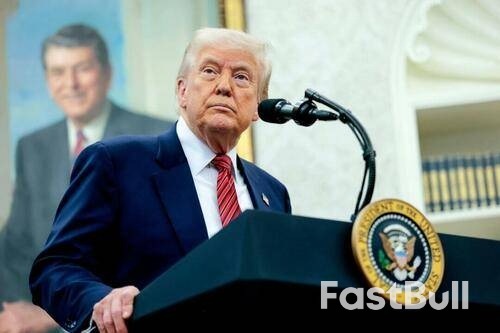
          Thursday’s announcement of their trade framework in the Oval Office shows Trump is willing to keen progress even without a final accord and that can buy political credit with the White House. There’s also evidence that American levies can be talked down, but that may not be much more of a template, according to analysts.

          “If you thought you were going to have to have a real deal done in 90 days, you’ve now at least seen from the UK that that need not be true,” said Deborah Elms, head of trade policy at the Hinrich Foundation in Singapore. “You can have a sketch of an idea of a plan.”

          The framework Trump greeted as a “breakthrough” will, he says, fast-track US items through UK customs and reduce barriers on “billions of dollars” of other exports. The British government meanwhile says tariffs on UK cars will drop to 10% and those on metals to zero. Final details need to be negotiated over coming weeks.

          That extended cliffhanger requires caution on making conclusions. Trump’s insistence on preserving some proposed levies, his assent to specific carveouts, and the lack of any requirements regarding China are among highlights analysts point to.

          But the US surplus with the UK, as well as their longstanding ties may mean this skirmish in the president’s trade war isn’t much of a guide for exporters such as Japan or the European Union engaging in negotiations of their own.

          “You can’t be optimistic just because of the US-UK announcement,” said Hiroshi Namioka, chief strategist at T&D Asset Management in Tokyo. “The US doesn’t have a trade deficit with UK, so reaching a deal was easier.”

          Asian countries such as Japan, Vietnam and South Korea that have large trade surpluses with the US have moved quickly to initiate talks, with few signs of progress.

          Speaking shortly after the deal announcement, Commerce Secretary Howard Lutnick said negotiations with South Korea and Japan are taking “an enormous amount of time.” He added that India could be among the next countries to reach an agreement, while cautioning that work still needs to be done.

          The EU is also making limited headway in its own engagement with the administration. That’s partly because of its sheer size, according to Sam Lowe, partner and head of international trade practice at Flint Global in London.

          “Whereas the option of retaliation was not really available to the UK due to its much smaller economy, the EU can inflict some damage on the US via tariffs and other measures,” he said. “This potentially gives it more leverage, but also means any deal will probably take longer.”

          One component of the UK accord that will be analyzed closely in auto-making hubs was the cut in tariffs on British cars to 10% from 27.5% for 100,000 vehicles per year.

          Auto exports from Japan and South Korea to the US are each more than 10 times larger than those from the UK, and account for around one-third of their sales to America.

          While the deal offers some encouragement that 25% levies on Japanese and Korean cars could be lowered, Tokyo insists on a complete removal.

          “We’ll continue to seek a rethink of the string of tariff measures from the US,” Japan’s chief trade negotiator, Ryosei Akazawa, said on Friday.

          Similarly, the UK agreement is unlikely to serve as a viable template in South Korea’s talks because of the importance of cars there too, said Hyosung Kwon of Bloomberg Economics.

          “To secure lower US tariffs on autos, South Korea may need to make concessions such as increasing imports of US liquefied natural gas and easing non-tariff barriers on US agricultural products,” he said.

          One way of looking at the US-UK agreement is that the 10% baseline levy applied to all countries by the US is largely fixed, some trade analysts said. The UK said it will keep trying to negotiate over that so-called “reciprocal tariff.”

          For other countries including Australia and Singapore, it may be the case that there’s no real point in discussing going below the 10% level right now, said Elms at the Hinrich Foundation.

          In one exception, the UK was able to get US tariffs on steel and aluminum lowered to zero from 25% as part of what the US called “a new trading union.” It was not immediately clear how this agreement might affect US tariffs on the metals imposed on other countries.

          The framework didn’t offer much insight into non-tariff barriers to trade including regulations and subsidies that US officials have highlighted. The UK said it wouldn’t loosen safety checks on food imports despite removing levies on beef and other agricultural products.

          Some analysts also noted the lack of any reference to China in the US-UK framework despite indications given by US officials that they want help in efforts to pressure Beijing.

          US and Chinese officials are set to meet in Switzerland this weekend for their first round of negotiations.

          Source: Bloomberg Europe

          To stay updated on all economic events of today, please check out our Economic calendar
          Risk Warnings and Disclaimers
          You understand and acknowledge that there is a high degree of risk involved in trading. Following any strategies or investment methods may lead to potential losses. The content on the site is provided by our contributors and analysts for information purposes only. You are solely responsible for determining whether any trading assets, securities, strategy, or any other product is suitable for investing based on your own investment objectives and financial situation.
          Add to Favorites
          Share
          FastBull
          Copyright © 2025 FastBull Ltd

          728 RM B 7/F GEE LOK IND BLDG NO 34 HUNG TO RD KWUN TONG KLN HONG KONG

          TelegramInstagramTwitterfacebooklinkedin
          App Store Google Play Google Play
          Products
          Charts

          Chats

          Q&A with Experts
          Screeners
          Economic Calendar
          Data
          Tools
          Membership
          Features
          Function
          Markets
          Copy Trading
          Latest Signals
          Contests
          News
          Analysis
          24/7
          Columns
          Education
          Company
          Careers
          About Us
          Contact Us
          Advertising
          Help Center
          Feedback
          User Agreement
          Privacy Policy
          Business

          White Label

          Data API

          Web Plug-ins

          Poster Maker

          Affiliate Program

          Risk Disclosure

          The risk of loss in trading financial instruments such as stocks, FX, commodities, futures, bonds, ETFs and crypto can be substantial. You may sustain a total loss of the funds that you deposit with your broker. Therefore, you should carefully consider whether such trading is suitable for you in light of your circumstances and financial resources.

          No decision to invest should be made without thoroughly conducting due diligence by yourself or consulting with your financial advisors. Our web content might not suit you since we don't know your financial conditions and investment needs. Our financial information might have latency or contain inaccuracy, so you should be fully responsible for any of your trading and investment decisions. The company will not be responsible for your capital loss.

          Without getting permission from the website, you are not allowed to copy the website's graphics, texts, or trademarks. Intellectual property rights in the content or data incorporated into this website belong to its providers and exchange merchants.

          Not Logged In

          Log in to access more features

          FastBull Membership

          Not yet

          Purchase

          Become a signal provider
          Help Center
          Customer Service
          Dark Mode
          Price Up/Down Colors

          Log In

          Sign Up

          Position
          Layout
          Fullscreen
          Default to Chart
          The chart page opens by default when you visit fastbull.com