• Trade
  • Markets
  • Copy
  • Contests
  • News
  • 24/7
  • Calendar
  • Q&A
  • Chats
Trending
Screeners
SYMBOL
LAST
BID
ASK
HIGH
LOW
NET CHG.
%CHG.
SPREAD
SPX
S&P 500 Index
6857.13
6857.13
6857.13
6865.94
6827.13
+7.41
+ 0.11%
--
DJI
Dow Jones Industrial Average
47850.93
47850.93
47850.93
48049.72
47692.96
-31.96
-0.07%
--
IXIC
NASDAQ Composite Index
23505.13
23505.13
23505.13
23528.53
23372.33
+51.04
+ 0.22%
--
USDX
US Dollar Index
98.850
98.930
98.850
98.980
98.840
-0.130
-0.13%
--
EURUSD
Euro / US Dollar
1.16571
1.16579
1.16571
1.16590
1.16408
+0.00126
+ 0.11%
--
GBPUSD
Pound Sterling / US Dollar
1.33455
1.33466
1.33455
1.33472
1.33165
+0.00184
+ 0.14%
--
XAUUSD
Gold / US Dollar
4224.44
4224.85
4224.44
4229.22
4194.54
+17.27
+ 0.41%
--
WTI
Light Sweet Crude Oil
59.264
59.301
59.264
59.469
59.187
-0.119
-0.20%
--

Community Accounts

Signal Accounts
--
Profit Accounts
--
Loss Accounts
--
View More

Become a signal provider

Sell trading signals to earn additional income

View More

Guide to Copy Trading

Get started with ease and confidence

View More

Signal Accounts for Members

All Signal Accounts

Best Return
  • Best Return
  • Best P/L
  • Best MDD
Past 1W
  • Past 1W
  • Past 1M
  • Past 1Y

All Contests

  • All
  • Trump Updates
  • Recommend
  • Stocks
  • Cryptocurrencies
  • Central Banks
  • Featured News
Top News Only
Share

Sri Lanka's CSE All Share Index Down 1.2%

Share

Iw Institute: German Economy Faces Tepid Growth In 2026 Due To Global Trade Slowdown

Share

Stats Office - Seychelles November Inflation At 0.02% Year-On-Year

Share

[Market Update] Spot Silver Prices Rose 2.00% Intraday, Currently Trading At $58.27 Per Ounce

Share

S.Africa's Gross Reserves At $72.068 Billion At End November - Central Bank

Share

[Market Update] Spot Silver Broke Through $58/ounce, Up 1.56% On The Day

Share

Dollar/Yen Down 0.33% To 154.61

Share

Kremlin Says No Plans For Putin-Trump Call For Now

Share

Kremlin Says Moscow Is Waiting For USA Reaction After Putin-Witkoff Meeting

Share

Cctv - China, France: Say Both Sides Support All Efforts For A Ceasefire, Restore Peace According To Intl Law

Share

[Chinese Ambassador To The US Xie Feng Hopes Chinese And American Business Communities Will Focus On Three Lists] On December 4, Chinese Ambassador To The US Xie Feng Delivered A Speech At The China-US Economic And Trade Cooperation Forum Jointly Hosted By The China Council For The Promotion Of International Trade And The Meridian International Center. Xie Feng Said That In November 2026, China Will Host The APEC Leaders' Informal Meeting For The Third Time In Shenzhen, Guangdong Province. In December 2026, The United States Will Also Host The G20 Meeting. Regarding How Chinese And American Business Communities Can Seize These Opportunities, He Suggested Focusing On Three Lists: First, Continue To Expand The Dialogue List; Second, Continuously Lengthen The Cooperation List; And Third, Constantly Reduce The Problem List

Share

India's Nifty Financial Services Index Extends Gains, Last Up 0.75%

Share

Eni : Jp Morgan Cuts To Underweight From Overweight

Share

Cctv - China, France: Signed Protocol On Sanitary, Phytosanitary Requirements For Export Of French Alfalfa Grass

Share

India's NIFTY IT Index Last Up 1.3%

Share

India's Nifty 50 Index Rises 0.35%

Share

Israel Sets 2026 Defence Budget At $34 Billion

Share

Russia Says Azov Sea's Port Of Temryuk Damaged In Ukrainian Attack

Share

Israel's Defense Budget For 2026 Will Be 112 Billion Israeli Shekels - Defense Minister Office

Share

One India Rate Panel Member Ram Singh Was Of View That Stance Should Be Changed To 'Accommodative' From 'Neutral' - Monetary Policy Committee Statement

TIME
ACT
FCST
PREV
Turkey Trade Balance

A:--

F: --

P: --

Germany Construction PMI (SA) (Nov)

A:--

F: --

P: --

Euro Zone IHS Markit Construction PMI (Nov)

A:--

F: --

P: --

Italy IHS Markit Construction PMI (Nov)

A:--

F: --

P: --

U.K. Markit/CIPS Construction PMI (Nov)

A:--

F: --

P: --

France 10-Year OAT Auction Avg. Yield

A:--

F: --

P: --

Euro Zone Retail Sales MoM (Oct)

A:--

F: --

P: --

Euro Zone Retail Sales YoY (Oct)

A:--

F: --

P: --

Brazil GDP YoY (Q3)

A:--

F: --

P: --

U.S. Challenger Job Cuts (Nov)

A:--

F: --

P: --

U.S. Challenger Job Cuts MoM (Nov)

A:--

F: --

P: --

U.S. Challenger Job Cuts YoY (Nov)

A:--

F: --

P: --

U.S. Initial Jobless Claims 4-Week Avg. (SA)

A:--

F: --

P: --

U.S. Weekly Initial Jobless Claims (SA)

A:--

F: --

P: --

U.S. Weekly Continued Jobless Claims (SA)

A:--

F: --

P: --

Canada Ivey PMI (SA) (Nov)

A:--

F: --

P: --

Canada Ivey PMI (Not SA) (Nov)

A:--

F: --

P: --

U.S. Non-Defense Capital Durable Goods Orders Revised MoM (Excl. Aircraft) (SA) (Sept)

A:--

F: --

P: --
U.S. Factory Orders MoM (Excl. Transport) (Sept)

A:--

F: --

P: --

U.S. Factory Orders MoM (Sept)

A:--

F: --

P: --

U.S. Factory Orders MoM (Excl. Defense) (Sept)

A:--

F: --

P: --

U.S. EIA Weekly Natural Gas Stocks Change

A:--

F: --

P: --

Saudi Arabia Crude Oil Production

A:--

F: --

P: --

U.S. Weekly Treasuries Held by Foreign Central Banks

A:--

F: --

P: --

Japan Foreign Exchange Reserves (Nov)

A:--

F: --

P: --

India Repo Rate

A:--

F: --

P: --

India Benchmark Interest Rate

A:--

F: --

P: --

India Reverse Repo Rate

A:--

F: --

P: --

India Cash Reserve Ratio

A:--

F: --

P: --

Japan Leading Indicators Prelim (Oct)

A:--

F: --

P: --

U.K. Halifax House Price Index YoY (SA) (Nov)

--

F: --

P: --

U.K. Halifax House Price Index MoM (SA) (Nov)

--

F: --

P: --

France Current Account (Not SA) (Oct)

--

F: --

P: --

France Trade Balance (SA) (Oct)

--

F: --

P: --

France Industrial Output MoM (SA) (Oct)

--

F: --

P: --

Italy Retail Sales MoM (SA) (Oct)

--

F: --

P: --

Euro Zone Employment YoY (SA) (Q3)

--

F: --

P: --

Euro Zone GDP Final YoY (Q3)

--

F: --

P: --

Euro Zone GDP Final QoQ (Q3)

--

F: --

P: --

Euro Zone Employment Final QoQ (SA) (Q3)

--

F: --

P: --

Euro Zone Employment Final (SA) (Q3)

--

F: --

P: --
Brazil PPI MoM (Oct)

--

F: --

P: --

Mexico Consumer Confidence Index (Nov)

--

F: --

P: --

Canada Unemployment Rate (SA) (Nov)

--

F: --

P: --

Canada Labor Force Participation Rate (SA) (Nov)

--

F: --

P: --

Canada Employment (SA) (Nov)

--

F: --

P: --

Canada Part-Time Employment (SA) (Nov)

--

F: --

P: --

Canada Full-time Employment (SA) (Nov)

--

F: --

P: --

U.S. Dallas Fed PCE Price Index YoY (Sept)

--

F: --

P: --

U.S. PCE Price Index YoY (SA) (Sept)

--

F: --

P: --

U.S. PCE Price Index MoM (Sept)

--

F: --

P: --

U.S. Personal Outlays MoM (SA) (Sept)

--

F: --

P: --

U.S. Core PCE Price Index MoM (Sept)

--

F: --

P: --

U.S. UMich 5-Year-Ahead Inflation Expectations Prelim YoY (Dec)

--

F: --

P: --

U.S. Core PCE Price Index YoY (Sept)

--

F: --

P: --

U.S. 5-10 Year-Ahead Inflation Expectations (Dec)

--

F: --

P: --

U.S. UMich Current Economic Conditions Index Prelim (Dec)

--

F: --

P: --

U.S. UMich Consumer Sentiment Index Prelim (Dec)

--

F: --

P: --

U.S. UMich 1-Year-Ahead Inflation Expectations Prelim (Dec)

--

F: --

P: --

U.S. UMich Consumer Expectations Index Prelim (Dec)

--

F: --

P: --

Q&A with Experts
    • All
    • Chatrooms
    • Groups
    • Friends
    Connecting
    .
    .
    .
    Type here...
    Add Symbol or Code

      No matching data

      All
      Trump Updates
      Recommend
      Stocks
      Cryptocurrencies
      Central Banks
      Featured News
      • All
      • Russia-Ukraine Conflict
      • Middle East Flashpoint
      • All
      • Russia-Ukraine Conflict
      • Middle East Flashpoint

      Search
      Products

      Charts Free Forever

      Chats Q&A with Experts
      Screeners Economic Calendar Data Tools
      Membership Features
      Data Warehouse Market Trends Institutional Data Policy Rates Macro

      Market Trends

      Market Sentiment Order Book Forex Correlations

      Top Indicators

      Charts Free Forever
      Markets

      News

      News Analysis 24/7 Columns Education
      From Institutions From Analysts
      Topics Columnists

      Latest Views

      Latest Views

      Trending Topics

      Top Columnists

      Latest Update

      Signals

      Copy Rankings Latest Signals Become a signal provider AI Rating
      Contests
      Brokers

      Overview Brokers Assessment Rankings Regulators News Claims
      Broker listing Forex Brokers Comparison Tool Live Spread Comparison Scam
      Q&A Complaint Scam Alert Videos Tips to Detect Scam
      More

      Business
      Events
      Careers About Us Advertising Help Center

      White Label

      Data API

      Web Plug-ins

      Affiliate Program

      Awards Institution Evaluation IB Seminar Salon Event Exhibition
      Vietnam Thailand Singapore Dubai
      Fans Party Investment Sharing Session
      FastBull Summit BrokersView Expo
      Recent Searches
        Top Searches
          Markets
          News
          Analysis
          User
          24/7
          Economic Calendar
          Education
          Data
          • Names
          • Latest
          • Prev

          View All

          No data

          Scan to Download

          Faster Charts, Chat Faster!

          Download App
          English
          • English
          • Español
          • العربية
          • Bahasa Indonesia
          • Bahasa Melayu
          • Tiếng Việt
          • ภาษาไทย
          • Français
          • Italiano
          • Türkçe
          • Русский язык
          • 简中
          • 繁中
          Open Account
          Search
          Products
          Charts Free Forever
          Markets
          News
          Signals

          Copy Rankings Latest Signals Become a signal provider AI Rating
          Contests
          Brokers

          Overview Brokers Assessment Rankings Regulators News Claims
          Broker listing Forex Brokers Comparison Tool Live Spread Comparison Scam
          Q&A Complaint Scam Alert Videos Tips to Detect Scam
          More

          Business
          Events
          Careers About Us Advertising Help Center

          White Label

          Data API

          Web Plug-ins

          Affiliate Program

          Awards Institution Evaluation IB Seminar Salon Event Exhibition
          Vietnam Thailand Singapore Dubai
          Fans Party Investment Sharing Session
          FastBull Summit BrokersView Expo

          IC Markets Europe Fundamental Forecast | 14 October 2025

          IC Markets

          Commodity

          Forex

          Economic

          Summary:

          This Asia session was dominated by risk-off sentiment due to escalating US-China trade tensions and new policy threats, driving major declines in Asian equities and commodity gains, while traditional safe havens (JPY, CHF, and gold) attracted flows.

          What happened in the Asia session?

          This Asia session was dominated by risk-off sentiment due to escalating US-China trade tensions and new policy threats, driving major declines in Asian equities and commodity gains, while traditional safe havens (JPY, CHF, and gold) attracted flows. Australian and Chinese assets saw direct currency and index impact, setting the tone for global trading ahead of critical macro and earnings releases.

          What does it mean for the Europe & US sessions?

          The main data releases for today are supportive for both GBP and EUR, with wage and jobless data in the UK painting a steady to slightly optimistic picture, and German sentiment improving.​​U.S. markets are sensitive to central bank speeches and ongoing trade tensions, as recent recoveries in tech and materials indicate market optimism after previous volatility.​China’s jump in new loans could reflect global risk appetite, boosting commodities and Asian-linked currencies.​​The overarching theme is cautious optimism: persistent inflation and global trade tensions are acting as headwinds, but stronger wage figures, positive sentiment, and new loan growth could support an incremental risk-on mood as sessions get underway.

          The Dollar Index (DXY)

          The Dollar enters Tuesday with heightened uncertainty, anticipation around Powell’s address, and ongoing focus on Fed rate policy. Currency movements will hinge significantly on Powell’s remarks and subsequent Fed commentary, as markets weigh persistent inflation pressures against signs of labor market softening and global interest rate dynamics.Central Bank Notes:

          ● The Federal Open Market Committee (FOMC) voted, by majority, to lower the federal funds rate target range by 25 basis points to 4.00%–4.25% at its September 16–17, 2025, meeting, marking the first policy rate adjustment since December 2024 after five consecutive holds.
          ● The Committee maintained its long-term objective of achieving maximum employment and 2% inflation, acknowledging recent labor market softening and continued tariff-driven price pressures.
          ● Policymakers expressed elevated concern about downside risks to growth, citing a stalling labor market, modest job creation, and an unemployment rate drifting up toward 4.4%. At the same time, inflation remains above target, with CPI at 3.2% and core inflation at 3.1% as of August 2025; higher energy and food prices, largely attributable to tariffs, continue to weigh on headline measures.
          ● Although economic activity expanded at a moderate pace in the third quarter, the growth outlook has weakened. Q3 GDP growth is estimated near 1.0% (annualized), with full-year 2025 GDP growth guidance revised to 1.2%, reflecting slowing household consumption and tighter financial conditions.
          ● In the updated Summary of Economic Projections, the unemployment rate is projected to average 4.5% for the year, with headline PCE inflation revised up slightly to 3.1% for 2025. The Committee anticipates core PCE inflation to remain stubborn, requiring sustained vigilance and a flexible approach to risk management.
          ● The Committee reiterated its data-dependent approach and openness to further adjustments should employment or inflation deviate meaningfully from current forecasts. Several members dissented, either advocating a larger 50-basis-point cut or preferring no adjustment at this meeting, revealing heightened divergence within the Committee.
          ● Balance sheet reduction continues at a measured pace. The monthly Treasury redemption cap remains at $5B and the agency MBS cap at $35B, as the Board aims to support orderly market conditions in the face of evolving global and domestic uncertainty
          ● The next meeting is scheduled for 28 to 29 October 2025.

          Next 24 Hours BiasMedium Bullish

          Gold (XAU)

          Gold prices surged to new record highs above $4,100 per ounce on Monday, October 13, 2025, marking another historic milestone for the metal amid intense geopolitical and economic uncertainty. This fresh rally was largely sparked by renewed US-China trade tensions, safe-haven demand, continued expectations of Federal Reserve rate cuts, and investor anxiety fueled by the ongoing US government shutdown.

          Next 24 Hours Bias Strong Bullish

          The Euro (EUR)

          The Euro is characterized by marginal improvement in sentiment indicators, but with continued caution due to mixed macroeconomic signals and ongoing external uncertainties. Eurozone-wide investor sentiment, as measured by the ZEW Index, also registered a small uptick (17.6 from 17.2 last month), signaling some stabilization in expectations despite industry headwinds and lingering inflation risks.Central Bank Notes:

          ● The Governing Council kept the three key ECB interest rates unchanged at its meeting on September 11, 2025. The main refinancing rate remains at 2.15%, the marginal lending facility at 2.40%, and the deposit facility at 2.00%. These levels have been maintained after the cuts earlier in 2025, reflecting the Council’s confidence that the current stance is consistent with the price stability mandate.
          ● Evidence that inflation is running close to the ECB’s medium-term target of 2% supported the decision to hold rates steady. Domestic price pressures are easing as wage growth continues to moderate, and financing conditions remain accommodative. Policymakers reaffirmed a data-dependent, meeting-by-meeting approach to further policy moves, with no pre-commitment to a predetermined path amid ongoing global and domestic risks.
          ● Eurosystem staff projections foresee headline inflation averaging 2.0% for 2025, 1.8% for 2026, and 2.0% in 2027. The 2025 and 2026 forecasts reflect a downward revision, primarily on lower energy costs and exchange rate effects, even as food inflation remains persistent. Core inflation (excluding energy and food) is expected at 2.0% for 2026 and 2027, with only minor changes since prior rounds.
          ● Real GDP growth in the euro area is projected at 1.1% for 2025, 1.1% for 2026, and 1.4% for 2027. A robust first quarter—partly due to firms accelerating exports ahead of anticipated tariff hikes—cushioned a weaker outlook for the remainder of 2025. While business investment continues to face uncertainty from ongoing global trade disputes, especially with the US, government investment and infrastructure spending are expected to provide some support to the outlook.
          ● Rising real incomes and continued strength in the labor market boost household spending. Despite some fading tailwind from previous rate cuts, financing conditions remain broadly favorable and are expected to underpin the resilience of private consumption and investment against outside shocks. Moderating wage growth and profit margin adjustments are helping to absorb residual cost pressures.
          ● Rising real incomes and continued strength in the labor market boost household spending. Despite some fading tailwind from previous rate cuts, financing conditions remain broadly favorable and are expected to underpin the resilience of private consumption and investment against outside shocks. Moderating wage growth and profit margin adjustments are helping to absorb residual cost pressures.
          ● All future interest rate decisions will continue to be guided by the integrated assessment of economic and financial data, the inflation outlook, and underlying inflation dynamics, and the effectiveness of monetary policy transmission—without any pre-commitment to a specific future rate path.
          ● The ECB’s Asset Purchase Program (APP) and Pandemic Emergency Purchase Program (PEPP) portfolios are declining predictably, as maturities have ceased to be reinvested. Balance-sheet normalization continues in line with the ECB’s previously communicated schedule.
          ● The next meeting is on 29 to 30 October 2025

          Next 24 Hours BiasWeak Bullish

          The Swiss Franc (CHF)

          The Swiss Franc is experiencing slight depreciation versus the US dollar amidst easing geopolitical tensions, persistent trade uncertainty, and a landmark US tariff policy affecting Swiss industries. Safe-haven flows remain strong, but the SNB has shown little inclination to intervene, supporting current rates and allowing CHF to seek its value via market dynamics. The outlook remains stable, with gradual appreciation expected and external factors (like US tariffs and SNB commentary) being key drivers for volatility.​Central Bank Notes:

          ● The SNB maintained its key policy rate at 0% during its meeting on 25 September 2025, pausing a sequence of six consecutive rate cuts as inflation stabilized and the Swiss franc remained firm.
          ● Recent data showed a modest rebound in inflation, with Swiss consumer prices rising 0.2% year-on-year in August after staying above zero for three consecutive months; this helped alleviate fears of deflation that were mounting earlier in the year.
          ● The conditional inflation forecast remains broadly unchanged from June: headline inflation is expected to average 0.2% in 2025, 0.5% in 2026, and 0.7% in 2027. The risk of a negative rate move has diminished for now, but the SNB retains flexibility should inflationary pressures weaken again.
          ● The global economic outlook has deteriorated further, weighed down by heightened trade tensions—especially with the U.S.—and ongoing uncertainty in key Swiss export markets.
          ● Swiss GDP growth moderated in Q2 after a strong Q1 boosted by front-loaded U.S. exports. The SNB expects growth to slow and remain subdued, with forecasted GDP expansion between 1% and 1.5% in both 2025 and 2026.
          ● Labor market sentiment in the Swiss industrial sector has softened on concerns over export competitiveness and potential adjustments to production, but the overall growth outlook stays broadly unchanged
          ● The SNB reiterated its readiness to respond as needed if deflation risks re-emerge, emphasizing its commitment to medium-term price stability and a robust, transparent communication policy, with the introduction of more detailed monetary policy minutes beginning in October.
          ● The next meeting is on 11 December 2025.

          Next 24 Hours BiasWeak Bearish

          The Pound (GBP)Key news events today

          Average Earnings Index 3m/y (6:00 am GMT)Claimant Count Change (6:00 am GMT)BOE Gov Bailey Speaks (5:00 pm GMT)What can we expect from GBP today?Today, the Pound faces headwinds from a rebounding US dollar and market concerns about the fiscal sustainability of the UK economy. With wage growth stable and jobless claims declining, the immediate focus will shift to BoE commentary and the broader impact of potential upcoming tax policies on growth and inflation. Traders are advised to watch for volatility around BoE speeches and US data releases later in the day.Central Bank Notes:

          ● The Bank of England’s Monetary Policy Committee (MPC) voted on 18 September 2025 by a majority (expected split likely 7–2 or 6–3) to hold the Bank Rate steady at 4.00%, following the August rate cut. Most members cited persistent inflation and mixed indicators on growth and employment, while a minority favored further easing due to the cooling labor market and subdued GDP growth.
          ● The Committee decided to decrease the pace of quantitative tightening, planning to reduce the stock of UK government bond purchases by £67.5 billion over the next 12 months, instead of the prior £100 billion pace, with the gilt balance now standing at nearly £558 billion. This reflects increased volatility in bond markets and a shift to a more gradual approach.
          ● Headline inflation rose unexpectedly to 3.8% in July and is projected at 4% for September, above the Bank’s 2% target. Price pressures are driven by regulated energy costs and ongoing food price increases. While previous disinflation has been substantial, core inflation remains elevated and sticky.
          ● The MPC expects headline inflation to remain above target through Q4, with a resumption of the downward trend projected for early 2026 as energy and regulated price pressures abate. The Committee remains watchful for signs of persistent inflation despite previous policy tightening.
          ● UK GDP growth is stagnant, with business and consumer activity subdued. Recent labor market data show rising unemployment rates (now at 4.7%) and stabilizing wage growth (holding near 5%), indicating slack but continued wage price pressure. The Committee remains cautious amid lackluster demand and soft survey sentiment.
          ● Pay growth and employment indicators have moderated further, alongside confirmation from business surveys that pay settlements are slowing. The Committee expects wage growth to decelerate significantly through Q4 and the rest of 2025.
          ● Global uncertainty persists due to volatile energy prices, supply chain disruptions linked to Middle East conflicts, and renewed trade tensions. The MPC remains vigilant in tracking transmission of external cost/wage shocks to UK inflation.
          ● Risks to inflation are considered two-sided. While subdued domestic growth and softening labor activity suggest scope for easing, persistent inflation requires caution. The MPC anticipates a slow, gradual reduction path in rates, continuing its data-dependent approach with careful adjustment as warranted by economic developments.
          ● The Committee’s bias remains toward maintaining a restrictive monetary policy stance until firmer evidence emerges that inflation will return sustainably to the 2% target. All future decisions will remain highly data dependent, with a strong emphasis on evolving demand, inflation expectations, costs, and labor market conditions.
          ● The next meeting is on 6 November 2025.
          Next 24 Hours Bias
          Weak Bearish

          The Canadian Dollar (CAD)

          The Canadian Dollar remains under pressure just below 1.40 per USD, rebounding on strong job growth but capped by declining oil prices, with the market cautiously optimistic about its prospects heading into the fourth quarter. The CAD’s gains have been capped by falling oil prices and global market volatility, and the USD/CAD exchange rate recently touched a six-month high above 1.40. Most analysts expect further consolidation for the Canadian Dollar, with a possibility of testing resistance at 1.4085 before any meaningful decline​.

          Central Bank Notes:

          ● The Council cited continued U.S. tariff volatility and slow progress on trade negotiations as major contributors to ongoing uncertainty. While headline tariffs have not escalated further, the unpredictability of U.S. policy remains a significant risk for Canadian exports and business confidence.
          ● Uncertainty about U.S. trade policy and recurring tariff threats continued to weigh on growth prospects. The Bank flagged downside risks to the export sector, with survey data indicating ongoing hesitancy among manufacturers and exporters.
          ● After modest growth in Q1, Canada’s economy slipped into contraction, with GDP shrinking by 0.8% in Q2 and forecast to decrease again by 0.8% in Q3. Economic weakness has been most pronounced in manufacturing and goods-producing sectors affected by trade frictions and softer U.S. demand.
          ● Early estimates show that growth stabilized in September but remained well below the Bank’s 2% forecast for Q4. Manufacturing output has improved slightly—supported by a modest rebound in petroleum and mining activity—while consumer spending and retail sales were largely flat.
          ● Consumer spending remained subdued as households continued to limit discretionary purchases amid uncertainty and a slower job market. Housing activity stayed weak, despite earlier government efforts to boost affordability and modest gains in some real estate segments.
          ● Headline CPI inflation edged up to 1.9% in August, undershooting economist expectations but still showing emerging pressures from shelter and imported goods costs. Core inflation metrics were mixed, though price growth remains just below the Bank’s 2% target.
          ● The Governing Council reaffirmed its cautious approach, emphasizing that while further rate cuts are possible, the pace will hinge on the path of U.S. tariffs, domestic inflation dynamics, and signs of a sustainable recovery. The Bank remains vigilant against the risk of inflation falling below target in the face of economic slack.
          ● The next meeting is on 29 October 2025.

          Next 24 Hours BiasMedium Bearish

          Oil

          Oil prices on Tuesday showed modest gains of approximately 0.3% as US-China trade tensions showed signs of easing, with WTI trading near $59.67/barrel and Brent at $63.50/barrel. However, prices remain down significantly over the past month and year amid a confluence of bearish factors: the elimination of Middle East geopolitical risk premiums following the Israel-Hamas ceasefire, an expanding supply glut with OPEC+ adding 630,000 bpd in September, building global inventories projected to average 2.6 million bpd in Q4 2025, record US production exceeding 13.6 million bpd, and weakening demand from China where oil consumption growth has slowed dramatically.

          Next 24 Hours BiasWeak Bearish

          Source: IC Markets

          To stay updated on all economic events of today, please check out our Economic calendar
          Risk Warnings and Disclaimers
          You understand and acknowledge that there is a high degree of risk involved in trading. Following any strategies or investment methods may lead to potential losses. The content on the site is provided by our contributors and analysts for information purposes only. You are solely responsible for determining whether any trading assets, securities, strategy, or any other product is suitable for investing based on your own investment objectives and financial situation.
          Add to Favorites
          Share

          U.S. Dollar Retreats Amid U.S.-China Trade Tensions, Safe-Haven Currencies Rise

          Gerik

          Economic

          Forex

          The U.S. dollar's brief rebound came to a halt on Tuesday, October 14, 2025, as fresh signs of strain in U.S.-China trade relations stoked market uncertainty. After U.S. President Donald Trump had earlier shown a more conciliatory stance on tariffs, new developments signaled that the trade dispute between the two global powers remains unresolved. The dollar’s retreat was evident as risk sentiment soured, with investors flocking to safe-haven currencies in response to geopolitical tensions.

          Escalating U.S.-China Tensions

          The latest flare-up in U.S.-China tensions stemmed from Beijing's announcement of countermeasures against five U.S.-linked subsidiaries of South Korean shipbuilding firm Hanwha Ocean. Additionally, China launched an investigation into the impact of a U.S. Section 301 probe on its domestic shipping industry. These actions came alongside the commencement of new fees on ocean shipping by both countries, which began on October 14. As a result, the dollar weakened across major currencies, reversing the earlier gains made in the session.
          The euro appreciated by 0.14% to $1.1585, while the British pound rose by 0.12% to $1.3351. The Australian dollar, typically seen as a barometer for global risk appetite, dropped 0.63% to $0.6475, while the New Zealand dollar lost 0.5% to $0.5697.

          Structural Tensions and Geoeconomic Realities

          Vishnu Varathan, head of macro research for Mizuho, commented on the situation, noting that Beijing is clear in its demand for fair negotiations based on mutual respect. However, the structural nature of the tensions rooted in broader geoeconomic shifts suggests that these issues cannot be resolved easily or quickly. According to Varathan, these trade dynamics are not cyclical but represent a long-term feature of U.S.-China relations.
          China’s recent rare earth export controls, which were communicated to the U.S. ahead of their implementation, add another layer of complexity to the dispute. Despite these challenges, China continues to seek constructive dialogue with the U.S., signaling that while tensions may persist, both parties remain engaged in diplomatic efforts.

          Safe-Haven Currencies Strengthen

          As geopolitical uncertainties heightened, safe-haven currencies like the yen and the Swiss franc gained ground. The Swiss franc strengthened by 0.2% to 0.8027, while the yen rebounded from earlier losses, rising 0.3% to 151.86 against the dollar. However, political instability in Japan, notably surrounding the candidacy of Sanae Takaichi for prime minister, capped the yen’s upward movement, with the currency remaining near eight-month lows.
          Nigel Foo, head of Asian fixed income at First Sentier Investors, noted that the U.S.-Japan interest rate differential should eventually support a reversal in the yen’s current trend. Despite short-term political uncertainties, Foo anticipates that the yen will strengthen in the future.

          Cryptocurrency Market Hit by Risk-Off Sentiment

          The broader selloff in risk assets also extended to cryptocurrencies. Bitcoin dropped by 2.7% to $112,714.58, and Ether saw a more significant decline of 4.9%, falling to $4,077.79. The cryptocurrency market faced significant liquidations on October 13, with over $19 billion in leveraged positions being wiped out. Panic selling and low liquidity contributed to these sharp swings, further emphasizing the broader market’s risk-off mood.
          In conclusion, the U.S. dollar’s retreat on October 14, 2025, was driven by heightened U.S.-China trade tensions, reinforcing investor caution. As the situation continues to evolve, the dollar faces continued pressure, while safe-haven currencies like the yen and Swiss franc are poised to benefit from ongoing geopolitical uncertainties. Additionally, the cryptocurrency market’s struggles highlight the broader risk-off sentiment affecting global markets.

          Source: Reuters

          To stay updated on all economic events of today, please check out our Economic calendar
          Risk Warnings and Disclaimers
          You understand and acknowledge that there is a high degree of risk involved in trading. Following any strategies or investment methods may lead to potential losses. The content on the site is provided by our contributors and analysts for information purposes only. You are solely responsible for determining whether any trading assets, securities, strategy, or any other product is suitable for investing based on your own investment objectives and financial situation.
          Add to Favorites
          Share

          Publicis Boosts Growth Forecast, AI Powers Strong Performance

          Gerik

          Economic

          On October 14, 2025, Publicis, one of France's largest advertising firms, announced it was increasing its full-year organic growth forecast for the second time, crediting artificial intelligence (AI) as the driving force behind its growth. CEO Arthur Sadoun highlighted the company’s AI-powered strategies as pivotal to accelerating both its clients' and its own growth, amid increasing competition and industry uncertainty surrounding the true potential of AI.

          AI as a Growth Engine

          Publicis now claims that 73% of its operations are powered by AI, underscoring the firm's substantial investment in technology, data, and AI since 2015. Over the past decade, the company has spent 12 billion euros ($12.7 billion) in these areas, enabling it to analyze consumer behavior from over 4 billion individuals worldwide. This data-driven approach allows Publicis to fine-tune its advertising strategies and offer personalized solutions that cater to individual consumer preferences.
          Sadoun emphasized that AI’s true value is realized when it is paired with the right technological infrastructure and data. He cautioned against the misconception that AI can operate effectively in isolation, highlighting the importance of the foundational technologies that support AI functions. Publicis' deep investments in AI and data have given it an edge over competitors, helping the company secure significant market share.

          Publicis’ Strong Performance in the Market

          The company’s third-quarter results showed a robust 5.7% organic growth in net revenue, contributing to $6 billion in new business over the first nine months of the year. In contrast, competitors like WPP, Omnicom, Dentsu, and Interpublic have seen either stagnant or declining growth, according to JPMorgan data. Publicis has managed to retain 98% of its top 100 clients over the last five years, a testament to the effectiveness of its AI-powered services.
          Notable new clients acquired this quarter include PayPal, Paramount Skydance, and Orange, further solidifying Publicis’ competitive edge. The company’s ability to secure high-profile clients amid growing industry challenges demonstrates the tangible benefits of its AI-driven strategies.

          Raising the Forecast

          In response to its strong performance, Publicis has raised its 2025 organic growth forecast to 5.5%, up from the previous target of nearly 5%. This updated projection reflects the firm’s confidence in its AI-driven capabilities and continued client demand for innovative marketing solutions.
          In conclusion, Publicis has leveraged its significant investments in artificial intelligence to drive strong growth and outpace its competitors in the advertising industry. As AI continues to power its operations, the company’s ability to innovate and offer personalized solutions has helped it maintain client loyalty and capture new business. With an upgraded growth forecast, Publicis’ commitment to AI promises to further solidify its position as a leader in the global advertising landscape.

          Source: Reuters

          To stay updated on all economic events of today, please check out our Economic calendar
          Risk Warnings and Disclaimers
          You understand and acknowledge that there is a high degree of risk involved in trading. Following any strategies or investment methods may lead to potential losses. The content on the site is provided by our contributors and analysts for information purposes only. You are solely responsible for determining whether any trading assets, securities, strategy, or any other product is suitable for investing based on your own investment objectives and financial situation.
          Add to Favorites
          Share

          UK Jobs Market Slowdown Shows Signs of Easing Before Budget

          Glendon

          Economic

          Forex

          The UK labor market showed further signs of stabilization in fresh data on Tuesday, with employers appearing to be over the worst of the shake-out triggered by the £26 billion ($34.7 billion) payroll tax increase that hit in April.

          The number of employees on payrolls dropped 10,000 in September following a revised increase of 10,000 the month before, the Office for National Statistics said. It was in line with the fall economists had predicted and less sharp than the cuts seen over the summer.

          Meanwhile, wage growth in the private sector slowed to 4.4% in the three months through August, the lowest since the end of 2021 and below expectations. However, the figure is well above the 3% or so the Bank of England reckons is compatible with its 2% inflation target. Job vacancies fell just 9,000 in the three months to September.

          The figures are likely to fuel the debate at the central bank over whether inflation that has surged to almost double the 2% target could trigger feedback loop by fueling wage demands that then lead to more price increases.

          Policymaker Megan Greene highlighted the risk of second-round effects in a speech on Monday, and markets are all-but ruling out further rate cuts this year. However, others believe the disinflation process remains in tact, potentially leaving the decision with Governor Andrew Bailey as the crucial swing voter on the Monetary Policy Committee.

          Bailey, who has struck a fine balance in recent comments, is due to speak in Washington later Tuesday, one of a number of appearances by BOE policymakers this week.

          Job cuts in response to tax and minimum-wage increases in April have slowed in recent months, and the loss has been smaller than originally estimated. The figure chime with a key survey from Recruitment & Employment Confederation and KPMG that found the labor market stabilizing in September across a number of metrics.

          Economists are officials are now paying more attention to private-sector polls and the payrolls data, which are based on tax records, after a collapse in response rates to the ONS’s Labour Force Survey raised questions about the reliability of official readings.

          Source: Bloomberg Europe

          To stay updated on all economic events of today, please check out our Economic calendar
          Risk Warnings and Disclaimers
          You understand and acknowledge that there is a high degree of risk involved in trading. Following any strategies or investment methods may lead to potential losses. The content on the site is provided by our contributors and analysts for information purposes only. You are solely responsible for determining whether any trading assets, securities, strategy, or any other product is suitable for investing based on your own investment objectives and financial situation.
          Add to Favorites
          Share

          China Hits Back At US On Shipping With Hanwha Curbs, Probe

          Samantha Luan

          Forex

          Political

          China–U.S. Trade War

          Economic

          China Hits Back At US On Shipping With Hanwha Curbs, Probe_1

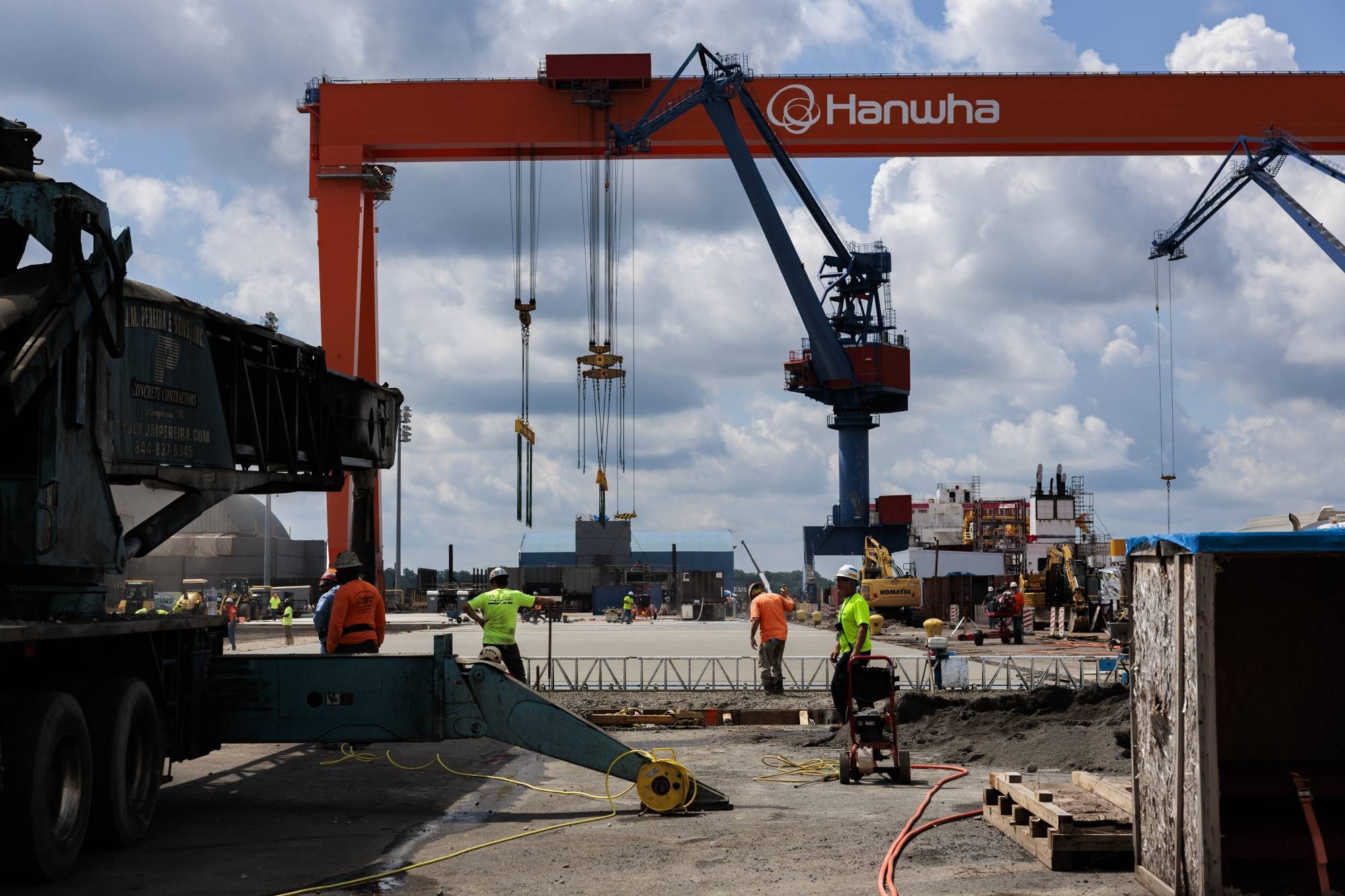
          The Hanwha Philly Shipyard in Philadelphia, Pennsylvania.

          China has threatened further retaliatory measures against US curbs on its shipping sector, after sanctioning American entities of a South Korean shipping giant.The Ministry of Commerce said Tuesday it was placing limits on five US entities of Hanwha Ocean Co., one of South Korea’s biggest shipbuilders. The company’s shares dipped as much as 8% in Seoul, their biggest decline in about two months.The moves are a marked escalation in a long-standing dispute between the world’s two largest economies over maritime dominance. It comes after tensions between the US and China escalated in recent weeks as President Donald Trump threatened additional 100% tariffs on imports from the Asian nation in response to new Chinese export controls.

          This week, retaliatory levies on American-owned ships arriving in China came into effect as a tit-for-tat move by the Xi administration, causing concern across the global maritime sector. Beijing’s new curbs forbids any individual and entity from doing business with the five companies.Meanwhile, the Ministry of Transport said that it was conducting a probe into the impacts from the US Trade Representative’s Section 301 investigation into China’s maritime sector, and may implement retaliatory measures in due time.

          That dispute has consequences for global economy, as vessels are involved in 80% of worldwide trade. Washington announced in April plans to curb China’s shipbuilding prowess even as it sought to build up American capabilities. That had forced Chinese yards to lose some market share, while Chinese shipping lines faced severe penalties for calling at US ports.At the same time, South Korean shipbuilders have offered Washington sweeteners to help the US revive its shipbuilding sector. Hanwha Ocean was the first Korean yard to acquire an American one, and has been seeking to transfer some of that know-how to American shores.

          The five firms curbed by China are Hanwha Shipping LLC, Hanwha Philly Shipyard Inc., Hanwha Ocean USA International LLC, Hanwha Shipping Holdings LLC and HS USA Holdings Corp.

          Spokespersons for Hanwha Ocean in Seoul and Hanwha USA didn’t

          Source: Yahoo Finance

          To stay updated on all economic events of today, please check out our Economic calendar
          Risk Warnings and Disclaimers
          You understand and acknowledge that there is a high degree of risk involved in trading. Following any strategies or investment methods may lead to potential losses. The content on the site is provided by our contributors and analysts for information purposes only. You are solely responsible for determining whether any trading assets, securities, strategy, or any other product is suitable for investing based on your own investment objectives and financial situation.
          Add to Favorites
          Share

          France’s Lecornu Faces Reckoning In Parliament Over Budget

          James Whitman

          Political

          France’s Sebastien Lecornu will address parliament for the first time as prime minister on Tuesday, a make-or-break moment for his fledgling government in its effort to pass a budget and bring some political stability.

          The 39-year-old premier, who was reappointed on Friday, just four days after resigning amid political infighting, will deliver the closely-watched policy speech to the National Assembly at 3 p.m. Paris time, after presenting a draft budget to cabinet in the morning.

          Marine Le Pen’s far right and the far left have vowed to try to topple Lecornu in no-confidence ballots later this week, regardless of what he says. That leaves his survival as prime minister dependent on the concessions he offers on Tuesday to convince an array of other parties to abstain.

          If Lecornu fails, he would become the third prime minister to be forced to resign in less than a year, leaving President Emmanuel Macron with few options other than calling another legislative election. Last year’s snap vote and the ensuing fiscal and political uncertainty already triggered selloffs of French assets that have pushed up the country’s borrowing costs compared to peers.

          “Our sole mission is to rise above and move beyond this political crisis in which we find ourselves — a crisis that has left part of our fellow citizens stunned, and perhaps also a part of the world watching us,” Lecornu told new cabinet ministers at a meeting on Monday.

          With his premiership hanging by a thread, pressure is on Lecornu to cede to demands to pick apart eight years of Macron’s economic policies, even as tries to cut the deficit and reassure investors.

          The Socialists, who have a pivotal role in this week’s no-confidence votes, are demanding a new wealth tax and higher levies on companies, smaller budget cuts, and a suspension of the president’s signature 2023 law that is gradually raising the minimum retirement age to 64 from 62.

          The pension reform has crystallized debate in recent days and so far the center-left group has dismissed Macron’s proposal, made last Friday, to delay rather than suspend the application of the measures.

          “If he sticks with his proposal, we won’t enter into debate on the budget and we will censure immediately,” Socialist Party leader Olivier Faure said in an interview with La Tribune Dimanche. “It’s time to choose.”

          But for Lecornu, capitulating would test the support of what remains of Macron’s centrist Renaissance party in parliament, as well as center-right lawmakers who have said they are against repealing the changes to the pension system. Although unlikely, if they were to vote in favor in a no-confidence motion Lecornu would fall even if the Socialists abstained.

          “It’s painful because it’s a reform Renaissance lawmakers and I completely committed to,” Equality Minister Aurore Berge said Monday on RMC radio.

          Lecornu must also compromise with demands for less belt-tightening after the Socialists were among groups that voted in September to topple former premier Francois Bayrou over his plan to narrow the deficit to 4.6% of economic output in 2026 from 5.4% expected this year.

          However, Lecornu has diminished control over the fiscal plans since he pledged not to use a constitutional tool known as article 49.3 to adopt bills in parliament without a vote. Still, he has said the target must not slip to any wider than 5% if France is to remain credible on markets.

          Source: Bloomberg

          Risk Warnings and Disclaimers
          You understand and acknowledge that there is a high degree of risk involved in trading. Following any strategies or investment methods may lead to potential losses. The content on the site is provided by our contributors and analysts for information purposes only. You are solely responsible for determining whether any trading assets, securities, strategy, or any other product is suitable for investing based on your own investment objectives and financial situation.
          Add to Favorites
          Share

          China Sanctions U.S. Subsidiaries of Hanwha Ocean Amid Growing Tensions with the U.S.

          Gerik

          Economic

          On October 14, 2025, China intensified its economic retaliation against the United States by sanctioning five U.S. subsidiaries of Hanwha Ocean, a major South Korean shipbuilding company. This sanction is seen as a direct response to U.S. actions aimed at China’s shipping industry. The decision, which immediately prohibits Chinese entities and individuals from conducting business with these sanctioned companies, reflects the growing economic and political strain between the two nations.

          Details of the Sanctions

          The sanctioned subsidiaries include Hanwha Shipping LLC, Hanwha Philly Shipyard Inc., Hanwha Ocean USA International LLC, Hanwha Shipping Holdings LLC, and HS USA Holdings Corp. The Chinese Ministry of Commerce’s announcement comes after the U.S. imposed significant fees on Chinese ships docking at American ports, starting at 12:01 a.m. EDT on October 14. In retaliation, China introduced a charge of 400 yuan ($56) on U.S. vessels docking at Chinese ports, escalating the economic confrontation.
          This move is part of a broader escalation in trade and diplomatic tensions between the two superpowers. Alongside the sanctions, China has also tightened its control over rare earth exports, a critical resource for various high-tech industries, and expanded its blacklist of U.S. companies. These actions demonstrate China’s increasing use of economic measures to counter perceived U.S. pressures on its industries.

          The Impact on Hanwha Ocean

          The immediate effect of China’s sanctions was a sharp drop in the share price of Hanwha Ocean, which fell by more than 8% on the Seoul Stock Exchange. The sanctions directly target the company’s operations in the U.S., which are crucial to its global supply chain. With Chinese organizations now prohibited from doing business with Hanwha’s subsidiaries, the company faces significant operational disruptions, especially considering the importance of the Chinese market for the shipping and shipbuilding sectors.
          This sanction is the latest in a series of retaliatory measures between the U.S. and China. In response to China's increasing restrictions, U.S. President Donald Trump threatened to double tariffs on Chinese imports. This tit-for-tat escalation further complicates the ongoing trade dispute, with both countries pushing back against each other's economic strategies.
          Beijing has defended its actions, asserting that the restrictions on rare earth exports and sanctions against U.S. subsidiaries are legitimate and in response to U.S. interference in Chinese markets. As both sides continue to leverage economic pressure, the global shipping and trade industries may face further disruptions.
          China's decision to sanction Hanwha Ocean’s U.S. subsidiaries marks a significant escalation in the ongoing tensions between the U.S. and China. With both nations imposing retaliatory tariffs and sanctions, the economic landscape is becoming increasingly volatile, affecting businesses and industries worldwide. As these tensions continue to unfold, the global shipping industry and U.S.-China trade relations will likely face additional challenges. The impact on Hanwha Ocean, with its plummeting stock prices, underscores the real-world effects of these diplomatic confrontations.

          Source: CNBC

          To stay updated on all economic events of today, please check out our Economic calendar
          Risk Warnings and Disclaimers
          You understand and acknowledge that there is a high degree of risk involved in trading. Following any strategies or investment methods may lead to potential losses. The content on the site is provided by our contributors and analysts for information purposes only. You are solely responsible for determining whether any trading assets, securities, strategy, or any other product is suitable for investing based on your own investment objectives and financial situation.
          Add to Favorites
          Share
          FastBull
          Copyright © 2025 FastBull Ltd

          728 RM B 7/F GEE LOK IND BLDG NO 34 HUNG TO RD KWUN TONG KLN HONG KONG

          TelegramInstagramTwitterfacebooklinkedin
          App Store Google Play Google Play
          Products
          Charts

          Chats

          Q&A with Experts
          Screeners
          Economic Calendar
          Data
          Tools
          Membership
          Features
          Function
          Markets
          Copy Trading
          Latest Signals
          Contests
          News
          Analysis
          24/7
          Columns
          Education
          Company
          Careers
          About Us
          Contact Us
          Advertising
          Help Center
          Feedback
          User Agreement
          Privacy Policy
          Business

          White Label

          Data API

          Web Plug-ins

          Poster Maker

          Affiliate Program

          Risk Disclosure

          The risk of loss in trading financial instruments such as stocks, FX, commodities, futures, bonds, ETFs and crypto can be substantial. You may sustain a total loss of the funds that you deposit with your broker. Therefore, you should carefully consider whether such trading is suitable for you in light of your circumstances and financial resources.

          No decision to invest should be made without thoroughly conducting due diligence by yourself or consulting with your financial advisors. Our web content might not suit you since we don't know your financial conditions and investment needs. Our financial information might have latency or contain inaccuracy, so you should be fully responsible for any of your trading and investment decisions. The company will not be responsible for your capital loss.

          Without getting permission from the website, you are not allowed to copy the website's graphics, texts, or trademarks. Intellectual property rights in the content or data incorporated into this website belong to its providers and exchange merchants.

          Not Logged In

          Log in to access more features

          FastBull Membership

          Not yet

          Purchase

          Become a signal provider
          Help Center
          Customer Service
          Dark Mode
          Price Up/Down Colors

          Log In

          Sign Up

          Position
          Layout
          Fullscreen
          Default to Chart
          The chart page opens by default when you visit fastbull.com