• Trade
  • Markets
  • Copy
  • Contests
  • News
  • 24/7
  • Calendar
  • Q&A
  • Chats
Trending
Screeners
SYMBOL
LAST
BID
ASK
HIGH
LOW
NET CHG.
%CHG.
SPREAD
SPX
S&P 500 Index
6827.42
6827.42
6827.42
6899.86
6801.80
-73.58
-1.07%
--
DJI
Dow Jones Industrial Average
48458.04
48458.04
48458.04
48886.86
48334.10
-245.98
-0.51%
--
IXIC
NASDAQ Composite Index
23195.16
23195.16
23195.16
23554.89
23094.51
-398.69
-1.69%
--
USDX
US Dollar Index
97.970
98.050
97.970
98.070
97.920
+0.020
+ 0.02%
--
EURUSD
Euro / US Dollar
1.17318
1.17326
1.17318
1.17447
1.17283
-0.00076
-0.06%
--
GBPUSD
Pound Sterling / US Dollar
1.33632
1.33641
1.33632
1.33740
1.33546
-0.00075
-0.06%
--
XAUUSD
Gold / US Dollar
4342.45
4342.86
4342.45
4347.21
4294.68
+43.06
+ 1.00%
--
WTI
Light Sweet Crude Oil
57.501
57.538
57.501
57.601
57.194
+0.268
+ 0.47%
--

Community Accounts

Signal Accounts
--
Profit Accounts
--
Loss Accounts
--
View More

Become a signal provider

Sell trading signals to earn additional income

View More

Guide to Copy Trading

Get started with ease and confidence

View More

Signal Accounts for Members

All Signal Accounts

Best Return
  • Best Return
  • Best P/L
  • Best MDD
Past 1W
  • Past 1W
  • Past 1M
  • Past 1Y

All Contests

  • All
  • Trump Updates
  • Recommend
  • Stocks
  • Cryptocurrencies
  • Central Banks
  • Featured News
Top News Only
Share

Stats Office - Botswana November Consumer Inflation At 0.0% Month-On-Month

Share

Stats Office - Botswana November Consumer Inflation At 3.8% Year-On-Year

Share

Statistics Bureau - Kazakhstan's Jan-Nov Industrial Output +7.4% Year-On-Year

Share

Fca: Sets Out Plans To Help Build Mortgage Market Of Future

Share

Eurostoxx 50 Futures Up 0.38%, DAX Futures Up 0.43%, FTSE Futures Up 0.37%

Share

[Delivery Of New US Presidential Aircraft Delayed Again] According To The Latest Timeline Released By The US Air Force, The Delivery Of The First Of The Two Newly Commissioned Air Force One Presidential Aircraft Will Not Be Earlier Than 2028. This Means That The Delivery Of The New Air Force One Has Been Delayed Once Again

Share

German Nov Wholesale Prices +0.3% Month-On-Month

Share

Norway's Nov Trade Balance Nok 41.3 Billion - Statistics Norway

Share

German Nov Wholesale Prices +1.5% Year-On-Year

Share

Romania's Adjusted Industrial Production +0.4% Month-On-Month In October, +0.2% Year-On-Year - Statistics Board

Share

Russia Says It Destroyed 130 Ukrainian Drones Overnight, Some Moscow Airports Disrupted

Share

EU Commissioner Kos: This Is No Time To Speculate On Timeframe For Ukraine's Accession To EU

Share

Lithuania Foreign Minister: Ukraine Needs Article 5-Alike Security Guarantees, With Nuclear Deterrent

Share

Russia's Central Bank Says It Seeks 18.2 Trillion Roubles In Damages From Euroclear

Share

Lithuania's Foreign Minister Says Expects EU Today To Broaden Belarus Sanctions Regime To Include Hybrid Activity

Share

India's Nifty 50 Index Pares Losses, Last Down 0.1%

Share

EU's Kallas: Important To Have Belgium On Board For Reparations Loan

Share

EU's Kallas: Work On Reparations Loan For Ukraine "Increasingly Difficult" But Still Have Some Days To Reach Agreement

Share

EU's Kallas: If Russian Agression Is Rewarded, We Will See More Of It

Share

India's Sept WPI Inflation Revised To 0.19% Year-On-Year

TIME
ACT
FCST
PREV
U.K. Trade Balance Non-EU (SA) (Oct)

A:--

F: --

P: --

France HICP Final MoM (Nov)

A:--

F: --

P: --

China, Mainland Outstanding Loans Growth YoY (Nov)

A:--

F: --

P: --

China, Mainland M2 Money Supply YoY (Nov)

A:--

F: --

P: --

China, Mainland M0 Money Supply YoY (Nov)

A:--

F: --

P: --

China, Mainland M1 Money Supply YoY (Nov)

A:--

F: --

P: --

India CPI YoY (Nov)

A:--

F: --

P: --

India Deposit Gowth YoY

A:--

F: --

P: --

Brazil Services Growth YoY (Oct)

A:--

F: --

P: --

Mexico Industrial Output YoY (Oct)

A:--

F: --

P: --

Russia Trade Balance (Oct)

A:--

F: --

P: --

Philadelphia Fed President Henry Paulson delivers a speech
Canada Building Permits MoM (SA) (Oct)

A:--

F: --

P: --

Canada Wholesale Sales YoY (Oct)

A:--

F: --

P: --

Canada Wholesale Inventory MoM (Oct)

A:--

F: --

P: --

Canada Wholesale Inventory YoY (Oct)

A:--

F: --

P: --

Canada Wholesale Sales MoM (SA) (Oct)

A:--

F: --

P: --

Germany Current Account (Not SA) (Oct)

A:--

F: --

P: --

U.S. Weekly Total Rig Count

A:--

F: --

P: --

U.S. Weekly Total Oil Rig Count

A:--

F: --

P: --

Japan Tankan Small Manufacturing Outlook Index (Q4)

A:--

F: --

P: --

Japan Tankan Large Non-Manufacturing Diffusion Index (Q4)

A:--

F: --

P: --

Japan Tankan Large Non-Manufacturing Outlook Index (Q4)

A:--

F: --

P: --

Japan Tankan Large Manufacturing Outlook Index (Q4)

A:--

F: --

P: --

Japan Tankan Small Manufacturing Diffusion Index (Q4)

A:--

F: --

P: --

Japan Tankan Large Manufacturing Diffusion Index (Q4)

A:--

F: --

P: --

Japan Tankan Large-Enterprise Capital Expenditure YoY (Q4)

A:--

F: --

P: --

U.K. Rightmove House Price Index YoY (Dec)

A:--

F: --

P: --

China, Mainland Industrial Output YoY (YTD) (Nov)

A:--

F: --

P: --

China, Mainland Urban Area Unemployment Rate (Nov)

A:--

F: --

P: --

Saudi Arabia CPI YoY (Nov)

A:--

F: --

P: --

Euro Zone Industrial Output YoY (Oct)

--

F: --

P: --

Euro Zone Industrial Output MoM (Oct)

--

F: --

P: --

Canada Existing Home Sales MoM (Nov)

--

F: --

P: --

Euro Zone Total Reserve Assets (Nov)

--

F: --

P: --

U.K. Inflation Rate Expectations

--

F: --

P: --

Canada National Economic Confidence Index

--

F: --

P: --

Canada New Housing Starts (Nov)

--

F: --

P: --

U.S. NY Fed Manufacturing Employment Index (Dec)

--

F: --

P: --

U.S. NY Fed Manufacturing Index (Dec)

--

F: --

P: --

Canada Core CPI YoY (Nov)

--

F: --

P: --

Canada Manufacturing Unfilled Orders MoM (Oct)

--

F: --

P: --

U.S. NY Fed Manufacturing Prices Received Index (Dec)

--

F: --

P: --

U.S. NY Fed Manufacturing New Orders Index (Dec)

--

F: --

P: --

Canada Manufacturing New Orders MoM (Oct)

--

F: --

P: --

Canada Core CPI MoM (Nov)

--

F: --

P: --

Canada Trimmed CPI YoY (SA) (Nov)

--

F: --

P: --

Canada Manufacturing Inventory MoM (Oct)

--

F: --

P: --

Canada CPI YoY (Nov)

--

F: --

P: --

Canada CPI MoM (Nov)

--

F: --

P: --

Canada CPI YoY (SA) (Nov)

--

F: --

P: --

Canada Core CPI MoM (SA) (Nov)

--

F: --

P: --

Canada CPI MoM (SA) (Nov)

--

F: --

P: --

Federal Reserve Board Governor Milan delivered a speech
U.S. NAHB Housing Market Index (Dec)

--

F: --

P: --

Australia Composite PMI Prelim (Dec)

--

F: --

P: --

Australia Services PMI Prelim (Dec)

--

F: --

P: --

Australia Manufacturing PMI Prelim (Dec)

--

F: --

P: --

Japan Manufacturing PMI Prelim (SA) (Dec)

--

F: --

P: --

U.K. Unemployment Claimant Count (Nov)

--

F: --

P: --

U.K. Unemployment Rate (Nov)

--

F: --

P: --

Q&A with Experts
    • All
    • Chatrooms
    • Groups
    • Friends
    Connecting
    .
    .
    .
    Type here...
    Add Symbol or Code

      No matching data

      All
      Trump Updates
      Recommend
      Stocks
      Cryptocurrencies
      Central Banks
      Featured News
      • All
      • Russia-Ukraine Conflict
      • Middle East Flashpoint
      • All
      • Russia-Ukraine Conflict
      • Middle East Flashpoint

      Search
      Products

      Charts Free Forever

      Chats Q&A with Experts
      Screeners Economic Calendar Data Tools
      Membership Features
      Data Warehouse Market Trends Institutional Data Policy Rates Macro

      Market Trends

      Market Sentiment Order Book Forex Correlations

      Top Indicators

      Charts Free Forever
      Markets

      News

      News Analysis 24/7 Columns Education
      From Institutions From Analysts
      Topics Columnists

      Latest Views

      Latest Views

      Trending Topics

      Top Columnists

      Latest Update

      Signals

      Copy Rankings Latest Signals Become a signal provider AI Rating
      Contests
      Brokers

      Overview Brokers Assessment Rankings Regulators News Claims
      Broker listing Forex Brokers Comparison Tool Live Spread Comparison Scam
      Q&A Complaint Scam Alert Videos Tips to Detect Scam
      More

      Business
      Events
      Careers About Us Advertising Help Center

      White Label

      Data API

      Web Plug-ins

      Affiliate Program

      Awards Institution Evaluation IB Seminar Salon Event Exhibition
      Vietnam Thailand Singapore Dubai
      Fans Party Investment Sharing Session
      FastBull Summit BrokersView Expo
      Recent Searches
        Top Searches
          Markets
          News
          Analysis
          User
          24/7
          Economic Calendar
          Education
          Data
          • Names
          • Latest
          • Prev

          View All

          No data

          Scan to Download

          Faster Charts, Chat Faster!

          Download App
          English
          • English
          • Español
          • العربية
          • Bahasa Indonesia
          • Bahasa Melayu
          • Tiếng Việt
          • ภาษาไทย
          • Français
          • Italiano
          • Türkçe
          • Русский язык
          • 简中
          • 繁中
          Open Account
          Search
          Products
          Charts Free Forever
          Markets
          News
          Signals

          Copy Rankings Latest Signals Become a signal provider AI Rating
          Contests
          Brokers

          Overview Brokers Assessment Rankings Regulators News Claims
          Broker listing Forex Brokers Comparison Tool Live Spread Comparison Scam
          Q&A Complaint Scam Alert Videos Tips to Detect Scam
          More

          Business
          Events
          Careers About Us Advertising Help Center

          White Label

          Data API

          Web Plug-ins

          Affiliate Program

          Awards Institution Evaluation IB Seminar Salon Event Exhibition
          Vietnam Thailand Singapore Dubai
          Fans Party Investment Sharing Session
          FastBull Summit BrokersView Expo

          Nikkei 225 Forecast: Start of New Medium-Term Bullish Trend Amid Rising JGB Yields

          MarketPulse by OANDA Group

          Stocks

          Summary:

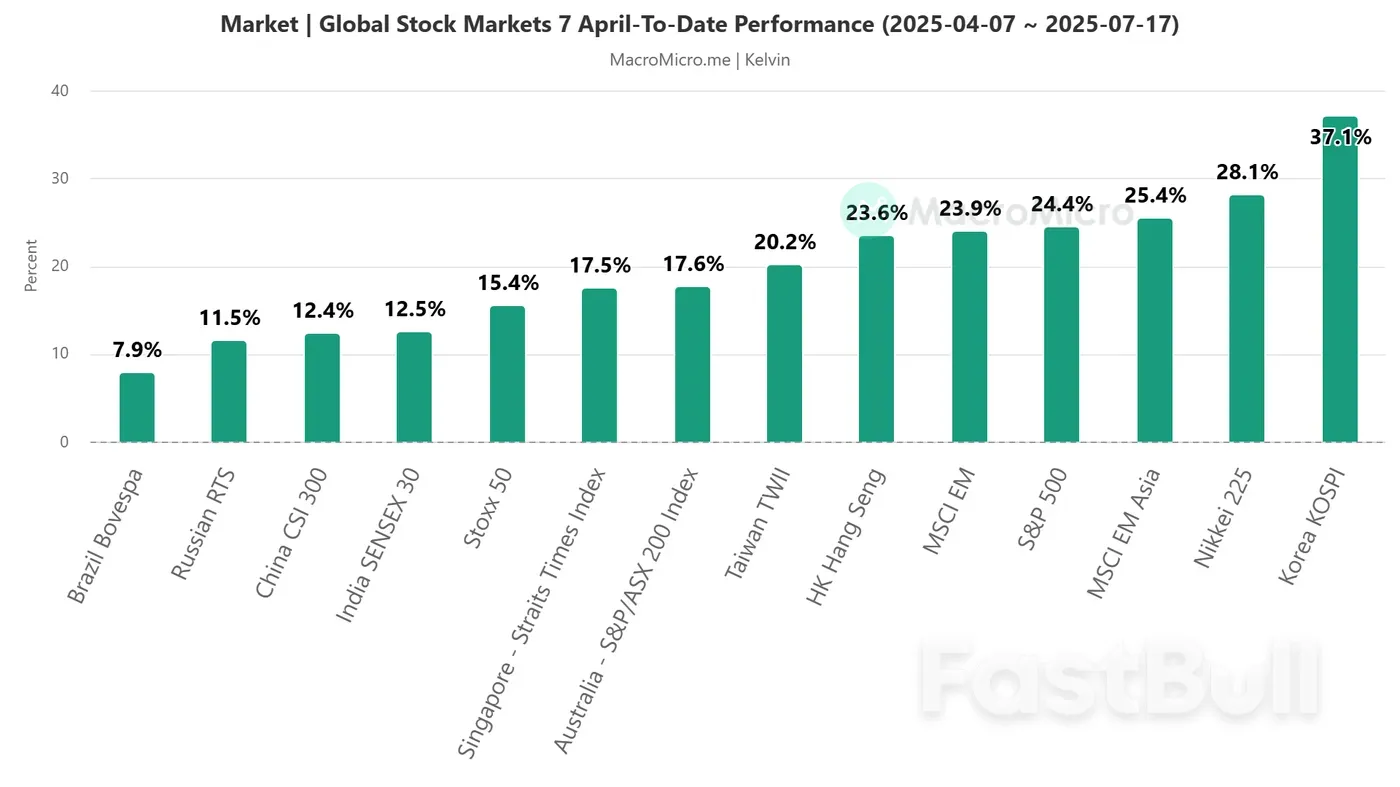
          Nikkei 225 rallies 34% from April lows to June highs, driven partly by post-tariff optimism despite Japan being targeted by US trade measures.Nikkei 225 outperforms globally, gaining 28% since 7 April, trailing only South Korea’s KOSPI and ahead of the Hang Seng and S&P 500.Rising 30-year JGB yields (+45 bps) spark a -4.2% Nikkei 225 pullback due to fiscal concerns ahead of Japan’s 20 July election. Strong economic & earnings data: Citigroup Surprise Index and Earnings Revisions Index support bullish fundamentals for Japanese stocks.Bullish technical breakout from flag pattern signals potential for Nikkei 225 to challenge resistance at 40,620 and 42,500/890.
          Since our last publication, the price actions of the Japan 225 CFD Index (a proxy for the Nikkei 225 futures) have staged the expected corrective decline and retested the 5 August 2024 ‘s major swing low of 30,390 on 7 April 2025.
          Thereafter, the Japan 225 CFD Index has staged a magnificent rally of 34% from the 7 April 2025 low to the 30 June 2025 high ex-post US “Liberation Day” in early April, where US President Trump announced a slew of higher reciprocal tariffs on the respective US trading partners, which include Japan, that has been hit with a 24% levy (now at 25% with an extended deadline of 1 August for negotiation)

          Japan’s Nikkei 225, one of the best-performing stock indices

          Nikkei 225 Forecast: Start of New Medium-Term Bullish Trend Amid Rising JGB Yields_1

          Fig 1: Major stock indices performances since 7 Apr 2025 till 17 Jul 2025 (Source: MacroMicro, click to enlarge chart)

          A recent spike in the 30-year JGB bond yield has created headwinds

          The recent price actions of the Japan 225 CFD Index have staged a corrective decline of -4.2% from 30 June to 16 July, in line with the recent uptick seen on the long-term 30-year Japanese Government Bond (JGB) yield, where it rose by 45 basis points (bps) from the 4 July low of 2.75% to retest its recent all-time high of 3.2% (printed in May) on 15 June.
          Japan’s surge in 30-year JGB yield reflects market anxiety over the upcoming upper-house election on Sunday, 20 July, and the spectre of expansive fiscal policies. With state debt near 250% of GDP and institutional demand skewed away from longer-term JGBs, the surge underscores a fragile balance between Japan’s fiscal commitments and monetary stance. If election outcomes favour populist spending, Japan risks rising borrowing costs and possible credit rating downgrades, forcing fiscal restraint or central bank intervention.

          Other supportive fundamental factors can create a tailwind buffer

          Nikkei 225 Forecast: Start of New Medium-Term Bullish Trend Amid Rising JGB Yields_2

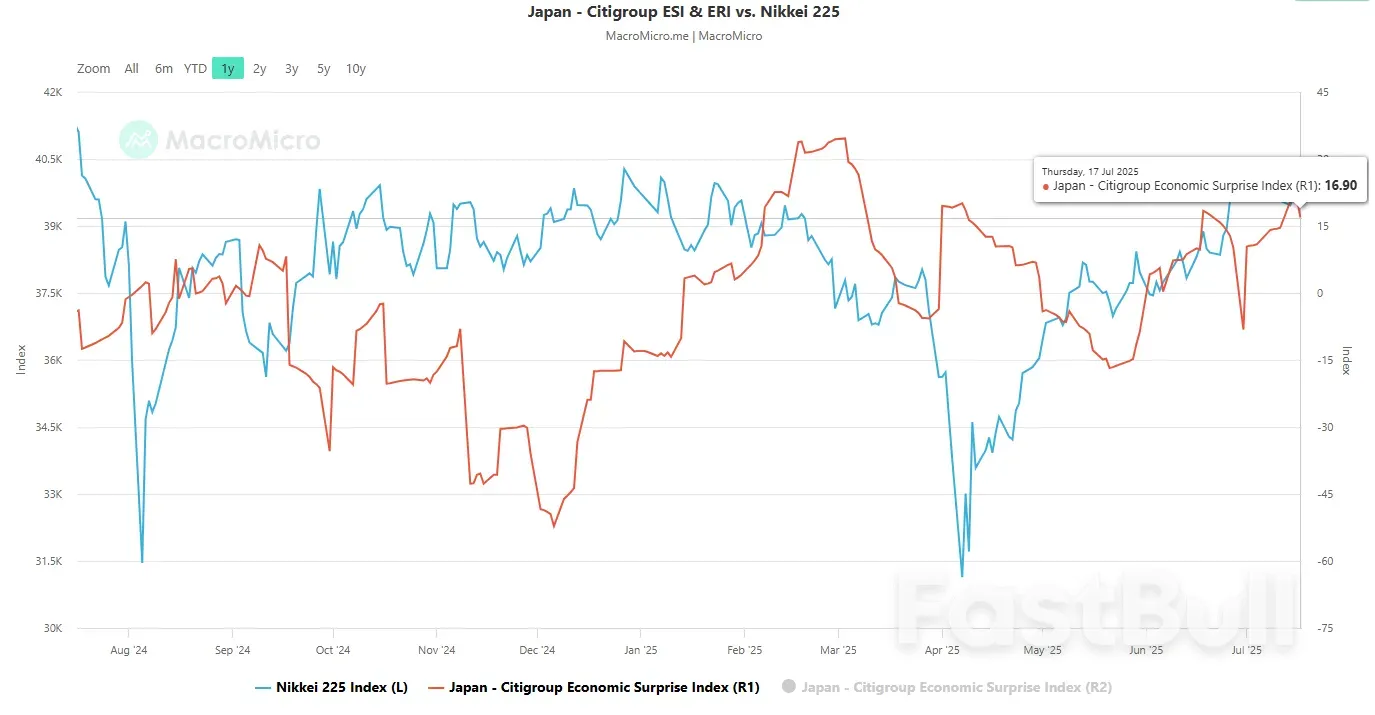
          Fig 2: Japan’s Citigroup Economic Surprise Index as of 17 Jul 2025 (Source: MacroMicro, click to enlarge chart)

          Nikkei 225 Forecast: Start of New Medium-Term Bullish Trend Amid Rising JGB Yields_3

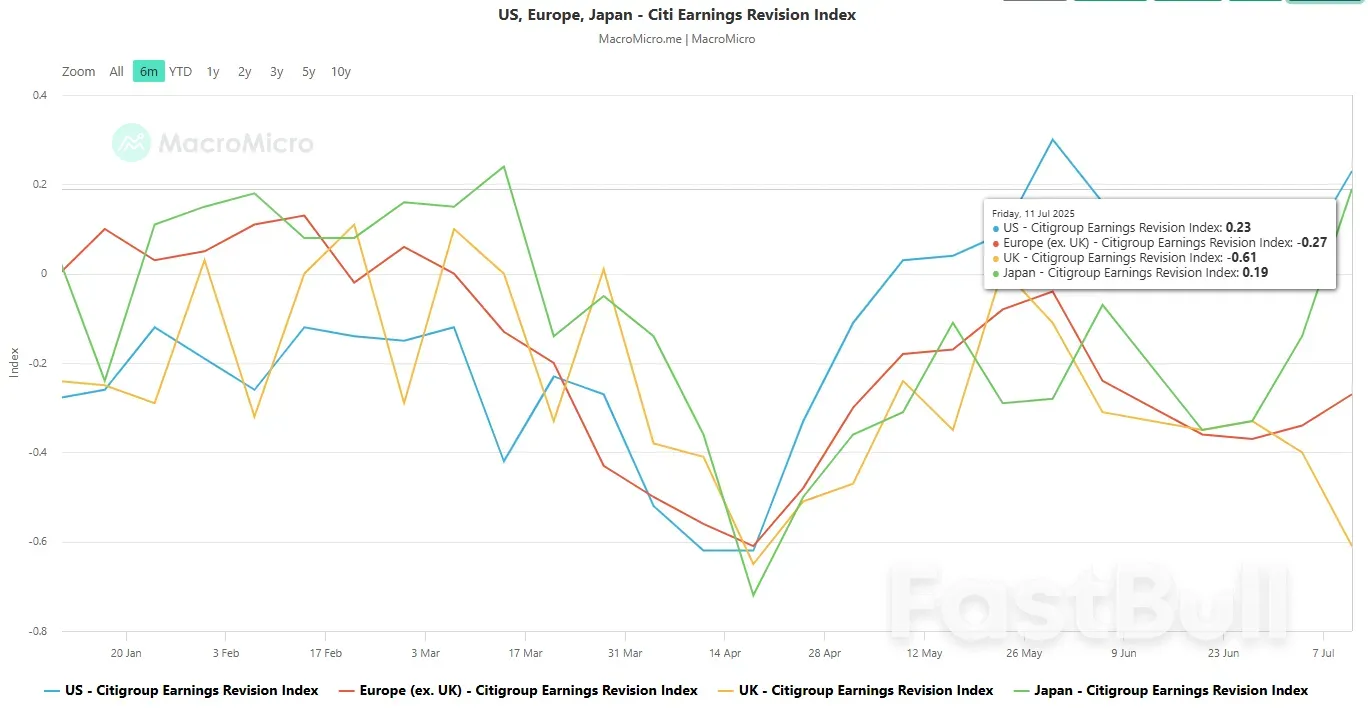
          Fig 3: Japan’s Citigroup Earnings Revision Index vs US, UK & Europe as of 11 Jul 2025 (Source: MacroMicro, click to enlarge chart)

          There are still supportive fundamental elements that can support further potential upside in the Nikkei 225 despite the ongoing rise in the longer-term JGB yields.
          The Citigroup Economic Surprise Index for Japan has been on a steady increase since the 30 June 2025 reading of -8.20 to hit a recent level of 16.90 on Thursday, 17 July. The index is the sum of the difference between the actual value of various economic data and their consensus forecast. If the index is greater than zero and rising, it means that the overall economic performance in Japan is generally better than expected, which in turn, supports a potential strengthening in the Nikkei 225 (see Fig 2).
          Secondly, the Japanese stock market has seen the steepest analysts’ earnings upgrades on average since 27 June, versus other regions (US, UK, Europe). Japan’s Citigroup Earnings Revision Index has risen significantly from 27 June’s print of -0.33 to the current level of 0.19 as of 11 July, another potential tailwind to support a bullish Nikkei 225 (see Fig 3).

          Technical factors are suggesting a potential multi-month bullish trend for the Nikkei 225

          Nikkei 225 Forecast: Start of New Medium-Term Bullish Trend Amid Rising JGB Yields_4

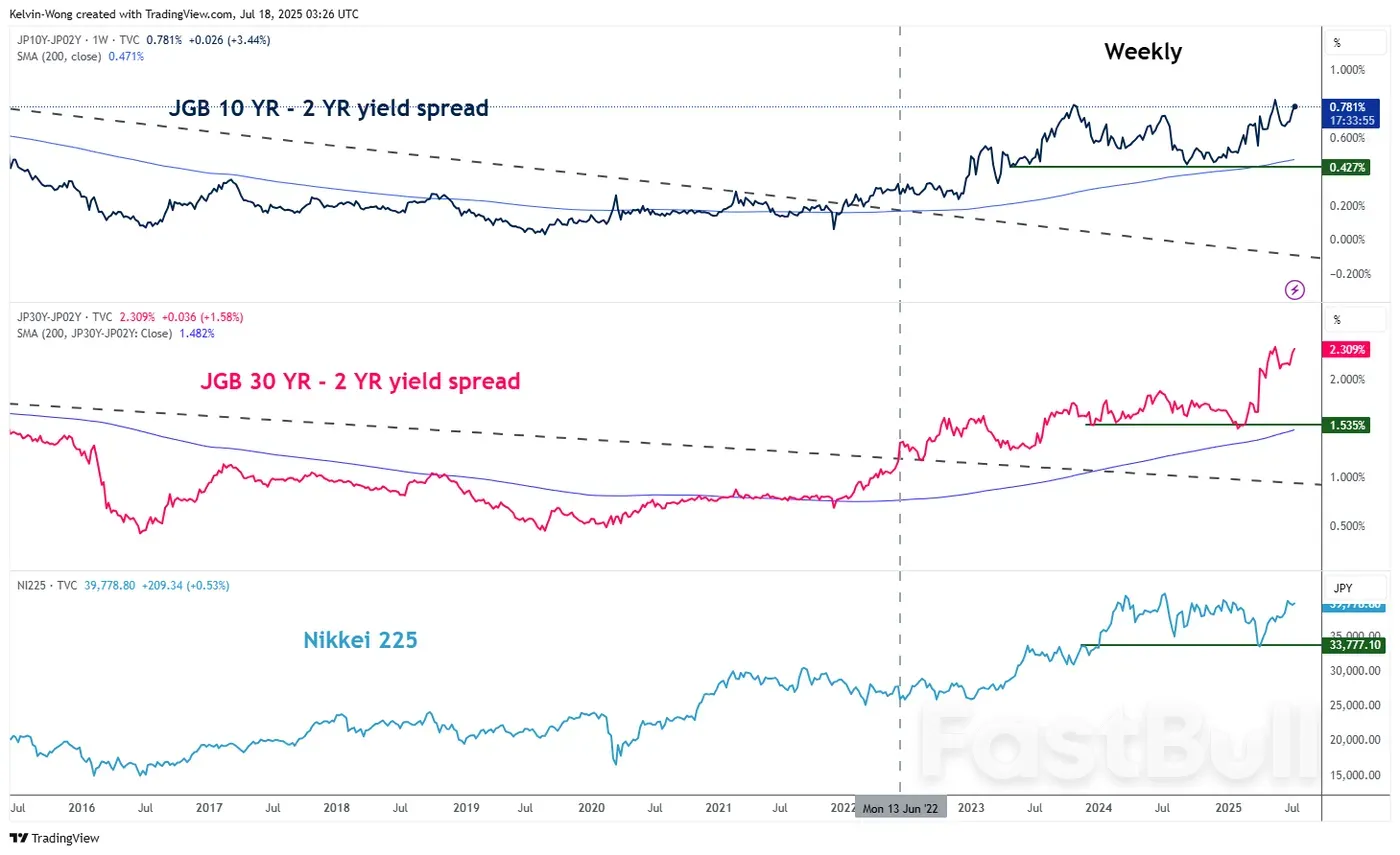
          Fig 4: JGB yield curves (30-YR/2-YR & 10-YR/2-YR) major trends as of 18 Jul 2025 (Source: TradingView, click to enlarge chart)

          Nikkei 225 Forecast: Start of New Medium-Term Bullish Trend Amid Rising JGB Yields_5

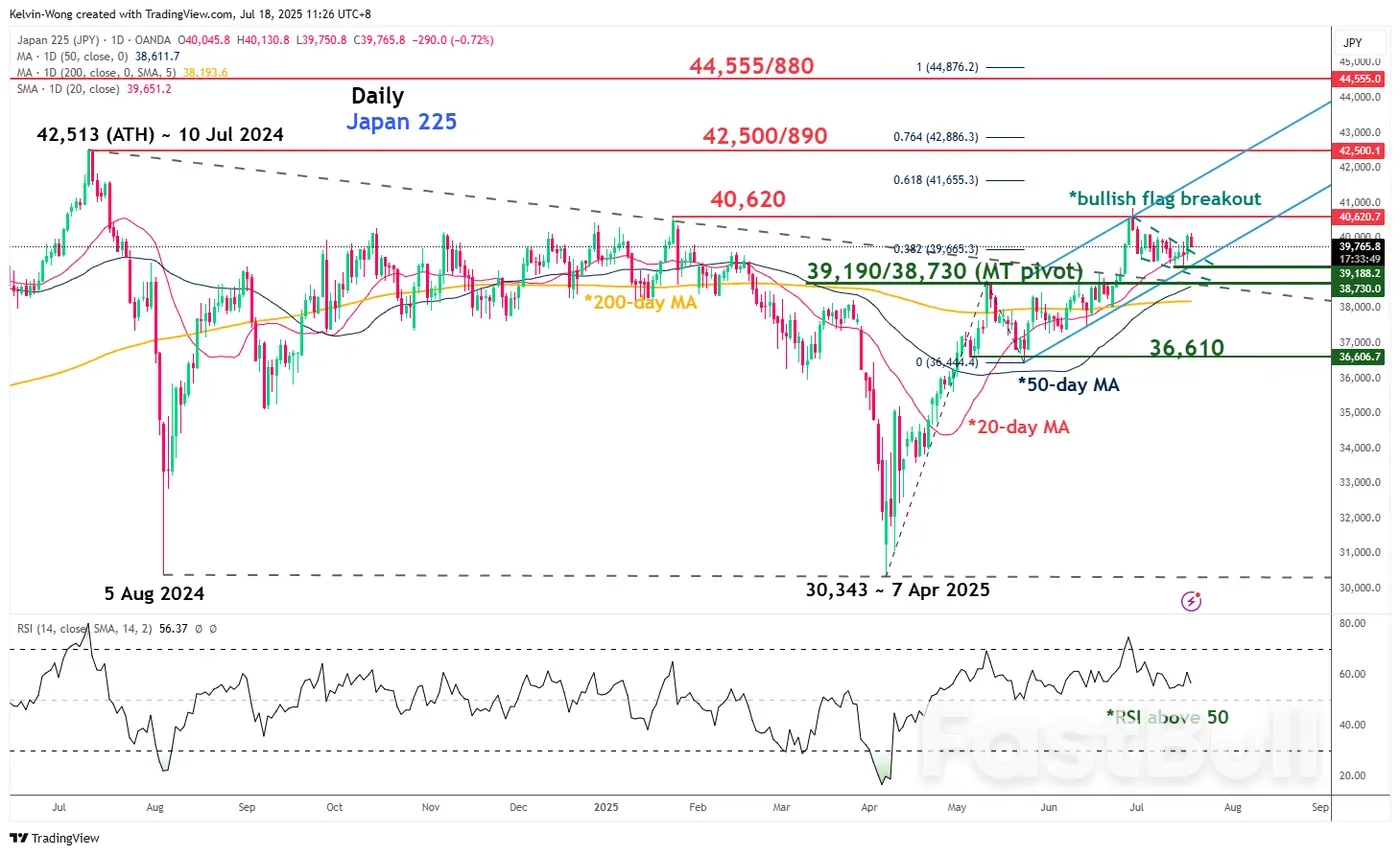
          Fig 5: Japan 225 CFD Index medium-term & major trends as of 18 Jul 2025 (Source: TradingView, click to enlarge chart)

          A steepening of the JGB yield curves (30-year minus 2-year and 10-year minus 2-year) coupled with supportive fundamentals, as highlighted earlier, is likely to create another tailwind for the Nikkei 225.
          The major bullish breakout (steepening conditions) of the JGB yield curves since June 2022 has a direct correlation with the movements of the Nikkei 225, and the major uptrend phases of the JGB yield curves remain intact so far, in turn, may trigger a positive feedback loop into the Nikkei 225 (see Fig 4)
          In addition, the daily time frame technical chart of the Japan 225 CFD Index has staged a bullish breakout from a bullish continuation flag configuration on Thursday, 17 July, after a retest on its rising 20-day moving average on Monday, 14 July (see Fig 5).
          These observations suggest that a medium-term uptrend phase is evolving in the Japan 225 CFD Index. Watch the 39,190/38,730 key medium-term pivotal support zone for the start of a potential fresh impulsive up move sequence for the next medium-term resistances to come in at 40,620 and 42,500/890 (current all-time high and Fibonacci extension).
          However, failure to hold at 38,739 invalidates the bullish scenario to kickstart a medium-term corrective decline sequence to expose the next medium-term support at 36,610.

          来源:OANDA

          Risk Warnings and Disclaimers
          You understand and acknowledge that there is a high degree of risk involved in trading. Following any strategies or investment methods may lead to potential losses. The content on the site is provided by our contributors and analysts for information purposes only. You are solely responsible for determining whether any trading assets, securities, strategy, or any other product is suitable for investing based on your own investment objectives and financial situation.
          Add to Favorites
          Share

          Indonesia Seeks Exemptions in US Tariff Deal as Final Details Still Under Negotiation

          Gerik

          Economic

          Jakarta Navigates Strategic Tariff Concessions and Sectoral Safeguards

          In the wake of a partially concluded trade agreement, Indonesia is still negotiating the specifics of a tariff deal with the United States that slashed a proposed 32% tariff rate to 19%. This agreement one of the few successfully reached before the Trump administration’s August 1 deadline reflects a pragmatic balancing act between protecting key domestic sectors and preserving critical US market access.
          Susiwijono Moegiarso, a senior official at Indonesia’s Coordinating Ministry for Economic Affairs, confirmed on Friday that while a headline rate of 19% was agreed upon, it would be added atop existing sectoral tariffs. This layered structure intensifies pressure on exporters of affected goods, prompting Jakarta to seek targeted exemptions for key commodities.

          Push for Exemptions Reflects Sectoral Priorities

          Indonesia, the world’s largest producer of palm oil and a major nickel supplier, is lobbying Washington to exclude palm oil, nickel, cocoa, and rubber from the elevated tariff. The stakes are particularly high for palm oil, which accounted for 85% of US imports from Indonesia in 2024. The country is positioning these products as strategically vital not only to its economy but also to US supply chain resilience.
          Simultaneously, in a nod to US business interests, Indonesia has agreed to exempt American technology products from local content rules that previously required the use of domestic components. This concession is expected to ease entry for US electronics, telecom, and digital infrastructure companies.

          Strategic Purchases to Bolster Bilateral Ties

          Further solidifying the deal, Indonesia announced plans for Garuda Indonesia to purchase aircraft from Boeing, while Pertamina, the state energy firm, will begin importing American energy. These moves align with the Trump administration’s emphasis on reciprocal trade benefits and serve as diplomatic signals of deepening US-Indonesia economic ties.
          In return, Indonesia will remove tariffs on nearly all American goods with exceptions for culturally sensitive products like pork and alcoholic beverages and ease quota restrictions on certain imports. This zero-tariff pledge suggests a substantial opening of the Indonesian market for US exporters.

          Fragile Gains, but Still Subject to Volatility

          Although the deal appears to be a win for both sides, its final implementation depends on how remaining exemptions and quota frameworks are resolved. Moreover, the application of the 19% tariff on top of sector-specific duties could still hinder Indonesian exporters unless the exemption requests are honored.
          Politically, the deal allows Indonesia to avoid the brunt of protectionist pressure from Washington while maintaining leverage through strategic energy and aircraft purchases. Economically, it offers a short-term boost to exports but risks structural vulnerabilities if key sectors like palm oil are not shielded.
          As the August deadline nears, much will depend on whether Indonesia can secure a favorable balance between market access, industrial protection, and geopolitical alignment with the United States.

          Source: Reuters

          To stay updated on all economic events of today, please check out our Economic calendar
          Risk Warnings and Disclaimers
          You understand and acknowledge that there is a high degree of risk involved in trading. Following any strategies or investment methods may lead to potential losses. The content on the site is provided by our contributors and analysts for information purposes only. You are solely responsible for determining whether any trading assets, securities, strategy, or any other product is suitable for investing based on your own investment objectives and financial situation.
          Add to Favorites
          Share

          PBOC Governor Meets Bank of America Executive Amid Global and Domestic Economic Uncertainty

          Gerik

          Economic

          Global Financial Dialogue Signals Openness Amid Cautious Outlook

          In a rare high-profile meeting, Pan Gongsheng, Governor of the People's Bank of China (PBOC), hosted Bernard Mensah, President of International at Bank of America, in Beijing on Tuesday. According to an official PBOC statement released Friday, the two held extensive discussions on global economic trends, China's macroeconomic framework, and the current state of domestic financial markets.
          This engagement comes at a time when China’s economy is grappling with multiple challenges: tepid consumer demand, persistent deflationary pressure, weak private sector confidence, and uncertain external trade dynamics particularly in light of growing geopolitical tensions with the West and a sluggish global recovery. By inviting dialogue with one of the largest American financial institutions, Beijing appears to be signaling a willingness to maintain constructive ties with foreign investors and multinationals despite broader geopolitical strain.

          China's Macroeconomic Strategy Under Global Scrutiny

          The PBOC has faced increasing pressure to provide more monetary easing in light of slowing credit demand and low inflation. While recent targeted measures such as liquidity injections and modest reserve requirement ratio (RRR) cuts have provided short-term relief, markets continue to debate whether more aggressive rate cuts or structural reforms are needed to reignite domestic demand and stabilize property markets.
          In this context, the discussion with Mensah may have touched on how foreign capital views China’s current macro stance and the outlook for RMB assets. The global investment community remains concerned about the PBOC's cautious approach, especially when juxtaposed with more aggressive central bank strategies in the U.S. and Europe.

          A Nod to Market Reforms and Financial Stability

          While the statement did not disclose specific policy proposals or outcomes, the inclusion of “financial market” topics likely refers to China’s gradual efforts to liberalize capital flows and deepen its bond and equity markets. With foreign investment in Chinese onshore bonds stagnating and outbound capital controls tightening, the PBOC may be seeking feedback on how to restore investor confidence while balancing systemic risk.
          The meeting also comes amid China’s efforts to enhance the international role of the yuan, especially as many emerging markets explore de-dollarization strategies. Dialogue with major financial institutions like Bank of America provides a channel for Beijing to better understand how to integrate into global financial standards without compromising capital controls.
          Though short on details, the Pan-Mensah meeting reflects a deliberate and strategic engagement effort by China’s central bank to maintain open lines of communication with key global financial actors. With market sentiment fragile and structural headwinds persistent, Beijing appears to be cautiously testing how international partners perceive its macroeconomic narrative and whether there is room for mutual cooperation amid a shifting financial order.

          Source: Reuters

          To stay updated on all economic events of today, please check out our Economic calendar
          Risk Warnings and Disclaimers
          You understand and acknowledge that there is a high degree of risk involved in trading. Following any strategies or investment methods may lead to potential losses. The content on the site is provided by our contributors and analysts for information purposes only. You are solely responsible for determining whether any trading assets, securities, strategy, or any other product is suitable for investing based on your own investment objectives and financial situation.
          Add to Favorites
          Share

          Oil Climbs As EU Tightens Russian Sanctions With Lower Price Cap

          Glendon

          Economic

          Political

          Commodity

          Oil rose as the European Union agreed to a lower price cap for Russian crude, and data showed the US economy holding up despite the fallout from the Washington-led trade war.

          Global benchmark Brent topped $70 a barrel, while West Texas Intermediate was above $68. EU member states agreed to the bloc’s 18th package of sanctions on Moscow over its war against Ukraine, including the lower cap, EU foreign affairs chief Kaja Kallas said in a social-media post. The limit will be set at $15 a barrel below market rates.

          Since Russia’s invasion of Ukraine in 2022, the EU has agreed to repeated waves of sanctions including the cap, which is intended to reduce Moscow’s revenues from energy sales, while also seeking to keep those flows going into the global market to avoid a price spike. Earlier this week, US President Donald Trump’s also threated to impose tighter financial penalties on Russian energy, including nations taking its oil such as India and China.

          Oil is higher so far this month, following gains in May and June. Both Morgan Stanley and Goldman Sachs Group Inc. have made the case in recent days that while global crude stockpiles have been expanding, the substantial builds have occurred in regions that don’t hold much sway in price-setting. The diesel market has also been tight, especially in Europe and the US.

          “The logic of diesel tightness propping up crude flat prices remains unchanged,” said Huang Wanzhe, an analyst at Dadi Futures Co., who added that the peak-demand season had seen a solid start. “The key question is how long this strength can last,” she said.

          In wider markets, strong US data eased concerns about the world’s largest economy, helping to underpin a risk-on mood and global equity rally. Asian stocks advanced.

          Crude futures, as well as those for gasoil, remain in backwardation in the nearer months of their curves, which means traders are having to pay more to secure prompt supplies. That pattern points to tight conditions even as producers’ cartel OPEC+ has been relaxing output curbs at a rapid clip.

          Source: Yahoo Finance

          To stay updated on all economic events of today, please check out our Economic calendar
          Risk Warnings and Disclaimers
          You understand and acknowledge that there is a high degree of risk involved in trading. Following any strategies or investment methods may lead to potential losses. The content on the site is provided by our contributors and analysts for information purposes only. You are solely responsible for determining whether any trading assets, securities, strategy, or any other product is suitable for investing based on your own investment objectives and financial situation.
          Add to Favorites
          Share

          Japan's Upper House Election Sends Shockwaves Through JGBs and Yen Markets

          Gerik

          Economic

          Bond Sell-Off and Yen Weakness Precede Vote

          Japanese financial markets have entered a turbulent phase ahead of the July 20 election, with 30-year JGB yields surging to a record 3.20% and the yen depreciating to multi-month lows against both the U.S. dollar and euro. The trigger: growing expectations that Prime Minister Ishiba’s ruling Liberal Democratic Party (LDP) and its junior coalition partner Komeito may lose their upper house majority, potentially ushering in a more populist fiscal environment. These developments mark the most acute bond sell-off Japan has seen in recent years, driven by fears of expanded government borrowing and fiscal loosening.

          Scenario 1: LDP Coalition Retains Majority – Market Rebound Likely

          Should Ishiba’s coalition defy the polls and maintain control of the upper house, analysts anticipate a short-term bullish reversal for both the yen and JGBs. The government’s debt burden, while elevated at 250% of GDP, has shown signs of stabilization, and Ishiba is viewed as fiscally conservative compared to potential successors. Dai-ichi Life economist Koichi Fujishiro noted that expectations of runaway government spending could ease if political continuity is preserved, reducing upward pressure on yields. A surprise LDP-Komeito victory may thus trigger a short-covering rally in long-term bonds and a modest yen recovery.

          Scenario 2: Coalition Loss and Ishiba Resignation – Political Risk Escalates

          The base case for many investors is a weakened LDP-Komeito bloc, which may lose its majority and force Prime Minister Ishiba to step down. Should that happen, potential successors such as Sanae Takaichi who champions the legacy of Abenomics and supports renewed monetary easing could shift policy expectations significantly. Markets are already discounting this possibility. The surge in long-end yields this week reflects anticipation of both leadership uncertainty and greater bond issuance.
          If Ishiba resigns, analysts expect foreign investors to sell both equities and the yen in the short term, with TD Securities forecasting that USD/JPY could breach the 149.70 technical level. However, for equities, Daiwa Securities’ Yugo Tsuboi believes that the policy architecture would largely remain intact, meaning any sell-off might be short-lived. Ironically, Ishiba staying on with diminished authority may prolong policy ambiguity, which Tsuboi warns could be worse for risk assets than a clean leadership transition.

          Scenario 3: Outsider Surge – Most Disruptive for Markets

          A less likely but most disruptive outcome would be a strong showing by outsider or populist parties. The Democratic Party for the People (DPP), Sanseito, and others have proposed tax cuts financed by increased JGB issuance. Sanseito has gone as far as advocating for the complete elimination of Japan’s consumption tax.
          This scenario introduces the risk of “bear steepening,” where long-term bond yields rise more sharply than short-term ones due to concerns about fiscal irresponsibility. Barclays estimates that a 5% cut in the consumption tax could add 15–20 basis points to the 30-year yield. Societe Generale adds that if opposition forces form a ruling coalition and enact large-scale tax repeals funded by debt, long-term yields could spike and remain elevated throughout their term.

          Broader Market Implications and Investor Strategy

          Beyond JGBs and the yen, Japan’s equity markets and global sentiment could also face ripple effects from Sunday’s election. The high public debt and sensitivity of JGBs to fiscal rhetoric mean even small political shifts can have outsized effects. Investors are already adjusting positions across the curve, with demand for shorter-duration JGBs offering a hedge against longer-term uncertainty.
          The broader takeaway is that Japan, long seen as a bastion of monetary and fiscal consistency, is entering a more volatile phase where populist fiscal ideas are gaining ground. For global investors, Japan’s election outcome may reshape yield curves, alter currency flows, and reset expectations around the Bank of Japan’s policy trajectory.
          With the upper house election looming, Japanese markets are navigating a high-stakes fork in the road. A victory for Ishiba's coalition could restore calm, while his departure or worse, a populist surge may unleash sustained volatility in both debt and FX markets. As JGBs sell off and the yen weakens, the outcome of Sunday’s vote could define the trajectory of Japanese assets for the second half of 2025 and beyond.

          Source: Reuters

          To stay updated on all economic events of today, please check out our Economic calendar
          Risk Warnings and Disclaimers
          You understand and acknowledge that there is a high degree of risk involved in trading. Following any strategies or investment methods may lead to potential losses. The content on the site is provided by our contributors and analysts for information purposes only. You are solely responsible for determining whether any trading assets, securities, strategy, or any other product is suitable for investing based on your own investment objectives and financial situation.
          Add to Favorites
          Share

          Trump’s LNG Push Reshapes Asia’s Energy Strategy at the Expense of Climate Goals

          Gerik

          Economic

          Commodity

          Tariff Pressure Spurs LNG Commitments Across Asia

          Facing escalating U.S. tariffs under President Donald Trump’s trade agenda, several Asian countries have offered to boost purchases of American liquefied natural gas (LNG) as a bargaining tool to maintain market access. Vietnam, for example, signed an agreement in May to develop a U.S.-linked LNG import hub, while Japan’s JERA recently inked 20-year deals to buy up to 5.5 million metric tons annually starting in 2030. Similarly, South Korea and Thailand have expressed interest in long-term LNG supply arrangements tied to U.S. projects, including the proposed $44 billion Alaska LNG venture.
          These agreements mark a strategic pivot in trade diplomacy, where energy becomes a lever for tariff relief. However, analysts warn that such deals may carry unintended consequences for Asia’s energy transition and financial resilience.

          Long-Term LNG Contracts Clash with Climate Targets

          Experts argue that LNG procurement commitments could undermine Asia’s decarbonization agenda by diverting capital from renewable energy investment and entrenching fossil fuel infrastructure. LNG, while cleaner than coal, still emits significant greenhouse gases. Building terminals, pipelines, and distribution systems involves sunk costs that make rapid pivoting to solar or wind less economically feasible.
          Indra Overland of the Norwegian Institute of International Affairs cautions that these infrastructure choices create “path dependencies,” locking nations into gas reliance even as renewables become increasingly competitive. Moreover, many LNG deals include “take-or-pay” clauses obligating buyers to pay for fuel even if domestic demand declines a scenario that could materialize if renewable adoption accelerates.
          Pakistan’s recent experience illustrates the risk: surging LNG prices inflated electricity costs, pushing households toward rooftop solar. As demand fell, the country was forced to defer shipments and resell contracted gas at a loss.

          Economic Logic of LNG Deals Under Scrutiny

          While politically expedient, the economic case for large-scale U.S. LNG imports is weak. Analysts note that to meaningfully reduce trade imbalances, countries like South Korea or Vietnam would need to purchase volumes exceeding U.S. global LNG exports in 2024 an unrealistic scenario given infrastructure and demand limitations.
          Furthermore, LNG pricing dynamics favor caution. Asia’s power generation mix is already tilting toward cheaper alternatives coal and renewables while global LNG markets face oversupply conditions likely to depress prices. The Alaska LNG project, a centerpiece of Trump’s energy diplomacy, remains commercially questionable. Cost projections indicate U.S. LNG would need to be priced at less than half its current level to compete effectively in Asian markets. Additional tariffs on Chinese steel and construction delays for gas turbines could further inflate costs and delay implementation until well into the next decade.

          Energy Security Risks Compound the Challenge

          Beyond economic concerns, long-term dependence on U.S. LNG imports raises strategic vulnerabilities. While LNG is often framed as a tool for energy diversification, supply security hinges on stable pricing and predictable flows conditions not guaranteed in a volatile geopolitical environment. Recent crises underscore this fragility: during the war in Ukraine, LNG cargoes earmarked for Asia were diverted to Europe, leaving buyers like Bangladesh and Sri Lanka scrambling despite having signed contracts.
          Dario Kenner of Zero Carbon Analytics argues that LNG-based energy security is illusory: “It only works when the fuel is available and affordable.” Events distant from Asia such as disruptions in the Strait of Hormuz or European bidding wars can ripple through the region’s energy markets, creating affordability shocks and undermining reliability.

          Renewables Offer a Strategic Alternative

          Analysts contend that Southeast Asia, where only about 1% of wind and solar potential is currently utilized, could strengthen both energy security and climate resilience through aggressive renewable deployment. Unlike LNG, renewables insulate economies from global commodity price volatility and geopolitical disruptions while supporting decarbonization targets aligned with the Paris Agreement.
          However, LNG deals risk slowing this momentum by diverting investment toward long-lived gas infrastructure. This could institutionalize fossil fuel reliance just as the economics of renewables become more compelling and climate risks intensify.

          LNG as a Tactical Trade Tool, but a Strategic Liability

          Asia’s willingness to trade climate ambition for tariff relief illustrates the short-term calculus of geopolitical bargaining under Trump’s tariff regime. While LNG purchases may temporarily ease trade frictions, they carry structural risks: locking economies into costly fossil fuel systems, weakening renewable energy progress, and exposing nations to volatile global markets.
          For policymakers, the challenge lies in balancing immediate diplomatic imperatives with long-term energy and climate goals. Without careful course correction, today’s LNG-driven concessions could hardwire vulnerabilities into Asia’s energy future at precisely the moment when resilience and decarbonization matter most.

          Source: AP

          To stay updated on all economic events of today, please check out our Economic calendar
          Risk Warnings and Disclaimers
          You understand and acknowledge that there is a high degree of risk involved in trading. Following any strategies or investment methods may lead to potential losses. The content on the site is provided by our contributors and analysts for information purposes only. You are solely responsible for determining whether any trading assets, securities, strategy, or any other product is suitable for investing based on your own investment objectives and financial situation.
          Add to Favorites
          Share

          Xi Jinping Warns Against Overinvestment in AI and EVs as China Faces Overcapacity and Deflation

          Gerik

          Economic

          Xi’s Unscripted Rebuke Signals Strategic Course Correction

          President Xi Jinping's unusually candid remarks this week reflect mounting concern in Beijing over China’s increasingly unbalanced industrial policy execution at the provincial level. In a high-level meeting on urban development, Xi questioned the wisdom of every province pursuing the same set of emerging sectors namely artificial intelligence, computing power, and new-energy vehicles (NEVs).
          This blunt assessment, published on the front page of People’s Daily, departs from Xi’s typically formal public tone. By asking, “Should every province be developing industries in these areas?” Xi drew attention to the redundancy and inefficiencies in regional economic planning. The criticism was widely interpreted as a response to the worsening structural imbalance between supply and demand, particularly in China’s flagship innovation sectors.

          Local Competition and Industry Redundancy Fueling Overcapacity

          The centralized push for “new productive forces” like AI and EVs has prompted provincial officials to chase the same industrial targets, often resulting in duplicated infrastructure and unsustainable competition. The trend, once encouraged to stimulate growth, is now seen as contributing to declining company margins, excessive inventories, and deflationary pressure.
          Even as the number of NEV makers has begun to shrink, China’s production capacity still exceeds demand by more than double, with utilization rates for many firms below 50%. In the energy sector, local targets for new energy storage by 2025 set by 26 of 31 provinces have already exceeded the national goal by over 100%, according to industry estimates.
          This race-to-the-top in industrial investment has also led to market distortion. Qiushi, the Communist Party’s official theoretical journal, recently criticized local authorities for engaging in “disorderly competition,” offering illicit subsidies, and blocking out-of-province companies practices that create internal market fragmentation and further weaken business confidence.

          Deflation, Overcapacity, and External Risks Converge

          Xi’s remarks also come amid broader macroeconomic challenges. Although China’s real GDP showed resilience in Q2, nominal growth adjusted for price changes was only 3.9%, the weakest excluding the pandemic years since quarterly data began in 1993. This suggests that deflationary pressures are deepening, despite the headline recovery.
          Domestic demand remains weak, even as output continues to climb in sectors like EVs, solar, and industrial machinery. The disconnect between production and consumption is now eroding corporate profitability and pushing some firms into unsustainable price wars. These dynamics also spill into global trade, raising geopolitical tensions as Chinese overcapacity floods foreign markets, particularly in Europe and the U.S.

          Beijing Signals Shift Away from Investment-Led Growth

          Premier Li Qiang, chairing a State Council meeting earlier this week, echoed Xi’s message by pledging to curb irrational competition in the EV sector. The same meeting reinforced a new policy direction emphasizing demand-side reform, better regulation of local investment incentives, and a more coordinated national approach to industrial strategy.
          This pivot aligns with earlier guidance from Xi in March 2024, when he cautioned against creating “industry bubbles” and urged regions to develop emerging sectors based on their own comparative advantages. The renewed emphasis on “natural” urbanization and economic planning “aligned with reality” underscores a rejection of growth for growth’s sake.

          China's Innovation Push Faces Structural Reset

          Xi Jinping’s rebuke represents more than frustration with regional planners it reflects a deepening recognition that China’s rapid industrial scale-up has outpaced sustainable demand. As overcapacity and deflation risk converge with geopolitical trade tensions, Beijing appears intent on curbing excess and realigning incentives toward efficiency, coordination, and long-term economic health.
          While the correction may reduce short-term growth momentum, especially in overbuilt sectors like EVs and AI, it could signal a maturing phase in China’s economic transition one where scale yields to quality, and central vision reasserts control over fragmented local execution.

          Source: Reuters

          To stay updated on all economic events of today, please check out our Economic calendar
          Risk Warnings and Disclaimers
          You understand and acknowledge that there is a high degree of risk involved in trading. Following any strategies or investment methods may lead to potential losses. The content on the site is provided by our contributors and analysts for information purposes only. You are solely responsible for determining whether any trading assets, securities, strategy, or any other product is suitable for investing based on your own investment objectives and financial situation.
          Add to Favorites
          Share
          FastBull
          Copyright © 2025 FastBull Ltd

          728 RM B 7/F GEE LOK IND BLDG NO 34 HUNG TO RD KWUN TONG KLN HONG KONG

          TelegramInstagramTwitterfacebooklinkedin
          App Store Google Play Google Play
          Products
          Charts

          Chats

          Q&A with Experts
          Screeners
          Economic Calendar
          Data
          Tools
          Membership
          Features
          Function
          Markets
          Copy Trading
          Latest Signals
          Contests
          News
          Analysis
          24/7
          Columns
          Education
          Company
          Careers
          About Us
          Contact Us
          Advertising
          Help Center
          Feedback
          User Agreement
          Privacy Policy
          Business

          White Label

          Data API

          Web Plug-ins

          Poster Maker

          Affiliate Program

          Risk Disclosure

          The risk of loss in trading financial instruments such as stocks, FX, commodities, futures, bonds, ETFs and crypto can be substantial. You may sustain a total loss of the funds that you deposit with your broker. Therefore, you should carefully consider whether such trading is suitable for you in light of your circumstances and financial resources.

          No decision to invest should be made without thoroughly conducting due diligence by yourself or consulting with your financial advisors. Our web content might not suit you since we don't know your financial conditions and investment needs. Our financial information might have latency or contain inaccuracy, so you should be fully responsible for any of your trading and investment decisions. The company will not be responsible for your capital loss.

          Without getting permission from the website, you are not allowed to copy the website's graphics, texts, or trademarks. Intellectual property rights in the content or data incorporated into this website belong to its providers and exchange merchants.

          Not Logged In

          Log in to access more features

          FastBull Membership

          Not yet

          Purchase

          Become a signal provider
          Help Center
          Customer Service
          Dark Mode
          Price Up/Down Colors

          Log In

          Sign Up

          Position
          Layout
          Fullscreen
          Default to Chart
          The chart page opens by default when you visit fastbull.com