• Trade
  • Markets
  • Copy
  • Contests
  • News
  • 24/7
  • Calendar
  • Q&A
  • Chats
Trending
Screeners
SYMBOL
LAST
BID
ASK
HIGH
LOW
NET CHG.
%CHG.
SPREAD
SPX
S&P 500 Index
6852.75
6852.75
6852.75
6878.28
6833.87
-17.65
-0.26%
--
DJI
Dow Jones Industrial Average
47767.97
47767.97
47767.97
47971.51
47695.55
-187.01
-0.39%
--
IXIC
NASDAQ Composite Index
23566.59
23566.59
23566.59
23698.93
23481.60
-11.53
-0.05%
--
USDX
US Dollar Index
99.010
99.090
99.010
99.160
98.730
+0.060
+ 0.06%
--
EURUSD
Euro / US Dollar
1.16379
1.16387
1.16379
1.16717
1.16162
-0.00047
-0.04%
--
GBPUSD
Pound Sterling / US Dollar
1.33237
1.33246
1.33237
1.33462
1.33053
-0.00075
-0.06%
--
XAUUSD
Gold / US Dollar
4195.38
4195.79
4195.38
4218.85
4175.92
-2.53
-0.06%
--
WTI
Light Sweet Crude Oil
58.891
58.921
58.891
60.084
58.817
-0.918
-1.53%
--

Community Accounts

Signal Accounts
--
Profit Accounts
--
Loss Accounts
--
View More

Become a signal provider

Sell trading signals to earn additional income

View More

Guide to Copy Trading

Get started with ease and confidence

View More

Signal Accounts for Members

All Signal Accounts

Best Return
  • Best Return
  • Best P/L
  • Best MDD
Past 1W
  • Past 1W
  • Past 1M
  • Past 1Y

All Contests

  • All
  • Trump Updates
  • Recommend
  • Stocks
  • Cryptocurrencies
  • Central Banks
  • Featured News
Top News Only
Share

Ukraine: Ukraine Is Seeking Security Guarantees That Have Been Approved By The U.S. Capitol

Share

UN Spokesperson - UN Secretary General Guterres Very Concerned About Latest Developments Between Thailand And Cambodia

Share

LME Copper Futures Closed Up $15 At $11,636 Per Tonne. LME Aluminum Futures Closed Down $10 At $2,888 Per Tonne. LME Zinc Futures Closed Up $23 At $3,121 Per Tonne

Share

USA Federal Communications Commission Says It May Bar Providers From Connecting Calls From Chinese Telecom Companies To USA Networks Over Robocall Prevention Efforts - Order

Share

Ukraine President Zelenskiy: Ukraine Cannot Give Up Land, USA Is Trying To Find Compromise On The Issue

Share

Ukraine President Zelenskiy: Ukraine-Europe Plan Proposals Should Be Ready By Tomorrow To Share With USA

Share

Ukraine President Zelenskiy: Talks In London Were Productive, There Is Small Progress Towards Peace

Share

EU's Foreign Chief: Giving Ukraine The Resources It Needs To Defend Itself Doesn't Prolong The War, It Can Help End It

Share

EU's Foreign Chief: Securing Multi-Year Funding For Ukraine In December Is Absolutely Essential

Share

[Bank For International Settlements: US Tariffs Drive Record Global FX Trading Volume] Data From The Bank For International Settlements (BIS) Shows That Global FX Trading Volume Surged To A Record High This Year, With An Average Daily Trading Volume Of $9.5 Trillion In April, Amid Market Turmoil Triggered By US President Trump's Tariff Policies. On December 8, The Bank Released Its Quarterly Assessment, Citing Data From Its Triennial Survey, Stating That The Impact Of Tariffs Was "substantial," Leading To An Unexpected Depreciation Of The US Dollar And Accounting For Over $1.5 Trillion In Average Daily OTC Trading Volume In April. The Report Shows That Overall FX Trading Volume Increased By More Than A Quarter Compared To The Last Survey In 2022, Surpassing The Estimated Peak During The Market Turmoil Caused By The COVID-19 Pandemic In March 2020. This Data Is An Update Based On Preliminary Survey Results Released In September

Share

UN Secretary General Guterres Strongly Condemns Unauthorized Entry By Israeli Authorities Into UNRWA Compound In East Jerusalem

Share

Bank Of America: A Dovish Federal Reserve Poses A Key Risk To High-grade U.S. Bonds In 2026

Share

Bank CEOs Will Meet With U.S. Senators To Discuss The (regulatory) Framework For The Cryptocurrency Market

Share

The U.S. Supreme Court Has Hinted That It Will Support President Trump's Decision To Remove Heads Of Federal Government Agencies

Share

[BlackRock: The Surge Of Funds Into AI Infrastructure Is Far From Peaking] Ben Powell, Chief Investment Strategist For Asia Pacific At BlackRock, Stated That The Capital Expenditure Spree In The Artificial Intelligence (AI) Infrastructure Sector Continues And Is Far From Reaching Its Peak. Powell Believes That As Tech Giants Race To Increase Their Investments In A "winner-takes-all" Competition, The "shovel Sellers" (such As Chipmakers, Energy Producers, And Copper Wire Manufacturers) Who Provide The Foundational Resources For The Sector Are The Clearest Investment Winners

Share

[Ray Dalio: The Middle East Is Rapidly Becoming One Of The World's Most Influential AI Hubs] Bridgewater Associates Founder Ray Dalio Stated That The Middle East (particularly The UAE And Saudi Arabia) Is Rapidly Emerging As A Powerful Global AI Hub, Comparable To Silicon Valley, Due To The Region's Combination Of Massive Capital And Global Talent. Dalio Believes The Gulf Region's Transformation Is The Result Of Well-thought-out National Strategies And Long-term Planning, Noting That The UAE's Outstanding Performance In Leadership, Stability, And Quality Of Life Has Made It A "Silicon Valley For Capitalists." While He Believes The AI ​​rebound Is In Bubble Territory, He Advises Investors Not To Rush Out But Rather To Look For Catalysts That Could Cause The Bubble To "burst," Such As Monetary Tightening Or Forced Wealth Selling

Share

French President Emmanuel Macron Met With The Croatian Prime Minister At The Élysée Palace

Share

In The Past 24 Hours, The Marketvector Digital Asset 100 Small Cap Index Rose 1.96%, Currently At 4135.44 Points. The Sydney Market Initially Exhibited An N-shaped Pattern, Hitting A Daily Low Of 3988.39 Points At 06:08 Beijing Time, Before Steadily Rising To A Daily High Of 4206.06 Points At 17:07, Subsequently Stabilizing At This High Level

Share

[Sovereign Bond Yields In France, Italy, Spain, And Greece Rose By More Than 7 Basis Points, Raising Concerns That The ECB's Interest Rate Outlook May Push Up Financing Costs] In Late European Trading On Monday (December 8), The Yield On French 10-year Bonds Rose 5.8 Basis Points To 3.581%. The Yield On Italian 10-year Bonds Rose 7.4 Basis Points To 3.559%. The Yield On Spanish 10-year Bonds Rose 7.0 Basis Points To 3.332%. The Yield On Greek 10-year Bonds Rose 7.1 Basis Points To 3.466%

Share

Oil Falls 1% Amid Ongoing Ukraine Talks, Ahead Of Expected US Interest Rate Cut

TIME
ACT
FCST
PREV
France Trade Balance (SA) (Oct)

A:--

F: --

P: --
Euro Zone Employment YoY (SA) (Q3)

A:--

F: --

P: --
Canada Part-Time Employment (SA) (Nov)

A:--

F: --

P: --

Canada Unemployment Rate (SA) (Nov)

A:--

F: --

P: --

Canada Full-time Employment (SA) (Nov)

A:--

F: --

P: --

Canada Labor Force Participation Rate (SA) (Nov)

A:--

F: --

P: --

Canada Employment (SA) (Nov)

A:--

F: --

P: --

U.S. PCE Price Index MoM (Sept)

A:--

F: --

P: --

U.S. Personal Income MoM (Sept)

A:--

F: --

P: --

U.S. Core PCE Price Index MoM (Sept)

A:--

F: --

P: --

U.S. PCE Price Index YoY (SA) (Sept)

A:--

F: --

P: --

U.S. Core PCE Price Index YoY (Sept)

A:--

F: --

P: --

U.S. Personal Outlays MoM (SA) (Sept)

A:--

F: --

P: --
U.S. 5-10 Year-Ahead Inflation Expectations (Dec)

A:--

F: --

P: --

U.S. Real Personal Consumption Expenditures MoM (Sept)

A:--

F: --

P: --
U.S. Weekly Total Rig Count

A:--

F: --

P: --

U.S. Weekly Total Oil Rig Count

A:--

F: --

P: --

U.S. Consumer Credit (SA) (Oct)

A:--

F: --

P: --
China, Mainland Foreign Exchange Reserves (Nov)

A:--

F: --

P: --

Japan Trade Balance (Oct)

A:--

F: --

P: --

Japan Nominal GDP Revised QoQ (Q3)

A:--

F: --

P: --

China, Mainland Imports YoY (CNH) (Nov)

A:--

F: --

P: --

China, Mainland Exports (Nov)

A:--

F: --

P: --

China, Mainland Imports (CNH) (Nov)

A:--

F: --

P: --

China, Mainland Trade Balance (CNH) (Nov)

A:--

F: --

P: --

China, Mainland Exports YoY (USD) (Nov)

A:--

F: --

P: --

China, Mainland Imports YoY (USD) (Nov)

A:--

F: --

P: --

Germany Industrial Output MoM (SA) (Oct)

A:--

F: --

P: --
Euro Zone Sentix Investor Confidence Index (Dec)

A:--

F: --

P: --

Canada National Economic Confidence Index

A:--

F: --

P: --

U.K. BRC Like-For-Like Retail Sales YoY (Nov)

--

F: --

P: --

U.K. BRC Overall Retail Sales YoY (Nov)

--

F: --

P: --

Australia Overnight (Borrowing) Key Rate

--

F: --

P: --

RBA Rate Statement
RBA Press Conference
Germany Exports MoM (SA) (Oct)

--

F: --

P: --

U.S. NFIB Small Business Optimism Index (SA) (Nov)

--

F: --

P: --

Mexico 12-Month Inflation (CPI) (Nov)

--

F: --

P: --

Mexico Core CPI YoY (Nov)

--

F: --

P: --

Mexico PPI YoY (Nov)

--

F: --

P: --

U.S. Weekly Redbook Index YoY

--

F: --

P: --

U.S. JOLTS Job Openings (SA) (Oct)

--

F: --

P: --

China, Mainland M1 Money Supply YoY (Nov)

--

F: --

P: --

China, Mainland M0 Money Supply YoY (Nov)

--

F: --

P: --

China, Mainland M2 Money Supply YoY (Nov)

--

F: --

P: --

U.S. EIA Short-Term Crude Production Forecast For The Year (Dec)

--

F: --

P: --

U.S. EIA Natural Gas Production Forecast For The Next Year (Dec)

--

F: --

P: --

U.S. EIA Short-Term Crude Production Forecast For The Next Year (Dec)

--

F: --

P: --

EIA Monthly Short-Term Energy Outlook
U.S. API Weekly Gasoline Stocks

--

F: --

P: --

U.S. API Weekly Cushing Crude Oil Stocks

--

F: --

P: --

U.S. API Weekly Crude Oil Stocks

--

F: --

P: --

U.S. API Weekly Refined Oil Stocks

--

F: --

P: --

South Korea Unemployment Rate (SA) (Nov)

--

F: --

P: --

Japan Reuters Tankan Non-Manufacturers Index (Dec)

--

F: --

P: --

Japan Reuters Tankan Manufacturers Index (Dec)

--

F: --

P: --

Japan Domestic Enterprise Commodity Price Index MoM (Nov)

--

F: --

P: --

Japan Domestic Enterprise Commodity Price Index YoY (Nov)

--

F: --

P: --

China, Mainland PPI YoY (Nov)

--

F: --

P: --

China, Mainland CPI MoM (Nov)

--

F: --

P: --

Q&A with Experts
    • All
    • Chatrooms
    • Groups
    • Friends
    Connecting
    .
    .
    .
    Type here...
    Add Symbol or Code

      No matching data

      All
      Trump Updates
      Recommend
      Stocks
      Cryptocurrencies
      Central Banks
      Featured News
      • All
      • Russia-Ukraine Conflict
      • Middle East Flashpoint
      • All
      • Russia-Ukraine Conflict
      • Middle East Flashpoint

      Search
      Products

      Charts Free Forever

      Chats Q&A with Experts
      Screeners Economic Calendar Data Tools
      Membership Features
      Data Warehouse Market Trends Institutional Data Policy Rates Macro

      Market Trends

      Market Sentiment Order Book Forex Correlations

      Top Indicators

      Charts Free Forever
      Markets

      News

      News Analysis 24/7 Columns Education
      From Institutions From Analysts
      Topics Columnists

      Latest Views

      Latest Views

      Trending Topics

      Top Columnists

      Latest Update

      Signals

      Copy Rankings Latest Signals Become a signal provider AI Rating
      Contests
      Brokers

      Overview Brokers Assessment Rankings Regulators News Claims
      Broker listing Forex Brokers Comparison Tool Live Spread Comparison Scam
      Q&A Complaint Scam Alert Videos Tips to Detect Scam
      More

      Business
      Events
      Careers About Us Advertising Help Center

      White Label

      Data API

      Web Plug-ins

      Affiliate Program

      Awards Institution Evaluation IB Seminar Salon Event Exhibition
      Vietnam Thailand Singapore Dubai
      Fans Party Investment Sharing Session
      FastBull Summit BrokersView Expo
      Recent Searches
        Top Searches
          Markets
          News
          Analysis
          User
          24/7
          Economic Calendar
          Education
          Data
          • Names
          • Latest
          • Prev

          View All

          No data

          Scan to Download

          Faster Charts, Chat Faster!

          Download App
          English
          • English
          • Español
          • العربية
          • Bahasa Indonesia
          • Bahasa Melayu
          • Tiếng Việt
          • ภาษาไทย
          • Français
          • Italiano
          • Türkçe
          • Русский язык
          • 简中
          • 繁中
          Open Account
          Search
          Products
          Charts Free Forever
          Markets
          News
          Signals

          Copy Rankings Latest Signals Become a signal provider AI Rating
          Contests
          Brokers

          Overview Brokers Assessment Rankings Regulators News Claims
          Broker listing Forex Brokers Comparison Tool Live Spread Comparison Scam
          Q&A Complaint Scam Alert Videos Tips to Detect Scam
          More

          Business
          Events
          Careers About Us Advertising Help Center

          White Label

          Data API

          Web Plug-ins

          Affiliate Program

          Awards Institution Evaluation IB Seminar Salon Event Exhibition
          Vietnam Thailand Singapore Dubai
          Fans Party Investment Sharing Session
          FastBull Summit BrokersView Expo

          Gold Holds Steady as Markets Brace for Crucial Fed Rate Decision This Week

          Warren Takunda

          Traders' Opinions

          Summary:

          Gold holds steady near $4,205 as traders avoid major moves ahead of Wednesday’s Fed rate decision. Markets expect a 2025 rate cut, but softer PCE and mixed labor data are tempering expectations for aggressive easing in 2026.

          BUY XAUUSD
          EXP
          PENDING

          4200.00

          Entry Price

          4250.00

          TP

          4170.00

          SL

          4195.38 -2.53 -0.06%

          --

          Pips

          PENDING

          4170.00

          SL

          Exit Price

          4200.00

          Entry Price

          4250.00

          TP
          Gold prices kicked off the week on a subdued note, with market participants showing little appetite for large directional bets ahead of what is widely viewed as one of the most consequential Federal Reserve decisions of the year. The yellow metal, which has spent much of the past week oscillating within a narrow range, was last seen trading around $4,205 per ounce, reflecting a cautious tone across global markets.
          The Federal Reserve will deliver its final policy announcement of 2025 on Wednesday, and expectations are running high that the central bank will implement another interest rate cut, bringing the Federal Funds Rate into the 3.50%–3.75% range. Such a move would mark another step in the Fed’s gradual shift away from the restrictive stance that defined much of the past two years.
          However, recent economic data is complicating the narrative. The latest Personal Consumption Expenditures (PCE) report—closely watched as the Fed’s preferred inflation gauge—showed that price pressures are cooling but not at a pace that would justify unlimited easing. At the same time, labor market indicators have pointed to uneven hiring momentum, leaving policymakers with a more delicate balancing act as they prepare the 2026 policy outlook.
          These mixed signals have prompted traders to scale back expectations of aggressive rate cuts next year. As a result, the US Dollar has stabilized, snapping its two-week slide, while Treasury yields have pushed modestly higher, further limiting gold’s upside momentum in the near term.
          From my perspective as a financial reporter, the market appears to be entering a phase where every incremental data point—not just from the inflation front but also from wage growth and consumer spending—will matter more than usual. The Fed can only cut so far without undermining credibility, and traders seem increasingly aware that the path toward lower rates in 2026 will not be linear. This environment of uncertainty is helping gold maintain support, even if the immediate upside remains constrained.
          Beyond monetary policy, geopolitical tensions continue to lend a supportive undercurrent to the precious metal. The ongoing Russia–Ukraine conflict, which shows no signs of meaningful de-escalation, remains a source of global macro instability. Meanwhile, renewed friction between Thailand and Cambodia has layered an additional risk premium into safe-haven assets, subtly reinforcing gold’s resilience.

          Technical Analysis

          Gold Holds Steady as Markets Brace for Crucial Fed Rate Decision This Week_1
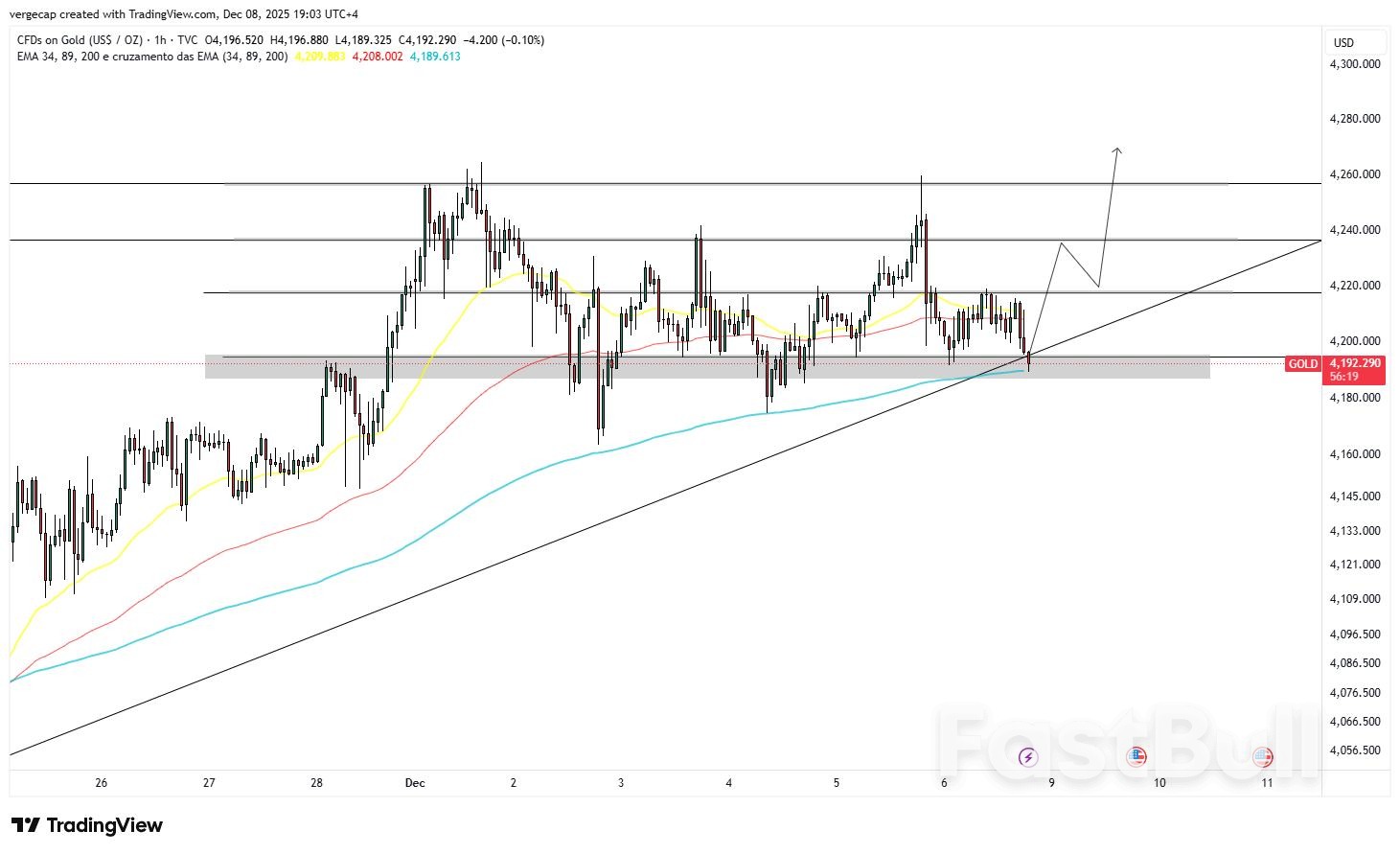
          From a chart-based perspective, gold is currently testing a major inflection zone around $4,206, an area that has historically produced notable reversals and breakouts. Price action across multiple timeframes suggests that the metal is coiling, with intraday wicks and tightening ranges pointing to a buildup of directional pressure.
          A confirmed rebound from this zone would likely pave the way toward the next upside target at $4,250.96, a level aligned with previous local highs and minor structural resistance. Conversely, a clean breakdown of the zone could expose the market to deeper retracements, particularly if the Fed decision surprises with a more hawkish tone.

          TRADE RECOMMENDATION

          BUY GOLD
          ENTRY PRICE: 4200
          STOP LOSS: 4170
          TAKE PROFIT: 4250
          Risk Warnings and Disclaimers
          You understand and acknowledge that there is a high degree of risk involved in trading. Following any strategies or investment methods may lead to potential losses. The content on the site is provided by our contributors and analysts for information purposes only. You are solely responsible for determining whether any trading assets, securities, strategy, or any other product is suitable for investing based on your own investment objectives and financial situation.
          Add to Favorites
          Share

          AUD/USD Retains Bullish Tone but Momentum Cools Ahead of RBA Verdict

          Warren Takunda

          Economic

          Summary:

          AUD/USD holds steady near 0.6640 as traders brace for a pivotal RBA meeting and a highly anticipated Fed decision.

          BUY AUDUSD
          EXP
          TRADING

          0.66396

          Entry Price

          0.67300

          TP

          0.66000

          SL

          0.66279 -0.00104 -0.16%

          0.0

          Pips

          Flat

          0.66000

          SL

          Exit Price

          0.66396

          Entry Price

          0.67300

          TP

          AUD/USD traded firmly around 0.6640 on Monday, pausing after a four-day winning streak that propelled the pair to its highest level in nearly two months. The Australian Dollar’s consolidation comes at a crucial moment for global FX markets, with investors positioning cautiously ahead of Tuesday’s Reserve Bank of Australia (RBA) policy decision and Wednesday’s Federal Reserve announcement, a combination that could reshape near-term currency dynamics.
          The Australian Dollar has been buoyed by a meaningful shift in monetary-policy expectations. Only weeks ago, markets had priced in the risk of additional RBA rate cuts. But stubborn inflation has effectively wiped out those expectations. Australia’s Q3 CPI rose 3.2% YoY, surging from 2.1% in Q2, underscoring that price pressures remain entrenched across services, rents, and energy components. The sticky nature of inflation has convinced traders that the RBA is unlikely to ease further — and may even need to consider tightening again over the medium term.
          For now, consensus overwhelmingly expects policymakers to keep the Cash Rate unchanged at 3.60%, but traders acknowledge that the tone of the RBA’s statement may be far more consequential than the decision itself. A guidance shift — even subtle — could fuel another leg higher in the AUD if the central bank signals a stronger commitment to managing inflation risks without leaning toward cuts in early 2025.
          Some analysts have taken this idea further. With household spending accelerating 1.3% in October, far above September’s 0.3%, a growing segment of the market is starting to pencil in the possibility of an RBA hike as early as 2026 if inflation fails to moderate. Yet not everyone is convinced. Analysts at Commerzbank warn that “despite a higher-than-expected inflation print in November, the RBA is unlikely to signal any imminent rate hikes,” a stance that could undermine the Aussie if policymakers sound overly cautious.
          China’s improving economic pulse is adding another layer of support for the AUD, given the currency’s close sensitivity to Chinese demand. The National Bureau of Statistics reported a blockbuster $111.68 billion trade surplus for November, driven by an impressive 5.7% rebound in exports after October’s contraction. For resource-heavy Australia, stronger Chinese trade figures are typically bullish — and the market reaction this week has been no exception.
          Meanwhile, the US Dollar remains on the defensive ahead of the Fed’s policy decision. The CME FedWatch Tool assigns an 87% probability to a 25 bp rate cut, which would bring the Fed Funds target range down to 3.50–3.75%. The mood has been shaped by accumulating evidence of a cooling labor market, including a decline in job openings and softer wage pressures. The US Dollar Index (DXY) slipped toward 98.90, a five-week low, as traders brace for what could be a pivotal week for global rates.
          Recent remarks from New York Fed President John Williams emphasized weakening labor demand and a softer economic backdrop, reinforcing dovish expectations. However, investors remain wary of a potential surprise from Chair Jerome Powell. A more cautious tone — especially if the Fed signals discomfort with front-loaded easing expectations for 2026 — could slow the USD selloff and cap AUD gains.

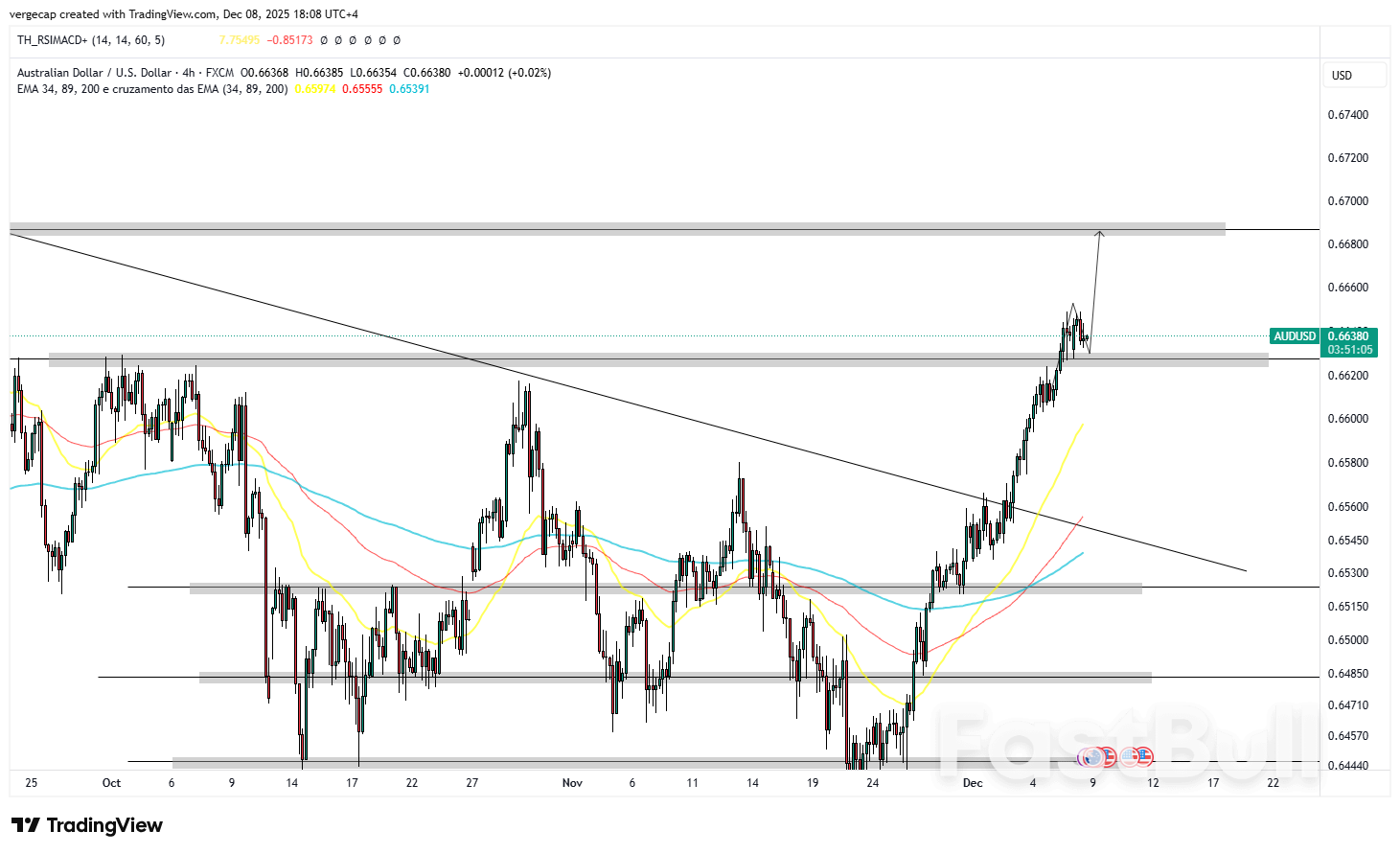
          Technical Analysis AUD/USD Retains Bullish Tone but Momentum Cools Ahead of RBA Verdict_1

          AUD/USD’s multi-day advance has pushed the pair firmly into a bullish technical structure on the intraday and short-term charts. Price action remains supported by a steep ascending trendline, with the pair consistently trading above the 50-period EMA, reinforcing the broader upward bias.
          However, momentum indicators suggest that the rally may be losing a bit of steam in the immediate term. Relative Strength Index (RSI) readings have entered or approached overbought territory, generating early negative signals that could slow the pace of further appreciation.
          A near-term pullback toward 0.6610–0.6625 cannot be ruled out, particularly if the RBA strikes a less hawkish tone than traders expect. Still, the broader trend remains constructive as long as AUD/USD holds above key support levels. A decisive move above 0.6680 would open the door toward 0.6730, while a break below 0.6580 would reduce bullish momentum and expose the pair to deeper consolidation.

          TRADE RECOMMENDATION

          BUY AUDUSD
          ENTRY PRICE: 0.6640
          STOP LOSS: 0.6600
          TAKE PROFIT: 0.6730
          Risk Warnings and Disclaimers
          You understand and acknowledge that there is a high degree of risk involved in trading. Following any strategies or investment methods may lead to potential losses. The content on the site is provided by our contributors and analysts for information purposes only. You are solely responsible for determining whether any trading assets, securities, strategy, or any other product is suitable for investing based on your own investment objectives and financial situation.
          Add to Favorites
          Share

          Japan Also Raises Interest Rates! Where Is USDJPY Headed?

          Tank

          Forex

          Technical Analysis

          Summary:

          Considering market expectations of the Bank of Japan's hawkish stance, the yen's potential for depreciation may be limited. Japan's wage growth data further solidifies market anticipation of an interest rate hike by the Bank of Japan in December.

          BUY USDJPY
          EXP
          TRADING

          155.437

          Entry Price

          158.800

          TP

          153.500

          SL

          155.763 +0.418 +0.27%

          0.0

          Pips

          Flat

          153.500

          SL

          Exit Price

          155.437

          Entry Price

          158.800

          TP

          Fundamentals

          The Japanese government has recently finalized a supplementary budget of JPY18.3 trillion to support new stimulus measures, primarily financed through issuance of new government bonds. Prime Minister Sanae Takaichi has indicated a departure from prioritizing fiscal balance targets such as the primary fiscal balance to enhance fiscal flexibility and plans to establish new multi-year fiscal objectives. Although the government initially projected primary fiscal surpluses for fiscal years 2025 to 2026, these targets are now under reassessment. Against the backdrop of the Bank of Japan (BOJ) gradually withdrawing from an extended ultra-loose monetary policy and rising borrowing costs, fiscal consolidation is widely regarded as an urgent priority. The IMF has also expressed support for the BOJ's recent monetary policy decisions, asserting that an accommodative stance remains appropriate. Meanwhile, domestic economic data is adding complexity to policy deliberations, with recent government reports indicating a 3.0% YoY decline in household consumption in October—the steepest in nearly two years and significantly below market expectations; seasonally adjusted, consumption contracted by 3.5% MoM, also notably below forecasts. Declines in food, entertainment, and automotive expenditures are primary drag factors, though authorities still consider overall consumption recovery trajectory intact and are uncertain whether the recent downturn is sustainable. Weak consumer spending heightens sensitivity over the BOJ's December rate hike decision, while persistent high inflation and yen depreciation are prompting some policymakers to favor earlier tightening. Analysts suggest that despite December rate hike being broadly anticipated, subdued consumption may constrain the pace of subsequent increases, while weakening growth expectations could further pressure the yen following any rate hikes.
          The U.S. dollar exhibited cautious trading ahead of the Federal Reserve's monetary policy statement scheduled for Wednesday. Market consensus anticipates a 25 basis point interest rate cut to a range of 3.50%-3.75%, driven by ongoing deterioration in the labor market conditions. Recent data from the U.S. Department of Commerce indicate that September consumer spending experienced a modest 0.3% increase following three consecutive months of robust growth, signaling a slowdown in economic momentum toward the end of the third quarter. Elevated living costs coupled with a fragile labor market have suppressed demand. The report also highlights that, due to comprehensive tariffs imposed on imports by the Trump administration, annualized inflation in September reached its fastest pace in nearly one and a half years. Consumer expenditure accounts for over two-thirds of U.S. economic activity, with the 0.3% growth slightly below the revised 0.5% for August, aligning with economists' expectations from a Reuters survey. The release was delayed due to the 43-day government shutdown. Gains in spending were primarily driven by energy commodities, particularly gasoline, while expenditures on durable goods such as automobiles and entertainment products declined. Clothing and footwear expenditure decreased, resulting in flat overall goods spending. Service sector expenditure increased by 0.4%, mainly supported by housing and utilities, with sectors such as healthcare, financial services, insurance, hospitality, and transportation also experiencing growth.

          Technical Analysis

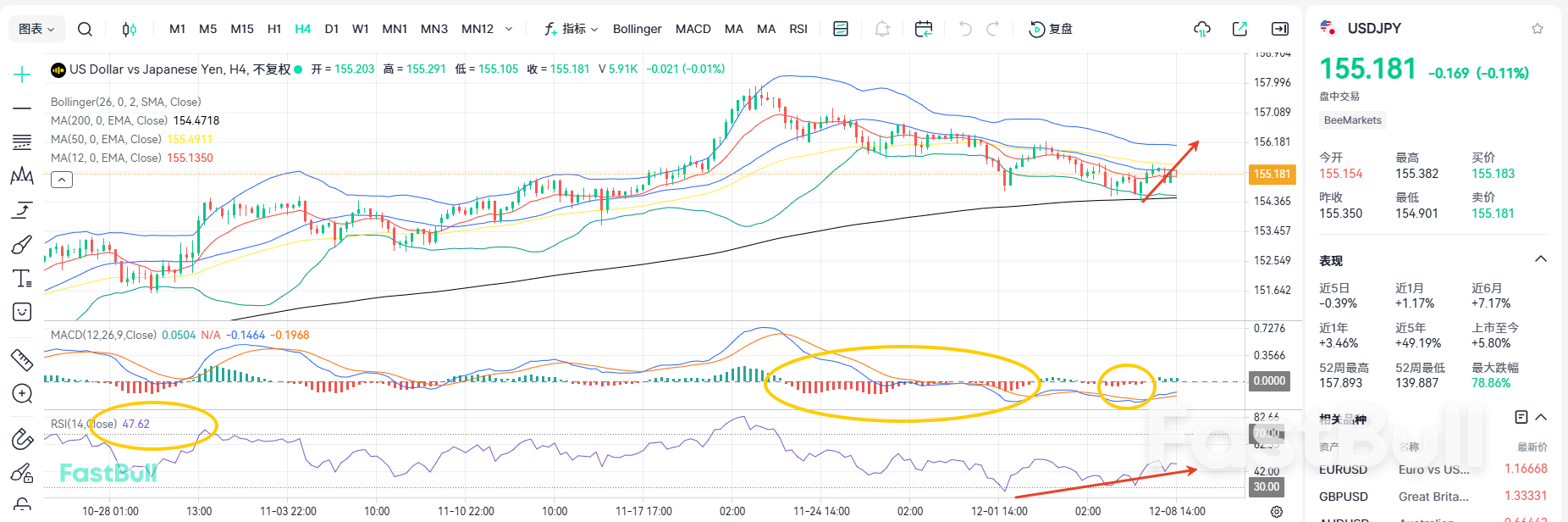
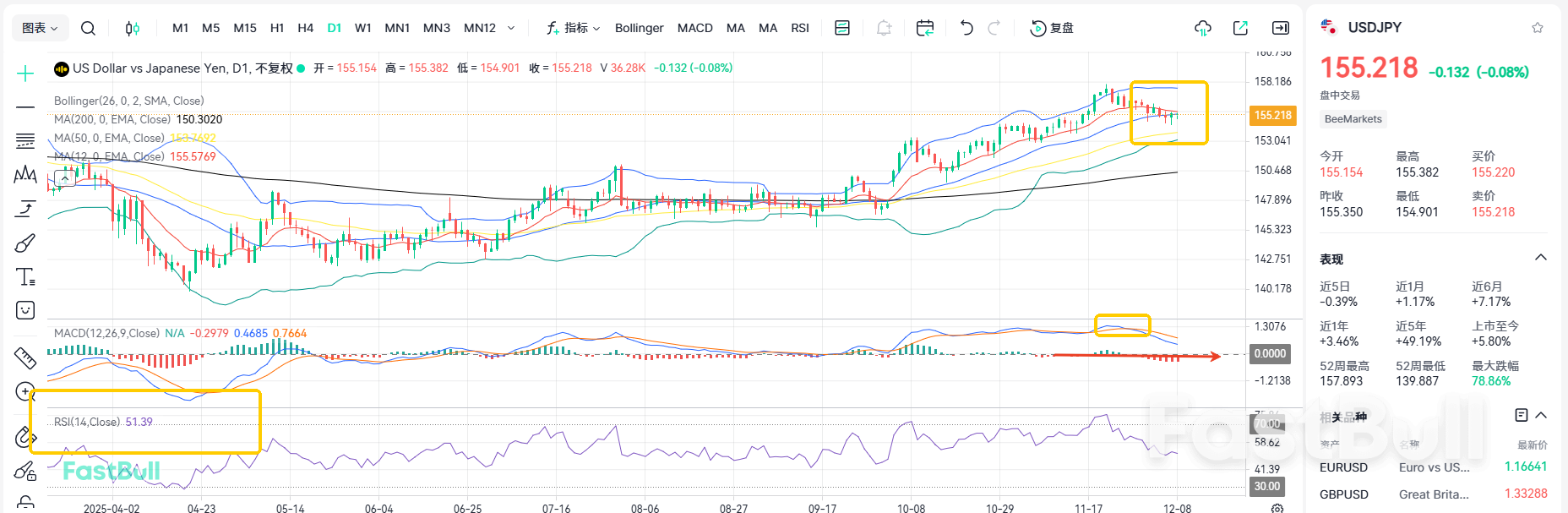
          In the 1D timeframe, the Bollinger Bands are converging with narrowing bands, while SMAs are flattening, indicating a potential trend reversal. The price has persisted near the middle band of the Bollinger envelope for three consecutive days, accompanied by lower shadows, signaling effective support levels. Following a MACD death cross, the MACD line and signal line are currently retracing toward the zero-axis, suggesting that the correction phase has not yet concluded. The RSI stands at 51, reflecting strong market neutrality. As long as the price remains above the middle Bollinger band, there is a high probability of a bullish breakout toward the upper band and key psychological levels around 157.6 and 160. In the 4H timeframe, Bollinger Bands are tightening, with SMAs flattening. After the MACD generated a golden cross, the MACD line and signal line are pulling back toward the zero-axis. Despite new lows, downside momentum is waning, indicating a bullish divergence. The RSI is at 47, suggesting cautious market sentiment. A confirmed move above the middle Bollinger band could lead to an upward rally toward the upper band near 156. It is recommended to go long at the lows in the short term.
          Japan Also Raises Interest Rates! Where Is USDJPY Headed?_1Japan Also Raises Interest Rates! Where Is USDJPY Headed?_2

          Trading Recommendations

          Trading Direction: Buy
          Entry Price: 155.2
          Target Price: 158.8
          Stop Loss: 153.5
          Support: 154.7, 153.2, 150
          Resistance: 157, 158.8, 160
          Risk Warnings and Disclaimers
          You understand and acknowledge that there is a high degree of risk involved in trading. Following any strategies or investment methods may lead to potential losses. The content on the site is provided by our contributors and analysts for information purposes only. You are solely responsible for determining whether any trading assets, securities, strategy, or any other product is suitable for investing based on your own investment objectives and financial situation.
          Add to Favorites
          Share

          JPY Depreciation on Course, 160.00 Next Target

          Alan

          Forex

          Summary:

          Escalating China–Japan tensions are set to drive a sharp JPY sell-off.

          BUY USDJPY
          EXP
          TRADING

          155.302

          Entry Price

          160.100

          TP

          154.300

          SL

          155.763 +0.418 +0.27%

          0.0

          Pips

          Flat

          154.300

          SL

          Exit Price

          155.302

          Entry Price

          160.100

          TP

          Fundamentals

          Amid a rapid escalation in security and diplomatic friction, Japanese media and officials have accused PLA aircraft of locking fire-control radar on JSDF planes near Okinawa, prompting an equally forceful riposte from Beijing. The string of incidents is feeding market anxiety over regional stability and the safety of Japan-based assets. Contrary to the historical "geopolitical shock → yen safe-haven rally" reflex, investors are now pricing a "capital-flight risk + waning confidence in Japan's economic and asset security" narrative, which is exerting sustained downward pressure on JPY.
          This psychological logic is driven by two core forces. First, capital is reassessing the risk premium on JPY/JGBs. As geopolitical tensions persist, international investors demand a higher risk premium on Japanese assets, prompting multinational funds to trim JPY exposures and redeploy into USD and alternative-currency assets. Once these outflows become a sustained rotation, the expanded supply and reduced demand for yen exert natural downward pressure. Second, markets are pricing in heightened uncertainty over Japan's domestic growth outlook and the credibility of its inflation-cum-fiscal anchor. Should the conflict disrupt trade, export receipts, or FDI inflows, the expected macro-volatility further erodes the yen's store-of-value appeal.
          Meanwhile, the dollar is drawing liquidity away from the yen, buoyed by its reserve-currency status, safe-haven appeal and the still-competitive real yields on offer in the U.S. Treasury market. Even in the absence of a material Fed pivot, USDJPY can stay bid as long as cross-border flows continue to favour the depth and safety of USD-denominated assets. In other words, when geopolitical risk collides with portfolio-flow risk, the traditional "risk-off JPY bid" can reverse. The market has already priced in this dual structure of a "capital-inflow premium plus safety premium," providing a durable underpinning for a weaker yen and a stronger USDJPY.

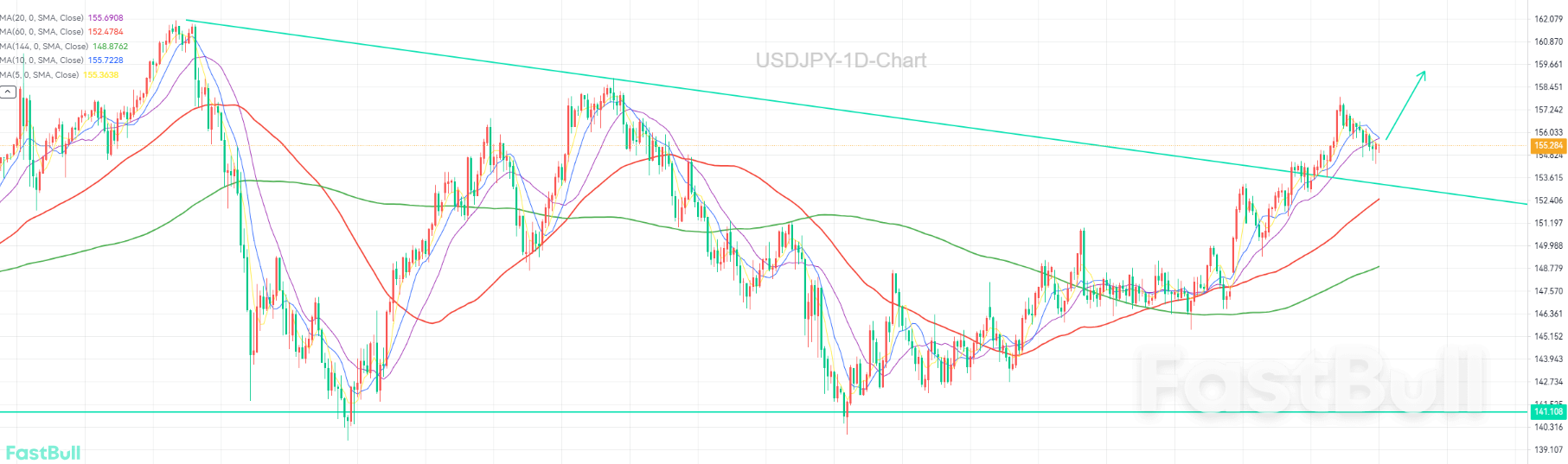
          Technical AnalysisJPY Depreciation on Course, 160.00 Next Target_1

          USDJPY has broken out of the symmetrical-triangle consolidation and the underlying bias remains bullish. Although the pair has been pulling back recently, the last few sessions have produced consecutive long-lower-shadow candles. Friday's close formed a textbook hammer, an explicit reversal signal, indicating that short-term buying momentum has strengthened and the uptrend is likely to resume.
          Immediate resistance is eyed at 155.90-156.00. A decisive break and daily close above 156.00 would open extension room toward 158.00, with scope to challenge the psychological 160.00 handle.

          Trade Recommendations

          Trade Direction: Buy
          Entry Price: 155.20
          Target Price: 160.10
          Stop Loss: 154.30
          Valid Until: December, 22, 2025, 23:00:00
          Support: 154.90/154.34
          Resistance Levels: 155.92/160.00
          Risk Warnings and Disclaimers
          You understand and acknowledge that there is a high degree of risk involved in trading. Following any strategies or investment methods may lead to potential losses. The content on the site is provided by our contributors and analysts for information purposes only. You are solely responsible for determining whether any trading assets, securities, strategy, or any other product is suitable for investing based on your own investment objectives and financial situation.
          Add to Favorites
          Share

          Housing Price Brakes Sharply! Can GBP/USD Continue Its Rally?

          Tank

          Forex

          Technical Analysis

          Summary:

          The elimination of uncertainty surrounding the UK budget offset market expectations for a Bank of England rate cut this month, thereby boosting the pound and providing additional support to the GBP/USD currency pair. In fact, UK Chancellor Rachel Reeves announced an annual tax increase plan worth up to £26 billion to close the fiscal gap and set aside buffer funds for unforeseen circumstances. This, in turn, benefits pound bulls and suggests that the likelihood of spot pound appreciation remains high.

          SELL GBPUSD
          EXP
          TRADING

          1.33320

          Entry Price

          1.29000

          TP

          1.35000

          SL

          1.33237 -0.00075 -0.06%

          0.0

          Pips

          Flat

          1.29000

          TP

          Exit Price

          1.33320

          Entry Price

          1.35000

          SL

          Fundamentals

          With Chancellor Rachel Reeves formally unveiling the budget, previous market anxiety over fiscal policy uncertainty has significantly eased, and the suppression of risk appetite caused by that uncertainty has been fully lifted. Against this backdrop, GBP/USD extended its recent strength last week, demonstrating robust market resilience. From a support perspective, positive changes in domestic fundamentals form the core underpinning. On one hand, the UK budget passed the first round of stress tests in the bond market smoothly, markedly cooling investor concerns about UK fiscal sustainability, effectively stabilizing cross-border capital flows, and providing fundamental support for sterling. On the other hand, Wednesday's upward revision of the final November Composite PMI showed marginal improvement in both UK services and manufacturing sectors, dispelling market fears of stagflation and further strengthening fundamental support for the exchange rate. Regarding the external environment, growing expectations for a Fed rate cut at this week's meeting dampened the USDX, offering reverse impetus for GBP/USD gains. Market analysis generally believes that the pound's recent strength partly stems from a "short squeeze" effect — speculative traders who had bet on pound weakness were forced to cover positions as the currency continued rising, amplifying short-term upward momentum. Looking ahead, the trading logic for GBP/USD will center on policy divergence between the BoE and the Fed: markets widely expect the Bank of England to lower its benchmark rate by 25 basis points at the December meeting, which may exert temporary downward pressure on sterling. However, expectations for the Fed to begin a rate-cutting cycle are equally strong, making the dollar's weak trend difficult to reverse in the near term, thus continuously providing reverse support for the pound. The interplay of these two forces will dominate the exchange rate's future trajectory.
          As markets anticipate another Fed rate cut this week, the dollar is hovering near its lowest level since late October, making it a key driver of GBP/USD's continued strength. Traders see nearly a 90% probability of a Fed rate cut at next week's meeting, with expectations of possibly two more cuts next year. This view is backed collectively by top investment banks, including Morgan Stanley, JPMorgan Chase, and Bank of America, all of which recently revised their Fed December policy outlook from 'hold steady" to "cut by 25 bps." Recent U.S. labor market data showing some softness has further reinforced rate-cut expectations. On Friday, the early-December U.S. consumer confidence index improved marginally, and September core PCE inflation met market forecasts. Nevertheless, such fundamental data failed to reverse dollar weakness, as market attention is now fully focused on the Fed's monetary policy outlook. Moreover, potential leadership changes at the Fed have added dovish speculation: White House economic adviser Kevin Hassett is seen as a leading candidate to succeed current Chair Powell, and his relatively accommodative policy leanings have sparked expectations of adjustments to the Fed's long-term framework. With near-term rate-cut expectations already heavily priced in, this marginal shift in longer-term policy orientation has further intensified downward pressure on the dollar.

          Technical Analysis

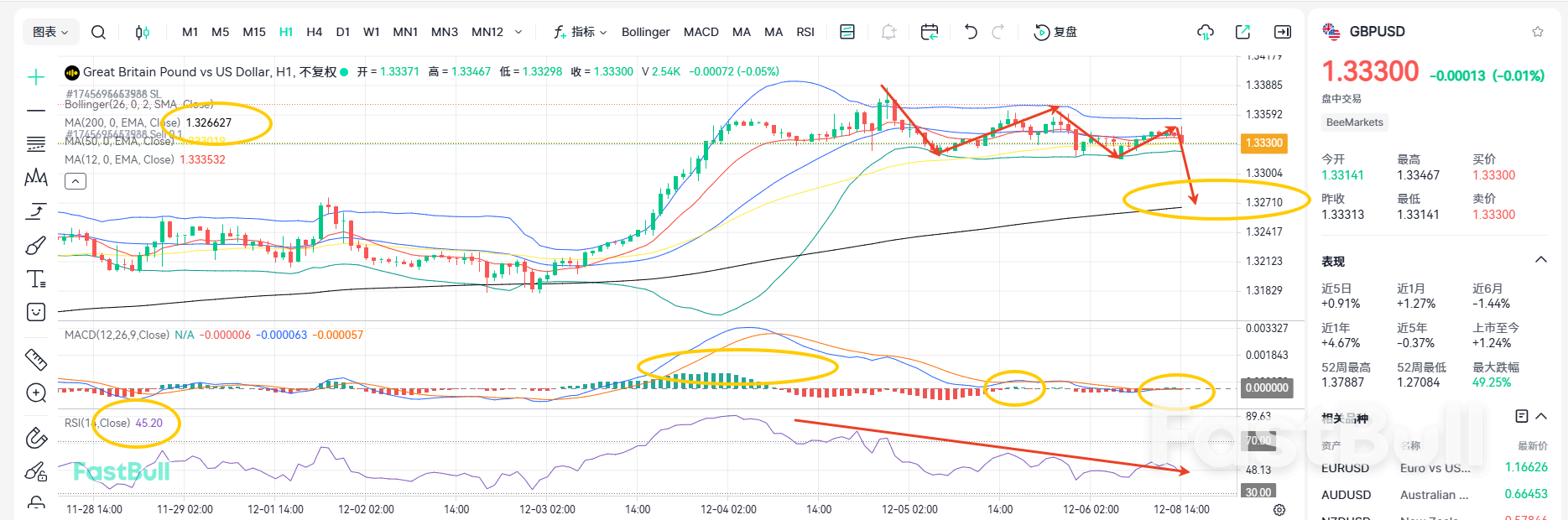
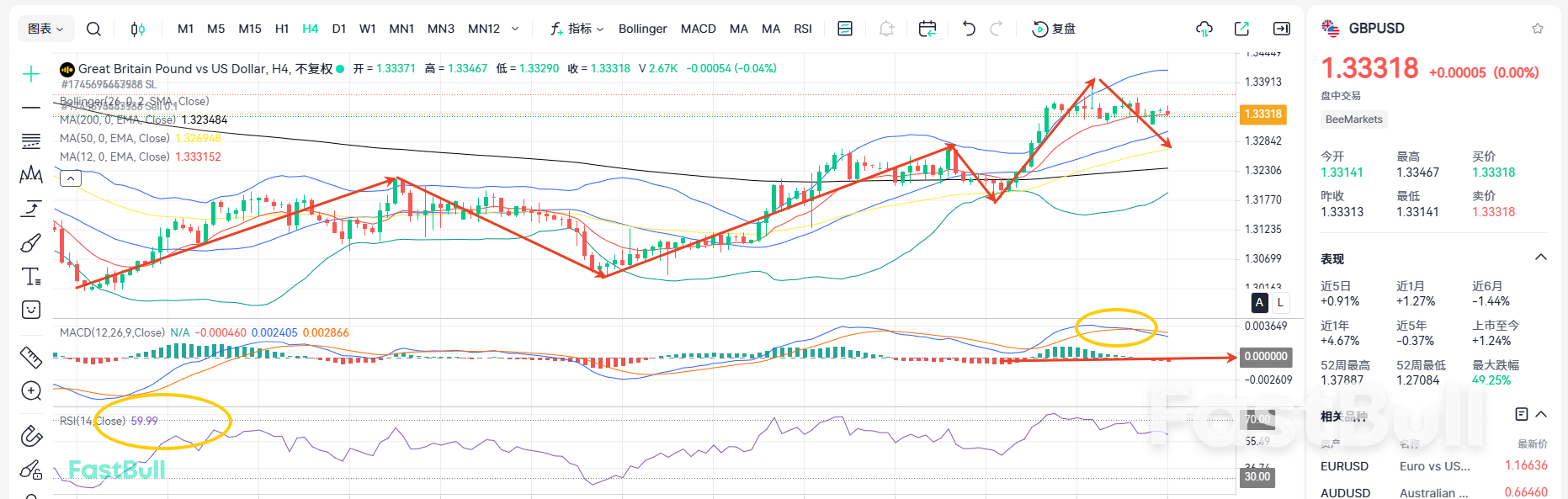
          Based on the four-hour chart, GBP/USD is rising strongly along EMA12, but the MACD and signal lines have formed a death cross. Although they are returning near the zero axis, there is some distance away, indicating the adjustment phase is not yet over. Bollinger Bands are beginning to narrow, moving averages are flattening, and a pullback toward the Bollinger Middle Band and EMA50 is likely, targeting around 1.33 and 1.327. Besides, the RSI stands at 59, reflecting bullish sentiment. On the one-hour chart, price highs are gradually declining, signaling a short-term downtrend. Moreover, the MACD's upward momentum is weakening, suggesting a probable decline toward the Bollinger Lower Band and EMA200. RSI is at 45, showing pessimistic sentiment, and its peaks are also falling. Therefore, selling at highs remains the key strategy.
          Housing Price Brakes Sharply! Can GBP/USD Continue Its Rally?_1Housing Price Brakes Sharply! Can GBP/USD Continue Its Rally?_2

          Trading Recommendations:

          Trading direction: Sell
          Entry price: 1.3332
          Target price: 1.29
          Stop loss: 1.35
          Support: 1.3/1.29/1.28
          Resistance: 1.34/1.342/1.35
          Risk Warnings and Disclaimers
          You understand and acknowledge that there is a high degree of risk involved in trading. Following any strategies or investment methods may lead to potential losses. The content on the site is provided by our contributors and analysts for information purposes only. You are solely responsible for determining whether any trading assets, securities, strategy, or any other product is suitable for investing based on your own investment objectives and financial situation.
          Add to Favorites
          Share

          Market Awaits Guidance with PCE Data Release Imminent

          Eva Chen

          Commodity

          Summary:

          The market's focus is on the release of September's Personal Consumption Expenditures (PCE) index, the Federal Reserve's preferred inflation gauge. This data could decisively shape expectations regarding the timing and scale of future monetary easing measures.

          BUY XAUUSD
          EXP
          TRADING

          4255.28

          Entry Price

          4350.00

          TP

          4160.00

          SL

          4195.38 -2.53 -0.06%

          0.0

          Pips

          Flat

          4160.00

          SL

          Exit Price

          4255.28

          Entry Price

          4350.00

          TP

          Fundamentals

          On Friday, gold prices held steady near US$4,200 per ounce as investors focused on key inflation reports due next week ahead of the Federal Reserve's policy decision.
          Ahead of the Federal Reserve's December meeting, core PCE data will be particularly significant. Should inflation figures exceed expectations, the Fed may opt to keep interest rates unchanged. Conversely, if the data meets or falls below projections, it would pave the way for another rate cut as anticipated.
          Earlier this week, further signs emerged of cooling in the labor market. The ADP report showed private-sector employment unexpectedly declined by 32,000, while the market had anticipated 71,000 layoffs in November. This brings the total layoffs so far this year to nearly 1.17 million.
          Weak employment data has further bolstered investor confidence that the Federal Reserve will cut interest rates as early as next week, with the market currently implying an approximately 87% probability of a rate cut.
          Further bolstering dovish sentiment are reports that White House economic adviser Kevin Hassett may succeed Jerome Powell as Federal Reserve chair in May. Markets interpreted this as a potential shift toward more aggressive easing by the Fed.
          Despite closing slightly lower during the Golden Week holiday, gold maintained solid support ahead of key data releases.
          Market Awaits Guidance with PCE Data Release Imminent_1

          Technical Analysis

          Gold prices rebounded on Friday but remained within the weekly trading range. Expectations of a dovish stance from the Federal Reserve continued to weigh on the dollar and provided support for gold prices. However, bulls may opt to wait for the release of the U.S. Personal Consumption Expenditures (PCE) price index before making aggressive bets.
          Nevertheless, we believe that since today marks the final trading day of the week, even if gold prices surge strongly, the rally is unlikely to be overly aggressive. Due to price algorithmic factors, upward resistance for gold will likely be encountered in the 4245–4250 range, which represents the average weekly resistance level. At the same time, given that past PCE data releases have typically exerted only limited market impact, it would be unwise to anticipate bullish momentum extending significantly further.

          Trading Recommendations

          Trading Direction: Buy
          Entry Price: 4209
          Target Price: 4350
          Stop Loss: 4160
          Valid Until: December 21, 2025 23:55:00
          Support: 4188, 4174, 4164
          Resistance: 4208, 4217, 4241
          Risk Warnings and Disclaimers
          You understand and acknowledge that there is a high degree of risk involved in trading. Following any strategies or investment methods may lead to potential losses. The content on the site is provided by our contributors and analysts for information purposes only. You are solely responsible for determining whether any trading assets, securities, strategy, or any other product is suitable for investing based on your own investment objectives and financial situation.
          Add to Favorites
          Share

          EUR/JPY Rises as Eurozone GDP Beats Forecasts While Yen Lacks BoJ Lift

          Warren Takunda

          Traders' Opinions

          Summary:

          EUR/JPY rebounded on Friday as stronger Eurozone GDP data supported the Euro, while the Japanese Yen failed to strengthen despite rising expectations of a December BoJ rate hike.

          BUY EURJPY
          EXP
          TRADING

          180.830

          Entry Price

          186.000

          TP

          180.000

          SL

          181.283 +0.410 +0.23%

          0.0

          Pips

          Flat

          180.000

          SL

          Exit Price

          180.830

          Entry Price

          186.000

          TP

          EUR/JPY regained upward momentum on Friday, recovering from early-session weakness as the Japanese Yen once again struggled to capitalize on mounting speculation of an upcoming Bank of Japan rate hike. The pair was last seen trading near 180.77 after dipping to an intraday low of 180.10, extending a familiar pattern of range-bound movement that has dominated trade since mid-November. Despite intraday swings, the underlying bias remains tilted toward the Euro, thanks in part to an improving economic backdrop across the Eurozone.
          The Euro drew significant support from fresh GDP figures released by Eurostat, which painted a more resilient picture of the region’s economic landscape than previously anticipated. Third-quarter GDP expanded 0.3% on a quarterly basis, outperforming market forecasts of 0.2% and improving from the 0.2% growth recorded in the previous quarter. Year-on-year growth reached 1.4%, matching expectations and reinforcing the narrative that Europe’s recovery—although uneven—continues to slowly rebuild momentum.
          The data highlighted broad improvement across key components of the Eurozone economy. Household spending edged higher, signaling modest improvement in consumer sentiment despite persistent price pressures. Government expenditure rose at a faster pace, offering fiscal support at a time when private sector confidence remains fragile. Investment activity also strengthened, rising nearly 1% and underscoring renewed confidence in long-term capital commitments. External trade contributed positively as both exports and imports increased, pointing to a gradual normalization of global supply and demand conditions.
          Labour market trends were similarly encouraging. Employment in the Eurozone increased 0.2% during the quarter, surpassing analyst estimates and strengthening from the previous reading. On an annual basis, employment rose 0.6%, reinforcing the notion that the labour market remains tight and continues to provide a buffer against cyclical pressures. For currency markets, this relative macroeconomic stability has been sufficient to keep the Euro buoyant and limit aggressive Yen-driven pullbacks.
          On the Japanese side, however, the dynamics remain far more complicated. Despite a growing chorus of speculation suggesting that the Bank of Japan may finally lift interest rates at its December 18–19 meeting, the Yen has been unable to sustain meaningful gains. Earlier in the week, BoJ Governor Kazuo Ueda signaled a willingness to consider policy adjustments, triggering renewed expectations of an imminent exit from the central bank’s long-standing ultra-loose stance.
          That sentiment was reinforced by a Bloomberg report suggesting that BoJ officials are prepared to raise rates at the upcoming meeting, provided no major economic or financial shock emerges in the near term. The report also indicated policymakers may communicate readiness to pursue further rate increases if inflation trends and economic conditions continue to develop as projected. Still, the same insiders cautioned that the BoJ remains unsure about how far interest rates should ultimately rise, reflecting a characteristically cautious approach to tightening.
          The Yen’s inability to strengthen in response to these developments highlights ongoing skepticism among traders. Many remain wary given the BoJ’s history of signaling shifts only to pull back at the last moment. Others believe that even if a hike occurs, it may be more symbolic than structural, offering limited long-term support for the currency. With global risk sentiment relatively stable, the Yen has also been unable to attract its usual safe-haven flows.
          Market attention now shifts to Monday’s incoming Japanese data batch, which includes labor earnings, current account figures, and the final Q3 GDP revision. These figures will play a critical role in shaping expectations heading into the December meeting. Stronger growth and earnings could bolster confidence in a rate hike, while weaker numbers may reintroduce doubts and weaken the Yen further.

          Technical AnalysisEUR/JPY Rises as Eurozone GDP Beats Forecasts While Yen Lacks BoJ Lift_1

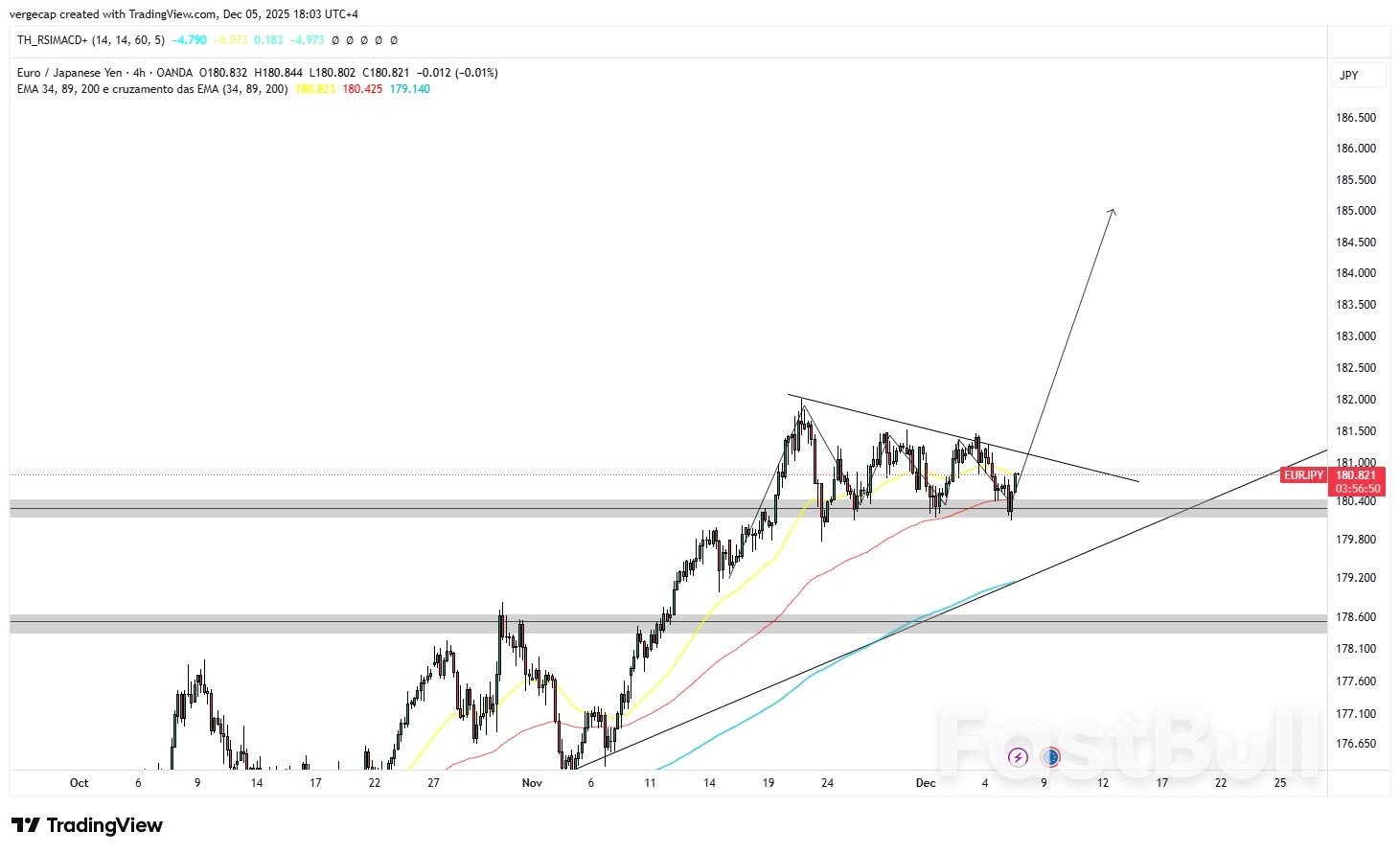
          From a technical standpoint, EUR/JPY’s structure remains broadly constructive despite the latest corrective dip. The pair closed below the 181.70 ceiling, signaling a short-term pause in bullish momentum, while stochastic indicators continue to reveal lingering negative pressure. Nonetheless, the decline remains shallow and does not threaten the broader upward trajectory as long as the pair maintains support near the 179.40 zone. The market’s repeated refusals to break below this key level reinforce its importance as the base of the current bullish structure.
          The correction toward 180.10 appears to be part of a healthier consolidation pattern rather than the early stages of a reversal. Traders are expected to look for renewed bullish momentum in the coming sessions, especially if Eurozone macro conditions continue to firm or if Japanese data fail to significantly strengthen the case for a BoJ hike. A decisive break above 181.70 would reopen bullish pathways and potentially extend the recent uptrend.
          For now, EUR/JPY is expected to oscillate between 179.65 and 181.70, with the overarching trend still favoring the upside as long as key support levels hold.

          TRADE RECOMMENDATION

          BUY EURJPY
          ENTRY PRICE: 180.830
          STOP LOSS: 180.00
          TAKE PROFIT: 186.00
          Risk Warnings and Disclaimers
          You understand and acknowledge that there is a high degree of risk involved in trading. Following any strategies or investment methods may lead to potential losses. The content on the site is provided by our contributors and analysts for information purposes only. You are solely responsible for determining whether any trading assets, securities, strategy, or any other product is suitable for investing based on your own investment objectives and financial situation.
          Add to Favorites
          Share
          FastBull
          Copyright © 2025 FastBull Ltd

          728 RM B 7/F GEE LOK IND BLDG NO 34 HUNG TO RD KWUN TONG KLN HONG KONG

          TelegramInstagramTwitterfacebooklinkedin
          App Store Google Play Google Play
          Products
          Charts

          Chats

          Q&A with Experts
          Screeners
          Economic Calendar
          Data
          Tools
          Membership
          Features
          Function
          Markets
          Copy Trading
          Latest Signals
          Contests
          News
          Analysis
          24/7
          Columns
          Education
          Company
          Careers
          About Us
          Contact Us
          Advertising
          Help Center
          Feedback
          User Agreement
          Privacy Policy
          Business

          White Label

          Data API

          Web Plug-ins

          Poster Maker

          Affiliate Program

          Risk Disclosure

          The risk of loss in trading financial instruments such as stocks, FX, commodities, futures, bonds, ETFs and crypto can be substantial. You may sustain a total loss of the funds that you deposit with your broker. Therefore, you should carefully consider whether such trading is suitable for you in light of your circumstances and financial resources.

          No decision to invest should be made without thoroughly conducting due diligence by yourself or consulting with your financial advisors. Our web content might not suit you since we don't know your financial conditions and investment needs. Our financial information might have latency or contain inaccuracy, so you should be fully responsible for any of your trading and investment decisions. The company will not be responsible for your capital loss.

          Without getting permission from the website, you are not allowed to copy the website's graphics, texts, or trademarks. Intellectual property rights in the content or data incorporated into this website belong to its providers and exchange merchants.

          Not Logged In

          Log in to access more features

          FastBull Membership

          Not yet

          Purchase

          Become a signal provider
          Help Center
          Customer Service
          Dark Mode
          Price Up/Down Colors

          Log In

          Sign Up
          Position
          Layout
          Fullscreen
          Default to Chart
          The chart page opens by default when you visit fastbull.com