• Trade
  • Markets
  • Copy
  • Contests
  • News
  • 24/7
  • Calendar
  • Q&A
  • Chats
Screeners
SYMBOL
LAST
ASK
BID
HIGH
LOW
NET CHG.
%CHG.
SPREAD
SPX
S&P 500 Index
6969.02
6969.02
6969.02
6992.83
6870.81
-9.01
-0.13%
--
DJI
Dow Jones Industrial Average
49071.55
49071.55
49071.55
49292.81
48597.22
+55.96
+ 0.11%
--
IXIC
NASDAQ Composite Index
23685.11
23685.11
23685.11
23840.55
23232.78
-172.33
-0.72%
--
USDX
US Dollar Index
96.430
96.510
96.430
96.480
96.240
+0.460
+ 0.48%
--
EURUSD
Euro / US Dollar
1.19150
1.19159
1.19150
1.19743
1.19077
-0.00552
-0.46%
--
GBPUSD
Pound Sterling / US Dollar
1.37590
1.37597
1.37590
1.38142
1.37510
-0.00503
-0.36%
--
XAUUSD
Gold / US Dollar
5193.77
5194.16
5193.77
5450.83
5182.62
-182.54
-3.40%
--
WTI
Light Sweet Crude Oil
63.965
64.000
63.965
65.611
63.940
-1.287
-1.97%
--

Community Accounts

Signal Accounts
--
Profit Accounts
--
Loss Accounts
--
View More

Become a signal provider

Sell trading signals to earn additional income

View More

Guide to Copy Trading

Get started with ease and confidence

View More

Signal Accounts for Members

All Signal Accounts

Best Return
  • Best Return
  • Best P/L
  • Best MDD
Past 1W
  • Past 1W
  • Past 1M
  • Past 1Y

All Contests

  • All
  • Trump Updates
  • Recommend
  • Stocks
  • Cryptocurrencies
  • Central Banks
  • Featured News
Top News Only
Share

LME Copper Fell 2.04%, LME Lead Fell 0.25%, LME Zinc Fell 1.2%, LME Aluminum Fell 0.93%, LME Nickel Fell 2.04%, And LME Tin Fell 2.68%

Share

Spot Gold Plunged $100.48 During The Day, Falling Below $5,260 Per Ounce, A Drop Of 2%

Share

Dollar/Yen Extends Rise, Last Up 0.5% To 153.8550

Share

Spot Palladium Falls Over 3% To $1940.75/Oz

Share

China's CSI Defense Index Down More Than 3%

Share

Indonesia's Benchmark Stock Index Rises 1.1% In Early Trade

Share

Spot Gold Extends Losses, Last Down Over 2% At $5279.64/Oz

Share

China's CSI Ssh Gold Equity Index Extends Losses To 7.5%, Biggest Single-Day Drop Since April 2025

Share

Former Fed Governor Kevin Warsh Met With Trump At White House On Thursday

Share

Brent Crude Oil Fell More Than 1.00% On The Day, Currently Trading At $68.70 Per Barrel

Share

China's CSI Rare Earth Industry Index Down More Than 5%

Share

[Ethereum Drops Below $2700, Down Over 9.2% In 24 Hours] January 30Th, According To Htx Market Data, Ethereum Dropped Below $2,700, With A 24-Hour Decline Of Over 9.2%

Share

[Bitcoin Dips Below $83,000, 24-Hour Loss Extends To 6.7%] January 30Th, According To Htx Market Data, Bitcoin Fell Below $83,000, With A 24-Hour Decline Expanding To 6.7%

Share

The White House: More Announcements Will Be Made Regarding The Easing Of Sanctions On Venezuela

Share

The White House Stated That The Easing Of Sanctions Against Venezuela Applies Only To Downstream, Not Upstream, Oil Production

Share

Hang Seng Materials Index Set To Open Down More Than 3%

Share

Yield On 10-Year USA Treasury Notes Last Up 3.2 Basis Points To 4.259%

Share

Yield On 30-Year USA Treasury Bonds Up 3.5 Basis Points To 4.889%

Share

Yield On 2-Year Japanese Government Bond Falls 1 BP To 1.24%

Share

China Central Bank Injects 477.5 Billion Yuan Via 7-Day Reverse Repos At 1.40% Versus Prior 1.40%

TIME
ACT
FCST
PREV
U.S. Exports (Nov)

A:--

F: --

P: --

Canada Imports (SA) (Nov)

A:--

F: --

P: --
Canada Exports (SA) (Nov)

A:--

F: --

P: --
U.S. Factory Orders MoM (Excl. Defense) (Nov)

A:--

F: --

P: --

U.S. Factory Orders MoM (Nov)

A:--

F: --

P: --
U.S. Wholesale Sales MoM (SA) (Nov)

A:--

F: --

P: --

U.S. Factory Orders MoM (Excl. Transport) (Nov)

A:--

F: --

P: --
U.S. Non-Defense Capital Durable Goods Orders Revised MoM (Excl. Aircraft) (SA) (Nov)

A:--

F: --

P: --
U.S. EIA Weekly Natural Gas Stocks Change

A:--

F: --

P: --

Brazil CAGED Net Payroll Jobs (Dec)

A:--

F: --

P: --

U.S. Weekly Treasuries Held by Foreign Central Banks

A:--

F: --

P: --

South Korea Industrial Output MoM (SA) (Dec)

A:--

F: --

P: --

South Korea Services Output MoM (Dec)

A:--

F: --

P: --

South Korea Retail Sales MoM (Dec)

A:--

F: --

P: --

Japan Tokyo CPI YoY (Excl. Food & Energy) (Jan)

A:--

F: --

P: --

Japan Tokyo CPI MoM (Excl. Food & Energy) (Jan)

A:--

F: --

P: --

Japan Unemployment Rate (Dec)

A:--

F: --

P: --

Japan Tokyo CPI YoY (Jan)

A:--

F: --

P: --

Japan Jobs to Applicants Ratio (Dec)

A:--

F: --

P: --

Japan Tokyo CPI MoM (Jan)

A:--

F: --

P: --

Japan Tokyo Core CPI YoY (Jan)

A:--

F: --

P: --

Japan Retail Sales YoY (Dec)

A:--

F: --

P: --
Japan Industrial Inventory MoM (Dec)

A:--

F: --

P: --

Japan Retail Sales (Dec)

A:--

F: --

P: --

Japan Retail Sales MoM (SA) (Dec)

A:--

F: --

P: --
Japan Large-Scale Retail Sales YoY (Dec)

A:--

F: --

P: --

Japan Industrial Output Prelim MoM (Dec)

A:--

F: --

P: --

Japan Industrial Output Prelim YoY (Dec)

A:--

F: --

P: --

Australia PPI YoY (Q4)

A:--

F: --

P: --

Australia PPI QoQ (Q4)

A:--

F: --

P: --

Japan Construction Orders YoY (Dec)

--

F: --

P: --

Japan New Housing Starts YoY (Dec)

--

F: --

P: --

France GDP Prelim YoY (SA) (Q4)

--

F: --

P: --

Turkey Trade Balance (Dec)

--

F: --

P: --

France PPI MoM (Dec)

--

F: --

P: --

Germany Unemployment Rate (SA) (Jan)

--

F: --

P: --

Germany GDP Prelim YoY (Not SA) (Q4)

--

F: --

P: --

Germany GDP Prelim QoQ (SA) (Q4)

--

F: --

P: --

Germany GDP Prelim YoY (Working-day Adjusted) (Q4)

--

F: --

P: --

Italy GDP Prelim YoY (SA) (Q4)

--

F: --

P: --

U.K. M4 Money Supply (SA) (Dec)

--

F: --

P: --

U.K. M4 Money Supply YoY (Dec)

--

F: --

P: --

U.K. M4 Money Supply MoM (Dec)

--

F: --

P: --

U.K. Mortgage Lending (Dec)

--

F: --

P: --

U.K. Mortgage Approvals (Dec)

--

F: --

P: --

Italy Unemployment Rate (SA) (Dec)

--

F: --

P: --

Euro Zone Unemployment Rate (Dec)

--

F: --

P: --

Euro Zone GDP Prelim QoQ (SA) (Q4)

--

F: --

P: --

Euro Zone GDP Prelim YoY (SA) (Q4)

--

F: --

P: --

Italy PPI YoY (Dec)

--

F: --

P: --

India Deposit Gowth YoY

--

F: --

P: --

Mexico GDP Prelim YoY (Q4)

--

F: --

P: --

Brazil Unemployment Rate (Dec)

--

F: --

P: --

South Africa Trade Balance (Dec)

--

F: --

P: --

Germany CPI Prelim YoY (Jan)

--

F: --

P: --

Germany CPI Prelim MoM (Jan)

--

F: --

P: --

Germany HICP Prelim YoY (Jan)

--

F: --

P: --

Germany HICP Prelim MoM (Jan)

--

F: --

P: --

Canada GDP MoM (SA) (Nov)

--

F: --

P: --

Q&A with Experts
    • All
    • Chatrooms
    • Groups
    • Friends
    Nawhdir Øt flag
    NEWBIE
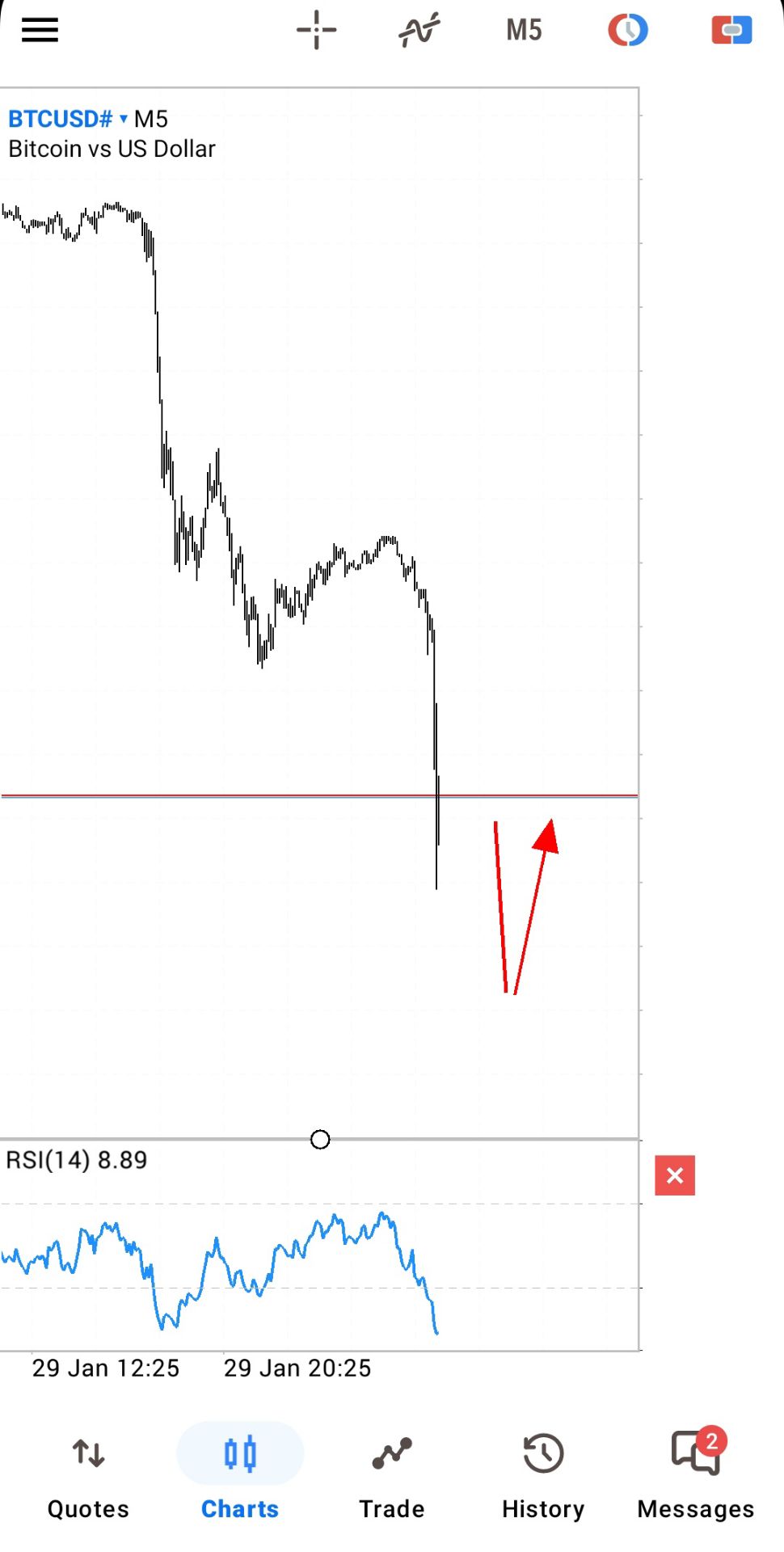
    Looks like it will bounce back right away
    @NEWBIESafe, already set TS
    NEWBIE flag
    I'm now looking for a buy entry
    Nawhdir Øt flag
    NEWBIE
    I'm now looking for a buy entry
    @NEWBIEme too, to buy from the tip of the needle.
    Nawhdir Øt flag
    Nawhdir Øt
    but it has to be quick to get out.
    Nawhdir Øt flag
    Nawhdir Øt flag
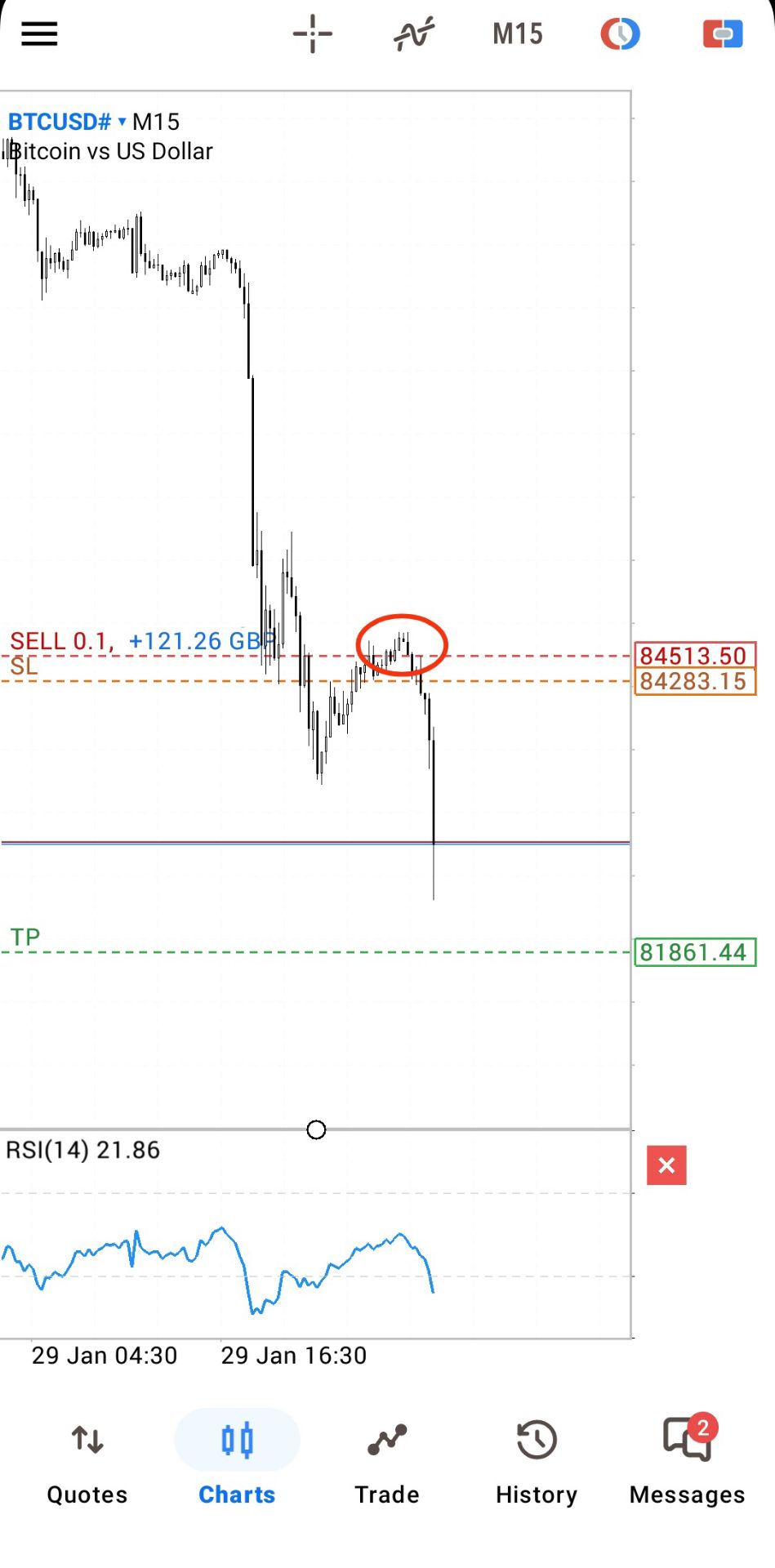
    🤦🏻‍♂️oh my gosh, it's TP. I'm late in entering the purchase
    Nawhdir Øt flag
    be patient, try to wait more patiently
    Nawhdir Øt flag
    maybe 80780
    NEWBIE flag
    I'm just waiting for M15 and M5 to show some buy signal, then I will entry maybe 0.05
    Nawhdir Øt flag
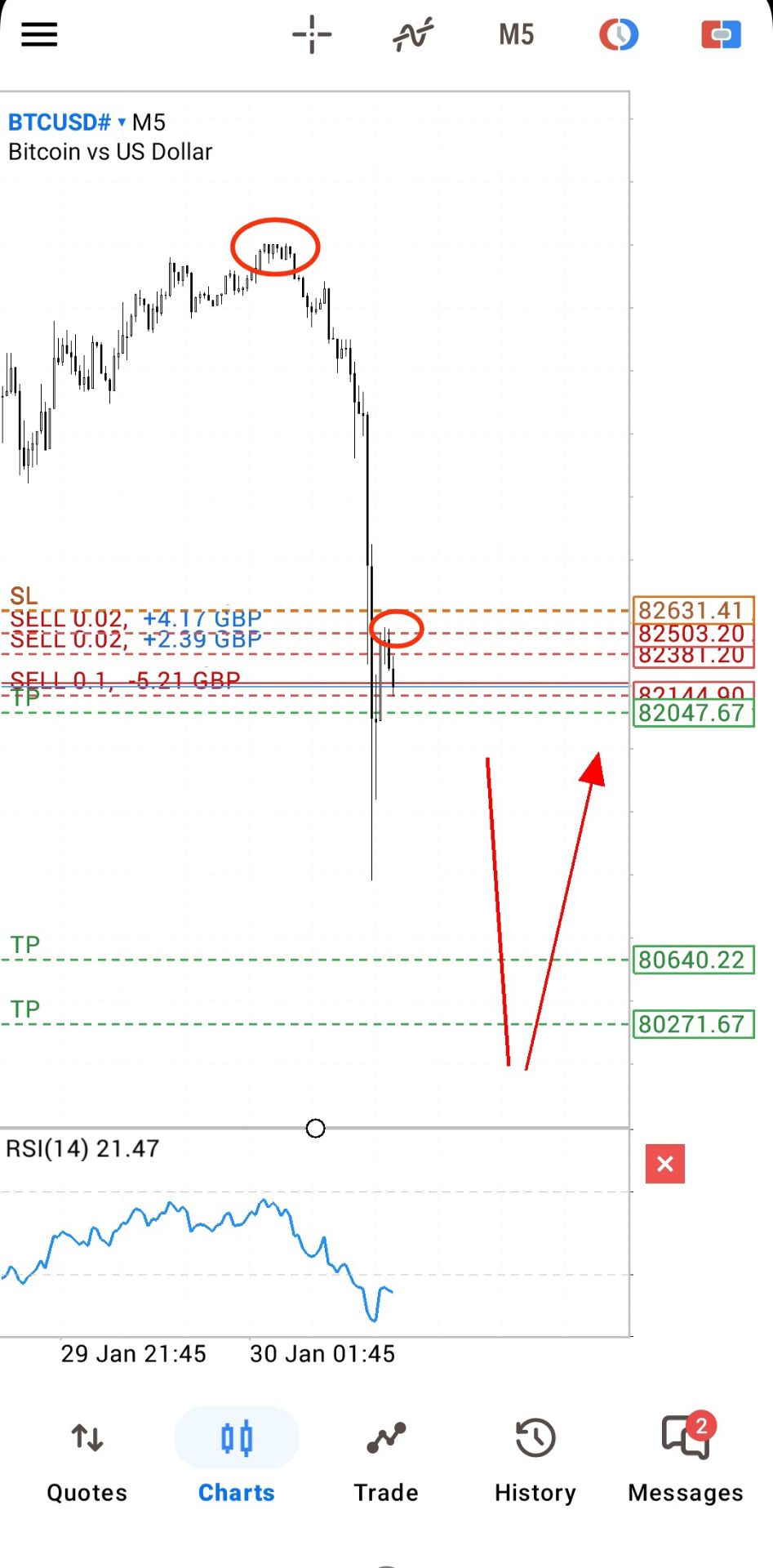
    I entered 2x, layer 1 for scalping, the other one was held but made sure the SL was above the buy
    NEWBIE flag
    Sounds good brother, I don't have much equity so can only do so much
    Nawhdir Øt flag
    Nawhdir Øt flag
    my expectations are like this
    Neo Neo flag
    is there anyone who can tell me why can't I make withdraw from metatrader 5 platform
    NEWBIE flag
    What broker do you use?
    NEWBIE flag
    You can only withdraw through broker
    Neo Neo flag
    can first
    Nawhdir Øt flag
    Nawhdir Øt flag
    marsgents flag
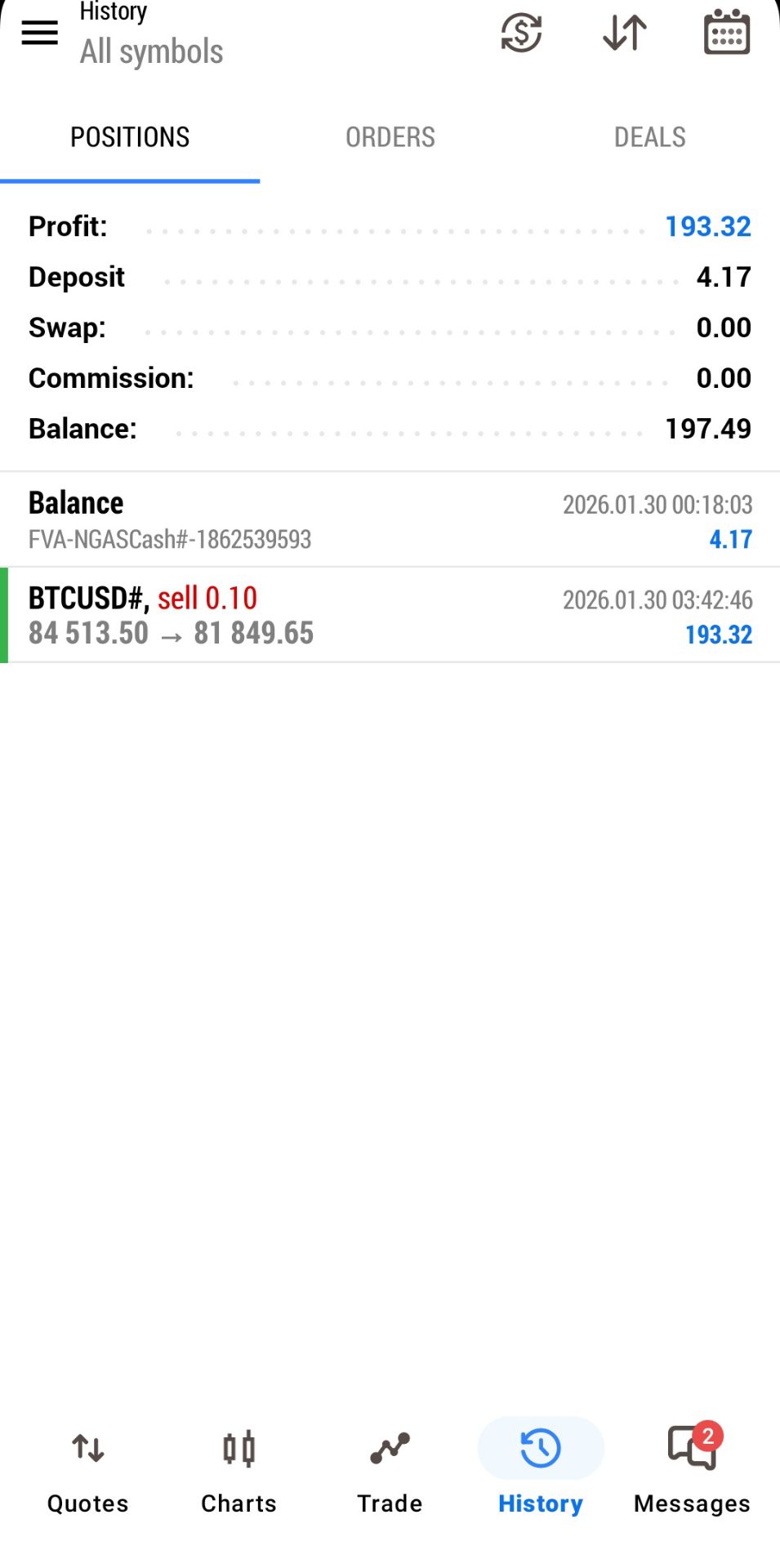
    200$drop🤣
    Type here...
    Add Symbol or Code

      No matching data

      All
      Trump Updates
      Recommend
      Stocks
      Cryptocurrencies
      Central Banks
      Featured News
      • All
      • Russia-Ukraine Conflict
      • Middle East Flashpoint
      • All
      • Russia-Ukraine Conflict
      • Middle East Flashpoint

      Search
      Products

      Charts Free Forever

      Chats Q&A with Experts
      Screeners Economic Calendar Data Tools
      Membership Features
      Data Warehouse Market Trends Institutional Data Policy Rates Macro

      Market Trends

      Market Sentiment Order Book Forex Correlations

      Top Indicators

      Charts Free Forever
      Markets

      News

      News Analysis 24/7 Columns Education
      From Institutions From Analysts
      Topics Columnists

      Latest Views

      Latest Views

      Trending Topics

      Top Columnists

      Latest Update

      Signals

      Copy Rankings Latest Signals Become a signal provider AI Rating
      Contests
      Brokers

      Overview Brokers Assessment Rankings Regulators News Claims
      Broker listing Forex Brokers Comparison Tool Live Spread Comparison Scam
      Q&A Complaint Scam Alert Videos Tips to Detect Scam
      More

      Business
      Events
      Careers About Us Advertising Help Center

      White Label

      Data API

      Web Plug-ins

      Affiliate Program

      Awards Institution Evaluation IB Seminar Salon Event Exhibition
      Vietnam Thailand Singapore Dubai
      Fans Party Investment Sharing Session
      FastBull Summit BrokersView Expo
      Recent Searches
        Top Searches
          Markets
          News
          Analysis
          User
          24/7
          Economic Calendar
          Education
          Data
          • Names
          • Latest
          • Prev

          View All

          No data

          Scan to Download

          Faster Charts, Chat Faster!

          Download App
          English
          • English
          • Español
          • العربية
          • Bahasa Indonesia
          • Bahasa Melayu
          • Tiếng Việt
          • ภาษาไทย
          • Français
          • Italiano
          • Türkçe
          • Русский язык
          • 简中
          • 繁中
          Open Account
          Search
          Products
          Charts Free Forever
          Markets
          News
          Signals

          Copy Rankings Latest Signals Become a signal provider AI Rating
          Contests
          Brokers

          Overview Brokers Assessment Rankings Regulators News Claims
          Broker listing Forex Brokers Comparison Tool Live Spread Comparison Scam
          Q&A Complaint Scam Alert Videos Tips to Detect Scam
          More

          Business
          Events
          Careers About Us Advertising Help Center

          White Label

          Data API

          Web Plug-ins

          Affiliate Program

          Awards Institution Evaluation IB Seminar Salon Event Exhibition
          Vietnam Thailand Singapore Dubai
          Fans Party Investment Sharing Session
          FastBull Summit BrokersView Expo

          Gold Eyes Fresh Highs as Price Stabilizes Above Key Support

          Warren Takunda

          Traders' Opinions

          Summary:

          Gold extended its record-breaking rally for an eighth straight session, supported by safe-haven demand, Dollar weakness, and geopolitical tensions, while traders await Fed guidance for the next policy signal.

          BUY XAUUSD
          Close Time
          CLOSED

          5265.02

          Entry Price

          5450.00

          TP

          5180.00

          SL

          5193.77 -182.54 -3.40%

          236.9

          Pips

          Profit

          5180.00

          SL

          5288.71

          Exit Price

          5265.02

          Entry Price

          5450.00

          TP
          Gold continued its historic rally on Wednesday, pushing deeper into uncharted territory as investors piled into safe-haven assets amid mounting uncertainty around US economic policy, Federal Reserve independence, and global geopolitical risks. Spot Gold (XAU/USD) climbed to a new all-time high near $4,311 during the European session before easing slightly to trade around $4,260, still firmly supported by broad-based Dollar weakness and defensive positioning.
          The move marks the metal’s eighth consecutive day of gains, underscoring the strength of the current bullish cycle. However, momentum has slowed somewhat as traders turn cautious ahead of the Federal Reserve’s interest rate decision at 19:00 GMT, a key event that could determine whether Gold’s rally accelerates further or pauses for consolidation.
          While policymakers are widely expected to leave interest rates unchanged, the spotlight will fall squarely on Chair Jerome Powell’s tone and forward guidance. Markets are increasingly sensitive to any shift toward an easing bias, particularly after months of cooling inflation data and signs of softer economic momentum.
          A signal that the Fed is preparing the ground for gradual rate cuts later this year would likely reinforce Gold’s bullish structure, keeping real yields under pressure and the Dollar on the defensive. Conversely, a more cautious or hawkish stance — emphasizing inflation risks or resilience in growth — could spark short-term profit-taking in Bullion and offer the Greenback temporary relief.
          Still, the broader macro backdrop suggests any pullbacks may be shallow. Investors appear to be using dips as buying opportunities rather than exits, reflecting a structural shift in how Gold is being viewed within global portfolios.
          Gold’s explosive rise — now up nearly 22% this month alone — is unfolding alongside a notable erosion in confidence in the US Dollar. Concerns over the long-term credibility of US economic policy have intensified as President Donald Trump ramps up his trade agenda while publicly criticizing the Federal Reserve.
          Fresh tariff threats and renewed rhetoric challenging the Fed’s independence have unsettled currency markets. On Tuesday, Trump dismissed worries about the Dollar’s slide, telling reporters he was not concerned and that the currency should “seek its own level.” Such comments have done little to reassure investors who traditionally rely on the Dollar as a pillar of global financial stability.
          The US Dollar Index (DXY) hovered near 96.24 on Wednesday after recently touching a four-year low. The Greenback’s slide has mechanically boosted Gold by making it cheaper for non-US buyers, but the relationship now appears to run deeper — with investors increasingly questioning the Dollar’s role as the world’s dominant reserve currency.
          Further political pressure on the central bank could intensify that narrative. Trump also indicated he would soon announce his choice for the next Fed Chair, adding that under new leadership, “rates [will] come down a lot.” Markets are wary that a more politically aligned Fed could compromise policy credibility, a scenario that typically strengthens the case for holding non-yielding, politically neutral assets like Gold.
          Beyond monetary policy and currency dynamics, geopolitical risk remains a powerful tailwind. Tensions between the US and Iran have resurfaced, while the Russia–Ukraine conflict shows little sign of resolution. In such an environment, institutional investors and central banks continue to treat Gold not just as a hedge, but as a strategic reserve asset.
          Central bank purchases remain robust, particularly among emerging-market economies seeking to diversify away from Dollar reserves. At the same time, exchange-traded funds backed by physical Gold have recorded sustained inflows, reflecting growing retail and institutional appetite.
          This combination of official-sector buying and private investment demand has created a strong floor under prices, reducing the likelihood of deep corrections even as the market enters technically overbought territory.

          Technical AnalysisGold Eyes Fresh Highs as Price Stabilizes Above Key Support_1

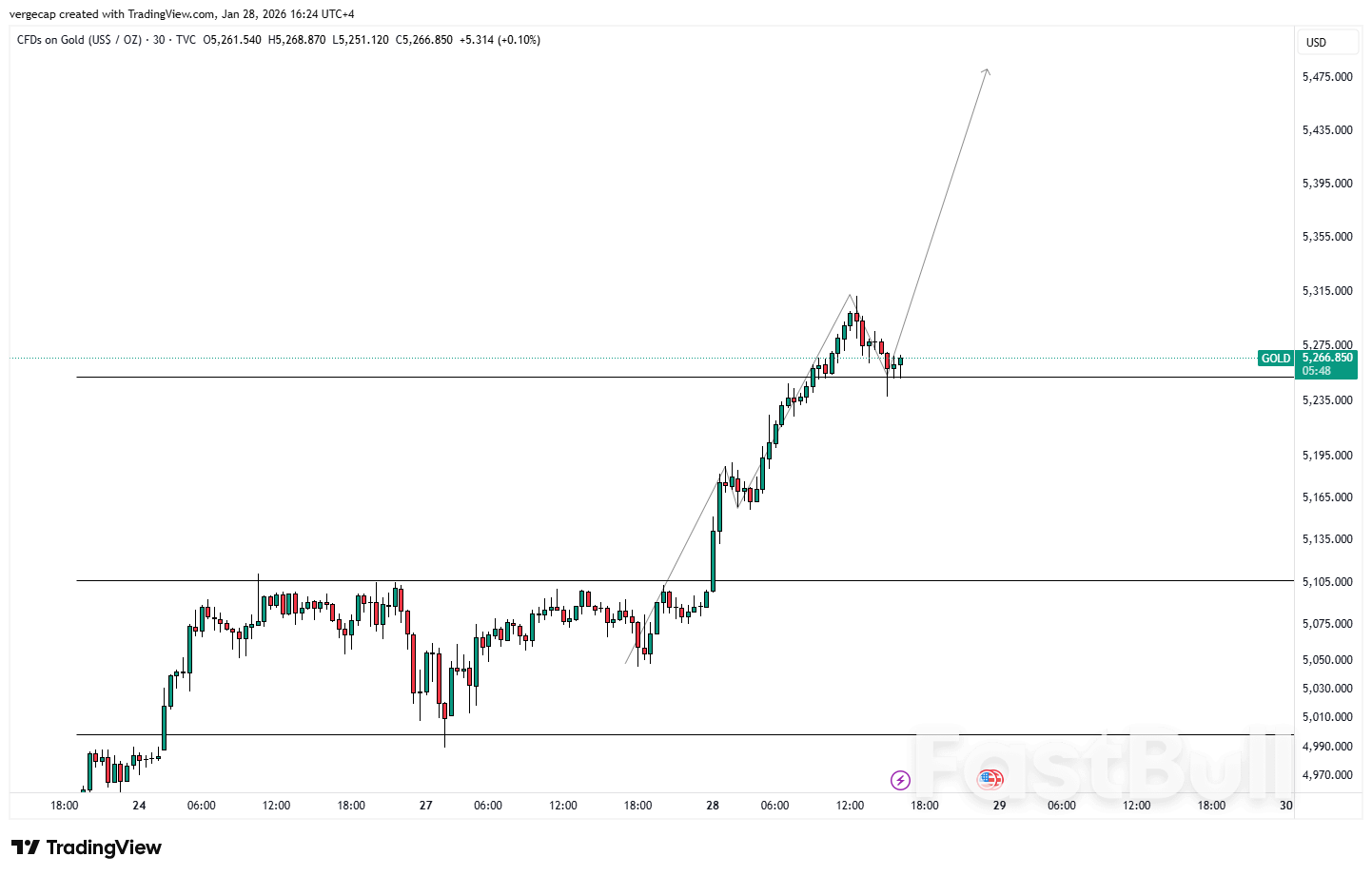
          From a technical perspective, gold remains firmly embedded in a strong bullish structure, with the recent pullback appearing corrective rather than indicative of a trend reversal. On the 30-minute chart, price action shows a clear sequence of higher highs and higher lows, supported by a steep impulsive leg that carried bullion from below the $5,100 zone to fresh record territory above $5,300 before easing.
          Prices are currently consolidating just above the $5,250–$5,260 support zone, which aligns with a prior breakout area and now serves as a near-term demand region. This level is acting as a technical pivot following the latest upward impulse. While the recent candles show hesitation and mild profit-taking, the structure of the pullback remains orderly, lacking the aggressive momentum typically associated with a bearish reversal.
          Below current levels, the next key support rests near $5,100, a former resistance zone that capped price action earlier and later flipped into support during the breakout phase. A decisive break beneath this level would represent a deeper correction and could expose the $4,990–$5,000 psychological and structural support region, where prior consolidation occurred. Only a sustained move below this zone would signal a more meaningful deterioration in the short-term bullish structure.
          On the upside, bulls remain focused on a renewed push above the recent swing high near $5,300. A sustained breakout above that level would confirm continuation of the prevailing uptrend and open the door toward the $5,450–$5,500 zone, as projected by the measured-move extension drawn on the chart. Such a move would likely attract fresh momentum buying, reinforcing gold’s role as a high-beta safe-haven asset in the current environment.
          Momentum dynamics also support the consolidation narrative. The rally’s steep ascent has cooled, but price remains well above the prior breakout base, suggesting digestion of gains rather than exhaustion. The current pause appears to be a bullish flag-style consolidation, often seen before continuation in strong trends.
          Overall, the broader technical outlook favors buying dips while price holds above $5,250, with the short-term pause likely serving as a base for the next leg higher rather than the start of a reversal.
          TRADE RECOMMENDATION
          BUY GOLD
          ENTRY PRICE: 5,265
          STOP LOSS: 5,180
          TAKE PROFIT: 5,450
          Risk Warnings and Disclaimers
          You understand and acknowledge that there is a high degree of risk involved in trading. Following any strategies or investment methods may lead to potential losses. The content on the site is provided by our contributors and analysts for information purposes only. You are solely responsible for determining whether any trading assets, securities, strategy, or any other product is suitable for investing based on your own investment objectives and financial situation.
          Add to Favorites
          Share

          Yen Holds Firm as Dollar Struggles Ahead of Fed Decision, Intervention Talk Lingers

          Warren Takunda

          Traders' Opinions

          Summary:

          The Japanese Yen remains resilient near multi-week highs as the US Dollar struggles to recover ahead of the Federal Reserve’s policy decision. Markets are weighing Fed guidance, political pressure on future rate cuts, and growing expectations that Japanese authorities will continue supporting the currency.

          SELL USDJPY
          EXP
          TRADING

          152.600

          Entry Price

          148.000

          TP

          158.200

          SL

          153.853 +0.749 +0.49%

          0.0

          Pips

          Flat

          148.000

          TP

          Exit Price

          152.600

          Entry Price

          158.200

          SL

          The Japanese Yen maintained its upward momentum on Wednesday, even as the US Dollar attempted a modest rebound, with USD/JPY trading near 152.45 during early European flows. The pair remains capped below the key 153.00 psychological level, hovering not far above a three-week low of 152.16 as traders position cautiously ahead of the US Federal Reserve’s monetary policy announcement later today.
          Currency markets are entering the decision with subdued conviction but heightened sensitivity to forward guidance. The Fed is widely expected to keep interest rates unchanged, reinforcing its recent “higher for longer” stance. However, the real market driver may lie beyond the rate decision itself. Investors are increasingly focused on the future leadership of the central bank, with Chair Jerome Powell expected to step down in May. President Donald Trump has already made clear his preference for significantly lower borrowing costs, raising questions about how independent US monetary policy may appear in the months ahead.
          That political undertone is quietly eroding confidence in the Dollar’s medium-term outlook. While US yields have stabilized in recent sessions, the Greenback has still shed more than 4% against the Yen since last Friday. The decline accelerated after reports surfaced that both the Federal Reserve and the Bank of Japan had conducted so-called “rate checks” in USD/JPY — a move widely interpreted in FX markets as a precursor to potential coordinated currency intervention.
          Such speculation prompted leveraged funds and short-term traders to trim bullish Dollar bets, amplifying the Yen’s recovery. The move gained further traction after President Trump publicly welcomed the recent Dollar depreciation on Tuesday, a rare instance of US leadership openly favoring a weaker currency. That commentary added political weight to an already fragile Dollar narrative and pushed USD/JPY to its lowest levels since late October.
          On the Japanese side, the policy backdrop has also shifted in ways that favor Yen strength. Minutes from the Bank of Japan’s December meeting reinforced the central bank’s commitment to gradual monetary normalization. Policymakers highlighted confidence that underlying inflation trends and wage growth are becoming more sustainable — a key prerequisite for further tightening. This message has reassured markets that Japan is moving steadily away from its ultra-loose policy era, even if the pace remains cautious.
          Importantly, this tightening bias is helping offset long-standing investor concerns about Japan’s heavy public debt burden. As long as inflation and wages continue to firm, the BoJ has room to edge policy settings higher without destabilizing the domestic economy. That structural shift is quietly reshaping the Yen’s role in global FX markets — from a purely defensive safe haven to a currency with improving yield support.
          From a market perspective, the convergence of a politically pressured Fed outlook and a cautiously tightening BoJ creates an environment that naturally limits USD/JPY upside. Even when the Dollar finds short-term support, follow-through buying has become hesitant, suggesting that rallies are increasingly seen as selling opportunities rather than the start of a broader reversal.
          In my view, unless the Fed delivers a notably hawkish surprise — which appears unlikely — the balance of risks still favors further Yen resilience. Intervention fears may ebb and flow, but the mere presence of that risk acts as a ceiling on aggressive Dollar positioning. At the same time, Japan’s evolving policy stance gives investors a fundamental reason to take Yen strength more seriously than in past cycles.

          Technical AnalysisYen Holds Firm as Dollar Struggles Ahead of Fed Decision, Intervention Talk Lingers_1

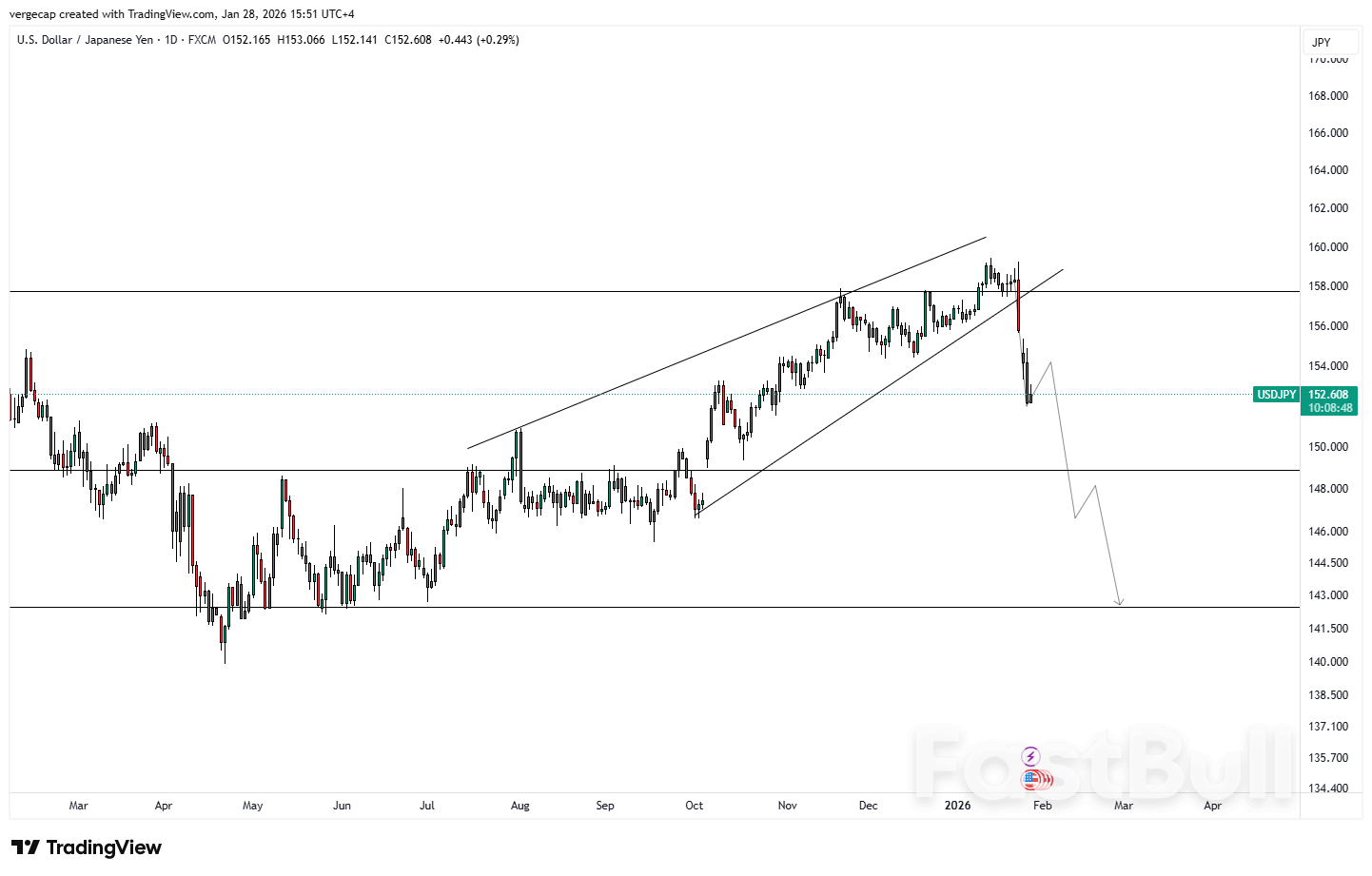
          From a technical perspective, USD/JPY has shifted from a steady bullish trend into a vulnerable corrective phase. On the daily chart, price action had been respecting a well-defined ascending channel that guided the pair higher from October through January. However, the recent sharp selloff has broken decisively below the lower boundary of that channel, signaling a potential trend exhaustion rather than a routine pullback.
          The pair is now hovering near the 152.00 zone, which previously acted as minor structural support and now serves as an immediate battleground between bulls and bears. The aggressive nature of the decline suggests a change in sentiment, with downside momentum accelerating after repeated failures near the 158.00–160.00 resistance area, which capped upside attempts at the top of the channel.
          A daily close below 152.00 would confirm a deeper corrective phase and expose the next major support around 148.00, a level that previously acted as both resistance and consolidation support during the prior range phase. A sustained move beneath 148.00 would mark a broader structural breakdown, opening the door toward the 143.00 region, which represents a key horizontal demand zone from earlier in the trend and aligns with the projected path shown on the chart.
          On the upside, any recovery attempts are likely to face stiff resistance. The first hurdle comes in near 155.00, followed by the more critical 158.00 area, which coincides with the former channel support turned resistance. Only a sustained move back above this region would negate the immediate bearish outlook and suggest that the breakdown was a false move rather than the start of a broader reversal.
          Overall, the technical structure now favors selling into rebounds rather than buying dips, as long as price remains below the broken channel and under the 158.00 resistance zone. The shift from an orderly uptrend to impulsive downside movement suggests that momentum has rotated in favor of the yen, at least in the near term.

          TRADE RECOMMENDATION

          SELL USD/JPY
          ENTRY PRICE: 152.60
          STOP LOSS: 158.20
          TAKE PROFIT: 148.00
          Risk Warnings and Disclaimers
          You understand and acknowledge that there is a high degree of risk involved in trading. Following any strategies or investment methods may lead to potential losses. The content on the site is provided by our contributors and analysts for information purposes only. You are solely responsible for determining whether any trading assets, securities, strategy, or any other product is suitable for investing based on your own investment objectives and financial situation.
          Add to Favorites
          Share

          Critical Turning Point! USDJPY Poised for a Rebound

          Tank

          Forex

          Technical Analysis

          Summary:

          Yen's upside potential may be limited amid concerns over Japan's fiscal health, triggered by Prime Minister Sanae Takaichi's aggressive spending and tax cut plans. On Monday, Takaichi stated she aims to suspend the 8% food tax for two years as soon as possible and submit relevant legislation to parliament in the 2026 fiscal year.

          BUY USDJPY
          Close Time
          CLOSED

          152.682

          Entry Price

          160.000

          TP

          149.500

          SL

          153.853 +0.749 +0.49%

          52.3

          Pips

          Profit

          149.500

          SL

          153.205

          Exit Price

          152.682

          Entry Price

          160.000

          TP

          Fundamentals
          Investors remain worried about Japan's fiscal situation due to Prime Minister Sanae Takaichi's aggressive spending and tax cut proposals. Additionally, domestic political uncertainty ahead of the early general election on Feb 8, coupled with elevated risk appetite, has eroded the yen's safe-haven status. However, the Bank of Japan's (BOJ) hawkish policy outlook and market fears of central bank intervention are helping to limit further yen depreciation. In fact, the BOJ's December meeting minutes, released earlier today, showed policymakers are more confident in sustaining a moderate wage-price cycle, citing this as a basis for further tightening monetary policy. This, in turn, underscores the BOJ's willingness to continue pushing up currently low borrowing costs. Long-term Japanese government bond yields have hit fresh highs, Japanese equities have seen their worst sell-off in months, and the yen has dropped to all-time lows against the euro and Swiss franc. Markets widely expect the Japanese Ministry of Finance to intervene again if USDJPY breaks above the 160 level, with the possibility of coordinated yen purchases with the United States not ruled out. Nevertheless, historical experience shows that foreign exchange intervention can mostly only smooth short-term volatility rather than reverse fundamentals-driven trends. In 2024, Japan deployed approximately 15.3 trillion yen in interventions—an unprecedented scale—with only temporary effects, unless the timing aligns with a shift in global monetary policy expectations.
          Against the backdrop of resilient U.S. economic performance and potential new fiscal stimulus to boost consumer spending, bond investors are gradually increasing risk exposure and positioning for a potential prolonged pause in the Fed's rate-cut cycle. Markets broadly anticipate the Fed will keep the federal funds rate unchanged within the 3.50%-3.75% target range following the two-day FOMC policy meeting. Previously, the Fed had cut rates by a total of 25 bps in September, October, and December, ending a nine-month rate pause. While markets are focused on Fed Chair Jerome Powell's remarks at the post-meeting press conference, investor attention has partially shifted to the succession plan after his expected departure in May. Rick Rieder, head of BlackRock's bond business, is regarded as a top contender, with prediction markets putting his odds at around 49%. Ahead of the policy decision, bond investors are seeking higher potential returns mainly by extending portfolio duration, increasing holdings of long-term U.S. Treasuries, and U.S. corporate bonds. This strategy is generally considered relatively high-risk, as longer-duration bonds are more sensitive to changes in interest rates and economic outlooks. With a stable labor market, signs of peaking inflation, and the federal funds rate near neutral levels, markets widely expect the Fed to implement a moderate easing cycle. Interest rate futures currently price in approximately 44 bps of cumulative Fed rate cuts by 2026, down from the previous expectation of around 53 bps. Meanwhile, spreads on U.S. investment-grade corporate bonds have narrowed to about 73 bps, near the lowest level since the late 1990s, reflecting strong demand for high-quality credit assets and limiting room for further increases in risk exposure.
          Technical Analysis
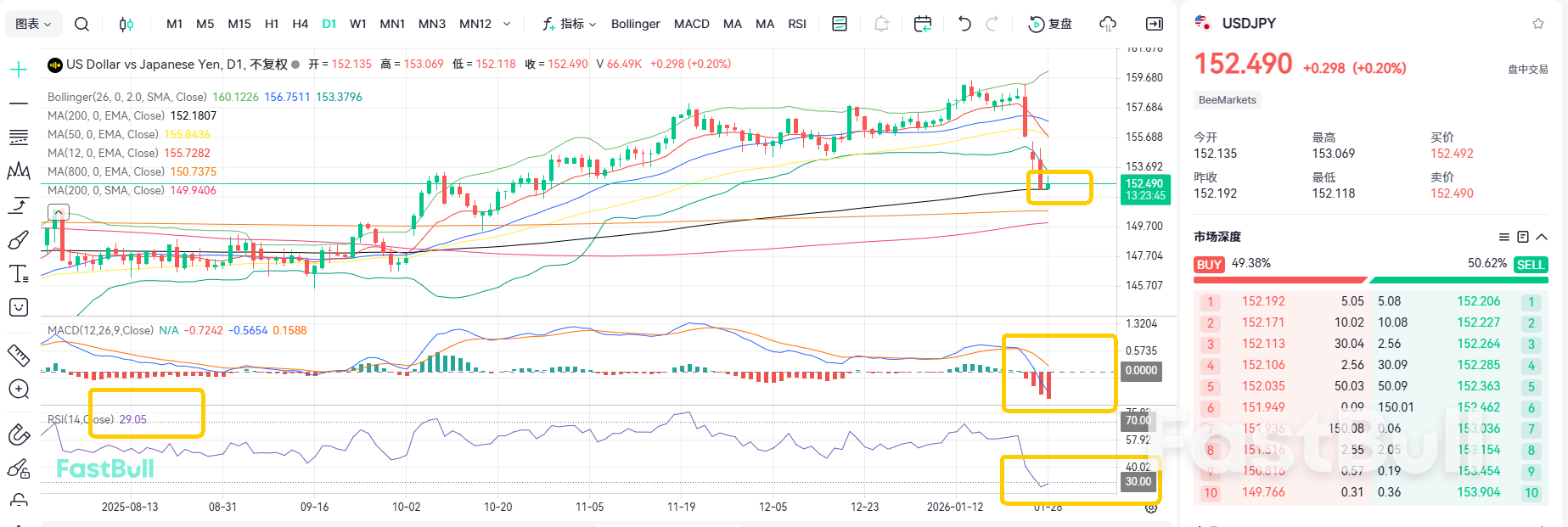
          On the daily chart, USDJPY shows Bollinger Bands opening downward with MAs diverging lower, as prices stage a sharp decline along the lower Bollinger Band. After the MACD death cross, upward momentum has weakened significantly, with the fast and slow lines moving below the zero axis—indicating a bearish trend. Overall, prices are likely to fall to 152 or 151.8. The RSI reading stands at 29, placing the market in the oversold zone with investors predominantly selling.
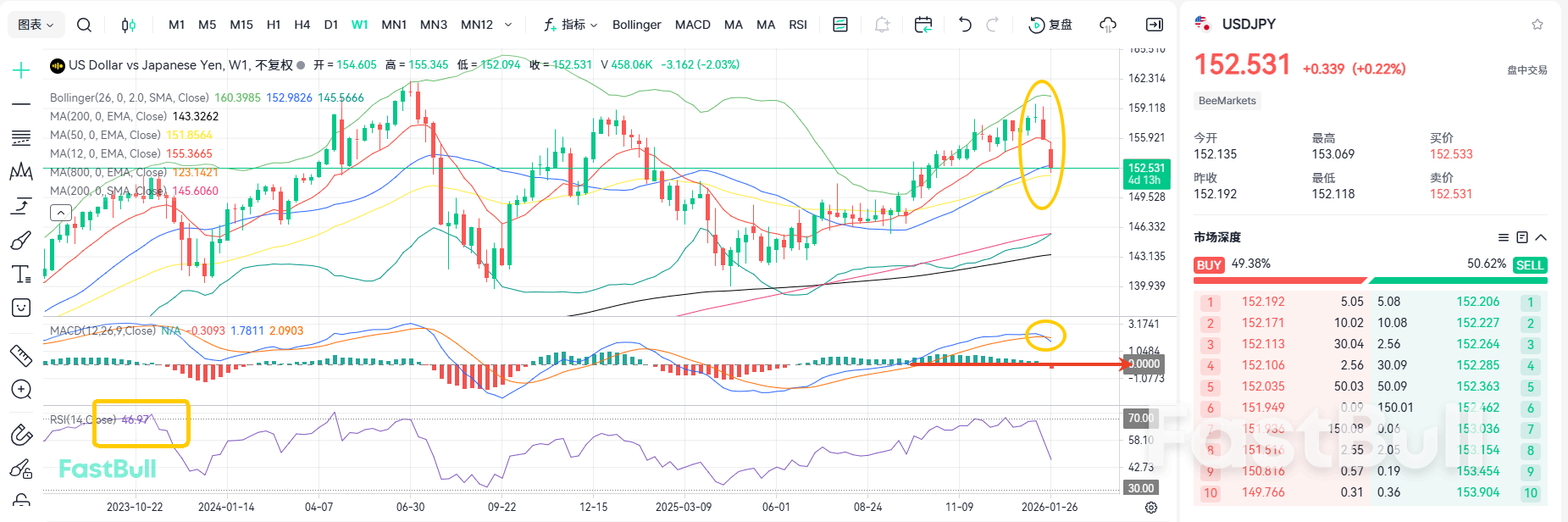
          On the weekly chart, prices have dropped with two consecutive large bearish candles and are currently consolidating near the middle Bollinger Band and EMA50. The MACD has formed a death cross, and the fast and slow lines are pulling back toward the zero axis—still a considerable distance away, suggesting the correction is not yet complete. The RSI reading is 46, reflecting market pessimism. If prices can sustainably hold above EMA50, a rally to around 160 is highly likely; failure to hold this level would trigger a further decline to 150.
          Thus, the trading strategy recommends buying on dips as the primary approach.
          Critical Turning Point! USDJPY Poised for a Rebound_1Critical Turning Point! USDJPY Poised for a Rebound_2
          Trade Recommendations
          Trade Direction: Buy
          Entry Price: 151.8
          Target Price: 160
          Stop Loss: 149.5
          Support: 152/150/149.5
          Resistance: 160/161/162
          Risk Warnings and Disclaimers
          You understand and acknowledge that there is a high degree of risk involved in trading. Following any strategies or investment methods may lead to potential losses. The content on the site is provided by our contributors and analysts for information purposes only. You are solely responsible for determining whether any trading assets, securities, strategy, or any other product is suitable for investing based on your own investment objectives and financial situation.
          Add to Favorites
          Share

          A Bottoming Signal Has Emerged, Indicating a Potential Short-term Rebound

          Alan

          Forex

          Summary:

          Following a sharp decline, the USDJPY pair has shown technical signs of bottoming out, suggesting a potential technical rebound in the near term.

          BUY USDJPY
          EXP
          TRADING

          152.690

          Entry Price

          155.600

          TP

          151.400

          SL

          153.853 +0.749 +0.49%

          0.0

          Pips

          Flat

          151.400

          SL

          Exit Price

          152.690

          Entry Price

          155.600

          TP

          Fundamentals

          The USDJPY pair experienced a sharp short-term correction, with prices sharply declining from recent highs and fluctuating within the 153.00–152.00 range. The prevailing market narrative is driven not solely by interest rate differentials or macroeconomic data but predominantly by market expectations of increased Japanese authorities' proactive responses to yen volatility. The Japanese Finance Minister's public commitment to take "appropriate action when necessary" and emphasis on close coordination with U.S. authorities have visibly shifted risk premiums, prompting swift short covering in the yen.
          Simultaneously, the dollar has come under pressure, with escalating political and policy uncertainties fueling dollar sell-offs. Market interpretations of statements by U.S. political figures suggest tolerance for dollar depreciation, further boosting yen buying interest. Overall, the combination of dollar weakness and Japanese official communication signals has shifted the short-term exchange rate dynamic from interest rate differential-driven fundamentals to a political/intervention risk narrative. This shift has led to extraordinary intraday declines in USDJPY over the past few trading sessions, with the price temporarily breaking above the 153 level.
          It is important to emphasize that there is informational asymmetry and uncertainty regarding the actual extent of Japan's market intervention. Some official and market reports indicate that Tokyo authorities engaged in intensive communication and conducted "interest rate/market condition assessments," yet publicly available central bank disclosures do not provide conclusive evidence of substantial yen purchases on specific trading days. In other words, the market's "intervention expectation effects" may have a more significant impact on prices than the actual intervention itself. Traders should differentiate between the risks associated with "policy signals/coordination announcements" and "confirmed official interventions."

          Technical Analysis

          A Bottoming Signal Has Emerged, Indicating a Potential Short-term Rebound_1
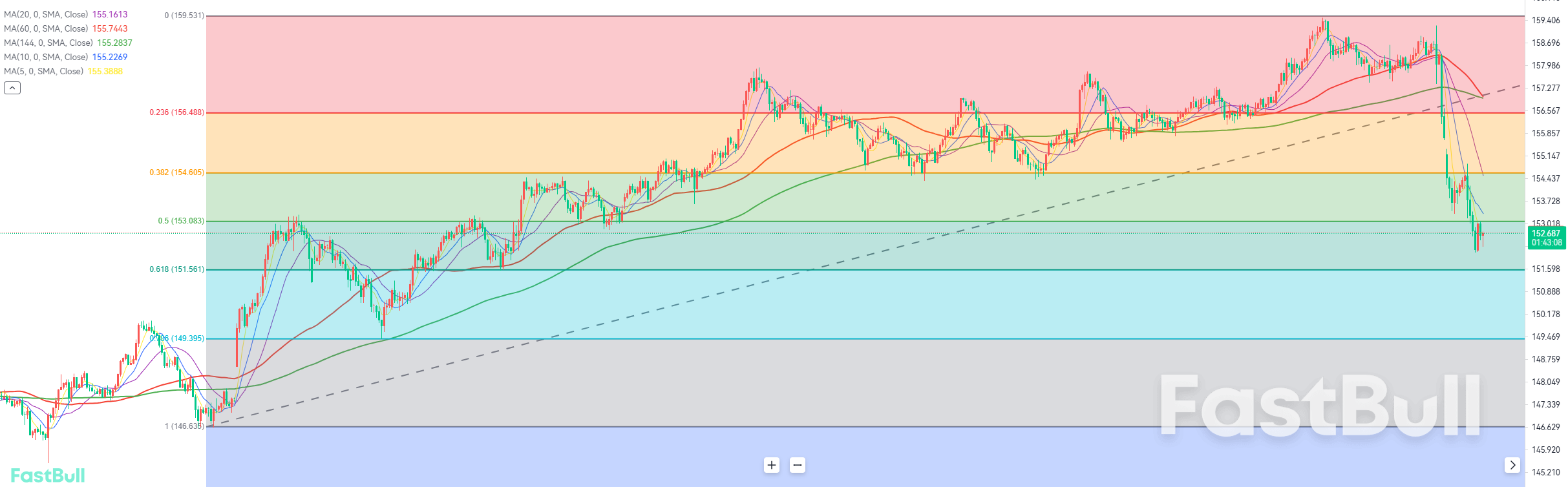
          In the 4H timeframe, the USDJPY currency pair has transitioned from an upward channel to a rapid downtrend accompanied by increased volatility. The price has swiftly broken below several short-term moving averages, forming a bearish gap. Key support levels are identified at 152.00–151.50, followed by around 151.00. Resistance levels are concentrated near recent retracement points and the confluence zone of short-term moving averages, approximately 154.60–156.00.
          Technical indicators, such as RSI and other momentum oscillators, have entered oversold territory in the short term, suggesting the potential for a technical rebound or consolidation phase.
          Currently, the 4H candlestick pattern shows a bullish engulfing formation, indicating that the price may stabilize after holding the 152.00 support level, with prospects for a gradual upward correction increasing.

          Trading Recommendations

          Trading Direction: Buy
          Entry Price: 152.40
          Target Price: 155.60
          Stop Loss: 151.40
          Valid Until: February 11, 2026 23:00:00
          Support: 152.00, 151.50
          Resistance: 154.60, 156.00
          Risk Warnings and Disclaimers
          You understand and acknowledge that there is a high degree of risk involved in trading. Following any strategies or investment methods may lead to potential losses. The content on the site is provided by our contributors and analysts for information purposes only. You are solely responsible for determining whether any trading assets, securities, strategy, or any other product is suitable for investing based on your own investment objectives and financial situation.
          Add to Favorites
          Share

          Corrective Phase Targets Major Fibonacci Confluence For Potential Rebound

          Manuel

          Forex

          Economic

          Summary:

          As these averages continue to track the primary trend, they are expected to converge toward our zone of interest in the coming sessions.

          BUY EURUSD
          EXP
          PENDING

          1.18950

          Entry Price

          1.20500

          TP

          1.18150

          SL

          1.19150 -0.00552 -0.46%

          --

          Pips

          PENDING

          1.18150

          SL

          Exit Price

          1.18950

          Entry Price

          1.20500

          TP

          Market participants have almost entirely priced in a "hold" decision from the Federal Reserve, with interest rates expected to remain within the 3.50%–3.75% range at the conclusion of Wednesday's policy meeting. This pause follows three consecutive rate cuts implemented throughout 2025. Investor focus is shifting toward the subsequent press conference, as any forward-looking guidance could prove pivotal for currency valuations. A more hawkish tone from Fed officials possesses the potential to provide short-term support for the U.S. Dollar.
          On the macroeconomic front, recent U.S. data indicated a deterioration in consumer confidence, according to the Conference Board index. This was compounded by the latest ADP Employment Change 4-week average, which showed a loss of momentum, descending from 8,000 to 7,750. Simultaneously, escalating trade tensions—now focused on South Korea—are injecting volatility into the markets. President Donald Trump’s warning regarding a potential 25% tariff on South Korean goods initially pressured the Greenback while reinforcing demand for safe-haven assets. Consequently, Gold has surged 17.72% year-to-date, challenging the historic 60% gains recorded in 2025.
          In Europe, Germany's economic pulse remains subdued, as evidenced by the latest IFO Business Climate Index. The indicator held steady at 87.6 in January, missing market expectations of an improvement to 88.1. While the current assessment sub-index saw a marginal gain, the expectations component retreated, reinforcing the narrative of a fragile recovery hampered by persistent structural issues. This was reflected in the preliminary PMI figures, where the manufacturing sector remains in contraction while services expansion moderated. Against this backdrop, European Central Bank policymakers have maintained a prudent, data-dependent stance, avoiding discussions on imminent rate shifts.
          Finally, geopolitical tensions continue to inject risk premiums into European assets. Despite diplomatic efforts, the conflict between Russia and Ukraine remains highly active, with recent large-scale drone offensives and strikes on energy infrastructure in Krasnodar ensuring that global market volatility remains elevated.Corrective Phase Targets Major Fibonacci Confluence For Potential Rebound_1

          Technical Analysis

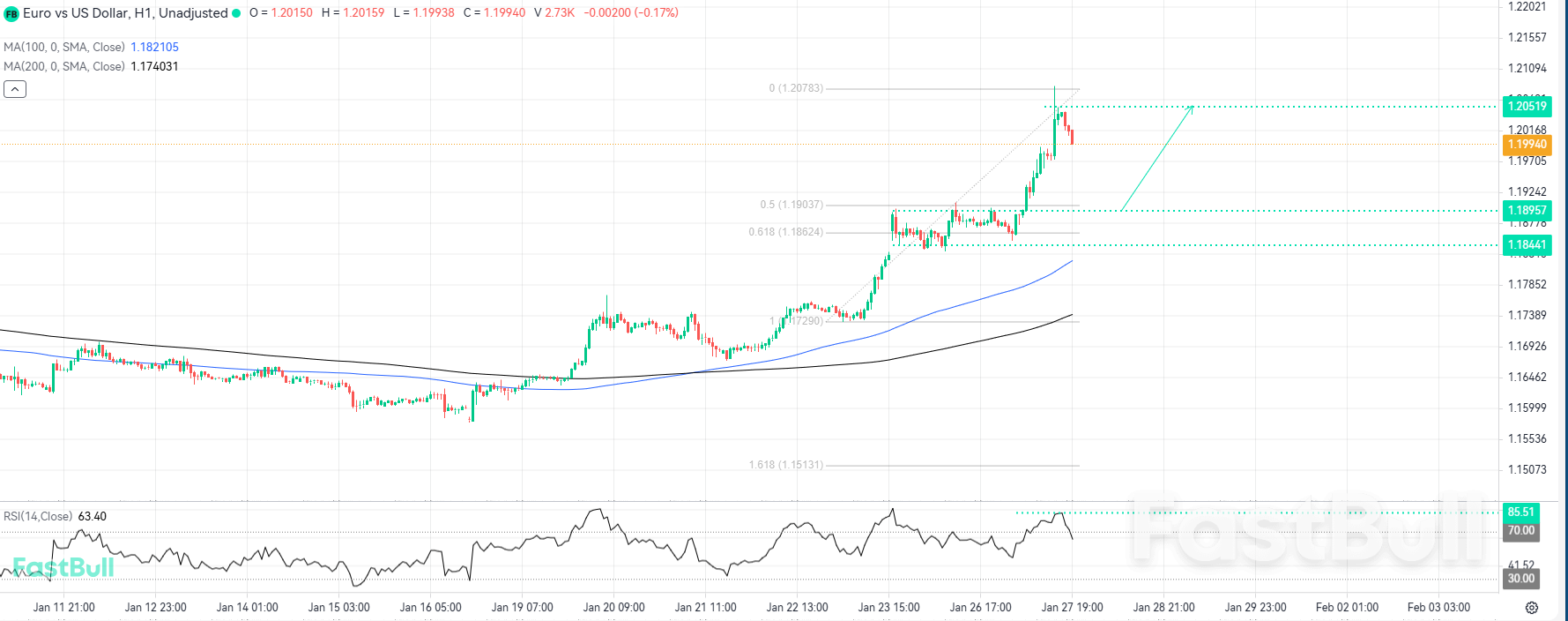
          The EUR/USD pair reached an intraday peak of 1.2083 during the previous session, a move largely driven by broad Dollar depreciation following President Trump's remarks that the currency was "doing fine." However, this overextended rally has pushed the pair into extreme territory, suggesting that a technical correction is likely on the horizon.
          A potential corrective phase would target a high-value support cluster between 1.1895 and 1.1844. These levels are strategically significant as they align with the 0.50 and 0.618 Fibonacci retracement levels of the recent impulse. A successful defense of this area could serve as a catalyst to reactivate the broader bullish trend.
          Supporting the case for a pullback, the Relative Strength Index (RSI) hit a high of 85, entering deep overbought territory. This exhaustion signal suggests that the current move is reaching a climax and requires a period of consolidation. Meanwhile, the 100 and 200-period Moving Averages are situated at 1.1821 and 1.1740, respectively. As these averages continue to track the primary trend, they are expected to converge toward our zone of interest in the coming sessions.
          If the price exhibits a bullish reaction from this support confluence, the uptrend is expected to resume. However, traders should monitor these levels closely, as a failure to hold the 0.618 Fibonacci level could signal a deeper structural shift.
          Trading Recommendations
          Trading direction: Buy
          Entry price: 1.1895
          Target price: 1.2050
          Stop loss: 1.1815
          Validity: Feb 06, 2026 15:00:00
          Risk Warnings and Disclaimers
          You understand and acknowledge that there is a high degree of risk involved in trading. Following any strategies or investment methods may lead to potential losses. The content on the site is provided by our contributors and analysts for information purposes only. You are solely responsible for determining whether any trading assets, securities, strategy, or any other product is suitable for investing based on your own investment objectives and financial situation.
          Add to Favorites
          Share

          Technical Rejection Near Key Moving Averages Points Toward Further Downside

          Manuel

          Economic

          Central Bank

          Summary:

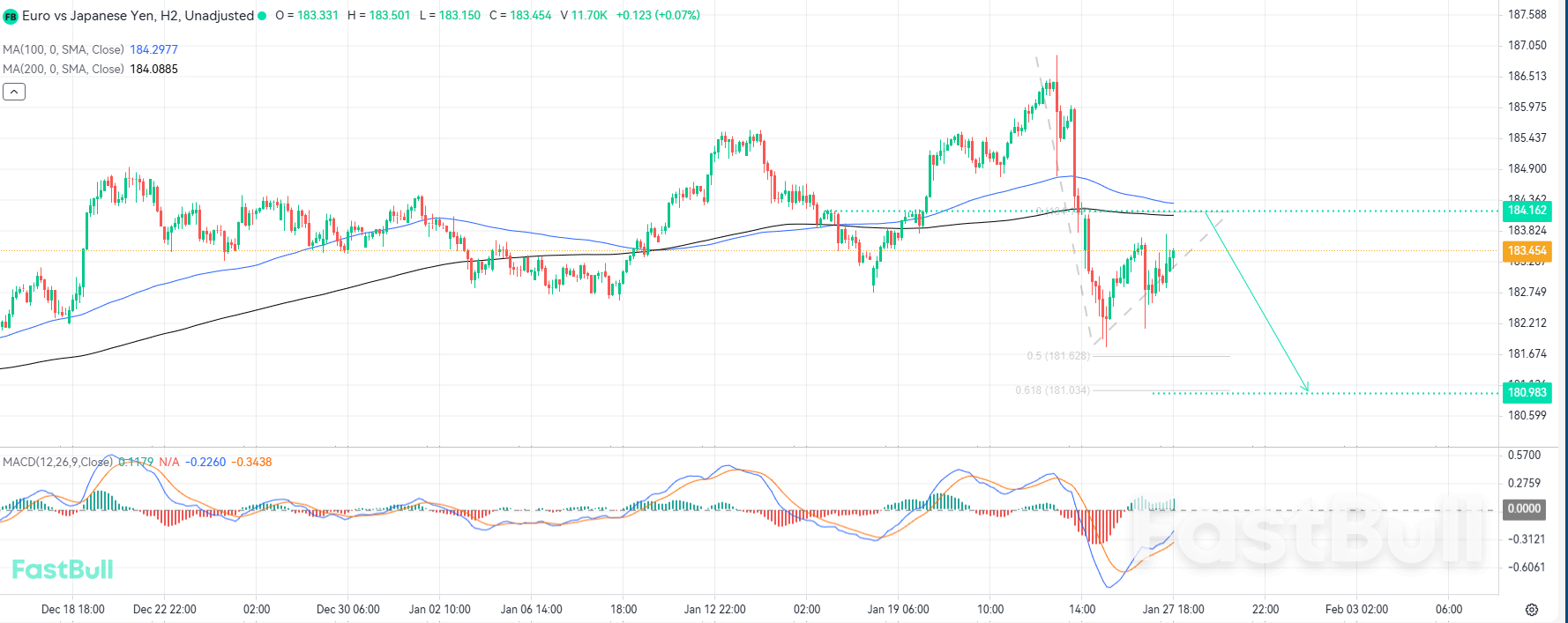
          The pair is currently in a corrective consolidation phase, drifting toward a major technical "Value Area" where the 100 and 200-period Moving Averages converge at 184.29 and 184.08, respectively.

          SELL EURJPY
          EXP
          PENDING

          184.160

          Entry Price

          181.000

          TP

          184.900

          SL

          183.321 +0.047 +0.03%

          --

          Pips

          PENDING

          181.000

          TP

          Exit Price

          184.160

          Entry Price

          184.900

          SL

          The Japanese Yen's strength at the close of last week was largely fueled by speculation regarding potential coordinated intervention between the Federal Reserve and the Bank of Japan. However, in the absence of definitive signals or immediate action from either central bank, market participants have begun unwinding hedge positions in the Yen, effectively capping its recent support.
          On the political front, rhetoric from Prime Minister Sanae Takaichi has reintroduced a layer of uncertainty. Her proposals for increased public spending and aggressive tax cuts ahead of the February 8th Lower House elections have reignited concerns over Japan's long-term fiscal sustainability. This backdrop has led to increased volatility in Japanese government bond yields and remains a significant structural headwind for the Yen. From a macroeconomic perspective, while producer price inflation is moderating, the relief is not yet sufficient to derail the Bank of Japan’s progressive normalization path. In fact, the BoJ recently upwardly revised its economic forecasts while maintaining its readiness to adjust policy should the environment warrant further tightening.
          In Europe, Germany's economic pulse remains subdued, as evidenced by the latest IFO Business Climate Index. The indicator held steady at 87.6 in January, missing market expectations of an improvement to 88.1. While the current assessment sub-index saw a marginal gain, the expectations component retreated, reinforcing the narrative of a fragile recovery hampered by persistent structural issues.
          Complementing this, Friday’s preliminary PMI figures offered a mixed outlook. The manufacturing sector showed signs of stabilization but remains firmly in contractionary territory. Conversely, while the services sector continues to expand, it is doing so at a more moderate pace than anticipated. At the Eurozone level, the Services PMI retreated to 51.9 in January, undershooting forecasts and highlighting weak domestic demand. Against this backdrop, European Central Bank policymakers adopted a prudent tone in their December deliberations, avoiding discussions on rate shifts while reiterating a data-dependent, meeting-by-meeting approach.
          Finally, geopolitical tensions continue to inject risk premiums into European assets. Despite U.S.-led diplomatic efforts to mediate between Russia and Ukraine, the conflict remains highly active. Recent reports of large-scale drone offensives and strikes on Russian energy infrastructure in Krasnodar have ensured that volatility remains elevated across global markets.Technical Rejection Near Key Moving Averages Points Toward Further Downside_1

          Technical Analysis

          EUR/JPY underwent a sharp bearish rejection after testing the local peak of 186.87 on January 23rd, a move largely driven by intervention speculation. The pair is currently in a corrective consolidation phase, drifting toward a major technical "Value Area" where the 100 and 200-period Moving Averages converge at 184.29 and 184.08, respectively.
          Notably, the 184.12 level represents last week’s closing price. A retracement to this zone would effectively fill the weekend gap, often a precursor to a trend resumption. Given that this area aligns with both the moving average confluence and horizontal resistance, it serves as a high-probability pivot point for the bears to reclaim control.
          Our momentum analysis via the MACD confirms that the current upward move is a corrective retracement within a broader bearish structure. Although the histogram is currently printing bullish bars, the signal lines remain entrenched below the neutral zone, indicating that the primary trend is still down.
          As the price approaches this key confluence, we are looking for a bearish pivot in the histogram. Such a turn would open the path for a target at 180.98, which represents the 0.618 Fibonacci expansion of the initial downward impulse. While the correction is currently in play, the technical structure favors a bearish continuation as long as the price remains below the moving average cluster.
          Trading Recommendations
          Trading direction: Sell
          Entry price: 184.16
          Target price: 181.00
          Stop loss: 184.90
          Validity: Feb 06, 2026 15:00:00
          Risk Warnings and Disclaimers
          You understand and acknowledge that there is a high degree of risk involved in trading. Following any strategies or investment methods may lead to potential losses. The content on the site is provided by our contributors and analysts for information purposes only. You are solely responsible for determining whether any trading assets, securities, strategy, or any other product is suitable for investing based on your own investment objectives and financial situation.
          Add to Favorites
          Share

          Canada's Consumption Momentum Overdrawn; December Forecast Downturn Limits CAD Rebound Potential

          Eva Chen

          Forex

          Summary:

          Canada's retail sales rose 1.3% month-over-month in November, but growth slowed in December.

          BUY USDCAD
          EXP
          TRADING

          1.35987

          Entry Price

          1.40000

          TP

          1.34100

          SL

          1.35356 +0.00475 +0.35%

          0.0

          Pips

          Flat

          1.34100

          SL

          Exit Price

          1.35987

          Entry Price

          1.40000

          TP

          Fundamentals

          The USDCAD extended its overnight rebound from the 1.3670 level on Tuesday, gaining upward momentum for a second consecutive trading session. Spot prices maintained modest intraday gains during European trading hours, currently trading around the 1.3700 range with a daily increase exceeding 0.18%.
          Data released last week showed Canada's retail sales rebounded strongly in November, rising 1.3% month-over-month to CAD 70.4 billion, slightly exceeding the prior forecast of 1.2%. Growth was widespread across sectors, with sales increasing in eight out of nine sub-sectors. Spending at food and beverage retailers saw the most significant rise, indicating robust consumer demand persisted through the year-end period.
          Underlying growth momentum remains robust. Core retail sales excluding gasoline and automobiles rose 1.6% month-over-month, indicating that strong household spending extends beyond volatile categories and reflects steady demand for discretionary goods.
          However, the outlook is not optimistic. Preliminary estimates from Statistics Canada indicate that retail sales in December may have declined by 0.5% month-over-month, suggesting that the strong growth momentum seen in November may not have been sustained.
          Market Watch: Canada's economy staged a welcome rebound in November, though it delivered little in the way of exciting growth. Part of the increase reflected market volatility tied to labor disputes rather than a substantive improvement in underlying demand. This rebound followed a weak and downwardly revised October, and growth momentum has already begun to slow in December. Setting aside monthly fluctuations, the underlying trend in actual sales remains negative. Weak consumer confidence may be a key factor. The Bank of Canada's latest consumer survey indicates growing household pessimism about their financial situation, which is influencing spending decisions.
          Our outlook for actual consumption growth in the fourth quarter remains subdued, with quarter-on-quarter growth projected to approach 0.9% (annualized). There exists some upside risk in the services sector, as its growth momentum is expected to gradually strengthen toward year-end. However, we believe the pace of services sector growth will be insufficient to lift overall consumption growth significantly above its trend level.
          Canada's Consumption Momentum Overdrawn; December Forecast Downturn Limits CAD Rebound Potential_1

          Technical Analysis

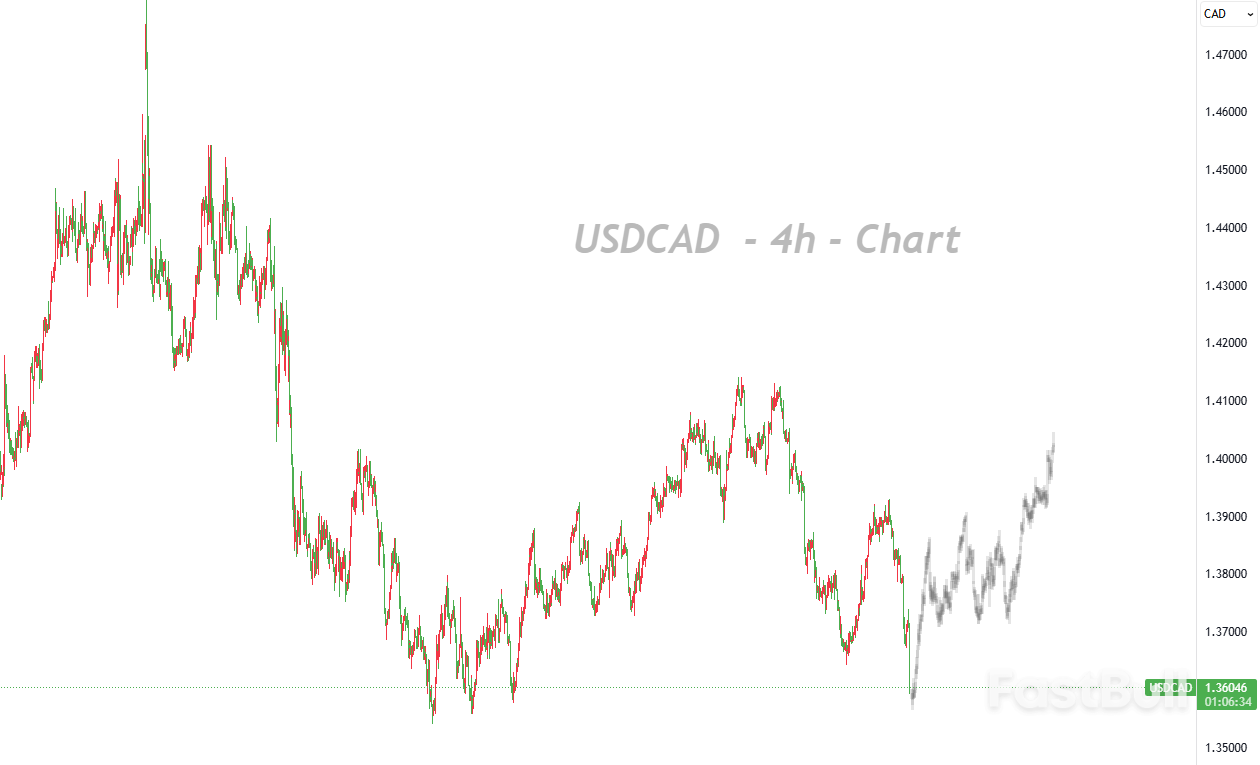
          The USDCAD has shifted from its earlier sharp decline to a neutral intraday trend, with prices currently rebounding. Some consolidation is expected above the temporary low at 1.3670. An upward momentum will persist as long as the pair breaks above the 4H 55 SMA (currently at 1.3788).
          On the other hand, this level also warrants attention. Currently, the exchange rate remains below this level, with upward resistance still intact. A break below 1.3670 would trigger a retest of the 1.3641 support level. Should this support level be decisively breached, the downtrend originating from 1.4139 would resume, potentially leading to another test of the 1.3538 low.

          Trading Recommendations

          Trading Direction: Buy
          Entry Price: 1.3600
          Target Price: 1.4000
          Stop Loss: 1.3410
          Valid Until: February 22, 2026 23:55:00
          Support: 1.3670, 1.3642, 1.3575
          Resistance: 1.3739, 1.3801, 1.3929
          Risk Warnings and Disclaimers
          You understand and acknowledge that there is a high degree of risk involved in trading. Following any strategies or investment methods may lead to potential losses. The content on the site is provided by our contributors and analysts for information purposes only. You are solely responsible for determining whether any trading assets, securities, strategy, or any other product is suitable for investing based on your own investment objectives and financial situation.
          Add to Favorites
          Share
          FastBull
          Copyright © 2026 FastBull Ltd

          728 RM B 7/F GEE LOK IND BLDG NO 34 HUNG TO RD KWUN TONG KLN HONG KONG

          TelegramInstagramTwitterfacebooklinkedin
          App Store Google Play Google Play
          Products
          Charts

          Chats

          Q&A with Experts
          Screeners
          Economic Calendar
          Data
          Tools
          Membership
          Features
          Function
          Markets
          Copy Trading
          Latest Signals
          Contests
          News
          Analysis
          24/7
          Columns
          Education
          Company
          Careers
          About Us
          Contact Us
          Advertising
          Help Center
          Feedback
          User Agreement
          Privacy Policy
          Personal Information Protection Statement
          Business

          White Label

          Data API

          Web Plug-ins

          Poster Maker

          Affiliate Program

          Risk Disclosure

          The risk of loss in trading financial instruments such as stocks, FX, commodities, futures, bonds, ETFs and crypto can be substantial. You may sustain a total loss of the funds that you deposit with your broker. Therefore, you should carefully consider whether such trading is suitable for you in light of your circumstances and financial resources.

          No decision to invest should be made without thoroughly conducting due diligence by yourself or consulting with your financial advisors. Our web content might not suit you since we don't know your financial conditions and investment needs. Our financial information might have latency or contain inaccuracy, so you should be fully responsible for any of your trading and investment decisions. The company will not be responsible for your capital loss.

          Without getting permission from the website, you are not allowed to copy the website's graphics, texts, or trademarks. Intellectual property rights in the content or data incorporated into this website belong to its providers and exchange merchants.

          Not Logged In

          Log in to access more features

          Connect Broker
          Become a signal provider
          Help Center
          Customer Service
          Dark Mode
          Price Up/Down Colors

          Log In

          Sign Up
          Position
          Layout
          Fullscreen
          Default to Chart
          The chart page opens by default when you visit fastbull.com