• Trade
  • Markets
  • Copy
  • Contests
  • News
  • 24/7
  • Calendar
  • Q&A
  • Chats
Trending
Screeners
SYMBOL
LAST
BID
ASK
HIGH
LOW
NET CHG.
%CHG.
SPREAD
SPX
S&P 500 Index
6827.42
6827.42
6827.42
6899.86
6801.80
-73.58
-1.07%
--
DJI
Dow Jones Industrial Average
48458.04
48458.04
48458.04
48886.86
48334.10
-245.98
-0.51%
--
IXIC
NASDAQ Composite Index
23195.16
23195.16
23195.16
23554.89
23094.51
-398.69
-1.69%
--
USDX
US Dollar Index
97.950
98.030
97.950
98.500
97.950
-0.370
-0.38%
--
EURUSD
Euro / US Dollar
1.17394
1.17409
1.17394
1.17496
1.17192
+0.00011
+ 0.01%
--
GBPUSD
Pound Sterling / US Dollar
1.33707
1.33732
1.33707
1.33997
1.33419
-0.00148
-0.11%
--
XAUUSD
Gold / US Dollar
4299.39
4299.39
4299.39
4353.41
4257.10
+20.10
+ 0.47%
--
WTI
Light Sweet Crude Oil
57.233
57.485
57.233
58.011
56.969
-0.408
-0.71%
--

Community Accounts

Signal Accounts
--
Profit Accounts
--
Loss Accounts
--
View More

Become a signal provider

Sell trading signals to earn additional income

View More

Guide to Copy Trading

Get started with ease and confidence

View More

Signal Accounts for Members

All Signal Accounts

Best Return
  • Best Return
  • Best P/L
  • Best MDD
Past 1W
  • Past 1W
  • Past 1M
  • Past 1Y

All Contests

  • All
  • Trump Updates
  • Recommend
  • Stocks
  • Cryptocurrencies
  • Central Banks
  • Featured News
Top News Only
Share

China's Central Financial And Economic Affairs Commission Deputy Director: Will Expand Export And Increase Import In 2026

Share

Thai Leader Anutin: Landmine Blast That Killed Thai Soldiers 'Not A Roadside Accident'

Share

Thai Leader Anutin: Thailand To Continue Military Action Until 'We Feel No More Harm'

Share

Cambodian Prime Minister Hun Manet Says He Had Phone Calls With Trump And Malaysian Leader Anwar About Ceasefire

Share

Cambodia's Hun Manet Says USA, Malaysia Should Verify 'Which Side Fired First' In Latest Conflict

Share

Cambodia's Hun Manet: Cambodia Maintains Its Stance In Seeking Peaceful Resolution Of Disputes

Share

Nasdaq Companies: Allergan, Ferrovia, Insmed, Monolithic Power Systems, Seagate Technology, And Western Digital Will Be Added To The NASDAQ 100 Index. Biogen, CdW, GlobalFoundries, Lululemon, ON Semiconductor, And Tradedesk Will Be Removed From The NASDAQ 100 Index

Share

Witkoff Headed To Berlin This Weekend To Meet With Zelenskiy, European Leaders -Wsj Reporter On X

Share

Russia Attacks Two Ukrainian Ports, Damaging Three Turkish-Owned Vessels

Share

[Historic Flooding Occurs In At Least Four Rivers In Washington State Due To Days Of Torrential Rains] Multiple Areas In Washington State Have Been Hit By Severe Flooding Due To Days Of Torrential Rains, With At Least Four Rivers Experiencing Historic Flooding. Reporters Learned On The 12th That The Floods Caused By The Torrential Rains In Washington State Have Destroyed Homes And Closed Several Highways. Experts Warn That Even More Severe Flooding May Occur In The Future. A State Of Emergency Has Been Declared In Washington State

Share

Trump Says Proposed Free Economic Zone In Donbas Would Work

Share

Trump: I Think My Voice Should Be Heard

Share

Trump Says Will Be Choosing New Fed Chair In Near Future

Share

Trump Says Proposed Free Economic Zone In Donbas Complex But Would Work

Share

Trump Says Land Strikes In Venezuela Will Start Happening

Share

US President Trump: Thailand And Cambodia Are In A Good Situation

Share

State Media: North Korean Leader Kim Hails Troops Returning From Russia Mission

Share

The 10-year Treasury Yield Rose About 5 Basis Points During The "Fed Rate Cut Week," And The 2/10-year Yield Spread Widened By About 9 Basis Points. On Friday (December 12), In Late New York Trading, The Yield On The Benchmark 10-year US Treasury Note Rose 2.75 Basis Points To 4.1841%, A Cumulative Increase Of 4.90 Basis Points For The Week, Trading Within A Range Of 4.1002%-4.2074%. It Rose Steadily From Monday To Wednesday (before The Fed Announced Its Rate Cut And Treasury Bill Purchase Program), Subsequently Exhibiting A V-shaped Recovery. The 2-year Treasury Yield Fell 1.82 Basis Points To 3.5222%, A Cumulative Decrease Of 3.81 Basis Points For The Week, Trading Within A Range Of 3.6253%-3.4989%

Share

Trump: Lots Of Progress Being Made On Russia-Ukraine

Share

NOPA November US Soybean Crush Estimated At 220.285 Million Bushels

TIME
ACT
FCST
PREV
U.K. Trade Balance Non-EU (SA) (Oct)

A:--

F: --

P: --

U.K. Trade Balance (Oct)

A:--

F: --

P: --

U.K. Services Index MoM

A:--

F: --

P: --

U.K. Construction Output MoM (SA) (Oct)

A:--

F: --

P: --

U.K. Industrial Output YoY (Oct)

A:--

F: --

P: --

U.K. Trade Balance (SA) (Oct)

A:--

F: --

P: --

U.K. Trade Balance EU (SA) (Oct)

A:--

F: --

P: --

U.K. Manufacturing Output YoY (Oct)

A:--

F: --

P: --

U.K. GDP MoM (Oct)

A:--

F: --

P: --

U.K. GDP YoY (SA) (Oct)

A:--

F: --

P: --

U.K. Industrial Output MoM (Oct)

A:--

F: --

P: --

U.K. Construction Output YoY (Oct)

A:--

F: --

P: --

France HICP Final MoM (Nov)

A:--

F: --

P: --

China, Mainland Outstanding Loans Growth YoY (Nov)

A:--

F: --

P: --

China, Mainland M2 Money Supply YoY (Nov)

A:--

F: --

P: --

China, Mainland M0 Money Supply YoY (Nov)

A:--

F: --

P: --

China, Mainland M1 Money Supply YoY (Nov)

A:--

F: --

P: --

India CPI YoY (Nov)

A:--

F: --

P: --

India Deposit Gowth YoY

A:--

F: --

P: --

Brazil Services Growth YoY (Oct)

A:--

F: --

P: --

Mexico Industrial Output YoY (Oct)

A:--

F: --

P: --

Russia Trade Balance (Oct)

A:--

F: --

P: --

Philadelphia Fed President Henry Paulson delivers a speech
Canada Building Permits MoM (SA) (Oct)

A:--

F: --

P: --

Canada Wholesale Sales YoY (Oct)

A:--

F: --

P: --

Canada Wholesale Inventory MoM (Oct)

A:--

F: --

P: --

Canada Wholesale Inventory YoY (Oct)

A:--

F: --

P: --

Canada Wholesale Sales MoM (SA) (Oct)

A:--

F: --

P: --

Germany Current Account (Not SA) (Oct)

A:--

F: --

P: --

U.S. Weekly Total Rig Count

A:--

F: --

P: --

U.S. Weekly Total Oil Rig Count

A:--

F: --

P: --

Japan Tankan Large Non-Manufacturing Diffusion Index (Q4)

--

F: --

P: --

Japan Tankan Small Manufacturing Outlook Index (Q4)

--

F: --

P: --

Japan Tankan Large Non-Manufacturing Outlook Index (Q4)

--

F: --

P: --

Japan Tankan Large Manufacturing Outlook Index (Q4)

--

F: --

P: --

Japan Tankan Small Manufacturing Diffusion Index (Q4)

--

F: --

P: --

Japan Tankan Large Manufacturing Diffusion Index (Q4)

--

F: --

P: --

Japan Tankan Large-Enterprise Capital Expenditure YoY (Q4)

--

F: --

P: --

U.K. Rightmove House Price Index YoY (Dec)

--

F: --

P: --

China, Mainland Industrial Output YoY (YTD) (Nov)

--

F: --

P: --

China, Mainland Urban Area Unemployment Rate (Nov)

--

F: --

P: --

Saudi Arabia CPI YoY (Nov)

--

F: --

P: --

Euro Zone Industrial Output YoY (Oct)

--

F: --

P: --

Euro Zone Industrial Output MoM (Oct)

--

F: --

P: --

Canada Existing Home Sales MoM (Nov)

--

F: --

P: --

Euro Zone Total Reserve Assets (Nov)

--

F: --

P: --

U.K. Inflation Rate Expectations

--

F: --

P: --

Canada National Economic Confidence Index

--

F: --

P: --

Canada New Housing Starts (Nov)

--

F: --

P: --

U.S. NY Fed Manufacturing Employment Index (Dec)

--

F: --

P: --

U.S. NY Fed Manufacturing Index (Dec)

--

F: --

P: --

Canada Core CPI YoY (Nov)

--

F: --

P: --

Canada Manufacturing Unfilled Orders MoM (Oct)

--

F: --

P: --

Canada Manufacturing New Orders MoM (Oct)

--

F: --

P: --

Canada Core CPI MoM (Nov)

--

F: --

P: --

Canada Manufacturing Inventory MoM (Oct)

--

F: --

P: --

Canada CPI YoY (Nov)

--

F: --

P: --

Canada CPI MoM (Nov)

--

F: --

P: --

Canada CPI YoY (SA) (Nov)

--

F: --

P: --

Canada Core CPI MoM (SA) (Nov)

--

F: --

P: --

Q&A with Experts
    • All
    • Chatrooms
    • Groups
    • Friends
    Connecting
    .
    .
    .
    Type here...
    Add Symbol or Code

      No matching data

      All
      Trump Updates
      Recommend
      Stocks
      Cryptocurrencies
      Central Banks
      Featured News
      • All
      • Russia-Ukraine Conflict
      • Middle East Flashpoint
      • All
      • Russia-Ukraine Conflict
      • Middle East Flashpoint

      Search
      Products

      Charts Free Forever

      Chats Q&A with Experts
      Screeners Economic Calendar Data Tools
      Membership Features
      Data Warehouse Market Trends Institutional Data Policy Rates Macro

      Market Trends

      Market Sentiment Order Book Forex Correlations

      Top Indicators

      Charts Free Forever
      Markets

      News

      News Analysis 24/7 Columns Education
      From Institutions From Analysts
      Topics Columnists

      Latest Views

      Latest Views

      Trending Topics

      Top Columnists

      Latest Update

      Signals

      Copy Rankings Latest Signals Become a signal provider AI Rating
      Contests
      Brokers

      Overview Brokers Assessment Rankings Regulators News Claims
      Broker listing Forex Brokers Comparison Tool Live Spread Comparison Scam
      Q&A Complaint Scam Alert Videos Tips to Detect Scam
      More

      Business
      Events
      Careers About Us Advertising Help Center

      White Label

      Data API

      Web Plug-ins

      Affiliate Program

      Awards Institution Evaluation IB Seminar Salon Event Exhibition
      Vietnam Thailand Singapore Dubai
      Fans Party Investment Sharing Session
      FastBull Summit BrokersView Expo
      Recent Searches
        Top Searches
          Markets
          News
          Analysis
          User
          24/7
          Economic Calendar
          Education
          Data
          • Names
          • Latest
          • Prev

          View All

          No data

          Scan to Download

          Faster Charts, Chat Faster!

          Download App
          English
          • English
          • Español
          • العربية
          • Bahasa Indonesia
          • Bahasa Melayu
          • Tiếng Việt
          • ภาษาไทย
          • Français
          • Italiano
          • Türkçe
          • Русский язык
          • 简中
          • 繁中
          Open Account
          Search
          Products
          Charts Free Forever
          Markets
          News
          Signals

          Copy Rankings Latest Signals Become a signal provider AI Rating
          Contests
          Brokers

          Overview Brokers Assessment Rankings Regulators News Claims
          Broker listing Forex Brokers Comparison Tool Live Spread Comparison Scam
          Q&A Complaint Scam Alert Videos Tips to Detect Scam
          More

          Business
          Events
          Careers About Us Advertising Help Center

          White Label

          Data API

          Web Plug-ins

          Affiliate Program

          Awards Institution Evaluation IB Seminar Salon Event Exhibition
          Vietnam Thailand Singapore Dubai
          Fans Party Investment Sharing Session
          FastBull Summit BrokersView Expo

          GBP/JPY Finds Support Near 194.50; Market Eyes Return Toward 197.00

          Warren Takunda

          Economic

          Summary:

          The GBP/JPY pair slips toward 194.50 amid a Pound pullback, but bullish technicals and resilient UK macro data suggest limited downside.

          BUY GBPJPY
          Close Time
          CLOSED

          194.200

          Entry Price

          197.000

          TP

          192.500

          SL

          208.323 +0.079 +0.04%

          32.0

          Pips

          Profit

          192.500

          SL

          194.520

          Exit Price

          194.200

          Entry Price

          197.000

          TP
          The British pound slipped against the Japanese yen on Friday, with the GBP/JPY pair retreating toward the 194.50 level in European trading, easing off Thursday's near two-week peak at 195.60. The modest correction in the cross reflects a bout of profit-taking in Sterling following an impressive multi-day rally. However, the broader bullish bias remains intact as markets reevaluate their dovish expectations for the Bank of England in light of persistently strong UK inflation and consumption data.
          The pullback in GBP/JPY is unfolding in the context of a recalibration of monetary policy expectations on both sides of the currency pair. In the UK, recent economic data has sharply challenged the consensus that the BoE is on a near-term rate-cutting trajectory. Last week, the Office for National Statistics (ONS) reported that the headline Consumer Price Index (CPI) rose at an annual pace of 3.5% in April, above forecasts and well above the central bank's 2% target. Compounding this, UK retail sales posted an impressive 1.2% month-over-month increase, underscoring robust consumer demand despite the lingering pressure of elevated borrowing costs.
          This confluence of inflationary persistence and resilient household spending has prompted investors to temper bets on a June rate cut by the BoE. According to futures market pricing, the probability of a near-term policy easing has markedly declined, offering fundamental support for the pound even in the face of short-term technical consolidation.
          In contrast, the Japanese yen is finding a firmer footing, driven by a significant spike in domestic bond yields amid speculation that the Bank of Japan (BoJ) is preparing to adjust its bond-buying program. The rise in JGB yields has stirred market talk of a subtle shift in the BoJ's ultra-accommodative stance, which has long underpinned yen weakness. For now, however, the BoJ remains broadly dovish, and structural headwinds such as negative real yields and continued policy divergence from Western central banks keep the yen's strength in check.
          Technical AnalysisGBP/JPY Finds Support Near 194.50; Market Eyes Return Toward 197.00_1
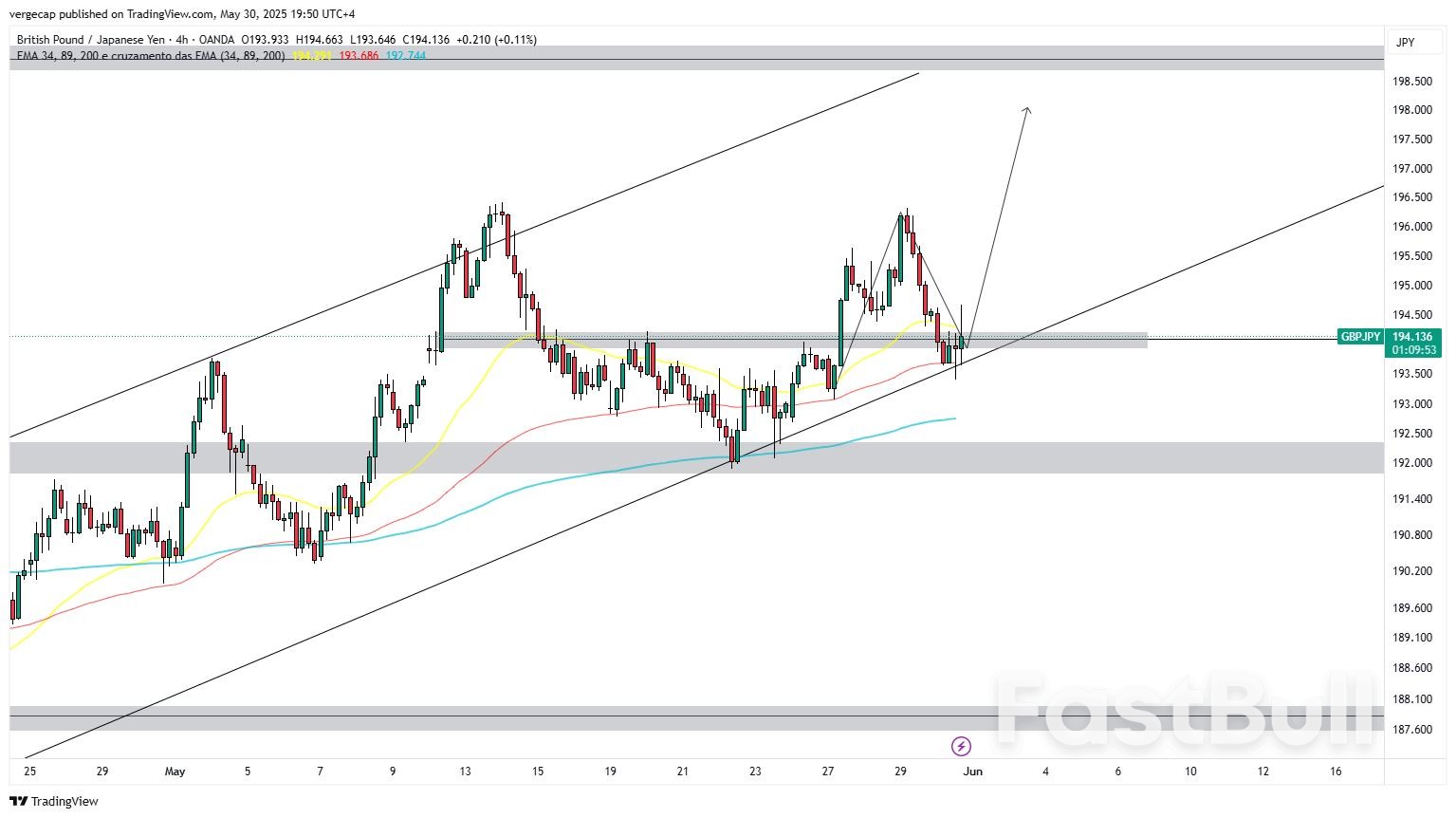
          From a technical perspective, GBP/JPY remains in an uptrend on the 4-hour chart, even as price action eases from recent highs. The pair is currently testing a key horizontal support level around 193.93 — a zone that previously served as resistance and now aligns as an important structural pivot.
          The 7-period Relative Strength Index (RSI) has dipped into oversold territory, suggesting that the recent sell-off may be overstretched and a rebound is likely. The broader sentiment remains bullish, with the pair comfortably above its 50- and 100-period moving averages and price action supported by ascending trendline dynamics.
          Barring a decisive breakdown below 193.93, the technical structure favors a continuation of the bullish move, with the 195.00 level emerging as the immediate upside target. A successful breach of that resistance would open the door to further gains toward 195.60 and beyond — a level that previously marked the upper bound of the recent rally.

          TRADE RECOMMENDATION

          BUY GBPJPY
          ENTRY PRICE: 194.20
          STOP LOSS: 192.50
          TAKE PROFIT: 197.00
          Risk Warnings and Disclaimers
          You understand and acknowledge that there is a high degree of risk involved in trading. Following any strategies or investment methods may lead to potential losses. The content on the site is provided by our contributors and analysts for information purposes only. You are solely responsible for determining whether any trading assets, securities, strategy, or any other product is suitable for investing based on your own investment objectives and financial situation.
          Add to Favorites
          Share

          Oil Retreats as Trump-Era Tariffs Reinstated and OPEC+ Supply Fears Resurface

          Warren Takunda

          Commodity

          Summary:

          Oil prices fell on Thursday after a U.S. court reinstated former President Trump’s trade tariffs, raising concerns about renewed global trade tensions

          SELL WTI
          Close Time
          CLOSED

          60.000

          Entry Price

          55.000

          TP

          62.000

          SL

          57.233 -0.408 -0.71%

          200.0

          Pips

          Loss

          55.000

          TP

          62.007

          Exit Price

          60.000

          Entry Price

          62.000

          SL

          Oil markets reversed early gains on Thursday in a sharp reaction to fresh trade policy jitters and growing unease about global oversupply. West Texas Intermediate (WTI) crude futures, which had shown signs of stabilizing, were pulled lower after the U.S. Court of Appeals overturned a lower court decision blocking former President Donald Trump's sweeping trade tariffs. The ruling rekindled fears that a new wave of trade disputes could derail the already fragile global economic recovery.
          The market’s initial optimism was upended by this unexpected judicial development, which signaled a potential return to protectionist rhetoric. While the current U.S. administration continues to court foreign trade partners with promises of “beautiful deals,” investors are growing increasingly disillusioned by the lack of tangible progress. Protracted negotiations with Japan and a noticeable stalemate in discussions with China have only intensified concerns that global trade conditions may worsen before they improve.
          Attention now shifts to the upcoming OPEC+ meeting scheduled for May 31. While some analysts had hoped for a wait-and-see approach amid global demand uncertainties, there is growing consensus that the group may proceed with a planned production hike of 411,000 barrels per day beginning in July. In a market still grappling with sluggish demand and rising inventories, the prospect of more oil coming online has added another bearish element to an already fragile setup.
          The supply side of the equation remains clouded by overhang risks. Should OPEC+ confirm the output increase, the resultant glut could drive prices even lower—especially if demand does not pick up in tandem.
          The macroeconomic backdrop continues to deteriorate, reinforcing the case for lower oil prices. In the United States, first-quarter GDP unexpectedly contracted by 0.2%, raising alarms about a possible slowdown in the world’s largest economy. Most notably, consumer spending—a crucial pillar of economic activity—registered a decline, as both households and businesses adopt a wait-and-see approach in the face of erratic trade policies.
          The malaise is not confined to the U.S. In Germany, the Eurozone’s economic engine, the latest labor market data showed a spike in layoffs during April. Coupled with weaker-than-expected retail sales figures, the data underscored a loss of economic momentum that has left investors jittery.
          This combination of faltering economic indicators from both sides of the Atlantic suggests that oil demand could remain under pressure for the foreseeable future. With global trade snarled in uncertainty and consumer sentiment weakening, the likelihood of a robust rebound in crude consumption is diminishing.
          Amid the gloom, there was a brief respite from the U.S. Energy Information Administration (EIA), which reported a surprise drawdown in crude stockpiles. Inventories fell by 2.8 million barrels last week, contrary to market expectations of a 1 million barrel increase. While this provided a short-term floor for prices, it was not enough to reverse the broader bearish trend.
          Market participants are increasingly skeptical that inventory data alone can prop up prices in the face of formidable macroeconomic and geopolitical headwinds.

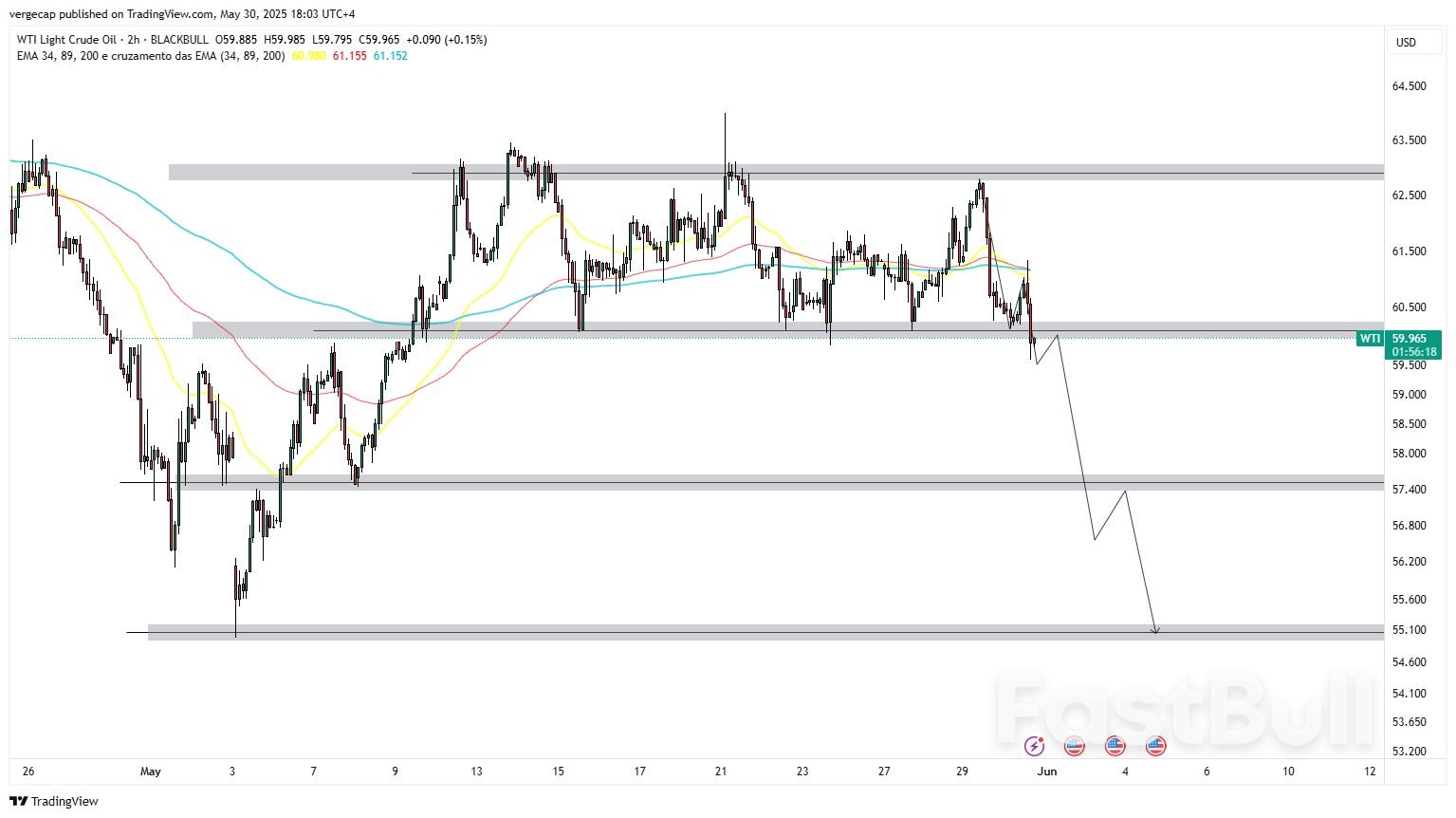
          Technical AnalysisOil Retreats as Trump-Era Tariffs Reinstated and OPEC+ Supply Fears Resurface_1

          From a technical standpoint, the WTI crude chart is flashing warning signs. Prices have once again come under sustained pressure, with intraday action pointing toward an imminent test of the critical $60.00 support level. This price threshold has historically served as a robust floor, fending off multiple sell-off attempts in recent months.
          However, with momentum skewed to the downside and the 50-day exponential moving average (EMA50) exerting further downward drag, a decisive break below $60 could open the floodgates for a deeper correction. Should this level give way, crude could potentially slide as low as $55.00 in the near term.
          TRADE RECOMMENDATION
          SELL WTI
          ENTRY PRICE: 60.00
          STOP LOSS: 62.00
          TAKE PROFIT: 55.00
          Risk Warnings and Disclaimers
          You understand and acknowledge that there is a high degree of risk involved in trading. Following any strategies or investment methods may lead to potential losses. The content on the site is provided by our contributors and analysts for information purposes only. You are solely responsible for determining whether any trading assets, securities, strategy, or any other product is suitable for investing based on your own investment objectives and financial situation.
          Add to Favorites
          Share

          The Battle of Head-and-Shoulders Patterns to Determine the Price Direction within the Triangle Consolidation

          Eva Chen

          Commodity

          Central Bank

          Summary:

          During the European session on Friday, gold prices continued to decline and are currently slightly below the $3300 mark. The intraday drop was primarily driven by a modest strengthening of the US dollar. Additionally, the ongoing influence of two head-and-shoulders patterns continues to exert pressure on gold prices, fueling a tug-of-war between bulls and bears.

          SELL XAUUSD
          Close Time
          CLOSED

          3292.44

          Entry Price

          3190.00

          TP

          3350.00

          SL

          4299.39 +20.10 +0.47%

          575.6

          Pips

          Loss

          3190.00

          TP

          3350.01

          Exit Price

          3292.44

          Entry Price

          3350.00

          SL

          Fundamentals

          On Friday, gold prices extended their downward trend. The previous day, gold prices surged from the weekly low of $3245 on Thursday, driven by a weak US employment report, and briefly broke above the $3300 mark. The report highlighted rising risks of high unemployment, which increased pressure on the Federal Reserve to ease policy, causing the US dollar to plunge and thereby boosting gold's short-term outlook. However, as the US dollar strengthened on Friday and the two head-and-shoulders patterns continued to play out, gold prices once again faced a contest between bulls and bears. Despite a cumulative increase of over 22% in gold prices year-to-date, a decline is expected for this week amid market volatility, which appears to be weighing on gold.
          The market's focus now shifts to the Personal Consumption Expenditures (PCE) data, scheduled for release later on Friday. This inflation report, favored by the Federal Reserve, is expected to show a slowdown in price increases last month, potentially providing room for the Fed to adopt a more accommodative monetary policy.
          Generally, a decline in interest rates enhances the appeal of non-yielding assets like gold.
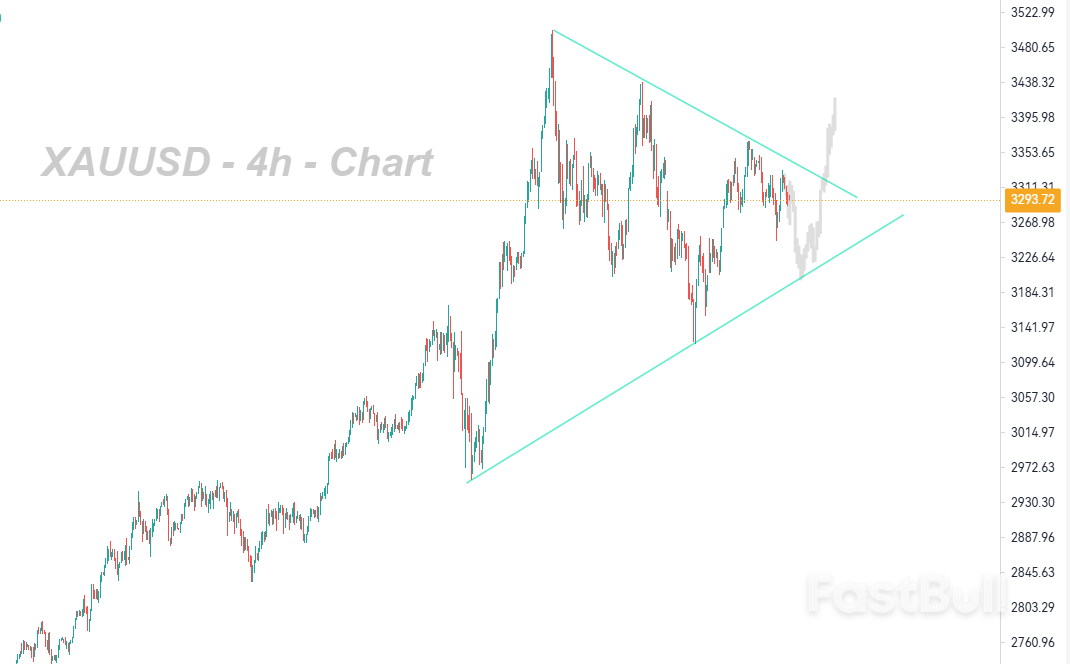
          The Battle of Head-and-Shoulders Patterns to Determine the Price Direction within the Triangle Consolidation_1

          Technical Analysis

          On Thursday, gold prices rebounded strongly to the $3330 level after testing $3245. The strength of the bulls temporarily altered the downward trajectory within the triangle consolidation pattern. Currently, the market remains in a state of equilibrium between bulls and bears.
          Within the triangle consolidation, the battle between the "head-and-shoulders bottom" and "head-and-shoulders top" patterns is intensifying. According to this pattern theory, the current gold price stands at $3294. If the price breaks below $3285, the bulls will be at risk of failure. Conversely, if it breaks above $3346, the bears will face the risk of being squeezed out.
          Therefore, we believe that the tug-of-war within this $60 range will determine the price direction within the triangle consolidation.

          Trading Recommendations

          Trading Direction: Sell
          Entry Price: 3310
          Target Price: 3190
          Stop Loss: 3350
          Deadline: June 18, 2025, 23:55:00
          Support: 3284/3278/3245
          Resistance: 3326/3331/3346
          Risk Warnings and Disclaimers
          You understand and acknowledge that there is a high degree of risk involved in trading. Following any strategies or investment methods may lead to potential losses. The content on the site is provided by our contributors and analysts for information purposes only. You are solely responsible for determining whether any trading assets, securities, strategy, or any other product is suitable for investing based on your own investment objectives and financial situation.
          Add to Favorites
          Share

          Double Bottom Rebound at 144! Hawkish Federal Reserve versus Inflationary Japan

          Alan

          Forex

          Summary:

          Diminished expectations for a Federal Reserve rate cut and a reduced likelihood of a Bank of Japan rate hike may support an appreciation of the USDJPY.

          BUY USDJPY
          Close Time
          CLOSED

          144.019

          Entry Price

          150.500

          TP

          142.000

          SL

          155.814 +0.255 +0.16%

          5.9

          Pips

          Profit

          142.000

          SL

          144.078

          Exit Price

          144.019

          Entry Price

          150.500

          TP

          Fundamentals

          In May, the U.S. Conference Board Consumer Confidence Index surged to 98 (previously 86, forecast 87), marking its first increase in five months, driven primarily by easing trade tensions and a rebound in equity markets. Pessimism regarding business conditions, employment prospects, and future income diminished significantly, with the expectations index jumping 17.4 points to 72.8, though it remains below the 80 threshold indicative of recession risk. This improvement correlates directly with optimism following the May 12 U.S.-China trade agreement, the Trump administration's decision to delay a 50% tariff increase on the EU until July 9, and accelerated trade negotiations with countries like India, collectively reducing market risk aversion.
          Nonetheless, structural challenges persist in the U.S. economy: first-quarter GDP growth was revised slightly upward to an annualized -0.2% (from -0.3%), supported by resilient consumer spending (contributing 0.8 percentage points) and inventory investment (contributing 2.64 percentage points), underpinning domestic demand. However, a sharp monthly decline in durable goods orders to -6.3% (from +7.5%) highlights ongoing manufacturing sector weakness.
          Meanwhile, the Federal Reserve's May meeting minutes underscored persistent inflationary risks, with a majority of officials favoring a delay in rate cuts. Market expectations for the initial rate reduction have shifted to December, with a 65% probability.
          In Japan, Tokyo's core CPI rose 3.6% year-on-year in May, but industrial output contracted 0.9% month-on-month, with weakness in manufacturing dampening the Bank of Japan's motivation to raise interest rates. Additionally, the U.S. Court of Appeals temporarily suspended its ruling that Trump's tariff policy was unconstitutional, and easing geopolitical tensions (such as Trump warning Israel not to disrupt U.S.-Iran negotiations) further suppressed demand for the yen as a safe-haven currency.

          Technical Analysis

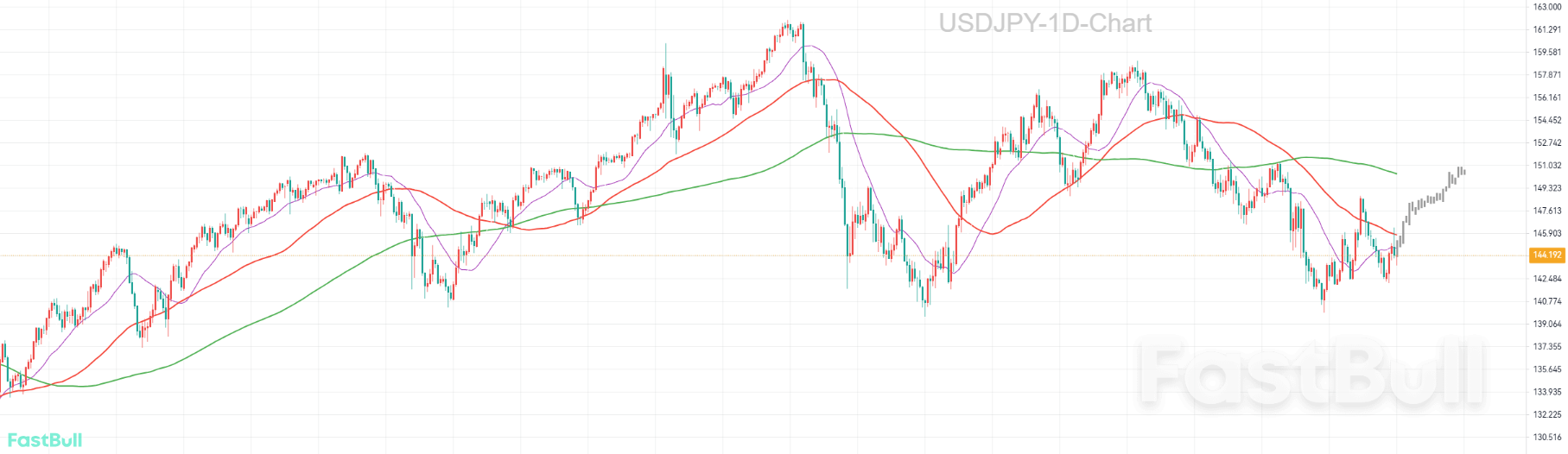
          Double Bottom Rebound at 144! Hawkish Federal Reserve versus Inflationary Japan_1
          In the 1D timeframe, the USDJPY declined to around 140.00 on April 22 this year, forming a double bottom support with the September low of last year. The pair has since been in a sustained rebound. With the gradual elevation of the support base, the short-term trend is likely to continue its upward momentum. The initial target for the rally is to test the resistance level at 151.00. A successful breakout above this resistance would further expand the upside potential for the USDJPY.

          Trading Recommendations

          Trade Direction: Buy
          Entry Price: 144.00
          Target Price: 150.50
          Stop Loss: 142.00
          Valid Until: June 13, 2025 23:00:00
          Support: 142.11, 140.00
          Resistance: 146.27, 151.00
          Risk Warnings and Disclaimers
          You understand and acknowledge that there is a high degree of risk involved in trading. Following any strategies or investment methods may lead to potential losses. The content on the site is provided by our contributors and analysts for information purposes only. You are solely responsible for determining whether any trading assets, securities, strategy, or any other product is suitable for investing based on your own investment objectives and financial situation.
          Add to Favorites
          Share

          Bearish Momentum Could Persist Toward April´s Local Low

          Manuel

          Central Bank

          Economic

          Summary:

          The pair continues to face resistance from the 100-period moving average, which has acted as a ceiling since the bearish crossover.

          SELL USDJPY
          Close Time
          CLOSED

          143.755

          Entry Price

          140.000

          TP

          146.600

          SL

          155.814 +0.255 +0.16%

          80.0

          Pips

          Profit

          140.000

          TP

          142.955

          Exit Price

          143.755

          Entry Price

          146.600

          SL

          Japan’s Minister of Economic and Trade Affairs, Ryosei Akazawa, stated earlier today that he intends to proceed with ministerial-level discussions on trade expansion and economic security cooperation. He also confirmed his plans to travel to Washington for the fourth round of bilateral trade talks, despite being “aware of reports regarding the decision,” according to Bloomberg. Akazawa declined to comment on how the U.S. court's ruling to overturn Trump-era tariffs might influence U.S.-Japan trade negotiations, adding, “We intend to thoroughly examine the content of the decision and assess its implications before responding accordingly.”
          Investor attention in Japan is now shifting toward the release of the Tokyo Consumer Price Index (CPI), scheduled for 23:30 GMT on Thursday. This data will provide fresh insight into the pace of inflation. In April, Tokyo’s annual inflation rose to 3.5%, well above the Bank of Japan’s (BoJ) 2% target.
          Meanwhile, the CPI excluding food and energy held at 2%. With the BoJ recently adopting a more hawkish tone, a stronger-than-expected CPI reading could increase the likelihood of the central bank moving further away from its ultra-loose monetary policy stance.
          Back in the U.S., the Court of Appeals for the Federal Circuit has requested additional time to review documentation submitted by both sides in the legal challenge to the U.S. Court of International Trade’s (USCIT) suspension of President Donald Trump’s broad tariff measures.
          The Federal Circuit stepped in following the USCIT’s finding that the Trump administration had overstepped its authority under the International Emergency Economic Powers Act (IEEPA). According to the court, the IEEPA was intended to allow the executive branch to swiftly impose temporary trade restrictions during genuine national security emergencies—not as a tool to implement broad, unilateral economic policy while circumventing congressional oversight.
          Following the ruling, the Trump administration quickly filed an appeal. In the meantime, the Federal Circuit has allowed the “Global Retaliatory Tariff Orders” to remain in effect as the legal proceedings continue.
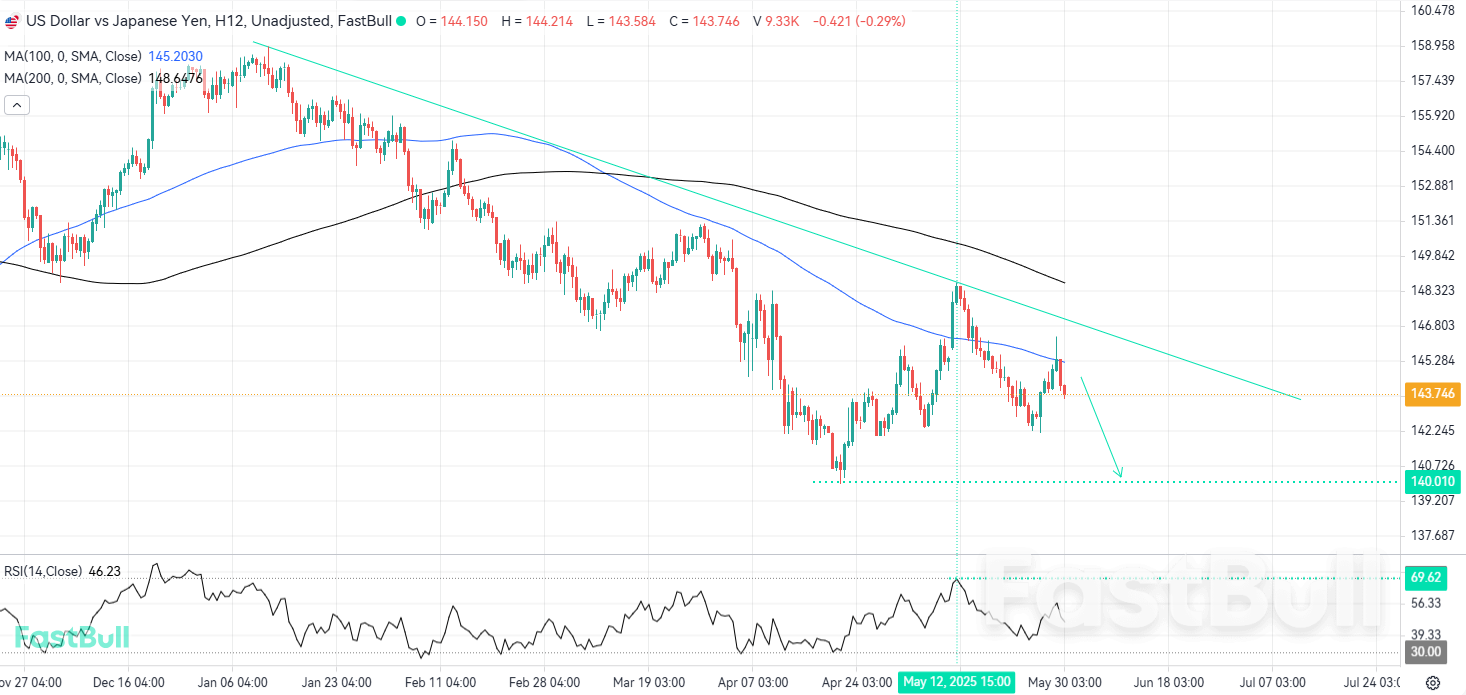
          In parallel, Federal Reserve Chairman Jerome Powell met with President Trump on Thursday. During the meeting, Powell reiterated that the Fed’s policy decisions remain grounded in measurable data from the U.S. economy. Trump has spent months calling for deep interest rate cuts via social media, hoping to drive down borrowing costs. A lower-rate environment could ease the burden of federal debt, which is projected to climb significantly under Trump’s long-term budget plans.Bearish Momentum Could Persist Toward April´s Local Low_1

          Technical Analysis

          USD/JPY remains under bearish pressure, with the 12-hour chart showing a clear downward trend. The pair continues to face resistance from the 100-period moving average, which has acted as a ceiling since the bearish crossover. Notably, the price has failed to retest the 200-period moving average since the crossover, reinforcing the strength of the prevailing downtrend. If the resistance at 145.20, near the 100-period MA, holds, further downside movement toward the 140.00 region—a local low last seen on April 22—could unfold.
          The Relative Strength Index (RSI) currently sits at 46, after recovering from oversold levels reached on May 12, when the price hit 148.69 at the top of the descending channel. A failure to form a new local high near current levels would strengthen the bearish case, signaling sustained downward momentum from this area.
          Trading Recommendations
          Trading direction: Sell
          Entry price: 143.69
          Target price: 140.00
          Stop loss: 146.60
          Validity: Jun 10, 2025 15:00:00
          Risk Warnings and Disclaimers
          You understand and acknowledge that there is a high degree of risk involved in trading. Following any strategies or investment methods may lead to potential losses. The content on the site is provided by our contributors and analysts for information purposes only. You are solely responsible for determining whether any trading assets, securities, strategy, or any other product is suitable for investing based on your own investment objectives and financial situation.
          Add to Favorites
          Share

          Rejection at Moving Averages Could Fuel Further Bullish Momentum

          Manuel

          Central Bank

          Economic

          Summary:

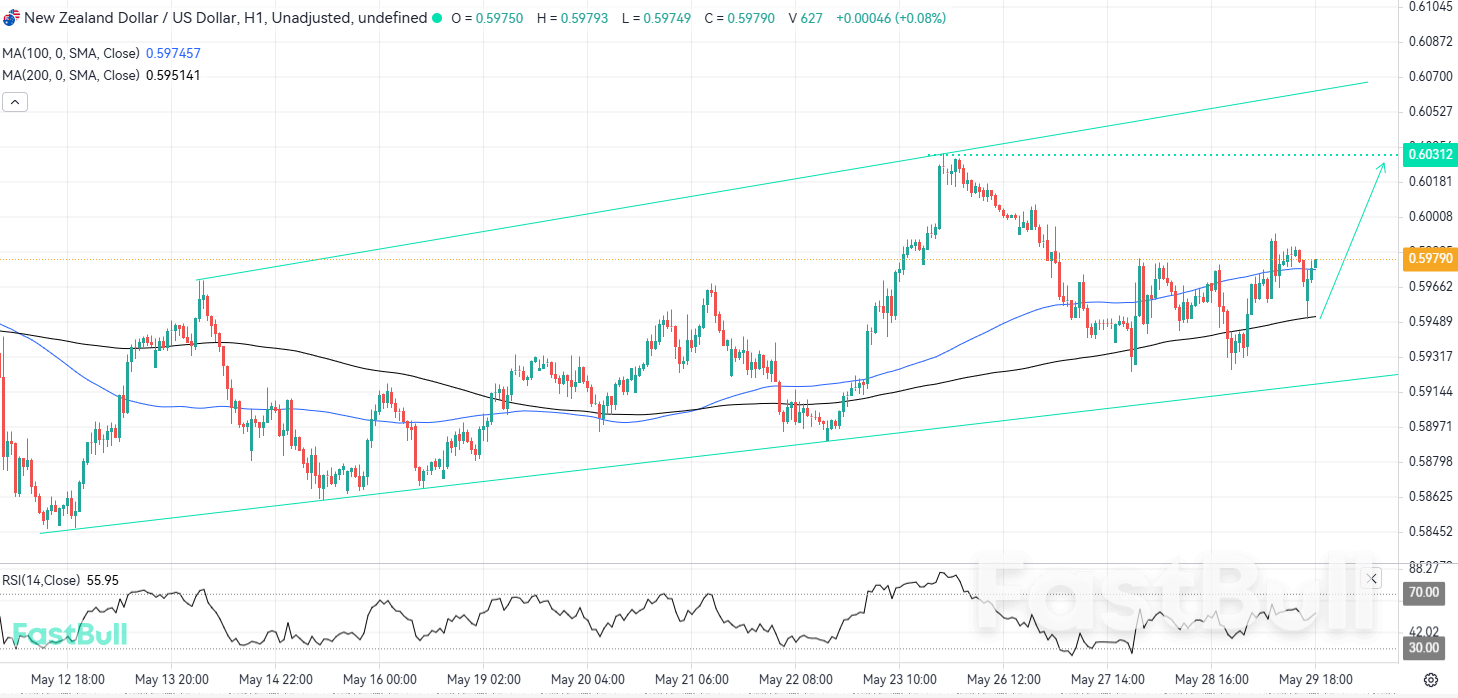
          Recently, the pair found upward momentum from the 200-period moving average at 0.5951, signaling potential for a greater push toward the 0.6031 region.

          BUY NZDUSD
          Close Time
          CLOSED

          0.59798

          Entry Price

          0.60310

          TP

          0.59400

          SL

          0.58040 -0.00044 -0.08%

          20.3

          Pips

          Profit

          0.59400

          SL

          0.60001

          Exit Price

          0.59798

          Entry Price

          0.60310

          TP

          The U.S. Court of Appeals for the Federal Circuit has requested more time to consider the documents presented by both parties in the case regarding the U.S. Court of International Trade’s (USCIT) decision to suspend President Donald Trump’s sweeping tariffs.
          The Federal Circuit intervened after the USCIT ruled that the Trump administration misused the International Emergency Economic Powers Act (IEEPA) to impose global tariffs that exceeded the legal boundaries of the law. According to the USCIT, the IEEPA is intended to allow the White House to impose temporary trade restrictions swiftly in the event of a national security crisis, and should not be used to enforce unilateral policies designed to bypass Congress.
          In response to the USCIT's decision, the Trump administration filed an appeal quickly, with the Federal Circuit allowing Trump’s "Global Retaliatory Tariff Orders" to remain in effect while the federal judges review both sides of the case.
          Meanwhile, in a separate meeting on Thursday, Federal Reserve Chairman Jerome Powell sat down with U.S. President Donald Trump. Powell reiterated that the Fed's monetary policy decisions are based on measurable data from the U.S. economy. For months, Trump has been vocal on social media, urging the Fed to implement drastic rate cuts, as a low-rate environment helps reduce the cost of federal debt, which is expected to rise substantially under Trump’s fiscal policies over the next decade.
          Turning to New Zealand, the Reserve Bank of New Zealand (RBNZ) recently cut the Official Cash Rate (OCR) by 25 basis points to 3.25%, in line with market expectations. However, the tone of the meeting suggested a shift away from a dovish stance. Key points from the meeting included a 5-1 vote in favor of the cut, which contrasted with the market's expectation of a unanimous decision.
          The RBNZ’s updated projections now show an average OCR of 2.9% by the end of the year. Chief economist Conway emphasized that interest rates are approaching neutral levels, while Governor Hawkesby expressed caution regarding future rate adjustments, stating, "we have done a lot of work." This indicates that the RBNZ is no longer committed to a predetermined easing path, and future moves will likely depend on incoming economic data. A further 25 basis point cut to 3.0% in Q3, potentially in August, remains a possibility. Notably, the shift away from a dovish stance since July 2024 could be supportive for the NZD.Rejection at Moving Averages Could Fuel Further Bullish Momentum_1

          Technical Analysis

          NZD/USD has been trading in a bullish channel since mid-May on the 1-hour chart, with both the 100-period and 200-period moving averages acting as key support levels. Recently, the pair found upward momentum from the 200-period moving average at 0.5951, signaling potential for a greater push toward the 0.6031 region. A close above the 100-period moving average at 0.5974 would further accelerate the upward movement.
          The RSI currently sits at 54, indicating a neutral stance. While the lack of strong bullish momentum could hasten the upward push, a potential pullback to the lower part of the channel is still possible, offering another opportunity for the price to resume its bullish move from this zone.
          Trading Recommendations
          Trading direction: Buy
          Entry price: 0.5979
          Target price: 0.6031
          Stop loss: 0.5940
          Validity: Jun 10, 2025 15:00:00
          Risk Warnings and Disclaimers
          You understand and acknowledge that there is a high degree of risk involved in trading. Following any strategies or investment methods may lead to potential losses. The content on the site is provided by our contributors and analysts for information purposes only. You are solely responsible for determining whether any trading assets, securities, strategy, or any other product is suitable for investing based on your own investment objectives and financial situation.
          Add to Favorites
          Share

          RBNZ's Deviation from Loose Policy Stance Boosts NZD, Asset May Face Downside Risks

          Eva Chen

          Central Bank

          Forex

          Summary:

          The Reserve Bank of New Zealand (RBNZ) has cut interest rates for the sixth consecutive time to stimulate economic recovery. The RBNZ's new forecasts indicate that there will be another 25 basis point cut, and there is potential for further rate reductions. The RBNZ's deviation from a loose policy stance is a "clear positive" for the New Zealand dollar (NZD).

          SELL EURNZD
          Close Time
          CLOSED

          1.90680

          Entry Price

          1.83970

          TP

          1.91800

          SL

          2.02197 +0.00122 +0.06%

          112.0

          Pips

          Loss

          1.83970

          TP

          1.91803

          Exit Price

          1.90680

          Entry Price

          1.91800

          SL

          Fundamentals

          On Wednesday, the RBNZ cut the official cash rate by 25 basis points for the sixth consecutive time, bringing it to 3.25%, in line with market expectations. This aligns with the expectations of 23 out of 24 economists surveyed by institutions. The RBNZ stated that there is room for further rate cuts to boost the economic recovery, which has been affected by US tariffs.
          In a statement, the RBNZ said, "The increase in tariffs and overseas policy uncertainty is expected to slow New Zealand's economic recovery and reduce medium-term inflationary pressures. The committee is fully capable of responding to domestic and international developments to maintain medium-term price stability."
          The RBNZ noted that the policy committee considered the benefits of holding the cash rate steady today, but the 5:1 vote in favor of a rate cut indicates some divergence within the committee. The lackluster economic recovery in New Zealand gives policymakers room to maintain a loose bias and overlook the expectation that inflation will rise this year.
          Market Observations: The RBNZ's cautious stance on future rate cuts at Wednesday's meeting may continue to support NZD. We now expect the RBNZ to cut the official cash rate again to 3.00% in August, rather than July. The deviation from a loose policy stance is a "clear positive" for NZD.
          RBNZ's Deviation from Loose Policy Stance Boosts NZD, Asset May Face Downside Risks_1

          Technical Analysis

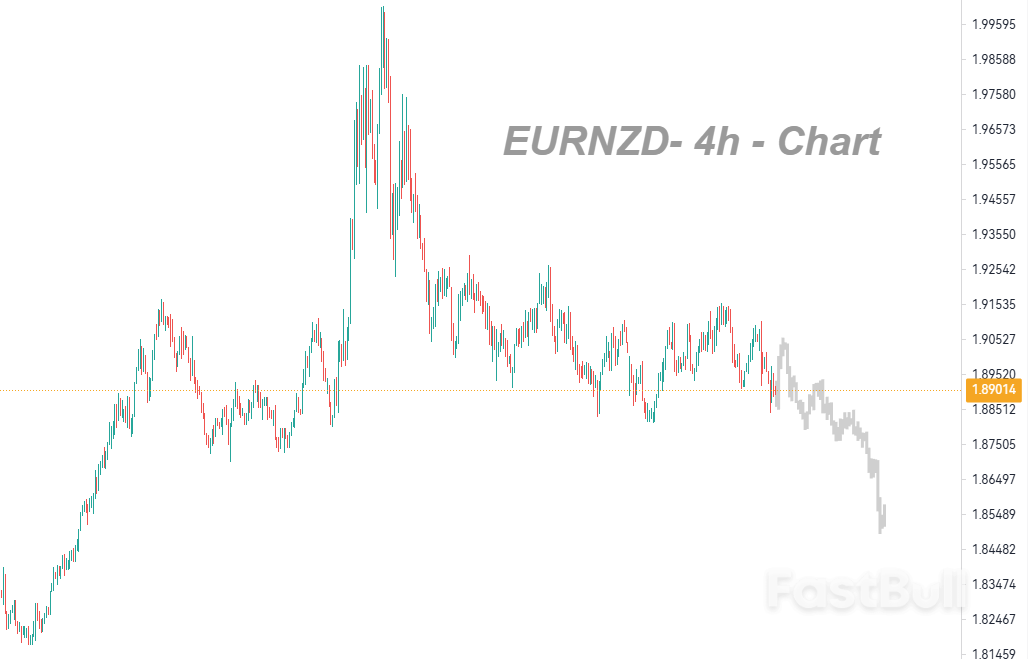
          The RBNZ's consecutive rate cuts have put some depreciation pressure on NZD, which theoretically should push EURNZD higher. However, the actual market reaction is influenced by a variety of factors, including the degree to which rate cuts are anticipated, the economic conditions in the eurozone, and the global trade environment.
          From a technical perspective, the asset's rebound from the mid-April range was again suppressed near the 1.9107 level, indicating that the market's recovery momentum has been negated. Considering that there are only two trading days left this month, if the asset fails to close above the 1.9107 level on the monthly chart, a Pinbar formation will occur on the monthly chart. If this condition is met, it is expected that the decline in the asset will accelerate next month.

          Trading Recommendations

          Trading Direction: Sell
          Entry Price: 1.9068
          Target Price: 1.8397
          Stop Loss: 1.9180
          Valid Until: June 13, 2025, 23:55:00
          Support: 1.8839/1.8797/1.8713
          Resistance: 1.9005/1.9170/1.9264
          Risk Warnings and Disclaimers
          You understand and acknowledge that there is a high degree of risk involved in trading. Following any strategies or investment methods may lead to potential losses. The content on the site is provided by our contributors and analysts for information purposes only. You are solely responsible for determining whether any trading assets, securities, strategy, or any other product is suitable for investing based on your own investment objectives and financial situation.
          Add to Favorites
          Share
          FastBull
          Copyright © 2025 FastBull Ltd

          728 RM B 7/F GEE LOK IND BLDG NO 34 HUNG TO RD KWUN TONG KLN HONG KONG

          TelegramInstagramTwitterfacebooklinkedin
          App Store Google Play Google Play
          Products
          Charts

          Chats

          Q&A with Experts
          Screeners
          Economic Calendar
          Data
          Tools
          Membership
          Features
          Function
          Markets
          Copy Trading
          Latest Signals
          Contests
          News
          Analysis
          24/7
          Columns
          Education
          Company
          Careers
          About Us
          Contact Us
          Advertising
          Help Center
          Feedback
          User Agreement
          Privacy Policy
          Business

          White Label

          Data API

          Web Plug-ins

          Poster Maker

          Affiliate Program

          Risk Disclosure

          The risk of loss in trading financial instruments such as stocks, FX, commodities, futures, bonds, ETFs and crypto can be substantial. You may sustain a total loss of the funds that you deposit with your broker. Therefore, you should carefully consider whether such trading is suitable for you in light of your circumstances and financial resources.

          No decision to invest should be made without thoroughly conducting due diligence by yourself or consulting with your financial advisors. Our web content might not suit you since we don't know your financial conditions and investment needs. Our financial information might have latency or contain inaccuracy, so you should be fully responsible for any of your trading and investment decisions. The company will not be responsible for your capital loss.

          Without getting permission from the website, you are not allowed to copy the website's graphics, texts, or trademarks. Intellectual property rights in the content or data incorporated into this website belong to its providers and exchange merchants.

          Not Logged In

          Log in to access more features

          FastBull Membership

          Not yet

          Purchase

          Become a signal provider
          Help Center
          Customer Service
          Dark Mode
          Price Up/Down Colors

          Log In

          Sign Up

          Position
          Layout
          Fullscreen
          Default to Chart
          The chart page opens by default when you visit fastbull.com