• Trade
  • Markets
  • Copy
  • Contests
  • News
  • 24/7
  • Calendar
  • Q&A
  • Chats
Screeners
SYMBOL
LAST
ASK
BID
HIGH
LOW
NET CHG.
%CHG.
SPREAD
SPX
S&P 500 Index
6969.02
6969.02
6969.02
6992.83
6870.81
-9.01
-0.13%
--
DJI
Dow Jones Industrial Average
49071.55
49071.55
49071.55
49292.81
48597.22
+55.96
+ 0.11%
--
IXIC
NASDAQ Composite Index
23685.11
23685.11
23685.11
23840.55
23232.78
-172.33
-0.72%
--
USDX
US Dollar Index
96.440
96.520
96.440
96.480
96.240
+0.470
+ 0.49%
--
EURUSD
Euro / US Dollar
1.19124
1.19132
1.19124
1.19743
1.19077
-0.00578
-0.48%
--
GBPUSD
Pound Sterling / US Dollar
1.37547
1.37559
1.37547
1.38142
1.37510
-0.00546
-0.40%
--
XAUUSD
Gold / US Dollar
5268.54
5268.99
5268.54
5450.83
5254.56
-107.77
-2.00%
--
WTI
Light Sweet Crude Oil
64.157
64.192
64.157
65.611
63.974
-1.095
-1.68%
--

Community Accounts

Signal Accounts
--
Profit Accounts
--
Loss Accounts
--
View More

Become a signal provider

Sell trading signals to earn additional income

View More

Guide to Copy Trading

Get started with ease and confidence

View More

Signal Accounts for Members

All Signal Accounts

Best Return
  • Best Return
  • Best P/L
  • Best MDD
Past 1W
  • Past 1W
  • Past 1M
  • Past 1Y

All Contests

  • All
  • Trump Updates
  • Recommend
  • Stocks
  • Cryptocurrencies
  • Central Banks
  • Featured News
Top News Only
Share

Dollar/Yen Extends Rise, Last Up 0.5% To 153.8550

Share

Spot Palladium Falls Over 3% To $1940.75/Oz

Share

China's CSI Defense Index Down More Than 3%

Share

Indonesia's Benchmark Stock Index Rises 1.1% In Early Trade

Share

Spot Gold Extends Losses, Last Down Over 2% At $5279.64/Oz

Share

China's CSI Ssh Gold Equity Index Extends Losses To 7.5%, Biggest Single-Day Drop Since April 2025

Share

Former Fed Governor Kevin Warsh Met With Trump At White House On Thursday

Share

Brent Crude Oil Fell More Than 1.00% On The Day, Currently Trading At $68.70 Per Barrel

Share

China's CSI Rare Earth Industry Index Down More Than 5%

Share

[Ethereum Drops Below $2700, Down Over 9.2% In 24 Hours] January 30Th, According To Htx Market Data, Ethereum Dropped Below $2,700, With A 24-Hour Decline Of Over 9.2%

Share

[Bitcoin Dips Below $83,000, 24-Hour Loss Extends To 6.7%] January 30Th, According To Htx Market Data, Bitcoin Fell Below $83,000, With A 24-Hour Decline Expanding To 6.7%

Share

The White House: More Announcements Will Be Made Regarding The Easing Of Sanctions On Venezuela

Share

The White House Stated That The Easing Of Sanctions Against Venezuela Applies Only To Downstream, Not Upstream, Oil Production

Share

Hang Seng Materials Index Set To Open Down More Than 3%

Share

Yield On 10-Year USA Treasury Notes Last Up 3.2 Basis Points To 4.259%

Share

Yield On 30-Year USA Treasury Bonds Up 3.5 Basis Points To 4.889%

Share

Yield On 2-Year Japanese Government Bond Falls 1 BP To 1.24%

Share

China Central Bank Injects 477.5 Billion Yuan Via 7-Day Reverse Repos At 1.40% Versus Prior 1.40%

Share

China's Central Bank Sets Yuan Mid-Point At 6.9678 / Dlr Versus Last Close 6.9506

Share

Spot Silver Fell Below $114 Per Ounce, Down 1.38% On The Day

TIME
ACT
FCST
PREV
U.S. Exports (Nov)

A:--

F: --

P: --

Canada Imports (SA) (Nov)

A:--

F: --

P: --
Canada Exports (SA) (Nov)

A:--

F: --

P: --
U.S. Factory Orders MoM (Excl. Defense) (Nov)

A:--

F: --

P: --

U.S. Factory Orders MoM (Nov)

A:--

F: --

P: --
U.S. Wholesale Sales MoM (SA) (Nov)

A:--

F: --

P: --

U.S. Factory Orders MoM (Excl. Transport) (Nov)

A:--

F: --

P: --
U.S. Non-Defense Capital Durable Goods Orders Revised MoM (Excl. Aircraft) (SA) (Nov)

A:--

F: --

P: --
U.S. EIA Weekly Natural Gas Stocks Change

A:--

F: --

P: --

Brazil CAGED Net Payroll Jobs (Dec)

A:--

F: --

P: --

U.S. Weekly Treasuries Held by Foreign Central Banks

A:--

F: --

P: --

South Korea Industrial Output MoM (SA) (Dec)

A:--

F: --

P: --

South Korea Services Output MoM (Dec)

A:--

F: --

P: --

South Korea Retail Sales MoM (Dec)

A:--

F: --

P: --

Japan Tokyo CPI YoY (Excl. Food & Energy) (Jan)

A:--

F: --

P: --

Japan Tokyo CPI MoM (Excl. Food & Energy) (Jan)

A:--

F: --

P: --

Japan Unemployment Rate (Dec)

A:--

F: --

P: --

Japan Tokyo CPI YoY (Jan)

A:--

F: --

P: --

Japan Jobs to Applicants Ratio (Dec)

A:--

F: --

P: --

Japan Tokyo CPI MoM (Jan)

A:--

F: --

P: --

Japan Tokyo Core CPI YoY (Jan)

A:--

F: --

P: --

Japan Retail Sales YoY (Dec)

A:--

F: --

P: --
Japan Industrial Inventory MoM (Dec)

A:--

F: --

P: --

Japan Retail Sales (Dec)

A:--

F: --

P: --

Japan Retail Sales MoM (SA) (Dec)

A:--

F: --

P: --
Japan Large-Scale Retail Sales YoY (Dec)

A:--

F: --

P: --

Japan Industrial Output Prelim MoM (Dec)

A:--

F: --

P: --

Japan Industrial Output Prelim YoY (Dec)

A:--

F: --

P: --

Australia PPI YoY (Q4)

A:--

F: --

P: --

Australia PPI QoQ (Q4)

A:--

F: --

P: --

Japan Construction Orders YoY (Dec)

--

F: --

P: --

Japan New Housing Starts YoY (Dec)

--

F: --

P: --

France GDP Prelim YoY (SA) (Q4)

--

F: --

P: --

Turkey Trade Balance (Dec)

--

F: --

P: --

France PPI MoM (Dec)

--

F: --

P: --

Germany Unemployment Rate (SA) (Jan)

--

F: --

P: --

Germany GDP Prelim YoY (Not SA) (Q4)

--

F: --

P: --

Germany GDP Prelim QoQ (SA) (Q4)

--

F: --

P: --

Germany GDP Prelim YoY (Working-day Adjusted) (Q4)

--

F: --

P: --

Italy GDP Prelim YoY (SA) (Q4)

--

F: --

P: --

U.K. M4 Money Supply (SA) (Dec)

--

F: --

P: --

U.K. M4 Money Supply YoY (Dec)

--

F: --

P: --

U.K. M4 Money Supply MoM (Dec)

--

F: --

P: --

U.K. Mortgage Lending (Dec)

--

F: --

P: --

U.K. Mortgage Approvals (Dec)

--

F: --

P: --

Italy Unemployment Rate (SA) (Dec)

--

F: --

P: --

Euro Zone Unemployment Rate (Dec)

--

F: --

P: --

Euro Zone GDP Prelim QoQ (SA) (Q4)

--

F: --

P: --

Euro Zone GDP Prelim YoY (SA) (Q4)

--

F: --

P: --

Italy PPI YoY (Dec)

--

F: --

P: --

India Deposit Gowth YoY

--

F: --

P: --

Mexico GDP Prelim YoY (Q4)

--

F: --

P: --

Brazil Unemployment Rate (Dec)

--

F: --

P: --

South Africa Trade Balance (Dec)

--

F: --

P: --

Germany CPI Prelim YoY (Jan)

--

F: --

P: --

Germany CPI Prelim MoM (Jan)

--

F: --

P: --

Germany HICP Prelim YoY (Jan)

--

F: --

P: --

Germany HICP Prelim MoM (Jan)

--

F: --

P: --

Canada GDP MoM (SA) (Nov)

--

F: --

P: --

Q&A with Experts
    • All
    • Chatrooms
    • Groups
    • Friends
    NEWBIE flag
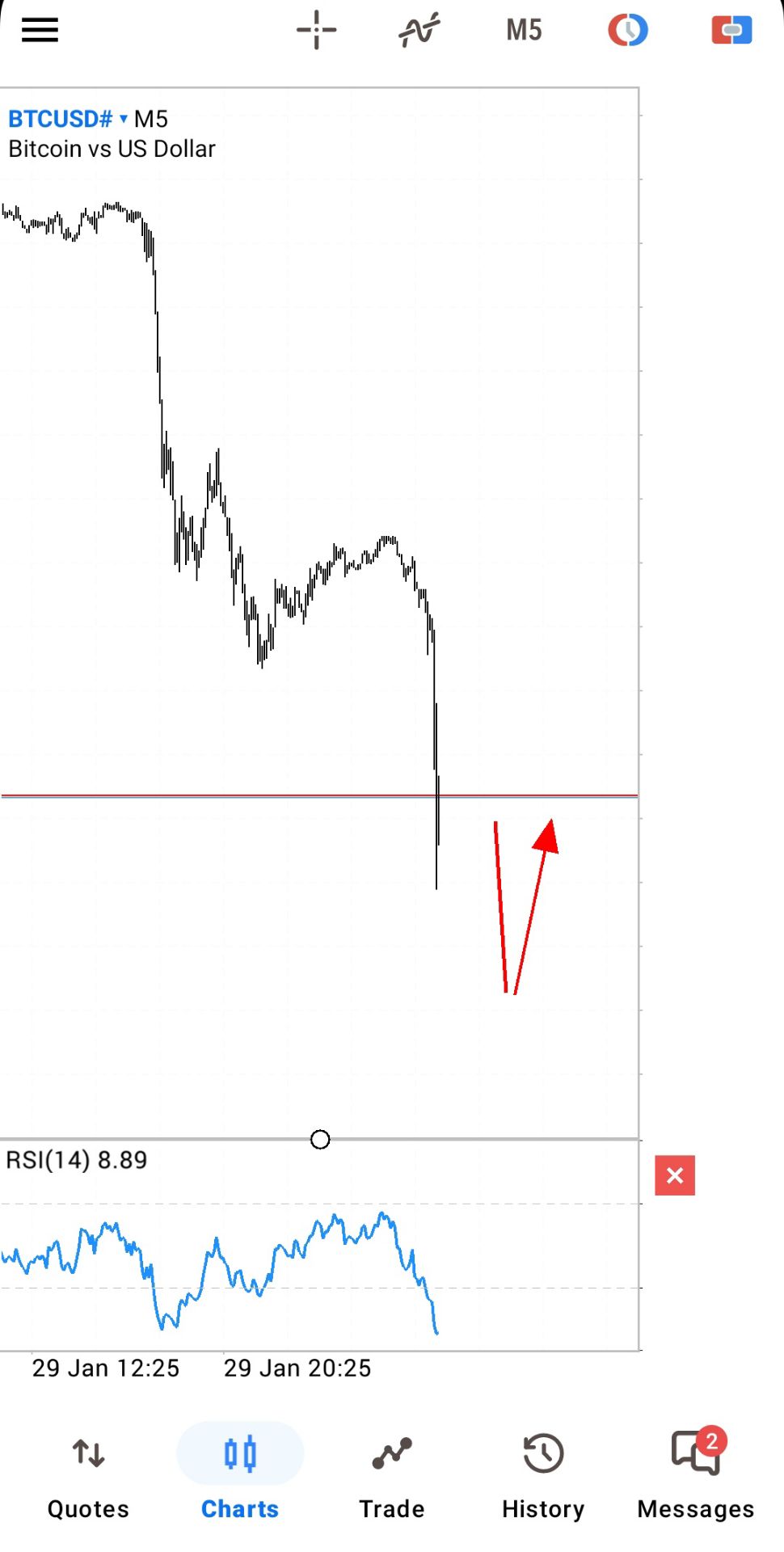
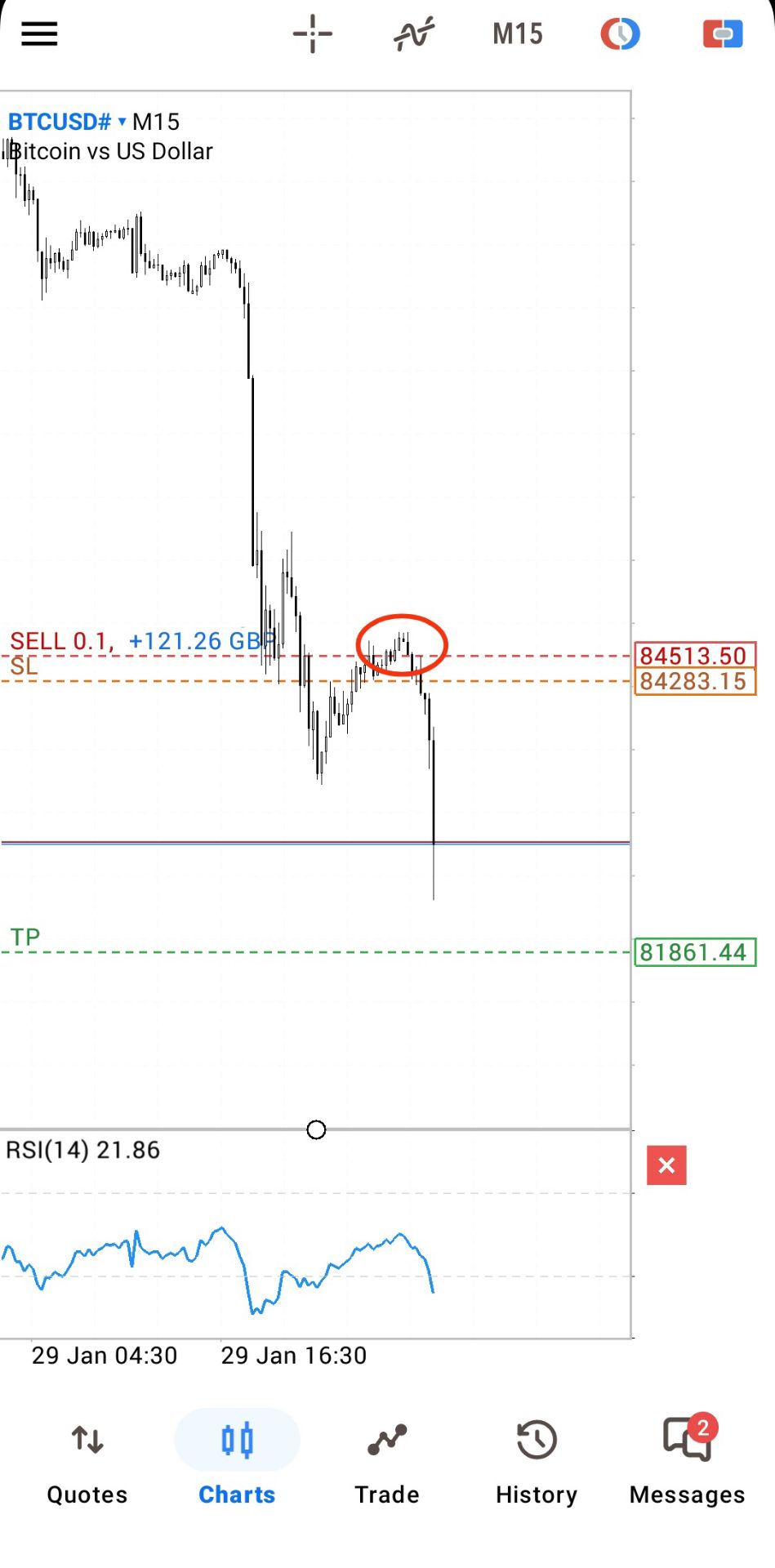
    Looks like it will bounce back right away
    Nawhdir Øt flag
    NEWBIE
    Looks like it will bounce back right away
    @NEWBIESafe, already set TS
    NEWBIE flag
    I'm now looking for a buy entry
    Nawhdir Øt flag
    NEWBIE
    I'm now looking for a buy entry
    @NEWBIEme too, to buy from the tip of the needle.
    Nawhdir Øt flag
    Nawhdir Øt
    but it has to be quick to get out.
    Nawhdir Øt flag
    Nawhdir Øt flag
    🤦🏻‍♂️oh my gosh, it's TP. I'm late in entering the purchase
    Nawhdir Øt flag
    be patient, try to wait more patiently
    Nawhdir Øt flag
    maybe 80780
    NEWBIE flag
    I'm just waiting for M15 and M5 to show some buy signal, then I will entry maybe 0.05
    Nawhdir Øt flag
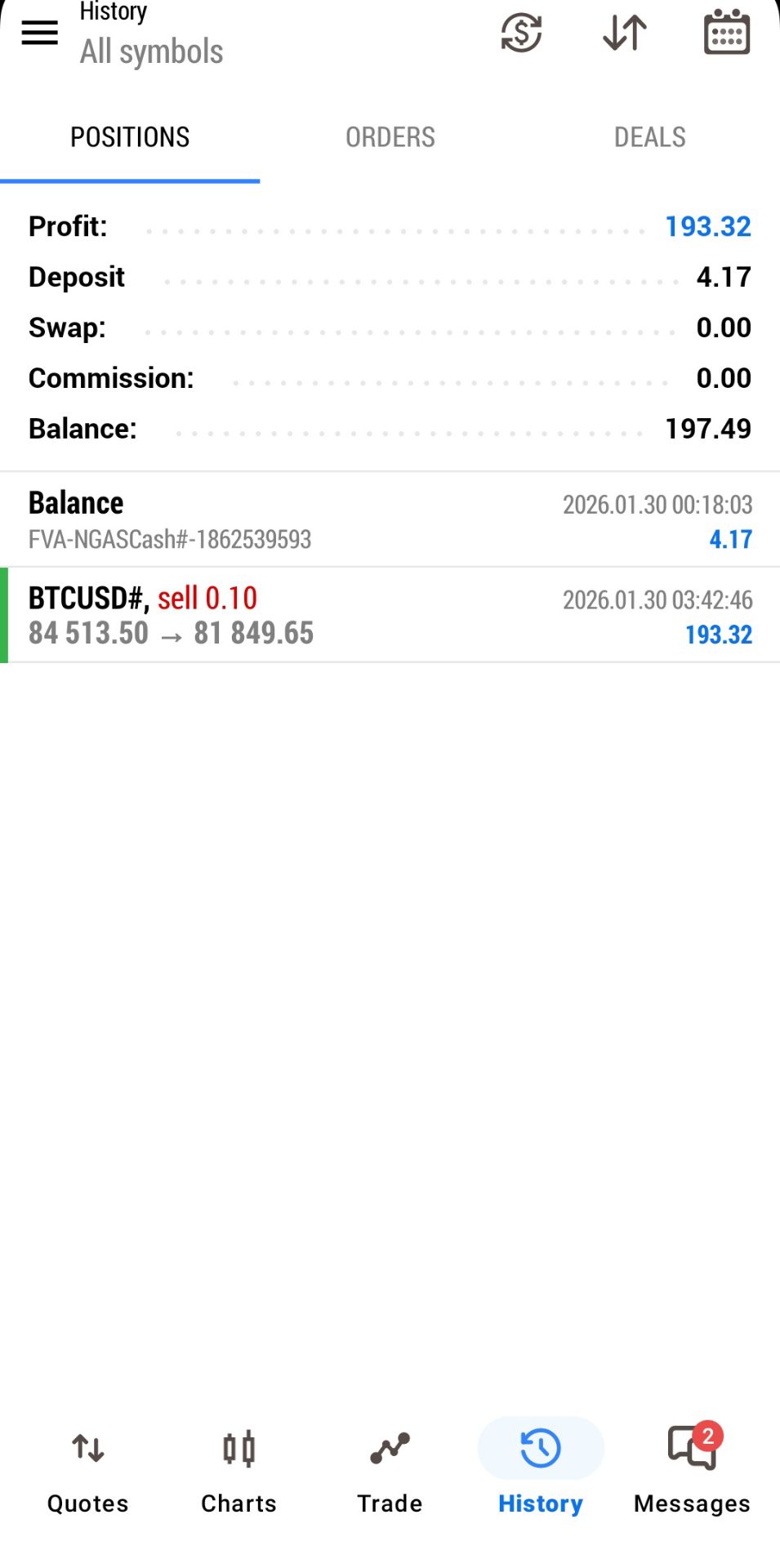
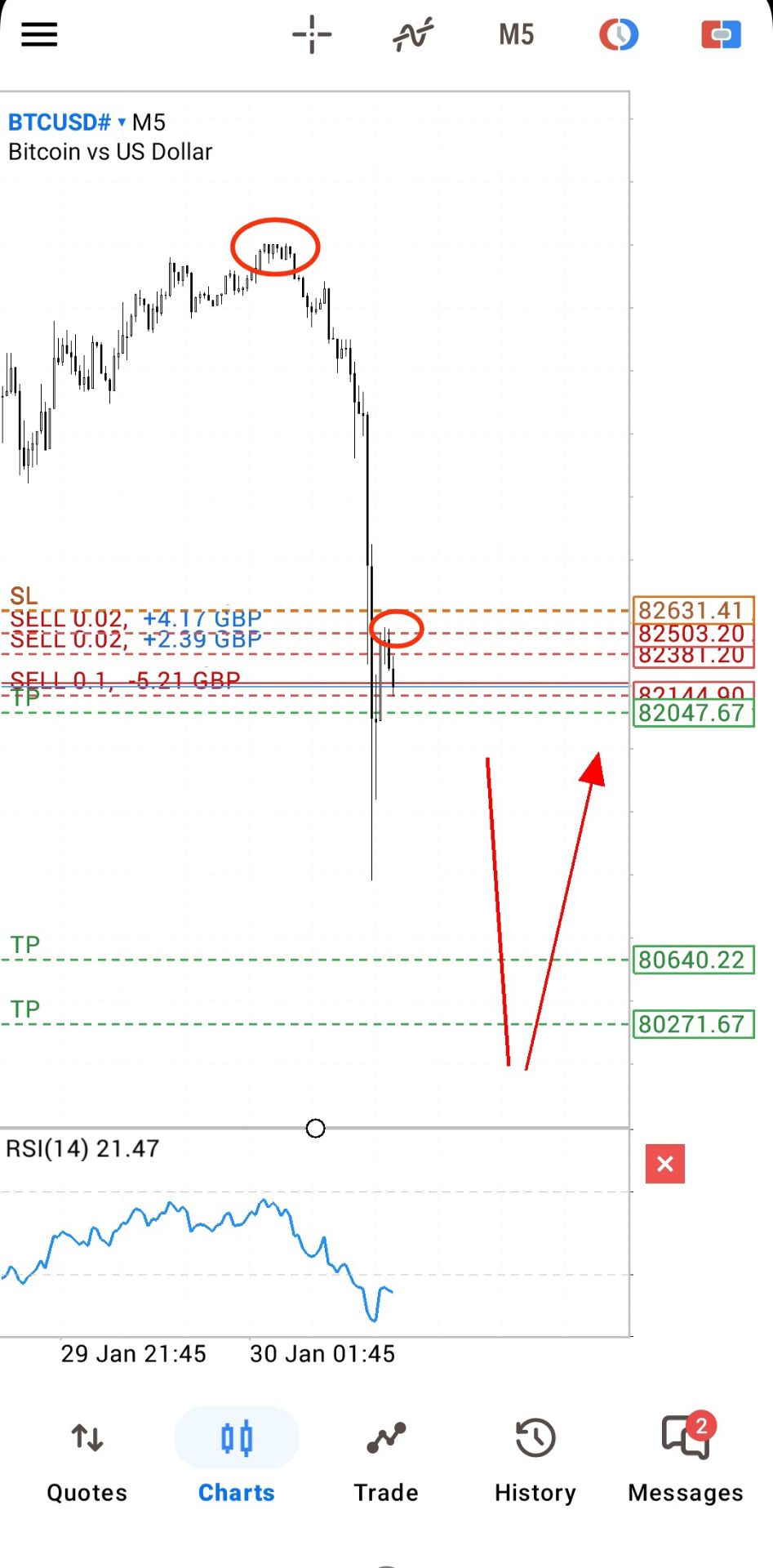
    I entered 2x, layer 1 for scalping, the other one was held but made sure the SL was above the buy
    NEWBIE flag
    Sounds good brother, I don't have much equity so can only do so much
    Nawhdir Øt flag
    Nawhdir Øt flag
    my expectations are like this
    Neo Neo flag
    is there anyone who can tell me why can't I make withdraw from metatrader 5 platform
    NEWBIE flag
    What broker do you use?
    NEWBIE flag
    You can only withdraw through broker
    Neo Neo flag
    can first
    Nawhdir Øt flag
    Nawhdir Øt flag
    Type here...
    Add Symbol or Code

      No matching data

      All
      Trump Updates
      Recommend
      Stocks
      Cryptocurrencies
      Central Banks
      Featured News
      • All
      • Russia-Ukraine Conflict
      • Middle East Flashpoint
      • All
      • Russia-Ukraine Conflict
      • Middle East Flashpoint

      Search
      Products

      Charts Free Forever

      Chats Q&A with Experts
      Screeners Economic Calendar Data Tools
      Membership Features
      Data Warehouse Market Trends Institutional Data Policy Rates Macro

      Market Trends

      Market Sentiment Order Book Forex Correlations

      Top Indicators

      Charts Free Forever
      Markets

      News

      News Analysis 24/7 Columns Education
      From Institutions From Analysts
      Topics Columnists

      Latest Views

      Latest Views

      Trending Topics

      Top Columnists

      Latest Update

      Signals

      Copy Rankings Latest Signals Become a signal provider AI Rating
      Contests
      Brokers

      Overview Brokers Assessment Rankings Regulators News Claims
      Broker listing Forex Brokers Comparison Tool Live Spread Comparison Scam
      Q&A Complaint Scam Alert Videos Tips to Detect Scam
      More

      Business
      Events
      Careers About Us Advertising Help Center

      White Label

      Data API

      Web Plug-ins

      Affiliate Program

      Awards Institution Evaluation IB Seminar Salon Event Exhibition
      Vietnam Thailand Singapore Dubai
      Fans Party Investment Sharing Session
      FastBull Summit BrokersView Expo
      Recent Searches
        Top Searches
          Markets
          News
          Analysis
          User
          24/7
          Economic Calendar
          Education
          Data
          • Names
          • Latest
          • Prev

          View All

          No data

          Scan to Download

          Faster Charts, Chat Faster!

          Download App
          English
          • English
          • Español
          • العربية
          • Bahasa Indonesia
          • Bahasa Melayu
          • Tiếng Việt
          • ภาษาไทย
          • Français
          • Italiano
          • Türkçe
          • Русский язык
          • 简中
          • 繁中
          Open Account
          Search
          Products
          Charts Free Forever
          Markets
          News
          Signals

          Copy Rankings Latest Signals Become a signal provider AI Rating
          Contests
          Brokers

          Overview Brokers Assessment Rankings Regulators News Claims
          Broker listing Forex Brokers Comparison Tool Live Spread Comparison Scam
          Q&A Complaint Scam Alert Videos Tips to Detect Scam
          More

          Business
          Events
          Careers About Us Advertising Help Center

          White Label

          Data API

          Web Plug-ins

          Affiliate Program

          Awards Institution Evaluation IB Seminar Salon Event Exhibition
          Vietnam Thailand Singapore Dubai
          Fans Party Investment Sharing Session
          FastBull Summit BrokersView Expo

          EUR/USD Holds Higher Lows, Eyeing Upside Breakout

          Warren Takunda

          Traders' Opinions

          Summary:

          EUR/USD rises near 1.1980 as US Dollar weakness persists amid Trump’s Fed uncertainty, while market eyes Eurozone consumer data and US jobless claims. Traders brace for volatility ahead of economic releases and policy signals.

          BUY EURUSD
          EXP
          TRADING

          1.19603

          Entry Price

          1.22000

          TP

          1.19000

          SL

          1.19124 -0.00578 -0.48%

          0.0

          Pips

          Flat

          1.19000

          SL

          Exit Price

          1.19603

          Entry Price

          1.22000

          TP
          The EUR/USD pair traded on a positive footing near 1.1980 in early European session trade on Thursday, bolstered by broad US Dollar (USD) weakness and ongoing uncertainty surrounding US economic policy. Investors are navigating a complex backdrop, with the Eurozone set to release Consumer Confidence data later in the day, while the US reports Initial Jobless Claims, Nonfarm Productivity, and Unit Labor Costs for the third quarter.
          The Greenback’s retreat continues to reflect market caution over US President Donald Trump’s policy unpredictability and the independence of the Federal Reserve (Fed), which has fueled gains in major USD pairs. On Tuesday, Trump signaled that he would soon announce his pick for the next Fed Chair, adding that he expects interest rates to drop significantly once a new chair is installed. These remarks have added to market speculation that the Fed’s policy trajectory could shift abruptly under political influence, contributing to the Dollar’s soft tone.
          Despite these political pressures, the Federal Reserve opted to leave its benchmark rate unchanged at 3.50%-3.75% during its January policy meeting on Wednesday. Fed Chair Jerome Powell emphasized in the subsequent press conference that while economic activity appears to have improved since the last gathering, signs of labor market cooling remain. Powell’s remarks painted a cautiously balanced outlook, noting stabilization in employment alongside slowing wage pressures, suggesting that the central bank may take a measured approach to future rate adjustments.
          Fed officials further signaled that rate reductions are not imminent, with markets largely pricing in a potential adjustment no earlier than June. This hawkish-hold stance may temper further USD losses in the near term, though investor attention remains fixed on policy clarity and the implications of any political intervention in the Fed’s decision-making process.
          Across the Atlantic, the Eurozone continues to maintain steady growth momentum, even amid muted inflation pressures. Economists widely expect the European Central Bank (ECB) to hold rates steady at its February meeting, and the central bank has indicated that current rates are in a “good place” to support medium-term price stability. This dovish-but-stable tone, coupled with USD fragility, underpins the EUR’s resilience against its American counterpart.
          Technical and sentiment factors are also shaping market dynamics. The US Dollar Index (DXY), which tracks the USD against six major currencies, is holding near 96.38, showing modest stability but lacking the strength to offset Euro gains. Traders are closely monitoring upcoming US data, including weekly jobless claims, Q3 Nonfarm Productivity, and Unit Labor Costs, for clues on underlying economic momentum and potential shifts in Fed policy expectations.
          Market participants face a delicate balancing act. On one hand, the Euro remains supported by the USD’s political and policy-related vulnerabilities; on the other, the Fed’s deliberate pace and ECB’s steady guidance suggest that both central banks are in a holding pattern. This environment favors a range-bound EUR/USD, with price action likely to remain sensitive to headlines around Fed leadership and economic surprises from either side of the Atlantic.
          Analysts suggest that any hawkish signals from the Fed—or clarification regarding the independence of the central bank—could temporarily bolster the USD and weigh on EUR/USD. Conversely, continued political uncertainty in Washington and firm European data may keep the pair elevated toward 1.2000–1.2050 in the near term. Traders are advised to track both economic releases and geopolitical developments closely, as these remain the primary drivers of intraday volatility.

          Technical AnalysisEUR/USD Holds Higher Lows, Eyeing Upside Breakout_1

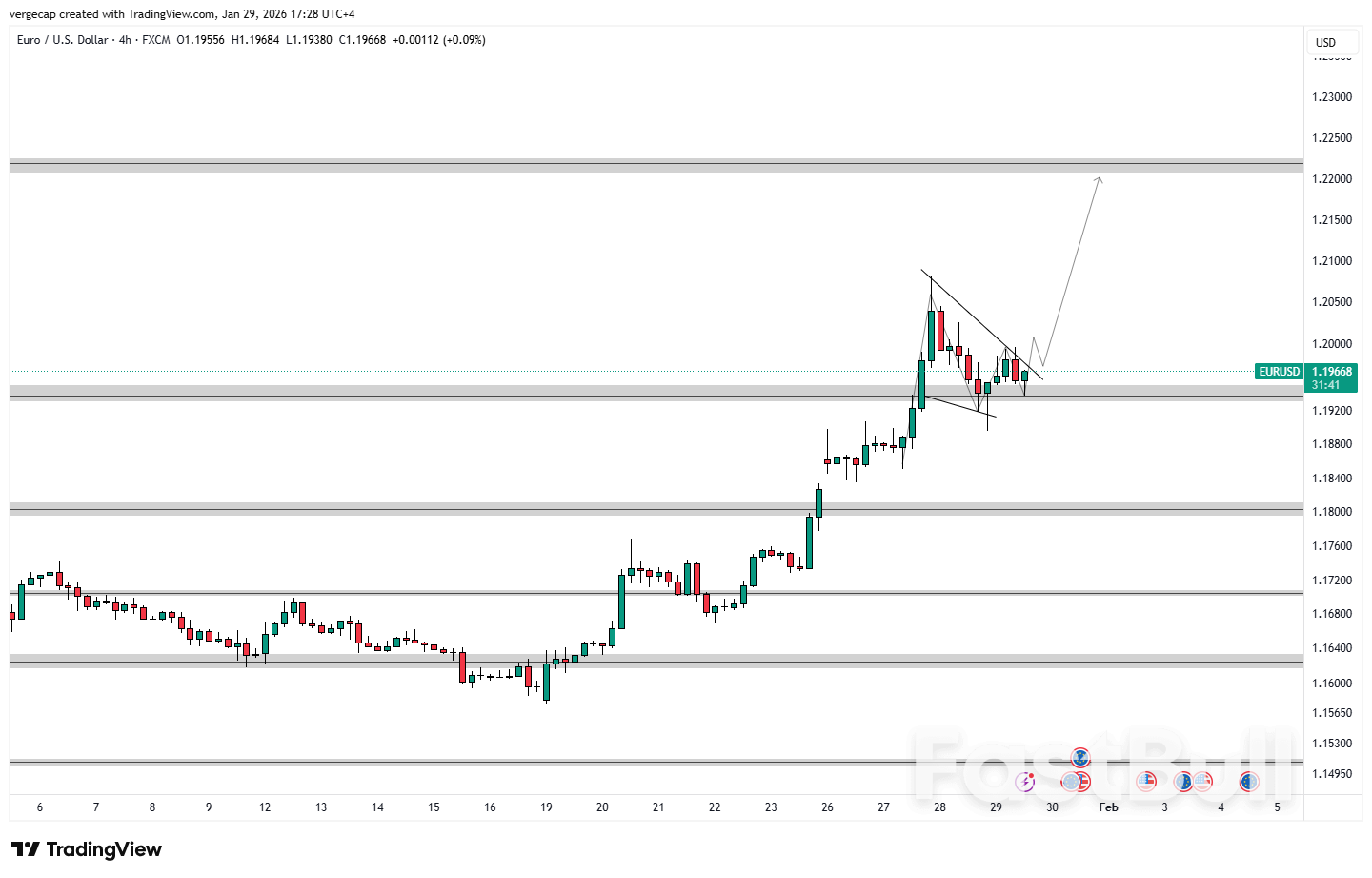
          From a technical perspective, EUR/USD remains positioned within a broader bullish continuation structure on the 4-hour chart. Following a strong impulsive rally from the 1.1600 region, price has transitioned into a controlled consolidation phase, forming a descending channel / bullish flag just beneath the 1.2000 psychological level. This type of corrective structure typically reflects profit-taking rather than trend exhaustion, and it preserves the integrity of the prevailing uptrend.
          Price is currently oscillating around the 1.1950–1.1970 zone, which has emerged as an important short-term equilibrium area. This zone aligns with prior breakout structure and is acting as key demand, repeatedly absorbing downside attempts. As long as price holds above the 1.1920–1.1900 support band, the bullish market structure remains intact. A decisive 4-hour close below this region would signal a breakdown from the flag and open the door for a deeper corrective move toward 1.1850, followed by 1.1800, where previous consolidation and institutional demand are located.
          On the upside, the 1.2000 round number remains the immediate cap. This level has repeatedly rejected price and coincides with the upper boundary of the corrective channel. A clean breakout and sustained hold above 1.2000 would confirm continuation and likely trigger momentum-driven buying. In that scenario, upside targets extend toward the 1.2050–1.2100 zone, with the broader bullish objective resting near the 1.2200 resistance area, highlighted on the chart as a higher-timeframe supply zone.
          Overall, price action suggests compression rather than distribution. The sequence of higher lows, shallow pullbacks, and tightening range favors an upside resolution, provided key structural support remains defended. Until a breakdown occurs, the bias remains bullish with consolidation rather than reversal.
          TRADE RECOMMENDATION
          BUY EUR/USD
          ENTRY PRICE: 1.1960
          STOP LOSS: 1.1900
          TAKE PROFIT: 1.2200
          Risk Warnings and Disclaimers
          You understand and acknowledge that there is a high degree of risk involved in trading. Following any strategies or investment methods may lead to potential losses. The content on the site is provided by our contributors and analysts for information purposes only. You are solely responsible for determining whether any trading assets, securities, strategy, or any other product is suitable for investing based on your own investment objectives and financial situation.
          Add to Favorites
          Share

          Bulls Still in Control, but Upside Safety Margin Has Narrowed Significantly

          Eva Chen

          Forex

          Summary:

          GBPUSD is consolidating near multi-year highs, while the US dollar remains under pressure amid “sell-America” trade sentiment, the Fed’s policy outlook, and elevated political uncertainty. On the technical front, a failed short-term inverse head-and-shoulders pattern signals rising pullback risk at elevated levels.

          SELL GBPUSD
          EXP
          TRADING

          1.38081

          Entry Price

          1.35000

          TP

          1.39990

          SL

          1.37547 -0.00546 -0.40%

          0.0

          Pips

          Flat

          1.35000

          TP

          Exit Price

          1.38081

          Entry Price

          1.39990

          SL

          Fundamentals

          GBPUSD hovered around 1.3834 on Thursday, close to its highest level since August 2021. While sterling itself lacks fresh bullish catalysts, rising volatility in the US dollar has continued to provide support for the pair.
          The recent weakness in the dollar mainly reflects a market repricing of US policy and capital flows. US Treasury Secretary Scott Bessent stated that Washington has no plans to intervene in the FX market by selling the Japanese yen. The remark was interpreted as a restrained stance on exchange-rate issues, reinforcing existing “sell-America” trade sentiment and weighing further on the dollar.
          Meanwhile, the Fed left interest rates unchanged at its latest meeting and slightly upgraded its economic outlook, reinforcing expectations of an extended rate pause. However, markets have not fully embraced a hawkish interpretation. Investors widely believe that if former President Trump were to replace Jerome Powell with a more dovish Fed chair in the future, US monetary policy could still re-enter an easing cycle. This medium- to long-term uncertainty continues to act as a potential drag on the dollar.
          With the Fed temporarily on hold, market attention has shifted to the Bank of England (BoE). Markets broadly expect the BoE to keep its benchmark rate unchanged at 3.75% at next week’s meeting. This expectation is supported by recent UK inflation data — December inflation rose to 3.4%, while retail sales figures pointed to renewed price pressures, leaving the BoE with little room to pivot decisively toward easing in the near term.
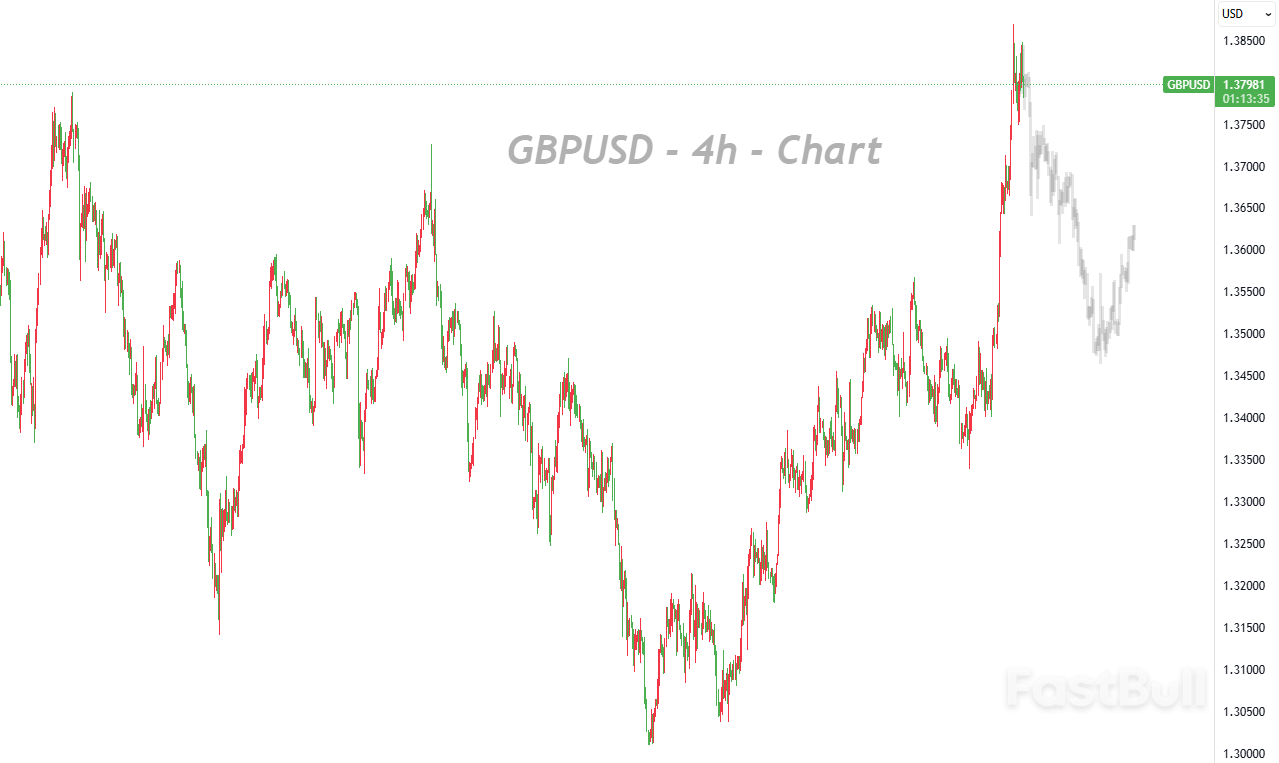
          Looking ahead, while sterling fundamentals have not deteriorated materially, the prior rapid rally has significantly increased short-term correction risks. Combined with signals from short-cycle price structures, GBPUSD appears more likely to be transitioning from high-level consolidation into a pullback phase. If the adjustment extends, the pair may retreat toward the 1.3500 area, which marks the base of the previous upswing.
          Bulls Still in Control, but Upside Safety Margin Has Narrowed Significantly_1

          Technical Analysis

          From a technical perspective, intraday price action in GBPUSD is broadly neutral. However, below the interim high at 1.3867, signs of a failed short-term inverse head-and-shoulders pattern have emerged, suggesting that bullish momentum is fading quickly and downside risks are building.
          On the downside, initial support is located at 1.3641. A break below this level could open the door for a deeper pullback toward the 1.3500 zone, corresponding to the key origin of the prior rally.
          Conversely, if 1.3641 holds and caps downside pressure, bulls may attempt to retest resistance at 1.3901. A decisive break above 1.3901 would shift the medium-term target higher toward the 1.4246–1.4248 area, near a major structural resistance zone.
          Overall, based on current structure and momentum, we lean toward a scenario in which a break below 1.3641 triggers a deeper corrective move.

          Trade Recommendations

          Trade Direction: Sell
          Entry Price: 1.3825
          Target Price: 1.3500
          Stop Loss: 1.3999
          Valid Until: February 24, 2026 23:55:00
          Support: 1.3788 / 1.3749 / 1.3641
          Resistance: 1.3867 / 1.3893 / 1.3916
          Risk Warnings and Disclaimers
          You understand and acknowledge that there is a high degree of risk involved in trading. Following any strategies or investment methods may lead to potential losses. The content on the site is provided by our contributors and analysts for information purposes only. You are solely responsible for determining whether any trading assets, securities, strategy, or any other product is suitable for investing based on your own investment objectives and financial situation.
          Add to Favorites
          Share

          Australian Dollar Climbs as Inflation Surprise Fuels RBA Rate-Hike Bets, Though Stronger US Dollar Caps Gains

          Warren Takunda

          Traders' Opinions

          Summary:

          AUD/USD rises near 0.7050 after strong Australian inflation data boosts expectations of an RBA rate hike, though a steadier US Dollar limits the pair’s upside.

          BUY AUDUSD
          Close Time
          CLOSED

          0.70600

          Entry Price

          0.72000

          TP

          0.70150

          SL

          0.69992 -0.00497 -0.71%

          45.0

          Pips

          Loss

          0.70150

          SL

          0.70148

          Exit Price

          0.70600

          Entry Price

          0.72000

          TP

          The Australian Dollar extended its advance against the US Dollar on Thursday, with AUD/USD trading near 0.7050, up roughly 0.25% on the session, as investors reacted to firmer-than-expected domestic inflation data that has significantly shifted expectations for Reserve Bank of Australia policy.
          The move highlights how sensitive currency markets remain to even modest shifts in rate outlooks. In Australia’s case, the latest price data has reinforced the view that inflation pressures are proving more persistent than policymakers had hoped, raising the probability that the RBA may be forced to resume tightening sooner rather than later.
          According to market pricing reflected in interest rate derivatives and ASX’s RBA Rate Tracker, traders now assign better than a 70% probability of a 25-basis-point rate increase at the next central bank meeting. That represents a sharp repricing compared to just a few weeks ago, when investors were leaning toward an extended pause. The turnaround in expectations has given the Australian Dollar a renewed yield advantage, improving its appeal relative to other major currencies where central banks are either pausing or edging toward easing.
          The underlying inflation report showed accelerating price pressures across both headline and core measures, suggesting that disinflation progress has stalled. Importantly, cost pressures were not confined to volatile components. Instead, price gains were broad-based, reflecting resilience in domestic demand and continued strength in services inflation — a combination that complicates the policy outlook for the RBA.
          Adding to the concern, the latest quarterly trade price data revealed rising export and import prices, signaling that external cost pressures remain in play. This dynamic increases the risk that inflation could stay elevated for longer, even if global goods prices continue to normalize. For the central bank, that creates a difficult balancing act: tightening policy further could weigh on already stretched households, but failing to act risks allowing inflation expectations to become unanchored.
          In my view, the RBA is edging closer to a point where it has little room to rely solely on rhetoric. With inflation still clearly above target and economic activity holding up better than many expected, policymakers may prefer to deliver at least one additional hike to reinforce their inflation-fighting credibility. That possibility is now being reflected in currency markets, where the Aussie has regained upward traction.
          Still, gains in AUD/USD have been tempered by a steadier US Dollar backdrop. The Greenback found renewed footing after US Treasury Secretary Scott Bessent reiterated Washington’s long-standing commitment to a strong dollar policy, helping to calm markets after a recent wave of selling pressure. His comments followed remarks from President Donald Trump earlier in the week that appeared to downplay the currency’s slide, which had pushed the Dollar Index toward multi-year lows.
          Meanwhile, the Federal Reserve’s latest policy decision offered little immediate directional bias but reinforced a “higher-for-longer” narrative. The Fed left interest rates unchanged, with Chair Jerome Powell emphasizing that future decisions will remain data-dependent. With US growth still solid and inflation proving sticky, traders have scaled back expectations for rapid rate cuts, lending additional support to US yields and, by extension, the Dollar.
          The US Dollar Index (DXY) is holding firm near 96.38, reflecting this stabilization. Upcoming US data — including weekly Initial Jobless Claims, Nonfarm Productivity, and Unit Labor Costs — could influence short-term rate expectations and inject volatility into AUD/USD. Strong US labor or cost data would likely bolster the Greenback, while softer readings could allow the Aussie to extend its recovery.
          For now, however, the dominant driver remains the Australian side of the equation. As long as incoming data continues to point toward persistent inflation and markets maintain confidence in further RBA action, dips in AUD/USD may attract buyers. That said, the pair’s upside could remain gradual rather than explosive, given the counterbalance of a still-resilient US Dollar and lingering uncertainty over the global growth outlook.

          Technical AnalysisAustralian Dollar Climbs as Inflation Surprise Fuels RBA Rate-Hike Bets, Though Stronger US Dollar Caps Gains_1

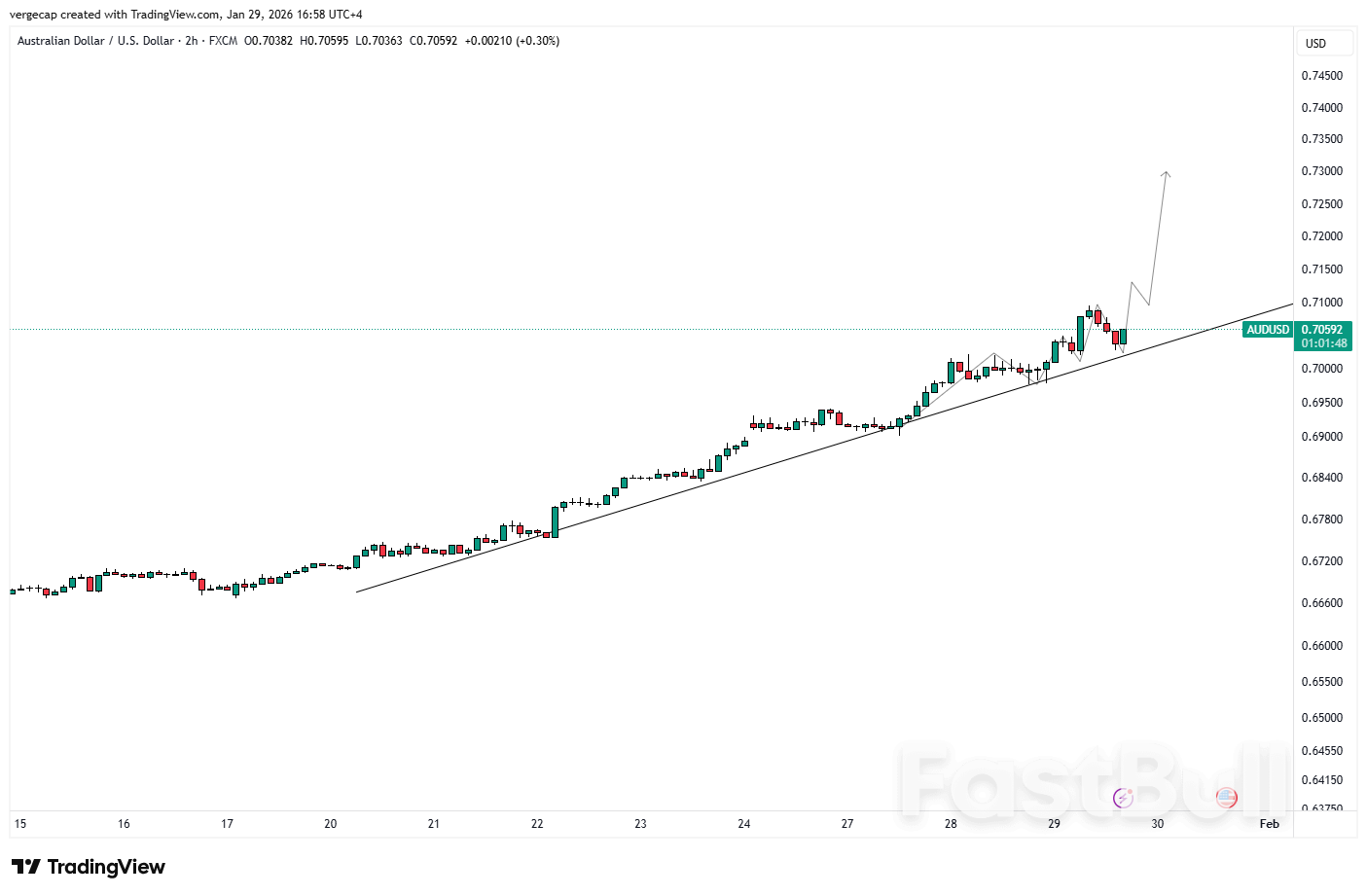
          From a technical perspective, AUD/USD remains firmly embedded in a well-defined bullish structure on the 2-hour chart. Price action continues to respect a rising trendline that has guided the advance since the mid-January lows, with the pair consistently printing higher highs and higher lows. The latest pullback has brought the pair back toward this ascending trendline, which is now converging with the 0.7050–0.7060 area and acting as key dynamic support. So far, buyers have defended this zone, keeping the broader uptrend intact.
          Recent price behavior suggests consolidation rather than reversal. The pair stalled just ahead of the 0.7100 handle, a near-term horizontal resistance level that has capped multiple upside attempts. The pullback from this region has been relatively shallow and overlapping, typical of a corrective move within an ongoing uptrend rather than the start of a bearish phase. As long as price remains above the rising trendline, dips are likely to be viewed as buying opportunities.
          A decisive break and sustained move above 0.7100 would confirm bullish continuation and signal that buyers have regained full control. In that scenario, the next upside targets come in near 0.7150, followed by the 0.7200 psychological level. The projected move illustrated on the chart suggests potential for an extension toward the 0.7280–0.7300 zone if bullish momentum accelerates and the trend structure remains orderly.
          On the downside, the ascending trendline is the critical technical level to watch. A clear 2-hour close below 0.7045–0.7050 would represent a short-term structural shift, breaking the sequence of higher lows and opening the door for a deeper corrective pullback. Initial downside targets would then be seen near the 0.7000 psychological handle, with further weakness exposing the 0.6950 region, where prior consolidation and demand emerged.
          Overall, AUD/USD retains a constructive technical bias while trading above rising trendline support. The broader trend remains bullish, with consolidation below 0.7100 appearing to be a pause within the uptrend rather than a topping formation.
          TRADE RECOMMENDATION
          BUY AUD/USD
          ENTRY PRICE: 0.7060
          STOP LOSS: 0.7015
          TAKE PROFIT: 0.7200
          Risk Warnings and Disclaimers
          You understand and acknowledge that there is a high degree of risk involved in trading. Following any strategies or investment methods may lead to potential losses. The content on the site is provided by our contributors and analysts for information purposes only. You are solely responsible for determining whether any trading assets, securities, strategy, or any other product is suitable for investing based on your own investment objectives and financial situation.
          Add to Favorites
          Share

          Gold’s Relentless Rally Continues as Investors Hedge Against Global Shocks

          Warren Takunda

          Traders' Opinions

          Summary:

          Gold prices extended their record rally as geopolitical tensions, US dollar weakness, and continued expectations of Federal Reserve rate cuts drove strong safe-haven inflows, with structural demand from central banks and investors reinforcing bullion’s advance.

          BUY XAUUSD
          Close Time
          CLOSED

          5540.00

          Entry Price

          5700.00

          TP

          5470.00

          SL

          5268.54 -107.77 -2.00%

          700.0

          Pips

          Loss

          5470.00

          SL

          5469.95

          Exit Price

          5540.00

          Entry Price

          5700.00

          TP

          Gold prices extended their extraordinary rally on Thursday, adding another leg to what has become one of the most powerful bullion advances in recent memory. The spot price of XAU/USD built on the prior session’s hefty gains — nearly 4% — and pushed toward fresh record highs, trading around $5,522 at the time of writing after an intraday peak near $5,598. The relentless upside has been fuelled by a potent mix of intensifying geopolitical tensions, broad weakness in the US Dollar and persistent expectations of easier monetary policy from the Federal Reserve.
          The precious metal’s dramatic ascent underscores how markets are pricing an elevated risk premium for safe-haven assets amid renewed geopolitical risks. At the same time, underlying structural drivers — including robust physical demand and speculative inflows — are amplifying gold’s move. Traders, investors and central banks alike appear unwilling to step back from allocation to gold, even as traditional drivers such as inflation and real yields wane and wax unpredictably.
          Heightened geopolitical frictions have emerged as a clear catalyst for bullion’s surge this week, particularly after reports suggesting that the United States is contemplating significant military action involving Iran. According to media accounts, senior US officials are considering a major strike — a scenario that, if realised, would mark a dramatic escalation in tensions across the Middle East. Whether or not a strike ultimately unfolds, the mere prospect has been enough to elevate gold’s safe-haven appeal.
          Compounding this has been an aggressive rhetorical stance from Washington, with the US President reiterating stern warnings on social media about deteriorating timelines and increasingly severe consequences should Iran fail to negotiate over its nuclear programme. Markets have historically priced gold aggressively on even faint whiffs of conflict, and this episode appears no different.
          This geopolitical risk premium is acting against the backdrop of an emboldened “debasement trade” narrative — the idea that the US Dollar will continue to weaken as a result of expansive fiscal and monetary policy approaches in the world’s largest economy. Gold, as the quintessential safe-haven and dollar hedge, has benefited disproportionately from that narrative taking hold across asset markets.
          Indeed, the US Dollar Index (DXY), which measures the greenback against a basket of six major currencies, has struggled near four-year lows, hovering around the 96.3 area. Continued dollar fragility has enhanced the allure of gold as an alternative store of value. Comments from US Treasury Secretary Scott Bessent aimed at steadying markets by reiterating America’s long-run commitment to a strong dollar have offered only short-lived respite. Traders remain sceptical, in part because the tone coming from the White House has been at odds with traditional Federal Reserve principles.
          On monetary policy, the Fed’s recent decision to hold interest rates in the 3.50%–3.75% range did little to alter market expectations. The central bank’s statement highlighted solid economic activity, moderating labour market dynamics and continued inflationary pressures — a mixed message that left traders focused squarely on future easing prospects rather than the current plateau. Futures markets still price in roughly two rate cuts this year, a projection that has underpinned gold’s advance by reducing the opportunity cost of holding non-yielding assets.
          The backdrop of potential changes at the Fed’s helm is adding another layer of uncertainty. Treasury Secretary Bessent suggested that an announcement on the next Fed Chair could come within weeks, with names such as Rick Rieder, Christopher Waller and Kevin Warsh reportedly under consideration. Markets are keenly aware that a leadership shift could tilt the central bank’s stance. A perceived pivot toward more dovish settings would only deepen the current gold rally.
          Beyond the immediate drivers of safety flows and monetary policy, structural fundamentals remain robust. The World Gold Council reported earlier this week that global gold demand in 2025 exceeded 5,000 tonnes for the first time on record — a milestone driven by exceptionally strong investment appetite. Central bank purchases were particularly robust, with 863 tonnes acquired during the year, while gold ETF holdings rose by 801 tonnes — the second-largest annual increase ever recorded. Bar and coin demand also climbed to a 12-year high, illustrating broad-based interest from both institutional and retail participants.
          These figures suggest that gold’s ascent is not purely driven by short-term geopolitical or macroeconomic forces but is also rooted in rising allocations across portfolios and reserve holdings. Central banks emerging markets — most notably in Asia and the Middle East — have been diversifying reserves away from fiat currencies, favoring bullion as a long-term hedge against currency volatility and systemic risk.
          Going into the weekend, traders are eyeing the US economic calendar for additional clues about the macro backdrop. Weekly Initial Jobless Claims data, along with productivity and labour cost readings, could influence rate expectations. However, given the dominant role that geopolitical headlines have assumed, traditional economic indicators may take a back seat in guiding market sentiment — at least in the near term.

          Technical AnalysisGold’s Relentless Rally Continues as Investors Hedge Against Global Shocks_1

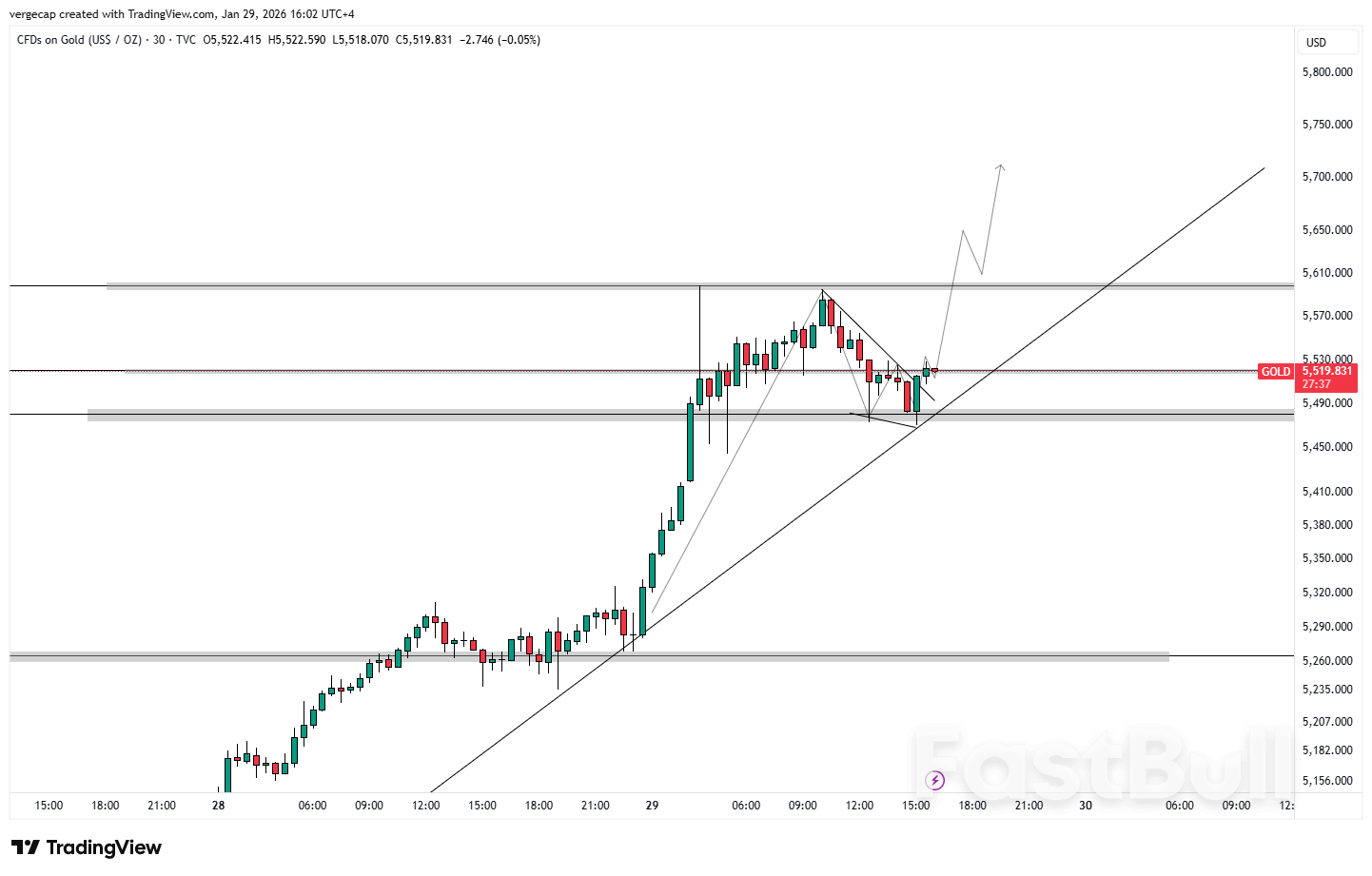
          From a technical perspective, gold remains in a broader intraday uptrend, but is currently undergoing a healthy consolidation phase after a sharp impulsive rally. On the 30-minute chart, price action shows a strong bullish leg that accelerated from the $5,300 region to above $5,550 before stalling near a key resistance band.
          Prices are now fluctuating between the $5,490–$5,500 support zone and the $5,580–$5,600 resistance area, forming a short-term corrective structure that resembles a bullish flag / descending wedge within the context of a larger rising trendline. Importantly, price continues to respect the ascending trendline drawn from the recent swing low, which reinforces that the broader structure still favors the upside.
          The $5,490–$5,500 zone is acting as immediate demand. This area aligns with a previous breakout level and has repeatedly attracted buyers during the latest pullbacks. As long as price holds above this band, the consolidation appears constructive rather than bearish. A decisive break below this support, however, would shift focus toward the next downside level near $5,260, where prior consolidation and breakout structure originated. A sustained move below $5,260 would mark a deeper correction and temporarily weaken the bullish market structure.
          On the upside, bulls are watching for a sustained break above the $5,580–$5,600 resistance zone. This area capped the recent rally and represents the last supply barrier before price can expand into open territory again. A clean breakout above this region would confirm trend continuation and likely accelerate momentum toward the $5,700–$5,750 zone, in line with the projected upward path shown on the chart.
          The current pullback is occurring with overlapping candles and reduced downside momentum, which typically signals consolidation rather than distribution. Structurally, this pause appears to be a digestion of gains following an overextended rally, allowing the trend to reset before a potential next leg higher.
          Overall, the technical outlook remains bullish while price holds above $5,490, with the current structure favoring breakout continuation rather than reversal.

          TRADE RECOMMENDATION

          BUY GOLD
          ENTRY PRICE: 5,540
          STOP LOSS: 5,470
          TAKE PROFIT: 5,700
          Risk Warnings and Disclaimers
          You understand and acknowledge that there is a high degree of risk involved in trading. Following any strategies or investment methods may lead to potential losses. The content on the site is provided by our contributors and analysts for information purposes only. You are solely responsible for determining whether any trading assets, securities, strategy, or any other product is suitable for investing based on your own investment objectives and financial situation.
          Add to Favorites
          Share

          Market Momentum Is Accelerating; Be Wary of Correction Risks

          Alan

          Commodity

          Summary:

          Recently, gold has experienced sustained upward momentum driven by multiple factors, briefly challenging the 5600 resistance level. However, the short-term rally has been excessive, increasing the risk of a corrective pullback.

          SELL XAUUSD
          EXP
          PENDING

          5580.00

          Entry Price

          5335.00

          TP

          5650.00

          SL

          5268.54 -107.77 -2.00%

          --

          Pips

          PENDING

          5335.00

          TP

          Exit Price

          5580.00

          Entry Price

          5650.00

          SL

          Fundamentals

          The current surge in spot gold prices continues to demonstrate strength, reaching multiple historical highs and momentarily surpassing US$5,600 amidst high volatility and significant trading volume throughout the trading session. This rapid ascent is not an isolated event but results from the confluence of multiple macroeconomic and structural factors: heightened demand for safe-haven assets, a weakening U.S. dollar coupled with declining real interest rates, and increased capital inflows driven by institutional investors and sovereign or official sector purchases, collectively propelling gold prices to new record levels.
          The primary drivers originate from geopolitical and macroeconomic uncertainties—recent escalations in U.S.-Iran tensions and broader geopolitical risks have amplified market demand for risk-hedging assets, prompting increased allocation to gold as a safe asset. Additionally, shifts in the monetary policy and interest rate environment—namely, the short-term pressure on the USD and a decline in both nominal and real yields in the United States—have reduced the opportunity cost of holding non-yielding gold, thereby attracting safe-haven and portfolio diversification inflows. Furthermore, the significant rise in institutional demand, evidenced by continuous inflows into ETFs and other investment vehicles—recording unprecedented volumes in 2025–2026—and the explicit inclusion of gold in portfolios by major institutions and financial platforms as a hedge or substitute for cash positions, has established a steady channel of incremental demand. These factors reinforce each other, and despite fluctuations in net purchases by some official entities, such as certain central banks, overall capital flows remain supportive of further gains in gold prices.
          The structural demand and market dynamics have amplified volatility, as the listing and expansion of gold ETFs attract substantial retail and institutional short-term capital inflows. This results in near "rushing" price surges in gold during news or sentiment-driven triggers, thereby enlarging trading volume and volatility. Simultaneously, there are emerging narratives comparing gold to de-dollarization or positioning it as a long-term portfolio alternative, which further catalyzes proactive positioning by medium- and long-term investors. These buying behaviors encompass both risk-averse short-term capital and some passive long-term allocations, collectively enabling brief pullbacks to be swiftly absorbed.

          Technical Analysis

          Market Momentum Is Accelerating; Be Wary of Correction Risks_1
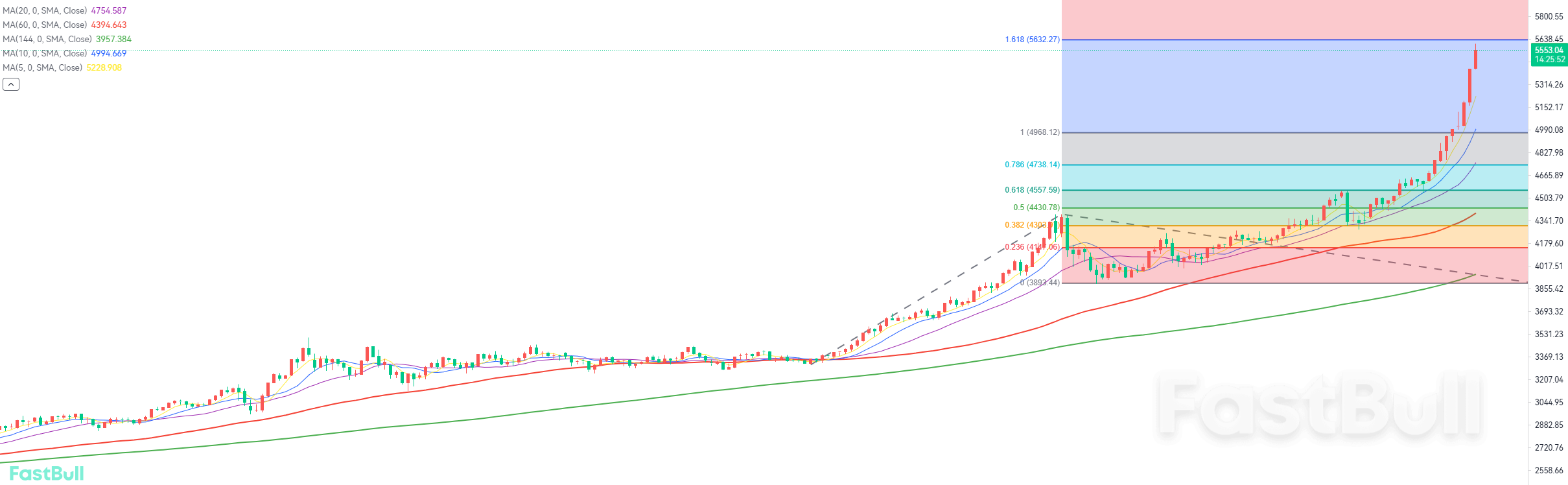
          The intraday trend indicates that gold is currently consolidating at elevated levels following a robust upward rally. Multiple attempts to breach the 5600 resistance level have failed, suggesting a potential weakening of short-term bullish momentum. The short-term moving averages are aligned bullishly, yet momentum indicators such as RSI have entered overbought territory, and MACD histogram remains elevated, signaling diminishing bullish vigor. This increases the likelihood of a short-term correction; however, it does not necessarily imply an imminent trend reversal. The key factor will be whether the retracement can be effectively absorbed by buying volume supported by market participation.
          Currently, resistance zones are identified at 5600-5630. A daily close above 5630 would suggest a higher probability of continued bullish movement. Conversely, if there is significant volume-driven profit-taking at higher levels and the daily close falls below 5600, caution should be exercised as a potential corrective phase may initiate.

          Trading Recommendations

          Trading Direction: Sell
          Entry Price: 5580.00
          Target Price: 5335.00
          Stop Loss: 5650.00
          Valid Until: February12, 2026 23:00:00
          Support: 5470.00, 5300.00
          Resistance: 5600.00, 5630.00
          Risk Warnings and Disclaimers
          You understand and acknowledge that there is a high degree of risk involved in trading. Following any strategies or investment methods may lead to potential losses. The content on the site is provided by our contributors and analysts for information purposes only. You are solely responsible for determining whether any trading assets, securities, strategy, or any other product is suitable for investing based on your own investment objectives and financial situation.
          Add to Favorites
          Share

          Crude Oil Surges! USDCAD Keeps Falling

          Tank

          Forex

          Technical Analysis

          Summary:

          Due to escalating geopolitical tensions and sustained Chinese crude oil demand, crude oil prices reached a four-month high. Additionally, an unexpected decline in U.S. crude oil inventories alleviated concerns over oversupply and supported elevated oil prices. This, in turn, buoyed the Canadian dollar, which is correlated with commodity prices, while the weakening U.S. dollar continued to exert downside pressure on USD/CAD, reaffirming the recent bearish outlook for the currency pair.

          BUY USDCAD
          EXP
          TRADING

          1.35241

          Entry Price

          1.38000

          TP

          1.33000

          SL

          1.35350 +0.00469 +0.35%

          0.0

          Pips

          Flat

          1.33000

          SL

          Exit Price

          1.35241

          Entry Price

          1.38000

          TP

          Fundamentals
          The Bank of Canada announced on Wednesday that the policy benchmark interest rate remains unchanged at 2.25%, marking the second consecutive pause, in line with market expectations. Governor Tiff Macklem indicated that the prevailing economic environment faces "unusually high" uncertainty, making it challenging to determine the timing and direction of the next rate adjustment. In the latest quarterly Monetary Policy Report, the Bank maintained its outlook of modest economic growth over the coming years and projected that inflation would roughly fluctuate around the 2% target within the forecast period. The Bank noted that, compared to its October 2025 projections, the global and Canadian economic outlooks have seen little change but remain highly exposed to U.S. trade policies and geopolitical risks. U.S. economic growth has surpassed expectations, supported mainly by investments and consumption related to artificial intelligence, with tariffs temporarily boosting inflation; however, these effects are expected to diminish gradually later this year. The global economy's average growth rate during the forecast period is estimated at about 3%. Domestically, the Bank anticipates short-term economic growth may slow, with a risk of GDP stagnation in the fourth quarter. Export activity has been impacted by U.S. tariffs, but domestic demand has rebounded, and employment has experienced some growth. The unemployment rate remains elevated at approximately 6.8%, with ongoing weak hiring intentions among businesses. The Bank has raised its 2025 economic growth forecast to 1.7%, while maintaining its outlooks for 2026 and 2027 at 1.1% and 1.5%, respectively. Regarding inflation, the December 2024 CPI increased to 2.4%, primarily reflecting base effects from prior GST/HST tax holidays. Core inflation has declined from 3% in October of last year to approximately 2.5%. The Bank expects that trade-related cost pressures will be offset by excess supply within the economy, with overall inflation remaining near the 2% target. The Bank emphasizes that the current interest rate level is appropriate but will closely monitor risk developments in this highly uncertain environment and adjust its policy stance if necessary.
          The Federal Reserve concluded its meeting on Wednesday by maintaining the target range for the federal funds rate at 3.50% to 3.75%. The policy statement reflected that economic activity in the United States continues to expand steadily, with inflation remaining elevated. The labor market has shown signs of stabilization after previous softening. No explicit guidance was provided regarding the timing or magnitude of future rate cuts, emphasizing that subsequent policy adjustments will depend on incoming data and economic outlook. Fed Chair Jerome Powell stated that, over the past three meetings, the Federal Reserve has cumulatively cut rates by 75 basis points, and that the current stance remains appropriate to support maximum employment and bring inflation back to the 2% target. He noted that the U.S. economy is projected to grow steadily through 2025 and enter 2026 on a relatively solid footing. Recent labor market stabilization, characterized by slowed employment growth, is largely attributed to diminished labor supply growth, including reduced immigration and declining labor force participation. Meanwhile, the housing sector remains subdued. Regarding inflation, Powell acknowledged that inflation remains slightly above target, with the December core PCE inflation rate projected to be around 3%. He attributed the current inflationary pressures primarily to comprehensive tariff policies rather than demand overheating, suggesting that tariffs' impact on prices may be transitory and expected to peak this year before gradually declining. Powell also reaffirmed the importance of the Federal Reserve’s independence, warning that any erosion of this independence could severely undermine the central bank’s credibility and public trust. Outside macroeconomic policy discussions, a recent IMF study highlighted structural constraints on Canada's economic potential, noting that internal market segmentation significantly hampers growth. The IMF estimates that trade barriers between Canadian provinces function as internal tariffs of approximately 9%, and eliminating these barriers could increase the country’s GDP by around 7%, equivalent to an annual output boost of approximately 210 billion CAD.
          Technical Analysis
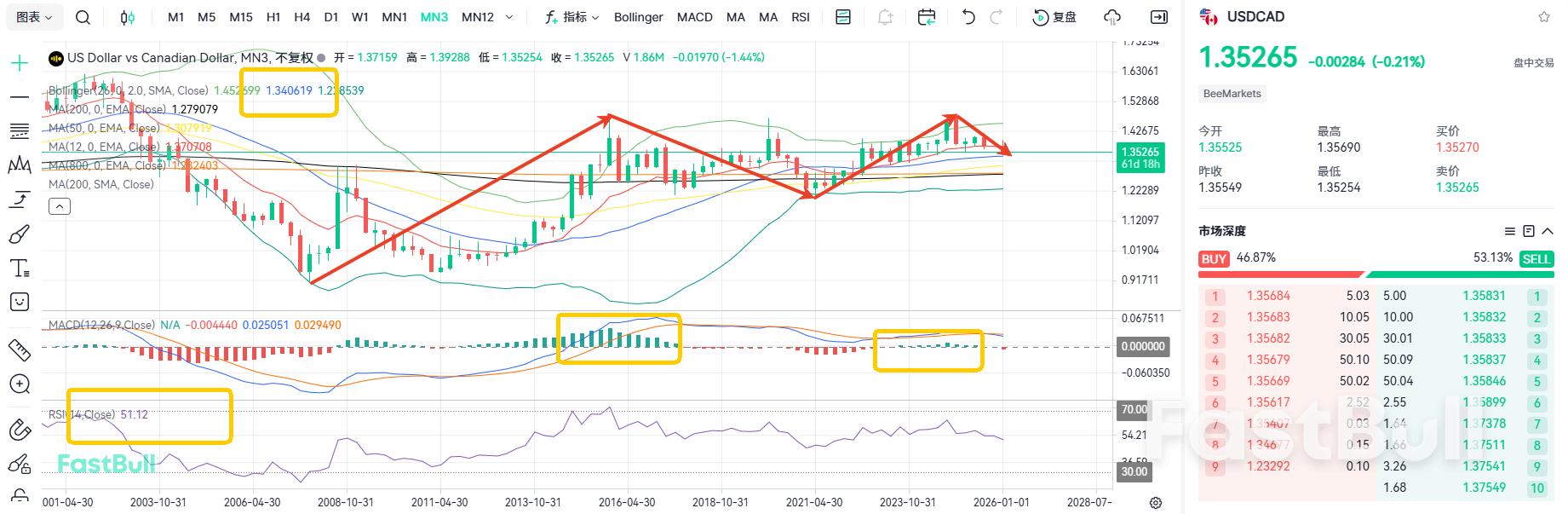
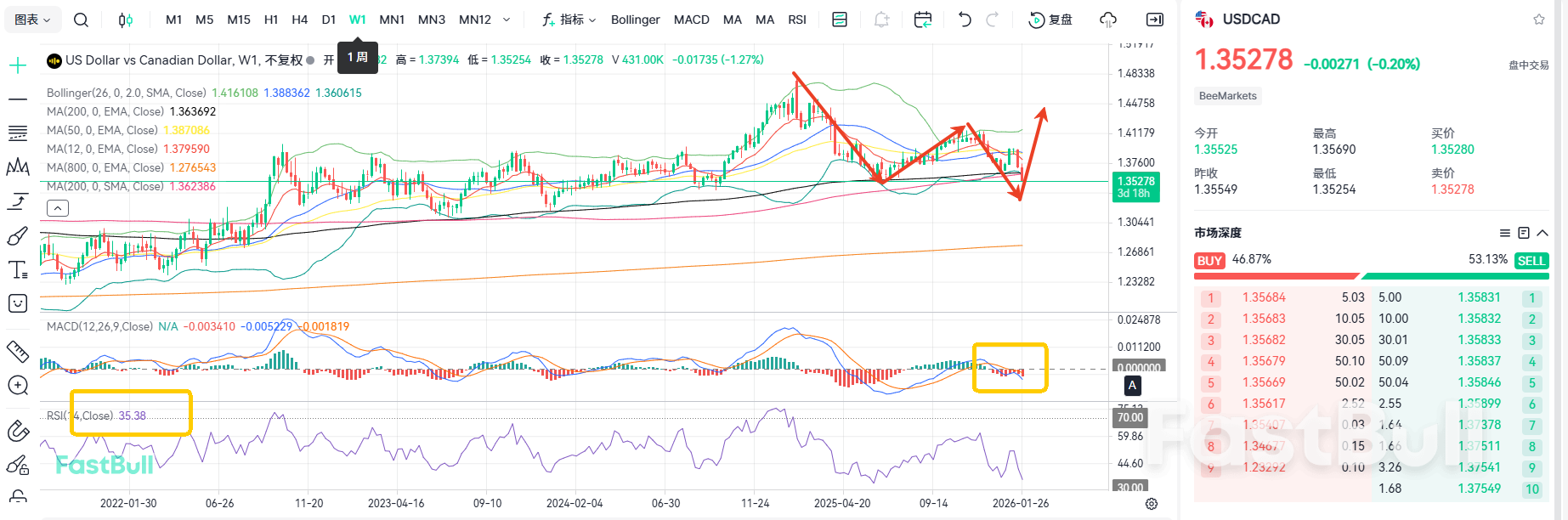
          In the 1W timeframe, the price has broken below the EMA200 and the lower Bollinger Band, with the MACD's MACD line and signal line forming a death cross near the zero-axis, indicating a continuation of the bearish trend. If the price remains below the EMA200, it is highly likely to decline toward key support levels around 1.35 and 1.342, near previous lows. The RSI value at 35 indicates an oversold condition, suggesting the market is in a downtrend but prone to potential rebounds, with peak levels gradually declining. In the 1Q timeframe, Bollinger Bands are narrowing, and moving averages are flattening, signifying weakened upward momentum. After breaking below the EMA12, there are no signs of a reversal, implying the price may decline toward the middle Bollinger Band at approximately 1.34. The RSI at 51 reflects a neutral market sentiment, with traders adopting a wait-and-see approach. Therefore, it is recommended to go long before going short.Crude Oil Surges! USDCAD Keeps Falling_1
          Crude Oil Surges! USDCAD Keeps Falling_2Trading Recommendations
          Trading Direction: Buy
          Entry Price: 1.35
          Target Price: 1.38
          Stop Loss: 1.33
          Support: 1.35, 1.325, 1.28
          Resistance: 1.38, 1.4, 1.42
          Risk Warnings and Disclaimers
          You understand and acknowledge that there is a high degree of risk involved in trading. Following any strategies or investment methods may lead to potential losses. The content on the site is provided by our contributors and analysts for information purposes only. You are solely responsible for determining whether any trading assets, securities, strategy, or any other product is suitable for investing based on your own investment objectives and financial situation.
          Add to Favorites
          Share

          Deteriorating Macroeconomic Conditions Continue to Weigh on the Crypto Market

          Eva Chen

          Cryptocurrency

          Summary:

          Macroeconomic concerns and geopolitical tensions may further impact Bitcoin prices. Current market dynamics closely align with historical volatility patterns.

          SELL BTC-USDT
          EXP
          PENDING

          93500.0

          Entry Price

          70870.0

          TP

          99900.0

          SL

          82127.0 -2527.7 -2.99%

          --

          Pips

          PENDING

          70870.0

          TP

          Exit Price

          93500.0

          Entry Price

          99900.0

          SL

          Fundamentals

          The cryptocurrency market is once again under pressure as the macroeconomic environment rapidly deteriorates amid escalating trade and geopolitical concerns. These developments have heightened worries about economic growth, policy uncertainty, and capital flows. Such trends reflect investors' growing anxiety over liquidity and geopolitical risks, which will impact the valuation of crypto assets and may trigger volatility across global financial markets.
          From a market structure perspective, the current wave of selling suggests that Bitcoin's pullback since last November may have concluded. Price action has clearly turned downward, and if market risk sentiment continues to deteriorate, the risk of a renewed overall downtrend increases.
          Additionally, some argue that the greatest risk facing Bitcoin does not stem from any single geopolitical event, but rather from the potential for such shocks to reignite inflation expectations, push up yields, and tighten financial conditions once again. Financial markets are currently experiencing inflationary pressures, which could trigger higher yields and tighter financial conditions. Meanwhile, the rise of gold as a safe-haven asset signals a shift in investor sentiment. This underscores that Bitcoin's position as “digital gold” in the market may be weakened.
          Increased USDC redemptions and declining capital inflows have intensified capital concerns. On-chain data indicates a shrinking stablecoin supply and tightening liquidity. The market anticipates challenges following the expiration of a large volume of Bitcoin options.
          Deteriorating Macroeconomic Conditions Continue to Weigh on the Crypto Market_1

          Technical Analysis

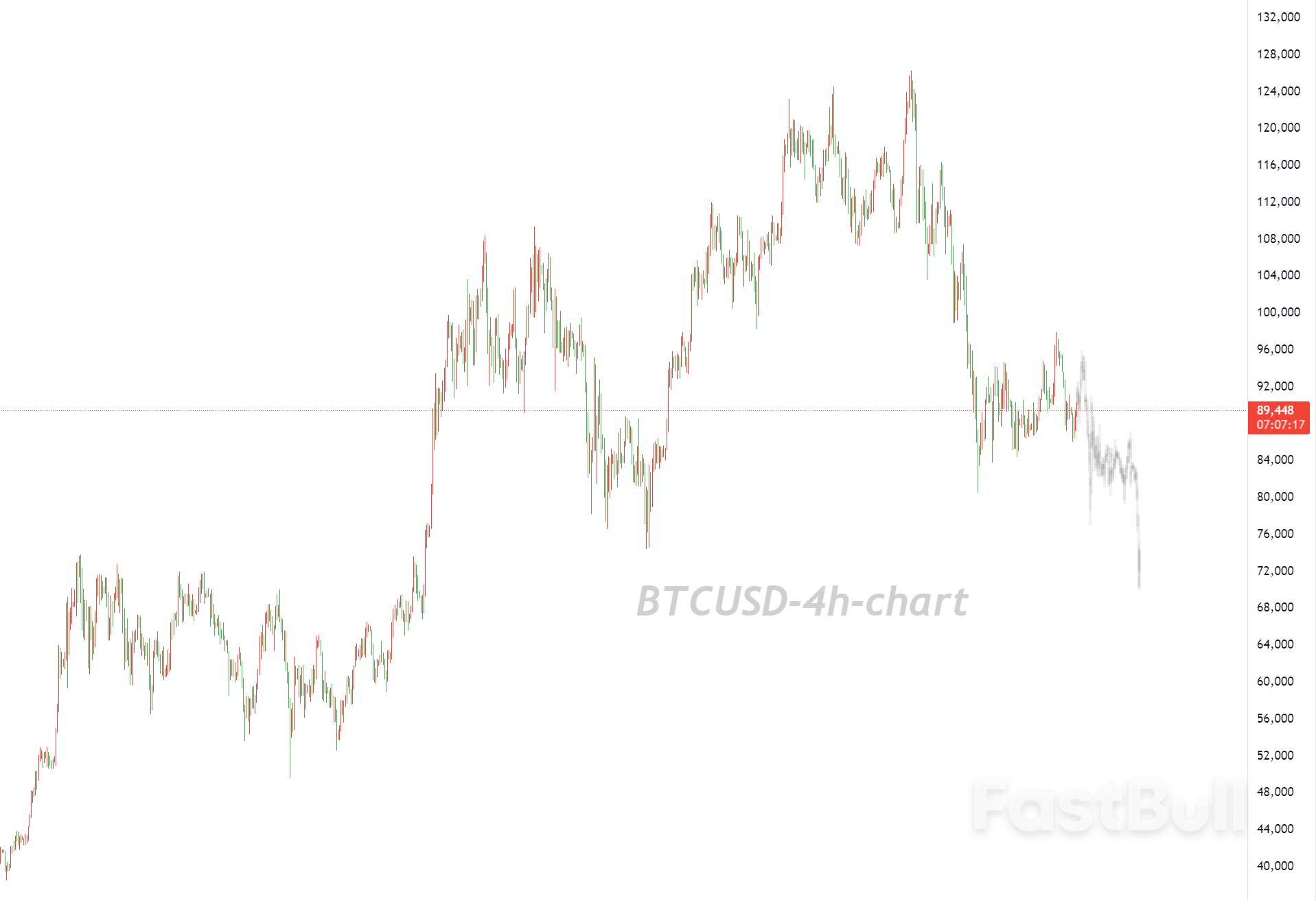
          From a technical perspective, Bitcoin's rebound from US$80,492 appears to have peaked at US$97,922, having previously encountered resistance near US$97,986 from the 38.2% retracement level of the US$126,289 to US$80,492 range and the 55-week moving average. A decisive break below the US$86,405 support level would further reinforce the view that the downtrend originating from US$126,289 remains intact, potentially triggering another comprehensive test of the US$80,492 low.
          If it falls below US$80,492, market focus will shift to a deeper mid-term pullback. Based on this, the next major downside target is the psychological threshold near US$70,000, which aligns with the 50% retracement level of the long-term uptrend from the 2022 low of US$15,452 to the 2025 high of US$126,289—specifically at US$70,870.

          Trading Recommendations

          Trading Direction: Sell
          Entry Price: 93500
          Target Price: 70870
          Stop Loss: 99900
          Valid Until: February 23, 2026 23:55:00
          Support: 85932, 80492, 74333
          Resistance: 91586, 94236, 97986
          Risk Warnings and Disclaimers
          You understand and acknowledge that there is a high degree of risk involved in trading. Following any strategies or investment methods may lead to potential losses. The content on the site is provided by our contributors and analysts for information purposes only. You are solely responsible for determining whether any trading assets, securities, strategy, or any other product is suitable for investing based on your own investment objectives and financial situation.
          Add to Favorites
          Share
          FastBull
          Copyright © 2026 FastBull Ltd

          728 RM B 7/F GEE LOK IND BLDG NO 34 HUNG TO RD KWUN TONG KLN HONG KONG

          TelegramInstagramTwitterfacebooklinkedin
          App Store Google Play Google Play
          Products
          Charts

          Chats

          Q&A with Experts
          Screeners
          Economic Calendar
          Data
          Tools
          Membership
          Features
          Function
          Markets
          Copy Trading
          Latest Signals
          Contests
          News
          Analysis
          24/7
          Columns
          Education
          Company
          Careers
          About Us
          Contact Us
          Advertising
          Help Center
          Feedback
          User Agreement
          Privacy Policy
          Personal Information Protection Statement
          Business

          White Label

          Data API

          Web Plug-ins

          Poster Maker

          Affiliate Program

          Risk Disclosure

          The risk of loss in trading financial instruments such as stocks, FX, commodities, futures, bonds, ETFs and crypto can be substantial. You may sustain a total loss of the funds that you deposit with your broker. Therefore, you should carefully consider whether such trading is suitable for you in light of your circumstances and financial resources.

          No decision to invest should be made without thoroughly conducting due diligence by yourself or consulting with your financial advisors. Our web content might not suit you since we don't know your financial conditions and investment needs. Our financial information might have latency or contain inaccuracy, so you should be fully responsible for any of your trading and investment decisions. The company will not be responsible for your capital loss.

          Without getting permission from the website, you are not allowed to copy the website's graphics, texts, or trademarks. Intellectual property rights in the content or data incorporated into this website belong to its providers and exchange merchants.

          Not Logged In

          Log in to access more features

          Connect Broker
          Become a signal provider
          Help Center
          Customer Service
          Dark Mode
          Price Up/Down Colors

          Log In

          Sign Up
          Position
          Layout
          Fullscreen
          Default to Chart
          The chart page opens by default when you visit fastbull.com