• Trade
  • Markets
  • Copy
  • Contests
  • News
  • 24/7
  • Calendar
  • Q&A
  • Chats
Trending
Screeners
SYMBOL
LAST
BID
ASK
HIGH
LOW
NET CHG.
%CHG.
SPREAD
SPX
S&P 500 Index
6827.42
6827.42
6827.42
6899.86
6801.80
-73.58
-1.07%
--
DJI
Dow Jones Industrial Average
48458.04
48458.04
48458.04
48886.86
48334.10
-245.98
-0.51%
--
IXIC
NASDAQ Composite Index
23195.16
23195.16
23195.16
23554.89
23094.51
-398.69
-1.69%
--
USDX
US Dollar Index
97.950
98.030
97.950
98.500
97.950
-0.370
-0.38%
--
EURUSD
Euro / US Dollar
1.17394
1.17409
1.17394
1.17496
1.17192
+0.00011
+ 0.01%
--
GBPUSD
Pound Sterling / US Dollar
1.33707
1.33732
1.33707
1.33997
1.33419
-0.00148
-0.11%
--
XAUUSD
Gold / US Dollar
4299.39
4299.39
4299.39
4353.41
4257.10
+20.10
+ 0.47%
--
WTI
Light Sweet Crude Oil
57.233
57.485
57.233
58.011
56.969
-0.408
-0.71%
--

Community Accounts

Signal Accounts
--
Profit Accounts
--
Loss Accounts
--
View More

Become a signal provider

Sell trading signals to earn additional income

View More

Guide to Copy Trading

Get started with ease and confidence

View More

Signal Accounts for Members

All Signal Accounts

Best Return
  • Best Return
  • Best P/L
  • Best MDD
Past 1W
  • Past 1W
  • Past 1M
  • Past 1Y

All Contests

  • All
  • Trump Updates
  • Recommend
  • Stocks
  • Cryptocurrencies
  • Central Banks
  • Featured News
Top News Only
Share

Ukraine Says It Received 114 Prisoners From Belarus

Share

USA Embassy In Lithuania: Maria Kalesnikava Is Not Going To Vilnius

Share

USA Embassy In Lithuania: Other Prisoners Are Being Sent From Belarus To Ukraine

Share

Ukraine President Zelenskiy: Five Ukrainians Released By Belarus In US-Brokered Deal

Share

USA Vilnius Embassy: USA Stands Ready For "Additional Engagement With Belarus That Advances USA Interests"

Share

USA Vilnius Embassy: Belarus, USA, Other Citizens Among The Prisoners Released Into Lithuania

Share

USA Vilnius Embassy: USA Will Continue Diplomatic Efforts To Free The Remaining Political Prisoners In Belarus

Share

USA Vilnius Embassy: Belarus Releases 123 Prisoners Following Meeting Of President Trump's Envoy Coale And Belarus President Lukashenko

Share

USA Vilnius Embassy: Masatoshi Nakanishi, Aliaksandr Syrytsa Are Among The Prisoners Released By Belarus

Share

USA Vilnius Embassy: Maria Kalesnikava And Viktor Babaryka Are Among The Prisoners Released By Belarus

Share

USA Vilnius Embassy: Nobel Peace Prize Laureate Ales Bialiatski Is Among The Prisoners Released By Belarus

Share

Belarusian Presidential Administration Telegram Channel: Lukashenko Has Pardoned 123 Prisoners As Part Of Deal With US

Share

Two Local Syrian Officials: Joint US-Syrian Military Patrol In Central Syria Came Under Fire From Unknown Assailants

Share

Israeli Military Says It Targeted 'Key Hamas Terrorist' In Gaza City

Share

Rwanda's Actions In Eastern Drc Are A Clear Violation Of Washington Accords Signed By President Trump - Secretary Of State Rubio

Share

Israeli Military Issues Evacuation Warning In Southern Lebanon Village Ahead Of Strike - Spokesperson On X

Share

Belarusian State Media Cites US Envoy Coale As Saying He Discussed Ukraine And Venezuela With Lukashenko

Share

Belarusian State Media Cites US Envoy Coale As Saying That US Removes Sanctions On Belarusian Potassium

Share

Thai Prime Minister: No Ceasefire Agreement With Cambodia

Share

US, Ukraine To Discuss Ceasefire In Berlin Ahead Of European Summit

TIME
ACT
FCST
PREV
U.K. Trade Balance Non-EU (SA) (Oct)

A:--

F: --

P: --

U.K. Trade Balance (Oct)

A:--

F: --

P: --

U.K. Services Index MoM

A:--

F: --

P: --

U.K. Construction Output MoM (SA) (Oct)

A:--

F: --

P: --

U.K. Industrial Output YoY (Oct)

A:--

F: --

P: --

U.K. Trade Balance (SA) (Oct)

A:--

F: --

P: --

U.K. Trade Balance EU (SA) (Oct)

A:--

F: --

P: --

U.K. Manufacturing Output YoY (Oct)

A:--

F: --

P: --

U.K. GDP MoM (Oct)

A:--

F: --

P: --

U.K. GDP YoY (SA) (Oct)

A:--

F: --

P: --

U.K. Industrial Output MoM (Oct)

A:--

F: --

P: --

U.K. Construction Output YoY (Oct)

A:--

F: --

P: --

France HICP Final MoM (Nov)

A:--

F: --

P: --

China, Mainland Outstanding Loans Growth YoY (Nov)

A:--

F: --

P: --

China, Mainland M2 Money Supply YoY (Nov)

A:--

F: --

P: --

China, Mainland M0 Money Supply YoY (Nov)

A:--

F: --

P: --

China, Mainland M1 Money Supply YoY (Nov)

A:--

F: --

P: --

India CPI YoY (Nov)

A:--

F: --

P: --

India Deposit Gowth YoY

A:--

F: --

P: --

Brazil Services Growth YoY (Oct)

A:--

F: --

P: --

Mexico Industrial Output YoY (Oct)

A:--

F: --

P: --

Russia Trade Balance (Oct)

A:--

F: --

P: --

Philadelphia Fed President Henry Paulson delivers a speech
Canada Building Permits MoM (SA) (Oct)

A:--

F: --

P: --

Canada Wholesale Sales YoY (Oct)

A:--

F: --

P: --

Canada Wholesale Inventory MoM (Oct)

A:--

F: --

P: --

Canada Wholesale Inventory YoY (Oct)

A:--

F: --

P: --

Canada Wholesale Sales MoM (SA) (Oct)

A:--

F: --

P: --

Germany Current Account (Not SA) (Oct)

A:--

F: --

P: --

U.S. Weekly Total Rig Count

A:--

F: --

P: --

U.S. Weekly Total Oil Rig Count

A:--

F: --

P: --

Japan Tankan Large Non-Manufacturing Diffusion Index (Q4)

--

F: --

P: --

Japan Tankan Small Manufacturing Outlook Index (Q4)

--

F: --

P: --

Japan Tankan Large Non-Manufacturing Outlook Index (Q4)

--

F: --

P: --

Japan Tankan Large Manufacturing Outlook Index (Q4)

--

F: --

P: --

Japan Tankan Small Manufacturing Diffusion Index (Q4)

--

F: --

P: --

Japan Tankan Large Manufacturing Diffusion Index (Q4)

--

F: --

P: --

Japan Tankan Large-Enterprise Capital Expenditure YoY (Q4)

--

F: --

P: --

U.K. Rightmove House Price Index YoY (Dec)

--

F: --

P: --

China, Mainland Industrial Output YoY (YTD) (Nov)

--

F: --

P: --

China, Mainland Urban Area Unemployment Rate (Nov)

--

F: --

P: --

Saudi Arabia CPI YoY (Nov)

--

F: --

P: --

Euro Zone Industrial Output YoY (Oct)

--

F: --

P: --

Euro Zone Industrial Output MoM (Oct)

--

F: --

P: --

Canada Existing Home Sales MoM (Nov)

--

F: --

P: --

Euro Zone Total Reserve Assets (Nov)

--

F: --

P: --

U.K. Inflation Rate Expectations

--

F: --

P: --

Canada National Economic Confidence Index

--

F: --

P: --

Canada New Housing Starts (Nov)

--

F: --

P: --

U.S. NY Fed Manufacturing Employment Index (Dec)

--

F: --

P: --

U.S. NY Fed Manufacturing Index (Dec)

--

F: --

P: --

Canada Core CPI YoY (Nov)

--

F: --

P: --

Canada Manufacturing Unfilled Orders MoM (Oct)

--

F: --

P: --

Canada Manufacturing New Orders MoM (Oct)

--

F: --

P: --

Canada Core CPI MoM (Nov)

--

F: --

P: --

Canada Manufacturing Inventory MoM (Oct)

--

F: --

P: --

Canada CPI YoY (Nov)

--

F: --

P: --

Canada CPI MoM (Nov)

--

F: --

P: --

Canada CPI YoY (SA) (Nov)

--

F: --

P: --

Canada Core CPI MoM (SA) (Nov)

--

F: --

P: --

Q&A with Experts
    • All
    • Chatrooms
    • Groups
    • Friends
    Connecting
    .
    .
    .
    Type here...
    Add Symbol or Code

      No matching data

      All
      Trump Updates
      Recommend
      Stocks
      Cryptocurrencies
      Central Banks
      Featured News
      • All
      • Russia-Ukraine Conflict
      • Middle East Flashpoint
      • All
      • Russia-Ukraine Conflict
      • Middle East Flashpoint
      Search
      Products

      Charts Free Forever

      Chats Q&A with Experts
      Screeners Economic Calendar Data Tools
      Membership Features
      Data Warehouse Market Trends Institutional Data Policy Rates Macro

      Market Trends

      Market Sentiment Order Book Forex Correlations

      Top Indicators

      Charts Free Forever
      Markets

      News

      News Analysis 24/7 Columns Education
      From Institutions From Analysts
      Topics Columnists

      Latest Views

      Latest Views

      Trending Topics

      Top Columnists

      Latest Update

      Signals

      Copy Rankings Latest Signals Become a signal provider AI Rating
      Contests
      Brokers

      Overview Brokers Assessment Rankings Regulators News Claims
      Broker listing Forex Brokers Comparison Tool Live Spread Comparison Scam
      Q&A Complaint Scam Alert Videos Tips to Detect Scam
      More

      Business
      Events
      Careers About Us Advertising Help Center

      White Label

      Data API

      Web Plug-ins

      Affiliate Program

      Awards Institution Evaluation IB Seminar Salon Event Exhibition
      Vietnam Thailand Singapore Dubai
      Fans Party Investment Sharing Session
      FastBull Summit BrokersView Expo
      Recent Searches
        Top Searches
          Markets
          News
          Analysis
          User
          24/7
          Economic Calendar
          Education
          Data
          • Names
          • Latest
          • Prev

          View All

          No data

          Scan to Download

          Faster Charts, Chat Faster!

          Download App
          English
          • English
          • Español
          • العربية
          • Bahasa Indonesia
          • Bahasa Melayu
          • Tiếng Việt
          • ภาษาไทย
          • Français
          • Italiano
          • Türkçe
          • Русский язык
          • 简中
          • 繁中
          Open Account
          Search
          Products
          Charts Free Forever
          Markets
          News
          Signals

          Copy Rankings Latest Signals Become a signal provider AI Rating
          Contests
          Brokers

          Overview Brokers Assessment Rankings Regulators News Claims
          Broker listing Forex Brokers Comparison Tool Live Spread Comparison Scam
          Q&A Complaint Scam Alert Videos Tips to Detect Scam
          More

          Business
          Events
          Careers About Us Advertising Help Center

          White Label

          Data API

          Web Plug-ins

          Affiliate Program

          Awards Institution Evaluation IB Seminar Salon Event Exhibition
          Vietnam Thailand Singapore Dubai
          Fans Party Investment Sharing Session
          FastBull Summit BrokersView Expo

          Xi Announces Plan for Chinese Economy to Counter Impact of US Trade War

          Warren Takunda

          Economic

          China–U.S. Trade War

          Summary:

          Xi Jinping unveiled new economic measures to counter domestic challenges and Trump-era tariffs, as China considers easing some duties on U.S. goods despite denying ongoing trade talks with Washington.

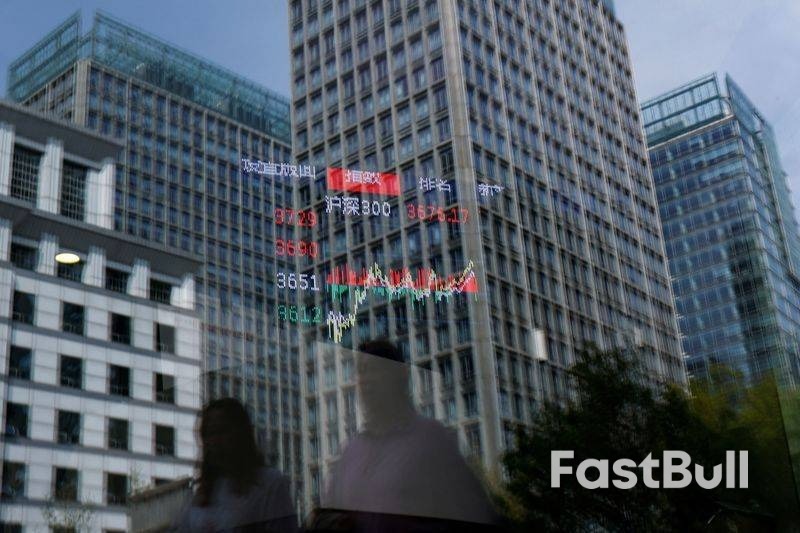
          Xi Jinping has announced a plan to counter China’s continuing economic problems and the impact of the US trade war, as reports swirl that it could drop tariffs on some US products, including semiconductors.
          Friday’s meeting of the politburo was convened to discuss China’s economy, which since the pandemic has faced difficulties fuelled by a housing sector crisis, youth unemployment and Donald Trump’s tariffs on all Chinese imports to the US.
          A readout of the meeting published by the official state media outlet Xinhua said China’s economy had showed a “positive trend” with increasing social confidence in 2025, but “the impact of external shocks has increased”.
          “We must strengthen bottom-line thinking, fully prepare emergency plans and do a solid job in economic work,” it said.
          In a reference to Trump’s global tariffs, the readout said Beijing would “work with the international community to actively uphold multilateralism and oppose unilateral bullying practices”.
          he US president has again insisted that Xi has called him to discuss the border taxes, despite Beijing denying any contact between the two countries over their bitter trade dispute.
          In an interview conducted on Tuesday with Time magazine and published on Friday, Trump repeated the claim but did not say when the call took place or specify what was discussed. “He’s called,” Trump said of Xi. “And I don’t think that’s a sign of weakness on his behalf.”
          On Thursday, a spokesperson for China’s foreign affairs ministry, Guo Jiakun, said of the reports of talks: “None of that is true.”
          Friday’s poliburo readout proposed a series of interventions to bolster the domestic economy and protect people and businesses from the impact of Trump’s tariffs, including increasing unemployment insurance payouts. It promised to increase low and middle incomes, develop the service industry and boost consumption.
          “We should take multiple measures to help enterprises in difficulties,” it said. “We should strengthen financing support. We should accelerate the integration of domestic and foreign trade.”
          It stressed the need for more proactive macroeconomic policies, faster development of a new real estate model and increased housing stock, and “stepping up” city renewal programmes and urban renovation.
          Wen-ti Sung, a non-resident fellow at the Atlantic Council’s Global China Hub, said the politburo’s decisions showed Beijing “clearly views the international macroeconomic environment as hostile” and was willing to take on high domestic inflation to weather the tariffs.
          “[This] hints that China will be digging into the trenches and is preparing for a long trade fight with Trump,” he said.
          Sung said Beijing was “doubling down on boosting domestic demand” and bolstering fiscal stimulus as the international market showed no signs of significant improvement.
          The meeting was held amid reports that Chinese authorities were considering a list of US products to exempt from the 125% tariffs imposed on all US imports. Earlier reports from Bloomberg and Reuters said medical equipment, semiconductors and some industrial chemicals such as ethane were being considered.
          On Thursday, a Shenzhen-based supplier posted online that it had been notified by the customs agency that eight semiconductor products would no longer attract the 125% duty.
          On Friday, the head of the American Chamber of Commerce in China, Michael Hart, said the Chinese authorities had been asking members what products they imported from the US that they could not find anywhere else.
          He welcomed the early signs that both sides were reviewing tariffs and starting to produce lists of excluded items. Stock markets across the Asia Pacific region rose after the reports.
          The trade war has hit the US and Chinese economies, and the tariff exemptions are likely to be a sign of the parties trying to ease their way out. The US had already exempted some categories of Chinese-made products from tariffs, including smartphones and laptops. This week, Trump said his tariffs on China would “come down substantially but it won’t be zero”.
          But in public the two governments have given different accounts on the status of negotiations on ending the trade war.

          On Friday afternoon, China’s foreign ministry reiterated its claim that the US and China were not engaged in any negotiations on tariffs, contradicting Trump’s claims on Thursday.
          Speaking to reporters at the White House, Trump said the two sides were talking. “We may reveal it later, but they had meetings this morning, and we’ve been meeting with China,” he said, declining to say who “they” were.
          The remarks appeared to be in response to the Chinese commerce ministry’s spokesperson, He Yadong, earlier saying there were “currently no economic and trade negotiations between China and the United States”.

          Source: Theguardian

          To stay updated on all economic events of today, please check out our Economic calendar
          Risk Warnings and Disclaimers
          You understand and acknowledge that there is a high degree of risk involved in trading. Following any strategies or investment methods may lead to potential losses. The content on the site is provided by our contributors and analysts for information purposes only. You are solely responsible for determining whether any trading assets, securities, strategy, or any other product is suitable for investing based on your own investment objectives and financial situation.
          Add to Favorites
          Share

          Global Equity Funds See Second Week of Inflows on Easing US-China Tariff Tensions

          Glendon

          Forex

          Economic

          China–U.S. Trade War

          Global Equity Funds See Second Week of Inflows on Easing US-China Tariff Tensions_1

          Global equity funds attracted inflows for a second straight week through April 23, supported by signs of a potential de-escalation in the tariff war between the U.S. and China, which boosted demand for riskier assets.

          According to LSEG Lipper data, global equity funds saw a net $9.11 billion inflow during the week after having witnessed a net $5.58 billion worth of net purchases in the previous week.

          The Trump administration is considering lowering tariffs on Chinese imports pending talks with Beijing, a source said on Wednesday, as the U.S. noted this week that China is weighing exemptions for some American goods from its 125% tariffs.

          European equity funds witnessed robust demand as they drew $8.08 billion worth of inflows following $11.79 billion in net purchases in the prior week.

          Investors also snapped up $3.65 billion worth of Asian funds but ditched U.S. funds to the tune of $1.35 billion, much less than $10.44 billion in the previous week.

          Sectoral equity funds, meanwhile, remained out of favor for a fourth successive week as investors pulled a net $1.6 billion out of these funds.

          The financial, consumer staples and healthcare sectors saw major outflows at $1.27 billion, $425 million and $353 million, respectively.

          Meanwhile, global investors bought a net $1.94 billion worth of bond funds following heavy net selling in the previous two weeks as the recent selloff in U.S. bond markets eased somewhat.

          The dollar-denominated mortgage bond funds attracted a net $4.79 billion in inflows after three weekly outflows in a row. Investors also racked up $5.59 billion worth of short-term bond funds but shed a net $1.61 billion worth of high-yield bond funds.

          Global money market funds, meanwhile, saw a net $15.83 billion worth of inflows after a net $113.12 billion worth of weekly selloff a week ago.

          Gold and precious metals commodity funds were popular for an 11th straight week as they gained a net $676 million in net purchases.

          Data covering 29,609 emerging market funds showed weekly outflows from bond funds cooled to a four-week low of $606 million. Equity funds, meanwhile, had a marginal $50 million worth of net selling.

          Source: Reuters

          To stay updated on all economic events of today, please check out our Economic calendar
          Risk Warnings and Disclaimers
          You understand and acknowledge that there is a high degree of risk involved in trading. Following any strategies or investment methods may lead to potential losses. The content on the site is provided by our contributors and analysts for information purposes only. You are solely responsible for determining whether any trading assets, securities, strategy, or any other product is suitable for investing based on your own investment objectives and financial situation.
          Add to Favorites
          Share

          Can the dollar lose its status?

          Adam

          Forex

          With the dollar in sharp decline since the beginning of the year, some observers are questioning the sustainability of its status as the global reserve currency. While reducing exposure to US assets could prolong this downward trend, a change in the dollar's status would require a credible alternative.
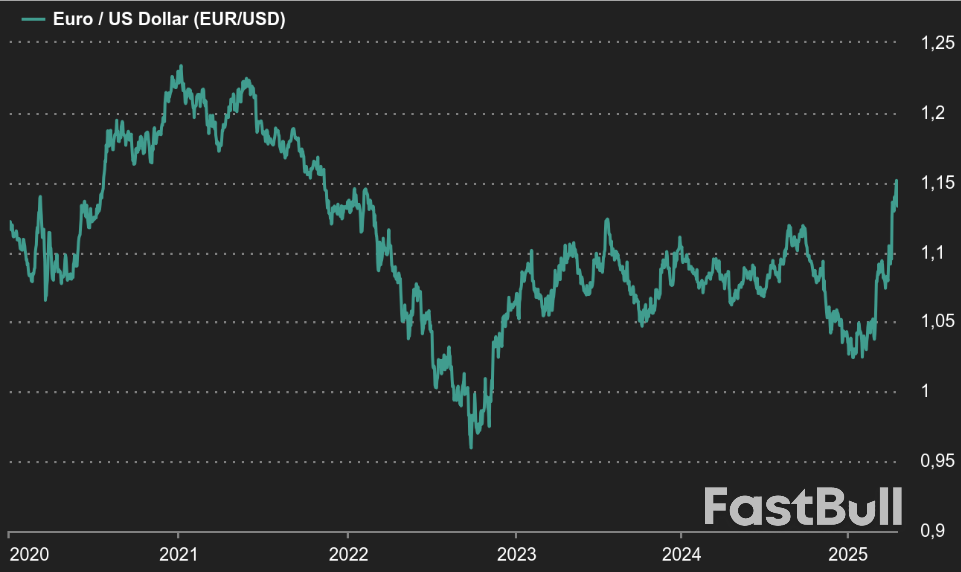
          Not so long ago, the rise of the dollar was a consensus view on the markets, and many investors were betting on a return to euro-dollar parity. That was at the end of last year, in the wake of Donald Trump's election. But as is often the case, the consensus has been reversed. As a result, the eurodollar crossed the 1.15 threshold again at the beginning of the week. This is the first time since the end of 2021.
          Can the dollar lose its status?_1
          As we explained earlier this week, it is not only the dollar that has been falling in recent weeks, but all US assets (stocks and bonds). Focusing on the currency, the dollar index – the dollar against a basket of reference currencies – is down 8.5% since January 1.
          Behind this decline is probably a movement away from US assets. This is because the Trump administration's economic policy is likely to weigh on global growth, and US growth in particular. This is shown by the IMF's new growth forecasts, published this week. Beyond the growth figures themselves, the unpredictability of the United States on the one hand, and the questioning of the rule of law and therefore of the long-term investment framework on the other, are leading to a loss of confidence among investors.

          A burden for the US?

          But is this a problem for the Trump administration? Although Scott Bessent often reiterates his commitment to a strong dollar policy, Donald Trump's goal is to weaken the dollar. This should stimulate US exports and give greater weight to the manufacturing sector. In the White House, this issue is being championed by Stephen Miran, who heads the Council of Economic Advisers. He believes that the chronic overvaluation of the dollar is the main cause of US trade imbalances. An overvalued dollar is therefore a burden for the US, which provides liquidity to the entire world and military protection to its allies.
          His main battle is therefore "burden sharing." The idea is that other countries should buy more US products or provide more financing to the US, for example by issuing perpetual zero-coupon bonds. All of this would be formalized in the Mar-a-Lago agreements—named after Donald Trump's residence in Florida. The name refers to the Plaza Accords of 1985, when France, the United Kingdom, Japan, Germany, and the United States agreed to devalue the dollar.
          All this remains theoretical for the time being. To quote a note from the Edmond de Rothschild team, the Mar-a-Lago agreements are a project "so unfinished and so out of the box that it remains speculative." Indeed, the world has changed somewhat since 1985, and dollar assets are no longer concentrated in the few countries that signed the Plaza Accords.
          Finally, it is important to remember the implications of a currency devaluation. On the one hand, it boosts the competitiveness of US exports. But it also makes imports more expensive, which is likely to fuel inflation. Another important point to mention is that a currency decline is in principle positive for financial conditions and therefore for growth. But if it reflects a significant outflow of US assets, higher bond yields would offset the positive effect on financial conditions.

          The dollar for lack of anything better

          It is important to distinguish between two issues: the decline of the dollar and the loss of the dollar's status. If investors continue to reduce their exposure to US assets, the dollar may continue to fall. Indeed, US markets have attracted flows for decades. According to the most recent data published by the US Treasury Department, the value of US assets held by non-residents exceeds $31 trillion.
          The dollar may therefore continue to decline. But for it to lose its status as a reference currency, there would have to be an alternative. However, we do not really see one. The two other major economic zones are Europe and China. The yuan is a currency controlled by the Chinese authorities, not to say manipulated. As for the euro, the debt markets lack depth and the eurozone is not yet fully integrated.
          For the time being, the dollar is undoubtedly the reference currency. To give a few figures that illustrate this dominant role, the dollar is currently used in 88% of trade and 59% of central bank foreign exchange reserves. And the United States has the most structured, deepest, and most liquid financial markets in the world.
          The conclusion is therefore that even if the United States is currently doing everything wrong, the dollar will not lose its status anytime soon. When you take into account the political equation and the depth and liquidity of the capital markets, there is really no alternative to the dollar. A large proportion of global savings will therefore continue to be invested in the United States.

          Source: marketscreener

          Risk Warnings and Disclaimers
          You understand and acknowledge that there is a high degree of risk involved in trading. Following any strategies or investment methods may lead to potential losses. The content on the site is provided by our contributors and analysts for information purposes only. You are solely responsible for determining whether any trading assets, securities, strategy, or any other product is suitable for investing based on your own investment objectives and financial situation.
          Add to Favorites
          Share

          World Bank Is Not an American Bank, German Development Minister Says

          Warren Takunda

          Economic

          The Trump administration cannot determine the mission of the World Bank because the global lender's goals are based on agreement by many countries, Svenja Schulze, Germany's minister for economic cooperation and development, told Reuters.
          "This is not an American bank, it's a world bank," Schulze said in an interview on Thursday on the sidelines of the International Monetary Fund and World Bank spring meetings in Washington.
          U.S. Treasury Secretary Scott Bessent on Wednesday called on the IMF and World Bank to refocus on their core missions of macroeconomic stability and development, arguing they have strayed too far into vanity projects such as climate change.
          Certain euphemisms are starting to be used in international institutions, such as "weather developments" instead of "climate change," and words like "gender" or "climate" or "inclusion" are being avoided.
          "That is the founding mission of this bank, to take care of exactly these issues, and therefore we will now have to talk about what the U.S. actually wants," Schulze said.
          The U.S. is the largest single shareholder of the World Bank, with just under 16%.
          President Donald Trump's administration has cancelled billions of dollars in foreign aid, including funding for projects that provide lifesaving care for millions of people in some of the world's poorest countries.
          Schulze noted that these cuts have caused "a very large loss of trust" in developing countries, adding that rebuilding trust and showing that the World Bank and Germany are reliable partners were her goals for this week's meetings.
          Schulze's Social Democrats will retain control of the German development ministry as part of the coalition agreement reached by the parties forming Germany's next government. It is not clear who the next minister will be, though Schulze said she would like to remain in the position.
          Could the trade war between China and the US be easing?
          "We want to continue investing in development," she said. "Investment in development policy is also part of our security policy. It's not just foreign policy and defence, but also development."
          Germany provided 30 billion euros ($34.16 billion), or 0.67% of its gross national income, for development aid in 2024, but failed to meet the agreed United Nations target of 0.7% of GDP, the Official Development Assistance (ODA) quota.
          The agreement reached by the incoming German coalition includes an "appropriate reduction in the ODA quota," which comes after years in which the budget was constantly reduced, according to the agreement.

          Source: Reuters

          To stay updated on all economic events of today, please check out our Economic calendar
          Risk Warnings and Disclaimers
          You understand and acknowledge that there is a high degree of risk involved in trading. Following any strategies or investment methods may lead to potential losses. The content on the site is provided by our contributors and analysts for information purposes only. You are solely responsible for determining whether any trading assets, securities, strategy, or any other product is suitable for investing based on your own investment objectives and financial situation.
          Add to Favorites
          Share

          Trump Open to Meeting Iran's Leaders, Sees Chance of Deal, He Tells Time Magazine

          Michelle

          Political

          U.S. President Donald Trump said he is open to meeting Iran's supreme leader or president and that he thinks the two countries will strike a new deal on Tehran's disputed nuclear programme.

          However, Trump, who in 2018 pulled the U.S. out of a now moribund nuclear deal between Tehran and world powers, repeated a threat of military action against Iran unless a new pact is swiftly reached to prevent it developing nuclear weapons.

          Trump, in an April 22 interview with Time magazine published on Friday, said "I think we're going to make a deal with Iran" following indirect U.S.-Iranian talks last week in which the side agreed to draw up a framework for a potential deal. A U.S. official said the discussions yielded "very good progress".

          Asked by Time whether he was open to meeting Iranian Supreme Leader Ali Khamenei, an anti-Western hardliner who has the last say on all major state policies, or reformist President Masoud Pezeshkian, Trump replied: "Sure."

          Expert-level talks are set to resume on Saturday in Oman, which has acted as intermediary between the longtime adversaries, with a third round of high-level nuclear discussions planned for the same day.

          Israel, a close U.S. ally and Iran's major Middle East foe, has described the Islamic Republic's escalating uranium enrichment programme - a potential pathway to nuclear bombs - as an "existential threat".

          Israeli Prime Minister Benjamin Netanyahu has called for a complete dismantling of Iran’s nuclear capabilities, saying partial measures will not suffice to ensure Israel's security.

          Asked in the interview if he was concerned Netanyahu might drag the United States into a war with Iran, Trump said: "No."

          'I'LL BE LEADING THE PACK'

          However, when asked if the U.S. would join a war against Iran should Israel take action, he responded: "I may go in very willingly if we can't get a deal. If we don't make a deal, I'll be leading the pack."

          In March, Iran responded to a letter from Trump in which he urged it to negotiate a new deal by stating it would not engage in direct talks under maximum pressure and military threats but was open to indirect negotiations, as in the past.

          Although the current talks have been indirect and mediated by Oman, U.S. and Iranian officials did speak face-to-face briefly following the first round on April 12.

          The last known face-to-face negotiations between the two countries took place under former U.S. President Barack Obama during diplomacy that led to the 2015 nuclear accord.

          Western powers accuse Iran of harbouring a clandestine agenda to develop nuclear weapons capability by enriching uranium to a high level of fissile purity, above what they say is justifiable for a civilian atomic energy programme.

          Tehran says its nuclear programme is wholly peaceful. The 2015 deal curbed its uranium enrichment activity in exchange for relief from international sanctions, but Iran resumed and acclerated enrichment after the Trump walkout in 2018.

          Source: Reuters

          Risk Warnings and Disclaimers
          You understand and acknowledge that there is a high degree of risk involved in trading. Following any strategies or investment methods may lead to potential losses. The content on the site is provided by our contributors and analysts for information purposes only. You are solely responsible for determining whether any trading assets, securities, strategy, or any other product is suitable for investing based on your own investment objectives and financial situation.
          Add to Favorites
          Share

          Investors should be more nervous about equity markets than gold above $3,000

          Adam

          Commodity

          Although the gold market has seen a significant rise in volatility this past week, the explosive drive to $3,500 shows its potential. Investors should use pullbacks to slowly build a position that represents about 10% of their portfolio, according to one fund manager.
          In a recent interview with Kitco News, Ryan McIntyre, Managing Partner at Sprott Inc., said that when compared to overvalued equity markets, gold has plenty of room to go higher in the long term.
          He added that in the current environment, gold has the potential to build a new foundation above $3,000, so investors don’t need to be nervous about gold at current levels.
          “I would be much more scared of U.S. equities than gold,” he said. “It's undeniable that U.S. equities are very expensive.”
          McIntyre noted that he expects equity markets to continue to struggle as inflation remains stubbornly high, forcing the Federal Reserve to maintain a neutral monetary policy. He added that it's only a matter of time before companies have to adjust their forward earnings guidance to reflect the higher interest rate environment.
          “I can see a lot of headwinds for equities. Maybe it's because rates are going up, because now people are demanding more for holding fiat currencies. Or many investors are afraid of a recession. It makes complete sense to me why people are diversifying away from U.S. equities and into other assets like gold,” he said. “The returns for gold will be no worse than the returns from U.S. equities for potentially the next decade. But I think the risk profile is much better.”
          The bullish comments come as gold prices have fallen sharply from their recent all-time high of $3,500. Spot gold last traded at $3,327.90 an ounce, up 1% on the day. However, prices are down roughly 5% from Tuesday’s overnight all-time high. Meanwhile, gold prices are up nearly 27% since the start of the year.
          McIntyre said that he expects gold prices to remain well supported through 2025 as investors face more than just a potential recession that weighs on equity markets.
          He added that the problems brewing in global financial markets have risen to the sovereign level.
          “Corporate issues like we've been solving for, basically, the last generation, are pretty straightforward,” he said. “However, solving various sovereign issues, particularly with the United States, given that it's obviously the largest economy in the world, is just a much grander scale of risk. There's really only one solution to that risk, and that literally is physical gold.”
          Gold’s drive to $3,500 pushed prices up 11% this month, which would have been gold’s best monthly performance since November 2011. The rally was driven by significant uncertainty as President Donald Trump escalated his trade war with China, placing 145% tariffs on imported Chinese products.
          Last week, Trump also picked a fight with Federal Reserve Chair Jerome Powell, complaining about the central bank’s neutral monetary policy and even expressing the desire to fire him. The Federal Reserve is independent from the government, and the president can only remove the Chair “for cause.”
          Trump has since changed his tune, saying earlier this week that he has "no intention" of firing Powell, whose term ends in 2026. He also eased some of his rhetoric regarding China.
          McIntyre noted that the uncertainty surging through financial markets goes beyond economics. He explained that wanting to fire the head of the Federal Reserve creates uncertainty over the rule of law in America. He pointed out that faith in the United States was being eroded as both the U.S. dollar and Treasuries sold off.
          Although markets have since calmed down, McIntyre said that the damage is already done and it's going to take time for the U.S. to regain that lost trust.
          “I don’t think the U.S. dollar is going to lose its reserve currency status overnight. It’s not going to happen tomorrow, but it's clear that people are using it less and less,” he said. “I think we will continue to see countries hold either more of their own currencies or something that is independent, like gold.”
          McIntyre pointed out that central bank demand will continue to underpin gold prices, making it an attractive safe haven for investors, even at elevated prices.
          Along with gold re-establishing itself as an important global monetary asset, McIntyre said that sentiment in the marketplace also shows gold still has plenty of upside potential.
          He noted that the rally in 2011, which drove gold to its previous all-time highs at $1,900 an ounce, created a mania in the mining sector and drove valuations in the sector to record highs.
          He also noted that in 2011, consumers were flooded with “sell your gold for cash” advertising. He explained that interest in gold has not reached that manic level.
          “There is some enthusiasm for gold, but when people start getting really excited about the gold equities because they think gold can’t go wrong, that is when we know the market is peaking,” he said.

          Source : kitco

          Risk Warnings and Disclaimers
          You understand and acknowledge that there is a high degree of risk involved in trading. Following any strategies or investment methods may lead to potential losses. The content on the site is provided by our contributors and analysts for information purposes only. You are solely responsible for determining whether any trading assets, securities, strategy, or any other product is suitable for investing based on your own investment objectives and financial situation.
          Add to Favorites
          Share

          Yen loses ground as Tokyo core CPI hits 2-year high

          Adam

          Forex

          The Japanese yen is in negative territory on Friday. In the European session, USD/JPY is trading at 143.45, up 0.59% on the day.

          Tokyo Core CPI rises to 3.4%

          Tokyo Core CPI rose to 3.4% y/y in April, its highest level since April 2023. This was sharply higher from the 2.4% gain in March and beat the market estimate of 3.2%. The spike was driven by a reduction in government energy subsidies as well as hikes in food prices. The price of rice, a staple food, has skyrocketed by 93% in the past year and grain prices have jumped 25% during that time. Tokyo CPI also surged to 3.5% from 2.9% in March.

          BoJ in wait-and-see-mode

          The Bank of Japan won't be able to ignore these hot inflation numbers and is expected to raise interest rates. The BoJ doesn't like to telegraph its intentions and the timeline of another hike is unclear. The central bank will likely hold rates at next week's meeting and the markets are looking at a rate hike in June or July.
          US tariffs have complicated matters for the Bank of Japan and could delay the next rate hike. President Trump's trade policy has been erratic and it's still unclear whether he will reduce tariffs against China and other countries. BoJ policy makers are in a wait-and-see stance and hoping that US trade policy will be more clear in the coming months.

          Markets bracing for weak US consumer sentiment, inflation expectatations

          The US wraps up the week with consumer sentiment and inflation expectations. The UoM consumer sentiment index slipped to 50.8 in April, down from 57.0 in March and the lowest level since June 2022. The final estimate is expected to confirm the weak initial release.
          Consumers are expecting a jump in inflation, with the UoM inflation expectations hitting 6.7% in April in the initial release, up from 5.0% in March. The final estimate is expected to confirm the initial reading. This would mark the steepest inflation expectations since November 1981.

          USD/JPY Technical

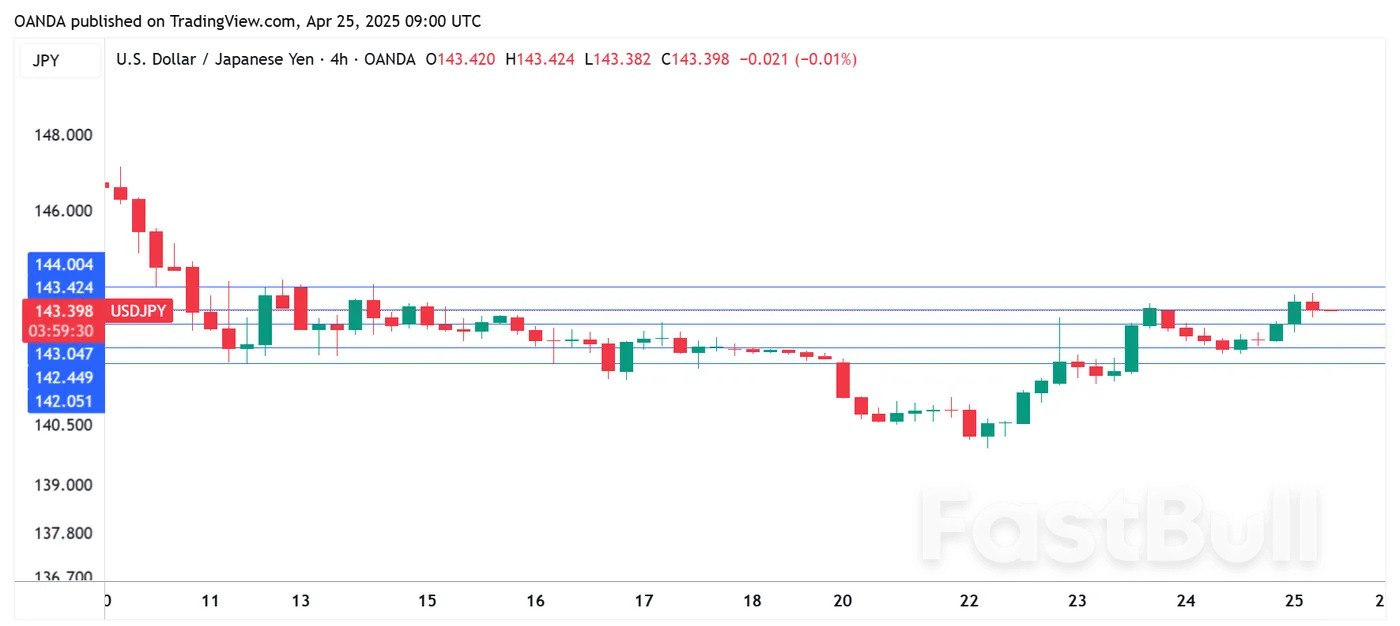
          USD/JPY has pushed above resistance at 143.032 and is testing resistance at 143.42. Next, there is resistance at 144.01.
          142.44 and 142.05 are the next support levels.
          Yen loses ground as Tokyo core CPI hits 2-year high_1

          USDJPY 4-Hour Chart, April 25, 2025

          Source: marketpulse

          Risk Warnings and Disclaimers
          You understand and acknowledge that there is a high degree of risk involved in trading. Following any strategies or investment methods may lead to potential losses. The content on the site is provided by our contributors and analysts for information purposes only. You are solely responsible for determining whether any trading assets, securities, strategy, or any other product is suitable for investing based on your own investment objectives and financial situation.
          Add to Favorites
          Share
          FastBull
          Copyright © 2025 FastBull Ltd

          728 RM B 7/F GEE LOK IND BLDG NO 34 HUNG TO RD KWUN TONG KLN HONG KONG

          TelegramInstagramTwitterfacebooklinkedin
          App Store Google Play Google Play
          Products
          Charts

          Chats

          Q&A with Experts
          Screeners
          Economic Calendar
          Data
          Tools
          Membership
          Features
          Function
          Markets
          Copy Trading
          Latest Signals
          Contests
          News
          Analysis
          24/7
          Columns
          Education
          Company
          Careers
          About Us
          Contact Us
          Advertising
          Help Center
          Feedback
          User Agreement
          Privacy Policy
          Business

          White Label

          Data API

          Web Plug-ins

          Poster Maker

          Affiliate Program

          Risk Disclosure

          The risk of loss in trading financial instruments such as stocks, FX, commodities, futures, bonds, ETFs and crypto can be substantial. You may sustain a total loss of the funds that you deposit with your broker. Therefore, you should carefully consider whether such trading is suitable for you in light of your circumstances and financial resources.

          No decision to invest should be made without thoroughly conducting due diligence by yourself or consulting with your financial advisors. Our web content might not suit you since we don't know your financial conditions and investment needs. Our financial information might have latency or contain inaccuracy, so you should be fully responsible for any of your trading and investment decisions. The company will not be responsible for your capital loss.

          Without getting permission from the website, you are not allowed to copy the website's graphics, texts, or trademarks. Intellectual property rights in the content or data incorporated into this website belong to its providers and exchange merchants.

          Not Logged In

          Log in to access more features

          FastBull Membership

          Not yet

          Purchase

          Become a signal provider
          Help Center
          Customer Service
          Dark Mode
          Price Up/Down Colors

          Log In

          Sign Up

          Position
          Layout
          Fullscreen
          Default to Chart
          The chart page opens by default when you visit fastbull.com