• Trade
  • Markets
  • Copy
  • Contests
  • News
  • 24/7
  • Calendar
  • Q&A
  • Chats
Trending
Screeners
SYMBOL
LAST
BID
ASK
HIGH
LOW
NET CHG.
%CHG.
SPREAD
SPX
S&P 500 Index
6827.42
6827.42
6827.42
6899.86
6801.80
-73.58
-1.07%
--
DJI
Dow Jones Industrial Average
48458.04
48458.04
48458.04
48886.86
48334.10
-245.98
-0.51%
--
IXIC
NASDAQ Composite Index
23195.16
23195.16
23195.16
23554.89
23094.51
-398.69
-1.69%
--
USDX
US Dollar Index
97.970
98.050
97.970
98.070
97.920
+0.020
+ 0.02%
--
EURUSD
Euro / US Dollar
1.17324
1.17331
1.17324
1.17447
1.17283
-0.00070
-0.06%
--
GBPUSD
Pound Sterling / US Dollar
1.33625
1.33632
1.33625
1.33740
1.33546
-0.00082
-0.06%
--
XAUUSD
Gold / US Dollar
4342.02
4342.45
4342.02
4347.21
4294.68
+42.63
+ 0.99%
--
WTI
Light Sweet Crude Oil
57.506
57.543
57.506
57.601
57.194
+0.273
+ 0.48%
--

Community Accounts

Signal Accounts
--
Profit Accounts
--
Loss Accounts
--
View More

Become a signal provider

Sell trading signals to earn additional income

View More

Guide to Copy Trading

Get started with ease and confidence

View More

Signal Accounts for Members

All Signal Accounts

Best Return
  • Best Return
  • Best P/L
  • Best MDD
Past 1W
  • Past 1W
  • Past 1M
  • Past 1Y

All Contests

  • All
  • Trump Updates
  • Recommend
  • Stocks
  • Cryptocurrencies
  • Central Banks
  • Featured News
Top News Only
Share

Stats Office - Botswana November Consumer Inflation At 0.0% Month-On-Month

Share

Stats Office - Botswana November Consumer Inflation At 3.8% Year-On-Year

Share

Statistics Bureau - Kazakhstan's Jan-Nov Industrial Output +7.4% Year-On-Year

Share

Fca: Sets Out Plans To Help Build Mortgage Market Of Future

Share

Eurostoxx 50 Futures Up 0.38%, DAX Futures Up 0.43%, FTSE Futures Up 0.37%

Share

[Delivery Of New US Presidential Aircraft Delayed Again] According To The Latest Timeline Released By The US Air Force, The Delivery Of The First Of The Two Newly Commissioned Air Force One Presidential Aircraft Will Not Be Earlier Than 2028. This Means That The Delivery Of The New Air Force One Has Been Delayed Once Again

Share

German Nov Wholesale Prices +0.3% Month-On-Month

Share

Norway's Nov Trade Balance Nok 41.3 Billion - Statistics Norway

Share

German Nov Wholesale Prices +1.5% Year-On-Year

Share

Romania's Adjusted Industrial Production +0.4% Month-On-Month In October, +0.2% Year-On-Year - Statistics Board

Share

Russia Says It Destroyed 130 Ukrainian Drones Overnight, Some Moscow Airports Disrupted

Share

EU Commissioner Kos: This Is No Time To Speculate On Timeframe For Ukraine's Accession To EU

Share

Lithuania Foreign Minister: Ukraine Needs Article 5-Alike Security Guarantees, With Nuclear Deterrent

Share

Russia's Central Bank Says It Seeks 18.2 Trillion Roubles In Damages From Euroclear

Share

Lithuania's Foreign Minister Says Expects EU Today To Broaden Belarus Sanctions Regime To Include Hybrid Activity

Share

India's Nifty 50 Index Pares Losses, Last Down 0.1%

Share

EU's Kallas: Important To Have Belgium On Board For Reparations Loan

Share

EU's Kallas: Work On Reparations Loan For Ukraine "Increasingly Difficult" But Still Have Some Days To Reach Agreement

Share

EU's Kallas: If Russian Agression Is Rewarded, We Will See More Of It

Share

India's Sept WPI Inflation Revised To 0.19% Year-On-Year

TIME
ACT
FCST
PREV
U.K. Trade Balance Non-EU (SA) (Oct)

A:--

F: --

P: --

France HICP Final MoM (Nov)

A:--

F: --

P: --

China, Mainland Outstanding Loans Growth YoY (Nov)

A:--

F: --

P: --

China, Mainland M2 Money Supply YoY (Nov)

A:--

F: --

P: --

China, Mainland M0 Money Supply YoY (Nov)

A:--

F: --

P: --

China, Mainland M1 Money Supply YoY (Nov)

A:--

F: --

P: --

India CPI YoY (Nov)

A:--

F: --

P: --

India Deposit Gowth YoY

A:--

F: --

P: --

Brazil Services Growth YoY (Oct)

A:--

F: --

P: --

Mexico Industrial Output YoY (Oct)

A:--

F: --

P: --

Russia Trade Balance (Oct)

A:--

F: --

P: --

Philadelphia Fed President Henry Paulson delivers a speech
Canada Building Permits MoM (SA) (Oct)

A:--

F: --

P: --

Canada Wholesale Sales YoY (Oct)

A:--

F: --

P: --

Canada Wholesale Inventory MoM (Oct)

A:--

F: --

P: --

Canada Wholesale Inventory YoY (Oct)

A:--

F: --

P: --

Canada Wholesale Sales MoM (SA) (Oct)

A:--

F: --

P: --

Germany Current Account (Not SA) (Oct)

A:--

F: --

P: --

U.S. Weekly Total Rig Count

A:--

F: --

P: --

U.S. Weekly Total Oil Rig Count

A:--

F: --

P: --

Japan Tankan Small Manufacturing Outlook Index (Q4)

A:--

F: --

P: --

Japan Tankan Large Non-Manufacturing Diffusion Index (Q4)

A:--

F: --

P: --

Japan Tankan Large Non-Manufacturing Outlook Index (Q4)

A:--

F: --

P: --

Japan Tankan Large Manufacturing Outlook Index (Q4)

A:--

F: --

P: --

Japan Tankan Small Manufacturing Diffusion Index (Q4)

A:--

F: --

P: --

Japan Tankan Large Manufacturing Diffusion Index (Q4)

A:--

F: --

P: --

Japan Tankan Large-Enterprise Capital Expenditure YoY (Q4)

A:--

F: --

P: --

U.K. Rightmove House Price Index YoY (Dec)

A:--

F: --

P: --

China, Mainland Industrial Output YoY (YTD) (Nov)

A:--

F: --

P: --

China, Mainland Urban Area Unemployment Rate (Nov)

A:--

F: --

P: --

Saudi Arabia CPI YoY (Nov)

A:--

F: --

P: --

Euro Zone Industrial Output YoY (Oct)

--

F: --

P: --

Euro Zone Industrial Output MoM (Oct)

--

F: --

P: --

Canada Existing Home Sales MoM (Nov)

--

F: --

P: --

Euro Zone Total Reserve Assets (Nov)

--

F: --

P: --

U.K. Inflation Rate Expectations

--

F: --

P: --

Canada National Economic Confidence Index

--

F: --

P: --

Canada New Housing Starts (Nov)

--

F: --

P: --

U.S. NY Fed Manufacturing Employment Index (Dec)

--

F: --

P: --

U.S. NY Fed Manufacturing Index (Dec)

--

F: --

P: --

Canada Core CPI YoY (Nov)

--

F: --

P: --

Canada Manufacturing Unfilled Orders MoM (Oct)

--

F: --

P: --

U.S. NY Fed Manufacturing Prices Received Index (Dec)

--

F: --

P: --

U.S. NY Fed Manufacturing New Orders Index (Dec)

--

F: --

P: --

Canada Manufacturing New Orders MoM (Oct)

--

F: --

P: --

Canada Core CPI MoM (Nov)

--

F: --

P: --

Canada Trimmed CPI YoY (SA) (Nov)

--

F: --

P: --

Canada Manufacturing Inventory MoM (Oct)

--

F: --

P: --

Canada CPI YoY (Nov)

--

F: --

P: --

Canada CPI MoM (Nov)

--

F: --

P: --

Canada CPI YoY (SA) (Nov)

--

F: --

P: --

Canada Core CPI MoM (SA) (Nov)

--

F: --

P: --

Canada CPI MoM (SA) (Nov)

--

F: --

P: --

Federal Reserve Board Governor Milan delivered a speech
U.S. NAHB Housing Market Index (Dec)

--

F: --

P: --

Australia Composite PMI Prelim (Dec)

--

F: --

P: --

Australia Services PMI Prelim (Dec)

--

F: --

P: --

Australia Manufacturing PMI Prelim (Dec)

--

F: --

P: --

Japan Manufacturing PMI Prelim (SA) (Dec)

--

F: --

P: --

U.K. Unemployment Claimant Count (Nov)

--

F: --

P: --

U.K. Unemployment Rate (Nov)

--

F: --

P: --

Q&A with Experts
    • All
    • Chatrooms
    • Groups
    • Friends
    Connecting
    .
    .
    .
    Type here...
    Add Symbol or Code

      No matching data

      All
      Trump Updates
      Recommend
      Stocks
      Cryptocurrencies
      Central Banks
      Featured News
      • All
      • Russia-Ukraine Conflict
      • Middle East Flashpoint
      • All
      • Russia-Ukraine Conflict
      • Middle East Flashpoint
      Search
      Products

      Charts Free Forever

      Chats Q&A with Experts
      Screeners Economic Calendar Data Tools
      Membership Features
      Data Warehouse Market Trends Institutional Data Policy Rates Macro

      Market Trends

      Market Sentiment Order Book Forex Correlations

      Top Indicators

      Charts Free Forever
      Markets

      News

      News Analysis 24/7 Columns Education
      From Institutions From Analysts
      Topics Columnists

      Latest Views

      Latest Views

      Trending Topics

      Top Columnists

      Latest Update

      Signals

      Copy Rankings Latest Signals Become a signal provider AI Rating
      Contests
      Brokers

      Overview Brokers Assessment Rankings Regulators News Claims
      Broker listing Forex Brokers Comparison Tool Live Spread Comparison Scam
      Q&A Complaint Scam Alert Videos Tips to Detect Scam
      More

      Business
      Events
      Careers About Us Advertising Help Center

      White Label

      Data API

      Web Plug-ins

      Affiliate Program

      Awards Institution Evaluation IB Seminar Salon Event Exhibition
      Vietnam Thailand Singapore Dubai
      Fans Party Investment Sharing Session
      FastBull Summit BrokersView Expo
      Recent Searches
        Top Searches
          Markets
          News
          Analysis
          User
          24/7
          Economic Calendar
          Education
          Data
          • Names
          • Latest
          • Prev

          View All

          No data

          Scan to Download

          Faster Charts, Chat Faster!

          Download App
          English
          • English
          • Español
          • العربية
          • Bahasa Indonesia
          • Bahasa Melayu
          • Tiếng Việt
          • ภาษาไทย
          • Français
          • Italiano
          • Türkçe
          • Русский язык
          • 简中
          • 繁中
          Open Account
          Search
          Products
          Charts Free Forever
          Markets
          News
          Signals

          Copy Rankings Latest Signals Become a signal provider AI Rating
          Contests
          Brokers

          Overview Brokers Assessment Rankings Regulators News Claims
          Broker listing Forex Brokers Comparison Tool Live Spread Comparison Scam
          Q&A Complaint Scam Alert Videos Tips to Detect Scam
          More

          Business
          Events
          Careers About Us Advertising Help Center

          White Label

          Data API

          Web Plug-ins

          Affiliate Program

          Awards Institution Evaluation IB Seminar Salon Event Exhibition
          Vietnam Thailand Singapore Dubai
          Fans Party Investment Sharing Session
          FastBull Summit BrokersView Expo

          Washington Signals Progress But Shifts Responsibility: Trade De-escalation “Up to China,” Says Treasury Secretary

          Gerik

          China–U.S. Trade War

          Summary:

          U.S. Treasury Secretary Scott Bessent emphasized that easing trade tensions depends on China's actions, despite recent partial tariff rollbacks, as businesses brace for supply shortages and economic strain from escalating U.S.-China tariffs...

          Shifting the Diplomatic Burden to Beijing

          As trade frictions between the U.S. and China escalate, U.S. Treasury Secretary Scott Bessent asserted on Monday that reducing tensions now "depends on China." This framing comes amid mixed signals from the White House, including President Trump’s alternating threats and overtures. The message implies that although some steps have been taken—such as China's quiet removal of tariffs on certain U.S. semiconductors and pharmaceuticals—the broader responsibility for de-escalation rests with Beijing.
          Bessent’s remarks follow a growing pattern in U.S. diplomacy: strategic ambiguity from the Trump administration is used both as pressure and leverage. In this case, it has created a situation where even marginal Chinese adjustments are interpreted as positive signs, while the bulk of resolution responsibility remains externalized.

          Tariff Fallout Deepens Across Key Sectors

          Since the U.S. imposed a steep 145% tariff on most Chinese imports in April, trade volumes have plummeted. Bloomberg estimates a 60% drop in shipments to the U.S., and retailers such as Walmart and Target are already warning about empty shelves and rising prices. The impact is set to intensify by mid-May, when businesses will urgently need to replenish inventory—if supply chains allow.
          The transport, logistics, and retail sectors are projected to suffer heavily, with forecasts of mass layoffs and distribution bottlenecks. The economic correlation is clear: trade barriers are disrupting flow, inflating costs, and undermining employment stability, with potential knock-on effects throughout the broader consumer economy.

          Mixed Messages Cloud Negotiation Outlook

          President Trump’s contradictory statements have further complicated the geopolitical landscape. While claiming to have spoken with Chinese President Xi Jinping—an assertion Beijing denies—Trump has simultaneously threatened to maintain tariffs unless offered something “significant.” The inconsistency leaves both investors and international partners uncertain about Washington’s true objectives or timelines.
          Despite this volatility, recent signs of partial tariff relief have raised hopes for broader de-escalation. The rollback of duties on select U.S. tech and medical goods by China is seen by some as a signal of potential compromise. However, these actions may be more tactical than strategic—intended to ease domestic supply constraints in China without signaling broader concession.

          Market Outlook and Tariff Complexity

          The current 10% base tariff imposed on April 5 remains in place for most imports, but speculation is mounting over upcoming exemptions and deferrals. Trump has hinted at suspending levies on auto parts and select consumer tech, despite reaffirming that tariffs will remain central to his trade agenda.
          Meanwhile, the administration has initiated new investigations into imported trucks, potentially opening the door for additional duties. These actions reflect a broader pattern of sector-by-sector escalation, creating prolonged uncertainty for supply chain planners and investors alike.
          With tariffs reaching historically high levels—145% from the U.S. and up to 125% from China—trade normalization now hinges on political decisions as much as economic realities. While Secretary Bessent acknowledges some progress, his declaration that it’s “up to China” subtly shifts blame while buying time for U.S. strategists. Unless a structured negotiation framework emerges soon, the tariff standoff is likely to continue weighing on global markets, business operations, and economic confidence well into the second half of 2025.

          Source: Yahoo Finance

          Risk Warnings and Disclaimers
          You understand and acknowledge that there is a high degree of risk involved in trading. Following any strategies or investment methods may lead to potential losses. The content on the site is provided by our contributors and analysts for information purposes only. You are solely responsible for determining whether any trading assets, securities, strategy, or any other product is suitable for investing based on your own investment objectives and financial situation.
          Add to Favorites
          Share

          Euro Soars Amid Tariff Turmoil: European Exporters Brace for Profit Squeeze as Currency Strengthens

          Gerik

          Economic

          Unexpected Euro Surge Compounds Tariff Pain

          Contrary to conventional expectations that trade-targeted currencies would weaken, the euro has instead surged nearly 10% since early March 2025, marking its strongest trade-weighted performance since 2022. The rally was driven not only by a sharp decline in the U.S. dollar—once a safe haven—but also by Germany’s expansionary fiscal shift, which injected optimism into the eurozone outlook. However, this appreciation has created new challenges for European exporters, especially those heavily exposed to U.S. markets.
          The strengthening euro, in this context, does not mitigate the negative effects of tariffs but rather amplifies them. This inverse correlation challenges standard economic forecasts and indicates that capital is shifting toward the euro as a perceived alternative safe asset—thus linking macroeconomic sentiment directly to corporate profitability outcomes in Europe.

          Earnings Outlook Weakens Across Export-Heavy Sectors

          Analysts at Goldman Sachs and Barclays note that about 60% of STOXX 600 company revenues are generated abroad, with the U.S. contributing close to half. A 10% euro appreciation, according to BNP Paribas, typically erodes 2–3% of corporate earnings. This drag comes on top of the direct margin pressure from new American tariffs.
          Companies have started flagging the impact. Unilever has already reported revenue erosion in Q1 2025 due to adverse currency movements. L’Oreal estimates that if the euro remains at $1.15 for the rest of the year, its net sales may decline by as much as 2.9%. These cases illustrate a causal link between the euro's strength and lower reported earnings, particularly for firms with dollar-denominated revenue but euro-based cost structures.

          Macroeconomic Concerns Deepen in Export-Focused Economies

          Germany, the eurozone’s largest and most export-reliant economy, is at particular risk. Bundesbank President Joachim Nagel recently acknowledged that the country could slide into a mild recession in 2025. The IMF has already downgraded growth forecasts for the euro area for both 2025 and 2026. A stronger euro further reduces competitiveness at a time when European industries—especially automotive—face intensifying competition from China and additional U.S. tariffs.
          The automotive sector exemplifies this double burden. Since Trump’s re-election and the onset of tariff expansions, European car and parts manufacturers have seen stock prices fall roughly 8%, while the broader STOXX 600 declined by less than 1%. The relative underperformance signals investor recognition of sector-specific vulnerabilities.

          Investor Sentiment and Hedging Constraints

          Currency appreciation, while theoretically beneficial to consumers via cheaper imports, delivers only marginal relief in practice, especially when energy and raw materials markets remain volatile. More importantly, investors are becoming increasingly cautious. Strategists like Frederique Carrier of RBC Wealth Management now favor domestically focused stocks and companies likely to benefit from German fiscal stimulus, rather than multinationals vulnerable to forex and trade shocks.
          Adding to corporate anxiety is uncertainty around the effectiveness of currency hedging. Rapid currency fluctuations and market volatility have made traditional derivative strategies less reliable or more expensive, limiting companies’ ability to shield earnings from exchange rate risk. This represents a critical breakdown in risk management at a time when geopolitical and monetary instability are both rising.
          The sharp appreciation of the euro has compounded the negative effects of U.S. tariffs on Europe’s export-reliant companies, particularly in the manufacturing and automotive sectors. As revenue forecasts dim and profit margins compress, firms face rising pressure from both external trade shocks and internal currency-driven competitiveness erosion. Unless the euro stabilizes or alternative policy responses emerge, the combination of trade friction, forex risk, and economic slowdown may further weigh on Europe’s corporate earnings landscape in the months ahead.

          Source: Reuters

          To stay updated on all economic events of today, please check out our Economic calendar
          Risk Warnings and Disclaimers
          You understand and acknowledge that there is a high degree of risk involved in trading. Following any strategies or investment methods may lead to potential losses. The content on the site is provided by our contributors and analysts for information purposes only. You are solely responsible for determining whether any trading assets, securities, strategy, or any other product is suitable for investing based on your own investment objectives and financial situation.
          Add to Favorites
          Share

          Why The U.S. Dollar Has Been The World's Worst-Performing Major Currency in 2025

          Glendon

          Economic

          Forex

          The U.S. Dollar, the world's reserve currencyand the ultimate safe-haven asset, is now the world's worst-performing majorcurrency in 2025. Octa Broker explains why.

          The historical role of the U.S. dollar as theworld's leading safe-haven currency is under threat. Despite risingmacroeconomic uncertainty, investors are fleeing the U.S. dollar, defyingconventional safe-haven flows. Greenback's rapid depreciation over the pastweeks has fuelled speculation over the loss of confidence in its safe-havenstatus. With USDCHF trading news multi-year low, Octa Broker analyzes if we arein the midst of dramatic regime change in markets and explains why the U.S.dollar is struggling amid global trade turmoil

          Introduction

          The U.S. dollar (USD), the buck or the greenback,as it is often informally referred to, has long occupied a rather exclusiveposition in global finance. Ever since the end of World War II and theestablishment of the Bretton Woods monetary system, the greenback has played acrucial role in facilitating cross-border transactions and smoothinginternational trade flows, in addition to serving as a primary reserve currencyfor central banks around the world. Being the official currency of the world'slargest economy, the United States, has certainly helped the dollar maintainits dominant position. Indeed, the sheer size of the U.S. economy, its deep andliquid financial markets, strong private property rights and the rule of lawenshrined in the U.S. Constitution, and last but not least, the unrivalledpower of the U.S. military, made the dollar the most trusted global currency.

          As a result, the greenback became what market participants call ‘a safe-havencurrency’, a refuge for investors during times of macroeconomic uncertainty ormarket turmoil. Most recently, however, the instability in global financialmarkets triggered by rising trade tariffs and exacerbated by fears of a globalrecession seems to have upended this narrative, undermining the dollar's establishedrole.

          Tradetensions

          The U.S.dollar has been depreciating almost relentlessly since mid-January. In justthree and a half months, the Dollar Index (DXY), which measures the value ofthe greenback relative to a basket of six major foreign currencies, includingthe euro, Japanese yen, British pound, Canadian dollar, Swedish krona, andSwiss franc, lost more than 10% in value (from 13 January high to 21 Aprillow). On 11 April, it breached the critical 100.00 level, and although it hassince increased slightly, it remains by far the worst-performing currency amongother major currencies this year so far. This decline has raised an importantquestion: Is the U.S. dollar losing its safe-haven status, or is it merely atemporary setback?

          Thecatalyst for the dollar's slide is rooted in the escalating trade tensions,particularly the aggressive tariff policies enacted by U.S. President DonaldTrump. In recent weeks, the U.S. imposed a 10% baseline tariff on all imports,with much steeper duties imposed on key trading partners like China, which, inturn, retaliated with its own 125% levies on U.S. goods. These moves havestoked fears of a global recession, as international supply chains may getdisrupted with potentially devastating consequences for the world economy.Historically, such uncertainty would bolster the dollar, as investors seek thesafety of U.S. assets. However, this time around, the greenback is faltering,while alternative safe-haven currencies like the Swiss franc (CHF) and Japaneseyen (JPY) are gaining ground.

          Hedging

          Kar YongAng, a financial market analyst at Octa Broker, says that the U.S. dollar'srecent weakness is driven by a diversification shift among investors intoalternative safe-haven currencies, motivated by risk-hedging and fears over thegrowth prospects of the U.S. economy.

          'Weare witnessing a major reallocation of capital. Market participants realisethat in a trade war, there are no winners. In the short term, the U.S. economywill face the consequences, and they will not be pretty. Big players with largeinvestments in the U.S. realised they needed to hedge their currency risk, sothey moved into the Swiss franc and the Japanese yen. Also, higher tariffs arefuelling recession fears, so traders have increased their bets on additionalrate cuts by the Fed [Federal Reserve].That too had a bearish effect on the greenback'.

          Indeed, onApril 21, USDCHF dropped below the 0.80500 mark, the level unseen in almost 14years, while USDJPY was hovering near the critical 140.00 area, a drop belowwhich will open the way towards new multi-year lows. Significant shifts incapital flow allocations have prompted some analysts to conclude that the U.S.dollar is facing a crisis of confidence. However, Octa analysts have adifferent view and believe that the current situation doesn't reflect a broaderosion of investors' long-term trust in the U.S. dollar.

          Kar Yong Ang said: 'The issue isn't so much a fundamental lossof faith in the U.S. dollar's long-term prospects. What we are witnessing rightnow is a dramatic, yet logical response to the probable economic implicationsof Donald Trump's trade policies. You have an administration, which iseffectively re-structuring the global trade order, that does not conceal itsdissatisfaction with the Fed and apparently believes in a weak dollar. Ifyou're a foreign investor in the U.S., you simply cannot afford to be unhedgedthese days. But also, let's not forget that the greenback has been falling fromrelatively high levels, so a healthy downward correction was long overdue'.

          In other words, the recent slide in the U.S. dollar is not an unusualphenomenon or an anomaly; it is quite natural and probably a short-termoccurrence. In fact, even after an 11% drop in 2025, the greenback is stillsome 38% above its historical low set in 2008. Furthermore, it is clear thatonce key global actors adopt more conciliatory diplomatic rhetoric and engagein active trade negotiations, the situation will normalise immediately.

          Conclusion

          As for thedollar's long-term prospects, its dominant status will likely continue to bechallenged, but no single currency can take its crown for now. According to the Bank of InternationalSettlements (BIS), the U.S. dollar still accounts for nearly 88% ofinternational transactions, and its dominance in Forex markets remainsunmatched, with daily trading volumes dwarfing those of the yen or franc.According to the International Monetary Fund (IMF), more than half (57.8%) ofthe $12.4 trillion in global foreign exchange reserves were in U.S. dollars.Therefore, while the greenback may not be the automatic refuge it once was, itsrole as a Forex cornerstone endures for now.

          Source: ForexLive

          To stay updated on all economic events of today, please check out our Economic calendar
          Risk Warnings and Disclaimers
          You understand and acknowledge that there is a high degree of risk involved in trading. Following any strategies or investment methods may lead to potential losses. The content on the site is provided by our contributors and analysts for information purposes only. You are solely responsible for determining whether any trading assets, securities, strategy, or any other product is suitable for investing based on your own investment objectives and financial situation.
          Add to Favorites
          Share

          Tesla’s $800 Billion Collapse: When Elon Musk’s Political Ambitions Overshadow Business Leadership

          Gerik

          Stocks

          Massive Value Loss Raises Red Flags

          From its peak in December to a dismal Q1 earnings report, Tesla’s market capitalization has plunged by roughly $800 billion. The personal net worth of CEO Elon Musk has also shrunk by around $100 billion. While some investors welcomed his pledge to reduce time spent in U.S. governmental roles—especially his leadership of the newly formed Department of Government Efficiency (DOGE)—this half-hearted promise to only "scale back slightly" hasn't reassured markets. Musk admitted he will still dedicate “a day or two per week” to political duties, raising questions about his full commitment to Tesla.
          The causal chain is clear: Musk’s growing political involvement has diverted his attention, undermining investor confidence and accelerating Tesla’s stock decline. This shift in focus, particularly during a critical phase for EV competition and innovation, reveals a widening leadership gap at the top of one of the world’s most valuable car companies.

          Tesla’s Fundamentals Are Faltering

          Beyond Musk’s personal distractions, Tesla faces deteriorating business fundamentals. Its global vehicle sales declined slightly in 2024, and profits increasingly depend on selling carbon credits rather than cars. The once-groundbreaking product line has grown stale, and the long-promised launch of affordable EVs remains delayed—allowing Chinese competitors like BYD to seize the innovation edge.
          Consumer backlash is also growing. Political controversies and pro-MAGA associations have sparked boycotts and showroom protests. Tesla’s February launch of Full Self-Driving (FSD) in China was met with apathy, as local automakers already offer similar features at lower prices. The erosion of product leadership further undermines Tesla’s competitive positioning, indicating that Musk’s absence is not merely symbolic but operationally consequential.

          Investor Patience Wearing Thin

          Despite recent price recovery, Tesla’s valuation remains under pressure. Analysts argue that if judged by traditional automotive metrics, Tesla would command a far lower market cap, suggesting that much of its valuation still hinges on belief in Musk’s long-term vision. That belief, however, is increasingly strained by his erratic behavior, frequent political commentary, and time-consuming media appearances on platforms like X (formerly Twitter).
          The situation reflects a tension between speculative optimism and corporate governance. Many shareholders now believe Tesla would benefit from a more “normal” executive structure. Recent rulings from the Delaware Chancery Court, which criticized Tesla’s board for excessive loyalty to Musk and poor oversight of his 2023 compensation package, reinforce this concern.

          Musk’s Vision Still Commands Loyalty—But For How Long?

          To his credit, Elon Musk remains one of the most visionary entrepreneurs of the 21st century. His ambitions—ranging from humanoid robots (Optimus) to autonomous ride-hailing fleets (Cybercab)—still command attention and inspire markets. But realization of these ambitions depends not on charisma alone, but on leadership discipline, operational clarity, and focus.
          Musk’s scattered energy—split between political theatrics, livestreams, and advisory roles—threatens the execution of his own bold plans. Unless he recommits fully to Tesla or appoints a CEO with operational authority and autonomy, the company risks slipping further behind in a fiercely competitive global EV race.
          Tesla’s $800 billion decline is not just a market correction—it is a cautionary tale of what happens when visionary leadership veers into distraction. Elon Musk’s continued political entanglements and media theatrics are testing investor patience and undermining Tesla’s credibility as a cutting-edge automaker. If Tesla is to recover its trajectory, it needs either a full-time Musk—or a new CEO altogether. The future of Tesla now depends not just on technology, but on governance, focus, and leadership choices made in the months ahead.

          Source: Financial Times

          Risk Warnings and Disclaimers
          You understand and acknowledge that there is a high degree of risk involved in trading. Following any strategies or investment methods may lead to potential losses. The content on the site is provided by our contributors and analysts for information purposes only. You are solely responsible for determining whether any trading assets, securities, strategy, or any other product is suitable for investing based on your own investment objectives and financial situation.
          Add to Favorites
          Share

          Gold Prices Drop As Tariff Concerns Ease; US Data In Focus

          Patricia Franklin

          Commodity

          Economic

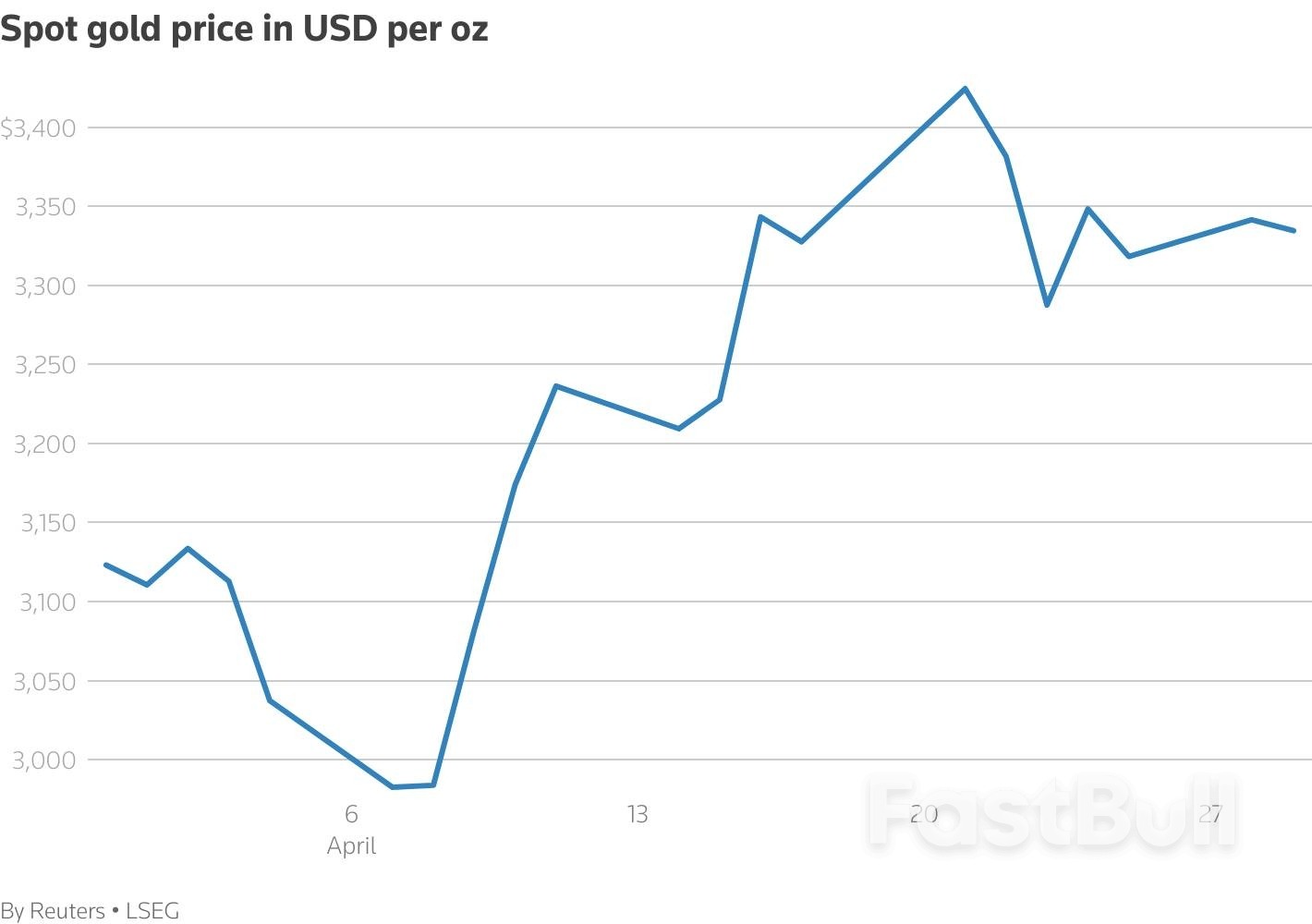
          Gold prices dropped on Tuesday as softening trade tensions between the U.S. and its trading partners dulled the metal's safe-haven appeal, while investors awaited U.S. economic data to assess the Federal Reserve's policy path.

          Spot gold was down 0.8% at $3,314.65 an ounce, as of 0619 GMT. U.S. gold futures lost 0.7% to $3,324.20.

          A line chart titled "Spot gold price in USD per oz" that tracks the metric over time.

          "The risk environment has clearly improved recently, with market participants buoyed by optimism that the worst of the trade tensions may be behind us amid encouraging rhetoric around trade deals," said IG market strategist Yeap Jun Rong.

          U.S. Treasury Secretary Scott Bessent said on Monday several top trading partners had made "very good" proposals to avoid U.S. tariffs, with India likely to be among the first to finalize a deal.

          China's recent moves to exempt certain U.S. goods from its retaliatory tariffs showed a willingness to de-escalate trade tensions, Bessent added.

          U.S. President Donald Trump's administration will also move to reduce the impact of his automotive tariffs by alleviating some duties imposed on foreign parts in domestically-manufactured cars.

          But risks are high that the global economy will slip into recession this year, according to a majority of economists in a Reuters poll, with many saying Trump's tariffs have damaged business sentiment.

          Bullion, traditionally seen as a hedge against political and financial instability, rose to an all-time high of $3,500.05/oz last week due to elevated uncertainties.

          Investors will monitor economic data this week, including the U.S. job openings report later in the day, Personal Consumption Expenditures on Wednesday, and the non-farm payrolls report on Friday.

          "Longer-term structural tailwinds for gold prices are likely to keep the broader upward trend intact, supported by room for ongoing reserve diversification among emerging market central banks," Rong said.

          Spot silver was down 0.6% at $32.98 an ounce, platinum fell 0.2% to $984.65 and palladium lost 0.5% to $944.34.

          Source: Reuters

          To stay updated on all economic events of today, please check out our Economic calendar
          Risk Warnings and Disclaimers
          You understand and acknowledge that there is a high degree of risk involved in trading. Following any strategies or investment methods may lead to potential losses. The content on the site is provided by our contributors and analysts for information purposes only. You are solely responsible for determining whether any trading assets, securities, strategy, or any other product is suitable for investing based on your own investment objectives and financial situation.
          Add to Favorites
          Share

          China’s Rare Earth Retaliation Exposes U.S. Vulnerabilities: Supply Shortages Threaten EV Industry and Beyond

          Gerik

          China–U.S. Trade War

          Strategic Retaliation Targets U.S. Dependence

          In response to heightened U.S. tariffs, China has tightened export controls on rare earth minerals, particularly dysprosium-based magnets essential for electric vehicles (EVs) and other advanced technologies. Over 90% of the global supply of refined dysprosium originates from China, making this an effective point of leverage. The immediate consequence is a growing supply crunch for American manufacturers, especially in the EV sector where alternatives to permanent magnets are limited.
          This move demonstrates a direct cause-effect relationship: U.S. tariff actions have prompted a targeted Chinese response, exacerbating existing structural weaknesses in American industrial supply chains.

          Elon Musk and Industry Leaders Raise Alarms

          The impact is already palpable. Tesla CEO Elon Musk warned that shortages of rare earth magnets could delay projects like the Optimus humanoid robot at Tesla’s Texas factory. He emphasized the importance of securing necessary export licenses, highlighting concerns that Chinese authorities could prolong or deny applications under the guise of military end-use restrictions, even when civilian applications are evident.
          Auto executives have stressed that without reliable access to rare earth magnets, EV production in the U.S. could face significant disruptions. Here, the dependency on Chinese technology and materials becomes a bottleneck, revealing the deep integration between globalized supply chains and U.S. manufacturing aspirations.

          Supply Chain Bottlenecks and Rising Costs

          Analysts estimate that existing inventories of rare earth magnets will suffice only through the end of May 2025. Prices have already surged, with terbium—a related rare earth element—jumping 25% in just one month, according to Benchmark Mineral Intelligence. This price spike not only reflects tightening supply but also amplifies cost pressures across sectors ranging from automotive to electronics and defense.
          The causal chain is clear: export restrictions tighten supply, triggering price increases, and magnifying operational uncertainties for downstream manufacturers.

          Structural Weakness in U.S. Rare Earth Supply

          The United States possesses only one significant dysprosium-producing mine in California, and even at full capacity, it cannot satisfy domestic needs. Moreover, refining capabilities remain embryonic, with technical processes such as dysprosium separation from ore still undeveloped at industrial scale in the U.S.
          Building a fully independent supply chain is a daunting task. According to S&P Global Market Intelligence, developing a new mine in the U.S. typically takes 29 years. Additionally, production costs in the U.S. and Australia far exceed those in China—$35–40 per kilogram compared to China’s $11–15 per kilogram. This stark cost differential underscores the economic advantage China holds and why replicating its capabilities poses formidable challenges.
          Thus, while the resource base exists globally, the absence of competitive refining expertise and cost-effective production outside China traps the U.S. and its allies in a structural dependency, revealing an asymmetric vulnerability.

          Ripple Effects Across Critical Industries

          The strategic importance of rare earth elements extends far beyond electric vehicles. They are crucial for medical devices, satellites, jet fighters, and high-tech consumer goods. Automakers are now urgently reviewing component lists, discovering rare earth dependencies even in brake systems, dashboard displays, gear shifters, and windshield wipers.
          While non-rare earth alternatives exist for some automotive components, for core electric motor functions, viable substitutes remain elusive. Consequently, China's control over these inputs represents not just a tactical advantage in the current trade war, but a strategic chokepoint in global technological development.
          China’s move to restrict rare earth exports highlights deep vulnerabilities in American manufacturing and supply chains. As prices spike and inventories dwindle, industries critical to U.S. economic and technological leadership face mounting risks. The challenges of developing domestic rare earth capabilities—long timelines, high costs, and lack of technical expertise—mean that strategic dependency on China will persist in the medium term, shaping the future balance of global industrial power.

          Source: WSJ

          Risk Warnings and Disclaimers
          You understand and acknowledge that there is a high degree of risk involved in trading. Following any strategies or investment methods may lead to potential losses. The content on the site is provided by our contributors and analysts for information purposes only. You are solely responsible for determining whether any trading assets, securities, strategy, or any other product is suitable for investing based on your own investment objectives and financial situation.
          Add to Favorites
          Share

          South Korea’s Economic Milestone Delayed: Weak Growth and Currency Pressures Push $40,000 GDP Target to 2029

          Gerik

          Economic

          Timeline Extension Reflects Mounting Economic Challenges

          On April 28, both the Bank of Korea (BoK) and the International Monetary Fund (IMF) updated their forecasts, indicating that South Korea will not reach the symbolic milestone of $40,000 GDP per capita until 2029. Previously, the IMF had projected this achievement for 2027 in its October 2024 World Economic Outlook. The two-year delay illustrates the compounding effects of weaker-than-expected economic growth and currency volatility on South Korea's long-term income trajectory.
          This revision shows a direct causal relationship: declining growth momentum and an unfavorable exchange rate environment have pushed back South Korea’s timeline for achieving higher living standards.

          Stagnating Income Levels Despite Past Gains

          From 2020 to 2021, South Korea’s GDP per capita rose impressively from $33,653 to $37,518, driven by strong post-pandemic recovery dynamics. However, subsequent years witnessed a reversal: GDP per capita fell to $34,822 in 2022, edged up to $35,563 in 2023, and is expected to reach only $36,129 in 2024.
          Projections for 2025 anticipate another decline to $34,642, a 4.1% drop from 2024, effectively erasing gains made since 2022. This trend reveals a concerning correlation between broader economic slowdowns and income stagnation. Although wage growth is forecasted to resume gradually from 2026 onward, structural issues remain that could temper the pace of recovery.

          Currency Strength and Domestic Weakness as Key Drivers

          According to the IMF, the persistent strength of the Korean won against major currencies has hurt export competitiveness while making Korean goods relatively more expensive abroad. Additionally, sluggish domestic demand recovery—exacerbated by recent political instability—has further weakened growth fundamentals.
          The interaction between these factors suggests a mutually reinforcing effect: political uncertainties dampen investment and consumer confidence, while currency misalignments undermine external sector support, collectively constraining overall GDP growth. In this context, the delay in reaching the $40,000 mark is not merely coincidental but rooted in a chain of interconnected vulnerabilities.

          Long-Term Projections Still Show Moderate Optimism

          Despite short-term setbacks, the IMF maintains a moderately positive long-term outlook. Projections anticipate GDP per capita climbing to $35,880 in 2026, $37,367 in 2027, $38,850 in 2028, and finally $43,411 in 2029.
          This forecast suggests that while the economic engine has temporarily lost steam, structural strengths such as industrial capacity, technological leadership, and robust institutional frameworks may eventually drive a rebound. However, achieving these figures depends critically on restoring political stability, invigorating domestic consumption, and maintaining favorable external conditions—none of which are guaranteed in the current global climate.
          South Korea's path to surpassing $40,000 GDP per capita has been delayed by two years, with the IMF now forecasting the milestone for 2029 instead of 2027. Weak economic growth, a strong domestic currency, political turmoil, and sluggish internal demand have all contributed to this adjustment. While long-term projections still offer hope for eventual income growth, the immediate outlook remains cautious, requiring significant policy focus on economic revitalization and risk mitigation to sustain upward momentum.

          Source: IMF

          To stay updated on all economic events of today, please check out our Economic calendar
          Risk Warnings and Disclaimers
          You understand and acknowledge that there is a high degree of risk involved in trading. Following any strategies or investment methods may lead to potential losses. The content on the site is provided by our contributors and analysts for information purposes only. You are solely responsible for determining whether any trading assets, securities, strategy, or any other product is suitable for investing based on your own investment objectives and financial situation.
          Add to Favorites
          Share
          FastBull
          Copyright © 2025 FastBull Ltd

          728 RM B 7/F GEE LOK IND BLDG NO 34 HUNG TO RD KWUN TONG KLN HONG KONG

          TelegramInstagramTwitterfacebooklinkedin
          App Store Google Play Google Play
          Products
          Charts

          Chats

          Q&A with Experts
          Screeners
          Economic Calendar
          Data
          Tools
          Membership
          Features
          Function
          Markets
          Copy Trading
          Latest Signals
          Contests
          News
          Analysis
          24/7
          Columns
          Education
          Company
          Careers
          About Us
          Contact Us
          Advertising
          Help Center
          Feedback
          User Agreement
          Privacy Policy
          Business

          White Label

          Data API

          Web Plug-ins

          Poster Maker

          Affiliate Program

          Risk Disclosure

          The risk of loss in trading financial instruments such as stocks, FX, commodities, futures, bonds, ETFs and crypto can be substantial. You may sustain a total loss of the funds that you deposit with your broker. Therefore, you should carefully consider whether such trading is suitable for you in light of your circumstances and financial resources.

          No decision to invest should be made without thoroughly conducting due diligence by yourself or consulting with your financial advisors. Our web content might not suit you since we don't know your financial conditions and investment needs. Our financial information might have latency or contain inaccuracy, so you should be fully responsible for any of your trading and investment decisions. The company will not be responsible for your capital loss.

          Without getting permission from the website, you are not allowed to copy the website's graphics, texts, or trademarks. Intellectual property rights in the content or data incorporated into this website belong to its providers and exchange merchants.

          Not Logged In

          Log in to access more features

          FastBull Membership

          Not yet

          Purchase

          Become a signal provider
          Help Center
          Customer Service
          Dark Mode
          Price Up/Down Colors

          Log In

          Sign Up

          Position
          Layout
          Fullscreen
          Default to Chart
          The chart page opens by default when you visit fastbull.com