• Trade
  • Markets
  • Copy
  • Contests
  • News
  • 24/7
  • Calendar
  • Q&A
  • Chats
Trending
Screeners
SYMBOL
LAST
BID
ASK
HIGH
LOW
NET CHG.
%CHG.
SPREAD
SPX
S&P 500 Index
6827.42
6827.42
6827.42
6899.86
6801.80
-73.58
-1.07%
--
DJI
Dow Jones Industrial Average
48458.04
48458.04
48458.04
48886.86
48334.10
-245.98
-0.51%
--
IXIC
NASDAQ Composite Index
23195.16
23195.16
23195.16
23554.89
23094.51
-398.69
-1.69%
--
USDX
US Dollar Index
98.000
98.080
98.000
98.070
97.920
+0.050
+ 0.05%
--
EURUSD
Euro / US Dollar
1.17285
1.17292
1.17285
1.17447
1.17276
-0.00109
-0.09%
--
GBPUSD
Pound Sterling / US Dollar
1.33633
1.33644
1.33633
1.33740
1.33546
-0.00074
-0.06%
--
XAUUSD
Gold / US Dollar
4339.66
4340.07
4339.66
4347.21
4294.68
+40.27
+ 0.94%
--
WTI
Light Sweet Crude Oil
57.468
57.498
57.468
57.601
57.194
+0.235
+ 0.41%
--

Community Accounts

Signal Accounts
--
Profit Accounts
--
Loss Accounts
--
View More

Become a signal provider

Sell trading signals to earn additional income

View More

Guide to Copy Trading

Get started with ease and confidence

View More

Signal Accounts for Members

All Signal Accounts

Best Return
  • Best Return
  • Best P/L
  • Best MDD
Past 1W
  • Past 1W
  • Past 1M
  • Past 1Y

All Contests

  • All
  • Trump Updates
  • Recommend
  • Stocks
  • Cryptocurrencies
  • Central Banks
  • Featured News
Top News Only
Share

Reuters Calculation - India's Nov Services Trade Surplus At $17.9 Billion

Share

India Trade Secretary: Reduction In Imports In November Due To Fall In Gold, Oil And Coal Shipments

Share

India Trade Secretary: Gold Imports Have Declined In Nov By About 60%

Share

India Trade Secretary: Exports In Sectors Such Engineering, Electronics , Gems And Jewellery Aided November Figures

Share

India's Nov Merchandise Trade Deficit At $24.53 Billion - Reuters Calculation (Poll $32 Billion)

Share

India's Nov Merchandise Imports At $62.66 Billion

Share

India's Nov Merchandise Exports At $38.13 Billion

Share

Stats Office - Swiss November Producer/Import Prices -1.6% Year-On-Year (Versus-1.7% In Prior Month)

Share

Stats Office - Swiss November Producer/Import Prices -0.5% Month-On-Month (Versus-0.3% In Prior Month)

Share

Thailand To Hold Elections On Feb 8 - Multiple Local Media Reports

Share

Taiwan Dollar Falls 0.6% To 31.384 Per USA Dollar, Lowest Since December 3

Share

Stats Office - Botswana November Consumer Inflation At 0.0% Month-On-Month

Share

Stats Office - Botswana November Consumer Inflation At 3.8% Year-On-Year

Share

Statistics Bureau - Kazakhstan's Jan-Nov Industrial Output +7.4% Year-On-Year

Share

Fca: Sets Out Plans To Help Build Mortgage Market Of Future

Share

Eurostoxx 50 Futures Up 0.38%, DAX Futures Up 0.43%, FTSE Futures Up 0.37%

Share

[Delivery Of New US Presidential Aircraft Delayed Again] According To The Latest Timeline Released By The US Air Force, The Delivery Of The First Of The Two Newly Commissioned Air Force One Presidential Aircraft Will Not Be Earlier Than 2028. This Means That The Delivery Of The New Air Force One Has Been Delayed Once Again

Share

German Nov Wholesale Prices +0.3% Month-On-Month

Share

Norway's Nov Trade Balance Nok 41.3 Billion - Statistics Norway

Share

German Nov Wholesale Prices +1.5% Year-On-Year

TIME
ACT
FCST
PREV
France HICP Final MoM (Nov)

A:--

F: --

P: --

China, Mainland Outstanding Loans Growth YoY (Nov)

A:--

F: --

P: --

China, Mainland M2 Money Supply YoY (Nov)

A:--

F: --

P: --

China, Mainland M0 Money Supply YoY (Nov)

A:--

F: --

P: --

China, Mainland M1 Money Supply YoY (Nov)

A:--

F: --

P: --

India CPI YoY (Nov)

A:--

F: --

P: --

India Deposit Gowth YoY

A:--

F: --

P: --

Brazil Services Growth YoY (Oct)

A:--

F: --

P: --

Mexico Industrial Output YoY (Oct)

A:--

F: --

P: --

Russia Trade Balance (Oct)

A:--

F: --

P: --

Philadelphia Fed President Henry Paulson delivers a speech
Canada Building Permits MoM (SA) (Oct)

A:--

F: --

P: --

Canada Wholesale Sales YoY (Oct)

A:--

F: --

P: --

Canada Wholesale Inventory MoM (Oct)

A:--

F: --

P: --

Canada Wholesale Inventory YoY (Oct)

A:--

F: --

P: --

Canada Wholesale Sales MoM (SA) (Oct)

A:--

F: --

P: --

Germany Current Account (Not SA) (Oct)

A:--

F: --

P: --

U.S. Weekly Total Rig Count

A:--

F: --

P: --

U.S. Weekly Total Oil Rig Count

A:--

F: --

P: --

Japan Tankan Small Manufacturing Outlook Index (Q4)

A:--

F: --

P: --

Japan Tankan Large Non-Manufacturing Diffusion Index (Q4)

A:--

F: --

P: --

Japan Tankan Large Non-Manufacturing Outlook Index (Q4)

A:--

F: --

P: --

Japan Tankan Large Manufacturing Outlook Index (Q4)

A:--

F: --

P: --

Japan Tankan Small Manufacturing Diffusion Index (Q4)

A:--

F: --

P: --

Japan Tankan Large Manufacturing Diffusion Index (Q4)

A:--

F: --

P: --

Japan Tankan Large-Enterprise Capital Expenditure YoY (Q4)

A:--

F: --

P: --

U.K. Rightmove House Price Index YoY (Dec)

A:--

F: --

P: --

China, Mainland Industrial Output YoY (YTD) (Nov)

A:--

F: --

P: --

China, Mainland Urban Area Unemployment Rate (Nov)

A:--

F: --

P: --

Saudi Arabia CPI YoY (Nov)

A:--

F: --

P: --

Euro Zone Industrial Output YoY (Oct)

--

F: --

P: --

Euro Zone Industrial Output MoM (Oct)

--

F: --

P: --

Canada Existing Home Sales MoM (Nov)

--

F: --

P: --

Euro Zone Total Reserve Assets (Nov)

--

F: --

P: --

U.K. Inflation Rate Expectations

--

F: --

P: --

Canada National Economic Confidence Index

--

F: --

P: --

Canada New Housing Starts (Nov)

--

F: --

P: --

U.S. NY Fed Manufacturing Employment Index (Dec)

--

F: --

P: --

U.S. NY Fed Manufacturing Index (Dec)

--

F: --

P: --

Canada Core CPI YoY (Nov)

--

F: --

P: --

Canada Manufacturing Unfilled Orders MoM (Oct)

--

F: --

P: --

U.S. NY Fed Manufacturing Prices Received Index (Dec)

--

F: --

P: --

U.S. NY Fed Manufacturing New Orders Index (Dec)

--

F: --

P: --

Canada Manufacturing New Orders MoM (Oct)

--

F: --

P: --

Canada Core CPI MoM (Nov)

--

F: --

P: --

Canada Trimmed CPI YoY (SA) (Nov)

--

F: --

P: --

Canada Manufacturing Inventory MoM (Oct)

--

F: --

P: --

Canada CPI YoY (Nov)

--

F: --

P: --

Canada CPI MoM (Nov)

--

F: --

P: --

Canada CPI YoY (SA) (Nov)

--

F: --

P: --

Canada Core CPI MoM (SA) (Nov)

--

F: --

P: --

Canada CPI MoM (SA) (Nov)

--

F: --

P: --

Federal Reserve Board Governor Milan delivered a speech
U.S. NAHB Housing Market Index (Dec)

--

F: --

P: --

Australia Composite PMI Prelim (Dec)

--

F: --

P: --

Australia Services PMI Prelim (Dec)

--

F: --

P: --

Australia Manufacturing PMI Prelim (Dec)

--

F: --

P: --

Japan Manufacturing PMI Prelim (SA) (Dec)

--

F: --

P: --

U.K. Unemployment Claimant Count (Nov)

--

F: --

P: --

U.K. Unemployment Rate (Nov)

--

F: --

P: --

U.K. 3-Month ILO Unemployment Rate (Oct)

--

F: --

P: --

Q&A with Experts
    • All
    • Chatrooms
    • Groups
    • Friends
    Connecting
    .
    .
    .
    Type here...
    Add Symbol or Code

      No matching data

      All
      Trump Updates
      Recommend
      Stocks
      Cryptocurrencies
      Central Banks
      Featured News
      • All
      • Russia-Ukraine Conflict
      • Middle East Flashpoint
      • All
      • Russia-Ukraine Conflict
      • Middle East Flashpoint
      Search
      Products

      Charts Free Forever

      Chats Q&A with Experts
      Screeners Economic Calendar Data Tools
      Membership Features
      Data Warehouse Market Trends Institutional Data Policy Rates Macro

      Market Trends

      Market Sentiment Order Book Forex Correlations

      Top Indicators

      Charts Free Forever
      Markets

      News

      News Analysis 24/7 Columns Education
      From Institutions From Analysts
      Topics Columnists

      Latest Views

      Latest Views

      Trending Topics

      Top Columnists

      Latest Update

      Signals

      Copy Rankings Latest Signals Become a signal provider AI Rating
      Contests
      Brokers

      Overview Brokers Assessment Rankings Regulators News Claims
      Broker listing Forex Brokers Comparison Tool Live Spread Comparison Scam
      Q&A Complaint Scam Alert Videos Tips to Detect Scam
      More

      Business
      Events
      Careers About Us Advertising Help Center

      White Label

      Data API

      Web Plug-ins

      Affiliate Program

      Awards Institution Evaluation IB Seminar Salon Event Exhibition
      Vietnam Thailand Singapore Dubai
      Fans Party Investment Sharing Session
      FastBull Summit BrokersView Expo
      Recent Searches
        Top Searches
          Markets
          News
          Analysis
          User
          24/7
          Economic Calendar
          Education
          Data
          • Names
          • Latest
          • Prev

          View All

          No data

          Scan to Download

          Faster Charts, Chat Faster!

          Download App
          English
          • English
          • Español
          • العربية
          • Bahasa Indonesia
          • Bahasa Melayu
          • Tiếng Việt
          • ภาษาไทย
          • Français
          • Italiano
          • Türkçe
          • Русский язык
          • 简中
          • 繁中
          Open Account
          Search
          Products
          Charts Free Forever
          Markets
          News
          Signals

          Copy Rankings Latest Signals Become a signal provider AI Rating
          Contests
          Brokers

          Overview Brokers Assessment Rankings Regulators News Claims
          Broker listing Forex Brokers Comparison Tool Live Spread Comparison Scam
          Q&A Complaint Scam Alert Videos Tips to Detect Scam
          More

          Business
          Events
          Careers About Us Advertising Help Center

          White Label

          Data API

          Web Plug-ins

          Affiliate Program

          Awards Institution Evaluation IB Seminar Salon Event Exhibition
          Vietnam Thailand Singapore Dubai
          Fans Party Investment Sharing Session
          FastBull Summit BrokersView Expo

          USDJPY On The Edge: Fed Scandal And BoJ Signal Threaten Markets With New Shock

          Blue River

          Forex

          Technical Analysis

          Economic

          Summary:

          Amid uncertainty surrounding the Fed scandal and potential BoJ monetary tightening, the USDJPY pair may rise towards 149.00. Find out more in our analysis for 27 August 2025.

          Despite statements from Donald Trump and BoJ Governor Kazuo Ueda, USDJPY technical analysis suggests growth towards the 149.00 level.

          Amid uncertainty surrounding the Fed scandal and potential BoJ monetary tightening, the USDJPY pair may rise towards 149.00. Find out more in our analysis for 27 August 2025.

          USDJPY forecast: key trading points

          ●US President announced the dismissal of Fed Governor Lisa Cook
          ●Kazuo Ueda signalled possible monetary tightening by the BoJ
          ●USDJPY forecast for 27 August 2025: 149.00

          Fundamental analysis

          The forecast for 27 August 2025 shows USDJPY continuing to rise while still trading sideways around 147.90.

          The US President announced the dismissal of Fed Governor Lisa Cook. This raised concerns about the independence of the US central bank and increased pressure on the dollar. As a result, the USD could face another wave of instability ahead of the September rate decision.

          Investors and analysts expect a 25-basis-point rate cut, but in light of recent events, predictability from the Fed is no longer assured. There is a possibility the Fed could shift towards the R-Star concept and move to cut rates by more than 25 basis points soon.

          Today’s USDJPY forecast also takes into account comments from Bank of Japan Governor Kazuo Ueda, who highlighted steady wage growth and a strong labour market, with both factors raising the likelihood of monetary tightening. This could give the yen additional support in the near term.

          USDJPY technical analysis

          On the H4 chart, the USDJPY pair tested the lower Bollinger Band and formed a Hammer reversal pattern around 147.90. At this stage, the pair may continue an upward wave in line with the pattern’s signal. The USDJPY rate remains within an ascending channel, suggesting strong chances of a move towards the 149.00 resistance level.

          At the same time, the USDJPY forecast also considers an alternative scenario, where the price declines towards 147.40 before resuming upward movement.
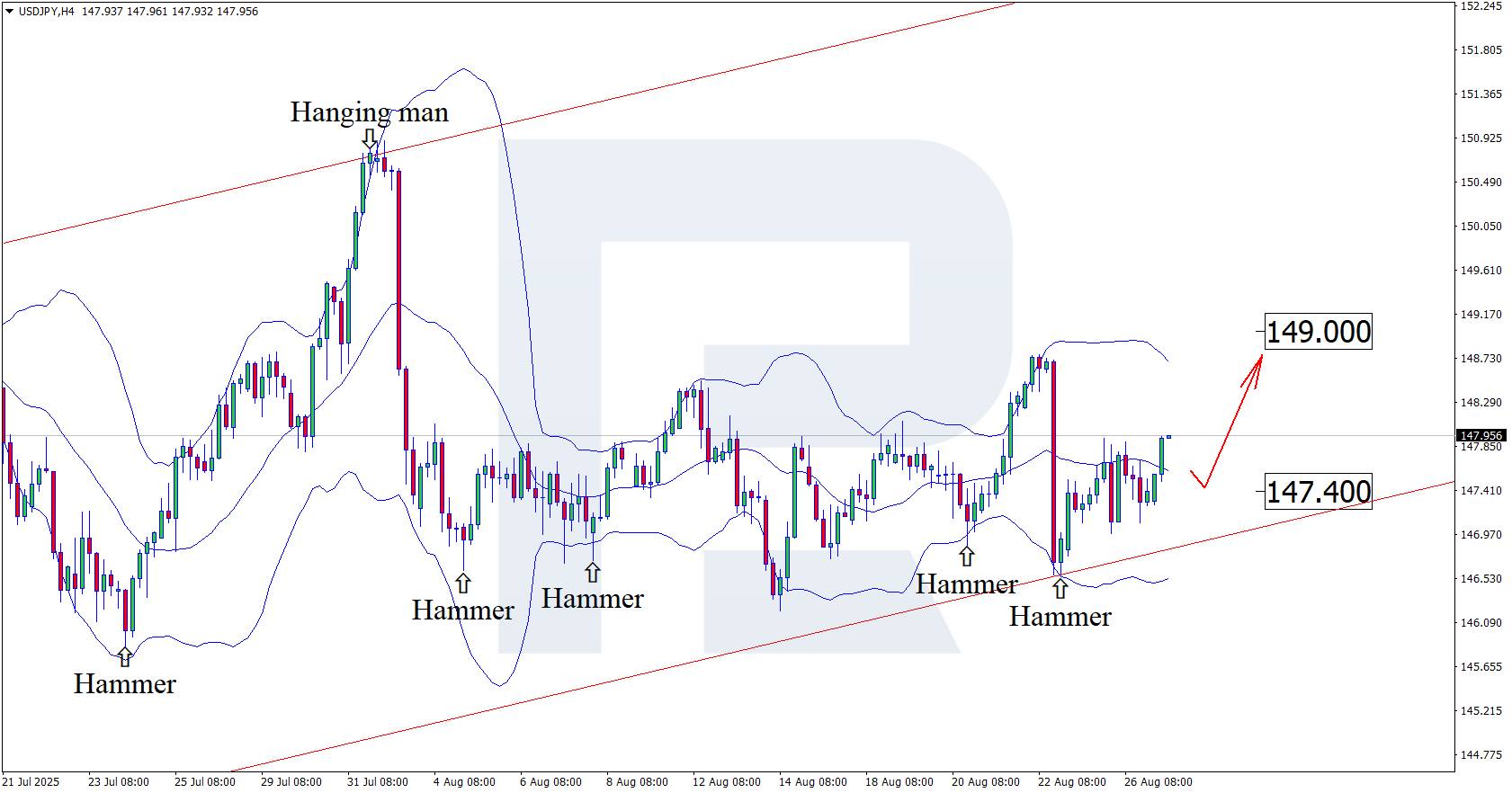
          Source: RoboForex

          To stay updated on all economic events of today, please check out our Economic calendar
          Risk Warnings and Disclaimers
          You understand and acknowledge that there is a high degree of risk involved in trading. Following any strategies or investment methods may lead to potential losses. The content on the site is provided by our contributors and analysts for information purposes only. You are solely responsible for determining whether any trading assets, securities, strategy, or any other product is suitable for investing based on your own investment objectives and financial situation.
          Add to Favorites
          Share

          China Ramps Up Exports to Africa as U.S. Tariffs Reshape Global Trade

          Gerik

          Economic

          Africa Becomes China’s Fastest-Growing Export Market

          Amid intensifying U.S.-China trade frictions, Africa has emerged as Beijing’s strongest growth market. Chinese exports to the continent surged by 25% year-on-year to $122 billion in the first seven months of 2025, already surpassing full-year 2020 levels. On current trends, exports are set to top $200 billion for the first time.
          This growth is directly caused by weakening U.S. demand under Trump’s tariffs, which redirected Chinese exporters to emerging markets where political barriers are lower. Africa’s growing demand for infrastructure, machinery, and consumer goods provided the perfect landing ground for this shift.

          Infrastructure and Machinery Lead the Boom

          Africa’s biggest buyers Nigeria, South Africa, and Egypt are importing increasing volumes of Chinese goods, particularly for construction and industrial use. Exports of construction machinery surged 63%, passenger car shipments more than doubled, and steel products grew by double digits.
          The scale reflects both causal effects (Chinese state-backed firms winning Belt and Road contracts that require Chinese materials) and correlational factors (Africa’s rising urbanization and industrialization fueling sustained demand).
          Contracts highlight the scale: in just the first half of 2025, Africa signed $30.5 billion in infrastructure deals with China, five times the level of the prior year. These contracts create a locked-in cycle of demand for Chinese exports, reinforcing Beijing’s commercial foothold.

          Energy Transition as a New Growth Driver

          China is also capitalizing on Africa’s energy challenges. With less than half the population having reliable electricity access, African countries are turning to Chinese solar and wind technology. Imports of Chinese solar panels rose 60% in the year to June, and beyond South Africa, purchases have tripled over two years.
          This demonstrates a causal relationship: as African nations seek energy independence, China’s renewable technology becomes a default solution, both due to affordability and its alignment with long-term development goals.

          Financial Leverage and the Yuan’s Rising Role

          China is reinforcing trade with financing tools. State-owned banks such as China Development Bank are funding projects, including a €245 million loan for a Nigerian railway and new lending in Egypt. This strengthens Beijing’s bargaining power and expands the yuan’s role in Africa’s financial systems.
          Currency swap agreements already exist with Nigeria, South Africa, Egypt, and Mauritius, while Kenya is negotiating to convert dollar debt into yuan obligations. The expansion of yuan usage is both a strategic goal for China and a financial adaptation for debt-burdened African economies, illustrating a two-way incentive structure.

          Competitive Advantage Through Price and Market Openness

          Even as demand rises, Chinese exports remain affordable. Prices for 14 of the 18 major product categories shipped to Africa fell year-on-year, with items like transformers and converters dropping 39%. This affordability edge, combined with Beijing’s removal of import levies on African goods, reinforces mutual trade flows.
          The lack of protectionist backlash in Africa, compared to resistance elsewhere, further tilts competitiveness in China’s favor. Goods like steel components (+43%), batteries (+41%), and electrical converters (+25%) are finding ready markets without regulatory friction.

          Risks of Dependency and Debt Concerns

          Despite the boom, risks remain. Africa’s widening trade deficit with China raises concerns of overdependence and potential crowding out of local industries. Debt levels to Chinese banks are already a political issue in nations such as Angola and Kenya, and the expansion of yuan-denominated loans could deepen dependency.
          While Beijing benefits from this leverage, it must tread carefully to avoid triggering backlash in a region that is becoming central to its global strategy.

          Africa as a Strategic Pivot in China’s Global Trade Realignment

          China’s export surge to Africa illustrates how global trade is being reshaped by geopolitics. U.S. tariffs created an immediate incentive for Beijing to pivot, but the results reflect more than short-term substitution. Infrastructure contracts, clean energy demand, and financial leverage are embedding China into Africa’s growth trajectory.
          For Africa, this relationship offers capital, technology, and industrial know-how, but it also risks long-term dependency. For China, Africa represents not just a market but a proving ground for its global ambitions a place to project influence, deepen currency usage, and solidify its role as the world’s industrial supplier in an era of fractured globalization.

          Source: Bloomberg

          To stay updated on all economic events of today, please check out our Economic calendar
          Risk Warnings and Disclaimers
          You understand and acknowledge that there is a high degree of risk involved in trading. Following any strategies or investment methods may lead to potential losses. The content on the site is provided by our contributors and analysts for information purposes only. You are solely responsible for determining whether any trading assets, securities, strategy, or any other product is suitable for investing based on your own investment objectives and financial situation.
          Add to Favorites
          Share

          South Korea’s Export Growth Seen Slowing in August as U.S. Tariffs Bite

          Gerik

          Economic

          Export Momentum Weakens Under Tariff Pressure

          South Korea, Asia’s fourth-largest economy, is expected to report slower export growth for August following the imposition of higher U.S. tariffs. According to a Reuters survey of nine economists, exports are forecast to have risen 3.0% year-on-year, down from 5.8% in July. This marks the third straight month of gains but also the weakest in the sequence, suggesting that external headwinds are eroding momentum.
          The tariff increase reflects a causal relationship: President Donald Trump’s trade deal with Seoul raised U.S. import duties on Korean goods to 15% from 10%, though still below the threatened 25%. The higher tariff burden directly reduced U.S.-bound shipments, highlighting the dependency of Korean exports on favorable trade terms.

          Semiconductors Remain a Bright Spot

          Despite tariff-related pressures, South Korea’s semiconductor exports remain robust, underscoring their central role in sustaining overall trade performance. In the first 20 days of August, exports rose 7.6%, led by a 29.5% surge in semiconductor sales. This strength reflects a correlational pattern between global digital demand and Korea’s industrial performance, with semiconductors offsetting weaknesses in other sectors.
          However, the positive semiconductor outlook was not enough to counter the drag from tariffs. Shipments to the U.S. fell 2.7% during the same period, suggesting that the immediate trade friction is already weighing on bilateral flows.

          Imports and Trade Balance Show Strain

          On the import side, August volumes are projected to have fallen 0.1%, reversing July’s 0.7% gain. This decline suggests a softening in domestic demand and possible adjustments by firms anticipating weaker export prospects. As a result, the monthly trade surplus is estimated at $5.42 billion, down from $6.61 billion in July.
          This narrowing surplus illustrates the causal link between tariffs, weaker export flows, and reduced trade balance strength, even as Korea remains in surplus territory.

          Global Demand Uncertainty Adds to Risks

          While the new trade deal with Washington removed some uncertainty by averting a steeper tariff hike, economists warn that global demand conditions are deteriorating. Chun Kyu-yeon of Hana Securities emphasized that U.S. tariffs are likely to continue dragging on exports, reinforcing a broader slowdown tied to weakening global trade activity.
          This dynamic points to a feedback loop: tariffs not only reduce direct U.S.-bound shipments but also contribute to a more cautious global demand environment, compounding downside risks for export-oriented economies like South Korea.

          Policy Relief Versus Structural Weakness

          South Korea’s August trade figures, due September 1, are set to confirm the delicate balance between strong semiconductor demand and the adverse effects of U.S. tariffs. While the trade deal moderated immediate risks by preventing even harsher duties, the shift from a 10% to a 15% tariff level marks a clear deterioration in competitiveness for Korean exporters.
          Unless global demand strengthens or Washington’s tariff stance softens, South Korea’s export-driven economy is likely to face sustained headwinds into late 2025, with semiconductors increasingly shouldering the burden of growth.

          Source: Reuters

          To stay updated on all economic events of today, please check out our Economic calendar
          Risk Warnings and Disclaimers
          You understand and acknowledge that there is a high degree of risk involved in trading. Following any strategies or investment methods may lead to potential losses. The content on the site is provided by our contributors and analysts for information purposes only. You are solely responsible for determining whether any trading assets, securities, strategy, or any other product is suitable for investing based on your own investment objectives and financial situation.
          Add to Favorites
          Share

          Asian Stocks Edge Higher as Markets Await Nvidia Earnings and Weigh Fed-White House Tensions

          Gerik

          Economic

          Stocks

          Asia Markets Post Cautious Gains

          Asian stock markets recorded small but broad-based gains midweek, reflecting investor restraint ahead of Nvidia’s earnings release in the U.S. Japan’s Nikkei 225 rose 0.3% to 42,522.97, South Korea’s Kospi inched up to 3,181.31, while Hong Kong’s Hang Seng added less than 0.1% to 25,541.43. The Shanghai Composite gained 0.3% to 3,881.07, and Taiwan’s Taiex climbed 0.7%, buoyed by tech optimism. Meanwhile, Australia’s S&P/ASX 200 was up 0.1%, and Thailand’s SET index rose 0.4%.
          India’s markets were closed for a public holiday, though the economic spotlight there remained intense as Trump’s 50% tariffs on Indian exports took effect, threatening labor-heavy industries such as textiles. This development underscores the causal link between U.S. trade policy shifts and vulnerabilities in India’s export-driven sectors.

          Wall Street Gains Ahead of Nvidia Results

          U.S. equities ended Tuesday’s session higher, with the S&P 500 rising 0.4% to 6,465.94, the Dow up 0.3% at 45,418.07, and the Nasdaq climbing 0.4% to 21,544.27. Gains were boosted by Boeing’s 3.5% rally, following a $50 billion Korean Air order, and EchoStar’s 70% surge after AT&T announced a $23 billion spectrum acquisition.
          Markets are bracing for Nvidia’s results, with options traders pricing in a potential $260 billion swing in its market value. Investors see this as a test of whether the AI rally represents a sustainable growth wave or a speculative bubble. The outcome could set the tone for both Wall Street and global equity sentiment in the weeks ahead.

          Fed Independence Tested as Trump Targets Officials

          Market dynamics are also being shaped by escalating political pressure on the U.S. Federal Reserve. President Donald Trump has moved to fire Fed Governor Lisa Cook, sparking a looming legal battle, while openly threatening Fed Chair Jerome Powell. This rare confrontation reflects Trump’s frustration with the Fed’s cautious stance on interest rates.
          Although the Fed has paused since late 2024 to guard against tariff-driven inflation, traders still assign an 87% probability of a quarter-point rate cut in September, according to CME Group data. This signals investor belief that monetary easing will continue despite political uncertainty. Here, a correlational link emerges: as Trump pressures the Fed to ease policy, markets anticipate cuts but also weigh risks of credibility damage to central bank independence.

          Economic Outlook: Balancing Growth, Inflation, and Jobs

          The Fed has so far managed to tame inflation without derailing growth, thanks to resilient consumer spending and a strong labor market. However, concerns are mounting as job market softness continues for an eighth month, reflected in weaker consumer confidence. Investors are awaiting Friday’s PCE inflation report, expected at 2.6% year-on-year for July, which will serve as a crucial gauge for both the Fed and markets.
          The central bank thus faces a delicate balancing act: lower rates could support growth, but persistent tariffs risk reigniting inflationary pressures. This dynamic highlights a causal tension between trade policy and monetary strategy.

          Currencies and Commodities Steady

          In early Wednesday trading, U.S. crude edged up 1 cent to $63.26 a barrel, while Brent crude slipped 1 cent to $66.69. The U.S. dollar strengthened to ¥147.91 against the yen, while the euro weakened to $1.1618. Gold prices slipped slightly after hitting two-week highs, reflecting cautious investor positioning ahead of U.S. inflation data and Nvidia’s earnings.
          Asian markets mirrored Wall Street’s cautious optimism, but the global financial landscape remains at an inflection point. Nvidia’s earnings will provide clarity on the sustainability of the AI-driven equity rally, while Trump’s clash with the Federal Reserve raises fundamental concerns about central bank independence. Coupled with new U.S. tariffs on India and persistent inflation risks, markets are navigating a landscape where policy uncertainty and corporate performance are tightly interlinked. Until these factors resolve, investor sentiment is likely to remain cautious, with volatility spikes tied to headline-driven events.

          Source: AP

          To stay updated on all economic events of today, please check out our Economic calendar
          Risk Warnings and Disclaimers
          You understand and acknowledge that there is a high degree of risk involved in trading. Following any strategies or investment methods may lead to potential losses. The content on the site is provided by our contributors and analysts for information purposes only. You are solely responsible for determining whether any trading assets, securities, strategy, or any other product is suitable for investing based on your own investment objectives and financial situation.
          Add to Favorites
          Share

          EU Carmakers Warn 2035 Zero-Emission Targets Are ‘No Longer Feasible’ Amid Rising Costs and Foreign Competition

          Gerik

          Economic

          Automakers Push Back Against Rigid CO2 Mandates

          The European automobile industry has formally challenged the viability of the EU’s ambitious carbon reduction rules, with the European Automobile Manufacturers’ Association (ACEA) and automotive suppliers’ representatives declaring that the mandated 100% cut in car and van emissions by 2035 is “no longer feasible.” In a letter to European Commission President Ursula von der Leyen, Mercedes-Benz CEO Ola Kaellenius and Schaeffler AG’s Matthias Zink reaffirmed support for the bloc’s 2050 net-zero objective but stressed that the current path was unrealistic given market and supply conditions.
          This intervention underscores a causal relationship between external constraints such as tariffs and supply chain bottlenecks and the industry’s ability to comply with EU climate policy.

          Structural Weaknesses: Batteries, Infrastructure, and Tariffs

          The letter highlights several pressure points undermining the transition to electric vehicles (EVs). EU automakers face near-total dependence on Asia for batteries, higher production costs relative to global competitors, and an underdeveloped charging infrastructure. Added to this are U.S. tariffs on European vehicles, which raise costs and limit export competitiveness.
          These factors combine to form both direct causes (higher costs leading to lower competitiveness) and correlational dynamics (Asian dominance in battery supply aligning with Europe’s reduced strategic autonomy).

          EV Sales Slowdown and Market Reality

          Despite regulatory pressure, consumer adoption has lagged. Electric vehicles represent only 15% of new car sales and 9% of van sales across the EU. The limited uptake reflects affordability issues, range anxiety, and uneven charging availability. This slow market penetration reveals that strict mandates have not created the expected consumer-driven demand. Instead, industry leaders argue that a mixed-technology transition is necessary, combining EVs with plug-in hybrids, hydrogen, and synthetic fuels to maintain both environmental progress and economic stability.

          Political and Regulatory Context

          The EU has already shown signs of flexibility. In March 2025, the European Commission granted automakers additional time to meet interim 2025 CO2 reduction targets. Moreover, von der Leyen’s centre-right bloc has called for the withdrawal of the 2035 combustion engine ban, reflecting a political recalibration in response to industrial and employment risks.
          At the same time, growing competition from Chinese EV manufacturers and the impact of U.S. trade policies have intensified calls for a more pragmatic regulatory framework. This creates a feedback loop where geopolitical and market dynamics weaken compliance feasibility, which in turn fuels political demands for regulatory revision.

          A Call for Pragmatism in Europe’s Green Transition

          The European auto sector’s resistance signals a pivotal moment in the EU’s climate strategy. While manufacturers remain committed to net-zero goals by 2050, the industry insists that rigid CO2 targets for 2030 and 2035 are misaligned with economic and technological realities. Unless regulatory flexibility is introduced, the EU risks undermining its own automotive competitiveness while failing to achieve consumer-driven emissions reductions.
          The outcome of von der Leyen’s upcoming September meeting with industry leaders may determine whether Europe pivots toward a more diversified and gradual transition, or whether it doubles down on its ambitious zero-emission deadlines despite intensifying headwinds.

          Source: Reuters

          To stay updated on all economic events of today, please check out our Economic calendar
          Risk Warnings and Disclaimers
          You understand and acknowledge that there is a high degree of risk involved in trading. Following any strategies or investment methods may lead to potential losses. The content on the site is provided by our contributors and analysts for information purposes only. You are solely responsible for determining whether any trading assets, securities, strategy, or any other product is suitable for investing based on your own investment objectives and financial situation.
          Add to Favorites
          Share

          Japan’s Private Equity Boom: Take-Private Deals Set for Record Year Amid Governance Reforms and Activist Pressure

          Gerik

          Economic

          Shift from ‘Vultures’ to Strategic Partners

          Once dismissed as “hagetaka,” or vultures, private equity firms are now gaining legitimacy in Japan as companies increasingly turn to them for strategic restructuring and relief from public market scrutiny. The surge in transactions marks a profound cultural and strategic shift in Japanese corporate governance, where delistings have become a natural option for firms under pressure to enhance returns.
          By August 20, private equity deals had already reached $27.6 billion, nearly triple the $9.5 billion over the same period in 2024, according to Dealogic data. Prominent transactions include Blackstone’s $3.5 billion bid for TechnoPro and EQT’s $2.7 billion acquisition of Fujitec, reflecting robust investor appetite in Japan despite a global slowdown in private equity activity.

          Governance Reforms as a Catalyst

          The Tokyo Stock Exchange has introduced stricter governance requirements to address Japan’s unusually high number of undervalued stocks. These reforms designed to enhance transparency and investor confidence have pushed firms to consider delisting, buybacks, and asset sales. The result is a fertile deal-making environment where private equity firms are now seen as partners in implementing structural change rather than opportunistic outsiders.
          This dynamic illustrates a causal relationship: governance reforms have heightened shareholder expectations, which in turn are driving companies toward privatization as a strategic response.

          Activist Investors as Precursors to Buyouts

          Rising activist investor activity is increasingly viewed as a precursor to take-private transactions. In Fujitec’s case, activist fund Oasis targeted the company three years before EQT’s offer, during which the stock price more than doubled. By the time of EQT’s bid, the offer was at a discount to the market, highlighting how activism can complicate deal valuations.
          Industry advisers note that companies are now initiating discussions with private equity firms proactively before activist investors escalate demands suggesting a growing correlation between activist pressure and management’s willingness to consider going private.

          Management, Restructuring, and Exit Options

          Going private allows management to restructure outside the scrutiny of public shareholders. Private equity firms often retain incumbent leadership initially, providing space for operational reforms. Japan’s strong capital markets also support relistings, sponsor-to-sponsor transactions, and M&A-driven exits, ensuring flexibility for funds and companies alike.
          Eiji Yatagawa of KKR notes that up to half of current deal discussions are initiated by companies themselves, signaling a structural evolution where privatization is becoming a proactive strategic tool rather than a defensive last resort.

          Private Equity Becomes a Cornerstone of Japan’s Corporate Strategy

          Japan’s private equity market is undergoing a transformation, with take-private deals poised to set new records in 2025. Governance reforms, undervaluation of stocks, and activist pressure are combining to make privatization not only acceptable but strategically desirable for many Japanese firms.
          The interplay between reform-driven pressure and capital-rich private equity players creates a reinforcing cycle: activism raises expectations, reforms increase scrutiny, and private equity offers solutions. This new equilibrium marks a turning point in Japan’s corporate culture, with private equity emerging as a central force in reshaping the country’s investment and governance landscape.

          Source: Reuters

          To stay updated on all economic events of today, please check out our Economic calendar
          Risk Warnings and Disclaimers
          You understand and acknowledge that there is a high degree of risk involved in trading. Following any strategies or investment methods may lead to potential losses. The content on the site is provided by our contributors and analysts for information purposes only. You are solely responsible for determining whether any trading assets, securities, strategy, or any other product is suitable for investing based on your own investment objectives and financial situation.
          Add to Favorites
          Share

          Trump's Doubling Of Tariffs On Indian Imports Takes Effect

          Olivia Brooks

          Economic

          Political

          China–U.S. Trade War

          U.S. President Donald Trump's doubling of tariffs on goods from India to as much as 50% took effect as scheduled on Wednesday, escalating tensions between the world's two largest democracies and strategic partners.

          A punitive 25% tariff imposed due to India's purchases of Russian oil adds to Trump's prior 25% tariff on many products from India. It takes total duties to as high as 50% for goods such as garments, gems and jewellery, footwear, sporting goods, furniture and chemicals - among the highest imposed by the U.S. and on par with Brazil and China.

          The new tariffs threaten thousands of small exporters and jobs, including in Prime Minister Narendra Modi's home state of Gujarat.

          An Indian Commerce Ministry official said on condition of anonymity that exporters hit by tariffs would receive financial assistance and be encouraged to diversify to markets such as China, Latin America and the Middle East.

          A U.S. Customs and Border Protection notice to shippers, opens new tab provides a three-week exemption for Indian goods that were loaded onto a vessel and in transit to the U.S. before the midnight deadline. These goods can still enter the U.S. at prior lower tariff rates before 12:01 a.m. EDT (0401 GMT) on September 17.

          Also exempted are steel, aluminum and derivative products, passenger vehicles, copper and other goods subject to separate tariffs of up to 50% under the Section 232 national security trade law.

          India trade ministry officials say the average tariff on U.S. imports is around 7.5%, while the U.S. Trade Representative's office has highlighted rates of up to 100% on autos and an average applied tariff rate of 39% on U.S. farm goods.
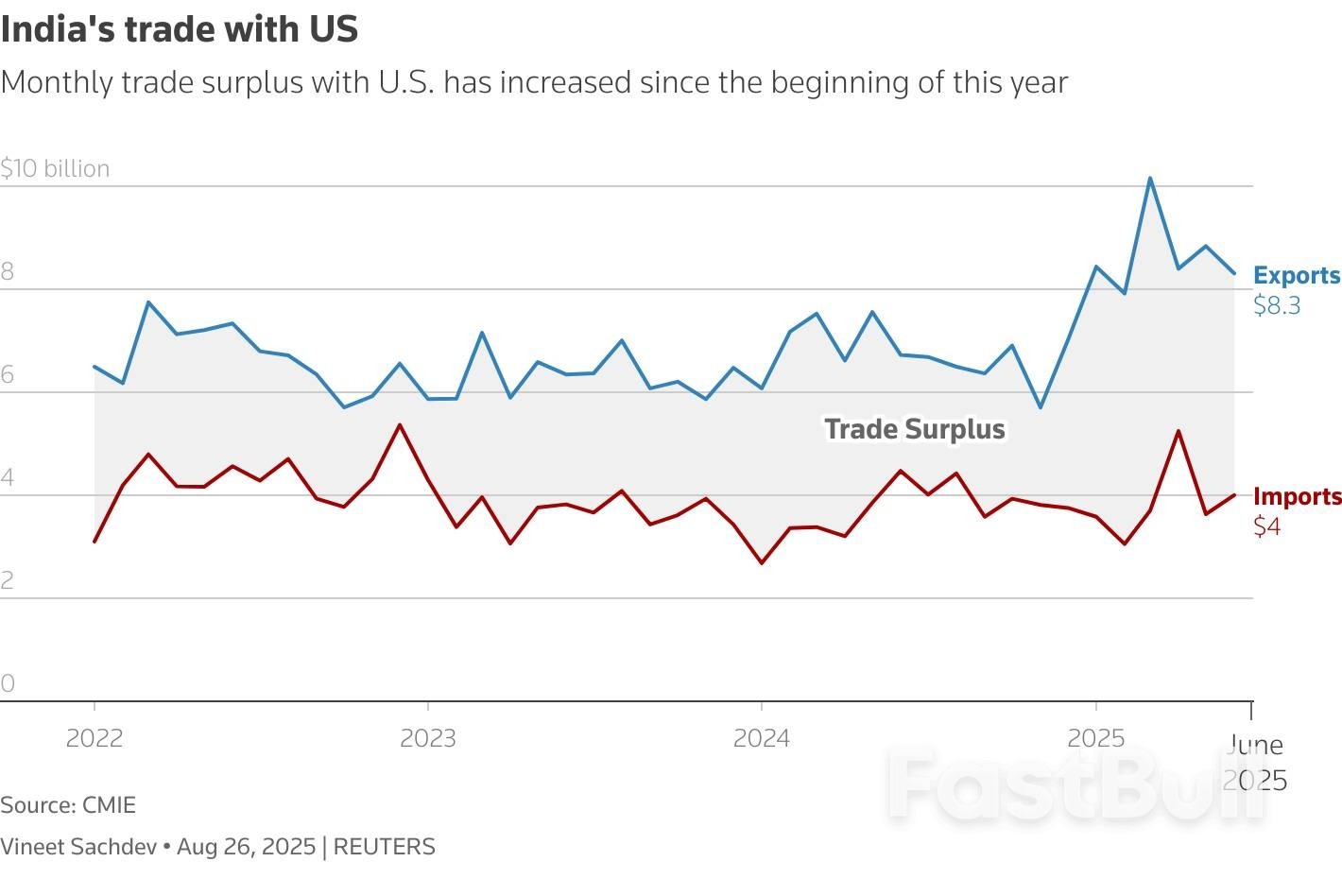
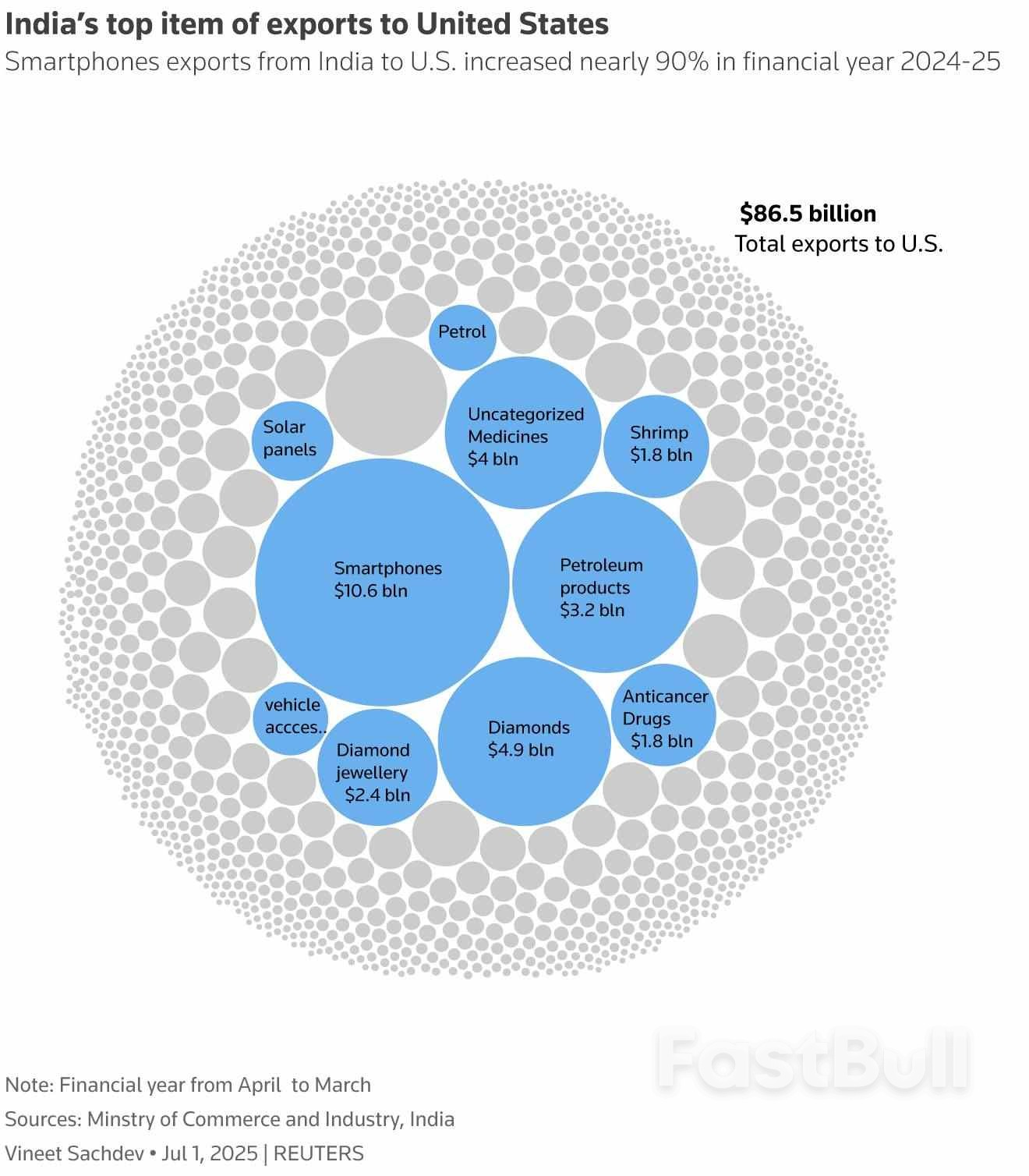
          The chart shows India's monthly imports and export to U.S.

          As the midnight activation deadline approached, U.S. officials offered no hope for India to avert the tariffs.
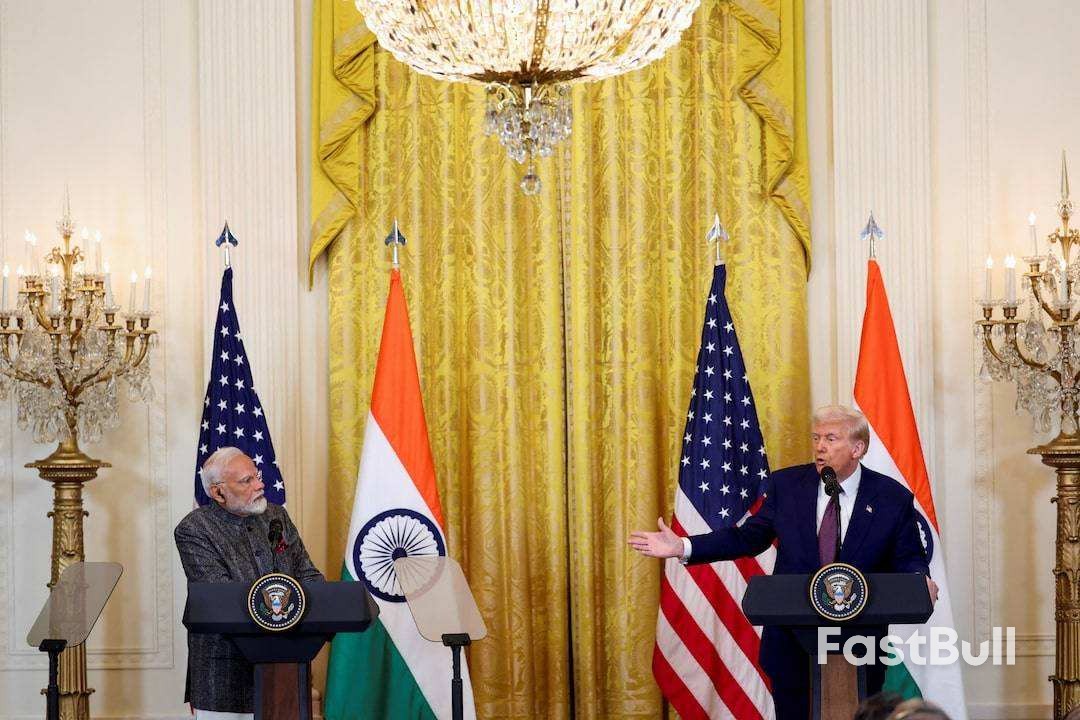
          "Yeah," said White House trade adviser Peter Navarro when asked if the increased tariffs on India's U.S.-bound exports would go into effect as previously announced on Wednesday. He offered no further details.

          Wednesday's tariff move follows five rounds of failed talks, during which Indian officials had signalled optimism that U.S. tariffs could be capped at 15%, the rate granted to goods from some other major U.S. trade partners including Japan, South Korea and the European Union.

          Officials on both sides blamed political misjudgment and missed signals for the breakdown in talks between the world's biggest and fifth-largest economies. Their two-way goods trade totaled $129 billion in 2024, with a $45.8 billion U.S. trade deficit, according to U.S. Census Bureau data.
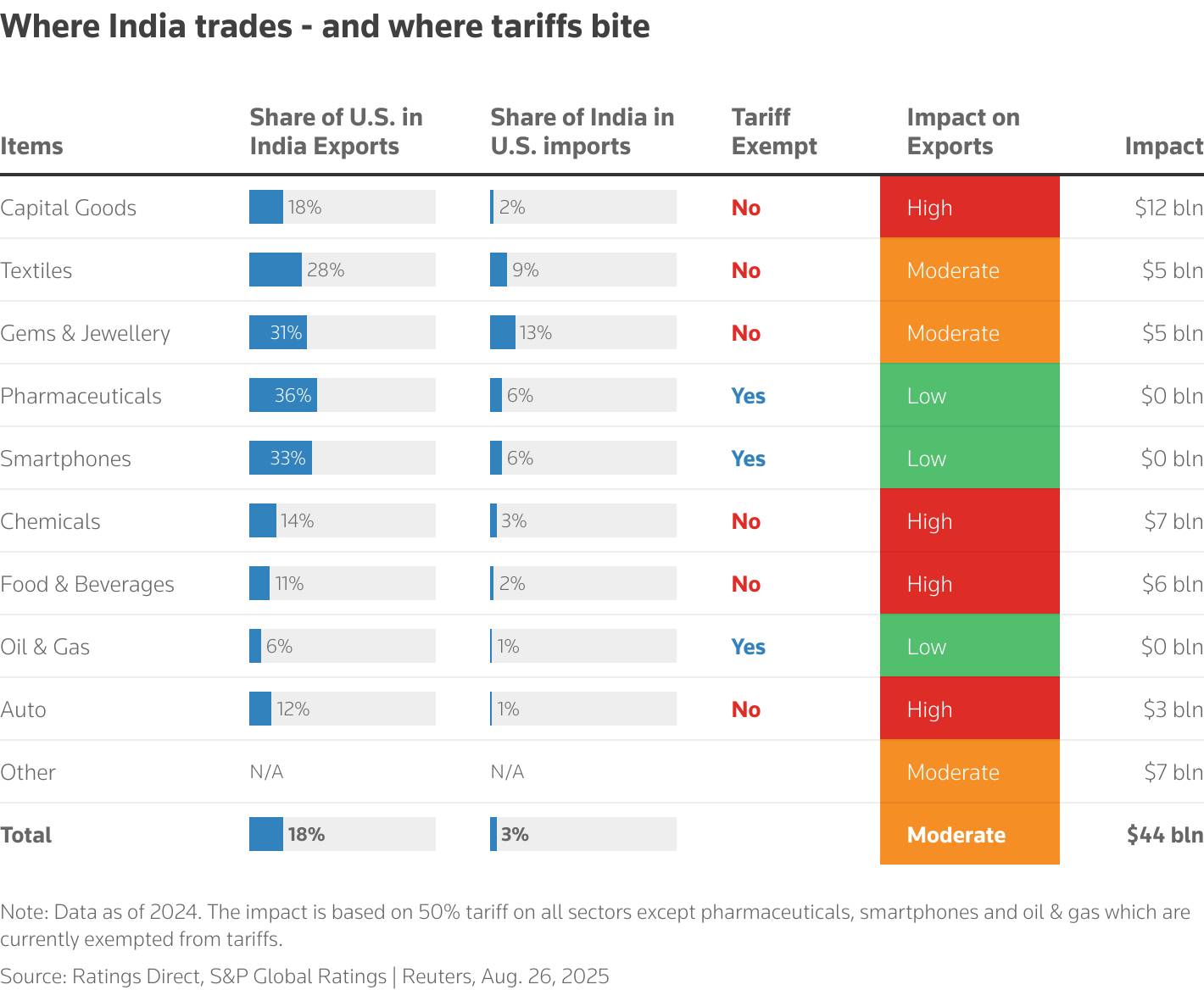
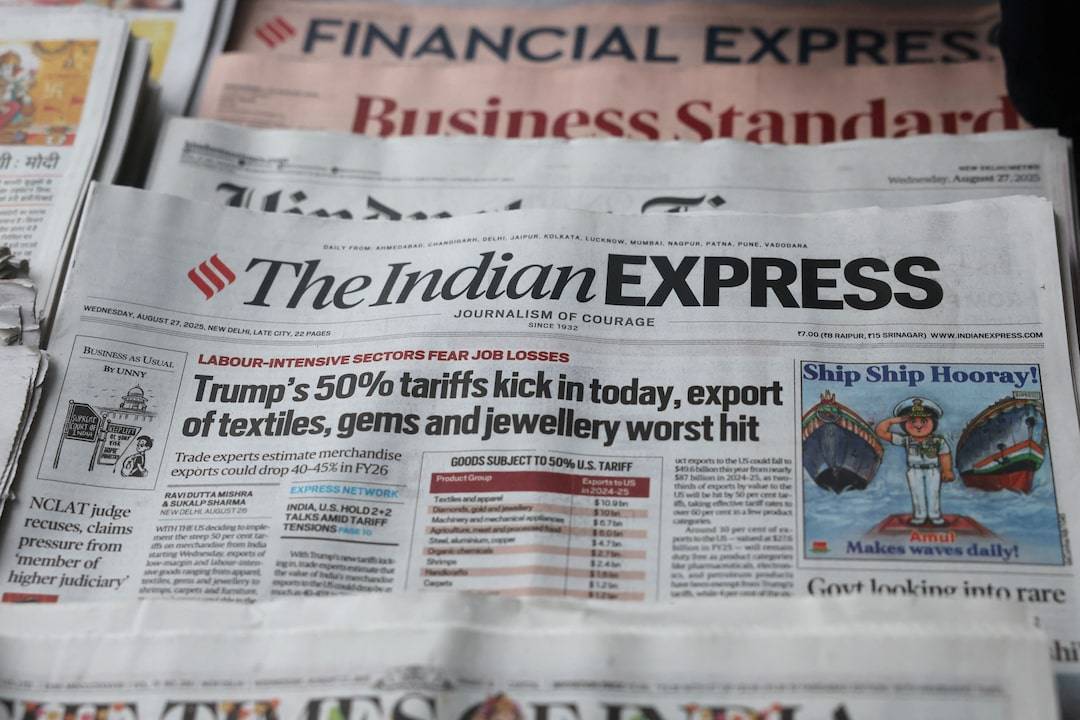
          The table shows the sectors that get affected mainly from US tariffs on India and the total potential impact on trade numbers.

          Exporter groups estimate hikes could affect nearly 55% of India's $87 billion in merchandise exports to the U.S., while benefiting competitors such as Vietnam, Bangladesh and China.

          Sustained tariffs at this rate could dent India's growing appeal as an alternative manufacturing hub to China for goods such as smartphones and electronics.

          The U.S.-India standoff has raised questions about the broader relationship between India and the U.S., important security partners who share concerns about China.

          However, on Tuesday the U.S. State Department and India's Ministry of External Affairs issued identical statements saying senior officials of the ministries and defense departments met virtually on Monday and expressed "eagerness to continue enhancing the breadth and depth of the bilateral relationship."

          Both sides also reaffirmed their commitment to the Quad, a partnership that brings together the U.S. and India with Australia and Japan.
          Source: Reuters

          To stay updated on all economic events of today, please check out our Economic calendar
          Risk Warnings and Disclaimers
          You understand and acknowledge that there is a high degree of risk involved in trading. Following any strategies or investment methods may lead to potential losses. The content on the site is provided by our contributors and analysts for information purposes only. You are solely responsible for determining whether any trading assets, securities, strategy, or any other product is suitable for investing based on your own investment objectives and financial situation.
          Add to Favorites
          Share
          FastBull
          Copyright © 2025 FastBull Ltd

          728 RM B 7/F GEE LOK IND BLDG NO 34 HUNG TO RD KWUN TONG KLN HONG KONG

          TelegramInstagramTwitterfacebooklinkedin
          App Store Google Play Google Play
          Products
          Charts

          Chats

          Q&A with Experts
          Screeners
          Economic Calendar
          Data
          Tools
          Membership
          Features
          Function
          Markets
          Copy Trading
          Latest Signals
          Contests
          News
          Analysis
          24/7
          Columns
          Education
          Company
          Careers
          About Us
          Contact Us
          Advertising
          Help Center
          Feedback
          User Agreement
          Privacy Policy
          Business

          White Label

          Data API

          Web Plug-ins

          Poster Maker

          Affiliate Program

          Risk Disclosure

          The risk of loss in trading financial instruments such as stocks, FX, commodities, futures, bonds, ETFs and crypto can be substantial. You may sustain a total loss of the funds that you deposit with your broker. Therefore, you should carefully consider whether such trading is suitable for you in light of your circumstances and financial resources.

          No decision to invest should be made without thoroughly conducting due diligence by yourself or consulting with your financial advisors. Our web content might not suit you since we don't know your financial conditions and investment needs. Our financial information might have latency or contain inaccuracy, so you should be fully responsible for any of your trading and investment decisions. The company will not be responsible for your capital loss.

          Without getting permission from the website, you are not allowed to copy the website's graphics, texts, or trademarks. Intellectual property rights in the content or data incorporated into this website belong to its providers and exchange merchants.

          Not Logged In

          Log in to access more features

          FastBull Membership

          Not yet

          Purchase

          Become a signal provider
          Help Center
          Customer Service
          Dark Mode
          Price Up/Down Colors

          Log In

          Sign Up

          Position
          Layout
          Fullscreen
          Default to Chart
          The chart page opens by default when you visit fastbull.com