• Trade
  • Markets
  • Copy
  • Contests
  • News
  • 24/7
  • Calendar
  • Q&A
  • Chats
Trending
Screeners
SYMBOL
LAST
BID
ASK
HIGH
LOW
NET CHG.
%CHG.
SPREAD
SPX
S&P 500 Index
6818.44
6818.44
6818.44
6861.30
6801.50
-8.97
-0.13%
--
DJI
Dow Jones Industrial Average
48377.35
48377.35
48377.35
48679.14
48285.67
-80.69
-0.17%
--
IXIC
NASDAQ Composite Index
23109.04
23109.04
23109.04
23345.56
23012.00
-86.12
-0.37%
--
USDX
US Dollar Index
97.940
98.020
97.940
98.070
97.740
-0.010
-0.01%
--
EURUSD
Euro / US Dollar
1.17475
1.17484
1.17475
1.17686
1.17262
+0.00081
+ 0.07%
--
GBPUSD
Pound Sterling / US Dollar
1.33735
1.33743
1.33735
1.34014
1.33546
+0.00028
+ 0.02%
--
XAUUSD
Gold / US Dollar
4304.06
4304.47
4304.06
4350.16
4285.08
+4.67
+ 0.11%
--
WTI
Light Sweet Crude Oil
56.317
56.347
56.317
57.601
56.233
-0.916
-1.60%
--

Community Accounts

Signal Accounts
--
Profit Accounts
--
Loss Accounts
--
View More

Become a signal provider

Sell trading signals to earn additional income

View More

Guide to Copy Trading

Get started with ease and confidence

View More

Signal Accounts for Members

All Signal Accounts

Best Return
  • Best Return
  • Best P/L
  • Best MDD
Past 1W
  • Past 1W
  • Past 1M
  • Past 1Y

All Contests

  • All
  • Trump Updates
  • Recommend
  • Stocks
  • Cryptocurrencies
  • Central Banks
  • Featured News
Top News Only
Share

Goldman Sachs Says They Believe That The Copper Price Is Vulnerable To An Ai-Linked Price Correction

Share

Goldman Sachs Upgrades 2026 Copper Price Forecast To $11400 From $10,650

Share

Attempts By Ukrainian Troops To Advance From The South-West To Outskirts Of Kupiansk Are Being Thwarted

Share

Russian Troops Control All Of Kupiansk - IFX Cites Russian Military

Share

On Monday (December 15), The South Korean Won Ultimately Rose 0.60% Against The US Dollar, Closing At 1468.91 Won. The Won Was On An Upward Trend Throughout The Day, Rising Significantly At 17:00 Beijing Time And Reaching A Daily High Of 1463.04 Won At 17:36

Share

Health Ministry: Israeli Forces Kill Palestinian Teen In West Bank

Share

New York Federal Reserve President Williams: Over Time, The Size Of Reserves Could Grow From $2.9 Trillion

Share

New York Fed President Williams: AI Valuations Are High, But There Is A Real Driving Factor

Share

New York Federal Reserve President Williams: The Job Market Is In Very Good Shape

Share

New York Fed President Williams: 'Very Supportive' Of USA Central Bank's Decision To Cut Interest Rates Last Week

Share

New York Fed President Williams: 'Too Early To Say' What Central Bank Should Do At January Meeting

Share

New York Fed President Williams: Strong Markets Part Of Reason Why Economy Will Grow Robustly In 2026

Share

New York Fed President Williams: What Constitutes Ample Reserves Will Change Over Time

Share

New York Fed President Williams: Market Valuations 'Elevated,' But There Are Reasons For Pricing

Share

New York Fed President Williams: Ample Reserves System Working Very Well

Share

New York Fed President Williams: Some Signs That Parts Of Underlying Economy Not As Strong As GDP Data Suggests

Share

New York Fed President Williams: Expects Coming Job Data Will Show Gradual Cooling

Share

Ukraine President Zelenskiy: Monitoring Of Ceasefire Should Be Part Of Security Guarantees

Share

Ukraine President Zelenskiy: Ukraine Needs Clear Understanding On Security Guarantees Before Taking Any Decisions Regarding Frontlines

Share

U.S. Commerce Secretary Rutnick Praised Korea Zinc Co. Ltd., Stating That The United States Will Have Priority Access To The Company's Products In 2026

TIME
ACT
FCST
PREV
Japan Tankan Small Manufacturing Outlook Index (Q4)

A:--

F: --

P: --

Japan Tankan Large Non-Manufacturing Outlook Index (Q4)

A:--

F: --

P: --

Japan Tankan Large Manufacturing Outlook Index (Q4)

A:--

F: --

P: --

Japan Tankan Small Manufacturing Diffusion Index (Q4)

A:--

F: --

P: --

Japan Tankan Large-Enterprise Capital Expenditure YoY (Q4)

A:--

F: --

P: --

U.K. Rightmove House Price Index YoY (Dec)

A:--

F: --

P: --

China, Mainland Industrial Output YoY (YTD) (Nov)

A:--

F: --

P: --

China, Mainland Urban Area Unemployment Rate (Nov)

A:--

F: --

P: --

Saudi Arabia CPI YoY (Nov)

A:--

F: --

P: --

Euro Zone Industrial Output YoY (Oct)

A:--

F: --

P: --

Euro Zone Industrial Output MoM (Oct)

A:--

F: --

P: --

Canada Existing Home Sales MoM (Nov)

A:--

F: --

P: --

Canada National Economic Confidence Index

A:--

F: --

P: --

Canada New Housing Starts (Nov)

A:--

F: --

P: --
U.S. NY Fed Manufacturing Employment Index (Dec)

A:--

F: --

P: --

U.S. NY Fed Manufacturing Index (Dec)

A:--

F: --

P: --

Canada Core CPI YoY (Nov)

A:--

F: --

P: --

Canada Manufacturing Unfilled Orders MoM (Oct)

A:--

F: --

P: --

U.S. NY Fed Manufacturing Prices Received Index (Dec)

A:--

F: --

P: --

U.S. NY Fed Manufacturing New Orders Index (Dec)

A:--

F: --

P: --

Canada Manufacturing New Orders MoM (Oct)

A:--

F: --

P: --

Canada Core CPI MoM (Nov)

A:--

F: --

P: --

Canada Trimmed CPI YoY (SA) (Nov)

A:--

F: --

P: --

Canada Manufacturing Inventory MoM (Oct)

A:--

F: --

P: --

Canada CPI YoY (Nov)

A:--

F: --

P: --

Canada CPI MoM (Nov)

A:--

F: --

P: --

Canada CPI YoY (SA) (Nov)

A:--

F: --

P: --

Canada Core CPI MoM (SA) (Nov)

A:--

F: --

P: --

Canada CPI MoM (SA) (Nov)

A:--

F: --

P: --

Federal Reserve Board Governor Milan delivered a speech
U.S. NAHB Housing Market Index (Dec)

A:--

F: --

P: --

Australia Composite PMI Prelim (Dec)

--

F: --

P: --

Australia Services PMI Prelim (Dec)

--

F: --

P: --

Australia Manufacturing PMI Prelim (Dec)

--

F: --

P: --

Japan Manufacturing PMI Prelim (SA) (Dec)

--

F: --

P: --

U.K. 3-Month ILO Employment Change (Oct)

--

F: --

P: --

U.K. Unemployment Claimant Count (Nov)

--

F: --

P: --

U.K. Unemployment Rate (Nov)

--

F: --

P: --

U.K. 3-Month ILO Unemployment Rate (Oct)

--

F: --

P: --

U.K. Average Weekly Earnings (3-Month Average, Including Bonuses) YoY (Oct)

--

F: --

P: --

U.K. Average Weekly Earnings (3-Month Average, Excluding Bonuses) YoY (Oct)

--

F: --

P: --

France Services PMI Prelim (Dec)

--

F: --

P: --

France Composite PMI Prelim (SA) (Dec)

--

F: --

P: --

France Manufacturing PMI Prelim (Dec)

--

F: --

P: --

Germany Services PMI Prelim (SA) (Dec)

--

F: --

P: --

Germany Manufacturing PMI Prelim (SA) (Dec)

--

F: --

P: --

Germany Composite PMI Prelim (SA) (Dec)

--

F: --

P: --

Euro Zone Composite PMI Prelim (SA) (Dec)

--

F: --

P: --

Euro Zone Services PMI Prelim (SA) (Dec)

--

F: --

P: --

Euro Zone Manufacturing PMI Prelim (SA) (Dec)

--

F: --

P: --

U.K. Services PMI Prelim (Dec)

--

F: --

P: --

U.K. Manufacturing PMI Prelim (Dec)

--

F: --

P: --

U.K. Composite PMI Prelim (Dec)

--

F: --

P: --

Euro Zone ZEW Economic Sentiment Index (Dec)

--

F: --

P: --

Germany ZEW Current Conditions Index (Dec)

--

F: --

P: --

Germany ZEW Economic Sentiment Index (Dec)

--

F: --

P: --

Euro Zone Trade Balance (Not SA) (Oct)

--

F: --

P: --

Euro Zone ZEW Current Conditions Index (Dec)

--

F: --

P: --

Euro Zone Trade Balance (SA) (Oct)

--

F: --

P: --

Euro Zone Total Reserve Assets (Nov)

--

F: --

P: --

U.K. Inflation Rate Expectations

--

F: --

P: --

Q&A with Experts
    • All
    • Chatrooms
    • Groups
    • Friends
    Connecting
    .
    .
    .
    Type here...
    Add Symbol or Code

      No matching data

      All
      Trump Updates
      Recommend
      Stocks
      Cryptocurrencies
      Central Banks
      Featured News
      • All
      • Russia-Ukraine Conflict
      • Middle East Flashpoint
      • All
      • Russia-Ukraine Conflict
      • Middle East Flashpoint
      Search
      Products

      Charts Free Forever

      Chats Q&A with Experts
      Screeners Economic Calendar Data Tools
      Membership Features
      Data Warehouse Market Trends Institutional Data Policy Rates Macro

      Market Trends

      Market Sentiment Order Book Forex Correlations

      Top Indicators

      Charts Free Forever
      Markets

      News

      News Analysis 24/7 Columns Education
      From Institutions From Analysts
      Topics Columnists

      Latest Views

      Latest Views

      Trending Topics

      Top Columnists

      Latest Update

      Signals

      Copy Rankings Latest Signals Become a signal provider AI Rating
      Contests
      Brokers

      Overview Brokers Assessment Rankings Regulators News Claims
      Broker listing Forex Brokers Comparison Tool Live Spread Comparison Scam
      Q&A Complaint Scam Alert Videos Tips to Detect Scam
      More

      Business
      Events
      Careers About Us Advertising Help Center

      White Label

      Data API

      Web Plug-ins

      Affiliate Program

      Awards Institution Evaluation IB Seminar Salon Event Exhibition
      Vietnam Thailand Singapore Dubai
      Fans Party Investment Sharing Session
      FastBull Summit BrokersView Expo
      Recent Searches
        Top Searches
          Markets
          News
          Analysis
          User
          24/7
          Economic Calendar
          Education
          Data
          • Names
          • Latest
          • Prev

          View All

          No data

          Scan to Download

          Faster Charts, Chat Faster!

          Download App
          English
          • English
          • Español
          • العربية
          • Bahasa Indonesia
          • Bahasa Melayu
          • Tiếng Việt
          • ภาษาไทย
          • Français
          • Italiano
          • Türkçe
          • Русский язык
          • 简中
          • 繁中
          Open Account
          Search
          Products
          Charts Free Forever
          Markets
          News
          Signals

          Copy Rankings Latest Signals Become a signal provider AI Rating
          Contests
          Brokers

          Overview Brokers Assessment Rankings Regulators News Claims
          Broker listing Forex Brokers Comparison Tool Live Spread Comparison Scam
          Q&A Complaint Scam Alert Videos Tips to Detect Scam
          More

          Business
          Events
          Careers About Us Advertising Help Center

          White Label

          Data API

          Web Plug-ins

          Affiliate Program

          Awards Institution Evaluation IB Seminar Salon Event Exhibition
          Vietnam Thailand Singapore Dubai
          Fans Party Investment Sharing Session
          FastBull Summit BrokersView Expo

          U.S.-China Trade Deficit Narrows to 21-Year Low, but American Businesses Face Economic Fallout

          Gerik

          Economic

          China–U.S. Trade War

          Summary:

          While tariffs have succeeded in reducing the U.S. trade deficit with China to historic lows, they have also triggered broad-based economic disruptions, particularly within domestic services and manufacturing sectors,...

          Record Trade Deficit Reduction Reflects Tariff-Driven Import Collapse

          According to the U.S. Bureau of Economic Analysis, the goods trade deficit with China fell to $9.5 billion in June, the lowest level since February 2004. This marks a 70% decline equivalent to $22.2 billion following five consecutive months of contraction. Imports from China dropped to $18.9 billion, their lowest since 2009, under pressure from the 30% tariffs currently imposed by the Trump administration.
          These figures are not confined to China. The U.S. also reported shrinking deficits with Canada and Germany, falling to $1.3 billion and $3.8 billion, respectively. This broad reduction highlights the scope and effectiveness of elevated tariffs in curbing inbound trade volumes.
          However, these developments are not without cost. The sharp drop in imports, especially of consumer goods and industrial materials, mirrors the pattern last observed during the peak of the COVID-19 pandemic. Total U.S. imports fell to $337.5 billion in June, compared to $350.3 billion in May, while exports edged down slightly to $277.3 billion. The overall trade deficit narrowed 16% to $60.2 billion, with goods trade posting a 10.8% reduction both the lowest levels since late 2023.

          Tariffs Boost Q2 GDP but Mask Underlying Economic Strain

          The reduction in trade deficit helped push Q2 GDP growth to 3.0% on an annualized basis, reversing a 0.5% decline in Q1. Much of this rebound was mechanical, reflecting reduced imports after front-loaded purchasing in early 2025 to avoid tariff hikes. However, underlying indicators suggest the economy remains under pressure. Service sector activity stagnated in July, with businesses facing increased input costs and strategic uncertainty.
          These mixed outcomes demonstrate a correlation rather than a direct causal improvement in economic performance. While lower deficits inflate GDP statistically, the broader economic environment is deteriorating in response to policy unpredictability and elevated operating costs.

          Trump’s Renewed Tariff Agenda Triggers Long-Term Market Repercussions

          In the week leading up to August 1, President Trump announced a sweeping new round of tariffs, ranging from 10% to 41%, scheduled to take effect on August 7. Yale University researchers estimate this will raise the average U.S. tariff rate to 18.3%, the highest since 1934. For comparison, the average rate before Trump’s re-election in January was just 2–3%.
          This policy shift is contributing to long-term uncertainty. While businesses once hoped that high tariffs were temporary, they now face a more permanent reality. Nationwide Financial’s Oren Klachkin noted that although the recent announcements reduce short-term policy ambiguity, the enduring costs of higher tariffs are likely to outweigh any stabilizing effects.

          Service Sector Slows as Inflation Pressures Intensify

          Tariff-related volatility has extended beyond trade into the broader services sector, which accounts for two-thirds of U.S. economic activity. The Institute for Supply Management’s (ISM) services PMI fell to 50.1 in July from 50.8 in June just above the threshold indicating expansion. Economists had expected a rise to 51.5.
          Job conditions worsened, with the services employment index dropping to 46.4, the lowest since March, marking the fourth month of contraction in five. Meanwhile, input costs rose sharply. ISM’s input price index surged to 69.9, the highest since October 2022. These data points suggest inflationary pressure is building and not confined to goods alone.
          While services inflation had previously remained subdued, helping to stabilize overall inflation, emerging trends indicate a potential reversal. The rising cost of goods such as furniture and electronics, driven by depleted inventories and import tariffs, could spark broader price increases.

          Mounting Business Concerns Raise Risk of Investment Retraction

          ISM surveys show growing concern among businesses, particularly in construction and manufacturing. One construction executive reported clients are reevaluating or cancelling projects due to trade uncertainty. This behavioral shift reflects more than temporary caution; it hints at structural hesitation to invest under unstable conditions.
          Despite Trump’s claim of strong polling support linked to his tariff policies, recent surveys suggest a more complex political landscape. While tariffs may resonate with segments of the electorate, they are also generating friction within business communities critical to economic stability.

          A Double-Edged Trade Strategy

          The dramatic contraction of the U.S.-China trade deficit highlights the effectiveness of tariffs in reshaping trade balances. Yet the broader economic costs ranging from stagnating service output to rising input prices and weakened employment raise concerns about long-term viability. The relationship between tariffs and growth is not clearly causal; while trade figures improve on the surface, they mask a correlation with underlying economic strain and heightened policy risk.
          If the U.S. continues on this path, businesses may increasingly decouple from global trade routes, but at the cost of higher domestic prices, reduced competitiveness, and structural fragility. Whether this trajectory supports sustainable growth remains uncertain.

          Source: Reuters

          To stay updated on all economic events of today, please check out our Economic calendar
          Risk Warnings and Disclaimers
          You understand and acknowledge that there is a high degree of risk involved in trading. Following any strategies or investment methods may lead to potential losses. The content on the site is provided by our contributors and analysts for information purposes only. You are solely responsible for determining whether any trading assets, securities, strategy, or any other product is suitable for investing based on your own investment objectives and financial situation.
          Add to Favorites
          Share

          India Walks a Diplomatic Tightrope Amid U.S. Tariff Threats Over Russian Oil Trade

          Gerik

          Economic

          Washington's Threats And New Delhi's Immediate Response

          India is under intense economic pressure after U.S. President Donald Trump issued an ultimatum, threatening to raise tariffs significantly within 24 hours if India continues to purchase Russian oil. With one of its refineries importing around 1.7 million barrels of Russian oil daily, the Indian government now faces a dual challenge: preserving economic stability while upholding sovereign foreign policy.
          Although Trump's warning left Indian officials scrambling, Prime Minister Narendra Modi has maintained a firm stance. Rather than halting Russian oil imports, the Indian government has activated contingency plans to limit economic damage. These include fast-tracking export promotion programs and encouraging domestic consumption to counter reduced global demand.

          Trade Talks Reconfigured To Avoid Escalation

          Previously, trade negotiations between India and the U.S. focused on lowering tariffs below the 20% threshold. However, Trump’s recent rhetoric has shifted dramatically, now branding BRICS nations as antagonistic to U.S. interests and threatening broader financial sanctions.
          In response, India has reopened discussions on loosening restrictions in specific sectors. Notably, the government is considering limited dairy imports such as specialty cheese and condensed milk. This would mark a significant policy shift, as India’s dairy sector is traditionally protected with tariffs as high as 60% due to both economic and religious considerations.
          If implemented, such a concession would be India's most substantial market opening in the dairy sector even broader than what was offered to the UK in recent free trade negotiations. While these measures are designed to ease tensions, they represent a calculated move to retain strategic autonomy without provoking Washington.

          Economic Risks Prompt Policy Adjustments

          India’s Ministry of Commerce estimates that a 25% tariff hike by the U.S. could shave off 0.3 percentage points from national GDP growth and impact roughly 10% of India’s Q3 export value. These projections are backed by HSBC's Chief Economist Pranjul Bhandari, who emphasizes that prolonged U.S. penalties could severely hinder investment and capital inflows.
          To counter this, the Indian government may expand its ₹22.5 billion export incentive scheme announced in the February budget. The goal is to enhance competitiveness for sectors like textiles, jewelry, and gems industries particularly vulnerable to external shocks and already suffering from tightening global demand.

          Internal Political Frictions Intensify Amid External Pressure

          While the Modi administration resists making abrupt policy changes, internal political criticism is mounting. Opposition figures highlight the personal closeness once shared between Modi and Trump, now framing it as diplomatically costly. Senior Congress Party leader Jairam Ramesh publicly denounced the situation, suggesting India’s loyalty is being punished, rather than rewarded.
          Nevertheless, foreign policy experts believe India will maintain composure and avoid retaliation. Indrani Bagchi, CEO of the Ananta Centre in Delhi, notes that New Delhi will likely continue its pursuit of behind-the-scenes diplomacy. Despite Trump’s confrontational tone, Indian officials are unlikely to concede in a way that appears externally coerced.

          Geopolitical Tensions Versus Economic Realities

          Trump's August 8 deadline for Russia to agree to a ceasefire in Ukraine is tied closely to his pressure campaign on countries like India and China, whose continued purchases of Russian oil support Moscow’s economy. India’s refusal to alter its import behavior has thus become a geopolitical flashpoint.
          However, the link between India’s energy strategy and the U.S. tariff threats demonstrates a complex, though not necessarily causal, relationship. While Indian imports from Russia have increased in volume, there is no direct legal breach of international sanctions. This underlines the tension between geopolitical alignment and pragmatic economic policymaking in a multipolar world.
          India’s stance, therefore, is not simply a function of provocation or defiance but part of a broader effort to balance strategic partnerships with national interests. The long-term outcome will hinge on whether Washington accepts India’s non-aligned posture or pushes further, risking economic friction with a key Indo-Pacific partner.

          Source: Reuters

          To stay updated on all economic events of today, please check out our Economic calendar
          Risk Warnings and Disclaimers
          You understand and acknowledge that there is a high degree of risk involved in trading. Following any strategies or investment methods may lead to potential losses. The content on the site is provided by our contributors and analysts for information purposes only. You are solely responsible for determining whether any trading assets, securities, strategy, or any other product is suitable for investing based on your own investment objectives and financial situation.
          Add to Favorites
          Share

          China’s $645 Billion Baby Bet: Can Gen Z Parents Spark a Fertility Turnaround?

          Gerik

          Economic

          Beijing's Urgency Meets Gen Z Reality

          Facing a population crisis marked by three straight years of decline and a fertility rate hovering just above 1.0, the Chinese government is escalating its efforts to lift birth rates. Central to this push is a new annual subsidy of 3,600 yuan ($503) for each child under three a policy milestone as it now applies to firstborns, not just second or third children.
          In parallel, preschool tuition waivers have been announced, joining a suite of past incentives like tax breaks, birth quotas increased to three, and even cash bonuses in select regions. But behind these policies lies a critical question: can financial perks shift cultural and economic realities?

          Gen Z Parents Are Reshaping the Market

          Businesses see opportunity in a baby-care and maternity market projected to reach 4.63 trillion yuan ($645 billion) in 2025, despite falling birth rates. Why? Because China still sees nearly three times more newborns annually than the U.S., ensuring large-scale demand especially for premium and experience-focused offerings.
          China’s new parents are mostly Gen Z and younger millennials: digital natives with a global outlook, high expectations for product quality, and a preference for experiential spending from ski trips and coding apps to smart parenting tools.
          McKinsey’s Greater China chairman, Joe Ngai, notes that parents are now spending more per child, creating a premiumized market for enrichment programs, pre-K services, and family travel. The focus has shifted from quantity to quality, from necessity to experience.

          A More Demanding, Distrustful Consumer Base

          Gen Z parents are not only selective and value-driven, but also deeply skeptical of corporate motives particularly in a market still haunted by the 2008 infant formula scandal. Many continue to prefer foreign brands for safety and transparency reasons.
          This week, after the launch of Beijing’s subsidy, several domestic baby brands raised prices sparking public backlash on social media. A 3x spike in baby wipe prices and a 50% increase in formula costs led parents to accuse companies of "ripping off subsidies." Apologies followed, but the damage was done.
          These incidents reveal a deeper truth: young Chinese parents demand value, authenticity, and accountability. Brands that fall short face swift reputational consequences online.

          Structural Obstacles Remain

          Despite the policy push, experts caution that financial subsidies are unlikely to reverse fertility trends without addressing structural burdens particularly for urban, educated women. Career disruption, high childcare costs, and the "sandwich generation" burden (supporting both children and elderly parents) make family planning a luxury.
          Hiring domestic help in major cities is often unaffordable. The cost of raising a child in China is estimated at 6.3 times per capita GDP, far higher than the U.S. ratio of 4.11, according to think tank data.
          As Jiang Yaling, a consumer analyst, notes: the 3,600 yuan subsidy covers only around 10 cans of infant formula a drop in the bucket for families evaluating long-term trade-offs.

          A Premium Market, But Not a Baby Boom

          For now, Beijing’s bet is that targeted financial relief may trigger a short-term consumption boost, even if it does not spark a baby boom. And for businesses from stroller makers to edtech startups the takeaway is clear: the customer has changed.
          Gen Z parents are tech-savvy, socially conscious, and uncompromising. Winning their trust means more than delivering quality it means transparency, innovation, and empathy in every brand interaction.
          In a country where births have halved since 2016, the challenge is steep. But the scale of opportunity and the changing face of parenthood make China’s baby-care sector a market no brand can afford to ignore.

          Source: CNBC

          To stay updated on all economic events of today, please check out our Economic calendar
          Risk Warnings and Disclaimers
          You understand and acknowledge that there is a high degree of risk involved in trading. Following any strategies or investment methods may lead to potential losses. The content on the site is provided by our contributors and analysts for information purposes only. You are solely responsible for determining whether any trading assets, securities, strategy, or any other product is suitable for investing based on your own investment objectives and financial situation.
          Add to Favorites
          Share

          Exclusive Interview with Contest Winners! 2025 FastBull CFD Short-Term Trading Contest

          FastBull Events
          Exclusive Interview with Contest Winners! 2025 FastBull CFD Short-Term Trading Contest_1
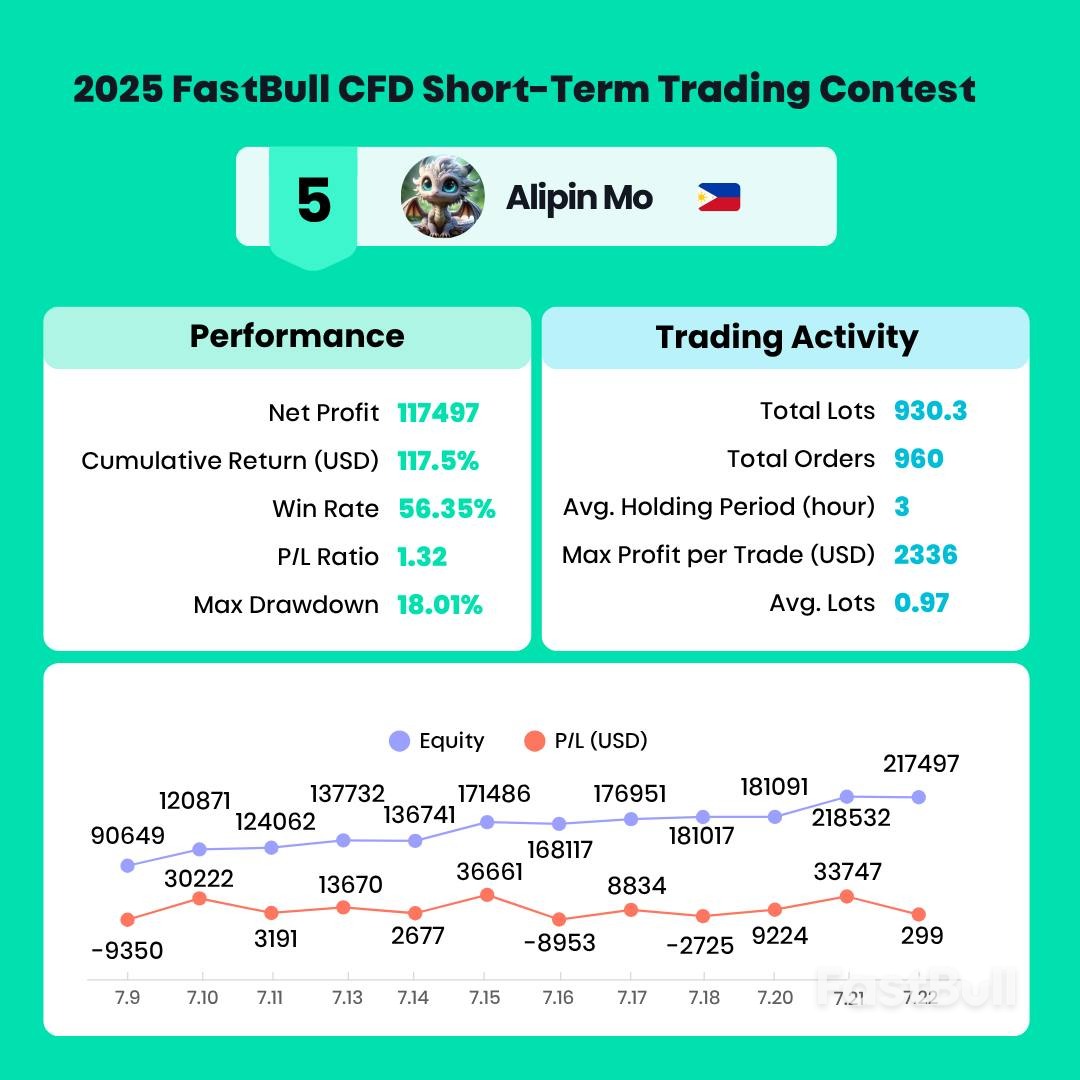
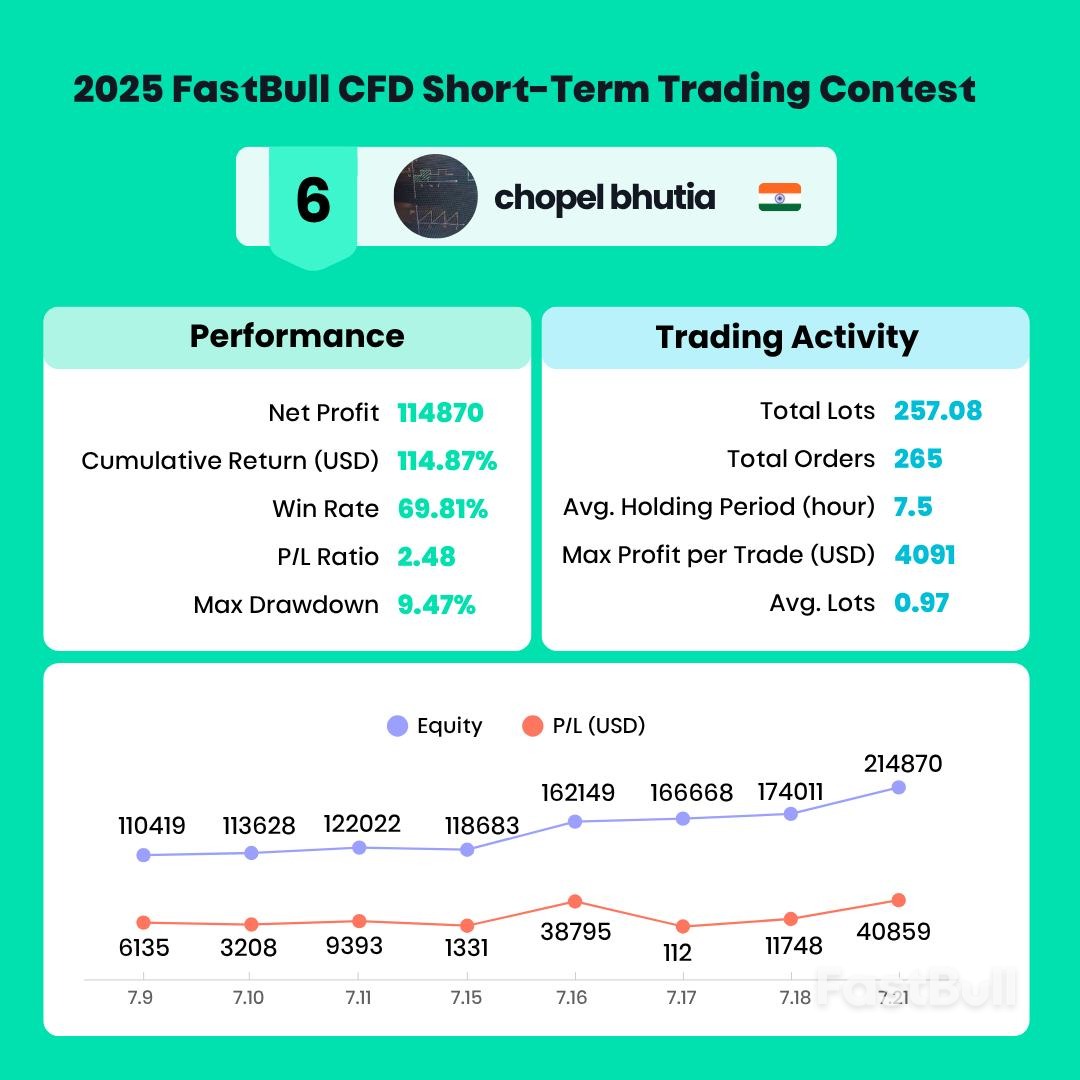
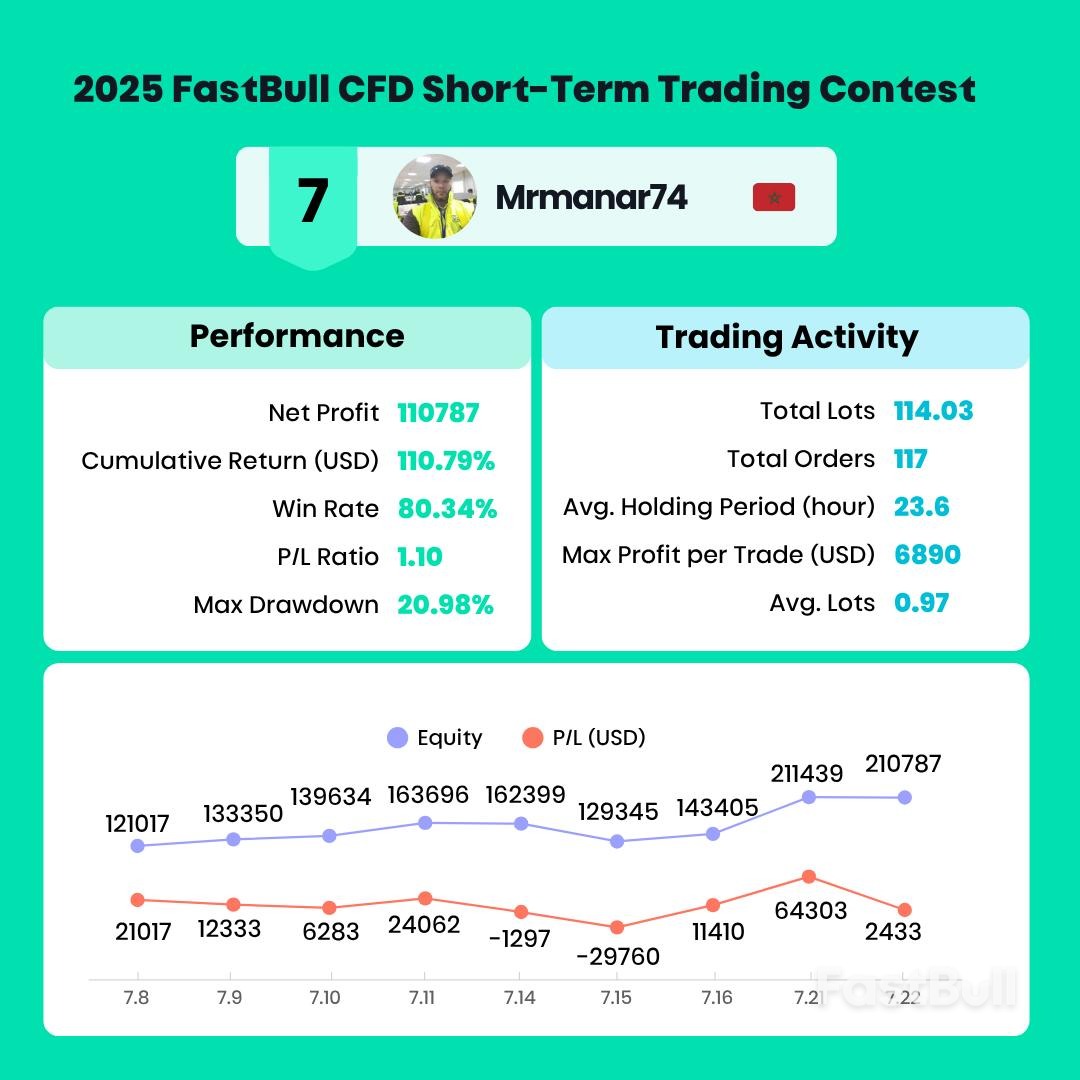
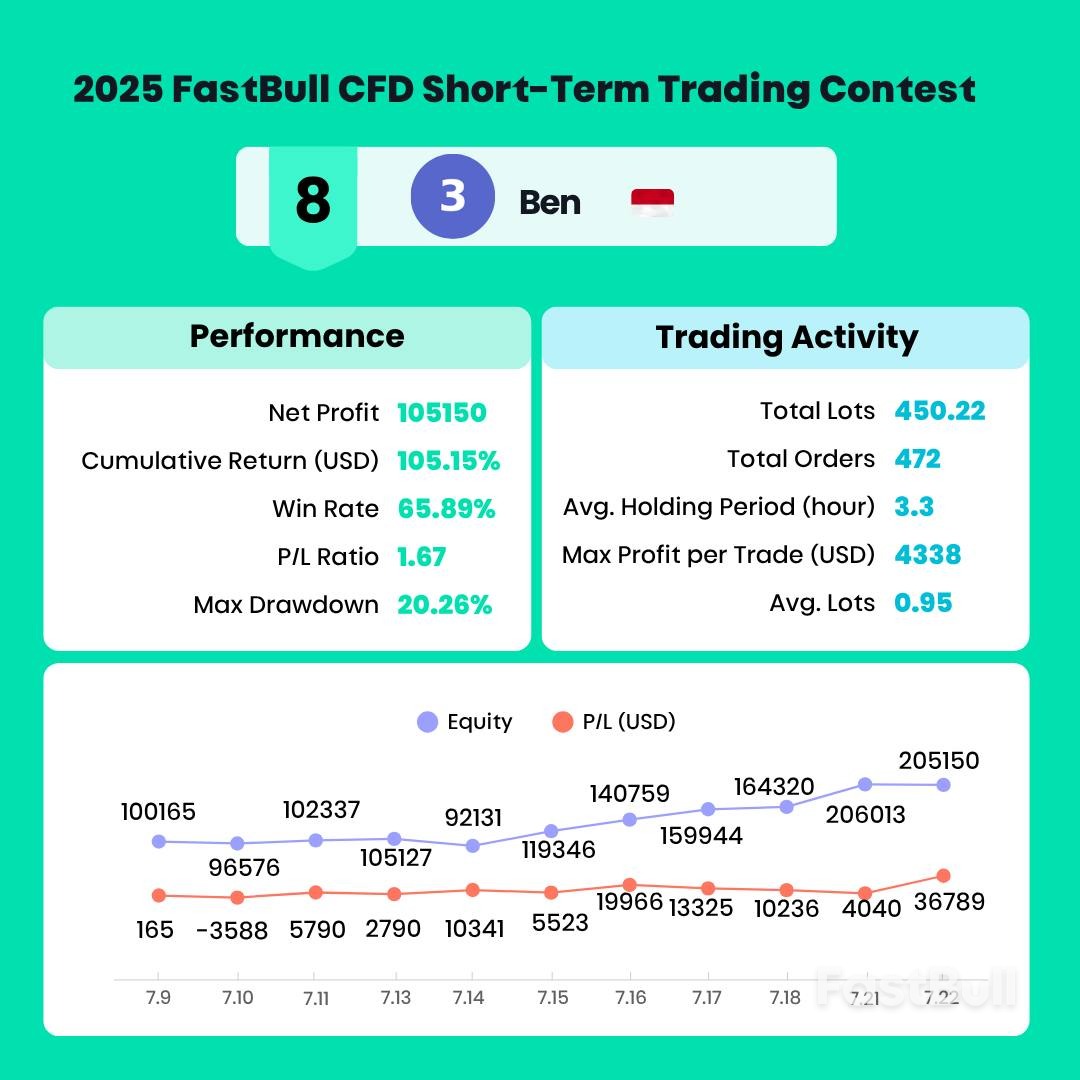
          The markets closed, the charts told their stories, and the champions have emerged - the 2025 FastBull CFD Trading Contest has officially wrapped up. After two weeks of fast-paced action and high-stakes strategies, 7,199 traders from around the world put their skills to the test in one of the most dynamic short-term trading contests of the year.
          Powered by FastBull and co-hosted by BeeMarkets, the competition offered traders a virtual $100,000 account and 400:1 leverage to showcase not just their market savvy, but also their risk management, discipline, and decision-making under pressure. The top 10 performers walked away with fully funded real trading accounts, with the champion earning a $5,000 prize.
          But behind every rank is a story worth telling. To give our community a deeper look into what it takes to rise to the top, FastBull is proud to present exclusive interviews with all ten top traders. These interviews offer a window into the mindset, methods, and moments that defined their path to the leaderboard.
          Watch the full interview videos with the Top 10 Winners:
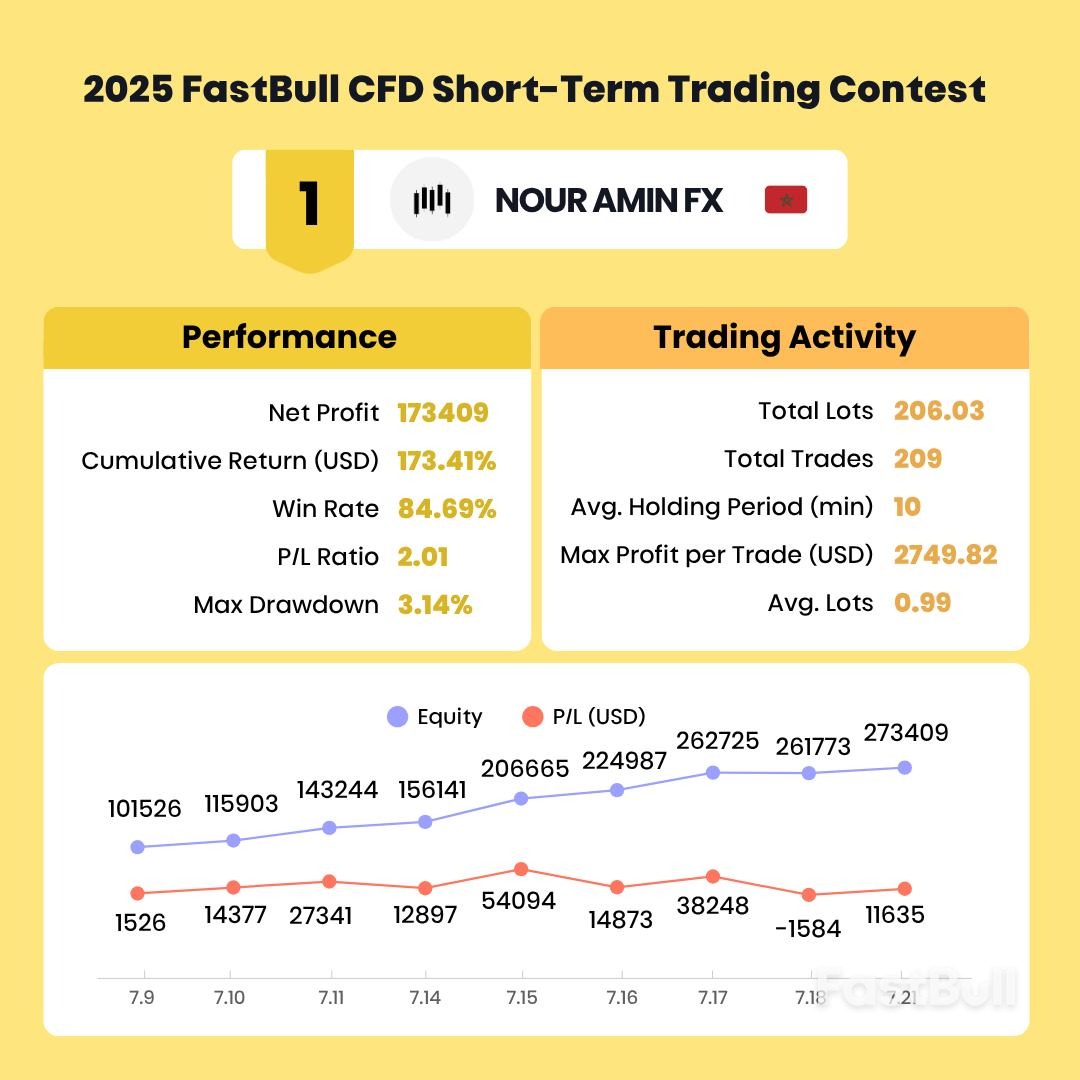
          1st: NOUR AMIN FX winning $5,000
          Exclusive Interview with Contest Winners! 2025 FastBull CFD Short-Term Trading Contest_2
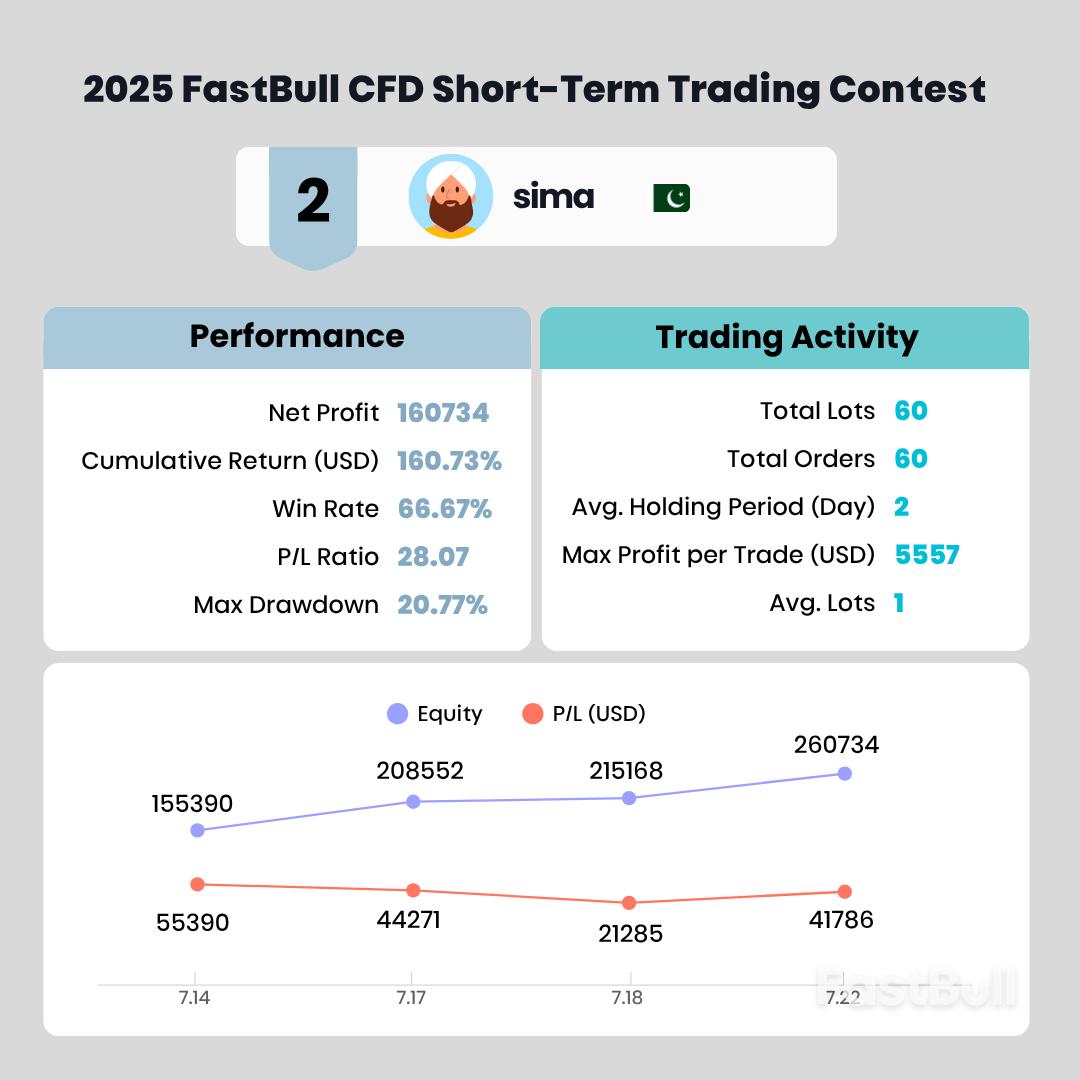
          2nd: sima winning $4,000
          Exclusive Interview with Contest Winners! 2025 FastBull CFD Short-Term Trading Contest_3
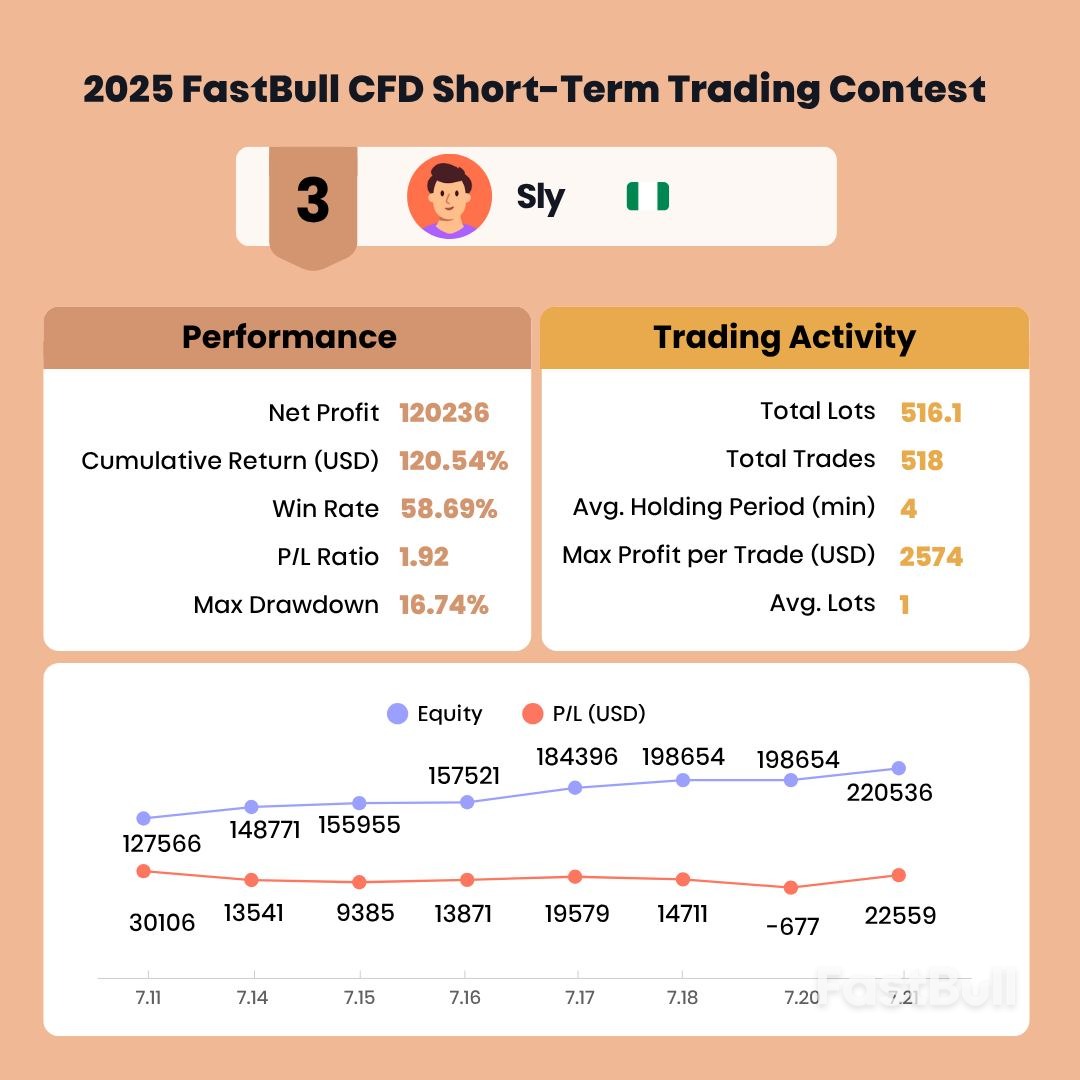
          3rd: Sly winning $3,000
          Exclusive Interview with Contest Winners! 2025 FastBull CFD Short-Term Trading Contest_4
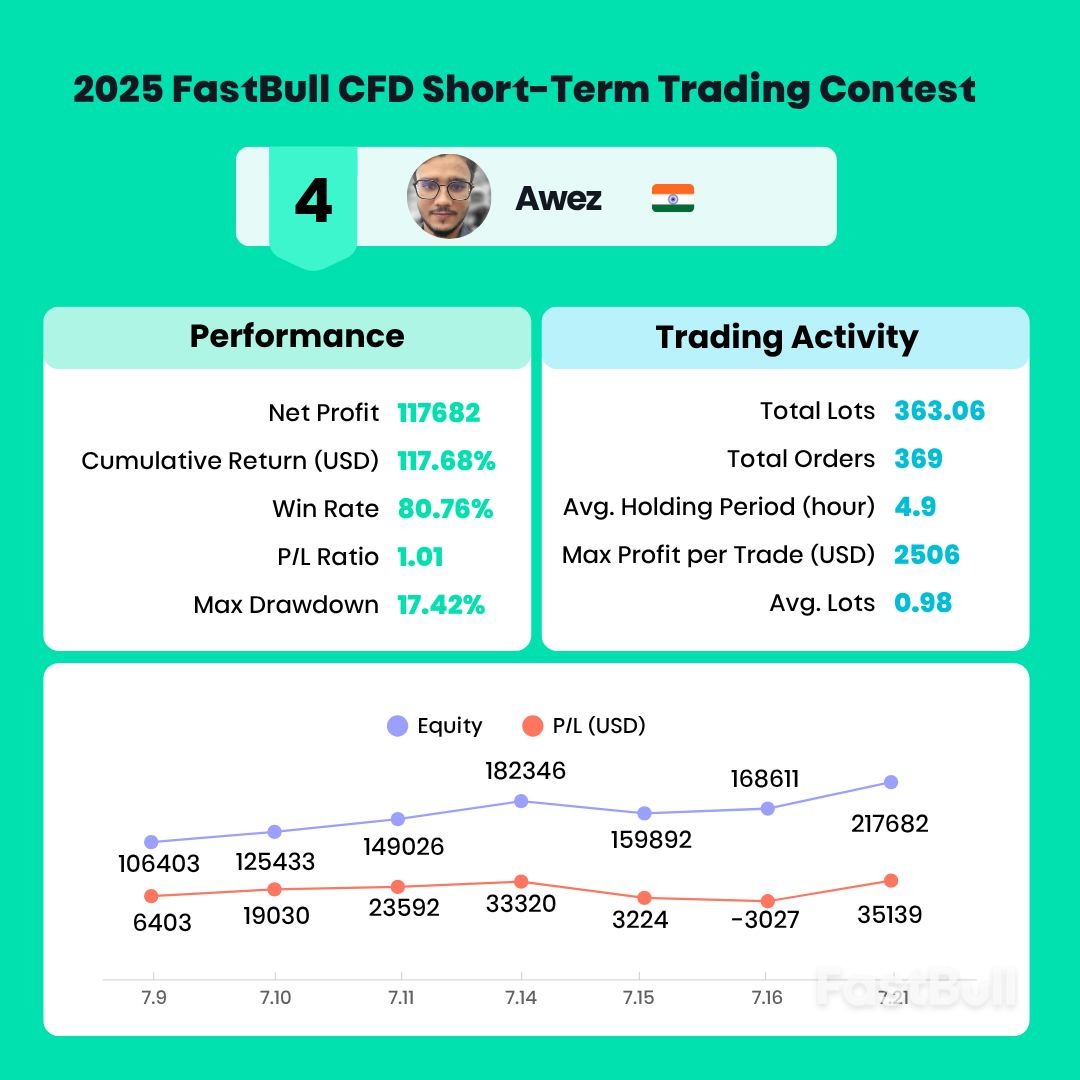
          4th: Awez winning $2,500
          Exclusive Interview with Contest Winners! 2025 FastBull CFD Short-Term Trading Contest_5
          5th: Alipin Mo winning $2,000
          Exclusive Interview with Contest Winners! 2025 FastBull CFD Short-Term Trading Contest_6
          6th: chopel bhutia winning $1,500
          Exclusive Interview with Contest Winners! 2025 FastBull CFD Short-Term Trading Contest_7
          7th:Mrmanar 74 winning $1,000
          Exclusive Interview with Contest Winners! 2025 FastBull CFD Short-Term Trading Contest_8
          8th: Ben winning $600
          Exclusive Interview with Contest Winners! 2025 FastBull CFD Short-Term Trading Contest_9
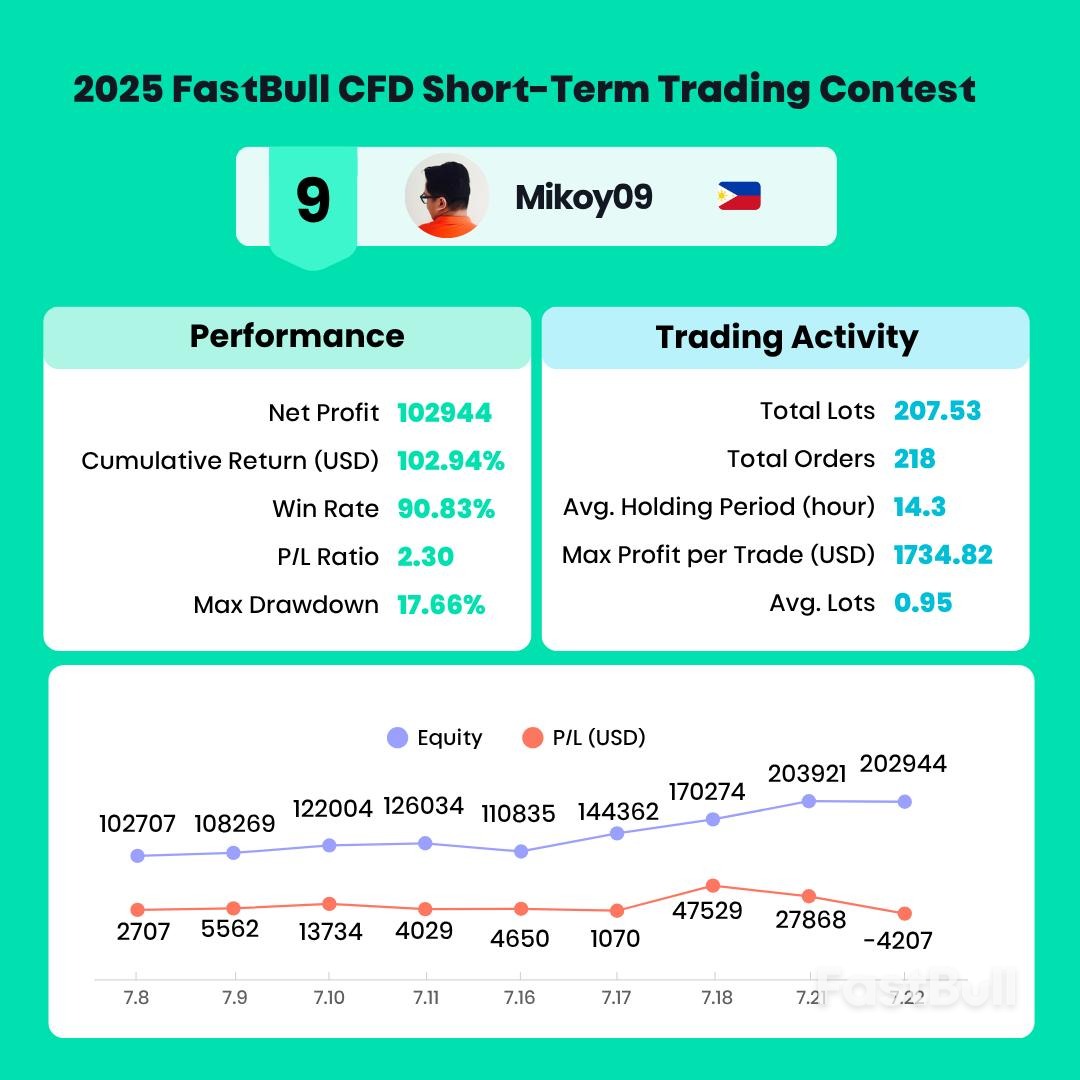
          9th: Mikoy09 winning $300
          Exclusive Interview with Contest Winners! 2025 FastBull CFD Short-Term Trading Contest_10
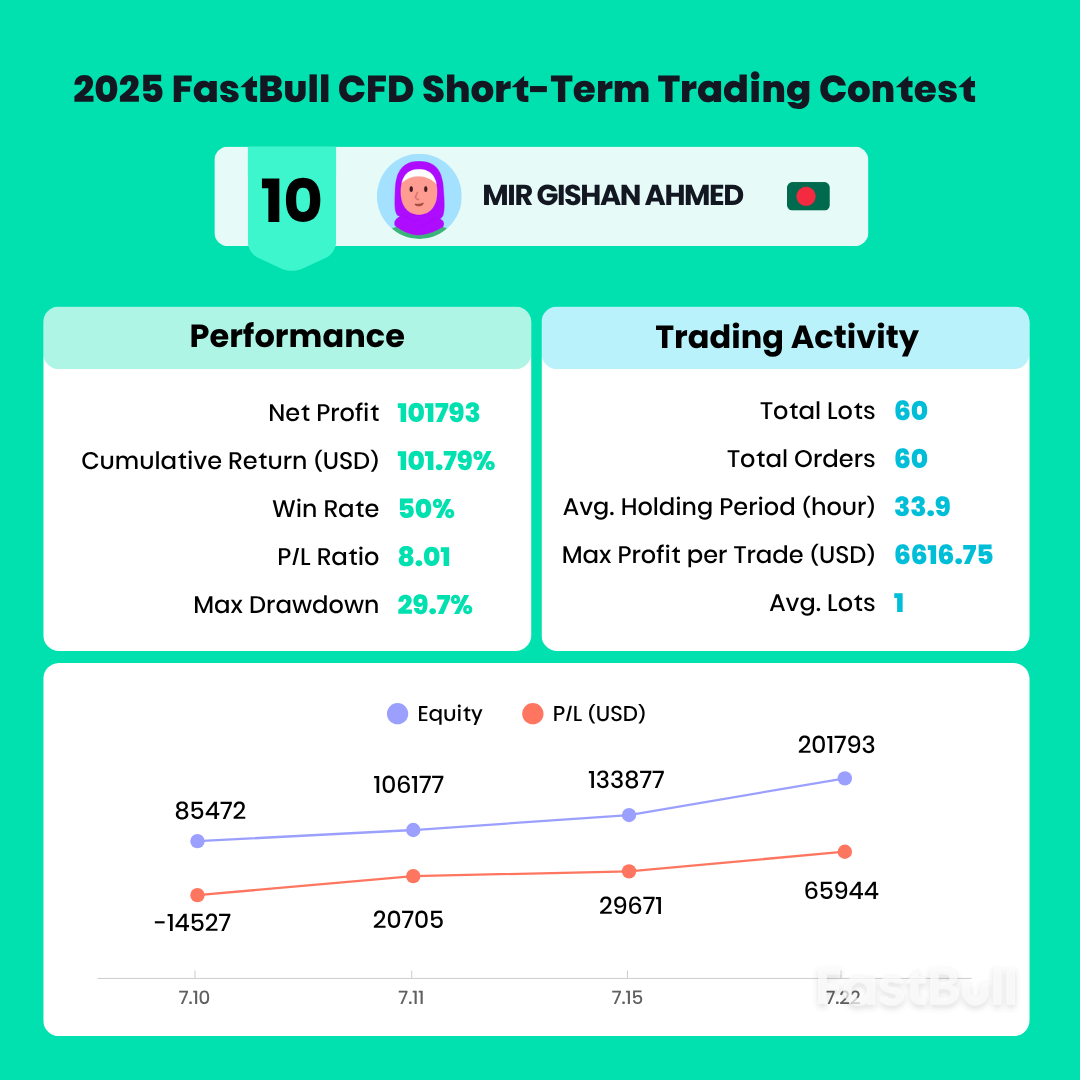
          10th:MIR GISHAN AHMED
          No Interview
          Exclusive Interview with Contest Winners! 2025 FastBull CFD Short-Term Trading Contest_11
          These ten traders didn't just outperform - they inspired. Their insights, shared through our exclusive video series, will offer valuable perspectives for aspiring traders looking to understand what separates the best from the rest.
          See you in the next FastBull Trading Contest - where the charts are clean, the stakes are high, and the next legend could be you.
          Learn more about the winners
          Risk Warnings and Disclaimers
          You understand and acknowledge that there is a high degree of risk involved in trading. Following any strategies or investment methods may lead to potential losses. The content on the site is provided by our contributors and analysts for information purposes only. You are solely responsible for determining whether any trading assets, securities, strategy, or any other product is suitable for investing based on your own investment objectives and financial situation.
          Add to Favorites
          Share

          Japan Pushes Back on U.S. Investment Terms, Seeks Clarity on Auto Tariff Cuts and “Stacking” Clause

          Gerik

          Economic

          Japan’s Investment in U.S. Tied to National Interest

          Japan’s Chief Trade Negotiator Ryosei Akazawa emphasized that Tokyo's promised $550 billion investment in the U.S. a key feature of last month’s trade agreement must deliver strategic value to Japan as well. In contrast to U.S. President Donald Trump’s framing of the package as a "signing bonus" for the U.S., Akazawa described the funds as part of a bilateral effort to strengthen economic security, particularly through supply chain cooperation.
          Akazawa stated, “We can’t cooperate on anything that does not benefit Japan.” While he acknowledged that the investments would be made within the United States, he also stressed that Tokyo must see returns such as enhanced control over critical supply chains or technological collaboration in order to justify the capital outflows.

          Dispute Over Interpretation and Oversight

          Akazawa also noted that President Trump’s preferences would influence the allocation of investment due to the location of the projects on U.S. soil. While Tokyo is willing to work collaboratively, Japan rejects any unilateral framing of the investment package as solely under Washington’s control.
          In parallel, Akazawa is expected to advocate for immediate implementation of the promised tariff cut on Japanese automobiles, currently burdened by a combined 27.5% levy a blend of the longstanding 2.5% rate and the recent 25% surcharge.

          “Stacking” Clause Raises Concerns

          A further complication has arisen around the issue of tariff “stacking.” A U.S. executive order issued on July 31 includes a clause ensuring non-cumulative tariffs for the European Union, meaning goods will not face double taxation across different trade instruments. However, Japan was not granted the same clarity, raising fears that its exports might face overlapping duties, despite the new deal.
          Akazawa told reporters: “It’s different from what we’ve heard from the U.S. side. We’ll request that the agreed-upon content be implemented.”
          This points to a broader concern among Japanese officials that ambiguous or asymmetrical terms could weaken the deal’s intended benefits, especially in high-stakes sectors like automobiles and electronics.

          A Delicate Balance of Strategic Interests

          As Akazawa embarks on his first post-deal diplomatic mission to Washington, the visit highlights Tokyo’s determination to ensure fair treatment and uphold reciprocity in its trade and investment dealings with the U.S. While both sides see strategic value in closer cooperation, the execution of the agreement particularly in areas like tariffs, investment discretion, and supply chain resilience remains a sensitive balancing act.
          Whether Japan can secure the tariff relief and procedural clarity it seeks will serve as a critical test of not just this bilateral deal but also Tokyo’s broader approach to economic diplomacy in an era of transactional trade policy.

          Source: Reuters

          To stay updated on all economic events of today, please check out our Economic calendar
          Risk Warnings and Disclaimers
          You understand and acknowledge that there is a high degree of risk involved in trading. Following any strategies or investment methods may lead to potential losses. The content on the site is provided by our contributors and analysts for information purposes only. You are solely responsible for determining whether any trading assets, securities, strategy, or any other product is suitable for investing based on your own investment objectives and financial situation.
          Add to Favorites
          Share

          Indonesia Shifts Shrimp Export Focus to China Amid U.S. Tariff Fallout

          Gerik

          Economic

          U.S. Tariffs Disrupt Indonesia’s Shrimp Industry

          Indonesia’s shrimp sector, a vital part of the country’s aquaculture industry, has been shaken by the implementation of a 19% U.S. tariff, announced in July 2025. While lower than the initially proposed 32%, the tariff still represents a significant blow to exporters, who relied heavily on U.S. demand. In 2024, the U.S. accounted for 60% of Indonesia’s $1.68 billion shrimp exports.
          At Ujung Kulon Sukses Makmur Abadi, a major shrimp farm on the southwestern tip of Java island, expansion plans have come to a halt. Owner Denny Leonardo, who had intended to build 100 new ponds, was forced to scale back. "Everyone is eagerly looking for new opportunities to reduce dependence on the U.S.," he said.

          Export Outlook Weakens, Jobs at Risk

          According to Andi Tamsil, head of Indonesia’s shrimp farmers’ association, the 19% tariff could result in a 30% drop in total shrimp exports in 2025 compared to last year. This contraction places an estimated one million jobs at risk, from pond operators to seafood processors.
          While Ecuador — the world's top farmed shrimp producer — faces only a 15% U.S. tariff, Indonesia’s new rate puts its exporters at a competitive disadvantage. U.S. buyers are still hesitant to place orders despite July's revised deal, deepening uncertainty.

          Strategic Pivot to China and Other Markets

          In response, Indonesia is aggressively courting new buyers in China, which remains the world’s largest shrimp importer. Historically, China only imported 2% of Indonesia’s shrimp exports, but that is now expected to grow.
          Delegations led by industry figures like Tamsil have begun visiting major Chinese cities like Guangzhou, meeting with importers, restaurants, and e-commerce platforms to drum up demand. Tamsil believes Indonesia could realistically target 20% of China's 1 million-tonne import market.
          Budhi Wibowo, head of the seafood exporters’ association, also sees diversification opportunities in the Middle East, South Korea, Taiwan, and the European Union, especially with Indonesia on the verge of finalizing a free trade agreement with Brussels.

          A Slower Path to Growth

          Despite the turmoil, farmers like Leonardo remain cautiously optimistic. While he believes demand and supply will rebalance, he admits that the aggressive growth he envisioned for his business is no longer feasible in the near term.
          His sentiment reflects a broader outlook among Indonesian producers — survival is likely, but expansion will require strategic realignment, greater market outreach, and a reduction in overreliance on the U.S. market.
          The case of Indonesia’s shrimp industry underscores a key lesson from recent global trade frictions: economic diversification is not a luxury — it’s a necessity.

          Source: Reuters

          To stay updated on all economic events of today, please check out our Economic calendar
          Risk Warnings and Disclaimers
          You understand and acknowledge that there is a high degree of risk involved in trading. Following any strategies or investment methods may lead to potential losses. The content on the site is provided by our contributors and analysts for information purposes only. You are solely responsible for determining whether any trading assets, securities, strategy, or any other product is suitable for investing based on your own investment objectives and financial situation.
          Add to Favorites
          Share

          Asian Markets Edge Higher Despite Wall Street Losses Amid Tariff and Rate Cut Speculation

          Gerik

          Economic

          Stocks

          Asian Equities Resilient as Investors Digest U.S. Economic Concerns

          Markets across Asia saw modest gains on Wednesday, suggesting regional optimism even as Wall Street grappled with a second day of losses. The movement came amid weaker-than-expected U.S. service sector data and lingering fears over the economic fallout from President Donald Trump's tariffs.
          Japan’s Nikkei 225 climbed 0.6% to 40,777.45, supported by anticipation ahead of earnings from major exporters like Toyota, Honda, and Sony. Australia's S&P/ASX 200 also rose 0.6%, while Hong Kong’s Hang Seng edged up 0.2% and Shanghai's Composite Index advanced 0.3%. South Korea’s Kospi, however, declined by 0.3%, with tech and export-sensitive stocks under pressure.

          Wall Street Losses Highlight Tariff Risks and Rate Cut Hopes

          On Tuesday, the S&P 500 fell 0.5%, closing at 6,299.19. The Dow Jones Industrial Average dipped 0.1%, while the Nasdaq slid 0.7%, as investors reacted to disappointing U.S. services activity data. The ISM Services Index stalled, suggesting that tariffs may be curbing demand in key sectors like transportation and retail.
          While such economic signals raise alarms about growth, they simultaneously boost expectations that the Federal Reserve may cut interest rates at its September meeting. Fed rate cut expectations gained further traction following last Friday’s weaker-than-expected jobs report, which sharply pulled down Treasury yields and reinforced fears of a slowing economy.

          Profit Season Under Scrutiny

          With U.S. equities having surged to record highs since April, market observers are now questioning whether valuations are too rich relative to economic fundamentals. This places heavy pressure on corporate earnings to justify lofty stock prices. Strong results from select firms have helped limit downside, but the broader market remains volatile and highly sensitive to macroeconomic news.
          Investors are also watching whether interest rates will drop fast enough to support stock prices, especially in an environment where rising input costs exacerbated by tariffs threaten profit margins. While lower rates would boost equities by making them look more attractive versus bonds, they also risk fueling inflation, which could complicate the Fed’s policy path.

          Bond and Currency Markets Reflect Uncertainty

          The 10-year U.S. Treasury yield continued to fall, dipping to 4.19%, well below the 4.39% level seen before last week’s jobs report. This ongoing decline reflects growing investor concern about economic deceleration, and potentially a deeper rate cut than previously expected.
          In the currency market, the U.S. dollar weakened slightly, falling to 147.34 yen, while the euro inched up to $1.1583. These muted movements reflect investor caution ahead of key monetary and trade policy announcements from the U.S.

          Energy Prices Tick Higher

          Oil prices rose modestly, with U.S. crude gaining 41 cents to $65.57 per barrel, and Brent crude adding 42 cents to $68.06. The rebound was likely driven by speculation that a Fed rate cut could bolster economic activity and energy demand in the medium term.
          Markets will remain volatile as investors await further clarity on Federal Reserve policy, especially amid reports that President Trump is close to nominating a new Fed Governor. Meanwhile, uncertainty over tariffs, including potential escalations with China, Japan, and South Korea, adds a geopolitical layer of risk.
          While Asian equities have shown resilience, their performance is tightly tied to U.S. economic sentiment, Fed decisions, and the trajectory of global trade flows in the months ahead.

          Source: AP

          To stay updated on all economic events of today, please check out our Economic calendar
          Risk Warnings and Disclaimers
          You understand and acknowledge that there is a high degree of risk involved in trading. Following any strategies or investment methods may lead to potential losses. The content on the site is provided by our contributors and analysts for information purposes only. You are solely responsible for determining whether any trading assets, securities, strategy, or any other product is suitable for investing based on your own investment objectives and financial situation.
          Add to Favorites
          Share
          FastBull
          Copyright © 2025 FastBull Ltd

          728 RM B 7/F GEE LOK IND BLDG NO 34 HUNG TO RD KWUN TONG KLN HONG KONG

          TelegramInstagramTwitterfacebooklinkedin
          App Store Google Play Google Play
          Products
          Charts

          Chats

          Q&A with Experts
          Screeners
          Economic Calendar
          Data
          Tools
          Membership
          Features
          Function
          Markets
          Copy Trading
          Latest Signals
          Contests
          News
          Analysis
          24/7
          Columns
          Education
          Company
          Careers
          About Us
          Contact Us
          Advertising
          Help Center
          Feedback
          User Agreement
          Privacy Policy
          Business

          White Label

          Data API

          Web Plug-ins

          Poster Maker

          Affiliate Program

          Risk Disclosure

          The risk of loss in trading financial instruments such as stocks, FX, commodities, futures, bonds, ETFs and crypto can be substantial. You may sustain a total loss of the funds that you deposit with your broker. Therefore, you should carefully consider whether such trading is suitable for you in light of your circumstances and financial resources.

          No decision to invest should be made without thoroughly conducting due diligence by yourself or consulting with your financial advisors. Our web content might not suit you since we don't know your financial conditions and investment needs. Our financial information might have latency or contain inaccuracy, so you should be fully responsible for any of your trading and investment decisions. The company will not be responsible for your capital loss.

          Without getting permission from the website, you are not allowed to copy the website's graphics, texts, or trademarks. Intellectual property rights in the content or data incorporated into this website belong to its providers and exchange merchants.

          Not Logged In

          Log in to access more features

          FastBull Membership

          Not yet

          Purchase

          Become a signal provider
          Help Center
          Customer Service
          Dark Mode
          Price Up/Down Colors

          Log In

          Sign Up
          Position
          Layout
          Fullscreen
          Default to Chart
          The chart page opens by default when you visit fastbull.com