• Trade
  • Markets
  • Copy
  • Contests
  • News
  • 24/7
  • Calendar
  • Q&A
  • Chats
Trending
Screeners
SYMBOL
LAST
BID
ASK
HIGH
LOW
NET CHG.
%CHG.
SPREAD
SPX
S&P 500 Index
6827.42
6827.42
6827.42
6899.86
6801.80
-73.58
-1.07%
--
DJI
Dow Jones Industrial Average
48458.04
48458.04
48458.04
48886.86
48334.10
-245.98
-0.51%
--
IXIC
NASDAQ Composite Index
23195.16
23195.16
23195.16
23554.89
23094.51
-398.69
-1.69%
--
USDX
US Dollar Index
97.950
98.030
97.950
98.500
97.950
-0.370
-0.38%
--
EURUSD
Euro / US Dollar
1.17394
1.17409
1.17394
1.17496
1.17192
+0.00011
+ 0.01%
--
GBPUSD
Pound Sterling / US Dollar
1.33707
1.33732
1.33707
1.33997
1.33419
-0.00148
-0.11%
--
XAUUSD
Gold / US Dollar
4299.39
4299.39
4299.39
4353.41
4257.10
+20.10
+ 0.47%
--
WTI
Light Sweet Crude Oil
57.233
57.485
57.233
58.011
56.969
-0.408
-0.71%
--

Community Accounts

Signal Accounts
--
Profit Accounts
--
Loss Accounts
--
View More

Become a signal provider

Sell trading signals to earn additional income

View More

Guide to Copy Trading

Get started with ease and confidence

View More

Signal Accounts for Members

All Signal Accounts

Best Return
  • Best Return
  • Best P/L
  • Best MDD
Past 1W
  • Past 1W
  • Past 1M
  • Past 1Y

All Contests

  • All
  • Trump Updates
  • Recommend
  • Stocks
  • Cryptocurrencies
  • Central Banks
  • Featured News
Top News Only
Share

Iranian Media Says 18 Crew Members Of Foreign Tanker Seized In Gulf Of Oman Over Carrying 'Smuggled Fuel' Detained

Share

Regional Governor: Two Killed In Ukrainian Drone Strike On Russia's Saratov

Share

Chinese Foreign Ministry - China Foreign Minister Met With United Arab Emirates Counterpart On Dec 12

Share

China's Central Financial And Economic Affairs Commission Deputy Director: Will Expand Export And Increase Import In 2026

Share

Thai Leader Anutin: Landmine Blast That Killed Thai Soldiers 'Not A Roadside Accident'

Share

Thai Leader Anutin: Thailand To Continue Military Action Until 'We Feel No More Harm'

Share

Cambodian Prime Minister Hun Manet Says He Had Phone Calls With Trump And Malaysian Leader Anwar About Ceasefire

Share

Cambodia's Hun Manet Says USA, Malaysia Should Verify 'Which Side Fired First' In Latest Conflict

Share

Cambodia's Hun Manet: Cambodia Maintains Its Stance In Seeking Peaceful Resolution Of Disputes

Share

Nasdaq Companies: Allergan, Ferrovia, Insmed, Monolithic Power Systems, Seagate Technology, And Western Digital Will Be Added To The NASDAQ 100 Index. Biogen, CdW, GlobalFoundries, Lululemon, ON Semiconductor, And Tradedesk Will Be Removed From The NASDAQ 100 Index

Share

Witkoff Headed To Berlin This Weekend To Meet With Zelenskiy, European Leaders -Wsj Reporter On X

Share

Russia Attacks Two Ukrainian Ports, Damaging Three Turkish-Owned Vessels

Share

[Historic Flooding Occurs In At Least Four Rivers In Washington State Due To Days Of Torrential Rains] Multiple Areas In Washington State Have Been Hit By Severe Flooding Due To Days Of Torrential Rains, With At Least Four Rivers Experiencing Historic Flooding. Reporters Learned On The 12th That The Floods Caused By The Torrential Rains In Washington State Have Destroyed Homes And Closed Several Highways. Experts Warn That Even More Severe Flooding May Occur In The Future. A State Of Emergency Has Been Declared In Washington State

Share

Trump Says Proposed Free Economic Zone In Donbas Would Work

Share

Trump: I Think My Voice Should Be Heard

Share

Trump Says Will Be Choosing New Fed Chair In Near Future

Share

Trump Says Proposed Free Economic Zone In Donbas Complex But Would Work

Share

Trump Says Land Strikes In Venezuela Will Start Happening

Share

US President Trump: Thailand And Cambodia Are In A Good Situation

Share

State Media: North Korean Leader Kim Hails Troops Returning From Russia Mission

TIME
ACT
FCST
PREV
U.K. Trade Balance Non-EU (SA) (Oct)

A:--

F: --

P: --

U.K. Trade Balance (Oct)

A:--

F: --

P: --

U.K. Services Index MoM

A:--

F: --

P: --

U.K. Construction Output MoM (SA) (Oct)

A:--

F: --

P: --

U.K. Industrial Output YoY (Oct)

A:--

F: --

P: --

U.K. Trade Balance (SA) (Oct)

A:--

F: --

P: --

U.K. Trade Balance EU (SA) (Oct)

A:--

F: --

P: --

U.K. Manufacturing Output YoY (Oct)

A:--

F: --

P: --

U.K. GDP MoM (Oct)

A:--

F: --

P: --

U.K. GDP YoY (SA) (Oct)

A:--

F: --

P: --

U.K. Industrial Output MoM (Oct)

A:--

F: --

P: --

U.K. Construction Output YoY (Oct)

A:--

F: --

P: --

France HICP Final MoM (Nov)

A:--

F: --

P: --

China, Mainland Outstanding Loans Growth YoY (Nov)

A:--

F: --

P: --

China, Mainland M2 Money Supply YoY (Nov)

A:--

F: --

P: --

China, Mainland M0 Money Supply YoY (Nov)

A:--

F: --

P: --

China, Mainland M1 Money Supply YoY (Nov)

A:--

F: --

P: --

India CPI YoY (Nov)

A:--

F: --

P: --

India Deposit Gowth YoY

A:--

F: --

P: --

Brazil Services Growth YoY (Oct)

A:--

F: --

P: --

Mexico Industrial Output YoY (Oct)

A:--

F: --

P: --

Russia Trade Balance (Oct)

A:--

F: --

P: --

Philadelphia Fed President Henry Paulson delivers a speech
Canada Building Permits MoM (SA) (Oct)

A:--

F: --

P: --

Canada Wholesale Sales YoY (Oct)

A:--

F: --

P: --

Canada Wholesale Inventory MoM (Oct)

A:--

F: --

P: --

Canada Wholesale Inventory YoY (Oct)

A:--

F: --

P: --

Canada Wholesale Sales MoM (SA) (Oct)

A:--

F: --

P: --

Germany Current Account (Not SA) (Oct)

A:--

F: --

P: --

U.S. Weekly Total Rig Count

A:--

F: --

P: --

U.S. Weekly Total Oil Rig Count

A:--

F: --

P: --

Japan Tankan Large Non-Manufacturing Diffusion Index (Q4)

--

F: --

P: --

Japan Tankan Small Manufacturing Outlook Index (Q4)

--

F: --

P: --

Japan Tankan Large Non-Manufacturing Outlook Index (Q4)

--

F: --

P: --

Japan Tankan Large Manufacturing Outlook Index (Q4)

--

F: --

P: --

Japan Tankan Small Manufacturing Diffusion Index (Q4)

--

F: --

P: --

Japan Tankan Large Manufacturing Diffusion Index (Q4)

--

F: --

P: --

Japan Tankan Large-Enterprise Capital Expenditure YoY (Q4)

--

F: --

P: --

U.K. Rightmove House Price Index YoY (Dec)

--

F: --

P: --

China, Mainland Industrial Output YoY (YTD) (Nov)

--

F: --

P: --

China, Mainland Urban Area Unemployment Rate (Nov)

--

F: --

P: --

Saudi Arabia CPI YoY (Nov)

--

F: --

P: --

Euro Zone Industrial Output YoY (Oct)

--

F: --

P: --

Euro Zone Industrial Output MoM (Oct)

--

F: --

P: --

Canada Existing Home Sales MoM (Nov)

--

F: --

P: --

Euro Zone Total Reserve Assets (Nov)

--

F: --

P: --

U.K. Inflation Rate Expectations

--

F: --

P: --

Canada National Economic Confidence Index

--

F: --

P: --

Canada New Housing Starts (Nov)

--

F: --

P: --

U.S. NY Fed Manufacturing Employment Index (Dec)

--

F: --

P: --

U.S. NY Fed Manufacturing Index (Dec)

--

F: --

P: --

Canada Core CPI YoY (Nov)

--

F: --

P: --

Canada Manufacturing Unfilled Orders MoM (Oct)

--

F: --

P: --

Canada Manufacturing New Orders MoM (Oct)

--

F: --

P: --

Canada Core CPI MoM (Nov)

--

F: --

P: --

Canada Manufacturing Inventory MoM (Oct)

--

F: --

P: --

Canada CPI YoY (Nov)

--

F: --

P: --

Canada CPI MoM (Nov)

--

F: --

P: --

Canada CPI YoY (SA) (Nov)

--

F: --

P: --

Canada Core CPI MoM (SA) (Nov)

--

F: --

P: --

Q&A with Experts
    • All
    • Chatrooms
    • Groups
    • Friends
    Connecting
    .
    .
    .
    Type here...
    Add Symbol or Code

      No matching data

      All
      Trump Updates
      Recommend
      Stocks
      Cryptocurrencies
      Central Banks
      Featured News
      • All
      • Russia-Ukraine Conflict
      • Middle East Flashpoint
      • All
      • Russia-Ukraine Conflict
      • Middle East Flashpoint
      Search
      Products

      Charts Free Forever

      Chats Q&A with Experts
      Screeners Economic Calendar Data Tools
      Membership Features
      Data Warehouse Market Trends Institutional Data Policy Rates Macro

      Market Trends

      Market Sentiment Order Book Forex Correlations

      Top Indicators

      Charts Free Forever
      Markets

      News

      News Analysis 24/7 Columns Education
      From Institutions From Analysts
      Topics Columnists

      Latest Views

      Latest Views

      Trending Topics

      Top Columnists

      Latest Update

      Signals

      Copy Rankings Latest Signals Become a signal provider AI Rating
      Contests
      Brokers

      Overview Brokers Assessment Rankings Regulators News Claims
      Broker listing Forex Brokers Comparison Tool Live Spread Comparison Scam
      Q&A Complaint Scam Alert Videos Tips to Detect Scam
      More

      Business
      Events
      Careers About Us Advertising Help Center

      White Label

      Data API

      Web Plug-ins

      Affiliate Program

      Awards Institution Evaluation IB Seminar Salon Event Exhibition
      Vietnam Thailand Singapore Dubai
      Fans Party Investment Sharing Session
      FastBull Summit BrokersView Expo
      Recent Searches
        Top Searches
          Markets
          News
          Analysis
          User
          24/7
          Economic Calendar
          Education
          Data
          • Names
          • Latest
          • Prev

          View All

          No data

          Scan to Download

          Faster Charts, Chat Faster!

          Download App
          English
          • English
          • Español
          • العربية
          • Bahasa Indonesia
          • Bahasa Melayu
          • Tiếng Việt
          • ภาษาไทย
          • Français
          • Italiano
          • Türkçe
          • Русский язык
          • 简中
          • 繁中
          Open Account
          Search
          Products
          Charts Free Forever
          Markets
          News
          Signals

          Copy Rankings Latest Signals Become a signal provider AI Rating
          Contests
          Brokers

          Overview Brokers Assessment Rankings Regulators News Claims
          Broker listing Forex Brokers Comparison Tool Live Spread Comparison Scam
          Q&A Complaint Scam Alert Videos Tips to Detect Scam
          More

          Business
          Events
          Careers About Us Advertising Help Center

          White Label

          Data API

          Web Plug-ins

          Affiliate Program

          Awards Institution Evaluation IB Seminar Salon Event Exhibition
          Vietnam Thailand Singapore Dubai
          Fans Party Investment Sharing Session
          FastBull Summit BrokersView Expo

          U.S. Senate Passes Landmark Stablecoin Bill, Igniting Optimism in Global Crypto Markets

          Gerik

          Economic

          Cryptocurrency

          Summary:

          The U.S. Senate’s bipartisan approval of the GENIUS Act marks a major turning point for the cryptocurrency industry, boosting shares of stablecoin issuer Circle...

          Regulatory Clarity Spurs Market Surge

          On June 18, shares of stablecoin issuer Circle surged by 33.8% following the U.S. Senate’s passage of the GENIUS Act—a pivotal bill establishing a legal framework for stablecoins. Cryptocurrency exchange Coinbase also saw a sharp 16% rise, while trading platform Robinhood gained 4.5%. The rally reflects heightened investor optimism surrounding the bill’s potential to resolve longstanding regulatory ambiguity that has hindered crypto innovation in the United States.
          The GENIUS Act, which received rare bipartisan support in the Senate, is now heading to the House of Representatives and then to President Donald Trump for final approval. If enacted, it would be the first comprehensive legislation to govern stablecoin issuance and reserve practices in the U.S., effectively laying the groundwork for broader institutional adoption.

          Stablecoins Positioned for Mainstream Utility

          Stablecoins are digital assets pegged to stable-value references such as fiat currencies or gold. Their design mitigates price volatility typical of other cryptocurrencies, making them more suitable for daily transactions and long-term investments. Under the GENIUS Act, all stablecoins issued in the U.S. must be backed by high-liquidity assets, including U.S. dollars and short-term Treasury securities. Issuers will also be required to disclose their reserve compositions monthly, increasing transparency and investor protection.
          This regulatory clarity is expected to be a catalyst for global acceptance. By offering a consistent legal structure, the bill addresses institutional hesitations and enables stablecoins to evolve from niche instruments to central pillars of digital finance.

          Wider Industry Implications and Global Interest

          The bill’s passage has already begun to reshape strategic plans across financial and commercial sectors. Major U.S. banks such as Bank of America and Morgan Stanley are reportedly exploring crypto initiatives in anticipation of the new rules. Similarly, European giants like Societe Generale and Banco Santander are evaluating their entry points into the stablecoin space.
          Retail corporations are also showing growing interest. Walmart and Amazon have reportedly conducted internal assessments on launching their own stablecoins. Meanwhile, PayPal has led the charge by releasing its own U.S. dollar-backed stablecoin in 2023. Most notably, World Liberty Financial—founded by President Trump—launched a stablecoin with a reported market capitalization of $2.2 billion.

          Strategic Implications for the U.S. and Global Finance

          Jeremy Allaire, CEO of Circle, described the bill’s advancement as a historic milestone that could define U.S. competitiveness in digital finance for decades. The GENIUS Act does not merely legitimize stablecoins—it repositions the U.S. as a regulatory leader in the global crypto race. The proposed oversight could bring confidence to both institutional investors and everyday users, enhancing stablecoins’ role in payments, remittances, and decentralized finance (DeFi).
          By anchoring stablecoin reserves in risk-averse instruments and requiring ongoing transparency, the legislation addresses many of the structural criticisms previously leveled at the crypto sector, including concerns about systemic risk and opaque asset backing.
          The U.S. Senate’s approval of the GENIUS Act signals a decisive moment for the cryptocurrency ecosystem, particularly for stablecoins. Beyond sparking a wave of market enthusiasm, it lays the legal foundation for mainstream integration and cross-industry participation. As the bill advances to the House and potentially to presidential ratification, the financial world is watching closely—viewing this legislative push as the beginning of a new chapter in digital currency regulation and adoption.

          Source: Reuters

          To stay updated on all economic events of today, please check out our Economic calendar
          Risk Warnings and Disclaimers
          You understand and acknowledge that there is a high degree of risk involved in trading. Following any strategies or investment methods may lead to potential losses. The content on the site is provided by our contributors and analysts for information purposes only. You are solely responsible for determining whether any trading assets, securities, strategy, or any other product is suitable for investing based on your own investment objectives and financial situation.
          Add to Favorites
          Share

          Israel Attacks Iranian Nuclear Sites, Missile Damages Israeli Hospital

          Michelle

          Political

          Israel struck a key Iranian nuclear site on Thursday and Iranian missiles hit an Israeli hospital, as President Donald Trump kept the world guessing about whether the U.S. would join Israel in air strikes seeking to destroy Tehran's nuclear facilities.

          A week of Israeli air and missile strikes against its major rival has wiped out the top echelon of Iran's military command, damaged its nuclear capabilities and killed hundreds of people, while Iranian retaliatory strikes have killed at least two dozen civilians in Israel.

          The Israeli military said it targeted the Khondab nuclear reactor in Iran's Arak overnight, including its partially-built heavy-water research reactor. Heavy-water reactors pose a nuclear proliferation risk because they can easily produce plutonium, which, like enriched uranium, can be used to make the core of an atom bomb.

          Iranian media reported two projectiles hitting an area near the facility, which had been evacuated and there were no reports of radiation threats.

          Israel's military said it also struck a site in the area of Natanz, which it said contains components and specialised equipment used to advance nuclear weapons development.

          On Thursday morning, several Iranian missiles struck populated areas in Israel, including a hospital in the southern part of the country, according to an Israeli military official.

          Trails of missiles and interception efforts were visible in the skies over Tel Aviv, with explosions heard as incoming projectiles were intercepted. Israeli media also reported direct hits in central Israel.

          Emergency services said five people had been seriously injured in the attacks and dozens of others hurt in three separate locations. People were still trapped in a building in a south Tel Aviv neighbourhood, they added.

          Around a dozen mostly European and African embassies and diplomatic missions are located just a few hundred metres from the strike on Tel Aviv.

          Images showed buildings extensively damaged in Ramat Gan near Tel Aviv and emergency workers helping residents, including children. Soroka Medical Center in Beersheba, in southern Israel, reported it had sustained damage.

          Iran's Revolutionary Guard said it was targeting Israeli military and intelligence headquarters near the hospital.

          The worst-ever conflict between the two regional powers has raised fears that it will draw in world powers and further destabilize the Middle East.

          Speaking to reporters outside the White House on Wednesday, Trump declined to say if he had made any decision on whether to join Israel's air campaign. "I may do it. I may not do it. I mean, nobody knows what I'm going to do," he said.

          Trump in later remarks said Iranian officials wanted to come to Washington for a meeting. "We may do that," he said, adding "it's a little late" for such talks.

          Iranian Supreme Leader Ayatollah Ali Khamenei rebuked Trump's earlier call for Iran to surrender in a recorded speech played on television, his first appearance since Friday.

          "Any U.S. military intervention will undoubtedly be accompanied by irreparable damage," he said. "The Iranian nation will not surrender."

          Iran denies it is seeking nuclear weapons and says its program is for peaceful purposes only. The International Atomic Energy Agency said last week Tehran was in breach of its non-proliferation obligations for the first time in 20 years.

          The foreign ministers of Germany, France and Britain plan to hold nuclear talks with their Iranian counterpart on Friday in Geneva to urge Iran to return to the negotiating table, a German diplomatic source told Reuters.

          Israel, which is not a party to the international Non-Proliferation Treaty, is the only country in the Middle East believed to have nuclear weapons. Israel does not deny or confirm that.

          CALLS FOR DIPLOMACY

          Trump has veered from proposing a swift diplomatic end to the war to suggesting the United States might join it.

          A source familiar with internal discussions said Trump and his team were considering options that included joining Israel in strikes against Iranian nuclear installations.

          But the prospect of a U.S. strike against Iran has exposed divisions in the coalition of supporters that brought Trump to power, with some of his base urging him not to get the country involved in a new Middle East war.

          Senior U.S. Senate Democrats urged Trump to prioritise diplomacy and seek a binding agreement to prevent Iran from attaining nuclear weapons, while expressing concern about his administration's approach.

          "We are alarmed by the Trump administration's failure to provide answers to fundamental questions. By law, the president must consult Congress and seek authorization if he is considering taking the country to war," they said in a statement.

          "He owes Congress and the American people a strategy for U.S. engagement in the region."

          In social media posts on Tuesday, Trump mused about killing Khamenei.

          Russian President Vladimir Putin, asked what his reaction would be if Israel did kill Iran's Supreme Leader with the assistance of the United States, said on Thursday: "I do not even want to discuss this possibility. I do not want to."

          Putin said all sides should look for ways to end hostilities in a way that ensured both Iran's right to peaceful nuclear power and Israel's right to the unconditional security of the Jewish state.

          Since Friday, Iran has fired around 400 missiles at Israel, some 40 of which have pierced air defences, killing 24 people, all of them civilians, according to Israeli authorities.

          The Iranian missile salvoes mark the first time in decades of shadow war and proxy conflict that a significant number of projectiles fired from Iran have penetrated defences, killing Israelis in their homes.

          Iran has reported at least 224 deaths in Israeli attacks, mostly civilians, but has not updated that toll for days.

          U.S.-based Iranian activist news agency HRANA said 639 people had been killed in the Israeli attacks and 1,329 injured as of June 18. Reuters could not independently verify the report.

          Source: Reuters

          Risk Warnings and Disclaimers
          You understand and acknowledge that there is a high degree of risk involved in trading. Following any strategies or investment methods may lead to potential losses. The content on the site is provided by our contributors and analysts for information purposes only. You are solely responsible for determining whether any trading assets, securities, strategy, or any other product is suitable for investing based on your own investment objectives and financial situation.
          Add to Favorites
          Share

          Switzerland Returns to Era of Zero Interest Rates

          Glendon

          Forex

          Economic

          The Swiss National Bank on Thursday cut interest rates by a further 25 basis points to 0% — adding to concerns over a potential return to negative rates.

          The reduction was widely expected by markets ahead of the decision, after traders priced in an around 81% chance of a quarter-point cut and around a 19% chance of a bigger 50-basis-point cut.

          While other nations continue to battle inflation, Switzerland faces deflation, with consumer prices falling by an annual 0.1% in May.

          Low levels of inflation are not unusual for Switzerland — the country has seen several periods of deflation in the 2010s and 2020s. The strength of the country's currency, the Swiss franc, is a major contributor to this trend.

          "As a safe-haven currency, the Swiss franc tends to appreciate when there is stress on world markets," said Charlotte de Montpellier, a senior economist covering France and Switzerland at ING.

          "This systematically pushes down the price of imported products. Switzerland is a small, open economy, and imports account for a large proportion of CPI [consumer price index] inflation," Montpellier told CNBC ahead of the central bank's announcement.

          Amid high levels of global economic uncertainty, the franc has continuously strengthened in recent months and is widely expected to continue on this path, suggesting ongoing challenges for the SNB.

          As the strength of the franc has been the primary driver of Switzerland's low inflation, the SNB is now taking steps to constrain the currency's rally by keeping rates "systematically lower than elsewhere," Montpellier said.

          Negative rates?

          Adrian Prettejohn, Europe economist at Capital Economics, told CNBC ahead of Thursday's interest rate decision that he expects rates to be cut to -0.25% this year, but noted that the SNB could go even lower.

          "There are risks that the SNB will go further in the future if inflationary pressures don't start to increase, and the lowest the policy rate could go is -0.75%, the rate it reached in the 2010s," he told CNBC.

          Prettejohn said interest cuts weigh on currencies, making borrowing cheaper and encouraging investment.

          However, there are also some concerns and risks attached to negative rates, including for savers, who could see any profit on their savings wiped out, and for banks, which will rake in lower returns on their loans.

          ING's de Montpellier noted that eventually, negative rates might "distort financial markets, compress bank margins, and raise concerns about long-term financial stability."

          Source: CNBC

          To stay updated on all economic events of today, please check out our Economic calendar
          Risk Warnings and Disclaimers
          You understand and acknowledge that there is a high degree of risk involved in trading. Following any strategies or investment methods may lead to potential losses. The content on the site is provided by our contributors and analysts for information purposes only. You are solely responsible for determining whether any trading assets, securities, strategy, or any other product is suitable for investing based on your own investment objectives and financial situation.
          Add to Favorites
          Share

          Vietnam Faces Bond Maturity Crunch in Late 2025: Property Sector Under Intensifying Pressure

          Gerik

          Economic

          Surging Bond Maturities and Sectoral Vulnerability

          According to Vietnam’s Investment Credit Rating Agency (VIS), a total of 474 corporate bond lots valued at VND 150 trillion are scheduled for maturity in the latter half of 2025. More than 50% of this figure—approximately VND 79.8 trillion—is attributed to the real estate sector, making it the most exposed to rollover risks. The property industry is already facing growing challenges in liquidity, declining collateral values, and weakened creditworthiness, leading to increased default probability.
          Notably, 26 bond lots worth VND 19 trillion issued by 15 property developers are now under first-time delay warnings. This development signals broader strain across the sector, with many firms confronting mounting cash flow obstacles and asset devaluation, resulting in impaired ability to service debt. The cumulative picture shows that credit risk is not only persisting but gradually spreading. This is evidenced by the fact that 148 bond lots worth VND 25.8 trillion have already entered a state of delayed repayment, highlighting a fragile credit environment that continues to deteriorate.

          Contrasting Trends in Primary Market Activity

          Despite the looming maturity burden, Vietnam’s primary bond market has witnessed a sharp recovery in new issuances. In May 2025 alone, private placements reached VND 66 trillion, up 35% from April. Over the first five months of the year, total issuance amounted to VND 137 trillion, marking a 79% surge compared to the same period in 2024. This rebound has been driven largely by commercial banks, which accounted for approximately VND 100 trillion in new bonds—an increase of 193% year-on-year.
          Banks have shown a clear preference for issuing standard (non-convertible, unsecured) bonds with 2–3 year maturities and interest rates ranging from 5.1% to 6.0% annually. Major issuance plans for 2025 include MB Bank’s VND 30 trillion target and ACB’s VND 20 trillion target. Meanwhile, property developer Nam Long (NLG) plans to raise VND 660 billion via asset-backed, non-convertible bonds with a 3-year term and a high coupon rate of 11% for the first two periods—underscoring the premium that real estate firms now must offer to attract capital amid investor caution.

          Regulatory Tightening and Risk Mitigation Efforts

          Amid these market pressures, Vietnam’s National Assembly has approved amendments to the Enterprise Law in a bid to strengthen market integrity. A key provision now restricts non-public companies from issuing private bonds if their total liabilities exceed five times their equity. This condition aims to curtail reckless borrowing and enhance transparency in bond offerings. The reform is particularly timely as the bond market grapples with potential systemic risks triggered by real estate-linked defaults.
          The new regulation is also expected to promote better financial discipline among issuers, improving the risk-reward balance for investors. In this context, the banking sector is likely to remain the dominant source of issuance in the coming months, as their balance sheets and compliance profiles are comparatively stronger. VIS projects that the total bond issuance by banks in the second half of 2025 could reach VND 200 trillion, reinforcing their leadership in capital market mobilization while potentially easing the strain on credit expansion limits amid rising loan-to-deposit ratios.

          Shifting Advantage Toward Financial Institutions

          This dynamic has led to a situation where the balance of power in the bond market appears to be shifting from high-risk sectors like real estate toward better-capitalized financial institutions. While property developers continue to face investor skepticism and high borrowing costs, banks are able to raise funds more efficiently and at lower rates. This evolving trend may create uneven liquidity access across industries, further widening the gap between creditworthy and vulnerable borrowers.
          Vietnam’s corporate bond market in the second half of 2025 is poised at a critical juncture. The maturity wall of over VND 150 trillion—dominated by real estate debt—presents a formidable test of market resilience. While the recovery in new bond issuance and policy reforms offer a stabilizing counterbalance, the underlying risks remain heavily concentrated. The success of these regulatory and market responses will hinge on investor confidence, issuer discipline, and the continued flow of institutional capital—particularly from the banking sector. As liquidity tightens and credit quality becomes more polarized, the real estate sector may remain under pressure, serving as both a litmus test and a potential fault line for Vietnam’s financial stability.
          To stay updated on all economic events of today, please check out our Economic calendar
          Risk Warnings and Disclaimers
          You understand and acknowledge that there is a high degree of risk involved in trading. Following any strategies or investment methods may lead to potential losses. The content on the site is provided by our contributors and analysts for information purposes only. You are solely responsible for determining whether any trading assets, securities, strategy, or any other product is suitable for investing based on your own investment objectives and financial situation.
          Add to Favorites
          Share

          China's 618 Shopping Festival Loses Its Spark Amid Changing Consumer Habits

          Gerik

          Economic

          Declining Consumer Enthusiasm Despite Extended Campaigns

          The 618 shopping festival, once a highly anticipated e-commerce event in China, concluded in 2025 with notably less consumer excitement than in previous years. Initially established by JD.com to mark its founding on June 18, the event has evolved into a multi-platform, multi-week retail campaign. This year, presales launched as early as May 13 across JD.com and Alibaba platforms, turning the event into a month-long effort to boost spending. Yet, the extension appears to have diluted its appeal, transforming what was once a focused surge of consumer activity into a more routine affair.
          This shift in consumer sentiment reflects a broader evolution in shopping behavior. Many shoppers now view discounts as omnipresent, not exclusive to promotional periods. The quote from a Beijing-based consumer, who noted no need to shop specifically during 618 because comparable discounts are always available, illustrates how year-round promotions may be cannibalizing interest in concentrated shopping events.

          Macroeconomic Conditions Weigh on Spending Confidence

          The tepid response to 618 is intertwined with deeper concerns in China’s macroeconomic environment. Ongoing uncertainty in employment stability, a sluggish property market, and stagnant wage growth have created a climate of financial conservatism among consumers. This broader context has diminished the marginal impact of promotional campaigns, no matter how aggressive the discounts.
          Rather than spurring new demand, these extended sales periods appear to be shifting the timing of already planned purchases. Retailers and policymakers hoped that lengthening the campaign window and applying subsidies might reverse weak consumption patterns. However, as Rachel Lee from Worldpanel China points out, when consumer budgets are constrained, discount-driven strategies are less effective, and shoppers tend to prioritize affordability and necessity over promotional hype.

          Sales Volume and Brand Performance: Mixed Signals

          While e-commerce platforms have not published total sales figures for 2025, some indicators provide insight. JD.com reported over 2.2 billion orders across its platforms, more than doubling the user participation rate compared to the previous year. Alibaba noted that 453 brands crossed the 100 million yuan threshold in gross merchandise volume (GMV), with top performers like Apple, Huawei, L’Oréal, and Lululemon surpassing 1 billion yuan.
          However, these figures must be contextualized. Last year, total 618 sales fell by 7% to 742.8 billion yuan, according to Syntun, marking the first decline in the festival’s history. While individual brands may continue to perform well, the broader environment suggests a flattening trend in overall festival growth.

          Policy Support and Subsidy-Driven Consumption

          One notable bright spot has been the partial recovery of retail activity in May, when sales exceeded expectations with a 6.4% year-on-year increase, the highest since December 2023. Analysts partially attribute this to the early start of the 618 event and the government's consumer subsidy programs. These initiatives focused on incentivizing purchases of high-ticket items such as home appliances and smartphones.
          Jacob Cooke from WPIC noted that the prolonged festival helped smooth consumer demand throughout the month, supporting a steadier sales pattern instead of a sudden spike. Yet, the effectiveness of this strategy may be short-lived. HSBC analysts warned that regional pauses in subsidies—due to depleted central government allocations—could drag down both 618 outcomes and broader June retail performance. If fiscal support is not renewed promptly in July, retailers may struggle to maintain momentum.

          A Shift from Stockpiling to Selective Consumption

          The overall picture suggests a fundamental change in how Chinese consumers engage with large-scale promotions. Shoppers are becoming more selective, focusing on necessities rather than impulse-driven bulk buying. This shift is evident in the testimony of consumers like Eve Wang, who once enthusiastically participated in shopping festivals but now refrains from unnecessary purchases.
          This behavioral trend indicates a reduced psychological pull of major sales events, particularly as economic prudence becomes ingrained in household decision-making. The declining reliance on promotional calendars reflects a long-term transformation in consumption culture, signaling challenges ahead for e-commerce platforms hoping to use events like 618 to drive predictable spikes in sales.
          The 2025 edition of China’s 618 shopping festival underscores a clear disconnect between retail marketing strategies and the evolving realities of consumer behavior. While headline figures from leading platforms may still impress, the deeper trend suggests that prolonged campaigns and discounts are becoming less effective in igniting widespread enthusiasm. As household financial caution deepens and government stimulus efforts fluctuate, China's retail ecosystem may need to rethink how it engages a more measured, value-driven consumer base.

          Source: Reuters

          To stay updated on all economic events of today, please check out our Economic calendar
          Risk Warnings and Disclaimers
          You understand and acknowledge that there is a high degree of risk involved in trading. Following any strategies or investment methods may lead to potential losses. The content on the site is provided by our contributors and analysts for information purposes only. You are solely responsible for determining whether any trading assets, securities, strategy, or any other product is suitable for investing based on your own investment objectives and financial situation.
          Add to Favorites
          Share

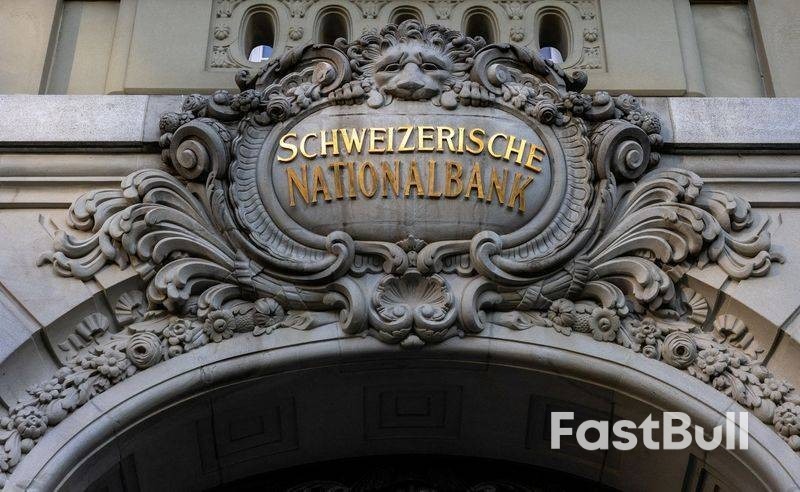
          Swiss Central Bank Cautions Against Global Financial Instability Amid Trade and Geopolitical Strains

          Gerik

          Economic

          Heightened Economic Uncertainty and Structural Risks

          In its 2025 Financial Stability Report, the Swiss National Bank (SNB) emphasizes that the global economic and financial environment remains deeply uncertain. This uncertainty is closely associated with increasing trade frictions and geopolitical instability. While the report does not suggest immediate turbulence, it underscores that the prevailing global context creates a fertile ground for adverse developments that could escalate in scale and impact.
          One major structural factor contributing to this uncertainty is the surge in global public debt, which has reached levels close to historical records. At the same time, asset prices across multiple markets—including residential real estate worldwide, global corporate bonds, and the U.S. equity market—remain elevated. These conditions suggest that financial markets are vulnerable to external shocks, and the probability of price corrections cannot be ignored. While these trends do not necessarily signal an imminent downturn, their simultaneous presence tends to reinforce the sensitivity of financial systems to external triggers.

          Stress Testing Assumptions Reflect Fragile Global Landscape

          In response to these evolving risks, the SNB reported adjustments to the design of its stress test models. These are now calibrated to simulate highly adverse scenarios that may be improbable but are plausible enough to warrant preparation. This approach reflects an implicit recognition that global financial conditions are increasingly shaped by low-probability, high-impact events. Although the report stops short of predicting a specific financial crisis, its forward-looking measures suggest an expectation that severe downside scenarios, if realized, could be amplified by the current macro-financial fragility.
          Despite the broader economic risks, Swiss banks have demonstrated improved financial performance over the past year. The SNB noted that profitability across the sector rose in 2024, with UBS playing a dominant role in this rebound. This improvement was achieved without compromising financial buffers. Capital ratios remained steady, and banks continued to maintain strong liquidity reserves, which ensured their operational flexibility in times of stress.
          Importantly, the sector’s capital buffers were assessed as having robust loss-absorbing capacity. This means that even under adverse macroeconomic developments, Swiss banks would likely retain the ability to maintain core lending functions. The SNB's positive assessment of Swiss banks' internal health contrasts with its more guarded tone on global market stability, suggesting a disconnect between domestic resilience and external vulnerability.

          Interplay Between Global Pressures and Domestic Preparedness

          The analysis in the SNB report highlights how external financial and political pressures interact with national banking systems. While the Swiss financial sector appears stable for now, this outcome cannot be entirely disentangled from global trends. For example, the combination of high public debt and inflated asset valuations increases the likelihood of sharp corrections abroad, which could in turn influence capital flows, interest rates, and investor sentiment in Switzerland. Though not a direct trigger, these international developments are capable of shaping the risk environment within which Swiss banks operate.
          By reinforcing stress test models and maintaining regulatory vigilance, the SNB demonstrates its intent to shield the domestic financial system from such potential spillovers. However, the degree to which this domestic buffer can absorb prolonged or systemic global shocks remains an open question.
          The 2025 Financial Stability Report underscores a cautious yet proactive stance by the Swiss National Bank. It acknowledges that while Swiss banks are currently in a strong position, this strength must be preserved through continued awareness of and response to global economic dynamics. The coexistence of domestic financial stability and global uncertainty suggests that while Switzerland may be insulated for now, it is not immune to risks originating beyond its borders.

          Source: Reuters

          To stay updated on all economic events of today, please check out our Economic calendar
          Risk Warnings and Disclaimers
          You understand and acknowledge that there is a high degree of risk involved in trading. Following any strategies or investment methods may lead to potential losses. The content on the site is provided by our contributors and analysts for information purposes only. You are solely responsible for determining whether any trading assets, securities, strategy, or any other product is suitable for investing based on your own investment objectives and financial situation.
          Add to Favorites
          Share

          Swiss National Bank Flags Uncertainty Due to Trade, Tensions in Stability Report

          Michelle

          Economic

          The Swiss National Bank said on Thursday the economic and financial outlook is highly uncertain, particularly due to trade and geopolitical tensions, though it noted profitability for Swiss banks improved in 2024, driven by UBS.

          "Several risk factors could amplify the impact of potential negative shocks on global economic and financial conditions," the SNB said in its 2025 Financial Stability Report.

          The risks include public debt having climbed to near historical peaks globally, and valuations in global residential real estate, global corporate bonds and the U.S. stock market still appearing stretched.

          The SNB takes account of these risk factors when designing its stress tests, assuming highly unfavourable developments that are unlikely but possible, the report said.

          Profitability for the Swiss banking sector improved year on year in 2024, powered by UBS, it noted.

          Capital ratios remained broadly stable, available capital buffers reflected significant loss-absorbing and lending capacity, and banks held substantial liquidity buffers, which contributed to their resilience, the report said.

          Source: Yahoo Finance

          To stay updated on all economic events of today, please check out our Economic calendar
          Risk Warnings and Disclaimers
          You understand and acknowledge that there is a high degree of risk involved in trading. Following any strategies or investment methods may lead to potential losses. The content on the site is provided by our contributors and analysts for information purposes only. You are solely responsible for determining whether any trading assets, securities, strategy, or any other product is suitable for investing based on your own investment objectives and financial situation.
          Add to Favorites
          Share
          FastBull
          Copyright © 2025 FastBull Ltd

          728 RM B 7/F GEE LOK IND BLDG NO 34 HUNG TO RD KWUN TONG KLN HONG KONG

          TelegramInstagramTwitterfacebooklinkedin
          App Store Google Play Google Play
          Products
          Charts

          Chats

          Q&A with Experts
          Screeners
          Economic Calendar
          Data
          Tools
          Membership
          Features
          Function
          Markets
          Copy Trading
          Latest Signals
          Contests
          News
          Analysis
          24/7
          Columns
          Education
          Company
          Careers
          About Us
          Contact Us
          Advertising
          Help Center
          Feedback
          User Agreement
          Privacy Policy
          Business

          White Label

          Data API

          Web Plug-ins

          Poster Maker

          Affiliate Program

          Risk Disclosure

          The risk of loss in trading financial instruments such as stocks, FX, commodities, futures, bonds, ETFs and crypto can be substantial. You may sustain a total loss of the funds that you deposit with your broker. Therefore, you should carefully consider whether such trading is suitable for you in light of your circumstances and financial resources.

          No decision to invest should be made without thoroughly conducting due diligence by yourself or consulting with your financial advisors. Our web content might not suit you since we don't know your financial conditions and investment needs. Our financial information might have latency or contain inaccuracy, so you should be fully responsible for any of your trading and investment decisions. The company will not be responsible for your capital loss.

          Without getting permission from the website, you are not allowed to copy the website's graphics, texts, or trademarks. Intellectual property rights in the content or data incorporated into this website belong to its providers and exchange merchants.

          Not Logged In

          Log in to access more features

          FastBull Membership

          Not yet

          Purchase

          Become a signal provider
          Help Center
          Customer Service
          Dark Mode
          Price Up/Down Colors

          Log In

          Sign Up

          Position
          Layout
          Fullscreen
          Default to Chart
          The chart page opens by default when you visit fastbull.com