• Trade
  • Markets
  • Copy
  • Contests
  • News
  • 24/7
  • Calendar
  • Q&A
  • Chats
Screeners
SYMBOL
LAST
ASK
BID
HIGH
LOW
NET CHG.
%CHG.
SPREAD
SPX
S&P 500 Index
6915.62
6915.62
6915.62
6932.95
6895.49
+2.26
+ 0.03%
--
DJI
Dow Jones Industrial Average
49098.70
49098.70
49098.70
49265.46
48963.05
-285.30
-0.58%
--
IXIC
NASDAQ Composite Index
23501.23
23501.23
23501.23
23610.74
23374.26
+65.22
+ 0.28%
--
USDX
US Dollar Index
97.230
97.310
97.230
98.250
97.200
-0.820
-0.84%
--
EURUSD
Euro / US Dollar
1.18281
1.18301
1.18281
1.18334
1.17280
+0.00736
+ 0.63%
--
GBPUSD
Pound Sterling / US Dollar
1.36430
1.36467
1.36430
1.36452
1.34817
+0.01433
+ 1.06%
--
XAUUSD
Gold / US Dollar
4986.45
4986.45
4986.45
4990.01
4899.61
+50.62
+ 1.03%
--
WTI
Light Sweet Crude Oil
61.105
61.357
61.105
61.253
59.453
+1.510
+ 2.53%
--

Community Accounts

Signal Accounts
--
Profit Accounts
--
Loss Accounts
--
View More

Become a signal provider

Sell trading signals to earn additional income

View More

Guide to Copy Trading

Get started with ease and confidence

View More

Signal Accounts for Members

All Signal Accounts

Best Return
  • Best Return
  • Best P/L
  • Best MDD
Past 1W
  • Past 1W
  • Past 1M
  • Past 1Y

All Contests

  • All
  • Trump Updates
  • Recommend
  • Stocks
  • Cryptocurrencies
  • Central Banks
  • Featured News
Top News Only
Share

Senate Majority Leader Chuck Schumer Informed Republicans That He Is Urging Them (supported By President Trump's Republican Party) To Amend The Draft Legislation Regarding The Department Of Homeland Security's (DHS) Budget. Democrats Do Not Want To Advance The Current DHS Funding Bill. Schumer Is Demanding That Republicans Move Forward With The Five-cent Appropriation Bill Before The Deadline

Share

Israeli Fire Kills Three In Gaza, Medics Say, As US Pushes Deal

Share

Dollar/Yen Dips, Down 0.47% At 155.00 Yen

Share

[Bitcoin Dips Below $88,000, 24-Hour Change -1.47%] January 26Th, According To Htx Market Data, Bitcoin Fell Below $88,000, With A 24-Hour Decrease Of 1.47%

Share

Ukraine President Zelenskiy: Documenт Of Safety Guarantees From USA Is 100% Ready

Share

Ukraine President Zelenskiy: Russia Is Avoiding Committing To A Lasting And Just Peace And Is Not Accepting A Ceasefire As A Prelude

Share

CEO: Volkswagen Ag May Pull Plans For US Audi Plant Absent Tariff Cuts

Share

Canada Has No Intention Of Making Free Trade Deal With China- Prime Minister Mark Carney

Share

Canada Respects Our Commitments Under Usma- Prime Minister Mark Carney

Share

Trump Envoy Witkoff: USA Talks With Israeli Prime Minister Netanyahu On Peace Board Were Constructive, Positive

Share

102918 Number Of Power Outage Reported In Louisiana As Of 8:09 Am Et - Poweroutage.US Website

Share

523067 Number Of Power Outage Reported In US As Of 7:22 Am Et - Poweroutage.US Website

Share

107295 Number Of Power Outage Reported In Mississippi As Of 6:34 Am Et - Poweroutage.US Website

Share

Oil Ministry - Iraq's Total Oil Exports For December At 107.651 Million Barrels

Share

Airbus CEO Says Company Faced Significant Collateral Damage From Trade Tensions In 2025

Share

Kremlin: Russian Military Will Attentively Monitor US Plans For Golden Dome - Including In Context Of Greenland

Share

100765 Number Of Power Outages Reported In Texas As Of 6 Am Et - Poweroutage.US Website

Share

Russia Will Never Discuss Anything With EU's Kallas, Will Just Wait For Her To Leave Her Post - Interfax Cites Kremlin

Share

Statistics Bureau - Israel's Industrial Production 6.3% Seasonally Adjusted In November Versus 1.5% In October

Share

Israel Raised 207 Billion Shekels In Debt In 2025

TIME
ACT
FCST
PREV
U.K. Retail Sales MoM (SA) (Dec)

A:--

F: --

P: --

France Manufacturing PMI Prelim (Jan)

A:--

F: --

P: --

France Services PMI Prelim (Jan)

A:--

F: --

P: --

France Composite PMI Prelim (SA) (Jan)

A:--

F: --

P: --

Germany Manufacturing PMI Prelim (SA) (Jan)

A:--

F: --

P: --

Germany Services PMI Prelim (SA) (Jan)

A:--

F: --

P: --

Germany Composite PMI Prelim (SA) (Jan)

A:--

F: --

P: --

Euro Zone Composite PMI Prelim (SA) (Jan)

A:--

F: --

P: --

Euro Zone Manufacturing PMI Prelim (SA) (Jan)

A:--

F: --

P: --

Euro Zone Services PMI Prelim (SA) (Jan)

A:--

F: --

P: --

U.K. Composite PMI Prelim (Jan)

A:--

F: --

P: --

U.K. Manufacturing PMI Prelim (Jan)

A:--

F: --

P: --

U.K. Services PMI Prelim (Jan)

A:--

F: --

P: --

Mexico Economic Activity Index YoY (Nov)

A:--

F: --

P: --

Russia Trade Balance (Nov)

A:--

F: --

P: --

Canada Core Retail Sales MoM (SA) (Nov)

A:--

F: --

P: --

Canada Retail Sales MoM (SA) (Nov)

A:--

F: --

P: --
U.S. IHS Markit Manufacturing PMI Prelim (SA) (Jan)

A:--

F: --

P: --

U.S. IHS Markit Services PMI Prelim (SA) (Jan)

A:--

F: --

P: --

U.S. IHS Markit Composite PMI Prelim (SA) (Jan)

A:--

F: --

P: --

U.S. UMich Consumer Sentiment Index Final (Jan)

A:--

F: --

P: --

U.S. UMich Current Economic Conditions Index Final (Jan)

A:--

F: --

P: --

U.S. UMich Consumer Expectations Index Final (Jan)

A:--

F: --

P: --

U.S. Conference Board Leading Economic Index MoM (Nov)

A:--

F: --

P: --

U.S. Conference Board Coincident Economic Index MoM (Nov)

A:--

F: --

P: --

U.S. Conference Board Lagging Economic Index MoM (Nov)

A:--

F: --

P: --

U.S. UMich 1-Year-Ahead Inflation Expectations Final (Jan)

A:--

F: --

P: --

U.S. Conference Board Leading Economic Index (Nov)

A:--

F: --

P: --

U.S. Weekly Total Rig Count

A:--

F: --

P: --

U.S. Weekly Total Oil Rig Count

A:--

F: --

P: --

Germany Ifo Business Expectations Index (SA) (Jan)

--

F: --

P: --

Germany IFO Business Climate Index (SA) (Jan)

--

F: --

P: --

Germany Ifo Current Business Situation Index (SA) (Jan)

--

F: --

P: --

U.S. Dallas Fed PCE Price Index YoY (Nov)

--

F: --

P: --

Brazil Current Account (Dec)

--

F: --

P: --

Mexico Unemployment Rate (Not SA) (Dec)

A:--

F: --

P: --

Canada National Economic Confidence Index

--

F: --

P: --

U.S. Non-Defense Capital Durable Goods Orders MoM (Excl. Aircraft) (Nov)

--

F: --

P: --

U.S. Durable Goods Orders MoM (Excl. Defense) (SA) (Nov)

--

F: --

P: --

U.S. Durable Goods Orders MoM (Excl.Transport) (Nov)

--

F: --

P: --

U.S. Durable Goods Orders MoM (Nov)

--

F: --

P: --

U.S. Chicago Fed National Activity Index (Nov)

--

F: --

P: --

U.S. Dallas Fed New Orders Index (Jan)

--

F: --

P: --

U.S. Dallas Fed General Business Activity Index (Jan)

--

F: --

P: --

U.K. BRC Shop Price Index YoY (Jan)

--

F: --

P: --

China, Mainland Industrial Profit YoY (YTD) (Dec)

--

F: --

P: --

Mexico Trade Balance (Dec)

--

F: --

P: --

U.S. S&P/CS 20-City Home Price Index YoY (Not SA) (Nov)

--

F: --

P: --

U.S. S&P/CS 20-City Home Price Index MoM (SA) (Nov)

--

F: --

P: --

U.S. FHFA House Price Index MoM (Nov)

--

F: --

P: --

U.S. FHFA House Price Index (Nov)

--

F: --

P: --

U.S. Richmond Fed Manufacturing Composite Index (Jan)

--

F: --

P: --

U.S. Conference Board Present Situation Index (Jan)

--

F: --

P: --

U.S. Conference Board Consumer Expectations Index (Jan)

--

F: --

P: --

U.S. Richmond Fed Manufacturing Shipments Index (Jan)

--

F: --

P: --

U.S. Richmond Fed Services Revenue Index (Jan)

--

F: --

P: --

U.S. Conference Board Consumer Confidence Index (Jan)

--

F: --

P: --

Australia RBA Trimmed Mean CPI YoY (Q4)

--

F: --

P: --

Australia CPI YoY (Q4)

--

F: --

P: --

Australia CPI QoQ (Q4)

--

F: --

P: --

Q&A with Experts
    • All
    • Chatrooms
    • Groups
    • Friends
    Eurusdonly flag
    Eurusdonly flag
    Eurusdonly flag
    Eurusdonly
    i have been holding Shorts on Btcusd
    Eurusdonly flag
    Eurusdonly
    who got this ?
    Jon Jony flag
    Sundays and such obemas are sold, small ones are unlikely to make such discoveries next year if the whales don't buy it, then this will be a signal
    FORMFOREXL flag
    Brandon Ki flag
    Jon Jony
    Sundays and such obemas are sold, small ones are unlikely to make such discoveries next year if the whales don't buy it, then this will be a signal
    @Jon Jonysomething crazy is cooking
    Jon Jony flag
    How I love these moments like watching a movie
    "Jon Jony" recalled a message
    "Jon Jony" recalled a message
    "Jon Jony" recalled a message
    Eurusdonly flag
    Eurusdonly
    i love this drop on btcusd
    Eurusdonly flag
    83000 target 🎯
    Imran ahma flag
    Jon Jony flag
    Jon Jony flag
    The turning point should be at this moment, we'll see what the whales decide.
    Jon Jony flag
    gripping blockbuster
    Jon Jony flag
    are they really buying it out?
    Jon Jony flag
    It's beautiful to watch whales work.
    Jon Jony flag
    look how they swim
    Type here...
    Add Symbol or Code

      No matching data

      All
      Trump Updates
      Recommend
      Stocks
      Cryptocurrencies
      Central Banks
      Featured News
      • All
      • Russia-Ukraine Conflict
      • Middle East Flashpoint
      • All
      • Russia-Ukraine Conflict
      • Middle East Flashpoint
      Search
      Products

      Charts Free Forever

      Chats Q&A with Experts
      Screeners Economic Calendar Data Tools
      Membership Features
      Data Warehouse Market Trends Institutional Data Policy Rates Macro

      Market Trends

      Market Sentiment Order Book Forex Correlations

      Top Indicators

      Charts Free Forever
      Markets

      News

      News Analysis 24/7 Columns Education
      From Institutions From Analysts
      Topics Columnists

      Latest Views

      Latest Views

      Trending Topics

      Top Columnists

      Latest Update

      Signals

      Copy Rankings Latest Signals Become a signal provider AI Rating
      Contests
      Brokers

      Overview Brokers Assessment Rankings Regulators News Claims
      Broker listing Forex Brokers Comparison Tool Live Spread Comparison Scam
      Q&A Complaint Scam Alert Videos Tips to Detect Scam
      More

      Business
      Events
      Careers About Us Advertising Help Center

      White Label

      Data API

      Web Plug-ins

      Affiliate Program

      Awards Institution Evaluation IB Seminar Salon Event Exhibition
      Vietnam Thailand Singapore Dubai
      Fans Party Investment Sharing Session
      FastBull Summit BrokersView Expo
      Recent Searches
        Top Searches
          Markets
          News
          Analysis
          User
          24/7
          Economic Calendar
          Education
          Data
          • Names
          • Latest
          • Prev

          View All

          No data

          Scan to Download

          Faster Charts, Chat Faster!

          Download App
          English
          • English
          • Español
          • العربية
          • Bahasa Indonesia
          • Bahasa Melayu
          • Tiếng Việt
          • ภาษาไทย
          • Français
          • Italiano
          • Türkçe
          • Русский язык
          • 简中
          • 繁中
          Open Account
          Search
          Products
          Charts Free Forever
          Markets
          News
          Signals

          Copy Rankings Latest Signals Become a signal provider AI Rating
          Contests
          Brokers

          Overview Brokers Assessment Rankings Regulators News Claims
          Broker listing Forex Brokers Comparison Tool Live Spread Comparison Scam
          Q&A Complaint Scam Alert Videos Tips to Detect Scam
          More

          Business
          Events
          Careers About Us Advertising Help Center

          White Label

          Data API

          Web Plug-ins

          Affiliate Program

          Awards Institution Evaluation IB Seminar Salon Event Exhibition
          Vietnam Thailand Singapore Dubai
          Fans Party Investment Sharing Session
          FastBull Summit BrokersView Expo

          US Presses Israel on Next Phase of Gaza Peace Deal

          King Ten

          Remarks of Officials

          Middle East Situation

          Latest news on the Israeli-Palestinian conflict

          Palestinian-Israeli conflict

          Political

          Summary:

          US presses Israel on Gaza peace phase two, prioritizing Rafah and hostage returns as ceasefire falters.
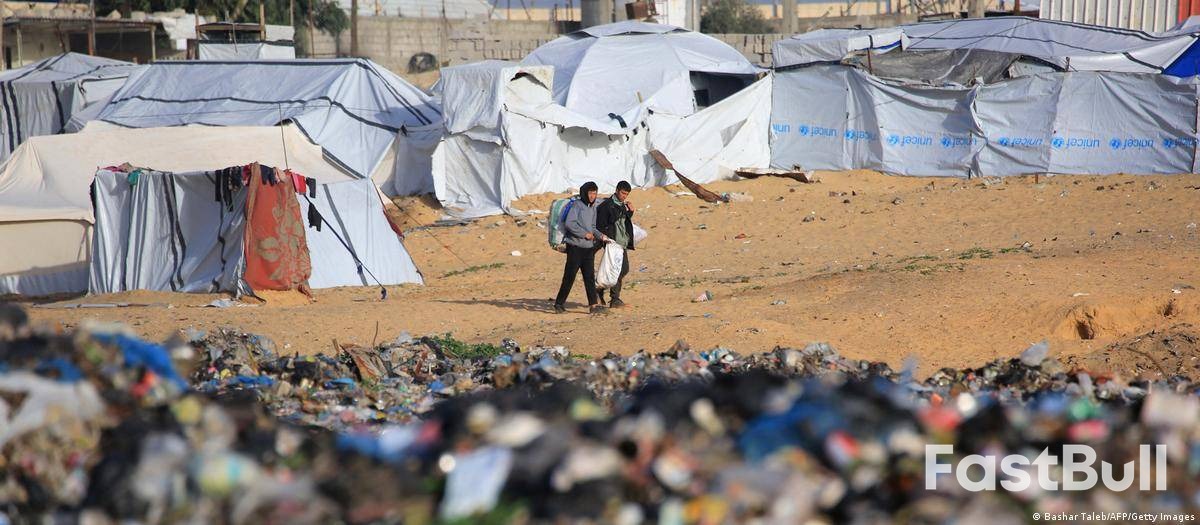
          Top US officials met with Israeli Prime Minister Benjamin Netanyahu on Saturday to advance the second phase of the Trump administration's peace plan for Gaza. The discussions come amid ongoing tensions and a fragile ceasefire that has failed to stop the bloodshed.

          The American delegation included Special Envoy Steve Witkoff, Senior Advisor Jared Kushner, and White House advisor Josh Gruenbaum. Their primary goal is to implement the next stage of a 20-point peace plan, which involves a series of critical steps designed to stabilize the region.

          Key components of this second phase include the reopening of the Rafah border crossing with Egypt, a further withdrawal of Israeli troops from Gaza, and the transfer of the enclave's administration from Hamas to a committee of Palestinian technocrats. Hamas is designated as a terrorist organization by Israel, the US, and several other nations.

          US Delegation Pushes for Progress

          Following the meeting, Witkoff stated that the US and Israel are "advancing together in close partnership" on the peace process. In an online post, he described the relationship as "strong and longstanding" and called the discussions with Netanyahu "constructive and positive."

          Witkoff confirmed that both sides are aligned on the next steps and underscored "the importance of continued cooperation on all matters critical to the region."

          According to a report from Israeli news site Ynet, which cited an unnamed Israeli official, Witkoff specifically pressed Israel to reopen the Rafah border crossing, a central and contentious element of the plan.

          The Rafah Crossing: A Diplomatic Flashpoint

          The Rafah crossing is a critical lifeline for the more than 2 million Palestinians living in Gaza, which has been devastated by two years of war. Israel's control of the crossing, which it seized in May 2024, created a major diplomatic rift with neighboring Egypt. After a brief withdrawal in January 2025, the IDF reoccupied it in March of the same year.
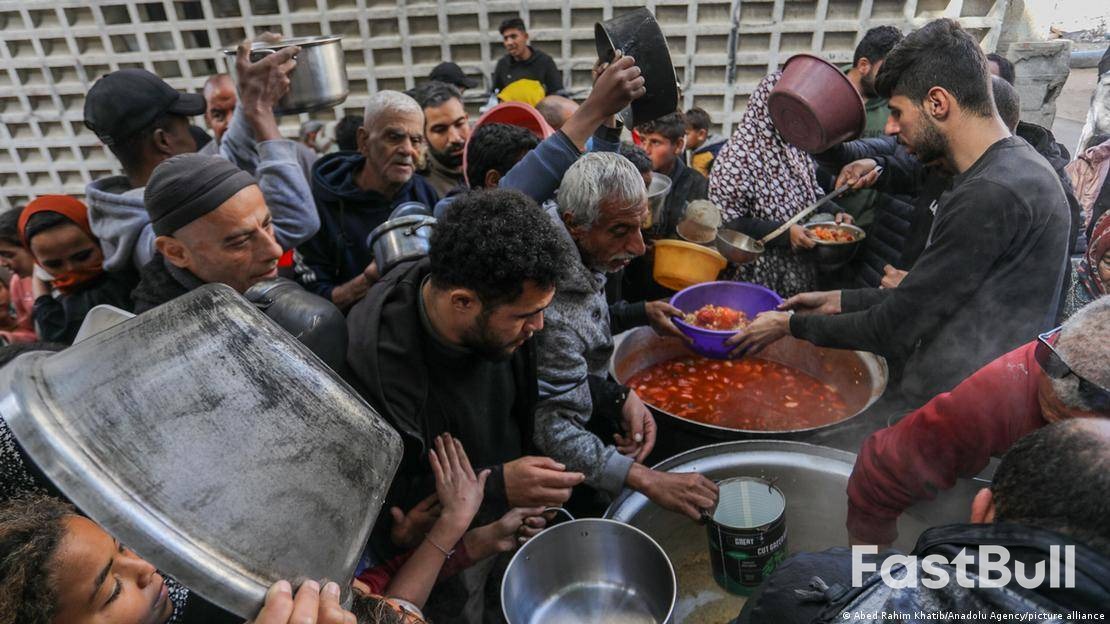
          The issue remains a high priority for Egypt. On Sunday, the country's Foreign Ministry announced that top diplomat Badr Abdelatty had raised the need to reopen the crossing with US Deputy Secretary of State Christopher Landau.

          There are signs of potential movement. Ali Shaath, who is slated to chair the 15-member committee of Palestinian technocrats intended to govern Gaza, said on Thursday that he expects the crossing to reopen next week.

          Israel's Stance: Hostage Return a Prerequisite

          Despite US pressure, Netanyahu's government maintains a firm precondition for entering the second phase of the deal: the return of all hostages from Gaza.

          The issue is focused on the remains of Ran Gvili, the last of the 251 Israelis taken hostage during the Hamas-led attacks on October 7, 2023. Gvili's family has been actively pressuring the administration to secure the return of his body before any further peace steps are taken.

          On Wednesday, Hamas claimed it had provided ceasefire mediators with "all information" it possessed regarding Gvili's remains. The group also accused Israel of obstructing search efforts in areas it controls within Gaza. According to an anonymous US official cited by the AP, the visiting American delegation has been working closely with Netanyahu on this specific issue.

          Fragile Ceasefire Overshadowed by Violence

          The first phase of the peace plan established a ceasefire that took effect on October 10 of last year. This initial stage also involved the withdrawal of Israeli forces to a designated "yellow line" inside Gaza and the return of all living Israeli hostages.

          However, the truce has not ended the violence. According to health authorities in Gaza, whose figures are considered reliable by the United Nations, at least 480 Palestinians have been killed by Israeli fire since the ceasefire began. In the same period, Israel has reported that four of its soldiers have been killed by militants.

          Israeli forces often state they open fire on individuals approaching or trying to cross the "yellow line," or during operations targeting militants. In contrast, local civil and health authorities frequently report that the majority of those killed are civilians.

          Risk Warnings and Disclaimers
          You understand and acknowledge that there is a high degree of risk involved in trading. Following any strategies or investment methods may lead to potential losses. The content on the site is provided by our contributors and analysts for information purposes only. You are solely responsible for determining whether any trading assets, securities, strategy, or any other product is suitable for investing based on your own investment objectives and financial situation.
          Add to Favorites
          Share

          Zelenskiy: US Security Deal for Ukraine is 100% Ready

          King Ten

          Russia-Ukraine Conflict

          Remarks of Officials

          A landmark security agreement between the United States and Ukraine is "100% ready" and awaiting a final sign-off, Ukrainian President Volodymyr Zelenskiy announced on Sunday. Speaking from Vilnius, Lithuania, Zelenskiy indicated that recent negotiations with Russia in Abu Dhabi have yielded some progress.

          Ukrainian President Volodymyr Zelenskiy addresses the media in Vilnius, Lithuania, on January 25, 2026.

          "For us, security guarantees are first and foremost guarantees of security from the United States," Zelenskiy stated during a news conference. "The document is 100% ready, and we are waiting for our partners to confirm the date and place when we will sign it."

          Following the signing, the pact will require ratification from both the U.S. Congress and Ukraine's parliament to take effect.

          Progress in Abu Dhabi Peace Talks

          Zelenskiy's comments came after Ukrainian and Russian negotiators met for US-mediated talks in Abu Dhabi on Friday and Saturday. While the meeting did not result in a final deal to end the nearly four-year conflict, it marked a step forward in dialogue.

          According to a U.S. official, both Moscow and Kyiv have expressed openness to further discussions, with more talks anticipated in Abu Dhabi next Sunday.

          The negotiations centered on a 20-point framework proposed by Washington. "The 20-point (U.S.) plan and problematic issues are being discussed," Zelenskiy explained. "There were many problematic issues, but now there are fewer."

          Territorial Integrity Remains a Sticking Point

          Despite the positive momentum, fundamental disagreements persist. Zelenskiy noted that Moscow continues to push for Ukraine to cede its eastern regions, which Russia has failed to capture since its full-scale invasion.

          Kyiv's position remains firm: Ukraine's territorial integrity must be upheld.

          "These are two fundamentally different positions – Ukraine's and Russia's," Zelenskiy said, highlighting the challenge for mediators. "The Americans are trying to find a compromise." He added that a resolution would require all parties, including the United States, to be prepared to compromise.

          Risk Warnings and Disclaimers
          You understand and acknowledge that there is a high degree of risk involved in trading. Following any strategies or investment methods may lead to potential losses. The content on the site is provided by our contributors and analysts for information purposes only. You are solely responsible for determining whether any trading assets, securities, strategy, or any other product is suitable for investing based on your own investment objectives and financial situation.
          Add to Favorites
          Share

          China’s 4.4 Billion-Barrel Setback: How Venezuela Became A Strategic Shock For Beijing

          Gerik

          Economic

          From Strategic Entry To Structural Exposure

          Nearly two decades ago, China moved decisively into Venezuela’s oil sector after U.S. majors were expelled during the nationalization campaign under Hugo Chávez. At that moment, Beijing capitalized on political alignment, financing constraints, and Caracas’ need for external partners, gradually securing access to more than 4.4 billion barrels of oil reserves. This volume is nearly five times larger than the holdings of Chevron, the sole major U.S. oil company that retained a presence in the country.
          China’s strategy rested on long-term production agreements, infrastructure investment, and a debt-repayment model anchored in oil shipments. For years, this structure allowed Venezuela to bypass sanctions pressure while giving China discounted crude and strategic leverage in Latin America.
          That architecture is now under strain as Washington reasserts control over Venezuela’s energy flows.

          Political Reset And The End Of Discounted Oil

          The removal of Nicolás Maduro in early January marked a decisive turning point. Shortly after, U.S. President Donald Trump publicly signaled that China could continue purchasing Venezuelan oil, but only at market prices. This effectively dismantled the opaque discount mechanisms that had defined Sino-Venezuelan oil trade under sanctions.
          While higher prices alone do not materially disrupt China’s energy security, they eliminate a key economic advantage that justified years of political risk and capital deployment. More importantly, Beijing’s concern now centers on production rights and reserve ownership rather than short-term import costs.

          Production Rights Versus Reserve Reality

          Chinese state firms such as China National Petroleum Corporation and Sinopec control assets concentrated in Venezuela’s Orinoco Belt and offshore zones like the Gulf of Paria. These areas are geologically challenging, characterized by extra-heavy crude that requires high capital intensity and advanced upgrading capacity.
          Despite holding massive reserves, Chinese operators account for only about 15 percent of Venezuela’s total oil output. This discrepancy reflects operational inefficiencies at PdVSA, whose declining performance under Maduro constrained joint venture output. As a result, reserve ownership did not translate into proportional production control.
          This imbalance now exposes China to political risk without the buffer of operational dominance.

          Debt-Oil Mechanism Under Threat

          For Beijing, the deeper shock lies in the potential unraveling of the oil-for-debt model. Venezuela owes China more than 10 billion USD, much of it structured around future oil deliveries. If Washington’s renewed oversight restructures export channels and revenue collection, these arrangements may lose legal or logistical viability.
          This risk is causal rather than merely correlated. If the U.S. controls the monetization process of Venezuelan oil, then China’s repayment mechanism weakens regardless of reserve size. In that scenario, past investments convert from strategic assets into stranded exposures.

          Limited Energy Impact, Significant Strategic Signal

          From an energy security perspective, Venezuela remains marginal for China. Venezuelan crude represents a small fraction of China’s daily oil imports of roughly 11 million barrels. Even a complete disruption would not materially affect domestic supply.
          The strategic signal, however, is far larger. Venezuela was one of China’s most visible examples of converting geopolitical alignment into long-term resource control. The current reversal highlights the limits of that model when U.S. financial and political leverage re-enters the equation.
          Signs Of Quiet Retrenchment
          Recent developments suggest Beijing is adjusting rather than confronting. Last year, Sinopec quietly agreed to sell part of its Venezuelan assets to Amos Global Energy Management, led by former Chevron executive Ali Moshiri. The deal’s terms were not disclosed, but it signaled a partial de-risking of exposure.
          At the same time, smaller Chinese firms continue limited engagement, including new drilling projects on Lake Maracaibo, and Chinese exports of oilfield equipment to Venezuela have risen. This indicates tactical flexibility rather than wholesale withdrawal.

          Why The U.S. Is Unlikely To Push China Out Completely

          According to analysts such as Parsifal D’Sola Alvarado, Washington’s objective is not to expel China but to control flows. As long as oil revenues and export mechanisms fall under U.S. oversight, Chinese participation may be tolerated.
          This mirrors patterns seen elsewhere, including Argentina, where governments critical of China have nonetheless allowed Chinese economic activity to continue when it does not undermine Western financial control.

          A Strategic Lesson For Beijing

          China’s 4.4 billion-barrel exposure in Venezuela illustrates a broader structural lesson. Reserve access alone does not guarantee strategic security when revenue channels, pricing power, and political legitimacy are externally controlled. In the Venezuelan case, the shift in power dynamics has transformed what once looked like a long-term energy triumph into a reminder of how quickly geopolitical conditions can redefine asset value.
          In the evolving global energy order, Venezuela stands as a cautionary chapter in China’s overseas resource strategy rather than a decisive defeat.
          To stay updated on all economic events of today, please check out our Economic calendar
          Risk Warnings and Disclaimers
          You understand and acknowledge that there is a high degree of risk involved in trading. Following any strategies or investment methods may lead to potential losses. The content on the site is provided by our contributors and analysts for information purposes only. You are solely responsible for determining whether any trading assets, securities, strategy, or any other product is suitable for investing based on your own investment objectives and financial situation.
          Add to Favorites
          Share

          US-Iran Conflict: Analyzing the Economic & Geopolitical Fallout

          King Ten

          Commodity

          Middle East Situation

          Traders' Opinions

          Political

          Economic

          Energy

          Geopolitical analyst Xueqin Jiang has outlined a detailed scenario for the global fallout from a potential United States military strike on Iran. In a recent interview with financial journalist David Lin, Jiang, host of the Predictive History YouTube channel, examined the strategic consequences for energy markets, trade routes, and international alliances.

          Reading the Signs: Betting Markets Price In Conflict

          Jiang pointed to several developments he interprets as raising the risk of imminent military action, including reported naval deployments and flight cancellations by major airlines. While no official plans have been announced, he argued these factors, combined with internal unrest in Iran, increase the likelihood of U.S. airstrikes.

          This speculation is reflected in betting markets. As of this weekend, Polymarket traders have priced a 66% probability of a U.S. strike on Iran by June 30. A separate market shows a 76% consensus that no military action will occur by January 31, though a small 5% probability remains for that specific day. Traders also assign a 17% chance of U.S. troops entering Iran by March 31. This speculation has grown following recent U.S. military activity in Venezuela and the capture of Nicolás Maduro.

          Iran's Playbook: Asymmetric Warfare and the Hormuz Chokepoint

          Jiang contended that a U.S.-Iran conflict would look different from past military operations. He asserted that Iran could deploy an asymmetric response by targeting critical regional infrastructure and trade routes.

          The most significant vulnerability he identified is the Strait of Hormuz, a vital chokepoint for a large portion of global oil shipments. Any disruption in this strait could have immediate effects on global energy prices and supply chains.

          Global Dominoes: Why the Conflict Wouldn't Stay Local

          In response to a question from Lin about whether such a conflict could be contained, Jiang stated that the interconnected nature of the global economy would make it difficult. The economic repercussions, he argued, would almost certainly extend beyond the Middle East.

          According to Jiang's analysis, Iran's strategic location and regional alliances could pull other nations into the crisis. Major Asian economies that rely heavily on Middle Eastern energy would be under immense pressure to react, either through diplomatic intervention or other measures to prevent severe economic damage.

          Reshuffling Alliances and Shifting Markets

          The discussion also explored the long-term geopolitical implications of a sustained conflict. Jiang argued that it could weaken existing international institutions and accelerate a realignment of global alliances, particularly affecting the relationships between the United States, China, and Russia.

          He framed this potential shift as part of a broader transition in international relations, citing recent remarks from leaders at Davos and other forums as evidence of growing skepticism toward current global economic structures.

          Jiang also connected these geopolitical tensions to investor behavior, noting that recent price movements in precious metals like gold reflect rising concerns over instability. This analysis was presented as his personal interpretation of market sentiment.

          As an educator and historian, Jiang applies structural history and game theory to analyze contemporary events on his Predictive History channel, an approach that has garnered both attention and debate.

          To stay updated on all economic events of today, please check out our Economic calendar
          Risk Warnings and Disclaimers
          You understand and acknowledge that there is a high degree of risk involved in trading. Following any strategies or investment methods may lead to potential losses. The content on the site is provided by our contributors and analysts for information purposes only. You are solely responsible for determining whether any trading assets, securities, strategy, or any other product is suitable for investing based on your own investment objectives and financial situation.
          Add to Favorites
          Share

          Iraq’s Oil Wealth Under External Control: How the U.S. Has Shaped Baghdad’s Revenues for Two Decades

          Gerik

          Economic

          Commodity

          Oil Abundance Without Full Financial Sovereignty

          Iraq possesses approximately 145 billion barrels of proven oil reserves, ranking fifth globally and accounting for roughly 17 percent of the world’s total, according to U.S. Energy Information Administration. Oil exports generate around 90 percent of Iraq’s state budget, making petroleum revenues the backbone of national finances. Yet, despite this resource endowment, Iraq does not exercise full control over the cash flows derived from its oil sector.
          Since the 2003 U.S.-led invasion, Washington has overseen Iraq’s oil revenues through financial arrangements that remain in place today. This structure has fundamentally shaped Iraq’s economic sovereignty and constrained Baghdad’s policy autonomy.

          The Origin Of U.S. Control Over Oil Revenues

          Following the invasion of Iraq in 2003, the U.S.-led Coalition Provisional Authority established the Development Fund for Iraq to manage oil revenues. The fund was placed under the custody of the Federal Reserve Bank of New York, with the stated objective of safeguarding Iraq’s oil income from legal claims linked to the Saddam Hussein era and channeling funds toward reconstruction.
          This framework was formalized through executive orders signed by then-President George W. Bush, and subsequently renewed by later administrations. Over time, the Development Fund evolved into an account held by the Central Bank of Iraq at the Federal Reserve Bank of New York, a structure that remains active.
          According to Iraqi officials cited by local media, between 80 and 85 billion USD of Iraq’s foreign exchange reserves are currently held at the Fed. This arrangement establishes a direct causal relationship between U.S. financial oversight and Iraq’s macroeconomic stability.

          Leverage Through Financial Gatekeeping

          The custody of Iraq’s reserves has given Washington a powerful, non-military lever. In 2020, when Baghdad formally requested the withdrawal of U.S. troops, reports emerged that U.S. officials warned of potential restrictions on Iraq’s access to its funds at the Fed. Shortly afterward, the Iraqi government softened its position, illustrating how financial dependence can translate into political influence.
          Although Iraq has gradually regained administrative control over fiscal operations since the early years of occupation, the continued reliance on U.S.-managed accounts demonstrates that sovereignty over oil production does not automatically equate to sovereignty over oil income.

          Dollar Restrictions And Market Distortions

          U.S. oversight has also reshaped Iraq’s domestic currency system. For years, the Central Bank of Iraq relied on daily dollar auctions as its primary mechanism for supplying foreign currency to the market. This system allowed private banks and exchange companies to purchase U.S. dollars using Iraqi dinars.
          Under pressure from Washington, Iraq terminated the auction mechanism in early 2025. The U.S. argued that the system facilitated dollar transfers to sanctioned entities, particularly linked to Iran. The tightening of dollar flows has produced a parallel currency market, widening the gap between the official exchange rate and the informal market rate.
          This divergence reflects a correlation between external financial controls and internal economic distortions, as reduced access to official dollars increases transaction costs and fuels speculative behavior.

          Iraq Caught Between U.S.–Iran Rivalry

          Since Donald Trump returned to office for a second term, Washington has intensified its “maximum pressure” campaign against Iran. Iraq has been repeatedly drawn into this confrontation, as Iran views Iraq as a critical economic outlet, while the U.S. seeks to block financial channels that could benefit Tehran.
          In 2025, the U.S. imposed sanctions on Iraqi banks and individuals accused of facilitating money laundering for Iran. These measures further tightened U.S. oversight of Iraq’s financial system and reinforced the strategic importance of controlling oil-derived dollar revenues.

          Enduring Influence In A Resource-Rich State

          More than two decades after the invasion, Iraq’s experience highlights how control over financial infrastructure can outlast direct military presence. While Baghdad exports oil independently and formally manages its budget, the placement of its reserves at the Federal Reserve continues to shape policy choices and limit room for maneuver.
          The Iraqi case demonstrates that in resource-dependent economies, sovereignty is not defined solely by ownership of reserves, but by control over revenue flows, currency access, and financial plumbing. As Iraq attempts to balance relations with both Washington and Tehran, the legacy of U.S. oversight over its oil revenues remains a central constraint on its economic and political trajectory.
          To stay updated on all economic events of today, please check out our Economic calendar
          Risk Warnings and Disclaimers
          You understand and acknowledge that there is a high degree of risk involved in trading. Following any strategies or investment methods may lead to potential losses. The content on the site is provided by our contributors and analysts for information purposes only. You are solely responsible for determining whether any trading assets, securities, strategy, or any other product is suitable for investing based on your own investment objectives and financial situation.
          Add to Favorites
          Share

          Paying More For Energy Security: Why Georgia Is Buying More Russian Gas Despite Political Estrangement

          Gerik

          Economic

          Commodity

          Rising Imports Amid A Delicate Political Context

          In 2025, Georgia significantly increased its natural gas purchases from Russia, even though the two countries have had no formal diplomatic relations since the 2008 conflict. According to figures released by Gazprom, gas deliveries to Georgia reached 1.1 billion cubic meters, representing a year-on-year increase of more than 40 percent. This surge forms part of Moscow’s broader strategy to redirect gas exports toward southern markets as demand from the European Union continues to contract under sanctions.
          For Georgia, however, the issue extends beyond volume. The country is now paying higher prices for Russian gas, highlighting a growing trade-off between political distance and economic necessity.

          Higher Prices And Changing Contract Terms

          A government decree dated December 25, 2025, and made public in January, revealed new pricing terms under Georgia’s gas contract with Gazprom. According to reporting by Georgian Business Media, Georgia pays 215 USD per 1,000 cubic meters for the first 250 million cubic meters of gas imported from Russia. Any volume above that threshold is priced at 185 USD per 1,000 cubic meters.
          Previously, Georgia had paid a flat rate of 185 USD per 1,000 cubic meters. The revised structure therefore implies a higher average import cost as Russian gas volumes expand. The relationship here is causal rather than coincidental: increased dependence on a single supplier with limited political leverage options has reduced Georgia’s bargaining power on pricing.

          Energy Dependence And Strategic Rebalancing

          Georgia’s growing reliance on Russian gas marks a notable shift at a time when the country is recalibrating its geopolitical orientation. Under the ruling Georgian Dream party, economic ties with Russia have gradually deepened, while relations with the EU and the United States have stalled.
          Although Azerbaijan remains Georgia’s primary gas supplier and is expected to account for 87 percent of total imports in 2026, deliveries from Azerbaijan have been declining. This reduction has directly contributed to the rising share of Russian gas in Georgia’s energy mix, even at higher prices.
          In 2025, Georgia imported a total of 444 million USD worth of natural gas, an increase of 2.1 percent year-on-year. Of this amount, imports from Russia totaled 206.4 million USD, underscoring the growing financial significance of the Russian supply channel.

          Economic Necessity Versus Political Sensitivity

          The expansion of Russian gas imports reflects structural constraints rather than ideological alignment. Georgia lacks extensive domestic energy resources and faces limited short-term alternatives to pipeline gas. Liquefied natural gas imports remain costly and infrastructure-intensive, while regional supply diversification options are constrained by capacity and geopolitics.
          As a result, Georgia’s energy policy demonstrates a correlation between supply security concerns and pragmatic economic choices, even when such choices carry political risk. The decision to accept higher prices suggests that continuity of supply has become the overriding priority.

          Transparency Dispute And Domestic Fallout

          The publication of the pricing details triggered controversy within Georgia’s political system. Although the decree appeared on a platform linked to the government, senior figures within Georgian Dream described the disclosure as an unauthorized and potentially illegal leak. The State Security Service of Georgia subsequently launched an investigation into alleged cyber interference and unauthorized access to government systems.
          In its statement, the agency claimed the incident involved attempts to manipulate official information in a way that could harm Georgia’s national interests by generating political and economic instability. This response highlights the sensitivity surrounding energy policy decisions and their domestic political implications.

          Russia’s Southern Energy Pivot

          From Moscow’s perspective, Georgia’s increased imports fit neatly into a broader regional strategy. Gazprom has reported gas export growth of more than 20 percent to Kazakhstan, Uzbekistan, and Kyrgyzstan, signaling a deliberate shift toward Eurasian markets. The contraction of EU demand has thus accelerated Russia’s focus on neighboring and politically flexible buyers.
          For Georgia, this alignment is less strategic than circumstantial. The country’s growing purchases from Russia are best understood as a response to constrained alternatives rather than an endorsement of Moscow’s regional agenda.

          Energy Security At A Rising Cost

          Georgia’s experience illustrates a wider dilemma facing small, energy-import-dependent states in an era of geopolitical fragmentation. Even without diplomatic ties, economic interdependence can intensify when infrastructure, geography, and market realities leave few viable substitutes.
          The sharp rise in Russian gas imports, combined with higher prices, signals that energy security considerations are increasingly outweighing political symbolism. Over the longer term, this trajectory may deepen Georgia’s exposure to external pressure, reinforcing the need for diversification strategies that extend beyond short-term supply stability.
          To stay updated on all economic events of today, please check out our Economic calendar
          Risk Warnings and Disclaimers
          You understand and acknowledge that there is a high degree of risk involved in trading. Following any strategies or investment methods may lead to potential losses. The content on the site is provided by our contributors and analysts for information purposes only. You are solely responsible for determining whether any trading assets, securities, strategy, or any other product is suitable for investing based on your own investment objectives and financial situation.
          Add to Favorites
          Share

          Washington Bets Big On Rare Earths In Strategic Push To Cut China Dependence

          Gerik

          Economic

          A State-Led Turn In Critical Minerals Policy

          The Trump administration is preparing a landmark investment of 1.6 billion USD into USA Rare Earth, a rare earth mining and magnet manufacturing company headquartered in Oklahoma. In return, the U.S. government would secure a 10 percent equity stake, equivalent to 16.1 million shares, alongside warrants to purchase an additional 17.6 million shares at a fixed price of 17.17 USD per share. This transaction, expected to be announced on January 26, would be paired with a separate 1 billion USD private financing round.
          This move reflects a structural shift in U.S. industrial policy. Rather than relying solely on incentives or tariffs, Washington is increasingly using direct equity participation to shape strategic supply chains. The causal logic is clear: by embedding itself as a shareholder, the U.S. government gains both influence and long-term security over assets deemed essential to national security and advanced manufacturing.

          Why USA Rare Earth Matters

          USA Rare Earth occupies a strategically valuable position within the domestic rare earth ecosystem. The company is developing a mining project in Sierra Blanca, Texas, and constructing a neodymium magnet manufacturing facility in Stillwater, Oklahoma, with commercial operations targeted for the first half of 2026. Neodymium magnets are a critical input for semiconductors, electric vehicles, defense systems, and advanced electronics, making them a focal point of geopolitical competition.
          With a market capitalization of approximately 3.45 billion USD, USA Rare Earth has emerged as one of the few U.S.-based players capable of producing neodymium magnets at industrial scale. Recent share price gains reflect investor expectations that state backing will accelerate project execution, reduce financing risk, and enhance the company’s role in reshoring critical manufacturing.

          Industrial Policy Meets National Security

          According to officials at the CHIPS Program Office under the U.S. Department of Commerce, the investment is explicitly designed to repatriate critical mineral capacity and reinforce supply chains vital to semiconductor manufacturing and defense readiness. This framing underscores the causal link between rare earth availability and national security resilience.
          USA Rare Earth has partnered with Cantor Fitzgerald to coordinate its capital raise, a move that integrates private financial markets into Washington’s strategic objectives. The structure reflects a hybrid model in which public capital de-risks early-stage investment while private capital scales production capacity.

          Reducing Structural Dependence On China

          The investment forms part of a broader and highly coordinated U.S. effort to reduce reliance on Chinese rare earth supply chains. China currently dominates global rare earth extraction, processing, and magnet manufacturing, using this position as leverage in trade and diplomatic negotiations. The U.S. response has evolved from reactive trade measures to proactive supply chain construction.
          In 2025, Washington acquired equity stakes in MP Materials, Lithium Americas, and Trilogy Metals, establishing a precedent for direct government participation in mining ventures. The USA Rare Earth deal extends this approach downstream into processing and magnet manufacturing, addressing a long-standing bottleneck in the U.S. rare earth ecosystem.
          The relationship between Chinese export controls and U.S. investment policy is causal rather than coincidental. As Washington deploys tariffs and technology restrictions in negotiations with Beijing, China’s control over rare earth exports remains a critical counterweight. Securing domestic capacity reduces vulnerability to supply disruptions and weakens China’s bargaining position.

          Building A Global Web Of Mineral Alliances

          Beyond domestic investments, the U.S. has pursued parallel agreements with resource-rich allies to diversify supply. In October 2025, Washington and Australia established a strategic framework covering mining, refining, and processing of rare earths and critical minerals. Similar arrangements followed with Japan, focusing on permanent magnets, stockpiling, and rapid-response mechanisms for supply chain disruptions.
          The strategy extends to Southeast Asia, where agreements with Malaysia, Thailand, and Cambodia aim to expand extraction and processing capacity. Additional cooperation with Kazakhstan, Uzbekistan, Argentina, and Quad members reflects a deliberate effort to construct a geographically diversified mineral network that reduces systemic risk.

          A New Phase Of Resource Nationalism

          Taken together, the USA Rare Earth investment illustrates a broader transformation in U.S. economic strategy. Critical minerals are no longer treated as ordinary commodities but as strategic assets warranting direct state involvement. This shift does not merely respond to market failure; it anticipates geopolitical contestation in which control over inputs such as rare earths may shape industrial competitiveness and security outcomes.
          In this context, the 1.6 billion USD investment is less about short-term financial return and more about long-term strategic optionality. By anchoring rare earth mining and magnet production within U.S. borders, Washington is laying the groundwork for a more resilient industrial base, even as global competition over resources intensifies.
          To stay updated on all economic events of today, please check out our Economic calendar
          Risk Warnings and Disclaimers
          You understand and acknowledge that there is a high degree of risk involved in trading. Following any strategies or investment methods may lead to potential losses. The content on the site is provided by our contributors and analysts for information purposes only. You are solely responsible for determining whether any trading assets, securities, strategy, or any other product is suitable for investing based on your own investment objectives and financial situation.
          Add to Favorites
          Share
          FastBull
          Copyright © 2026 FastBull Ltd

          728 RM B 7/F GEE LOK IND BLDG NO 34 HUNG TO RD KWUN TONG KLN HONG KONG

          TelegramInstagramTwitterfacebooklinkedin
          App Store Google Play Google Play
          Products
          Charts

          Chats

          Q&A with Experts
          Screeners
          Economic Calendar
          Data
          Tools
          Membership
          Features
          Function
          Markets
          Copy Trading
          Latest Signals
          Contests
          News
          Analysis
          24/7
          Columns
          Education
          Company
          Careers
          About Us
          Contact Us
          Advertising
          Help Center
          Feedback
          User Agreement
          Privacy Policy
          Personal Information Protection Statement
          Business

          White Label

          Data API

          Web Plug-ins

          Poster Maker

          Affiliate Program

          Risk Disclosure

          The risk of loss in trading financial instruments such as stocks, FX, commodities, futures, bonds, ETFs and crypto can be substantial. You may sustain a total loss of the funds that you deposit with your broker. Therefore, you should carefully consider whether such trading is suitable for you in light of your circumstances and financial resources.

          No decision to invest should be made without thoroughly conducting due diligence by yourself or consulting with your financial advisors. Our web content might not suit you since we don't know your financial conditions and investment needs. Our financial information might have latency or contain inaccuracy, so you should be fully responsible for any of your trading and investment decisions. The company will not be responsible for your capital loss.

          Without getting permission from the website, you are not allowed to copy the website's graphics, texts, or trademarks. Intellectual property rights in the content or data incorporated into this website belong to its providers and exchange merchants.

          Not Logged In

          Log in to access more features

          Connect Broker
          Become a signal provider
          Help Center
          Customer Service
          Dark Mode
          Price Up/Down Colors

          Log In

          Sign Up

          Position
          Layout
          Fullscreen
          Default to Chart
          The chart page opens by default when you visit fastbull.com