
• Trade
  • Markets
  • Copy
  • Contests
  • News
  • 24/7
  • Calendar
  • Q&A
  • Chats
Trending
Screeners
SYMBOL
LAST
BID
ASK
HIGH
LOW
NET CHG.
%CHG.
SPREAD
SPX
S&P 500 Index
6827.42
6827.42
6827.42
6899.86
6801.80
-73.58
-1.07%
--
DJI
Dow Jones Industrial Average
48458.04
48458.04
48458.04
48886.86
48334.10
-245.98
-0.51%
--
IXIC
NASDAQ Composite Index
23195.16
23195.16
23195.16
23554.89
23094.51
-398.69
-1.69%
--
USDX
US Dollar Index
97.950
98.030
97.950
98.500
97.950
-0.370
-0.38%
--
EURUSD
Euro / US Dollar
1.17394
1.17409
1.17394
1.17496
1.17192
+0.00011
+ 0.01%
--
GBPUSD
Pound Sterling / US Dollar
1.33707
1.33732
1.33707
1.33997
1.33419
-0.00148
-0.11%
--
XAUUSD
Gold / US Dollar
4299.39
4299.39
4299.39
4353.41
4257.10
+20.10
+ 0.47%
--
WTI
Light Sweet Crude Oil
57.233
57.485
57.233
58.011
56.969
-0.408
-0.71%
--

Community Accounts

Signal Accounts
--
Profit Accounts
--
Loss Accounts
--
View More

Become a signal provider

Sell trading signals to earn additional income

View More

Guide to Copy Trading

Get started with ease and confidence

View More

Signal Accounts for Members

All Signal Accounts

Best Return
  • Best Return
  • Best P/L
  • Best MDD
Past 1W
  • Past 1W
  • Past 1M
  • Past 1Y

All Contests

  • All
  • Trump Updates
  • Recommend
  • Stocks
  • Cryptocurrencies
  • Central Banks
  • Featured News
Top News Only
Share

USA Embassy In Lithuania: Maria Kalesnikava Is Not Going To Vilnius

Share

USA Embassy In Lithuania: Other Prisoners Are Being Sent From Belarus To Ukraine

Share

Ukraine President Zelenskiy: Five Ukrainians Released By Belarus In US-Brokered Deal

Share

USA Vilnius Embassy: USA Stands Ready For "Additional Engagement With Belarus That Advances USA Interests"

Share

USA Vilnius Embassy: Belarus, USA, Other Citizens Among The Prisoners Released Into Lithuania

Share

USA Vilnius Embassy: USA Will Continue Diplomatic Efforts To Free The Remaining Political Prisoners In Belarus

Share

USA Vilnius Embassy: Belarus Releases 123 Prisoners Following Meeting Of President Trump's Envoy Coale And Belarus President Lukashenko

Share

USA Vilnius Embassy: Masatoshi Nakanishi, Aliaksandr Syrytsa Are Among The Prisoners Released By Belarus

Share

USA Vilnius Embassy: Maria Kalesnikava And Viktor Babaryka Are Among The Prisoners Released By Belarus

Share

USA Vilnius Embassy: Nobel Peace Prize Laureate Ales Bialiatski Is Among The Prisoners Released By Belarus

Share

Belarusian Presidential Administration Telegram Channel: Lukashenko Has Pardoned 123 Prisoners As Part Of Deal With US

Share

Two Local Syrian Officials: Joint US-Syrian Military Patrol In Central Syria Came Under Fire From Unknown Assailants

Share

Israeli Military Says It Targeted 'Key Hamas Terrorist' In Gaza City

Share

Rwanda's Actions In Eastern Drc Are A Clear Violation Of Washington Accords Signed By President Trump - Secretary Of State Rubio

Share

Israeli Military Issues Evacuation Warning In Southern Lebanon Village Ahead Of Strike - Spokesperson On X

Share

Belarusian State Media Cites US Envoy Coale As Saying He Discussed Ukraine And Venezuela With Lukashenko

Share

Belarusian State Media Cites US Envoy Coale As Saying That US Removes Sanctions On Belarusian Potassium

Share

Thai Prime Minister: No Ceasefire Agreement With Cambodia

Share

US, Ukraine To Discuss Ceasefire In Berlin Ahead Of European Summit

Share

Incoming Czech Prime Minister Babis: Czech Republic Will Not Take On Guarantees For Ukraine Financing, European Commission Must Find Alternatives

TIME
ACT
FCST
PREV
U.K. Trade Balance Non-EU (SA) (Oct)

A:--

F: --

P: --

U.K. Trade Balance (Oct)

A:--

F: --

P: --

U.K. Services Index MoM

A:--

F: --

P: --

U.K. Construction Output MoM (SA) (Oct)

A:--

F: --

P: --

U.K. Industrial Output YoY (Oct)

A:--

F: --

P: --

U.K. Trade Balance (SA) (Oct)

A:--

F: --

P: --

U.K. Trade Balance EU (SA) (Oct)

A:--

F: --

P: --

U.K. Manufacturing Output YoY (Oct)

A:--

F: --

P: --

U.K. GDP MoM (Oct)

A:--

F: --

P: --

U.K. GDP YoY (SA) (Oct)

A:--

F: --

P: --

U.K. Industrial Output MoM (Oct)

A:--

F: --

P: --

U.K. Construction Output YoY (Oct)

A:--

F: --

P: --

France HICP Final MoM (Nov)

A:--

F: --

P: --

China, Mainland Outstanding Loans Growth YoY (Nov)

A:--

F: --

P: --

China, Mainland M2 Money Supply YoY (Nov)

A:--

F: --

P: --

China, Mainland M0 Money Supply YoY (Nov)

A:--

F: --

P: --

China, Mainland M1 Money Supply YoY (Nov)

A:--

F: --

P: --

India CPI YoY (Nov)

A:--

F: --

P: --

India Deposit Gowth YoY

A:--

F: --

P: --

Brazil Services Growth YoY (Oct)

A:--

F: --

P: --

Mexico Industrial Output YoY (Oct)

A:--

F: --

P: --

Russia Trade Balance (Oct)

A:--

F: --

P: --

Philadelphia Fed President Henry Paulson delivers a speech
Canada Building Permits MoM (SA) (Oct)

A:--

F: --

P: --

Canada Wholesale Sales YoY (Oct)

A:--

F: --

P: --

Canada Wholesale Inventory MoM (Oct)

A:--

F: --

P: --

Canada Wholesale Inventory YoY (Oct)

A:--

F: --

P: --

Canada Wholesale Sales MoM (SA) (Oct)

A:--

F: --

P: --

Germany Current Account (Not SA) (Oct)

A:--

F: --

P: --

U.S. Weekly Total Rig Count

A:--

F: --

P: --

U.S. Weekly Total Oil Rig Count

A:--

F: --

P: --

Japan Tankan Large Non-Manufacturing Diffusion Index (Q4)

--

F: --

P: --

Japan Tankan Small Manufacturing Outlook Index (Q4)

--

F: --

P: --

Japan Tankan Large Non-Manufacturing Outlook Index (Q4)

--

F: --

P: --

Japan Tankan Large Manufacturing Outlook Index (Q4)

--

F: --

P: --

Japan Tankan Small Manufacturing Diffusion Index (Q4)

--

F: --

P: --

Japan Tankan Large Manufacturing Diffusion Index (Q4)

--

F: --

P: --

Japan Tankan Large-Enterprise Capital Expenditure YoY (Q4)

--

F: --

P: --

U.K. Rightmove House Price Index YoY (Dec)

--

F: --

P: --

China, Mainland Industrial Output YoY (YTD) (Nov)

--

F: --

P: --

China, Mainland Urban Area Unemployment Rate (Nov)

--

F: --

P: --

Saudi Arabia CPI YoY (Nov)

--

F: --

P: --

Euro Zone Industrial Output YoY (Oct)

--

F: --

P: --

Euro Zone Industrial Output MoM (Oct)

--

F: --

P: --

Canada Existing Home Sales MoM (Nov)

--

F: --

P: --

Euro Zone Total Reserve Assets (Nov)

--

F: --

P: --

U.K. Inflation Rate Expectations

--

F: --

P: --

Canada National Economic Confidence Index

--

F: --

P: --

Canada New Housing Starts (Nov)

--

F: --

P: --

U.S. NY Fed Manufacturing Employment Index (Dec)

--

F: --

P: --

U.S. NY Fed Manufacturing Index (Dec)

--

F: --

P: --

Canada Core CPI YoY (Nov)

--

F: --

P: --

Canada Manufacturing Unfilled Orders MoM (Oct)

--

F: --

P: --

Canada Manufacturing New Orders MoM (Oct)

--

F: --

P: --

Canada Core CPI MoM (Nov)

--

F: --

P: --

Canada Manufacturing Inventory MoM (Oct)

--

F: --

P: --

Canada CPI YoY (Nov)

--

F: --

P: --

Canada CPI MoM (Nov)

--

F: --

P: --

Canada CPI YoY (SA) (Nov)

--

F: --

P: --

Canada Core CPI MoM (SA) (Nov)

--

F: --

P: --

Q&A with Experts
    • All
    • Chatrooms
    • Groups
    • Friends
    Connecting
    .
    .
    .
    Type here...
    Add Symbol or Code

      No matching data

      All
      Trump Updates
      Recommend
      Stocks
      Cryptocurrencies
      Central Banks
      Featured News
      • All
      • Russia-Ukraine Conflict
      • Middle East Flashpoint
      • All
      • Russia-Ukraine Conflict
      • Middle East Flashpoint
      Search
      Products

      Charts Free Forever

      Chats Q&A with Experts
      Screeners Economic Calendar Data Tools
      Membership Features
      Data Warehouse Market Trends Institutional Data Policy Rates Macro

      Market Trends

      Market Sentiment Order Book Forex Correlations

      Top Indicators

      Charts Free Forever
      Markets

      News

      News Analysis 24/7 Columns Education
      From Institutions From Analysts
      Topics Columnists

      Latest Views

      Latest Views

      Trending Topics

      Top Columnists

      Latest Update

      Signals

      Copy Rankings Latest Signals Become a signal provider AI Rating
      Contests
      Brokers

      Overview Brokers Assessment Rankings Regulators News Claims
      Broker listing Forex Brokers Comparison Tool Live Spread Comparison Scam
      Q&A Complaint Scam Alert Videos Tips to Detect Scam
      More

      Business
      Events
      Careers About Us Advertising Help Center

      White Label

      Data API

      Web Plug-ins

      Affiliate Program

      Awards Institution Evaluation IB Seminar Salon Event Exhibition
      Vietnam Thailand Singapore Dubai
      Fans Party Investment Sharing Session
      FastBull Summit BrokersView Expo
      Recent Searches
        Top Searches
          Markets
          News
          Analysis
          User
          24/7
          Economic Calendar
          Education
          Data
          • Names
          • Latest
          • Prev

          View All

          No data

          Scan to Download

          Faster Charts, Chat Faster!

          Download App
          English
          • English
          • Español
          • العربية
          • Bahasa Indonesia
          • Bahasa Melayu
          • Tiếng Việt
          • ภาษาไทย
          • Français
          • Italiano
          • Türkçe
          • Русский язык
          • 简中
          • 繁中
          Open Account
          Search
          Products
          Charts Free Forever
          Markets
          News
          Signals

          Copy Rankings Latest Signals Become a signal provider AI Rating
          Contests
          Brokers

          Overview Brokers Assessment Rankings Regulators News Claims
          Broker listing Forex Brokers Comparison Tool Live Spread Comparison Scam
          Q&A Complaint Scam Alert Videos Tips to Detect Scam
          More

          Business
          Events
          Careers About Us Advertising Help Center

          White Label

          Data API

          Web Plug-ins

          Affiliate Program

          Awards Institution Evaluation IB Seminar Salon Event Exhibition
          Vietnam Thailand Singapore Dubai
          Fans Party Investment Sharing Session
          FastBull Summit BrokersView Expo

          US And China Agree Plan To Restore Trade Truce

          James Whitman

          Economic

          China–U.S. Trade War

          Summary:

          The US and China capped two days of high-stakes trade talks with a plan to revive the flow of sensitive goods.

          The US and China capped two days of high-stakes trade talks with a plan to revive the flow of sensitive goods — a framework now awaiting the blessing of Donald Trump and Xi Jinping.

          After some 20 hours of negotiations in London, US Commerce Secretary Howard Lutnick said both sides had established a framework for implementing the Geneva consensus that last month brought down tariffs. “First we had to get sort of the negativity out,” he said. “Now we can go forward to try to do positive trade, growing trade.”

          Capping a marathon round of haggling that stretched over 12 hours on Tuesday, Lutnick said the Chinese had pledged to speed up shipments of rare earth metals critical to US auto and defence firms, while Washington would ease some of its own export controls — suggesting progress was made on two of the thorniest issues in bilateral ties.

          The US and Chinese delegations will take that proposal back to their respective leaders, according to China’s chief trade negotiator Li Chenggang. Negotiations were “in-depth and candid”, he told reporters in brief remarks before midnight outside Lancaster House, a Georgian-era mansion near Buckingham Palace that served as this week’s meeting site.
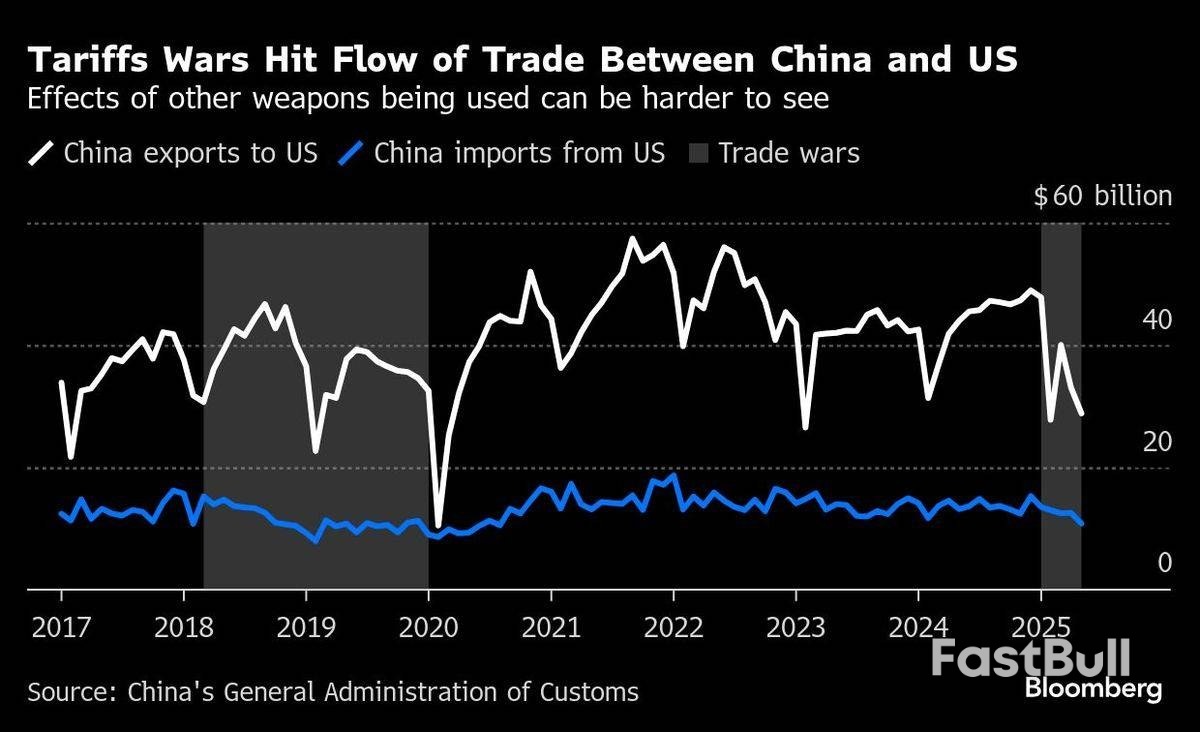
          While the positive tone should reassure investors worried about a decoupling of the world’s largest economies, details were scarce and the deal could still be nixed by top leaders. The discussions also did little to fix issues such as China’s massive trade surplus with the US and a belief in Washington that Beijing is dumping goods on its markets.

          Initial market reaction to the announcement was muted, with US equity futures edging lower and the offshore yuan little changed. The Chinese onshore benchmark stock gauge was up 0.9% on Wednesday morning, on track for the biggest increase since May 14, shortly after the Geneva agreement.

          “Markets will likely welcome the shift from confrontation to coordination,” said Charu Chanana, chief investment strategist at Saxo Markets. “We’re not out of the woods yet — it’s up to Trump and Xi to approve and enforce the deal.”

          The Chinese Foreign Ministry and Commerce Ministry didn’t respond to requests for comment.

          The London meetings came together at short notice after Trump last week spoke to Xi for the first time since taking office, in a bid to stop ties spiralling over claims both sides had reneged on the Geneva accord. US officials accused China of stalling magnet exports while Trump officials angered Beijing with new controls on chip design software, jet engines and student visas.

          That spat showcased the growing role of export controls in modern trade warfare, where access to rare metals or tiny microchips can give one economy leverage over a rival. European trade officials and global carmakers also sounded the alarm in recent weeks on disruption of supplies from China that are critical for fighter jets and electric vehicles.

          Lutnick suggested they’d found a way to overcome the deadlock.

          “There were a number of measures the United States of America put on when those rare earths were not coming,” he added. “You should expect those to come off — sort of, as President Trump said, in a balanced way.”

          Allowing technology that’s critical to Beijing’s military advancement to become a bargaining chip would mark a major departure for Washington, which has justified such export controls with national security concerns. It would also open the door for China to use its dominance of rare earths to put a lid on further limits on cutting-edge chips.

          The US relenting on export controls is “unprecedented”, Wendy Cutler, a former senior US trade negotiator now at the Asia Society Policy Institute, wrote on LinkedIn, while pointing to the fragility of the current arrangement.

          It took two days, three US Cabinet members and one Chinese vice premier to get back to upholding the Geneva accord, she added. That’s “a preview” for the next 60 days, she said, when US and Chinese officials have to hammer out agreements on excess capacity, unfair trade practices and the flow of fentanyl as part of a broader trade agreement.

          US Trade Representative Jamieson Greer said the issue of fentanyl, which the Trump administration cited as a rationale for imposing a 20% tariff on China, was a priority for the US president. “We would expect to see progress from the Chinese on that issue in a major way,” he added.

          Greer said there are no other meetings scheduled, adding that both sides talk frequently. Striking a similar tone, China’s Li said: “We hope the progress we made will be conducive to building trust.”

          The US and China are about a third of the way through a 90-day reprieve on the crippling tit-for-tat tariffs imposed on each other through April. Though the Geneva settlement dramatically reduced duties, trade remains disrupted — China’s exports to the US fell in May by the most since early 2020 when the pandemic shut down the Chinese economy.

          The trade war’s biggest casualty hasn’t been lost sales but lost trust, according to Josef Gregory Mahoney, a professor of international relations at Shanghai’s East China Normal University.

          “We’ve heard a lot about agreements on frameworks for talks,” he added. “But the fundamental issue remains: Chips vs rare earths. Everything else is a peacock dance.”

          Source: Bloomberg

          To stay updated on all economic events of today, please check out our Economic calendar
          Risk Warnings and Disclaimers
          You understand and acknowledge that there is a high degree of risk involved in trading. Following any strategies or investment methods may lead to potential losses. The content on the site is provided by our contributors and analysts for information purposes only. You are solely responsible for determining whether any trading assets, securities, strategy, or any other product is suitable for investing based on your own investment objectives and financial situation.
          Add to Favorites
          Share

          Asian Markets Rise Amid Fragile Trade Truce Between China and the US

          Gerik

          Economic

          Stocks

          Asian Equity Markets Rally on Trade Truce Optimism

          Asia’s major stock indices rallied on Wednesday after the United States and China announced a framework to move forward on their Geneva trade truce. The deal, reached after two days of discussions in London, was hailed by officials from both nations, though analysts questioned the depth of the agreement, suggesting it was more a reaffirmation of previous promises than a breakthrough.
          In Tokyo, the Nikkei 225 advanced 0.5% to 38,385.37, with sentiment buoyed by Bank of Japan data showing easing wholesale inflation in May. This suggests a lower likelihood of near-term rate hikes from the central bank, giving equities a further boost. Hong Kong’s Hang Seng rose 0.8% to 24,364.77, while the Shanghai Composite climbed 0.5% to 3,402.72. Markets in Australia and South Korea also posted moderate gains, with the ASX 200 and Kospi up 0.3% and 0.6% respectively.

          Muted Progress in Trade Talks

          The rally was partially fueled by a cautious sense of progress in trade negotiations. US Commerce Secretary Howard Lutnick described the London discussions as going “really, really well,” echoing previous comments from Chinese officials. However, investors and analysts expressed skepticism about the substance of the agreement.
          Stephen Innes of SPI Asset Management noted that the outcome of the 48-hour talks was largely procedural rather than substantive. “Markets were expecting substance, they got process instead,” he said, highlighting the still-precarious nature of global trade relationships.
          Despite temporary pauses on many announced tariffs, the economic toll of the trade conflict continues to weigh on corporate strategies. For instance, Designer Brands — the owner of DSW and other shoe brands — withdrew its financial forecast for 2025 due to uncertainty from global trade policies, sending its stock down over 18%. CEO Doug Howe emphasized that “persistent instability” is suppressing consumer discretionary spending.

          US Markets Mirror Cautious Optimism

          Wall Street extended gains as the S&P 500 rose 0.5% to 6,038.81, the Nasdaq gained 0.6%, and the Dow added 0.2%. The S&P 500 is now just 1.7% below its record high from February, rebounding from a sharp drop triggered by Trump’s surprise tariff announcements two months prior.
          Tesla shares climbed 5.7%, partly recovering from last week’s losses tied to political tension between CEO Elon Musk and the Trump administration. Similarly, Taiwan Semiconductor Manufacturing Co.’s US-listed shares rose 2.6% after a strong revenue report, showcasing resilience in the semiconductor sector despite trade headwinds.

          Mixed Signals from US Economy

          While some US companies are struggling with uncertainty, optimism among small businesses showed a slight uptick in May. According to the National Federation of Independent Business, owners reported more positive expectations for business conditions and sales growth, though broader economic momentum remains fragile.
          In currency markets, the US dollar edged higher against the yen, reaching 144.94, while the euro slipped slightly to $1.1414. US bond yields remained stable, with the 10-year Treasury yield at 4.48%. Oil prices showed minimal movement, with US crude at $64.86 per barrel and Brent at $66.72.
          The latest market rally underscores investor sensitivity to geopolitical headlines and central bank signals. While the trade framework between the US and China has temporarily lifted sentiment, the path forward remains unclear, with no binding agreements and many tariffs still in place. Businesses and markets alike will be watching closely as the July deadline for Trump’s tariff pause approaches, hoping for real policy clarity rather than rhetorical reassurance.

          Source: AP

          To stay updated on all economic events of today, please check out our Economic calendar
          Risk Warnings and Disclaimers
          You understand and acknowledge that there is a high degree of risk involved in trading. Following any strategies or investment methods may lead to potential losses. The content on the site is provided by our contributors and analysts for information purposes only. You are solely responsible for determining whether any trading assets, securities, strategy, or any other product is suitable for investing based on your own investment objectives and financial situation.
          Add to Favorites
          Share

          Price War Pushes China’s EV Industry Toward Crisis as Profit Margins Collapse

          Gerik

          Economic

          Racing to the Bottom: China’s EV Industry Caught in Self-Destructive Price War

          China’s once-booming electric vehicle (EV) sector, long hailed as a symbol of green industrial strength and technological leadership, is now teetering on the edge of financial instability. The recent wave of price cuts initiated by top manufacturer BYD has triggered a brutal price war that is eroding profits across the value chain — from automakers to used car dealers — and prompting comparisons to the collapse of the property giant Evergrande.
          The most symbolic move came with BYD’s decision in late May to slash prices on several models, including a 34% discount on its entry-level Seagull mini hatchback, now selling for around $7,700. While the cuts have driven down sticker prices for consumers, they have sparked panic in the industry and accusations of market dumping. China’s top car industry association, CAAM, criticized what it called “irrational” pricing behavior, in a veiled attack on BYD’s aggressive strategy.

          Warning Signals: Executive Outcry and Government Concern

          Industry leaders are sounding increasingly dire warnings. Great Wall Motor’s Chairman Wei Jianjun likened the situation to the early stages of the property sector collapse, stating in a May interview that “an Evergrande-like crisis already exists” in the auto industry. His remarks reflect broader anxiety over the systemic risks of overcapacity, overcompetition, and artificially inflated sales figures — such as the sale of “zero mileage used cars” that are registered but never actually driven.
          These concerns have been echoed by state media. In a striking move, the People’s Daily — the official newspaper of the Chinese Communist Party — condemned the price war as “disorderly” and “unsustainable,” warning that it undermines the broader automotive ecosystem, reduces worker incomes, and discourages consumer confidence. As inflation-adjusted wages stagnate and economic uncertainty rises, even falling EV prices are failing to ignite significant new demand.

          Profit Pressure Meets Structural Overcapacity

          At the heart of the crisis is a classic problem: too many firms chasing too little profit in an overbuilt sector. China has promoted EV production through a mix of subsidies, mandates, and consumer incentives, creating an explosion in output that has not been matched by domestic consumption. This structural overcapacity has now been magnified by firms attempting to compete primarily through discounting rather than innovation or export expansion.
          The “race to the bottom” is especially damaging in a sector already burdened by high capital expenditures, long development cycles, and dependency on battery material prices. Smaller and less financially resilient automakers are now struggling to stay afloat, raising the risk of mass bankruptcies or government-led consolidation efforts in the coming quarters.

          Used Car Dealers and Consumer Uncertainty

          The effects are not limited to automakers. Used car sellers in Beijing, like Ma Hui, are already reporting sharp declines in profitability and a growing reluctance among consumers to purchase. “All of us were losing money last year,” Ma told CNBC, citing saturated inventory and pricing uncertainty as key barriers. With prices falling, potential buyers are delaying purchases in hopes of deeper discounts — a deflationary dynamic that mirrors broader consumer behavior in China’s cooling economy.
          Moreover, consumer trust is being shaken by unusual practices like “zero mileage used cars,” which, while technically legal, raise concerns about transparency and the real health of the industry’s sales numbers.

          Toward a Financial Reckoning

          The Chinese EV industry’s price war is not simply a commercial dispute — it reflects deeper imbalances in industrial policy, market saturation, and demand dynamics. Without a coordinated policy response to encourage rational pricing, reduce overcapacity, and stabilize consumer expectations, the sector risks falling into the same trap that ensnared China’s real estate developers: inflated growth, unsustainable debt, and an eventual collapse.
          As the government signals concern but stops short of direct intervention, the next few months could determine whether China’s EV sector stabilizes or becomes the next cautionary tale in the country’s shifting economic landscape.

          Source: CNBC

          To stay updated on all economic events of today, please check out our Economic calendar
          Risk Warnings and Disclaimers
          You understand and acknowledge that there is a high degree of risk involved in trading. Following any strategies or investment methods may lead to potential losses. The content on the site is provided by our contributors and analysts for information purposes only. You are solely responsible for determining whether any trading assets, securities, strategy, or any other product is suitable for investing based on your own investment objectives and financial situation.
          Add to Favorites
          Share

          Why Wall Street's Rally May Be Running Ahead of Reality

          Gerik

          Economic

          Stocks

          Market Optimism Rides on Thin Ice

          Wall Street’s latest rally — with the S&P 500 rising 0.55% and the Nasdaq climbing 0.63% on Tuesday — reflects a surge of investor optimism spurred by upbeat trade signals and tech euphoria. Yet, this momentum may be overlooking critical macroeconomic and geopolitical fault lines. With inflation data, Treasury auctions, and ongoing tariff uncertainties converging this week, the market’s buoyancy seems less a sign of confidence than a hopeful wager against risk.
          Investors appear to be betting that the U.S.–China trade consensus reached in London — described by Commerce Secretary Howard Lutnick as a “framework to implement the Geneva consensus” — will de-escalate tensions and forestall further tariff damage. However, the details remain vague, and existing duties remain intact, especially those under President Trump’s “reciprocal tariff” strategy, which continues to exert pressure on global supply chains.

          Underlying Risks: Inflation, Debt, and Global Capital

          Beyond surface-level gains in equities, the bond market is signaling caution. With long-duration Treasury auctions and CPI/PPI data releases scheduled midweek, any surprises in inflation or weak demand for government debt could send yields climbing again. Higher yields increase borrowing costs, pressure equity valuations, and may shift the Federal Reserve’s stance on potential rate cuts.
          Corporate signals are equally sobering. Layoffs announced by tech titans like Google, Microsoft, and Paramount reflect an undercurrent of cost-cutting not usually seen in robust economic cycles. While markets may respond positively to such actions in the short term — interpreting them as margin protection — these reductions are often precursors to revenue weakness and declining business confidence.
          Meanwhile, political uncertainty is casting its own shadow. Trump’s proposed “One Big Beautiful Bill Act,” particularly Section 899, threatens to penalize foreign firms from jurisdictions with “unfair tax practices.” Fund managers warn that such policies may accelerate foreign capital flight from U.S. equities, undermining market liquidity and investor confidence. The Investment Company Institute has cautioned that these provisions could cause capital outflows that may destabilize asset pricing in the medium term.

          Tesla’s Divergent Signals

          Tesla embodies the dichotomy between market excitement and strategic uncertainty. On one hand, its shares surged 5.7% after Elon Musk unveiled robotaxi test footage from Austin, Texas — reigniting excitement over autonomous driving. On the other hand, analysts at Wells Fargo remain deeply skeptical, projecting a 63% plunge in Tesla’s valuation due to weakening fundamentals and underwhelming sales momentum.
          This divergence illustrates a broader concern: while innovation stories continue to power select stocks, long-term valuations are increasingly disconnected from near-term operational realities.

          AI, Defense, and the Disruptor Surge

          The CNBC Disruptor 50 list captures another driver of speculative enthusiasm — the meteoric rise of defense-tech and AI startups. With companies like Anduril Industries at the forefront, the sector now commands nearly $500 billion in combined valuation. But these valuations are premised more on projected breakthroughs than realized revenues, reinforcing the broader theme of stretched optimism.
          Though innovation in AI, health tech, and autonomous systems is genuine, investor expectations may be accelerating faster than the regulatory or infrastructure environment can accommodate. Many of these firms operate in frontier industries that depend heavily on future government contracts or still-untested business models.

          Bracing for a Correction?

          Wall Street’s resilience appears increasingly dependent on best-case scenarios: successful trade negotiations, tame inflation, continued tech outperformance, and favorable monetary policy. Yet the bond market, corporate behavior, and policy developments suggest a more nuanced reality — one where risks remain structurally embedded and corrections could be swift if expectations are disappointed.
          Unless macroeconomic data align perfectly with market hopes, the current rally may be less a new bull run than a temporary reprieve in a volatile, policy-driven global environment.

          Source: CNBC

          To stay updated on all economic events of today, please check out our Economic calendar
          Risk Warnings and Disclaimers
          You understand and acknowledge that there is a high degree of risk involved in trading. Following any strategies or investment methods may lead to potential losses. The content on the site is provided by our contributors and analysts for information purposes only. You are solely responsible for determining whether any trading assets, securities, strategy, or any other product is suitable for investing based on your own investment objectives and financial situation.
          Add to Favorites
          Share

          Lagarde Warns of Mutual Pain, Urges Balanced Policy Reforms Amid Tariff Escalations

          Gerik

          Economic

          Global Trade Tensions Worsen: Policy Realignment Now Crucial

          In a high-stakes environment of economic nationalism and retaliatory tariffs, European Central Bank President Christine Lagarde has delivered a pointed warning: trade wars are inherently destructive, and the path to resolution demands multilateral concessions and policy introspection. Speaking from Beijing, Lagarde’s message was not just diplomatic, but strategically timed as global financial markets reel from the ripple effects of U.S. President Donald Trump’s sweeping tariffs, introduced in April.
          Lagarde’s critique extends across geographies. While acknowledging that China’s long-standing reliance on subsidies — particularly for export-oriented sectors — has contributed to trade distortions, she also highlighted that such practices are increasingly common among emerging economies. According to the ECB chief, since 2014, subsidy-driven interventions have more than tripled worldwide, signaling a shift toward protectionist industrial policies with global implications.

          United States: Excess Demand and Fiscal Imbalances

          Lagarde didn’t reserve her criticisms for developing nations alone. She underscored the disproportionate role of the U.S. in recent demand imbalances, attributing much of it to inflated public sector spending. This perspective aligns with concerns that the U.S., under Trump’s aggressive tariff regime, is contributing to global disequilibrium not only through trade barriers, but also via domestic fiscal policy that fuels excessive consumption of imported goods.
          This diagnosis challenges Washington’s current narrative that attributes trade deficits purely to unfair foreign practices. Lagarde’s argument reframes the discussion: rather than unilateral tariffs, coordinated adjustments — including fiscal restraint and structural reforms — are needed to restore balance in global demand and supply.

          The Consequences of Prolonged Protectionism

          The broader implication of Lagarde’s remarks is a clear rejection of zero-sum trade strategies. By cautioning that “everybody loses in trade wars,” she reinforces the view that retaliatory measures — whether in the form of rare earth restrictions from China or reciprocal tariffs from the U.S. — only exacerbate systemic risk. The ongoing disruptions to supply chains, investor sentiment, and capital flows threaten long-term global prosperity.
          Her call for solutions rooted in international rules and mutually beneficial regional agreements reflects the institutionalist approach the ECB champions. However, this may clash with the Trump administration’s transactional, sovereignty-first stance, which has shown skepticism toward multilateral governance structures like the WTO.
          Lagarde’s intervention in Beijing underscores a core message: resolving the trade war is not about winning or yielding, but about rebalancing. Both surplus economies like China and deficit nations like the U.S. must align domestic policies with broader trade equilibrium goals. If this call goes unheeded, the erosion of global rules and the entrenchment of economic nationalism could make recovery slower, costlier, and more politically divisive than any short-term gain from tariff-driven leverage.

          Source: Reuters

          To stay updated on all economic events of today, please check out our Economic calendar
          Risk Warnings and Disclaimers
          You understand and acknowledge that there is a high degree of risk involved in trading. Following any strategies or investment methods may lead to potential losses. The content on the site is provided by our contributors and analysts for information purposes only. You are solely responsible for determining whether any trading assets, securities, strategy, or any other product is suitable for investing based on your own investment objectives and financial situation.
          Add to Favorites
          Share

          Rare Earth Power Play: How China's Export Curbs Threaten U.S. Defense Capabilities

          Gerik

          Commodity

          China–U.S. Trade War

          Rising Strategic Pressure on Western Defense

          China’s recent tightening of rare earth exports—particularly those essential for defense applications—has pushed U.S. and European defense industries to the edge of a supply chain crisis. While automakers have been the most visible victims of this squeeze, the real strategic concern lies with military contractors who depend heavily on these critical minerals for advanced technologies such as the F-35 fighter jet, naval propulsion systems, and laser-guided weaponry.
          Although trade talks in London between U.S. and Chinese officials show signs of progress, the Defense Department and military contractors remain on high alert. With the U.S. signaling a possible easing of chip export restrictions in return for greater access to rare earths, the negotiation now centers on a strategic barter between technological leverage and mineral dependency.

          Rare Earths as a National Security Risk

          China’s decision in April to require export licenses for several key rare earth elements was a direct response to President Trump’s tariff escalation. Among the most critical materials are samarium, praseodymium, and neodymium—core ingredients in rare earth permanent magnets used in F-35s, nuclear submarines, radar arrays, and missile systems. These materials are irreplaceable in modern defense systems due to their unique magnetic and thermal properties.
          SFA-Oxford and CSIS experts have warned that the strategic vulnerability created by Chinese control over more than 60% of global production—and nearly 90% of processing—could prove more damaging than trade deficits or tariff revenue losses. CSIS's Gracelin Baskaran noted that defense contractors require thousands of pounds of rare earths for each combat unit, making the defense sector "the front line of impact."

          Trade Negotiations: Balancing Security and Access

          The current U.S.–China trade talks aim to finalize a deal that would de-escalate tensions. National Economic Council Director Kevin Hassett expressed optimism that a deal would immediately lift export blocks on rare earths in exchange for U.S. relaxation of chip export controls. The strategy reflects a high-stakes exchange: national security hardware in return for easing dual-use tech restrictions.
          However, this negotiation carries risk. Defense companies remain concerned about the inconsistency of Chinese export policy. While Beijing recently issued temporary licenses to suppliers of U.S. automakers, the defense industry has not received similar assurances. Moreover, analysts argue that China’s “green channel” approach, intended to expedite licensing for EU firms, still embeds political discretion that could be withdrawn at any time.

          Impact on Global Defense Supply Chains

          The ripple effects are visible in Europe, where defense contractors like Germany’s Renk, Sweden’s Saab, and Rheinmetall saw their stock prices drop significantly. These companies depend on rare earths for advanced weaponry and vehicle components. Any prolonged restriction could slow production cycles, reduce output, and ultimately compromise allied defense readiness.
          Meanwhile, Boeing and other U.S. aerospace firms remain silent on the issue in public but are actively lobbying behind the scenes. Their operations would be among the first disrupted by a rare earth shortfall, particularly for aircraft like the F-15EX or the MQ-25 Stingray, both of which contain dozens of critical mineral components sourced from China.

          Policy Options: Rebuilding Strategic Independence

          Experts agree that Western nations need to urgently recalibrate their rare earth strategies. Baskaran argues that current price dynamics make non-Chinese supply financially unfeasible without government intervention. If praseodymium-neodymium oxide prices remain under $60/kg by 2030, nearly half of planned non-Chinese supply projects will collapse economically.
          To prevent this, a combination of supply-side incentives (such as production tax credits and subsidies) and demand-side policies (including procurement preference for allied-source minerals) is necessary. These could mirror programs like the U.S. Inflation Reduction Act or Australia's Critical Minerals Strategy, both of which aim to develop domestic and allied supply chains.
          China’s rare earth dominance has evolved from an economic advantage to a geopolitical weapon. In response, the U.S. and its allies face a critical juncture: either negotiate under pressure or accelerate long-overdue structural reforms in mineral sourcing. As the London talks continue, the world watches not just for a trade deal—but for whether the West can reclaim strategic autonomy in the mineral supply chains that underpin its military and economic might.

          Source: CNBC

          Risk Warnings and Disclaimers
          You understand and acknowledge that there is a high degree of risk involved in trading. Following any strategies or investment methods may lead to potential losses. The content on the site is provided by our contributors and analysts for information purposes only. You are solely responsible for determining whether any trading assets, securities, strategy, or any other product is suitable for investing based on your own investment objectives and financial situation.
          Add to Favorites
          Share

          Global Pressure Mounts as Allies Urge Trump to Avoid New Airplane Tariffs

          Gerik

          Economic

          China–U.S. Trade War

          International Pushback Over Looming Aviation Tariffs

          A coordinated global appeal emerged this week as multiple governments and major aerospace stakeholders—including China, Mexico, the European Union, Japan, and Canada—formally requested that the Trump administration abandon its proposal to impose national security tariffs on imported commercial aircraft and components. These requests, made in public filings to the U.S. Commerce Department and released Tuesday, reflect growing concern that the move could destabilize supply chains and escalate trade tensions across the aviation industry.
          At the center of this controversy is the Trump administration’s invocation of “national security” as a rationale for potentially applying new duties on imported airplane products—a tactic previously used in steel and aluminum tariff battles. Critics argue that the aviation sector, which relies on deeply integrated global supply networks, would face substantial disruption if tariffs are imposed unilaterally.

          Industry and Diplomatic Concerns

          Leading aerospace companies, along with their respective home governments, emphasized that imposing tariffs would not only harm U.S. aviation manufacturers like Boeing but also breach long-standing international trade agreements. Many of these countries—particularly those in the EU and Asia—have historically collaborated with the U.S. under multilateral frameworks to promote duty-free aerospace trade, given the sector’s high degree of interdependence.
          In its filing, Boeing itself warned against the policy shift, highlighting that the recently concluded trade deal with the United Kingdom ensures tariff-free treatment for airplanes and components. Boeing urged the U.S. government to maintain similar provisions in any future trade negotiations, noting that consistency is crucial for maintaining competitive production and export capacity.

          Potential Economic Ramifications

          The imposition of such tariffs could significantly increase the cost of aircraft manufacturing in the U.S., where major players like Boeing rely on a global network of suppliers for engines, avionics, and structural components. Increased input costs would likely reduce profit margins, delay delivery schedules, and potentially trigger retaliatory measures from affected trading partners.
          For the global airline industry—already navigating a slow post-pandemic recovery—additional tariffs could raise aircraft acquisition costs, discourage fleet upgrades, and put further pressure on pricing and profitability.

          Geopolitical and Trade Policy Context

          This episode underscores a broader trend in U.S. trade policy under President Trump: the frequent use of tariffs as leverage not only in economic disputes but also in geopolitical negotiations. However, such unilateral approaches risk alienating key allies and undermining longstanding diplomatic and commercial partnerships—particularly in strategic sectors like aerospace that are critical for both national security and economic growth.
          By labeling commercial aircraft as a national security issue, the administration risks triggering further WTO scrutiny, given that past similar claims have already drawn legal challenges.
          The public opposition from five of America’s major trade partners signals widespread concern about the direction of U.S. trade policy. With aircraft supply chains tightly interlinked across borders, tariffs risk unintended consequences that extend far beyond the aerospace industry. As the Commerce Department continues its review, all eyes remain on the Trump administration’s decision—one that could either reaffirm collaborative trade norms or deepen international trade fragmentation.

          Source: Yahoo Finance

          To stay updated on all economic events of today, please check out our Economic calendar
          Risk Warnings and Disclaimers
          You understand and acknowledge that there is a high degree of risk involved in trading. Following any strategies or investment methods may lead to potential losses. The content on the site is provided by our contributors and analysts for information purposes only. You are solely responsible for determining whether any trading assets, securities, strategy, or any other product is suitable for investing based on your own investment objectives and financial situation.
          Add to Favorites
          Share
          FastBull
          Copyright © 2025 FastBull Ltd

          728 RM B 7/F GEE LOK IND BLDG NO 34 HUNG TO RD KWUN TONG KLN HONG KONG

          TelegramInstagramTwitterfacebooklinkedin
          App Store Google Play Google Play
          Products
          Charts

          Chats

          Q&A with Experts
          Screeners
          Economic Calendar
          Data
          Tools
          Membership
          Features
          Function
          Markets
          Copy Trading
          Latest Signals
          Contests
          News
          Analysis
          24/7
          Columns
          Education
          Company
          Careers
          About Us
          Contact Us
          Advertising
          Help Center
          Feedback
          User Agreement
          Privacy Policy
          Business

          White Label

          Data API

          Web Plug-ins

          Poster Maker

          Affiliate Program

          Risk Disclosure

          The risk of loss in trading financial instruments such as stocks, FX, commodities, futures, bonds, ETFs and crypto can be substantial. You may sustain a total loss of the funds that you deposit with your broker. Therefore, you should carefully consider whether such trading is suitable for you in light of your circumstances and financial resources.

          No decision to invest should be made without thoroughly conducting due diligence by yourself or consulting with your financial advisors. Our web content might not suit you since we don't know your financial conditions and investment needs. Our financial information might have latency or contain inaccuracy, so you should be fully responsible for any of your trading and investment decisions. The company will not be responsible for your capital loss.

          Without getting permission from the website, you are not allowed to copy the website's graphics, texts, or trademarks. Intellectual property rights in the content or data incorporated into this website belong to its providers and exchange merchants.

          Not Logged In

          Log in to access more features

          FastBull Membership

          Not yet

          Purchase

          Become a signal provider
          Help Center
          Customer Service
          Dark Mode
          Price Up/Down Colors

          Log In

          Sign Up

          Position
          Layout
          Fullscreen
          Default to Chart
          The chart page opens by default when you visit fastbull.com