• Trade
  • Markets
  • Copy
  • Contests
  • News
  • 24/7
  • Calendar
  • Q&A
  • Chats
Trending
Screeners
SYMBOL
LAST
BID
ASK
HIGH
LOW
NET CHG.
%CHG.
SPREAD
SPX
S&P 500 Index
6827.42
6827.42
6827.42
6899.86
6801.80
-73.58
-1.07%
--
DJI
Dow Jones Industrial Average
48458.04
48458.04
48458.04
48886.86
48334.10
-245.98
-0.51%
--
IXIC
NASDAQ Composite Index
23195.16
23195.16
23195.16
23554.89
23094.51
-398.69
-1.69%
--
USDX
US Dollar Index
97.950
98.030
97.950
98.500
97.950
-0.370
-0.38%
--
EURUSD
Euro / US Dollar
1.17394
1.17409
1.17394
1.17496
1.17192
+0.00011
+ 0.01%
--
GBPUSD
Pound Sterling / US Dollar
1.33707
1.33732
1.33707
1.33997
1.33419
-0.00148
-0.11%
--
XAUUSD
Gold / US Dollar
4299.39
4299.39
4299.39
4353.41
4257.10
+20.10
+ 0.47%
--
WTI
Light Sweet Crude Oil
57.233
57.485
57.233
58.011
56.969
-0.408
-0.71%
--

Community Accounts

Signal Accounts
--
Profit Accounts
--
Loss Accounts
--
View More

Become a signal provider

Sell trading signals to earn additional income

View More

Guide to Copy Trading

Get started with ease and confidence

View More

Signal Accounts for Members

All Signal Accounts

Best Return
  • Best Return
  • Best P/L
  • Best MDD
Past 1W
  • Past 1W
  • Past 1M
  • Past 1Y

All Contests

  • All
  • Trump Updates
  • Recommend
  • Stocks
  • Cryptocurrencies
  • Central Banks
  • Featured News
Top News Only
Share

USA Embassy In Lithuania: Maria Kalesnikava Is Not Going To Vilnius

Share

USA Embassy In Lithuania: Other Prisoners Are Being Sent From Belarus To Ukraine

Share

Ukraine President Zelenskiy: Five Ukrainians Released By Belarus In US-Brokered Deal

Share

USA Vilnius Embassy: USA Stands Ready For "Additional Engagement With Belarus That Advances USA Interests"

Share

USA Vilnius Embassy: Belarus, USA, Other Citizens Among The Prisoners Released Into Lithuania

Share

USA Vilnius Embassy: USA Will Continue Diplomatic Efforts To Free The Remaining Political Prisoners In Belarus

Share

USA Vilnius Embassy: Belarus Releases 123 Prisoners Following Meeting Of President Trump's Envoy Coale And Belarus President Lukashenko

Share

USA Vilnius Embassy: Masatoshi Nakanishi, Aliaksandr Syrytsa Are Among The Prisoners Released By Belarus

Share

USA Vilnius Embassy: Maria Kalesnikava And Viktor Babaryka Are Among The Prisoners Released By Belarus

Share

USA Vilnius Embassy: Nobel Peace Prize Laureate Ales Bialiatski Is Among The Prisoners Released By Belarus

Share

Belarusian Presidential Administration Telegram Channel: Lukashenko Has Pardoned 123 Prisoners As Part Of Deal With US

Share

Two Local Syrian Officials: Joint US-Syrian Military Patrol In Central Syria Came Under Fire From Unknown Assailants

Share

Israeli Military Says It Targeted 'Key Hamas Terrorist' In Gaza City

Share

Rwanda's Actions In Eastern Drc Are A Clear Violation Of Washington Accords Signed By President Trump - Secretary Of State Rubio

Share

Israeli Military Issues Evacuation Warning In Southern Lebanon Village Ahead Of Strike - Spokesperson On X

Share

Belarusian State Media Cites US Envoy Coale As Saying He Discussed Ukraine And Venezuela With Lukashenko

Share

Belarusian State Media Cites US Envoy Coale As Saying That US Removes Sanctions On Belarusian Potassium

Share

Thai Prime Minister: No Ceasefire Agreement With Cambodia

Share

US, Ukraine To Discuss Ceasefire In Berlin Ahead Of European Summit

Share

Incoming Czech Prime Minister Babis: Czech Republic Will Not Take On Guarantees For Ukraine Financing, European Commission Must Find Alternatives

TIME
ACT
FCST
PREV
U.K. Trade Balance Non-EU (SA) (Oct)

A:--

F: --

P: --

U.K. Trade Balance (Oct)

A:--

F: --

P: --

U.K. Services Index MoM

A:--

F: --

P: --

U.K. Construction Output MoM (SA) (Oct)

A:--

F: --

P: --

U.K. Industrial Output YoY (Oct)

A:--

F: --

P: --

U.K. Trade Balance (SA) (Oct)

A:--

F: --

P: --

U.K. Trade Balance EU (SA) (Oct)

A:--

F: --

P: --

U.K. Manufacturing Output YoY (Oct)

A:--

F: --

P: --

U.K. GDP MoM (Oct)

A:--

F: --

P: --

U.K. GDP YoY (SA) (Oct)

A:--

F: --

P: --

U.K. Industrial Output MoM (Oct)

A:--

F: --

P: --

U.K. Construction Output YoY (Oct)

A:--

F: --

P: --

France HICP Final MoM (Nov)

A:--

F: --

P: --

China, Mainland Outstanding Loans Growth YoY (Nov)

A:--

F: --

P: --

China, Mainland M2 Money Supply YoY (Nov)

A:--

F: --

P: --

China, Mainland M0 Money Supply YoY (Nov)

A:--

F: --

P: --

China, Mainland M1 Money Supply YoY (Nov)

A:--

F: --

P: --

India CPI YoY (Nov)

A:--

F: --

P: --

India Deposit Gowth YoY

A:--

F: --

P: --

Brazil Services Growth YoY (Oct)

A:--

F: --

P: --

Mexico Industrial Output YoY (Oct)

A:--

F: --

P: --

Russia Trade Balance (Oct)

A:--

F: --

P: --

Philadelphia Fed President Henry Paulson delivers a speech
Canada Building Permits MoM (SA) (Oct)

A:--

F: --

P: --

Canada Wholesale Sales YoY (Oct)

A:--

F: --

P: --

Canada Wholesale Inventory MoM (Oct)

A:--

F: --

P: --

Canada Wholesale Inventory YoY (Oct)

A:--

F: --

P: --

Canada Wholesale Sales MoM (SA) (Oct)

A:--

F: --

P: --

Germany Current Account (Not SA) (Oct)

A:--

F: --

P: --

U.S. Weekly Total Rig Count

A:--

F: --

P: --

U.S. Weekly Total Oil Rig Count

A:--

F: --

P: --

Japan Tankan Large Non-Manufacturing Diffusion Index (Q4)

--

F: --

P: --

Japan Tankan Small Manufacturing Outlook Index (Q4)

--

F: --

P: --

Japan Tankan Large Non-Manufacturing Outlook Index (Q4)

--

F: --

P: --

Japan Tankan Large Manufacturing Outlook Index (Q4)

--

F: --

P: --

Japan Tankan Small Manufacturing Diffusion Index (Q4)

--

F: --

P: --

Japan Tankan Large Manufacturing Diffusion Index (Q4)

--

F: --

P: --

Japan Tankan Large-Enterprise Capital Expenditure YoY (Q4)

--

F: --

P: --

U.K. Rightmove House Price Index YoY (Dec)

--

F: --

P: --

China, Mainland Industrial Output YoY (YTD) (Nov)

--

F: --

P: --

China, Mainland Urban Area Unemployment Rate (Nov)

--

F: --

P: --

Saudi Arabia CPI YoY (Nov)

--

F: --

P: --

Euro Zone Industrial Output YoY (Oct)

--

F: --

P: --

Euro Zone Industrial Output MoM (Oct)

--

F: --

P: --

Canada Existing Home Sales MoM (Nov)

--

F: --

P: --

Euro Zone Total Reserve Assets (Nov)

--

F: --

P: --

U.K. Inflation Rate Expectations

--

F: --

P: --

Canada National Economic Confidence Index

--

F: --

P: --

Canada New Housing Starts (Nov)

--

F: --

P: --

U.S. NY Fed Manufacturing Employment Index (Dec)

--

F: --

P: --

U.S. NY Fed Manufacturing Index (Dec)

--

F: --

P: --

Canada Core CPI YoY (Nov)

--

F: --

P: --

Canada Manufacturing Unfilled Orders MoM (Oct)

--

F: --

P: --

Canada Manufacturing New Orders MoM (Oct)

--

F: --

P: --

Canada Core CPI MoM (Nov)

--

F: --

P: --

Canada Manufacturing Inventory MoM (Oct)

--

F: --

P: --

Canada CPI YoY (Nov)

--

F: --

P: --

Canada CPI MoM (Nov)

--

F: --

P: --

Canada CPI YoY (SA) (Nov)

--

F: --

P: --

Canada Core CPI MoM (SA) (Nov)

--

F: --

P: --

Q&A with Experts
    • All
    • Chatrooms
    • Groups
    • Friends
    Connecting
    .
    .
    .
    Type here...
    Add Symbol or Code

      No matching data

      All
      Trump Updates
      Recommend
      Stocks
      Cryptocurrencies
      Central Banks
      Featured News
      • All
      • Russia-Ukraine Conflict
      • Middle East Flashpoint
      • All
      • Russia-Ukraine Conflict
      • Middle East Flashpoint
      Search
      Products

      Charts Free Forever

      Chats Q&A with Experts
      Screeners Economic Calendar Data Tools
      Membership Features
      Data Warehouse Market Trends Institutional Data Policy Rates Macro

      Market Trends

      Market Sentiment Order Book Forex Correlations

      Top Indicators

      Charts Free Forever
      Markets

      News

      News Analysis 24/7 Columns Education
      From Institutions From Analysts
      Topics Columnists

      Latest Views

      Latest Views

      Trending Topics

      Top Columnists

      Latest Update

      Signals

      Copy Rankings Latest Signals Become a signal provider AI Rating
      Contests
      Brokers

      Overview Brokers Assessment Rankings Regulators News Claims
      Broker listing Forex Brokers Comparison Tool Live Spread Comparison Scam
      Q&A Complaint Scam Alert Videos Tips to Detect Scam
      More

      Business
      Events
      Careers About Us Advertising Help Center

      White Label

      Data API

      Web Plug-ins

      Affiliate Program

      Awards Institution Evaluation IB Seminar Salon Event Exhibition
      Vietnam Thailand Singapore Dubai
      Fans Party Investment Sharing Session
      FastBull Summit BrokersView Expo
      Recent Searches
        Top Searches
          Markets
          News
          Analysis
          User
          24/7
          Economic Calendar
          Education
          Data
          • Names
          • Latest
          • Prev

          View All

          No data

          Scan to Download

          Faster Charts, Chat Faster!

          Download App
          English
          • English
          • Español
          • العربية
          • Bahasa Indonesia
          • Bahasa Melayu
          • Tiếng Việt
          • ภาษาไทย
          • Français
          • Italiano
          • Türkçe
          • Русский язык
          • 简中
          • 繁中
          Open Account
          Search
          Products
          Charts Free Forever
          Markets
          News
          Signals

          Copy Rankings Latest Signals Become a signal provider AI Rating
          Contests
          Brokers

          Overview Brokers Assessment Rankings Regulators News Claims
          Broker listing Forex Brokers Comparison Tool Live Spread Comparison Scam
          Q&A Complaint Scam Alert Videos Tips to Detect Scam
          More

          Business
          Events
          Careers About Us Advertising Help Center

          White Label

          Data API

          Web Plug-ins

          Affiliate Program

          Awards Institution Evaluation IB Seminar Salon Event Exhibition
          Vietnam Thailand Singapore Dubai
          Fans Party Investment Sharing Session
          FastBull Summit BrokersView Expo

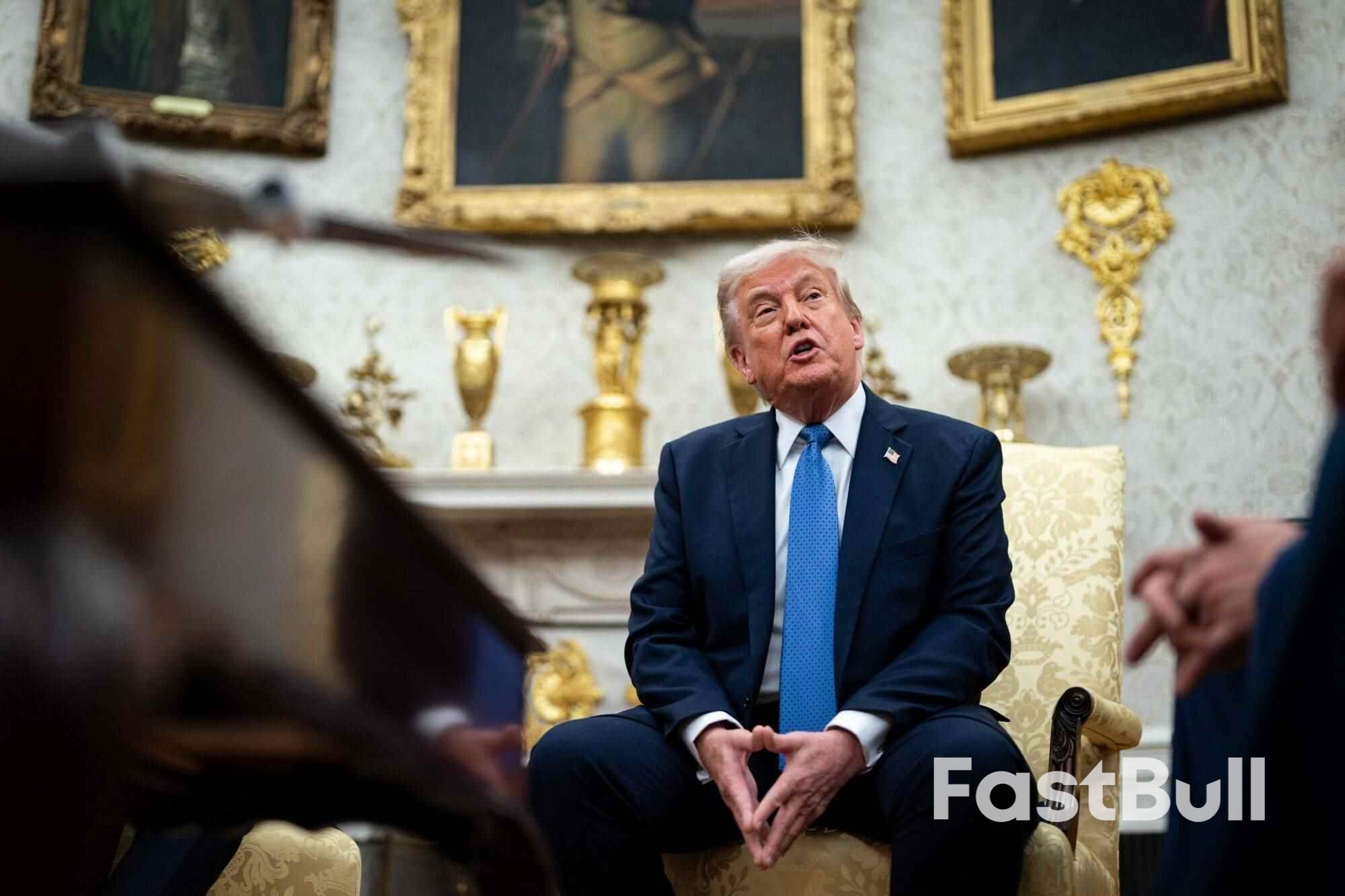
          Trump’s Tariffs Risk 770,000 Job Losses, Soaring Prices, and Global Recession, Experts Warn

          Gerik

          Economic

          Summary:

          Tariffs imposed by President Trump are severely disrupting U.S. supply chains, risking higher prices, job losses, and global recession unless trade agreements are secured soon....

          Mounting economic risks from escalating tariffs

          The aggressive tariff policies spearheaded by President Donald Trump have sent shockwaves across global supply chains, creating growing fears of economic disruption in the United States. According to nine supply chain and logistics experts interviewed by Business Insider, Americans could soon face visible shortages, soaring prices, and a rising threat of recession if current trade tensions are not quickly resolved.
          Despite the temporary 90-day tariff reprieve granted on April 9, the 10% baseline tariff on all imports and the 145% tariff on Chinese goods remain firmly in place. The persistence of these tariffs is straining inventories, depressing shipping volumes, and undermining business confidence.

          Supply chain disruption intensifies as inventories dwindle

          The immediate aftermath of the April 2 tariff announcement has been striking. Data from Vizion shows a near 50% drop in global container orders in the first week alone, with imports into the U.S. plummeting by 64% compared to the previous week. Chinese exports to the U.S. fell by 36%, while American exports worldwide dropped 30%.
          As businesses had stockpiled inventories months earlier to shield against potential tariffs, their buffer is now rapidly depleting. Experts warn that many firms are cancelling future orders, awaiting clarity on trade negotiations. Without replenishment, empty store shelves and rapid price spikes could materialize by mid-2025, particularly in retail sectors dependent on low-margin imports such as toys, clothing, and small appliances.
          Professor Chris Tang from UCLA highlights the critical timing mismatch: once inventories are exhausted, restocking under high-tariff conditions would either skyrocket prices or leave retailers without key products.

          Logistics crisis signals deeper economic turmoil

          Traditionally, the months from June to August are peak periods for U.S. imports in preparation for the back-to-school and holiday shopping seasons. However, a steep decline in shipping orders and widespread cancellations suggest that 2025 may witness major disruptions to this cycle.
          Retailers, according to experts like Sean Henry of Stord, will be forced to narrow product selections, diminishing consumer choice and potentially amplifying inflationary pressures during the year’s most crucial spending months.
          Ryan Petersen, CEO of Flexport, warns that absent a swift rollback of tariffs, the scale of disruption could exceed anything experienced during the COVID-19 pandemic.

          The looming threat of the bullwhip effect

          A particularly alarming risk cited by multiple experts is the emergence of the "bullwhip effect"—where wild swings in supply and demand create extreme inventory imbalances. In this scenario, initial shortages lead to panic ordering, followed by oversupply and subsequent slumps, destabilizing the entire retail and manufacturing ecosystem.
          As inflation accelerates, consumer purchasing power diminishes. Households will cut back sharply, further depressing demand, setting off a chain reaction across sectors that rely on high turnover and steady consumption.
          Bob Ferrari of Ferrari Consulting predicts visible price increases as early as May or June, beginning with consumer staples and electronics. Meanwhile, Nick Vyas of USC Marshall School of Business warns that unchecked inflation during critical retail seasons could tip the U.S. economy into contraction.

          Employment shock and risk of prolonged global downturn

          The domestic labor market also faces severe consequences. The Yale Budget Lab estimates that sustained tariff policies could push the U.S. unemployment rate up by 0.6 percentage points by the end of 2025, translating to over 770,000 job losses, particularly among small businesses in retail, transport, and logistics.
          Globally, experts fear that extended trade wars could catalyze a worldwide recession. Nick Vyas and Chris Tang caution that prolonged disruption would encourage America's traditional allies to seek deeper trade ties with China, further fracturing global commerce networks.
          At worst, a failure to stabilize could replicate or surpass the scale of the Great Depression, with widespread economic and geopolitical destabilization.

          A critical juncture for global economic stability

          The United States stands at a crossroads. While President Trump remains committed to the view that higher tariffs are a negotiating victory, the economic data tell a starkly different story. Without timely agreements, the country faces mounting inflation, depleted inventories, job losses, and a cascading slowdown that could ripple across the globe.
          Experts remain cautiously optimistic that the current 90-day window will be used to de-escalate tensions. However, they warn that the alternatives—an uncontrolled economic spiral and global recession—are risks too great to ignore.

          Source: BNN

          To stay updated on all economic events of today, please check out our Economic calendar
          Risk Warnings and Disclaimers
          You understand and acknowledge that there is a high degree of risk involved in trading. Following any strategies or investment methods may lead to potential losses. The content on the site is provided by our contributors and analysts for information purposes only. You are solely responsible for determining whether any trading assets, securities, strategy, or any other product is suitable for investing based on your own investment objectives and financial situation.
          Add to Favorites
          Share

          April 28th Financial News

          FastBull Featured

          Daily News

          [Quick Facts]

          1. Putin and U.S Envoy affirm Russia's willingness to negotiate with Ukraine without preconditions
          2. Trump's tariff has adversely impacted U.S. cargo volumes, leading to a downgrade of the outlook for U.S. ports by rating agencies
          3. Iran port explosion has nothing to do with oil facilities
          4. Poll shows majority of Americans disapprove of Trump's aggressive behavior in rapidly advancing his political agenda
          5. Japan plans to expand U.S. corn and soybean imports in show of good faith
          6. Trump is revealed to be planning new negotiating tactics, saying he's completed talks on 200 trade deals
          7. Israeli airstrikes across multiple locations in Gaza have resulted in 51 fatalities; Palestinian militants detonated landmines, causing casualties
          8. The outflow of funds from gold ETFs suggests a weakening of the upward price trajectory for gold
          9. Timiraos: Federal Reserve Hammack's remarks do not indicate a June rate cut

          [News Details]

          Putin and U.S Envoy affirm Russia's willingness to negotiate with Ukraine without preconditions
          On the 25th, local time, Russian President Putin convened with U.S. Special Envoy for the Middle East, Witkoff, at the Kremlin to address the Ukrainian situation. This marked the fourth meeting between Putin and Witkoff this year. Presidential Aide, Ushakov, disclosed that the meeting, which lasted three hours, was constructive. Discussions encompassed the potential for resuming direct negotiations between Russia and Ukraine.
          Trump's tariff has adversely impacted U.S. cargo volumes, leading to a downgrade of the outlook for U.S. ports by rating agencies
          This development presents a challenging scenario for the U.S. ports. Moody's, in a recent report, has revised the outlook for U.S. ports in 2025 from "stable" to "negative." The agency anticipates a significant decline in U.S. container throughput amidst the current global trade environment. Furthermore, data from international and specialized shipping organizations corroborate this negative outlook for U.S. cargo volumes.
          The World Trade Organization (WTO), in its latest "Global Trade Outlook and Statistics" report, indicates that after adjusting baseline forecasts to account for the effects of recently announced tariffs and trade policy uncertainties, North America is expected to experience a particularly pronounced decline in merchandise trade volume. Specifically, exports are projected to decrease by 12.6% this year (previously forecast to increase by 2.2%), with imports declining by 9.6%.
          Iran port explosion has nothing to do with oil facilities
          As of April 27th, the explosion that occurred on the 26th at Shahid Rajaee Port in Bandar Abbas, Hormozgan Province, southern Iran, has resulted in a minimum of 14 fatalities and 750 injuries. The Islamic Republic News Agency of Iran reported on the 26th that the explosion was unrelated to oil facilities near Shahid Rajaee Port. Iranian government spokesperson Mohajerani stated on the 26th that it has been determined that the explosion originated from "containers stored at the port, potentially containing chemicals." A precise and professional assessment of the incident's cause will be challenging and time-consuming until the fire is completely extinguished.
          Iranian President Pezeshkian expressed deep condolences for the victims of the explosion on social media and requested an investigation into the incident. Iran's Minister of Interior Eskandar Momeni was dispatched to Abbas as a special representative to oversee the investigation and subsequent actions. A fire broke out near the container terminal of Shahid Rajaee Port at approximately 12:00 local time on the 26th, triggering a significant explosion.
          Poll shows majority of Americans disapprove of Trump's aggressive behavior in rapidly advancing his political agenda
          A recent poll conducted by the Associated Press-NORC Center for Public Affairs Research, released on April 26th, local time, indicates that a majority of Americans disapprove of the aggressive approach taken by Trump in advancing his political agenda. Furthermore, even within the Republican party, there is not unanimous agreement on the prioritization of policy objectives. The survey reveals that nearly twice as many Americans believe Trump is "primarily focused on the wrong priorities" compared to those who believe he is "focused on the right priorities." The political climate during Trump's initial 100 days of a potential second term did not surprise most Americans. Approximately 70% of adult Americans stated that Trump's actions in the first few months of a second term largely aligned with their expectations, while only about 30% found his actions "unexpected." The survey, which involved 1,260 adults, was conducted from April 17 to 21, with a margin of error of plus or minus 3.9 percentage points.
          Japan plans to expand U.S. corn and soybean imports in show of good faith
          According to the Nikkei, Akazawa Ryosei, the Japanese representative and Minister for Economic Revitalization, is scheduled to attend the second round of U.S.-Japan tariff negotiations in the U.S. from April 30 to May 2. Minister Akazawa stated that the Japanese government will continue to evaluate potential concessions for the negotiations with the U.S. Proposed strategies include easing automotive safety standards and expanding the zero-tariff import quota for rice. Furthermore, Japan is considering increasing imports of U.S. corn and soybeans. As reported by Japanese media, the U.S. is Japan's primary source for corn imports, accounting for nearly 80% in 2024; Japan aims to demonstrate its commitment to cooperation by increasing imports of corn and soybeans.
          Trump is revealed to be planning new negotiating tactics, saying he's completed talks on 200 trade deals
          In an interview published by Time Magazine on the 25th, local time, Trump indicated that negotiations for 200 trade agreements had been finalized, although specific details were not disclosed. Concurrently, The Wall Street Journal reported that the Trump administration is strategizing the implementation of new negotiation tactics. It is understood that over the subsequent two months, the U.S. will prioritize negotiations with 18 trade partners, structured in three-week cycles. Within each cycle, six trade partners will be invited to the U.S. for negotiations on a weekly basis. The specific countries and regions comprising these 18 trade partners remain undisclosed at this time.
          Israeli airstrikes across multiple locations in Gaza have resulted in 51 fatalities; Palestinian militants detonated landmines, causing casualties
          According to data released on the 27th by the Gaza Health Ministry, the Israeli Defense Forces (IDF) conducted strikes on various areas within the Gaza Strip, resulting in a minimum of 51 Palestinian fatalities. The Gaza Health Ministry's data indicates that the IDF's airstrikes on the southern city of Khan Yunis, the central area of Deir al-Balah, and Gaza City in the north on the 27th, each resulted in multiple deaths. The Israeli authorities have yet to issue a response to these reports. According to a report from the Palestinian newspaper Al-Quds on the 27th, an IDF drone strike targeted a camp for displaced persons near Khan Yunis, leading to 7 fatalities and numerous injuries. In Deir al-Balah, an IDF drone strike near a shopping center resulted in 5 fatalities.
          The outflow of funds from gold ETFs suggests a weakening of the upward price trajectory for gold
          Earlier this week, investors withdrew US$1.27 billion from the SPDR Gold Shares ETF, representing the largest single-day outflow since 2011. Concurrently, gold prices reached an all-time high, exceeding US$3,500, which indicates potential profit-taking activities. In 2011, a similar outflow coincided with the peak of gold's previous supercycle, initiating a prolonged consolidation phase that persisted until its breakout in 2020.
          However, this does not definitively signal a reversal. As previously noted by Sungwoo Park, several bullish factors remain in play, including trade uncertainties, safe-haven demand, central bank acquisitions, and Wall Street's expectations for further spot price increases. Nevertheless, this emerging pattern raises a critical question: is the sustained rally observed this year showing signs of exhaustion?
          Timiraos: Federal Reserve Hammack's remarks do not indicate a June rate cut
          In a Saturday article, Nick Timiraos, often considered a key source of information on the Federal Reserve, addressed the widespread interpretation of Fed official Hammack's Thursday statements. While some market participants perceived these statements as a signal of a potential June rate cut, Timiraos clarified that Hammack's remarks did not explicitly suggest an imminent rate reduction in June. Hammack's discussion of a June rate cut included two conditional clauses, "if": "If we get clear and convincing data before June, and if we know what action is appropriate at that point, then I think the committee will take actions." The over-reliance on these broad "if" assumptions presents the risk of not providing particularly definitive answers.

          [Today's Focus]

          UTC+8 21:00 ECB Governing Council Member Rehn Speaks
          Pending Federal Election in Canada
          Risk Warnings and Disclaimers
          You understand and acknowledge that there is a high degree of risk involved in trading. Following any strategies or investment methods may lead to potential losses. The content on the site is provided by our contributors and analysts for information purposes only. You are solely responsible for determining whether any trading assets, securities, strategy, or any other product is suitable for investing based on your own investment objectives and financial situation.
          Add to Favorites
          Share

          Asia Advances in Trade Talks with U.S. as Europe and North America Adopt Cautious Approach

          Gerik

          Economic

          Asian economies move swiftly under tariff pressure

          Facing imminent tariff hikes of up to 25% within the next two months, major Asian exporters like South Korea, Japan, India, Vietnam, and Thailand have accelerated negotiations with the United States to secure temporary or partial trade deals before the 90-day grace period expires in early July. South Korea, where exports face significant risks, is particularly proactive, with U.S. Treasury Secretary Scott Bessent signaling that a memorandum of understanding (MOU) could be reached as early as this week.
          This rapid progress is driven by clear economic incentives: as punitive tariffs loom, early agreements offer a chance to preserve market access and provide political wins for President Donald Trump, who is eager to showcase the success of his disruptive trade agenda. The urgency correlates directly with the heavy reliance of these economies on U.S. market access, creating an asymmetrical risk that compels faster negotiation.

          Divergent strategies among Asian players

          South Korea’s approach focuses on expanding access for U.S. goods, reducing non-tariff barriers, and pledging greater investment into American industries such as shipbuilding and energy. Meanwhile, India has made the most notable strides, concluding a negotiation framework across 19 sectors including agriculture, e-commerce, and rules of origin after a high-profile meeting between Vice President JD Vance and Prime Minister Narendra Modi.
          Japan, while engaging actively, is more cautious. It shows willingness to make agricultural concessions and promote automotive investment but resists being drawn into an overt anti-China bloc, reflecting its intertwined trade interests with Beijing.
          Vietnam, Thailand, and other Southeast Asian nations are also offering concessions, including increased imports of U.S. agricultural and energy products, while demanding that agreements maintain a two-way balance to avoid one-sided economic dependencies.

          Western partners adopt a slower, risk-averse strategy

          Contrasting with the swift Asian engagement, North American and European allies are moving with deliberate caution. Despite facing base tariffs of 10% and warnings of possible hikes, Canada, the United Kingdom, and the European Union are prioritizing careful assessment over speed. They argue that rushed deals could lead to unfavorable terms, citing the volatility and unpredictability of Trump’s negotiating style.
          European officials acknowledge that absent progress, tariffs could increase further, yet remain skeptical about securing meaningful concessions under current conditions. Retaliatory strategies, such as imposing duties on U.S. steel and aluminum imports, are already in preparation.
          Switzerland, facing a steeper 31% tariff, stands as an exception among European nations. It has entered priority negotiations with the U.S., securing assurances that its tariff rate will be capped at 10% during talks, even if discussions extend beyond the initial deadline.

          Structural dynamics shaping negotiation timelines

          The contrasting speeds reflect deeper strategic considerations. For Asian economies, immediate tariff exposure threatens significant disruptions to export-driven growth models, necessitating urgent countermeasures. For Europe and North America, the relatively smaller immediate exposure allows room for strategic patience, with an eye toward longer-term stability rather than short-term tactical gains.
          Moreover, the fragmented structure of U.S. trade policy under the Trump administration—marked by leadership turnover and abrupt strategic pivots—further incentivizes caution among traditional allies, wary of investing political capital without guaranteed outcomes.

          Asia’s urgency versus the West’s patience

          The unfolding dynamics highlight a critical divergence in global trade diplomacy. Asian economies, highly vulnerable to tariff shocks, are pressing for quick interim deals to protect their economic interests, while North American and European partners are betting on a more measured pace to avoid strategic missteps.
          Whether these divergent tactics will pay off depends largely on Trump’s political calculus and the evolving global trade environment. What is clear is that in this new tariff-driven landscape, speed and strategy are equally crucial—and the costs of miscalculation could reshape trade flows for years to come.

          Source: The Financial Express

          To stay updated on all economic events of today, please check out our Economic calendar
          Risk Warnings and Disclaimers
          You understand and acknowledge that there is a high degree of risk involved in trading. Following any strategies or investment methods may lead to potential losses. The content on the site is provided by our contributors and analysts for information purposes only. You are solely responsible for determining whether any trading assets, securities, strategy, or any other product is suitable for investing based on your own investment objectives and financial situation.
          Add to Favorites
          Share

          Switzerland Faces Pressure to Cut Rates Below Zero as Franc Surge Sparks Currency War Fears

          Gerik

          Forex

          Economic

          The Swiss franc’s surge reignites monetary policy tensions

          The Swiss franc has soared to its highest level against the U.S. dollar in over a decade, as investors seek safe-haven assets amid escalating global trade disruptions. This rapid appreciation, pushing the USD/CHF exchange rate near 0.80—levels not seen since 2015—is now pressuring the Swiss National Bank (SNB) to consider drastic measures, including lowering its benchmark interest rate to zero or even negative territory once again.
          The challenge for Swiss policymakers is intricate: they must curb the franc’s strength to protect an export-oriented economy without provoking retaliatory trade measures from the United States, which has previously accused Switzerland of currency manipulation.

          Interest rates under downward pressure as economic risks mount

          Short-term Swiss government bond yields have already dipped below zero in anticipation of SNB action, with two-year yields turning negative last Friday. Market swaps are now pricing an 80% probability that the SNB will cut its policy rate to 0% at its June meeting, and potentially push it below zero by year-end.
          Analysts point to a clear cause-and-effect pattern: the franc’s appreciation exacerbates deflationary risks and undermines export competitiveness, necessitating monetary easing. Switzerland's annual inflation rate stands at just 0.3%, perilously close to the lower bound of the SNB’s 0–2% inflation target, reinforcing the urgency for action.

          Currency interventions viewed as a risky last resort

          Despite the mounting pressure, direct currency intervention remains a politically sensitive option. Switzerland still bears the scars of being labeled a currency manipulator by the U.S. Treasury under Trump’s first term, though the designation had no immediate punitive consequences.
          Experts like Stefan Gerlach from EFG Bank argue that while moderate foreign exchange intervention may still occur, it would only be used sparingly. Cutting interest rates is perceived as a safer diplomatic strategy, minimizing the risk of reigniting American accusations while still addressing domestic economic pressures.
          Athanasios Vamvakidis of Bank of America even suggests that minor, well-calibrated intervention could be tolerated by the current U.S. administration, given the defensive context of Switzerland’s monetary adjustments.

          Trade frictions deepen Switzerland’s monetary dilemma

          Adding to the pressure, Washington recently imposed a 31% retaliatory tariff on Swiss goods—higher than those applied to EU exports—before suspending the measure for 90 days following high-level diplomacy between Swiss President Karin Keller-Sutter and U.S. officials.
          Given that the U.S. accounts for more than 10% of Swiss exports, maintaining favorable trade relations is critical. Swiss leaders are keen to avoid any moves that might be construed as competitive devaluation, making a policy-driven interest rate cut a more palatable option than direct currency market interventions.

          A delicate balancing act between growth, diplomacy, and financial stability

          Switzerland is rapidly approaching a critical juncture. With the franc’s relentless rise threatening deflation and export competitiveness, the SNB is increasingly likely to respond with interest rate cuts, even if it means re-entering negative territory after briefly exiting it in 2022.
          The Swiss case illustrates the interconnectedness of monetary policy, geopolitics, and financial market dynamics in today’s fragmented global environment. As fears of a new currency war swirl, Switzerland’s cautious, diplomatically aware approach may set a template for small, open economies navigating between domestic stabilization and international political pressures.

          Source: FT

          To stay updated on all economic events of today, please check out our Economic calendar
          Risk Warnings and Disclaimers
          You understand and acknowledge that there is a high degree of risk involved in trading. Following any strategies or investment methods may lead to potential losses. The content on the site is provided by our contributors and analysts for information purposes only. You are solely responsible for determining whether any trading assets, securities, strategy, or any other product is suitable for investing based on your own investment objectives and financial situation.
          Add to Favorites
          Share

          Trump Floats New Income Tax Cut In Bid To Ease Tariffs Bite

          Catherine Richards

          Economic

          Treasury Secretary Scott Bessent speaks, Wednesday, April 23, 2025, to the Institute of International Finance Global Outlook Forum at the Willard Hotel in Washington.

          President Donald Trump suggested Sunday that his sweeping tariffs would help him reduce income taxes for people making less than $200,000 a year, as public anxiety rises over his economic agenda.

          Trump has previously argued that tariff revenue could replace income taxes, though economists have questioned those claims.

          “When Tariffs cut in, many people’s Income Taxes will be substantially reduced, maybe even completely eliminated. Focus will be on people making less than $200,000 a year,” he said Sunday on his Truth Social network.

          Trump’s tariff stances have roiled markets, led to fears of higher prices for Americans, prompted recession warnings and sparked bouts of concern about the US’s haven status — a fear that Treasury Secretary Scott Bessent questioned in a Sunday interview.

          “I don’t think that this is necessarily losing confidence,” Bessent said on ABC’s This Week. “Anything that happens over a two-week, one-month window can be either statistical noise or market noise.”

          Trump’s administration is “setting the fundamentals” for investors to know “that the U.S. government bond market is the safest and soundest in the world,” he said.

          For now, a CBS News poll released Sunday said 69% of Americans believe the Trump administration wasn’t focused enough on lowering prices. Approval of Trump’s handling of the economy in the poll declined to 42% compared with 51% in early March.

          Trump wants to extend reductions in income taxes that were approved in 2017 during his first presidency, many of which are due to expire at the end of 2025.

          He also has proposed expanding tax breaks — including by exempting workers’ tips and social security earnings — while slashing the corporate tax rate to 15% from 21%.

          Trade Deals

          Bessent said the administration is working on bilateral trade deals after Trump imposed so-called reciprocal tariffs on many countries in early April, which he subsequently paused for 90 days for all affected countries except China.

          The effort involves 17 key trading partners, not including China, Bessent said on ABC.

          Treasury Secretary Scott Bessent speaks, Wednesday, April 23, 2025, to the Institute of International Finance Global Outlook Forum at the Willard Hotel in Washington.

          “We have a process in place, over the next 90 days, to negotiate with them,” he said. “Some of those are moving along very well, especially with the Asian countries.”

          Source: Yahoo Finance

          To stay updated on all economic events of today, please check out our Economic calendar
          Risk Warnings and Disclaimers
          You understand and acknowledge that there is a high degree of risk involved in trading. Following any strategies or investment methods may lead to potential losses. The content on the site is provided by our contributors and analysts for information purposes only. You are solely responsible for determining whether any trading assets, securities, strategy, or any other product is suitable for investing based on your own investment objectives and financial situation.
          Add to Favorites
          Share

          Russia’s Lavrov Digs In On Keeping Control Of Zaporizhzhia Plant

          Catherine Richards

          Russia-Ukraine Conflict

          Russia hasn’t received a US proposal to give up control of the Zaporizhzhia nuclear power plant in southeast Ukraine, and a change to the facility’s ownership isn’t conceivable, said Foreign Minister Sergei Lavrov.

          His comments were consistent with the foreign ministry’s declaration in March that Moscow won’t cede control of the plant or agree to operate the facility jointly with another state.

          The currently-defunct atomic plant, Europe’s largest, has been occupied by Russia since the first weeks of Moscow’s full-scale invasion of its neighbor in 2022.

          ZNPP, near the town of Enerhodar, is now controlled by Rosatom, Russia’s state nuclear corporation, with monitors from the International Atomic Energy Agency, the UN’s nuclear watchdog, rotated into the facility.

          Lavrov said in an interview with CBS’s Face the Nation — conducted last week and broadcast on Sunday — that safety requirements for the plant “are fully implemented and it is in very good hands.”

          Ukrainian President Volodymyr Zelenskiy said in March that if the US helped to return the power plant to Ukraine and invest in it, Washington and Kyiv could work together. He estimated it will take years of costly repairs to safely return Zaporizhzhia to operation.

          The facility has come up as part of a Trump administration effort to boost cooperation with Russia’s energy sector as it pushes for a deal to end the war in Ukraine, Bloomberg has reported. One proposal would see the US take over the plant, to be considered Ukrainian territory, with any electricity generated supplied to both Ukraine and Russia.

          “We never received such an offer,” Lavrov told CBS. “I don’t think any change is conceivable.”

          Source: Bloomberg Europe

          Risk Warnings and Disclaimers
          You understand and acknowledge that there is a high degree of risk involved in trading. Following any strategies or investment methods may lead to potential losses. The content on the site is provided by our contributors and analysts for information purposes only. You are solely responsible for determining whether any trading assets, securities, strategy, or any other product is suitable for investing based on your own investment objectives and financial situation.
          Add to Favorites
          Share

          Iran’s President Visits Site Of Port Blast That Killed 28

          Catherine Richards

          Political

          Iran’s president visited on Sunday the scene of a massive port blast that killed 28 people and injured more than 1,000, as fires still blazed more than 24 hours after the explosion.

          The blast occurred on Saturday at Shahid Rajaee Port in southern Iran, near the Strait of Hormuz, through which a fifth of world oil output passes.

          With choking smoke and air pollution spreading throughout the area, all schools and offices in Bandar Abbas, the nearby capital of Hormozgan province, were ordered closed on Sunday to allow authorities to focus on the emergency effort, state TV said.

          The health ministry urged residents to avoid going outside “until further notice” and to use protective masks.

          Arriving in Bandar Abbas, President Masoud Pezeshkian expressed his appreciation to first responders, adding “we have come to see first-hand if there is anything or any issue that the government can follow up on.”

          “We will try to take care of the families who lost their loved ones, and we will definitely take care of the dear people who got injured,” he said.
          Pezeshkian had previously ordered an investigation into the cause of the blast.

          Russia’s embassy said Moscow was sending multiple “aircraft carrying specialists” to help fight the blaze. According to Russia’s Ministry of Emergency Situations, one of the aircraft is a dedicated firefighting plane. The New York Times quoted a person with ties to Iran’s Islamic Revolutionary Guard Corps, speaking on condition of anonymity to discuss security matters, as saying that what exploded was sodium perchlorate — a major ingredient in solid fuel for missiles.

          Defense ministry spokesman Reza Talaei-Nik later told state TV that “there has been no imported or exported cargo for military fuel or military use in the area.”

          The port’s customs office said in a statement carried by state television that the explosion probably resulted from a fire that broke out at the hazardous and chemical materials storage depot.

          A regional emergency official said several containers had exploded. Red Crescent chief Pirhossein Koolivand, in a video shared on the government’s official website, gave an updated toll on Sunday of 28 people killed and more than 1,000 injured.

          The ISNA news agency, citing the provincial judiciary, gave a higher toll of 1,242 injured and also put the number of dead at 28.

          Koolivand said some of the injured were airlifted for treatment in the capital Tehran.

          Thick black smoke was still visible in live footage from the scene aired by state TV on Sunday.

          “The fire is under control but still not out,” a state TV correspondent reported from the scene.

          The explosion was felt and heard about 50 kilometers away, Fars news agency reported.

          Also at the scene on Sunday, Interior Minister Eskandar Momeni said “the situation has stabilized in the main areas” of the port, and workers had resumed loading containers and customs clearance.

          Another official on site, Minister of Roads and Urban Development Farzaneh Sadegh, said only one zone of the port was impacted, and cargo “operations are still continuing as normal in the several other zones.” An image from Iran’s Tasnim news agency on Sunday showed a helicopter flying through a sky blackened by smoke to drop water on the disaster-struck area.

          Others showed firefighters working among toppled and blackened cargo containers, and carrying out the body of a victim.

          The authorities have closed off the roads leading to the site, and footage from the area has been limited to Iranian media outlets.

          Beijing’s foreign ministry said in a statement to AFP on Sunday that three Chinese victims were in a “stable” condition.

          The United Arab Emirates expressed “solidarity with Iran” over the explosion and Saudi Arabia sent condolences, as did Pakistan, India, Turkiye and the United Nations as well as Russia.

          The Tehran-backed Lebanese movement Hezbollah also offered condolences, saying Iran, with its “faith and solid will, can overcome this tragic accident.”

          In the first reaction from a major European country, the German embassy in Tehran said on Instagram: “Bandar Abbas we grieve with you.”

          Authorities declared a day of national mourning on Monday, and three days of mourning in Hormozgan province from Sunday.

          The explosion ripped through the port as Iranian and US delegations were meeting in Oman for high-level talks on Tehran’s nuclear program, with both sides reporting progress afterwards.

          While Iranian authorities so far appear to be treating the blast as an accident, it also comes against the backdrop of years of shadow war with regional foe Israel.

          According to the Washington Post, Israel in 2020 launched a cyberattack targeting the Shahid Rajaee Port.

          Source: ARAB

          Risk Warnings and Disclaimers
          You understand and acknowledge that there is a high degree of risk involved in trading. Following any strategies or investment methods may lead to potential losses. The content on the site is provided by our contributors and analysts for information purposes only. You are solely responsible for determining whether any trading assets, securities, strategy, or any other product is suitable for investing based on your own investment objectives and financial situation.
          Add to Favorites
          Share
          FastBull
          Copyright © 2025 FastBull Ltd

          728 RM B 7/F GEE LOK IND BLDG NO 34 HUNG TO RD KWUN TONG KLN HONG KONG

          TelegramInstagramTwitterfacebooklinkedin
          App Store Google Play Google Play
          Products
          Charts

          Chats

          Q&A with Experts
          Screeners
          Economic Calendar
          Data
          Tools
          Membership
          Features
          Function
          Markets
          Copy Trading
          Latest Signals
          Contests
          News
          Analysis
          24/7
          Columns
          Education
          Company
          Careers
          About Us
          Contact Us
          Advertising
          Help Center
          Feedback
          User Agreement
          Privacy Policy
          Business

          White Label

          Data API

          Web Plug-ins

          Poster Maker

          Affiliate Program

          Risk Disclosure

          The risk of loss in trading financial instruments such as stocks, FX, commodities, futures, bonds, ETFs and crypto can be substantial. You may sustain a total loss of the funds that you deposit with your broker. Therefore, you should carefully consider whether such trading is suitable for you in light of your circumstances and financial resources.

          No decision to invest should be made without thoroughly conducting due diligence by yourself or consulting with your financial advisors. Our web content might not suit you since we don't know your financial conditions and investment needs. Our financial information might have latency or contain inaccuracy, so you should be fully responsible for any of your trading and investment decisions. The company will not be responsible for your capital loss.

          Without getting permission from the website, you are not allowed to copy the website's graphics, texts, or trademarks. Intellectual property rights in the content or data incorporated into this website belong to its providers and exchange merchants.

          Not Logged In

          Log in to access more features

          FastBull Membership

          Not yet

          Purchase

          Become a signal provider
          Help Center
          Customer Service
          Dark Mode
          Price Up/Down Colors

          Log In

          Sign Up

          Position
          Layout
          Fullscreen
          Default to Chart
          The chart page opens by default when you visit fastbull.com